



Shashikant Nishant Sharma
Effective policies and technological interventions play a crucial role in preventing train accidents in India. The government has focused on investing in railway infrastructure, implementing advanced safety systems, and strengthening maintenance practices. Policy measures include the enforcement of safety regulations, skill development programs, and transparent reporting and investigation mechanisms. Technological advancements, such as Positive Train Control (PTC), Automatic Train Protection (ATP), and advanced signalling systems, have been introduced to enhance safety. Additionally, remote monitoring and diagnostics, improved communication systems, and simulation-based training contribute to accident prevention. These combined efforts are essential for minimizing train accidents and ensuring the safety of passengers and railway personnel in India.
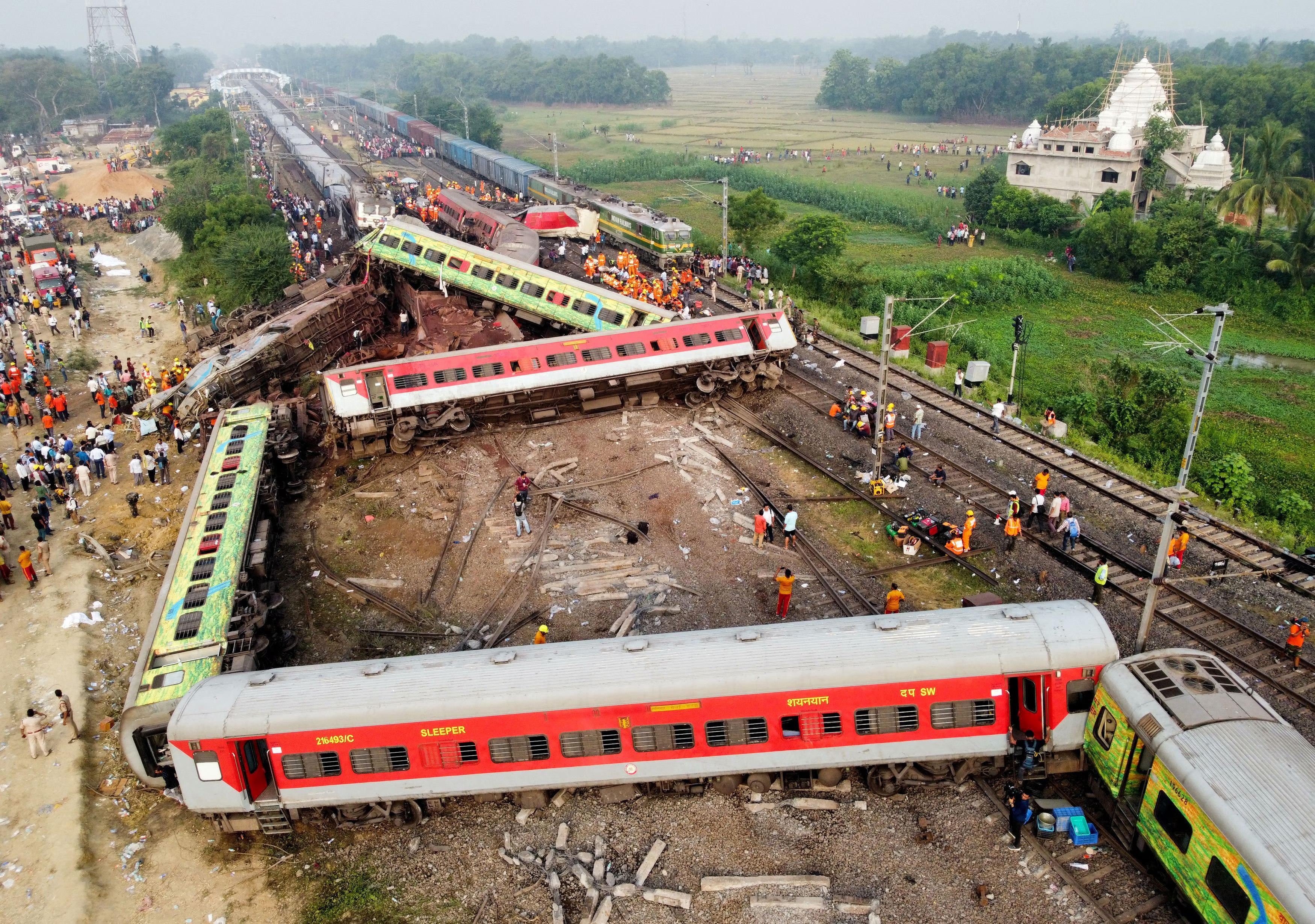
Major Train Accidents in India
Train accidents in India have been a recurring concern, with various incidents causing loss of life, injuries, and damage to infrastructure. These accidents can occur due to a range of factors, including human error, infrastructure deficiencies, equipment failures, adverse weather conditions, and inadequate safety measures. The Government of India and Indian Railways have been continuously working towards improving railway safety through investments in technology, infrastructure upgrades, enhanced maintenance practices, and the implementation of advanced safety systems. Despite these efforts, train accidents remain a significant challenge, necessitating ongoing vigilance, regulatory measures, and public awareness to prevent such incidents and ensure the safety of passengers and railway personnel. Here are some major train accidents in India along with their causes:
Gaisal Train Disaster (2000):
Cause: A speeding passenger train collided with a derailed freight train on the same track, resulting in one of the deadliest train accidents in India’s history. The primary cause was determined to be a fractured rail due to inadequate maintenance.
Khanna Rail Disaster (1998):
Cause: A passenger train collided with a derailed freight train due to the failure of the signal system. The accident was attributed to the signal engineer’s negligence and faulty signaling equipment.
Firozabad Rail Disaster (1995):
Cause: An express train collided with a stationary freight train due to dense fog and poor visibility. The accident was primarily caused by inadequate signaling systems and a lack of fog-safety measures.
Gomoh Train Collision (1990):
Cause: Two passenger trains collided head-on due to signal failure caused by a miscommunication between the station master and the signalman. The accident was attributed to human error and communication failure.
Peruman Train Collision (1988):
On 8 July 1988, the Island Express collided with a local passenger train near Peruman, Kerala. The accident caused the death of approximately 150 people (Mallick, 2023, June 3). Two passenger trains collided head-on due to human error by the train driver, who missed a signal. The accident highlighted the need for better signaling systems and stricter adherence to safety protocols.
Howrah-New Delhi Rajdhani Express Derailment (2002):
Over 230 people have lost their lives while around 900 injured in the horrific train crash, involving the Bengaluru-Howrah Superfast Express, the Shalimar-Chennai Central Coromandel Express and a goods train (Mondal, 2023, June 3). The derailment of the Rajdhani Express was caused by a cracked rail. The accident was attributed to poor maintenance and lack of proper inspection of railway tracks.
Kanpur Train Derailment (2016):
This train crash killed more than 140. Fourteen coaches of the Indore-Patna Express derailed, resulting in significant casualties. The accident was caused by a fractured rail due to excessive wear and tear and lack of timely maintenance (Narayan, 2016, November 20).
Balasore Train Accident (2023)
According to officials, the deadliest train accident in India in more than 20 years has resulted in the tragic loss of at least 288 lives. The incident occurred when a passenger train derailed and collided with another train due to a signal failure, as stated in a preliminary report. Furthermore, during the accident in the Balasore district of Odisha state in eastern India, one of the trains also struck a stationary freight train, causing extensive damage and leaving 803 people injured. The aftermath of the incident depicted a chaotic scene with mangled train cars (Ellis-Petersen, 2023, June 3).
It’s important to note that the causes mentioned above are based on initial investigations and reports. Official reports and inquiries provide more detailed and comprehensive information about each accident’s causes and contributing factors. Safety measures, maintenance practices, and infrastructure improvements have been continuously emphasized to prevent such accidents and enhance the safety of the railway system in India. Providing timely and needed emergency services in case of accidents is a major challenge (Ikbal et al., 2022).
Common Causes of Train Accidents
Common causes of train accidents can vary, but here are some of the most frequent factors:
Human Error: Human error is a leading cause of train accidents. It can include mistakes made by train operators, engineers, dispatchers, signalmen, and maintenance personnel. Examples include failure to follow procedures, disregarding signals, improper communication, fatigue, and distraction.
Track Defects: Track defects such as broken rails, misaligned tracks, and track buckling can lead to train derailments. Inadequate maintenance practices, lack of inspections, and poor infrastructure can contribute to track defects (Khosla, 2020).
Equipment Failure: Mechanical failures of train components or systems can cause accidents. This includes problems with brakes, couplings, wheels, axles, locomotives, and signaling equipment. Failure to detect and address equipment issues through regular maintenance can result in accidents.
Signal and Communication Failures: Inadequate signaling systems, malfunctioning signals, and communication breakdowns between train operators, signalmen, and dispatchers can lead to collisions, derailments, and other accidents.
Weather Conditions: Adverse weather conditions such as heavy rain, fog, snow, or extreme temperatures can impact train operations and visibility. Poor weather can lead to reduced traction, signal disruptions, poor track conditions, and increased risks of accidents.
Infrastructure Problems: Poorly maintained infrastructure, including bridges, tunnels, and tracks, can contribute to train accidents. Weak structures, inadequate drainage, and outdated or insufficient maintenance practices increase the likelihood of accidents.
Sabotage and Acts of Terrorism: Deliberate acts of sabotage or terrorism, such as tampering with tracks or explosives on trains, can cause significant accidents and endanger lives.
Level Crossing Accidents: Accidents can occur at level crossings when trains collide with vehicles or pedestrians. Factors contributing to such accidents include lack of warning signals, inadequate barriers, driver negligence, and lack of public awareness about safety precautions.
It’s important to note that these causes can interact and overlap in some cases. Preventing train accidents requires a comprehensive approach that includes strict adherence to safety protocols, regular maintenance and inspections, investment in infrastructure improvements, effective communication systems, and ongoing training and education for railway personnel.
Technological Advancement to avert Train Accidents
Technological advancements have played a significant role in enhancing railway safety and mitigating train accidents. Here are some key technological advancements that have been implemented to avert train accidents:
Positive Train Control (PTC): PTC is a technology that uses a combination of GPS, wireless communication, and computerized control systems to monitor and control train movements. It can automatically intervene and apply brakes or take other actions to prevent train collisions, derailments, and overspeeding. PTC helps ensure compliance with speed limits, track conditions, and signal indications.
Automatic Train Protection (ATP) Systems: ATP systems monitor train speed and enforce speed limits. These systems continuously monitor train movements and automatically intervene if a train exceeds predetermined speed limits or violates other safety parameters. ATP systems enhance safety by preventing overspeeding and reducing the risk of derailments.
Advanced Signaling Systems: Traditional signaling systems are being replaced with advanced signaling technologies such as European Train Control System (ETCS) and Communications-Based Train Control (CBTC). These systems provide real-time information about train positions, speeds, and signaling commands, ensuring safe separation between trains and improved overall operational efficiency (Subramanyan, 2001).
Train Collision Avoidance Systems: These systems utilize sensors, cameras, and radar technologies to detect obstacles or other trains on the tracks and provide alerts or automatically apply brakes to prevent collisions. Such systems enhance safety at intersections, level crossings, and areas prone to unauthorized entry onto the tracks.
Remote Monitoring and Diagnostics: Remote monitoring and diagnostics technologies enable continuous monitoring of train components, systems, and track conditions. Real-time data analytics can detect potential faults or abnormalities, allowing for proactive maintenance and reducing the risk of equipment failure.
Improved Track Inspection Technologies: Advanced inspection technologies, such as ultrasonic testing and track geometry measurement systems, help identify track defects, including cracks, misalignments, and weaknesses. Regular track inspections using these technologies enable timely repairs and maintenance to prevent accidents caused by track defects.
Enhanced Communication Systems: Modern communication systems, including radio, satellite, and wireless technologies, facilitate improved communication between train operators, signaling centers, dispatchers, and maintenance personnel. Efficient communication ensures accurate and timely exchange of information, reducing the risk of miscommunication-related accidents.
Simulation and Training Systems: Advanced simulation and training systems provide realistic training environments for train operators, allowing them to practice emergency scenarios and enhance their decision-making skills. These systems help improve situational awareness and response capabilities, reducing the likelihood of accidents caused by human error.
It’s worth noting that the implementation of these technologies requires significant investments, infrastructure upgrades, and ongoing maintenance. However, their adoption has proven to be effective in preventing train accidents, enhancing passenger safety, and improving overall operational efficiency in railway systems.
Concluding Remarks
The Government of India can take several measures to avert train accidents in the future. Here are some key actions that can be considered:
Investment in Infrastructure: The government should prioritize investment in railway infrastructure, including tracks, bridges, signaling systems, and level crossings. Upgrading and modernizing infrastructure can help prevent accidents caused by track defects, poor maintenance, and inadequate safety measures.
Implementation of Advanced Safety Systems: The government should promote the implementation of advanced safety systems such as Positive Train Control (PTC), Automatic Train Protection (ATP), and train collision avoidance systems. Mandating the use of these technologies can significantly reduce the risk of accidents due to human error, overspeeding, and collisions.
Regular Maintenance and Inspections: Ensuring regular maintenance and inspections of railway tracks, rolling stock, signaling systems, and other critical components is crucial. The government should establish stringent maintenance protocols and conduct regular inspections to identify and address potential safety hazards proactively.
Strengthening Safety Regulations: The government can strengthen safety regulations and enforcement mechanisms. Clear guidelines, standards, and protocols should be established for railway operations, maintenance practices, and employee training. Strict enforcement of safety regulations can promote a culture of safety and accountability.
Training and Skill Development: Focus should be placed on training and skill development programs for railway personnel. Train operators, engineers, maintenance workers, and other staff should receive comprehensive training on safety procedures, emergency response, and the operation of advanced safety systems. Ongoing training programs can improve safety awareness and reduce the likelihood of human errors.
Enhancing Emergency Response Capabilities: The government should develop robust emergency response capabilities for railway accidents. This includes equipping railway stations and trains with emergency equipment, establishing well-coordinated response protocols, and conducting regular drills to ensure preparedness for various emergency scenarios.
Public Awareness and Education: Promoting public awareness and education about railway safety is vital. The government can launch campaigns to educate passengers, motorists, and pedestrians about safe practices at level crossings, the importance of following safety instructions, and reporting any safety concerns or hazards promptly.
Collaboration with Technology Providers: The government can collaborate with technology providers and research institutions to leverage innovations and advancements in railway safety. Encouraging partnerships can lead to the development of new technologies, tools, and methodologies for enhanced safety and accident prevention.
Transparent Reporting and Investigation: The government should establish a transparent and independent mechanism for reporting and investigating train accidents. Conducting thorough investigations, sharing findings, and implementing recommendations can help identify systemic issues and prevent future accidents.
International Collaboration and Benchmarking: The government can collaborate with international counterparts to learn from their best practices and experiences in railway safety. Benchmarking against global standards can help identify areas for improvement and implement effective safety measures.
By implementing these measures, the Government of India can work towards a safer railway system, reduce the occurrence of train accidents, and enhance the overall safety of passengers and railway personnel.
References
Ellis-Petersen, H. (2023, June 3). India train crash: at least 288 killed and 803 injured in Odisha state. The Guardian. https://www.theguardian.com/world/2023/jun/02/dozens-killed-in-train-crash-in-eastern-india
Ikbal, F., Ghosh, R., & Bhide, P. (2022). Indian Railway Health Service. Economic & Political Weekly, 57(34).
Khosla, C. M. (2000). Safety on Indian Railways: Prolonged Neglect and Warped Priorities. Economic and Political Weekly, 614–620.
Mallick, A. (2023, June 3). With toll at 288, Odisha train mishap becomes deadliest accident in two decades. The Quint. https://www.thequint.com/news/india/deadliest-train-accidents-in-india-odisha-train-derailment
Mondal, A. (2023, June 3). Odisha train crash deadliest in history, a look at few major train accidents in India. The Financial Express. https://www.financialexpress.com/business/railways-odisha-train-crash-deadliest-in-history-a-look-at-few-major-train-accident-in-india-3112173/
Narayan, C. (2016, November 20). Wedding party among the dead as India train crash kills more than 140. CNN. https://www.cnn.com/2016/11/19/asia/indian-train-derailment-kills-dozens/index.html
Subramanyan, S. (2001). Accident at Kadalundi: Waiting to Happen. Economic and Political Weekly, 2493–2494.
 Eduindex
You must be logged in to post a comment.