Afghanistan – A tragedy that has no saving

The President of the USA, Joe Biden chose to play the card that the presidents before him had put on the game – the complete withdrawal of armed personnel from Afghanistan. This would mean an end to about 20 years of war in the country that had pitched the NATO and the US against a radical Islamic militant group to a supposed war on terrorism.

The Taliban controlled about 90% of all Afghanistan before 2001. It even had embassies established in Pakistan and Saudi Arabia – the only two countries to give recognition to the government. It was after the 9-11 attacks that it suddenly became an enemy to every state on the planet that supported USA. The US and its NATO allies invaded the Afghanistan that was already torn between the Taliban led groups and the democratic rebels. 20 years have passed since then. From young adults born after 2001 to a now estranged prince of the British royal family, a lot of people fought in Afghanistan. The results were visible with the Taliban clearly on the loss. But, the results were never conclusive. And now, when the US and the NATO would finally withdraw from a war that never reached a conclusion, Taliban has all good reasons to take back what it owned for a brief period of time.

Afghan politics has become highly broken – factions that want peace but not the loss of a theologically driven Taliban government and many more of people wanting a democracy – the government promised in the first Afghan republic in the late 1960s. For the present state of a mujahideen within the once flourishing nation has always been there, but the present state of catastrophe is a result of the Soviet-American rivalry. It was due to the establishment of the Afghan Socialist state that the mujahideen and the Soviet-Afghan war erupted and it was because of obvious and many-a-times accepted training by the Pakistani(Parvez Musharaff, the Army general of Pakistan and later President of Pakistan accepted on a TV show that the Taliban and Lashkar were heroes to him and his people) and American forces (American newspapers have routinely praised not just Taliban but also the infamous Osama Bin Laden during the war) that the logistics, tactics and power of these mujahideen forces reached to a point where they could establish an emirate that spanned most of Afghanistan.

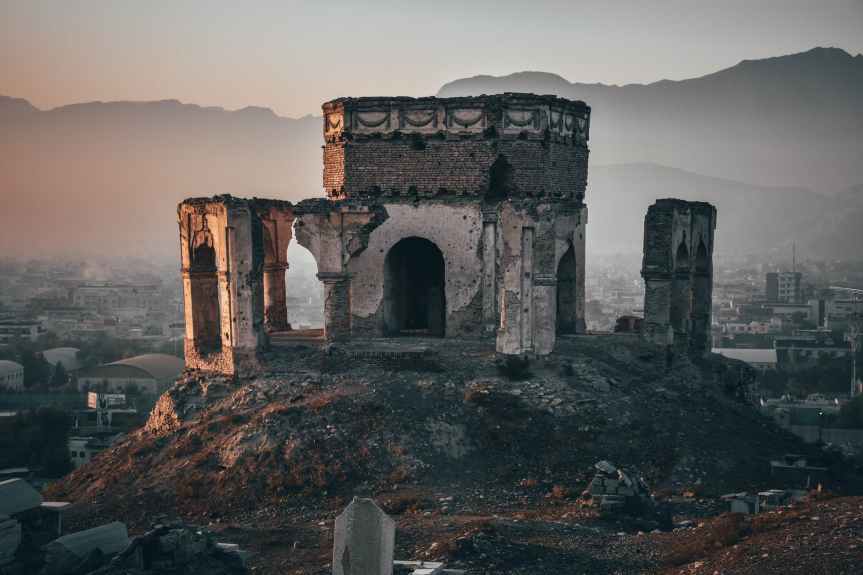
Afghanistan - Wikipedia
Is there any redemption for Afghanistan?

The return of Taliban will not only usher a new era of repression for the Afghans – especially women, children and the now diminished minorities, but also to the neighbouring nations of India, Iran and Central Asia – where the rise of Taliban may lead to new found difficulties in security and trade. The radical Islamists founded the Indian mujahideen as a cause to create a similar situation in India a couple of decades ago. The specific case of India is being raised here because it has strong cultural and economic interests in Afghanistan. The Chabahar port in Iran is India’s strongest option against China’s CPEC and the Gwadar port. Other than this, with an unfortunate history of militancy and extra state actors in North Western India, to have a neighbour ruled by groups of similar ideologies is dangerous for it. India should find ways to support Kabul militarily, for the statements made by Pakistan Prime Minister where he expressed his inadequacy in pressuring Taliban for a ceasefire leaves no neighbour but India to hold the hands of a now weaker government at Kabul. However, India has so far refused to be involved militarily, let alone be involved now, when it could end being the only player in the game.

Afghanistan looks grim. So does its future. The case is unlike ISIS. Common people had supported the Taliban insurgency. And the opium rich state an fund the group for years once it comes to power. Afghanistan looks like a lost cause, with no friends to support it in the problem that should have the highest priority to be solved – the problem of insurgency.

The Story of the Best Selling Video Game of all time: Tetris

Tetris has its origin in the Dorodnitsyn Computing Centre (Research Lab). It was one of the foremost research institutes of the Russian Academy of Sciences, located in St Petersburg, Soviet Union (Now Russia). Created by software researcher Alexey Pajitnov in 1984, Tetris is a simple tile-matching game that took the world by storm upon it’s release.

It was developed for Electronika 60, which was a computer, made in the Soviet Union. This period was the final stage of the Cold war Era and computers were becoming more popular as well.

The game wasn’t intended as a commercial product just like the creation of the music record. But it was to be distributed freely among academic institutions around the Soviet Union and the economic bloc of countries aligned with the USSR in Eurasia, Africa, and the Americas that demonstrated use cases for the software.

As USSR was a communist state, so Pajitnov did not technically own the program as the game was under the ownership of the state. Pajitnov along with the help of a colleague, Dmitry Pavlovsky, and a teen computer programmer, Vadim Gerasimov continued to work on the game project even though commercializing it would have been a risky move under the Soviet government. Gerasimov further ported the game from the old and bulky Elektronika 60 to the more widely used (IBM) compatible PCs.

As Elektronika 60 had no graphics output, the individual blocks in the game were made of different text, but with the port in PC, they were able to support color graphics. This brought the game to life.

Pajitnov and Gerasimov had started distributing Tetris for (PC) in 1985 among their friends and colleagues in various math or computer conventions. Soon the sharing spread and the game was smuggled outside USSR to Hungary. During mid-80s U.S and Japan had a more prevalent console market whereas, in Europe, gaming was primarily done on computers. There was a non-existent software market in Russia and most software was usually copied in floppy disks.

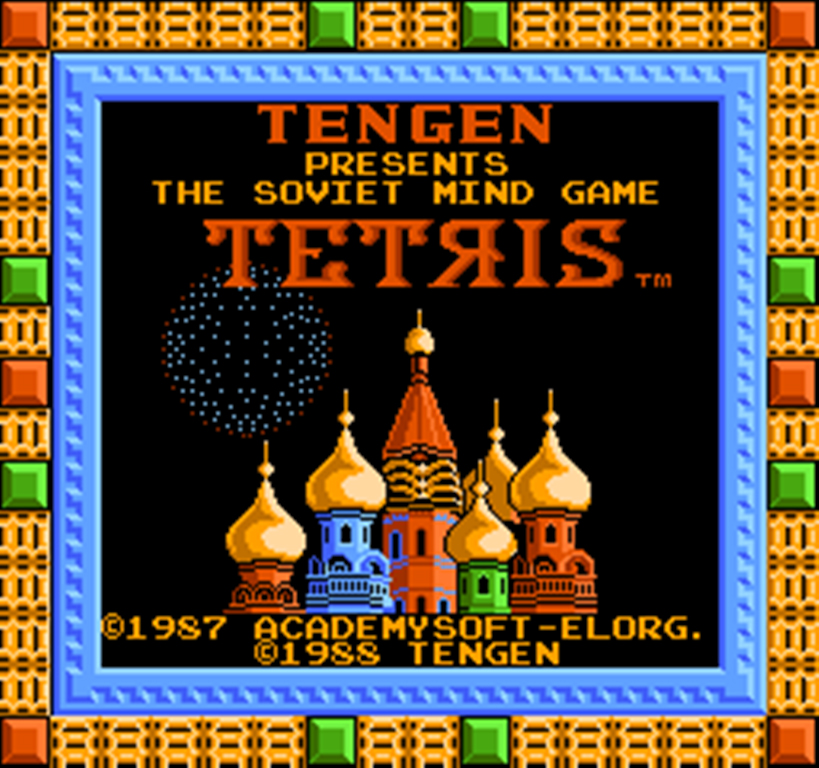
Welcome screen of 1987 version of Tetris

In 1986 Robert Stein, a salesman from the UK-based software company Andromeda spotted Tetris at Hungary’s Institute of Computer Science. He was convinced by the potential of the software and he struck an agreement with Pajitnov to sell the games internationally. But legally Tetris was still under the ownership of the Soviet government.  There was one problem, the agreement was only for the PC and not for any other platform and Stein has struck a deal with Sega to launch the game on their platform. Later Henk Rogers, another salesman from the Netherlands wanted to find a good launch game for the Nintendo’s new Game Boy handheld. The Soviet government was not happy with the Stein deal. But Rogers convinced the Soviet government and they agreed and he also formed a good relationship with Pajitnov. Later Andromeda’s license of Tetris was deemed illegal. Nintendo was given the right to launch the game on its console. The GameBoy was a platform to showcase one of the first video games exported from Russia. The game was a commercial hit and it has been ported to the most number platforms to date. The game also holds the record as the best-selling game of all time. In 1996, Pajitnov was able to reclaim the ownership of the rights and formed the Tetris Company, along with Henk Rogers. Even though he missed collecting the potential royalties for Tetris which were over hundreds of millions, he was still able to secure the future royalties.

References:

Baltic Countries and their economic transformation

Baltics, also known as the Baltic States is comprised of three countries including Latvia, Lithuania, and Estonia. The three countries are situated on the eastern shores of the Baltic Sea. In 1991 the regional governments of Lithuania, Latvia, and Estonia declared independence from the Union of Soviet Socialists Republics (USSR). Three countries have a collective population of just over 6 million. The three have been one of the better examples which have been progressing well after the breakup of the USSR. Many other former Soviet republics have been suffering the disarray of corruption and political instability.

In 2002 Baltic countries applied for membership in the European Union (EU) and by May 2004 all the three countries joined the EU. They also gained membership in NATO by March 2004.

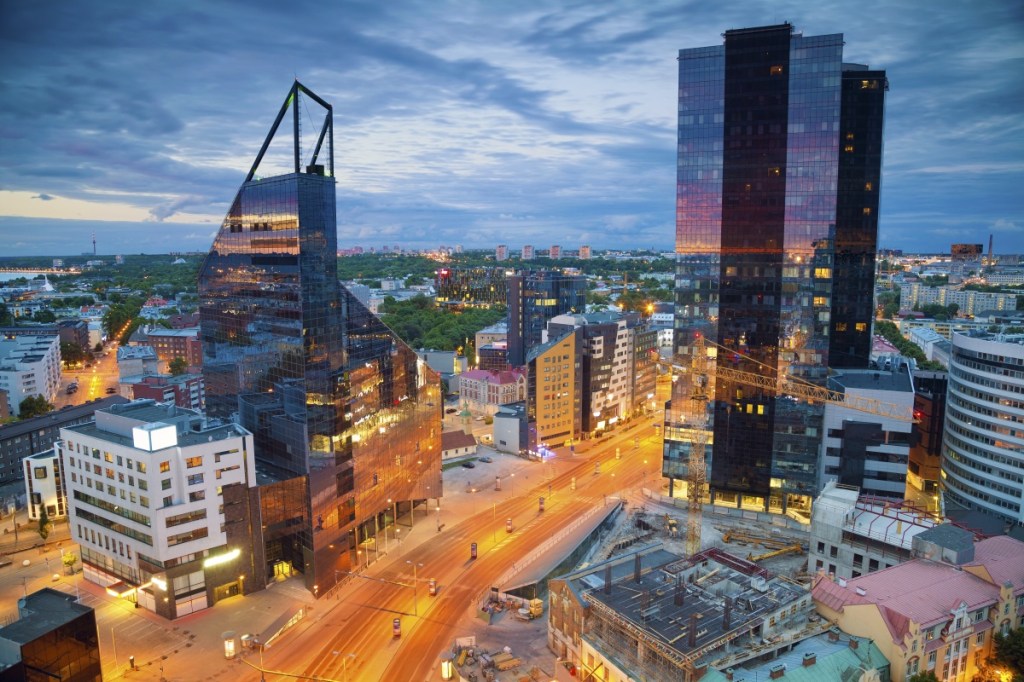
Downtown Tallinn

Baltic independence in 1991

It’s truly astounding how the three countries have developed since 1991. None of them were independent since 1940. The three countries had large Russian minorities and many Soviet soldiers were still stationed there. There were no major national institutions and banking infrastructure with a crumbling economy. There was a growing homegrown national moment against the ruling government since the 1980s. The homegrown fronts won the republican parliamentary election against the ruling party in early 1990 and were allowed to govern but with limited power. The Russian president at that time, Boris Yeltsin had not contested their newly declared independence in 1991. The Baltic also witnessed no violence when the three governments had declared their independence.

The three nations also had almost no natural resources, unlike USSR which was resource-rich. They were still in a very vulnerable situation with a small population and no military of their own. Even though the countries were linguistically distinct with different languages, but people in all three countries had a united drive to strive for a better future. The three had implemented reforms with a shared vision. The governments of the three shared many policies, ideas, and experiences. The Baltic States also valued their new independence with a lot of enthusiasm and didn’t take it for granted. The other ex- USSR countries often had to ask for assistance from Russian Federation and also formed new alliances with the Russian government. Baltic countries on the other hand tried to stay away from joining the post-Soviet Commonwealth of Independent States. In the subsequent years, all the three countries adopted radical economic policies and Estonia was the first mover and Latvia and Lithuania would follow suit. In 1994 Estonia introduced a flat income tax at just 24 percent and the other two also implemented the policies. Currently, Lithuania has a tax rate of just 15 percent which is one of the lowest. With early and fast deregulation and privatization, the Baltic countries were able to capture a large amount of foreign direct investment. Estonia also radically transformed its public sector with various digitalization implementations and less reliance on paperwork. Latvian and Lithuania’s transformation in this area was not as drastic but after some time both of them followed Estonia’s footsteps.  Transparency International ranks Estonia No. 17, Lithuania 37, and Latvia 42 out of 175 countries on its Corruption Perception Index for 2020. This is a commendable ranking considering they all the three are a relatively new entrant to the EU and many other EU countries have lower ranks than the three.

Success attributions

The success can also be attributed to the generous support that the three countries received from the international community and funds granted by the EU, World Bank, and the IMF. In 2008 Baltic suffered from the global economic crisis. The three soon adopted the Euro as their currency to avoid any future liquidity freeze issues that they experienced at that time. The economies al the Baltic rebounded quickly and due to good monetary measures, the three have a very low public debt. Baltic governments have also made swift progress in the Education sector and the three have attained commendable rankings in the Program for International Student Assessment (PISA) of the Organization for Economic Cooperation and Development (OECD). Estonia has done a very commendable task in this area with top 10 rankings in many assessments.  But the Baltics also face many challenges with population loss due to low birth rate and emigration. Proximity and hostility with Russia still is a challenge that the tiny nations have to endure.        

Contemporary International Relations

International relations have been a subject of fascination for most of us, the subject brings us into the different kinds of relations countries shared across the world. But have we ever stopped to think, why we should learn about international relations? Not really. International relations is a vast subjects, its main focus is on the relations shared between the different countries.

Its primary focus is to maintain peace and prosperity across the world. In international relations, peace is indivisible. The core objective of International Relation is to minimize the causes of war and create conditions for peace. We all are human beings, it is in the nature of human beings to share different and radical perspectives on the same thing, but what we should all focus is the need to eradicate a condition that can be a threat to our peace and prosperity.

An important objective introduced in the International Relations is the ‘Logic of Deterrence’. This logic was put into act during the cold war time. The time after World War II saw a lot of changes in the international system. There was an existence of two super powers, US and USSR.  There was tension between these countries and it has led to many proxy wars in other countries. But US and USSR never waged a war against each other, this was due to the logic of deterrence, both of the countries know that they have enough weapons to harm each other, and that there will no winner left standing. It could result in a lot of deaths without having a purpose and so they avoided a civil war at any cost, but it never stopped them from involving with other countries.

 The League of Nations was replaced by United Nations after 1945. This was because it couldn’t prevent the second world II. The UN was established with the motive of preventing any more world wars and in spreading conditions of peace and tranquility. The UN had five main members – US, USSR, France, UK and China. They were known as the big five and are the permanent members of the UN, while the others members of UN are temporary.  The landscape of International Relations has changed across the times, from the disintegration of Soviet Union to globalization paved its way.

Contemporary shape of the international relations has been a collective result of the following three factors. Firstly, with the disintegration of the soviet union, there was only one super power, it was the US. Times after was the US Hegemony, other countries and states were afraid of US. Countries who were not even part of the both the alliances were also very careful to keep themselves out of the way of US.

Second reason was the widespread ideology of liberalism. With communism out of the match, liberalism was seen as a better ideology across the world. Now countries were close to each other for economic reasons rather than political or cultural reasons. One of the example is the Look East Policy by the countries of South East Asia. Sometimes countries are forced into being slaves, not as colonies but in a new term called as neo-colonialism.

And finally, with an increase in the connections across the countries, it has put into effect a set of undesirable changes. Some countries had problems of their own and soon that become problems of other nations too, like terrorism, environmental issues etc. Globalization has set into motion a chain irreversible change. As globalization has set in, it gave a lot of opportunities as well as challenges too. It has become so much important to study about these in our day to day lives.