Cyrus Poonawala to receive Lokmanya Tilak Award

The founder of the Serum Institute of India (SII) in Pune, businessman Cyrus Poonawalla has been named the winner of the prestigious National Lokmanya Tilak Award 2021.He will be commended for his work during the COVID-19 pandemic and how his company helped save many lives by creating the Covishield vaccine and then making provided the medicine to the citizens of the country at an affordable price.Although the awards ceremony takes place on August 1 each year on the anniversary of the Freedom Fighter’s death, this epidemic-stricken year the award has been scheduled for August 13. The prize includes a cash prize of 1,00,000 rupees and souvenirs for the winners. The award was first presented in the year 1983. Winners include former Prime Minister Indira Gandhi, Dr. Manmohan Singh and Atal Bihari Vajpayee; Infosys founder NR Narayana Murthy and former President Pranab Mukherjee.

Cyrus poonawalla

Cyrus S. Poonawalla (born in 1941) is an Indian billionaire businessman, and the chairman & managing director of the Cyrus Poonawalla Group, which includes the Serum Institute of India, an Indian biotech company which is the largest vaccine manufacturer in the world. In 2021, he was ranked number eight on Forbes’ India rich list with a net worth of $12.7 billion. Poonwalla founded the Serum Institute of India in 1966 and built it to the largest vaccine manufacturer in the world by doses. Serum produces over 1.5 billion doses annually of a range of vaccines, including for measles, polio and flu. In May 2019, it was reported that Poonawalla, in partnership with Naum Koen, had proposed supplying Ukraine with 100 thousand doses of the measles vaccine for free vaccination.

Serum institute of India [SII]

Serum Institute of India (SII) is an Indian biotechnology and biopharmaceuticals company. It is the world’s largest manufacturer of vaccines located in the city of Pune, India and was founded by Cyrus Poonawalla in 1966. The company is a subsidiary of the holding company Poonawalla Investment and Industries. he company set out to produce immunobiologicals, which were imported into India at high prices. Among the first products the Serum Institute of India manufactured in large quantities were the tetanus antitoxin, snake antivenom, DPT vaccine, and MMR vaccine. The company’s product lines was expanded to include different types of vaccines against bacterial or virus infections, combination vaccines, influenza vaccine, and meningococcal vaccine. Besides vaccine the company also manufactures antisera, blood plasma, and hormone products. As of 2014 the vaccines manufactured by the Serum Institute of India have been used in international vaccination programmes run by the World Health Organization (WHO), UNICEF, and the Pan American Health Organization (PAHO). Today the Serum Institute of India is run by the Poonawalla Group and engages in research, development, and manufacturing.

The company has partnered with the British-Swedish multinational pharmaceutical company AstraZeneca, which is developing AZD1222 (Covishield) in partnership with the University of Oxford. It is reported that Serum Institute of India would provide 100 million (10 crore) doses of the vaccine for India and other low and middle-income countries. This target was later increased to 1 billion doses by the end of 2021. It is estimated to be priced at ₹225 (around $3) per dose.In September 2020, trials were halted by DCGI after a volunteer in Oxford developed illness following vaccination, but were soon resumed after consent by the British regulators. In December 2020, the Serum Institute of India sought emergency approval for the vaccine developed with AstraZeneca which was approved a month later. In March 2021, an agreement was reached to supply some doses to the UK.

Fighting Corona with Humanity.

I still remember reading our history textbooks and pondering over the fact that how the people in those times had faced the draconian affects of epidemics. Having no vaccine or any scientific knowledge, made them quite helpless. Today in the 21st century, with all the technology in the world, when we are faced with yet another epidemic, it has become a little difficult for us to cope up with it too , but for all different reasons. I , for instance never expected rather never believed that history would repeat it’s one of the worst realities again.
“Just because things are the way they are , they’ll not remain the way they are.”
Bertolt Brecht
UN chief advisers have termed COVID19 as the worst thing to happen since World War II.


Corona virus or to be more specific COVID19 originated in Wuhan , a city in China. And before even the rest of the world could understand what was happening, the unwanted guest was already at their doors. Past these months, thousands of people have succumbed to it, and lakhs lay in the hope to recover. The situation in US had completely shattered the dogma that a superpower can conquer it all. And the eeriness in the’ Bel Pease’ (beautiful country) , Italy, has put the world in a shock. The world is suffering in all possible ways. But few positive outcomes of all this tragedy is the audible sound of birds chirping, the visible blue sky (which was not so visible, and not so blue before), the damaged ozone layer healing itself, and obviously the Earth finally getting a chance to breathe again. Sometimes I wonder how karma pays back and how maybe this situation is what we humans sort of had it coming.
The soldiers in this war, the doctors, police , cleaners and all those people who have been working these past months non stop have shown us that how humanity is the priority.

Novavax and J&J join the Covid-19 vaccine push | Evaluate

After many lives lost in the ongoing 2nd wave and the country preparing itself for the 3rd wave, we should all remember that to get vaccinated , wearing masks and following the social distancing guidelines is surely the key.

How can other people help in fighting the corona war you ask ?
Be Kind. This is a difficult time. Not a time to play the blame game but to play SAFE. Couple of days back I read that a girl from northeast was spat on by a person and called out as CORONA. This is so derogatory and discriminating. This difficult time is not only testing your patience but also testing to what level can you maintain your humane level.
A little help to the helpless please. Do whatever it is in your hands to help the needy. Donate food , money so that they can also get a fair chance at staying alive.
Who let the dogs out?! Well technically the lockdown has left them all alone. So please do take care of the animals out on the street. Don’t lock them out of your hearts.
Meditate the stress away I understand how this lockdown can be so stressful, so in order to keep calm , keep meditating.
Laugh it all out Stay happy and also try to keep your friends cheerful by calling them up. There might be plenty of your loved ones in different parts of the World, who must be waiting for a shoulder to lean on, so go ahead and give them a virtual shoulder to lean on to.
Being Munna bhai MBBS?! I agree that jaadu ki jhappi is all we need, but social distancing ,you know. Also don’t spread rumours and let the real doctors do the real work.
People all over the world are helping the needy with all their heart. Plenty of NGOs , business men, members of film fraternity, and many more have come forward to fight this war the humane way. Love,compassion, awareness and a sprinkle of humanity can help us to get through this war.


John F Kennedy rightly said ,
Ask not what your country can do for you , but what you can do for your country, and right now all you can do ,is Stay Inside.

Alpha through Kappa: Why COVID is unlikely to subside soon.

2020 January – the whole world was scared by the idea of a new virus overtaking all of humanity. There were lockdowns followed by a host of other measures – some very severe, some probably less by governments all over the world. The idea that most doctors and scientists presented was isolation, quarantine and social distancing.

A survey conducted by researchers in England and published by Springer suggests that about 93% participants did not adhere to the covid protocols strictly and 47% of them did so intentionally. The research also statistically established a strong correlation between non-adherence to the COVID guidelines and vulnerability to COVID-19 itself.

Now, COVID is a disease that has no known cure except for a host of vaccines that were prepared in a great show of human endeavour. However, the vaccines were created keeping in mind the initial variants of COVID-19. The world and the governments all over were scared of the simple numbers of May 2020, which are simple given the numbers the world is facing today. The increase in numbers is however not in the same geographic location as the previous spikes, but the unfortunate thing is that it took place in larger population groups, in groups where social and economic security is not guaranteed effectively or at all by the government to all people and in groups where non-adherence to even simpler rules is more common than the previously infected groups. India, Brazil and the US – all three fall under this category. While some may argue various reasons for breaching the covid norms in their respective country or might even blame the governments for the failure, which it must be, but the fact remains that the consequences include a higher infectivity and hence increased death rates. But is that all? Well, no.

Scientist claim that an infectious virus is suppressed when the herd immunity thresh-hold is reached. The best number to reach is 80% of the population. However, in cases of Israel, the government reopened the country after 58% population was inoculated. If the herd immunity is not achieved, the virus gets enough time to mutate and as covid has quite effectively proven, these mutations are not always good. This means that the slow pace of vaccination in countries like India (I say slow given the huge population the country has), Brazil and even slower and probably negligible rates in the poorest nations gives the virus a strong and assured method to mutate and evolve. Most pharma giants and as many countries like Germany too have shown a greater interest in trading the vaccines commercially rather than quickly addressing the possibility of a stronger covid wave every time the poorest nations are denied vaccines. The richer countries indeed need to save their revenue. But a middle ground must be found otherwise the savings of revenue and the vision of a strong pharma market might lead to a civil breakdown like the one towards which protests in Brazil had pointed towards.

More variants are appearing, more people are being infected every day. The vaccinated nations of Israel, US and the UK are back to masks and social distancing. Is the COVID wave going anywhere? Well, probably no. And let us wait for the xhi or phi variant. And then maybe a greek god appears to take the virus away.

Basics of Vaccines

Latin word Variolae vaccinae is the origin of the word vaccine. In 1798 for the first time Edward Jenner developed first vaccine to prevent smallpox. Now vaccine is a biological preparation. It is produced from living organisms. And it will help to induce immunity or sometimes cure the disease. Vaccines can be administered orally or by injection or by nasal routes. Mostly vaccines are in liquid form.

there are types in vaccines
  1. LIVE-ATTENUATED VACCINE: In this type, vaccine is prepared using the living microbes which cause the disease. In laboratories a culture of these organisms is grown and the isolated organisms are weakened or disabled. Even though the microbe is alive, it will loose the capacity to cause harm. The organisms can be disabled by culturing them in sub optimal conditions. These are relatively safe and produce strong response and create long memory. But these are very expensive to produce.
  2. INACTIVATED VACCINE: Here the disease causing microbe is killed or we can say inactivated through various means. Treating with chemical agents or thermal treatment. These inactivated microbes are purified and formulated into vaccine. This type of vaccine are very safe but the memory created will be comparatively of shorter duration.
  3. RECOMBINANT SUB-UNIT VACCINE: Here the microbe is genetically modified and their potential to cause harm is reduced or removed. Some of the components of the microbe can be prepared separately by genetic recombination. Like only a part of protein or DNA can be synthesized and formulated into vaccine.
  4. TOXOID VACCINE: If the disease causing microbe is affecting because of the toxic substance that produces, the toxin can be isolated and purified through cultures of the microbe. And then this toxin can be treated chemically so that it will not cause any harm but will be enough to cause the immune reaction in the body. The inactivated toxin is formulated into the vaccine. This type of vaccine is easy to produce and is very safe. But these will also have shorter memory.
what dose a vaccine contains?

The vaccine is not only composed of the antigen in bulk. It contains some additional fluid also. They contain preservatives to have a good shelf life and to ensure sterility and check contamination. These preservatives will not be toxic at the concentration used. The may sometimes have saline or water. Vaccine may also contain adjuvants. An adjuvant is a substance which helps the vaccine to generate stronger immune response. You can say they make vaccines work better. Aluminum salt is a common example for adjuvant.

working of vaccines:

If you get infected, the body will show defense against the foreign substance and immune reaction would have been initiated and the person will get sick. The vaccine is the mimic of the disease causing microbe and will generate immune response without making the person sick. The mimics trigger the antibodies production in the body. Antibodies bind to these mimics and destroy them with the help of immune cells. This helps the immune system to quickly recognize the enemy if they enter again.

Vaccines have great impact on public health. They help to reduce human mortality. They prevent the entire population from the risk of infectious diseases. Many diseases were due to vaccination programs. Polio is an example to that. So everybody should get vaccinated to conquer the pandemic that we are currently facing.

Are Covid-19 Vaccines Safe for Pregnant Women

See the source image

In a major policy shift, the Health Ministry on 2th July 2021 announced that pregnant women can now get vaccinated against Covid-19. Covid-19 vaccinations can save both pregnant woman and the child, said Dr N K Arora, Chairman, National Technical Advisory Group on Immunization. The Covid-19 vaccination has been expanded to include all citizens above 18 years of age, making more than 69 per cent of the population eligible, of which nearly half 48 per cent are women. Recent studies have shown that pregnant women who get infected with Covid-19 are more likely to require intensive care. Coronavirus infection during pregnancy can result in rapid deterioration of health and affect the fetus also. The health ministry released a fact sheet and detailed information for Medical Officers for counselling pregnant women. All pregnant women need to register themselves on the Co-WIN portal or may get themselves registered on-site at the Covid-19 vaccination center. The process of registration for pregnant women remains the same as of the general population and as per the latest guidance provided by Health Ministry from time to time.

Why should pregnant women take vaccine

Pregnancy does not increase the risk of Covid-19 infection. Most pregnant women will be asymptomatic or have a mild disease, but their health may deteriorate rapidly, affecting the fetus. It is also important for pregnant women to take all precautions to protect themselves from acquiring Covid-19, including taking vaccination against Covid-19. It is therefore advised that a pregnant woman should take Covid-19 vaccines. Multiple studies and experts have recommended that vaccines available in the market are safe for pregnant women to take.

How does covid-19 affect the health of pregnant women

Over 90 percent pregnant women recover without any need for hospitalization. A recent study by the Indian Council of Medical Research (ICMR) revealed that the case fatality rate in pregnant and postpartum women was 5.7 percent in the second wave as compared to just 0.75 percent in the first wave. Moreover, 28.7 percent of pregnant and postpartum mothers had severe symptoms in the second wave, as compared to 14.2 percent who showed any symptoms in the first wave. Those who are symptomatic appear to be at a higher risk of severe infection and death. In case of severe disease, they will need to be hospitalized. Pregnant women who are older than 35 years of age, and those who have underlying health conditions such as high blood pressure, obesity, are at higher risk of getting severe illness.

Precautions which need to be taken

Taking precautions against COVID-19 is extremely important for pregnant women, and so, it is advised that they take the COVID-19 vaccine. Multiple studies and experts have maintained that vaccines available are safe for pregnant women to take. The Covid-19 vaccination schedule can be started anytime during pregnancy. If a woman has been infected with Corona virus during the current pregnancy, she should be vaccinated soon after the delivery. Practice Covid appropriate behavior : wearing a double mask, frequent handwashing, maintaining physical distance and avoiding crowded areas to protect themselves and those around from spreading the COVID-19 infection.

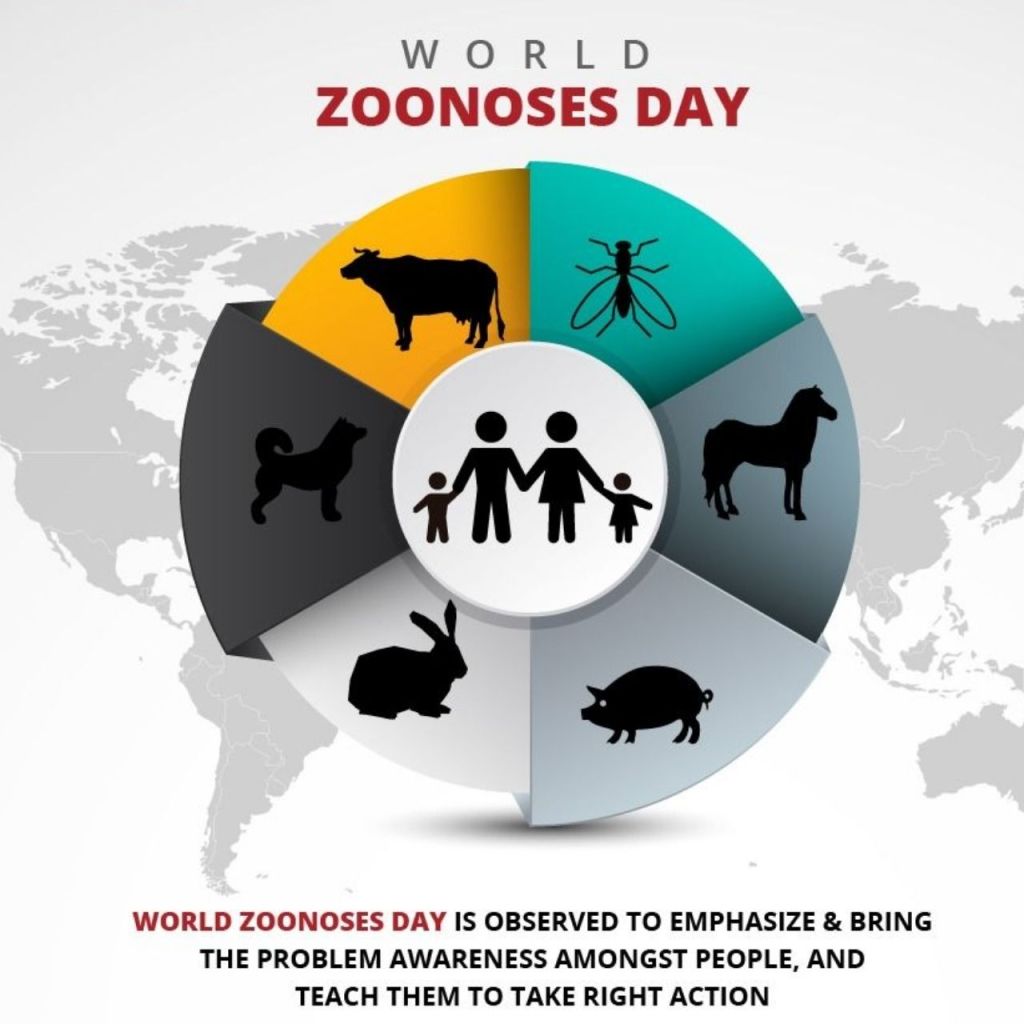
World Zoonoses Day 2021- July 6

Introduction

The World Health Organization (WHO) defines zoonosis as an infectious disease that has jumped from a non-human animal to humans. These zoonotic pathogens can be bacterial, viral, or parasitic and they can be spread to humans through direct contact or food, water, or the environment. World Zoonoses Day was first celebrated on July 6, 1885, in honour of the French biologist Louis Pasteur who managed to administer the first vaccination against a zoonotic disease on the very day, this vaccine was for rabies. The theme for World Zoonoses Day 2021 is “Let’s Break the Chain of Zoonotic Transmission” and it holds more importance in light of COVID-19.

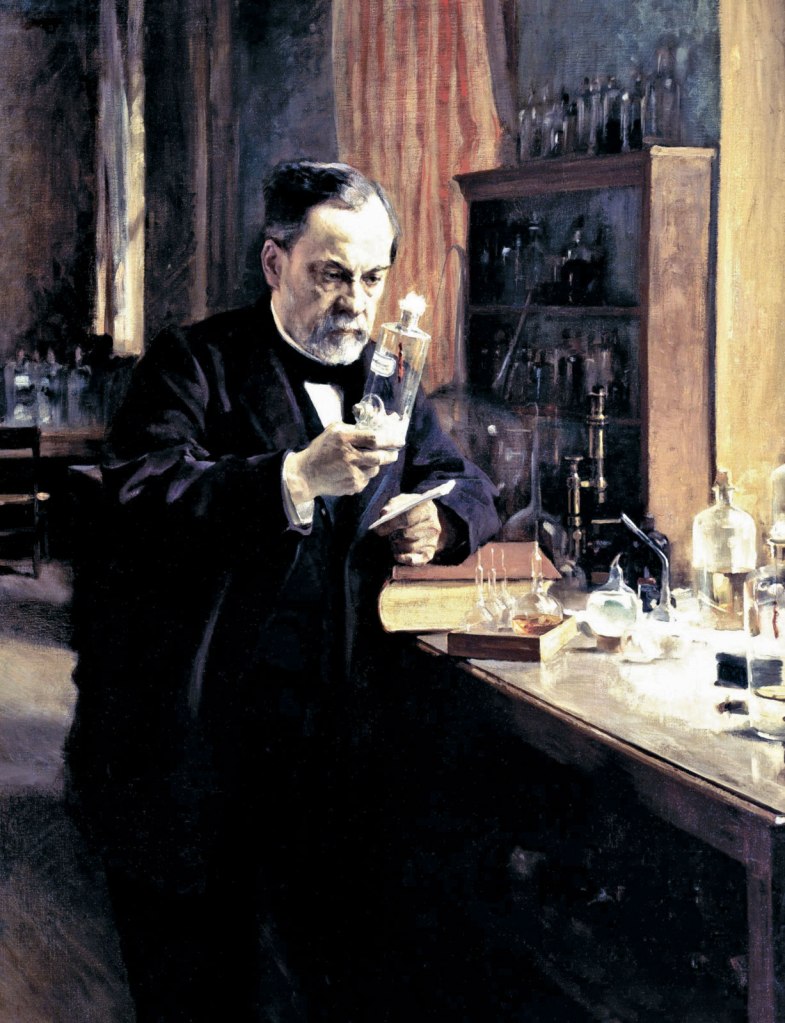
About Louis Pasteur

Scientific Identity, Portrait of Louis Pasteur

Louis Pasteur was born on 27th December 1822 in France and died on 28th September 1895. He was a French chemist and microbiologist who is known to be one of the most important founders of medical microbiology. He introduced the study of molecular asymmetry; originated the process of pasteurization; discovered that microorganisms cause fermentation and disease; saved the beer, wine, and silk industries in France; and developed vaccines against anthrax and rabies. He earned France’s highest award of the Legion of Honour. He was also gifted in drawing and painting. He had a bachelor in arts degree and a bachelor in science degree from the Royal College of Besancon.

Vaccine Development

Pasteur’s first discovery in the study of vaccination was in 1879 which was for the disease named chicken cholera. He then started working on anthrax in 1879 also because of the anthrax epidemic in France at that time. Pasteur had also unknowingly created a second class of vaccines known as an inactivated vaccine by accidentally creating a neutralized version of rabies. On July 6, 1885, he vaccinated a nine-year-old boy named Joseph Meister who was bit by a rabid dog and the vaccine was a huge success.

Relevance Today

This day should raise more awareness now as it is said that COVID-19 originated from the bats and then entered the human circle through the wet markets of Wuhan, China. The Center for Disease Control and Prevention (CDC) says that almost 75% of new zoonotic diseases originate from animals that can be transmitted to humans by the act of consuming meat or even by coming in contact with the animal which is affected. WHO has said that poultry farmers, meat sellers, and the people living near the forest region have a higher chance of risk of being affected by these diseases. Some of such diseases are HIV (started as zoonosis but later mutated into a human-only strain), Ebola virus, salmonellosis. Some of these zoonoses have the potential of causing recurring disease outbreaks like Ebola and as we have seen, different waves of COVID-19.

Prevention

The method of prevention for zoonotic diseases differs for different pathogens. But some general practices are seen as effective. A safe and appropriate guideline for animal care in the agricultural sector would help in reducing foodborne zoonotic disease outbreak through meat, eggs, dairy, and vegetables. There should be a set standard for drinking water and waste removal. Education campaigns should be promoted all across the world related to awareness of the diseases and handwashing after coming in contact with an animal.

Conclusion

It is important to learn the history of zoonotic diseases and learning the precautions for them and how to prevent them. With the recent developments of the COVID-19, we know more about how bad the impact of these diseases can be, and it is now more important than ever to learn more about it.

References

IS INDIA PREPARED FOR A POTENTIAL THIRD WAVE?

Things India needs to do to negate the possible effects of COVID-19 Third wave

India has recorded 26 million Covid-19 cases  which is second only to the US. The second wave of COVID-19  has overwhelmed the healthcare system with hospitals struggling to bear the pressure of oxygen shortage and treatment drugs. Experts believe the wave is getting diminished at the national level. However, people are more awry this time for a potential third wave of COVID-19 virus.

The most important factor that will play the role whether or not India is getting hit by a third wave, is the rate of vaccination. Apart from this, let us look at other factors which can be instrumental to curb the effects of a third wave.

1. Expansion of testing facilities

Timely testing and isolation of COVID-19 patients is the key. Now-a-days, people who are feeling symptomatic to COVID-19 are not testing themselves due to the distance of testing facilities. Free testing for COVID-19( especially for the poor) can be beneficial as well.

2.  Poor needs to be encouraged to seek medical advice

It is a tendency which has been observed that seeking medical advice from doctors is proportional to the economic background of the people. Most of the patients won’t go and seek any medical advice from doctors or pharmacists thinking that would incur charges as well. Lack of health facilities in proximity and affordability are much bigger reasons for not seeking medical advice among the poor than the rich.  The fact that COVID-19 starts with a common symptoms of fever, cough and cold they think it can be managed well by self-medication rather than visiting a doctor after travelling a lot.

3. Financial burden on the patients and their family

There are many patients whose families are unable to pay the debt or the fees of the hospital with regard to the bed, facilities and treatment. According to the survey done by NSO it is estimated that 81% of hospitalization cases (excluding childbirth cases), the expenditure was met by family income or savings. 11% of such cases were financed with borrowing, 3.5% of these were met with contributions from friends and relatives and 0.4% required sale of physical assets.

4. Cover of  Health Insurance

According to the survey conducted by NSO, it is estimated that over three-fourth of hospitalization cases in India involved individuals who were not covered by a health expenditure insurance or scheme . Access to health insurance is correlated to incomes, and the share of hospitalization cases not covered by any kind of insurance increases from 68% among the richest 20% to 85.5% among the poorest 20%. Even in cases where health insurance existed, it did not cover the cost of the entire treatment. NSO survey shows that on an average, health insurance paid for only 10.2% of the medical expenditure and 9.1% of total expenditure (which includes cost of transporting patient as well as the cost of food, lodging, transport, etc.for the household) in cases which required hospitalization.