
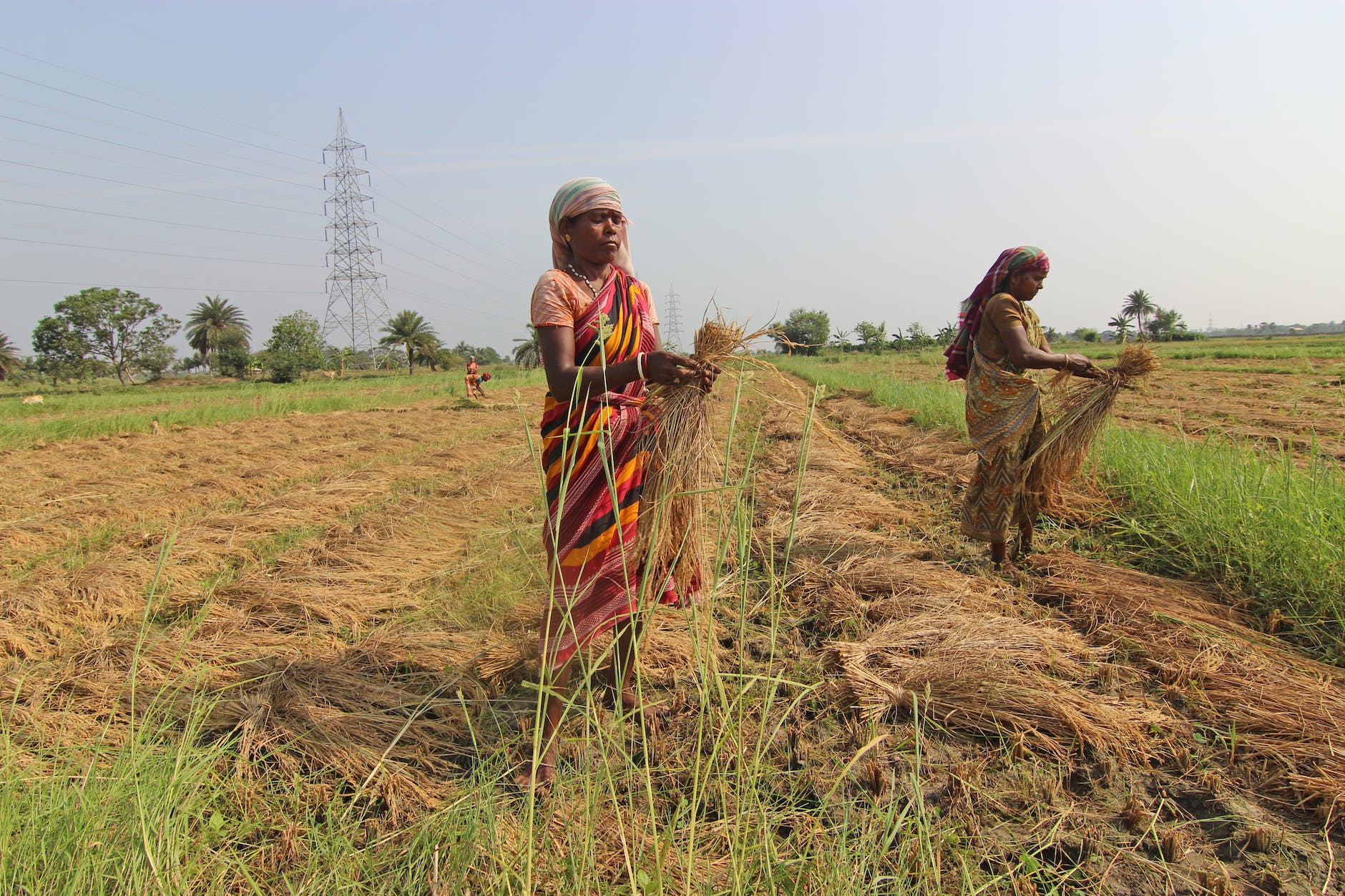
Rural Development.

The majority of population in India (about 73 per cent) is living in rural areas. Living conditions of the rural people are very poor. Under such a situation, development of rural areas must receive adequate attention in various schemes designed for the development of Indian economy.

The rural part of the country is still underdeveloped, and the government is doing what all they can to make sure that the rural part also has all the resources like the urban of the country has. But if survey gets conducted at various parts of the country, one will find out that still there are a lot of city and villages in the country whose development is still under process. Various kinds of roads and bridges are being made in various rural parts of the country so that they get connected to an urban part of the country, and thus people from rural part can travel to urban part easily to do various kinds of jobs.

Many industrialists have stepped out to develop rural part of the country, and that is why a lot of malls, call centers, and other industries are getting set up in various rural parts of the country. These industries will not only make job opportunities for the rural people, but it will also enhance their knowledge about certain things.

The following measures can he taken to attain rural development in the country.

  • Improvement of sanitation and for the improvement of sanitation, arrangements for supply of pure drinking water should be made. Tube-wells and ponds should be dug.
  • Education of the masses, Mass education should be introduced to remove the ignorance of the villagers. Education should be made free and compulsory.
  • Establishment of schools for poor people. Night schools should be set up for poor to teach elementary Hygiene and scientific methods of cultivation.
  • Establishment of cheap medical aid for people in rural areas. Hospitals should be established to give cheap medical aid to the people living in rural areas.
  • Construction of good roads and other means of communication is must.
  • Co-operative Credit Societies should be set up to provide loans to the peasants.

The Ministry of Rural Development is engaged in implementing a number of schemes which aim at enabling rural people to improve their living standards. Education, removal of poverty and speedy socio-economic progress is the goal with which the development programmes are being implemented through a multi pronged strategy, reaching out to the most disadvantaged sectors of society Huge priority is being accorded to provide clean drinking water, rural housing and road. The social security programmes are being implemented for providing assistance to the destitute and downtrodden. Assistance and encouragement to voluntary agencies and training of functionaries forms part of the emphasis on accelerated rural development. The ministry is constantly endeavouring to empower the Panchayt Raj institutions in terms of functions, power and finance. In the new initiative the Gram sabha has become the most significant institutions. Non-Government Organisations self help group and Panchayati Raj institutions have been accorded adequate role to make participating democracy meaningful and effective. Development of waste lands desert and drought prone areas has also been undertaken along with land reforms.

Rural Development.

The majority of population in India (about 73 per cent) is living in rural areas. Living conditions of the rural people are very poor. Under such a situation, development of rural areas must receive adequate attention in various schemes designed for the development of Indian economy.

The rural part of the country is still underdeveloped, and the government is doing what all they can to make sure that the rural part also has all the resources like the urban of the country has. But if survey gets conducted at various parts of the country, one will find out that still there are a lot of city and villages in the country whose development is still under process. Various kinds of roads and bridges are being made in various rural parts of the country so that they get connected to an urban part of the country, and thus people from rural part can travel to urban part easily to do various kinds of jobs.

Many industrialists have stepped out to develop rural part of the country, and that is why a lot of malls, call centers, and other industries are getting set up in various rural parts of the country. These industries will not only make job opportunities for the rural people, but it will also enhance their knowledge about certain things.

The following measures can he taken to attain rural development in the country.

  • Improvement of sanitation and for the improvement of sanitation, arrangements for supply of pure drinking water should be made. Tube-wells and ponds should be dug.
  • Education of the masses, Mass education should be introduced to remove the ignorance of the villagers. Education should be made free and compulsory.
  • Establishment of schools for poor people. Night schools should be set up for poor to teach elementary Hygiene and scientific methods of cultivation.
  • Establishment of cheap medical aid for people in rural areas. Hospitals should be established to give cheap medical aid to the people living in rural areas.
  • Construction of good roads and other means of communication is must.
  • Co-operative Credit Societies should be set up to provide loans to the peasants.

The Ministry of Rural Development is engaged in implementing a number of schemes which aim at enabling rural people to improve their living standards. Education, removal of poverty and speedy socio-economic progress is the goal with which the development programmes are being implemented through a multi pronged strategy, reaching out to the most disadvantaged sectors of society Huge priority is being accorded to provide clean drinking water, rural housing and road. The social security programmes are being implemented for providing assistance to the destitute and downtrodden. Assistance and encouragement to voluntary agencies and training of functionaries forms part of the emphasis on accelerated rural development. The ministry is constantly endeavouring to empower the Panchayt Raj institutions in terms of functions, power and finance. In the new initiative the Gram sabha has become the most significant institutions. Non-Government Organisations self help group and Panchayati Raj institutions have been accorded adequate role to make participating democracy meaningful and effective. Development of waste lands desert and drought prone areas has also been undertaken along with land reforms.

LOCAL SELF-GOVERNMENT

                                                               (Photo: ClearIAS)

According to D. Lockard, local government may be loosely defined as a public organization, authorized to decide and administer a limited range of public policies within relatively small territory which is a subdivision of a regional or national government.

A nation develops from its roots and for a nation to develop we need a strong base and in a country like India, the base is the local self-government like municipalities and panchayats, etc. These are the grassroots of a democracy in our country. It gives a good amount of exposure to the people who participate in the governance and running of these institutions, in both political and social aspects, making our democracy more participative as well as substantive. In rural areas, the self-governing bodies are the Panchayats and in urban it is the municipal corporations, etc. Local self-government consists of rural local self-government and urban area local self-government.

In India, villages are always considered as strength of this country. It is said that the soul of India lives in villages and a majority of 60% of the total population currently lives in rural areas. The exponents of the local self-government institutions hold the view that such local self-governments are the basis of democracy and the best way to develop political consciousness among the people. Through the local self-government, the regional and local interests convert into national interest. The Rural Local self-governments are the result of most landmark year 1992, when the 73rd amendment was incorporated in the constitution. Necessary related provisions were added in 1992 by the way of the 74th amendment act, 1992. It bifurcated the urban local self-government system.

Gandhi Ji also emphasized local self-government. To him, development meant a fuller participation of people in the achievement of essential goals. Village is the primary unit of government and from the village upwards, units of government with residuary powers, are to be established. And at each level, complete democracy and freedom are to be guaranteed.

Thus, the local self-government holds a vital role when it comes to the strengthening of democracy. It encourages local, political, and social leadership, thus making people more participative. It makes democracy substantive with its very own existence. These have to shoulder manifold and complex responsibilities. Hence, they are the grassroots of our democracy.

City vs Village

City Life :-

City derives from a French word meaning citizenry. A city is a large or important town. In the United States, cities are incorporated municipalities with local governments. In Great Britain, a borough with a bishop’s seat is called a city. As with the words village and town, city can also refer to the its inhabitants. It’s like watching Paris from an express caboose heading in the opposite direction—every second the city gets smaller and smaller, only you feel it’s really you getting smaller and smaller and lonelier and lonelier, rushing away from all those lights and excitement at about a million miles an hour.

City Expressions

Many interesting uses of the word city exist in English. For example, imagine you see a place with a lot of stray dogs. You might call it “dog city” to indicate that it is full of or indicative of dogs. A city slicker is someone who doesn’t know much about country life. If you say that you can’t fight city hall, you are saying there’s no way you will win in a battle against bureaucracy.

Advantages of City Life:-

  • City life has an advanced and well-equipped environment. People migrate to cities because of better job opportunities, stability and a decent income which is a lack in villages.
  • Cities have a huge number of schools, colleges or universities established. Hence, the city folks get proper quality education which is a primary factor for standard living.
  • Recreation and entertainment are plenty in the cities. People also get adequate opportunities to establish and showcase their talents here.
  • City life provides commercialization, banking systems, and entrepreneurial businesses. This attracts more people from townships to settle in cities.
  • Better transportation, sanitation, availability of water and drainage systems are seen in cities. The drainage of polluted water goes through treatment before getting dumped in lakes or rivers. This keeps a small check on pollution too.
  • Medical help is at fingertips when required. There are a number of hospitals and clinics and well-equipped doctors and nurses for people in need.
  • Anonymity in cities helps in escaping from the judgements of people.

Disadvantages of city life:-

  • Urbanization is increasing at a rapid pace, and currently, about 30-33% of Indians lives in cities. This rate tends to be around 40% by 2030. With the high population density, the quality of life in cities is expected to degrade and become unfit for living.
  • City life is a very busy one, developing every second to a better version of itself. This results in a loss of cultural qualities and flavours.
  • High demand for city life has resulted in congestion. Human population has increased a lot in city areas.
  • The city’s population increases day by day. This leads to an environment with polluted air, smog, unclean water supplies, noise pollution
  • It follows from the previous point that an increase in pollution rates in the cities brings in more health issues. People tend to fall sick more in cities due to the polluted environment which is unfit for living.
  • Unfair competition among businesses, an increase in crime rates and immorality of the people is more in the cities.
  • Increase in costs and expenditure is a vital problem for city dwellers. This creates a reason for more competition for gaining wealth and hence increases stress and crimes too.

Village Life

The word village comes from a French term referring to a group of buildings. That’s exactly what a village is—a small community in a rural area. Sometimes, larger towns incorporate the houses of a village as a municipality. Village can also refer to inhabitants of a village and is even applied to groups of animal dwellings.

Advantages of village life:-

  • A pollution-free environment is available in the rural/village areas only.
  • Scenic beauty and greenery of rural areas are prominent. This also attracts tourists from around the globe.
  • Rural areas have a scope for socio-economic benefits like reduction in prices of agricultural and consumer products, access to markets, public transport, employment opportunities, and better education and healthcare facilities.
  • The essence of folk and culture is prominent in these areas. This defines the rural areas uniquely.

Disadvantages of village life:-

  • Lack of higher education is a backlog for rural lives. This creates the main hurdle for better standards of living.
  • Rural areas have poor road connectivity. Over 40 per cent of India’s rural population remains outside the rural road network. According to the Planning Commission’s Working Group on Rural Roads, there are over 3.3 lakh rural habitations with no road connection.
  • Limited medical help persists in these areas. A counted number of hospitals and even lesser doctors are available. Hence at times, people are bound to move to city areas for sustaining life.
  • Rural life is difficult for women more because of lack of proper sanitation and toilets. The primary reason for this has to be the lack of educational opportunities.

Conclusion:-

  • Though the city life has many disadvantages, people flock there more for its advantages.
  • Improper road connectivity is one of the main reasons for stopping growth in rural areas. But the government is making situations better for rural India. The Pradhan Mantri Gram Sadak Yojana (PMGSY) is a step towards improving road connectivity in rural parts of the country.
  • Hence, the reduction of pollution in cities and the development of roads and infrastructure in rural areas will bring a balance between the two.