Recycled & Secondary Materials in the Construction of Roads

Daily writing prompt
What is one thing you would change about yourself?

By Kavita Dehalwar

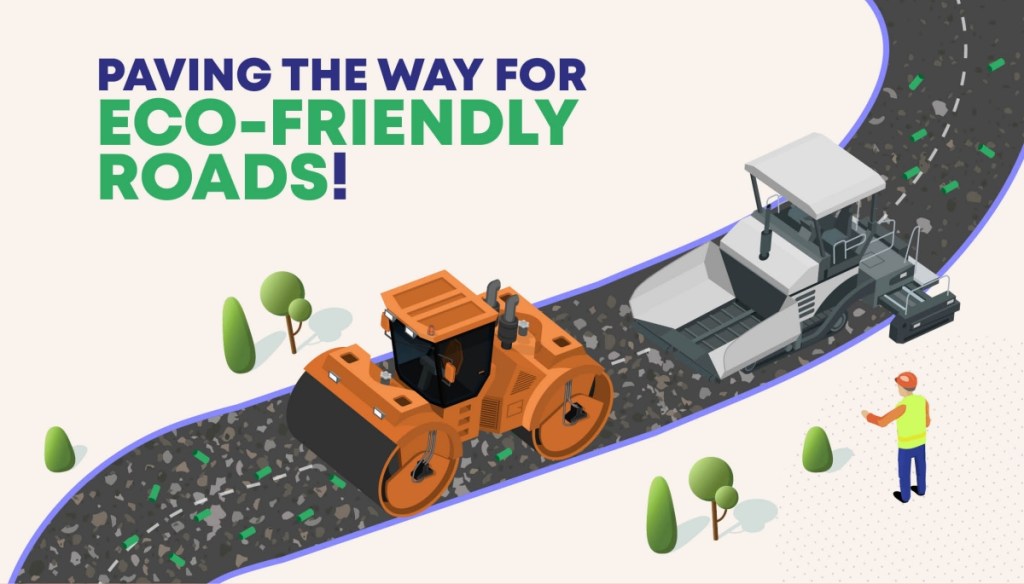
The use of recycled and secondary materials in road construction has emerged as an essential practice for achieving sustainability in the infrastructure sector. These materials not only reduce the demand for natural resources but also mitigate environmental impacts by repurposing waste products. Below is a detailed examination of the topic, highlighting types of materials, benefits, challenges, and future directions.

1. Types of Recycled and Secondary Materials

Several recycled and secondary materials can be used in road construction, including:

  • Recycled Asphalt Pavement (RAP): Milled material from existing roads, used as a cost-effective substitute for virgin asphalt.
  • Recycled Concrete Aggregate (RCA): Crushed concrete from demolished structures, utilized in sub-base layers or as aggregate in new concrete.
  • Steel Slag: A byproduct of steel production, known for its strength and skid resistance, suitable for aggregates in base layers.
  • Crushed Glass (Glassphalt): Recycled glass incorporated into asphalt mixtures.
  • Rubberized Asphalt: Ground rubber from waste tires mixed with asphalt binders to enhance durability and flexibility.
  • Fly Ash and Bottom Ash: Byproducts of coal combustion, often used as fillers or stabilizers in subgrade soils.
  • Plastic Waste: Melted or shredded plastics incorporated into asphalt mixes to improve durability and resistance to cracking.

2. Benefits

  • Environmental Sustainability:
    • Reduces the need for virgin materials, conserving natural resources like aggregates and bitumen.
    • Diverts waste from landfills and reduces pollution.
    • Lowers greenhouse gas emissions by minimizing the extraction and transportation of raw materials.
  • Economic Advantages:
    • Cost savings from using readily available waste materials.
    • Extended lifespan of roads due to enhanced properties of recycled materials (e.g., rubberized asphalt reduces cracking and maintenance needs).
  • Performance Improvements:
    • Some materials, such as steel slag and rubberized asphalt, improve road strength, flexibility, and resistance to wear.

3. Challenges

  • Material Quality and Consistency:
    Recycled materials can vary in composition and quality, leading to potential performance issues if not properly processed and tested.
  • Technical Limitations:
    • Compatibility of recycled materials with traditional road construction processes can be challenging.
    • Limited research on long-term durability for some innovative materials (e.g., recycled plastics).
  • Regulatory and Standardization Barriers:
    • Lack of universal standards and guidelines for incorporating recycled materials into road construction.
    • Hesitation among contractors and governments due to the perceived risks associated with new materials.
  • Economic Factors:
    • Initial costs of processing and testing recycled materials can be high.
    • In some regions, the availability of virgin materials at low cost reduces the economic incentive to use alternatives.

4. Case Studies

  • Rubberized Asphalt in the United States: States like California and Arizona have successfully used rubberized asphalt in highway projects, reducing waste tires and improving road durability.
  • Plastic Roads in India: Cities like Chennai have pioneered the use of shredded plastic in road asphalt, offering a sustainable solution to plastic waste while enhancing road performance.
  • Steel Slag Roads in Europe: Countries such as the Netherlands have utilized steel slag aggregates for base layers, demonstrating improved load-bearing capacity and lifespan.

5. Future Directions

  • Innovation in Material Processing:
    Advances in processing technologies can improve the quality and consistency of recycled materials, making them more viable for widespread use.
  • Lifecycle Analysis and Circular Economy:
    Conducting comprehensive lifecycle assessments to quantify the environmental and economic benefits of recycled materials will support their adoption.
  • Policy Support and Incentives:
    Governments can promote the use of recycled materials through subsidies, tax incentives, and mandatory quotas in public infrastructure projects.
  • Research and Development:
    Continued R&D into novel materials, such as bio-based binders and composite materials, can provide sustainable alternatives to traditional road construction inputs.

Conclusion

Incorporating recycled and secondary materials in road construction is a promising pathway to sustainable infrastructure development. While challenges exist, ongoing advancements in technology, coupled with supportive policies, can pave the way for broader adoption. This approach not only addresses environmental concerns but also contributes to economic efficiency and enhanced road performance, making it a win-win solution for modern societies.

References

Kassim, T. A., Simoneit, B. R., & Williamson, K. J. (2005). Recycling solid wastes as road construction materials: An environmentally sustainable approach. Water Pollution: Environmental Impact Assessment of Recycled Wastes on Surface and Ground Waters, 59-181.

Marinković, M., Zavadskas, E. K., Matić, B., Jovanović, S., Das, D. K., & Sremac, S. (2022). Application of wasted and recycled materials for production of stabilized layers of road structures. Buildings12(5), 552.

Nunes, M. C. M., Bridges, M. G., & Dawson, A. R. (1996). Assessment of secondary materials for pavement construction: Technical and environmental aspects. Waste Management16(1-3), 87-96.

Petkovic, G., Engelsen, C. J., Håøya, A. O., & Breedveld, G. (2004). Environmental impact from the use of recycled materials in road construction: method for decision-making in Norway. Resources, Conservation and Recycling42(3), 249-264.

Sharma, S. N., Prajapati, R., Jaiswal, A., & Dehalwar, K. (2024, June). A Comparative Study of the Applications and Prospects of Self-healing Concrete/Biocrete and Self-Sensing Concrete. In IOP Conference Series: Earth and Environmental Science (Vol. 1326, No. 1, p. 012090). IOP Publishing.

Sharma, S. N., Lodhi, A. S., Dehalwar, K., & Jaiswal, A. (2024, June). Life Cycle Assessment (LCA) of Recycled & Secondary Materials in the Construction of Roads. In IOP Conference Series: Earth and Environmental Science (Vol. 1326, No. 1, p. 012102). IOP Publishing.

From Trash to Treasure: A Hackathon on Innovative Solutions for Waste Utilization

 Driven by the message of Mission LiFE and circular economy goals, the Central Pollution Control Board is organizing an online ‘Waste to Wealth Ideation Hackathon’ for undergraduate and above students on 14th May, 2023 (Sunday) the registration for which are currently open on https://cpcb.nic.in/w2w-hackathon-cpcb/#

 It is a nationwide event to provide platform to college students across the country to solve real-world waste management challenges on (a) plastic waste (b) electronic waste (c) battery waste (d) crop residueIt will help them to build upon their understanding of waste management and present innovative solutions for Waste to Wealth conversion.

The Ideation Hackathon offers a one-of-a-kind opportunity to students to win cash prizes worth up to Rs. 3.6 Lakhs across all waste streams. On the day of Ideation Hackathon i.e. May 14, 2023 (Sunday), one problem Statement each for four waste categories will be posted on the CPCB website at 09:00 am and students will be required to email the original ideas pertaining to it on w2w.cpcb[at]gov[dot]in by 05:00 pm in a given template. The best original ideas under each waste category will be awarded cash prize of Rs. 50,000, Rs. 25,000 and Rs. 15,000. Along with this, chosen ideas will get incubation support, industry exposure, and mentoring from top scientists of CPCB. For further details regarding eligibility, process, important dates and problem scope, please visit https://cpcb.nic.in/w2w-hackathon-cpcb/.

The last date for registration is May 12, 2023 (Friday).


CONTACT

Central Pollution Control Board

Parivesh Bhawan, East Arjun Nagar, Delhi 110092, India

mscb.cpcb[at]gov[dot]in   

Special Swachhta Campaign 2.0

As part of Special Campaign 2.0 being conducted by all the Ministries across Government of India between 2nd October and  31st October, the activities for the Ministry Mines was launched by Secretary, Ministry of Mines, Shri Vivek Bharadwaj on 2nd October at Khanij Kaksh where all the organizations under the Ministry joined through V.C. The Ministry has identified 84 site offices throughout India for implementing 116 swachhta campaigns.

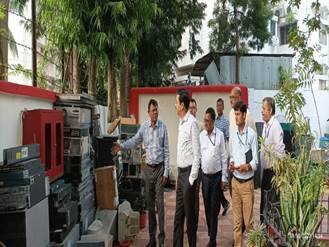
During the preparation phase from 15th to 30th September Secretary and Additional Secretary of Mines ministry visited field offices of GSI and IBM to inspect and guide these offices for the Campaign.

NALCO vermicompost

The goal set by the Ministry this year is “giving back to the environment in the form of rainwater harvesting, compost pits, cleaning lakes/ponds and eco-disposal of waste.” As part of best practices the buildings owned by the offices of Ministry of Mines is setting up rainwater harvesting structures. Three sites have been identified for Compost Pit projects.


   Innovative idea HCLVermicompost (jharkhand)(1)


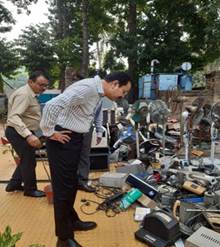
Secretary, Ministry of Mines, Shri Vivek Bharadwaj recently visited GSI Headquarter office in Kolkata and inspected the work being done under Special Campaign 2.0 and instructed the employees to take up the campaign with utmost sincerity to make it a grand success.

     waste gsi

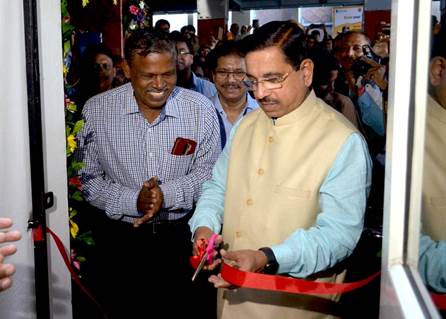
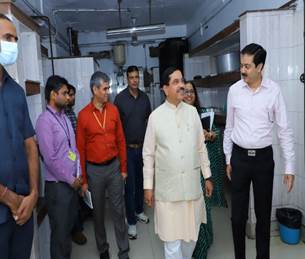
Union Minister of Coal, Mines and Parliamentary Affairs  Shri Pralhad Joshi and Secretary, Ministry of Mines, Shri Vivek Bharadwaj visited the site identified by the Ministry for conversion of space into Wellness Café and encouraged the employees for taking full benefits of the same. Minister Shri Pralhad Joshi also visited GSI headquarters in Kolkata and inaugurated the Wellness Cafeteria there under the special campaign 2.0.

GSI CANTEEN INAUGURATION


The Ministry utilized the campaign for better record management by identifying pending MP references, references from the State Governments, Inter Ministerial references, Parliamentary Assurances, PMO references, Public Grievance and PG appeals.

While reviewing the works done under special campaign,  Minister  Shri Pralhad Joshi suggested segregation of waste in departmental canteen which is being implemented by the Ministry of Mines. Ministry of Education which is the nodal ministry is also requested to issue similar guidelines for the departmental canteen and they have taken up the matter with all the departmental canteens based in Shastri Bhawan for waste segregation and using the bio waste for making compost pits.


GSITI, Hyderabad also as a best practise started waste segregation in its hostel canteen and using bio waste for making compost. Compost Pit has been created in GSITI, Hyderabad.

Ministry of  Mines in special campaign 1.0 has weeded out around one lakh files. This year as the emphasis is on field offices, through its attached and subordinate offices M/o Mines has kept the target of reviewing 3.32 lakhs files under record management. During the campaign the field offices are removing scrap as old as 20 years from their  offices spread across India.

So far, Ministry of Mines and its field organizations have achieved 90.51% of the cleanliness campaign and generated revenue of Rs. 1,58,40,266/- from scrap disposal. About 92,199 square feet space has been freed through efficient records management. It is expected that the Ministry would achieve 100% of the target set for the Special Swachhta Campaign 2.0 by 31st October, 2022.


******

Citizen participation in the national campaign for segregation of waste at source

The goal of the ‘Swachh Bharat Mission Urban 2.0’ is to make cities garbage free. One of the key aspects is to segregate waste at source. This key step will help to reduce the amount of waste that goes to legacy dumpsites. Sustainable waste management being one of the critical challenges, the priority is to shift from the current practice of dumping and burning to sustainable waste management practices that promote segregation, collection, recycling and a circular economy. With rapidly changing urban landscapes, ecosystems, population migrations, and ever-increasing households and establishments, it is essential that behaviour change is reinforced from time to time among citizens.

October is the month of festivals and with behaviour change at the centre of the campaign, MoHUA launched thematic activities to propel segregation of waste at source campaign. The core activities involve dissemination of key messages to the citizens through public outreach, door-to-door messaging and engagement with schools.  

Traditionally on Diwali, most households undertake home cleaning. Children as change agents have been long established under Swachh Bharat Mission and are known to impact overall community behaviors. This Diwali the school children can gift swachhta ka uphaar to their family and friends.


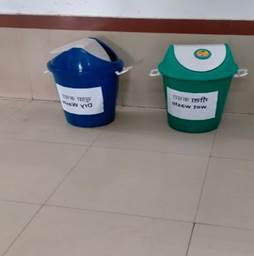
Urban Local Bodies are being encouraged to organize public outreach activities to garner the attention of the residents to promote the practice of segregation. The core activities include – door-to-door messaging with support from NGOs, SHGs, schools, colleges, youth organizations, RWAs, other civil societies, volunteers, etc demonstrating proper segregation covering all wards. ULBs can arrange separate storage systems to be fitted in the collection vehicles – wet (green), dry (blue) and any means of the collection – partitions, large bags, cane baskets, plastic/metal bins, or others. These core activities will ensure collected segregated waste remains segregated until processing facilities.

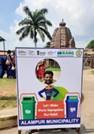
The special activities engaging school children have begun and will go on till 30th of October. Selfie points are being created using installations representing pair of bins -green (for wet waste) and blue (for dry waste). ULBs will engage with the public/school children through tongue-twister challenges. Participants can be challenged to repeat quickly ‘Hara Geela Sookha Neela’ as many times as possible. Mobile Vans/trucks can play “Humein Garv Hai” song and promote messages on clean/SUP free Diwali.

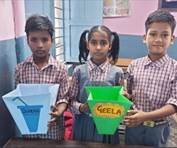
To encourage student participation in promoting segregation of waste both at school and at home, some of the activities planned are ‘Bins Out of Waste’ – Students can be encouraged to collect a bin from home and create art out of it at school using different painting media, students can participate in the Toycathon challenge (Register on https://innovateindia.mygov.in/swachh-toycathon/) where they can be asked to bring in 5-6 segregated dry waste items from home and create toys out of waste. To encourage Home to School Connect, students can create two labels each – green for wet waste and blue for dry waste with messages on segregation at source written on them. The finished labels can be taken back home and pasted on their bins meant for wet and dry waste. Students can also create labels for their homes that can be stuck outside their house proclaiming ‘My house segregates waste’. This can serve as an indirect platform to remind and motivate their visiting friends and family to segregate.

In a massive drive, in the first 72 hours more than 10 lakh children have already been engaged. Participating schools can register on the website sbmurban.gov.in. Each school can be awarded a certificate of participation after the activities.

Celebrating eight years of accomplishments of SBM-Urban, the Hon’ble President of India Droupadi Murmu, on 1st Oct 2022, urged the citizens of India to join in the ‘Segregation of waste at Source’ campaign that focuses on reinforcing correct waste segregation practices among the different sections of the society. As a part of the two-week long Swachh Amrit Mahotsav, MoHUA rolled out the national campaign for segregation of waste at source on 2nd October, Gandhi Jayanti.

*****

What is importance of public health engineering?

Public health engineering helps people to satisfy their humanitarian needs. Today’s crises occur often in urban areas. They usually last longer and have a wider regional effect. They cause widespread human misery, threaten basic services such as water supply and sanitation.

In this blog, I will show what is Public Health Engineering, its learning objectives and the role of a Public Health Engineer.

What is Public Health Engineering?

A clean and balanced Earth is a good place where everyone owns and bears responsibility for ensuring a good quality of life. It can be made possible through several ways.

Some of them are safe drinking water, proper sanitation, and best hygiene practices. This is what Public Health Engineering envisions for our society. It is a specialisation in civil engineering.

Engineers and technical specialists in the fields of water, sanitation, electricity and other related fields are critical in meeting the challenges and rising demands. They are known as public health engineers.

Water processing, purification, transmission, and distribution are all handled by the Public Health Engineering industry. Thus “Sanitary Engineering” is now referred to as “Public Health Engineering.” 

Role of a Public Health Engineer

Public health engineers
Public Health Engineers

A Public Health Engineer must calculate design flow, design population, design area, and population density in order to do his job. They will play an important role in the present and future scenarios for tackling the following issues:

  • Water, air, and soil contamination 
  • Environmental crises
  • Industrial solid and liquid waste management
  • Industrial and occupational safety hazardous 
  • Chemical hazards
REPORT THIS AD

A Public Health Engineer’s position today includes a wide range of responsibilities. This includes: 

  • Ensuring that water levels are controlled and managed
  • Rivers are built to function with increasing populations
  • Water and wastewater treatment systems are planned to meet growing demands
  • Evaluating and reducing water use in domestic and industrial applications.

Now let’s move on to the learning objectives of this amazing course.

Objectives of Public Health Engineering:

The course consists of the following modules.

  • Fundamentals of public health engineering
  • Humanitarian contexts
  • Water supply systems
  • Sanitation
  • Waste management and hygiene protection

Now let’s dive deeper into each of the objectives.

Fundamentals of Public Health Engineering: 

  • The first section explores the fundamentals of public health engineering.
  •  It shows how engineers can help reduce mortality and morbidity in a variety of humanitarian situations. 
  • Engineers must have a thorough understanding of how infectious diseases spread in order to do so.
  •  You will be exposed to various disease transmission routes in the area.
  •  You will gain awareness about steps that can be taken to prevent the spread of such diseases. 
  • To aid comprehension, real-life case studies will be presented.

Humanitarian contexts:

 The humanitarian background in which public health engineering activities take place is presented in this section. How long-running disputes impact urban basic services like water supply and sanitation, causing public health problems are dealt in this section.

Water Supply Systems:

 This section takes a look at some of the most popular water technologies used from the source to the distribution point. We address the benefits and drawbacks of various water distribution systems that can be used.

Sanitation: 

The section covers an analysis of sanitation technology and excreta management. Some of the humanitarian sector’s problems and activities are highlighted with the help of case studies.

Waste management & Hygiene promotion: 

Waste management - public health engineering
Waste Management

The section focuses on medical waste. It is a form of solid waste that public health engineers often encounter in humanitarian crises. Finally, in humanitarian emergencies, we address the crucial problem of behaviour modification and hygiene promotion.

A career in Civil Engineering with a specialisation in Public Health offers promising prospects. Some career choices that students can explore after their specialisation include:

  • Building Engineering & Services
  • Water Resources Engineering
  • Renewable Water Resources Management
  • Facility Management
  • Operations Management
  • Sustainable Design & Solutions
  • Clean Energy
  • Research & Development
  • Entrepreneurship

This Civil Engineering specialisation will place you on the right track if you want to make a difference in combating the global issues. Hope you found this article insightful.

Guidelines on Extended Producers Responsibility on plastic packaging under Plastic Waste Management Rules, 2016

 Ministry of Environment, Forest and Climate Change has notified the Guidelines on Extended Producers Responsibility on plastic packaging under Plastic Waste Management Rules, 2016. The guidelines on extended producer responsibility coupled with prohibition of identified single use plastic items, which have low utility and high littering potential, with effect from 1st July 2022, are important steps for reducing pollution caused due to littered plastic waste in the country. 

In a tweet message, Minister for Environment, Forest and Climate Change, Shri Bhupender Yadav informing about the development stated that guidelines will promote development of new alternatives to plastics and provide a roadmap for businesses to move towards sustainable plastic packaging.

The Guidelines provide framework to strengthen circular economy of plastic packaging waste, promote development of new alternatives to plastics and provide further next steps for moving towards sustainable plastic packaging by businesses. Reuse of rigid plastic packaging material has been mandated in the guidelines to reduce the use of fresh plastic material for packaging. 

The enforceable prescription of minimum level of recycling of plastic packaging waste collected under EPR along with use of recycled plastic content will further reduce plastic consumption and support recycling of plastic packaging waste.

The EPR guidelines will give a boost for formalization and further development of plastic waste management sector. In a significant first, the guidelines allow for sale and purchase of surplus extended producer responsibility certificates, thus setting up a market mechanism for plastic waste management. 

The implementation of EPR will be done through a customized online platform which will act as digital backbone of the system. The online platform will allow tracking and monitoring of EPR obligation and will reduce the compliance burden for companies through online registration and filing of annual returns. In order to ensure monitoring on fulfilment of EPR obligations, the guidelines have prescribed a system of verification and audit of enterprises.

The Guidelines prescribe a framework for levy of environmental compensation based upon polluter pays principle, with respect to non-fulfilment of extended producer responsibility targets by producers, importers & brand owners, for the purpose of protecting and improving the quality of the environment and preventing, controlling and abating environment pollution. The funds collected shall be utilized for collection, recycling and end of life disposal of uncollected plastic waste in an environmentally sound manner. 

Under these producers, importers & brand owners, may operate schemes such as deposit refund system or buy back or any other model, in order to prevent mixing of plastic packaging waste with solid waste. 

Detailed Notification


***

India's long road: Rural development


“The village is the cell of the national body and the cell-life must be healthy and developed for the national body to be healthy and developed.” – well alluded by SRI AUROBINDO.

India as it is said is the “land of villages.” The heart of our nation resides in the rural areas. As quoted by the father of our nation, Mahatma Gandhi, “India lives in her seven hundred thousand villages.” Although the term “Rural development” has been widely used, what constitutes it seems to have changed significantly. So, the question is what exactly is rural development. Rural development means improving the living conditions of the people living in rural areas. There are many definitions to it. The fact is that today more than half of the Indian population lives in rural areas and most of them depends upon agriculture as their primary source of income. Agriculture is an integral part of many world economies, especially the developing ones, and hence plays a significant role in the rural development. The strength and prosperity of our nation depends upon the strength and prosperity of rural areas. Therefore, it is important to free the rural India from poverty.

Our government is trying its best to bring rapid growth and development in the villages. We derive major contributions to GDP from rural workers. Upwelling schemes for rural electrification, open defecation free villages, skill development, Prime Minister rural housing mission, Prime Minister Gram Sadak Yojana, Deen Dayal Upadhyaya Grameen Kaushalya Yojana, National Rural Livelihood Mission, National Rural Employment Guarantee Act, Sampoorna Grameen Rozgar Yojana, Sarv Siksha Abhiyan, Sansad Adarsh Gram Yojana, National Social Assistance Programme etc., has modified the doddering face of Indian villages.

Empowering rural economy through digitalization schemes, regeneration of traditional industries schemes, entrepreneurship schemes, water conservation schemes, MGNREGS, has further added to the rural development and has brought direct benefit transfer. Achieving hygiene and sanitation through government initiatives like SWACHH BHARAT MISSION has further added to the list.

According to the World Bank, “Rural development as a strategy designed to improve the economic and social life of a specific group of people – The rural (people) poor. It involves extending the benefits of development to the poorer among those who seek a livelihood in rural areas. The group includes small-scale farmers, tenants and the landless.” Rural development is a strategy that encompasses all the aspects and factors to achieve an overall spectrum of development and growth. This development is needed to benefit the poor and weaker sections of the society. Rural development seeks to transform all the sectors of rural economy – the primary sector, the secondary sector and the tertiary sector. It is concerned with the improvement of the standard of living of the rural people through the provision of health and medical facilities, employment opportunities including vocational training, educational facilities, etc. It brings about significant improvement in the socio-economic conditions of the scheduled castes, scheduled tribes, the landless agricultural labourers and the marginal and small farmers.

The village land of India is adorned with lush green land, protected livestock and unexplored pool of species which needs special attention of the government. The recent extent of India from the Regional Comprehensive Economic Partnership (RCEP) did mark the promise of self-sustained indigenous production of India. The decision was to safeguard the interests of industries like agriculture and dairy.

Rural development should include social, economic and overall development of a rural area. It should be an all- round project. Employment creation is the main component of rural development. Therefore, to generate employment opportunities in villages, there is a need to strengthen agriculture sector and also set up other industries. A digital platform should be built for active labourers to check the process of employment generation. Integrated and organic farming methods should be promoted. Economic models like Gig’s – economy must be brought in action to counter seasonal as well as disguised unemployment from rural economy. Better planning must be done by the government, to boost up local economy of a village. Better roads connectivity should be put in the major plan of action. Basic amenities should be made available.

“Education is the most powerful weapon which you can use to change the world”, well said by Nelson Mandela. Six Indian states account for about 70per cent of all illiterates in India. India currently has the largest population of illiterate adults in the world with 287 million people, with major proportion in the rural India. While India’s literacy rate rose from 48 per cent in 1991 to 63 per cent in 2006, “population growth cancelled the gains so there was no change in the number of illiterate adults”, says the UNESCO report.

Thus, education is the most important tool which can pave the way for the development of every other factors. The government has been trying to come up with schemes to strengthen education and integrated skill development of youth of rural India. Primary education has been made free and compulsory for the rural people so that the maximum number of the villages may be literate. Schemes like Beti Bachao Beti Padhao, has been proved effective. Women in rural India are still devoid of their ‘fare-share’ in the field of agriculture and labour. Strengthening of service sector has emerged as a boon for women. The problem of the ownership of the land should be resolved. The cottage industries should be established to further accelerate the growth. The villages should be in sync with the urban areas.

Another matter of concern is the crime rate which has increased in rural areas and specially against the marginalized sections of society. The death rates in rural areas due to domestic violence has also not seen any change. Banning of liquor consumption in states like Bihar has provided to be an effective step. People should be made aware and educated about the rights and wrongs. Proper healthcare facilities should also be provided with adequate number of doctors and nurses. Other robust steps should be adopted towards rural development.

It is often felt that the migration of people from rural to urban, in search of employment or better lifestyle, is putting severe pressure on urban amenities. The low wage migrants are thus left with no other option than to live in unhygienic condition. There is a need to make rural economy stronger and create employment opportunities in rural India. This will help in reducing the disparity in per capita income of rural and urban which has always remained high.  A significant growth is required in rural area. Non farming activities should also be encouraged.

The development of rural India is of utmost importance for the development of the country. If India needs to become the next superpower in the world, it needs to tap into the potential of rural India. Given its size and population, no business house can afford to neglect the consumer spending power of rural India. India has many heroes that rural population should look up, like M.S. Swaminathan, the father of the green revolution in India, Varghese Kurien, the father of the white revolution in India. The progress of a nation depends upon the progress of its villages. We can say that the rural areas are the backbone of a nation.

Our rural areas have undergone major changes since independence. We should try to keep in mind the Sustainable Development Goals (SDGs) while trying to achieve the rural development goal. We need to join our hands with the government in embellishing its goal of the development of rural India.