Water Crisis in India: The Present and The Future

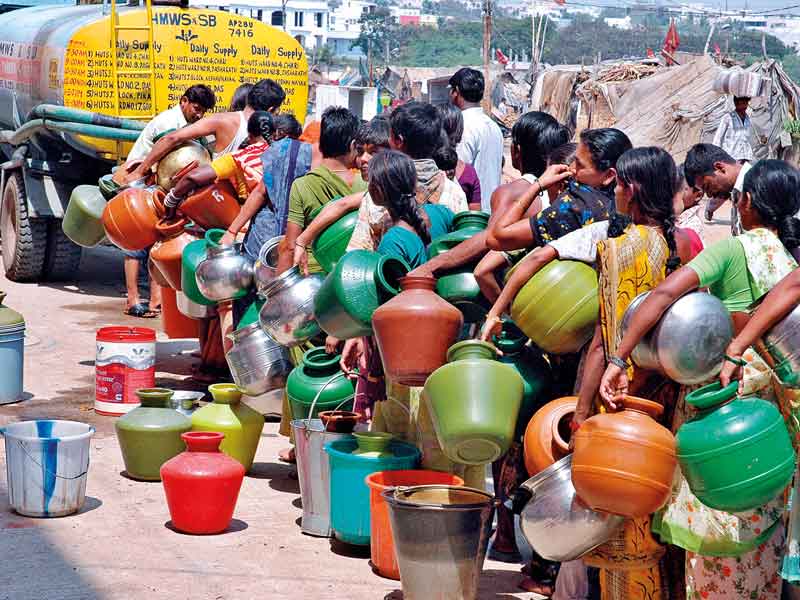
Queue for daily water collection

Introduction

Water is the most essential element of life and livelihood. And India is having a hard time, coping up with the severe crisis of water. India constitutes 16 per cent of the world’s population, but the country has only four per cent of the world’s freshwater resources. With the changing weather patterns and recurring droughts, India is now declared as “water stressed”.
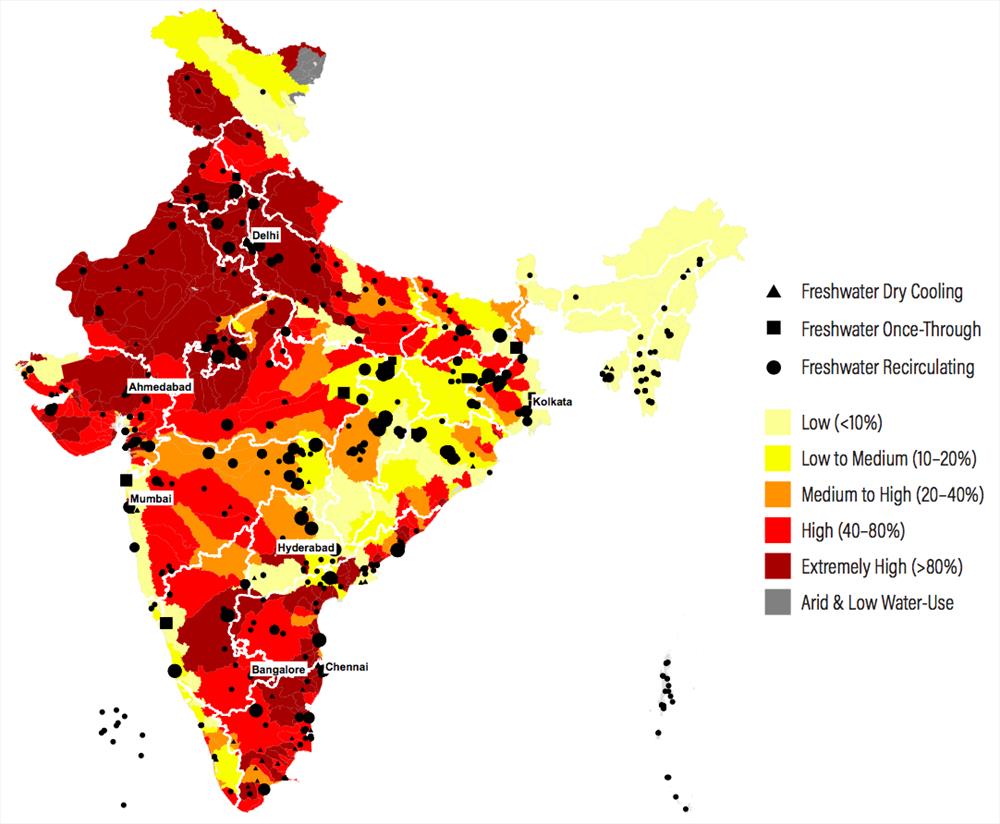
Statistical representation of India‘s Water Crisis

Background

Archaeological researchers had assumed the fall of Great Indus Civilisation was due to a catastrophic water scarcity caused either by shifting rivers or by drastic climate change that forced people to abandon city settlements. And history seems to repeat for present day India again. According to a NITI Aayog report in 2018, about 600 million people, or nearly half of India’s population, are facing extreme scarcity of water. The three-fourths of India’s rural households do not have stable running water supply and rely on sources that can cause serious health risks. The report also stated that India has become the world’s largest extractor of groundwater, accounting for 25% of the total. Moreover, 70% of the water sources were labelled as contaminated .And the conclusion of the report was ‘India is suffering from its worst water crisis in its history.’ It also pointed out 21 Indian cities to be run out of groundwater by 2020.
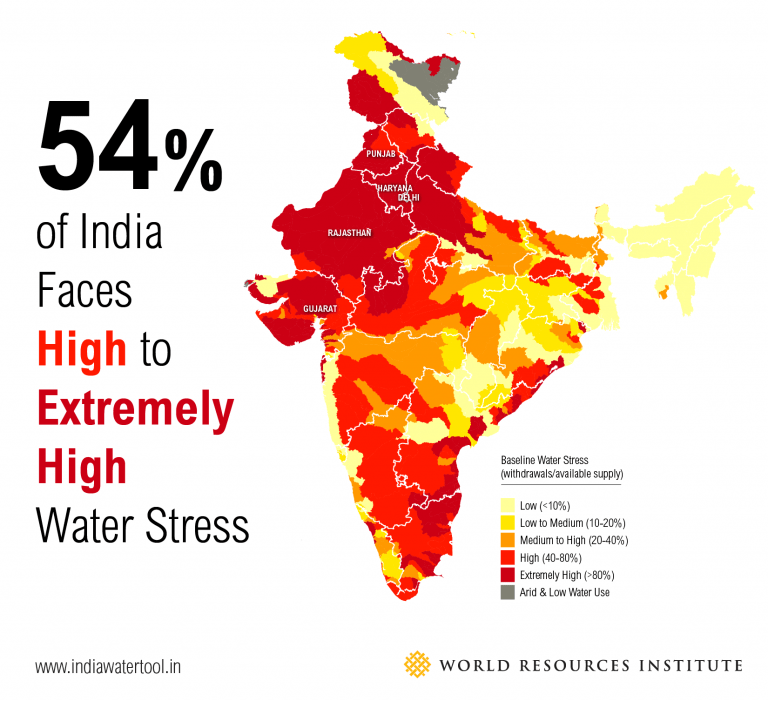
Reasons behind Water Crisis in India

1. Climate Change : The North-East monsoon is responsible for 10%-20% rainfall of the total rainfall in India, while the South-West monsoon provides approximately 80% of rainfall. In 2018, the North-East monsoon decreased by 44% and the South-West monsoon was deficient by 10%, causing the total rainfall in the area to decrease by 36 percent in comparison to the 50-year average. Because of the lower rainfall, water levels in reservoirs across the country decreased and led to extreme shortages of water in many major cities of India

. 2. Ground Water Extraction: Groundwater meets more than half of the country’s need of water supply and nearly 89% of the groundwater extracted in India is used for irrigation purposes. The traditional techniques of irrigation are also to blame for the water crisis as they result in a majority of water loss and evaporation during the irrigation process.
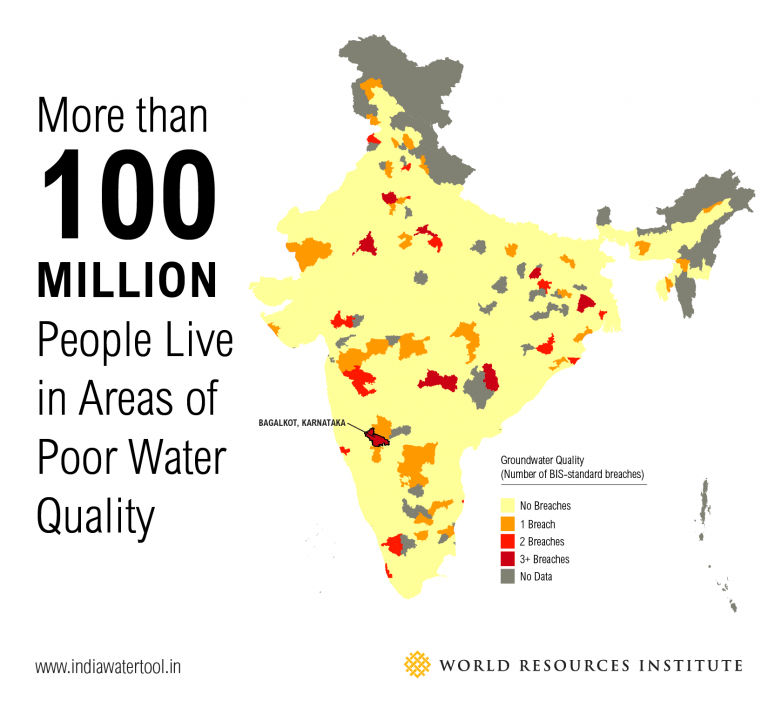
3. Pollutions in Our Rivers: Due to the lack of long term water management plans, most of the country’s rivers either run dry or have remained polluted over decades. The national river of Ganges is also the one that is most severely polluted, which is mainly resulted from untreated sewage of densely populated cities, industrial waste as well as due to religious ceremonies in and around the river.

4. Wastage of Unmanaged Water : According to the Central Water Commission, even though climate change has resulted in a reduction in rainfall and lack in underground water reservoirs, the country still receives enough rainfall to meet the needs of over 1 billion people. However, India only catches only 8 percent of its annual rainfall due to poor rainwater harvesting. Also for lacking the treatment of wastewater reuse, approximately 80% of domestic wastewater is drained out as waste and ends up flowing into salt water bodies.
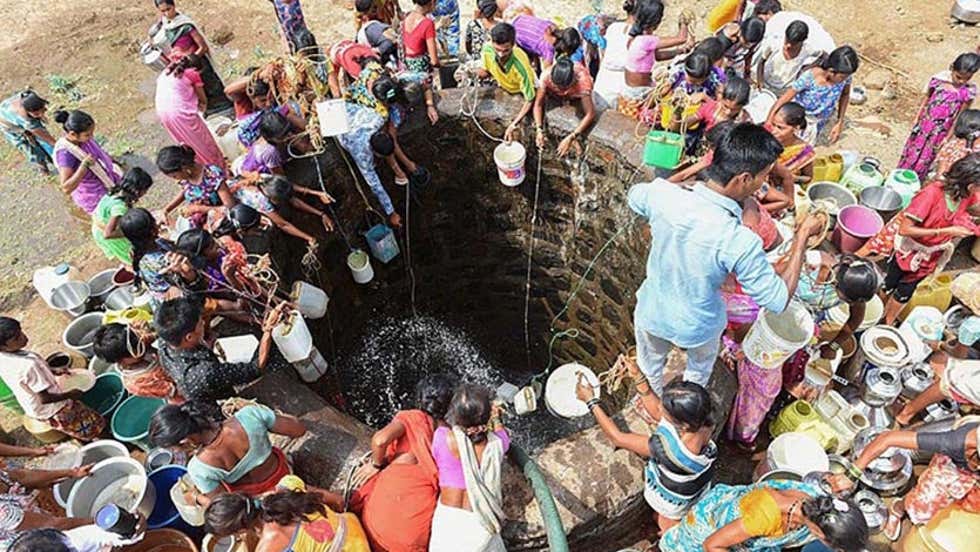
Struggle for daily water collection in water-stressed areas of India

Effects of Water Crisis in India: Where We Stand Today

As many as 256 of 700 districts have reported ‘critical’ or ‘over exploited’ groundwater levels, according to a data from the Central Ground Water Board (2017). Fetching water in India has been perceived as a women’s job for centuries, especially in the rural areas. As groundwater resources come under increasing pressure due to over-reliance and unsustainable consumption, wells, ponds drying out fast, escalating the water crisis and placing even greater burden of accessing water on women. A rural woman in Rajasthan walks over 2.5 kilometres to reach a water source, according to a report by the National Commission for Women. Moreover, according to a non-profit named Water, women around the world spend a collective 200 million hours fetching water for their family. In addition to the time spent collecting water, millions may also spend significant amounts of time finding a place to go to relieve themselves. This makes up an additional 266 million hours lost each day. The acute crisis has even led to polygamy in one drought-prone village of Maharashtra. This involves having more than one spouse to collect water. The arrangement is termed as ‘water wives’.
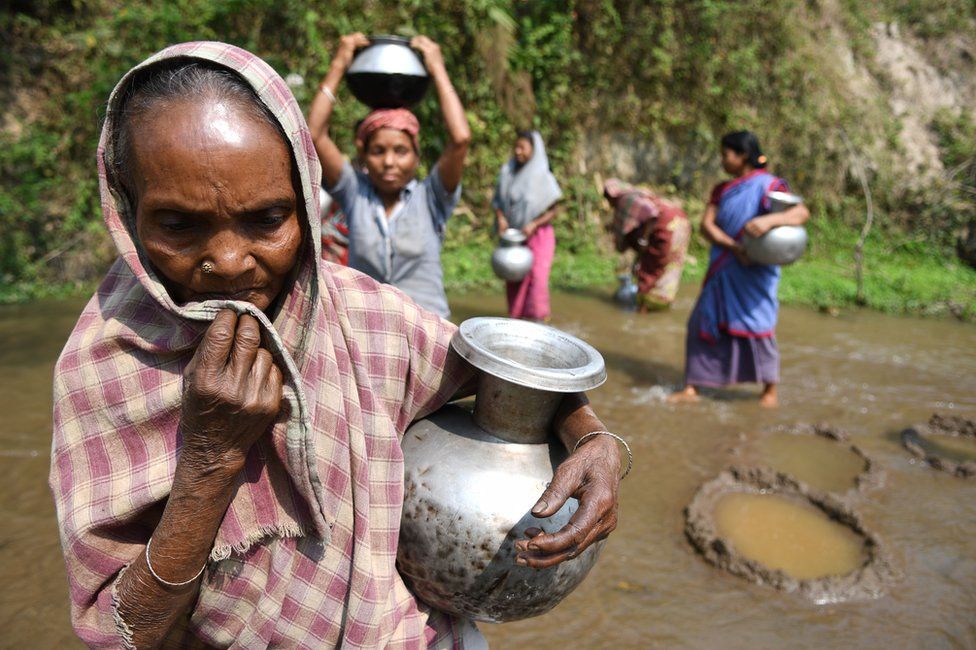
The struggle for women

The Solution to the Crisis: Future Stands
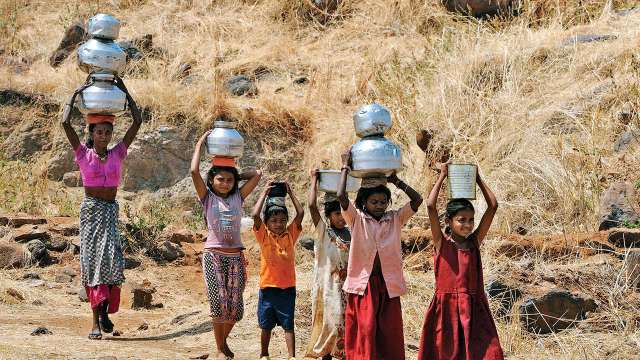
Children also becoming victims of Water Crisis

The Government has taken up the most important role to eradicate the crisis by forming the Ministry of Jal Shakti and launching “Jal Jeevan mission”- Rural in 2019 to promote “Har Ghar Jal” by 2024. Goa and Telengana have achieved the first two Indian states to reach “Har Ghar Jal“, while Andaman & Nicobar Islands and Puducherry became first Indian Union Territories to reach the milestone. In 2021, “Jal Jeevan mission”-Urban was launched to complement the project. “Jal Shakti Abhiyan-Catch the rain” is also introduced to capture and reuse of rain water at the grassroot level as a Jan Andolan. Along with this, for the cleaning and filtration of Ganges river “Namami Gange” had been rolled out as a national flagship mission. Coastal Reservoirs, Desalination of sea water and improved irrigation techniques are now been adopted to address the crisis.
Conclusion

Along with time, active participation from every layer of society in solving the water crisis of India is being witnessed. The youth has come forward with an appealing message to properly addresses the crisis and solve the drawbacks together. Now, the emerging awareness spreading among masses India can hope for a better future to handle the crisis more effectively.
Water and No Water: Wastage, Shortage and mismanagement.

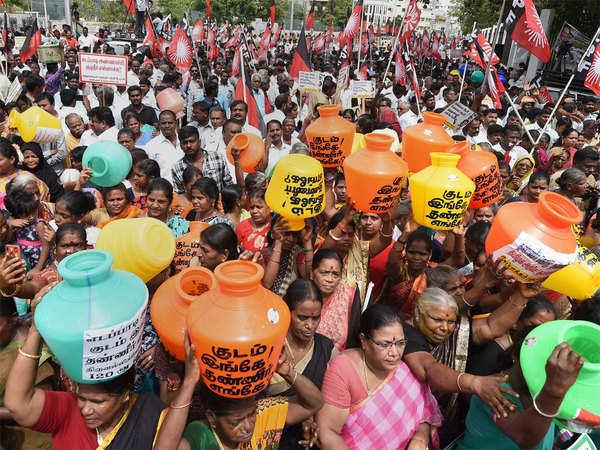
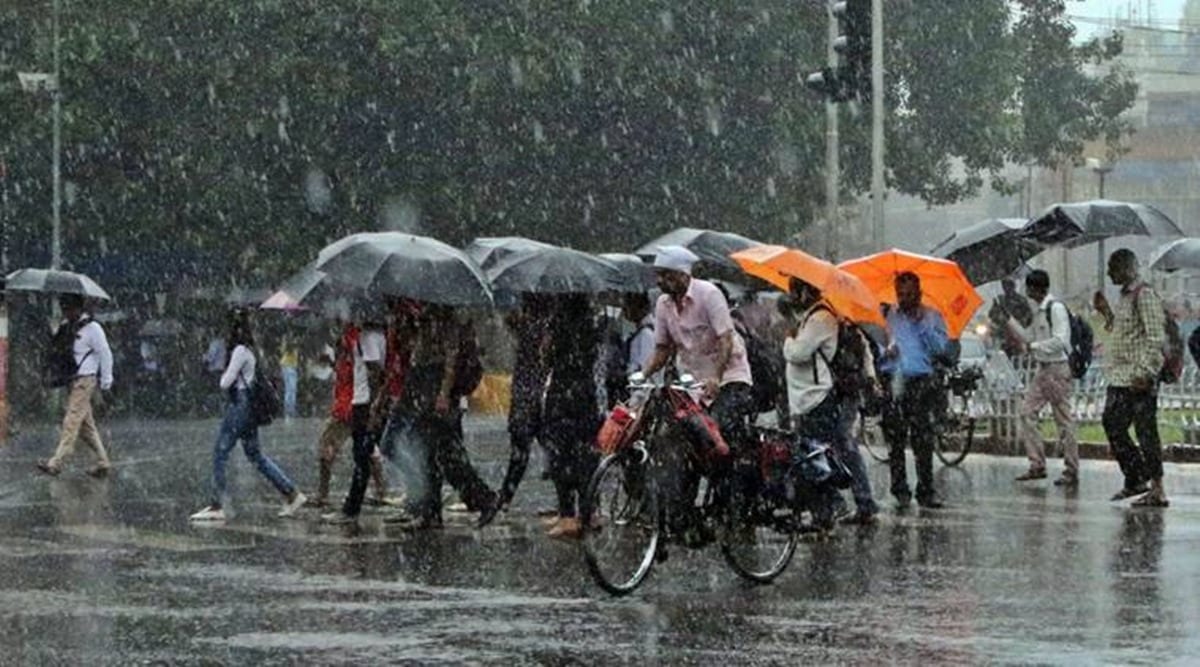
Mumbai is facing a shortage of water with a third of its residents not having drinking water as per a recent report. This comes in heels with the news of massive water-logging across the city and flood-like situations. This is reminiscent of the Chennai Water Crisis in 2019 when a flood had hit the city in 2018 and in May 2019, the city declared a zero-water day – no water left in any of its reservoirs. As per statistics, in the coastal city with a medium size river flowing right through it (the famed Anna University is actually partially built on lands claimed from the river), 60% of its population relies on bottled water for drinking all year long. Was this always the case? History suggests no. But it has been so for about a decade now. This is not very shocking given that Mawsynram, the place with the highest recorded average rainfall on the planet also faces water shortage during summers!!!

Maharashtra received 17 per cent excess rainfall since June: IMD | India  News,The Indian Express
A lot of rain, and yet no water to drink

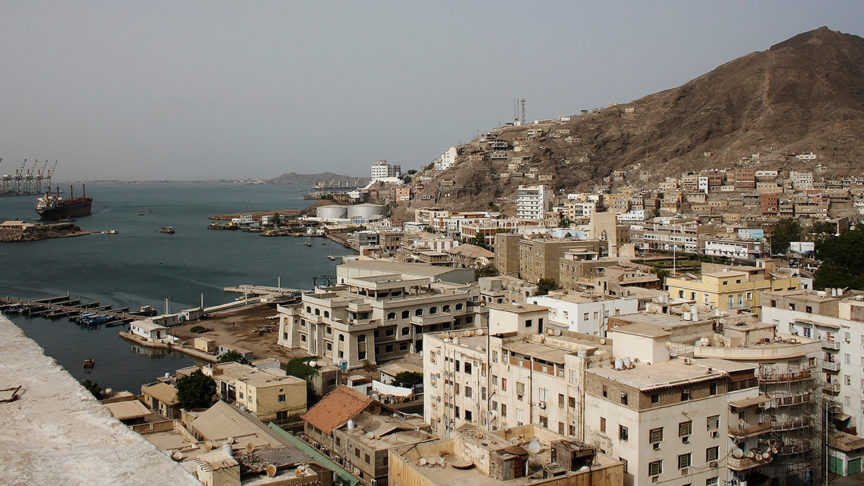
Yemen – the poorest of Arab nations and a region marred by civil war and international interference for more than a decade now might also have the root of its civil war as water shortage. Let us understand that the Yemeni factions are the Houthis, the republicans – with both basically supporting their tribal interests – and a swinging group of Saudi-led forces. Records suggest that there existed blood feud between villages just because a village constructed a well very close to that of the other village. As per data, Yemen has the least water availability per capita on the planet, even inviting statements like – if water were to get exhausted on Earth, this process would begin in Yemen. This is odd, given the fact that Dubai is a sprawling metropolis situated in the same Saudi desert.

War and pieces: Political divides in southern Yemen – European Council on  Foreign Relations
Yemen is the most water depreciated nation on the planet.

The situation is actually grim in many more places – Northern India – a land abundant with rivers and lakes – most of them, technically all of them polluted beyond potability. Go to Africa and the nations with rainforests and rivers are dry.

What is the cause then? We often hear of climate change. A reader would agree about the reality of climate change but would certainly not let go of the sheer amount of mismanagement involved in the handling of water resources. Governments all over the world have tried in their own way to clean water bodies – the money ending up in their coffers owing to balant corruption. In India, for instance, the Save Ganges Movement or ‘Ganga bachao abhiyaan’ in the vernacular has been a project spanning over three decades and costing lakhs of crores – the best part – to no result. NGOs and villagers have often revived water bodies across the planet showing the importance of public participation in government or local initiatives. But, the people aren’t really very concerned about this issue it seems. It might find itself in discussions during summers or in newspapers – but people refuse to consider it as a problem as grim as climate change. No one can imagine the change Chennai saw with themselves.

What is water scarcity?

Water scarcity is defined as the lack of freshwater resources to meet the standard demand for water. We are facing a crisis of water in the global scenario, although the earth’s surface is filled with over 75% of water, only around 5-10% of this water is fit for drinking. On top of this, the resources of water are unequally distributed i.e., one part of the globe has surplus resources and the other part has almost no resources. This uneven distribution is mainly caused due to the erratic climate change for which we are solely responsible. Further, the World Economic Forum in 2019, stated that in the coming decade the global risk is due to water. Droughts, famine, floods are going to be the future of our planet.

Major reasons for this everlasting scarcity are the geographic features and the increasing population of the world. Further reasons, can be improvising standards of living, everchanging consumer market and expansion of agriculture. These factors are currently uncontrollable, a government cannot force down people to compromise on their standard of living or control population, one must realize these effects and take up their measures.

There are many types of scarcity like Physical water scarcity, economic scarcity and water stress. Let’s briefly see all these different types of scarcity; Physical scarcity is the type where there isn’t any water to meet the demands of a particular region. This type of scarcity usually occurs due to inadequate sources of water or poor management of the available sources. This can be tackled by constructing projects like dams, canals and irrigation tanks to store water.

Coming to economic scarcity, this type of scarcity usually occurs when the country is going through an economic crisis or war is going on a neighboring nation. Over 20% of the countries in the world are going through an economic scarcity of water. This can be overcome by accepting aids from foreign countries and even taking a loan from the world bank.

Whatever the scenario of a country, whether it is experiencing a scarcity or not. In the coming future, every country will face a crisis if the resources are not maintained and the population is not kept under control. Hence we must stand together in this fight to save water.

China’s 5 Year Plan (2021-2025): Proposed Dam on River Brahmaputra

The five-year plans are a sequence of economic and social development initiatives furnished by the CCP (Chinese Communist Party) since 1949. The five-year plans were inspired by the five-year plans from the USSR and the focus was on launching new schemes, reforms and setting new growth targets.

Since the 11th five-year plan (2006-2010), the Chinese government has mentioned it as ‘Guidelines’ instead of plans. Currently China is on its 14th five-year plan/ guidelines. Unlike the previous five year plans, there is no specific GDP growth target and instead, the government announced that growth would be kept in “reasonable range” and an annual target would be set based on the specific conditions each year. The focus of the current plan is on self-sufficiency as the country had to endure difficulty after the United States had restricted China’s major chip makers from using American technology. Other areas of focus will be on the above 7 percent growth in the research and development spending. The government will also try to raise the urban residents to 65 percent of the population while maintaining green development and increasing the life expectancy by 1 year. Infrastructure will also be an area of priority with a focus on high-quality development of the belt and road initiative.

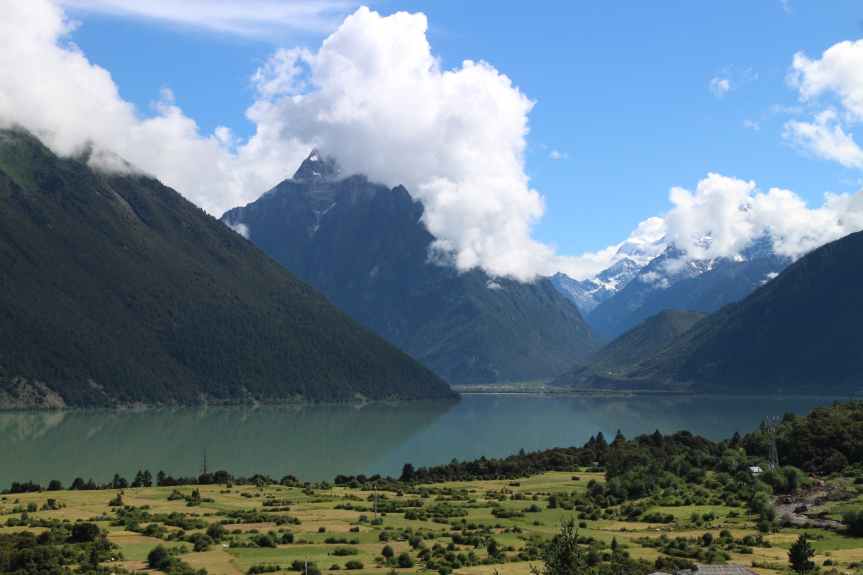
One of the biggest infrastructure projects of the 14th The five-year plan (2021-2025) has been officially approved to build a series of dams in the lower reaches of the Yarlung Zangbo River, as the Brahmaputra is known in Tibet before it flows into India.

The proposed dam would be in Medog, Tibet region will have a maximum possible capacity of 60 gigawatts and could potentially produce 300 billion kWh annually. The location is an area called ‘the great bend’ also known as ‘Yarlung Tsangpo Grand Canyon’ where the river goes through a very drastic U-turn and then the river descents from an elevation of 3000 meters to around 800 meters. Due to the drastic elevation change, the river flow is quite strong and is also an ideal location to build the dam.

The location of the dam could be a strategically risky move by china as it is very close to the Indian border but the other issue is that this proposed dam can undermine the water security of India. India relies heavily on the Brahmaputra River for agriculture and various other purposes.  Due to this, the proposed Dibang Dam by India in downstream (Arunachal Pradesh) might be the solution to offset the effect of the Chinese proposed dam. Although the majority of the catchment area of Brahmaputra is on the Indian side there is still the issue of water flow from the upstream as Assam usually suffers from floods in the rainy season and any additional water flow from the Chinese dam would make the situation worse. The problem will not only affect India but also Bangladesh due to its low-lying land and flood-prone region. Problem is that the region is ecologically diverse and sensitive and any kind of development in this region will negatively affect the ecology of this region. Due to turbulent tectonic plates, there are high chances of landslides and earthquakes as well. India will have to be vigilant and develop its strategy according to the developments on the Chinese side.

References:

Chennai’s water crisis- Natural or man made?

Chennai, the capital city and heartthrob of Tamil Nadu observed ZERO DAY on 19th June, 2019 when there was no water left in all the four reservoir tanks built in the city. Chennai is a city located on southeast coast of India serving as a gateway to the magnificent South India with the Bay of Bengal surrounding it on one side, the city is intersected by three rivers. How come that the city which has “abundant of water bodies” becomes dry. Read this blog to know how the water crisis in Chennai is a result of man’s selfish actions and is a warning giving a hint of what the nature holds for us in future if we degrade it.

Causes of water scarcity in Chennai

Chennai is situated on the south east coast of India and receives majority of its rain during winters because being situated on the south east coast, it lies on the leeward side of the Western Ghats preventing the south west monsoon winds which originates in the Arabian sea on the west coast of India to shed its rain there during summers when generally rest of the country experiences monsoon. Thus it gets majority of its rain from retreating southwest monsoon winds and northeast winds during the months of December and January. The rest of the months the city has to rely on occasional rains and mainly on the reserved water which is scarce in Chennai.

Owing to Urbanisation and construction on the bodies which once were the catchment and flood relief basins, the space required to hold the rains is now blocked. The very suitable example being the very famous IT corridor of Chennai which is built on 230 square kilometers of marshland , has reduced the area of the places to hold the precipitation which occurs during its monsoon. Moreover with the rise in the number of Industries , the water bodies in Chennai are highly polluted. Though the industrialization resulted in Chennai being called “The Deteroit of India” due to the vast automobile sector established there housing the scions such as the Tata motors, the neglection of the authorities in maintaining the precious water bodies resulted to Chennai experiencing the ZERO DAY.

Chennai receives rain on an average of 54 days per year with a minimum average of 140 centimeters of rainfall which is enough for the survival if the water is properly harvested but it is the inability to collect and reserve the rain water which led to the MAN MADE water crisis. Between 1893 and 2017 the area covered by the water bodies is reduced from 12.6 square kilometers to 3.2 square kilometers. As reported by The Diplomat, NITI Aayog  predicted in June that 21 Indian cities would run out of groundwater in 2020. A report by the London-based risk analytics firm Verisk Maplecroft named Chennai as facing an “extreme risk” of water stress, saying its present crisis “could be the new normal for tens of millions of people” in India’s urban centers.

Since there is no enough reserved water for the heat days which comes in June and the water remaining in the water bodies is either too saline or too polluted to be fit for use, Chennai has to rely on the tanks which carry water from hundreds of kilometers far away to satisfy its water needs. As suggested by the various reports , there is 85 percent decline in Chennai’s groundwater levels.

Actions taken by the Government to prevent

  • Chief Minister of Tamil Nadu Edappadi Palaniswami , after that dreadful day in June 2019, announced a public program including maximum participation of women covering everything from rainwater harvesting to water saving and recycling to the protection of water bodies and a massive study on how to clean the polluted rivers. Until the research and the plan is completed , the government decided the construction of desalination plants in the city which though costly will help in a great way to solve Chennai’s water problems until the natural water bodies are restored, by desalining the sea water making it fit for domestic and industrial use. The plan is however still in the initial process as there are many protests regarding how it will cause environmental damages and intense loss to the local fisheries.
  • The past always comes to the rescue. Supported by the Asian Infrastructure Investment Bank and the Dutch Government , the Greater Chennai Corporation has started an initiative called “the city of 1000 tanks” which aims at restoring the tanks near the temples and making it the reservoirs for storing the rain water just like in the past and building new tanks too surrounded by green slopes to help catch the rainwater and increase the groundwater level.

The state of Tamil Nadu of which Chennai is the capital has predicted in its climate action plan that the annual temperature of the city will raise by 3.1 degree celsius by 2100 from its original level of what it was in 1983 and 2000s with the annual rainfall falling by 9%.Further , the little rainfall which the city experience in June and September which was enough to refill the reservoirs and maintain the growth of crops will decrease while the winter rainfall will increase causing more floods and droughts.

The condition which Chennai is facing can be taken as a threat issued by nature to not degrade it else the consequences can be severe. The day is not too far when the rest of the world may also experience what Chennai is , if the present practice continues and that day will lead to our downfall.

“Desalination 97% of Water Reserves-Solution To Water Crises?”

Humans and animals have been travelling since ages in search of food and water. Fresh water and Food are required for any person not to be healthy and fit enough to carry his daily day to day routine. We have been able to find various fresh sources of these waters and their origin, and through advancement in technology we have brought them to land directly to our house. We now need not to travel distances in search of water related just turn on the taps and thus we get it anytime anywhere. This truly has transformed human life and has led cities to develop. The source of freshwater is mainly the groundwater which is assumed to be fresh and not contaminated with dust and adulterants. There are possibilities of hard water in some areas due to the geography of particular areas, but still it is drinkable and people can just boil it or just purify it through the RO or Reverse Osmosis process. 

But as we see and acknowledge these water reserves and resources, these are wasted a lot in various processes including technology and manufacturing. Due to which we are facing a lack of water in various parts of the world and has become a worldwide crisis. It is expected that around 5-6 billion people will be living in areas which will lack water resources by 2050. So it’s high time to be involved in the activities to save this essential resource and thus save humanity. 

But the big question which comes into the mind is that we have 3% of drinkable water, what about the rest 97%. “Why Can’t we use it? And What if we make that water clean and salt free, thus 100% drinkable.So what would be the results if we do remove all the salt water or no salt was ever dissolved in these oceans, how would our lives get affected ?” 

First of all what we need to know is how these water resources got salt into them ? It is assumed that since the existence of earth which was about 4.5 billion years ago,  earth was very hot and it took a few years to cool down. Then Around 3.8 billion years ago, the surface of earth got cooler and the vapours in the surrounding or atmosphere turned into liquid state and were fresh enough to drink directly. But sooner it became saltier due to various natural phenomenon especially like rain. Rain brought the carbon content in the air with it and dissolved in the freshwater. This makes the water a bit acidic, thus eroding the rocks. This water then goes into the rivers and streams residing nearby and thus dissolving those salts of rocks in it. Also there were emissions from Volcanoes which dissolved in these rivers and then into oceans. This process continues for another billion years and hence most of the water we do see around is saltier. 

Technologies and research have been followed up with the steps to remove salts from water and thus make it drinkable. So would it be beneficial for us or rather harmful ? 

  1. It is assumed that cleaning up most of these ocean waters by desalination would affect the life inside the sea and oceans. The marine life creatures have evolved to drink and remain hydrated through the salt water present in the surrounding. Cleaning this water will surely lead to death of most of this aqua life. These have evolved as per their surrounding and remove out the extra salt which helps them to survive. 
  2. The underwater algae which is assumed to be spread all around the world, is responsible for absorbing the carbon dioxide and giving out oxygen, which humans require to survive. Thus cleaning of water would affect these plants and would affect our atmosphere, filling it more with the carbon content and less pure and fresh air to breath
  3. Increase climate change making some parts of the world extremely hot to live in. Phenomenon like hurricanes and cyclones would get common as the temperature increased and this would help these tropical storms to build up. This surely looks no good for humans as per their survival would surely be at stake. 

“So it can be an option to shift towards these ocean water, make it clean and drink it, but still we should prohibit it from doing it as it can have a devastating effect on the survival of all living beings. We could rather save the resources which are present around us rather than interfering with nature. As we know everything is balanced in nature and if any interference could lead to a phase humans would never want to enter. So we all need to understand the importance of water, save it as much as we can, so as to be safe from future affects and thus remain safe.”