India's top 1 percent richest own 40 percent of total wealth.

The richest one per cent in India now own more than 40 per cent of the country’s total wealth, while the bottom half of the population together share just 3 per cent of wealth, a new study showed on 16th january.

Releasing the India supplement of its annual inequality report on the first day of the World Economic Forum Annual Meeting here, rights group Oxfam International said that taxing India’s ten-richest at 5 per cent can fetch entire money to bring children back to school.

On gender inequality, the report said that female workers earned only 63 paise for every 1 rupee a male worker earned. For Scheduled Castes and rural workers, the difference is even starker—the former earned 55 per cent of what the advantaged social groups earned, and the latter earned only half of the urban earnings between 2018 and 2019.

How to manage time.

Time management is an art rather skill that is not easy for everyone. Often, we spend our entire time after college work or office work and it became difficult for us to take out time for our family. Time is very necessary for strengthening the bond that we often take for granted. Everyone is having a busy schedule these days especially because of online classes or work from home situations, but some manage time quite well and manages everything and have a balanced life, while others stay pretty engaged in their official work only that makes the situation stressful.

“Time management” refers to the way that you organize and plan how long you spend on specific activities. Failing to manage your time effectively can have some very undesirable consequences. Being conscious of time will result in self-improvement and goal achievement.

Here are some ways to manage time effectively.

  • Have a to-do list : Having a list is always a time saver. If you have a list, you’ll never have to wonder what’s on the daily agenda or what to do next. Indeed, a list keeps you focused and motivated, focused on feeling that sweet satisfaction every time you tick off a task from your list. Lists also let you see – and monitor – your progress. Even if you’re surrounded by distractions, your list will keep you on the right track.
  • Plan Ahead : Planning ahead is a critical part of time management. Ideally, you should plan ahead for the week or at least the day before. When you know exactly what needs to get done for the day or week, you’ll stay organised and focused. You can break tasks across days to see, in advance, how much time is needed to complete a project. Even spending just a few minutes planning ahead can transform how you work.
  • Be Decisive : Decide each day what the goals are by order of importance and stick to them. If you work in a shared office, avoid unnecessary conversations until you’ve done your task. Don’t get stuck on long telephone calls when you have a deadline looming and write short, polite responses to emails to keep lines of communication open.
  • Stay focused : Try not to let distraction get the better of you. Staying focussed on the particular job at hand is key to your success as a small business start-up. Try staying focused for short amounts of time, say 20 minutes at a go, and then have a short break before diving in again. Being mindful of how long you have to spend per task will help ensure you stay within your timeframe.

How Rich People Avoid Taxes

Taxes are those compulsory financial charges or some other type of levy imposed on a taxpayer by a governmental organization in order to fund government spending and various public expenditures. Everyone who is of a certain pay grade and receiving a certain amount of income has to pay taxes, and even corporations have to pay a certain amount of money in the form of taxes. Hence, there are various types of taxes that must be paid as a financial obligation to the government, to help in defraying government expenses for public welfare. The money given in the form of taxes are meant to be put to productive use, thereby benefitting all those people who have given tax in the first place. However, nowadays we can observe the trend of inequitable taxing in many countries, as the rich are getting away with tax avoidance while ordinary middle class and working-class people are being taxed unreasonably. Failure to pay taxes, as well as tax evasion/avoidance is punishable by law, but many rich people get away with these activities.

The Main Reason

While regular working-class people get paid wages and salary as their income, the rich do not get paid any such fixed remuneration. People with normal jobs get a pay check and pay income tax, ranging from 10-37%. However, wealthy people mainly have capital income, meaning they earn from investments like stocks and real estate. These investments are taxed as capital gains tax, and things like long-term stock have a maximum tax rate of only 20%. Thus, the capital gains tax is taxed at nearly half the rate as income tax. It is clear that there is a large discrepancy in taxation here. This is evidenced by the fact that a billionaire like Warren Buffet has said that he pays less tax than even his secretary.  

Hence, billionaires often face small and insubstantial tax amounts in comparison to what they are earning, and the main reason for these small tax rates is the fact that these people maintain their wealth differently than ordinary people. Their wealth is not being held in their wallets or in their bank accounts. Instead, it is being held in assets like stocks and real estate, which are only taxed when sold. Until then, they are considered ‘unrealized’ and cannot be counted as income. Even when they are sold, the capital gains tax that applies is minimal.

People like Warren Buffet and Jeff Bezos are worth so much money because of the stock they hold, but these stocks are not tangible, spendable or taxable money. This allows them to preserve their wealth effectively, and protect it from excessive taxation. Jeff Bezos, the richest man in the world, pays almost nothing in taxes because his holdings are not defined by U.S. laws as taxable income unless and until he sells them. So, even though he is worth around $200 billion, he is never taxed unless he sells a stock and turns it into real money. This is why we say billionaires are worth so much, but almost never have to pay taxes.   

Conclusion

The reality is that most rich people today do not pay taxes proportionate to their wealth or earnings. It is definitely a problem if wealthy people are not paying their fair share of taxes while normal people are bearing the burden of taxation. Such taxation systems allow the rich to keep getting richer without any real consequence, while everyone else is limited from increasing their financial position due to high tax obligations. To solve this, maybe taxes could be imposed on wealth, or on gains in the stock market. Wealth is the value of the things you own, such as stocks, bonds, houses, etc. Generally, there is no tax on wealth, but it should be implemented as a means of more justified taxation. Even things like increasing the income tax of those at the top, or increasing estate tax will help in taxing the rich more. Basically, taxation must become proportionate to wealth so as to keep a check on the rich, while staying fair to the people working normal jobs.


LAWS OF MONEY THAT WILL HELP YOU BUILD REAL WEALTH

1. Gold/Money clingeth to the protection of the cautious owner who invest it under the advice of men wise in its handling. Therefore while investing your money take the advice of a wise man.

2. Gold/Money sleeps away from the man who invest it in business or which are not approved by those skilled in its keeping simply don’t invest things unknown to you or first learn about them and then invest.

3. Gold/Money goes away from the man who would force it to impossible earning or who follows the alluring advice of tricksters and schemers or who trusts it to his own inexperience and romantic desires in investment

4. Gold/Money will come gladly and in increasing quantity to any man who will put by not less than one tenth of his earnings to create an estate for his future and that of his family.

Influence of Social Class in ‘Pride and Prejudice’

Social Class refers to a hierarchy in a society wherein people are grouped on the basis of their wealth status. Jane Austen’s Pride and Prejudice (1813) is acknowledged for its keen commentary on these aspects of the society. The influence of social class and the greed to climb up this social hierarchy is much of novel’s criticism.  

Austen’s works usually focus on the preoccupations of the middle class and the upper class, and are rarely focused on the Aristocrats (people with title) or the working class. But even within that, there are several other differentiations as Regency England so working for money something of low standards. They acquired wealth through property, marriage, and inheritance. For instance, although the Bingley family are economically farer than most, on the basis of class, they are considered equal or maybe even lower than that of the Bennets as they are said to have made their money through trade or business.

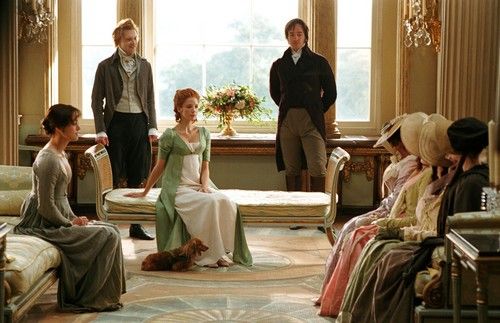
A still from Pride and Prejudice (2005)

The novel also portrays characters who react differently to class. Characters like Bingley sisters and Mr. Collins fawn over the rich and try to please them. Especially Mr. Collins who depends on largely on Lady Catherine De Borough to gain social acceptance. He does all their biddings and constantly attempts to flatter them in order to ensure his good associations with them. Lady Catherine on the other hand, is very proud of her richness and sees everyone as beneath her. The novel satirises these characters who move only in relation to class, and are portrays the conceited idea that social distinction is an important factor in judging someone’s character. Lady Catherine is so used to people doing her biddings and obeying her orders that she is taken off-guard when Elizabeth stands up for herself. She objects to Lizzy marrying Darcy due to her fear that it would indirectly affect her own social class through association. Elizabeth in return, replies that she’d marry whomever she wishes to for her own happiness.

“In marrying your nephew, I should not consider myself as quitting that sphere. He is a gentleman; I am a gentleman’s daughter; so far we are equal.”

Jane Austen (Chapter 56)

Characters such as Mr. Bingley and the Gardeners seem much more as they do not discriminate on the basis of class even if they are financially well-to-do. Darcy can be seen as an example of Austen’s ideal high-class gentleman. Despite seeming selfish and arrogant initially, he later proves that he is capable of change. His innocence also becomes evident when Lizzy talks to the residents of Pemberly. The social status of the Bennet family is threatened to a large extant when Lydia runs away with Mr. Wickham. They are saved from ‘social degradation’ only when Darcy covers up the issue with money.  

Pride and Prejudice shows that class might determine a character’s social situation, but it doesn’t signify anything about their behavior. The marriage between Elizabeth and Darcy shows that even though class restrictions are rigid, it does not determine one’s character and that love can overcome all material obstacles like class. It proves that class is ultimately an arbitrary and meaningless distinction between people.  

Reference Links:

Aspects of Wealth in ‘Pride and Prejudice’

Jane Austen’s Pride and Prejudice (Published in 1813) is considered to be a classic in literature. It has often been glossed over as a romantic novel and though it is concerned with human relationships, especially of romantic ones, Austen focuses a great deal on wealth and class. Her infamous opening quote in itself is a testament to the fact that she consciously criticized the influence of money in a society.

“It is a truth universally acknowledged, that a single man in possession of a good fortune, must be in want of a wife.”

Jane Austen (Chapter 1)

Pride and Prejudice is set in Regency England, which was a time of great political unrest and economy volatility. This was mainly due to the shift of the economy from an agrarian one to that of an industrial one. Until then, people were only mainly concerned about food and other primary needs. But the industrialization paved for more materials in the market like clothes, utensils, etc. So more the commodities, the more people wanted money to spend on such items. Thus, the need for money increased, and in the Regency England, being a gentleman was considered more important than merely being rich. And the concept of a gentleman relied highly on inheritance and people wanted to be rich without working for it.

Austen has taken care to include details of each character’s money and their economy backgrounds. The richer characters include people like Bingley who receives €500 per annum and is clearly rich enough to host balls take care of his sisters’ needs. Georgiana Darcy is said to inherit €30,000 pounds and will remain well-to-do even if she is denied legal inheritance of property. Mr. Darcy on the other hand, is a modern equivalent of a multi-millionaire who gets up to €10,000 per year and would get more from his investments. The middle-class characters include Mr. Bennet who receives approx. €2000 per year and would even be considered an upper-middle class. Mr. Wickham inherits €1000 from Darcy’s father and even more from Darcy for leaving the clergy. Although he spends it all and goes into debt, Darcy pays him again to marry Lydia. The Bennet girls on the other hand, would receive only a maximum of €40 per year until the death of their father, after which, their land would legally go to their cousin. Thus, the Bennet sisters had to marry for survival and not just to uphold class. When Elizabeth rejects both Darcy and Mr. Collins, she’s taking a huge risk by choosing happiness over financial security.

Fitzwilliam Darcy€10,000 per year + more
Georgiana Darcy€30,000 inheritance
Charles Bingley€5000 per year
Rich Characters

Mr. Bennet€2000 per year
George Wickham€1000 inheritance
The Bennet Girls€40 per year
Middle Class Characters

Austen also criticises material obsessions through characters like Mr. Wickham and Mrs. Bennet who obsesses despite not being rich, through Caroline Bingley who is pretentious and through characters like Catherine de Borough who exploit their wealth for status.

One of the criticisms against the novel is also that it unconsciously puts out the idea that you need to be rich and have money to be happy. Elizabeth who marries Darcy is happy, Jane who marries Bingley is happy, Charlotte who marries Mr. Collins is not too happy and Lydia is unhappy as she is doomed to pay off Wickham’s debts for the rest of her life. Nevertheless, the Pride and Prejudice’s detailed treatment of money adds to the novel’s realism.   

Reference Links: