2nd Webinar on Public Policy and Good Governance in Collaboration with IIT Kanpur

Daily writing prompt
What are your favorite websites?

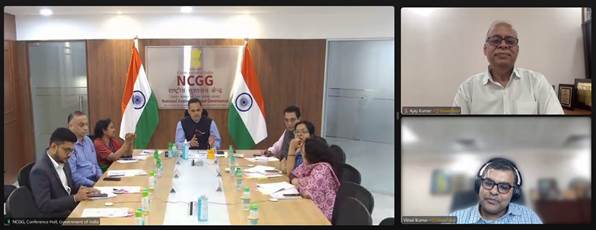
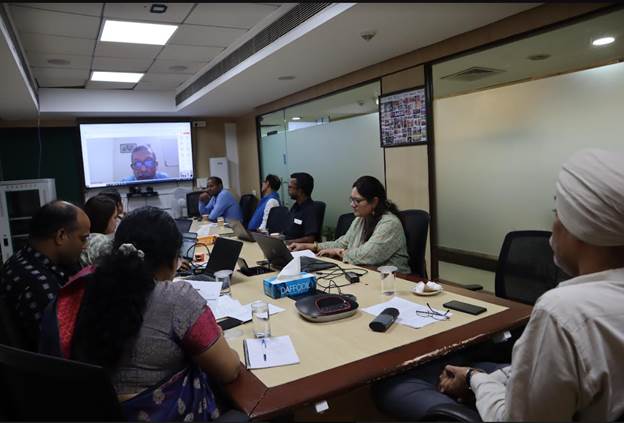
NCGG concluded its 2nd Webinar of webinar series on Public Policy and Good Governance in collaboration with IIT Kanpur on 24th October 2024. The webinar was chaired by Shri V. Srinivas, Secretary, Department of Administrative Reforms and Public Grievances (DARPG) & Director General, National Centre for Good Governance (NCGG).

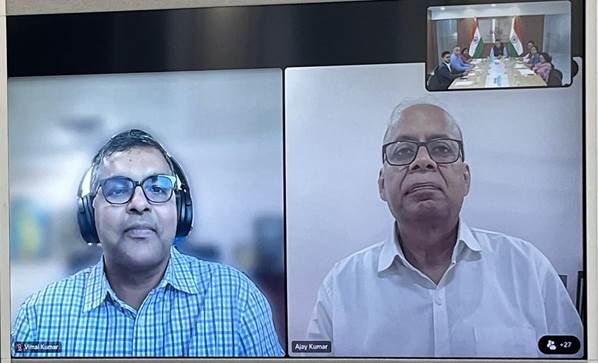
There were two esteemed speakers for the webinars. The first speaker for  the  webinar  was Dr. Ajay Kumar, former Defence Secretary, Government of India & Distinguished Visiting Professor at IIT Kanpur and the second speaker for the webinar was Prof. Vimal Kumar, Head, Dept of Economic Sciences, IIT Kanpur.

Dr. Ajay Kumar delivered lecture on Challenges in Public Policy highlighting the role of Government of India in Policy making and how over the time it has changed its approach in policy making. His lecture further highlighted that changes in public policies should be calibrated in phases, the impact of digitization in mitigating the challenges faced while making new policies by highlighting the digitization of land records. He also highlighted on using data in decision making. He elaborated on the  different  approaches to policy making and  emphasized that the process of policy making should involve diverse stakeholders. While discussing the challenges in public policy he also suggested the solutions such as incentivizing the progressive policies.

The second speaker for the webinar was Prof. Vimal Kumar, Head of Economic Sciences, IIT Kanpur who delivered his lecture on Platform Business Model & their regulation in Digital Economy. He started his lecture by discussing a quick history of Business in India from artisans producing single product to mass production.  His lecture also suggested the importance of network and platform creation for any successful business model. He emphasized on diverse usage of various business platforms including payment networks, social media, traditional media such as newspaper, e-commerce platforms like Amazon & Flipkart, Apple’s App store and others. He also highlighted network on a platform within the group and cross-group wherein he explained attraction loop and attraction spill over. He concluded his lecture with the importance of digital platform using the comparison between BMW and Uber as case studies.

The webinar was concluded by the vote of thanks given by Dr. Himanshi Rastogi, Associate Professor, NCGG. Dr. Rastogi, expressed her heartfelt thanks to all participants, from Institutes of National Importance and Central Universities. She also thanked Shri V. Srinivas, Secretary, DARPG & Director General, NCGG for chairing the webinar.

***

Webinar to boost Jute Craft based livelihoods

 To boost livelihoods in the non-farm sector, the Deendayal Antyodaya Yojana-National Rural Livelihoods Mission (DAY-NRLM), Ministry of Rural Development organized a webinar on Jute Craft yesterday. The webinar was aimed to bring together key stakeholders from various areas of the Jute craft industry to discuss its status, challenges and opportunities.

In his address, Shri Charanjit Singh, Additional Secretary, Rural Livelihoods stated that Jute has the potential of proving itself ‘Golden Fiber’ for livelihoods and ‘Green Fiber’ for the environment. He urged the experts and participants to focus on ways to bring down its production cost and enhance marketing efforts so that Jute craft gets its due recognition as the Golden Fiber and Green Fiber both. With its potential of enhancing incomes it will add to efforts of enabling Lakhpati Didis as envisioned by Prime Minister Shri Narendra Modi.

Welcoming the participants, Ms Rajeshwari SM, Director, MoRD said the webinar would provide a platform for experts and practitioners to share insights on technological advancements, market strategies and the experiences of women artisans in the field.

Shri Kishan Singh Ghughtyal, Joint Director, National Jute Board, Ministry of Textiles, Govt. of India highlighted initiatives of the government for promoting Jute craft with the help of advance technology in reducing drudgery and ensuring diversity of Jute products.Shri Tamal Sarkar, Senior Advisor, Foundation for MSME Cluster (FMC), shared insights on cluster interventions in Jute crafts. Ms. Anjali Singh, artisan and entrepreneur, shared practical experience on the scope & challenges for women artisans in Jute craft marketing and promotion facilitators.

The Indian Jute Industry is a very old & predominant in the eastern part of India. Jute fiber is extracted from the stem of the plant grown as a cash crop in Bihar, West Bengal, Assam, Orissa, Uttar Pradesh and Tripura. In fact, Jute mills form an important industry here and this industry occupies significant place in the Indian economy.

*****

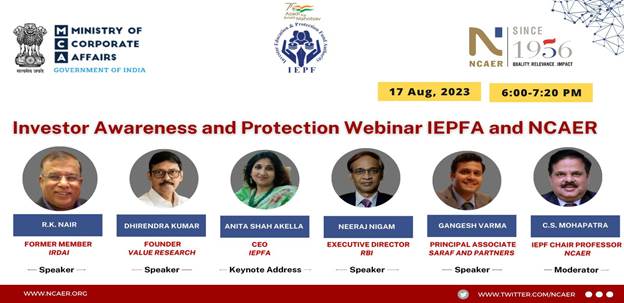
Investor Education and Protection Fund Authority (IEPFA) and National Council of Applied Economic Research (NCAER) organise webinar under the theme “Investor Protection Framework in India: Challenges and Road Ahead”

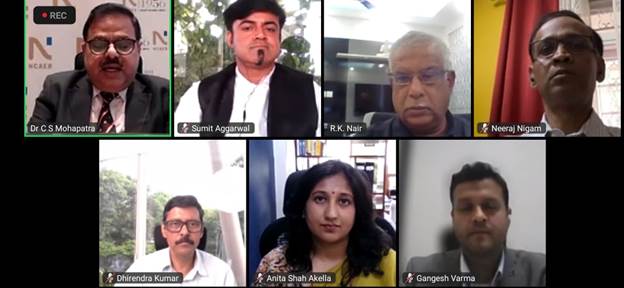
 The Investor Education and Protection Fund Authority (IEPFA), in partnership with the National Council of Applied Economic Research (NCAER), successfully conducted a significant webinar under the theme ‘Investor Protection Framework in India: Challenges and Road Ahead’. The webinar witnessed the convergence of diverse stakeholders including government entities, academic institutions, and industry experts.

A group of people with their heads on a white backgroundDescription automatically generated

The keynote address was delivered by Ms. Anita Shah Akella, CEO, IEPFA and Joint Secretary at the Ministry of Corporate Affairs (MCA). Ms. Akella’s address underscored the critical importance of financial education and protection in the rapidly evolving financial landscape. As financial markets undergo transformation, the paramount significance of informed decision-making and safeguarding investor interests, Ms. Akella highlighted.

Ms. Akella emphasised that financially enlightened individuals wield the potential to create substantial economic impacts through astute financial decisions and elaborated on the concept of a “financially educated” individual, encompassing a comprehensive understanding of economic fundamentals, adept money management, and insightful decision-making spanning budgeting, savings, investments, and consumer choices. This holistic understanding empowers individuals to navigate the intricate realm of financial resources, assets, credit, insurance, taxes, and make prudent choices that resonate beyond individual households, creating positive impacts on communities and societies, Ms Akella said.

The event’s highlight was a stimulating panel discussion on “Investor Protection Framework in India: Challenges and Road Ahead”. Esteemed panelists shared their expertise on various topics, including insurance, digital initiatives, cybercrime awareness, evolving banking systems, and the pivotal role of regulatory bodies in fostering investor awareness.

The distinguished panelists included:

Mr. Dhirendra Kumar: Founder of Value Research. Mr. Kumar delved into the practicality of insurance tools and the need for simplified and comprehensive information disclosure to investors prior to making investment decisions.

Mr. R.K. Nair: Former Member of the Insurance Regulatory and Development Authority of India (IRDAI). Mr. Nair elaborated on insurance matters, emphasizing the practicality and transparent information disclosure about insurance tools to investors.

Mr. Neeraj Nigam: Executive Director at the Reserve Bank of India (RBI). Mr. Nigam provided insights into evolving banking systems and RBI’s role in promoting investor awareness in modern times.

Mr. Gangesh Varma: Principal Associate of Technology and Policy at Saraf and Partners. Mr. Varma discussed digital initiatives for investor awareness and the indispensable need to educate investors about cybercrime prevention.

The engaging panel discussion was adeptly moderated by Dr. C.S. Mohapatra, IEPF Chair Professor at NCAER.

Concluding the event, Mr. Sumit Agarwal, AGM at IEPFA, extended a vote of thanks, acknowledging the invaluable contributions of all participants, speakers, and attendees. He underscored the collaborative spirit of the webinar, aligning stakeholders towards the shared goal of enhancing financial literacy and safeguarding investor interests.

The resounding success of the webinar reflects the collective commitment to fostering financial awareness and safeguarding investor interests amidst a rapidly evolving financial landscape. As global economies embrace digital transformation and financial inclusivity, the event illuminated the pivotal role of financial literacy in unlocking the true potential of these advancements. The webinar sets the stage for sustained collaboration and initiatives that will undoubtedly shape a prosperous financial future for all.

About IEPFA

The Investor Education and Protection Fund Authority (IEPFA) was set up on September 7, 2016, under the aegis of the Ministry of Corporate Affairs, Government of India, for administering the Investor Education and Protection Fund for making refunds of shares, unclaimed dividends, and matured deposits/debentures, among other things, to investors.

About NCAER

NCAER is India’s oldest and largest independent economic think tank, set up in 1956 to inform policy choices for both the public and private sectors. It is one of a few independent think tanks world-wide that combines rigorous economic analysis and policy outreach with deep data collection capabilities, particularly for large-scale household surveys. NCAER is led by its Director General, Dr Poonam Gupta, the institution’s first woman head, who assumed office on 1 July 2021, and it is governed by an independent Governing Body currently chaired by Mr Nandan M. Nilekani.

****

Global Thematic Webinar on ‘Promotion of Cultural and Creative Industries and Creative Economy’

 As a part of the series of Global Thematic Webinars being organised by the Culture Working Group (CWG) under India’s G20 Presidency, the third webinar on “Promotion of Cultural and Creative Industries and Creative Economy” is scheduled on 19 April 2023, from 12.30 pm to 8.30 pm (IST).

The webinar will reflect on the current trends, challenges, and opportunities of the cultural and creative industries, bringing together experts from G20 members and guest nations, as well as relevant international organisations. Organised by the Ministry of Culture, Government of India, the webinar is being hosted and facilitated by UNESCO (Paris), knowledge partner of CWG.

The cultural and creative industries and creative economy, play a significant role in shaping our global landscape, contributing 3.1% to the worldwide Gross Domestic Product. This substantial economic impact contributes to the enrichment of our social and cultural fabric. Notably, the cultural and creative sector employs more people in the age group of 15-29, compared to any other and therefore demonstrates a strong potential for fostering youth employment.

Although the cultural sector makes a substantial contribution to the global economy, its long-term growth is hindered by the absence of a standard definition of the creative economy and insufficient collection of cultural data contributing to its informal nature. Today, 60% of the global creative economy is informal. These challenges not only affect the status of cultural practitioners but also have greater impacts on the larger economy.

The objective of this webinar is to foster an inclusive dialogue and facilitate an in-depth discussion from an expert driven perspective on promoting cultural and creative industries and creative economy. It seeks to encourage knowledge sharing; capitalise on the best practices and experiences; identify gaps, needs, and opportunities for increasing the creative economy’s share in the global GDP and improving cultural data collection for the creation of satellite accounts for the sector, a key step towards its formalisation. Being a subset of the national accounts, these will help better understand the economic impact of the sector and provide policy-makers with comprehensive data for developing policies and strategies that promote the growth and development of the sector. The webinar will also inform the reflection of the G20 membership in formulating tangible outcomes.

It will have three speaking segments and experts will be distributed across these segments based on their respective time zones. The webinar will be moderated successively by representatives of ILO, UNCTAD and WIPO with expertise on the topic. It will be live streamed on the YouTube channel of UNESCO (Paris). The final global thematic webinar is scheduled on 20 April 2023 and will discuss “Leveraging Digital Technologies for the Protection and Promotion of Culture”.

*****

Department of Pharmaceuticals in partnership with Indian National Science Academy organizes a S20 Webinar on “An Integrated Approach to Combat Neo-Infections: A Way Forward, through Vaccines, Diagnostics and Therapeutics”

 Department of Pharmaceuticals (DoP), Ministry of Chemicals and Fertilizers, Govt. of India in partnership with the Indian National Science Academy (INSA), organized a S20 Webinar on “An Integrated Approach to Combat Neo-Infections: A Way Forward, through Vaccines, Diagnostics and Therapeutics” today with deliberation from eminent speakers across the G-20 counties like Australia, US, UK, Canada, South Africa, European Union, Brazil and Indonesia. This S20 webinar focused on discussing a need for collaborative models that would help to strengthen and support research and development (R&D) in Vaccines, Therapeutics, and Diagnostics (VTDs).

During the G20 Presidency of India, the Science 20 or the S20 engagement group has planned a number of webinars and workshops on topics of current interest. The Indian National Science Academy (INSA) is coordinating the S20 activities under the overarching theme, “Disruptive Science for Sustainable Development” with three subthemes focussing on “Clean Energy for Greener Future”, “Universal Holistic Health”, and “Science for Society & Culture”. The emphasis is on the disruptive innovation aspect of science that identifies with the nature and essence of the overarching theme.


An important objective of the sustainable development is to increase the healthy life expectancy of all humans, while promoting well-being across the whole life course. Indeed, creating better global health would not only mean creating better medical infrastructure or ease of access in medical care, it would also require sustainable practices which would help enhance cumulative global health standards. The idea is to create awareness among various stakeholders about disease agonistic platforms for new drug development and develop cost-effective therapeutics for priority pathogens. This could be done through a network of R&D institutions across G20 countries which would function in tandem in sustainable manner and contribute to collective preparedness for thwarting future pandemics.
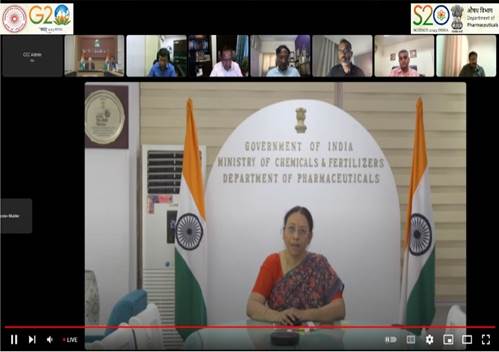
Sh. Rajneesh Tingal, Joint Secretary, Department of Pharmaceuticals, in his opening remarks highlighted various initiatives taken by DoP to foster innovation in India and the need of strengthening research collaboration in vaccines, therapeutics & diagnostics. This was followed by welcome address by Ms. S. Aparna, Secretary, DoP & Prof. Ashutosh Sharma, President INSA & S20 Chair. During her welcome address, Ms. S. Aparna, highlighted the need of creation of Global R&D Network which will help to fight future pandemics. She also emphasized in designing a roadmap by identifying and setting up priority areas for collaboration, strengthening cooperation and partnership among G-20 countries in the arena of Early stage research on vaccines therapeutics and diagnostics for coordinated approaches in fighting emerging disease threats and capacity building in medical countermeasures with the vision of strengthening the global health architecture “One Earth, One Health, One Future”. Prof. Ashutosh Sharma depicted the role of S20 in furthering the agenda of G20 where science will have to play a key role to achieve the economic growth to pull millions of people out of poverty while ensuring that development is inclusive and sustainable.

S20 Webinar featured notable eminent speakers across the G-20 counties. The therapeutics session was moderated by Dr. Girish Sahni, Ex-Director General, Council of Scientific & Industrial Research (CSIR), Govt. of India, involving speakers like Prof. Nicola Mulder, University of Cape Town, South Africa, Dr. Vishal Singh, Penn State University, Pennsylvania, United States, and Dr. Ahmed Aman, Leslie Dan Faculty of Pharmacy, University of Toronto, Canada.

The vaccines session was moderated by Dr. Pramod Kumar Garg, Executive Director, THSTI, Faridabad, India involving Mr. Sourabh Sobti, Coalition for Epidemic Preparedness Innovation, United Kingdom, Prof. Nikolai Petrovsky, Vaxine Pty Ltd., Flinders Medical Centre, Australia, and Dr. Marco Aurélio Krieger, FIOCRUZ University, Brazil as eminent speakers.

Finally, the diagnostics session was moderated by Dr. Anup Anvikar, Director, National Institute of Biologicals (NIB), Noida, India with the engagement of Dr. Nivedita Gupta, Scientist F, ICMR, New Delhi, India, Dr. Vinay K. Nandicoori, Director, CSIR-CCMB, Hyderabad, India, and Dr. Sara Frojdo, Senior Technology Officer, Business Intelligence, FIND, Diagnostics, Geneva, European Union.

Following this, a panel discussion for fireside chat was held, which was moderated by Prof. Narinder K. Mehra, Vice President (Int. Affairs), INSA, New Delhi, India with the engagement of peer-panelist across G20 countries representation from Prof. Nicola Mulder, University of Cape Town, South Africa, Prof. Satryo S. Brodjonegoro, Chairman, Indonesian Academy of Science, Indonesia, Prof. Anil Gulati, Chairman and CEO, Pharmazz Inc., United States.

Some of the key points deliberated by the esteemed speakers included:

  1. Creating a collaborative ecosystem for turning discovery into beneficial therapeutics.
  2. Collaborative efforts to generate important insights while keeping collaborators engaged and committed to their partnerships.
  3. Creating a self-sustaining network of industry-academia and cross-functional industrial collaborations.
  4. Workforce development as a key component of a robust discipline of innovative therapeutic development.
  5. Collaborative environment for innovation & learning to transform processes, technologies, and policy elements of innovation.

Various specific suggestions for building a collaborative ecosystem of the panel members to translate discoveries into effective therapeutics along with suggestions of the participants received during the feedback session were noted and the same would be utilized for developing a robust networked research ecosystem.

The webinar has got good response with more than 1500 registrations across the G-20 countries. This S20 webinar witnessed more than 500 viewers across the virtual platforms. Webinar concluded with a note of appreciation by Prof. USN Murty, Director, NIPER-Guwahati, India to all the S20 speakers, panellists, moderators, and wide participants for their valuable contributions & active participation.

*****

ICMR2023 Conference

International Conference on Multidisciplinary Research (ICMR) 2023 – ICMR 2023 aims to improve its ability to bring together worldwide researchers and professionals, encourage intellectual development of scholars and provide network opportunities for conference attendees for making long lasting academic cooperation. To reach its goal, ICMR2023 benefits from its advisory board members consist of well-known academicians all around world and provide publication opportunities.


Any scholar or professional interested in engineering, science and education around the world is welcome to attend ICMR2023 conferences, which are held couple of times a year.

List of Topics

  • Engineering Topics 
  • Industrial Engineering
  • Textile Engineering
  • Civil and Architecture Engineering
  • Mining Engineering
  • Mechanical Engineering
  • Renewable Energy
  • Chemical Engineering
  • Electrical-Electronics Engineering
  • Metallurgical and Materials Engineering
  • Environmental Engineering
  • Computer and Informatics Engineering
  • Food Engineering
  • Geological Engineering
  • Science Topics 
  • Social Sciences
  • Theology
  • International Relations
  • Communucation Studies
  • Political Science and Public Administration
  • Linguistics
  • Medical Sciences
  • Applied Sciences
  • Law
  • Agriculture
  • Education Topics 
  • Vocational and Technical Education
  • Early Childhood Education
  • Science Education
  • E-learning
  • Secondary Science Education
  • Elementary Education
  • Primary Education
  • Professional Development & Teacher Training
  • Foreign Language Training
  • Educational Sciences
  • Mathematics Education

Venue

The conference will be held in Zoom meeting

Contact

All questions about submissions should be emailed to icmr2023@edupub.org or editor@edupub.org

Important Things to Note

Important Dates

Date for Submission of Papers

20 March 2023 (without Late fee)

30 March 2023 (with late fee)

Acceptance Mail for Papers

10 April 2023

Date of Online Conference

20-22 April 2023

Email id for Submission of Papers

Email: icmr2023@edupub.org

Special Issue for Conference Papers

Visit conference Official Site at https://icmr.edupub.org/

ISBN for Conference Proceedings 

Webinar on ‘International Mother Language Day’

 Vice President of India, Shri M. Venkaiah Naidu today inaugurated the Webinar on the occasion of ‘International Mother Language Day’. The Webinar on ‘Fostering Multilingualism for Inclusion in Education and Society’ is being organised jointly by the Ministry of Education, Ministry of Culture and IGNCA. The Vice President also inaugurated the International Virtual Calligraphy Exhibition. Union Minister for Education, Shri Ramesh Pokhriyal ‘Nishank’’; Minister of State (Independent Charge) for Culture Shri Prahlad Singh Patel; Minister of State for Education Shri Sanjay Dhotre and Member Secretary, IGNCA, Dr. Sachidanand Joshi were also present through the virtual medium.  All the speakers spoke in length about the importance of the Mother tongue and the need for its preservation which will be a treasure for our future generations.

The Vice President, Shri M Venkaiah Naidu today called for making mother tongue the primary medium of instruction, at least until Grade 5. He suggested that educating a child in a language that is not spoken at home can be a big impediment to learning especially at the primary stage. Referring to multiple studies, Shri Naidu said that teaching through the mother tongue in the initial stages of education can boost a child’s self-esteem and enhance his or her creativity. Calling the New Education Policy a visionary and progressive document, he urged for implementing the Policy in letter and spirit.

Speaking at the inaugural session, the Vice President focused on five key sectors to promote the use of mother tongue. Apart from emphasizing the use of mother tongue in primary education, the other highlighted areas are the use of local languages in administration, court proceedings and to deliver judgments in them. He also wanted gradual increase in the use of indigenous languages in higher and technical education. The final emphasis was on everyone to proudly and preferably use their mother tongue in their homes.

Shri Venkaiah Naidu said that with hundreds of languages coexisting, linguistic diversity is one of the cornerstones of our ancient civilization. Observing how our mother tongues can evoke an emotional response in the people, Shri Naidu called them an ‘important link to our socio-cultural identity’, ‘a repository of our collective knowledge and wisdom’ and thus needs to be protected, preserved and promoted.

On this occasion, Shri Naidu appreciated various government initiatives for a multilingual society such as the National Translation Mission, the Bharatavani project and the proposed setting up of a Bharatiya Bhasha Vishwavidyalaya (BBV) and Indian Institute of Translation and Interpretation (IITT).

In conclusion, the Vice President reiterated that languages are nourished only by constant use and that every day must be a Matribhasha Diwas. He called for all-round commitment and efforts to reclaim mother tongues and to ‘feel proud to speak freely and confidently in one’s mother tongue’ in homes, community, meetings and administration.

Speaking on the occasion Shri Pokhriyal said that the importance of language lies not only in national unity but also in strengthening the culture of the country. Research has proved that 90% of a child’s brain develops by the age of 6 and for the holistic development of our children, it is necessary that the knowledge is acquired in the mother tongue, he added.

Shri Pokhriyal highlighted that National Education Policy- 2021 has given maximum attention to the development of mother tongues. The Government has emphasized on promoting multilingualism with our policy so that our children can get acquainted with the vast wealth of languages ​​of our country. He further said that it is the first education policy that empowers students with the subject and language of their choice. The policy recommends that as far as possible, the medium of instruction shall be, at least till class 5, (preferably up to grade 8 and beyond) mother tongue / vernacular / regional language. Shri Pokhriyal said that this education policy calls for many new initiatives that will help in building a truly multilingual society in India.

Shri Prahlad Patel said every mother tongue has a world of its own, has its own character, has its own expressions. While we have to learn other languages, the mother tongue on the other hand develops in us naturally. Everyone feels a sense of attachment and affinity while speaking their mother tongue. The way in which culture influences the development of our personality, in the similar manner one’s mother tongue also strengthens one’s personality.

Addressing the participants Shri Dhotre said that consequent to the declaration of 21st February as the International Mother Language Day, (Matribhasha Diwas) UNESCO in 1999, this day is being celebrated every year since 2015 in a grand manner by involving all the higher educational institutions/schools across the country to organize various activities like Debating, Singing, Essay Writing and Painting competitions, Music and Dramatic performances, Exhibitions etc. Shri Dhotre highlighted that the purpose of the celebrations is to promote the preservation and protection of all languages spoken by the people globally and also to promote awareness of linguistic and cultural diversity and multilingualism of the languages. He further said that the Government has adopted a proactive approach to promote all Indian languages and strengthen the mother tongue in the Indian education system.

****

A Webinar organized to create awareness on newly notified CCS (Pension) Rules, 2021

 A webinar was organized for all the Pensioners’ Associations under the chairmanship of Shri V. Srinivas,   Secretary (P&PW) with the objective to create awareness on newly notified CCS (Pension) Rules, 2021 and generation of Digital Life Certificates using Face Authentication Technology.  Central Government Pensioners Associations from all parts of the country participated in the meeting. Presentations were given on CCS Pension Rules 2021 and on DLC generation through Face Authentication followed by a Question Answer session after each presentation.

Secretary (P&PW) expressed his happiness to meet such a large group of 52 participants from the various Associations and to have a constructive interaction. He appreciated the intensity of the discussion and the various queries raised, given the release of CCS Pension Rules 2021 on 25th December 2021 and the recent launch of DLC generation through face authentication. The curiosity among pensioners was very understandable and such interactions would continue with a view to stay in touch and ensure that every association reached out to.  He also requested each Association to have regular interactions with their membership.

He reiterated that the objective of the meeting was to enhance interaction between the department and the pensioners’ associations, especially at his level so that he could know each one personally and the associations could be assured that the Secretary would be in a position to understand and listen to areas where concern exists. He informed that since the pension department is a very legalistic and policy based department, it is important to understand where reforms are necessary and constant updations and amendments in law may be required to ensure greater benefits given to pensioners and that will be the objective of the entire exercise. He expressed hope that membership of each association is more than 300 and they are interacting regularly with the members.

National Webinar on Multidisciplinary and Holistic Education

 As part of the celebration of one year of transformative reforms under National Education Policy, 2020, Government of India is organising a series of theme-based webinars on different aspects of National Education Policy, 2020. Multidisciplinary and Holistic Education being one of the biggest thrust area of NEP, University Grants Commission organised a National Webinar on Multidisciplinary and Holistic Education today. Minister of State for Education Dr. Subhas Sarkar delivered the address. Senior officials from Ministry of Education and University Grants Commission attended the Webinar.

National Webinar on Holistic and Multidisciplinary Education on 02.08.21 from 12:30PM onwards https://t.co/9xsRiYjYmw

— UGC INDIA (@ugc_india) August 2, 2021

Delivering the inaugural address, Minister of State for Education, Dr. Subhas Sarkar emphasised upon the long tradition of holistic and multidisciplinary learning, from the times of Takshashila and Nalanda. The Minister said, in ancient India, attention was given to overall personality development. He stressed upon the need to re-build the model of education where one is empowered in every aspect of life. Further elaborating on the Multidisciplinary Education, the Minister mentioned, now the student will not be limited by the boundaries of science, commerce and humanities. On holistic education, the Minister said 21st century skills like active learning, out of box thinking, critical thinking, effective communication, collaboration, technological skills and life skills must be developed in our learners. Dr. Sarkar also reminded the academia about their responsibility of giving wings to the aspirations of new generation. 

Shri Amit Khare, Secretary, Higher Education in his opening remarks shed light on the formulation and fundamentals of National Education Policy, 2020. Shri Khare focused on the role of NEP, 2020 in realising a self-reliant India and illustrated the role of collaboration among institutions, glue grants and inter section of disciplines in realising multidisciplinary education.

Prof. D.P. Singh, Chairman, UGC welcomed the Minister and other dignitaries. Stressing upon the vision of Swami Vivekanand in envisioning holistic perspective of education and stressed upon value-based education to learners. Prof. Singh during his concluding remarks highlighted different aspects of holistic education and flexibility through multiple entry-exit system.

The Webinar on Multidisciplinary and Holistic Education provided an opportunity to bring members of the committee on draft NEP, educationist, scientists and educational administrators on one platform. The first session of the Webinar was on the theme “Holistic Education” and was addressed by Prof. Rama Shankar Dubey, Vice Chancellor of Central University of Gujarat. Prof. Dubey focused on social and emotional literacy.  He also focused on assessment of student on high order skills, such as analysis, critical thinking and conceptual clarity to ensure better learning outcomes. 

Prof. M.K. Sridhar, Member, Committee for draft NEP and Member, UGC addressed the Webinar on the theme of “Multidisciplinary Education” in the second session. Prof. Sridhar provided an insight into the critical role of multidisciplinarity. He emphasised upon multidisciplinary education not as a replacement of existing disciplinary importance but as a supplement for having boundary crossing competencies along with deep competencies in one discipline among our students.

The thematic discussion moving on to the final session was on ‘Multiple Entry Exit through Academic Bank of Credit’ and featured Prof. V.K. Jain, Vice Chancellor, Tezpur University as the speaker. Prof.  Jain illustrated about qualification levels, credit requirements and other aspects of UGC Regulations on Academic Bank of Credits (ABC) and Guidelines for Multiple Entry-Exit System.

Prof. Nageshwar Rao, Vice Chancellor, IGNOU, Prof. Sunaina Singh, Vice Chancellor, Nalanda University, Prof. Badri Narayan, Director, G.B. Pant Social Science Institute, Prof. Anup Kumar Singh, Director General, Nirma University, Prof. Bhimaraya Metri, Director, IIM, Nagpur and Prof. Avinash Chandra Pandey, Director, IUAC made their remarks in different sessions. 

The Webinar was joined by academia, industry and Higher Education Institutions from across the country. Officers from different Ministry, UGC, AICTE and NCTE were also present in the Webinar.

Dissemination of the takeaways of the Webinar like competencies beyond discipline, innovative intervention of holistic education and features of multiple entry-exit and Academic Bank of Credits among the stakeholders will contribute in the realisation of the goals of NEP, 2020 in delivering holistic and multidisciplinary education and bringing in much needed flexibility into the higher education system.

University Grants Commission organises National Webinar on the 'Use of Technology in Education’

 To mark the completion of one year of transformative reforms under National Education Policy, 2020, Ministry of Education (MoE) is organising a series of theme-based webinars on various aspects of National Education Policy, 2020. Technology driven education being one of the major innovative thrust area of NEP, MoE and University Grants Commission organised a National Webinar on Use of Technology in Education today. Union Minister of Railways, Communication and Electronics & Information Technology Shri Ashwini Vaishnaw addressed dignitaries who joined from various parts of the country. 

In his inaugural address, Union Minister of Railways, Communications and Electronics & Information Technology Shri Ashwini Vaishnaw emphasised upon the need of using technology in education to make it available for all. He stressed upon the adaption of technology for smoothening the process of education. Antyodaya, being one of the major philosophies rooted in Indian culture, he mentioned various initiatives to help reach technology to the last person in the society. While talking about lifelong learning, he emphasized on bringing college campuses at the doorsteps of the learners. He pointed out several measures by the Government taken under the visionary leadership of Prime Minister Shri Narendra Modi to further enhance the connectivity, high speed internet, and means of communication with the use of advance technology.

Prof. D.P. Singh, Chairman, UGC in his address shed light on the multiple initiatives taken up by UGCto make the courses available on digital platforms. Prof. Singh highlighted SWAYAM, SWAYAM Prabha, NAD and other digital platforms which have brought learners in the mainstream of online education as part of UGC’s initiatives.

Smt. Anita Karwal, Secretary, School Education & Literacy said that the blueprint for national digital architecture for school education through which child can register and get linked to learning process which will be a digital record of his/her certificates, academic tracks.

Smt. Anita Karwal, Secretary, School Education& Literacy said that the blueprint for national digital architecture for school education through which child can register and get linked to learning process which will be a digital record of his/her certificates, academic tracks.


Chairing the first technical session on National Education Technology Forum, Shri S.D. Shibulal, Ex CEO & MD, Infosys addressed the participants on bridging the divide between technology and regular education.

Speaker of the session Shri Manoj Ahuja, Chairman, CBSE talked about ways to digitalize education through virtual labs, AR/VR, Gamification. Shri Sanjay Sarma, Professor, MIT, USA put forward the need to inculcate openness to adopt technologies. Prof. Partha Pratim Chakraborty, Deptt. of Computer Science, IIT Kharagpur concluded the session by focusing on creation of AI generated textbooks with the help of National Digital Library, digital twins, robot citizens.

The second session of webinar on the theme “Use of Technology for Operationalization of Academic Bank of Credits” was chairedby Prof. Bhushan Patwardhan, Former Vice Chairman, UGC. He threw light on how the Academic Bank of Credits is a flexible, revolutionary and forward-looking innovation in the National Education Policy, 2020.

Shri Abhishek Singh, CEO, MyGov talked about how Digilocker will facilitate the storage and transfer of Academic Bank of Credits. Prof. R.P. Tiwari, Vice Chancellor of Central University of Punjab emphasised on how the NEP will move from digital divide to digital provide. Prof. Rajnish Jain, Secretary, UGC gave insights on how the universities are spreading awareness among faculties and students about ABC and Multiple Entry & Exit.

The last session on MOOCS/Virtual University was chaired by Prof. Anil Sahasrabudhe, Chairman, AICTE. He spoke on the use of AI for personalized learnings with the help of digital toys especially in the field of school education.

Prof. Saroj Sharma, Chairman, NIOS stated how approx. 1 Crore people from rural areas have benefitted from the digital initiatives by the government. Prof. Andrew Thangaraj, Deptt. of Electrical Engineering, IIT Madras addressed the webinar on developing virtual + physical hybrid model of courses. Prof. P.D. Jose, Deptt. of Strategy Area, IIM Bangalore emphasised on creating world class universities leveraging technology to provide high-quality, cost-effective education to students across the world. Prof. Sreedhar Iyer, IIT Bombay concluded the session by providing insights on learner centric MOOCs.

Several academicians, higher education institutions, students, experts from industry and technical fields from all across the country took part in the webinar. Officers from different Ministries, UGC, AICTE and other premier institutions were also present in the webinar.

The key takeaways of the webinar were that of establishing a hybrid model of education with the blend of virtual and physical education. The National Education Policy, 2020 with use of technology will increase the Gross Enrolment Ratio, decrease the drop-out rate, improve student mobility, equity and quality of education for students as well faculties.

The webinar on the Use of Technology in Education created a space for academia, scholarsand higher education institutions across India to discuss ways about enhancing technological support in the realm of education in India.


******

University Grants Commission organises National Webinar on the 'Use of Technology in Education’

 To mark the completion of one year of transformative reforms under National Education Policy, 2020, Ministry of Education (MoE) is organising a series of theme-based webinars on various aspects of National Education Policy, 2020. Technology driven education being one of the major innovative thrust area of NEP, MoE and University Grants Commission organised a National Webinar on Use of Technology in Education today. Union Minister of Railways, Communication and Electronics & Information Technology Shri Ashwini Vaishnaw addressed dignitaries who joined from various parts of the country. 

In his inaugural address, Union Minister of Railways, Communications and Electronics & Information Technology Shri Ashwini Vaishnaw emphasised upon the need of using technology in education to make it available for all. He stressed upon the adaption of technology for smoothening the process of education. Antyodaya, being one of the major philosophies rooted in Indian culture, he mentioned various initiatives to help reach technology to the last person in the society. While talking about lifelong learning, he emphasized on bringing college campuses at the doorsteps of the learners. He pointed out several measures by the Government taken under the visionary leadership of Prime Minister Shri Narendra Modi to further enhance the connectivity, high speed internet, and means of communication with the use of advance technology.

Prof. D.P. Singh, Chairman, UGC in his address shed light on the multiple initiatives taken up by UGCto make the courses available on digital platforms. Prof. Singh highlighted SWAYAM, SWAYAM Prabha, NAD and other digital platforms which have brought learners in the mainstream of online education as part of UGC’s initiatives.

Smt. Anita Karwal, Secretary, School Education & Literacy said that the blueprint for national digital architecture for school education through which child can register and get linked to learning process which will be a digital record of his/her certificates, academic tracks.

Smt. Anita Karwal, Secretary, School Education& Literacy said that the blueprint for national digital architecture for school education through which child can register and get linked to learning process which will be a digital record of his/her certificates, academic tracks.


Chairing the first technical session on National Education Technology Forum, Shri S.D. Shibulal, Ex CEO & MD, Infosys addressed the participants on bridging the divide between technology and regular education.

Speaker of the session Shri Manoj Ahuja, Chairman, CBSE talked about ways to digitalize education through virtual labs, AR/VR, Gamification. Shri Sanjay Sarma, Professor, MIT, USA put forward the need to inculcate openness to adopt technologies. Prof. Partha Pratim Chakraborty, Deptt. of Computer Science, IIT Kharagpur concluded the session by focusing on creation of AI generated textbooks with the help of National Digital Library, digital twins, robot citizens.

The second session of webinar on the theme “Use of Technology for Operationalization of Academic Bank of Credits” was chairedby Prof. Bhushan Patwardhan, Former Vice Chairman, UGC. He threw light on how the Academic Bank of Credits is a flexible, revolutionary and forward-looking innovation in the National Education Policy, 2020.

Shri Abhishek Singh, CEO, MyGov talked about how Digilocker will facilitate the storage and transfer of Academic Bank of Credits. Prof. R.P. Tiwari, Vice Chancellor of Central University of Punjab emphasised on how the NEP will move from digital divide to digital provide. Prof. Rajnish Jain, Secretary, UGC gave insights on how the universities are spreading awareness among faculties and students about ABC and Multiple Entry & Exit.

The last session on MOOCS/Virtual University was chaired by Prof. Anil Sahasrabudhe, Chairman, AICTE. He spoke on the use of AI for personalized learnings with the help of digital toys especially in the field of school education.

Prof. Saroj Sharma, Chairman, NIOS stated how approx. 1 Crore people from rural areas have benefitted from the digital initiatives by the government. Prof. Andrew Thangaraj, Deptt. of Electrical Engineering, IIT Madras addressed the webinar on developing virtual + physical hybrid model of courses. Prof. P.D. Jose, Deptt. of Strategy Area, IIM Bangalore emphasised on creating world class universities leveraging technology to provide high-quality, cost-effective education to students across the world. Prof. Sreedhar Iyer, IIT Bombay concluded the session by providing insights on learner centric MOOCs.

Several academicians, higher education institutions, students, experts from industry and technical fields from all across the country took part in the webinar. Officers from different Ministries, UGC, AICTE and other premier institutions were also present in the webinar.

The key takeaways of the webinar were that of establishing a hybrid model of education with the blend of virtual and physical education. The National Education Policy, 2020 with use of technology will increase the Gross Enrolment Ratio, decrease the drop-out rate, improve student mobility, equity and quality of education for students as well faculties.

The webinar on the Use of Technology in Education created a space for academia, scholarsand higher education institutions across India to discuss ways about enhancing technological support in the realm of education in India.


******