International Women’s Day 2025

Eduindex News Network

International Women’s Day is celebrated around the world on 8th March. It is a day when women are recognized for their achievements across national, ethnic, linguistic, cultural, economic or political boundaries. The theme of International Women’s Day 2025 is “For ALL Women and Girls: Rights. Equality. Empowerment.” This year’s theme calls for action to unlock equal rights, power and opportunities for all and an inclusive future where no one is left behind. Central to this vision is empowering the next generation—youth, particularly young women and adolescent girls—as catalysts for lasting change.

Further, the year 2025 is a pivotal moment as it marks the 30th anniversary of the Beijing Declaration and Platform for Action. This document is the most progressive and widely endorsed blueprint for women’s and girls’ rights worldwide, transforming the women’s rights agenda in terms of legal protection, access to services, youth engagement, and change in social norms, stereotypes, and ideas stuck in the past.

In India, the government has been actively working towards women’s empowerment and gender equality through various policies, schemes, and legislative measures. The country is witnessing a transition from women’s development to women-led development, ensuring equal participation in national progress. Women are playing a crucial role in shaping India’s socio-economic landscape, breaking barriers in education, health, digital inclusion, and leadership roles.

On March 3, 2025, Prime Minister Narendra Modi encouraged women across India to share their inspiring life journeys on the NaMo App Open Forum ahead of International Women’s Day. He praised the remarkable stories already submitted, highlighting the resilience and achievements of women from different walks of life. As a special initiative, he announced that selected women would take over his social media accounts on March 8 to amplify their voices and experiences. This initiative aims to celebrate women’s contributions and inspire others by showcasing their journey of empowerment, perseverance, and success.

Constitutional and Legal Framework

The Indian Constitution guarantees gender equality through provisions in its Preamble, Fundamental Rights, and Directive Principles of State PolicyArticle 14 ensures equality before the law, while Article 15 prohibits discrimination based on sex. Article 51(a)(e) encourages citizens to renounce practices derogatory to women’s dignity. The Directive Principles, particularly Articles 39 and 42, emphasize equal livelihood opportunities, equal pay, and maternity relief.

India is a signatory to international treaties such as:

  • Universal Declaration of Human Rights (1948)
  • International Covenant on Civil and Political Rights (ICCPR, 1966)
  • Convention on the Elimination of All Forms of Discrimination Against Women (CEDAW, 1979)
  • Beijing Declaration and Platform for Action (1995)
  • United Nations Convention Against Corruption (2003)
  • Agenda 2030 for Sustainable Development

Government Schemes for Women’s Upliftment
1. Education

Education is the key to women’s empowerment and economic independence. India has undertaken several initiatives to ensure that girls have equal access to quality education from primary schooling to higher education. Gender parity in education has improved significantly, with female enrolment surpassing male enrolment in recent years.

  • Right to Free and Compulsory Education Act, 2009 ensures schools are within reach for all children.
  • Beti Bachao Beti Padhao (BBBP): Focuses on improving the child sex ratio and promoting girls’ education.
  • Samagra Shiksha Abhiyan: Supports school infrastructure and girl-friendly facilities.
  • National Education Policy (NEP) 2020 prioritizes gender equity and inclusion in education.
  • Eklavya Model Residential Schools: Promote quality education for tribal girls
  • Female Gross Enrollment Ratio (GER) has overtaken Male GER since 2017-18.
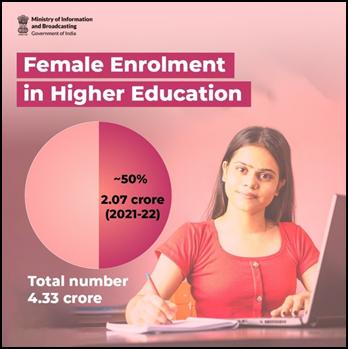
  • Female enrolment in higher education: 2.07 crore (2021-22), which is nearly 50% of the total number 4.33 crore.
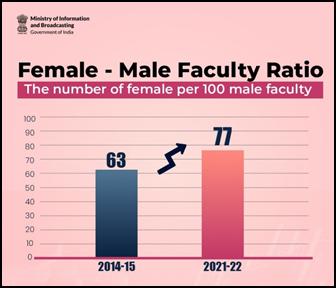
  • The female to 100 male faculty ratio has also improved to 77 in 2021-22 from 63 in 2014-15.
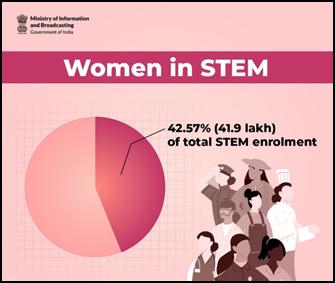
  • Women in STEM: 42.57% (41.9 lakh) of total STEM enrolment.
  • STEM Initiatives:
    • Vigyan Jyoti (2020) promotes STEM education for girls in underrepresented areas.
  • Overseas Fellowship Scheme supports women scientists in global research opportunities.
  • National Digital Library, SWAYAM, and SWAYAM PRABHA ensure access to online learning.
  • Over 10 lakh girl students benefitted under various scholarships for STEM fields.
  • Skill Development Initiatives:
    • Skill India Mission, Pradhan Mantri Kaushal Vikas Yojana (PMKVY), Women Industrial Training Institutes provide vocational and technical training to women.
    • Women Technology Parks (WTPs) serve as hubs for training and capacity building.

2. Health and Nutrition

Access to healthcare services is crucial for improving the well-being of women and reducing gender-based health disparities. The government has introduced several policies to ensure maternal and child health, nutrition, and medical support for women across all sections of society.

  • Pradhan Mantri Matru Vandana Yojana (PMMVY): Provides cash incentives to pregnant and lactating mothers, with ₹17,362 crore disbursed to 3.81 crore women, as of January 2025.
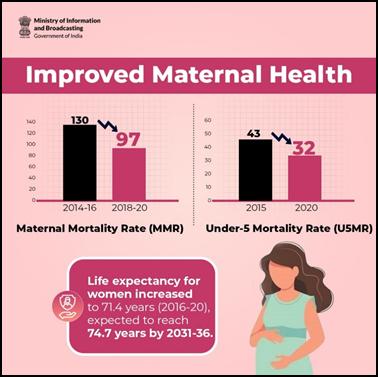
  • Improved Maternal Health:
    • Maternal Mortality Rate (MMR) reduced from 130 (2014-16) to 97 (2018-20) per lakh live births.
    • Under-5 Mortality Rate (U5MR) decreased from 43 (2015) to 32 (2020).
    • Life expectancy for women increased to 71.4 years (2016-20), expected to reach 74.7 years by 2031-36.
  • Nutrition and Sanitation:
    • Jal Jeevan Mission provided potable tap water to 15.4 crore households, reducing health risks.
    • Swachh Bharat Mission led to the construction of 11.8 crore toilets, improving sanitation and hygiene.
    • Poshan Abhiyaan: Strengthens maternal and child nutrition programs
    • Over 10.3 crore clean cooking gas connections distributed under the Ujjwala Yojana.

3. Economic Empowerment and Financial Inclusion

Women’s participation in the workforce is a key driver of economic growth. The government has launched multiple initiatives to promote financial independence, entrepreneurship, and employment opportunities for women.

  • Women’s participation in major household decisions: Increased from 84% (2015) to 88.7% (2020).
  • Financial Inclusion:
    • PM Jan Dhan Yojana: Over 30.46 crore accounts (55% belonging to women) opened.
    • Stand-Up India Scheme: 84% of loans under ₹10 lakh to ₹1 crore sanctioned to women entrepreneurs.
    • MUDRA Scheme: 69% of microloans given to women-led enterprises.
  • Self-Help Groups under NRLM: 10 crore (100 million) women connected to 9 million SHGs.
  • Bank Sakhis Model: 6,094 women banking correspondents processed transactions worth $40 million in 2020.
  • Employment and Leadership:
    • Women in Armed Forces: Entry into NDA, combat roles, and Sainik Schools.
    • Civil Aviation: India has over 15% women pilots, higher than the global average of 5%.
    • Working Women’s Hostels (Sakhi Niwas): 523 hostels benefiting 26,306 women.
  • Women Entrepreneurs in Startups: 10% of funds in the Small Industries Development Bank of India reserved for women-led startups

4. Digital and Technological Empowerment

In the digital era, access to technology and digital literacy are crucial for women’s socio-economic progress. The government has been proactive in ensuring women are part of the digital revolution through various initiatives.

  • Digital India Initiatives:
    • PMGDISHA (Prime Minister’s Digital Saksharta Abhiyan): 60 million rural citizens trained in digital literacy.
    • Common Service Centres (CSCs): 67,000 women entrepreneurs running digital service centers.
    • Ayushman Bharat Digital Mission (ABDM): Bridging healthcare accessibility through digital solutions.
    • SANKALP Hubs for Women Empowerment: Functioning in 742 districts across 35 States/UTs
  • Financial Technology and Inclusion:
    • Digital banking and Aadhaar-linked services ensure financial security for women.
    • Government e-marketplaces encourage female entrepreneurship and online businesses.

5. Safety and Protection

Ensuring women’s safety is a top priority for the Indian government. Several legislative measures, dedicated funds, and fast-track courts have been established to curb crimes against women and provide legal and institutional support.

  • Key Legal Frameworks:
    • Criminal Law (Amendment) Act, 2018: Enhanced penalties for crimes against women.
    • Protection of Women from Domestic Violence Act, 2005.
    • Sexual Harassment of Women at Workplace Act, 2013.
    • POCSO Act, 2012: Strengthened laws against child abuse.
    • Ban on Triple Talaq (2019): Criminalizing instant divorce practices.
    • Dowry Prohibition Act, 1961: Penalizes dowry-related offenses.
    • Prohibition of Child Marriage Act, 2006: Protects minors from forced marriages.
  • Nirbhaya Fund Projects (₹11,298 crore allocated):
    • One Stop Centres (OSCs): 802 centers functional, assisting over 1 million women.
    • Emergency Response Support System (ERSS – 112): 38.34 crore calls handled.
    • Fast Track Special Courts (FTSCs): 750 operational courts, 408 exclusively for POCSO cases.
    • Cyber Crime Helpline (1930) and cyber forensic labs for digital safety.
    • Safe City Projects: Implemented in 8 cities to enhance women’s safety.
    • 14,658 Women Help Desks in Police Stations, 13,743 headed by women.
  • Institutional and Legislative Reforms
    • Bharatiya Nyaya Sanhita (BNS), 2023: Strengthens provisions for gender justice.
    • Marital rape (for wives under 18) criminalized.
    • Enhanced punishment for sexual offenses and trafficking.
    • Witness protection and digital evidence admissibility improved.
    • Women’s representation in CAPFs: 33% reservation in select forces.
    • Nari Adalat: Piloted in 50 Gram Panchayats each in Assam and J&K, now expanding.

Conclusion

India has made remarkable progress in women’s empowerment through comprehensive policies, targeted schemes, and legal frameworks. From economic participation to safety, digital inclusion to education, the government’s initiatives have led to significant improvements in women’s lives. On this International Women’s Day, it is crucial to reaffirm the commitment to building an inclusive, gender-equal society where women play a central role in shaping the nation’s future. Sustained efforts in policy-making, community engagement, and digital inclusion will ensure that women continue to drive India’s growth story in the years to come.

References

Ministry of Women and Child Development

Daily writing prompt
Write a letter to your 100-year-old self.

Gender justice and promoting women’s empowerment

 By Shashikant Nishant Sharma

Gender justice is an important commitment of the Government as enshrined in the Constitution of India. In order to promote a gender just society and increased representation of women in various domains, several steps have been taken by the Government over the years. These include enactment of criminal laws and special laws like ‘the Protection of Women from Domestic Violence Act, 2005’, ‘the Dowry Prohibition Act, 1961’, ‘the Prohibition of Child Marriage Act, 2006’; ‘the Indecent Representation of Women (Prohibition) Act, 1986’; ‘the Sexual Harassment of Women (Prevention, Prohibition and Redressal) Act, 2013’, ‘the Immoral Traffic (Prevention) Act, 1956’, ‘the Commission of Sati Prevention Act, 1987’, ‘the Protection of Children from Sexual Offenses Act, 2012’, ‘the Juvenile Justice (Care and Protection of Children) Act, 2015, minimum 1/3rd reservations for women in Panchayati Raj Institutions (PRIs), reservation for women in central/ state police forces, enabling provisions for induction of women in National Defence Academy (NDA) and Sainik Schools, Commando Forces etc.

In the past few years, India is witnessing a rapid transition from women’s-development to women-led development with the vision of a new India. To this end, the Government has adopted a multi-pronged approach to address issues of women on a life-cycle continuum basis encompassing educational, social, economic and political empowerment, so that they become equal partners in fast paced and sustainable national development.

India is presently one of the only 15 countries in the world with a woman Head of State. Globally, India has the largest absolute number of elected women representatives in local governments. India has 10% more women pilots than the global average. Globally, according to the International Society of Women Airline Pilots, around 5 percent of pilots are women. In India, the share of women pilots is significantly higher – over 15 per cent.

Directorate General of Civil Aviation (DGCA) has issued an advisory to all scheduled airlines and major airport operators of India to participate in the International Air Transport Association (IATA) 25 by 2025 initiative which is an industry-wide diversity and inclusion project that aims to increase the number of women in senior positions by either 25% against currently reported metrics or to a minimum representation of 25% by 2025. Airports Authority of India (AAI) has enabled female participation in sensitive domains fundamental to the functioning of the organization such as Air Traffic Control, Fire Services, Airport Operations. Further waiver in fee is granted to female candidates in Direct Recruitment exercise conducted by AAI.

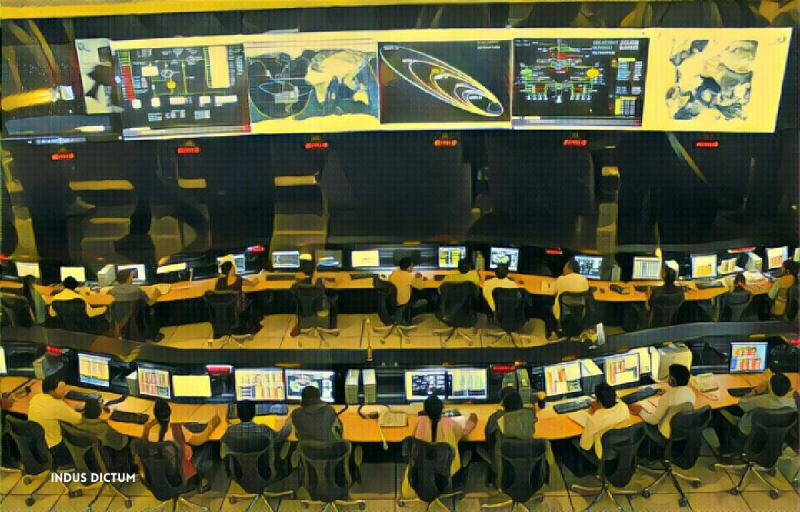
The Gross Enrolment Ratio (GER) of girls in Primary and Secondary Education is almost at par with that of boys.  The presence of girls/ women in Science, Technology, Engineering and Mathematics (STEM) is 43%, which is one of highest in the world. Multiple initiatives for increasing participation of women in Science, Technology, Engineering and Mathematics (STEM) have been undertaken. VigyanJyoti was launched in 2020 to balance low representation of girls in different streams of Science and Technology from 9th to 12th standards. The Overseas Fellowship Scheme started in 2017-18, provides opportunities to Indian Women Scientist and Technologists to undertake international collaborative research in STEM. Several women scientists have played significant roles in India’s maiden Mars Orbiter Mission (MOM), or Mangalyaan, including building and testing the scientific instruments at the Space Application Centre.

Further, Government of India has taken various schematic and legislative interventions and made enabling provisions to ensure women’s participation in various professions. In order to enhance the employability of female workers, under Skill India Mission, the Government is providing training to them through a network of Women Industrial Training Institutes, National Vocational Training Institutes and Regional Vocational Training Institutes.

In order to encourage employment of women, a number of enabling provisions have been incorporated in the recently enacted Labour Codes viz. the Code on Wages, 2019, the Industrial Relations Code, 2020, the Occupational Safety, Health and Working Conditions Code, 2020 and the Code on Social Security, 2020 for creating congenial work environment for women workers.

National Agriculture Market or eNAM is an online trading platform for agricultural commodities, scheme “Kisan Call Centres” answering farmers’ queries on a telephone call in their own dialect, mobile applications like KisanSuvidha, Agri Market, National Crop Insurance Portal, UMANG (Unified Mobile Application for New-Age Governance). These digital innovations are helping women overcome or compensate for the barriers they face in accessing markets.

The Government of India implements “Mission Shakti ” which has two components, Sambal and Samarthya. Under “Sambal”, components such as BetiBachaoBetiPadao, One Stop Centre, Women Help Line and Nari Adalat are in operation. The “Samarthya”, sub-scheme, the components are Pradhan MantriMatruVandanaYojana, Shakti Sadan, Hub for Empowerment of Women, Sakhi Niwas i.e. Working Women Hostel, Palna, Anganwadi cum Creches.

Farmers’ welfare schemes like Pradhan MantriKisanSamman Nidhi, Pradhan Mantri Kisan Maan Dhan Yojana, Pradhan Mantri Krishi Sinchayee Yojana, Paramparagat Krishi Vikas Yojana, Pradhan Mantri Fasal Bima Yojana, etc. continue to nurture an enabling environment for women farmers. Through the initiatives Government is improving farm women’s access to productive resources including agricultural extension services thereby bringing overall improvement in the lives of rural women.

National Cooperative Development Corporation is playing a significant role to uplift women cooperatives as large number of women are engaged and involved in cooperatives dealing with activities related to food grain processing, plantation crops, oilseeds processing, fisheries, dairy & livestock, spinning mills, handloom and power loom weaving, Integrated Cooperative Development Projects, etc.

Under the Government’s flagship scheme Deendayal Antyodaya Yojana – National Rural Livelihood Mission (DAY-NRLM), about 90 lakh women Self Help Groups (SHGs) having nearly 10 crores female members are transforming the rural landscape with regard to women’s economic empowerment.

Most of the nearly 40 million houses sanctioned under the Pradhan Mantri Awas Yojana or the Prime Minister’s Housing Scheme are in the name of women. All this has increased the participation of women in financial decision making. ‘Vocal for Local’ has a lot to do with women’s empowerment, as the power of most local products is in the hands of women.

The Government has made enabling provisions for increasing the representation of women in Armed forces such as granting permanent commission to women including in combat roles such as fighter pilots, allowing entry of women in National Defence Academy (NDA), admission of girls in Sainik schools, etc. In the Indian Air Force (IAF), Women officers are inducted in all the branches and streams. IAF for the first time has inducted women in other ranks as Agniveervayu under Agnipath Scheme. At present, 154 Women candidates are undergoing training.

The Government has also taken various women centric initiatives which may encourage participation of more women in Government service. These, inter-alia, include availing Child Care Leave (CCL), leaving headquarters and proceeding on foreign travel during CCL, Special Allowance @Rs. 3000 per month to women employees with disability for child care, special dispensation for women officers of All India Service of North East cadres, leave upto 90 days to the female Government Servants who have been allegedly sexually harassed, exemption of fee from competitive examination for women, posting of husband and wife at the same station, etc. The States/ UTs have also been advised to increase the number of women bus drivers, conductors and tourist guides.  Further, the Government has also issued advisories to all the State Governments and Union Territories to increase the representation of women to 33 per cent of the total strength of the police personnel in the States/ UTs.  

There is an increased presence of women in public life. In the 2019 Lok Sabha election for the first time in the country since independence, 81 women were elected as Members of Lok Sabha. There are over 1.45 million or 46% women elected representatives in Panchayati Raj Institutions (against mandatory representation of 33%). The 73rd and 74th Amendments (1992) to the Constitution of India had made reservation of 1/3 seats in the Panchayats and Municipalities for women.

The greatest leap forward for women empowerment and representation of women in the highest political offices in the country has been the notification by Government of the Nari Shakti Vandan Adhiniyam, 2023 (Constitution One Hundred and Sixth Amendment) Act, 2023 on 28 September, 2023, for reservation of one-third of seats for women in the House of People (Lok Sabha) and in the State Legislative Assemblies including Legislative Assembly of NCT of Delhi.

******

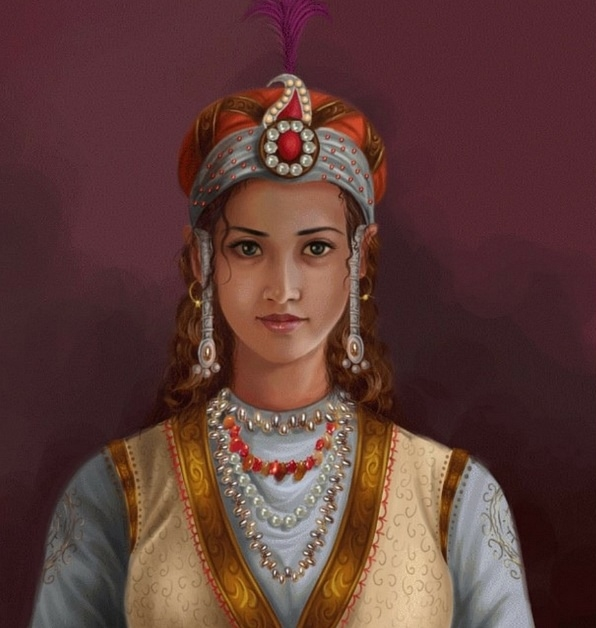
First and Only Ruler of Delhi Sultanate – Razia Sultan

Razia Sultan was the first and only female ruler of the Delhi Sultanate in India. She ruled from 1236 to 1240 CE and was known for her bravery, intelligence, and administrative skills.

Razia was the daughter of Sultan Iltutmish, who had established the Delhi Sultanate after the decline of the Ghaznavid Empire. Iltutmish had several sons, but he chose Razia as his successor, as he believed her to be the most capable of ruling the empire.

Source – https://yourexamguide.com/

Razia’s reign was marked by several accomplishments. She introduced several reforms to the administration, such as improving the tax collection system and establishing a network of spies to gather information about the state of affairs in the empire. She also established a postal system, which improved communication and helped her maintain control over the vast empire. Razia was also a skilled warrior and led several military campaigns against neighboring kingdoms. She defeated the rebellious governor of Bhatinda, Malik Altunia, who had refused to recognize her as the Sultan. She also successfully repelled a Mongol invasion led by Genghis Khan’s grandson, Batu Khan.

Despite her many achievements, Razia faced significant opposition from the nobility, who were unhappy with being ruled by a woman. Her half-brother Ruknuddin Firuz, who had been appointed as her successor by the nobility, led a rebellion against her. Razia was defeated and imprisoned, and Ruknuddin became the Sultan. However, Razia managed to escape from prison and launched a counter-attack against her half-brother. She defeated Ruknuddin and regained the throne, but her reign was short-lived. She was betrayed by one of her advisors, Altunia, whom she had married for political reasons. Altunia, who had harbored resentment towards Razia for defeating him earlier, turned against her and had her killed in 1240 CE.

Razia Sultan’s legacy has endured through the centuries. She was a trailblazer for women in positions of power and challenged the traditional norms of her time. Her reign demonstrated that a woman could rule a vast empire effectively and competently. She is still celebrated as a symbol of female empowerment and has inspired several books, films, and television series in India.

Women Empowerment

 The concept of women empowerment has become a very significant topic of discussion in development and economies. Women empowerment is empowering women to take their own decisions for personal as well as social development. Empowering women is to make them independent in all aspects and to set them free from all social and family limitations.

Gender equality is, first and foremost, a human right. It implies a society in which women and men enjoy the same opportunities, outcomes, rights and obligations in all spheres of life. Equality between men and women exists when both of them are able to share equal distribution of power and influence; have equal opportunities financially through work and through setting up businesses; enjoy equal access to education and opportunity to fulfill personal ambitions. Yet there is discrimination against women and girls – including gender based violence, economic discrimination, sexual coercion, reproductive health inequalities, and harmful traditional practices. Women usually have less access than men to training and employment, medical care, property ownership, etc. They are less likely than men to be politically active and more likely to be victims of domestic violence. The ability of women to control their own fertility is absolutely fundamental. And when these reproductive rights – including the right to decide the number, timing and spacing of her children are free of discrimination, coercion and violence, she would have the freedom to participate more fully and equally in the society because when she would be healthy, she would be more productive. The roles of men and women are not biologically determined – they are socially determined and changeable.

India is a country where all the women are been honoured as goddesses since ancient times. However, when it approaches to providing them with correspondent rights the same people abandon its major importance and swallow that the main purpose of women is to take care of the family and kids firstly. Whereas, there have been various organizations and institutions advocating for women, supporting various projects that provides women basic education and health care requirements. Apart from these there are many welfare schemes for women – Beti Bachao Beti Padhao, Ujwalla, ICDS, Kishori Shakti Yojana, etc. implemented by the Indian government. According to me every women should be given equal opportunities to education and employment without any gender bias. Now, we know that women empowerment is a minute key to economic growth and social transformation. 

 Benefits of Empowering Women in India

Women, as the majority of India’s population, represent a sizable portion of the country’s untapped economic potential. As a result, providing equal opportunities for women in India would enable them to contribute to the economy as productive citizens. Women can thrive economically and rise out of poverty with higher literacy rates and equal pay for equal work.

Protecting women and girls from violence and abuse, as well as challenging the stigmas associated with reporting crimes, would result in a much safer society. Improving female political representation would allow more women to serve as role models for young girls and provide a platform to raise awareness about women’s issues in India. Overall, gender equality enables women to have a higher quality of life, allowing them to determine their futures beyond traditional expectations.

As an African proverb says,

“If you educate a man, you educate an individual but if you educate a women, you educate a nation”

WIPS (Forum for Women in Public Sector) formation day celebrated at Visakhapatnam Steel Plant

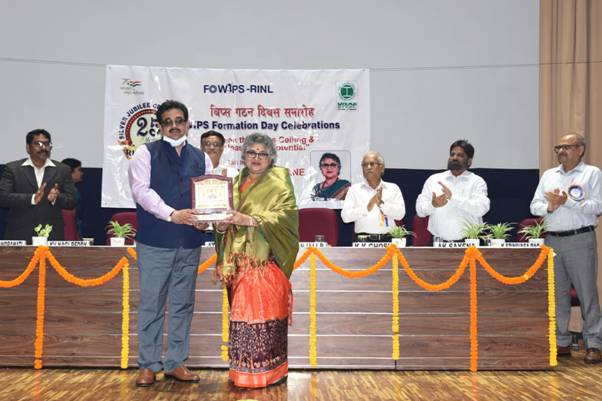
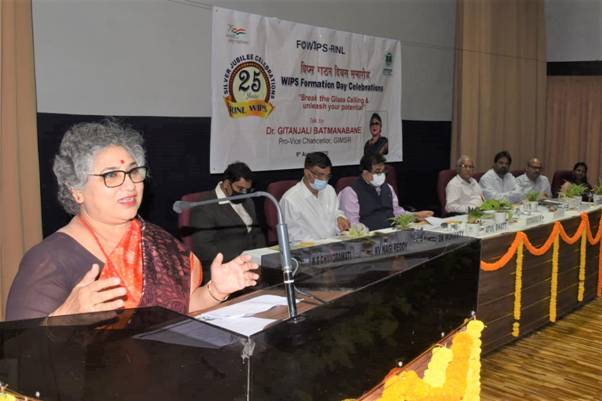
 Silver Jubilee of WIPS (Forum for Women in Public Sector) formation day was celebrated in VSP today in a grand manner. Addressing the women employees of RINL, Shri Atul Bhatt, CMD, RINL-VSP in his address, lauded the exceptional contribution by the women fraternity of RINL in turning around the company after six years of making losses.” I am very happy to note that Women in Public Sector (WIPS) of RINL, which was established in 1997 has completed 25 long and successful years and is celebrating silver Jubilee this year”, Shri Atul Bhatt said.  He congratulated all the women employees of RINL on this special occasion and appreciated them for their active role in improving the awareness on the role of women in the society.

Shri Atul Bhatt congratulated Ms.PV Sindhu, for bagging the prestigious gold at the Commonwealth Games in Badminton women’ singles competition and said that it is matter of pride for entire RINL family that Ms. PV Sindhu is the brand ambassador of RINL.

Shri Atul Bhatt complimented Ms. Sheela Priyadarsini, Chief General Manager & head of the department -Materials Management, RINL for efficiently handling the extremely complex supply chain management of steel plant. “It is heartening to note that more number of women are joining RINL and it is a matter of pride to note that women are increasingly and gradually seen marching into domains which were once reserved only for men like the armed forces.I would like to compliment WIPS of RINL for their active role in improving the awareness about the role of women in society and the various programmes they undertake for this cause.”, Shri Atul Bhatt added.

Shri Atul Bhatt thanked Dr.GitanjaliBatmanabane for her gracious presence and said that her presence and message will certainly inspire the women participants to scale greater height in professional life.

The Guest of honour, Dr Gitanjali Batmanabane, Pro-Vice Chancellor, GITAM Institute of Medical Sciences and Research(GIMSR) highlighted the need for women to develop the culture of courage to encounter the difficulties being faced in the society for success in their life. She said that India is known for youngest population and next gen women would play a dominant role in variety of fields. Dr.Gitanjali Batmanabane, Shri Atul Bhatt and Directors of RINL felicitated some of the women employees of RINL and also gave prizes to winners of various competitions held on the occasion.

*****

SOCIAL EMPOWERMENT

Process of developing a sense of autonomy and self-confidence among Individual ,that allows them to act individually and collectively to have a say in social relationships and the institutions and discourses that exclude them,

The principle of personal and social empowerment is described as a process in which individuals or social groups come to acquire the skills necessary for taking control of their own lives. It is important for supporting and reinforcing the personal empowerment of other members of their group or community as well.

Social empowerment is understood as the process of developing a sense of autonomy and self-confidence. It also involves acting individually and collectively to change social relationships and the institutions and discourses that exclude poor people and lead to an increase in poverty.

Individual empowerment is influenced by individual assets like land, house, and savings along with social factors like health and education. Also, concepts of choice, liberty, agency, capacity, contribution, self-sufficiency and increased resources are all crucial to societal empowerment.

Social empowerment has both individual and community aspects related to it. Individual factors like self-esteem. Self-confidence, imagination, and aspirations all influence social full-fillment. People’s collective assets and capabilities such as voice, organisation, representation and identity also sway the social responsibility.

It is important that socially and economically backward classes of people get involved in local associations and inter-community cooperation mechanisms can contribute to social empowerment by improving their skills, knowledge, and self-perception.

Social Empowerment means all the sections of society in India, have equal control over their lives, are able to take important decisions in their lives and have equal opportunities. Without empowering all sections of society equally, a nation can never have a good growth trajectory.The government has been trying to empower different sections of our society by adopting a multi pronged strategy.

Social Empowerment – Women Empowerment

In the words of the current Prime Minister “empowering women means empowering the entire family.” In a country like India, a girl child faces challenges right from the time of her birth or one

can say a girl child has to fight even for her birth. Hence the Government of India has given a big focus on empowering women through various government sponsored schemes. Some of the important schemes are mentioned below.

  • Beti Bachao Beti Padhao –

Beti Bachao, Beti Padhao (BBBP) scheme was launched on 22 January 2015 by Prime Minister Narendra Modi. It aims to address the issue of the declining child sex ratio image (CSR) and is a

national initiative jointly run by the Ministry of Women and Child Development, the Ministry of Health and Family Welfare and the Ministry of Human Resource Development. It initially focused multi-sector action in 100 districts throughout the country where there was a low CSR.

Pradhan Mantri Vandana Yojana

It is a maternity benefit program run by the Government of India. It was introduced in 2017 and is implemented by the Ministry of Women and Child Development. It is a conditional cash transfer scheme for pregnant and lactating women of 19 years of age or above for the first live birth. It provides a partial wage compensation to women for wage-loss during childbirth and childcare and to provide conditions for safe delivery and good nutrition and feeding practices.

Sukanya Samriddhi Yojana

It is a Government of India backed saving scheme targeted at the parents of girl children. The scheme encourages parents to build a fund for the future education and marriage expenses for

their female child. The scheme was launched by Prime Minister Narendra Modi on 22 January 2015 as a part of the Beti Bachao, Beti Padhao campaign. The scheme currently provides high interest rates and tax benefits. The account can be opened at any India Post office or branch of authorized commercial banks.

Social Empowerment – Poor and Marginalized Sections

Marginalised sections of society are people belonging to Scheduled Castes (SC), Scheduled Tribes (ST), and Other Backward Classes  (OBC). For poor and marginalised sections, empowerment means access to basic education, livelihood, and equal opportunities for growth. Some of the Government measures to address this section of society are mentioned below.

  • Pradhan Mantri Jan Dhan Yojana

It is a financial inclusion program of the Government of India open to Indian citizens (minors of age 10 and older can also open an account with a guardian to manage it), that aims to expand affordable access to financial services such as bank accounts, remittances, credit, insurance pensions. This financial inclusion campaign was launched on 28 August 2014. Under this scheme 15 million bank accounts were opened on inauguration day.

  • Pradhan Mantri MUDRA Yojana

Any Indian Citizen who has a business plan for a non-farm sector income generating activity such as manufacturing, processing, trading or service sector and whose credit need is less than Rs 10 lakh can approach either a Bank, MFI, or NBFC for availing of Micro Units Development & Refinance Agency Ltd. (MUDRA) loans under Pradhan Mantri Mudra Yojana (PMMY).

Skill India

Skill India campaign was launched by Prime Minister Narendra Modi on 15 July 2015 to train over 40 crore people in India in different skills by 2022.It is managed by the National Skills Development Corporation of India. United Kingdom (U.K), Japan, Oracle have collaborated with India for the Skill India Programme. One of the prominent initiatives under it is Pradhan Mantri Kaushal Vikas Yojana (PMKVY). The aim of the PMKVY scheme is to encourage aptitude towards employable skills and to increase working efficiency of probable and existing daily wage earners, by giving monetary awards and rewards and by providing quality training to them. The

The scheme has a target to train 1 crore Indian youth from 2016-20.

Scholarship Schemes for Education

To meet its goal of educational empowerment of the SC population, a large portion of the budget of the Department of Social Justice and Empowerment is directed to scholarships and there has been considerable success in its distribution within the target group. Post-Matric Scholarship (PMS – SC) for SC students has been in operation since 1944 and is the single largest intervention by the Government of India for the educational empowerment of scheduled caste students. It covers approximately 55 lakh students per year, studying at the post matriculation or post-secondary stage, right up to PhD. It has had positive outcomes on literacy level of the target groups, on dropout rates, participation in higher education, and finally in achievement of excellence and building human capital for the service of the nation. Other scholarship schemes for SC students are the Pre-Matric Scholarship, Top Class Education Scheme for studying in premier educational institutions and the National Fellowship Scheme run in conjunction with UGC.

It focuses on integrated development of SC majority villages. The programme is being taken up in villages which have more than 50% SC population.

Social Empowerment – Senior Citizens

Many senior citizens feel neglected and unwanted in the twilight years of their life. Government has taken measures to enable them to lead a respectable life with economic self-sufficiency. Some of the schemes for senior citizens are listed below.

Atal Pension Yojana

It is a government-backed pension scheme in India, primarily targeted at the unorganised sector. All subscribing workers below the age of 40 are eligible for pension of up to ₹5,000 per month on attainment of 60 years of age.

Rashtriya Vayoshri Yojana

It is a scheme for providing Physical Aids and Assisted-living Devices for Senior citizens belonging to BPL category. This is a Scheme, fully funded by the Central Government. The expenditure for implementation of the scheme will be met from the “Senior Citizens’ Welfare Fund”. The Scheme will be implemented through the sole implementing agency – Artificial Limbs Manufacturing Corporation (ALIMCO), a PSU under the Ministry of Social Justice and

Empowerment.

Pradhan Mantri Vaya Vandana Yojana

This is a pension scheme for senior citizens.This to enable old age income security and welfare of Senior Citizens.

Social Empowerment – Disabled Group

For the differently able, their disability often makes them feel that they are a burden on society. Their requirements for empowerment are very different thereby requiring programmes customised to suit their needs. Some of the schemes to help them lead quality life are

mentioned below.

1. Deendayal Disabled Rehabilitation schemes

2. Accessible India campaign

Social Empowerment – Scheduled Tribes

National mainstream policies and compulsions result in the tribal communities feeling either isolated from the mainstream or losing their identity. Government has taken initiatives to handle the issues faced by the Scheduled Tribes which are listed below.

1. Forest Rights Act

2. Minimum Support Price (MSP) for Minor Forest Produce.

3. Schemes for Vocational Training

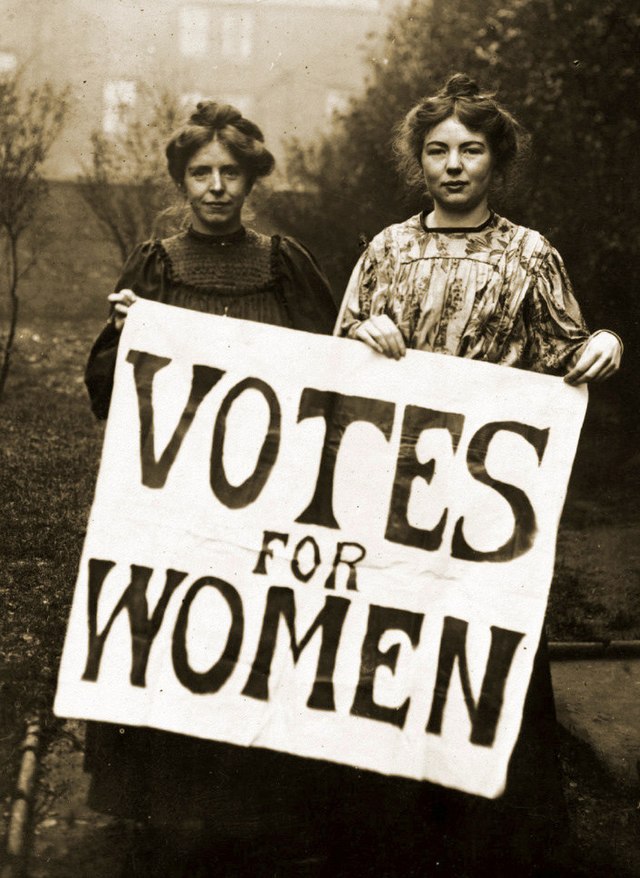
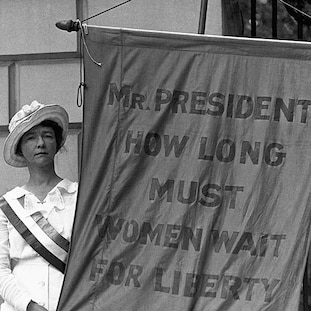
The women’s suffrage movement

The Nineteenth Amendment to the US Constitution was ratified on August 18, 1920. It declares that “The right of citizens of the United States to vote shall not be denied or abridged by the United States or by any State on account of sex. Congress shall have power to enforce this article by appropriate legislation. “The amendment, which granted women the right to vote, represented the pinnacle of the women’s suffrage movement, which was led by the National American Woman Suffrage Association (NAWSA).In their decades-long struggle for female enfranchisement, women’s rights advocates met with strong opposition from anti-suffrage activists.

The women’s suffrage movement has its origins in the Seneca Falls Convention of 1848, the first women’s rights convention ever held in the United States. Approximately three hundred activists, female and male, gathered to discuss the condition of women and to devise strategies for achieving social and political rights for women. Though women’s suffrage was a topic of debate at the convention, it was not the main goal of the movement at this early stage, and the convention’s resolution demanding women’s suffrage was the only resolution that was not passed unanimously.

The first women’s suffrage organizations were created in 1869. Susan B. Anthony and Elizabeth Cady Stanton founded the National Woman Suffrage Association (NWSA), while Lucy Stone, Julia Ward Howe, and Henry Blackwell founded the American Woman Suffrage Association (AWSA). These two rival groups were divided over the Fifteenth Amendment, which guaranteed African American men the right to vote. The AWSA supported the Fifteenth Amendment, while the NWSA opposed it because it did not include suffrage for women. In 1890, the two competing organizations were merged into the National American Woman Suffrage Association (NAWSA).

During the 1870s, suffragists (women’s suffrage activists) began attempting to vote at polling places and filing lawsuits when their attempts were rejected. This drew attention to the women’s rights movement, particularly after Susan B. Anthony was arrested and put on trial for voting in the 1872 presidential election. Suffragists hoped that the lawsuits would work their way up to the Supreme Court, and that the justices would declare that women had a constitutional right to vote. In 1875, the Supreme Court, rejected women’s suffrage, ruling that the US Constitution did not confer the right of suffrage to anyone.

After the Supreme Court ruling, leaders of the women’s rights movement adopted other strategies for securing universal suffrage. Activists began organizing a drive to pass a constitutional amendment guaranteeing women the right to vote. The National American Woman Suffrage Association launched a campaign to achieve victories at the state level, in the hopes that if enough states allowed women the right to vote, federal legislation would follow. These efforts were so successful that by the time of the ratification of the Nineteenth Amendment, over half of all states had already granted limited voting rights to women.

The Nineteenth Amendment

In January, 1878, Republican Senator Aaron A. Sargent of California formally introduced in the Senate a constitutional amendment to guarantee women the vote. The bill languished in committee until 1887, when it finally went up to a vote, and was defeated. Not until 1914 was another constitutional amendment for women’s rights considered, and again rejected, by the Senate.

Though the movement for women’s suffrage was well-organized and gaining momentum by the early twentieth century, it met with strong opposition from some sectors of US society. Brewers and distillers were opposed to female enfranchisement because they assumed that women would vote for the prohibition of alcoholic beverages, while businesses that employed children feared that women would vote to eliminate child labour. Anti-suffrage organizations sprang up all over the country to oppose the drive for female enfranchisement. Anti-suffrage activists were not just men; indeed, many upper class women joined the movement, arguing that politics was a dirty business that would sully the moral and spiritual authority of women

The National American Woman Suffrage Association in 1900, launched an effort to link the drive for female suffrage to the US war effort in the First World War. Though many of her fellow suffragists were anti-war pacifists, Catt made the controversial decision to support the war and to thereby portray the women’s suffrage movement as patriotic. The effort was a success; in his 1918 State of the Union address, President Woodrow Wilson declared his support for female enfranchisement.

On August 18, 1920, Congress ratified the Nineteenth Amendment, which guaranteed the right to vote to all US citizens regardless of sex. The Nineteenth Amendment represented a major victory and a turning point in the women’s rights movement.

The women’s suffrage movement

The Nineteenth Amendment to the US Constitution was ratified on August 18, 1920. It declares that “The right of citizens of the United States to vote shall not be denied or abridged by the United States or by any State on account of sex. Congress shall have power to enforce this article by appropriate legislation. “The amendment, which granted women the right to vote, represented the pinnacle of the women’s suffrage movement, which was led by the National American Woman Suffrage Association (NAWSA).In their decades-long struggle for female enfranchisement, women’s rights advocates met with strong opposition from anti-suffrage activists.

The women’s suffrage movement has its origins in the Seneca Falls Convention of 1848, the first women’s rights convention ever held in the United States. Approximately three hundred activists, female and male, gathered to discuss the condition of women and to devise strategies for achieving social and political rights for women. Though women’s suffrage was a topic of debate at the convention, it was not the main goal of the movement at this early stage, and the convention’s resolution demanding women’s suffrage was the only resolution that was not passed unanimously.

The first women’s suffrage organizations were created in 1869. Susan B. Anthony and Elizabeth Cady Stanton founded the National Woman Suffrage Association (NWSA), while Lucy Stone, Julia Ward Howe, and Henry Blackwell founded the American Woman Suffrage Association (AWSA). These two rival groups were divided over the Fifteenth Amendment, which guaranteed African American men the right to vote. The AWSA supported the Fifteenth Amendment, while the NWSA opposed it because it did not include suffrage for women. In 1890, the two competing organizations were merged into the National American Woman Suffrage Association (NAWSA).

During the 1870s, suffragists (women’s suffrage activists) began attempting to vote at polling places and filing lawsuits when their attempts were rejected. This drew attention to the women’s rights movement, particularly after Susan B. Anthony was arrested and put on trial for voting in the 1872 presidential election. Suffragists hoped that the lawsuits would work their way up to the Supreme Court, and that the justices would declare that women had a constitutional right to vote. In 1875, the Supreme Court, rejected women’s suffrage, ruling that the US Constitution did not confer the right of suffrage to anyone.

After the Supreme Court ruling, leaders of the women’s rights movement adopted other strategies for securing universal suffrage. Activists began organizing a drive to pass a constitutional amendment guaranteeing women the right to vote. The National American Woman Suffrage Association launched a campaign to achieve victories at the state level, in the hopes that if enough states allowed women the right to vote, federal legislation would follow. These efforts were so successful that by the time of the ratification of the Nineteenth Amendment, over half of all states had already granted limited voting rights to women.

The Nineteenth Amendment

In January, 1878, Republican Senator Aaron A. Sargent of California formally introduced in the Senate a constitutional amendment to guarantee women the vote. The bill languished in committee until 1887, when it finally went up to a vote, and was defeated. Not until 1914 was another constitutional amendment for women’s rights considered, and again rejected, by the Senate.

Though the movement for women’s suffrage was well-organized and gaining momentum by the early twentieth century, it met with strong opposition from some sectors of US society. Brewers and distillers were opposed to female enfranchisement because they assumed that women would vote for the prohibition of alcoholic beverages, while businesses that employed children feared that women would vote to eliminate child labour. Anti-suffrage organizations sprang up all over the country to oppose the drive for female enfranchisement. Anti-suffrage activists were not just men; indeed, many upper class women joined the movement, arguing that politics was a dirty business that would sully the moral and spiritual authority of women

The National American Woman Suffrage Association in 1900, launched an effort to link the drive for female suffrage to the US war effort in the First World War. Though many of her fellow suffragists were anti-war pacifists, Catt made the controversial decision to support the war and to thereby portray the women’s suffrage movement as patriotic. The effort was a success; in his 1918 State of the Union address, President Woodrow Wilson declared his support for female enfranchisement.

On August 18, 1920, Congress ratified the Nineteenth Amendment, which guaranteed the right to vote to all US citizens regardless of sex. The Nineteenth Amendment represented a major victory and a turning point in the women’s rights movement.

Women empowerment

 Women empowerment” is defined as making a woman independent and let her choose what she wants without being dependent on anyone. Women empowerment is making a woman powerful in her own way. 

                In olden days, a woman is seen as a slave or as a non-existing thing. Women were married to an old man and also killed them when the husband was dead. After some year they stopped killing but did not stop child marriages. Society did not accept a women or a girl to get educated as man and boys. Government didn’t give a voting right in olden days. Women were discriminated and didn’t give any rights. But they are many great women in the past fought for equality and women rights. Till today women are fighting for their rights and choices with family and society.

          Till today women are still getting raped and killed. Women are getting discriminated for wearing her choice cloths. Society will still discriminate a women even she is independent. Society will never accept a woman as she is. Society discriminate the way she wear her cloths, her skin color, they even body shame more than a men.

         There are many women inspirations in India like Lakshmi agarwal who had an acid attack but still survived and fight for years to get her justice. She also helped many acid survivors and fought for their justice with them. a movie was released in 2020 named “chhapak”  inspired my her true story. 

           Not only Lakshmi agarwal there are many other women who inspired many other women such as kiran bedi, irom sharmila, Indra nooyi, neerja bhanot and many more.  Neerja, kahaani, razzi, gunjan saxena: the kargil girl are some the Indian movies which were inspired by true women stories. These movies show the discrimination women face and also shown about women empowerment.                               

Women and Financial Independence

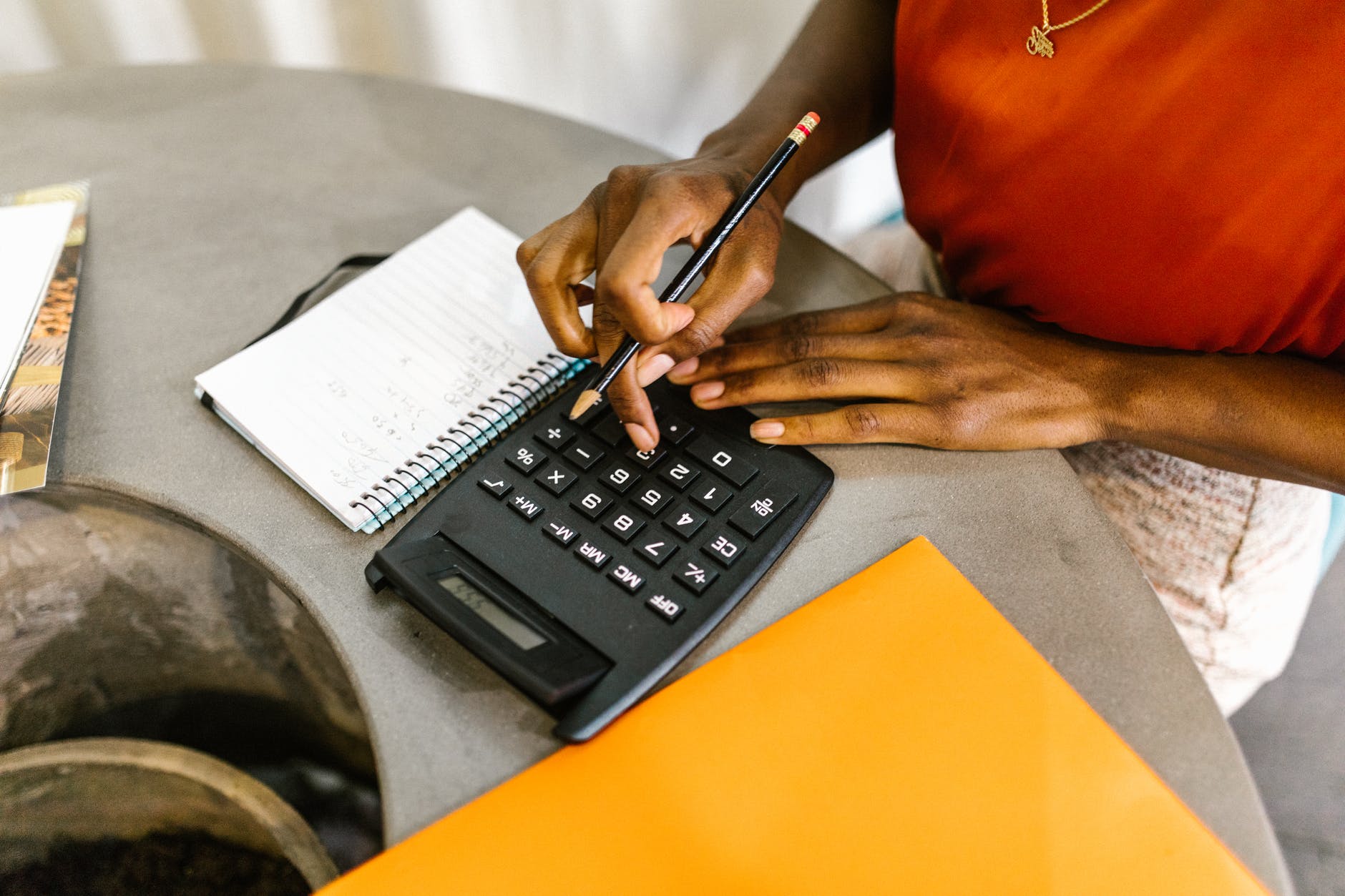
A lot of things have changed for women in our country over the years. Women have overcome a lot of barriers and stereotypes. They have broken out of their shell and taken up challenges. Unlike a few decades back, many women now have jobs, contributing to their family’s earnings. Financial independence is a concept every child –boys and girls; must be made aware of in this day and age. Financial independence refers to the ability of a person to decide what to do and how to spend their money. Whether she is a working woman or a housemaker, financial independence enables a woman to sustain herself financially. Even if she does not have a career to be earning from, she need not be dependent on someone else to pay for her needs.

Photo by RODNAE Productions on Pexels.com

Many of the financially independent women around us would agree that being independent makes them feel respected and boosts their morale. It gives them the confidence to face various situations and challenges in their life. For many young women, it allows them to fulfill their dreams and aspirations without depending on anybody for money. Sometimes it is as simple as being able to buy the dress or shoes they like. It is necessary to understand that earning a fixed amount of money each month does not guarantee you every single thing you desire. It is the proper management of your savings and money that enable you to work towards achieving all of your wishes.  Financially independent women pose a challenge to the age-old belief that only men can handle money matters. Even today, there are a lot of women who completely depend on their guardian or husband for money, or hand over their earnings to their husband to handle. We still see women putting a stop to their education or career once they get married or have kids.

Everybody is aware of how inconsistent life can be. Jobs are not always secure. With unprecedented situations like the Covid-19 lockdowns, layoffs have become more frequent. In such situations, if a family is completely dependent on the sole wage-earner (the husband, in most cases) things can quickly turn stressful. So, women having a job provides an extra layer of financial security for the whole family. Situations of crises like medical expenses and job loss are almost always unexpected. Even if the woman is a homemaker, saving a part of one’s earnings and investing in the right place is always a good practice. The cost of living is also constantly on the rise. Financially independent women are able to contribute to the family’s daily expenses and ensure their family members get to live in a good house and acquire quality education.

Self-dependent and financially independent women are the mark of a non-prejudiced, progressive society, a society that is safe, equal and healthy. We must teach young girls the value of money and explain to them the importance of being financially secure. Financially independent women act as role models to young girls in their families, encouraging them to follow in their footsteps.

Women in the Field of Science

When we talk about women’s empowerment, gaining formal education, a career or some form of a stable means of livelihood forms an important part. From not allowing girls entry into schools and colleges to witnessing women make pioneering discoveries in the fields of science, technology, medicine, and space, the world has come a long way.

However, let us also not forget the fact that only 33% of researchers globally are women (UN Women 2022). They are also provided fewer funds than men and promoted less. According to a study conducted by The Times of India in 2018, women made up only about 25% of the scientific faculty of universities and institutions. While they form a significant fraction of science teachers in both government and private schools and colleges, the number of women sitting in top positions and with successful careers in these fields is quite small. This is mostly because women more often than not face the pressure of balancing their careers with their families. There remains an inherent belief among many that maintaining the family is primarily the women’s responsibility and cannot be compromised because of their job. A portion of female students enrolled in PG courses and female Ph.D. researchers end up unable to complete their courses due to family pressure regarding marriage. More than 50% of female graduates end up choosing a teaching career, rather than working as professionals in physics, mathematics, and engineering.

Then there are also the numerous complaints of harassment and biased and discriminatory behavior reported in such institutions. The representation of women in the overall field of science is small because people generally see science as a profession for men.

Despite all this, there have been many women visionaries in India who have made significant contributions in the field of science. Here are some of the well-known females in India’s scientific field:

  • Kamala Sohonie {1912-1998} was the first female student of C.V. Raman and was the first woman to obtain a Ph.D. degree in a scientific discipline. She discovered that every cell in a plant tissue contained the ‘cytochrome c’ enzyme which was involved in the oxidation of all plant cells.
  • Anandibai Gopalrao Joshi (1865-1887) was the first Indian woman to have graduated with a degree in western medicine in the U.S and went on to become the first woman physician in India.
  • Janaki Ammal (1897-1984) was a talented botanist who worked on developing different varieties of homegrown sugarcane and eggplant. She received the Padma Shri award in 1977 and was also appointed the Director-General of the Botanical Survey of India.
  • Asima Chatterjee (1917-2006) was a chemist well-known for her contribution in the fields of organic chemistry and phytochemistry.
  • Tessy Thomas (1963-) is the Director-General of Aeronautical Systems of DRDO. She is also the first woman scientist to head a missile project in India. 
  • Major women scientists of ISRO, like Ritu Karidhal, T.K. Anuradha, Nandini Harinath, and V.R. Lalithambika among many others have received widespread praise and recognition for their work on various successful space missions like Mangalyaan, Chandrayaan, etc.

All of this goes to show us that science is not just a men’s field of play. It is as much a woman’s subject as it is a man’s and this is definitely not the last we will see of women in the field of science.

Impact of Feminism and Women Empowerment on Indian Society

Feminism came up into being and became operative after India gained freedom in 1947. The Constitution of India then conceded right to equality, religious freedom and freedom from gender or religious discrimination. To provide health, welfare, education and employment to women, a seven five year plans were brought up by the government. The sixth five year plan even declared women “partners in development”.

Although the Indian government has tried their best to terminate inequality in workforce yet women fail to receive equal treatment. However, AIIMS nurses professed gender inequity in Nursing Officers enrollment, providing 80 percent posts to female candidates and remaining to male. Indian women winning international beauty pageants have also demonstrated in the form of pride of nation, such growth have provided considerable sexually self governed and independent women and more authority over their own bodies but some differ in opinion considering that this only portrays female bodies as mere commodities having purpose only to serve man’s desires. Headway is being made in enrollment of female students and teachers in schools, by now the female literacy rate has increased handsomely and great efforts are still being made so that female may receive education in par with male students.

In order to protect the rights of women and in wake to feminism and women empowerment different bills have been passed and various policies have been made by the government, some of them are as follows:

  • In 1986, the National Policy on Education (NPE) was made in India and a program known as Mahila Samakhya was set afloat, the aim is to promote a sense of knowledge to take control of their own lives, learn to demand information and realize their true potential. In 2019, DRDO has launched scholarship programmes absolutely for girls.In Haryana now girls are provided passport along with graduation degree.
  • The Sexual Harassment of Women at Workplace (Prevention, Prohibition and Redressal) Act 2013, is an act of legislature to protect women from any sort of sexual harassment at workplace.
  • The Protection of Women from Domestic Violence Act 2005 is a parliamentary act of India which seeks to protect women from domestic violence.
  • In 1992, the Parliament passed the 73rd Constitutional Amendment Act in which it was ensured that in all offices of election, one-third of the total seats would be reserved for the women. This was applicable in both urban as well as rural areas.
  • During 1991-2000, a national Plan of Action for the Girl Child was brought up to make sure the development, survival and protection of girl child. The terminal aim of the plan was to enhance the future for the girl child.
  • In 2001, a National Policy for the Empowerment of Women was made by the Department of Women & Child Development in the Ministry of Human Resource Development. The policy aimed at the empowerment, advancement and growth of women in various political, social, cultural and political field, by generating awareness among all.
  • In 1992, a National Commission was brought up by the government in order to monitor and examine various matters with regard to the legal and constitutional defences provided for women and also modify the existing codification whenever needed.

Today women are treated equal to men and offered equal opportunities. They are also excelling in their work and in various fields they are even ahead of men, still in many parts of India regardless whether urban or rural region, women are still battling against numerous brutal crimes.

Feminism and Women Empowerment

Feminism in general terms can be defined as equality among all genders holding equal rights and opportunities. The word feminism is evident whole around the globe and is concerned with activities mainly indulging women’s rights and interests. It is an approach against inequality  between men and women in this huge man domain world, it can be in form of social, economic, political movement aiming to establish social, economic, political and even personal equality among all. It ensures and encourages women to put forward their ideas, beliefs, utilize their knowledge and strengths and empower them to perceive their true rights. Feminist movements have organized course of action and are still continuing to do so for women’s rights including right to vote, receive education, equal wages, equal sibling property ownership and to safeguard women and girls from any sort of sexual harassment be it rape or domestic violence. These movements also make certain legal abortion and other social reforms for women.

Historically, women faced discrimination on the basis of their gender, they had to fight against the orthodox society with the result being constant failure. Now things have bit changed and such a result is feminism, an initiative to fight against gender stereotypes and bringing about a change in this unhealthy dynamics of society.

Feminism means congeries things to congeries of people, it is not expected to define a particular’s feminism in any way. Its all about cutting the difference between men and women and leveling them on the same scale. Thus, making similar opportunities available to both men and women in life.

Women Empowerment refers to steps taken in order to empower women. The following concept may be understood in a number of ways like, taking into consideration the opinions or views of women, encouraging women to pursue higher education and uphold a high rank in society and also to uplift the position of women through literacy, training etc. It also provides them to take their own life decisions, tackle various problems in society. Women empowerment can also be defined as to encouraging women to realize their self worth, their capacity to discover their own way out and most important their right to bring about effective social change for themselves and society.

In true sense, empowerment of women contributes greatly in the development of society. The advancement of status of women also intensifies their decision making ability at all scales in all volume of life, particularly in the field of reproduction and sexuality. This without doubt is necessary for the long term accomplishment of the population programmes. Women empowerment and ensuring women’s rights have now become a worldwide movement.

In this contemporary age, feminism and women empowerment is the talk of the town. Numerous developments have been seen till date in awake of both the elements. It is right to say that women empowerment is contributing greatly in the advancement of the society and will continue to do so. Gender discrimination has nearly diminished in the last few decades. But today also in some parts of the country such distinction still subsists. Thus, to tackle such situations it’s important for females to understand the true meaning of feminism and it is the essential right of the women to be empowered so as to hold an independent role in the society. But apart from these various developments, women and girls still face discrimination on some or the other ground and are victims to numerous harassments each day in every part of the world.

Commitment towards women empowerment through its R- Day tableau

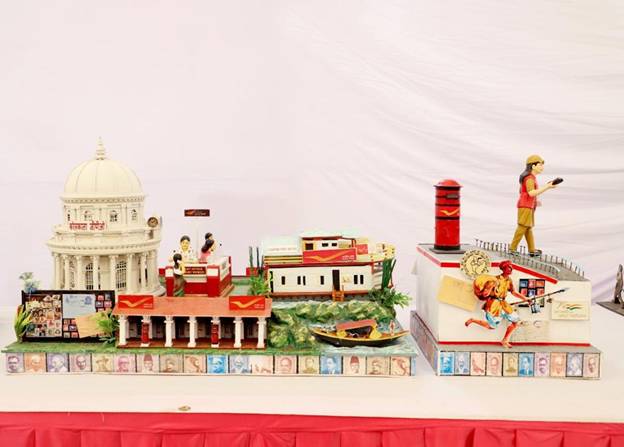
 India Post has been serving the nation since the last 167 years, standing unabated in its dedication and undying passion of rendering postal, financial and government services, in the remotest corners of the country. As the nation celebrates Azadi Ka Amrit Mahotsav, commemorating the seventy fifth year of independence, India Post, through the Republic-Day tableaux, has attempted to reaffirm its commitment towards women empowerment both within and through the Post offices.

THE THEME OF INDIA POST R-DAY TABLEAUX IS INDIA POST:75 YEARS@ RESOLVE-WOMEN EMPOWERMENT”


The tableaux shall showcase the following elements:

FRONT PORTION:

India Post stands as a model employer of women and with its mandate for financial inclusion almost 50% account holders of the India Post Payments Bank as well as the Post Office Savings Bank are women.  

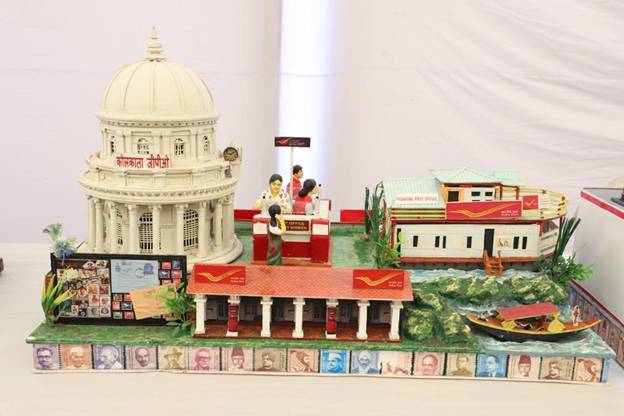
The tableau displays the robust outreach and the modern face of India Post that ties the entire country in one thread and aims to portray its focus on women empowerment through the ‘All Women Post Offices’.  Divyang friendly post offices as portrayed by the ramp reiterate our social commitments. 

Post Woman:The tableau presents the modern face of India Post featuring a young post woman with a digital device in one hand and a postman’s bag in the other, thus conveying the message of blending technology with tradition. Standing tall beside her is the ubiquitous red-letter box that reflects people’s unabated faith in India Post. Also displayed are India Post Services like speed post, e-commerce, ATM Cards etc. which are trusted by millions of customers. The image of the postwoman is juxtaposed with that of the Harkara on high relief projecting the transition of India Post over the decades.  The two images are set in the foreground of the ubiquitous red-letter box.

The recently concluded “75 Lakh Postcards to PM Campaign” is also showcased.


REAR TRAILER:


FLOATING POST OFFICE: The trailer features the Floating Post Office of Srinagar emphasizing the SUKANYA SAMRIDDHI YOJANA, a scheme under Hon’ble PM’s initiative of Beti Bachao Beti Padhao campaign.

All WOMEN POST OFFICE: The All Women Post Office showcases India Post’s resolve and a step towards gender equality.

The 3D images of the post office counters where we see women officials rendering multifarious service to the customers such as Aadhar enrolment as well as Postal ATM Counters, emphasizes India Post’s resolve towards women empowerment. In case of India Post Payments Bank, almost 50% account holders (2.24 Cr.) are women and 98% of such accounts have been opened at doorsteps.

KOLKATA GPOAt the rear is the Kolkata GPO; the oldest GPO, a proud witness to the journey of India Post and one of the iconic heritage buildings of India.

THE LOWER PART OF THE TRAILER: Adorning the tableau, a collage of stamps pertaining to the country’s freedom struggle, digitally printed on khadi and meant to be displayed in different post offices across the country after the Republic Day.

GROUND ELEMENT: However, the uniqueness of the tableaux lies in its foot soldiers who are real-life postmen/post women from different parts of India. They stand symbolic to the transition of India Post from the harkaras to the postmen in bicycles and e-bikes, thus highlighting our journey.


Women Empowerment

The 2020 Gender Equality and Women’s Empowerment Policy affirms USAID’s vision of a prosperous and peaceful world where women, girls, men, and boys enjoy equal economic, social, cultural, civil, and political rights and have equal opportunities to secure a better life for themselves. , their families, their communities, and their countries.

The GEM is calculated by plotting “the proportion of parliamentary seats held by women, legislators, senior officials and managers, and technical occupations and workers, and gender inequality in earned income, reflecting economic independence.” Political emancipation supports the creation of policies that best support gender equality and action for women in both the public and private spheres. Some criticisms of the GEM are that it does not take into account social factors such as gender, religion, cultural context, legal context, and violations of women’s rights. In the social context of racial, gender, and class politics, the empowerment of African American women in the workplace “may be seen as resistance to attempts to fixate appropriate meanings of identity and behavior, where such meanings are interpreted as control, exploitation, etc., wisely oppressive for African American women.”

The principles, subtitled “Corporate Equity,” highlight the business case for companies to take action to advance gender equality and empower women. When women have the right to participate fully in society, work and create their own businesses through access to finance, education and employment opportunities, the quality of life for families improves. Empowering women and achieving gender equality helps societies ensure sustainable national development. Economic emancipation increases women’s freedom, access to formal government programs, mobility outside the home, economic independence, and purchasing power.

Developing Impact Strategies We work with global companies to provide a comprehensive overview of their women’s empowerment activities, prioritize, develop and implement a strategy that promotes business success and women’s progress, including through the implementation of the Women’s Emancipation Principles. Find out why the signing of the Women’s Empowerment Principles is central to the Adjara Group’s sustainability strategy to address gender equality and promote women as leaders in business. Women’s empowerment or women’s empowerment is the process by which women gain influence and equal opportunity to exercise personal, social and economic endeavors, participating in all areas of society on the same basis as men. Over the years, UNITAR has built a wealth of experience in supporting governments and civil society organizations in their work to empower women and girls, which gives it a unique opportunity to build and develop relevant skills and abilities at the individual, collective and institutional levels.

FINCA is working with its global staff to find leadership opportunities in countries such as Pakistan, Haiti, and the Democratic Republic of Congo, which traditionally does not have female licenses. While the disproportionate impact of gender inequality on women and girls is clear, it is also clear that CARE and its partners must learn from and support diverse women and girls to combat injustice and fight for equality. Empowering women is one of FINCA’s core commitments and part of our vision for the future.

Anything that forces society to change these laws and regulations can also empower women. It also helps our global workforce deliver our services to reach more women. It is vital that women’s voices are heard and their work locally recognized, valued, and supported.

Women are also more affected by the economic impact of COVID-19 as they work disproportionately in unstable labor markets. Unpaid care work for women has increased significantly due to school closures and the increased needs of the elderly. Worldwide, one in three women have experienced physical and/or sexual violence, most often by an intimate partner.

“Women of color should be more representative of our society than any other group. Nearly 60 percent of women work in the informal economy, putting them at greater risk of poverty.” Get up, take the lead, and take control of your own destiny In our own hands, inspiring us all.

Read on to be inspired by the words of the pioneer women who said it best. Follow this link to go to the WEP donation page at UN Women. Women, if you want to save the soul of a nation, I believe you must become its soul. “That man over there says the women need help getting into the carriage, getting them up to the ditch, and getting the best seat anywhere.

However, the path to true gender equality (together with all the important intermediate nuances that intersect with the power dynamics of race, class, sexuality, etc.) is long and ever-changing. This includes formal and informal laws, legal frameworks, and rules governing behavior.

Fairness means that being polite is not the same as being silent. I raise my voice, not to cry out, but to be heard by those who have no voice. Besides, you not only speak English, so it’s useless to talk about it; no one but a man can do it. This content is created and maintained by a third party and imported into this page to help users provide their email addresses.