The women’s suffrage movement

The Nineteenth Amendment to the US Constitution was ratified on August 18, 1920. It declares that “The right of citizens of the United States to vote shall not be denied or abridged by the United States or by any State on account of sex. Congress shall have power to enforce this article by appropriate legislation. “The amendment, which granted women the right to vote, represented the pinnacle of the women’s suffrage movement, which was led by the National American Woman Suffrage Association (NAWSA).In their decades-long struggle for female enfranchisement, women’s rights advocates met with strong opposition from anti-suffrage activists.

The women’s suffrage movement has its origins in the Seneca Falls Convention of 1848, the first women’s rights convention ever held in the United States. Approximately three hundred activists, female and male, gathered to discuss the condition of women and to devise strategies for achieving social and political rights for women. Though women’s suffrage was a topic of debate at the convention, it was not the main goal of the movement at this early stage, and the convention’s resolution demanding women’s suffrage was the only resolution that was not passed unanimously.
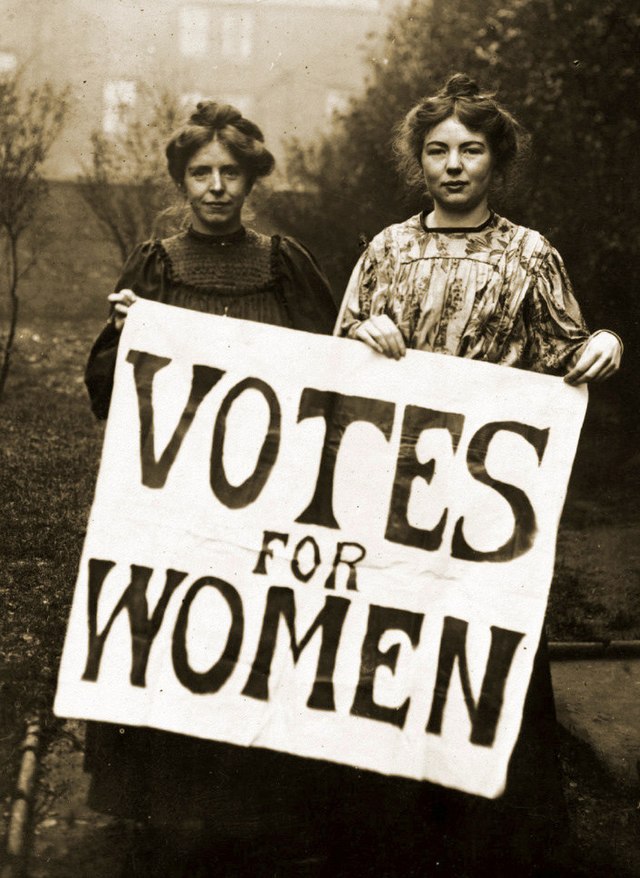
The first women’s suffrage organizations were created in 1869. Susan B. Anthony and Elizabeth Cady Stanton founded the National Woman Suffrage Association (NWSA), while Lucy Stone, Julia Ward Howe, and Henry Blackwell founded the American Woman Suffrage Association (AWSA). These two rival groups were divided over the Fifteenth Amendment, which guaranteed African American men the right to vote. The AWSA supported the Fifteenth Amendment, while the NWSA opposed it because it did not include suffrage for women. In 1890, the two competing organizations were merged into the National American Woman Suffrage Association (NAWSA).

During the 1870s, suffragists (women’s suffrage activists) began attempting to vote at polling places and filing lawsuits when their attempts were rejected. This drew attention to the women’s rights movement, particularly after Susan B. Anthony was arrested and put on trial for voting in the 1872 presidential election. Suffragists hoped that the lawsuits would work their way up to the Supreme Court, and that the justices would declare that women had a constitutional right to vote. In 1875, the Supreme Court, rejected women’s suffrage, ruling that the US Constitution did not confer the right of suffrage to anyone.

After the Supreme Court ruling, leaders of the women’s rights movement adopted other strategies for securing universal suffrage. Activists began organizing a drive to pass a constitutional amendment guaranteeing women the right to vote. The National American Woman Suffrage Association launched a campaign to achieve victories at the state level, in the hopes that if enough states allowed women the right to vote, federal legislation would follow. These efforts were so successful that by the time of the ratification of the Nineteenth Amendment, over half of all states had already granted limited voting rights to women.

The Nineteenth Amendment
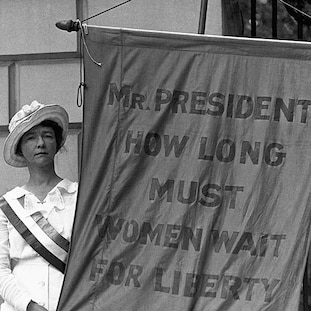
In January, 1878, Republican Senator Aaron A. Sargent of California formally introduced in the Senate a constitutional amendment to guarantee women the vote. The bill languished in committee until 1887, when it finally went up to a vote, and was defeated. Not until 1914 was another constitutional amendment for women’s rights considered, and again rejected, by the Senate.

Though the movement for women’s suffrage was well-organized and gaining momentum by the early twentieth century, it met with strong opposition from some sectors of US society. Brewers and distillers were opposed to female enfranchisement because they assumed that women would vote for the prohibition of alcoholic beverages, while businesses that employed children feared that women would vote to eliminate child labour. Anti-suffrage organizations sprang up all over the country to oppose the drive for female enfranchisement. Anti-suffrage activists were not just men; indeed, many upper class women joined the movement, arguing that politics was a dirty business that would sully the moral and spiritual authority of women

The National American Woman Suffrage Association in 1900, launched an effort to link the drive for female suffrage to the US war effort in the First World War. Though many of her fellow suffragists were anti-war pacifists, Catt made the controversial decision to support the war and to thereby portray the women’s suffrage movement as patriotic. The effort was a success; in his 1918 State of the Union address, President Woodrow Wilson declared his support for female enfranchisement.

On August 18, 1920, Congress ratified the Nineteenth Amendment, which guaranteed the right to vote to all US citizens regardless of sex. The Nineteenth Amendment represented a major victory and a turning point in the women’s rights movement.


The women’s suffrage movement

The Nineteenth Amendment to the US Constitution was ratified on August 18, 1920. It declares that “The right of citizens of the United States to vote shall not be denied or abridged by the United States or by any State on account of sex. Congress shall have power to enforce this article by appropriate legislation. “The amendment, which granted women the right to vote, represented the pinnacle of the women’s suffrage movement, which was led by the National American Woman Suffrage Association (NAWSA).In their decades-long struggle for female enfranchisement, women’s rights advocates met with strong opposition from anti-suffrage activists.

The women’s suffrage movement has its origins in the Seneca Falls Convention of 1848, the first women’s rights convention ever held in the United States. Approximately three hundred activists, female and male, gathered to discuss the condition of women and to devise strategies for achieving social and political rights for women. Though women’s suffrage was a topic of debate at the convention, it was not the main goal of the movement at this early stage, and the convention’s resolution demanding women’s suffrage was the only resolution that was not passed unanimously.

The first women’s suffrage organizations were created in 1869. Susan B. Anthony and Elizabeth Cady Stanton founded the National Woman Suffrage Association (NWSA), while Lucy Stone, Julia Ward Howe, and Henry Blackwell founded the American Woman Suffrage Association (AWSA). These two rival groups were divided over the Fifteenth Amendment, which guaranteed African American men the right to vote. The AWSA supported the Fifteenth Amendment, while the NWSA opposed it because it did not include suffrage for women. In 1890, the two competing organizations were merged into the National American Woman Suffrage Association (NAWSA).

During the 1870s, suffragists (women’s suffrage activists) began attempting to vote at polling places and filing lawsuits when their attempts were rejected. This drew attention to the women’s rights movement, particularly after Susan B. Anthony was arrested and put on trial for voting in the 1872 presidential election. Suffragists hoped that the lawsuits would work their way up to the Supreme Court, and that the justices would declare that women had a constitutional right to vote. In 1875, the Supreme Court, rejected women’s suffrage, ruling that the US Constitution did not confer the right of suffrage to anyone.

After the Supreme Court ruling, leaders of the women’s rights movement adopted other strategies for securing universal suffrage. Activists began organizing a drive to pass a constitutional amendment guaranteeing women the right to vote. The National American Woman Suffrage Association launched a campaign to achieve victories at the state level, in the hopes that if enough states allowed women the right to vote, federal legislation would follow. These efforts were so successful that by the time of the ratification of the Nineteenth Amendment, over half of all states had already granted limited voting rights to women.

The Nineteenth Amendment

In January, 1878, Republican Senator Aaron A. Sargent of California formally introduced in the Senate a constitutional amendment to guarantee women the vote. The bill languished in committee until 1887, when it finally went up to a vote, and was defeated. Not until 1914 was another constitutional amendment for women’s rights considered, and again rejected, by the Senate.

Though the movement for women’s suffrage was well-organized and gaining momentum by the early twentieth century, it met with strong opposition from some sectors of US society. Brewers and distillers were opposed to female enfranchisement because they assumed that women would vote for the prohibition of alcoholic beverages, while businesses that employed children feared that women would vote to eliminate child labour. Anti-suffrage organizations sprang up all over the country to oppose the drive for female enfranchisement. Anti-suffrage activists were not just men; indeed, many upper class women joined the movement, arguing that politics was a dirty business that would sully the moral and spiritual authority of women

The National American Woman Suffrage Association in 1900, launched an effort to link the drive for female suffrage to the US war effort in the First World War. Though many of her fellow suffragists were anti-war pacifists, Catt made the controversial decision to support the war and to thereby portray the women’s suffrage movement as patriotic. The effort was a success; in his 1918 State of the Union address, President Woodrow Wilson declared his support for female enfranchisement.

On August 18, 1920, Congress ratified the Nineteenth Amendment, which guaranteed the right to vote to all US citizens regardless of sex. The Nineteenth Amendment represented a major victory and a turning point in the women’s rights movement.
Women in The Indian Film Industry

The Indian film industry is enormous, with more than 1800 movies being released every year in over 20 languages. In fact, Bollywood is the largest film industry in the world! With top movies like Baahubali and Dangal earning a box office collection of over 300 crore Rs, it is evident that films are a big deal in India. People flock to theatres to see their favourite movie stars and enjoy their films. For years, the film industry has been considered a male-dominated workspace. But there have been several women who have broken through this pre-conceived barrier and risen to become some of the best in the industry. Fatma Begum is credited as the first woman feature director in India for her work in the silent film Bulbul-e-Paristan (1926). She was a director, actor and writer who established her own production company Fatma Films in 1926. Jaddam Bai, Protima Dasgupta and Shama Zaidi are some of the pioneering women directors and screenwriters in India. Women directors were not under the spotlight for a lot of years after then till unique and creative women started gaining attention for their directing and screenwriting skills in the last few decades.

A lot of female filmmakers and producers are going mainstream these days, many of them bringing their own fresh and interesting takes on filmmaking and storytelling. Anjali Menon films like Manjadikuru (2008), Bangalore Days (2014) and Koode (2018) are some of the most heartfelt and warm films in Mollywood. Soorarai Pottru in Tamil was also directed by the talented Sudha Kongara. Meghna Gulzar’s work in Raazi (2018) and Chaapak (2020) has been impressive as well. Gauri Shinde brought back the legendary actress Sridevi on screen in 2012 with the highly acclaimed English Vinglish. Rima Das is a director and screenwriter whose film in Assamese, Village Rockstars (2017) won many national and international awards. Zeenat Lakhani was the co-writer for the 2017 Hindi comedy-drama Hindi Medium. Mira Nair (Monsoon Weddings, 2001) and Gurinder Chadha (Bend it Like Beckham, 2002) are directors who found fame outside of India for their work. Zoya Akhtar, the daughter of poet and screenwriter Javed Akhtar, has directed and produced several hugely popular and commercially successful films. Her most recent work was with Gully Boy (2019) and she has announced a road-trip movie, Jee Le Zara featuring some of the female superstars of Bollywood like Alia Bhatt, Priyanka Chopra and Katrina Kaif. This has been planned as a sequel to Zindagi Na Milegi Dobara (2011) which was such a big success on its release it remains one of the most loved films in Bollywood by the masses. Top actresses in Bollywood like Priyanka Chopra, Anushka Sharma and Deepika Padukone have also taken up producing, with many of them establishing their own production houses.

Some of the most significant evolutions can be seen in the depiction of female characters in Indian cinema. For ages, these characters were simply the side pieces, simply pretty, too emotional and dependent on the male characters in the movie. Oftentimes, she was the “damsel in distress”, needing the “hero” to save her from the villains so that he could show off how strong and cool he is. Over the last 2 decades, there have been several films that showcased strong women characters – both physically and mentally. More female-oriented movies are being made like Kahaani (2012), Queen (2013), Raazi (2018) and the recently released Gangubai Kathiawadi (2022), which showcase the diverse personalities and strengths of women. Even in some male-oriented films, women are represented as strong-minded individuals in their own right. Their characters no longer lack substance. Take the 2020 Tamil film Soorarai Pottru for example. Even though Surya’s Maaran is the central character, the character of his wife Bommi, played by Aparna Balamurali, is one of the highlights of the film. With her strong principles and ambitious personality, she impresses the audience by standing up for herself and supporting her husband. Films have a lot of influence on the socio-political stance of society regarding various issues. When there are movies like Kabir Singh (2019) still garnering a huge fan following for their depiction of toxic masculinity and abusive relationships, stories like that of Soorarai Pottru are required for providing a good example of what a healthy relationship should look like and how women are just as strong, funny, ambitious and efficient as men. Filmmakers these days understand how impactful cinema is as a communication medium and try to bring attention to the various issues faced by women like discrimination, abuse and acid attacks through their films.

Women have come a long way in Indian Cinema. Here’s to hoping we get to see more of their work and a lot more real and relatable female characters on screen in the coming years.

Cleopatra: The Queen, The Myth, The History

Introduction

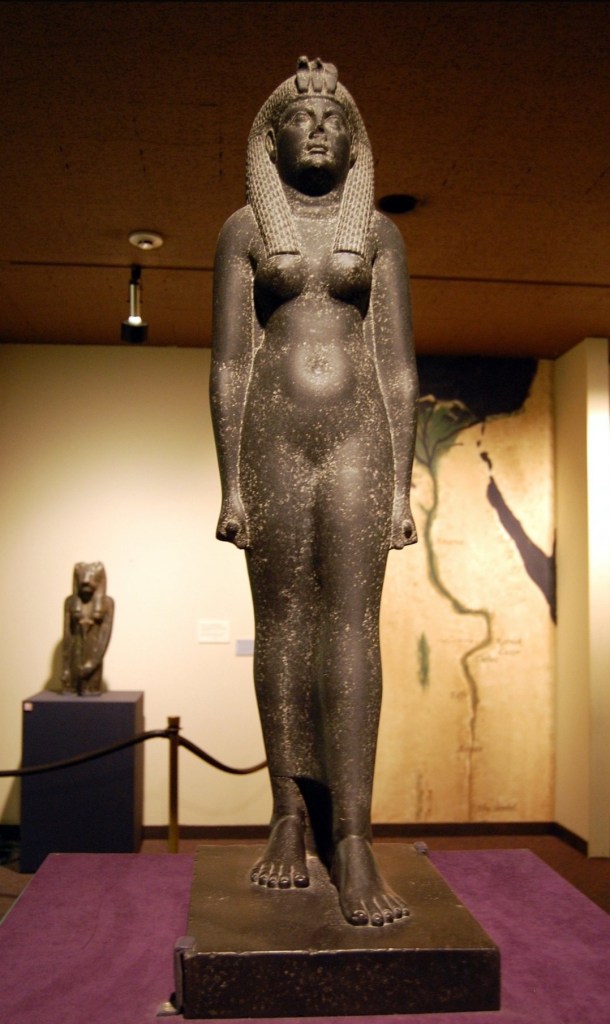
Statue of Cleopatra VII

The studies of History never ceases to amaze us with its unfolding secrets, bizarre facts and notable events that took place throughout ages. History has made many rulers popular, many famous and many infamous through their deeds during their ruling periods. But, Cleopatra VII of Egypt, still remains a fantasy for the connoisseurs of History for her incredible brain and beauty. In Today’s editorial, we’re going to discuss about Cleopatra, the empress of Egypt who enticed the world with her inevitable ruling skills and irresistible charm.

Cleopatra VII

Cleopatra: Who She Was

Cleopatra VII ruled ancient Egypt as co-regent (first with her father, then with her two younger brothers and finally with her son) for almost three decades. She was part of a dynasty of Macedonian rulers founded by Ptolemy, who served as general under Alexander the Great during his conquest of Egypt in 332 B.C. Well-educated and clever, Cleopatra could speak various languages and served as the dominant ruler in all three of her co-regencies. Her romantic liaisons and military alliances with the Roman leaders Julius Caesar and Mark Antony, as well as her supposed exotic beauty and powers of seduction, earned her an enduring place in history and popular myth.

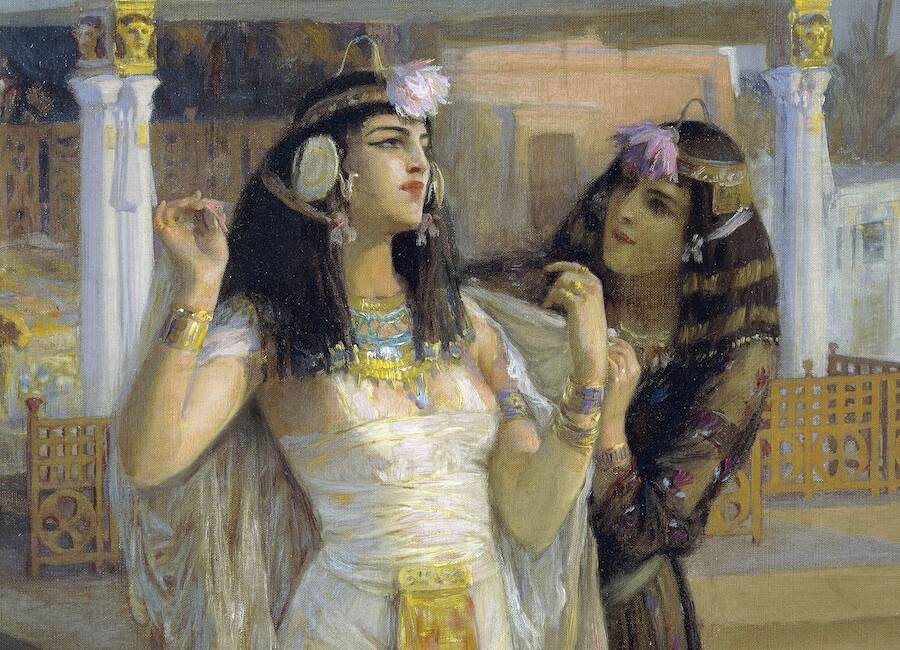
Artwork of Cleopatra, by Frederick Arthur Bridgman (1896)

Early Life and Ascension to The Throne

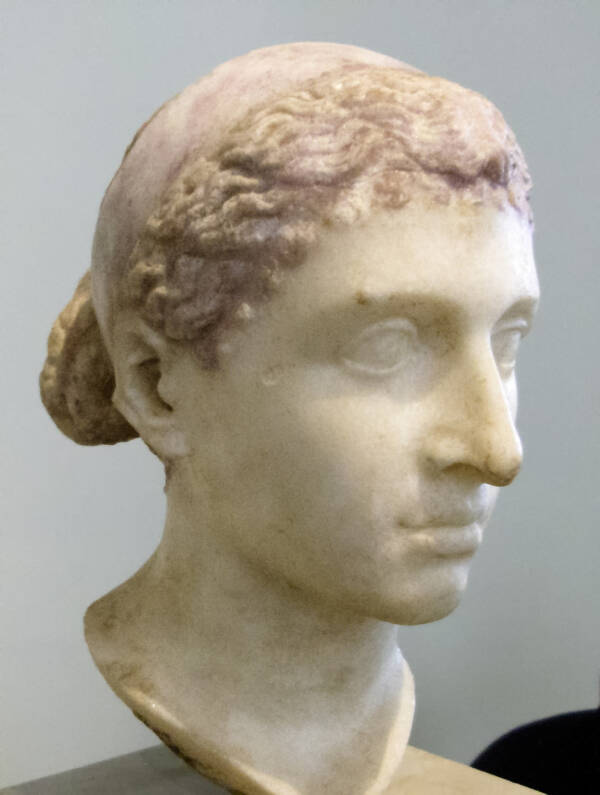
Cleopatra, in full Cleopatra VII Thea Philopator (born 70/69 BCE—died August 30 BCE, Alexandria) was the daughter of King Ptolemy XII Auletes. Cleopatra was destined to become the last queen of the Macedonian dynasty  that ruled Egypt between the death of Alexander the Great  in 323 BCE and its annexation by Rome in 30 BCE. The line had been founded by Alexander’s general Ptolemy, who became King Ptolemy I Soter  of Egypt. Cleopatra was of Macedonian descent and had little, if any, Egyptian blood. Coin portraits of Cleopatra show a countenance  alive rather than beautiful, with a sensitive mouth, firm chin, liquid eyes, broad forehead, and prominent nose. When Ptolemy XII died in 51 BCE, the throne passed to his young son, Ptolemy XIII, and daughter, Cleopatra VII. It is likely, but not proven, that the two married soon after their father’s death. The 18-year-old Cleopatra, older than her brother by about eight years, became the dominant ruler. Evidence shows that the first decree in which Ptolemy’s name precedes Cleopatra’s was in October of 50 BCE. Soon after, Cleopatra was forced to flee Egypt for Syria, where she raised an army and in 48 BCE returned to face her brother at Pelusium, on Egypt’s eastern border. The murder of the Roman general Pompey, who had sought refuge from Ptolemy XIII at Pelusium, and the arrival of Julius Caesar  brought temporary peace.

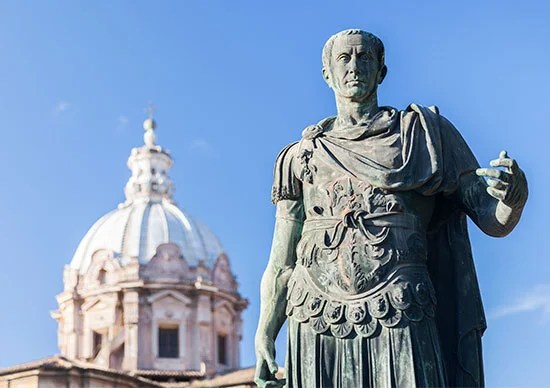
Statue of Julius Caesar in Rome, Italy

Cleopatra’s Romantic Roman Connection

Cleopatra realized that she needed Roman support, or, more specifically, Caesar’s support, if she was to regain her throne. Each was determined to use the other. Caesar sought money for repayment of the debts incurred  by Cleopatra’s father, Auletes, as he struggled to retain his throne. Cleopatra was determined to keep her throne and, if possible, to restore the glories of the first Ptolemies and recover as much as possible of their dominions, which had included southern Syria and PalestineCaesar and Cleopatra  became lovers and spent the winter besieged in Alexandria. Roman reinforcements arrived the following spring, and Ptolemy XIII fled and drowned in the Nile. Cleopatra, now married to her brother Ptolemy XIV, was restored to her throne. In June 47 BCE she gave birth to Ptolem Caesar  . The Child was believed to be Caesar’s child, and was known by the Egyptian people as Caesarion, or Little Caesar.

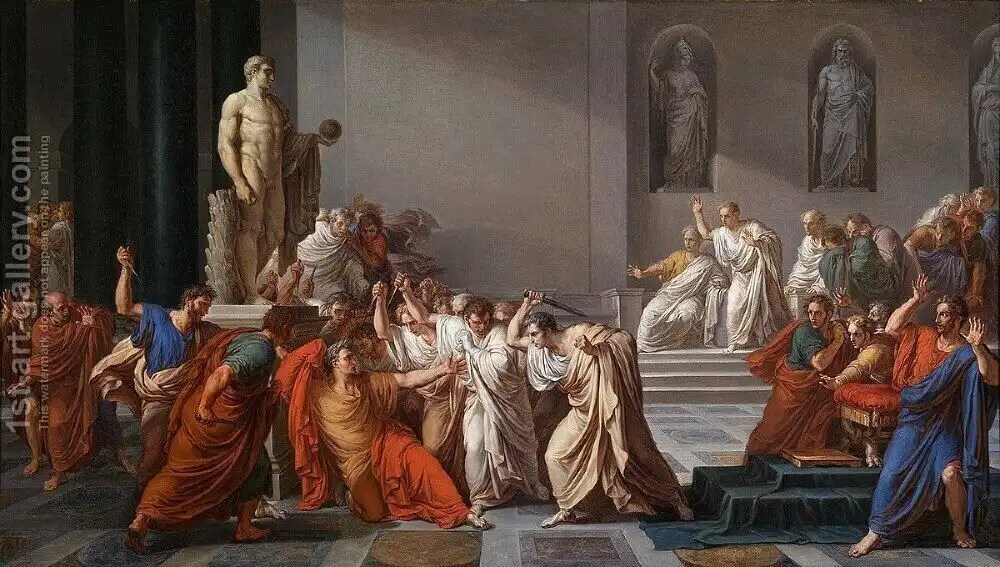
Assassination of Julius Caesar

Sometime in 46-45 B.C., Cleopatra traveled with Ptolemy XIV and Caesarion to Rome to visit Caesar, who had returned earlier. After Caesar was assasinated in March 44 B.C., Cleopatra went back to Egypt; Ptolemy XIV was killed soon after (possibly by Cleopatra’s agents) and the three-year-old Caesarion was named co-regent with his mother, as Ptolemy XV.

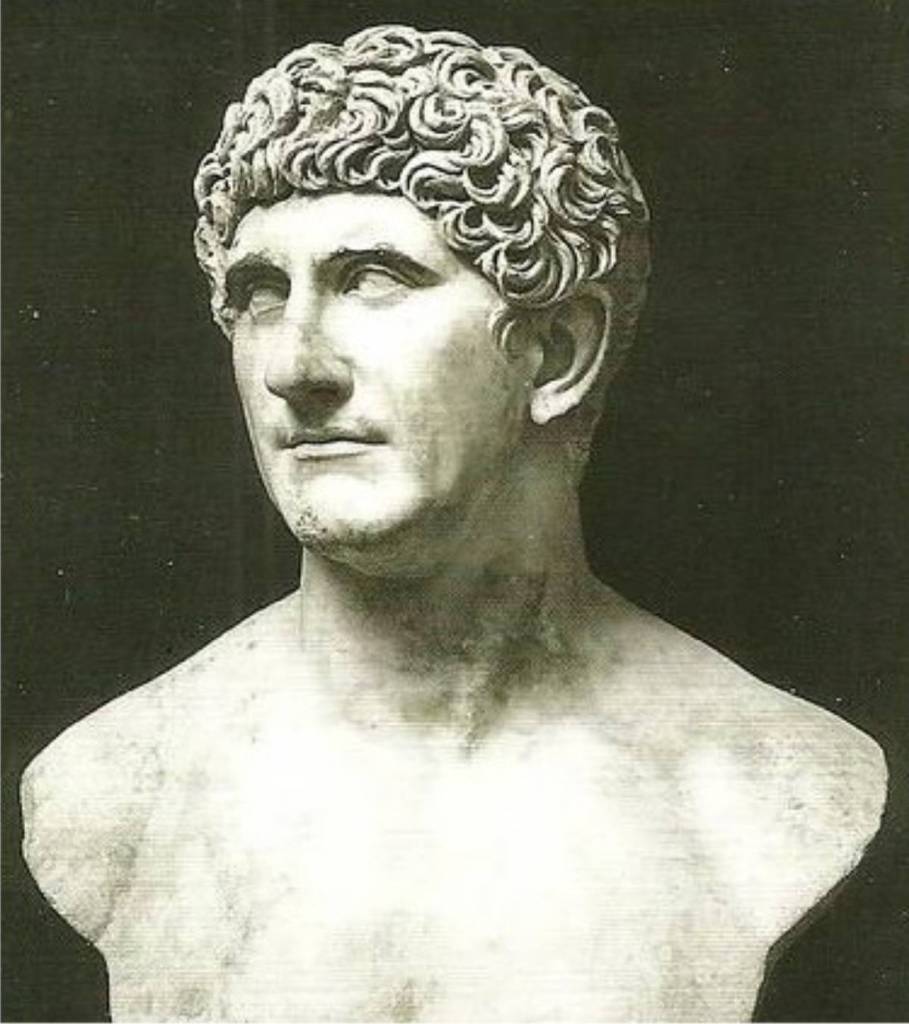
Mark Antony

Mark Antony: The Love of Cleopatra

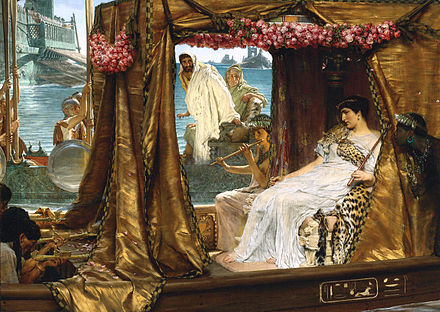
When, at the Battle of Phillpi  in 42 BCE, Caesar’s assassins were routed, Mark Antony  became the heir apparent of Caesar’s authority—or so it seemed, for Caesar’s great-nephew and personal heirOctavian, was but a sickly boy. Antony, now controller of Rome’s eastern territories, sent for Cleopatra so that she might explain her role in the aftermath of Caesar’s assassination. She set out for Tarsus in Asia Minor  loaded with gifts, having delayed her departure to heighten Antony’s expectation. She entered the city by sailing up the Cydnus River in a barge while dressed in the robes of the new Isis. Antony, who equated himself with the God Dionysus, was captivated.

Decadent affair between Mark Antony and Cleopatra

In 40 BCE Cleopatra gave birth to twins, whom she named Alexander Helios and Cleopatra Selene

Cleopatra’s Death: The End

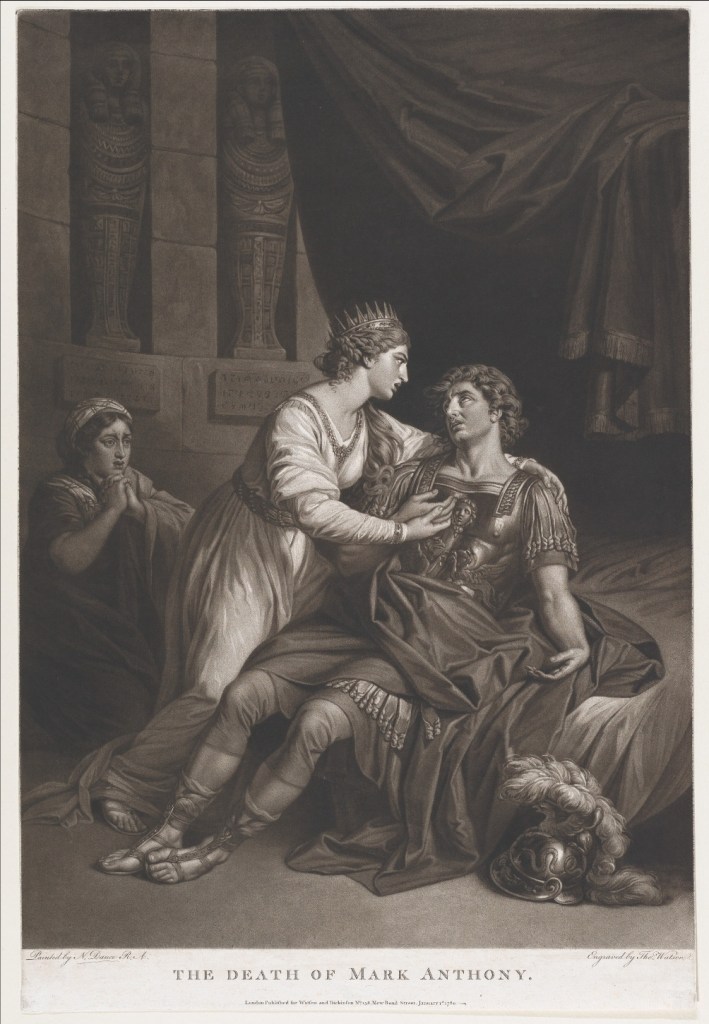
On September 2, 31 B.C., Octavian’s forces soundly defeated those of Antony and Cleopatra in the Battle of Actium . Cleopatra’s ships deserted the battle and fled to Egypt, and Antony soon managed to break away and follow her with a few ships. With Alexandria under attack from Octavian’s forces, Antony heard a rumour that Cleopatra had committed suicide. He fell on his sword, and died just as news arrived that the rumour had been false.

Mark Antony‘s Death

On August 12, 30 B.C., after burying Antony and meeting with the victorious Octavian, Cleopatra closed herself in her chamber with two of her female servants. The means of her death is uncertain, but Plutarch and other writers advanced the theory that she used a poisonous snake known as the asp, a symbol of divine royalty, to commit suicide at age 39. According to her wishes, Cleopatra’s body was buried with Antony’s, leaving Octavian (later Emperor Augustus I) to celebrate his conquest of Egypt and his consolidation of power in Rome.

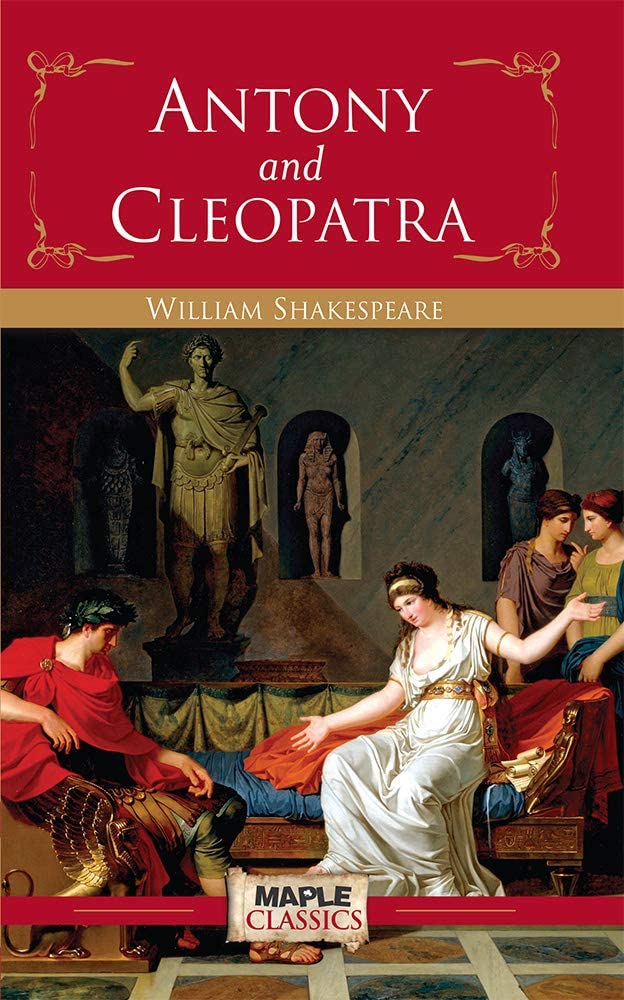
William Shakespeare‘s Antony and Cleopatra

Cleopatra: The Enchantress Throughout Ages

Cleopatra remains a charm to cultures having relevance even today. Her bizarre beauty hacks including pomegranate lip-tint and a bath regime curated out of jennet(female donkey) milk arestill a talk among Beauty enthusiasts. Her famous pearl in vinegar concoction drink stirs curiosity among people. Her life was made into various plays and movies. From Shakespeare stems a wealth of Cleopatra-themed art—plays, poetry, paintings, and operas. In the 20th century Cleopatra’s story was preserved and further developed through film.

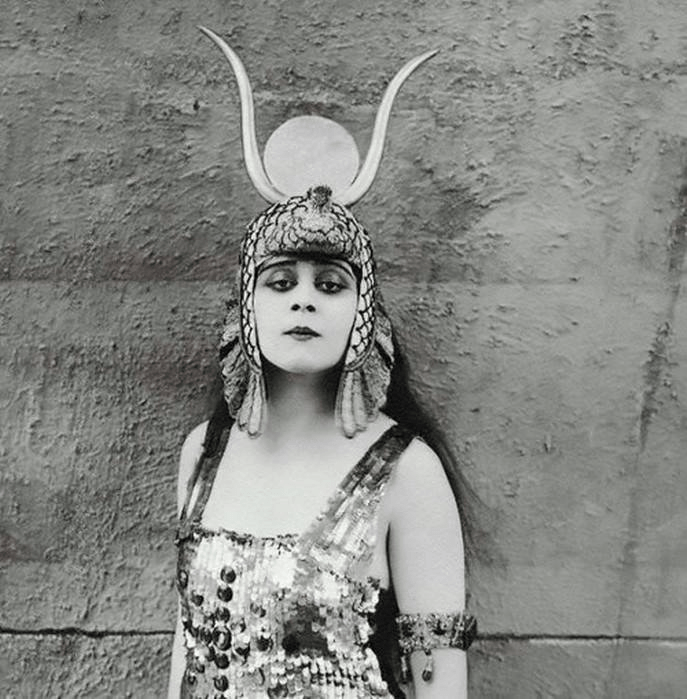
Theda Bara as Cleopatra (1917)
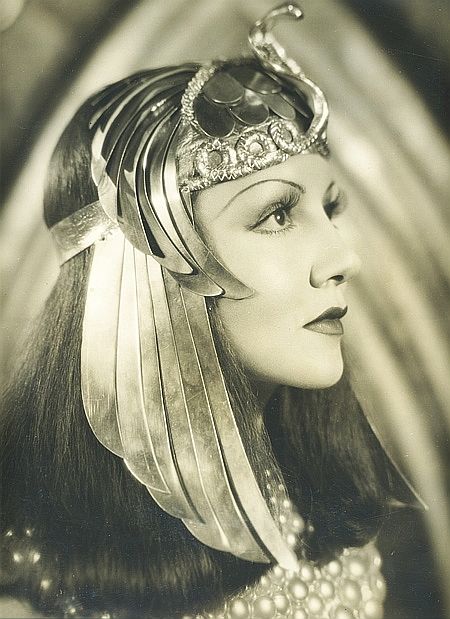
Claudette Colbert as Cleopatra (1934)
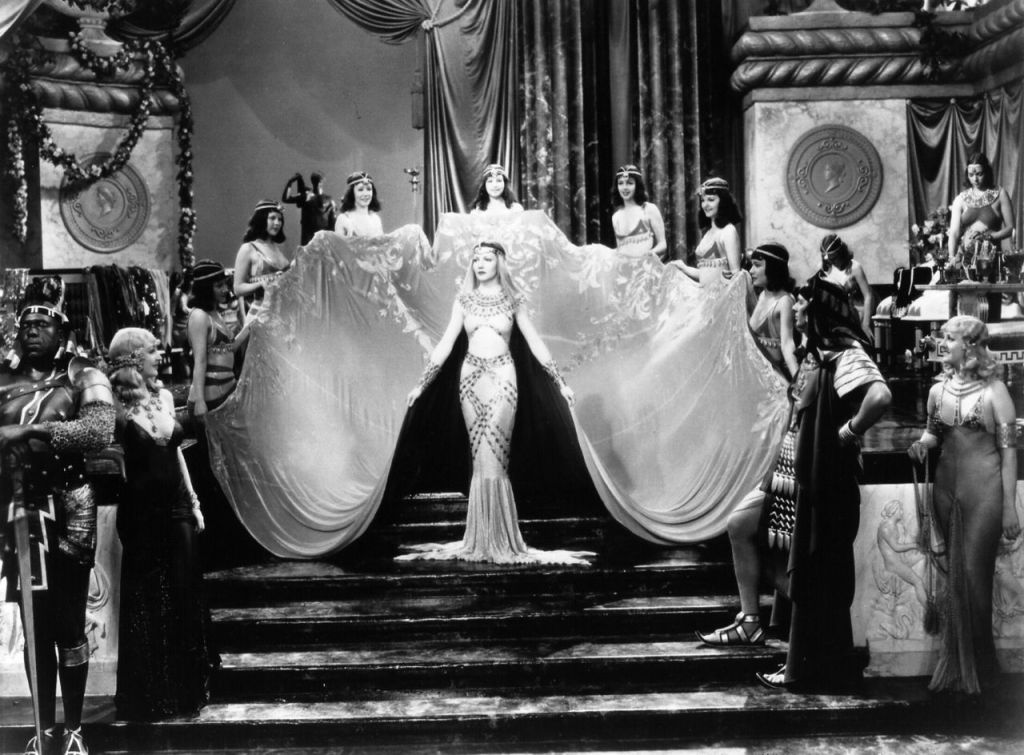
Cleopatra (1934)
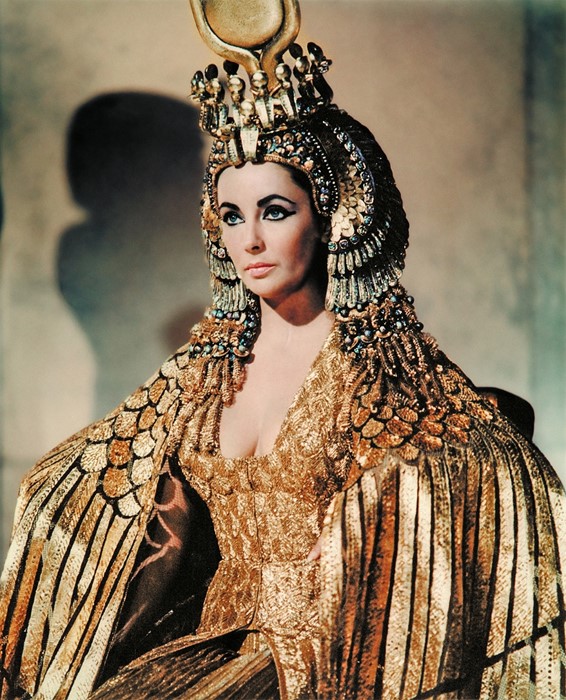
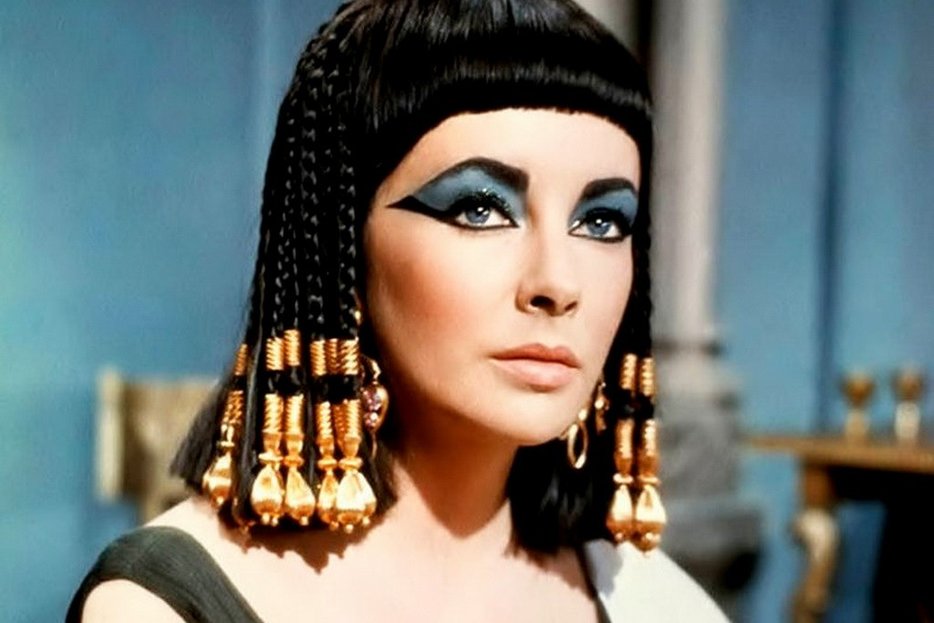
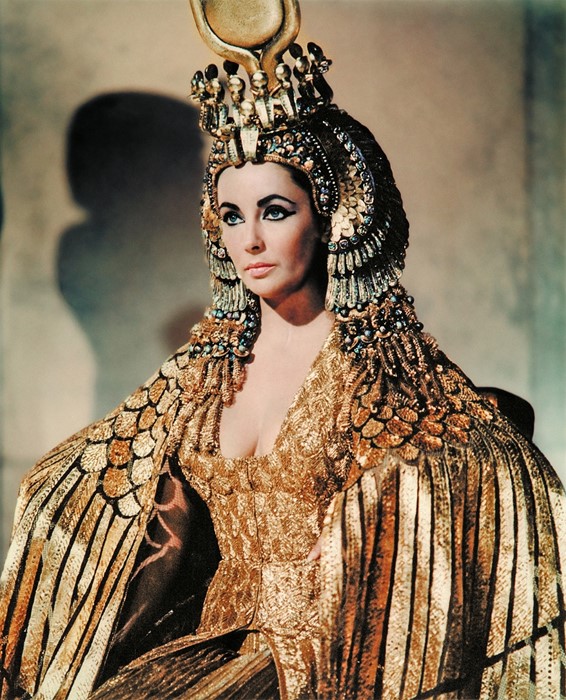
Elizabeth Taylor as Cleopatra (1963)
Cleopatra (1963)
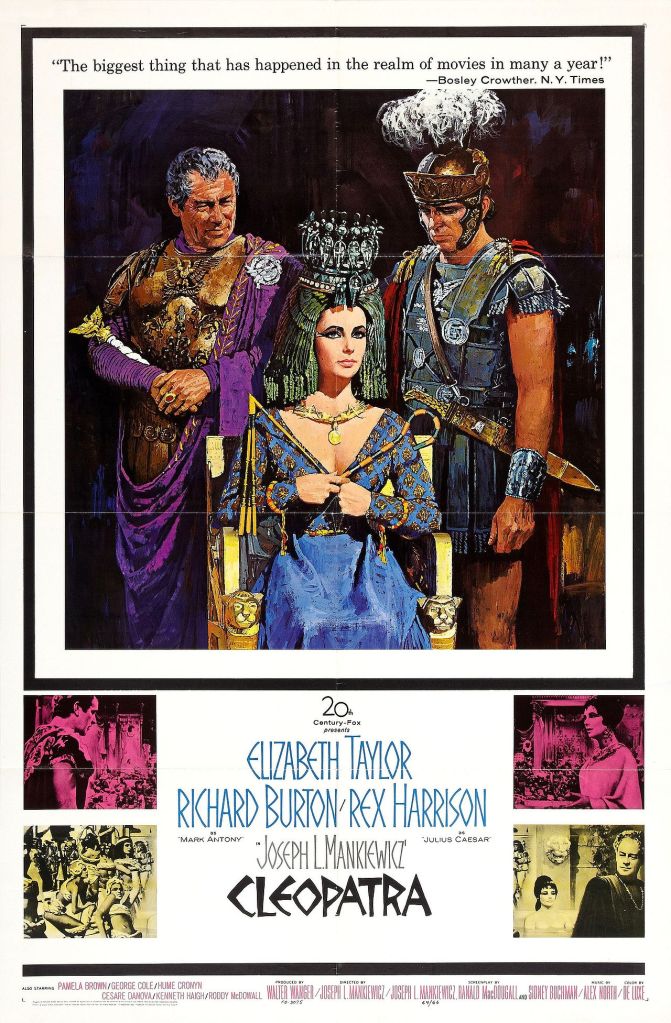
Cleopatra (1963) poster

Many actresses, including Theda Bara  (1917), Claudette Colbert  (1934), and Elizabeth Taylor  (1963), have played the queen, typically in expensive, exotic films that concentrate on the queen’s love life rather than her politics. Caesar and Cleopatra, four-act play by George Barnard Shaw , written in 1898, published in 1901, and first produced in 1906. It is considered Shaw’s first great play. Cleopatra, American epic movie, released in 1963, that was perhaps best known for its off-screen drama, notably production overruns that nearly bankrupted Twentieth Century-Fox  and the affair between stars Elizabeth Taylor  and Richard Burton.

Conclusion

A queen, an empress, a ruler, a passionate lover, a beauty with brainCleopatra was literally all in one. She’s definitely considered as one of the most celebrated queen recorded in World history. Tales of her rule and of her beauty still make her unforgettable to the modern Era of History learners. She was a legend, who is encrypted in History forever, with the never ending myths surrounding her life.

A Jest of God: The Book Review

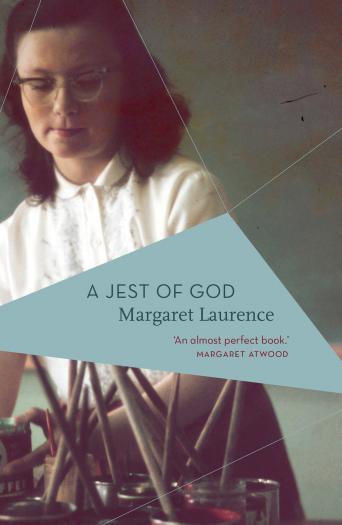
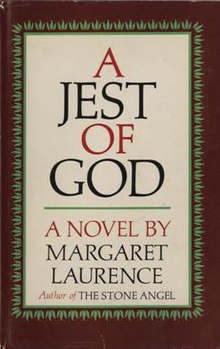
The first cover of A Jest of God (1966)

Introduction

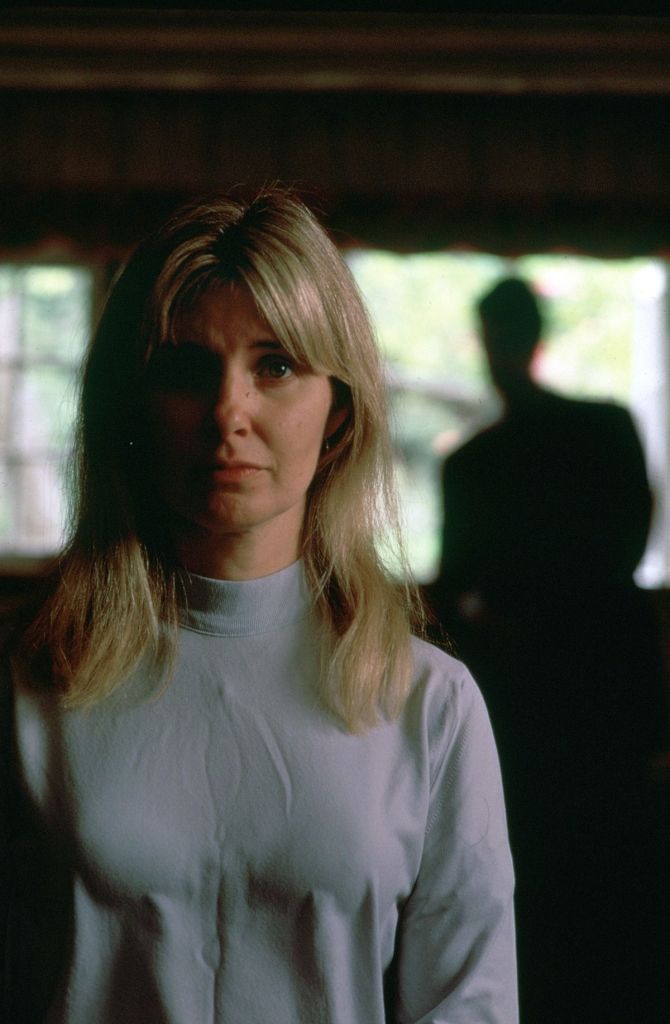
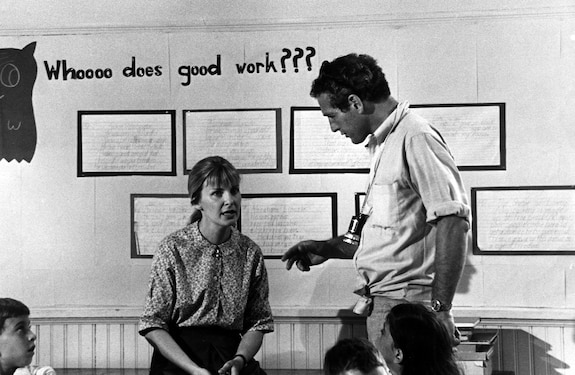
A Jest of God is a novel by Canadian author Margaret Laurence. It was first published in 1966. It won the Governor General’s Award  for 1966 . In 1968, director Paul Newman and screenwriter Stewart Stern  adapted A Jest of God  into the motion picture Rachel, Rachel. It starred Joanne Woodward in the lead role and Estelle Parsons as Calla, both of whom received Academy Award nominations for their performances. It was also nominated for Best Picture.

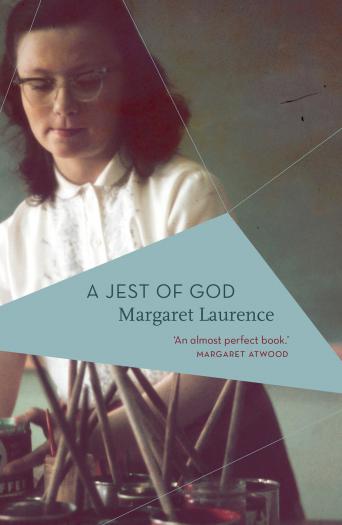
Revised Cover of A Jest of God (1966)

About The Author

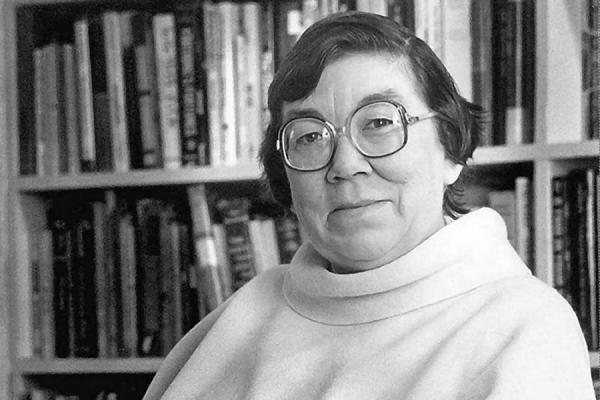
Margaret Laurence (née Jean Margaret Wemyss), was a Canadian novelist (born 18 July 1926 in Neepawa, MB; died 5 January 1987 in Lakefield, ON). Margaret Laurence was one of the pivotal and foundational figures in women’s literature in Canada. Two of her novels — A Jest of God (1966) and The Diviners (1974) — won the Governor General’s Literary Award  for fiction. She also wrote acclaimed poetry, short stories and children’s literature, helped found the Writers’ Union of Canada and the Writers’ Trust of Canada, and served as chancellor of Trent University. She was made a Companion of the Order of Canada  in 1972 and was named a Person of National Historic Significance by the Government of Canada  in 2018.

Margaret Laurence

Storyline of The Novel

The tale of the dutiful daughter who returned home to care for her ailing widowed mother records with appalling accuracy the life of a thirty-four year old spinster schoolteacher in a small town outside of Winnipeg. The relentless confinement of Rachel Cameron‘s life is disrupted the summer the milkman’s son, now a teacher in a Winnipeg high school, returns to visit his parents. Rachel is an easy mark; her affair with Nick brings out passion after awkwardness, and the yearning for a family of her own. The understanding that Nick is married destroys the affair but not her longing, and when she thinks she is bearing his child she determines to go through with her pregnancy. The prospective infant turns out to be a tumour, benign; Nick turns out to be unmarried and the more inaccessible; but Rachel emerges from her experience with a new conception of herself and her environment. She will no longer be a victim, though she may be a reluctant jester, and she makes the needed move to a place where her old responsibilities and limitations will remain but where there will be a greater freedom. Saved from soap opera by an utter sureness and honesty of vision, from dreariness by the aptitude of its portrayals, this carries a compassionate conviction that will reach a limited but sensitive feminine readership.

Poster of movie Rachel, Rachel (1968) based on novel A Jest of God (1966)

Analysis of The Storyline

The novel gets told with difficulty because Rachel’s voice is halting, obsessive. She begins her story as an observer, watching the children in the schoolyard, watching herself both in her immediate present as a teacher and remembering back to her childhood. She thinks of the “secret language” children share. In contrast, her own language is halting, and she finds difficulty establishing a voice. She frequently interrupts to judge her voice critically. She wonders: “Am I beginning to talk in that simper tone?” . Then, as a corrective, she speaks “more sharply than necessary,” and cautions herself to “strike a balance” . But, if we read this story in Jungian terms. (as many critics do),we perceive that Rachel cannot achieve this desired balance until she accepts her shadow side. Locked in a pattern of avoidance, no wonder she finds “my own voice sounds false to my ears”.

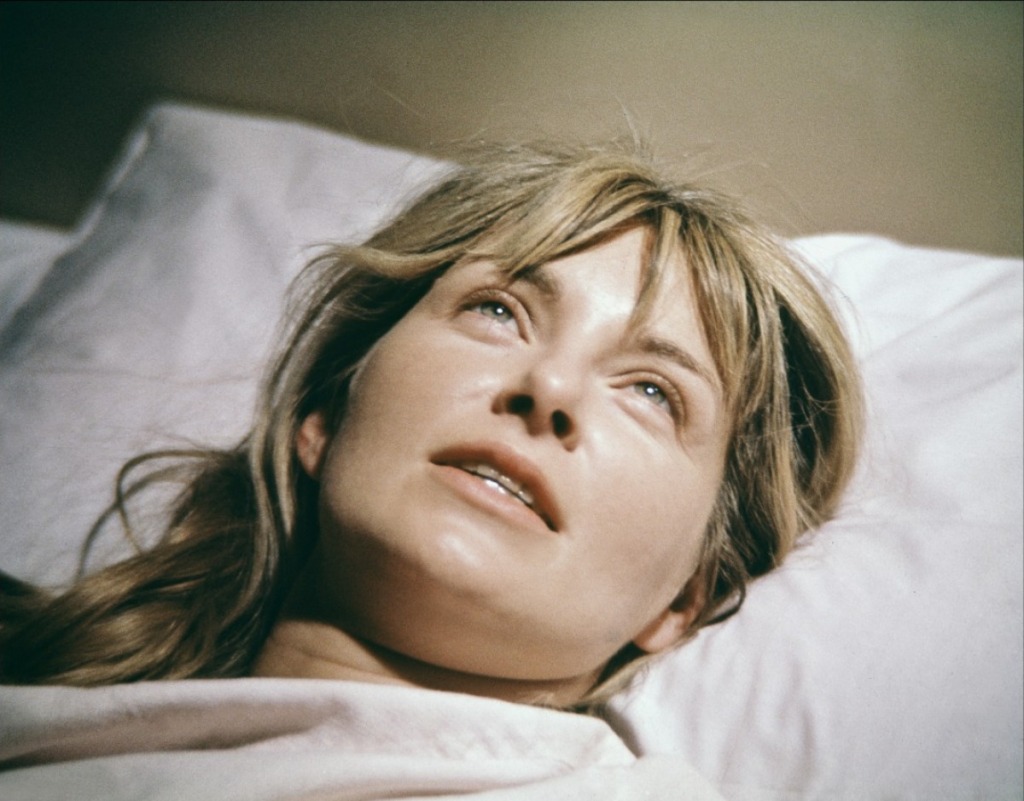
Joanne Woodward as Rachel in Rachael, Rachael (1968)

Because she resists acknowledging her desires, she remains blocked. When she approaches a recognition of her “darker,” “shadow” selves, she retreats, and stops the story. If she fears she is entertaining “morbid” thoughts or eccentric fantasies, she admonishes herself: “This must stop. It isn’t good for me. Whenever I find myself thinking in a brooding way, I must simply turn it off and think of something else”. She retreats from her sexual fantasies : “I didn’t. I didn’t…. Rachel, stop it. You’re only getting yourself worked up for nothing. It’s bad for you”. Yet these private fantasies are colourful and engaging, in vibrant contrast to her stilted public language and constrained behaviour. Fortunately, almost in spite of herself, she comes to acknowledge her desires and to face the implications of sexual passion. Through a symbolic descent into the underworld, the womblike, tomblike mortuary presided over by Hector Jonas (/Jonah), she realizes that she has the power to affirm her passions, to choose life.

scene from Rachel, Rachel (1968)

Conclusion

A Jest of God is beautifully written, a sympathetic, tender novel which sees Rachel come to a new understanding about herself, and her standing with her difficult mother. A thoroughly beautiful novel, that still possesses its relevance to today’s readers.

Frida Kahlo: Unconventional, Uncompromising and Unibrows

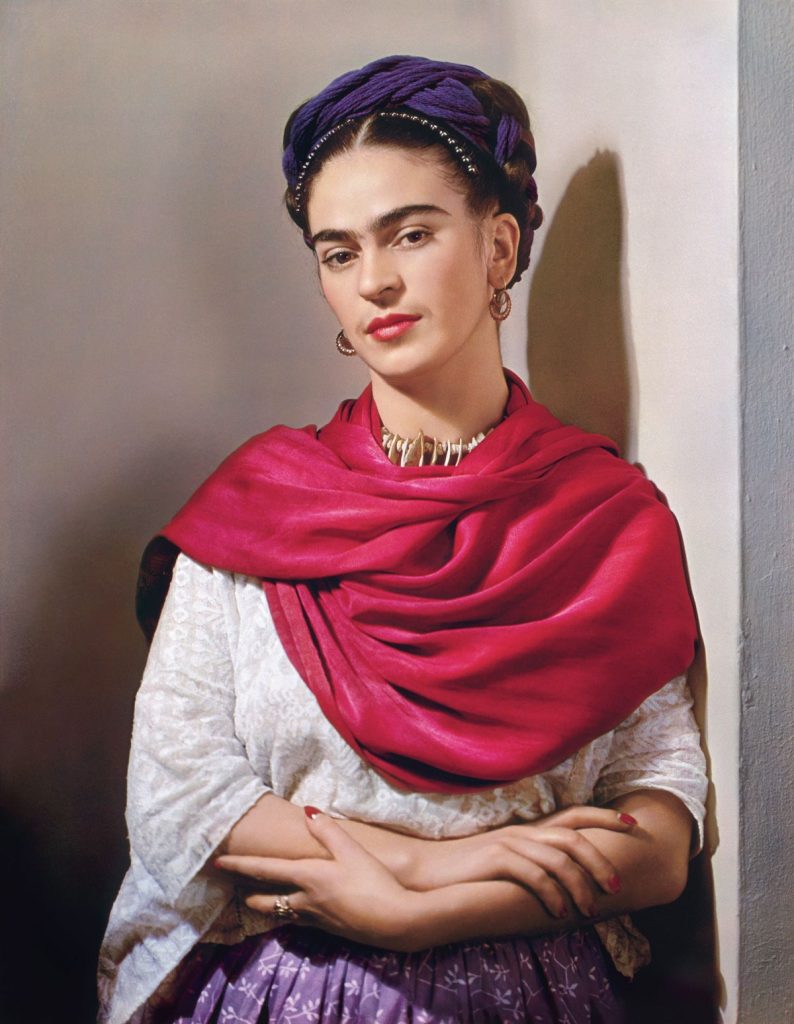
Frida Kahlo

Introduction

Even after years since Frida Kahlo’s demise, her charisma and powerful sense of style continue to captivate the world. The Mexican artist, famed for her self-portraits, is celebrated in her home country for her attention to indigenous culture, and by feminists worldwide for her depiction of the female experience and form. In fact, she was an advocate of feminism way before it became a staple in the social media age.

Frida

Early Life of Frida Kahlo

Magdalena Carmen Frida Kahlo y Calderón was born on 6 July 1907 in Coyoacán, a village on the outskirts of Mexico City. Born to a German father and a Mestiza  mother, Kahlo spent most of her childhood and adult life at La Casa Azul, her family home in Coyoacán  – now publicly accessible as the Frida Kahlo Museum. Although she was disabled by polio as a child, Kahlo had been a promising student headed for medical school until she suffered a bus accident at the age of 18, which caused her lifelong pain and medical problems. During her recovery, she returned to her childhood interest in art with the idea of becoming an artist.

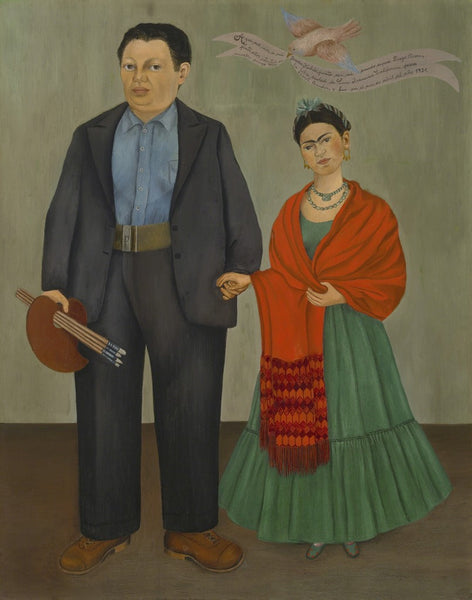
Diego and Frida, Self-Portrait With her Husband

Art Works of Frida Kahlo

Mexican artist Frida Kahlo is remembered for her self-portraits, pain and passion, and bold, vibrant colors. She is celebrated in Mexico for her attention to Mexican and indigenous culture and by feminists for her depiction of the female experience and form.

Life experience is a common theme in Kahlo’s approximately 200 paintings, sketches and drawings. Her physical and emotional pain are depicted starkly on canvases, because of her traumatic bus accident and multiple miscarriages depriving her of Motherhood and leading turbulent relationship with her husband, Mexican Mural artist Diego Rivera, who she married twice. Of her 143 paintings, 55 are self-portraits. She quoted, “I paint self-portraits because I am so often alone, because I am the person I know best.”

Kahlo’s first self-portrait was Self-Portrait in a velvet dress in 1926. It was painted in the style of 19th Century Mexican portrait painters who themselves were greatly influenced by the European Renaissance masters. She also sometimes drew from the Mexican painters in her use of a background of tied-back drapes. Self-Portrait Time Flies  (1929), Portrait of a Woman in White  (1930) and Self-Portrait  (1937) all bear this background.

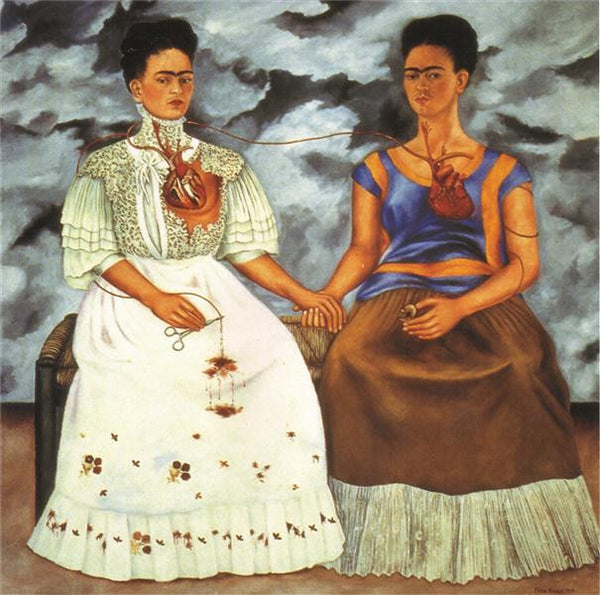
Two Fridas

Self-Portrait With cropped hair (1940), Kahlo is depicted in a man’s suit, holding a pair of scissors, with her fallen hair around the chair in which she sits. This represents the times she would cut the hair Rivera loved when he had affairs. The 1937 painting Memory, The Heart, shows Kahlo’s pain over her husband’s affair with her younger sister Christina. A large broken heart at her feet shows the intensity of Kahlo’s anguish. Frida Kahlo and Diego Rivera divorced in 1939, but reunited a year later and remarried. The Two Fridas  (1939) depicts Kahlo twice, shortly after the divorce. One Frida wears a costume from the Tehuana region of Mexico, representing the Frida that Diego loved. The other Frida wears a European dress as the woman who Diego betrayed and rejected. Later, she is back in Tehuana dress in Self-Portrait as a Tehuana  (1943). Pre-Columbian artifacts were common both in the Kahlo/Rivera home (Diego collected sculptures and idols, and Frida collected Jewelry) and in Kahlo’s paintings. She wore jewelry from this period in Self-Portrait Time Flies  (1926), Self-Portrait With Monkeys  (1938) and Self-Portrait With Braid  (1941), among others. Other Pre-Columbian artifacts are found in The Four Inhabitants of Mexico City  (1938), Girl With Death Mask  (1938).

Frida‘s Self-Portrait With Monkeys

Analysis of Frida’s Artworks: Mexican Nationalism

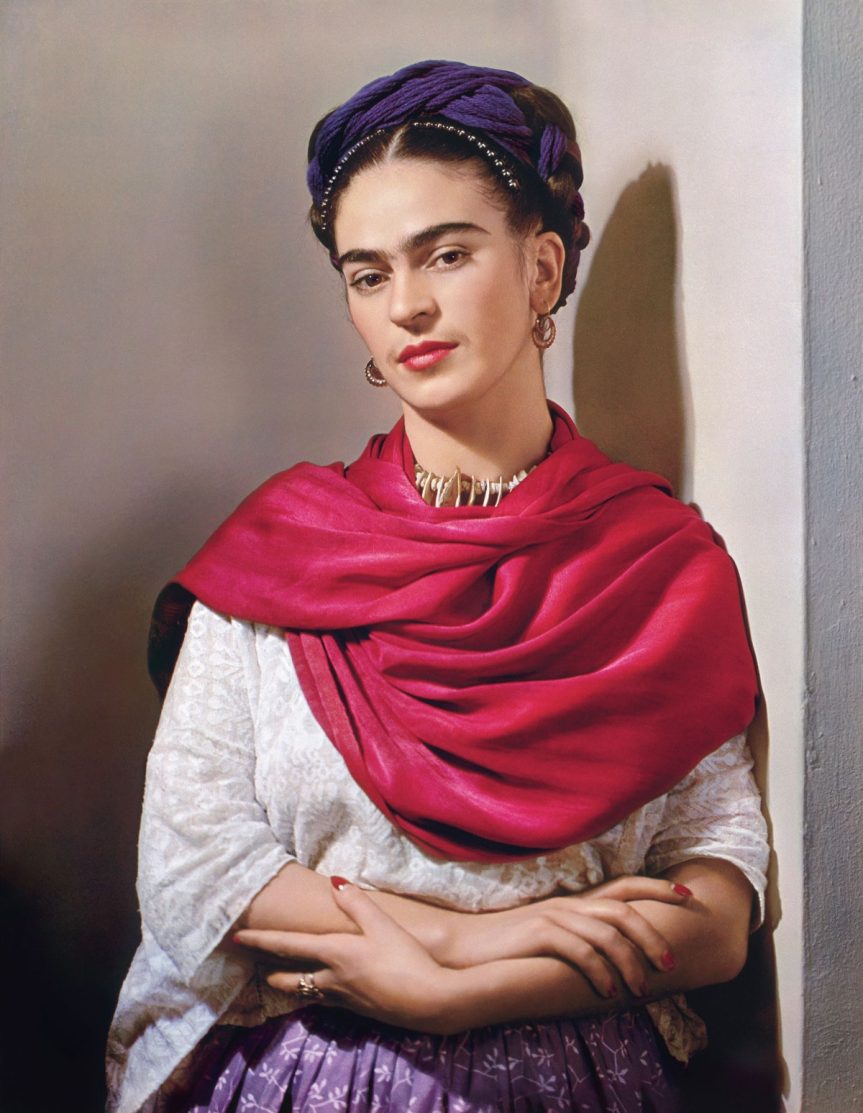
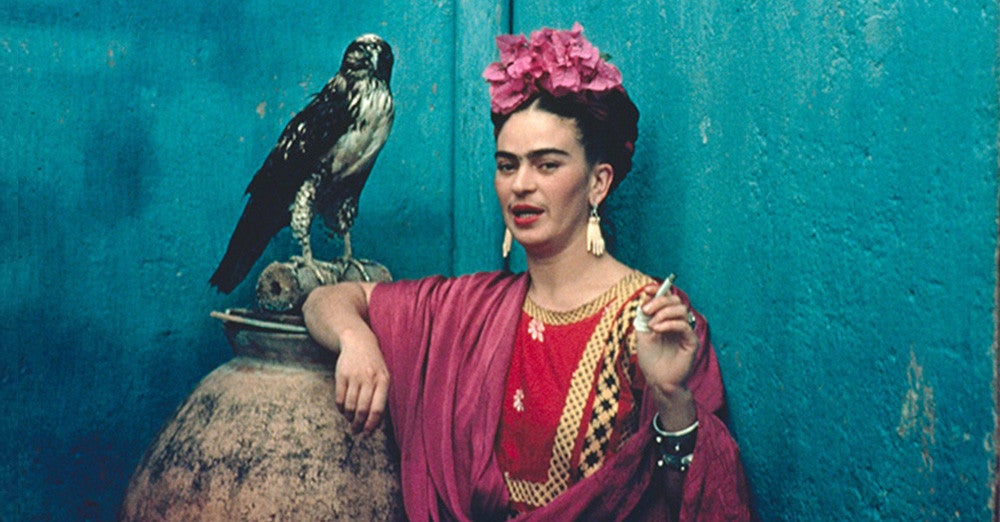
Frida Kahlo was heavily influenced by the Mexicayotl movement, which sprung from the colonialist mindset that native Mexican culture is inferior and that Mexico should emulate Europe. The Mexicayotl movement aimed at protecting the indigenous culture and traditions among the Mexican people. In most of Kahlo’s self-portraits, she paints herself in traditional indigenous Mexican dress. She wears long, colourful skirts, huiplis (loose-fitting tunic), rebozos (shawls) and elaborate headdresses. Painting herself in the Tehuana dress was a chance for Kahlo to express her anti-colonialist ideas and pay homage to her indigenous ancestry.

Frida‘s Portrait of Deer with Human Face

Symbolism and Surrealism

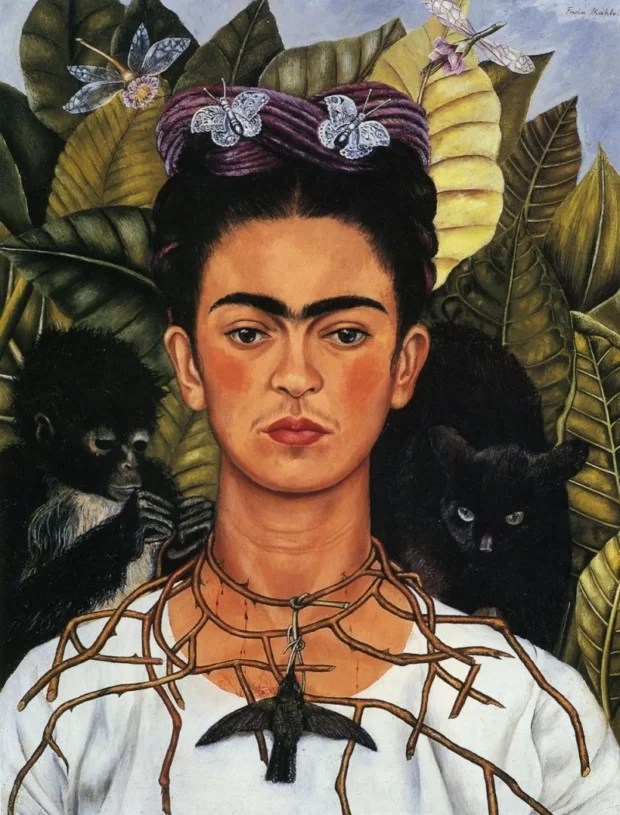
After periods of depression and miscarriages in her life she gave herself to pets around her. She liked to use animals as models in her artworks. Her paintings are domesticated by monkeys, hummingbirds, dogs, and cats. One of her self-portraits depicts her with three spider monkeys. The animals became protective and tender symbols to Kahlo. On the contrary, Mexican Mythology suggests monkeys are symbols of lust. Frida’s significant self-portrait was Self- Portrait with Thorn Necklace and Hummingbird. According to some art historians, Kahlo wanted to show that she had been resurrected and had started a new life with this painting. As a symbol of this idea, the hummingbird was placed in her necklace. The hummingbird symbolizes hope and good luck in Mexican culture. However, the audience may notice the black cat – known as a symbol of bad luck – taking its place behind the right shoulder of Kahlo. Different interpretations say that the hummingbird pendant refers to Huitzilopochtli. It is the Aztec god of war and may refer to the pain Kahlo suffered all her life internally. Other important symbols of the painting were butterflies and the thorn necklace. Butterflies symbolize resurrection and it may refer to her rebirth in life after the accident. Furthermore, the thorn necklace she wears may be the symbol of Jesus’ crown of thorns, which he bore while being dragged to his crucifixion. In addition to these symbols, Kahlo created a painting that both uses Christianity and animal symbolism in one subject matter. Painting The Little Deer, 1946 made by Frida  depicts her as a deer with a human face. The artist portrayed herself in this painting. However, there is a much more important detail in this artwork – the deer wounded by the arrows reminds us of Andrea Mantegna’s depiction of Saint Sebastian from 1480. It may also be a reference to crucifixion and resurrection.

Frida‘s Self-Portrait With Thorn Necklace and Hummingbird

Conclusion

Women prior to Kahlo who had attempted to communicate the wildest and deepest of emotions were often labelled hysterical or condemned insane – while men were aligned with the ‘melancholy’ character type. By remaining artistically active under the weight of sadness, Kahlo revealed that women too can be melancholy rather than depressed, and that these terms should not be thought of as gendered.

The Toxic Beauty: How Cosmetics Killed Her Highness Queen Elizabeth I

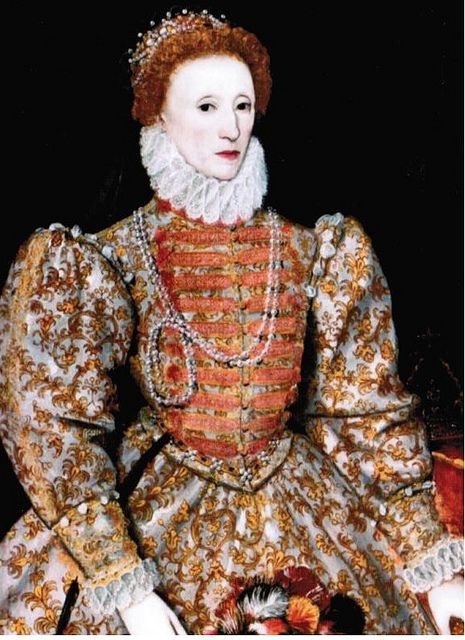
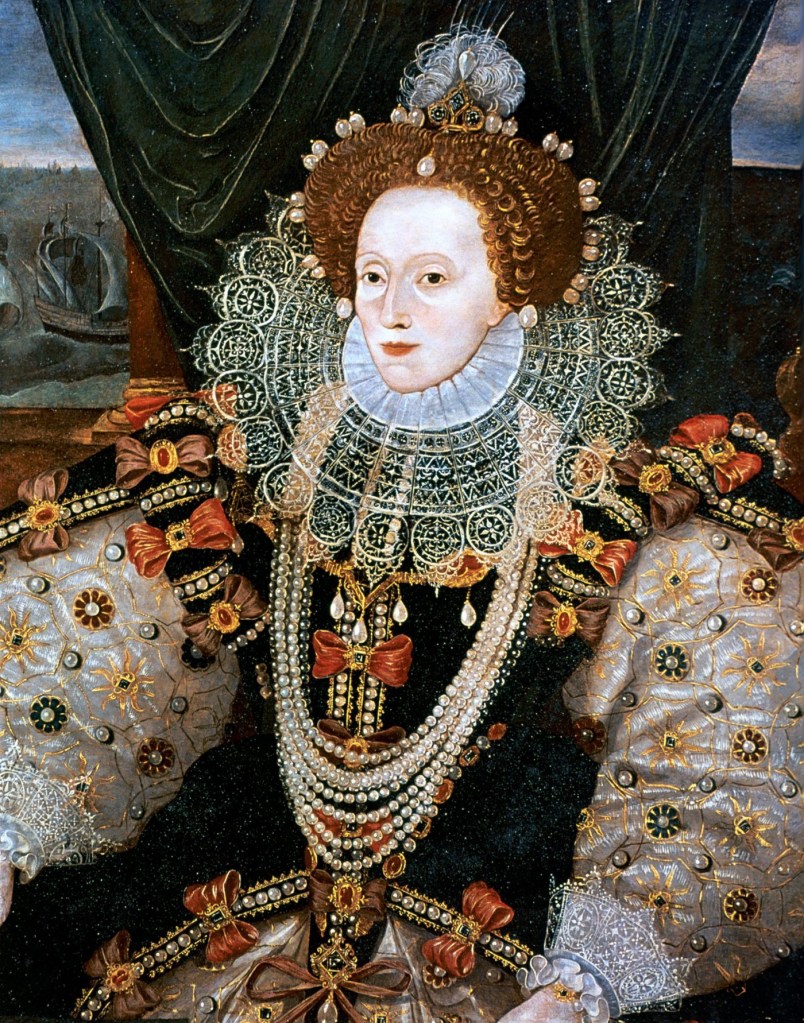
Queen Elizabeth I of England and Ireland

Introduction

Beauty has always been the greatest concern for women since ages. Women , all over the world did what not, to look pretty and presentable throughout the history of Human Civilization. And to address the need of looking flawlessly beautiful, the practice of using cosmetic or make-up came to the play. Women, sometimes, followed bizarre rituals to enhance their look, but sometimes, to their worst, the cosmetic turned out to be toxic and endangered their lives. To look beautiful it cost them a fatal price. Royalties and Elites were victims of the same death trap, including the Great Queen Elizabeth I.

Queen Elizabeth: The Beginning

Elizabeth I was the fifth and last monarch of the House of Tudor. She was born in the Palace of Placentia on 7 September 1533 and was died on 24 March 1603 at the age of 69. Her father was Henry VIII and her mother was Anne Boleyn who was her father’s second wife. On 17 November 1558, she became the Queen of England and Ireland and ruled it for 44 years until her death. She was also called the Virgin Queen and Good Queen Bess. Elizabeth was third in line to become the monarch and she was not even destined to be queen. She was behind her half younger brother Edward VI and half elder sister Mary I. As her father Henry VIII died, on 28 January 1547, her younger brother Edward VI became the monarch at age nine and ruled for six years, dying at the age of 15 because of tuberculosis. After, Mary I became queen and ruled for five years, dying at age 42 on 17 November 1558. Finally, Elizabeth was the last child of Henry VIII to rule England and became the Queen of England, ruling for 44 years.

The Scars in Her Beauty : What Led Her to Toxic Cosmetics

During her 20’s the Queen got infected with smallpox. Though the young queen survived smallpox but the disease left scars and blemishes on her skin and in order to hide those she started using the makeup more vigorously.

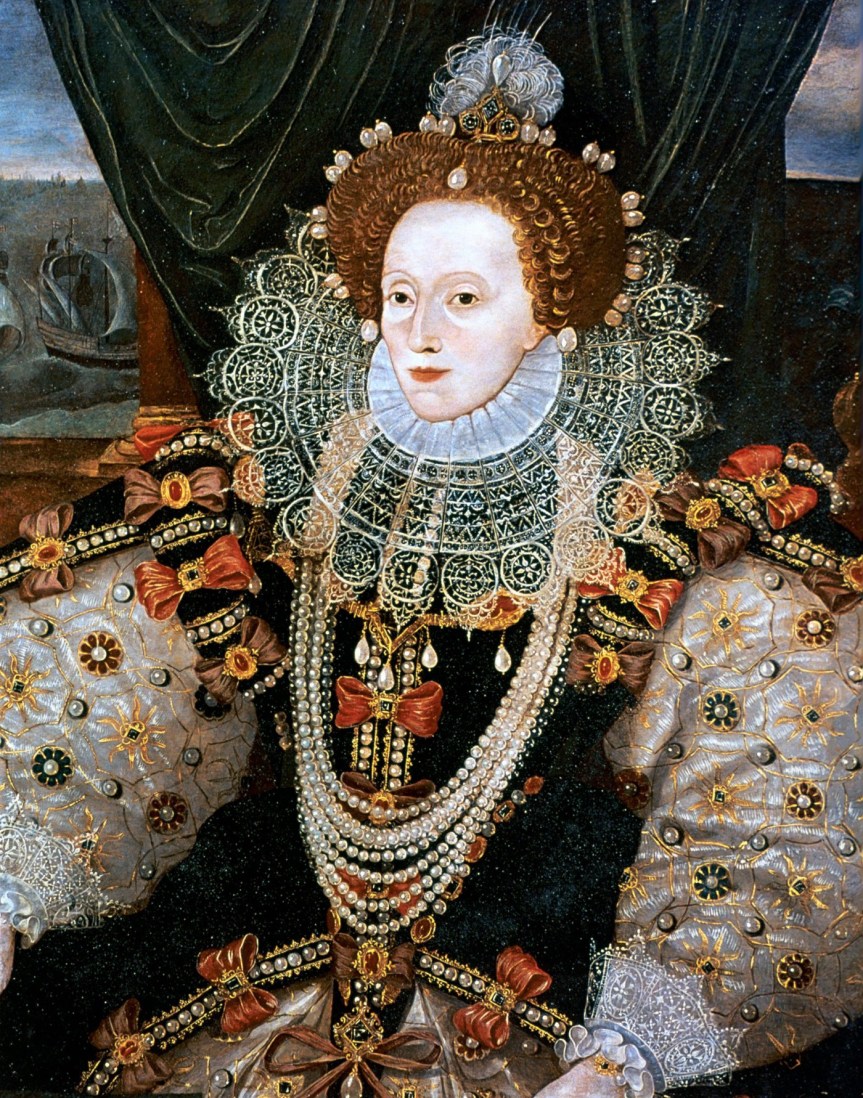
Portrait of the Queen

Bizarre Beauty Standards

The cosmetics that were worn by women in the time of Queen Elizabeth are drastically different from those we wear today. Not only were the materials they used very different but the look they were trying to achieve was very different as well. Standards of beauty change all the time. To understand the cosmetics worn by Elizabethan women, it’s important to understand the effect they were trying to achieve—that “ideal” beauty they wanted to imitate. The ideal Elizabethan female had bright wide-set eyes, snow white skin, rosy cheeks, red lips and fair hair. Pale skin was a sign of nobility, wealth and delicacy was sought after by many. In a time where sunscreen was unheard of, skin problems and pox was a common thing smooth, unblemished skin was a rarity. The pale skin women (and men) wanted was achieved by a number of ways. The most popular being Venetian Ceruse (also known as Spirits of Saturn), a mixture of white lead and vinegar. This white foundation was applied to the face, neck and bosom. Naturally, smearing lead all over one’s skin caused some serious skin damage not only did it make the skin look “grey and shrivelled” there was lead poisoning, hair loss and if used over an extended period of time could cause death. They lined their eyes with black kohl to make them look darker and belladonna eyedrops (used to dilate women’s pupils, an effect considered to be attractive and seductive). Fashion required eyebrows to be thin and arched which would create a high forehead it was considered to be a sign of aristocracy. Rouged cheeks and red lips were very popular. This was obtained with plants and animal dyes.

Her Majesty’ s Royal Makeup

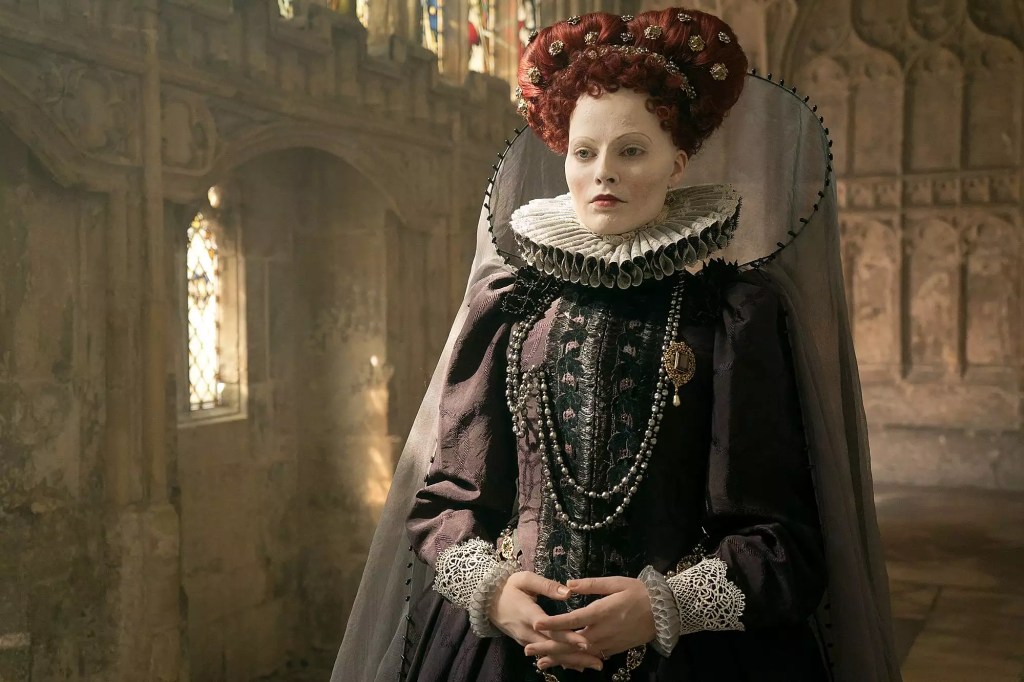
She used ingredients like lead and vinegar in her makeup which is called — “Venetian ceruse. It is said that she was the only monarch that always took a long time to get ready. She used multiple layers of lead and vinegar and applied a thick white mask to her face and neck. The white skin was not a part of racism but it depicted that a woman was of a higher class. she applied was from If you have seen a portrait of Queen Elizabeth you may have noticed that her lips are very red. The red colour cinnabar, a mercury. poisonous substance that contains She used to remove it with a mixture of elements like eggshells, alum, and mercury. Thus, this leads to another use of poison in her makeup. People at that time would say that her skin became soft after makeup re moval but basically, it was peeling one layer at a time. All these caused wrinkles, aging, and the deterioration of her health. And it is assumed by the historians, that continuous use of those deadly chemicals as Cosmetics, led to her death.

Cinematic Portrait of the Queen, played by actress Margot Robbie

Conclusion

The urge of looking beautiful , sometimes proves hard on women’s overall health. body and The obsession of being perfect, has killed many women, including such Royalties like Queen Elizabeth I. Even today, women are insure about their natural beauty and sometimes find it hard to accept body positivity. We should learn to feel confident in our skin first, and the glow then comes from within as our flaws make us Earthly and more humane.

WOMEN SAFETY

Top 100 Motivational Quotes on Women Safety in 2021

India is a country known for its rich beautiful culture and tradition. Women are given the place of goddess Lakshmi in the Indian culture.Women in India have been given equal rights as men; however, people do not follow this rule. They contribute to the growth and development of our country; still, they are living in fear. Women are now on respected positions in the country, but if we take a look behind the curtains, we see even then they are being exploited. Each day we read about horrific crimes being committed against women in our country like it’s a norm.

CRIMES

The list of crimes against women is quite long, to say the least. Acid attack is becoming very normal is various parts of the country. The criminal throws acid on the face of the victim to destroy their lives completely. Nonetheless, India has a lot of strong acid attack survivors who are battling for their lives and trying to lead their lives independently.

Domestic violence  and honor killings are very common. The wife stays in an abusive relationship because of the fear of society. The family kills their daughters in the name of honor to keep up with the reputation of their family. Similarly, female foeticide is yet another common crime. Due to the regressive thinking, people kill daughters before they are born.

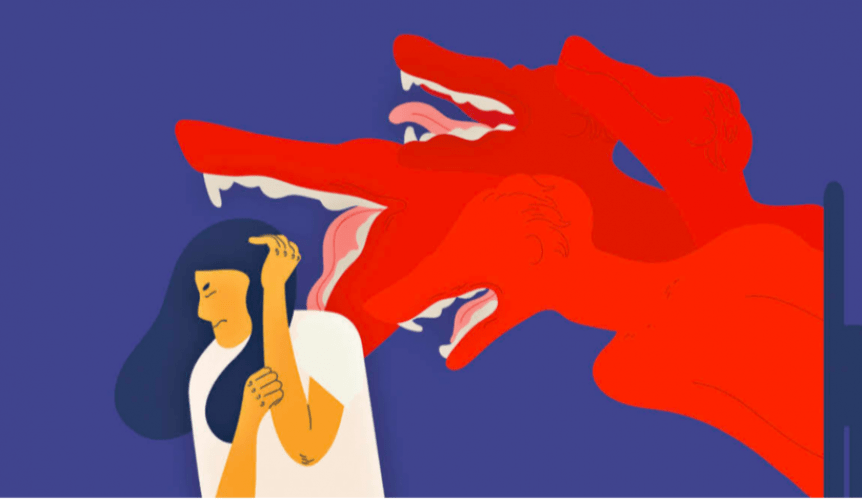
In India domestic abuse, sexual assault and murder are common forms of violence against women. Dowry death is an ultimate form of murder. Indians are still with the psychology that dowry is tradition and girls’ father loses everything to pay it. Domestic violence or domestic abuse is done by one partner with the other partner in a relationship. The rate of domestic violence is increasing in India. 70% of women are victims of domestic violence. It leads to depression and suicides. It’s not a direct murder but it is a cause of murder for sure. Moreover, girls are forced into marriage at a young age. This child bride is not even mature enough to understand her responsibility. Acid throwing is a form of violent assault which ruins the beautiful girl’s life. ‘Cheat in a relationship’ is the other commonly found crime against women. A man easily breaks up with his wife and starts a new life with another bride. 

The list continues as crimes against women are on the rise. Other crimes also include child marriages, child abuse, rape, trafficking and many more.

WAY TO ENSURE WOMAN SAFETY

Quotes about Protect Women (59 quotes)

Although the list of crimes is very long, we can take measures to ensure women’s safety in our country. Firstly, the government must make stringent laws that ensure the punishment of criminals immediately. Fast track courts must be set so the victim gets justice instantly. This will serve as a great example for other men to not commit crimes against women.

Most importantly, men must be taught to respect women from an early age. They must consider women as equals so they don’t even think of harming them. When you consider someone inferior, you tend to oppress them. If this thinking goes away, half of the crimes will automatically end.

In short, crimes against women are stopping the growth of our country. We must not put the blame on women and ask them to be extra careful. Instead, we must ask the men to change their thinking and work to make the world a safer place for women.

FIGHT BACK ! BE ALERT!

Objectification of Women through Item Songs

Objectification of women is quite self-explanatory, is it not? In a very simple term, it explains how women are treated as objects rather than breathing, living human beings. This subject has been discussed before, article have been written on the same, petition has been filled for the same. However, I sit to write about it again, for when I discussed about this to an acquaintance, I was asked why am I so hung up on these almost feminist issues, why not I write about ‘pressing issues’ such as poverty and other such issues. I agree that these are important issues but the subject in hand is no less important. The fact that people consider it to be of less importance is really disturbing and bothersome How are we to bring a change when we don’t deem it significant enough to look after.

For a very long time, women have been referred to as ‘weaker sex’, a source of entertainment. This notion has only been promoted in various ways. Bollywood movies have been a very strong medium for the same. The article throws light on one of the aspects in Bollywood movies which in not-so-subtle ways objectify women – ‘Item Songs’. Interestingly, the term ‘item’ refers only to women, specifically very curvaceous women. Moreover, the ‘songs’, the lyrical content of all these item songs unabashedly objectify women. Let’s take for instance, ‘tandoori chicken’ (Fevicol), ‘Chikni Chameli’; ‘Ab Karunga tere saath Gandi Baat’. Oh! The list is endless. The new so called pop songs are not giving it a break. What do songs like ‘Genda Phool’; ‘Chocolate’ among many others are trying to portray?

Yes! Entertainment is always welcomed but not at the cost of women being objectified, being compared to all the objects that one can think of. It affects the mindset of people; it adds to the not so progressive mindset. It in a way says that ‘it is okay if we refer women as such, she has no complaints, look at the way she smiles among all the leering, lustful, predatory eyes.’ However, we all know that it is not okay. In any given real-life situations, no one would love the idea of being cat-called, being called names or whatsoever. Media has somehow come dictate the ways people think, their perspective, their actions. If people can enjoy the actors and actresses enjoying all these in a ‘T.V. screen’, who says it won’t be enjoyable outside the screen, right!

We need to realize that this is unacceptable, not everyone way of entertainment is ‘not’ harmful. The portrait of women as being skinny has somehow fed into the mind of every other person that only acceptable body-shape is being skinny, lean and not otherwise. In other words, body-shaming becomes prominent.

It is important for such discussion to take place more, for more involvement of people in this direction, for raising voice. Moreover, as Sabhana Azmi suggested that it is important for actresses to have a say in the lyrical content. All such lyrics are written by a man – describing a woman through a male gaze. It is very disturbing that people with mighty pen in their swords would resort to writing such lines which can influence a lot of audience. Not one person is to blame, the mind-set of people will take years to change, you cannot expect women to carry knife while always moving around. However, it somewhere needs to start. A little initiative needs to be taken. Somewhere, someone. A conversation about this cannot be ignored. Media can always be important instrument in bringing the wind of change.

Image Credit: Google

ECO FEMINISM IN INDIAN CONTEXT

According to Merriam-Webster, ecofeminism is a movement or a theory that applies feminist principles and ideas to ecological issues. This term was first coined by a French feminist, Francoise d’Eaubonne in her book “Le Feminisme ou la Mort” (Feminism or Death). She raised the point that patriarchy is the root cause of all ecological crisis – men’s control over women and nature have led to overpopulation and overexploitation of nature respectively. When we talk about the environmental disaster that’s taking place, the role of gender about how we can move forward comes into play.

As United Nations Environment Programme puts it, “Around the world, environmental conditions impact the lives of women and men in different ways as a result of existing inequalities. Gender roles often create differences in the ways men and women act in relation to the environment and in the ways men and women are enabled and prevented from acting as agents of environmental change”; and here comes the concept of ecofeminism.

In India, ecofeminist Vandana Shiva is the pioneer who prepared the ground for ecofeminism with a strong belief that women have always been the key to solve various societal problems and environmental problems are one of them. By highlighting their presence in the Indian literature, the nature and form of ecofeminism in India can be assessed. Literature in which the concept of ecofeminism has been taken into account ranges from early ecofeminism to the recent or the urbanized one such as ‘Nectar in a Sieve’ (1954) by Kamala Markandya, ‘Fire on the Mountain’ (1977) by Anita Desai, ‘A Riversutra’ (1993) by Gita Mehta, ‘The God of Small Things’ (1997) and ‘An Atlas of Impossible Longing’ (2008) by Arundhati Roy and ‘Monkey-Man’ (2010) by Usha K.R.

Many female Indian novelists not only explore the subjectivity that is embedded in the relationship of women and the patriarchal society but also make several social issues as the key subjects. Many of the works from twentieth century of such novelists have been regarded as effective mediums of ‘modernism and feminism’. With Arundhati Roy and Kiran Desai getting hold of Booker Prizes, works of Indian women novelists have been highlighted. Indian women’s fiction on the relationship between women and the environment has added to the theory and development of ecofeminism in India.

In the West, there are large bodies of literary accounts that have analyzed ecofeminism in different ideological terms but in India, the struggle to save environment went on for long even before it was accounted in the West. It was Vandana Shiva who brought ecofeminism movements to the forefront in India with her active involvement in the Chipko Movement- wherein women wrapped themselves around trees to prevent contractors from felling them off- as a young woman. The struggle to protect the environment is believed to be the same across all communities in India but we would be at a loss in our thinking if we ignore the fact that protests against environmental damage and questions of survival and subsistence are interlinked deeply with the axiom of caste, class and gender issues.  Vandana Shiva, the pioneer in this field, critiques that modern technology which has actually reinforced the patriarchal system and violence perpetuates it towards women and nature.  According to her, switching to such a lifestyle is deviating us from the traditional lifestyle which promotes human-environment balance ‘prakriti’. Under the influence and grab of these new developments, nature has been mercilessly exploited and feminine principles in terms of the environment are no longer considered for creativity and sanctity but merely to be passive resources. Thus, though women’s knowledge of dependence on nature for subsistence has been dissipated and marginalized under the grab of modern science, she strongly believes that third world women have the power within them for causing a change. In this regard, we can cite the example of ‘Narmada Bachao Andolan’ in which the active participation of Medha Patkar and Arundhati Roy helped the movement gain momentum.

The issue of sustainable development to protect the environment from degrading was raised in Conference on Environment and development at Stockholm in 1974 for the first time. If we turn the pages of history, we will find instances which prove that women are better connected with nature. Since time immemorial, they have been responsible to look after households and prepare basic needs for survival and thus, are better connected to nature.

Women’s interaction and relationship with nature must be located within the material reality of caste, class and gender. Women are the victims of environmental disaster but they can also be very effective agents of environmental regeneration – as is clearly evident by the success of the Chipko Movement. The need of the hour is to mobilise them into a proper channel and to give ecofeminism a proper voice and a way so that it does not turn into a superficial shout. There is also a need to abolish the class and caste basis for an effective collective movement in India. The adverse class-caste effects on women’s relationship with nature are reflected in the erosion of indigeneous knowledge and livelihood strategies on which poor, rural women are dependent. Thus, there is a need for ecofeminism in India to strengthen itself in the face of different barriers and be more than a superficial shout.
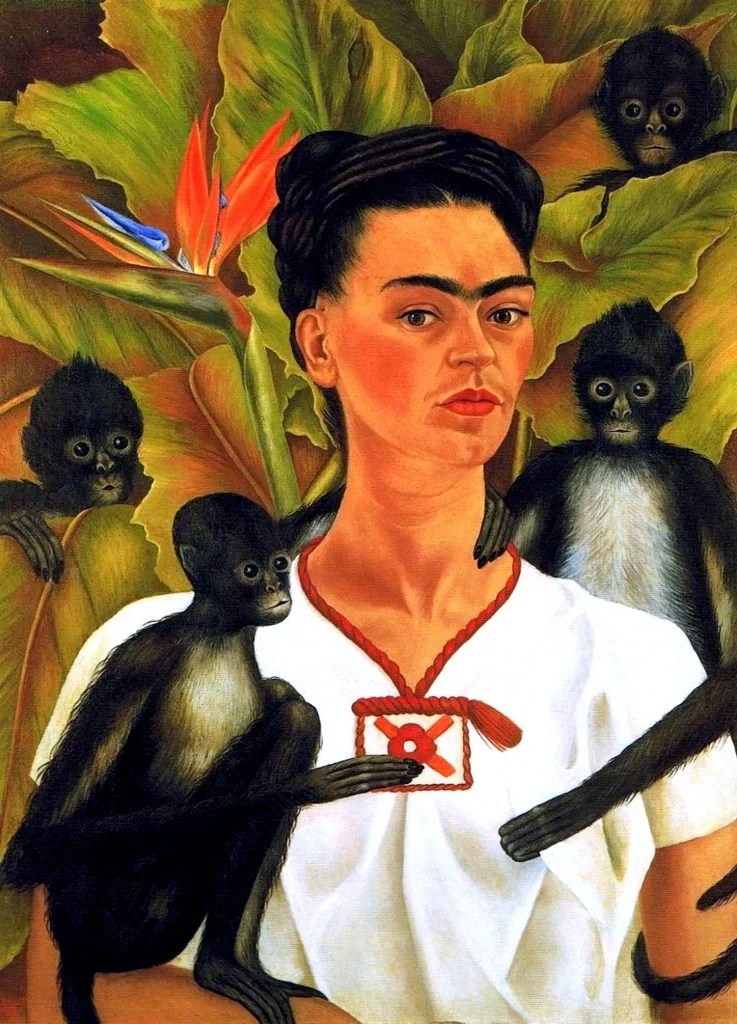
Image Credit: Google

Self-Help Groups – a factor in women empowerment!?

The article takes up the subject of Self-Help Groups which is considered to be one of the major factors in women empowerment. It tries to understand the question ‘why’ and reflects on if the prevalent casteism in the society affects its functioning in any way. Let’s have a quick recap of women empowerment and why do women need to be empowered!
Women Empowerment is an umbrella term which brings in the ways to help and enable women to grasp the freedom they are entitled to as all human beings are. The freedom to make choices; the freedom to spread their wings; the freedom to be just human beings. We need women empowerment because of the very perspective that women are so-called ‘weaker sex’. Years of being told this, it has penetrated into every hook and corner – and we need an uplift from this. We need empowerment to break free from the chains of “being allowed”. The actual fact that I am attempting to write an article on ‘women empowerment’ proves the very point of why we need to it.

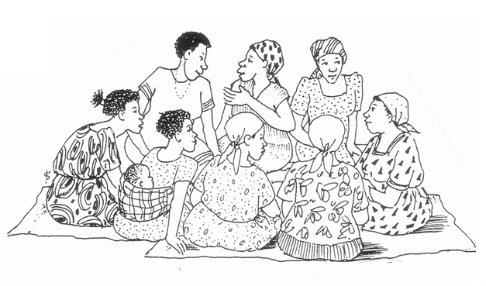
Self-help groups has been one of the many ways adopted by different parties to empower women. How? In very simple words, it enables women to take financial decisions and help each other in doing so. Pretty simple, right! There are NGOs and banks which helps them take this process a long way or to even help them start. There are various ways this group can help women build up themselves. A group of women coming together can be quite an upliftment – other than providing a platform for financial decisions, it gives them an opportunity to discuss problems at personal level, bring out the issues of domestic violence; come out collectively with a solution; tackle issues of alcoholism and other such problems which are likely to pose threat to financial, emotional and social decisions of women.

However, even if SHGs provides the way to move forward to women, escaping the casteism issues is another thing. An article published in The Hindu brought out the point that caste play a dominant role in Self-help groups. The groups employ different categories, etiquettes r requirements of inclusion – a preference to caste could be seen, the study brought out (The Hindu, 2013). The caste issues have been ignored and been confirmed. A resistance to change in leadership, the position going to same caste has been detected. The strive to bring in diversity is lost. Rural areas – where community are more closely knitted also showcases casteism in not-so-subtle ways.

Nonetheless, it cannot be ignored that SHGs have been an empowering factor. During the Covid-19 times, may SHGs suffered a backlog due to lack of funding affecting the lives of many. With no financial means, savings became out of question. However, there were many SHGs which also helped in battling Covid-19 by the production of masks – helping to meet the demand of the same. The point is to diversify the means of finance in the groups; to clear the inherent obstacle of caste; to collaborate across districts; to train them for the worst scenarios; to educate them. SHGs has enabled women to take financial decisions and come a long way but its diversification of ways is necessary to combat the worst times. It is important to identify the loopholes and come up with the collective solutions and move above the issues of castes.

Image Credit: Google

Women in Indian Politics

Women In Indian Politics

India is the largest democracy in the world and to sustain its democracy, it has undergone various struggles. As soon as it was freed from the clutches of colonialism, it was faced with the challenges of social and economic development of the country. The Constitution of India has bestowed various rights to its citizens to ensure equal rights and equality, liberty, gender justice etc. Though the constitutional provisions allowed the women to leave the relative calm of the domestic sphere to enter the male-dominated political sphere, the involvement of women in politics has been low key (Khanna, 2009). Khanna has classified the factors which affects the political participation of women in politics into three categories-psychological variables, socio-economic variable and political variable. The questions of reservation for women in representative institutions has long been debated in India. The issue of reservations for women had come up in the Constituent Assembly had been rejected by women representative as it was felt to be unnecessary, since the working of democracy in the normal course would ensure the representation of all sections of Indian society. The suggestions were also seen to underestimate the strength of women to compete as equals (Menon, 2000).

Reservation as a strategy for enhancing women’s status within the new polity had been rejected very early on by women leaders as a retrograde step (Rai & Sharma, 2000). But by 1996, women had emerged as a significant force in politics and almost the same representative of women’s movement who rejected any such demand, demanded reservations. Women had been at the forefront of the movements against corruption and price-rise that preceded the imposition of Emergency. The 1980s saw the emergence of the vocal and visible autonomous women’s groups (Menon, 2000). The question that looms before these is-if increase in the number of women in parliament will bring any socio-economic benefits to them. However, while the political ground in India is shifting with regard to women participation in politics, this is a slow and difficult process, which needs constant vigilance by movements and groups within and outside of state institutions (Rai and Sharma, 2000).

The debate regarding women’s reservations in parliament has taken various shapes. There have been number of arguments for and against it. But a fact that cannot be ignored is that women in India have climbed the ladder too. Although they are not huge in number but they are there. But being a woman, they have faced many brickbats and mud slung. The criticisms that they faced carried an ingrained sexism reflecting the very nature of a male dominated politics.

Access to politics for women has never been a bed of roses. Participation of women anywhere has never been easy but politics being a male bastion traditionally, makes it difficult for the presence of women in it. To penetrate this highly male dominated arena, women have to go through various struggles to consolidate one’s position in it. While it becomes relatively easier for some as compared to others, but it’s never without any struggle or completely easy for any woman.

If we analyse the journey of three women i.e., Indira Gandhi, Jayalalitha and Sushma Swaraj to politics, it will come to view that – initially, these women were not into politics either because they wanted to pursue some other career or they had no one to guide them to it but eventually as in the case of Indira Gandhi, the atmosphere (her house being the centre of freedom movement) during her time as well the pursuance of her father got her into politics. In case of Jayalalithaa, her mentor and guide MGR introduced her to politics while Sushma Swaraj after the pursuance of law developed an interest in politics with moral support from her family. Though Indira Gandhi had a background – involvement of her family in freedom struggle as well as in Parliamentary politics and Jayalalithaa was introduced into politics by the most loved figure of his time MGR and Sushma Swaraj dug her own well, none of these women had an easier path. Being a woman, they had to fight to consolidate their positions in the party. The path through which they got into politics and the intensity of struggle faced by them though differ, but nevertheless, they had to work twice as men to stay, to establish themselves. Jayalalithaa’s modesty had been violated in the Assembly Hall; Indira Gandhi had been dubbed as ‘only man in the politics’ and Sushma Swaraj had been the target of derogatory online trolls. Evaluating the leaders on the basis of their decisions in a democracy is one thing while criticism based on sexism is an entirely different thing.

Being from different family background, lives of every woman is bound to differ, the only common thing is that they are ‘woman’. Being a woman is all that takes for people to throw harsh comments. Indira Gandhi’s tenure was termed as authoritarian while Jayalalithaa was termed as irresponsible and inconsistent. It was so because they were able to keep in check their male counterparts. Any action by a women minister is judged by a gendered perspective and the online trolls faced by Sushma Swaraj while she was the Minister of External Affairs points to this. Jayalalithaa claimed that baseless questions were asked to her because she is a self- made woman.
Why is it that the corruption case of Jayalalithaa has been in the talk for a long time and not that of Mr. Karunanidhi (Jayalalithaa was condemned for arresting him on corruption case just because he was an old ‘man’)? Why is it that the decisions of Indira Gandhi have been equated with an authoritarian rule and not that any other male counterparts? Why the evaluation against every women politician involves threats of rape and beating? Is it because in this highly male dominated politics, participation of women is not accepted for it seems to threaten the authority of men?

The point is that it is not at all unfair evaluating any leader-women or men on the basis of their decisions but criticising them with ingrained sexism in it doesn’t seem to be compatible with the values that we cherish in our democracy. Women continue to be target of sexist remarks but it doesn’t mean that they have stopped asserting themselves with force. Women have taken very active part in various political activism. It doesn’t apply only to urban areas but also to rural women. They have been engaged in political acumen from protesting against the British rule to demands for equal wages. Feminist issues usually appear something else in public discourse (Menon, 2000) be it Uniform Civil Code or Women’s Reservation Bill. While women participation in politics is improving overtime but they constantly have to fight for their presence to be felt. They have to constantly engage in negotiations to consolidate their positions. India, though largest democracy in the world has long way to go to sustain its democratic principles and rights. It still lacks in many ways in terms of gender parity, not only in politics but in many other spheres. But participation of women in politics become important because until and unless women are in decision making position, safe and sustainable cities or lifestyle will be out of reach. Though, legally women have been granted rights but only with social development as well as change in the mind-set will bring life to these rights!
P.S. This is an opinionated piece – believing that everyone is entitled to opinions!

Image Credit: Google

Are more women dying of Covid-19 in India?

New research by a group of scientists in India and US shows that although men make up the majority of infections, women face a higher risk of dying from the coronavirus than men.


The study, based on Covid-19 deaths in India until 20 May, shows early estimates that 3.3% of all women contracting the infection in India were dying compared to 2.9% of all men. (India had a caseload of more than 110,000 with 3,433 deaths and a fatality rate of 3.1% when the study was conducted.)In the 40-49 age group, 3.2% of the infected women have died, compared to 2.1% of men. Only females have died in the 5-19 age group.

Five key questions about India’s rising Covid-19 infections
I asked SV Subramanian, a professor of population health at Harvard University and one of the leader authors of the study, what this implied.


He told me that the narrative of calculating the Covid-19 fatality rate by groups has conflated two key metrics – mortality risk and mortality burden.

Mortality risk measures the probability of death in a specific group- in this case, total number of deaths of women divided by confirmed infections among women.

On the other hand, mortality burden gives you the number of deaths among women as a percentage share of the total deaths, both men and women.Prof Subramanian says for the large part, the statistics have looked at the latter – men having a greater share of total deaths (63% in India, hewing to international data) – but “inferred the former risk”.


“Our overall conclusion is that, when infected, women do not seem to have any specific survival advantage [in India],” says Prof Subramanian.

“How much of this can be attributable to biological factors and how much of this is associated with social factors is unclear. Gender can be a critical factor in Indian settings,” he says.

The ‘mystery’ of lndia’s low Covid-19 death rates
But the findings are certainly striking because they run counter to what has been observed elsewhere in the world.

For one, men are more likely to suffer from co-morbidities or underlying health conditions, like cardio-vascular disease and hypertension, says Kunihiro Matsushita, a professor of epidemiology at the Johns Hopkins Bloomberg School of Public Health.

Men also smoke more than women in many countries, and some studies have shown that men wash their hands less frequently than women.

Prof Matsushita says that studies he had participated in had shown that male patients have a higher risk of contracting severe Covid-19 infection.

Scientists also believe that women have a lower mortality risk because of sturdier immune defences. And have hormones like oestrogen which has “beneficial effects on upper and lower airways and is associated with stimulation of the immune response to upper airway infections”.

“In that regard, a higher case fatality rate in women than men in this report is certainly unique,” Prof Matsushita told me.

But he says the research data needs to be scrutinised in the context of how Covid-19 is diagnosed in India. “For example, is the opportunity to get a test same between men and women?” he wonders.There could be more to this puzzle than what meets the eye.

Women outlive men in India and there are more older women than men. Is this leading to more deaths among women, as elderly people are vulnerable to the infection?

Also, women in India are more likely to delay going to doctors, and often self-medicate at home. And a woman’s health is more likely to be ignored in a household. So are women arriving late for testing and treatment?

Homemaker caregivers are more prone to contracting the infection – during the 1918 Spanish flu more women in India – relatively undernourished, cooped up in unhygienic and ill-ventilated dwellings, and nursing the sick – died than men.


“We need to dissect the gender data to find out more about what’s going on,” says T Jacob John, a retired professor of virology at Christian Medical College, Vellore.

Researchers agree. “We will keep a close watch and keep updating the results,” Prof Subramanian says.

Written by: Ananya Kaushal

Role of Women in Shaping Society

Women plays a crucial role in developing any society. Freedom of Independence has been suppressed from the ancient times but, the woman have fought for their rights in the history and fighting for themselves in today too. Now this need to be taken into consideration that even today the women have to prove themselves that they worth being treated equal to their mens counterpart.

Women have fight for everything which the men automatically gets as their birth privilege, because of which women they have value for each of these things. The situation good in urban areas but the womens in rural area face domestic violence, mental torture, not allowed to work or study. The are forced to limit their world in a small house.

In this I does not mean that every women are facing this level of injustice in rural area, but even if one of them is facing this that is going to impact the whole family of her, as if she have a daughter she will suppress her and if she have a son he will be learning same thing to disobey women. As one rightly said that have men gets educated he gets educated alone, but when women gets educated a whole family gets educated.

In some or the other sence always a women gets questioned for her deeds, she always has to prove herself better than a men to get appreciated. We have to actually change the mentality that be like a boy, no just be yourself. We have to change a stereotype that she walks like a men, he walks like a girl, this is the work of men, that is the work of women.

HAVE WE FORGOTTON OUR SHEROES ?

Women have made landmark contributions encompassing various fields.Its time we sing joys of celebration for our sheroes too like we do for men.They have suffered various setbacks in life but emerged powerful as pointed out by Swami Vivekanand ,“Woman has suffered for eons, and that has given her infinite patience and infinite perseverance”.

For celebration we need to know about the milestones they have crossed and the hinderances they’ve overcome.

Their benefactions can be categorized Two folds .First theEducational Sector.

Second the Political and the Social Sector.

In Education:-

When discussing about Economy we cannot rule out the role education.The first female graduates Kadimbini Ganguly and Chandramukhi Bose long broke the stereotypes of Male centric education system.There have been other historic Educationists of India like Ayyalasomayajula Lalitha who became the first Engineer of India back in 1943.

Anandibai Gopalrao Joshi was the first female doctor of India.

SavitriBai Phule along with Mahatma Jyotiba Phule led a movement for education of Girls.

They faced social ostracization and societal pressures but did not stop.In the end, SavitriBai Died while serving the victims of plague.In the field of law which was highly patriarchic Cornelia Sorabji broke all shakles and became India’s first female lawyer.                                                           Durgabai Deshmukh an early lawyer and political activist said-“I had then decided to take up the study of law so that I could give women free legal aid and assist them to defend themselves.”

These woman are not mere inspirations or role models,theybecame game changers and paved the way for education for the upcoming generation.

Polity:-

Politics despite being male dominated ,some Strong Female leaders have made immense contributions to freedom struggle. Going back to the the Delhi Sultanate,Razia Sultan became the first and last Female to ever became sultan in 1236.

After that there were different princely states in which women lead their dynasties. Rani Laxmibai became an epitome of strength along with JhalkariBai giving a strong fight to British.

Uda Devi a ‘Dalit Virangana’ fought the British Bravely in 1857 Battle.

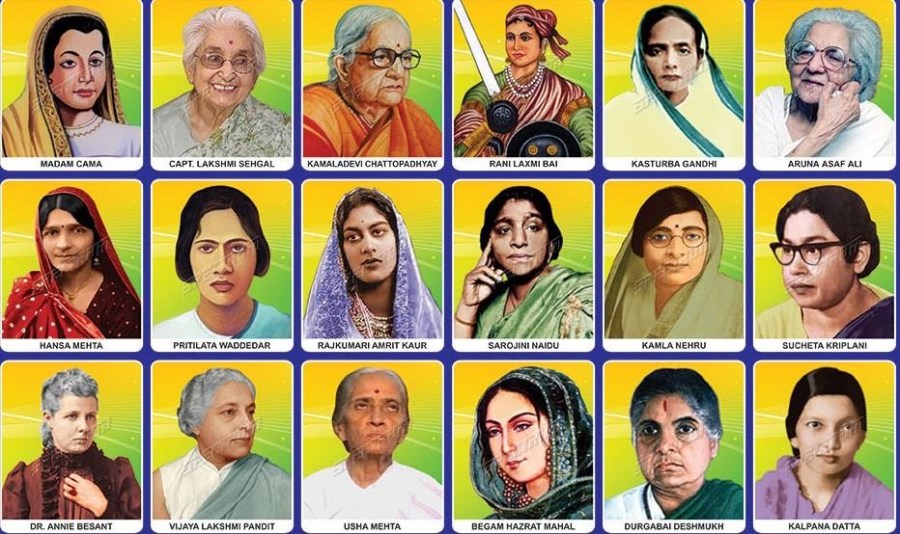
Rani Gaidinliu of Manipur,was imprisoned at a young age of 13 because of her Anti-British Stand.During the 1857 Revolt the participation of Begum Hazrat Mahal of Lucknow is unmatched.AhalyaBai Holkar of Malwa Kingdom is still remembered as one of the Finest Leaders of India.In the modern era of freedom struggle Female Leaders like Sarojini Naidu,Annie Besant,Vijay Laxmi Pandit(First Female President of UNGA),Aruna Asif Ali(Grand Old Lady of Independence) etc fought against the British.        

Be it Anti partition movement of 1906 or Non Co-operation Movement or Civil Disobedient Movement, Women have added by large,the amplitude of struggle.

Revolutionaries like Capt.Laxmi Sehgal lead the Jhasi rani regiment of INA Army made by Subhash Chandra Bose.AlsoPritilata Waddedar,Kalpana Datta took up arms against the British.

Post-Independence Rajkumari Amrit Kaur became the first woman Health Minister of India.

Indira Gandhi not just became India’s First Prime Minister but also was the first female Finance Minister(1970-71),to present a budget.Sucheta Kriplani became the first female to become a Chief Minister of UP,also Sarojini Naidu became the first ever female Governor in UP.

The list of contributions made by our early Women is never ending. Such zeal and sacrifices, on par with those of Men, despite miniscule opportunities, simply motivates us.

It would be appropriate to agree with Mohammad Ali Jinnah when he quoted,

There are two powers in the world; one is the sword and the other is the pen. There is a great competition and rivalry between the two. There is a third power stronger than both, that of the women”.

Mohd Ali Jinnah