During World War II, the Imperial Japanese Army forced thousands of women and girls into sexual slavery, known as comfort women. The majority of these women were from Korea, but also from other countries such as China, Taiwan, the Philippines, and Indonesia.
The Japanese military established comfort stations or brothels to provide sexual services to their soldiers. The women who were taken as comfort women were often kidnapped or coerced into working at these stations. They were subjected to horrific sexual abuse and violence, and many did not survive.
The exact number of women who were forced into sexual slavery is not known, but estimates range from tens of thousands to as many as 200,000. Many of these women were teenagers, and some were as young as 12 years old.
The issue of comfort women has been a controversial and sensitive topic, and Japan has faced criticism from other countries, particularly South Korea, for its handling of the issue. In recent years, Japan has issued official apologies and compensation to some of the surviving comfort women, but many feel that these actions have not gone far enough in acknowledging the atrocities that were committed.
One of the reasons that the issue of comfort women has been so contentious is that the Japanese government has been slow to acknowledge its role in the abuse. For decades, Japanese officials denied that comfort women existed or claimed that they were volunteers. It was not until the 1990s that the Japanese government began to acknowledge the reality of the situation and issue apologies.
Another reason for the controversy is that many surviving comfort women have demanded a formal apology and compensation from the Japanese government. While some women have received compensation, others have not, and there is still a sense among many that Japan has not fully taken responsibility for its actions.
The issue of comfort women has also caused tension between Japan and other countries, particularly South Korea. Many Koreans feel that Japan has not done enough to make amends for its actions, and the issue has strained relations between the two countries. In recent years, there have been some efforts to address the issue of comfort women. In 2015, Japan and South Korea reached an agreement in which Japan apologized and provided compensation to surviving comfort women. However, the agreement was controversial and criticized by many, including some of the surviving comfort women themselves.
Despite these efforts, the issue of comfort women remains unresolved. Many people continue to demand a formal apology and total compensation from the Japanese government, and the issue remains a contentious one between Japan and its neighbors.
World War II was a global conflict that lasted from 1939 to 1945. It was the deadliest conflict in human history, with an estimated 50-85 million fatalities worldwide, including civilians and military personnel. The war was fought between two main alliances: the Axis powers, consisting of Germany, Italy, and Japan; and the Allied powers, consisting of the United States, Great Britain, France, and the Soviet Union, among others.
The war began on September 1, 1939, when Germany invaded Poland. Britain and France, who had guaranteed Poland’s security, declared war on Germany on September 3. The early years of the war were marked by German victories in Europe and the rapid expansion of the Axis powers, including the invasion of the Soviet Union in 1941.
The tide of the war began to turn in favor of the Allies in 1942, with significant victories in North Africa and the Soviet Union. In 1944, Allied forces landed in Normandy and began the liberation of Western Europe. The war in Europe ended on May 8, 1945, when Germany surrendered.
The war in the Pacific continued until August 15, 1945, when Japan announced its surrender after atomic bombs were dropped on the cities of Hiroshima and Nagasaki by the United States.
The aftermath of the war led to significant changes in the political and social landscape of the world, including the formation of the United Nations and the beginning of the Cold War between the Western powers and the Soviet Union.
Source – Wikipedia
Causes of World War II:
1. The Treaty of Versailles (1919): The treaty of Versailles had in itself the germs of the Second World War. The Germany was very badly treated. She was forced to sign the treaty at the point of a bayonet, in a spirit of revenge. To tear away the treaty of Versailles, Hitler joined hands with Mussolini of Italy.
2. Nationalist Movements of Germany & Italy: The rise of the national movement in Germany & Italy added fuel to the fire. Although Hitler tried to assure the world that he meant peace, he could not conceal his ambition for long. He embarked on a career of aggression which ultimately lead to war. The same was the case with Mussolini who had established his dictatorship in Italy in 1922.
3. Conflict of Ideology between Dictatorship & Democracy: Countries like Germany, Italy & Japan represented the ideology of dictatorship while Great Britain, France & USA represented the ideology of democracy. Mussolini described the conflict between the two ideology thus: ‘The struggle between the two worlds can permit no compromise. Either we or they’
4. Inefficiency of League of Nations: Unfortunately, when hostility was growing between the two camps there was no effective international organization which could bring the leaders of the two camps on a common platform and bring about a reconciliation between them. The League of Nations was practically dead.
5. Colonial & Commercial Rivalry: The colonial and commercial rivalry between England and France on one side, and Germany and Italy on the other brought them in conflict with each other.
6. Aggressiveness of Berlin-Rome-Tokyo Axis : Hitler had became very aggressive. He annexed the Saar Valley, occupied Rhineland and Austria captured Czechoslovakia etc. Mussolini attacked Abyssinia (Ethiopia) Japan attached China. This aggressive mood of the Fascist Power got its fullest expression when they formed an Axis providing for mutual aid in the international sphere.
7. Immediate Cause: The immediate cause of the war was the refuse of Poland to Surrender. Germany gave an ultimatum to Poland regarding : (i) surrender the port of Dazing, (ii) the right of establishing a rail link between Germany and East Prussia through the Polish corridor. These two demands were rejected by Poland. So Germany invaded Poland on Sept. 1, 1939. Britain and France as they were under treaty obligations to aid Poland, declared war against Germany on Sept. 3, 1393.
Australian author Thomas Keneally‘s novel first “Schindler’s Ark” (later republished as Schindler’s List) brought the story of Oskar Schindler’s rescue of Jewish people during the Nazi Holocaust, to international attention in 1982, when it won the Booker Prize. It was made by Steven Spielberg into the Oscar-winning film Schindler’s Listin 1993, the year Schindler and his wife were named Righteous Among the Nations.
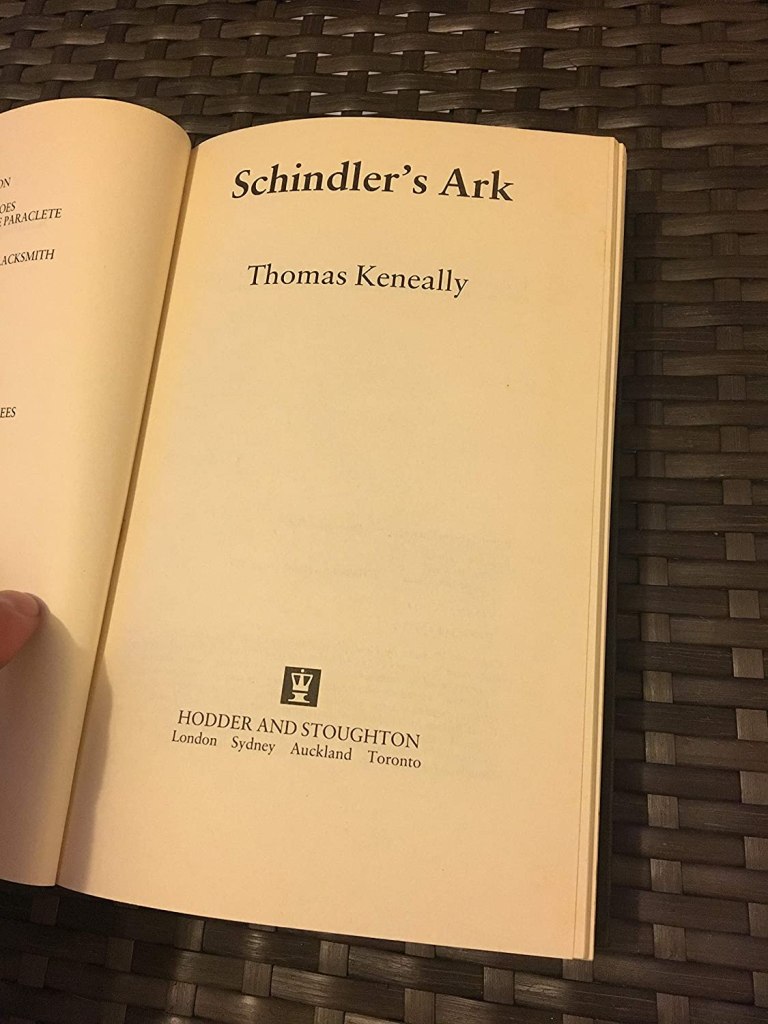
Schindler’s Ark later republished as Schindler’s List
About The Author
Thomas Michael Keneally, (born 7 October 1935) is an Australian novelist, playwright, essayist and actor. Keneally’s first story was published in The Bulletin magazine in 1962 under the pseudonym Bernard Coyle. By February 2014, he had written over 50 books, including 30 novels. He is particularly famed for his Schindler’s Ark (1982) (later republished as Schindler’s List), the first novel by an Australian to win the Booker Prize and is the basis of the film Schindler’s List. He had already been shortlisted for the Booker three times prior to that: 1972 for The Chant of Jimmie Blacksmith, 1975 for Gossip from the Forest, and 1979 for Confederates. Many of his novels are reworkings of historical material, although modern in their psychology and style.
Thomas Keneally
Storyline of The Novel
The story of the novel is based on true events, on account of the Nazi Holocaust during World War II. Oskar Schindler, (born April 28, 1908, Svitavy [Zwittau], Moravia, Austria-Hungary [now in the Czech Republic]—died October 9, 1974, Hildesheim, West Germany), German industrialist who, aided by his wife and staff, sheltered approximately 1,100 Jews from the Nazis by employing them in his factories, which supplied the German army during World War II.
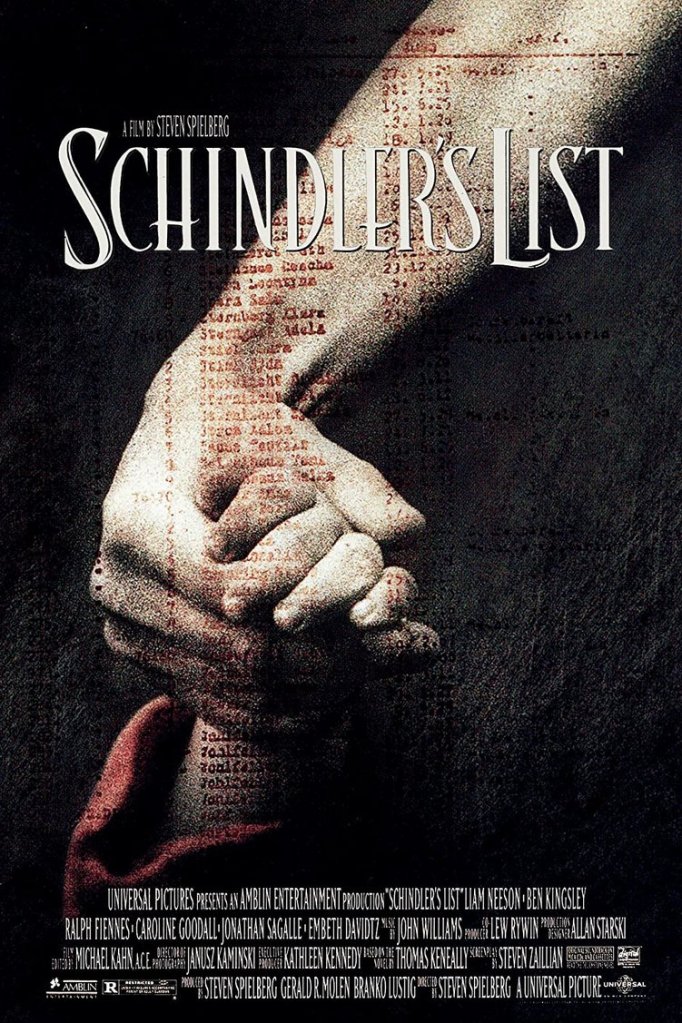
Poster of Steven Spielberg‘s movie Schindler’s List (1993)
In the shadow of Auschwitz, a flamboyant German industrialist grew into a living legend to the Jews of Kraków. He was a womaniser, a heavy-drinker and a bon viveur, but to them he became a saviour. This is the extraordinary story of Oskar Schindler, who risked his life to protect Jews in Nazi-occupied Poland and who was transformed by the war into a man with a mission, a compassionate angel of mercy.
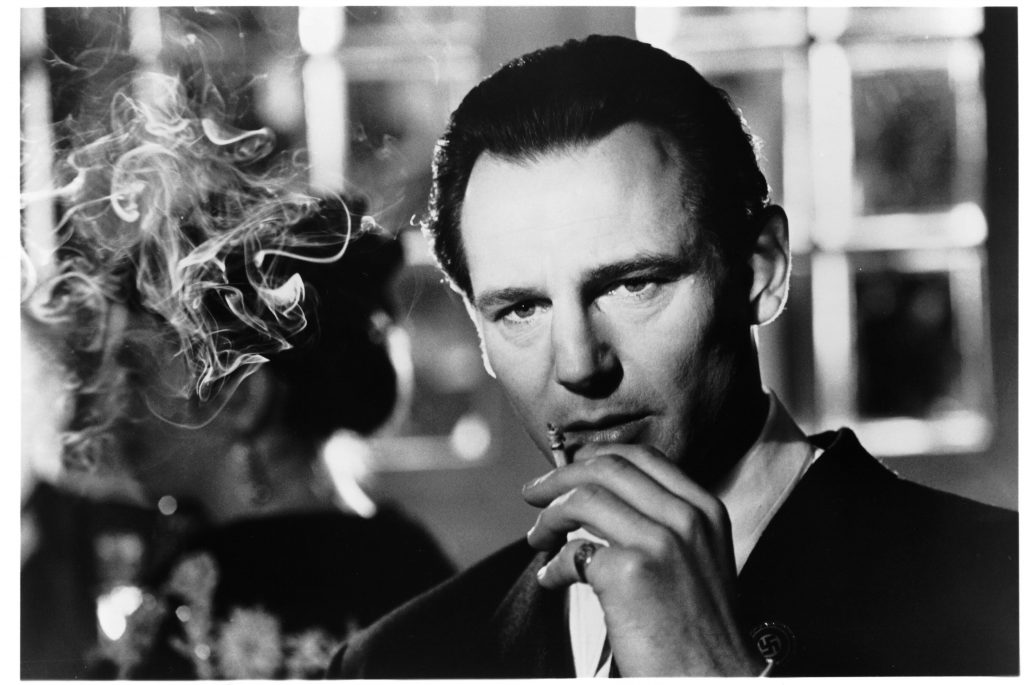
Liam Neeson as Oskar Schindler in Schindler’s List (1993)
Analysis of The Storyline
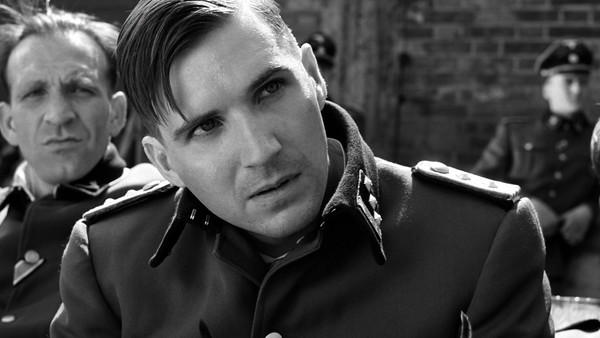
The novel introduced a vast and diverse cast of characters. However, the focus of the narrative was between Oskar Schindler and Amon Goeth. In the story, there was a dichotomy between what is essentially good and what is evil, that was personified by these two primary characters. Goeth represented everything evil. The war churned out a selfish and heartless sadist who found delight in inflicting pain on the Jews. Ironically, he lusted after his Jewish maid. Schindler, on the other hand, was portrayed as the Good German. He didn’t believe everything that the Nazi regime was saying against the Jews. He was, however, a man of contradictions. Despite being depicted as the epitome of goodness, he lived a self-indulgent lifestyle, which included proclivity towards the bottle and women. His infidelities have been a constant source of pain for his wife, Emilie. He also uses his connections to gain the upper hand in negotiations; it would also be a seminal part of his campaign to save the Jews.
Ralph Fiennes as Amon Goeth in Schindler’s List (1993)
Criticism of The Storyline
The amount of research poured to recreate the story of Oskar Schindler was astounding. And the starting point to this is as interesting as the novel itself. As noted in the Author’s Note, a chance encounter in 1980 led to the novel. Schindler’s motivation for protecting his workers was rarely ever clear, especially at the start. Questions still hound his true intentions. He, after all, brazenly took advantage of the cheap labour the Jews offered at the start of his enterprise. Is Schindler an anti-hero? The answer can be found in Keneally’s extensive research. Through interviews with surviving Schindlerjuden and different Second World War archives, he managed to identify the point in which Schindler decided to protect the Jews. While horseback riding on the hills surrounding Kraków, he witnessed an SS Aktion unfold on the Jewish ghetto below. The Jews were forcefully taken out of their houses. Those who resisted were shot dead, even in the presence of children. Witnessing the atrocious acts firsthand turned Schindler’s stomach. It was then that he resolved to save as many Jews as he can.
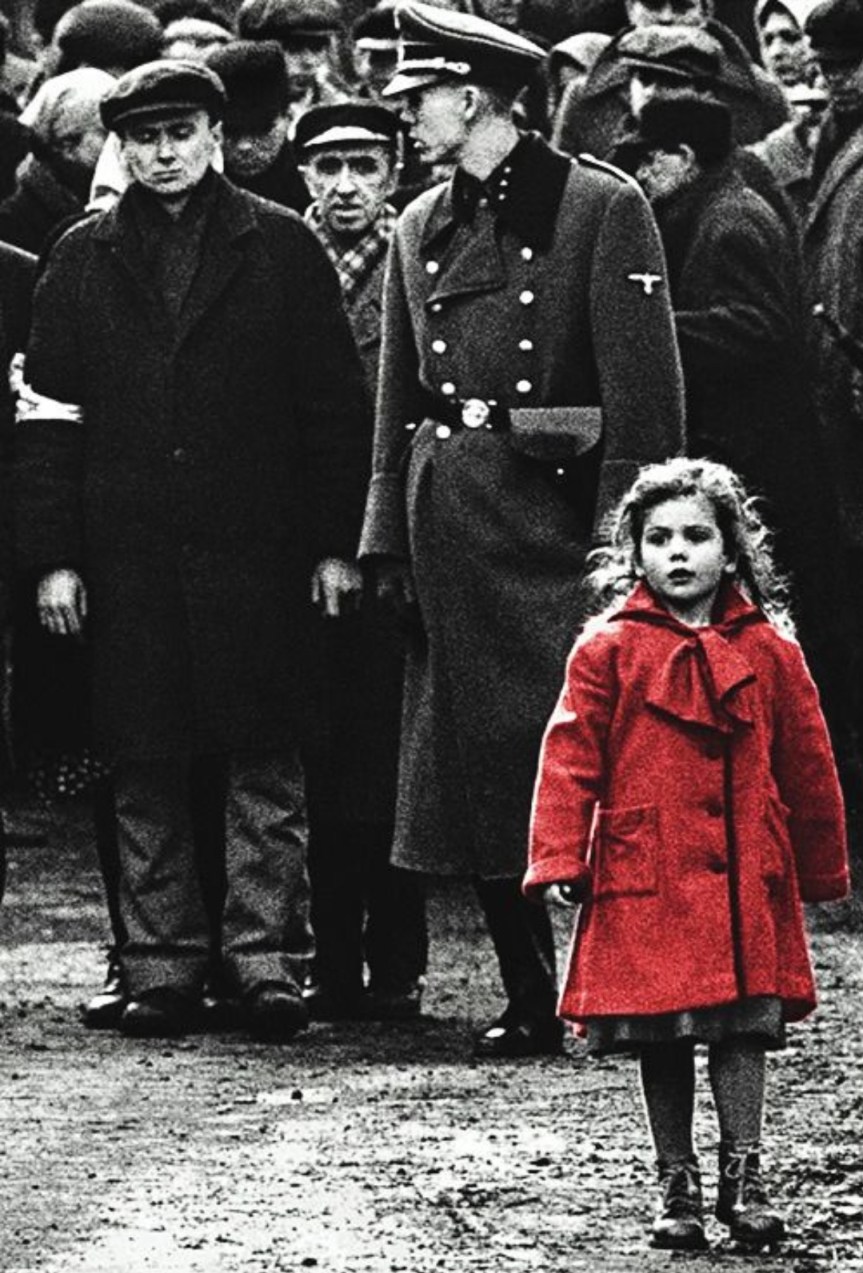
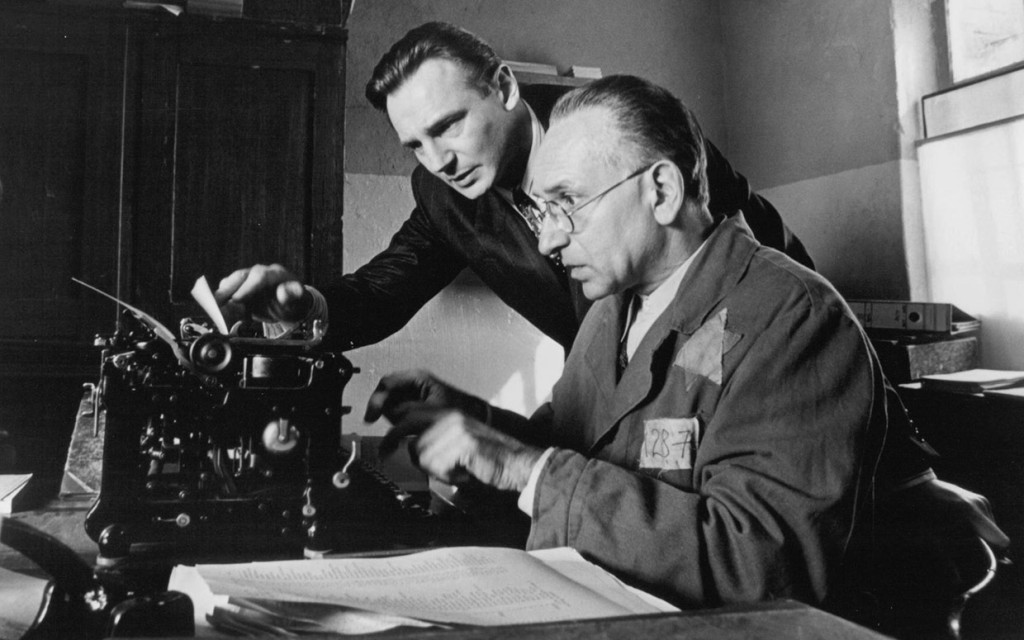
Scene from Schindler’s List (1993)
Overall, what didn’t work was the manner in which Keneally related the story of Oskar Schindler. As the story moved forward, it became clearer that Keneally was unsure of how to deliver the story. His resolve to remain loyal to Oskar’s story was commendable. He endeavored to do just that but it never fully came across. The result was an amalgamation of fiction and historical textbook. The strange mix muddled the story and the result was a perplexing work of historical fiction. It is without a doubt that one of the darkest phases of contemporary human history is the Second World War. Nobody expected that the meteoric ascent of Der Führer, Adolf Hitler, in the German political ladder would lead to a devastation of global scale. As the Axis forces march towards and beyond their boundaries, they would leave death and destruction in their wake, stretching from Europe, to the Pacific, and to the Far East. The consequences of the war would resonate well beyond its time. With genocides, concentration camps, and slave labour commonplace, the war was a reflection of the human conditions. Its peak, the Holocaust, exhibited the extent of the darkest shades of the human spirit. It was a grim portrait.
Indeed, the Second World War brought out the worst in humanity. However, in times of darkness, there are those among us who rise to the occasion. One of them is Oskar Schindler whose story was related by Thomas Keneally in his nonfiction novel, Schindler’s List (1982).
Conclusion
While Keneally‘s dramatization of this great man’s exploits is lacking in novelistic shape or depth, the brutality and heroism are satisfyingly, meticulously presented–as plain, impressive, historical record; and if admirers of Keneally’s more imaginative work may be disappointed, others will find this a worthy volume to place beside one of the several Wallenberg biographies.
The Atlantic Charter was a joint statement published by the United States and the United Kingdom during World War II (1939–45) that laid forth a vision for the postwar world. It set forth a wide set of objectives of U.S and British war such as:-
1. the desire for no territorial changes without the consent of the peoples affected.
2. They believed that every people had the right to select their own type of government and that those who had been stripped of their sovereign rights and self-governance should have them restored.
3. They would work to ensure that all states had equitable access to commerce and raw commodities.
4. They aimed to enhance labor standards, economic growth, and social security by promoting global collaboration.
5. They would seek a peace in which all countries could live peacefully inside their borders, without fear or want, after the “Nazi tyranny” (Germany) was destroyed.
Now, u must be wondering about why we are discussing the year-old charter now. That is because recently, The President of the United States and the Prime Minister of the United Kingdom have signed a revised version of the 80-year-old Atlantic Charter.
This revised version is a 604-word declaration which is an attempt to lay out a grand vision for global relations in the twenty-first century, much like the original charter was a declaration of a Western commitment to democracy and territorial integrity just months before the United States entered World War II. It’s a declaration of principles, a pledge that the United Kingdom and the United States will work together to meet the challenges of their time. It also emphasizes climate change and the need of biodiversity preservation. With references to new technology, cyberspace, and global development that is sustainable.
It urges Western partners to fight electoral meddling, particularly through misinformation and other harmful activities. In a technology era, it rates the risks to democratic states. It also declared that that the North Atlantic Treaty Organization (NATO) will remain a nuclear alliance as long as nuclear weapons exist.
Now, what will this new version of Atlantic charter holds the opportunity for India. Comparing the old and new version of Atlantic charter, the previous Atlantic Charter alienated Indian nationalism from the West, but the new Charter, as well as the rebooting of western institutions, could pave the way for a fruitful period of India’s collaboration with the US and its allies.
In 1941, the United Kingdom maintained that the charter’s self-determination concept did not apply to India. However, the inclusion of India and South Africa, as well as Australia and South Korea (as guests) at the G-7 meeting in 2021, demonstrates the urgent need to broaden the West’s base in dealing with global issues. Furthermore, The present Anglo-American initiative to formalize western talks with India is long overdue.
The Indian Prime Minister, who is participating in the G-7 meeting from afar, has the chance to demonstrate a commitment to both addressing views of decreasing democratic freedoms in India and offering genuine partnership with western democracies on global issues.








 Eduindex
You must be logged in to post a comment.