Argentina’s Federal Intelligence Agency (AFI) has called for an investigation into former president Mauricio Macri that he has spied on more than 400 journalists, and officials have released a document they say is evidence of the claim.
Dozens of foreign journalists, including several representing AFP, appeared on a list of people to be investigated in relation to the G20 and World Trade Organization (WTO) summits held in Buenos Aires in recent years.The complaint was lodged on Friday and the evidences were expected to be presented on Monday.
Around 100 academics, business people and prominent figures from civil society also appeared on the list.Ten of those listed were staffers or freelancers who worked for The Associated Press. Also listed were journalists for international media such as Reuters, Bloomberg, AFP and CNN. The documents relating to the case were found in three dossiers named “2017”, “G20 Journalists” and “Miscellaneous”, in a safe in the office of the AFI’s former director of counterintelligence. Buenos Aires hosted the 11th WTO Ministerial Conference in 2017 and the 13th G20 Summit a year later.
“The investigation into the journalists was straightforward. They dug up information from social media and that way built an ideological and political profile,” said the source.
The complaint was lodged by Cristina Caamano, who has been tasked by center-left President Alberto Fernandez to carry out an audit of AFI as part of a reorganization process.
According to the complaint, the profile information included “political preferences, social media posts, sympathy for feminist groups, or political and/or cultural content among others.” The comments included whether or not “they were critical of the current government” of Macri, who held office from 2015-2019.
Other comments referred to “showing affinity for Peronism,” Fernandez’s political movement that was in opposition at the time, “supporting the government,” “asking on Facebook for the liberation of Lula,” the jailed leftist former Brazilian president who has since been released, or if they “signed a petition for legalized abortion.”
Caamano has asked for an investigation to be opened against Gustavo Arribas, the former AFI director, and his deputy Silvina Majdalani, as well as Macri as the person “responsible for setting strategic guidelines and the objectives of national intelligence policy.”
The complaint states that the background checks on journalists were “neither ordered nor authorized by any magistrate.” The foreign correspondents association hit out at Macri for the “inadmissible” investigations, while two Argentine press unions also blasted the former administration.
The dossier relating to the WTO conference was more exhaustive and included information on business people, trade unionists and social leaders, listing personal details such as salaries and wealth.
It’s not the first time Macri has been investigated for alleged spying. He is currently under investigation for spying during his presidency on political allies and opponents, including former president Cristina Kirchner and Buenos Aires mayor Horacio Rodriguez Larreta. He was also prosecuted for spying while mayor of Buenos Aires, a post he held from 2007-2015, but that case was dismissed two weeks after he assumed the presidency.
Legal authorities have opened numerous investigations into alleged corruption involving former President Cristina Fernández, who is now vice president. Those have been stalled in part by difficulties in holding hearings under pandemic restrictions.
World Oceans Day is a worldwide initiative by the United Nations to spread knowledge and awareness about the vast expanse of oceans on Earth. It is based on the idea of preserving the infinite number of life forms and coral reefs that are a part of the ocean and being aware of how human actions can harm their natural habitat. The principal focus of this initiative is to bring the oceans at the forefront of global environmental discussions, and plan and execute a sustainable method to save our oceans and the planet at large.
When is World Oceans Day?
We celebrate World Oceans Day on June 8, and a lot of activities at global, national and community levels are organised worldwide to observe this event.
What is the History of World Ocean Day?
World Oceans Day was first proposed by Canada’s International Centre for Ocean Development and the Ocean Institute of Canada in 1992, at the Earth Summit in Rio de Janeiro. Since 2002, the World Ocean Network has been instrumental in garnering support and organising worldwide activities on June 8. A huge network of more than 2000 organisations worldwide are invested in making sure that the ocean is protected from any damage due to technology or other human actions.
Why is World Oceans Day Important?
The composition, temperature, currents and life in the oceans drive every natural system that makes Earth habitable for humankind. Even the balance of oxygen that we breathe is primarily dependent on the ocean. The health of our oceans has become a matter of grave concern, due to the damage they have endured.
Dedicating a particular day to this cause not only helps in spreading awareness among people, but also in mobilising conscientious civic and political efforts towards addressing this global problem. Though spending just one day celebrating the oceans is not enough to bring about the changes required to conserve marine ecology, it works wonders as a starting point for people, especially young minds, to come together to take action against any damage done to ocean.
Other Important Facts About World Oceans Day
Knowing about World Oceans Day is not enough for your children to be able to grasp the whole concept of how important the ocean is for human survival. To encourage your children to celebrate our oceans and strive to make a difference, you could share some fun facts on World Oceans Day and how important the oceans are:
• 97% of Earth’s water is in the oceans, which is home to more than 200, 000 known species and millions of unidentified organisms.
• The oceans purify the air we breathe by absorbing 30% of the carbon dioxide in the air, which also helps in reducing the effects of global warming and climate change.
• Oceans are the world’s largest source of protein, and more than 2.6 billion people depend on the oceans as their primary source of protein.
• 40% of the oceans of the world are today affected by human actions causing pollution, depletion of fisheries, loss of coral reefs and endangerment of marine species. Seven out of the 13 great whale species are endangered today.
•13, 000, 000 tonnes of plastic leak into the ocean water each year. It has been predicted that there will be more plastic than fish in the ocean by 2050. Over 100, 000 marine wildlife animals are killed each year due to plastic contamination of the oceans.
• Each year a new theme is assigned to this day to cover different aspects of marine life and human dependency on oceans. In 2020, the celebratory theme on World Oceans Day is “Gender and The Ocean”, which emphasises the harm that gender disparity can bring to our oceans.
• The President of UN General Assembly has launched a global campaign “Play It Out”, against the use of plastic.
• Marine Protected Areas have been chalked out as an initiative to protect the oceans from illegal fishing.
• Jellyfish as a species is older than dinosaurs and has been on this earth for more than 650, 000 years.
• 75% of the world’s volcanoes are located under the Pacific Ocean around Ring of Fire, the largest zone of active volcanoes.
World Ocean Days Activities for Kids
It doesn’t matter how small their hands are, children can drive this movement and even inspire adults to participate. Here are a few activities that your kids can organise on World Oceans Day:
Clean-up Drive
Invite all the children in the neighbourhood to the beach or any water body close by to clean the area. This will help them to understand how much litter ends up in the oceans through different waterways polluting the habitat of marine life.
Ocean Themed Programme
An ocean theme-based arts and crafts competition can attract a lot of attention from children of all ages. You can engage kids in a drawing competition and then display their creative works. You can even inspire a few young writers to submit stories and poems based on marine life.
Ocean Hunt
Treasure hunts are an intriguing way to engage children. Keeping the spirit of World Oceans Day, you can organise an ocean hunt by creating puzzles around facts from the oceanic world, leading to prizes like ornaments made out of sea-shells, passes to any nearby aquarium, books with interesting facts about the ocean, etc.
Storytelling Competition
It is safe to say that all kids love stories, especially when they get to be the judge of who is the best storyteller. Engage the adults around and encourage them to bring in their theatrical talents to entice the kids with amazing storytelling skills. You can always use the sounds of the waves or wild animals from the ocean to enhance your performance.
5.Let the Kids Instruct
No child will say no to an opportunity to give some sound advice to his/her parents. Ask the children to make a list of human actions that harm our oceans and come up with instructional ideas to preserve them. Organise a session with all the adults, where the kids present their points of view on how to keep our oceans and planet safe.
Humans have a macabre fascination with the end of the world — will humankind go out with a bang or disappear with a whimper? Are we the architects of our own demise or cosmic pawns in a game we can’t control?
Apocalypticism is the religious belief that there will be an apocalypse, a term which originally referred to a revelation, The original word in Greek — apokalypsis means an unveiling, a revelation i.e. to disclose , but now it is usually referred to the belief that the end of the world is impending, This credence is usually accompanied by the idea that civilization will soon come to a tumultuous end due to some sort of catastrophic global event.
ORIGIN
The notion of apocalypse originated from The Book of Revelation (often called the Revelation to John, Apocalypse of John, the Revelation from Jesus Christ ,which is the final book of the New Testament which is the final book of the Christian bible. Revelation is an apocalyptic prediction and is the only book of the New Testament classified as apocalyptic literature with extensive use of visions, symbols etc. especially in connection with future events. The Book of Revelation was written probably in around the year 96, right at the end of the first century.
The book spans three literary genres: the epistolary, the apocalyptic, and the prophetic. The Revelation of John, the Apocalypse, also must be looked at from the perspective that it’s not the only such piece of apocalyptic writing that we have. In fact there are lots of writings from the ancient world that we know by name and we can actually read today also. So when the author of the Book of Revelation sat down to write, there was a very strong paradigm of what revelation literature should look like and sound like.
But the story of apocalypse is an old one, one of the oldest humans tell. In ancient religious traditions beyond Christianity — including Judaism, Islam and Buddhism — it is a common narrative that arises in moments of social and political crisis, as people try to process unusual or shocking events.
HERE ARE SOME APOCALYPTIC BELIEFS OF VARIOUS FAITHS:
Christianity: Some Christians believe that the New Testament’s book of Revelation(the second part of the Christian Bible), isn’t just metaphorical, but a literal description of a final battle on Earth between God and the forces of Satan. Before that happens, there is a series of horrific events—including an earthquake, lightning, and a fiery hailstorm that burns up a third of the trees on Earth etc.it is also believed by the idea that Christ will return.
Islam: Prophet Muhammad—describes the events that lead to the end of the world. Natural disasters increase, and society undergoes a moral decline that leads to a surge in violence, bloodshed, anarchy, and sexual immorality. In the Islamic tradition, the Quran tells stories of plagues and of a final earthquake that will tear the earth apart. Amir Hussain, professor of theology at Loyola Marymount University, said, “Apocalypse also includes what happens when one’s eyes are opened”.
Hinduism: Hindus apocalyptic beliefs are different from other religions, because they believe that the universe goes through endless cycles of creation and destruction. In that cycle, three gods—Brahma, Vishnu and Shiva—all play a role. Brahma is the creator of the universe, while Vishnu preserves it during its existence. Shiva’s job is destroying the universe, so that it can be recreated.
Buddhism: In Buddhism, time is cyclical, not linear, making apocalypse both an end and a beginning. “Apocalypse happens and then a new order starts, a new social order, new moral order,” said Vesna Wallace, professor of Buddhism at the University of California, Santa Barbara. “The story repeats itself.”
Modern, secular American life is filled with its own apocalyptic visions. Movies and television shows depict civilization on the brink of extinction. “The Walking Dead” explores life amid the zombie apocalypse. “The Hunger Games” presents a dystopian future after conflict and ecological disasters have destroyed much of the world.
WHY DO PEOPLE BELIEVE IT ?
I think history will tell you that end time predictions increase when people are being ill-treated or feel oppressed and this increases when despair hits – in terms of how the world is experiencing economic and political turmoil. The people who are most likely to believe in doomsday predictions are those who are religious, because there are many religious texts that indicates end of days. Even today, people continue to make predictions about dates in the future in which the world will inevitably end. It is an extraordinary belief because there is little proof to back these claims, and they are often the result of someone trying to interpret ambiguous information that is in religious or other ancient texts.
Very popular source of doomsday predictions is the Mayan Calendar. One of the most famous end of world predictions was for December 21st, 2012. People took this prediction seriously, and they stocked up on food and read up on survival skills. The reason that the Mayan Calendar was proof of this end was because the most popular Mayan calendar abruptly ended on December 21st, 2012. Whether one believes in doomsday predictions or not, it is hard to deny that it is a very common belief that has scared all of us at one point or another.
According to psychologists, possible explanations for why people believe in modern apocalyptic predictions include an innate human fascination with fear, personality traits of paranoia and powerlessness and a modern romanticism involved with end-times due to its portrayal in contemporary fiction.
HOW TRUE ARE THESE PREDICTIONS ?
Predictions of apocalyptic events that would result in the extinction of humanity or the destruction of the planet have been made since at least the beginning of the Common Era. The 2012 phenomenon predicted the world would end by Earth getting destroyed by an asteroid,or an alien invasion; or a supernova. Scientists from NASA, along with expert archaeologists, stated that none of those events were possible.
Every year, new apocalyptic predictions waft through the the internet and the tabloid media. In 2019, for example, the world was predicted to end in a nuclear war, an asteroid impact, and a new ice age, Modern doomsayers have been predicting climate and environmental disaster since the 1960s. They continue to do so today. None of the apocalyptic predictions with due dates as of today have come true. More than merely spotlighting the failed predictions, this collection shows that the makers of failed apocalyptic predictions often are individuals holding respected positions in government ,science or hold strong religious beliefs . While such predictions have been and continue to be enthusiastically reported by a media eager for sensational headlines, the failures are typically not revisited.
APOCLYPSE 2020
Nostradamus, the world’s most famous 16th-century prophet and mystic, is believed to have prophesied the year 2020 and has called for both disasters and revelations. A year marked with both favorable and dangerous results. Pandemics are surrounded by a sense of impending apocalypse. Throughout history, they have been understood as final tribulations, a sign of the end time, It is also quite extraordinary to believe that you can pinpoint, to the exact day, when the entire world will end.
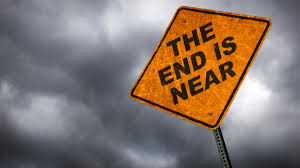
The end of the world is near—again! For centuries, doomsdayers have prophesied the apocalypse. But there’s a tiny catch: None of the end-of-world predictions ever come true.
but it is too much for my strength — I sink under the weight of the splendour of these visions!
I am alone, and feel the charm of existence in this spot, which was created for the bliss of souls like mine. I am so happy, my dear friend, so absorbed in the exquisite sense of mere tranquil existence, that I neglect my talents.




 Eduindex
You must be logged in to post a comment.