World Shorebirds day in the Caribbean

Not only do birdwatchers the world over love looking at birds, they also love to count them: lists and data factor into the pastime in a big way. In the Caribbean, these “citizen scientists” play an important role in documenting the presence and the movements of island birds — there are special dates on which they spring into action, and one of these is World Shorebirds Day, which was recognised this year on September 6.

In honour of the occasion, regional birds were counted, photographed, and recorded in the eBird Caribbean database between September 3 and 9.

Many shorebird species in the Caribbean are migratory, often stopping off in different islands on their way to somewhere else. The chunky Red Knot, for example, is an incredible long-distance flyer. In its ongoing series of online colouring book pages, the nongovernmental conservation organisation (NGO) BirdsCaribbean noted:

Red Knots breed in the far north, the Arctic. They can spend the winter as far south as the southernmost tip of South America. This means they make some amazing migratory journeys of tens of thousands of miles overall! Red Knots gather in large groups in some places during autumn and winter; this makes them vulnerable to threats like sea-level rise and hunting.

BirdsCaribbean also shared a useful Shorebird ID guide, as many of these charming little birds can be deceptively similar:

BirdsCaribbean’s guide to identifying common Caribbean shorebirds.

Members of BirdLife Jamaica — much fewer in numbers this year, due to COVID-19 restrictions — trekked in ones and twos to their favorite viewing sites. One member, on arriving in Old Harbour Bay after heavy rains the day before, found the location overwhelmed with mud :
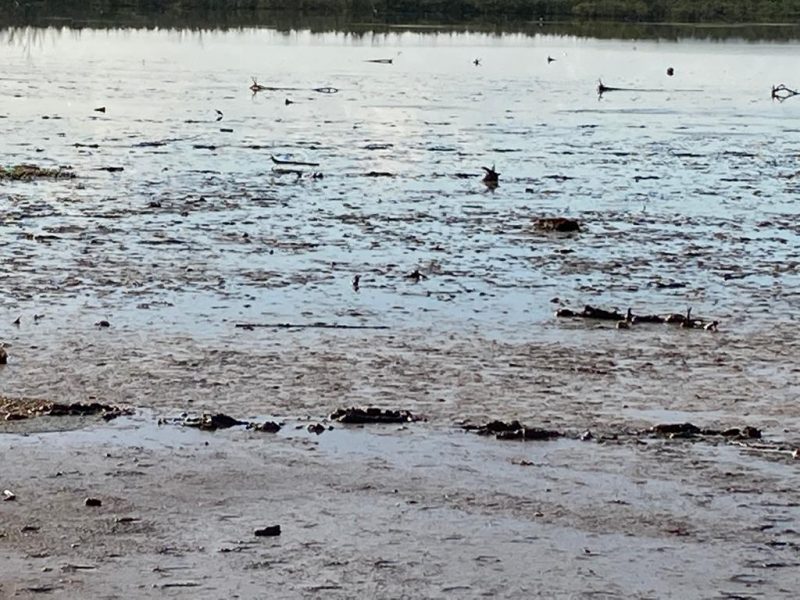
Watching seabirds often involves large quantities of mud. Photo courtesy of Ian Gage, with permission.

Many shorebirds have an amazing range. The Short-billed Dowitcher, for example, flies from Alaska to Canada, winters south in Brazil and spends time in the Caribbean, too:
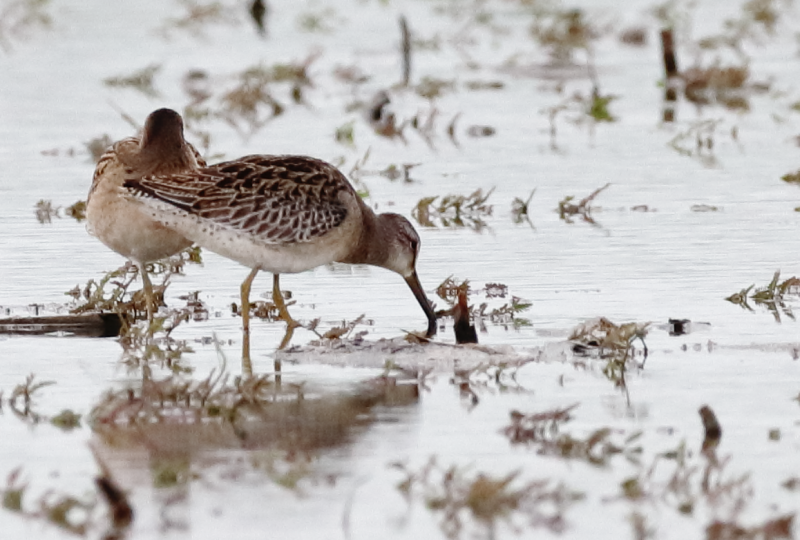
Short-billed Dowitchers in Great Bay, St. Elizabeth, Jamaica. Photo courtesy Ann Haynes Sutton, Conservation Ecologist, with permission.

The Grey or Black-bellied Plover is a global nomad. It breeds in the Arctic tundra and winters south, spreading virtually worldwide. This one decided to make a stop in Jamaica:
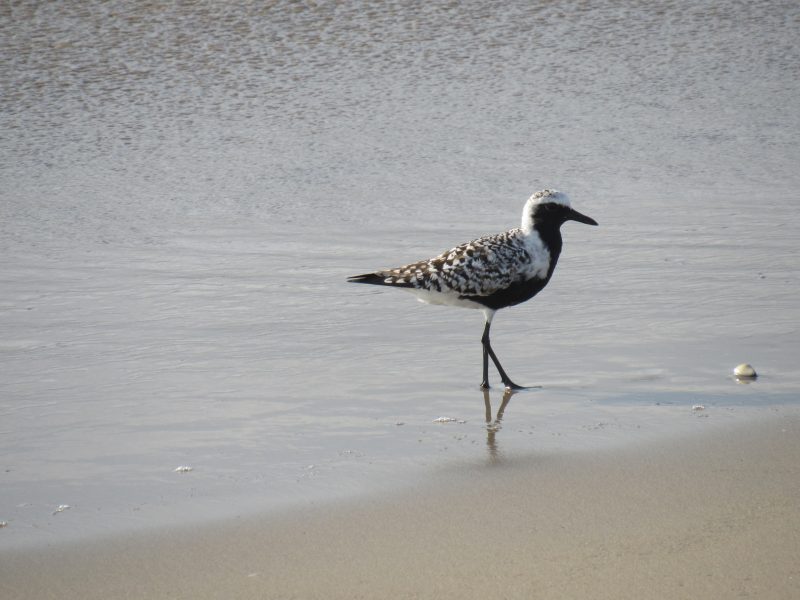
The Grey or Black-bellied Plover feeding along the water’s edge near Black River, St. Elizabeth, Jamaica. Photo courtesy Emma Lewis, with permission.

There were more sociable events on the calendar. The NGO SusGren (Sustainable Grenadines) shared photos of an educational trip to the newly-restored Ashton Lagoon on Union Island:

In celebration of World Shorebirds Day 2020, SusGren in collaboration with Environmental Attackers conducted educational outreach for some students of the Stephanie Brown Primary school. The high-spirited students, who were out of their beds as early as 5:30 a.m for the session, were engaged in activities such as bird labeling, bingo, and bird identification.

In Trinidad, a huge and diverse array of wetland species was on display. The Whimbrel, an elegant shorebird, is another Caribbean migrant that is still fairly widespread globally:

Whimbrel, Trinidad. Photo courtesy of Jerome Foster, with permission.

The Black Skimmer, however, is quite an unusual sight in the Caribbean. This bird literally skims the surface of calm coastal waters and lagoons:

Black Skimmer, Trinidad. Photo courtesy Jerome Foster, with permission.

The beautifully named Laughing Gull is fairly common across the Caribbean, where it breeds. It spends winters in northern Brazil:

Laughing Gulls in Trinidad. Photo courtesy Jerome Foster, with permission.

Some shorebirds, of course, do stick around. The Brown Pelican, for example, is a regular sight, cruising along the shorelines and further out to sea. Its local name in Jamaica is “Old Joe”; it is a common, year-round resident of the larger islands, gliding low over the waves or doing spectacular dives for fish:

Brown Pelican, known as “Old Joe,” in-flight at Palisadoes, Kingston Harbour, Jamaica. Photo courtesy Ian Gage, with permission.

Another charming Jamaican resident, whose numbers may be augmented by migrants from North America in winter, is the Black-necked Stilt. This noisy bird, on its spindly red legs, nests on the ground near water’s edge:
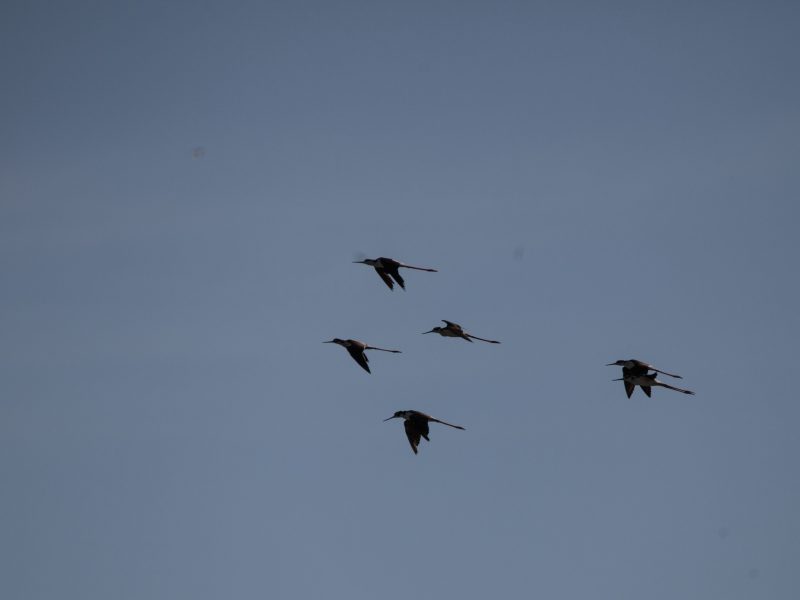
Black-necked Stilts in flight in Old Harbour Bay, Jamaica. Photo courtesy Ian Gage, with permission.

For Jamaican birders, the highlight of World Shorebirds Day was perhaps the appearance of an adorable family of West Indian Whistling Ducks, captured on video by Damion Whyte, biologist, birder and a passionate social media educator on all things environmental. The location — a sewage pond in Portmore, St. Catherine, — was perhaps not so beautiful, but a good birding spot nonetheless.

Species such as this beautiful bird are declining in numbers throughout their range in the Caribbean. Large tourism developments, including hotels, marinas and other projects, continue to be built along the islands’ coastlines, resulting in the destruction of vital mangroves and wetlands in which these birds rest along their migratory flyways. Currently, three tourism projects under way in Grenada threaten wetlands that shelter several endangered species, including turtles.

On some islands, especially in the French Caribbean, hunting and plastic pollution are major threats.

World Shorebirds Day in the Caribbean is not only a celebration of the birds themselves, but of the beautiful places they call home, even if only temporarily for many of them.

Protests in Thailand for Democracy

Despite the COVID-19 pandemic restrictions and the imposition of an emergency decree which prohibit mass gatherings, young Thai activists continue to organize massive protests across the country. This student-led pro-democracy movement marks the first time in modern Thai history when the Thai monarchy has been talked about publicly in a critical way since doing so is a jailable offense.

The first wave of protests was sparked in February 2020 by the forced dissolution of an opposition party which outraged and inspired young people to organize pro-democracy actions. Despite the COVID-19 March lockdown, the ‘youthquake’ continued and saw young Thais use cyberspace to speak out on political issues, build resistance networks, and launch online protests.

The second wave of protests was signaled by the student-led protest on July 18 at Bangkok’s landmark Democracy Monument. More than 2,000 protesters gathered and raised three demands, namely dissolving the parliament, rewriting the military-based constitution and ending the intimidation and arbitrary arrests of critics of the government.

Another significant demand is the call for reforms of the the monarchy, a topic which is not only taboo but also a criminal offense since Thailand has a strict Lèse Majesté (anti-Royal insult) law.

Students and youth activists echo these demands in various forms of creative online and offline protests. For example, Thai protesters have adopted as a symbol of their defiance and demand for democracy the three-finger salute inspired by the popular US movie series the “Hunger Games”.

On August 16, more than 20,000 people assembled again at the Democracy Monument in central Bangkok. It was the biggest protest in Thailand since the military grabbed power in 2014.

Authorities have since summoned dozens of student leaders, artists, and human rights activists and threatened them with harassment suits, yet the youth-led protest movement has gained nationwide support. Pro-democracy advocates from various sectors have also participated in several rallies organized by students.

Besides, young activists from Hong Kong and Taiwan have also issued solidarity statements that reflect the growing influence of the #MilkTeaAlliance, a netizen-driven democracy campaign challenging Chinese trolls.

WILDFIRES : The “Burning” issue

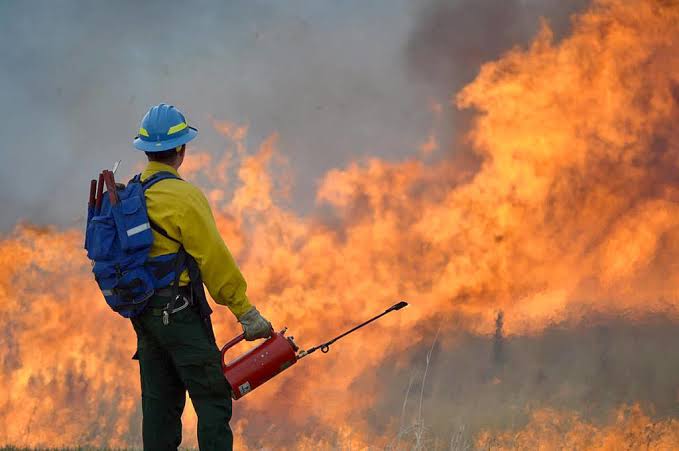
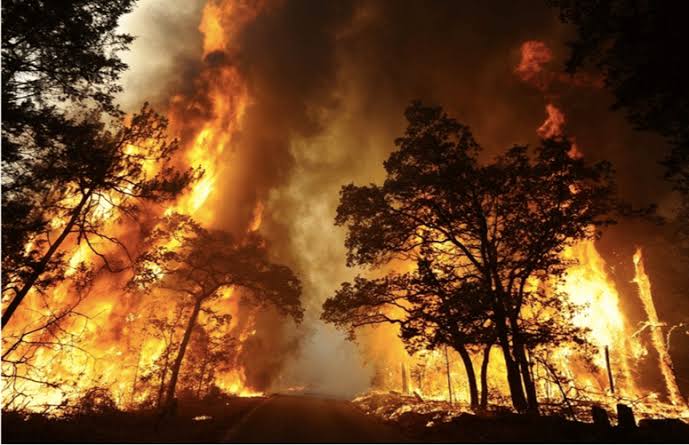
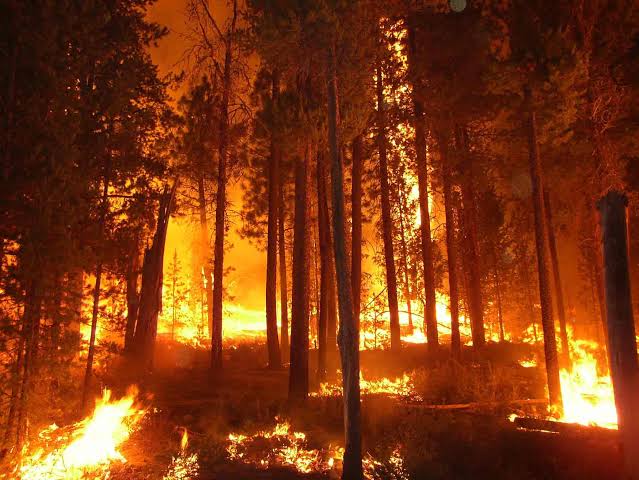
A wildfire is an unplanned fire that burns in a natural area such as a forest, grassland or a prairie. Fossil Charcoal indicates that wildfires began soon after the appearance of terrestrial plants about 420 million years ago. Earth is an intrinsically flammable planet owing to its cover of carbon-rich vegetation, seasonally dry climates, atmospheric oxygen, and widespread lightning and volcanic ignitions.

Depending on the type of plants present, a wildfire can also be classified more specifically as a forest fire, bush fire, desert fire, grass fire, hill fire, prairie fire, vegetation fire or a veld fire. Wildfires can be characterized in terms of the cause of ignition,their physical properties, the combustible material present and the effect of weather on the fire.

The causes of these wildfires may be natural or due to the involvement of human activity. The natural factors include dry climate, lightning, volcanic eruption. The most common direct human causes of wildfire ignition includes fire bombing, discarded cigarettes and sparks from equipment. They can also be started in communities experiencing shifting cultivation, where land is cleared quickly and farmed until the soil loses its fertility, and slash and burn clearing. However, the most common cause of wildfires varies throughout the world.

The spread of wildfires varies based on the flammable material present, its vertical arrangement and moisture content, and weather conditions. Fuel arrangement and density is governed in part by topography, as land shape determines factors such as available sunlight and water for plant growth.

Plants in wildfire-prone ecosystems often survive through adaptations to their local fire regime. Such adaptations include physical protection against heat, increased growth after a fire event, and flammable materials that encourage fire and may eliminate competition. Dense bark, shedding lower branches and high water content in external structures may also protect trees from rising temperatures. Fire-resistant seeds and reserve shoots that sprout after a fire encourage species preservation, as embodied by pioneer species.

Some animals do die in the flames of wildfires, mostly the elderly and very young animals who can’t escape. However, the majority of the wildfire mortalities came after the fire is out, due to the loss of important habitat and food sources burned in the fire. The burns create a new type of habitat, usually open areas where dense forests used to be that are quickly colonized by grasses and shrubs. This creates an opportunity for invasive species to move in before native species get the chance, which can have harmful impacts on the landscape.

Chinchaga Fire – 1950

The Chinchaga fire, also known as the Wisp fire, Chinchaga River fire and Fire 19, was a forest fire that burned in northern British Columbia and Alberta in the summer and early fall of 1950. With a final size of between 35,00,000 acres and 42,00,000 acres, it is the single largest recorded fire in North American history. The fire was allowed to burn freely, a result of local forest management policy and the lack of settlements in the region. The Chinchaga fire produced large amounts of smoke, creating the “1950 Great Smoke Pall”, observed across eastern North America and Europe. As the existence of the massive fire was not well-publicized, and the smoke was mostly in the upper atmosphere and could not be smelled, there was much speculation about the atmospheric haze and its provenance. The Chinchaga firestorm’s “historic smoke pall” caused”observations of blue suns and moons in the United States and Europe”. It was the biggest firestorm documented in North America created the world’s largest smoke layer in the atmosphere.

Black Saturday Bushfires – 2009

The Black Saturday bushfires were a series of bushfires that either ignited or were already burning that either ignited or were already burning across the Australian state of Victoria on and around Saturday, 7 February 2009, and were among Australia’s all-time worst bushfire disasters. The fires occurred during extreme bushfire weather conditions and resulted in Australia’s highest ever loss of human life from a bushfire, with 173 fatalities. Many people were left homeless as a result. As many as 400 individuals fires were recorded on Saturday 7 February ; the day has become widely referred to in Australia as Black Saturday.

California Wildfires – 2020

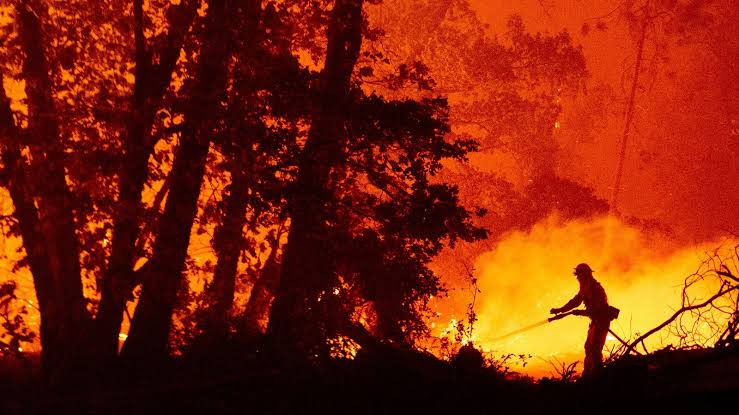
The 2020 California Wildfire season is a series of ongoing wildfires that are burning across the state of California. As of September 11, 2020, a total of 7,718 fires have burned 33,54,234 acres, more than 3 percent of the state’s roughly 100 million acres of land, making 2020 the largest wildfire season recorded in California history, according to the California Department of Forestry and Fire Protection.

The latest fire that has occurred in California is named as the ‘Willow Fire’. It started on 9th September, 2020 at 6:04am. The location of this wildfire is Neptune Lane and Willow Glen Road, North of Smartville. It burned 1,311 acres leaving 41 structures destroyed and 10 structures damaged.

Internships are just like footprints in the sand each steps signifies the journey taken.

An internship is basically a period of work experience or an opportunity provided by companies to an intern for a specific period of tenure where they can gain work experience or satisfy requirements for qualification.Internships are very crucial way of obtaining knowledge or practical exposure of how actually the corporates operates.It plays a very crucial role in advancing or enhancing one’s career.Someone rightly quoted that “There is no substitute really for learning about the World of work and being in the World of work you can do through Internships”.An internship can provide career building experience and could be a steeping stone to your dream job.An internship provided by the corporates are of two types paid and unpaid.If intern take the internship seriously and do it with utmost honesty and dedication then company provides PPO (pre-placement offer). Through Internship intern can learn about career field from inside and could have experience of working with professionals.Through internship one can learn new skills and builds leadership qualities.

It acts as an opportunity to practice formal communication and team work skills.It leads to achieve a sense of accomplishment and boost confidence in an intern.Traits like integrity,commitment ans self -motivation are learned by an intern during internship.It helps develops professionalism and also encourage character growth.Internship are work experience are a proven method of getting one’s foot in the door.

How Tea drinking has evolved around the world

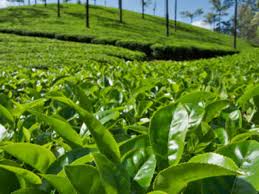
When you get up early in the morning and start your day the first thing you aspire for is tea. Tea is refreshing, energetic drink that sets up your day. we get to know about the popularity of tea from the fact that it is 2nd most consumed drink after water all around the globe. Tea is an aromatic beverage commonly prepared by pouring hot or boiling water over tea powder prepared by crushing leaves of the Camellia sinensis , an evergreen shrub (bush) usually found in East Asia . Tea is very ancient drink as its origin dates back to around 3rd century AD which is mentioned in medical records of Hua Tuo in the regions of today’s worlds North Burma and southwestern China.

Tea: history and origin

Tea has been in use as energetic and recreational drink since ancient time. During 18th-19th century tea had become very popular among Britishers who were using it as recreational drink. They were so much addicted to tea that they had started trading Opium drug derived from the seed capsules of the opium poppy Papaver somniferum grown in mostly Northeast part of India for the miraculous plant leaves Camellia sinensis from plantations of China. Later the Chinese liberals started fights against this conspiracy of western countries against Asian countries especially against East Asia. This led to famous Opium wars between two countries.

Tea and Health

Tea has many positive effects on health.If you are up to lose your weight then tea can be your best partner.Many researchers have stated that consumption of Tea helps in reducing risk of heart attacks as it lowers cholesterol level,it also helps in maintaining blood pressure.Green tea drinking is very effective to reduce risk against cancer and also it improves brain functioning.

Though it has many good health effects but its over consumption can lead to caffeine overload leading to dizziness,nervousness and disturb in sleep. It can also cause muscle pain , heartburn etc. It is recommended that daily intake of caffeine should not exceed 40 milligrams.

Tea: beverage of the world

Tea has gained popularity in almost over 100 countries where people enjoy this drink in various forms. A balanced consumption of tea is like boon to us.Tea has evolved over the centuries from native to only China and east Asia in 3rd century AD to almost in every household of the world in this 21st century.