Overpopulation problems

As of now July 2021, there are 7.9 billion people in this world. Day by day, the population of humans in this earth is increasing rapidly, especially in countries like China and India. Excess of everything is big problem. Like that excess of population is also a big problem. There many problems with overpopulation. Especially in India, day by day the population is expanding rapidly. In this blog, we are going to discuss what is overpopulation? Why population of India is high? Overpopulation problems in India? How to control overpopulation?

WHAT IS OVERPOPULATION?

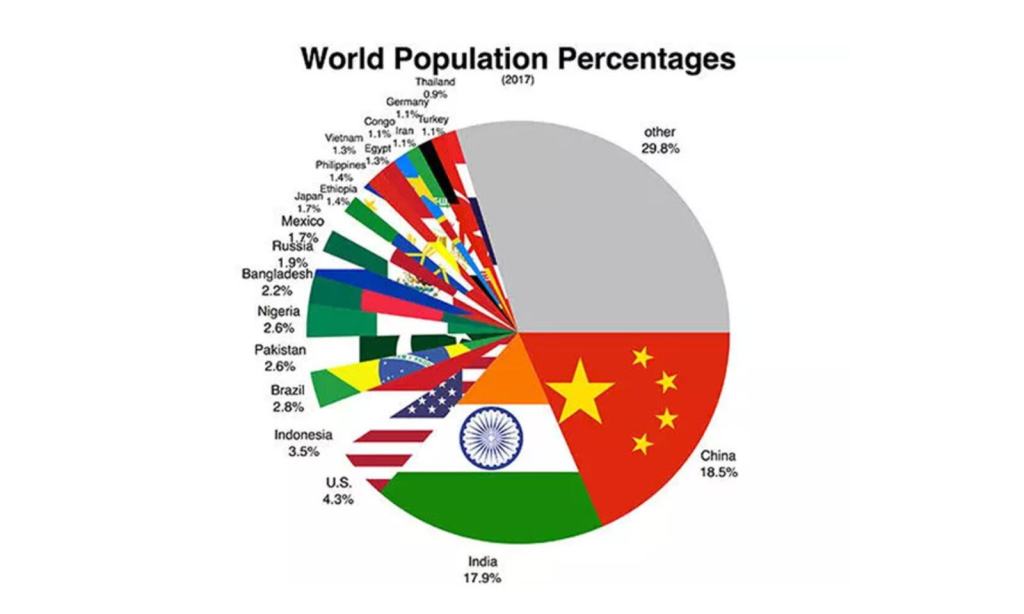
Overpopulation is the state at which population becomes so excessive that people must be managed to live. When overpopulation occurs the available resources will become limited or exploited. This makes the population hard to survive. As of now China is the world’s most populated country followed by India.

WHY POPULATION OF INDIA IS HIGH?

Birth rate and death rate are the two aspects that determine the population. If the birth rate is higher than death rate then the population will increase. If the death rate is higher than birth rate than the population will decrease. In India the birth rate is much higher than death rate. India was able to control death rate but it failed to control the birth rate. That’s why India’s population is high. Child marriages is also a reason for overpopulation, even though the law states that the marriageable age for the girls is 18 and boys is 21 years. But in some places the practice is continuing. Old culture norms is also one of the reason in India’s overpopulation. Parents of newly married couple often forces them to have a child. In order to have a male child, couples have more children.

OVERPOPULATION PROBLEMS IN INDIA

The population of India is 1.3 billion alone. India is the second most populated country in the world after china. Experts suggest that India will overtake china in 10 to 15 years. Due to high population there is more competition for everything in India, whether it is a job, college admission etc. Overpopulation generates huge unemployment causing poverty. There will be more unemployed people in India. Which slows down the development of the country. With high population, the resources like land, water and forests will be exploited. With high population, the food prices will rise because there is limited food. Inflation is the major consequence of overpopulation. Overpopulation will cause unequal distribution of money, which widens the difference between rich and poor. In an survey the population density of India in about to be 454 inhabitants live per square kilometre. India ranks 7 position with land.

HOW TO CONTROL OVERPOPULATION?

Government should aware people the consequences of over population. Government should make a population policy regarding the growing population. Increasing the awareness of use of contraceptive devices and free distribution of condoms among the poor. Government should spread the awareness of sex education and family planning. They should encourage people not to specify the birth of the child. Women empowerment should also be encouraged. Organizing campaigns to spread awareness about overpopulation. All these methods will help to control the population of India.

That’s all from my side. I hope you like it.
World Population Day 2021

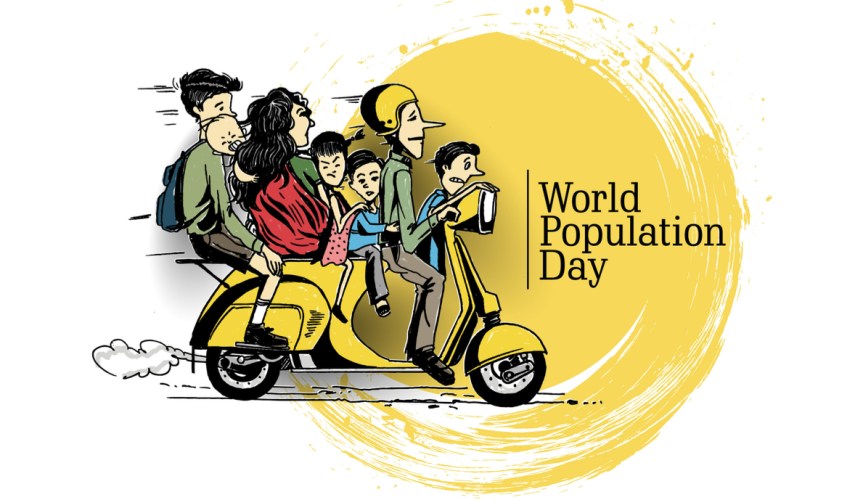
11th July is celebrated as THE WORLD POPULATION DAY every year. This day is devoted to focusing on the relevance of population issues. World Population Day was rooted by the Governing Council of the United National Development Programme in 1989, as an outgrowth of the interest generated by the Day of Five Billion, which was observed on 11 July 1987.

The theme for 2021 is rights and choices.

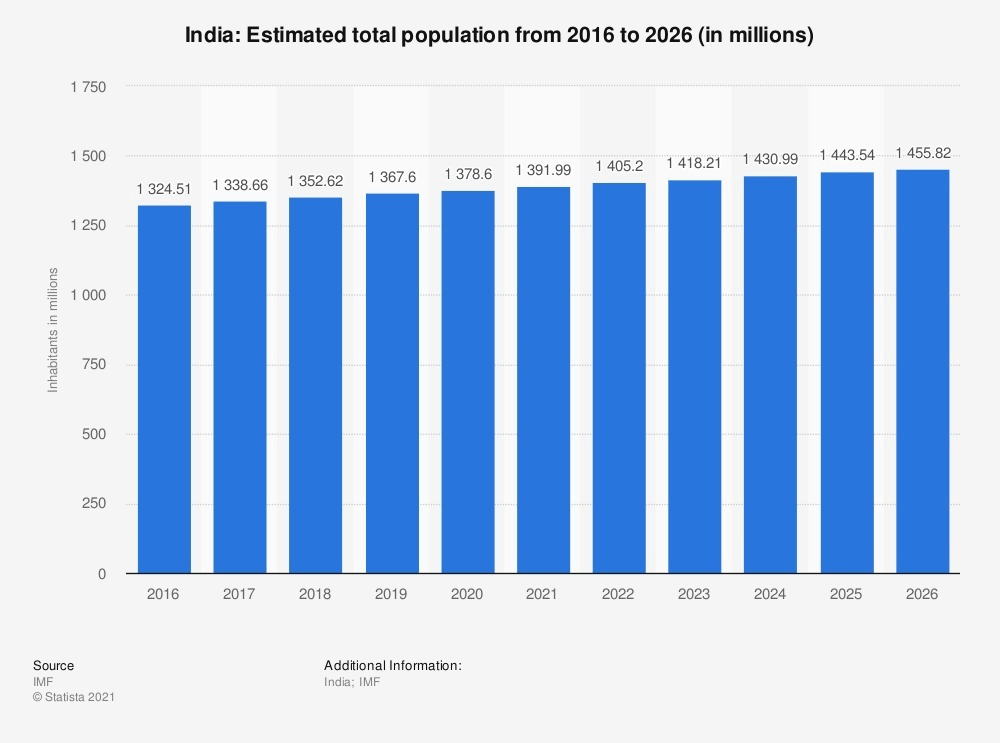
1) Population in India

image source: Google | image by: Statista

2) Understanding our population 

The total number of children a woman bears is inversely proportional to the following:

  • Literacy
  • Per capita income
  • Development 

It’s been proved that as the above-mentioned factors rise, the total fertility decreases.

The total number of children a woman bears is directly proportional to the following:

  • Infant mortality rate
  • Poverty
  • Illiteracy
  • Unemployment

It’s been proved that as the above-mentioned factors rise, the total fertility rises too.

Our population is growing but at a decreasing rate. It is not an explosion. The total fertility rate, i.e. the average number of children a woman beers, has significantly decreased from 5 to 2.2-2.3 in the last 50 years. The replacement fertility rate, i.e. the number of children a woman needs to have so that the population replaces itself from one generation to another generation is 2.1. Approximately 20 states and UTs in India are very close to it.

3)Why is overpopulation a concern

  • Resources

Well, the rate of growth in the number of human beings is greater than the growth of resources. This means the more the population grows, the difficult it gets to sustain everyone.

  • Environmental destruction

As the number of people grows, more resources and places to live are required to destroy natural habitat. This leads to the loss of animal habitat and they’re seen wandering around in human civilization.

  • Unemployment

An increase in the number of people, increases the demand for jobs to sustain oneself and we as a nation have failed to provide jobs.

  • Poverty

A direct relation between poverty and population has been proved by researchers. This means as poverty rises, so does population and vice versa. Along with these, overpopulation brings:

  • Social religious conflicts
  • Climate change
  • Outbreak of diseases
  • Social unrest
  • Political instability 

4) Benefits of having a bigger population

  • A high population is an asset, which can be utilized gracefully. We can have an ample number of professionals in all the fields and can even outsource our services. There is more production of goods.
  • 4-2-1 problem, i.e 1 child looking up to 4 grandparents and 2 parents, is avoided.
  • We’ll have a balance between the ones earning and the ones depending on pensions because if the number of children born is dropped suddenly, the ones depending on pensions will far outgrow the ones earning and that would be very hard to sustain.

5) How not to tackle population

  • Population Regulation Bill or a 2 child policy

Implementing such a policy is punishing someone for having kids in the form of banning them from elected offices, eliminating them from government schemes and subsidies, government jobs, and even snatching their food by excluding them from PDS. What do you think are the probable effects of these?

A population reduction? NAH. This coercion will lead to even more poverty in the nation which is in the first place one of the root causes of a high population. Furthermore, this may lead to a poor sex ratio as in the case of China which saw sex-selective abortions, foeticides, and even bride price practice which is in simple words buying a bride and might even lead to people bringing girls from poor nations to marry them.

  • Forced sterilization

Sanjay Gandhi and Indira Gandhi led one of the Forced sterilization drives, which is never the answer. Because it violates the choice of the couple, and the right to reproduce which is a basic human right. Even if it doesn’t violate a right, it is unethical to the very roots. Approximately 10 million men were sterilized during that drive and it had no substantial effect on the population growth but had various side effects like deaths and the spread of diseases.

  • Blaming Muslims 

How many times have you heard the statement that Muslims give birth to more children so that one day they can outnumber the Hindu population, or even politicians asking their Hindu following to have more and more children to just come in way of Muslims outnumbering them? Well India’s last census, conducted in 2011, revealed that Hindus make up 79.8% of the population, while Muslims make up 14.2%. and Muslims have more children because of their developmental and literacy levels. Because in states with a higher development, the total fertility rate of Muslims is less too, and the fall in the total fertility rate of Muslims is less than the fall in the total fertility rate of Hindus. All politicians are doing is find a shortcut to avoid tackling the matter with sincerity and propose these stupid ideas.

Forced population control measures are a problem, the solution lies in the development.

6) How to tackle population?

  • Understanding and choosing better leaders for ourselves, voting for the ones who focus on development rather than playing a blame game.
  • Mass education about family planning and contraceptive techniques.
  • Creating job opportunities, improving healthcare facilities and focusing on education would tackle a lot of other significant issues along with overpopulation.
  • Improving access to contraceptives
  • Increasing investment in family planning projects

7) Takeaway

The need of the hour is to plan instead of punishing, utilizing the asset it’s blessed with instead of declaring it a disaster and blaming everything on it and stabilization of population instead of trying to control it. And lastly, having a government that owns up to its responsibilities.

references

https://www.macrotrends.net/countries/IND/india/population

https://www.statista.com/statistics/263766/total-population-of-india/

WORLD POPULATION DAY – JULY 11

Image Source: google.com

One of the biggest challenges that we are facing still now is the rise of world population. World population day is annually celebrated on July 11. The main purpose this is to bring awareness about the rising population issues and how to tackle these issues. Population issues includes family planning, gender equality, child marriage, human rights, right to health, baby’s health, etc. World Population Day was established by the Governing Council of the United Nations Development Programme in 1989. It was inspired by the public interest in Five Billion Day, the approximate date on which the world’s population reached five billion people on July 11, 1987.

Every year there is a specific theme for World Population Day and the theme of World Population Day 2021 is “Rights and choices are the answer: Whether baby boom or bust, the solution to shifting fertility rates lies in prioritizing the reproductive health and rights of all people.”

US, India and China are the top three countries that have the largest population count. The size of a nation’s population has a major impact on its development and operations. Population growth has always been a concern. The number of human beings is increasing every year, but the resources that sustain human life are still unable to regenerate. The growth rate has also been increasing rapidly. Put this fact in perspective: the population broke the 2 billion marks in 1927. By 1999, the population was recorded as 6 billion. Therefore, the population growth rate has increased significantly year by year. It is very urgent to control the population. It causes some irreparable damage to the environment and atmosphere. A large number of people means the rapid and unfair consumption of environmental resources. Natural resources such as land, water, and air are limited. They cannot be manually produced. The rapid consumption of these resources has caused huge losses.

According to UN Secretary-General Antonio Guterres,” Sustainable Development 2030 agenda is the world’s blueprint for a better future for all on a healthy planet. On World Population Day we recognise that this mission is closely interrelated with demographic trends including population growth, aging, migration, and urbanisation”.

The Population Division works closely with agencies, programs, funds and bodies of the UN system in order to execute work program on population. Activities organized on this day include seminars, discussions, educational meetings, open competitions, slogans, workshops, debates, songs, etc. Not only that, even TV channels, news channels, and radio programs broadcast various programs related to the importance of population and family planning. Demographic issues also create tensions in society: there are more heinous crimes committed in the field of gender inequality and human rights than ever before, especially in developing countries.

The government of each country must formulate effective policies and plans to control the growing population. Without immediate control, the ever-increasing world population will lead to some unbearable situations. Policies such as family planning and use of birth control should be implemented on a large-scale basis.

World Population Day

World Population Day is observed on 11th of July every year. It is an annual and global event which seeks to raise awareness about the rising population issues all over the world. It was first observed on the 11th of July 1989. Governing Council of the United Nations Development Programme was the organization behind the establishment of this event. A question might arise in your mind about why 11th July was established as the World Population Day and not any other date? The answer to this question lies in the year 1987 two years prior to the first observation of the World Population Day. 11 July 1987 is known as the Five Billion Day because it is considered as the approximate date when the world population reaches the mark of 5 billion.

The day was proposed by Dr. K.C. Zachariah who worked as a senior Demographer at World Bank when the world population reaches five billion. World Population Day aims to increase awareness on various issues regarding population such as family planning, gender equality, poverty, human rights, and maternal health.

World Population Trends

Due to the increase in number of people surviving to reproductive age, major changes in fertility rates, increasing urbanization and accelerated migration has resulted in a very dramatic drastic growth in the population all around the world. If look at the empirical data, it will be clearer. Earlier it took hundreds of thousands of years to reach the world population to the 1 billion mark but in the near 200 years or so the population increases by seven times. Global population reaches to 7 billion mark in the year 2011. Today global population stands around 7.7 billion and it is estimated to reach 8.5 billion in 2030, 9.7 billion in 2050, and 10.9 billion in 2 100. These trends as shown here if continues then it will have very far-reaching negative consequences on the future generation to come. They affect economic development, increase unemployment, poverty, increase income disparity and affect income distribution. Growing population also acts as a setback to the efforts of providing universal access to healthcare facilities, sanitation, education, better lifestyle, housing, energy, food and water.

Themes of this year’s World Population Day

“Rights and choices are the answer: Whether baby boom or bust, the solution to shifting fertility rates lies in prioritizing the reproductive health and rights of all people.” This is the theme of World Population Day this year. The pandemic had made the health system to compromised with other problems especially in the area of sexual and reproductive health of women. Risk of child marriage and female genital mutilation increase in the pandemic and the programmes to eradicate these problems faced a setback due to the pandemic. A quantitative surveys suggest that between 4% – 29% of women who use contraception do so without their husbands’ or partners’ knowledge. Against this backdrop, many countries are expressing growing concern over changing fertility rates. Historically, alarmism over fertility rates has led to abrogation of human rights. The agency emphasizes that women must be empowered educationally, economically and politically to exercise choice over their bodies and fertility.