The Impact Of Haruki Murakami On The World Of Literature

Fish dropping from the sky and human-animal hybrids are only a few of the “common” happenings in Haruki Murakami’s stories. The famous Japanese author has millions of admirers across the globe, with his best-selling novels translated into over 50 languages.

Haruki Murakami’s widespread fame signals the twenty-first century’s progress to a much more interconnected society, one where origin has no bearing on impact and everyone is a descendant of the diverse communities that happened to come before. Murakami’s huge reach stems in large part from the scope of his own preferences and capabilities. He not only has made many western readers acquainted with some of the East’s modern written achievements, but he’s also translated several  works of English authors like Raymond Carver, F. Scott Fitzgerald, and J.D. Salinger to Japanese, giving Japanese readers exposure to some of  these works for the very first time.

Murakami is heavily inspired by Western writers, finding inspiration in authors ranging from Franz Kafka to Kurt Vonnegut. He now admires the novelists Kazuo Ishiguro and Cormac McCarthy. He became particularly captivated to American culture as a young child, devouring any relics he would discover, whether jazz albums, dollar store paperback books, or Hollywood films.

Murakami’s life has been influenced by jazz music. Several of his novels, like Norwegian Wood (from the same Beatles song) as well as Tsukuru Tazaki, depend heavily on the music of Franz Liszt. 

When it pertains to Haruki Murakami, there seems to be an odd synchronicity between his supporters and his detractors. Everybody thinks that he’s often humorous, especially in his dialogue. His protagonists, who are frequently drawn into detective storylines without the need for a “FOR HIRE” notice in their windows, and who doesn’t love a detective? 

Cats, mundane kitchen activities, dingy barrooms, pop and/or classical theme tunes are always be present in the books, set against a surreal, Manichaean danger zone into which the modest yet progressively resilient protagonist must descend in quest as to what he’s missing, most likely to find something else instead. The hero may also stay a bit of time at the bottom of a well or in another dark and solitary place.

His thoughts and emotions will be torn between yearning for an otherworldly, spiritual lady (typically the one who has vanished) and desire towards a feisty, sensual, down-to-earth woman (who may at first just seem more like his sidekick on the journey but may just turn out to be just what he needed all along).  

Murakami has been writing many versions on similar themes for almost 40 years, and he admits about his tendency of reusing certain types of ideas in several interviews. Some people consider his repeats to be a detriment to him. But what divides his detractors is whether they will accommodate his logical leaps and propensity to build dreamworlds which defy consistency and appear to live irrespective of any writer-imposed constraints.

Although the Kyoto-born novelist might not be the first Japanese author to achieve international recognition, Murakami has dramatically changed the perception of Japanese literature throughout the globe, resulting in a high demand for Japanese books to be translated. 
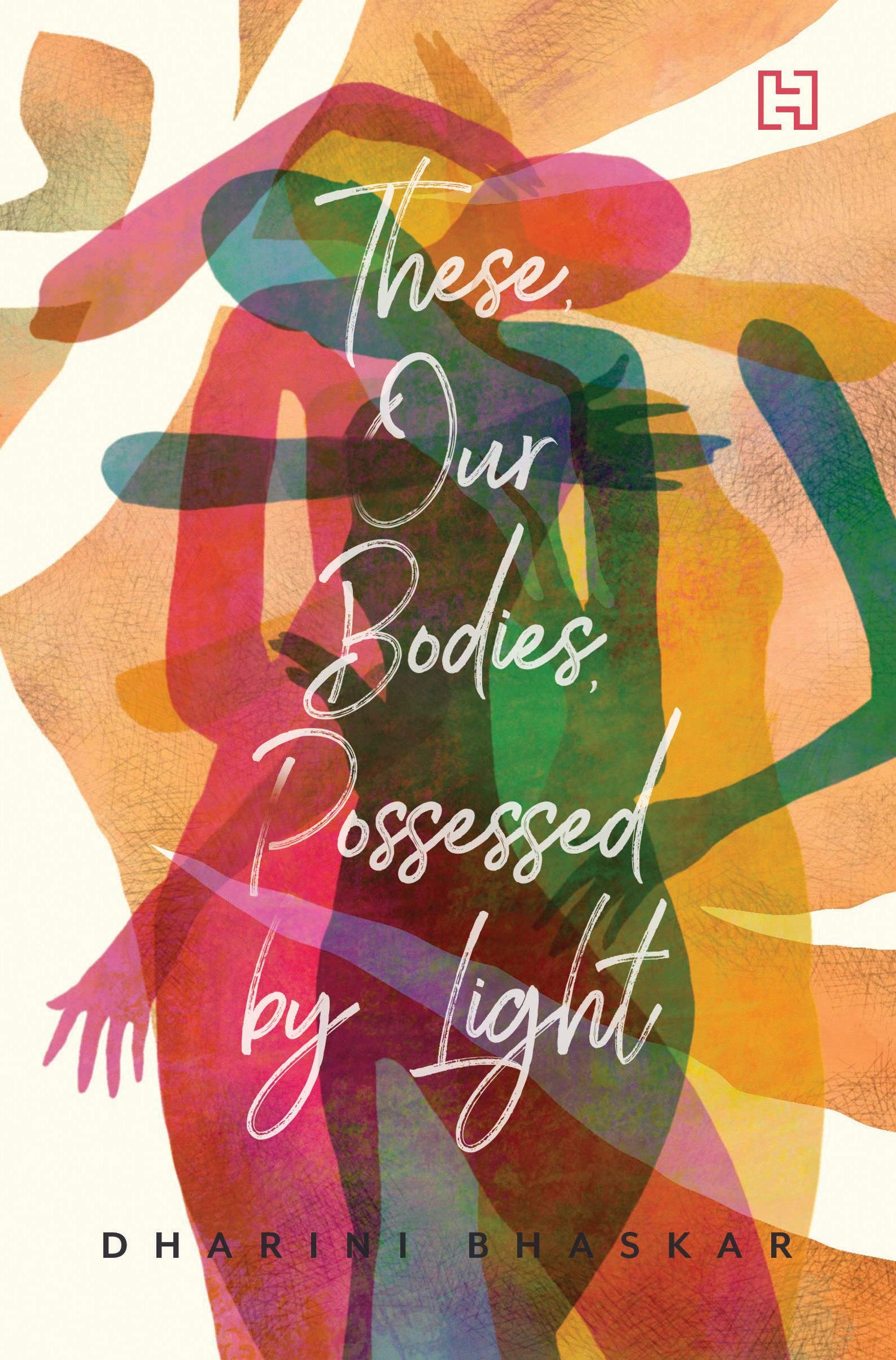
These, Our Bodies, Possessed By Light – Book Review

Introduction

‘What can one say of childhood grief? That it is lonely. That it is invisible. That it is denied the vocabulary granted to adult despair. That it shifts, mutates, but seldom vanishes. That it casts a mark. My sisters and I, were sorrow stained.’

‘These Our Bodies Possessed by Light’ by Dharini Bhaskar.

Central Theme

This is that book you want to sink your teeth into, heedlessly you try to embrace the characters and before putting it down, your eyes won’t tear away from the pages. This is that cavernous, mercurial prose I’ve been wanting to read everytime I pick up a book. I was effortlessly sliding down into the souls of Saroja, Vanaja and Deeya, into their sorrows, happiness, unearthliness. Some of their emotions got no name, it strikes you hard, it’s evocative but it’s got no name.

Plot Analysis

Let’s start with Amamma, Amamma in 1943 as Saroja, brushing her pinky finger with Venu’s, feeling the utmost ecstacy and suddenly Ranga overstrips him and imprisoning Amamma, she’s now traveling with Ranga in a bullock cart, faraway, faraway from Venu. Saroja becomes Amamma and Amamma forgets her memories. Her story ends here with indelible pain and forgotten memories.

Karthik writes letters to Vanaja in 1980s,’Dear Vanna’ he starts, he scrawls with love, he weds Vanaja and leaves one night, leaving his three children, Karthik goes away, farway from Vanna, somewhere colder than Bombay. Here, Vanaja scrawls, ‘Dear Karthik’ she starts, and ends every letter with ‘Is it cold? Hope to see you soon in Bombay’. Vanna becomes Vanaja, her story ends here with indelible memories and forgotten pain.

Deeya is now struggling to find premonition of love (vaguely translated from Japanese phrase ‘koi no yokan’) in an old man Sahil, her love for Sahil suffocates her, and Deeya’s story doesn’t end here, unlike Amamma and Vanaja, Deeya’s story starts in the ending.

Closure | These Our Bodies Possessed By LightBook Review

Every page has a strange evasiveness, the story of these three women and many other women in this book will not get erased from your heart for years, it stays there. It stays in your heart and asks you to draw a conclusion.

These, Our Bodies, Possessed by Light‘ by Dharini Bhaskar is an ambiguous story of broken souls. It encapsulates a lot of emotions, as I have mentioned above some emotions are nostalgic and anonymous, the father issue of Deeya and her struggles in the relationships are strikingly profound. Dharini Bhaskar has weaved a storyline that bewilder and astonish you at the same time.

Mr. Paper’s Advice To Writers!

“Fiction reveals truths that reality obscures.”

  • Ralph Waldo Emerson

Bonjour! Today’s article deals with Mr. Paper who wishes to address the writers! A fictional concept of Mr. Paper is covered who shares his grievances with you all!

Hello writers! I know you must have smartly deciphered till now that I am a piece of paper speaking to you. Through this article, I wish to convey my emotions. So, let me begin.

I Really Appreciate Each And Every Writer.”

I may not be able to say this to you, but yes, every writer is precious to me. The hard work and special efforts that you put in in order to make your book a success aren’t unnoticed because I am the one who actually notices! 😉

“Let Alone Writers, I Love It When Any Person Whatsoever Chooses To Scribble Almost Anything On Me.”

Yes! Anyone who writes is someone who preserves my rights 😉 When you write, you provide me my most important right which is to never be a blank sheet! Thank you for taking some efforts to inscribe something on me because that keeps me alive.

“I Hate It When Writers Waste Paper By Throwing Most Of The Half Empty Sheets In The Trash.”

Some writers tend to create their rooms a mess by writing a short paragraph which maybe later doesn’t seem appropriate to them, which makes them curl the paper into a ball and then bury it into the trash. Please stop killing us!

How I Wish Writers Would Make More Use Of Paper Than Their Laptops!”

Writers today, in this digital era, no longer make use of paper which makes me feel overwhelmingly sad because I feel ignored and left out. Please spend some time with me as well!

“Please Don’t Resort To Dog Earring When Reading Books!”

This is a gentle request to all the readers as well as writers to not practice dog earring because that stretches my body, leaving me in pain. Please use bookmarks for the same!

“Please Don’t Tear A Page Unnecessarily.”

This is my earnest request to all of the humans out there to not tear or lacerate us without any reason. By doing this, you plot our demise unintentionally which is not something you want to do, right?

“Please Don’t Curse Us When You Are Unable To Come Up With Content.”

Some writers tend to curse the page for not receiving relevant ideas. I totally understand that writing can be a stressful task at times but then blaming a blank sheet of paper isn’t fair, right? So, please don’t curse and manhandle us because we didn’t hurt you a pinch!

Lastly, I would like to wish each and every writer by giving them my best regards. We await the time when you would get a sheet out and begin engraving something on us. We may seem inanimate to you, but we aren’t. We can feel the essence of your hard work as you prepare your manuscript and try getting it published. We value and respect you! Writing is a fun task and requires some love while we (papers) love you back! So, wait no more! Publish your book and make the utmost use of us (papers).

“Happy Writing”

Thank You For Reading!

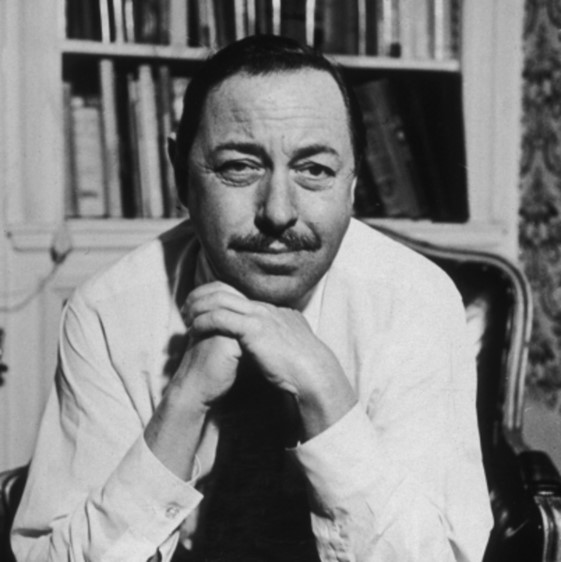
Tennessee Williams as a Southern Writer

Tennessee Williams

Tennessee Williams is an American playwright hailing from the southern state of Mississippi. For him, writing was an outlet through which he explored the mores of Southern life and the eccentricities and complexities of his own family. His most notable works include The Glass Menagerie (1944) which was considered to be a turning point in his career, A Streetcar Named Desire (1947) and Cat on a Hot Tin Roof (1955) both of which received Pulitzers, Summer and Smoke (1948), Orpheus Descending (1957) etc. Although he wrote throughout his life, his subsequent works never achieved the high acclaim of his earlier works.

Williams as a Southern writer shared a love-hate relationship with the south which provided for dramatic conflicts and excitements. Most of his work reflected traditional topics like agrarianism vs urbanism, New South vs antebellum South, chevalier vs the upstart and so on. For example, his play The Streetcar Named Desire represents the fallen aristocracy with the ethnic denizens a new industrial order, and his play Cat on a Hot Tin Roof represents the different family dynamics of the neo-rich. He drew upon the full resources of language to convey their pictures of culture based on moral absolutes. His characters are portrayed in a way in which they are unable to escape the burdens of their regional histories. Most often, the weight of the southern history the power of racial and social divisions, his rituals and taboos often make self-determination and moral choice unachievable for the characters. In his world, any defiance of this code results in personal destruction.

One of Williams’ most prominent southern trait is the very theatrical display of emotions, dysfunctional characters and unalterable sociological circumstances. He deconstructs the magical appeal of the southern culture and portrays the tension between their dream of an idyllic life and the reality of living it. He also provides constant allusions to plantations like Belle Reve in The Streetcar Named Desire. He also adheres to certain stereotypes of small-town life like gossipy neighbours, fear of scandal, aristocratic families who are deferentially treated by the rest of the community etc.

The usual southern hero is usually almost like an epic figure who embodies the ideals of the society and performs chivalric behaviour which is distinctly different from northern protagonists. A typical southern hero is the leader of men, honest, compassionate, a defender of the faith. They are usually heterosexual, while being protective of the women. But no such southern character exists in Williams’ work. But instead of abandoning the concept of a hero, he has adapted it to the world which has been hopelessly corrupted. He questions the paternalistic order of old South, the enslavement of the black men, the subjugation of the female, the corrupting power of wealth, and the obsession with keeping up appearances. He instead shows guilt caused by the acknowledgement of one sexuality, and the guilt of black subjugation in an antebellum society. Williams attributes perversion and distortions of human behavior to the rigid gender stereotypes that he uncovers in the southern landscape. Certain characters like Brick, who is Blanche’s husband, are unable to cope with the extreme need for masculinity in men. He also questions hypocrisy of a society that denies a woman’s sexuality. Although he does cling to prevailing and romantic point of view past offered luxury and that the present forces the individual to accept barest realities.

“Williams understands human needs and aspirations and is supremely aware of the artist’s role in illuminating urgent personal and social issues; yet his consistent exposure of hypocrisy and his off-beat is reverent sense of humor never hides his deep compassion for those who fear the truth.”

-Kimball King

On one hand, he appreciates the elegance of the past, while on the other, he considers its denial of plurality sufficient cause for its demise. This reflects the love-hate relation that he shares with the South. He does not set out to explain the South and its effects on his characters, but he understands the South and presents characters as real people. He’s a regional writer who does not exploit the peculiarities of his region, and his exploration of the southern value system and conflicts has influenced several later dramatists. To quote Kimball King, “Williams understands human needs and aspirations and is supremely aware of the artist’s role in illuminating urgent personal and social issues; yet his consistent exposure of hypocrisy and his off-beat is reverent sense of humor never hides his deep compassion for those who fear the truth.”

Reference Links:

Creative Writing

Creative Writing is one of today’s most demanded courses and work across the world. With proper techniques and love for writing anyone can do it. Creative writing is an art well known to people. A good writer can create a web of emotions that people all across the world can relate too. Writers with ability to capture people in their words are much appreciated by the people.

Using simple and understandable language to convey emotions and feelings are an important aspect of being a good writer, although we can find writers who have a style of using complex language too.

Here are some forms of creative writing that everyone can practice at home.

  • Poem

The idea of writing a poem comes so easily to all of us, inside most of us is a poet writing down his/her feelings. Poetry has a lot of different forms. There is an endless list on the types of poetry that can come under this section. Ranging from Ballad, Sonnet, Carol, Epic, Haiku , black out poetry etc. Poetry is classified on terms of its writing style, rhyming scheme, number of words used and lots more. Modern day poetry has been more open and not restricted to any kind of style. It is lot more expressive and simpler in understanding than the traditional poetry.

  • Musing

Musings are bits of moments of our reflection in life, it is that sudden though you have over a period of time. Some people write down their thoughts and weave them into creative pieces. Musings were quite an old technique.

  • Rant

Writing down your feelings that you have held back for so long is called a rant. It is as its literally meaning, ranting down your expressions and thoughts in ways closer to your heart. You could write it as much as you want, after all its rant.

  • Short Story

Writing short and creative plot involving stories are a thing now. We can find writers who write short story series. It has captured the attention of people so much these days. Readers look forward to short stories these days.

  • Open letter

An open letter is a redefinition of the traditional way of letter writing. It is addressed not to a single person but to the public or a group of persons as whole. It is usually a writing to address a social issue. It is to grab wide attention of people.

  • Thought

A thought can be an idea flashing upon our minds. It is that very short thing from which a writer can write more on.

  • Diary Entry

This is something that is so common, everybody keeps a diary at least in point of their life time. People write down what happens in their life, different events, important dates etc. It is in most people’s diary that we can find their creative minds.

  • Review

A review is basically a writing about an outline of a book or a movie or a certain thing. The writing talks briefly about the figure of attention.