Discipline

Discipline is very important in everyone’s life. It is so important to be disciplined in the life. Discipline is not acquired from a single day. It is a achieved by a continued process.parents are the important in every individual’s life. The are the main reason for the discipline of their children.

After the parents, teacher is the most important person in an individual’s life. Teacher is the one who moulds the individual from the initial stage of the life and makes the individual into and perfect one. Even though the teacher schools or beats sometimes it is all for the well-being of the student and for the bright future of the student.

The first teacher in everyone’s life is their mother. Beginning with the correct thing the first mistake of the child, mother plays a very important role in correcting many of the mistakes in an individual’s life. Also the father who corrects the mistakes and puts the children in a correct way. And the teacher, who is very important in our students life to achieve their desired goals.

Teachers play a very important role in making the student perfect and make them to understand the need of the situation. Teachers help the students to reach their desired goals and in any situation teacher motivates a student to get up and stand in all the ups and downs. Like that of the mother and the father, the teacher also feels equally happy when their student acheives high in their life and when they reach their desired goals.

IMPORTANCE OF DISCIPLINE IN LIFE :

TIME MANAGEMENT :


A disciplined person always has the time to complete all the tasks within given deadlines. This is because they are focused and they know how to schedule the time properly. They dont’t believe in wasting time on unnecessary things. They understand the value of time and they know that time once has gone never comes back.


LEADERSHIP :


All great leaders are not born. Most of them follow a very tight schedule and maintain discipline in their life to become good leaders. Good discipline generates a positive attitude towards society. It creates confidence and eagerness to do something great. It helps people to build an attitude that becomes the key to becoming successful. They are able to set a great examples for others in society.

DECISION MAKING :


It is because everything gets finished within the given deadlines, disciplined people always have time to revise their work and improve their decisions.
People who are disciplined are more focused both mentally and physically. They are better able to gain their body and mind with their ideas and goals. Finally, everything is regulated in order and increases their productivity in all the activites they undergo.


ACHIEVEMENTS :


Disciplined people are more motivated and concentrated. Therefore, they achieve more when compared to a person who is not disciplinef with the activites he/she undertakes. As per study, 92% of people are able to achieve their goals in life because of the reason of being disciplined.

STABILITY AND STRUCTURE :
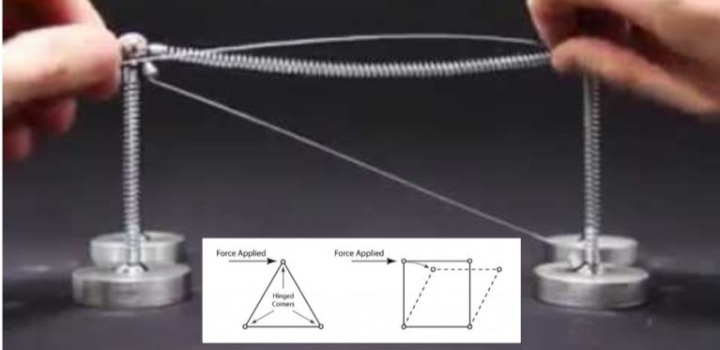

With discipline, comes stability in all the tasks. It helps to schedule and organize the activites and tasks in a proper structure. If a person is focused and regularly follows this particular structure, he/she is sure to succeed in their life.

RESPONSIBILITY AND CONTROL :


With great discipline comes great responsibility. Only by making schedules and timetables a person cannot become successful. It is very important regularly follow and fulfill the responsibilites which are mentioned in the schedule. This will help them to develop self- control and also build good relations with others.

RESPECT :


A disciplined person always respected by society. He/she is lookef upon as role models and mentors. Through discipline, they worked hard and achieved their goals which made them a respectful figure in the eyes of others.

IMPROVES MENTAL HEALTH :


Modern society suffers alot from anxiety and depression. We cannot blame them for their condition. Just by maintaining a little discipline in their life, they can easily improve it. Discipline will help them to reduces stress and take control of their tasks. They would be able to overcome their fears and also control their emotions.

MAINTAIN PEACE IN SOCIETY :


Disciplined people are lie assets to society. If there is no law and order, there would bee too many activites. Discipline is required to prevent such things in society. By setting the requiref rules and regulationa, it becomes easier to live in a society that is full of peace and harmony.


STAY ACTIVE :
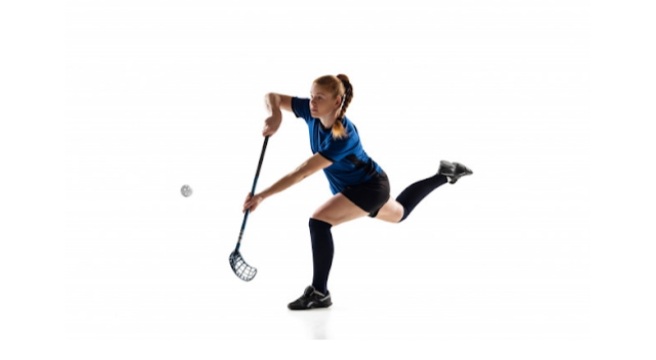

Disciplined people have time to do every activity in the schedule. They plan their schedule in such a way that improves both their academic/ instituational performance and also their physical health. They know what is good and bad for them and thereby have good eating habits, exercising habits, sleeping and waking up paterns, etc.


SELF DISCIPLINE self discipline means self control, the ability to avoid unhealthy excess of anything that could lead to negative consequenes.


• It is the ability to reject instant grafication and pleasure, in favor of some great grain, which requires spending effort and time to get it.
• It means perservetance and not giving up.
• It is the strength not to give in to negative feelings.
• It means overcoming one’s weakness.
• It is the ability to pursue one plan despite temptations to abandom them.
• Delayed gratification in favour of accomplishing long term goals.
Discipline is very important. It helps people to showcase their attitude and represent their character and thinking. Both the body and mind are honed by discipline. Descipline helps to address individual problems and develop a society that is both peaceful and respectful. Therefore, it would be right to say that without disciplinr there is no life at all.

Time management

Time is nothing but the count of the life. It is measured in Hours, minutes and seconds. It is very important to manage the time as it is very precious and cannot come back once it is lost. It is also very important to utilize the time properly.

Managing the time is very important. Many of the people don’t know how to manage the time. Let us now know some of the time management techniques and how to use them.

•Make schedules:-

Making schedules is one of the best methods to manage the time. All you have to do is, think of the things what you have to do on a particular day and allot some particular time for each activity. Complete particular activity in the allotted time. When the work takes too much time, then leave it aside and go for another work. Whenever all the work is finished, go for the work which is unanswered in the beginning and complete it. This is how schedules helps for time management and makes the proper use of the time.

•Don’t spend much time on one thing:-

Spending much time on a particular thing disturbe the individual and disturbs the concentration. So, to focus on the work, an individual must go for some another work whenever they get bored on a particular work. So, it helps to focus on the work and for not wasting the time.

Time management is the process of planning and controlling how much time to spend on specific activities.
BENEFITS OF TIME MANAGEMENT :


The ability to manage your time effectively is important. Good time management leads to improved EFFICIENCY and productivity, less stress, and more success in life. Here are some benefits of managing time effectively:

  1. STRESS RELIEF :
    Making and following a task schedule reduces anxiety. As you check off items on your ” to- do” list, you can see that you are avoid feeling stressed out with worry about whether you’re getting things done.

  2. 2.MORE TIME :
    Good time management gives you extra time to spend in your daily life. People who can time- manage effectively enjoy having more time to spend on hobbies or other personal pursuits.
  3. MORE OPPORTUNITIES:
    Managing time well leads to more opportunities and less time wasted on trivial activities. Good time management skills are key qualities that employes look for. The ability to prioritize and schedule work is extremely desirable for any organisation.

  4. 4.ABILITY TO REALIZE GOALS :
    Individuals who practice good time management are able to better achieve goals and objectives, and do so in a shorter length of time.

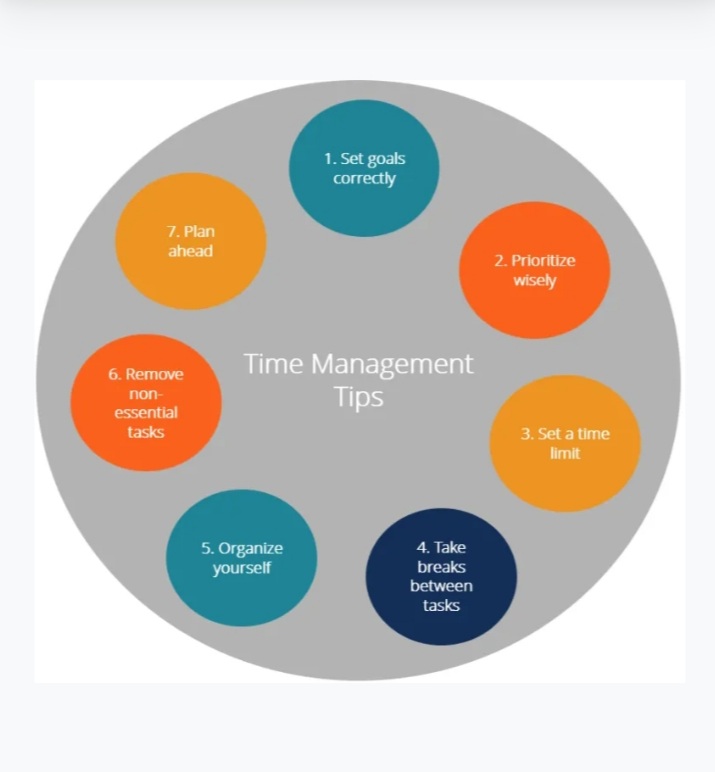
  5. LIST OF TIPS FOR EFFECTIVE TIME MANAGEMENT:


  1. 1.SET GOALS CORRECTLY:
    Set goals that are achievable and measurable. Use the SMART method when setting goals. In essence, make sure the goals you set are specific, Measurable, Attainable, Relevant, and Timely.

  2. 2.PRIORITIZE WISELY :
    Prioritize tasks based on importance and urgency. For example, look at your daily tasks and determine which are :
  • Important and urgent : Do these tasks right away.
  • Important but not urgent : Decide when to do these tasks.
  • Urgent but not important: Delegate these tasks if possible.
  • Not urgent and not important : set these aside to do later.

  • 3.SET A TIME LIMIT TO COMPLETE A TASK :
    Setting time constraints for completing tasks helps you be more focused and efficient. Making the small extra effort to decide on how much time you need to allot for each task can also help you recognise potential problems before theyv arise. That way you can make plans for dealing with them.

  • 4.TAKE A BREAK BETWEEN TASKS:
    When doing alot of tasks without a break, it is harder to stay focused and motivated. Allow some downtime between tasks to clear your head and refresh yourself. Consider grabbing a brief nap, going for a short walk, or meditating.

  • 5.ORGANISE YOURSELF :
    Utilise your calendar for more long term time management. Write down the deadlines for projects, or for tasks that are part of completing the overall project. Think about which days might be best to dedicate to specific tasks. For example, you might need to plan a meeting to discuss cash flow on a day when you know the company CFO is available.

  • 6.REMOVE NON- ESSENTIAL TASKS :
    It is important to remove excess activities or tasks. Determine what is significant and what deserves your time. Removing non- essential tasks frees up more of your time to be spent on genuinely important things
  • IMPLICATIONS OF POOR TIME MANAGEMENT :
  • Let us consider the consequences of poor time management ;
  1. PLAN AHEAD :
    Make sure you start everyday with a clear idea of what you need to do- what needs to get done THAT DAY. consider making it a habit to, at the end of each workday, go ahead and write out your ” to- do” list for the next workday. That way you can hit the ground running the next morning.
  2. POOR WORKFLOW :
    The inability to plan ahead and stick to goals means poor efficiency. For example, if there are several important tasks to complete, an effective plan would be to complete related tasks together or sequentially. That translates to reduced efficiency and lower productivity.
  3. WASTED TIME :
    Poor time management results in wasted time. For example, by talking to friends on social media while doing an assignment, you are distracting yourself and wasting time.

  4. 3.LOSS OF CONTROL :
    By not knowing what the next task is, you suffer from loss of control of your life. That can contribute to higher stress levels and anxiety.

  5. 4.POOR QUALITY OF WORK :
    Poor time management typically makes the quality of your work suffer. For example, having to rush to complete tasks at the last minute usually compromises quality

  6. 5.POOT REPUTATION :
    If clients or your employer cannot rely on you to complete tasks in a timely manner, their expectations and perceptions of you rely adversely affected. If a client cannot rely on you to get something done on time, they will likely take their business elsewhere.

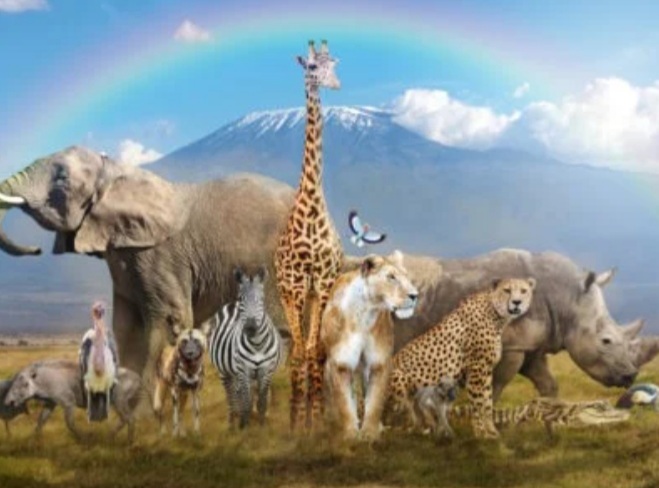
Animals

Since the time Earth developed the quality of sustaining life, life has always gone under the process of evolution. Life started from single celled organisms and developed stage by stage. One organism extinct to develop into its better developed species or even at times it happens that some animals get erased from the surface of the earth due to extreme environmental condition.

EXTINCT ANIMALS: Species of animals which existed in the surface of the earth once upon a time but has no current existence, this may have been a result of extreme environmental condition or some other condition for existence. For example, we have dinosaurs, Dodo.

ENDANGERED ANIMALS: The species of animals which have only a few animals left on the surface of the earth and are in the mouth of being extinct are known as endangered, currently this is a result of poaching i.e., unethical killing of wild animals with purpose or change in the climate due to pollution and other factors. For example, we have the Royal Bengal Tiger.

We cannot do anything for the species which are extinct but we can definitely take steps and save our endangered species. Poaching laws should be made stricter and it should be taken care that people follow them.

Different types of animals :

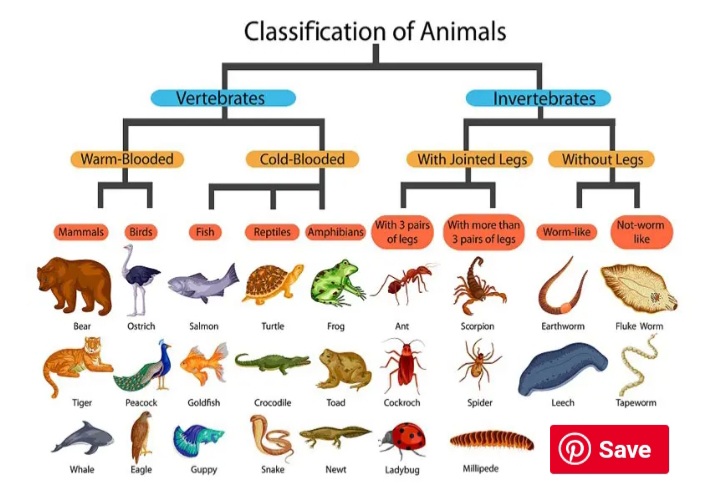
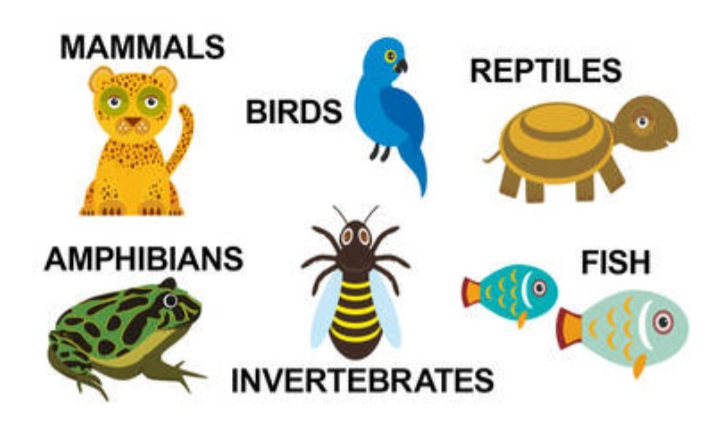
Scientists sort the different types of animals in the world into categories based on certain characteristics. Animals are generally grouped into six types of aninals. The system for animal classifications is called taxonomy.

The Animal Kingdom :

All animals belong to a biological kingdom called kingdom Animalia. This kingdom is then broken down into over 30 groups. About 75% of all species on earth are aninals. Animals are then broken down into two types : vertebrates and invertebrates.

* Animals with a backbone are vertebrates.

* vertebrates belong to the phylum called phylum chordata.

* vertebrates are classified into five classes. They are amphibians, birds, fish,mammals, and reptiles.

* Animals without a backbone are invertebrates.

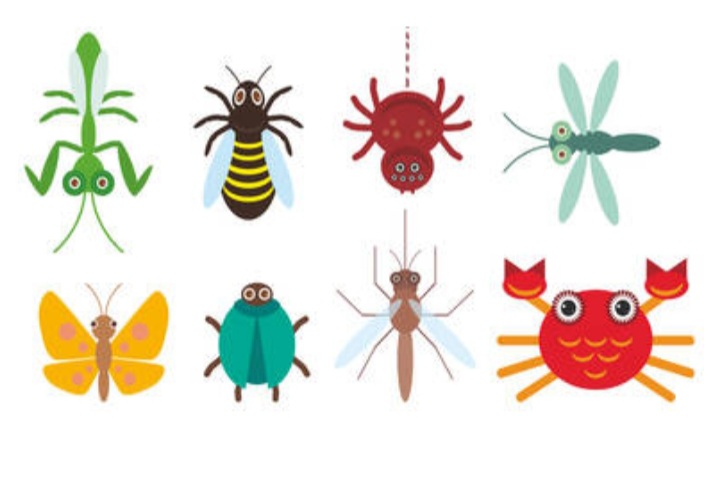
* Most invertebrates are in the phylum Arthropoda.

1. Amphibians :

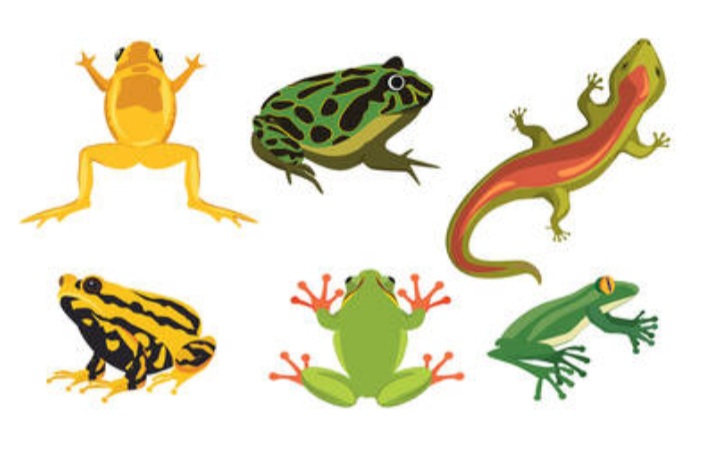
All amphibians are vertebrates, and they need moist environment or water to survive.

* They are cold- blooded.

* They absorb water and breathe through their thin skin

* They have at least one special king gland used for defense.

* Most follow the life cycle of egg-larva- adult.

* examples : frog , newts, salamanders, toads.

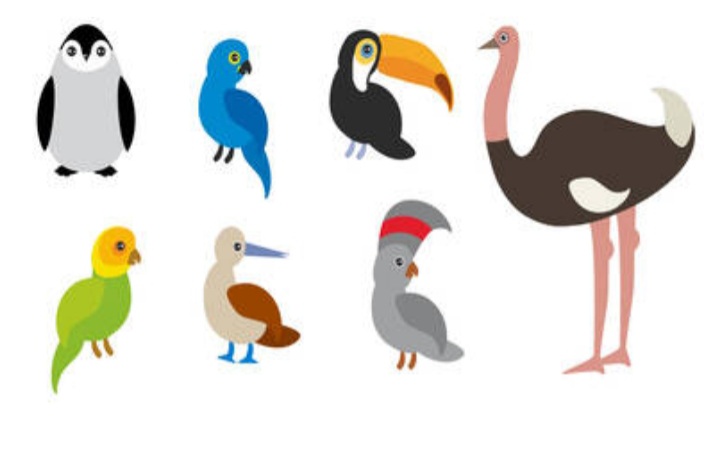
2. Birds

Birds are a type of warm- blooded vertebrate that are adapted to fly.

* Not all birds can fly, but they do all have wings.

* Birds have beaks that help them catch and swallow food.

* The digestive system of a bird allows it to eat whenever it can and digest that food later.

* Birds lay egg to reproduce.

* They are endothermic, mening they maintain their own constant body temperature.

* They are bipedal, which means they have two legs.

* They have hollow bones and their bodies are covered in feathers.

* Birds belong to the class called Aves.

* Examples : albatrosses, chickens, hummin birds, falcons, falmingoes, ostriches, owls, parrot, penguins, pigeons.

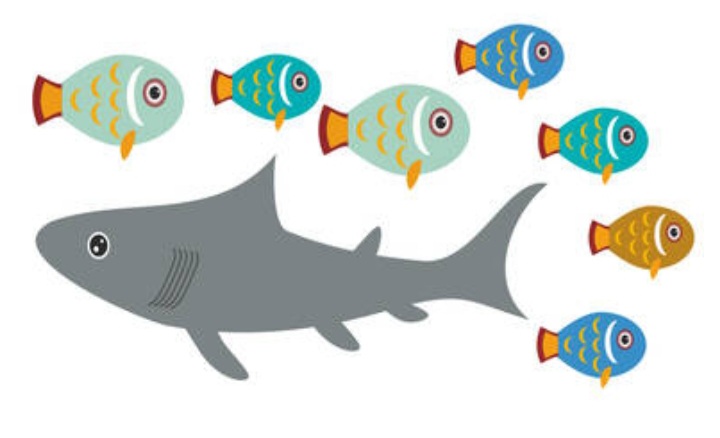
3. Fish :

Fish are also vertebrates, and they are considered the oldest-known vertebrates.

* They are ectothermic, or cold- blooded, which means they rely on their surroundings to regulate their body temperature.

* Fish have funs.

* Most, but not all, fish have bodies covered in scales and breathe through gills.

* Fish live under water.

* Examples : eels, hangfish, lampreys, minnows, rays, salmon, seahorses, sharks.

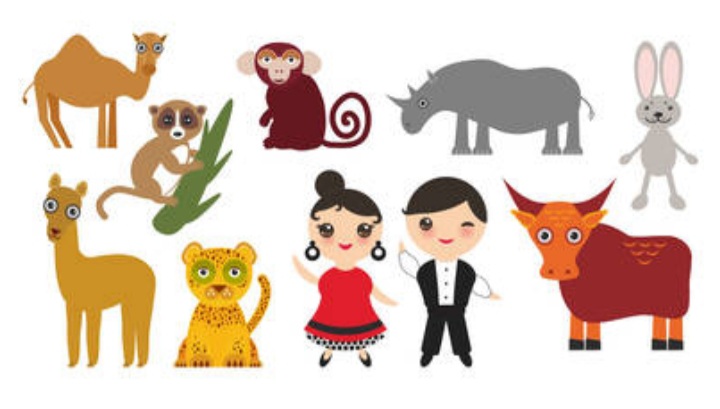
4. Mammals :

Mammals are another type of vertebrate that belongs to the class Mammalia.

* young mammals get nourishment from milk produced by their mothers.

* Most mammals have hair.

* Their jaw is hinged directly to their skull unlike all other vertebrates.

* Almost aĺl mammals give birth to live bsbies.

* They are endothermic, or warm- blooded.

* Examples : there are over 5500 living species of mammals all over the world. Aardvarks, bats, elephants, hamsters, human, rabbits, rhinoceroses, whales.

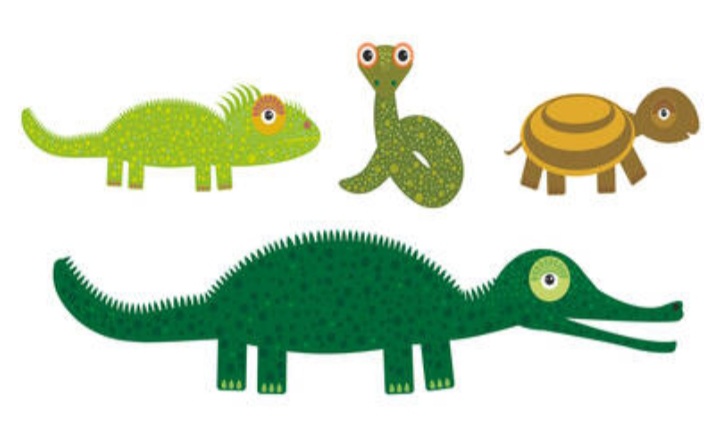
5. Reptiles :

Reptiles are thought to be the first vertebrates to live completely on land. But, not all reptiles live only on land today.

* They are cold- blodded, or ectothermic

* They lay eggs to reproduce.

* They have four legs or descended from animals with four legs.

* They breathe through lungs

* Their bodies are covered in scales or scutes.

* Examples : crocodiles, geckos, lizards, sea turtles, snakes, tortoises.

Invertebrates :

Approximately 95% of all animals are invertebrates. Invertebrates do not have a backbone. There are different types of invertebrates, but they all share a few characteristics.

• They are made up of many cells that work together, or multicellular.

• Most, but not all have tissues, cells that work together in a more complex way.

• Most, but not all, can move.

• There are over 35 phyla of invertebrates.

• They generally have soft babies.

Types of Invertebrates :

There are eight phyla of invertebrayes that are alive today.

* Annelida – have a segmented body and primitive brain

* Arthropoda – have jointed appendages and an exoskeleton.

* Cnidaria – have tissues and an incomplete digestive system

* echinodermata – have some type of spiny structure on their bodies

* Mollusca – generally have sofy bodies and a hard exoskeleton.

* Nematoda – unsegmented with worm- shaped bodies

* platyhelminthes – have soft, ribbon- like worms with no respiratory system.

* porifera – multicellular organisms living in water with no organs or tissues.

Examples : anemone( cnidaria) , clams ( mollusca), coral,