

The mean-variance method developed by Markowitz (1959) was aimed at obtaining optimizing portfolios. But selection of portfolio in the real world mostly deviates from this optimal criterion. In this paper we have considered this issue from an altogether different aspect and developed means for aiming at nearly optimum portfolio. We considered the risk taking propensity as the main driving force and presented a heuristic method to reach the near to the optimal state. For doing so, we have introduced the coefficient of optimism in the decision making process and simultaneously considered conditional optimum portfolio and corresponding heuristic portfolio. In the extreme situations three different human value systems can be considered as optimistic, pessimistic and risk planner. To examine the closeness between the heuristic and optimum portfolios we have carried out empirical analysis covering ten years data of fifteen companies from Nifty (2000-09). Regarding the choice of companies we have adopted random selection technique. From empirical study we have found that for moderate values of the coefficient of optimism a heuristic investor’s decision nearly coincides with the corresponding optimum portfolio. However, for extreme situations i.e. optimistic and pessimistic situations heuristic portfolio differs from optimum portfolio. Keywords: Expected return, risk, optimum portfolio, heuristic portfolio, coefficient of optimism.
Month: June 2019
Why Is CJI So Conspicuously Silent On More High Court Benches?
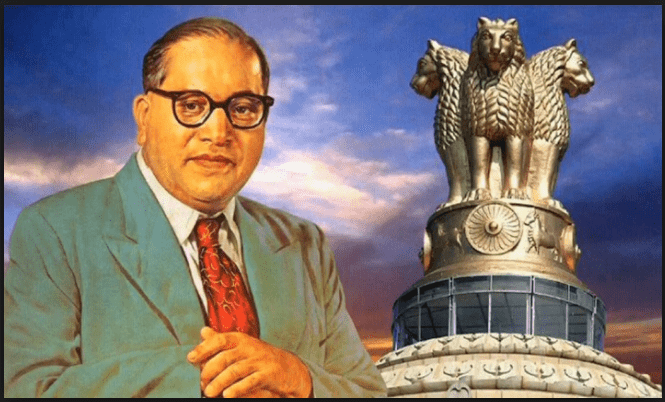
It is a matter of greatest national shame that Uttar Pradesh which is the biggest state amongst all the states in India with maximum population at more than 22 crore as UP Chief Minister Yogi Adityanath and Prime Minister Narendra Modi keep proudly bragging about at public rallies time and again which is more than even that of Pakistan and many other countries, maximum MPs in Lok Sabha at 80, maximum MPs in Rajya Sabha at 31, maximum MLAs in Vidhan Sabha at 404, maximum MLAs in Vidhan Parishad at 100, maximum Judges at lower courts at more than 5000, maximum Judges in High Courts at 160, maximum pending cases in lower courts at more than 50 lakhs, maximum pending cases in high court at more than 10 lakh, maximum members in UP Bar Council which is more than one lakh which is the highest not just in India but in the whole world as is pointed out in the website of UP Bar Council itself, maximum Mayors, maximum villages which is again more than one lakh, maximum tehsils, maximum Mayors, maximum constituencies at 80, maximum districts at 75, maximum poverty and what not yet has least high court benches in India – only one and that too just about 200 km away from Allahabad at Lucknow!

What a shame that Jawaharlal Nehru had the great guts to create a high court bench in Lucknow on July 1, 1948 about 71 years ago which is just 200 km away from Allahabad where main high court is located but no PM had the guts to create a high court bench thousands of kilometers away at any of the 13 districts in hilly areas which now constitute a separate state called Uttarakhand and the people then numbering 88 lakh living there had to travel so far for more than 50 years after independence which led to resentment and agitation of a separate state and now it has a high court nor at any other district in UP!
Why is it that Justice Jaswant Singh Commission headed by former Supreme Court Judge Justice Jaswant Singh had in late 1970s recommended 3 high court benches at Agra, Dehradun and Nainital but Centre did not approve even a single bench for UP even though it created bench at Aurangabad in Maharashtra, at Jalpaiguri in West Bengal and Madurai in Tamil Nadu on its recommendations? Why former UN Secretary General Ban ki moon had slammed UP as the “rape and crime capital” of India when he was in office but our law makers never felt it necessary to create even a single more bench for any other district in UP other than Lucknow where it was created way back in 1948? Why peaceful states like Karnataka has 3 high court benches, Assam has 4 high court benches, Maharashtra has 4 high court benches but UP which has maximum pending cases at more than 10 lakh cases in high courts even though other states have just 1 or less than 2 lakh pending cases yet they have so many high court benches but UP has just one?
Why is it that West UP which owes for more than 57% of the total pending cases of UP as acknowledged by the Justice Jaswant Singh Commission itself has not even a single bench of high court in any of the 26 districts? Why is it that the situation in West UP is so lawless which can be gauged from this that the newly elected Chairperson of UP Bar Council – Darvesh Singh Yadav was shot dead right inside court premises just three days after being elected just recently on June 12, 2019 yet West UP has not even a single bench of high court? Why is it that the former UP High Court Chief Justice Dilip Babasaheb Bhosale who hails from Maharashtra in a heinous case involving rape of few women on national highway in Bulandshahr in West UP had rightly said as Chief Justice of Allahabad high Court that there is total lawlessness in UP as compared to Maharashtra where women can travel alone in night anywhere without any fear but still see the crowning irony that Maharashtra has 4 high court benches at Panaji, Nagpur, Aurangabad and latest at Kolhapur for just 6 districts but for UP just a single bench since 1948? When peaceful states like Maharashtra can get benches in no time then why Allahabad High Court in UP which has maximum pending cases in India has been denied its due share unfairly for such a long time?
One cannot but fully agree with Chief Justice of India – Ranjan Gogoi that the number of Judges must be increased and the retirement age of High Court Judges must also be increased from 62 to 65 but what about High Court Benches? Why is CJI so conspicuously silent on such a sensitive issue? Why is it that CJI Ranjan Gogoi fully admired that KL Chitra a woman advocate who filed a PIL pleading for a high court bench in West UP last year was right that there is a valid reason for creating a bench in West UP but declined to entertain it as he said that it is for the Centre to do so knowing fully well that Centre has done nothing in last more than 70 years even after the historic recommendations of Justice Jaswant Singh Commission of creating 3 benches in UP but not a single bench was created in any hook and corner of UP?
Why is it that CJI ignores that the 230threport of Law Commission of India recommended more high court benches for states? Why CJI ignores that Centre created 2 more high court benches for Karnataka at Dharwad and Gulbarga for just 4 and 8 districts in 2008 first as circuit benches which were made permanent in 2012 apart from the bench at Hubli but for UP not a single bench created till now in 2019 even though Karnataka has less than 2 lakh pending cases and UP has more than 10 lakh pending cases and here too West UP alone has more than 5 lakh pending cases in high court? Why CJI does not writer about this to Centre?
Why the lawyers of more than 20 districts of West UP keep going on strike for last nearly 40 years from May 1981 till now every Saturday protesting the denial of bench but CJI does not deem it fit to mention it to Centre? Why the lawyers of West UP even went on strike for 6 months in 2001 and earlier also similarly and not stopping here even went on strike for 3 months in 2014-15 also and for nearly a month every year but still West UP has no bench? Why is it that litigants of West UP are compelled to travel more than 800 to 900 km away to Allahabad to attend cases as there is no high court bench in West UP yet CJI says nothing on it?
Why is it that West UP always remains in the news for wrong reasons for brutal crimes and still CJI doesn’t write to Centre demanding high court bench for it? Why is it that the population of West UP at more than 9 crore is more than all states except UP of which it is a part, Maharashtra and Bihar and here too areawise West UP at 98,933 square km is bigger than Bihar which has just 94,000 square km but still has not even a bench? Why CJI does not point out that so many UP CM like Sampoornanand had recommended a high court bench for West UP at Meerut in 1955 but till now not a single bench created anywhere in any of the 26 districts of West UP? Why CJI does not point out that even small islands like Andaman and Nicobar islands have high court bench with just 3 lakh population at Port Blair but West UP with more than 9 crore population has none?
Why CJI does not recommend more benches for other lawless states like Bihar which has none even though we daily keep listening news of horrifying crimes in different districts of Bihar? Why other big states like Odisha has no high court bench even though the lawyers of Western districts keep protesting for a bench frequently, why Rajasthan has just one high court bench at Jaipur alone and not at other places like Udaipur where lawyers keep demanding the same? Why only a few big states like Maharashtra, Karnataka and Assam have either 3 or more than 3 benches? Why not others who either have just one or have none? Why can’t this glaring and shameful indiscrepancy be corrected immediately?
What a crying shame that UP CM Yogi Adityanath government has the ability to bear Rs 36,000-crore for construction of 600 km Ganga Expressway for better connectivity of Allahabad with western districts of the state and which will be the longest expressway in the world but it can’t spare just a few crores for creating a high court bench in lawless West UP or at Bundelkhand or at any other deserving place so that people are not compelled to travel so far and waste huge money in doing so for various expenses like staying, travelling, etc! Why can’t Centre take serious steps to address this cancerous problem of law and order in UP root and branch by creating more benches here and just resorting to baby steps and bandaid measures like reducing time limit to reach Dlhi by about an hour or so by spending more than 20 crores on creating 14 lane national highways? Why can’t CJI direct Centre to do so accordingly?
Why is CJI so conspicuously silent on more high court benches not just in UP but in other different states also like Bihar from where the present Union Law Minister Ravi Shankar Prasad hails? Why only a few states are enjoying the right to speedy justice, justice at doorsteps and cheap justice? Why big states like UP, Bihar and others are being wrongly deprived of the same?
Let me again reiterate that there can be no denying or disputing what CJI says regarding increasing the number of Judges in Supreme Court and High Court and age also of High Court Judges but this alone is not enough to ensure that people get justice easily and cheaply! More high court benches also must be created for big states like UP, Bihar, Rajasthan, Odisha and others as was very rightly recommended by the 230th report of Law Commission of India more than 10 years ago but which has been implemented only in Karnataka, Maharashtra and West Bengal! Why UP which has maximum pending cases and other states left out in the cold?
Should the CJI not speak out most vociferously on this also? Who can deny that Allahabad High Court is the biggest high court not just in India but in whole of Asia yet has just one bench which is so close at Lucknow and is also one of the oldest high court which completed its 150 year of creation in 2016? Who can deny that Bar Council of UP has maximum members in whole world yet UP has just one bench and here too West UP which owes for more than half of pending cases has none? Can this be justified on any ground and under any circumstances? Certainly not! Allahabad High Court must get its due share as it has maximum pending cases, maximum Judges and what not! It must have maximum benches in India and not minimum as most unfortunately we have been seeing since last 72 years! It is CJI’s moral and constitutional duty to point out in detail about this to the Centre and if still Centre does not act then the CJI must most promptly order the creation of a high court bench in any of the 26 districts of West UP and also at other suitable places in different deserving states like Bihar, Odisha and Rajasthan! It brooks no more delay anymore now!
Sanjeev Sirohi, Advocate,
s/o Col BPS Sirohi,
A 82, Defence Enclave,
Sardhana Road, Kankerkhera,
Meerut – 250001, Uttar Pradesh.
Himachal Pradesh Solar Power Policy 2018
Himachal Pradesh Solar Policy and it\’s Solar Highlights
Himachal Pradesh translated to \”Snow Abode\” and is a state that is located in Northern region of India. It has states like Punjab, J&K and Haryana as its neighbouring states. The state is most famous for its hill stations, with Shimla being a real tourist favourite. Shimla happens to be the capital of the state with Dharamsala being the winter capital. Himachal Pradesh, or HP as it is referred to sometimes, has an installed and commissioned rooftop capacity of 0.33MW with .13MW commissioned in the FY 2016/17. In order to promote solar and encourage the investment, Himachal Pradesh Electricity Regulatory Commission has framed regulations offering a fixed tariff of Rs 5 per unit for extra energy produced and fed back to the grid. This is one of the highest tariffs for Net Metering in the country. Himachal Pradesh is also encouraging farmers and unemployed youth to set up projects in distributed fashion. These plants will be typically in the range of 500KW to 5MW. There are also plans to set up solar parks in the state. Even though there are no real large-scale solar power plants in the state, the state is purchasing up to 35MW solar power from plants outside the state. As a part of the target set for the National Solar Mission, Himachal Pradesh is chasing 220 MW solar commissioned capacity by the year 2022.


Bringing Solar Power to the people
In consonance with the National Policy, the State Govt has formulated the Solar Power Policy which was notified on 4th March 2014. In order to simplify the procedure and as per the recommendations of Project Developers, the revised Solar Power Policy with key amendments was notified on 24th January 2016. Solar Energy is one of the most viable option to supplement Hydro amongst the Renewable Energy Technologies. Solar Energy is in line with the objective of sustainable development by producing clean energy. Encouraging Investors, Stakeholders & Individuals for Solar Energy is a priority for Himurja to move forward with eco-friendly Power initiatives.
The Govt. of India has upscaled the capacity target from 20,000 MW to 1,75,000 MW (175 GW) to be achieved by 2022, of which 40 GW is planned through Grid Connected Rooftop Solar mode. The H.P. State Government is keen to contribute to achieving the targets set under the National Solar Mission for the development of Solar Power. Hence, our Solar Power Policy emphasizes its efficiency and recommends it to all investors.
In an attempt to tap solar power potential in Himachal Pradesh, the Himachal government is inviting applications for setting up 250 KW to 500 KW power project in the private sector to provide employment to unemployed youth.
A plan has been prepared by the HP Energy development agency (HIMURJA) for tapping 20 MW solar energy which would be notified soon, Tarun Kapoor, Additional Chief Secretary, Renewable Energy said.
He said the plan has been approved by the government and under this scheme, solar power projects of at least 250 KW and maximum 500 KW will be set up on the private land of the applicant.
“The plan would provide employment to unemployed youth and also result in utilisation of barren lands across the state,” he said.
Kapoor said only permanent Himachali residents are eligible for setting up of the projects. Partnership firms and private companies may also apply, provided that the share of Permanent Himachali is 100 per cent, he added.
The projects would be allotted on ‘First Come, First Serve’ basis and HIMURJA would be accept 40 to 80 applications for the same.
“The government would not accept more applications after the limit of 20 MW power is exhausted,”
Spatial Standards for Planning
Planning Standards are formulated by the Town and Country Planning Department normally in the form of codes or regulations pertaining to space requirement, site specification, height, land use and other criteria required by the local authority for development of land or property These standards are applied during the planning/design stage of a project/preparation of layout. These standards are applied during the planning Normally in the form of codes/design stage of a project/preparation of layout.
With the idea of having a uniform standard for reference and adoption by town planners, architects and engineers in India, the Institute of Town Planners, the School of Planning and Architecture and the Town and Country Planning Organization, New Delhi, tried to evolve certain planning standards. Planning organizations, like the Delhi Development Authority, the Bangalore Metropolitan Planning Board and the Calcutta Metropolitan Planning Organization have also adopted some standards in the preparation of master plans for the respective metropolitan cities.
When these standards are compared, it is observed that there is disparity between them and also between the standards adopted in India and those in other countries. Hence, an attempt is made here to evolve workable standards for reference and adoption by persons concerned with urban and regional planning in India. The list is not exhaustive and there is large scope for improving the standards, taking into consideration the latest techniques and theories. The role of architects and engineers in this task is also very important, as they have rich experience in evolving such standards in their respective fields of study. It is hoped that the start made by the Institute of town planners and other organizations would be continued and town planners in India would adopt uniform standards in their profession.
The proposed standards will be useful for ready reference by practicing town planners, architects, engineers, students and planning organizations including local bodies in their planning work. They will be of great help to those responsible for making policy programmes and recommendations on urban and regional planning and in developing town planning techniques on the ‘systems engineering’ method. In the absence of uniform standards, the authenticity of the standards adopted by any town planner in the country will be open to question. Hence, such standards, apart from being useful in the technical work, save the town planner from adverse comments and unhealthy criticisms.
Space planning is a complex process with many factors to consider. The principles of space planning involve satisfying a defined criteria on a priority basis – as a result, space planning is frequently about compromise. That being said, there is often more than one solution to planning out the space requirements of a building.
Basic principles
- Residential – Good ventilation, health safety and comfort
- Parking lot – Adequate allocation appropriate lot size
- Public facilities – Catchment area, ensure facilities are provided for the public, equal distribution
- Roads – Hierarchy are followed according to the type of road, ensure efficient transportation system development control, planning standard
- Infrastructure – Adequate provision for sewerage treatment, electricity and water supply, provision depends on forecast of population
- Recreational area – Adequate provision of recreational areas, accessible to all level of society, equal distribution of recreational area
CARE Councils
CARE councils includes relevant Government Statutory Councils and Academic Bodies from multiple disciplines.
Call for Book Chapters
Edupedia Publications Pvt Ltd is calling for a collection of scholarly or scientific edited chapters contributed by authors from different researching fields with the similar topics and interests to compose a book, which will be edited and harmonized by its Editor-in-Chief who can be an experienced and highly-esteemed expert in the field of the proposed book.
Send book chapters to editor@pen2print.org

Urbanization & Urban Development

City or Town is a place of urban living. Urban means an environment in which natural surroundings have been dominated by manmade or artificial surroundings, which man made for himself, or his working, living and recreation. As per the census of India, a place becomes urban if it has more than 5000 population, more than 75% of which are engaged in non –agricultural occupation and the density is more than1000 persons per sq.km.
Urbanization is the physical growth of rural or natural land into urban areas as a result of population immigration to an existing urban area. Urbanization refers to the population shift from rural to urban residency, the gradual increase in the proportion of people living in urban areas, and the ways in which each society adapts to this change.
The Causes of Urban Growth
Push Factors
· Lack of educational facilities
· Lack of job opportunities
· Lack of health facilities
· Lack of electricity and sewerage system
· Land lord system
· Inequality
· Low living standards
· Old traditions
Pull Factors
· Better and higher educational facilities
· Better and more of job opportunities
· Better health facilities
· Availability of electricity and sewerage system
· Better living standards
Global Trends in Urbanization
In 1960, the global urban population was 34% of the total; however, by 2014 the urban population accounted for 54% of the total and continues to grow. By 2050 the proportion living in urban areas is expected to reach 66%. Fig. 1.5 shows the change in the rural and urban populations of the world from 1950 through to projected figures up to the year 2050.
Urbanism started in the caves themselves, where people gathered for protection against the elements or for the defence against rival tribes. These places of communal living gave way to the village. The village was a by-product of development of agriculture in areas of adequate water supply and fertile soil. The village was also a sanctuary for the altar of their deity, a meeting place for assembly and a centre for trade. This environment became increasingly populated and resulted in urbanisation. With the development of diversified economy not totally dependent of food production attracted people into labour pool, providing employment in a variety of forms. This in turn brought about the enlargement of village or hamlets into towns and cities.

Urban and rural population of the world, 1950–2050
Population residing in urban areas in India, according to 1901 census, was 11.4%. This count increased to 28.53% according to 2001 census, and crossing 30% as per 2011 census, standing at 31.16%. In 2017, the numbers increased to 34%, according to The World Bank. The data shows that Goa is the most urbanised state with 62.17% of the population living in urban areas. But if one goes by geographical area and total population, Tamil Nadu is the most urbanised state. In Kerala, 47.72% of people live in urban areas and in Maharashtra 45.23%.
Factors that influence in the development and growth of urban areas
· Population density
· Density of physical development
· Possession of formal plan
· Proportion of inhabitants engaging in non agricultural occupation
· Functional characters
· Services
· Political or legal, administrative
· Life style
Causes of urbanization
· Economic development
· Industrialization
· Job opportunities
· Availability of easy transportation
· Agglomeration economics
· Political, cultural and social influences
Problems of Urbanization
· Pressure on resources and social services Eg. Water, transport, health and education
· More unemployment
· Increased crime rate, especially since the typical migrant may be young, unskilled or inexperienced
· Development of slums (ghettos) due to inadequate housing. This will add to the problem of pollution
· Traffic congestion
· Competition on limited resources
· Noise pollution
· Epidemics
· High levels of stress
· Poverty
· Air quality worsens
Solution to problems of urbanization
· Limit the size of cities by setting boundaries and controlling population size
· Put a stop to using agricultural lands for non-agricultural purposes such as housing
· Develop the rural areas by providing recreation, education, health care and other social services
· Develop basic infrastructure in the rural areas eg. roads, water and electricity
· Encourage rural population to participate in community activities and use community facilities
· Create jobs in rural areas by building more factories to employ more people
JNNURM (Jawaharlal Nehru National Urban Renewal Mission) is the first massive urban development programme in India and has established the foundation for large-scale central assistance to the urban sector. It was launched as a reform-driven and fast-track programme to catalyze planned development of identified cities. The programme has been operating in mission mode by facilitating large scale investments in the urban sector and policy and institutional reforms, leading to sustainable socio-economic growth in cities. The mission has sought to achieve this by integrating the development of infrastructure services and accelerating the flow of investment into urban infrastructure; through planned development, redevelopment and renewal of cities, inner-city areas, peri-urban areas, outgrowths, urban corridors and through universal service delivery for the urban poor. A number of urban projects were sanctioned under JNNURM during 2005–2014, and central assistance of approximately 48,000 crore INR was committed during this period through the mission. During 2014–15, the central government launched four new schemes to expedite urban infrastructure and service provision and replace JNNURM. These schemes are the Atal Mission for Rejuvenation and Urban Transformation (AMRUT), focusing on water supply and sewerage improvement; Smart Cities Mission (SCM), aimed at developing smart solutions for selected urban areas; Swachh Bharat Mission (SBM), focused on waste management and sanitation; and Heritage City Development and Augmentation Yojana (HRIDAY), for addressing the development of heritage cities.
 Eduindex