How is COVID-19 affecting our mental health?

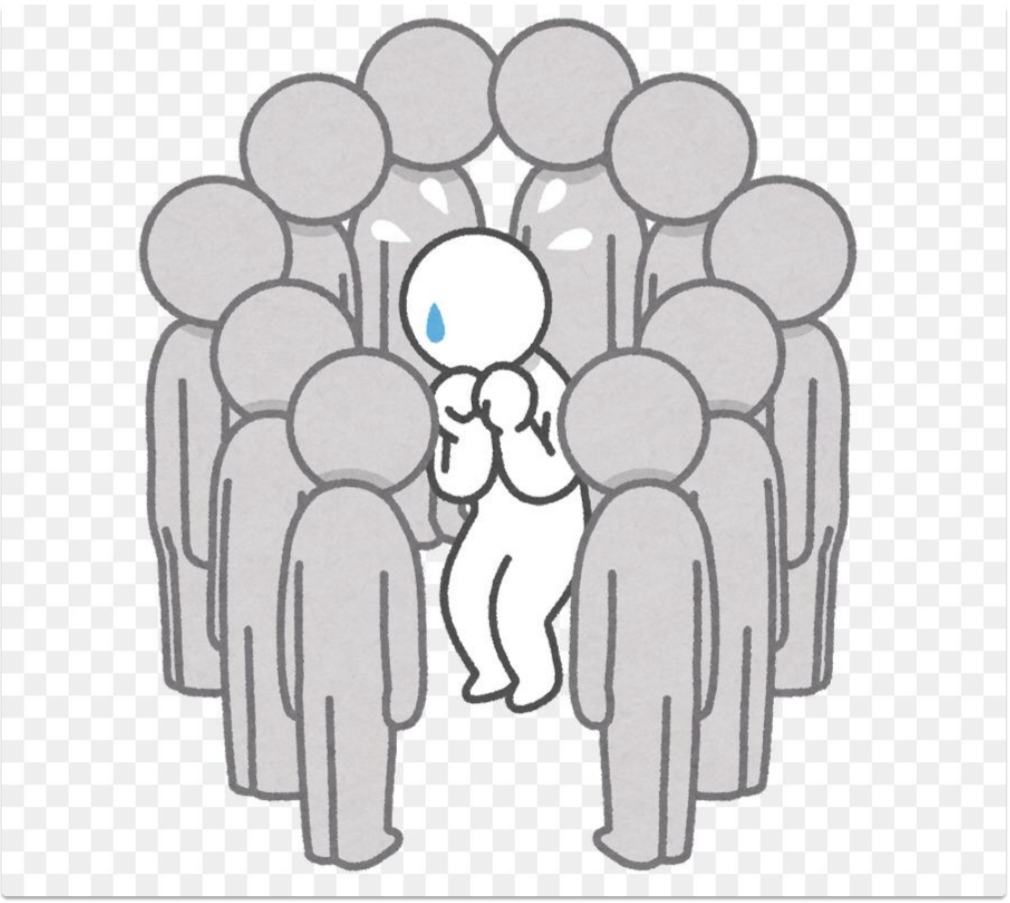
The COVID-19 outbreak shocks the entire world. Its impact on us is so powerful that it not only affects our physical health but puts strain on our mental health as well. Our constant irritation, worry and fear are natural and predictable reactions to the uncertain pandemic that the entire world is in right now. 

In a pandemic like this, we have to stay home to protect our families and ourselves. But have you noticed it’s impact on our mental health? 

The virus has shown its impact on many people who were already struggling and going through mental health problems such as depression, stress, anxiety, obsessive compulsive disorder (OCD), insomnia, post-traumatic stress disorder (PTSD) and many others. This epidemic has also affected people who were mentally fit. It is very essential for us to stay calm in a situation like this. 

As we are staying home and looking at the same four walls in our house everyday, it is quite easy for our minds to fluctuate and think about things which are of less importance, which can increase the tension. To avoid this situation of over-thinking, one can engage themselves into doing something productive, this is the best time to bring out your inner chef or start a new hobby. 

It is important to be updated and aware of the happenings around the world but the constant repetition of one issue can also create tension in one’s mind. To avoid this, binge watch some series or re-watch some of your favourite movies or read that book you have been wanting to, but never had time. 

Here are a few precautions to reduce the stress, anxiety and other related issues, caused by this pandemic. 

WHO suggests, to reduce the amount of news we are in-taking about COVID-19 and to only take news from reliable sources. 

Forbes suggests, to create a routine for your daily activities. “With the closures of businesses and schools, creating a go-forward plan for you and your family will help keep your mind at ease. This could mean creating an at-home routine and schedule for remote work amid social distancing,” says Dr. Mimi Winsberg, co-founder and chief medical officer of Brightside.

BBC suggests, to have breaks from social media and mute things which are/can be triggering. And to wash your hands but not excessively. For people with OCD and anxiety, being told to constantly wash your hands can be difficult to hear. 

Talk  to someone who might help you in your problems or take help from an expert. We are all in this together. 

Stay in contact with your friends and family through social media and take help from them if you feel anxious or sad. 

Exercising is one of the ways to keep your body fit and it also helps in reducing stress, anger and frustration. Also, practicing deep breathing or meditation are also great ways to reduce stress and anxiety. Deep breathing helps you regulate your emotions by activating your parasympathetic nervous system (PSNS) which helps slow the heart rate and restore the feeling of calm, tells Dr Vincent. https://bit.ly/2YCGHmb  Here are some breathing exercises you can do, that can help you relax. 

During this time, being productive is a good idea but somewhere it can also put more pressure in one’s mind. Remember, being productive is a choice and not a necessity. You must do what makes you happy.


The Shadow Pandemic

Love is the most significant thing in human’s life. Each science and every single literature masterwork will tell you about it. Humans are also social animals. We lived for centuries with this way of life, we were depended on one another to tell us how our clothes fit us, how our body is whether healthy or emaciated. All these we get the honest opinions of those who love us, those who care for us and makes our happiness paramount.

Love is a set of emotions, behaviors, and beliefs with strong feelings of affection. So, for example, a person might say he or she loves his or her dog, loves freedom, or loves God. The concept of love may become an unimaginable thing and also it may happen to each person in a particular way.

What is love? My mind did say,
A caring touch?
A gentle way?
It’s both of these, but so much more,
Numerous aspects , to explore.

What is love? I searched my soul,
A loving glance?
A hand to hold?
It is these things, but just one part,
Of the beauty that lies within the heart.

What is love? I asked my heart,
It seemed the best place,
Where I should start.
Is it fireworks, comets, or astral displays,
Which cause us to feel, so deeply this way?

What is love? It’s simple you see,
It’s essential as air,
For our souls to breathe.
It replenishes your faith, and self- esteem,
Allowing you to fulfill, all of your dreams.

What is love? You’ll be glad to know,
Is the chance for two hearts,
To share and to grow.
Trust, compassion, and a listening ear,
Will dispel all your doubts, cast out all your fears.

To love is to share life together,
to build special plans just for two,
to work side by side,
and then smile with pride,
as one by one, dreams all come true.

To love is to make special memories
of moments you love to recall,
of all the good things
that sharing life brings.
Love is the greatest of all.

And when this love gets decorated with the threads of marriage it becomes perfect,
In every single way.
A beautiful fairy tale is a wedding day.
The theme of the day is to have love and laughter.
And to live your days happily ever after.

Marriage is not a house or even a tent ,it is before that, and colder. It is like the edge of the forest, the edge of the desert.

Even child abuse specialists do not routinely screen for domestic violence. This shows how much more education we need to do, even among experts, to understand the known links between violence of the child and the parent.

But what happens when this love turns into a daily hatred. Domestic violence is an perfect example of this statement .


Domestic Violence is a worldwide crime and occurs across cultures in every social grouping in society regardless of age, race, religion, gender or sexual orientation. It is a fundamental violation of the human rights of each and every victim whether male or female adult .It can be defined as abusive, violent behaviour by one or both partners in a close intimate relationship and it can be physical, sexual, emotional or psychological abuse .

Although women make up the vast majority of victims of domestic violence, children and men are also victims. Research shows that children are affected because they are present during the abuse and a high percentage of men who abuse women also abuse children .Violence also occurs when a woman is pregnant and this can cause threatened or actual miscarriage. In a study at the Rotunda Maternity Hospital in Dublin, 12.5% of women reported having experienced domestic violence during a pregnancy and 75% of these women had experienced violence during their pregnancy.

We’ve often heard the adage, “Precaution is better than cure”. Now more than ever, as COVID-19 spreads like wildfire, we need to stay indoors. Reducing contact is the only way to control the virus. But social distancing means we’re going against our primal instinct that makes us human – being social. And while social media does help in being connected, it lacks physical affection, comfort and intimacy. In these times of extremes, all of us are feeling some kind of distress, a sign that we need to take care of our mental health.

Some of us are lucky to have loving homes, where we can stand by each other. Even as India is now put under lockdown for 21 days, can we assume that each person has a safe space to go back to?

As per World Health Organisation, 1 in 3 women face some form of domestic abuse. This adversely affects their mental and physical health. Moreover, throughout history, women’s bodies have been sites of violence. Societal norms expect women to take care of household duties; since ‘honour’ is linked to their virginity, women’s bodies become more vulnerable. Violence within intimate relationships of LGBTQ+ communities has also witnessed an increase. How then does quarantine and self-isolation affect those who’re caught in abusive situations?

When it comes to abuse, you believe there’s no way out. There is always help. There is always a way out.” ― Rev. Donna Mulvey

Data provided by the NWC states that there has been 100%increase in domestic violence.At a time when women are already shouldering higher proportions of the domestic burden during the lockdown, escalating tensions due to depleting resources are further accentuating domestic violence behind closed doors. Denied access to traditional forms of support – family, friends, doctors – the threat for these unfortunate women looms largest where they should be safest – inside their own homes.

Today I’m becoming a voice of one such victim, FATIMA.

FATIMA was brutally abused and forced into having sex with relatives and strangers by her husband for money. She is presentally suffering from anxiety and depression.

I still remember the day of 21 st March
The day I decided to become his forever.
Yes, we have became partners.
With shimmering bangles and a glowing gown,
I decided to walk with him forever.
In the presence of lord,
We promised to let us share the joys.
We were word and meaning, unite.
If he was thought and I was his sound.
The halt of the car lands me into reality,
I rush towards the door to welcome my love.
I am excited and nervous ,
After all it’s my anniversary today.
Dressed up with the perfect dress,
I smile shyly with Hope in my eyes.
Everything was flawless today,
I ensure that I dont commit any mistake .
Yet as always , he pulls my hair,
He slaps my face, he kicks me on the floor.
I love him so much, so I don’t have the strength,
To walk right out the door.
There’s blood on my face,
Everything hurts,
And all I can do is cry.
I dont know what made him mad,so this is what he does.
I wish I knew his reason why.
My heart won’t let me leave him,
And it hurts too much to try.
I wonder if this is how my life will be
From now until I die.
He says he’s sorry.
He says he loves me.
He takes me in his arms.
He even starts to cry.
I tell him I forgive him
And that everything is fine.
For now at least because I know
It will happen again in time.

Confinement is fostering the tension and strain created by security, health, and money worries. And it is increasing isolation for women with violent partners, separating them from the people and resources that can best help them. It’s a perfect storm for controlling, violent behavior behind closed doors,”

Where does the solution lie? In a society like India’s, where this malaise is deeply entrenched, experts say building awareness is vital. Sensitization campaigns and platforms like the ones established by Breakthrough, an NGO working to making gender-based violence a mainstream issue, can help.

Even child abuse specialists do not routinely screen for domestic violence. This shows how much more education we need to do, even among experts, to understand the known links between violence of the child and the parent.

The boys had always been her reason to stay, but now for the first time they were her reason to leave. She’d allowed violence to become a normal part of their life.” ― Liane Moriarty

As the steps to contain the transmission of the virus might require more stretches of isolation and confinement for the public, the government all around the globe, need to address the upsurge in domestic violence immediately. In this context:

It is critical that governments utilise a human rights and intersectional based approach to ensure that everyone, including the most marginalised, has access to necessary information, support systems and resources during the current crisis.
The state governments need to declare helplines as “essential services” that should remain open during lockdowns.
Media can sensitize the public against gender-based violence, publicise resources and services available and encourage the equitable sharing of domestic tasks at home.
Increase resourcing for NGOs that respond to domestic violence and aid — including shelter, counselling, and legal aid — to survivors, and promote those that remain open.
Ensure women’s timely access to necessary and comprehensive sexual and reproductive health services during the crisis, such as maternal health services, safe abortion etc.
Finally, the perpetrators of domestic violence must be brought to trial and repeated offenders must be dealt with strictly as per the provisions of law.


How far lockdown extension will implicate the Educational system?

Both schools and colleges are facing a tremendous loss of learning. As that of the recent situation, summer vacations are going on and the HRD ministry is formulating another alternative calendar for the coming months in case the situation doesn’t improve.

Online classes as an alternative!

The educational system decided to opt for online classes for the students but it actually didn’t work and was not up to the mark. Also, these lectures have failed to influence students.

https://timesofindia.indiatimes.com/city/bhopal/online-classes-not-up-to-the-mark-finds-new-study/articleshow/75416080.cms

A study conducted by Principal in an architecture college, Professor Sharma came up with a conclusion that offline classes are better than online ones.

What problems were faced?

Just imagine yourself sitting inside a classroom with your earphones plugged in and not able to be part of the classroom! Exactly, same happened with the students who were studying in cities have returned back to their homes belonging to rural areas are not able to access the online classes due to lack of internet connectivity, they were marked present but not able to listen and learn, which eventually headed students to a complete loss.

What can be improved?

Most probably nothing can be done with the students living in rural areas. But what about the one’s living in the cities? Students also complained that they were informed at the very last moment of starting the class. Sometimes the students have to wait, mostly the teachers keep waiting.

So the problem can be resolved by maintaining the time table for lectures the same as that was done in offline classes. The classes should be conducted according to the time table with exact timing so no one has to wait. The best thing which can be done is to improve the educational system by adopting the technology.

Post lockdown solutions-

Careful planning helps you limit the long term significance of this shutdown. Reopening of schools to be allowed in green zones. Also, the schools in the yellow zone should also open as soon as the zone turns green. Students should be allowed to visit the school in shifts, this will not equalize the previous education but it will ensure that at least some education is given to every student while taking care of social distancing. Proper sanitization after finishing with one shift should also be carried out.

Relaxation to students!

“All India Council for Technical Education (AICTE) and the University Grants Commission (UGC) will also issue a revised academic calendar soon and Prof. Rajive Kumar directed colleges to continue online classes for the current semester under the extended lockdown”.

Overwhelming updates regarding fees acted as a huge relief to students as colleges and institutions are not allowed to demand any sort of fee payments until the ongoing COVID lockdown is lifted and conditions become normal.

No money to pay salaries!

Deputy Chief Minister Manish Sisodia said that the Delhi Government is left with no money. They don’t have money to pay their employees. The Deputy Chief Minister has also written to Union Finance Minister Nirmala Sitaraman regarding this issue.

https://www.timesnownews.com/delhi/article/no-money-to-pay-salaries-delhi-govt-seeks-rs-5000-crore-aid-from-centre-to-deal-with-covid-19-crisis/599452

Unite and fight! The only possible way to fight against this pandemic.

Child Marriage

So, as you all can see my topic for today is Child Marriage.

First of all lets start with understanding what child marriage actually is. So, child marriage is any formal or informal union between a child under the age of 18 and an adult or another child, according to the United Nations Children’s Fund(UNICEF). According to the UNICEF, India has the highest number of child brides in the world i.e. 15,509,000 approximately. 27% of girls in India are married before their 18th birthday and 7% are married before the age of 15.

Why Child Marriage happens? Child Marriage happens because of a belief that girls are more inferior than boys and that they are burden on a family, so to get rid of them their parents get her married. Other reasons why child marriage happens are listed and explained as- (1)POVERTY: Child marriage often happens in poorer households, many families marrying off their daughters to reduce their economic burdens. Also, less dowry is expected for younger brides. (2)BETROTHAL: Before their birth, some girls are promised in marriage in order to “secure” their future. Once they reach puberty, they are married officially. (3)LEVEL OF EDUCATION: Many families consider girls as “paraya dhan”. And therefore educating a girl seems waste of money to them. They believe that girls are born to do household works and they will always remain inferior to men. (4)HOUSEHOLD LABOUR: When the girls are deemed to be more productive they often get married and suppose to take care of household and children. (5)GENDER NORMS: Normally girls are seen as inferior to men and therefore they are expected to be adaptable, docile, hardworking and talented wives. (6)VIOLENCE AGAINST GIRLS: Some girls are married early because of so called “kharab mahaul”. These are only some points, the list is endless.

India has committed to eliminate child marriage completely by 2030. India acceded to the Convention on the Rights of the Child in 1992, which sets a minimum age of marriage is 18, and ratified the Convention on the Elimination if All Forms of Discrimination Against Women(CEDAW) in 1993, which obligates states to ensure free and full consent to marriage.

In the end, I just want to say that girls are not inferior to boys, they are equally productive and even more. A girl does all the hardwork like going to office, taking care of in-laws and children, taking care of household, and etc. she is a multitasker, a boy cannot do this, he cannot perform several functions at one time but a girl can do. Girls are more capable than boys. Never underestimate the power of a girl. She performs various roles like, mother, sister, daughter, wife, etc.. A boy is nothing without a women. If there were no women than I don’t think so anyone would’ve existed. Spending each penny on women’s education is worth it. Today, women’s are leading the world, and still in some parts of the world they are treated like a burden. Women are mot a burden!

Stop child marriage and give them a chance, they’ll make you proud!

A woman is the full circle. Within her is the power to create, nurture and transform~Diane Mariechild

Not Everything we Find Online is True! (and ways to be more aware)

Access to the internet has become cheaper than ever, whether you use a computer, phone or a tablet. The fact that many young people are spending more and more time online is inevitable. It has both positive and negative consequences.

The advantages of internet is well known to everyone. It helps us stay connected to the world, our friends and family. It provides us with information, loads of it. Young people can use the internet for research for their homework and schoolwork. But this advantage itself can sometimes, become disadvantage to the users. Internet is loaded with information and it is the duty of every individual using internet to handle those information with more awareness. Also, being on internet may lead to addiction to games, social media etc. so, it is imperative that not only information is needed to be handled with sensibility but the internet itself needs the same amount of cognizance.

We like attention as human beings and internet is a platform that provides us the space to talk. So, sometimes we talk out loud without being well informed. I myself have done this in arguments, when I run out of facts, I resort to conjectures. But that’s not the correct way. Don’t believe everything you read on the internet. Infact, it is a good practice probably to not believe anything you read or see anywhere. It is good to be a little skeptical. People may call you cynical but this is the first step towards being well informed. Never just make conclusions by reading from a single source. Broaden your knowledge about a subject, dig a little deeper. Read the counter argument, in case of an argument.

Here are five simple ways to help yourself become more aware:

1. Click the links of source on the article. – this is the most easy step and few people take the time out for this. News articles/ blogs usually contain links to other web pages for more information. Click on them and try to read the whole article yourself. You’ll find that sometimes, the blog article is not the fact but the writer’s opinion/experience. In case you don’t have much time, skim through the article or read it later. Save it.

2. Understand the difference between opinion and fact. – facts and opinions are two different things. Many of the writers write their own interpretation of a topic. This is their opinion, you do not need to make it yours. Trolls write insults as if they are facts. Make sure you understand the difference and don’t make assumptions by yourself without considering different perspectives.

3. Ask a lot of questions. – After a few questions, most internet nonsense falls apart. This way you can reason various things written on the internet and see if they have a firm background or not or are they just false claims!

4. Don’t be a worker bee and follow: form your own opinions. It is important for a person to have an opinion. Do your research, read news, analyse various perspectives and then make an informed decision.

5. Question your beliefs: Abraham Lincoln, once said, “I do not think much of a man who is not wiser today than he was yesterday.” Never set your beliefs firm. Accept denial and talk to people who disagree your belief in order to understand their point of view. Internet is the most powerful tool for information in the human history. Seek its use in the right direction!

These ways doesn’t mean that you’ll always get the right information. But, this is a good start. A little skepticism is healthy and constructive, for it makes the reader, an informed reader. There is nothing wrong in accepting when you don‘t know something. Spending time on internet may be bad or misinforming but it also has many advantages. The internet is an incredible tool and benefit of internet outweighs the disadvantages. However, it is imperative that we should be careful and practice proactive reading than reactive.

PEER PRESSURE

A term often read and heard about but very little pondered upon. The Cambridge dictionary defines peer pressure as ‘the strong influence of a group, especially of children, on members of that group to behave as everyone else does’. A simple definition but an impactful cycle. It plays an extremely important role in the social and emotional development of children as well as adolescents .So what exactly is a peer group? A peer group is made up of individuals who socialize together. It generally increases through childhood and reaches its intensity in the preteen and teen years. Maslow’s theory of hierarchy of needs defines social acceptance and acknowledgement as one of the primary needs for survival of human being in a society. This urge of social acceptance gives rise to a constant need for validation. As long as this urge is in alignment with one’s will and control, it creates a positive peer influence and the moment this urge takes over one’s ability to distinguish between the right and the wrong, it starts to create a psychological pressure. This psychological pressure exists in various forms amongst us and becomes a means to gauge what one ought to do.

Broadly classified as positive and negative, peer pressure can be spoken or unspoken and direct or indirect. While positive peer pressure leads to outcomes that are healthy, negative peer pressure leads to catastrophes. For example, if your friend constantly pushes you to eat healthy, its a positive peer influence. While a peer pressure to participate in a bike race without a driving license is a negative peer pressure. Positive peer pressure is beneficial and is also an important way to create and retain social bonds. It’s the negative peer pressure what needs attention today. You remember the last time you went for a movie with your friend despite detesting it? Or the latest college fashion wear that you had to pretend to like because it was the ‘new cool’? You might wonder what harm did it do and is it even that bad to switch priorities and likings in order to have a healthy peer group? Well, taking the above examples it actually isn’t but this is the initiation point of negative peer pressure. In most cases it starts off with incidents too minute to be reacted upon which is why the ‘initiation points’ goes completely unnoticed and neglected. What follows later leads to a devastating impinge like consumption of alcohol, drugs, cigarettes and one’s indulgence in unethical and illegal activities. The vicious cycle of peer pressure is sometimes attributed to ‘Social Stockholm Syndrome’. It is a psychological response where over the course of time, the victim starts to develop a sense of commonality with their victimizer. This sense of commonality later becomes toxic.

It isn’t always a cakewalk to shield yourself from negative peer pressure. But it isn’t a herculean task either. An individual’s environment at home greatly impacts one’s reaction when exposed to negative peer pressure. When children and adolescents have parents whom they can confide in, their psychological response towards this social infliction is more positive and less hampering in comparison to those who find it difficult to express themselves and are subjected to some or the other form of abuse at a very early age. As a parent one needs to gain their progeny’s confidence and trust. It requires small initiatives like a before bed talk every night and spending quality time with them at least on the weekends. Teens have to be taught to trust their instincts when in doubt and to say the magical word ‘NO’ when subjected to circumstances their morals don’t approve of instead of blindly following someone else’s path. Schools on the other hand, should hold more seminars on peer pressure to enable teens to identify the red flags which often come across as subtle signals. If prepared at a tender age to hold onto one’s own belief irrespective of the pressure around, negative peer pressure is one such social stigma that wouldn’t take much to eradicate.

Agroecology and Natural Farming Could Accelerate Inclusive Economic Growth in India

International experts in a convention organized on 29 May by NITI Aayog endorsed efforts to significantly boost agroecological and natural farming approaches in India.

Speaking to an audience of senior international and national experts and policymakers, Minister of Agriculture Shri Narendra Singh Tomar stated, “Natural farming is our indigenous system based on cow dung and urine, biomass, mulch and soil aeration [. . .]. In the next five years, we intend to reach 20 lakh hectares in any form of organic farming, including natural farming, of which 12 lakh hectares are under BPKP [Bharatiya Prakritik Krishi Paddhati Programme].’

He further noted that the Paramparagat Krishi Vikas Yojana launched in 2015 to promote organic farming among small and marginal farmers has in the last four years covered 7 lakh hectares and 8 lakh farmers. He pointed out that Andhra Pradesh, Karnataka, Himachal Pradesh, and Kerala have taken up natural farming on a large scale. Andhra Pradesh alone has brought 2 lakh hectares under natural farming under this scheme. He concluded by highlighting that the need of the hour, in light of the covid-19 pandemic, was to have ‘food free from chemical fertilisers and pesticides’, while not ignoring the need to feed and nourish the country.

Setting the scene for the online High-level Roundtable, the first of its kind in India, NITI Aayog Vice Chairman Dr Rajiv Kumar established a high bar for the transformation and renewal of agriculture in India when he asked whether agroecology and natural farming can ‘avoid excessive and wasteful use of water, prevent farmer indebtedness, contribute to mitigating greenhouse gases while supporting farmer incomes and their ability to adapt to climate change’.

International experts from the US, UK, Netherlands, CGIAR, Australia, Germany, and of UN acknowledged India’s pioneering leadership in the arena of agroecology—the science of applying ecology to agriculture for sustainable outcomes that are more resilient to climate shocks such as droughts or flooding and pest attacks, but are still productive and support farmer’s livelihoods—and especially natural farming, which is a form of agroecology. Natural farming avoids use of synthetic fertilisers and pesticides, while focusing on reviving the beneficial soil organisms that contribute to fertility and good nutrition of the plants. Experts explained that well-nourished plants lead to well-nourished human beings.

The gathered experts provided evidence from latest studies, cutting-edge research, and science as well as practical experience from economics, finance and markets. The overwhelming conclusion was to support the Minister’s conclusion that natural farming and other agroecological approaches, such as organic agriculture, have great promise for a renaissance of Indian agriculture, so that farming is not just productive but truly regenerative and sustainable.

Experts concluded that it would be a mistake to view natural farming as a step backwards to the farming techniques of our forefathers, but rather, as the high level panel of experts report on Agroecology to the Committee on Food Security of FAO so clearly demonstrated, it is based on cutting-edge science of the future that recognises the need for systemic approaches to dealing with complex adaptive systems that are the basis of a healthy natural world. Working with nature, understanding how to do so will help us ‘build back better’ as one expert noted.

Others noted the huge interest, to the scale of hundreds of billions of dollars, in investing in natural farming and agroecology as they were systems of the future. Prof. Ramesh Chand, Member (Agriculture) of NITI Aayog, called for more research to ensure that natural farming could truly live up to its expectations. The need for innovation, science and technology was endorsed by experts who noted the importance of regenerating soils and building on biodiversity as two key elements, along with use of natural inputs readily available to farmers in this knowledge intensive approach.

Commenting on the presentations made by assembled experts, Principal Scientific Adviser to the Government of India Prof. K. Vijayraghavan remarked, ‘We are running behind yields at the cost of diversity and nutrition. To protect our planet there is need for change in our attitude towards use of chemical fertilisers and pesticides. Technology can help in changing the way we farm and will enable the poorest of the poor to enhance their nutrition status and livelihoods.’

In his concluding remarks Dr Rajiv Kumar emphasized that agroecology is the only option to save the planet and is in line with Indian traditions said, ‘[. . .] it is not man vs nature, but man in nature or man with nature. Humans need to realize their responsibility in protecting other species and nature. We need knowledge-intensive agriculture and the metrics need to be redefined where production is not the only criterion for good performance. It has to include the entire landscape and the positive and negative externalities that are generated by alternative forms of agriculture practices.’

Participants & Programme: Notable participants, other than Union Agriculture Minister Narendra Singh Tomar, included the host, NITI Aayog Vice Chairman Dr Rajiv Kumar; Principal Scientific Adviser Prof. K. Vijayraghavan; Mr Satya S. Tripathi, UN Assistant Secretary General; Mr Pavan Sukhdev, President of WWF International; Mr Alexander Mueller, Managing Director of TMG: Think Tank for Sustainability; Dr Ramesh Chand, Member NITI Aayog; as well as a host of very senior officials from the GoI and state governments, leading experts, researchers, specialists and thought leaders.

List of speakers is available below along with the programme.

Programme & Speakers

Welcome remarks:

Dr Rajiv Kumar, Vice Chairman of NITI Aayog, Government of India

Opening remarks:

Mr Narendra Singh Tomar, Minister of Agriculture and Farmers Welfare; Minister of Rural Development, Government of India

Panel Discussion on Environment and Ecology:

Moderator: Mr Pavan Sukhdev. This session focused on the challenges and potential benefits for India by adopting a system-scale transition to natural farming.

Speakers: Prof. Philip Landrigan, founding director, Global Public Health Program, Boston College; Dr Pushpam Kumar, Chief Environmental Economist of UNEP; and Mr Walter Jehne, Climate Scientist and Microbiologist. 

Panel Discussion on Regenerative Agriculture:

Moderator: Mr Alexander Mueller, Managing Director of TMG Thinktank in Germany, is former German State Secretary and Assistant Director-General of FAO. This session focused on the tremendous opportunities in harnessing India’s ancient agricultural practices and wisdom in rolling out a sustainability revolution based on regenerative agriculture improving livelihoods and health of people and the planet.

Speakers: Prof. Ramesh Chand, Member (Agriculture), NITI Aayog; Dr Ravi Prabhu, Deputy Director General, World Agroforestry (ICRAF); Mr Sanjay Agarwal, Secretary, Agriculture, Government of India; and Mr Daniel Moss, Executive Director of AgroEcology Fund.  

Panel Discussion on Market Access and Sustainable Finance:

Moderator: Mr Satya S. Tripathi, UN Assistant Secretary-General. This session focused on expanding market access for naturally farmed agricultural commodities and sustainable financing options for a system-scale transition to natural farming.

Speakers: Mr Sean Kidney, CEO, Climate Bonds Initiative; Mr Craig Cogut, Chairman and CEO, Pegasus Capital Advisers, Mr Joost Oorthuizen, CEO of Sustainable Trade Inititiative (IDH); and Mr David Rosenberg, CEO of Aerofarms. 

Is Racism a global threat to humanity?

We have been hearing and knowing the term ‘racism’ at some point in our life. But the less we knew that the issue would become so serious that it would have a large and uneven impact on the peace and harmony of the human race? Yes you heard that right. So lets begin with some of the case studies and the recent incidents on this case.

Recently a man named George floyd was murdered on the streets of America choked by an officer of the Minneapolis police department. This happened in broad day light with a lot of people around shocked. Unfortunately George floyd couldn’t survive but some of his last words were ‘I can’t breathe’. NOW THE MAIN THING GEROGE FLOYD WAS A BLACK MAN AND BLACK LIVES MATTER. The killing of George floyd went online and gained alot of headlines and support from the world, the terms used for the support on social media were, #blacklivesmatter #icantbreathe, Another shocking incident took place when the well known anonymous group returned after 6 years to send a message to the police department regarding the injustice and criminal acts that the department has been involved in. This also caused a lot chaos on the streets of America as the protestors were on the street asking questions which obviously harmed the peace and harmony of the City.

Now coming towards India and how can we justify racism in India. The beauty product ads that go through our screen everyday promote racism, Yes you heard that right. For example if a dark toned guy/girl goes for an interview or say proposes anyone legimately they get rejected as shown in the ads just because of their skin colour, this is where unknowingly racism is being promoted.A number of people experience depression and anxiety due to the fact that their skin colour is dark.

Everyone is unique in their own ways in their own colors in their own potential and skills and lastly each of us are beautiful and wants to seek love and respect and also give it in return.

Racism will only cause chaos,deaths,depression,anxiety,suicidal thoughts among the one who are the victims and lastly racism doesn’t only come with black colour, it is also involved in religion, caste, nationality etc.

INTERNATIONAL TRADE POLICY OF INDIA

International trading means export and import process between two different countries.
International trade policy is managed by ministry of commerce through DGFT (Directorate
General Foreign Trade) it is made for 5 years so government made some policies for the
betterment of their citizens and companies. Government take some decisions to promote free
trade policies to increase trade between countries. So the main objective of trading is to
improve our economy and make our country capable of doing healthy competition with other
countries and also provide employment. In previous time goods made in India were cotton
cloth, metals, utensils and so on their was only 2 routes which are available for trading that
was water and land route. India’s foreign trade at the time of independence: India faced a lot of
problem at that time due to British rule. Britisher’s used India’s raw material for their own use
due to which the growth of India’s economy become low . India’s foreign trade after
independence become much better the percentage of export and import got increased that
time India’s export of agricultural products got decreased because of high rise of Indian
population. In 1991 new changes takes place India started trading more goods and they expand
their industries before 1991 trade strategy were poor India look only on domestic industries.
The good impact of this new trading strategy was that growth of different industries takes place
more people got employment so 1991 was the time when India’ trading system brought good
image of India globally.

PARTNERS OF INDIA IN TRADING

1.CHINA

2.UNITED STATES
3.UNITED ARAB EMIRATES
4.SAUDI ARABIA
5.SWITZERLAND

China


India’s highest import source is china. the relationship of India and china is very much strong.
So most of the things which imported by china in India is machineries, equipments, plastics
,steel etc India export is cotton ,ores, sound recorders , animal fat oils and so on

India and U.S trading
India’s 2 nd largest trading partner is U.S whereas U.S 9 th largest trading partner is India. India
and U.S trade don’t flourish from 3 to 4 years the main reason is that both the countries U.S
and India faced trade deficit which means India import more than they export so that India
don’t take any trade deal since 2018 and improving their strategy whereas U.S using tariffs
they impose tariffs 25% on aluminium and 10% on steel so India is the 4 th largest producer of
aluminium so India don’t get any profit from exporting aluminium to U.S . U.S also claims that
India copy their ideas, medicines, software’s due to which U.S companies don’t get profit in
India so they want patent regulation in India . U.S also wants to sell their dairy products in
Indian markets like milk, cheese, vegetables and so on
India export to U.S: metals, stone, mineral fuels, vehicles etc
And India import from U.S that is mineral fuels, aircraft, machinery, organic chemicals etc.

The main purpose of government to extend export major scheme made by government are : 

 1. MEIS : merchandise export from India scheme  before  this scheme there was 5 different scheme for different goods so that government decided to merge it into a single scheme and given the name MEIS and exporter or importer gets his money not in the form of cash but as a duty scrip’s.

2. SEIS : service export from India scheme  so whatever services India export  and whatever foreign currency we get  we will get profit of 2 % to 5%   of that currency so  government provide different profits for different services.

3. The government added two more cities of Andhra Pradesh first one is  Vishakhapatnam I  and 2nd one is Bhimavaram in the list of town of export excellence both cities export seafood before adding Vishakhapatnam  and Bhimavaaram  the number of town of export excellence was 33 and now it is 35.

4.Two more ports are added for increasing export  so they can also export so these are the some policies made by government in 2015 to 2020 the purpose of government is to increase export so more money they get so they can use it for developing those sectors which is not useful and make it productive.they made policies which are beneficial for their citizens and industrial growth so people get employment opportunity and the GDP rate increases  so because of that the standard of living of the people are started improving .  And also foreign trade policies minimizes war that means if the country taking part in trading so the relationship between them become good . 

Dekho Apna Desh Webinar Series -India’s rich diversity under Ek Bharat Shreshtha Bharat

The 26th session of the Dekho Apna Desh webinar series of Ministry of Tourism on 30.05.2020 titled “The Tenacity of Survival”-Inspirational story of Kutch showcased the history, culture, crafts, textile heritage of India’s largest district Kutch, Gujarat and the resilient spirit of the people of Kutch to fight natural calamities, the skills that form the report card of the continuous dynamics defining the Indian civilization. The webinar displayed the message of Kutch that “Kutch nahi Dekha toh Kuch nahi Dekha”.  Dekho Apna Desh Webinar Series is an effort to showcase India’s rich diversity under Ek Bharat Shreshtha Bharat

 This session of webinar moderated by Ms. Rupinder Brar Additional Director General, Ministry of Tourism and was presented by Dr. Navina Jafa, Director, Indian Cultural Heritage Research.

Ms. Jafa through her powerful narration skills presented the contrasting geographical features, and genetic cocktail that defines India in the most dramatic manner.

Kutch is a land of salt desert, grasslands and mangroves. Interestingly, the mangroves here are known for an amazing phenomenon of being world’s only Inland Mangrove. The Rann of Kutch alone produces three-fourth of total salt supply of India. The place is also the home to the Kharai breed of camel which has the special ability to survive on both dry land as well as in the saline water. They can even swim in sea water and feed on saline water and plants. They are well-adapted to the extreme climate of the desert and high salinity of water.

The key highlights of the presentation were virtual visit to the community of Ajrakh traditional block printers. Ajrakh is one of the oldest types of block printing on textiles still practiced in parts of Gujarat and Rajasthan in India. Textiles printed in this style are hand-printed using natural dyes on both sides by a laborious and long process of resist printing (a method of printing in which designated areas in the pattern are treated to resist penetration by the dye).

The seminar then took the participants visit to Bannithe Salt Desert in Kutch where the work of three major indigenous communities engaged in pottery, embroidery and leather work was showcased. Ms. Jafaalso spoke about the monastery of the ear torn ascetics (the siddhi sidhhant sect) and the langar (Community kitchen) run by the Monastery.

The presentation also covered the coastal town of Mandavi, where regional Sufi beliefs guide traditional boat builders on the Arabian Sea.

The other salient attractions of Kutch showcased in the webinar included:

• Dholavira- UNESCO World Heritage Site and second largest Harappan site located in India. It is indeed a marvellous example of town-planning and architecture.

• Fossil Park

• Rann of Kutch-Salt Desert of Arabian Sea

• Kala Dungar

• Guru Gorkanath Temple

• Narayan Sarovar Temple

• Lakhport Fort & Port

• Surhando- Unique peacock-shaped instrument plays a melodious music

• Thaali Dance- A balancing dance performed to commensurate the celebrations of marriage and child birth

• Tooofaan- Famous wild dance of the ocean also known as “Samundar ki Masti”

• Waai Sufi Mystics

Dhordo is a village in Bhuj taluka of the Kutch district of Gujarat. The eco-system of this place not conducive for any other activity boosted tourism like anything. The Rann Utsav which is annually organisedfromNovember to March has become the main driver for tourism in Gujarat. This transformation of the most challenging Dhordo White Rann to the most happening tourist destination of Gujarat has led to many temporary and permanent accommodation structures in and around Dhordo. The sheer human grit, imagination and enterprise have transformed a harsh and unusual terrain in to an engine of socio economic and cultural vibrancy, bringing to its people a sense of self reliance and pride. The most popular of them all is the Rann Utsav Tent City organized with the support of Gujarat Tourism.

Rann Festival held every year is celebrated from December to February. The Bhuj city is converted into a Tent City with basic amenities. The festival has attractions of BSF Band, Hot Air Ballooning activities, a cultural fiesta of folk music and dance, shopping and tasting the traditional cuisines.

An itinerary for 3-4 days and 7-8 days was shared for capturing the real spirit of Kutch. The itinerary aimed to guide the tourists travelling to Kutch, have a bird’s eye view of things, locations or the tourist sites and to look into the culture, traditions, textiles, block printing, musical instruments, market places, village tours and dance forms.

Bhuj is a well-connected by road from its neighbouringcities in Gujarat, good rail connectivity from various parts of the country especially from Delhi and Mumbai and is also accessible by air from the Rudra Mata Airport.

The sessions of webinars are now available on the https://www.youtube.com/channel/UCbzIbBmMvtvH7d6Zo_ZEHDA/featured and also on all social media handles of Ministry of Tourism, Government of India.

The next episode of the Webinar scheduled on, 2nd June 2020 at 11:00 am, is titled ‘Haryana: Culture, Cuisine and Tourism’. Please register here: https://bit/ly/3dmTbmz

Cyclone Nisarga : Another fear factor

It’s not been even two weeks since the coasts of West Bengal and Orissa are hit by the Amphan cyclone. We are moving ahead towards facing another deadly cyclone but on the western coast. Nisarga cyclone is going to hit the Maharashtra coast on Wednesday which is moving in its full swift northwards, in the Arabian Sea. If we compare Amphan with Nisarga, Amphan was more powerful and intense than this coming cyclone. Moreover, studies have shown that it is not even a full-fledged cylone. Infact it is more similar to a ‘depression’ which has converted itself into ‘deep depression’ lately. The depression is likely to make a landfall between the coastline of Maharashtra and Gujarat. To be precise, Daman and Rigarh are the places where the cyclone is about to make a landfall. IMD(India Meteorological Department) has issued red alert, and instructed the evacuation of the low-lying areas of the western coast.As of 1 June, it has speed of 11 kmph which is laid centered over East-Central Arabian Sea which is 280 kms west-southwest of Panjim, 490 kms south-southwest of Bombay and 710 kms south-southwest of Surat.

Intensity

By the time, it will be evolved into a Severe Cyclonic Storm, it will be of strength 2 on the scale of 1-5 used to measure the strength of cyclones. Their strengths are measured by the magnitude of the wind speeds generated by them. Nisarga’s wind speed would be in the range 95-105 kmph, at its strongest. Cyclones originated in the Arabian Sea side are found less stronger and less intense than those formed in the Bay of Bengal side of the north Indian Ocean. Amphan was called as ‘Super cyclone’ when it was of magnitude 5 but later on it weakened to 4, as ‘Extremely Severe Cyclonic Storm’. Usually the cold water of the Arabian Sea prevents the formation of such strong cyclones which is faced by the eastern coast every year.

What kind of destruction can be caused?

The IMD has said that Nisarga could flood the low-lying areas causing huge structural damage in big cities like Bombay such as falling of trees and power polls. This has lead to the concern that how would the people cope up with such a loss who are already struggling with Covid-19. Some coastal districts of Maharashtra are likely to come directly under the threat of Nisarga. The IMD has already warned the fishermen to not to go towards the Arabian Sea coastline. Cities like Rigad, Thane, Sindhudurg and Ratnagiri are also ought to be affected. Alert has been issued to them. Basically, a red-alert signifying about the possibility of heavy rainfall of more than 204.5 mm. A depression has already marked its presence parallelly to the western coast which keeps on intensifying and is gradually moving along the coast. Both Maharashtra and Gujarat government has ordered the people living in the low-lying areas to move towards the safer places. Due to such circumstances, the southeast and the east-central regions of Arabian Sea are experiencing rough weather, which is about to get intensified by this coming cyclone.

What leads to the formation of cyclones?

Cyclones are formed when due to heat, the water converts into warm and moist air which rises upwards. Thus, a low pressure area is created. Near the equator, tropical cyclones are formed from the warm ocean water. After that, the cool air from the surroundings gradually descends down to fill the low pressure area. Then the process continues and in this way Cyclonic Storms are caused. The warm air which rose up containing the water vapour forms the clouds due to condensation. This cycle is maintained and this system keeps itself feeding from the ocean’s water.

When the system of the storm starts rotating and increases its speed, then an eye is formed at the centre. The surrounding is very clear and calm around the eye. The storm is termed as ‘tropical cyclone’ when its speed crosses 120 kmph. These tropical cyclones are usually weakened when they are not fed by the water vapours of the ocean. Before dying out, they cause rainfall and heavy wind damage. The windy storms bring ocean water to the shore causing flood. This phenomenon is termed as storm surge and it is dangerous for the coastal areas. Cyclones can be of many types depending on the destruction they cause as well as the kinds of winds they produce.

The Truth of the Sophisticated Life @2020

Literature the mirror of the society. India refers to the country of the literature. In India the earlier works of literature was orally transmitted. Sanskrit literature begins with the oral literature of the Rig Veda a collection of literature during the period of 1500-1200 BCE. The Sanskrit epics Ramayana and Mahabharata appeared towards the end of the 2nd millennium BCE. In India literature was not only limited to the language Sanskrit but it was spread as the Hindi literature all across the world and gives the frame to the Indian literature. The literature that was based on reality, the literature that portrays the life of normal peoples of the country, the literature that shows the tradition, culture and beliefs of the Indian society.

 India is the fusion of many cultures, traditions, languages, festivals, beliefs, customs etc and this was only shown in the great ancient Indian literature which was popular all across the world. That literature portrays the life of the Indian villages. It’s Simplicity, its innocence; it’s down to earth nature. That literature represents the life of the ordinary peoples, their struggles, their challenges. Indian literature is very ancient it is coming from the times of rishi, minis and will last forever because of its reality. That literature teaches us the real meaning of our life, teaches us the ways to live your life happily in the amount of materials you have. That literature allows us to meet from our inner self, form our reality, from the reality of the country and even many old television shows was based on this only.  Earlier television used to be the face of the society, the face of the reality. The show of the doordarshan allows us to relate the instances of the shows with our surroundings but now the time has changed.

Today everyone is running for the money, frame and for the life of glamour which takes them out from the real world. Today people just want to become famous; they don’t love the lives of simplicity, the life near the nature. Everyone wants to fulfil their needs by destroying environment. Now they don’t love those farmlands where they have spend their childhood, today’s children’s want the video game in place of those gilli danda, in place of their traditional outdoor games like kabaddi, kho-kho and many more which was also responsible for their healthy lifestyle and this might be the reason the literature is also changed . Today the children’s love the fiction stories, fictious world in place of their traditional literature which gives the sense, the sweet smell of their soil.

When come the difference between fiction and nonfiction i.e. reality Joseph Salvatore, Associate Professor of writing & Literature at The New School in New York City, says

I teach a course on the craft, theory, and practice of fiction writing, and in it, we discuss this topic all the time. Although all of the ideas and theories… are disputed and challenged by writers and critics alike. I’d say there are some basic components of fiction.

Fiction is just based on author’s imaginations and that what he/she wants readers/viewers to do just imagine and this is what happening in today’s world where children are following the fictitious superheroes like superman, ironman instead of the real superheroes likes Mahatma Gandhi, APJ Abdul Kalam etc.

Today people are liking the supernatural movies, shows and stories instead of the real stories and this is the reason that the story of the struggles of the real hero in not liked by the people because they want the stories of the visual hero’s with their powers and with all thei

They are not ready to face the tough situations, the challenges of their life and this is what happening everywhere. Now no one likes the story of the normal boy who faces lots of struggles and takes India to the world of space, who takes ISRO to the impossible space research organisations to Indian Space Research organisation, who just vanish the word impossible of the field of space research in India. Now a person wants a story of the superhero that does all its work just by moving their hands or by using its power and that is the reason everyone wants to become superman and ironman.

It’s not the thing to just sit and just writing an article or just having a discussion, it’s the topic to think where we are today, it’s the topic to realize the need of an hour i.e. to come out of this virtual world and accept the reality, the reality of life. It’s not the time to just think it’s the time do the action, it’s the time to realize what we have done to our planet, it’s the time to realize that we have to fight for our rights, we have to face each and every challenges of our life and we only have to come out of it no superman will come with her powers to protect us. We only have to wake up and go through the road of success and we only have to defeat every difficulties of our life. “We are only responsible for every good or for every bad thing, we are only responsible!!    

Junk this food

One of the most doable memory of everyone’s school life is the joy of hearing the arrival of those hawkers and peddlers selling spic & spicy snacks and mouth watering sweets.

But it’s a thorny pricky fact too, tgat due to the consumption of all these flavor boosters or mood swingers, our lovely little Angels are sitting and playing in the lap of deadly diseases known to all as obesity and food poisoning.

brown woven basket on brown brick floor
Photo by Ajay Singh on Pexels.com


Throughout the developed world, with every passing second, with every single tik-tok of your clock, obesity is becoming a grave problem. Many greybeards are offering a suggestion to confort this issue i.e. debarring those unhealthy food (read junk) hawkers from entering the school premises. This way one can stop them to lure the Little education seekers towards theirnasty and unhygienic snacks.

This cumbersome suggestion needs to be executed in a well planned manner. Firstly, teachers and proffs are needed to make students aware about the fact that rather than helping in growth, that delicious looking all sort of mouth watering snack is harmful for their well being.

Just like every thing has two sides, one good and another dark and pitch black, similarly one can say that all this of shunning and restricting sort of stuff’s not good. Thinking as a child, by banning the presence of hawkers , you are basically denying the children of enjoyment (which they think is their birthright). Or, at worse the schools may resemble an Olympic size swimming pool filled with tears of those little Angels.

All and all, instead of a strick prohibition, a regular monitoring of street vendors can be done to ensure that the snacks they’re offering are not stale or made in unhygienic way. Many other diamond solid steps should be taken to ensure that the youth of your nation mustn’t fall in the hands of the demon of diseases like obesity and food poisoning.

3D printing technology

3D printing is a process of making 3D (three dimensional) solid objects from a digital file with extreme precision. This technology is also termed additive manufacturing as the 3D printed object is created by additive processes i.e. by laying down successive layers of manufacturing material one over the other. The physical object to be made is first designed in software like CAD then the design is fed to some computerized machine which builds it layer by layer. In 1984 Chuck hull was the first person to file his own patent for 3D printing and in 1986 he got his patent and the first commercial 3D printer SLA-1 was released.

Benefits of 3D printing:

  1. Improves customisation. Materials can be easily modified to suit a particular individual’s requirement or to suit a particular task.
  2. With the assistance of software and technology, we can make changes simply by a click of the mouse. It makes manufacturing process more flexible.
  3. Unlike subractive manufacturing, it provides maximum productivity with minimum wastage. The end product will be of robust quality. Thus manufacturing becomes more efficient.
  4. Use of 3D printing in manufacturing will reduce cost and time. Recently, China has used giant 3D printers to make 10 full-sized, detached single-storey houses in a day. The cost of each house was less than $5,000.This is a good example of how 3D printing can be used for the producers’ advantage and consumers’ benefit, thus benefiting both parties.
  5. 3D printing creates more jobs for skilled labourers.

There are also some grave concerns about 3D printing technology. Dangerous and destructive weapons can be made easily using 3D technology that will threaten the security of countries. The whole process involves computer software and computerized machines. It is universal truth that computer software will succumb to cyber attacks. As such it is not a foolproof system.

Applications:

In the field of Education-

In the field of education it is of immense use. Students of all streams can make use of this technology to their full advantage and benefits.

In the field of Medicine-

 In the world of medicine 3D printing can be used to create biomaterials like cells, tissues by bio-printing and create prosthetic devices. It is difficult and expensive to produce prosthetics that fit a patient. With 3D printing, measured prosthetics can be modelled and printed at significantly lower cost. Bioprinting allows for the 3D printing of artificial organs, helping solve organ failure issues in patients faster, important to both the patient and his/her family and to healthcare systems.3D printed tissues have been developed for pharmaceutical testing as a cost-effective and ethical means of helping identify the side effects of drugs and validating safe dosages.

In Construction Sector-

3D printing is used to produce architectural scale models, enabling a faster turnaround of the scale model and increasing the overall speed and complexity of the objects produced.

In Art and jewellery making-

 3D printing allows production of customized jewellery at a very low cost. Recently, the Prado Museum organized an exhibition of paintings by well-known artists rendered in 3D. The purpose was to allow visually impaired people to feel these works that were previously inaccessible to them.

These are just a few of the countless ways, from education to medicine to industry to the arts, that 3D printing technologies impact our world today. Covid-19 gave a heavy blow to the manufacturing and other sectors in India crippling the entire economy affecting the livelihood of everyone in the country. In reviving and rejuvenating the economy the 3D technology will be of immense and tremendous use in all sectors. The government can encourage research and training in 3D technology in India to reap all its benefits and advantages.

NTPC accelerates Learning & Development Opportunities for 19000 Employees

NTPC, India’s largest power producer and the Central PSU under Ministry of Power, has offered learning opportunities to its 19,000-plus employees and their family members. To meet the requirements of the lockdown imposed due to COVID 19 pandemic, NTPC Learning and Development (L&D) strategy has been customised for enriching employees through intensive digitisation and online training, enabling them to avail these services from anywhere.

Moreover, company has collaborated with the World Bank to offer its staff an opportunity to be part of a rigorous online technical course, attending virtual classes, giving assessments and, eventually, obtaining certifications.

Power Management Institute – NTPC’s apex L&D centre – has conducted 250-plus training sessions in diverse disciplines ranging from technical, functional, health and safety. Besides, NTPC’s Regional Learning and Development Centres located in power plant projects have created almost 100-plus online learning opportunities.

The Maharatnais determined to keep nurturing its staff via continuous learning sessions while simultaneously revamping and customising methodologies for specialised scenarios. The company realises the need for upskilling even during crises. Therefore, another unique collaboration – the ‘45-Day Learning Challenge’ – offers its staff thorough learning for 45 days in varied disciplines such as Technical, Finance and HR, earning them certifications once completed from home.

There are other collaborations too with external agencies providing state-of-the-art sessions. A holistic wellness programme is being continuously run in association with the ‘Art of Living’. Employees and family members of all ages can participate, helping them stay strong and focused during these turbulent times. Similarly, a special six-month initiative, ‘Snehal 2.0’, based on counselling services via EAP (Employee Assistance Programmes) has been extended to employees’ family members. Available round-the-clock, the EAP service is confidential and offered to select users only.

Likewise, classes are being held on power plant essentials such as Turbine, Boiler, Water Chemistry, Renewable Energy and other significant O&M (Operations & Maintenance) areas through in-house as well as guest faculties. The new learning methodologies include connecting via online forums, webinars, an internally-developed mobile application ‘Samvaad’ as well as leveraging the Internet and its internal learning portal.