Impact of social media on youth…

Social media became the part of life of today’s youth. They spend long hours on mobile and laptop using facebook, instagram, twitter, whatsapp or snapchat. Using these apps became the habit of youths in such a way that, they can even get off from it while they are in class or playing or sitting in a gathering.

The use of social media has both positive and negative impacts. The positive impact is that, social media keeps them updated about what’s happening around the world. Through these they can connect to their friends who is living miles away from them, which help them to keep the relations stronger.

A major advantage is that social media sites we can create pages and groups according to their profession which helps to build more connections and more opportunities being opened in the respective fields which can even lead to more employment opportunities.

Even though social media has many advantages, it has many disadvantages too. Using social media for too long, reduce the number of face to face interactions. As they use social media for long time, they don’t get time to sit with their family and go out with friends. According to studies, this leads to social isolation causes depression, anxiety, and many other problems. Social media also effects student’s language as they always use short forms or abbreviations on social media platforms which leads to a negative impact on their language capabilities.

Spending long hours on chatting on social media sites also decrease the productivity of youth which carries the youth not to be self dependent so they depend on parents and families. The long wasted time on social media can be used to do something productive by earning money or by learning something on online platform. Social platform also encourage spread of wrong information about religious and political groups or on people’s name which leads to fight and envy between the concerned parties.

So social networking have both positive and negative effects on youths. So it is necessary to use social media in a moderate way. Parents should guide and advice their children about to use social media sites effectively and warn them about the negative effects and cannot be overused. Proper usage of social media should also be included in the education curriculum so that they can use it effectively and doesn’t fall into the trap of negative impacts.

THE INDIAN LITERATURE

The Indian literature, writings of the Indian subcontinent, produced there in a variety of languages like Sanskrit,Prakit,Pali,Bengali,Gujarati,Hindi,Kannada,Malayalam,Tamil,Telugu etc.. The term Indian Literature is used here to refer the literature produced across the Indian subcontinent prior to the creation of the Republic of India in 1947 and within the Republic of India after 1947.
The earliest Indian literature too the form of the canonical Hindu sacred writings, known as veda, written in sanskrit.The vedas are added with commentaries such as the Brahmanas and Upanishads. In addition to sacred and philosophical writings, such genres as erotic and devotional lyrics, court poetry,plays.
Beginning in the 19th century, paricularly during the height of British control over the subcontinent, western literary models had an impact on Indian literature, the most striking result being the introduction of the use of the vernacular prose on a major scale.Such forms of story began to be adoptef by Indian writers, as did realism and an interest in social quetions and pyschological description. A tradition of literature in English was also established in subcontinent.
The production of Sanskrit literature extended from about 1500 BCE toabout 1000CE and reached its height of development in the 1st to 7th centuries CE. Because sanskrit languages was identified with the Brahminical religion of the vedas, Buddhism and jainism adopted other literary languages. From these and other related languages emerged the modern languages of northern India.
The literature of those languages depended largely on the ancient Indian background, which includes 2 sanskrit epic poems- The Mahabharata and The Ramayana as well as the Bhagavata-purana and the other puranas. In addition, the sanskrit philosophies were the source of philosophical writing in the literatures and the sanskrit schools of rheoric were of great importance for the development of court poetry in many of the modern literatures.
Not only sanskrit, many of the languages have played a main role in the Indian literature. The main reason why the sanskrit language is given this imporatance is because of the two epic poems which is mentioned before. From that day to the present all the languages play vital role in Indian literature.

YOGA ~ A Virtue Of Life!

Our daily life is a tug of war between our mind and our body. We may seem perfectly healthy externally and yet be exhausted on the inside or vice versa. I found yoga to be my way of achieving inner peace- like so many others!

“Yoga allows you to rediscover a sense of wholeness in your life, where you do not feel like you are constantly trying to fit broken pieces together”.  ~ B.K.S Iyengar.

What yoga has taught me is that you have to face lots of problems while learning you might fall too, but you need to stand up again because it is a slow process. You just need to be focused and consistent towards reaching your goal. It is a holistic life philosophy that unites the body, mind and spirit through physical postures, breathing exercises and meditation. The physical postures (asanas) involve specifications along with breathing techniques, that’s why it should be practiced under the guidance of a qualified yoga instructor. Yoga asanas if done incorrectly can cause more harm than good.

Though internet provides hordes of articles, guides, and videos that one can learn from, nothing can replace the guidance of a real teacher. There are many subtle specifications that sometimes vary from individual to individual and often depend on one’s flexibility and body type. Such minute observations and correctness come through experience.

Yoga doesn’t bear fruit overnight. It is not just a set of exercise. One needs to be patient.

“Yoga is like music; the rhythm of the body, the melody of the mind and the harmony of the soul create the symphony of life”.

China vs Japan

China always had a thirst to expand its country. The communist country created problems to many of the neighbouring countries which includes the encounter of Japan islands this April. China sent 67 ships to island named Senkaku which is located in the territory of East China sea.

China claims the island to be its own. No one knows what China could do by expanding its geographical area. The island is uninhabited and worthless and still China is intrested and claiming it’s authority. Interestingly island has two names in two countries. It is called a Senkaku in Japan and Diaoyus in China. If Japan reacts then it would lead to a greatest battle that earth had ever witnessed. Washington is obligated to protect Japan and it’s territories due to a treaty between both the countries. The play will become far more worse with the involvement of United States.

East China sea has wide range of marketing expansion and China wanted a use of it and trying to claim the position in order to obtain it. Japan had rights over the island since 1972 and the island has been a part of Japan. Now China tries to claim it and has sent 67 ships. Japan coast guard found Chinese government ships in Eas China sea and it created a huge tension across the globe with already existing tension.

‘The Senkaku Islands are under our control and are unquestionably our territory historically and under international law. It is extremely serious that these activities continue. We will respond to the Chinese side firmly and calmly,” Yoshihide Suga, Japan’s chief cabinet secretary, said on Wednesday (June 17).

“The Chinese Foreign Ministry said similar sentiments about the islands “The Diaoyu Island and its affiliated islands are an inherent part of China’s territory, and it is our inherent right to carry out patrols and law enforcement activities in these waters.”

Tensions over the rocky chain, 1,200 miles (1,900 kilometers) southwest of Tokyo, have simmered for years, and with claims over them dating back hundreds of years, neither Japan nor China is likely to back down over territory considered a national birthright in both capitals. If China declares a war, then it’s a war with America, and again apparently, its a war with all those European nations who are allied with the Americans under the North Atlantic Treaty Organisation (the NATO). Yes, China is a damn strong country, but being factored by the United States of America having the strongest military, and the other Western European countries having their military powers among the top ten (like Britain and France alone), would be a bummer for China.

On the contrary, Chinese has more options and even some major defeats will not totally destroy them, means they can afford to lose. Such advantage might turn out as an disadvantage at war. They has no experience at naval war and modern warfare. Even at the land, they more rely on their numbers. I can’t imagine how can Chinese land force able to defeat same number of Japanese land force.It is not hard to imagine, Japan able to bring major below to Chinese army at sea and even at land. But China could drag Japan into an endless conflict

International widow day

23rd June is signified as international widow day. The importance of this day is to aware the people with the difficulties and struggle that widows are facing in this world. There are around 258 million widows and 1 in 10 of them is living in poverty. India is one of the country which has most number of widows in this world.

On 23rd June 1954, Shrimati Pushpa Wati Loomba became a widow and raised 7 children on her own. So, lord Loomba chose 23 june as international widow day in the memory of his mother.The first consideration of this day was in 2005 by Lord Loomba and cherie Blair. In 2010, 23 june has been officially adopted as international widow day. By 2010 many events started to took place on this day in many countries.

This day helps many trusts to raise funds to help window womens and their childern. After the death of husband, a women becomes alone and the whole responsibilities of family comes on her shoulders and many of them are not capable to carry those responsibilities and such critical situation is often ignored in the society and no measures are taken by the government in their favour. Hence, this day is to highlight these women’s issues, that they exists and are living in so much difficulties.

And it can be seen that some success has been gotten through this day because now many NGOs are working in this field to help widows by providing them work, teaching their kids, fighting for their rights because mostly womens are not supported financially by their families and drove away from their homes, so we should also help them whenever we can.

Catcher in the Rye:Book Review

It truly is a novel which the youth of any country can relate to in some or the other way, we can greatly empathise with the instances in the novel and is quite appealing to any reader. It was initially published in 1951 by J D Salinger and it is considered to be one of the 100 best novels of the twenty first century by Modern library. It’s young adult fiction and it is said that Salinger was moved by the war and its torment which is reflected in Holden’s character by his loss of hope and faith.

The novel takes you on a ride along with the protagonist of the novel Holden Caulfield who is a 17 year old teenager who drops out from school as he is unable to cope up in the academic area. The only two people whom he was quite close too was his elder brother D.B and his younger sister whose innocence made him develop a soft corner towards her. The setting is the post-world war era and things are not as great as they should be, though freedom is enjoyed by each character. He like many teenagers loses hope in society and is unmotivated to move ahead further in life to fulfil goals. He experiences many adventures which gives him a sweet as well as a bitter taste of reality. In the end he just wanted to be himself, unfazed by anything.

One can see the growth and struggle of the character in the novel, be it teenage issues, academics, family issues, health problems and identity & innocence. It’s a ‘coming of the age” novel that is a bildungsroman novel and was also criticised by many after its publication due to certain sensitive content. It was part of the list of the 10 most frequently challenged books.

It’s a novel which will never go unnoticed and will never really grow old, it’s a must read for the youth of the present and the coming generations as it really takes you into a sphere of true reality which will move you.

Many of the themes be it reality, morality, maturity and responsibility or the three hoods (childhood, teenage-hood and adulthood) are very well portrayed in the novel giving it a realistic appeal and one can empathise with the character of the novel and his journey, the use of colloquial language makes it more fascinating.

Holden the protagonist in the novel is shown to be a free bird who goes along with the flow, he is shown to be true to his heart and immediately tries to fulfil his pleasures, it gives a real glimpse of the  American teenage life and the shortcomings which could happened with anybody, some instances might give you the chills some might make you pity his(Holden) poor condition, The novel really attracts the reader to read further it takes you till the end on an adventurous journey filled with ghastly and interesting events

In the end the novel does have a very vague ending and one definitely does not expect that kind of an ending after reading the whole novel, but the novel touches the reader in a way which would make the reader more cautious and precarious and hence it can give you a pang after reading the instances and shocks which Holden goes through at such a young age without being reliable on any person and does offer cues to life learning lessons.

Retirement from WWE – UNDERTAKER.

The finale of “the last ride” revealed the shocking statement of Taker of his retirement. He said he won’t be stepping back into the WWE ring, which eventually states he has taken an endless break from professional wrestling. He made his final announcement in “The Last Ride” documentary on WWE Network. “You can never appreciate how long the road was until you’ve driven to the end,” Calaway(his real name)tweeted. It has also been widely reported that Undertaker signed a 15-year contract with WWE, which he signed last year. Undertaker confessed “That extended contract is obviously not a contract that keeps me in the ring for 15 years. It keeps the brand at home, and there are a lot of ways that Vince thinks I can contribute to the company after my days in the ring are done.”

“Physically, it’s becoming harder and harder to do what I do. My mind is saying yes, but my body is saying, ‘Slow your roll.’ There’s got to be a time where I step aside. It’s a lot on my body to work even the limited schedule that I do. I still have young children, I need to think about them, too. I can’t do the things I used to do. But if my name is on the card, my goal is to try to go out and steal the show. I can’t go out and perform half-ass. Otherwise, I’m cheating somebody. Ultimately, I will be the one to make that decision.” The question is is he taking serious Retirement? 

Wrestling career.

He began his wrestling career in the year 1987 as gimmicks just to draw interest in World Class Championship Wrestling(WCCW). In 1990 he made a debut by signing with WWF and debuted as Kane the Undertaker on November 19, 1990. He continued gaining victories and fame. He debuted in WrestleMania on March 24, 1991, directly overthrowing “Superfly” Jimmy Snuka.

 He encountered González at WrestleMania IX, which turned out remarkable, Undertaker’s only disqualification win at WrestleMania after the use of chloroform. In 1994, champion Yokozuna locked The Undertaker in the casket with the contribution of other villainous wrestlers to win the match. The Undertaker rose from inside the casket on the video screen, representing his spirit, warning that he would return. The Undertaker did not appear in the WWF for about seven months after his defeat to Yokozuna. Though he was recovering from an injury during the time period.

The best matches in his career!

Obviously, a wrestler like him had uncountable impressive matches. He himself has revealed some best matches of his entire career. The Undertaker, in his documentary, talked about the four contests in his career that he is greatly delighted with. Surprisingly only two characters summed up into the list, Shawn Michaels and Triple H. “I have got a lot of moments in my career that I hold very near and dear to my heart and are very special to me with a lot of different guys. But, you know, no disrespect to anybody, I think overall what I’m most proud of as far as matches and storylines and all that, are the four matches that I had. The two with Shawn and the two with Triple H,” Undertaker admits. He further expanded “It wasn’t an organic moment that happened, it wasn’t planned. It was probably one of the special moments of my career, standing up there with those two guys, who I had the utmost respect for.”

According to the report, there will never be another Undertaker and also another match showing the WWE icon.

How to deal with stress…

Stress is really a very tough word in itself only. Stress refers to the full feeling inside a human. In this state human avoids all the things . And also disturbed physically and mentally both. This is really a painful situation. All should aware about it.

The feeling of depressen really threatened the full body of a person. And due to this problem, he can’t get concentration on his own work. Undoubtedly this condition can be make better. But for it , the person should have to aware himself. He should cherish himself through motivating quotes,through listening favorite songs, doing habitual works in which he can get pleasure. It’s really needed .

Depression can touch anyone at any condition, but more important is that to fight with it. Everyone should always look forward and try to make a positive mindset towards your goal. If you focus on your goal , you will sure be happy and also take some time for yourself only. Doing meditation is also a good cure for it.

If you know someone who’s depressed, please resolve never to ask them why. Depression isn’t a straightforward response to a bad situation; depression just is, like the weather.

The Rise of Esports in India

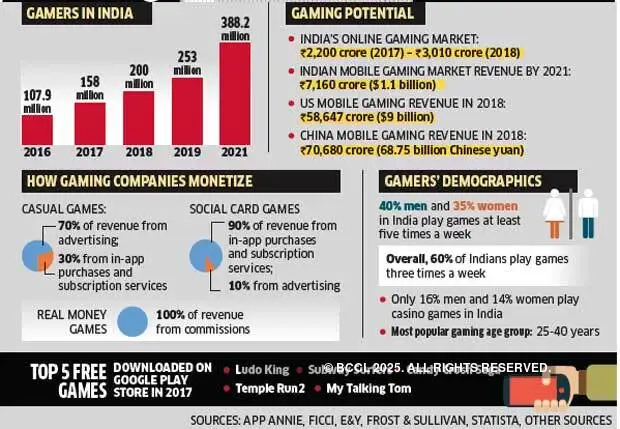
India is emerging as a leader in sports gaming, a growing field that has fascinated the interest of millennials like never before. The Indian digital gaming industry is growing rapidly with behemoths like Dream11, Mobile Premier League, Junglee Games creating their footprints globally.In the past couple of years, the country has witnessed multiple e-sports startups, namely JetSynthesys, Cobx Gaming, FanMojo, Playtonia and Nodwin Gaming, joining the online gaming space, establishing E-sports as an investor-friendly industry. According to the IFSG-KPMG report, the industry is already worth INR 43.8 billion and is said to reach INR 118.8 billion by FY23 with a growth rate of CAGR 22.1 per cent. 

This is to solicit a story on how e-sports platforms are evolving the landscape of sports gaming in India. The primary reason for investors to take an interest in the e-sports section is because India is growing as a sporting nation and the people are taking an interest in building and popularizing leagues for Football, Kabaddi, Hockey, Badminton and other sports.

Alibaba: Tencent and Alibaba-Paytm evaluating India's startup ...

Why E-sports?

More than often people confuse E-sports with Fantasy gaming. While the former is catching a certain interest, electronic sports are not far behind. This form of video gaming has a professional and competitive nature that is facilitated by an electronic system and is often based on organized multi-player video games.Sports gaming is a growing field in India and E-sports is said to be leveraging the country’s love for real sports. “Watching real sports is a passive activity. You switch on your television or open up your mobile app, sit back and enjoy the game,” Ankush Gera, CEO and Founder of Junglee Games started, adding that Online gaming has recognized India’s love for action by making a passive activity engaging.

“Today’s consumers are no longer satisfied with just clicking a button. They want action. They want to do more. They want to be a part of the experience,” he shared. A leader in skill gaming space with over 10 million users across the globe, Junglee Games has emerged as India’s answer to PUBG. The success story specifies that the growth of Indian E-sports platforms is only limited by the initiative.

The Rise of Esports

Currently, India stands at a global number 17 in the soon-to-be USD 1.5 billion Esports industry. Estimated to be about $818 million, the Indian Esports sector while vastly unstructured, is growing rapidly. The number of online gamers worldwide has increased from 20 million in 2010 to 250 million in 2018, whereas the number of game developing companies has grown from 25 in 2010 to 250 in 2018.The IFSG-KPMG reports suggested that fun and excitement are the primary motivators for 72 per cent users for playing online sports across all age and income groups. For around 81 per cent of respondents, the ‘ability to manage teams virtually’, ‘remain connected with the sport’ and ‘utilization of sports knowledge’ was other important motivators for engagement.

The mass penetration of mobile 4G, triggered by Reliance Jio, has further popularized online gaming sports (along with several other internet services) in the country. Thanks to digital innovation, sports have become more interactive, engaging and fun. However, both the real world and online sports have their own charm.Real-life games have their own adrenaline rush whereas the online community to fulfil their urge to play sports, expressed Asifa Sunar, SVP (Head of Product Quality) of Mobile Premier League. Sharing their idea of E-sports, she stated, “MPL is bridging the gap in terms of access to sports by connecting people online who were left out by the world of physical sports.”

Impact over Sports Viewership

Indians harbour a special love for sports. Cricket, especially, has been treated as more like a religion in India. However, a significant change has been noted in the consumption patterns and genre expansion, formulating a jump in the popularity & viewership of other games such as Kabaddi, Badminton, Wrestling & even Football.

“The popularity of a particular sport depends completely on the achievements of the national level teams,” provided Mujahid Rupani, the Co-founder & CEO, Cobx Gaming, an Indian E-sports company. Traditional sports are losing their appeal for the younger viewers due to the multi-hour formats and length of tournaments, making E-sports attractive for quicker gratification and results.While almost every Indian follows at least one sport and has a point of view on the game, players & team selection. Online gaming platforms are now rewarding them for testing their skills as a team selector or coach. Online gaming platforms give the nation an outlet for what they think sports should look like. 

Technology Over Traditional Mediums

“The conventional model of the single-screen broadcast is now only one of the many options at a fans disposal,” provided Sumesh Menon, Co-founder and Group CEO of U2opia Global, the parent company of FanMojo, a homegrown fantasy e-Sports platform that handpicks their players, use their skill to play games, compete and win prize money.Gera argues that Sports gaming does not negate the attraction sports fans have to view the game, in fact, it increases it. “They (Sports viewers) are so much more invested in the performance of the players, (that) watching the match on mobile or catching scores on a mobile app may hold appeal when travelling or busy, the appeal of viewing the match live on a bigger screen is much higher.”

However, he does agree that digital formats might encroach on some market share of traditional media. It would be interesting to see how traditional media adapts to technology. There could be some interesting crossovers between the two formats.

Big players in the market

With a larger appetite for gaming in India, there’s more money moving through the industry, with increased overseas investment and partnership, mostly from China. Alibaba-backed digital payments startup Paytm and Hong Kong’s AGTech Holdings launched a gaming platform Gamepind; Tencent, which has stakes in legendary games like League of Legends, Call of Duty and World of Warcraft, is planning to investin gaming in India this year, and Chinese gaming company Youzu launched local casual strategy games last year. Vietnam-based StomStudio also partnered with mobile game publisher Gamesbond to create mobile games in India.

Although most mobile games in India have a very low average revenue per user, except the casino and strategy genre games,  Manojh says, “As the market is maturing, the sector has been getting increasing attention from investors, with many startups raising funds to create niche games.”Globally, over the last few years, the games industry has seen free-to-play (F2P) hit the mainstream, tablet and smartphone games have come into the ascendent and we’ve seen Facebook gaming rise and fall, but in India though, F2P business model – in which games can be downloaded for free, but then make money through adverts – continues its growth.Between 2014 and 2016, game downloads in India more than doubled. “In terms of downloads, casual and sports genre games perform very well,” says Manojh. A survey reveals that mobile gaming is part of daily lives of more than one-third Indians — 40% men and 35% women play mobile games at least five days a week.

AI in gaming

There’s no question that there’s more interest than there has ever been. Virtual-reality gaming is also a fast-evolving vertical in the country. Digital advertising is forcing companies to look at gaming in a big way, embedding commercials through games.What makes all of this even more exciting is the introduction of artificial intelligence into gaming. Tech startup Absentia has developed Norah.ai, a AI-powered tool for quick creation and incorporation of all game elements. “Our engine is trained over 40 million data points, it generates variety at each step thereby adding countless number of possibilities to the terrains, 3D models and game play environments among others,” says Shubham Mishra, co-founder of Absentia. “At the click of a button, a fleet of 100 different variants are generated, empowering the developers with more options.”

This means that games developers don’t need to have particularly powerful hardware — they will be able to create assets for games, ranging from story, to animations, and even models quickly, and affordably. And, it’s all adding up to a fast-growing business.


PRESERVATION OF FOOD USING DRYING METHOD

Drying or dehydration can be defined as the removal of water from the food by controlled processes, which can be achieved by either of 3 ways –

  1. Evaporation due to heating of the food product
  2. Osmotic dehydration
  3. Sublimation, or freeze drying

Drying can be explained as a 2 stage process in which in the first stage, the surface water removal takes place which totally depends on the state of air surrounding that food particle such as its temperature, relative humidity, and speed. On the other hand in the second stage of the drying, the moisture which is present within the food particle is allowed to move onto the surface which can be then again removed by the process of the first stage.
The rate of drying basically depends on the time that moisture takes to come onto the surface of the food from its inside. Heating of any particle accelerated its time of drying. The shortest time period has been noted in starchy foods.
There are 5 basic methods of drying –

  1. TUNNEL DRYING –
    Many years ago, for the purpose of preservation of agricultural products by the means of drying, a solar tunnel dryer was developed. It is an amazing device which can be used for the hygienic preservation of food and also acts as a good alternative for the seasonal agricultural surplus. Also the foods which are dried using this process are more hygienic and superior rather than other methods.
  2. SOLAR DRYING –
    I t is also known as sun drying and is a method of drying any substance using natural sunlight. This drying technique offers faster drying rates and greater protection of the product. There are several problems or limitations which are associated which this type of drying technique, such as the drying areas must be free of dust and whenever there are chances of a dust storm or rain, the drying process cannot be continued.
    There is also a process known as shade drying which can be carried out for the product which can easily lose their color and turn brown if kept in sunlight i.e. they are non-photosynthetic.
  3. SPRAY DRYING –
    This is a unique technique which ultimately transforms the substrate from a liquid to dried form by spraying the feed into a hot drying medium. It is a continuous process and takes time. The dried products which are ultimately obtained can be in the form of powders, granules or agglomerates. It is a multi-step process.
  4. VACUUM DRYING –
    Since evaporation of water takes place more easily and effectively at lower pressures, so vacuum drying was developed which is faster than the process of evaporation. This is an expensive method and is used for some specific products.
  5. FREEZE DRYING –
    This method uses the process of sublimation, which is a process which directly converts solid particles to their gaseous state, without first melting them. It is a technique which is very used in preserving food at low temperatures because at less temperature, chemical reactions occur very rarely and food is rarely attacked by pathogens. It is also a multi-step process which includes freezing, vacuuming, heating and finally condensation of the product.

SYSTEM MONITORS FACES TO ADJUST THE ROOM’S TEMP

A pilot study explored how the system can provide personalized thermal comfort for nurses working in healthcare environments such as chemotherapy administration units.

A new system monitors people’s faces to maintain the temperature of indoor spaces.

Heating and cooling are the largest consumer of energy in American homes and commercial buildings. There’s a need for smarter, more flexible climate control that keeps us comfortable without heating and cooling entire empty buildings.

Researchers at the University of Michigan have developed a solution that could do away with the wall-mounted thermostats we’re accustomed to. They describe Human Embodied Autonomous Thermostat, or “HEAT,” in a study in the journal Building and Environment.

The system pairs thermal cameras with three-dimensional video cameras to measure whether occupants are hot or cold by tracking their facial temperature. It then feeds the temperature data to a predictive model, which compares it with information about occupants’ thermal preferences.

Finally, the system determines the temperature that will keep the largest number of occupants comfortable with minimum energy expenditure. The new study shows how the system can effectively and efficiently maintain the comfort of 10 occupants in a lab setting.

“COVID presents a variety of new climate control challenges, as buildings are occupied less consistently and people struggle to stay comfortable while wearing masks and other protective gear,” says project principal investigator and study coauthor Carol Menassa, associate professor of civil and environmental engineering.

“HEAT could provide an unobtrusive way to maximize comfort while using less energy. The key innovation here is that we’re able to measure comfort without requiring users to wear any detection devices and without the need for a separate camera for each occupant.”

HEAT works a bit like today’s internet-enabled learning thermostats. When it’s newly installed, occupants teach the system about their preferences by periodically giving it feedback from their smartphones on a three-point scale: “too hot,” “too cold,” or “comfortable.” After a few days, HEAT learns their preferences and operates independently.

The research team is working with power company Southern Power to begin testing HEAT in its Alabama offices, where test cameras will be mounted on tripods in the corners of rooms. Menassa explains that cameras would be less obtrusive in a permanent installation. The cameras collect temperature data without identifying individuals, and all footage deletes immediately after processing, usually within a few seconds.

A second test, also with Southern Power, will place the system in an Alabama community of newly constructed smart homes. The team estimates that they could have a residential system on the market within the next five years.

Facial temperature is a good predictor of comfort, Menassa says. When we’re too hot, the blood vessels expand to radiate additional heat, raising facial temperature; when we’re too cold, they constrict, cooling the face. While earlier iterations of the system also used body temperature to predict comfort, they required users to wear wristbands that measured body temperature directly, and to provide frequent feedback about their comfort level.

“The cameras we’re using are common and inexpensive, and the model works very well in a residential context,” says study coauthor Vineet Kamat, professor of civil and environmental engineering, and electrical engineering and computer science. “Internet-enabled thermostats that detect you and learn from you have sort of built a platform for the next phase, where there’s no visible thermostat at all.”

Coauthor Eunshin Byon, an associate professor of industrial operations and engineering, built HEAT’s predictive model. She believes that tweaks to the model could make the system useful in applications beyond homes and offices—in hospitals, for example, where care providers struggle to stay comfortable under masks and other protective equipment.

“The COVID-19 pandemic requires nurses and other hospital workers to wear a lot of protective gear, and they’ve struggled to stay comfortable in the fast-faced hospital environment,” Byon says. “The HEAT system could be adapted to help them stay comfortable by adjusting room temperature or even by signaling to them when they need to take a break.”

In partnership with the school of nursing, Menassa’s research group has already conducted a pilot study that explored how the system can provide personalized thermal comfort for nurses working in healthcare environments such as chemotherapy administration units.

The National Science Foundation supported the research. The team has filed patent applications related to the technology.

Probe Probare Aerospace Strength : Big Breaking >>>>>>>>>>>

Which is the motto of the Aeroplane & Armament Experimental Establishment at Boscombe Down in Wiltshire, where the Ministry of Defence test new military aircraft and where the Empire Test Pilots’ School is located – “To test properly”.

The BBC Radio 4 afternoon current affairs programme PM has started a new thread this past week, “Will your job be replaced by a robot?”. (Their definition of ‘robot’ is quite wide; what they actually mean is ‘Artificial Intelligence’, which can come in a number of different packages, very few of them – currently – robot-shaped.) Their overall thrust is that within twenty years, very many professional and middle-management jobs will be replaced by AI systems.

We’ve been here before. In the 1960s, the watchword was “automation”. Automated systems were not in any way ‘intelligent’, but they were beginning to replace a number of manual and skilled jobs. Big teams of workers with shovels were replaced by excavators; farm workers were replaced by specialised attachments to tractors; skilled machine workers were replaced by numerically-controlled lathes and drilling machines.

In engineering terms, this was about the advance of miniaturisation, from mechanical or electromechanical automation systems, to transistorisation, then integrated circuits (ICs), large-scale integration (LSI), very large scale integration (VLSI) and then the microprocessor revolution. In each case, the devices got smaller, faster and cheaper; and humans got ever more ingenious at identifying new situations where these devices could be applied to both systems and machines.

At some point in the late 1970s, this effect crossed over from physical activities and started to appear in knowledge and information systems. Libraries began to see the arrival of computer systems, first for complex technical searching, then for cataloguing, and finally the knowledge itself was no longer confined to the pages of books and journals.

Credit : Third Party Reference

Thinkers in what was then called ‘library science’ talked of the ‘information explosion’ and how librarians would be essential in almost every kind of organisation to help guide professionals through the jungle of printed information sources to drill down to the information they needed to run their organisations or plan their products.

So to me, a software tester is someone whose primary role is to improve software products before they go out of the door by doing a number of different things:

  • Participating in the design process by casting an experienced eye over proposed products, challenging assumptions made about users and their behaviour, and thinking about how the product should be tested;
  • Collaborating with developers and product owners during the build process in an on-going challenge process;
  • Arranging for the quality assurance of the product at various stages in its development by helping to make sure that the application works as expected; and
  • Test-driving early prototypes to see if the application does what it is supposed to, to find out the best way of using it, to critically appraise the end result, and to help those who have to write user instructions to understand what the application does, how it works and (sometimes more importantly) why it works.
  • In this last function, the tester is standing in for the end user, reviewing the product with a view to seeing if it can be improved in any way. This in turn feeds back into the design process; software goes through different versions, (hopefully) ‘upgrades’, through user feedback and the process of fixing bugs and implementing new features. At least with computer software, the old corporate mantra of “we are continually striving to improve our products” is more likely to actually be true…

Meanwhile, as the impact of computers grew in the daily life of more and more people, pundits began to debate the issue. There was a joke in the late 1980s which suggested that there was a new sort of party game. When any group of computer scientists or employment experts or economists got together, one of them would name a number – say five million – and the rest would take it in turns to explain why the new generation of microprocessor-driven computers would cause either the loss or creation of that many jobs. Oh how we laughed (or forecast doom, depending on where we were standing at the time).

At the time, of course, it was easier to see how many jobs were being destroyed by any given change – say, in mining or manufacturing. My father left his job designing and implementing signalling schemes on the railways because he was being asked to design schemes that put people

Reference- https://divyanshspacetech.wordpress.com

SILQ IS AN EASIER QUANTUM PROGRAMMING LANGUAGE

Silq is the first quantum programming language that is not designed primarily around the construction and functionality of the hardware, but on the mindset of the programmers when they want to solve a problem—without requiring them to understand every detail of the computer architecture and implementation,”

Their quantum language, called Silq, is the first of its kind.

“Programming quantum computers is still a challenge for researchers,” says Martin Vechev, computer science professor in ETH Zurich’s Secure, Reliable and Intelligent Systems Lab.

“Our quantum programming language Silq allows programmers to utilize the potential of quantum computers better than with existing languages, because the code is more compact, faster, more intuitive, and easier to understand for programmers.”

Quantum computing has been seeing increased attention over the last decade, since these computers, which function according to the principles of quantum physics, have enormous potential.

Today, most researchers believe that these computers will one day be able to solve certain problems faster than classical computers, since to perform their calculations they use entangled quantum states in which various bits of information overlap at a certain point in time. This means that in the future, quantum computers will be able to efficiently solve problems which classical computers cannot solve within a reasonable timeframe.

This quantum supremacy has still to be proven conclusively. However, some significant technical advances have been achieved recently. In late summer 2019, a quantum computer succeeded in solving a problem—albeit a very specific one—more quickly than the fastest classical computer.

For certain “quantum algorithms”, i.e. computational strategies, it is also known that they are faster than classical algorithms, which do not exploit the potential of quantum computers. To date, however, these algorithms still cannot be calculated on existing quantum hardware because quantum computers are currently still too error-prone.

SMOOTH AS SILQ
Utilizing the potential of quantum computation not only requires the latest technology, but also a quantum programming language to describe quantum algorithms. In principle, an algorithm is a “recipe” for solving a problem; a programming language describes the algorithm so that a computer can perform the necessary calculations.

Today, quantum programming languages are tied closely to specific hardware; in other words, they describe precisely the behavior of the underlying circuits. For programmers, these “hardware description languages” are cumbersome and error-prone, since the individual programming instructions must be extremely detailed and thus explicitly describe the minutiae needed to implement quantum algorithms.

This is where Vechev and his group come in with their development of Silq. “Silq is the first quantum programming language that is not designed primarily around the construction and functionality of the hardware, but on the mindset of the programmers when they want to solve a problem—without requiring them to understand every detail of the computer architecture and implementation,” says Benjamin Bichsel, a doctoral student in Vechev’s group who is supervising the development of Silq.

Computer scientists refer to computer languages that abstract from the technical details of the specific type of computer as high-level programming languages. Silq is the very first high-level programming language for quantum computers.

High-level programming languages are more expressive, meaning that they can describe even complex tasks and algorithms with less code. This makes them more comprehensible and easier to use for programmers. They can also be used with different computer architectures.

The greatest innovation and simplification that Silq brings to quantum programming languages concerns a source of errors that has plagued quantum programming until now. A computer calculates a task in several intermediate steps, which creates intermediate results or temporary values.

In order to relieve the memory, classical computers automatically erase these values. Computer scientists refer to this as “garbage collection,” since the superfluous temporary values are disposed.

In the case of quantum computers, this disposal is trickier due to quantum entanglement: the previously calculated values can interact with the current ones, interfering with the correct calculation. Accordingly, cleaning up such temporary values on quantum computers requires a more advanced technique of so-called uncomputation.

“Silq is the first programming language that automatically identifies and erases values that are no longer needed,” explains Bichsel. The computer scientists achieved this by applying their knowledge of classical programming languages: their automatic uncomputation method uses only programming commands that are free of any special quantum operations—they are “qfree,” the researchers say.

Silq is a major breakthrough in terms of optimizing the programming of quantum computers; it is not the final phase of development,” says Vechev. There are still many open questions, but because Silq is easier to understand, Vechev and Bichsel hope to stimulate both the further development of quantum programming languages and the theory and development of new quantum algorithms.

The researchers will share a paper on Silq with other experts in the field at PLDI 2020, a conference for programming languages. To facilitate discussion, adoption and further development, they have also released Silq on its own website.

“Desalination 97% of Water Reserves-Solution To Water Crises?”

Humans and animals have been travelling since ages in search of food and water. Fresh water and Food are required for any person not to be healthy and fit enough to carry his daily day to day routine. We have been able to find various fresh sources of these waters and their origin, and through advancement in technology we have brought them to land directly to our house. We now need not to travel distances in search of water related just turn on the taps and thus we get it anytime anywhere. This truly has transformed human life and has led cities to develop. The source of freshwater is mainly the groundwater which is assumed to be fresh and not contaminated with dust and adulterants. There are possibilities of hard water in some areas due to the geography of particular areas, but still it is drinkable and people can just boil it or just purify it through the RO or Reverse Osmosis process. 

But as we see and acknowledge these water reserves and resources, these are wasted a lot in various processes including technology and manufacturing. Due to which we are facing a lack of water in various parts of the world and has become a worldwide crisis. It is expected that around 5-6 billion people will be living in areas which will lack water resources by 2050. So it’s high time to be involved in the activities to save this essential resource and thus save humanity. 

But the big question which comes into the mind is that we have 3% of drinkable water, what about the rest 97%. “Why Can’t we use it? And What if we make that water clean and salt free, thus 100% drinkable.So what would be the results if we do remove all the salt water or no salt was ever dissolved in these oceans, how would our lives get affected ?” 

First of all what we need to know is how these water resources got salt into them ? It is assumed that since the existence of earth which was about 4.5 billion years ago,  earth was very hot and it took a few years to cool down. Then Around 3.8 billion years ago, the surface of earth got cooler and the vapours in the surrounding or atmosphere turned into liquid state and were fresh enough to drink directly. But sooner it became saltier due to various natural phenomenon especially like rain. Rain brought the carbon content in the air with it and dissolved in the freshwater. This makes the water a bit acidic, thus eroding the rocks. This water then goes into the rivers and streams residing nearby and thus dissolving those salts of rocks in it. Also there were emissions from Volcanoes which dissolved in these rivers and then into oceans. This process continues for another billion years and hence most of the water we do see around is saltier. 

Technologies and research have been followed up with the steps to remove salts from water and thus make it drinkable. So would it be beneficial for us or rather harmful ? 

  1. It is assumed that cleaning up most of these ocean waters by desalination would affect the life inside the sea and oceans. The marine life creatures have evolved to drink and remain hydrated through the salt water present in the surrounding. Cleaning this water will surely lead to death of most of this aqua life. These have evolved as per their surrounding and remove out the extra salt which helps them to survive. 
  2. The underwater algae which is assumed to be spread all around the world, is responsible for absorbing the carbon dioxide and giving out oxygen, which humans require to survive. Thus cleaning of water would affect these plants and would affect our atmosphere, filling it more with the carbon content and less pure and fresh air to breath
  3. Increase climate change making some parts of the world extremely hot to live in. Phenomenon like hurricanes and cyclones would get common as the temperature increased and this would help these tropical storms to build up. This surely looks no good for humans as per their survival would surely be at stake. 

“So it can be an option to shift towards these ocean water, make it clean and drink it, but still we should prohibit it from doing it as it can have a devastating effect on the survival of all living beings. We could rather save the resources which are present around us rather than interfering with nature. As we know everything is balanced in nature and if any interference could lead to a phase humans would never want to enter. So we all need to understand the importance of water, save it as much as we can, so as to be safe from future affects and thus remain safe.”