“Zealandia- 8th Continent Soon ?”

Science and technology has helped humans in discovery of a number of things hidden deep inside sea, land, and even outer space. The invention of internet had gave birth to globalization  and people could travelling around the world, talk to people from on end to other end, get information about any topic they want, just with a single click and many more. While most of the earth secrest remain hidden, there have been some human advancement to discover some of them and thus gain more knowledge.There have been various theories reflecting the facts of drowned cities and islands due increase in water level or tsunamis or any other factotre like tectonic shift. Scientists have really been fascinated towards these facts and thus they have been finding some of those and thus get an idea about how early life was. The search of these led them to find the 8th continent which was expected to be lost crores of years ago. “Zealandia” is the name given to this continent and soon we can see it as an accepted continent around the world. 

Zealandia is present between Australia and New Caledonia in the South Pacific Ocean. The interesting fact to know is that about 94% of the land is submerged under water. According to the American Geological Society, Zealandia has an area of 50 lakh square km, which equals to about 66% of total Australian land. Zealandia was expected to be a part of Australia, but due to tectonic shift, it got away from it and drowned in water. So It’s fascinating to know about such a place and scientists went on a drilling experiment and collected some samples of rocks of Zealandia.The results were really good enough as they were rich in silica, granite and limestone. But how could be find a continental, suddenly. The first theory of Zealandia was given in 1995 and after then in 2017 , it was accepted to be land which could be named as a continent by most of the scientists but still not official. So with the help of the latest technologies , we were able to reach this place  and find the lost continent probably. 

Zealandia can be provided the designation if a continents, since it fulfills some of requirements required for it to be a continent .These include.:

  1. Continent needs to have elevation above the ocean floor , surrounding it. Which surely is as we see most of the land above the ocean floor through the images captured. 
  2. The crust of the continent must have igneous, sedimentary and metamorphic rocks, which certainly are present in it as per the experiments done by the experts. 
  3. The crust must be thicker and less dense than the oceanic crust. We see the thickness of Zealandia is thicker than the ocean floor we see, which makes it visible and also less than the oceanic crust. 
  4. It must be spread across a wider area. Interesting fact about Zealandia is that it’s size lie between the biggest island and smallest continent, so it might be a confusion to name it as an island or a continent. 

The benefits of such a piece of land which was under land for so many years could be enormous. It Would be rich in resources, new metals and stones and also would help us to understand what earth would have been so many years ago and most if its parts are untouched and pure. This could surely lead us to open up new possibilities and resources. 

But the big question still remains is will Zealandia get a position of a new continent. It’s still a question  most scientists have been conflicting up for. The main issue is that we do not actually know the pure definition of what a continent truly is, and how we separate it from other big islands. Maybe in the future we would be able to notice a wide change in our geography with 8 continents, new possibilities of research and development and a lot more understanding about our earth and it’s hidden secrets. 

Sole Testimony of Victim of Sexual Abuse, If Found Reliable, is Sufficient

In a fresh, firm and favourable ruling for victims of sexual abuse and delivered just recently on June 15, 2020, the Uttarakhand High Court has in a latest, landmark and extremely laudable judgment titled Bhuwan Chandra Pandey Vs Union of India and others in Writ Petition (S/B) No. 153 of 2013 held in no uncertain terms that the sole testimony of the victim of sexual abuse is sufficient to hold the perpetrator guilty of misconduct in a departmental enquiry. There is no reason why the sole testimony of sexual abuse not be sufficient to hold the perpetrator guilty of misconduct in a departmental enquiry. There are so many notable rulings of Supreme Court and High Courts also which have held the perpetrator accountable even in such cases of sole testimony of sexual abuse!

                                         To start with, this noteworthy judgment authored by Chief Justice of Uttarakhand High Court – Ramesh Ranganathan for himself and Justice RC Khulbe sets the ball rolling by first and foremost posing a series of thought provoking questions in para 1 which goes as: “Is the sole testimony of the victim of sexual abuse, sufficient to hold the perpetrator guilty of misconduct in a departmental enquiry? Is the punishment of dismissal from service, imposed on the perpetrator as a consequence thereof, grossly disproportionate warranting interference by this Court in the exercise of its power of judicial review? These questions, among several others, arise for consideration in this writ petition.”

                                          While elaborating further, it is then stated in para 2 that, “The extra-ordinary jurisdiction of this Court, under Article 226 of the Constitution of India, has been involved by the petitioner seeking a writ of certiorari to quash the order of punishment of dismissal dated 10.05.2012, the appellate order, the order directing initiation of a de-novo enquiry, and the fresh charge sheet, declaring the same as illegal, dehors the rules and unconstitutional; to issue a writ of mandamus commanding the respondents to treat the petitioner as continuing in service, and reinstate him with all consequential benefits including promotion, upgradation of pay, revised pay scales and arrears of salary, as he would have been entitled to, if the impugned orders had not been passed; for a writ of mandamus to consider the petitioner’s claim for payment of damages on account of the tortuous act of the respondents; and to quantify the damages to be recovered from the erring officers, and persons who were instrumental and responsible for the same.”    

                                              While dwelling on the facts of the case, it is then stated clearly in para 3 that, “Facts, to the limited extent necessary, are that, for the para medic course (the duration of which was for a period of three months), the petitioner was nominated, for the three day period 16.08.1998 to 18.08.1998, as a guest instructor for an outdoor exercise with trainees, for conducting a half day theory class, a half night march exercise at the S.S.B. Academy Gwaldum, and to impart them training on military topics such as night navigation and map reading. On 18.08.1998 the trainees, including two lady members of the 94 medic course, were imparted training on theoretical subjects. The half night training exercise included a night march. However, because of heavy rains in that area, it was decided by the petitioner’s superior officers not to permit both the lady trainees to march in the wet and muddy hilly areas to prevent any casualty occurring thereby. In the affidavit, filed in support of the writ petition, the petitioner states that it was decided to give minimum or grace marks for the night march training to the two lady trainees as they did not participate in the night march.”

                                              In continuation of the above, it is then stated more relevantly in para 4 that, “After completion of the night training exercise, the petitioner, along with several other members including the two lady trainees, sat in the cabin of a truck which was coming back to Gwaldum station. It is in the cabin of the truck that the petitioner is said to have molested one of the lady trainees, and to have sexually harassed her.”        

                                       While elaborating further on what is stated above, it is then stated in para 5 that, “While this unsavory incident is said to have taken place in the cabin of the truck at around 11 p.m. on 18.08.1998, the victim trainee (hereinafter referred to as the “complainant”) lodged a complaint on 19.08.1998 to the DIG F.A. Gwaldum alleging sexual harassment by the petitioner during the return journey on 18.08.1998. Thereafter the petitioner was informed, by memorandum dated 08.10.1999, that it was proposed to take action against him under Rule 16 of the CCS (CCA) Rules, 1965 (for short the “1965 Rules”). A statement of imputations of misconduct/misbehavior, on which action was proposed to be taken, was issued giving the petitioner an opportunity to submit his representation thereto. Rule 16 of the 1965 Rules prescribes the procedure for imposing the minor penalties as specified under Rule 11. The inquiry committee, constituted thereafter, submitted its report on 21.09.2001 holding the petitioner guilty of the charges. The disciplinary authority agreed with the findings of the Inquiry Committee. Though minor penalty proceedings, under Rule 16 of the 1965 Rules, had been initiated against him by memorandum dated 08.10.1999, the petitioner, on being held guilty of the charges, was imposed, by proceedings dated 12.09.2003, the major penalty of dismissal from service.”         

                                          Importantly, it is then laid bare in para 106 that, “In the present case the Disciplinary Authority imposed, on the petitioner, the punishment of dismissal from service after concurring with the findings and conclusions of the Inquiry Committee that both Charges 1 and 2 were proved. The first charge, as noted hereinabove, related to sexual abuse and molestation by a superior paramilitary officer over his subordinate lady trainee. In the Paramilitary Forces, where the need to maintain discipline is of a very high order, such acts of a superior officer, in taking advantage of the vulnerability of a subordinate lady trainee and in indulging in such heinous acts of molestation and sexual abuse, justified the deterrent punishment of dismissal from service being imposed on him. Under no circumstances, be it in the Paramilitary Forces or elsewhere, can such acts either be condoned or a lenient view be taken thereof. The second charge, as held established is that the petitioner, after having indulged in such heinous acts, as also his father who was a high ranked official, in the cadre of Deputy Inspector General in the Sashastra Seema Bal, had sought to pressurize the complainant to withdraw the complaint.”

                           More importantly, while justifying the punishment imposed on the petitioner, it is then held in para 107 that, “The deponent of the counter-affidavit, filed in the present Writ Petition, is the Commandant, SSB, Gwaldam. It is not for him to sit in judgment over the decision of the President of India in imposing the punishment of dismissal from service on the petitioner for the charges held established. His concession, that the punishment is not proportionate, is therefore of no consequence. Even otherwise, we are satisfied that the punishment, imposed on the petitioner of dismissal from service, is commensurate to the charges held established. The contention urged on behalf of the petitioner, that the punishment of dismissal from service is shockingly disproportionate, therefore necessitated rejection.”

                                       Most importantly, it is very rightly observed in para 43 that, “As the sole testimony of a prosecutrix, in a criminal case involving sexual harassment and molestation, would suffice if it is otherwise reliable, there is no justifiable reason not to accept the sole testimony of a victim, of sexual harassment and molestation, in a departmental inquiry as the enquiry held by a domestic Tribunal is not unlike a Criminal Court, governed by the strict and technical rules of the Evidence Act. (Murlidhar Jena AIR 1963 SC 404). A disciplinary proceeding is not a criminal trial. The standard of proof required is that of preponderance of probabilities, and not proof beyond reasonable doubt. If the inference was one which a reasonable person would draw, from the proved facts of the case, the High Court cannot sit as a court of appeal over a decision based on it. (Sardar Bahadur (1972) 4 SCC 618). If the enquiry has been properly held, the question of adequacy or reliability of the evidence cannot be canvassed before the High Court. The only question is whether the proved facts of the case would warrant such an inference. (Sardar Bahadur (1972) 4 SCC 618; and S Sree Rama Rao AIR 1963 SC 1723). If the disciplinary inquiry has been conducted fairly without bias or predilection, in accordance with the relevant disciplinary rules and the Constitutional provisions, the order passed by such authority cannot be interfered with merely on the ground that it was based on evidence which would be insufficient for conviction of the delinquent on the same charge at a criminal trial. (Nand Kishore Prasad v. The State of Bihar and others AIR 1978 SC 1277).”

                                      Equally significant if not more is what is then stated in para 44 that, “Strict and sophisticated rules of evidence, under the Indian Evidence Act, are not applicable in a domestic enquiry. (State of Haryana vs. Rattan Singh (1977) 2 SCC 491; J.D. Jain v. Management of State Bank of India & Others (1982) 1 SCC 143). Sufficiency of evidence, in proof of the finding by a domestic tribunal is beyond scrutiny. (Rattan Singh). In a departmental enquiry, guilt need not be established beyond reasonable doubt. Proof of misconduct is sufficient. (J.D. Jain). All material, which are logically probative for a prudent mind, are permissible. There is no allergy even to hearsay evidence provided it has reasonable nexus and credibility. (Rattan Singh).”

                                             No less significant is what is then stated in para 45 that, “In the present case, the testimony of the complainant gives graphic and shocking details of acts of sexual molestation perpetrated by the petitioner on her. This evidence is also corroborated in part by the testimony of others. The Enquiry Committee has held that, before this incident, the petitioner and the complainant were not even personally acquainted with each other, and the petitioner’s claim, of the complainant having been instituted for extraneous considerations, was not tenable. In such circumstances, we see no reason why the Enquiry Committee should be faulted for largely relying on the testimony of the complainant. The contentions urged on behalf of the petitioner under this head, necessitate rejection.”

                                            Finally, the key point of the last para 113 is that, “For the reasons stated hereinabove, we see no reason to interfere either with the inquiry proceedings or with the order of punishment of dismissal from service imposed on the petitioner.”

                                    On a concluding note, this extremely laudable and latest judgment by a two Judge Bench of the Uttarakhand High Court including the Chief Justice Ramesh Ranganathan himself is a strong and stern warning to all men who dare to indulge in sexual harassment that if you dare to indulge in it then be ready to face the dire consequences. Even the sole testimony of sexual abuse, if found reliable, is sufficient to hold the perpetrator guilty of misconduct in departmental enquiry! Such men who dare to commit such heinous crimes must expect no reprieve from the courts anymore!    

Sanjeev Sirohi, Advocate,

s/o Col BPS Sirohi,

A 82, Defence Enclave,

Sardhana Road, Kankerkhera,

Meerut – 250001, Uttar Pradesh.

Bar On Certain Matters To Be Entertained As PIL

In a latest, landmark and extremely laudable judgment titled Soni Beniwal Vs State of Uttarakhand and others in Writ Petition (PIL) No. 191 of 2019, the Uttarakhand High Court has just recently on June 18, 2020 held in no uncertain terms that even if there is a bar on certain matters to be taken as PIL, there is always discretion available with the Court to do so in exercise of its inherent powers. Moreover, the Chief Justice-led Bench has also stated explicitly that even persons who are debarred under the High Court rules can be entertained to file public interest petitions where allegations of misappropriation of public funds by a government-aided college, receiving funds both from the State Government and the University Grants Commission, are involved. Very rightly so!

                                     To start with, this noteworthy judgment authored by Uttarakhand Chief Justice Ramesh Ranganathan for himself and Justice Ramesh Chandra Khulbe after hearing the lawyers from both sides in considerable detail sets the ball rolling by observing first and foremost in para 2 that, “The petitioner has invoked the jurisdiction of this Court seeking a writ of mandamus directing the State of Uttarakhand to proceed further with the investigation on the FIR dated 28.03.2017; a mandamus directing the State of Uttarakhand to recover the excess amount, as pointed out in the Audit conducted by the Auditors of the Comptroller and Auditor General as well as the State of Uttarakhand, from the personal account of the sixth respondent, who was then the acting Principal of the College, as also the fifth respondent, who was the Secretary of the M.K.P. Society; and a mandamus directing the Director General of Police to constitute a Special Investigation Team to investigate into the gambit of corrupt practices currently underway in the respondent-College, as outlined in the Audit Reports; and to probe the reasons why no action was taken in the F.I.R. lodged in the year 2017.”   

                                   While elaborating further, it is then mentioned in para 3 that, “We had, by our order dated 02.01.2020, granted time to the learned Standing Counsel, appearing on behalf of the State Government, to ascertain whether or not a Final Report, after  further investigation was caused under Section 173(8) Cr.P.C, had been filed before the Magistrate till date. Subsequently, by our order dated 20.03.2020, while taking the counter affidavit filed on behalf of respondents 1 and 4 on record, we noted the request of Mr. C.S. Rawat, learned Additional Chief Standing Counsel, for the matter to be taken up on 25.03.2020 to enable him to ascertain what action the Government intends to take pursuant to its admission, in the counter affidavit, that respondents 5 and 6 had indulged in grave and serious irregularities, including mis-appropriation of public funds.”

                                        What is then brought out in para 4 is that a counter-affidavit has now been filed on behalf of the fifth respondent raising objections both to the maintainability of the Writ Petition, as also on merits. Now coming to para 6, it states that, “The counter-affidavit, thereafter, states that the inquiry team had indicated that the prescribed procedure was violated in purchase of items/equipment from the UGC grant; at the relevant time, the sixth respondent was the Principal and the fifth respondent was the Secretary, who were equally responsible; a letter was addressed to the Registrar, Firms, Societies and Chits, Uttarakhand by the Additional Chief Secretary, Higher Education regarding irregularities in purchase of items/instruments from UGC funds; and, as per the findings in the Inquiry Report, respondents 5 and 6 were equally responsible for violation of the Rules and norms.”

                                       More crucially, it is then stated in simple and straight language in para 8 that, “The afore-extracted findings of the Inquiry Report are not from the affidavit filed in support of the Writ Petition, but from the counter-affidavit filed on behalf of the State Government. The subject College, of which the sixth respondent is the in-charge Principal and the fifth respondent is the Secretary, is a State Government aided institution and receives funds both from the State Government and the University Grants Commission. The serious allegations, made in the counter-affidavit filed on behalf of the State Government, would necessitate an inquiry being caused and action taken in the larger public interest of ensuring that public funds are not mis-utilized. As the cause is in the public interest, it matters little who has brought these facts to the notice of the Court. Allegations regarding personal animosity between the petitioner and the fifth respondent, or that the Writ Petition was filed at the behest of others inimically disposed towards the fifth respondent, need not detain us, as this Court can examine these allegations, non-suiting the petitioner and entertaining the Writ Petition suo-motu.”  

                                                     To put things in perspective, it is then made clear in para 10 that, “What Rule 3(4)(c) of the 2010 Rules prohibits is for a Writ Petition to be entertained, in the PIL jurisdiction of the High Court, where it relates to individual disputes in the arena of criminal jurisdiction. The present case relates to mis-utilization of public funds by those incharge of a Government aided institution, and does not relate to individual disputes in the arena of criminal jurisdiction. Further the jurisdiction which the High Court exercises, under Article 226 of the Constitution of India, is a part of the basic structure of the Constitution (L. Chandra Kumar v. Union of India : AIR 1997 SC 1225). As the power of judicial review is part of the basic structure, this power cannot be curtailed or negated even by an amendment to the Constitution, much less by legislation – plenary or subordinate.”

                                                   Be it noted, it is then brought out aptly in para 11 that, “The High Court of Uttarakhand P.I.L. Rules, 2010 have been made to guide the High Court in entertaining Writ Petitions in its Public Interest Litigation jurisdiction. That does not curtail or negate its jurisdiction to entertain cases where it is satisfied that larger public interest would be adversely affected if it fails to intervene. As the afore-extracted allegations are serious, and cannot be brushed aside, we are satisfied that an inquiry should be caused into these allegations, and action taken pursuant thereto in accordance with law.”

                                      Most crucially, it is then held in no uncertain terms in para 12 that, “In the present case, the allegations relate to misappropriation and mis-utilization of public funds. As this Court can even treat letters addressed to it, or newspaper reports, as Writ Petitions filed in public interest, we see no reason not to cause an inquiry into these serious allegations merely because a criminal investigation has been caused in the matter, and a Final Report is said to have been filed by the Investigating Officer.”

                                        Equally significant is what is then made amply clear by the Bench in its clarification in para 12 that, “Even if the Uttarakhand Audit Act, 2012 does not apply to the Society of which the fifth respondent is the Secretary, misutilization of public funds would undoubtedly, require an inquiry to be caused, and action taken pursuant thereto in accordance with law. Accepting the submission of Mr Neeraj Garg, learned counsel for the fifth respondent, that, in the absence of a specific provision either in the Uttarakhand Audit Act, 2012 or elsewhere, no inquiry can be caused, would enable persons, in charge of establishments which receive public funds, to misappropriate such funds and yet claim immunity from inquiry, and action being taken pursuant thereto.”

                               To sum up, the Uttarakhand High Court has made it amply clear in this leading case that even if there is a bar on certain matters to be taken as PIL, there is always discretion that is available with the Court to do so in exercise of its inherent powers. It is entirely up to the Court to exercise its power of discretion in exercise of its inherent powers hinging on the merits of the case! There can certainly be no ever denying or disputing it!

Sanjeev Sirohi, Advocate,

s/o Col BPS Sirohi,

A 82, Defence Enclave,

Sardhana Road, Kankerkhera,

Meerut – 250001, Uttar Pradesh.

INTERVIEW ADVICE Self Introduction for Job Interview

Self-introduction actually matters a lot across every industry- from politics, medical, education, real estate, to the healthcare industry. There is an endless number of studies and researches that prove this fact to be true. Whenever you meet a new person, you just have few seconds to either impress him or let him go!

Let’s take an example!

Joseph has come up for his very first interview after completing his graduation. He is well dressed in a carefully chosen formal suit, fully prepared with all the questions he’s expecting in the interview and waiting in the reception area to get a call for his turn.

Well, let me ask you a question here.

Is that all it takes to crack an interview? Are you prepared for the first question the interviewer is going to ask?

Yes, I am talking about the self-introduction part.

The misconception about self-introduction is that job seekers find this question as the easiest one, but actually it’s not. The majority of the candidates never prepare for this part, and during this question, they just say- Hi, My name is Nick….and then hope for the interviewer to take over.

Let’s be honest here!

This is not the approach that can help you get the job you have been dreaming of.

In this blog, we’ll discuss the basic things about the ‘Self Introduction’ part that every job seeker must know to grab the desirable job. Let’s get started!

What to include in the self-introduction

Self-introduction seems to be an obvious question, and nobody makes efforts on this part. But don’t forget that this part will either make or break the hiring decision. You need to invest good time and effort while planning this part. You must understand the interviewer’s intention behind this question and answer accordingly. Here I am listing a few things you need to include in the self-introduction for interview.

Who You Are? Start by greeting the interviewer with a smile on your face, introduce yourself by telling your name.

Where Are You From? You need to specify your native place and make sure you don’t drag it long. Explain in a brief one line only

Education Qualification: Once done with the formal introduction, now you need to mention your qualification details while telling the school and university’s name and location. Begin with the highest qualification, followed by under graduation, and then schooling.

Work Experience (freshers can skip this part): First of all, you need to tell the total experience you have, mention the current job and your role, briefly describe your responsibilities and things you are expert at.

Tips for improving the self-introduction part

Apart from adding the above things in your self-introduction part, you need to know a few tips that can make your self-introduction part an effective one. So, here you go!

Head held high with a smile on the face: No matter you are feeling nervous or not, you must have a smiling face. This signifies a good start of the interview. You must give a firm handshake and say ‘Hello’ to the interviewer.

Be prepared to give family details: Most of the recruiters ask the candidates about their family background and you need to be prepared for the answer in advance. Don’t hesitate, be comfortable and speak up freely.

Stay positive during the past experience part: While describing your past job experience, remember no matter how bad your experience was, you can’t negatively talk about the past employer. Because this will leave a negative impact on the interviewer and indicates unprofessional behavior.

Sharing hobbies and goals: Unlike in the past years, interviews have become interactive and comfortable than ever before. Candidates can freely mention their hobbies, aspirations, and goals to the interviewer. This will reflect your personality clearly.

Mistakes you can’t afford to make during a self-introduction

Keep the self-introduction part brief and concise, don’t make it lengthy. So, try avoiding irrelevant things that have nothing to do with the job role you have applied for.

Many job seekers even rehearse before giving an interview but still panic once they enter the interview cabin. You need to stay calm and have a smile on your face.

Stop being nervous, it’s just an interview. Talk openly with confidence.

If you aren’t confident enough about anything, don’t wander your eyes here and there. Maintain eye contact with the interviewer, it helps in making the conversation interactive.

Never badmouth your past employer or share any negative experience with any past co-workers.

Never interrupt in-between when the interviewer is speaking, start once he’s done.

Samples for Introducing Yourself in an Interview

Before you feel clueless when the interviewer asks you- ‘Tell me about yourself’, it’s high time that you have a few samples in your mind. So, I have listed a few effective samples of self-introduction for experienced candidates as well as freshers.


Self-Introduction Sample for a Fresher:

Of course, a fresher doesn’t have much to showcase in his resume, and the same goes for the self-introduction part. But you can do a lot more to make the self-introduction an effective thing. Here’s one such sample:

Good morning Sir/Madam, It’s a pleasure to introduce myself. My name is Jonas Smith born and brought up in Michigan. I have completed my schooling from Rochester Adams High School with 84% and presently pursuing my final year bachelor’s degree from Michigan State University. Coming to my strengths, I love taking challenges and turn them into opportunities. During failures, I learn a lot out in the future. My goal is to become a part of an organization that enables me to reach my true potential and develop in that field. That’s a brief about me, and thanks for this opportunity.

Let’s have a look at another self-introduction sample in which a fresher is aspiring to begin his career in teaching:

I am Robin, a graduate with no work experience yet. I completed my schooling from Brooklyn City School and now I am in the final year of B.ED. From my school time, I always dreamt of becoming a teacher. At times, I have even given home tuitions to school going kids and really had a great experience throughout. As of now, I am looking for an opportunity to join an institute or an educational center where I can polish my teaching skills.

Self-Introduction Sample for Experienced Job Seekers:

Experienced job seekers are from various industry segments, so I have listed a few industry-specific samples:

1) Self-Introduction sample for IT Professional

Good evening Sir/Madam

I am glad to be here for the interview.

I am Joseph, an engineering graduate from Hong Kong University. I graduated in the year 2013, and since then I have been working as a system administrator. I have worked upon various operating systems, troubleshooting, managing in-house servers, and so on. I always had an interest in exploring operating systems, and during my graduation, I had a good hold over managing PCs and windows of the college. As of now, I am looking forward to expanding my portfolio and enhance my technical skills as a senior system administrator.That’s a brief about me, and thanks for this opportunity.


2) Self-Introduction sample for Software Tester

Good evening Sir/Madam

I am Rihaan, an engineering graduate from Italy University. I graduated in 2012 and completed my internship program at HCL. Since then, I have been working as a Senior Software Tester. I have worked upon numerous software testing projects and have a stronghold over various software testing tools like Selenium, Cucumber, and so on. Presently, I am looking forward to joining a company where I get better opportunities in the software testing industry.


3) Self-Introduction sample for Sales Manager

Good evening Sir/Madam My name is Genelia. I am a graduate from Delhi University in the year 2011. I have worked in sales with Infosys for the last five years. At Infosys, I achieved notable growth over the past years and have successfully achieved challenging targets. My strong networking and relationship management skills have helped me achieve my goals on time. As of now, I am passionate to become a part of an organization where I can experience more growth opportunities.


4) Self-Introduction sample for a Medical Practitioner Morning Sir/Madam

I am Albert. I graduated from Carrington College, my major is clinical medicine. I live in San Jose and have been working as a Medical Practitioner since 2016. Being in the healthcare segment, I spend most of my time with the patients, understanding the ailments, symptoms and assisting them to get out of that ailment. I have carried out deep researches about many pharmaceutical products during my past internship programs. As of now, I am looking for a better growth opportunity where I can broaden my past experience and get better exposure.


5) Self-Introduction sample for a Business Analyst

Good Morning Sir/Madam


My name is Mathew. I have been a Business Analyst for the past five years and my domain expertise is in the retail banking and insurance segment, I have good exposure in numerous end-to-end development solutions and hold proficiency in diverse business phases. I have worked with enterprises with strategic development approach and also with ones that work upon other development methodologies like Waterfall, Agile, SDLC, and so on. I am comfortable working with the team and even complete the target single-handedly. As of now, I am seeking better growth opportunities as a Senior Business Analyst in your company.

Wrapping Up

Every job seeker is looking for something extraordinary in you. If you succeed in presenting that zeal to the interviewer, good for you; otherwise it’s time to put more focus on your resume and interview part. So, whenever you go for the next interview, keep the above points in mind, and rock the interview. This will definitely help to impress the recruiter, and you will get hired!Spread the love

Author: Arjun Singh


Who Is Responsible If People Die From Coronavirus On A Reopened Campus?

The loss of lives that could have been otherwise avoided, will attract the most serious penalty and incrimination. Institutional authorities must keep this in mind as they consider the decision to open campus while the pandemic continues to pose threat to life.

Students wearing protective masks appear in the higher secondary school examinations of Madhya Pradesh Board of Secondary Education, during the fifth phase of ongoing COVID-19 lockdown, in Bhopal.

July is almost here, and the autumn semester is not far away. Are we in a position to reopen schools, colleges and universities? What are the implications if we do? Who suffers if COVID-19 attacks campus, and who is responsible if lives are lost?

To open or not to open. Worldwide, this brings together three major crises: a public health crisis, an economic crisis, and the long crisis of higher education. For instance, in the US, due to the high cost of college and the importance of residential education, it is likely that a number of small colleges will go bankrupt, large number of jobs will be lost, and the quality of education will almost invariably suffer. “A kind of a shock therapy,” predicts The Chronicle of Higher Education, “will permanently restructure the higher-education sector.”

Few things in recent history have foregrounded social inequalities as the education sector under the pandemic. Here in India, poor and rural students have suffered the most, lacking the infrastructure to participate meaningfully in online education. In the West, the heads of institutions for racial minorities have championed reopening, pleading that institutions are the safest places for them, as their poor home networks make them more vulnerable to the disease than on campus.

Almost everywhere, education experts have argued that rich and well-prepared students will do fine online, but students from weaker segments of society, including those with poorer academic preparation and lower familiarity with technology, are certain to suffer if on-campus instruction does not resume.

On the other hand, if the campus of a school or college opens and people die from contracting the virus, who holds the legal (to say nothing of the human) liability of such deaths?

The leadership of a number of American colleges are scrambling to get people to sign waivers. However, as the Chronicle has pointed out, this is a fantasy: “No waiver can resolve all those headaches, according to a dozen lawyers who work with colleges.” More than ever, in this circumstance, asking something to sign a waiver is essentially telling them: “I might be doing something that could do you harm.”

Hope Sarah Goldstein, a partner with Bryan Cave Leighton Paisner, told the Chronicle that an employer cannot ask employees to sign away future claims from workplace-related injuries covered by workers’ compensation. Waivers cannot annul liability. On the other hand, a disclosure can raise awareness and underscore communal responsibilities that must be held in a public-health crisis.

What about institutions in India? What are their responsibilities on event of COVID-related fatalities due to virus contracted on a reopened campus?

Dr Abhik Majumdar, a faculty member at the National Law University, Odisha, elaborates on a range of possibilities. The liability of an institution depends on whether or not it reopens following a government order; whether the order in question is mandatory or merely an authorisation given to institutions to reopen at their discretion; and whether the institution is a private or a state body.

If an institution opens contrary to government orders, Prof Majumdar points out, it will attract punishment under Section 3 of the Epidemic Diseases Act 1897, read with Section 188 of the Indian Penal Code 1860. Sections 269 and 271 of the Penal Code might also become applicable in such a situation. It is, however, unlikely to happen, as no institution will be so reckless as to flout governmental orders in the present situation.

It remains important to note, however, that if the government orders educational institutions to open, then liability in case of untoward incidents will lie mainly with the Government. Institutions may incur liability if they fail to adequately provide for safety measures such as dispensing masks, maintaining social distancing, and so forth.

In the last situation, if the government merely permits (as opposed to compelling) institutions to open at their own discretion, the institution becomes liable if their action leads to the spread of the disease and fatalities resulting from the spread. The nature of liability will depend on whether it is a private institute or a state body. In the first case, the institution may incur liability in tort law. It may also be liable under the Epidemic Diseases Act as mentioned earlier, if it is found deficient in implementing appropriate rules. State bodies’ liability features an added dimension. Any deficiency on their part cam be construed as a violation of the right to life under Article 21 of the Constitution.

Surabhi Singh, an alum of NLU Odisha and a current LLM student at the University of Toronto points out that under the current legal regime, State institutions run the risk of being sued for a violation of broader constitutional rights as they are an arm of the government, under writ jurisdictions of the Supreme Court as well as the respective High Courts. A writ jurisdiction is broad, and the relief granted by the courts can range from asking the institute to shut in person classes, award compensation to affected students, refund fees etc. “All of this is of course speculative,” she says, “but as a practicing lawyer I can foresee it being asked for from courts.”

However, Singh thinks that this writ-based relief is less likely with private institutions. Also, should some student fall sick and die, there is the risk of being sued for criminal negligence, which can implicate individual administrators of the institute concerned. Tort claims of negligence can also be made by the students who may claim damages. If the infection spreads through food or water, State based laws on food and water safety may apply.

Life, livelihood, and learning – or at least its best practice. It may seem like a lose-lose situation. This is, however, an extended emergency, and in the end, loss of lives that could have been otherwise avoided, will attract the most serious penalty and incrimination. Institutional authorities must keep this in mind as they consider the decision to open campus while the pandemic continues to pose threat to life.

SAIKAT MAJUMDAR

Second Film on Sushant Singh Rajput’s Life to be Titled ‘Sushant’, by Sanoj Mishra

Sushant Singh Rajput’s Life Story Inspires a Second Film ‘Sushant’ by Sanoj Mishra

Actor Sushant Singh Rajput’s death has led to debates and discussions around the existence of nepotism, favouritism, lobbying, camps in Bollywood. It’s been more than a week and two films are already in the plan related to Sushant. Earlier, director Shamik Maulik shared his idea of making a film on Sushant’s life titled Suicide or Murder: A Star Was Lost. It is based on how actors with no film background are treated by the industry when they try to make their career in the movie world. Also Read – Sushant Singh Rajput’s Demise: Ranvir Shorey Speaks on Nepotism, Godfathers And Award Shows in Bollywood

After Shamik Maulik, Sanoj Mishra has announced his film and titled it Sushant. The director wants to frame the late actor’s journey in a film. Also Read – OPINION | Fans’ Cringeworthy Reactions to 16-Year-Old TikTok Star Siya Kakkar’s Death by Suicide Brings us to Square One of Mental Health discussion.

Sanoj Mishra, who is known for films such as Srinagar, Nawab, Lafange, Gandhigiri, revealed in a statement made to a news publication that film Sushant will tell the story of people pushed to take drastic measures due to the struggle and the harassments in the industry. Also Read – Dil Bechara: Mukesh Chhabra Misses Sushant Singh Rajput, Says ‘Can Visualise You With Your Beautiful Smile’

According to reports, the film is being bankrolled by Road Production and Sanoj’s own production. The location of the film will be Bihar and Mumbai.

Meanwhile, Sushant’s close friend and producer Sandip Ssingh shared a poster for his directorial debut Vande Bharatam, which had Sushant in the lead. In an Instagram post, Sandip wrote, “You made me a promise. We, the Bihari brothers, will one day rule this industry and be the inspiration/support system for all young dreamers like you and me bhai. You promised me that my directorial debut will be with you. Raaj Shaandilyaa wrote this and we were to produce this together. I need your belief, that faith you showed, that was my strength. Now, with you gone…I’m lost…but I promise you this my brother. Now tell me how do I fulfil this dream? Who will hold my hand like you did? Who will give me the power of SSR, my brother?”

Record recoveries in India,  highest new cases in 24 hours

Total coronavirus cases in India crossed 4.9 lakh

The number of active coronavirus cases in India stands at 189463 while 285636 people have recovered

The death toll has risen to 15,301

The total number of coronavirus cases in India jumped to 4,90,401 after 17,296 new cases were reported in 24 hours. This is the highest number of new cases reported in 24 hours. According to health ministry’s numbers released today morning, the number of active cases stands at 1,89,463 while 2,85,636 people have recovered and one patient has migrated. A record total of 13,940 COVID-19 patients were declared cured in a single day. The recovery rate has improved to 58.24%.

Covid-related deaths rose to 15,301 after 407 fatalities were reported in 24 hours.

Coronavirus testing facilities have been ramped up across the country with 1,007 diagnostic labs currently offering covid diagnostic facilities, the government said.

Medical research body ICMR has said that a total of 77.76 lakh samples have been tested up to June 25. And on Thursday over 2.15 lakh samples were tested.

According to figures released by the government on Thursday, coronavirus cases per lakh in India stand at 33.39 against the world’s average of 120.21 cases/lakh. Also, death/lakh in the country is currently amongst the lowest in the world with 1.06 deaths/lakh against the world average of 6.24 deaths/lakh, the government said.

A team from Union Ministry of Health and Family Welfare will visit Gujarat, Maharashtra and Telangana this weekend to interact with the state officials and coordinate with them to strengthen ongoing efforts for management of Covid-19.

Maharashtra, the worst affected state, has reported over 1,47,741 cases and 6,931 fatalities. Among other states, Delhi has reported 73,780 cases, Tamil Nadu 70,977 and Gujarat 29,520.

Globally, total coronavirus cases moved past 95 lakh while the death toll has crossed 4.8 lakh. US on Thursday reported record number of 37,000 cases in a day, taking its overall count to over 24 lakh. The country has reported over 1.24 lakh coronavirus-related fatalities.


Pros of mobile phones for students !

The device which you are holding right now in your hand for reading this article has changed the world. It is not only providing us with a calling facility but also something much more. Mobile phones have changed the pattern of study for students. The time when we found knowledge between the pages of books has gone now. The mobile phone has diversified the area of knowledge. In this article, we have enlisted some of the advantages of mobile phone for students.

Now let us discuss how the mobile phone has changed the lives of students. What are the advantages of the same.

  • Great source of knowledge

Whenever you got confused and you don’t get a clear idea of some topic, then at that time the mobile phone will be of great use for you. You can search for that particular topic and can get a mirror image of the topic. It also provides knowledge regarding similar topics.

  • Helps to be prompt and punctual 

The mobile phone helps in managing the data. You can manage and make notes regarding important things. Then you will not going to miss something really important. You can also set alarms with a title so that on time you get reminders for the things, that will help you to be punctual and be available on time for your things.

  • Helps in Navigation and Finding Place

Mobile phones now come with a feature known as GPS  which helps to track your location. It is very helpful for navigation purposes too. If sometimes student got stuck anywhere, at that time having a mobile phone in their hand will be bliss. They can use google map to know their exact location. Then they can inform their parents about their location and can easily reach to their places. You can also share your location with your parents so that they can know where you are.

  • Help in learning left topics

Sometimes the situation arises when students are not able to attend the classes. So if at that time teacher has taught something really important then what to do? There is nothing to worry about this. You can simply google out the topic and can get a full explanation for the same. And Yes one more thing there is not only one option or site for the topic, but there are many sites you can access according to your requirement for the same topic written by various experts.

  • Great source of entertainment

Whenever students feel bored or get tired of studying for hours and hours, at that time they can listen to their favourite music, or watch movies sitting at home itself in their mobile phone. This will help them to get rid of boredom and feel fresh. Students can also read novels or even listen to audible stories whenever they get the time or they need some relaxation. There are various apps available such as Kindle, Wattpad, Novel cat, Aldiko, etc. They can access to these apps easily. This will not only help them to overcome boredom but also help them in learning something new.

  • Introduce you to the various social media platform

Facebook, Tweeter, Instagram and many more social media platforms are available now on play store where students can make their account and get connected to more number of peoples, friends, family members which are far away. They can post their activities and can see other activities too. They can also get the latest news of Hollywood, Bollywood, and their favourite celebrities.

  • Helps in Collecting proofs

Whenever students find something black lentils or they feel some types of exploitation done to them by a teacher such as when they think teacher do favouritism to students who are taking coachings from them, and not giving deserving marks to other students. Then, they can record this and show it to a higher authority and save themselves from favouritism. Or if they feel exploitation or being bullying from other students then they can record the incident and collect evidence regarding the matter in their mobile phones and can help in catching the culprit red-handed.

  • Provides Various Apps for learning

Nowadays, there are hundreds of learning apps available on mobile phones for every standard students. They can use them in free for learning, various courses are available which helps in their skill development. They can also use a mobile phone in time when they are not having books with them. So, they can use these apps to get their course-related topics cleared. This will also save their time to wait for the books.

  • Capture the moment

Students can capture their significant and sizzling moments in their mobile phones. Students who have an interest in photography, and purchasing any professional camera is not possible for them at that time they can use their mobile phones for their passion.

  • Helps in building a bright future

Mobile phones can be used in various ways and for various purposes by the students. But everything is useless until we use it for some useful purpose. There are various apps available such as LinkedIn, Internshala, freelancer, etc. Nowadays, world is on the way of digitalization. There are various types of jobs and internships available for students on these apps. They can grab them and add something useful to their CV and to their life as well.

  • Dictionary: Improve your Vocabulary

Carrying Huge dictionary everywhere with you is really a tough task. So, now they need of lifting it is over. The mobile phone provides you with various types of offline and online dictionary such as Oxford online and offline dictionary, V-Dictionary, Color Dict dictionary, Concise Oxford Dictionary by, where you can find the meaning of each and every word you are stuck at.

  • Storage of Data

The best use of the mobile phone is that you can store huge amount of data in it. Students who want to learn something new, they can download the matter and various pdfs, documents, about the same topic and they can even take notes from their friends and teacher through WhatsApp. This will prevent making any hard copies of the topic. You can even store data for a long time and even can keep it till you don’t want to erase it.

  • Easy Money Transfer

Mobile phones are primarily used for online transactions nowadays. People sitting at home can easily transfer and receive money to someone else in just some quick steps. Students who are living away from home can use these applications such as google pay, phone pay, pay pal, Paytm and many more to receive money from their parents to submit free or for their basic expenses.

  • Online Shopping

Students can use various online shopping apps such as Amazon, Flipkart, Myntra, Nykaa, etc to get their desired and essential products at their doorsteps. This will save their time and they don’t have to roam here and there to grab things.Advertisements

Can People Spread the Coronavirus If They Don’t Have Symptoms? 5 Questions

Screening for symptoms of COVID-19 and self-quarantine are good at preventing sick people from spreading the coronavirus. But more and more evidence is suggesting that people without symptoms are spreading the virus too. Monica Gandhi, an infectious diseases physician and researcher at the University of California, San Francisco, explains what is known about asymptomatic spread and why she thinks it may be a big part of what is driving the pandemic.

What does it mean to be asymptomatic?


SARS-CoV-2 – the virus that causes COVID-19 – can produce a range of clinical manifestations.Some people who are infected never develop any symptoms at all. These patients are considered true asymptomatic cases.

When people do get sick from the coronavirus, it takes on average five days and as many as two weeks to develop symptoms that can range from very mild to extremely dangerous. The time between initial infection and the first symptoms is called the pre-symptomatic phase. As an infectious disease physician, when I hear about asymptomatic spread of SARS-CoV-2, I think of a person who doesn’t have symptoms at the moment they give the virus to someone else. It doesn’t matter whether they are a true asymptomatic case or just pre-symptomatic; the public health risk is the same.

How many people are asymptomatic?

Estimates of the proportion of true asymptomatic cases – those who are infected and never develop symptoms – range from 18% to over 80%. The reasons for the huge range in estimates are still unclear, but some studies are better than others.

The most accurate way to determine the rate of asymptomatic cases is to test people regardless of whether or not they have symptoms – an approach called universal mass testing – and track them over time to see if they develop symptoms later. A recent mass testing campaign in San Francisco found that 53% of infected patients were asymptomatic when first tested and 42% stayed asymptomatic over the next two weeks. Another recent paper compared the evidence from 16 studies and estimated the overall rate of asymptomatic infection to be 40%-45%. This is in line with the San Francisco finding, but the studies sampled were of various quality and size and likely include some pre-symptomatic cases. Though none of these studies is perfect, a lot of evidence supports a true asymptomatic rate of around 40%, plus some addition fraction of patients who are pre-symptomatic.

How can asymptomatic people spread the coronavirus?

Compared to most other viral infections, SARS-CoV-2 produces an unusually high level of viral particles in the upper respiratory tract – specifically the nose and mouth. When those viral particles escape into the environment, that is called viral shedding.

Researchers have found that pre-symptomatic people shed the virus at an extremely high rate, similar to the seasonal flu. But people with the flu don’t normally shed virus until they have symptoms.

The location of the shedding is also important. SARS-CoV – the virus that caused the SARS epidemic in 2003 – does not shed very much from the nose and mouth. It replicates deep in the lungs. Since SARS-CoV-2 is present in high numbers in a person’s nose and mouth, it is that much easier for the virus to escape into the environment.

When people cough or talk, they spray droplets of saliva and mucus into the air. Since SARS-CoV-2 sheds so heavily in the nose and mouth, these droplets are likely how people without symptoms are spreading the virus.


How much asymptomatic spread is happening?


Public health experts don’t know exactly how much spread is caused by asymptomatic or pre-symptomatic patients. But there are some telling hints that it is a major driver of this pandemic. An early modeling estimate suggested that 80% of infections could be attributed to spread from undocumented cases. Presumably the undocumented patients were asymptomatic or had only extremely mild symptoms. Though interesting, the researchers made a lot of assumptions in that model so it is hard to judge the accuracy of that prediction.

A study looking at outbreaks in Ningbo, China, found that people without symptoms spread the virus as easily as those with symptoms. If half of all infected people are without symptoms at any point in time, and those people can transmit SARS-CoV-2 as easily as symptomatic patients, it is safe to assume a huge percentage of spread comes from people without symptoms.

Even without knowing the exact numbers, the Centers for Disease Control and Prevention believes that transmission from people without symptoms is a major contributor to the rapid spread of SARS-CoV-2 around the world.


What can we do to limit asymptomatic spread?


Any time a virus can be spread by people without symptoms, you have to turn to preventative measures. Social distancing measures and lockdowns work, but have large economic and social repercussions. These were necessary when epidemiologists didn’t know how the virus was spreading, but now we know it sheds at high quantities from the upper respiratory tract.

This means that universal mask wearing is best tool to limit transmission, and there is evidence to back that idea up.

On April 3, the CDC recommended that all members of the public wear facial coverings when outside of the house and around others. The World Health Organization finally followed suit and recommended universal public masking on June 5.

At this point, no one knows exactly how many cases of COVID-19 are from asymptomatic spread. But I and many other infectious diseases researchers are convinced that it is playing a major role in this pandemic. Wearing a mask and practicing social distancing can prevent asymptomatic spread and help reduce the harm from this dangerous virus until we get a vaccine.

This article is republished from The Conversation.

CBSE Evaluation Criteria for 10th 12th Result 2020 released – Explained, how marks would be calculated

CBSE Evaluation Criteria has been released for CBSE 10th 12th Results 2020. Result for all students would be released. Here is how the marks would be calculated for the papers that were cancelled.

Central Board of Secondary Education, CBSE has submitted the assessment and evaluation criteria for the cancelled 10th 12h board examinations. The board would be awarding the students based on the papers they have attempted. For the students who have not attempted a minimum of 3 papers (especially students of North East Delhi) the results would be based on internal evaluation. Check complete notice and details here.

For students whose all papers were complete, the marks would be declared basis the performance in the examination For students of classes 10 and 12 who have appeared in more than 3 subjects, the marks for the pending subject would be based on the average marks obtained in the best three subjects For students who have appeared only for 3 subjects, average marks on the basis of the three attempted subjects would be used for determining the marks of the pending exams that were cancelled For the Class 12 students whose only 1 or 2 papers could be conducted (true for students from North East Delhi), their results would be declared basis the performance in the appeared subjects as well as the performance in the internal/practical/project assignment. These students would have an option to appear for the examination at a later date. The results of all such students, however, would be announced along with the results of all the students.

For CBSE Class 10 students (barring students from North East Delhi), all core exams of 5 subjects were completed. The CBSE Class 10 results of the students, hence would be basis the performance in the examinations attempted. All the other examinations were cancelled this year and as such the board would not be grading students on those papers.

Results would be declared by the board by July 15, 2020 for all CBSE Class 12 students, irrespective of the number of subjects students had appeared for, so as to facilitate the admissions to higher educational instituted. Marks and option to appear for the examinations at the later date would depend on the way their result is calculated.

Students who appeared for all their papers

Most of the students of CBSE Class 12 had already appeared for the papers they had opted for. For all such students, the marks would be awarded basis the performance in the examinations attempted. All such students would not get an option to appear for the examination at a later date. Their results would be binding.

Students who appeared three or more papers and 1 or 2 subjects were pending

For such students, the board would be awarding students as per the average of the best three performed subjects. For instance, say a student appeared for English, Maths, Accountancy and Economics and the Business Studies paper was pending. Now, the student scored (out of 100), 75 in English, 45 in Maths, 85 in Accountancy and 90 in Economics, then the student’s marks in English, Accountancy and Economics would be considered for calculating the average marks in Business Studies. All such students would have an option of appearing for the board exam for the subject that was cancelled when it is conducted by CBSE at a later date. Students can also choose to accept the average marks awarded by the board. However, should the student choose to opt for and appear in the examination at the later date, the marks thus obtained by the students in the examination would be considered final (even if they are less than the average score that was awarded).

Students who appeared for only three other papers

For all such students, the marks would be awarded on the basis of the average score of the three subjects appeared for by the student. For example, say the students appeared for English, Physics and Chemistry and secured (out of 100) 75, 80 and 80 marks respectively, the marks for the remaining two subjects would be given on the basis of the average of these three subjects. All such students too would have an option of appearing for the cancelled papers at the later date. Again, should the students opt to appear for the examination at the later date, the marks thus obtained would be considered final – irrespective.

Students who appeared for only 1 or 2 papers (Students from North East Delhi)

For such students, the marks would be a combination of the average of the performance in the subjects the students appeared in as well as their performance in internal assessment (practical, project, etc.). These students too would be allowed to appear for the examination at a later date to improve their performance.

IMPORTANT TO NOTE

No exams for Class 10 students would be conducted. The results thus calculated and released would be finale. CBSE Class 12 students would have an option to appear for the exams whose marks were awarded based on averages as detailed above. In such a case, the performance in the paper appeared would be considered. CBSE has not shared when the students need to share their choice for optional.It can be assumed the CBSE may provide the students the option to appear for the examination once the results are declared.

CBSE Class 10, 12 Board Exams 2020 which were scheduled for July have been cancelled. The board presented the evaluation criteria to the Supreme Court, which has in turn accepted and allowed CBSE to release the same. The notification detailed above would be released on cbse.nic.in by end of day today. ICSE Board, too, decided to cancel the pending exams. The evaluation criteria, as per CISCE Counsel, would be slightly difference from CBSE and students may be given an option too. The evaluation criteria of ICSE board would be released in a weeks’ time.

By :- Kanika

CBSE 2020 results date: CBSE class 10 and Class 12 board exam results announced; read here

The Central government on Friday told the Supreme Court that the results of CBSE and ICSE board exams of Class X and XII will be declared around mid July

The Centre on Friday told the Supreme Court that the results of CBSE and ICSE board exams of Class X and XII will be declared by July 15. The Top court also permitted CBSE to go ahead with its assessment scheme to award marks to students for cancelled exams.

Solicitor General Tushar Mehta, appearing for the Centre and the CBSE, said that the assessment scheme will consider marks achieved by students in last three papers of board exams.

According to Exam Controller Sanyam Bhardwaj, the exams which were pending due to the COVID-19 situation have been cancelled.

‘Class 12 students will get an option’

“Results will now be declared following an alternate assessment scheme. Class 12 students will get an option to appear for exams later to improve their score. However, for students who chose for sit for exams, their marks in the exams will be treated as the final score,” Bhardwaj said in an official notification.

“Class 10 students will not get the chance to appear for improvement exam. Their result declared by the board shall be treated final,” he added.

The CBSE on Thursday had informed the top court that the Board has decided to cancel the remaining Class X and XII board examinations in light of the rising number of COVID cases across the country.

‘Conducive time’ will be decided by the Centre General Tushar Mehta told the Supreme Court that for now, the exams that were scheduled from July 1 to July 15 have been cancelled and will be conducted at a conducive time for Class XII students. The ‘conducive time’ will be decided by the Centre’

ICSE board told the Supreme Court that they too were agreeable with the CBSE decision to cancel the board exams for students of Classes X and XII. The state of Maharashtra, on behalf of ICSE, had earlier informed the Bombay HC that they will be unable to conduct the exams for the students this year.

ICSE has however clarified to the Supreme Court that they will not be providing any student with an option to appear for the exam at a later date and the results for all students in Class X and XII for the ICSE board will be declared on the basis of their marks in the internal assessment.

The CBSE class XII exams had started on February 15 and were to conclude on April 3. The class X exams had started on February 21 and were to end on March 29. However, the nationwide lockdown to contain the spread of the coronavirus (COIVD-19) pandemic came into force from March 25.

No exams for students of all UNIVERSITIES


Union HRD Minister Ramesh Pokhriyal ‘Nishank’ has asked the University Grants Commission (UGC) to revisit the guidelines issued earlier for intermediate and terminal semester examination, and the academic calendar

Exams for final year students in universities and higher education institutions which were to be held in July are likely to be cancelled in view of the spike in COVID-19 cases, and the commencement of the new session is likely to be deferred to October, according to officials.

Union HRD Minister Ramesh Pokhriyal ‘Nishank’ has asked the University Grants Commission (UGC) to revisit the guidelines issued earlier for intermediate and terminal semester examination, and the academic calendar.

According to officials, a panel, set up by UGC and headed by Haryana University vice-chancellor R C Kuhad, has been asked to revisit the guidelines and come up with alternative options. The revised guidelines are expected to be announced by the higher education regulator within a week’s time.

“The ministry has made it clear that the foundation for revisited guidelines shall be the health and safety of students, teachers staff. The expert committee is of the view that the examinations due in July in most universities as per the revised academic calendar be cancelled and marks for final examination be awarded based on the past performance of each student.

“Students who are not happy with the final marks being given to them based on previous examinations, can be given a chance to improvise their scores by taking examinations later when the pandemic subsides,” a senior official said.

“Similarly, the commencement of the new academic session, which was earlier planned for already enrolled students from August and freshers from September, is also likely to be deferred to October. The deliberations are on and final guidelines in this regard will be announced soon. However, any guidelines framed will be subject to review depending upon the COVID-19 situation,” the official added.

Universities and schools across the country have been closed since March 16 when the central government announced a countrywide classroom shutdown as one of the measures to contain the COVID-19 outbreak.

A nationwide lockdown was announced on March 24, which came into effect the next day. While the government has eased several restrictions, schools and colleges continue to remain closed.

The UGC had in April formed two committees to deliberate on issues arising due to the lockdown to avoid academic loss and take appropriate measures for the future of students.

One of the committees, led by Haryana University Vice-Chancellor R C Kuhad, was tasked with looking into ways of conducting exams in universities amid the lockdown and work on an alternate academic calendar.

The second committee, formed to suggest measures to improve online education, was led by Indira Gandhi National Open University (IGNOU) Vice-Chancellor Nageshwar Rao.

Based on the recommendations of the two panels, the HRD Ministry had on April 29 announced the guidelines recommending the exams for final semester students be conducted in July.

The commission had said that the universities may decide whether to conduct exams online or offline keeping in view the support system available with them and ensuring a fair opportunity to all students.

The UGC had recommended that intermediate semester students may either be evaluated on the basis of internal assessment or in states where the COVID-19 situation has normalised, exams be conducted in July only.

The commission had also said the new academic session for freshers may begin in universities from September and for already enrolled students in August while the admission process may begin in universities from August 1

However, due to spike in coronavirus cases, various states recommended cancellation of final year exams. A few states like Maharashtra and Madhya Pradesh have already announced their plans in this regard.

The cancellation is also likely to put to rest the standoff between DU administration and students and a section of teachers over the university’s decision to conduct Open Book Examination (OBE) online for final year students. PTI GJS GJS NSD NSD


Space Race vs Space Rage : What is the Reality of World’s Space Exploration Program ???????

Unbeknownst to a world still reeling from the atomic catastrophe of Hiroshima, and under the crafty guise of a “peaceful nuclear explosion”, India detonated it’s first Weapon of Mass Destruction at the infamous Pokhran test range in 1974, carving for itself an irrevocable position in a community of toffee-nosed, nuclear-armed governments. The diplomatic furore that followed this tectonic shift would resound in the international nuclear coterie for decades to come, and incense totalitarian American administrations committed to crippling India’s self-defence programmes. Even the most imperious sanctions and underhanded espionage, however, could not muffle a nation of determined democracy, that tested it’s most triumphant space-technology yesterday – The GSLV Mk-III.

On June 5th, 2017, after more than 200 tests in 2 years, the Indian Space Research Organisation (ISRO) launched into orbit a three-tonne payload on a home-grown rocket of the class developed by only 5 others – Russia, China, Japan, the European Space Agency, and the United States. The Geosynchronous Satellite Launch Vehicle Mark-III (GSLV Mk-III) weighs 640 tonnes – as much as 200 fully grown elephants – and carries upto 10 tonnes to be delivered into orbit. It is a 140 foot-tall, three-stage, game-changing Launch Vehicle with a cryogenic engine, developed almost entirely using Indian components, and capable at long last of sending manned crews into space.

Credit : Third Party Reference

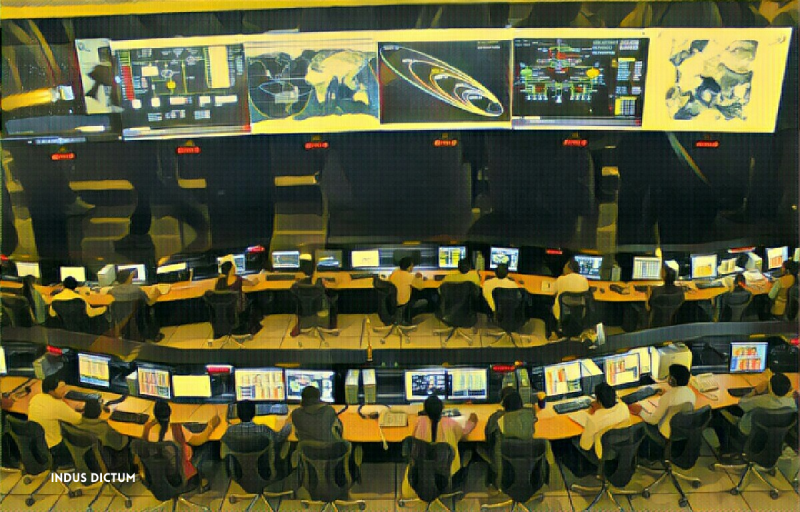
The Command Centre and Launchpad at Sriharikota, Andhra Pradesh, witnessed a turning point in the global space-race yesterday with the success of India’s GSLV Mk-III, placing the country at the heart of a space-industry valued at nearly $350 billion. Dependent on foreign agencies to launch satellites over 2,300 kilograms, India was confined to under 1 percent of this burgeoning market. Today, India has made “quantum leaps” in the words of P. V. Krishnan, Director of the ISRO Propulsion Complex, and is well on the way to launching Chandrayaan-II, slated for next year, and Aditya-I, a satellite mission designed to study the sun.

This jumbo-jet of the rocket-world, however, has a dramatic history riddled with international outrage and sabotage spanning nearly three decades. Beginning at the height of the Soviet era, India’s space and nuclear programmes have been the subject of gory eco-political power-plays between the two superpowers of our time – Russia and the United States. Yet, against all odds, and the express actions and sanctions of the US Government, Indian scientists designed by themselves a heavy-weight carrier of not only 10-tonne satellites, but also national pride and international glory.

Credit : Third Party Reference

After the successful Smiling Buddha nuclear tests at Pokhran, ISRO made enormous strides in space technology with the aid of it’s Russian counterparts, leading up to a $120 million contract in 1991 with the Soviet Space Agency Glavkosmos for seven cryogenic rocket engines, along with a complete transfer of technology. Cryogenic engines use super-cooled liquid fuels to produce massive amounts of thrust in order to lift heavy payloads into space, and the Russians were offering a secret engine, the RD-56 or KVD-1 – originally designed by the Isayev Design Bureau as part of the Soviet manned moon-landing programme of 1964 – with unparalleled thrust and capabilities that NASA could not match for years. Apprehensive of competition in the highly-lucrative commercial space industry, the US descended into a dirty game of geopolitical sanctions and espionage to disable this agreement.

Invoking the Missile Technology Control Regime (MTCR), the United States stalled the engine supply by sanctioning both ISRO and Glavkosmos. The American administration claimed that the issue was not India importing engine components from Russia, but that India was importing engines at all. The idea being that if India were forced to make those developments on their own instead of simply buying engines and the technology driving them, it would slow India’s rocket program and keep them from becoming a potential military threat.

The two-faced Americans, however, continued to import engines from Russia, simultaneously strong-arming India to sign the Non-Proliferation Treaty. India refused on the grounds that all signatories – except members of the UN Security Council – are required to unilaterally destroy their nuclear weapons, and could not afford to oblige given that the country is neighboured by two nuclear armed states, both of whom are hostile. Crippled but not killed, ISRO began the formidable task of developing indigenously a cryogenic rocket.

Credit : Third Party Reference

America views launch vehicles as weapons and components of ballistic missiles, as opposed to a commercial service. That is why it is acceptable when European nations, America, or other such countries purchase engines from each other, because they are allies and have advanced propulsion capabilities of their own, but a less developed, non-allied nation buying the same engines is not. This is, however, a remarkably flawed perspective.

In fact, there are no ballistic missiles in the world that use cryogenic engines. Because it takes several critical hours to fuel up a cryogenic rocket, such an engine could never be used in a ballistic missile. The fear mongering about using or selling these engines, then, is an outright farce and strawman fallacy.

Unblushing and wholly devoid of shame, the Machiavellian Americans turned around to sell banned WMD technologies to Pakistan, disobeying both US as well as international non-proliferation protocols. When US aid to Pakistan tapered off after the withdrawal of the Soviet Union from Afghanistan, the unscrupulous and impoverished Pakistani military responded in 1987 by selling it’s nuclear hardware and know-how for cash, pitching south Asia into three near-nuclear conflagrations, and enabling the nuclear weapons programmes of Iran, Libya and North Korea, which might never have got off the ground were it not for the duplicitous Americans. This hypocritical subterfuge is detailed in the account of CIA Agent and Pakistan-specialist Rich Barlow, reported by the Guardian almost a decade ago.

In defiance of ruthless international oppression and embargo, ISRO advanced swiftly and surely to counter America’s tyrannical throttling of the industry and reserve a seat at the space-table. Earlier this year, the triumphant ISRO launched a record 104 satellites on a single rocket. And now, having spurned the Non-Proliferation Treaty, this historic moment is an open-handed smack in the face of US monopoly.

India has overcome cumbrous obstacles and staunch opposition to design and launch it’s own cryogenic rocket. The GSLV Mk-III is a true testament to the ingenuity of an intrepid democracy. Resolute is the country we live in today.

Reference – divyanshspacetech.wordpress.com

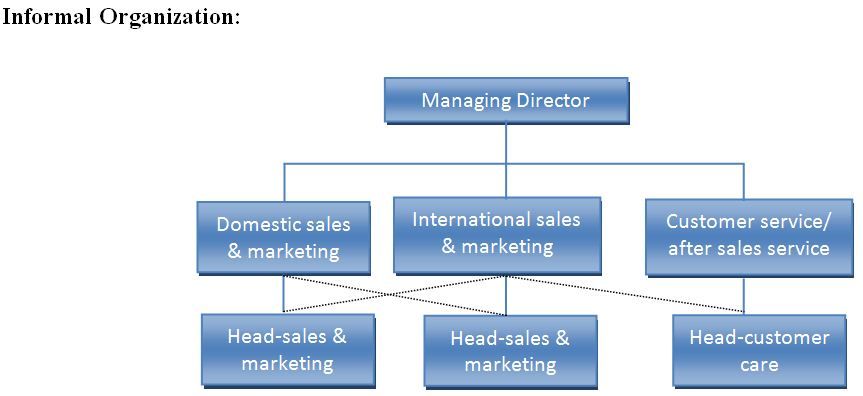
INFORMAL ORGANIZATION

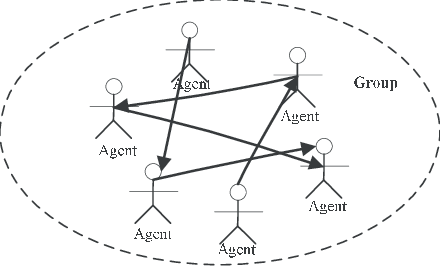
Informal organization refers to relationships between individuals in the organization based on interest, personal attitudes, emotions, prejudices, likes, dislikes, physical location, the similarity of work et. The informal organization comes into existence because of the limitations of the formal structure and it represents a natural grouping of people in working situations and the birth of small groups in an organization is a natural phenomenon. The informal group may overlap because an individual may be a member of more than one informal group. Informal groups come into being to support and supplement the formal organization. The formal and informal organization are inextricably interlinked. As Joseph L. Massie said, “Informal organization has been defined as any human interactions that occur spontaneously and naturally over long periods of time”.

CHARACTERISTICS OF INFORMAL ORGANIZATION

The main characteristics of informal organization are:

  1. It has no place in the formal chart.
  2. It is definite and has no structure.
  3. It is a network of personal and social relations.
  4. It has its own rules and traditions.
  5. It provides for social satisfaction to its members.
  6. An informal organization arises spontaneously.
  7. It is an integral part of a total organization and management cannot eliminate it.
  8. It is based on personal attitudes, emotions likes and dislikes etc.

  ADVANTAGES OF INFORMAL ORGANIZATION

The informal organization is a psycho-social system and the main advantages of an informal organization are:

  1. Informal organization evolve short cuts and eliminate various individuals and departments.
  2. Informal organizations help in solving work problems of members.
  3. Informal groups recognise talented workers as their leaders.
  4. A manager can build better relations with his subordinates through informal contacts.
  5. Informal groups do not allow managers to cross the limits of authority.
  6. Informal groups often fill up the communication gaps which might arise in the organization.
  7. The informal organization may fill in gaps, if any, in the abilities of managers.
  8. Informal groups develop certain norms of behaviour which differentiate between good and bad conduct and between legitimate and illegitimate activities.

LIMITATIONS OF INFORMAL ORGANIZATION

Informal groups have negative aspects too. They may create problems for the organization as mentioned below:

  1. Informal groups generally tend to resist change and change requires new skills but informal groups want to maintain the status quo and this creates obstructions in implementing new ideas and thus organization’s growth.
  2. An informal leader may turn out to be a troublemaker for the organisation and to increase his influence, he may work against the policies of management, and try to manipulate the behaviour of his followers.
  3. Every member of an informal group is also a member of the formal organization and sometimes role conflict may arise because the ideas, expectations and requirements of both the organizations may be opposite to each other.
  4. An informal group exerts strong pressure on its members for conformity and the members may become so loyal to their group that following the group norms may become a part of their life.
  5. Informal communications may give rise to rumours which may create conflict and misunderstanding among the people and rumours may prove dangerous for the organization. 

Why Should You Become a Medical Assistant?

With such promising occupation projections from the United States Bureau of Labor Statistics, it’s no surprise for many individuals to be interested in a new career in the healthcare industry. But where do you start, what career path is right for you? As you do your research to help you decide your next educational journey, it might be worth your while to check out the role of a medical assistaning.  

What is a medical assistant?

Medical assistants are caring, competent and committed providers who fill a vital need in the healthcare industry. Medical assistants are trained in both clinical and administrative duties and work alongside physicians and registered nurses (RNs). They are a huge help to doctors and nurses and can improve the quality of a hospital’s patient care.
Here are three reasons why you should consider becoming a medical assistant:

 1. High demand

Medical assisting is one of the nation’s fastest-growing careers. According to the United States Bureau of Labor Statistics (BLS), job growth is expected to be 23 percent from now until 2024. As the baby boomer population continues to age, there are significantly more elderly Americans in need of medical treatment.

How much can I make?

According to 2018 data from the BLS, medical assistants earn an average salary of $34,540 per year ($16.61 per hour). Graduates right out of school will need to gain experience to work their way towards earning a salary in this range. What you can make depends largely on your level of experience and state in which you practice. Learn more about the average medical assistant salary and find an estimate from the BLS in your state.

 2. Hands-on role in patient care

Medical assistants are an important liaison between the physician and the patient. Sometimes, medical jargon can be difficult for a patient to interpret. As a medical assistant, you help a patient understand the physician’s instructions. Medical assistants also help prepare patients for examination, administer medication and treatment and assist the physician during exams. Licensed practical nurses (LPNs) play a similar role in patient care, but they typically work in nursing homes or long-term care facilities. Medical assistants play a supporting role to physicians and RNs in medical offices, clinics and hospitals. They are often the ones who have the most direct contact with a patient and the ones who help patients feel at ease.

 3. The fast-track to a career in healthcare

While doctors and RNs have to spend years in school before they are certified, medical assistants may be able to receive their diploma (DMAS) in as little as 12 months. Students may also choose to pursue their associates in medical assisting (AAMAS); receiving your degree in as little as 16-20 months. If you’re looking for a faster entry point to a career in healthcare, a diploma medical assisting program might be the right path for you.