

Asserting that the world stands at a transformative moment, External Affairs Minister Dr S Jaishankar has said that a dispassionate scrutiny and reform of all multilateral entities were needed to make them purpose-built for the current times and representative of this century.
Addressing a virtual ministerial meeting of Alliance for Multilateralism yesterday, Dr Jaishankar said, it is an empirical fact that every process and institution must evolve to meet the needs of its time. He said, no institution, howsoever important, can remain frozen at the moment of its foundation.
The Minister said, this is why India continue to call for reformed multilateralism – one that is relevant for the age in which we live, not when this architecture was erected. He said, our Alliance must stand for a dynamic multilateralism, for a purposeful reform of existing structures, which must continue to serve the international community even more in this complex and uncertain time.
Dr Jaishankar said, the world is facing a two-pronged attack of a pandemic and misinformation going viral. He said, in other words, this is an era of both a health crisis and an infodemic.
The Minister said, the pandemic has devastated the globalised economic system, apart from taking a toll of over 4 lakh lives and it has fundamentally affected the way people live, work, travel and indeed, relate to each other. He said, suspicion of human interaction is fuelled, more often than not, by fake news, wrong information and targetted disinformation.
Dr Jaishankar asserted that the way forward to address both the challenges is similar and said that there is a need to strengthen the belief in scientific approaches. He said, we must set aside politics and focus on facts-whether it is the effort to dispassionately analyse the causes and drivers of the current coronavirus pandemic, or to assess what changes our multilateral health mechanisms need to implement to improve preparations for a future pandemic.
Dr Jaishankar said, the Resolution adopted at the World Health Assembly last month is an opportunity to use facts and science to assess our response to this pandemic and take those lessons to prepare better for the future. The Minister said, as Chair of the WHO Executive Board, India is ready to work towards these goals.
He said, there is a need to restore the faith in meaningful and equal partnerships. Dr Jaishankar said, trust, partnership and cooperation draw people, societies and countries together especially during crises, particularly when fake news and disease engender isolationism and unilateralism. He said, in this context, India is pleased to be part of cross-regional group presenting a Statement on the ongoing ‘Infodemic’ in the context of COVID-19 at the UN.
The “Alliance for Multilateralism” launched by the French and German foreign ministers is an informal network of countries united in their conviction that a rules-based multilateral order is the only reliable guarantee for international stability and peace.
Month: June 2020
Southwest monsoon covers entire country, 12 days ahead of its normal date
India Meteorological Department (IMD) has said that Southwest Monsoon has covered the entire country. The normal date for Monsoon to cover entire country is 8th July. IMD said, the Monsoon this year covered the entire country 12 days prior to normal date.
In the recent past, such early coverage of Monsoon over the entire country occurred in 2013 when it covered the entire country on 16th June 2013. The early advance over the central and northwest India was facilitated by formation of a low pressure area over Bay of Bengal which moved west-northwestwards and another cyclonic circulation over central India.
IMD said, Monsoon has further advanced into remaining parts of Rajasthan, Haryana and Punjab. During past 24 hours, there has been fairly widespread rainfall activity over West Rajasthan and adjoining Punjab and Haryana.
Serological survey begins today in Delhi amid rising of corona cases
The serological survey in Delhi will begin today and it will be carried out jointly by the National Centre for Disease Control (NCDC) and Delhi Government. Training of all the concerned survey teams was completed on Thursday.
AIR correspondent reports that this survey will be conducted in all the districts of Delhi to understand the proportion of population exposed to corona infection.
Two age categorizations have been set to conduct the survey, one is for below 18 years of age group and another for above 18 years.
Depending upon the level of sero-prevalence of infection, appropriate public health interventions can be planned and implemented for prevention and control of the disease.
As per the Indian Council of Medical Research, periodic sero-surveys are useful to guide the policy makers to conduct surveys in high risk areas or vulnerable population who have been infected in the past and has now recovered.
The survey will involve collection of blood samples from randomly selected individuals. Blood samples will be collected for detecting IgG antibodies and it would be conducted using an IgG ELISA kit
Recovery rate of Covid-19 patients improves to over 58%; Exceeds active cases by more than 96,000
Government has said that the recovered cases of COVID-19 has exceeded the active cases by more than 96 thousand. Health Ministry said, the graded, pre-emptive and pro-active steps taken by the Centre along with the States and Union territories for prevention, containment and management of COVID-19 are showing encouraging results.
During the last 24 hours, a total of 13 thousand 940 COVID-19 patients have been cured, taking the cumulative figure to two lakh 85 thousand 636.
The Ministry said, the recovery rate of COVID-19 patients has reached 58.24 per cent. Presently, there are over one lakh 89 thousand active cases and all are under active medical supervision.
The Ministry said, ICMR has inducted 11 new labs in the last 24 hours. India now has one thousand 16 diagnostic labs dedicated to COVID-19. This includes 737 in the government sector and 279 private labs.
The numbers of samples tested every day continues to steadily grow. During the past 24 hours, over two lakh 15 thousand tests have been conducted in the labs. The total number of samples tested is over 77 lakh.
India warns China against attempts to alter status quo along LAC
India has warned China that trying to alter the status quo on the ground by resorting to force will damage the peace that existed on the border areas. In an interview to a news agency, India’s ambassador to China Vikram Misri said that Chinese attempt to alter status quo can also have “ripples and repercussions” in the broader bilateral relationship. He said that actions taken by the Chinese forces on the ground have damaged “considerable trust” in the bilateral relationship and demanded that Beijing stop its activities in eastern Ladakh.
Mr Misri said, it is entirely the responsibility of the Chinese side to take a careful view of the relations and to decide which direction the ties should move. He said, maintenance of peace and tranquillity on the border is essential for progress in the rest of bilateral relationship between India and China.
Indian envoy said Chinese side needs to stop creating obstruction and hindrances in the normal patrolling patterns of the Indian troops. He also rubbished China’s claim of sovereignty over Galwan Valley in Ladakh as “completely untenable”, and asserted that these kinds of exaggerated claims are not going to help the situation.
PM says Atma Nirbhar Uttar Pradesh Rojgar Abhiyan to provide employment opportunities to migrant workers, promote local entrepreneurship
Prime Minister Narendra Modi has said that Aatma Nirbhar Uttar Pradesh Rojgar Abhiyan will providing employment opportunities to migrant workers and promote local entrepreneurship. Mr Modi yesterday inaugurated Aatma Nirbhar Uttar Pradesh Rojgar Abhiyan through video conferencing.
Speaking on the occasion, Mr Modi said that UP will benefit immensely from clusters of industries being created to promote such local products across the country under the AatmaNirbhar Rojgar Abhiyan.
Prime Minister said that everyone will be able to surpass the difficulties owing to the COVID-19 Pandemic. He stressed that until a vaccine is found, maintaining Do Gaj ki Doori, covering the face with the mask are the best precautions.
PM expressed satisfaction in the manner in which Uttar Pradesh has turned the disaster into an opportunity, the way people were engaged during this pandemic. He said that other states will also get to learn a lot from ‘AatmaNirbhar Uttar Pradesh Rojgar Abhiyan’ and will be inspired by it.
The PM lauded the courage and wisdom shown by Uttar Pradesh, when Corona is in such a major crisis in the world. He said that the way the state succeeded and the way it handled the situation is unprecedented and is praiseworthy.
Mr Modi praised the contribution of doctors, parameds, sanitation staff, police, ASHAs, Anganwadi workers, banks and post offices, transport services and workers in UP.
The Prime Minister lauded the Government of UP making efforts to bring back the migrant labour belonging to the state, by facilitating hundreds of Shramik Express Trains.
He said that more than 30 lakh migrant labor from all over the country returned to their villages in UP in the last few weeks.
The Prime Minister said that the Chief Minister of UP understood the seriousness of the situation and his government worked on a war footing in view of this situation.
The Prime Minister praised the UP government for their unprecedented work in ensuring that the poor don’t go hungry. He said the UP Government acted very promptly in providing free rations to the poor and the migrant labor under the Pradhan Mantri Garib Kalyan Anna Yojana.
This was provided for those even without ration cards. He said that in addition to this, about 5 thousand crore rupees were also directly transferred to the Jan Dhan account of 75 Lakh poor women of Uttar Pradesh.
GTU to conduct Examination for final year students, here’s how it will be conducted…!
GTU – Gujarat Technological University to conduct online as well as offline exams on 2nd of July. V.C. of GTU Navin Seth and V.C. of MS University Parimal Vyas raised an issue about exams and said that:
“All private universities are conducting examinations and if state universities do not conduct exams, the students enrolled with them are going to face serious repercussions for the same – in terms of not being able to go for higher study, or even bag a job. “Their competence in the time to come will be challenged.”
So, the GTU has decided to conduct examination for final year candidates.

“Allow universities to frame examination guidelines as per their requirement and local dynamics. The new proposed guidelines may create further issues, so the framework of new guidelines regarding cancellation of examination must incorporate the flexibility of giving autonomy to individual universities for taking the decision regarding the date, mode of examination and other related guidelines in line with the set norms of UGC,” – the V.C. said.
GTU also plans to conducts for those who have fear and lives in containment zone via online mode as well as off in the month of September-October.
We have students from 32 states. To bring uniformity in exam patterns for Gujarat, out of state and of India students, we decided to conduct online exams for all. I raised only one point and asked All India University members that they should convey to UGC that universities should be given autonomy to decide and conduct exams. No mandatory guidelines for all universities should be set for blanket implementation,” Vyas said

The online mode of exam will be conducted with high safety in hand on hand with varasity, and planned to conduct exams of around 1600+ students with 1 supervisor for each 15 student and the computers will be completely checked there will be no copy-paste option available as well as browsing on the internet will also be disabled for an additional security each and every 1600+ students movement will be recorded, computers will be properly sanitized before and after use.
The offline exams will be conducted for those who are willing to go for offline mode. There will only 15 students on each class and 1 supervisor for each 15 students proper distance will be allotted between each student and proper sanitation procedure will be followed up.
The timings of the online mode is 2.5 hours where as for offline mode is 2 hours with the reduced question. For different typing speed of each student differs additional half hour time is allotted for students of online mode of examination.

What Should Parents Know About COVID-19-Related Anxiety in Kids?
The coronavirus pandemic has disrupted the lives of everyone, including children. Vermont’s mental health professionals have seen higher-than-normal numbers of kids experiencing anxiety brought on by the “Stay Home, Stay Safe” order, school closures, canceled extracurricular activities, and curtailed visits with family and friends.
Thankfully, parents can play an active role in reducing their kids’ anxiety, beginning by reassuring them that they live in a very safe place. According to the Vermont Department of Health, the number of youth under the age of 20 who have contracted COVID-19 remains low, and no Vermont children or teens have died from the virus.
Still, if children seem unusually anxious for a prolonged period, there are things parents can do to help. Dr. Lewis First, chief of pediatrics at the University of Vermont Children’s Hospital, shares his expert advice for managing anxiety in kids.
KIDS VT: What is anxiety?
DR. LEWIS FIRST: Anxiety is a normal emotion we all experience at one point or another as part of our natural fight-or-flight response. Having a little stress or anxiety about something new, different or challenging is normal and prepares us to be sharper and more alert to respond. For a child, it may be a big test or athletic competition. But anxiety can become a problem when a child faces a sudden, prolonged crisis — which makes COVID-19 the perfect scenario for causing stress and anxiety. While their stress may not indicate a classic anxiety disorder, it can reach the upper limits of what a child is emotionally able to handle.
KVT: What signs should parents watch for?
LF: Anxiety becomes a concern when a child experiences a persistence of symptoms associated with this condition. Kids may have physiological complaints such as headaches, stomachaches or loss of appetite. Some kids become irritable or agitated. They may become restless, easily fatigued, have trouble concentrating or difficulty sleeping. Some become disruptive or even withdraw from their parents as a way to cope.
KVT: Does anxiety look different depending upon the child’s age?
LF: Kids of all ages, even babies, can show signs of stress or anxiety, which they can sense from their parents’ unease or experience when they’re around people they don’t know. Babies, toddlers and preschoolers may seem clingier, cry more, get upset easily and not want to do things that they previously enjoyed. Older schoolchildren and early adolescents may exhibit more negativity. They may complain of shortness of breath, shakiness, clamminess, a racing heart and feelings of doom, which are all classic signs of a panic attack.
KVT: When should parents be concerned about a child’s anxiety?
LF: First, parents should realize that the vast majority of children who are showing signs of stress right now are not having classic anxiety disorders. To make such a diagnosis, we need to see at least one sign of excessive anxiety occurring more days than not for at least six months, and we haven’t been dealing with COVID-19 for that long yet.
KVT: What can parents do to help?
LF: Kids tend to stress when they sense that their parents are worried. I know it’s hard right now, but parents need to remain calm and manage their own stress as best they can. This is a great opportunity for families to recognize that, even while isolated or as we slowly get out in public more often, this is a special time together. Parents should build in time to be with their child where it’s not about talking at them but really listening to them. With an older child or teenager, sometimes a parent expressing their own concerns will open the door to them feeling it’s OK to vent their own feelings. Parents can ask a child if there’s something they saw or heard about the coronavirus that worries them, then educate them about what is fact versus fiction. Parents can also reassure their children that scientists and medical professionals around the world are working every day to find new medicines and vaccines that will make this virus go away.
KVT: What can kids do themselves?
LF: Children can be made to feel like they’re part of the solution by practicing physical distancing, good handwashing hygiene and staying home when necessary. Parents should focus on all the positive things their kids are doing. Limit children’s exposure to the news or, with an older child, watch it together as a family so that you can discuss what’s going on. One of the most important things you can do to reduce anxiety is create predictability. Uncertainty breeds anxiety and fear, so parents should create a schedule that is predictable yet flexible and includes plenty of group playtime. Communicate with family, friends, teachers and coaches by phone or videoconference. And parents should not loosen the rules too much on healthy behaviors such as consistent bedtimes, good diet and daily exercise.
KVT: What if kids are still struggling with daily anxiety?
LF: If children just aren’t sleeping well most or all nights, are anxious most of the time, or continue to show the signs and symptoms we’ve discussed, then it’s time to talk to a health care professional. They can recommend treatments such as cognitive-behavioral therapy and even medication. A counselor or therapist can be very helpful in teaching a child coping mechanisms such as taking slow, deep breaths; counting backward from 100; and having a safe space to go to in their minds and/or in their homes. Increased anxiety in adults can lead to physical or emotional abuse, so parents need to manage their own stress levels, too.
© 2020 Kids VT
Maharashtra, Delhi, amongst five states to receive the first batch of COVID-19 drug
Hetero Drug Limited, which is one of India’s leading pharmaceutical companies, has the approval to manufacture and market the generic version of the experimental COVID-19 drug Remdesivir. The company has sent 20,000 vials to five states which include Maharashtra and Delhi.
Both Maharashtra and Delhi happen to be the worst affected states when it comes to the coronavirus. Gujarat and Tamil Nadu are the other two states that will receive the first batch of the drug. The drug Remdesivir is being marketed under the brand name COVIFOR in India.
The capital of Hyderabad, Telangana, where the company is based, will also receive the first batch of the drug. The next batch of the drug is to be shipped to Kolkata, Indore, Bhopal, Lucknow, Patna, Bhubaneshwar, Ranchi, Vijayawada, Kochi, Trivandrum and Goa.
According to the pharmaceutical company, a 100-milligram vial of the drug will cost ₹5,400. The recommended dose for both adults and the paediatric patients are said to be 200 mg on day one followed by a maintenance dose of 100 mg for five days.
At the moment, the drug is being manufactured at the company’s formulation facility in Hyderabad. The active pharmaceutical ingredient (API) is being made in the firm’s Visakhapatnam facility, as per reports by a news agency.
The DCGI had earlier approved the generic versions made by Cipla and Hetero for emergency use in severe cases of coronavirus. The treatment was the first to show results in trials conducted on patients suffering from the disease. It has won approval for emergency use in patients from the US, South Korea and has further received full approval in Japan.
Maharashtra, which is the worst affected state in the country because of the pandemic can, therefore, use this drug to treat critically ill patients. The state currently has 1,47,738 cases of coronavirus with 70,878 cases in Mumbai only.
WHO : Astrazeneca leading in Covid-19 vaccine race, Moderna not far behind
The WHO is in talks with multiple Chinese manufacturers, including Sinovac, on potential vaccines
AstraZeneca’s experimental Covid-19 vaccine is probably the world’s leading candidate and most advanced in terms of development, the World Health Organization’s (WHO) chief scientist said on Friday.
The British drugmaker has already begun large-scale, mid-stage human trials of the vaccine, which was developed by researchers at University of Oxford.
This week, AstraZeneca signed its tenth supply-and-manufacturing deal.
“Certainly in terms of how advanced they are, the stage at which they are, they are I think probably the leading candidate,” WHO chief scientist Soumya Swaminathan told a news conference.
“So it’s possible they will have results quite early.”
Swaminathan said Moderna’s Covid-19 vaccine candidate was “not far behind” AstraZeneca’s, among more than 200 candidates, 15 of which have entered clinical trials.
ALSO READ: Coronavirus LIVE: Vaccine tests need over $30 bn in 12 months, says WHO
“We do know that Moderna’s vaccine is also going to go into phase three clinical trials, probably from the middle of July, and so that vaccine candidate is not far behind,” she said.
“But I think AstraZeneca certainly has a more global scope at the moment in terms of where they are doing and planning their vaccine trials.”
The WHO is in talks with multiple Chinese manufacturers, including Sinovac, on potential vaccines, as well as with Indian researchers, Swaminathan said.
She called for drugmakers to consider collaborating on Covid-19 vaccine trials, similar to the WHO’s ongoing Solidarity trial for drugs. A WHO-led coalition fighting the pandemic on Friday asked government and private sector donors to help raise $31.3 billion in the next 12 months to develop and deliver tests, treatments and vaccines for the disease. The initiative is called the ACT-Accelerator.
Andrew Witty, Special Envoy for the ACT-Accelerator, said it was important to consider a “portfolio of research efforts” for vaccines.
“It’s still very early days in this journey, we may be super lucky – which would be terrific – and have an early win,” Witty said. “Even if it takes 12 to 18 months that would be without precedent, the world’s fast development of vaccine.”
India crosses 5,00,000 Corona cases, situation now getting tensed…
In India, the cases of COVID 19 crosses 5 million till now. This is not a good news for all of us. In Maharashtra only 5,000 cases are reported yesterday. It means that this virus is now spreading very vigrousoly. It ‘s a bad sign for our country. We really need to stop it , otherwise this virus can be cmed into fourth phase, which will really destructive for us.
The state and central both government are trying hard to stop the spreading of this virus. But it’s really not working. The whole Unlocking Phase creates this hazardous condition for all of us. But there is not any choice for government other than this. Everyone is now living in a very dangerous environment. And any silly mistake is now dangerous for all of us.
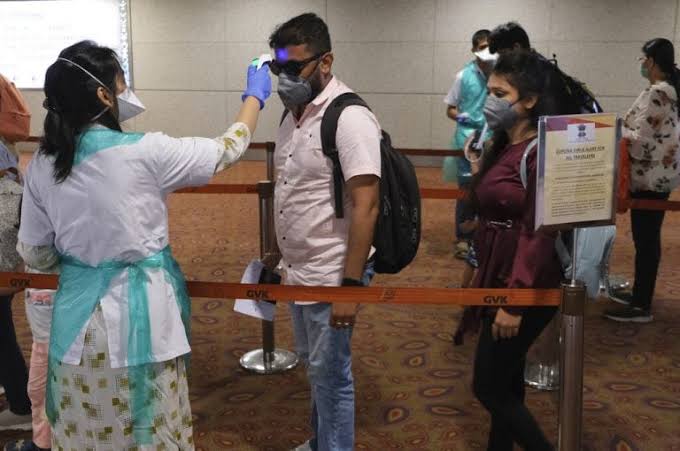
There is no need need to be panic right now and the need is to wear mask outside the home and maintain the social distance. And the most important wash or sanitize your hands at 2 hour interval regularly. And try to be in discipline . A single mistake can make you a patient of this pandemic virus. And we should pray for making the vaccine of this virus as soon as possible….
PandemicXSuicide
In a country like India where already 1 in 5 Indians suffer from depression, this coronavirus pandemic is pushing our country into a mental health crisis.
According to WHO estimates, around 8,00,000 people commit suicide every year in the world. India alone accounts for approximately 30 percent of the world’s deaths resulting from suicide. In 2013, suicide claimed the lives of more than a quarter of a million Indians. That’s five times greater than all global deaths due to war and natural disasters combined.
According to the reports published by World Health Organisation (WHO) in 2018, India is the most depressed country in the world followed by China and USA with highest suicide rate in the South East Asia and by the end of 2020 about 20% of Indian population will suffer from mental illness.
In a large population of approximately 130 crore about 6.5% of Indians suffer from mental illness and because of the stigma attached to it only 10 – 20% of the people with mental illness seek help in India and the rest are forced to suffer in silence.
In a country where mental health budget is 0.05% of total health budget, 21 people die of every 1,00,000 people and 2,83,500 deaths due to suicide take place every year. We have highest number of teenage suicide rates globally. According to data compiled by NCRB every hour one student commit suicide in India, with about 28 such suicides reported daily. Nearly 10,159 students died by suicide in 2018 increasing from 9905 in 2017.
Suicide is one of India’s biggest silent killers and this pandemic is making situation worse for our country. According to an article by Economic Times published on May 5, 2020 about 300 people died due to suicide. 80 of them killed themselves due to loneliness and fear of being tested positive for the virus.
Devastation caused by this pandemic not only include death due to the virus but also loss of jobs, loss of homes, loss of business, pay cuts and the biggest recession of economy.
It is very obvious that this virus isn’t going to leave us soon and social distancing will continue to be a norm in most parts of the world for a long period of time which will place people at greater risk because many won’t find anyone to share their feelings with and many will not be able to take their medications.
The suicides taking place in our country is a wake up call for us to end stigmas attached to mental illness in our country and to take immediate actions to save our loved ones from this epidemic. This pandemic will hit those suffering from mental illness a little harder and we should make sure that they receive support from family members, friends, community, mental health professionals because they are in much need of all this.
One thing we should get straight is that each one of us goes through some mental problems at some point in our life and having a mental problem is not a sin so we should try our best to lift up each other during that phase of life so that they don’t feel alone during this tough time.
Dream big, but start small!
Why is it So Hard to Stick to Good Habits?
Have you ever set out with the goal of actually sticking to a new behavior … only to find yourself not doing it at all one week later?
I know I have.
Why is it so hard to form good habits? Why is it so difficult to make consistent change? How can we have the best intentions to become better, and yet still see so little progress?
And most importantly, is there anything we can do about it?
Your Life Goals are Not Your Habits
Your audacious life goals are fabulous. We’re proud of you for having them. But it’s possible that those goals are designed to distract you from the thing that’s really frightening you—the shift in daily habits that would mean a re–invention of how you see yourself.
We all have hopes and dreams.
And most of the time, we have at least a general sense of what those goals are: the way we want our bodies to look and the good health we want to enjoy, the respect we want to receive from our peers and the important work we want to create, the relationships we want with our family and friends and the love we want to share.
Overall, this is a good thing. It’s nice to know what you want and having goals gives you a sense of direction and purpose. However, there is one way that your hopes and dreams actually sabotage you from becoming better: your desires can easily lure you into biting off more than you can chew.
You know exactly what I mean…
- You get inspired by The Biggest Loser, head to the gym, bust your butt to the point of exhaustion, and take the next three months off to recover.
.
- You’re motivated by your friend’s stories of traveling to new countries, so you start to plan your own around–the–world trip, only to end up overwhelmed by all the details and stay at home.
Too often, we let our motivations and desires drive us into a frenzy as we try to solve our entire problem at once instead of starting a small, new routine..
So how do we balance our desire to make life–changing transformations with the need to build small, sustainable habits?.
Dream Big, But Start Small
If you’re serious about making real change — in other words, if you’re serious about doing things better than you are now — then you have to start small.
Imagine the typical habits, good or bad: Brushing your teeth. Putting your seatbelt on. Biting your nails.
These actions are small enough that you don’t even think about them. You simply do them automatically. They are tiny actions that become consistent patterns.
Wouldn’t it make sense that if we wanted to form new habits, the best way to start would be to make tiny changes that our brain could quickly learn and automatically repeat?
What if you started thinking of your life goals, not as big, audacious things that you can only achieve when the time is right or when you have better resources or when you finally catch your big break … but instead as tiny, daily behaviors that are repeated until success becomes inevitable?
What if losing 50 pounds wasn’t dependent on a researcher discovering the perfect diet or you finding a superhuman dose of willpower, but hinged on a series of tiny habits that you could always control? Habits like walking for 20 minutes per day, drinking 8 glasses of water per day, eating two meals instead of three.
I think the following quote, sums this idea up nicely.
If you plant the right seed in the right spot, it will grow without further coaxing.
I believe this is the best metaphor for creating habits.
The “right seed” is the tiny behavior that you choose. The “right spot” is the sequencing — what it comes after. The “coaxing” part is amping up motivation, which I think has nothing to do with creating habits. In fact, focusing on motivation as the key to habits is exactly wrong.
Let me be more explicit: If you pick the right small behavior and sequence it right, then you won’t have to motivate yourself to have it grow. It will just happen naturally, like a good seed planted in a good spot.
How great is that?
The typical approach is to dive into the deep end as soon as you get a dose of motivation, only to fail quickly and wish you had more willpower as your new habit drowns. The new approach is to wade into the shallow water, slowly going deeper until you reach the point where you can swim whether you’re motivated or not.
Focus on Lifestyle, Not Life–Changing
Too often we get obsessed with making life–changing transformations..
- Running a marathon would be life–changing, running 3 days per week is a new type of lifestyle.
- Squatting 100 more pounds would be life–changing, squatting 3 days per week is a new type of lifestyle.
Do you see the difference?
Life goals are good to have because they provide direction, but they can also trick you into taking on more than you can handle. Daily habits , tiny routines that are repeatable are what make big dreams a reality.
.
Life skills: A necessary lesson!
In a world where humanity is slowly degrading, certain life skills need to be imbibed and nurtured into us humans. As life these days are full of twists and turns and numerous hurdles one needs to take smart decisions in the right direction. Life skills can teach one to deal with stressful situations and can abstain one’s self from making hasty decisions.
Life skills will help us deal with the challenges of our ubiquitous life, it will aid us in decision making and will also help us in controlling our mind in inflexible times. One can discipline themselves with the implementation of certain life skills in everyday life. Being a good human and inculcating virtuous values is a long process but not a tough task.
According to UNICEF life skills should be inculcated amongst children from a young age be it empathy, problem solving or even critical thinking, this would help the children in taking the right decisions and thinking in the right way when they glow older especially in work places. Certain life skills will refrain oneself from taking illogical settlements. Life skills can be anything from a simple decision of wearing a helmet on your two wheeler to a decision refraining yourself from using the computer for long hours.
These days the word humanity is heard very frequently be it social media, news articles or just a usual family conversation but when it comes to practising humanity we are definitely greatly lagging behind and we can see that from unbelievable cases happening in and around the world which have shook us all and touched our hearts, questioning our sensibility as human beings.
Just like IQ that is Intelligence quotient, EQ is also important is also equally important and stands for emotional quotient (emotional intelligence), especially in a world where we are more prone to mental illnesses like depression and anxiety disorders. EQ is a great way to measure your emotional intelligence, be it decision making, critical thinking, communication and interpersonal skills or even self-awareness, to improve one’s EQ one has to improve and work on their life skills. The value which emotional intelligence hold is equally as important as the value given to IQ.
Certain life skills are crucial to holistic development and are essential, they are-
- Decision Making and Problem Solving.
- Interpersonal skills and Communication
- Self Awareness and Empathy
- Critical thinking and Creative thinking
- Equanimity(self-control) and Assertiveness
These life skills when inculcated in our daily life can help us overcome so many obstacles. They inculcate certain values in us such as goal setting, courage, leadership, persistence, flexibility, confidence and sportsmanship.
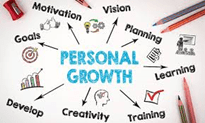
Many schools have life skills as a compulsory subject to be taught to the students in their curriculum through interesting and engaging activities. Be it sports or fun activities, which would help them in their journey in the future. I feel it should be included in all school curriculums and should be taught in middle school(childhood) as it is needed for the adoption of certain vital skills such as decision making, cooperation and empathy.
To induce positive development and good ethics within one’s self, self-work on life skills is needed, especially in a time where life is becoming tedious and can take unexpected turns one needs to look into one’s self care.
Unemployment Issues in India
Unemployment has become a very serious issue in India because of the growing population and demand for jobs. Moreover, if we neglect this problem then it will have an adverse impact on the whole economy and will become the reason for the doom of the nation. Whenever there is high degree of employment rate the production improves thereby increasing the standard of living.
High unemployment rate in a country leads to social and economic problems in the community as a whole. Economic problems result in less production of goods and services, less distribution of income, fall in GDP rate etc. Individuals cannot meet their financial obligations on time and getting high stress which leads to problems like ill-health, premature death, suicides etc. High unemployment causes less consumption of goods and services and less tax payments results in higher government borrowing requirements. A large portion of the population is engaged in the agricultural sector and the sector only provides employment in harvest or plantation time. Apart from this, increase in poverty, an increase in crime rate, exploitation of labor, political instability, mental health, and loss of skills adversely impact our economy. The other factors include population growth, slow economic growth, seasonal occupation, slow growth of the economic sector, and fall in the cottage industry. In addition, the biggest reason of unemployment in India is its vast population which demands a large number of jobs every year which the government and authorities are unable to provide. As a result, all this will eventually lead to the demise of the nation. The various types of unemployment include disguised unemployment, seasonal unemployment, open unemployment, technological unemployment, structural unemployment, cyclic unemployment, educated unemployment, underemployment, frictional unemployment, chronic unemployment, and casual unemployment.
Causes for unemployment include advancement in technology ( as the technology keeps advancing , companies look for employees having the latest technical skills) , recession ( financial crisis in one country can affect the other countries economy due to globalization) , changes in the global markets ( the economy of a country is adversely affected when its exports are down the line due to changes in global markets, and increase in price which leads to massive loss in terms of production and companies are unable to pay on time hence increasing the rate of unemployment) , job dissatisfaction by many employees ( when employers pay less attention to the performance of employee, it leads to lack of interest and desire to work and unemployment becomes inevitable, as employees deliberately loose their jobs)
Unemployment has now become such a dangerous economic. Social and political problem that it has endangered the security of the country. The law and order situation in the country has also been affected. Hence, the government has to take measures to curb the problem.The government has taken necessary steps to solve this significant issue. Several policies have been made to reduce the unemployment problem in the economy. The Government is planning to expand capital projects like new roads, constructions of new hospitals and major infrastructural projects which can become a platform in creation for more jobs and increases income generation to the economy. Also several initiatives have been launched such as IRDP (Integrated Rural Development Programme), NRY (Nehru Rozgar Yojana), Drought Prone area program, PMGSY (Pradhan Mantri Gram Sadak Yojana), Employment Guarantee Scheme etc. Moreover, the government is spending on irrigation, farms, and roads, etc. Steps to reduce unemployment include population control, more small- medium enterprises, good education system and improvement in agriculture. Necessary steps are to be taken by the government in increasing the productivity for the overall development of the country and reducing the unemployment problem in the economy .
 Eduindex
You must be logged in to post a comment.