Five elements of earth:

Panchtatva is a sanskrit word consists of word ‘panch’ which means five and ‘tatva’ which means element, which combinely means five elements. According to Hindu mythology, air, fire, earth, water and space are considered as the five elements of earth. Human body is also considered to be made up of these five elements which when person dies goes back to the nature. These all five elements are balancing the body & deficiency of any one of these can cause diseases.
Every element has their specific significance and importances.

Earth also abbreviated as “bhumi” in sanskrit represents solid state of matter. Bones, tissues, hair, muscles are considered to be made up of solid. It can be touched, seen, smelled, tasted and heard.

Water abbreviated as “jal” in sanskrit represents liquid state of matter. Our blood, saliva, sweat is considered as liquid. Human body consists of 60% water in it. It can be seen, tasted, heard and touched but can’t be smelled because it is odourless.

Fire abbreviated as “agni” in sanskrit represents that one state of matter can be converted into another. It shows temperature, energy, light of our body. It can be heard, touched, seen.

Air abbreviated as “pavan” in sanskrit represents everything which is in gaseous form. Gases present in our body such as oxygen, carbon dioxide, nitrogen etc. are considered as air. Contraction and expansion of body parts are represented. It can be heard and touched.

Sky abbreviated as “akash” in sanskrit represents voids i.e. space. Atma or Soul is considered as space. It is beyond of all the senses.
Each and every element are related to eachother in friendly, envious or in loving way. Fire and water tries to destroy eachother when together, so they are considered as envious. Earth and water are loving because water can’t live without earth. While air-fire and air-water are friendly, they donot harm eachother.

Everything is made up of Panchtatva & even on its destruction, everything gets converted back into these elements which are very necessary for balancing each and every thing.

Patanjali claims to make herbal medicine for cure Covid 19…

The very well known Patanjali brand of Swami Ramdev claims that their organization made the herbal medicine for COVID-19. On a press release Baba Ramdev tells this medicine already tested on Covid 19 patients. And successfully all the patients comes with negative reports after regular 10 days dose of Coronil tablet.

But the Govt. Of India doesn’t give them license as a medic for Covid 19. The officials of Health Ministry told this medicine can be a immunity booster but it doesn’t proves as a medication for curing of COVID 19. Patanjali now giving documents and claims regarding this for approving this medicine for COVID-19.

Baba Ramdev also told that this medicine also available in very effective price through which everyone can buy it. This medicine is composed of various medical herbal like Giloy, Tulsi, Ashwagandha and many more .

In this pandemic situation, everyone wants a effective solution for this virus. India is also in a row for it too. If the patanjali successfully proves it’s medicine, then it really a great relief for all of us. Although patanjali also growing as a globally acknowledged brand. After this inventory , we are sure patanjali helps in our ,”MAKE IN INDIA” project too………

Trust A Snake But Not China

I am in tears to see how our entire nation stands completely united behind our PM Narendra Modi on China issue. Never in my wildest of dreams could I have imagined that political stalwarts from nearly all parties except Congress ranging from former Defence Minister Sharad Pawar to former UP Chief Minister Mayawati to former Railway Minister and presently Chief Minister of Bengal Mamata Banerjee well known as worst critic of PM Modi among others would all speak in one voice that they fully stand with PM Modi on China issue and shall back every move taken by him. Even Arvind Kejriwal who is CM of Delhi and did not attend the all party virtual meeting chaired by PM Modi too made it amply clear that he stands fully with PM on China issue!

                                       I am also in tears to see how Telangana CM K Chandrasekhar Rao visited the family of late Colonel B Santosh Babu who was the Commanding Officer of 16 Bihar Regiment and  who also led from the front and was martyred in recent Galwan face-off along with 19 others. Rao gave a cheque of Rs 4 crore to late Col Babu’s wife and also another cheque of Rs 1 crore to his parents. He also offered a Group 1 job to the late Colonel’s wife and made her a Deputy Collector in the State and also gave a 6,400 sq ft residential land in Hyderabad to the family! Certainly, the supreme sacrifice rendered by late Col Babu cannot be ever compensated by money or anything else but it will ensure that their families are not left on streets to fend for themselves as most unfortunately we saw in the aftermath of the 1962, 1965 and 1971 wars!

                                      Needless to say, the dastardly, ghastly and most cowardly betrayal by Chinese troops who suddenly attacked Indian troops led by late Col Santosh Babu in a similar way as terrorists do has shocked not just India but the whole world. This latest betrayal by China has only served to vindicate what former Defence Minister late George Fernandes had said about China that, “Our real enemy is China whom we must sort out first. Pakistan is a small fry and can be handled later.” Another former Defence Minister Mulayam Singh Yadav too considers China as our real enemy.

                                 Even former Supreme Court Judge – Justice Markandey Katju had termed Pakistan and Bangladesh as “fake countries” created by Jawaharlal Nehru and Indira Gandhi and had predicted that ultimately they would be merged with India in coming years! So then who is left? It is China! My best friend Sageer Khan too termed China as India’s biggest security threat for whom he said that we must have long term plans to crush them. Sageer also said that Pakistan is no worry as it can be crushed anytime as we did in 1971 when it was partitioned most easily when Bangladesh was born. Pakistan just keeps talking about cutting India into thousand pieces but even after nearly 50 years when we partitioned them, it has not been able to do anything except to rant, rant and rant!

                                         So our real worry is China. We must recruit more soldiers to fight with China on equal strength as they currently outnumber us. Our strength is about 11 lakh and their strength is more than 20 lakhs! We must buy latest fighter plane like Rafale from France as early as possible.

                                          We must guard ourselves from getting complacent and relaxed by just saying what we keep hearing also in some news channels repeatedly that, “This India is not what it was in 1962. This is India of 2020. Even China which spends lavishly on defence much more than what we spend has too come a long way since 1962.” We must never forget the age old time tested dictum that, “The more you sweat in peace, the less you bleed in war.” We cannot take a strong power like China for granted!   

                                         We must strive to remove all our weaknesses in defence and it is heartening to note that the current dispensation led by PM Narendra Modi and Defence Minister Rajnath Singh is exactly doing that! They have ensured that China releases our ten soldiers whom they had taken captive for which they must be commended and not condemned! We too released their soldiers including a Colonel rank officer. Rajnath Singh has just recently left for Russia on a three-day visit during which he is likely to press for the timely delivery of the S-400 missile defence systems and discuss ways to further expand bilateral military ties, amid the escalating border row with China! This is the crying need of the hour also!   

                                                Days after the India-China face-off in Galwan river valley, the family of Ladakhi writer and explorer Ghulam Rasul Galwan – from whom the Valley gets its name – recalled another brutal encounter on the same land, this one a century ago, that their ancestor had with Chinese soldiers. Manzoor who is Ghulam Rasul’s great grandson lamented rightly that, “It pains us that more than 100 years on, Chinese transgressions have continued.” Now again they have betrayed us and attacked without any cause! Even a snake cannot be as dangerous as China!

                                                 So it must be reiterated that we should never trust China and should never lower our guard under any circumstances. It is China which has constantly helped Pakistan to fight against us by providing them nuclear weapons, missiles and what not! It is again China which has mala fidely provoked Nepal with whom we enjoy good relations to declare many areas which belong to India as their own territory by bringing and passing a resolution in this regard just recently in Parliament!

                                            Again it is China which is provoking our other neighbouring countries like Sri Lanka to turn totally against us! It is China to whom Pakistan has ceded huge territory of PoK. It is China which wants to occupy the whole of Kashmir! It is China which is luring Pakistan into debt trap and want to eliminate its identity as a nation itself!

                                            It goes without saying that China cannot be loyal to anyone. It backstabbed us in 1962 after giving emotional slogans like “Hindi Chini Bhai Bhai”. This explains why now Zee News Channel has very rightly raised another slogan titled “Hindi Chini Bye Bye”!   

                                                Asserting India’s full and firm claim on the Galwan Valley of Ladakh, New Delhi has told Beijing that making “exaggerated and untenable claims” is contrary to the understanding reached in talks between military commanders on June 6. Anurag Srivastava who is the official spokesperson of the Ministry of External Affairs said suavely that, “Given its responsible approach to border management, India is very clear that all its activities are always within the Indian side of the Line of Actual Control. We expect the Chinese side to also confine its activities to its side of the LAC.” He minced no words to say that, “The Chinese side unilaterally attempted to change the status quo, took premeditated and planned action and was directly responsible for the casualties suffered by both sides. This could have been avoided had the agreement at the higher level been scrupulously followed by the Chinese side.”

                                                While calling the dastardly attack on Indian troops as “a premeditated action by China”, Lt Gen BS Jaswal (retd), former Army Commander, Northern Command, said he would have supported the use of firearms by Indian troops in the face of such “barbarism”. Jaswal who commanded this sector in 2010 said, “When the CO, 16 Bihar went to Patrolling Point PP14 and asked them to withdraw, they refused and a scuffle ensured. They attacked the commanding officer and our boys reacted. Our disadvantage was that we weren’t carrying any tools… Meanwhile, the Chinese got reinforcements which led to so many casualties.” He rightly added that, “I salute my boys. They caused double the casualties unarmed.” It was widely reported that they lost about 45 to 60 soldiers but Chinese kept quiet on such reports. Just recently they conceded that two officers of theirs died including a CO in a bloody confrontation with Indian troops on the night of June 15 in Galwan Valley. It is for the first time since Vietnam war that the PLA of China has suffered so many casualties!

                                               To be sure, Gautam Bambawale who is former India’s ambassador to Beijing while describing the killings of soldiers at Galwan as an “inflexion point” in India-China relations said it was time for New Delhi to make a “deep reappraisal” of its policy towards China, because the old template that has been defining their relationship for the last 30 years was “no longer working”. He further said that, “The current paradigm of India-china relationship was set in December 1988 during then Prime Minister Rajiv Gandhi’s visit to China. The key thing of that template was that while we continue our efforts to find a resolution of the boundary dispute, while ensuring peace on the border, the interactions and exchanges in other fields must proceed forward. After that there have been several agreements and understandings, in 1993, 1996, 2005, 2013 and several others. The world has changed in the meanwhile, the two countries have changed, but our relationship has continued to be defined within that template. I think this particular incident should change that.”

                                            Following the violent border face-off with China on June 15 that left 20 Indian soldiers dead and 45-60 Chinese soldiers dead, Defence Minister Rajnath Singh told the military top brass during a review meeting that the government has given the forces freedom to “give a befitting reply” if there is further escalation from the other side. PM Modi while praising the valour of the 20 army personnel killed in the clash said they “taught a lesson” to those who were eyeing Indian territory. Col (Retd) Sonam Wangchuk who is a hero of the Kargil war and Maha Vir Chakra awardee said that, “After this incident, we lost 20 boys but in return the casualties that we inflicted were more than double, around 40-43. I am sure we retaliated hard. The Chinese never admit their casualties. This happened in 1962 as well. Our one Kumaon company killed a thousand of theirs, while we lost 130 boys. Even at that time, they did not admit their casualties. Most probably this time too they will not admit it.”

                                                        It is heartening to note that the commanders will no longer be bound by restrictions on the use of firearms. A significant change has been made in rules of engagement (ROE) by the Indian Army by which “complete freedom of action” given to commanders deployed along the contested Line of Actual Control (LAC) to “handle situations at the tactical level”. The commanders will have full authority to respond to “extraordinary situations” using all the resources at their disposal. It was also disclosed that, “With the changes in the ROE, there’s nothing that limits the ability of Indian commanders to take whatever action they deem necessary on the LAC. ROE have been amended  to address to address the brutal tactics being employed by Chinese troops.”   

                                                    On Congress leader Rahul Gandhi’s question on whether the Indian soldiers were sent in “unarmed”, External Affairs Minister S Jaishankar tweeted that, “Let us get the facts straight. All troops on border duty always carry arms, especially when leaving post. Those at Galwan on 15 June did so. [It is a] longstanding practice (as per 1996 & 2005 agreements) not to use firearms during faceoffs.” It must also be noted that Article 6 of the agreement on confidence building measures in the military field along the LAC, signed by India and China in November 1996, states that, “Both sides will not open fire or conduct blast operations or hunt with guns or explosives within two kilometers from the Line of Actual Control.” It is China which has mocked at it by violating it flagrantly defying all that is prescribed in it!

                                   Clearly, China is now on the backfoot as it sacked the Army Commander for its Western Theatre Command ground forces responsible for handling the Sino-India border and who oversaw Chinese aggression in the Eastern Ladakh region and that too ahead of the all-important Corps Commander level meeting and appointed Lt Gen Xu Qiling as the new Commander. Both in the Doklam 73 day standoff and now Ladakh standoff, there is one common denominator: General Zhao Zongqi who is the PLA’s Western Theatre Command’s big boss who was masterminding everything. It is he who masterminded both the standoffs and has cultivated the reputation of being ruthless on the border. But now Xi Jinping has made him the scapegoat by sacking him. The Chinese don’t want to admit that it was their President who got his army’s nose bloody. So it is far more convenient to pin the entire blame on the sacked Lt General! It is very much possible that this sacking took place because India matched up to Chinese build up and kept developing its infrastructure relentlessly despite Chinese PLA’s strong attempts to block it somehow!  

                                      It is a no-brainer that the reason behind Chinese aggression is that it wants to hamper and stall the construction of the winding 255 km Darbuk-Shyok-Daulat Beg Oldie Road. This road will allow the Indian Army to easily access its last military post South of the Karakoram Pass. China was opposing the construction of this road, because once completed, this road will allow India to put retaliatory pressure on the Dragon at the Karakoram Pass, Chip Chap river area, Trig Heights, Hot Springs, Galwan and Depsang Plains. China wants to make the Daulat Beg Oldie sector inaccessible for India as part of its larger diabolical conspiracy of achieving its evil design of connecting Tibet with Pakistan occupied Gilgit-Baltistan. But thanks to our strong political leadership under PM Modi that India didn’t buckle and the political along with the military leadership made it absolutely clear that there will be no hiatus in road building along the Sino-India border. It is China which has to move back and restore the status quo as was the case in April 2020!

                                               Former Chief of Army Staff and now Minister of State for Road Transport and Highways – Gen VK Singh too very rightly suggests that, “The first thing that has been given out is to boycott Chinese goods, let’s start with this. Let’s hurt them economically… War and use of force is the last resort always and every time. When all other means fail then you resort to this. There are many means available.”  

                                                 To be sure, P Stobdan who is an expert on the Himalayan region very rightly points out in Hindustan Times dated June 20, 2020 in his enlightening article titled “How the Galwal Valley tragedy can transform Himalayan geopolitics” that, “India must respond to China’s move, not just through military means but through a forward-looking strategic, economic and connectivity vision matching China’s BRI project. It must think about reconnecting and resuming old trade links. Ladakh is a geostrategic axis or a pivot point for India to reach out to Central Asia, Europe and Russia. The Dorbo-Shayok-DBO road should be called the Ladakh economic corridor. It should be India’s approach to go beyond the Himalayas. Otherwise, India is destined to remain defensive in posture. This, however, is contingent on India reworking the governance priorities in Ladakh. The region has already remained neglected for a long time due to Article 370 and 35A.” He also rightly suggests that the area must be populated more as it is the locals who have the best understanding of the border.

                                          Air Chief Marshal RKS Bhadauria while referring to the situation on the Line of Actual Control and addressing a combined graduation parade at the Air Force Academy in Dundigal said, “We are well prepared and suitably deployed to respond to any contingency. I assure the nation that we are determined to deliver and will not let the sacrifices of our soldiers go in vain.” Speaking to media-persons later, he also said: “The Army is in total control of the situation at the Galwan Valley and the Air Force is ready to support the Army’s efforts by deploying additional forces to meet any emergency.” He also said: “The IAF has stepped up deployment in Leh and Srinagar. We are aware of the full situation. Be it at LAC, be it deployments beyond LAC. All the air deployments, their postures, the kind of deployments… We have full analysis and we have taken the necessary action that we need to take to handle any contingency that may arise with this kind of deployment. All actions have been taken. We know what their (Chinese) fields are. We know what their air fields are, where they are deployed, what are the operational bases.”    

                                     It would perfectly be in order to pay heed to what the IAF chief RKS Bhadauria advised that, “The security scenario in our region mandates that our armed forces remain prepared and vigilant at all times. The development at LAC is a small snapshot of what we are required to handle at short notice. Please join me in paying tribute to Colonel Santosh Babu and his brave men who sacrificed their lives while defending the LAC in Galwan Valley. The gallant action in a highly challenging situation has demonstrated our resolve to protect the sovereignty of our country at any cost.”

                                             It is but obvious that all the major countries whether it is USA or European Union or Australia have stated that they stand fully behind India and strongly condemned China for its Army’s cowardly and unprofessional acts! US Secretary of State Michael Pompeo has blamed China for escalating tensions along the border with India and openly termed it a “rogue Actor” in the neighbourhood. He also said that, “The PLA has escalated border tensions – we see it today in India, the world’s most popular-populous democracy. And we watch as it militarises the South China Sea and illegally claims more territory there, threatening vital sea lanes, a promise they broke again. It’s no longer enough to listen to what the Chinese Communist Party is saying. We can see their actions. I ticked through a few of them: Hong Kong, Tibet, Xinjiang, what they’re doing in India, what they’ve done in the economic zones along the Philippines and Malaysia and Indonesia and Vietnam, the coercion on Australia – when they had the audacity to demand that there would be an investigation of how this virus got from Wuhan to Milan, how this virus got from Wuhan to Tehran, how this virtus got from Wuhan to Oklahama City and to Belgium and to Spain, and decimating the global economy.” Can such a notorious nation be ever trusted? Certainly not!

                                Ostensibly, the writing on the wall is clear. Chinese can never be trusted. A snake can still be trusted as it may turn out to be non-poisonous also but China is full of poison and venom against not just India but even its own people where it rules by force and can never be trusted under any circumstances! The Galwan incident in which we lost 20 soldiers is the first such killings on the Sino-Indian border in 45 years. India has done the right thing by now removing all restrictions on soldiers of not opening fire as China has betrayed us most cruelly and most wrongly! Chinese soldiers fear Indians and this we saw when how the 1967 Nathu La conflict between India and China which started with pushing and jostling before a Chinese soldier opened fire and shot dead the Indian Commanding Officer. Indian forces retaliated very hard and we killed 340 soldiers of China but they could kill only 88 of our soldiers!

                                            In conclusion, the bottom-line from this latest dastardly incident is: Trust a snake but not China. It is China which is the root cause of all aggression directed by small neighbouring countries like Pakistan and Nepal against India! China intruded more than 600 times when Dr Manmohan Singh was PM and we lost more than 700 km. Overall, India lost more than 43,00 square km area in Congress rule which was catastrophic! Additionally no roads and no infrastructure were developed in border areas in last more than 70 years about which even former Defence Minister AK Antony of Congress party itself had lamented! We must highlight the nefarious designs of China and its brutal killings of our soldiers in all international forums and just like this time our soldiers ensured that Chinese soldiers and officers were killed in future also soldiers must have full freedom to open fire and this is what Centre has done now very commendably!

                                           On a concluding note, it is high time and we must now stop showing extra generosity towards China. It was India under Jawaharlal Nehru as PM who when America offered it a permanent seat in Security Council offered it instead to China due to which we have suffered immeasurably! What did we get in return? Backstabbed most grievously by the unprovoked 1962 Chinese well planned unprovoked invasion on India! Chinese’s sole and firm opposition till now in 2020 for India getting a permanent seat in UN Security Council and membership of India in Nuclear Suppliers Group (NSG)! The only silver lining in the dark cloud is that the present dispensation has clearly manifested that it will not kowtow before it as had happened earlier for which it must be commended and not condemned!           

Sanjeev Sirohi, Advocate,

s/o Col BPS Sirohi,

A 82, Defence Enclave,

Sardhana Road, Kankerkhera,

Meerut – 250001, Uttar Pradesh.

SC Finally Allows Jagannath Rath Yatra At Puri On Conditions

It is heartening to see that the Supreme Court in a latest, landmark and laudable judgment titled Odisha Vikas Parishad vs Union Of India & Ors in Writ Petition(s) (Civil) No(s). 5721/2020 dated June 22, 2020 has while modifying the absolute stay on conducting the Jagannath Rath Yatra at Puri has allowed it observing the strict restrictions and regulations of the Centre and the State Government. These strict restrictions and regulations are considered imperative also considering the increasing spread of the Corona pandemic! So there is no reason to oppose them!

                                To start with, this noteworthy judgment that was delivered by Chief Justice of India (CJI) – Sharad Arvind Bobde, Justice Dinesh Maheshwari and Justice AS Bopanna first and foremost sets the ball rolling by observing right at the outset that, “These are applications made by several parties for intervention and modification of Order dated 18th June, 2020 passed by this Court. By that Order, we had restrained the respondents from holding the Rath Yatra this year in view of the danger presented by gathering of 10 to 12 lakhs devotees for a period of 10-12 days. Clearly any spread of the Coronavirus due to the Rath Yatra would be disastrous due to the large number of persons and the impossibility of tracking all the infected people after they have gone back to their respective homes. Needless to say that it is not possible to screen the medical conditions of all those who converge on the cities for the Rath Yatra.”

                                                 It is a no-brainer that considering the huge presence of devotees at this Rath Yatra that we witness every year, there was a dire need to impose strict restrictions to check the epidemic from further spreading very rapidly as it spreads by contact. This what the Apex Court Bench in this notable case has stated right at the outset also. There can be no denying or disputing it!  

                                          To be sure, the Apex Court Bench then very rightly went on to say as a word of caution that, “While we do not have the official copy of the gazette itself, we are informed that in the 18th-19th century a yatra of this kind was responsible for the spread of cholera and plague “like wild fire”. We say this in order to remind the authorities concerned that the situation can become dangerous if the rules of caution are ignored.”

                                 To put things in perspective, it is then envisaged by the Apex Court Bench that, “Before we passed our earlier Order we had suggested to the parties that the procession of chariots, i.e., the Rath Yatra itself, could be allowed to proceed, however, without the general congregation which participates in this Yatra. We were informed that it would be well nigh impossible to ensure that there is no congregation. This Court was, therefore, left with no option but to grant an injunction restraining the Rath Yatra itself.”

                                         While elaborating further, it is then pointed out by the Apex Court Bench that, “However, we find, in one of the present applications, an affidavit filed on behalf of the State of Orissa stating that it might be possible to conduct the Rath Yatra at Puri “in a limited way without public attendance”. This has been proposed by Gajapati Maharaj of Puri, who is the Chairman of the Puri Jagannath Temple Administration. Indeed, if it is possible to ensure that there is no public attendance, we see no reason why the Rath Yatra cannot be conducted safely along its usual route from temple to temple.”

                                                        Most significantly, it is then held by the Apex Court Bench that, “Having given serious consideration to the matter and having heard the parties, we are of the view that the Rath Yatra at Puri may be held subject to following conditions:

(1)         All entry points into the City of Puri, i.e., airports, railway stations, bus stands, etc., shall be closed during the period of Rath Yatra festival.

(2)         The State Government shall impose a curfew in the City of Puri on all the days and during all the time when Rath Yatra chariots are taken in procession. The State Government may also impose curfew in the city of Puri on such other days and during such time as deemed necessary. During the period of curfew no one would be allowed to come out of their houses or their places of residence, such as hotels, lodging houses, etc. To start with, the curfew shall begin tonight at 8 P.M.

(3)         Each Rath i.e., Chariot, shall be pulled by not more than 500 persons. Each of those 500 persons shall be tested for the Coronavirus. They shall be permitted to pull the chariot only if they have been found negative. The number 500 shall include officials and police personnel.

(4)         There shall be an interval of one hour between two chariots.

(5)         Each of those who is engaged in pulling the chariot shall maintain social distancing before, during and after the Rath Yatra.

(6)         We are informed that certain rituals are associated with the Rath Yatra. We direct that only such persons shall be associated with the rituals who have been found to have tested negative and shall maintain social distancing.

(7)         The primary responsibility for conducting the Rath Yatra in accordance with the conditions and other norms shall be that of the Committee in-charge of Puri Jagannath Temple Administration. Each member of the Committee shall be responsible for due compliance with the conditions imposed by this Court and the general directions which govern ensuring of public health issued by the Union Government. In addition, the officers designated by the State Government for conduct of the Rath Yatra shall be responsible likewise.

(8)         The rituals and the Rath Yatra shall be freely covered by the visual media. The State Government shall allow TV cameras to be installed at such places as may be found necessary by the TV crew.

(9)         The bare minimum number of people shall be allowed by the Committee to participate in the rituals and in the Rath Yatra. We take a note of the fact that the State of Orissa has a good record of having controlled the pandemic with a very little loss of life. We see no reason why the same attitude of care and caution should not be applied to the Rath Yatra.

(10)  The State Government may take such help as may be found necessary from the Union Government. Shri Tushar Mehta, learned Solicitor General, has assured the Court that the Union Government shall offer all assistance and help to the State Government in this endeavour.

(11)  The State Government shall maintain a record containing details of all those who have been allowed to participate in the Rath Yatra or the rituals connected therewith along with details of their medical conditions after testing.

                                                   Finally, it is then held in the last para that, “All the applications for intervention and modification of Order dated 18th June, 2020 passed by this Court are disposed of.”

                                                All said and done, it is a commendable judgment delivered by a three Judge Bench of the Apex Court which includes the CJI also! It may be recalled that the Apex Court on June 18 had ordered that no Rath Yatra should be held keeping in mind the pandemic situation. But no it stands modified and the Rath Yatra has been permitted with the restrictions and conditions as has been already above elaborated upon in detail!

Sanjeev Sirohi, Advocate,

s/o Col BPS Sirohi,

A 82, Defence Enclave,

Sardhana Road, Kankerkhera,

Meerut – 250001, Uttar Pradesh.

Coming together in COVID-19

Since the dawn of civilization, epidemics and pandemics have continued to haunt mankind. From the outbreak of Spanish Flu to Yellow fever, history of these pandemics dates back to the time of plague in Athens (430 B.C).But perhaps; COVID-19 (spread by SARS-COV-2 virus) is greatest in the history of mankind. This particular virus has brought entire world to a halt, something that the modern world history hasn’t witnessed before.

The virus, whose roots can be traced back to Hubei Province in China, has spread globally causing the infected number of cases rising over 92 lakh. From the Superpowers to third world countries, this virus has brought down healthcare sector, economies and the entire human race on its knees; India being no exception. Yes, various sectors such as healthcare, education, energy, and logistics have faced a serious crunch amidst lockdown. With the global economy shrinking to an all time low, economists predict a depression like situation in the near future. One might question whether we are heading towards an inevitable crisis? Or is the humanity doomed? Such negative thoughts do more harm to us than the virus itself.

Just like all other major turmoil and struggles, COVID-19 too comes with its own share of lessons and learning for the mankind. Lessons in humility, humanity and gratitude. These simple lessons which we had long forgotten in the rat race for materialistic pleasures.  While some countries initially played the “blame game” but very soon they realized that the mightiest weapon in combating the virus lies in unity and mutual co-operation. Shunning the geo-political differences, the SAARC countries came together and contributed to the COVID-19 relief fund. Other stories include those of Hindu-Muslim harmony in Telangana where a group of Muslim men performed the last rituals of a Hindu woman in the middle of lockdown restrictions. This virus has brought out heart warming stories of real heroes to the forefront. From the generous acts of donating her education savings by 13 yr old Nethra of Madurai, few Jamatis voluntarily coming forward to donate plasma serve as a ray of hope in these turbulent times.

Despite the social distancing, humanity is coming closer than ever before with a mutual sense of compassion, empathy and concern towards fellow human beings.  While we stay hidden indoors amidst fear, the mother earth is breathing back to life. Those little sparrows playing in my balcony, which I hadn’t seen in a long while, are a living testimony to that. The medical staff, sanitation workers and the COVID warriors whom we once took for granted are risking their lives to save ours. What else could be a nobler act than this!

The corona virus has indeed enabled us to look beyond economic differences. Becoming more sensitive and considerate towards our domestic helps. We’ve begun appreciating simple acts of kindness, engaging in deep conversations with our loved ones and clapping to say “thank you”. Our generation is more enlightened than ever before with the realisation however evolved the human race might become but in the end we’ll only remain a tiny spec in the universe. The forces of natural world are far mightier than we could possibly become. Humans may change the course of nature but can’t defy it.

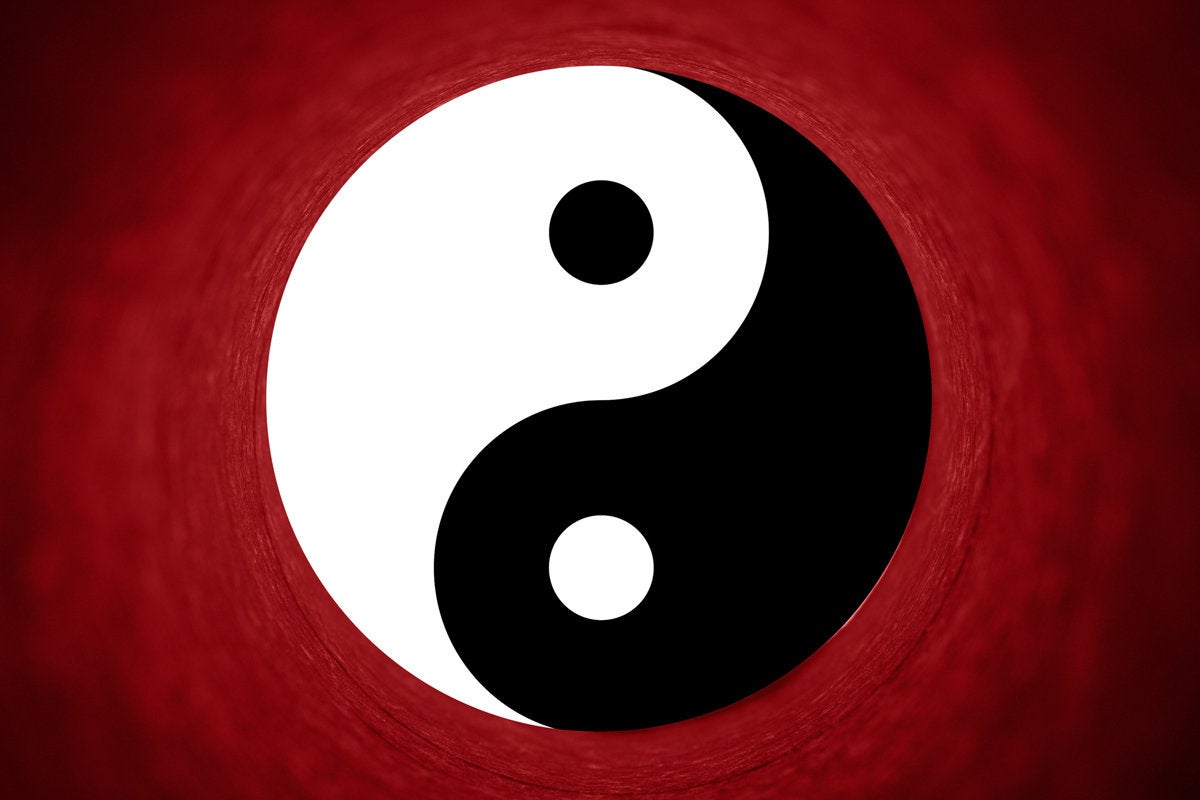
The Chinese symbol “Ying and Yang” illustrates the philosophy of life beautifully. Life flows when energies complement rather than contradict each other. The mankind and nature must maintain balance for life to exist .The day we try to overpower the forces of natural world; it will only take a single microcosmic organism to perish the entire human race.

Yin and yang: business and IT | CIO

No, I’m not implying living in a utopian world and becoming ignorant of this deadly virus .True that our healthcare and education systems have failed required to meet necessary standards. But if it wasn’t for COVID-19, these loopholes might have gone neglected. There is no better time to reshape the economy, healthcare, politics and culture than now for the dawn of new world post COVID-19.

But why did it take a virus for this realisation?

Because sometimes we need to get sick in order to get better”.

Let’s change our outlook towards this pandemic. Instead of perceiving it as a threat we need to see it as opportunity and emerge stronger than ever before. We are a fortunate generation having the privilege to shape a better world than the one we left behind. All we need is to shed stigmas and embrace this change.

Concluding in the words of Yuval Noah Harrai (bestselling author of Sapiens)

“The storm will pass, humankind will survive, most of us will still be alive –but we will inhabit a different world.”

How does Music Therapy work?

Music has emerged to be one of the most influential driving tools of life. It helps people to stay healthy both physically and mentally. It has the exceptional power to transcend all the physical and mortal boundaries and reach to a spiritual level. Music knows no barriers for it is a fluid element that helps mortal beings to go beyond what is there in the physical world. There have been several research programs that showed the characteristic development on a statistical way that is brought about by music therapy.

Music therapy did not evolve until the late 18th century when people started taking it seriously and worked accordingly. Everett Thayer Gaston is known to be the Father of Music Therapy for he was the first psychologist who made the proposal of using music as medicine, a tool to cure health issues. Somewhat around the middle of the 19th century it became a successful profession that was taken up by many professionals.

Music therapy is the process of using musical interventions to help enhancing patients’ psychosocial and physical health. It works on different levels including psychological, cognitive,social and social spheres. It helps in the enhancement of all these levels of the patients.

It is an evidence based process that helps patients to engage themselves with the pure serinity of music. This theraputic process has also emerged to be one of the best methods to increase patients’ cognitive stability. It helps people to develop a calm and quite mindset followed achieving a healthy mental health.
After diagnosing patients with the specific problems they suffer from, the therapist goes on to provide treatment that includes songs, instrumental music, meditational music so on and so forth. Different patients require different solutions. Treatment is provided according to the patient’s condition. Instrumental therapy has apparently been declared to be the most effective one among all the other methodologies.
Music therapy also helps patients to enhance their communication skills who find it difficult to express their emotions in words. It helps people to be more stable yet peaceful which eventually helps them attain mental peace.
There are mainly two types of methods that are followed to conduct music therapy sessions:

1. Receptive method: Receptive therapy mainly focuses on an indirect approach that involves activities like listening to pre-recorded songs/instrumental numbers. Although it does not involve patients directly, it still manages to have an immense amount of influence upon the patients’ mental health. It helps them cope up with their contemporary environment. It also enables them to communicate in a better way that helps them express their feelings better.

2. Active method: This method engages the patients in a direct manner. They are advised to engage on a music-making procedure due to which they end up composing several artistic musical numbers which not only helps them to get better at communication skills but it also helps in an alround development.

No matter which technique is being followed, both these methods help people to become better versions of themselves with the help of music. They find a new way of live through a new and fresh perspective. Music therapy therefore helps people to be better humans in terms of all kinds of characteristic developments regardless of their background and past history.

-Suvasree Bandyopadhyay

HARD WORK OR SMART WORK

Hard work leads to success. This phrase is very common amongst each one of us. But this is totally wrong! It is actually, “Smart Work That Leads to Success.”

Smart work is the work which you love to do. On the other hand, hard work is the one which you are compelled to do. How can one be successfull by doing a lot of labour in something?
Smart work does not requires labour, because the thing which you love to do, never requires an effort to be done!
So, why not start doing something which you love?


Actually their is no connection between hardwork and success! If success would really be connected to hard work,then, obviously a rickshaw driver would have been more successful than a bussiness man, who has to do much, than just to be involved in a sedentary job.


A rickshaw driver is putting more effort and working harder. Still, why is he not successful as a businessman? Yes! The secret behind this is: Smart Work. A rickshaw driver is doing that work because he is bound to do that, he is compelled to do that, he is doing that in order to earn a living.
On the other hand,a great bussiness man is doing nothing much, but is still successful, because he knows that he is perfect in that, and loves doing that.
Just do whatever you love. People and society will talk shit behind you,because they tag the personality of everyone. Actually we are living in a society where sinner judge sinners for sinning differently.


Remember ,when you love your work, their is nothing like hard in that. Work is all about being smart, and not laborious. Just take 5 minutes from your busy schedule and ask yourself, “Are you happy with what you are doing?” Are you satisfied and really loving what you are doing? Just think once.
The thing is, “When your focus shifts from Competition to Contribution, life becomes a Celebration.” So, just start working smartly. From today, from this very exact moment,because this is the biggest secret to achieve success, satisfaction, and endless happiness.

Michael Jackson’s controversial first marriage

Michael Jackson was an American pop singer, dancer and songwriter. He is also the founder of ‘moon walk’ which had a global reach. He is considered to be one of the greatest entertainers in the history of music. Despite a successful professional singing career, his personal life has remained a subject of controversy for a long time.

The Child abuse allegation

In August 1993, Michael Jackson was accused of a Child sexual abuse. The accusers were a 13 year old boy named Jordan Chandler and his father Evan Chandler. The father of the young boy accused Michael Jackson stating that he had seduced and indulged in sexual acts with his son.

Following this, the Police of Los Angeles who were investigating the case raided two of Michael Jackson’s houses. The police also investigated the boy and other youngsters who visited Jackson’s Neverland ranch in Santa Barbara. Michael Jackson, who was in Thailand when accused, issued a statement via his lawyer stating “I am confident the police department will conduct a fair and thorough investigation and that the result will demonstrate that there was no wrong doing on my part”. The cops were said to have seized two books from the closet that contained pictures of young boys with little or no dress. However, Michael Jackson settled this case out-of-court by offering 25 million dollar to the accused family. The court too dropped the case due to the lack of cooperation from the accusers. But, this allegation left Michael Jackson an permanent scar in his public image.

Michael Jackson marry Lisa Marie Presley

In the following year after this incident, Michael Jackson married  Lisa Marie Presley, the daughter of  Elvis Presley. The marriage took place outside of the USA in La Vega, Dominican Republic in May 1994. It was a first marriage for Michael Jackson whereas it was a second marriage for Lisa Marie Presley. The marriage was kept secret from the public, however when information began leaking through the media, the couple, on Aug. 1, issued a statement through Jackson’s MJJ Productions. In the statement Mrs Lisa Marie Presley-Jackson said that ”my marriage to Michael Jackson took place in a private ceremony outside the United States…weeks ago.” She added, ”We both look forward to raising a family and living a happy, healthy life together.”

Marriage a diversion – Media and Cynics

The Cynics and the tabloid media debated that the marriage was an attempt to veer the public from allegations of child abuse against Michael Jackson. While Mrs Jackson who was then a rising singer was criticized to have exploited the opportunity to enhance her career. 

But both Mr and Mrs Jackson refused these rumours when they appeared on ABC’s Primetime Live show. During the show they were questioned about rumors that their marriage was a publicity stunt designed to give Jackson legitimacy. “Like we’re faking this?” Jackson said. His wife replied, “How can you fake this 24 hours a day — sleeping with somebody, waking up with somebody? I’m not going to marry somebody for any reason other than the fact that I fall in love with them.”

Divorce

The marriage didn’t even last for a couple of years as they got divorced after 20 months of  their marriage life. Lisa Marie Presley’s publicist said that the separation was due to ‘irreconcilable differences’. And Jackson’s  publicist, Lee Solters, said only that the pair “have mutually agreed to go their separate ways. However, they remain good friends.” Though this incident led many people to conclude that this marriage was just a publicity stunt.

Sources

1.http://news.bbc.co.uk/onthisday/hi/dates/stories/august/24/newsid_2512000/2512077.stm

2https://en.wikipedia.org/wiki/Michael_Jackson

MENTAL TOUGHNESS

The term “mental toughness” refers to the idea of being able to push for those things which you think that you can’t do. Don’t be disturbed from your past failures, by remaining positive and competitive also. It also involves training and preparing oneself to be mentally ready for whatever challenge comes our way. Ready to face any issue. Give your best, show your maximum. Mental toughness is having the psychological edge that allows one to perform to perform at peak maximum effort and efficiency during the demands that are placed on them during training, practice, or competition.

How to Develop Mental Toughness And Stay Strong

  1. Develop a Positive Mindset. If you’re going to increase your mental toughness, the first thing you have to do is focus on building a strong, positive mindset. Never thing about negative side.
  2. Connect with Your Purpose.
  3. Find Strength in Unity.
  4. Learn to Pick Yourself Back Up After Setbacks. Don’t be disappointed. Be strong at any circumstances.

A lack of mental toughness is the biggest enemy of any person. Lacking mental toughness causes to give up, give in, tank the match, and give less. The level of your daily success is in direct proportion to your level of mental toughness. Mental toughness is a developed skill that allows person to push through difficult situations without losing confidence, hope and the ability to play at peak levels during masticate-time.  Mental toughness is an acquired characteristic. Either a person  is mentally tough or they are not. Increased mental strength is the key to performing at your peak.  Mental strength helps you manage your thoughts, regulate your emotions, and behave productively, and help you to become more successful person. That means you’ll be able to focus your effort and energy on the things that matter most. Distraction is lost from your life and you become very concentrated person

 Mentally Strong Person

  1. Decide Why You Want To Be Mentally Strong.
  2. Learn How To Maintain Balance. Between your personal life and working life
  3. Remove Your Emotions From Decision Making.
  4. Learn How to Ask for Help. If you need help ask for it, ask to your parents, friends.
  5. Find Out How to Accept Things. It is success or failure accept it.
  6. Focus On Being Mentally Strong Today.
  7. Learn How To Practice Kindness. Be kind to everyone with human as well as animals also, don’t be cruel.
  8. Set Mentally Strong Goals. Set your daily goals that you are not going to react on boss grumpyness.

Mental toughness, like physical fitness, is a skill sharpen over time. And enhance as time goes. It is developed and honed through experience, just like any other important skill or technique. Same you have to improve your mental strength also. Most athletes want their bodies to perform in a specific way on race day, so they train their bodies to be able to handle a certain level of stress. Or be prepared for the Stress.

Define what mental toughness means for you.

For you, it might be…

  • going one month without missing a workout
  • going one week without eating processed or packaged food
  • Never think too much about your past, just learn from last and let it your past
  • delivering your work ahead of schedule for two days in a row
  • Never demotivated from any failure
  • meditating every morning this week
  • Give time to your family at daily basis
  • grinding out one extra rep on each set at the gym today
  • spending one hour doing something creative every evening this week
  • Never late for your workplace
  • Don’t eat fast food and junk food
  • Don’t be angry on any silly things

Mental toughness is built through small wins. Daily by your activities & actions, as you start building as a habit, your confidence automatically increase. It’s the individual choices that we make on a daily basis that build our “mental toughness muscle.” We all want mental strength, but you can’t think your way to it. It’s your physical actions that prove your mental bravery. Whatever physically you work it shows how mentally you are strong and your willpower to do the work.

Mental toughness is about your habits, not your motivation.

Motivation is changeable. Willpower comes and goes. Motivation is unstable. So you have to maintain mental toughness as a habit, means after doing anything upto 21 days it’s become your habit. Make it your habit.

Mental toughness isn’t about getting an unbelievable dose of inspiration or bravery. It’s about building the daily habits that allow you to stick to a schedule, be habitual with this habit of mental toughness and overcome challenges and distractions over and over and over again. It’s not about a single day it’s about throughout the life till death.

Coronil – Baba Ramdev’s Corona Cure or just a “Desi Nuska”

Yoga guru Ramdev’s company Patanjali yesterday launched the Coronil kit priced Rs 545, which he claims is a cure for coronavirus. The medicine kit will be available through the OrderMe app and in stores soon. Is it true? Here is all you need to know about this magical ‘cure’ for the respiratory disease.

Coronil: All You Need to Know About Ayurvedic Drug Which Claims to Cure Coronavirus Within a Week

Baba Ramdev’s Patanjali Ayurved on Tuesday launched ‘Coronil’, the first-ever clinically tested, evidence-based ayurvedic medicine for curing deadly coronavirus, which has killed more than 14,000 people across the country. While launching the medicine, Yoga Guru Ramdev claimed that 69 per cent of patients recovered within 3 days and 100 per cent in a week or 7 days.

Baba Ramdev’s Patanjali Ayurved on Tuesday launched ‘Coronil’, the first-ever clinically tested, evidence-based ayurvedic medicine for curing deadly coronavirus, which has killed more than 14,000 people across the country. While launching the medicine, Yoga Guru Ramdev claimed that 69 per cent of patients recovered within 3 days and 100 per cent in a week or 7 days. “The whole world has been waiting for someone to develop a medicine for coronavirus. Today, we are proud that we developed the first ayurvedic medicine for coronavirus. It has been named Coronil. We’ve prepared the first Ayurvedic-clinically controlled, research, evidence & trial based medicine for COVID19. We conducted a clinical case study and clinical controlled trial, and found 69% patients recovered in 3 days and 100% patients recovered in 7 days”, said Ramdev, while speaking to reporters about clinical trials.

WHAT IS CORONIL MADE OF?

During the launch, Ramdev said Ayurvedic elements are being used in the tablet. “There are more than 100 compounds used in the Coronil,” he said.He said that Coronil has been made from a combination of naturally occurring immunity-boosting substances such as Mulethi (liquorice), Giloy (moonseed), Tulsi (basil) and Ashwagandha (Indian ginseng).

HOW MUCH DOES IT COST?

Patanjali has said that an entire kit is being made for consumers; the kit consists of Coronil as well as other immunity-boosting Ayurvedic medicines.The medicine comes as part of a kit which consists of tablets named Coronil and Swasari Vati, and oil called Anu Oil. The entire kit comes at Rs 600

Coronil dosage?

Panajali prescribes,”2-2 tablets should be consumed with hot water half an hour after meals. The above mentioned drug intake and quantity is suitable for people between 15 to 80 years of age. Half the amount of the above mentioned medicines can be used for children between the age of 6 to 14 years.”These are the written instructions on the pack. The other two medicines to be taken along with Coronil are ‘Shwasari’ which works on strengthening the respiratory system and cures the obvious symptoms of corona including cough, cold and fever and a nasal drop named ‘Anu Tel’ which helps build immunity, the firm said.

DOES IT REALLY WORK?

While Patanjali has claimed that it has conducted clinical trials to prove the effectiveness of Coronil, the full findings of the study are yet to be released.Moreover, no independent medical body has approved the use of Coronil as of yet.Patanjali claims those administered the medicine were fully cured and none died. Ramdev even claimed that 69 per cent of them recovered within 3 days.

“We’ve prepared the first Ayurvedic-clinically controlled, research evidence and trial-based medicine for Covid-19. We conducted a clinical case study and clinical-controlled trials and found that 69 patients recovered in 3 days and 100 per cent patients recovered in 7 days,” said Ramdev as he launched Patanjali’s Coronil tablet.

DOES CORONIL HAVE GOVERNMENT APPROVAL?

While Patanjali has made tall claims about the efficacy of Coronil, the ICMR and the Ayush Ministry have distanced themselves from commenting on the medicine.While Ayush Ministry officials claimed ICMR will speak on the medicine, the ICMR has said Ayurvedic medicines come under the jurisdiction of the Ayush Ministry and hence it should comment on it.Now, the Ayush Ministry has said that the Uttarakhand government has given clearance and licensing for the production of the medicine.

According to top sources in Patanjali, Coronil has received a license to be used as a medicine.”It contains salts and herbs prescribed by the Ayush Ministry. Allopaths call these salts anti-viral, whereas Ayurved knows them as immunity boosters,” the sources said.Later, the Ayush ministry said that it has taken cognizance of the news of Ayurvedic medicines developed for the treatment of Covid-19 by Patanjali Ayurved Ltd.”Facts of the claim and details of the stated scientific study are not known to the Ministry,” it said.

List of details

Patanjali Ayurved has been asked to provide, at the earliest, details of the name and composition of the medicines being claimed as successful in COVID-19 treatment; site(s)/ hospital(s) where the research study was conducted; the protocol, sample size, Institutional Ethics Committee clearance, Clinical Trials Registry-India (CTRI) registration, and results data of the study, and to stop advertising/publicising such claims till the issue had been duly examined.

Regulated by Act

“Also, the concerned Ayurvedic drug manufacturing company has been informed that such advertisements of drugs including Ayurvedic medicines are regulated under the provisions of the Drugs and Magic Remedies (Objectionable Advertisements) Act, 1954 and Rules thereunder and the directives issued by the Central Government in the wake of COVID outbreak. The Ministry had also issued a Gazette Notification on April 21, 2020 stating the requirements and the manner in which research studies on COVID-19 with Ayush interventions/medicines should be undertaken,’’ the Ministry said.

WHAT DO DOCTORS SAY?

Medical experts, however, were not convinced by Patanjali’s claims.Dr Ravi Shekhar Jha, Head of the department and senior consultant, Pulmonology, Fortis Escorts Hospital, Faridabad, said physiologically it is quite impossible that there is any medicine which can finish the viral load from the body in 5-7 days.”These claims can be very harmful because people, instead of taking actual medical help, may start rushing to these kinds of claims which have no proven clinical trial.

In the coming days, surely we’ll know whether Coronil is the cure or its just another “Desi Nuska”.

MRI

As medical sciences is getting better everyday it is mostly focussing more and more on the specific organ or part of the body having problem rather than doing a trial and error medication. For this it is really important that the doctors have the knowledge of the specific area of problem and body scanners do serves this purpose. They scan the body and develops the image of the inner body organs. There are many scanners out there like

  1. X- rays – This is the most common method used to scan the injured bones, the rays are used as they are blocked by bones and dense tissues of the body.
  2. CT scan – Also called computed tomography this is used to get detailed view of blood vessels and  organs in the body.

Third most important scanning technique is the MRI whose full form is  magnetic resonance imaging, the technique was invented in 1972 by Felix Bloch and Edward Purcell. Although in the early years this scanning technique was not used in human body, perhaps this idea was put by Raymond Damadian as he showed the doctors a way to actually use MRI to detect tumors. After some years of developing the machine so as to use it on human, in 1977 it was the first time that MRI was used on humans.

Physics behind MRI scanning

MRI is claimed to be better than CT scanning as it gives more detailed images of the body parts. Another important difference is MRI do not use radiations as CT or X-rays, as exposure to radiations can be a bit risky and especially X-rays can be harmful for pregnant women.

As we know about 60% percent of our body is  composed of water and chemical composition of water contains 2 hydrogen atoms and one oxygen atom. The hydrogen atom has one proton and one electron, and the nuclei has a characteristic  precession  because of which the magnetic moment  is created. when the body is exposed to a magnetic field of 1.5 to 3 Tesla, these magnetic moment aligns to the direction of magnetic field as the nuclei starts precessing about the magnetic field they are exposed to, this precession is called larmor precession. The frequency of the precession is proportional to the applied magnetic field. Next a radio frequency pulse is applied  which is equal to the frequency of the larmor precession, this causes the energy exchange and as they are in resonance. This causes the direction of magnetic moment to tilt a bit in the direction of the radio frequency pulse applied and when this radio frequency pulse is removed it tends magnetic moment to again come back to its position that is to align in the direction of the magnetic field . As this happens the nuclei emits its own radio frequency pulse, and different tissues in the body gives out different Radio frequency pulse. To detect this pulse  the body is covered by a coil which detects these pulses and these are converted to an image using the computers which uses mathematical methods like fourier transformation. This results in the highly accurate image of the body parts.

Though MRI is simple and has less risks like all these years pregnant women take MRI scans and there has not been any report of  any abnormalities while the child is born, but there are some precautions to be taken as follows

  1. Make sure one does not have any magnetic objects while going into the room
  2. There are many patients who fall sick after MRI, it is really normal because of the sedative given before the scan
  3. One should never move while MRI scan is been taken.
  4.  One should avoid driving after he or she has taken  MRI scan.


“Mutations In Corona Virus-Leading Towards Second Wave?”

Current era we are living in is a time of pandemic which is  spread all over the world, infecting millions of people and thousands of people losing life. The hike is growing day by day with no proper vaccines  and cure to it. There have been various studies and ways to test this disease. But various scientists are concerned about something which is surely not good news for people around the world. They believe that the spread of Corona-virus is increasing with its increase in mutation. Mutation is a phenomenon which means the change in the DNA sequence and this mutation can be due to mistake while Copying Of DNA to another cell or due to environment factors as a source of change and adapting the surrounding. 

There have been countries where this pandemic has been eradicated and some places where it is seeing a general downfall in its rate, while there are countries on the contrary and are seeking hikes day by day. Scientists believe that corona-virus may be mutating while it replicates from one individual to another. But the interesting fact is that these viruses or bacteria do mutate every time which means they do  and can change themselves while they get transferred from one person to others we know then need a host to be alive. Virus can be thus simply explained as anything that things that infect us and thus make us sick. Scientists believe that this Covid-19 virus is made up of RNA or Ribonucleic acid which is the building block of life and carry codes which do for a living organism. So this mutation happens when the sequence changes. When these viruses make mistakes in copying their code, they can’t reverse it which man’s that once it gets changed it will be the same forever, and this change goes on happening as it grows . Scientists have come up with discoveries reflecting the mutation process in this Covid- 19 virus

  1. It is believed that the mutation changes are very small and the person would be feeling the same symptoms as present in the older cases. 
  2. But mutation could be an area of concern while testing, as it may be possible that the technique we use for testing it may not be able to catch the mutation and thus gives us a negative result while it is still being present inside the body. 
  3. Also the possibility exists to find a vaccine solving the older virus while the new mutated virus still survives . So there needs to be advancement with time for testing technique, and at least twice a person should be tested so as to get a proper report. 
  4. This change in mutations and their known symptoms could also help the doctors to prepare the vaccine more accurately and effectively. 

But there are biologists that believe that mutations of covid-19 virus are small and their change remains mostly the same. So this could be a strong  reason which could give a reason to start the “Second wave” of virus, with much improved mutated virus. “So scientists and biologists need to remain updated with any change in the characteristics of these viruses, catch their mutations, track them and thus use them to find a proper vaccine and way out other than social distancing and thus save humanity from this deadliest virus and its spread”. 

World’s expansive sports…

We know that trends are currently much changed in the world and people are more engaged in sports. Games are an ideal approach to unwind from the regular schedules and accomplish something else. For the most part, pros say that games keep the general people healthy and useful for the psyche too. There are numerous sorts of games, in which some of them can be effortlessly played at home with everything utilized as a part of them yet a few sports are expensive and hard to play at home. These sports are led through some amazing competitions and shows to show them everywhere throughout the world. Anybody can partake in these sorts of games if he or she is equipped for playing them.

All another typical type of sports can be played whenever however these can’t be played or can’t be taken as a profession. Everybody has no entrance in these sports because of their uniqueness. The most critical thing in every one of these sports is cash without which these sports are unrealistic. Every one of these sports is continuously connected with the exclusive class as they can manage the cost of them.

Here some sports, which are expansive

1.The Whitianga Festival of Sports:

undefined

It is very famous sport that is conducted in New Zealand in every year. It has helicopter used in it, boat, ski racing and helicopter racing as well. In this sport there is basically a competition between one another. Owning and keeping the equipment for this game are very expensive and requires about millions of dollars. It is the most expensive sports teams in the world as well. the boat used in this game cost around $20,000 to $2 million.

2.Ski Jumping:

undefined

Ski jumping is a very famous and interesting sport in the world. The equipment used in this sport can cost about $2,500. The recreational ski jumping is very expensive and can only be affordable by the rich people. A jumper has to spend almost $100,000 to go for this ride. It is also ensured because of the high risk in this game.

3.Formula 1:

undefined

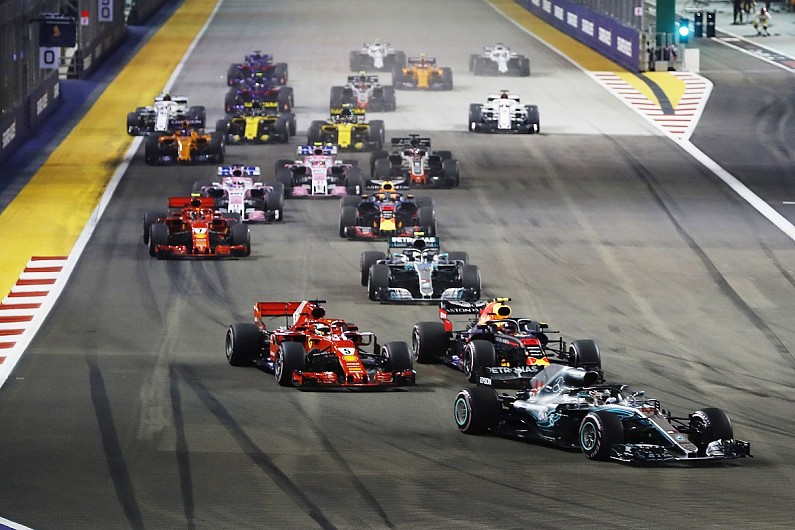
Yes, cars can be cheap if you search patiently and diligently for the right deal. That rule doesn’t apply to Formula 1 cars. Each Formula 1 car may cost over $1 million. Even if you want to drive someone else’s car, you will still need to bring your own sponsors with deep pockets. Sometimes, the minimum sponsorship requirement can be as high as $190,000. Oh, and these Formula 1 car are extremely fragile as well. So the insurance premiums on the cars are going to be astronomical. There’s no wonder that this sport zooms right up to the top of the most expensive sports in the world list.

4.Hot Air Balloon Racing:

undefined

Most people did not know about the hot air balloon races in the world or it is basically a sport. An individual has to pay $300 for one hour ride on the balloon. Most people participating in them own their own balloons which are very expensive. A hot air balloon cost about $20,000 if purchased. Some measures must be adopted to participate in this sport like safety measures. The cost of training a pilot on these balloons cost about $3000 to go on these balloons.

5.Polo:

undefined

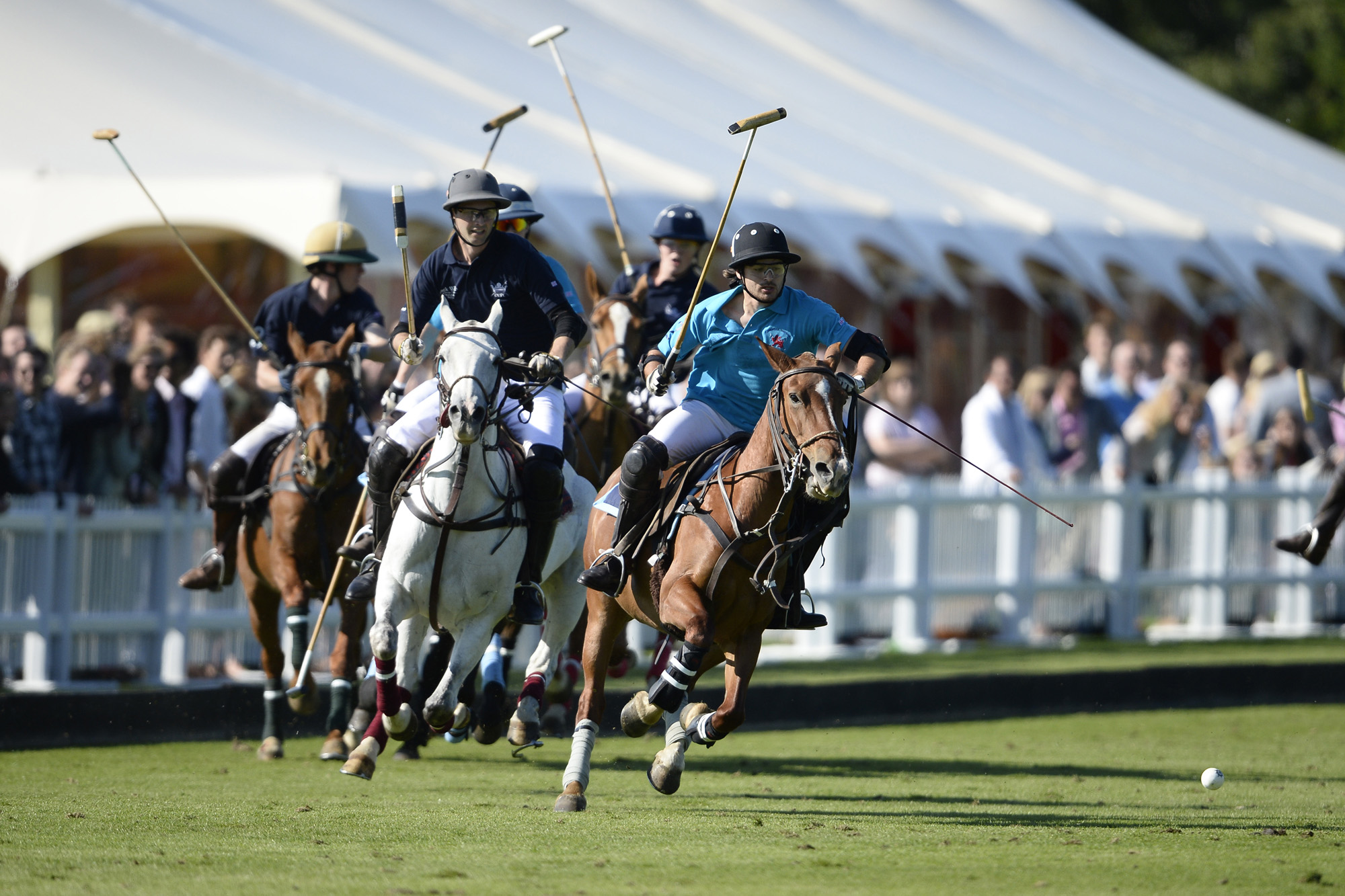
Polo is a very famous sport also in countries like the UK. This sport is always associated with the upper class and rich people due to its high cost. Its cost is high as expenses on a horse their maintenance and all others are very high. Mostly polo players have to keep 4 horses in order to keep some as a backup plan. The matches conducted for polo can cost almost $150,000. Mostly polo matches are sponsored by famous companies that cost up to $1,000,000 which is very expensive and high charges. The one problem in this sport it causes many serious injuries to the polo players.

6.Sailing:

undefined

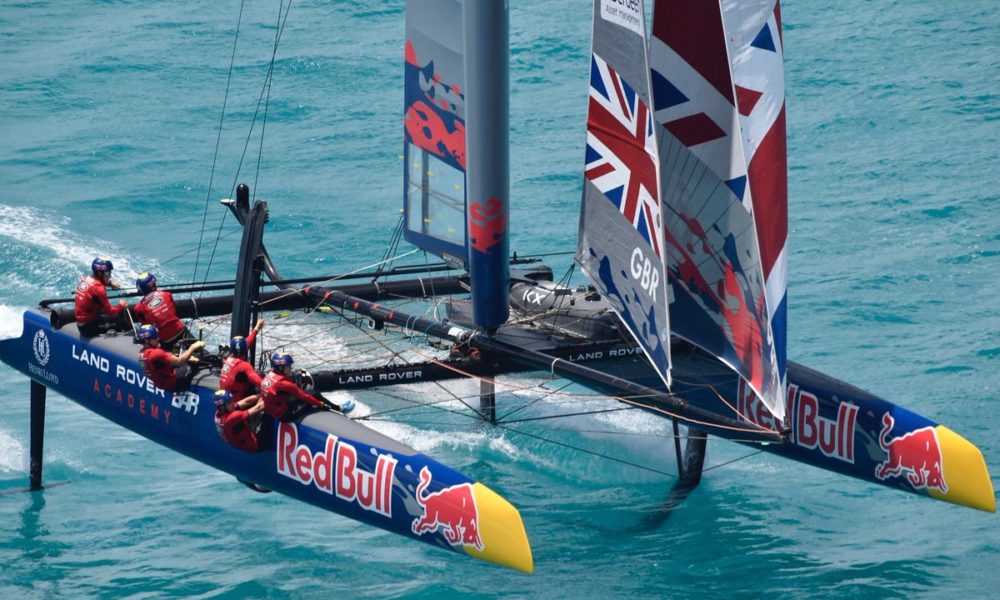
There was a time when humans just tied bamboo stems with ropes and sailed all over the seas. However, that time is long gone and modern-day sailing is one of the most expensive sports in the world. To sail, you will need a sailboat, and most of them cost more than the most expensive super cars. Maintaining the sailboats is also very expensive, so it is paying the crew to run it. Oh and in case you forgot, the sailboat needs to be stored on dry land when competition season is off. Good luck building a hangar for it.

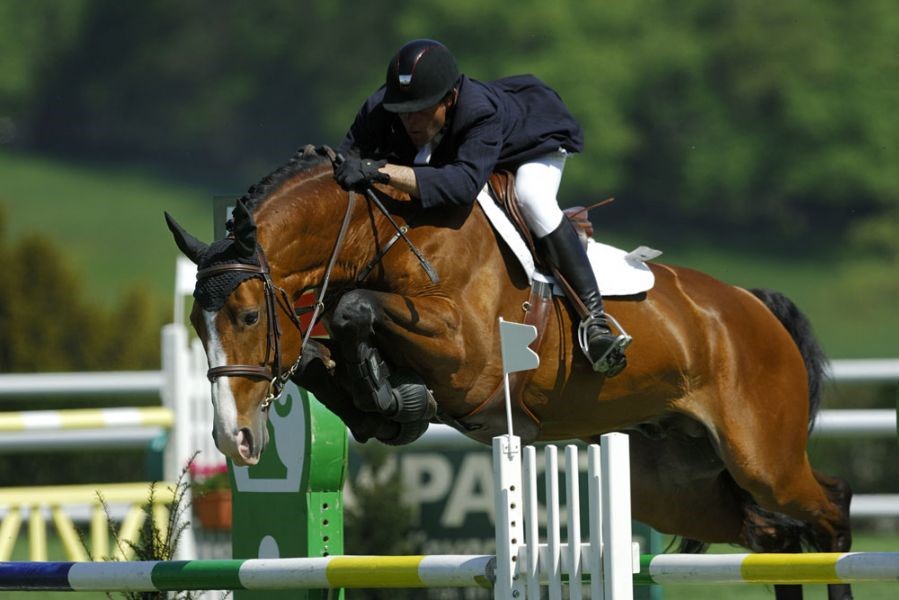
7.Equestrian:

undefined

It is a very famous sport which involves driving, riding, and chasing horses. We all know that riding a horse is the most favorite sport of many people. It is basically very rare for sport played with only a limited number of people due to its high cost. As the cost of training and keeping a horse for all these kinds of sports are very expensive and their traveling expenses are also very high. The cost of taking a horse to some this kind of event can cost almost $200,000 each year. In this amount, the cost of a horse is not included which is very expensive as well.

8.Bobsledding:

undefined

This interesting game was introduced in the Winter Olympics. This was first performed by the American star Lolo Jones as she got training after 2012. It is similar to F1 racing and requires a lot of sponsorship due to very high expenses. It can cost about $25,000 for bobsleds while training expenses are separate. People will not believe that the construction of bobsled can cost about millions of dollars. It is basically a team sport in which there are four members which shows cost will also four times greater.

Focus

Focus: What It Is and How it Works
First things first. What is focus, really? Experts define focus as the act of concentrating your interest or activity on something. That’s a somewhat boring definition, but there is an important insight hiding inside that definition.

What is Focus?
In order to concentrate on one thing you must, by default, ignore many other things.

Here’s a better way to put it:

Focus can only occur when we have said yes to one option and no to all other options. In other words, elimination is a prerequisite for focus. As Tim Ferriss says, “What you don’t do determines what you can do.”

Of course, focus doesn’t require a permanent no, but it does require a present no. You always have the option to do something else later, but in the present moment focus requires that you only do one thing. Focus is the key to productivity because saying no to every other option unlocks your ability to accomplish the one thing that is left.

Now for the important question: What can we do to focus on the things that matter and ignore the things that don’t?

Why Can’t I Focus?
Most people don’t have trouble with focusing. They have trouble with deciding.

What I mean is that most healthy humans have a brain that is capable of focusing if we get the distractions out of the way. Have you ever had a task that you absolutely had to get done? What happened? You got it done because the deadline made the decision for you. Maybe you procrastinated beforehand, but once things became urgent and you were forced to make a decision, you took action.

Instead of doing the difficult work of choosing one thing to focus on, we often convince ourselves that multitasking is a better option. This is ineffective.

Here’s why…

The Myth of Multitasking
Technically, we are capable of doing two things at the same time. It is possible, for example, to watch TV while cooking dinner or to answer an email while talking on the phone.

What is impossible, however, is concentrating on two tasks at once. You’re either listening to the TV and the overflowing pot of pasta is background noise, or you’re tending to the pot of pasta and the TV is background noise. During any single instant, you are concentrating on one or the other.

Multitasking forces your brain to switch your focus back and forth very quickly from one task to another. This wouldn’t be a big deal if the human brain could transition seamlessly from one job to the next, but it can’t.

Have you ever been in the middle of writing an email when someone interrupts you? When the conversation is over and you get back to the message, it takes you a few minutes to get your bearings, remember what you were writing, and get back on track. Something similar happens when you multitask. Multitasking forces you to pay a mental price each time you interrupt one task and jump to another. In psychology terms, this mental price is called the switching cost.

Switching cost is the disruption in performance that we experience when we switch our focus from one area to another. One study, published in the International Journal of Information Management in 2003, found that the typical person checks email once every five minutes and that, on average, it takes 64 seconds to resume the previous task after checking your email.

In other words, because of email alone, we typically waste one out of every six minutes.

One of my favorite methods for focusing your attention on what matters and eliminating what doesn’t comes from the famous investor Warren Buffett.

Buffett uses a simple 3-step productivity strategy to help his employees determine their priorities and actions. You may find this method useful for making decisions and getting yourself to commit to doing one thing right away. Here’s how it works…

One day, Buffett asked his personal pilot to go through the 3-step exercise.

STEP 1: Buffett started by asking the pilot, named Mike Flint, to write down his top 25 career goals. So, Flint took some time and wrote them down. (Note: You could also complete this exercise with goals for a shorter timeline. For example, write down the top 25 things you want to accomplish this week.)

STEP 2: Then, Buffett asked Flint to review his list and circle his top 5 goals. Again, Flint took some time, made his way through the list, and eventually decided on his 5 most important goals.

STEP 3: At this point, Flint had two lists. The 5 items he had circled were List A, and the 20 items he had not circled were List B.

Flint confirmed that he would start working on his top 5 goals right away. And that’s when Buffett asked him about the second list, “And what about the ones you didn’t circle?”

Flint replied, “Well, the top 5 are my primary focus, but the other 20 come in a close second. They are still important so I’ll work on those intermittently as I see fit. They are not as urgent, but I still plan to give them a dedicated effort.”

To which Buffett replied, “No. You’ve got it wrong, Mike. Everything you didn’t circle just became your Avoid-At-All-Cost list. No matter what, these things get no attention from you until you’ve succeeded with your top 5.”

I love Buffett’s method because it forces you to make hard decisions and eliminate things that might be good uses of time, but aren’t great uses of time. So often the tasks that derail our focus are ones that we can easily rationalize spending time on.

This is just one way to narrow your focus and eliminate distractions. I’ve covered many other methods before like The Ivy Lee Method and The Eisenhower Box. That said, no matter what method you use and no matter how committed you are, at some point your concentration and focus begin to fade. How can you increase your attention span and remain focused?

There are two simple steps you can take.

Measure Your Results
The first thing you can do is to measure your progress.

Focus often fades because of lack of feedback. Your brain has a natural desire to know whether or not you are making progress toward your goals, and it is impossible to know that without getting feedback. From a practical standpoint, this means that we need to measure our results.

We all have areas of life that we say are important to us, but that we aren’t measuring. That’s a shame because measurement maintains focus and concentration. The things we measure are the things we improve. It is only through numbers and clear tracking that we have any idea if we are getting better or worse.

When I measured how many pushups I did, I got stronger.
When I tracked my reading habit of 20 pages per day, I read more books.
When I recorded my values, I began living with more integrity.
The tasks I measured were the ones I remained focused on.

Unfortunately, we often avoid measuring because we are fearful of what the numbers will tell us about ourselves. The trick is to realize that measuring is not a judgment about who you are, it’s just feedback on where you are.

Measure to discover, to find out, to understand. Measure to get to know yourself better. Measure to see if you’re actually spending time on the things that are important to you. Measure because it will help you focus on the things that matter and ignore the things that don’t.

Focus on the Process, Not the Event
The second thing you can do to maintain long-term focus is to concentrate on processes, not events. All too often, we see success as an event that can be achieved and completed.

Here are some common examples:

Many people see health as an event: “If I just lose 20 pounds, then I’ll be in shape.”
Many people see entrepreneurship as an event: “If we could get our business featured in the New York Times, then we’d be set.”
Many people see art as an event: “If I could just get my work featured in a bigger gallery, then I’d have the credibility I need.”
Those are just a few of the many ways that we categorize success as a single event. But if you look at the people who stay focused on their goals, you start to realize that it’s not the events or the results that make them different. It’s the commitment to the process. They fall in love with the daily practice, not the individual event.

What’s funny, of course, is that this focus on the process is what will allow you to enjoy the results anyway.

If you want to be a great writer, then having a best-selling book is wonderful. But the only way to reach that result is to fall in love with the process of writing.
If you want the world to know about your business, then it would be great to be featured in Forbes magazine. But the only way to reach that result is to fall in love with the process of marketing.
If you want to be in the best shape of your life, then losing 20 pounds might be necessary. But the only way to reach that result is to fall in love with the process of eating healthy and exercising consistently.
If you want to become significantly better at anything, you have to fall in love with the process of doing it. You have to fall in love with building the identity of someone who does the work, rather than merely dreaming about the results that you want.
Focusing on outcomes and goals is our natural tendency, but focusing on processes leads to more results over the long-run.

III. Concentration and Focus Mind-Hacks
Even after you’ve learned to love the process and know how to stay focused on your goals, the day-to-day implementation of those goals can still be messy. Let’s talk about some additional ways to improve concentration and make sure you’re giving each task your focused attention.

How to Improve Concentration
Here are few additional ways to improve your focus and get started on what matters.

Choose an anchor task. One of the major improvements I’ve made recently is to assign one (and only one) priority to each work day. Although I plan to complete other tasks during the day, my priority task is the one non-negotiable thing that must get done. I call this my “anchor task” because it is the mainstay that holds the rest of my day in place. The power of choosing one priority is that it naturally guides your behavior by forcing you to organize your life around that responsibility.

Manage your energy, not your time. If a task requires your full attention, then schedule it for a time of day when you have the energy needed to focus. For example, I have noticed that my creative energy is highest in the morning. That’s when I’m fresh. That’s when I do my best writing. That’s when I make the best strategic decisions about my business. So, what do I do? I schedule creative tasks for the morning. All other business tasks are taken care of in the afternoon. This includes doing interviews, responding to emails, phone calls and Skype chats, data analysis and number crunching. Nearly every productivity strategy obsesses over managing your time better, but time is useless if you don’t have the energy you need to complete the task you are working on.

Never check email before noon. Focus is about eliminating distractions. Email can be one of the biggest distractions of all. If I don’t check email at the beginning of the day, then I am able to spend the morning pursuing my own agenda rather than reacting to everybody else’s agenda. That’s a huge win because I’m not wasting mental energy thinking about all the messages in my inbox. I realize that waiting until the afternoon isn’t feasible for many people, but I’d like to offer a challenge. Can you wait until 10AM? What about 9AM? 8:30AM? The exact cutoff time doesn’t matter. The point is to carve out time during your morning when you can focus on what is most important to you without letting the rest of the world dictate your mental state.

Leave your phone in another room. I usually don’t see my phone for the first few hours of the day. It is much easier to do focused work when you don’t have any text messages, phone calls, or alerts interrupting your focus.

Work in full screen mode. Whenever I use an application on my computer, I use full screen mode. If I’m reading an article on the web, my browser takes up the whole screen. If I’m writing in Evernote, I’m working in full screen mode. If I’m editing a picture in Photoshop, it is the only thing I can see. I have set up my desktop so that the menu bar disappears automatically. When I am working, I can’t see the time, the icons of other applications, or any other distractions on the screen. It’s funny how big of a difference this makes for my focus and concentration. If you can see an icon on your screen, then you will be reminded to click on it occasionally. However, if you remove the visual cue, then the urge to be distracted subsides in a few minutes.

Remove all tasks that could distract from early morning focus. I love doing the most important thing first each day because the urgencies of the day have not crept in yet. I have gone a little far in this regard in that I have even pushed my first meal off until about noon each day. I have been intermittent fasting for three years now (here are some lessons learned), which means that I typically eat most of my meals between 12PM and 8PM. The result is that I get some additional time in the morning to do focused work rather than cook breakfast.

Regardless of what strategy you use, just remember that anytime you find the world distracting you, all you need to do is commit to one thing. In the beginning, you don’t even have to succeed. You just need to get started.

Habits

What Are Habits?
Let’s define habits. Habits are the small decisions you make and actions you perform every day. According to researchers at Duke University, habits account for about 40 percent of our behaviors on any given day.

Your life today is essentially the sum of your habits. How in shape or out of shape you are? A result of your habits. How happy or unhappy you are? A result of your habits. How successful or unsuccessful you are? A result of your habits.

What you repeatedly do (i.e. what you spend time thinking about and doing each day) ultimately forms the person you are, the things you believe, and the personality that you portray. Everything I write about – from procrastination and productivity to strength and nutrition – starts with better habits. When you learn to transform your habits, you can transform your life.

Healthy eating. It’s something everyone knows they should do, but few of us do as consistently as we would like. The purpose of this guide is to share practical strategies for how to eat healthy and break down the science of why we often fail to do so.

Now, I don’t claim to have a perfect diet, but my research and writing on behavioral psychology and habit formation has helped me develop a few simple strategies for building and strengthening a healthy eating habit without much effort or thought.

Steven Witherly is a food scientist who has spent the last 20 years studying what makes certain foods more addictive than others. Much of the science that follows is from his excellent report, Why Humans Like Junk Food.

According to Witherly, when you eat tasty food, there are two factors that make the experience pleasurable.

First, there is the sensation of eating the food. This includes what it tastes like (salty, sweet, umami, etc.), what it smells like, and how it feels in your mouth. This last quality — known as “orosensation” — can be particularly important. Food companies will spend millions of dollars to discover the most satisfying level of crunch in a potato chip. Food scientists will test for the perfect amount of fizzle in a soda. These elements all combine to create the sensation that your brain associates with a particular food or drink.

The second factor is the actual macronutrient makeup of the food — the blend of proteins, fats, and carbohydrates that it contains. In the case of junk food, food manufacturers are looking for a perfect combination of salt, sugar, and fat that excites your brain and gets you coming back for more.

Here’s how they do it…

How Food Scientists Create Cravings
There is a range of factors that scientists and food manufacturers use to make food more addictive.

Dynamic contrast. Dynamic contrast refers to a combination of different sensations in the same food. In the words of Witherly, foods with dynamic contrast have “an edible shell that goes crunch followed by something soft or creamy and full of taste-active compounds. This rule applies to a variety of our favorite food structures — the caramelized top of a creme brulee, a slice of pizza, or an Oreo cookie — the brain finds crunching through something like this very novel and thrilling.”

Salivary response. Salivation is part of the experience of eating food, and the more a food causes you to salivate, the more it will swim throughout your mouth and cover your taste buds. For example, emulsified foods like butter, chocolate, salad dressing, ice cream, and mayonnaise promote a salivary response that helps to lather your taste buds with goodness. This is one reason why many people enjoy foods that have sauces or glazes on them. The result is that foods that promote salivation do a happy little tap dance on your brain and taste better than ones that don’t.

Rapid food meltdown and vanishing caloric density. Foods that rapidly vanish or “melt in your mouth” signal to your brain that you’re not eating as much as you actually are. In other words, these foods literally tell your brain that you’re not full, even though you’re eating a lot of calories.

In his best-selling book, Salt Sugar Fat (audiobook), author Michael Moss describes a conversation with Witherly that explains vanishing caloric density perfectly…

He zeroed right in on the Cheetos. “This,” Witherly said, “is one of the most marvelously constructed foods on the planet, in terms of pure pleasure.”

“I brought him two shopping bags filled with a variety of chips to taste. He zeroed right in on the Cheetos. “This,” Witherly said, “is one of the most marvelously constructed foods on the planet, in terms of pure pleasure.” He ticked off a dozen attributes of the Cheetos that make the brain say more. But the one he focused on most was the puff’s uncanny ability to melt in the mouth. “It’s called vanishing caloric density,” Witherly said. “If something melts down quickly, your brain thinks that there’s no calories in it … you can just keep eating it forever.”

Sensory-specific response. Your brain likes variety. When it comes to food, if you experience the same taste over and over again, then you start to get less pleasure from it. In other words, the sensitivity of that specific sensor will decrease over time. This can happen in just minutes.

Junk foods, however, are designed to avoid this sensory specific response. They provide enough taste to be interesting (your brain doesn’t get tired of eating them), but it’s not so stimulating that your sensory response is dulled. This is why you can swallow an entire bag of potato chips and still be ready to eat another. To your brain, the crunch and sensation of eating Doritos is novel and interesting every time.

Calorie density. Junk foods are designed to convince your brain that it is getting nutrition, but to not fill you up. Receptors in your mouth and stomach tell your brain about the mixture of proteins, fats, and carbohydrates in a particular food, and how filling that food is for your body. Junk food provides just enough calories that your brain says, “Yes, this will give you some energy” but not so many calories that you think “That’s enough, I’m full.” The result is that you crave the food to begin with, but it takes quite some time to feel full from it.

Memories of past eating experiences. This is where the psychobiology of junk food really works against you. When you eat something tasty (say, a bag of potato chips), your brain registers that feeling. The next time you see that food, smell that food, or even read about that food, your brain starts to trigger the memories and responses that came when you ate it. These memories can actually cause physical responses like salivation and create the “mouth-watering” craving that you get when thinking about your favorite foods.

These factors all combine to make processed food tasty and desirable to our human brains. When you combine the science behind these foods with the incredible prevalence of food (cheap fast food everywhere), eating healthy becomes very hard to do.

II. How to Make Healthy Eating Easier
Most people think that building better habits or changing your actions is all about willpower or motivation. But the more I learn, the more I believe that the number one driver of behavior change is your environment.

Your environment has an incredible ability to shape your behavior. Nowhere is this more true than with food. What we eat on a daily basis is often a result of what we are presented.

Let me share an interesting experiment to show you exactly what I mean…

The Importance of Environment for Healthy Eating
Anne Thorndike is a primary care physician at Massachusetts General Hospital in Boston. Thorndike and her colleagues conducted a six-month study that was published in the American Journal of Public Health.

This study secretly took place in the hospital cafeteria and helped thousands of people develop healthy eating habits without changing their willpower or motivation in the slightest way. Thorndike and her team utilized a concept known as “choice architecture.” Choice architecture is just a fancy word for changing the way the food and drinks are displayed, but, as it turns out, it makes a big difference.

The researchers started by changing the choice architecture of the drinks in the cafeteria. Originally, there were three main refrigerators, all of which were filled with soda. The researchers made sure that water was added to each of those units and also placed baskets of bottled water throughout the room.

What happened? Over the next 3 months, the number of soda sales dropped by 11.4 percent. Meanwhile, bottled water sales increased by 25.8 percent. Similar adjustments and results were made with food options. Nobody said a word to the visitors who ate at the cafeteria. The researchers simply changed the environment and people naturally followed suit.

Choice architecture is even more important when you’re already stressed, tired, or distracted. If you’re already worn-down, you’re probably not going to go through a lot of effort to cook a healthy dinner or fit in a workout. You’ll grab or do whatever is easiest.

That means that if you take just a little bit of time today to organize your room, your office, your kitchen, and other areas, then that adjustment in choice architecture can guide you toward better choices even when your willpower is fading. Design for laziness.

How to Eat Healthy Without Noticing
Brian Wansink is a professor at Cornell University, and he has completed a variety of studies on how your environment shapes your eating decisions. Many of the ideas below come from his popular book, Mindless Eating (audiobook). Here are some of his best practical strategies for using choice architecture to make healthy eating easier.

  1. Use smaller plates. Bigger plates mean bigger portions. And that means you eat more. According to a study conducted by Wansink and his research team, if you made a simple change and served your dinner on 10-inch plates instead of a 12-inch plate, you would eat 22% less food over the course of the next year.

On a related note, if you’re thinking “I’ll just put less food on my plate” … it’s not that simple. The picture below explains why. When you eat a small portion off of a large plate, your mind feels unsatisfied. Meanwhile, the same portion will feel more filling when eaten off of a small plate. The circles in the image below are the same size, but your brain (and stomach) doesn’t view them that way.

As it turns out, both lines are the same length, but our brain has a tendency to overestimate vertical lines. In other words, taller drinks look bigger to our eyes than round, horizontal mugs do. And because height makes things look bigger than width, you’ll actually drink less from taller glasses. In fact, you will typically drink about 20% less from a tall, slender glass than you would from a short, fat glass. (Hat tip to Darya Pino for originally sharing this image and idea.)

  1. Use plates that have a high contrast color with your food. As I mentioned in this article, when the color of your plate matches the color of your food, you naturally serve yourself more because your brain has trouble distinguishing the portion size from the plate. Because of this, dark green and dark blue make great plate colors because they contrast with light foods like pasta and potatoes (which means you’re likely to serve less of them), but don’t contrast very much with leafy greens and vegetables (which means you’re likely to put more of them on your plate).
  2. Display healthy foods in a prominent place. For example, you could place a bowl of fruits or nuts near the front door or somewhere else that you pass by before you leave the house. When you’re hungry and in a rush, you are more likely to grab the first thing you see.
  3. Wrap unhealthy foods in tin foil. Wrap healthy foods in plastic wrap. The old saying, “out of sight, out of mind” turns out to have some truth to it. Eating isn’t just a physical event, but also an emotional one. Your mind often determines what it wants to eat based on what your eyes see. Thus, if you hide unhealthy foods by wrapping them up or tucking them away in less prominent places, then you are less likely to eat them.
  4. Keep healthy foods in larger packages and containers, and unhealthy foods in smaller ones. Big boxes and containers tend to catch your eye more, take up space in your kitchen and pantry, and otherwise get in your way. As a result, you’re more likely to notice them and eat them. Meanwhile, smaller items can hide in your kitchen for months. (Just take a look at what you have lying around right now. It’s probably small cans and containers.)

Bonus tip: if you buy a large box of something unhealthy, you can re-package it into smaller Ziploc bags or containers, which should make it less likely that you’ll binge and eat a lot at once.

What Should I Eat?
As I mentioned at the outset, this is not a guide about what to eat. It’s a guide about why we eat the way we do and how to do something about it. That said, I’ll offer two suggestions regarding what to put on your plate.

  1. Eat more greens. There isn’t a consensus on the best diet, but pretty much everyone agrees on one thing: eat more veggies. You’ll be hard-pressed to find a single diet that doesn’t think eating more plants is a good idea.
  2. Eat a variety of foods. As we covered earlier, the brain craves novelty. While you may not be able to replicate the crunchy/creamy contrast of an Oreo, you can vary your diet enough to keep things interesting. For example, you could dip a carrot (crunchy) in some hummus (creamy) and get a novel sensation. Similarly, finding ways to add new spices and flavors to your dishes can make eating healthy foods a more desirable experience.

Healthy eating doesn’t have to be bland. Mix up your foods to get different sensations and you may find it easier than eating the same foods over and over again. (At some point, however, you may have to fall in love with boredom.)

Two Simple Ways to Eat Healthy
The main idea of most good diets is the same: eat whole foods that are unprocessed and that grew or lived outdoors. Some of them have different variations — no animal products, no grains, etc. — but most of them fit the general “real food” framework.

The problem is that — if you’re anything like me — you will eat whatever is close to you, whether it came from Mother Nature or not. As a result, the best strategy is to surround yourself with healthy food.

  1. Use the “Outer Ring” Strategy. When I go to the grocery store, I only walk around the “outer ring” of the store. I don’t walk down the aisles. The outer ring is where the healthy food usually lives: fruits, vegetables, lean meats, fish, eggs, and nuts. These are items that grew or lived outdoors. That’s what I eat.

The aisles are where all of the boxed and processed stuff is placed. Don’t go down those aisles and you won’t buy those foods. Don’t buy those foods and they won’t be around for you to eat. Try this the next time you go to the store and do your best to not to make exceptions.

Sure, there will be the occasional time that you’ll need to go down an aisle to pick up spices or grab a bottle of olive oil, but this is rare. The last three times I’ve been at the grocery store, I have easily stayed on the “outer ring” and I bet you can do the same.

How to Eat Whatever You Want Without Feeling Guilty

  1. Never Miss Twice. I think life is meant to be lived joyfully. I have no desire to judge myself for eating pizza or to feel guilty for drinking a beer. But, I also know that I feel much better when I eat healthy.

In order to balance the two, I have a simple rule that I try to follow: whenever I eat an unhealthy meal, I follow it with a healthy one.

Missing once is fine, but I never want to miss a healthy meal twice. Top performers make mistakes like everyone else, but they get back on track faster than most people. That’s what I try to do with my diet. I don’t worry about having fun and I try to enjoy life, but I also use this simple rule to guide me back toward a healthy diet as quickly as possible.

III. How to Stick to a Healthy Eating Habit
Address the Root Problem of Unhealthy Eating
There’s a reason why many people eat as a way to cope with stress. Stress causes certain regions of the brain to release chemicals (specifically, opiates and neuropeptide Y). These chemicals can trigger mechanisms that are similar to the cravings you get from fat and sugar. In other words, when you get stressed, your brain feels the addictive call of fat and sugar and you’re pulled back to junk food.

We all have stressful situations that arise in our lives. Learning to deal with stress in a different way can help you overcome the addictive pull of junk food. This could include simple breathing techniques or a short guided meditation. Or something more physical like exercise or making art.

How to Say No to Temptation
Learning how to say no is one of the most useful skills you can develop, especially when it comes to living a healthy life. Research is starting to show that small changes can make it easier for you to say no, resist temptation and stick to healthy eating habits.

In a research study published in the Journal of Consumer Research, 120 students were split into two different groups.

The difference between these two groups was saying “I can’t” compared to “I don’t.”

One group was told that each time they were faced with a temptation, they would tell themselves “I can’t do X.” For example, when tempted with ice cream, they would say, “I can’t eat ice cream.”

When the second group was faced with a temptation, they were told to say “I don’t do X.” For example, when tempted with ice cream, they would say, “I don’t eat ice cream.”

After repeating these phrases, each student answered a set of questions unrelated to the study. Once they finished answering their questions, the students went to hand in their answer sheet, thinking that the study was over. In reality, it was just beginning.

As each student walked out of the room and handed in their answer sheet, they were offered a complimentary treat. The student could choose between a chocolate candy bar or a granola health bar. As the student walked away, the researcher would mark their snack choice on the answer sheet.

The students who told themselves “I can’t eat X” chose to eat the chocolate candy bar 61% of the time. Meanwhile, the students who told themselves “I don’t eat X” chose to eat the chocolate candy bars only 36% of the time. This simple change in terminology significantly improved the odds that each person would make a more healthy food choice.

Why does something so small make such a big difference?

The One Phrase That Will Help You Eat Healthy
Your words help to frame your sense of empowerment and control. Furthermore, the words that you use create a feedback loop in your brain that impacts your future behaviors.

For example, every time you tell yourself “I can’t”, you’re creating a feedback loop that is a reminder of your limitations. This terminology indicates that you’re forcing yourself to do something you don’t want to do.

In comparison, when you tell yourself “I don’t”, you’re creating a feedback loop that reminds you of your control and power over the situation. It’s a phrase that can propel you toward breaking your bad habits and following your good ones.

Heidi Grant Halvorson is the director of the Motivation Science Center at Columbia University. Here’s how she explains the difference between saying “I don’t” compared to “I can’t”…

“I don’t” is experienced as a choice, so it feels empowering. It’s an affirmation of your determination and willpower. “I can’t” isn’t a choice. It’s a restriction, it’s being imposed upon you. So thinking “I can’t” undermines your sense of power and personal agency.

“I don’t” is experienced as a choice, so it feels empowering. “I can’t” isn’t a choice. It’s a restriction, it’s being imposed upon you.

In other words, the phrase “I don’t” is a psychologically empowering way to say no, while the phrase “I can’t” is a psychologically draining way to say no.

Perhaps most importantly, a change in language leads to a change in mindset. You can now utilize your new, empowered mindset in all future situations, which is why a subtle shift can lead to very different outcomes over the long-run.