DEMISE OF ACTOR CHIRANJEEVI SARJA.

Death at a young age is very tragic and disheartening.


Chiranjeevi Sarja, born on October 17, 1984, in Bangalore was a Kannada actor. Coming from a family of South Indian film industry, he has played many authentic roles. Chiranjeevi Sarja made his acting debut with the movie ‘Vayuputra’ in 2009 and appeared in about 22 films. Chiranjeevi and Meghana got married on May 2, 2018 after dating for 10 years. He had a bright future. Shooting for three different films in which Chiranjeevi was to play the lead role comprising April, Ranam, and Khatreya, were discontinued due to the lockdown. His last released movie was Shivarjuna in March 2020. He has approved for four films which are currently undershooting but destiny had a different story to tell. He developed breathlessness in the night and complained of chest pain and died at an early age of 39 at the hospital on June 7, 2020.
Full story- Sarja was having a conversation with his father at 1:10 pm (IST) on Sunday before he began sweating and collapsed. Soon the family left the house towards Apollo Specialty Hospital. At 2:20 they reached the hospital but unfortunately, the actor left his breaths on the way. The doctors tried reviving but it didn’t work. The cause of death comes to be cardiac arrest. Though the samples of his throat swab were also taken to test for COVID as he suffered from symptoms of respiratory problems the previous day.“He was brought in an unresponsive state to the hospital at 2.18 p.m. All efforts to resuscitate him failed and he was declared dead,” said Dr. G. Govindaiah Yateesh, unit head, Apollo Speciality Hospital,Jayanagar. https://www.thehindu.com/entertainment/kannada-actor-chiranjeevi sarja-passes-away-at-39/article31772154.ece


Left his wife and child Actor Tara, who broke down at the hospital on Sunday evening, revealed that Ms. Meghana Raj was pregnant. “He was too young to go like this,” she sobbed. The news of her expecting her first child has pushed many on social media. Many fans have shown disappointment in his sudden demise.

Chief Minister B S Yediyurappa shared condolence on the actor’s death telling that the Kannada film industry has lost a good actor. “He was a shining star in the galaxy of artists. It’s disappointing that he died at a young age,” former chief minister H D Kumara…

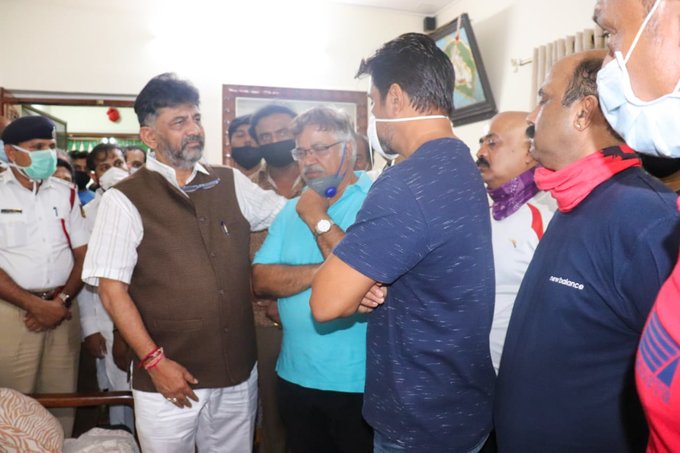
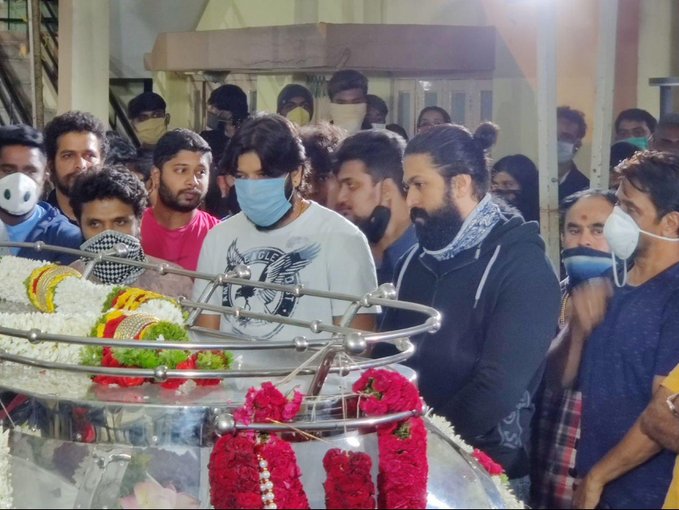
He was later taken to his residence in Bengaluru. His final rituals happened on Monday afternoon where his friends and colleagues paid esteem to the actor. Kiccha Sudeep, Yash, Shiva Rajkumar, and other actors also came up to show respect to Sarja. DK Shivakumar also attended the Sarja family with other politicians and tweeted, “Paid my last respect to Chiranjeevi Sarja and condoled Arjun Sarja, Sundar Raj, wife Meghana Raj & brother Dhruva Sarja. Strength to the whole family members & film fraternity. My prayers and thoughts to his whole family members during this time of grief.” “Shocked to hear about #chiranjevvisarja’s demise!!!” actress Priyamani tweeted. “Can never forget his smiling face.”

He has starred in films Shivarjuna(2020), Aadyaa(2020), Khakii(2020), Seizer(2018), Sinnga(2019), Amma I love you(2018), Chirru(2010) and many more.
HE HAS BEEN A GREAT ACTOR, MAY HIS SOUL SLEEPS IN PEACE!

If you want to live like somebody, who would you want to be and why?

David Rocco (@DavidRoccosVita) | Twitter
DAVID ROCCO.

well when it comes to the part to say this that I have the choice of changing the person I want to be then of course it would be someone I would look up to.

So basically, to answer this I would love to put up the name David Rocco a not very known name but he is a Canadian author, a travel chef and the host of several internationally syndicated television series, like the David Rocco’s dolce vita, David Rocco’s Amalfi getaway and David Rocco’s dolce Africa.

David Rocco was born in the neighbourhood of Scarborough in Toronto, Ontario, Canada to parents from Naples who immigrated to Canada from Italy in the 1950s. His parents were both hairdressers, and Rocco is the youngest of three children. Rocco later moved to Woodbridge, Ontario to pursue secondary school, where he eventually met his future wife Nina Rocco. The couple have three children: Emma, Giorgia, and Dante.

Named one of “Canada’s Top Ten Style Makers” by Flare Magazine, Rocco has been featured and is often quoted in major newspapers and magazines, including The Globe and Mail, The National Post, The Toronto Star, Hello! En Route, Food & Drink and Chatelaine. He also makes regular guest appearances on Global, CTV and CBC television as well as popular food competition programs including Top Chef Canada and Iron Chef America.

David Rocco’s Dolce Vita

Four seasons of David Rocco’s Dolce Vita launched worldwide, first in 2004, including Food Network Canada, Telelatino, BBC Food, Discovery Travel, Nat Geo Adventure Channel, India’s Fox Life, and in the U.S. on the Cooking Channel. In Dolce Vita, Rocco explores Italy with his wife Nina and his eclectic group of friends while teaching about the simplicity of Italian cuisine and culture, and showcasing the city life and countryside.

Several spin-offs of the show followed. Two seasons of David Rocco’s Dolce India launched worldwide, first in 2013, through National Geographic. In 26-episodes, Rocco explores the remarkable diversity of Indian cuisine and fuses it with his Italian foundations. Each episode presents an Indian theme; an ingredient, a dish, or a regional way of cooking. Having been shown how to prepare a challenging dish, Rocco then takes over a kitchen to prepare an “Indi-talian” fusion dish.

Other spin-offs include David Rocco’s Dolce Napoli, David Rocco’s Dolce Africa, and David Rocco’s Dolce Italia.

Other TV appearances

Rocco was the lead judge of the popular Scripps Television series Donut Showdown which premiered in 2013 on Food Network Canada on the Cooking Channel in the USA. Rocco can be seen as a guest judge on Top Chef Canada Season 3. Rocco has made regular appearances as a guest judge on Iron Chef seasons 9-11.

He was also the co-creator and host of Catalyst Entertainment’s food and travel hybrid series Avventura: Journey in Italian Cuisine, and was a featured host for Don’t Forget Your Passport.

In 2018, Rocco and Hong Kong singer Nicholas Tse co-host FOX Life’s Celebrity Chef: East vs West.

Cook books

Rocco has published four cookbooks, including two national best sellers: David Rocco’s Dolce Vita and Made in Italy, each receiving numerous awards and accolades including top honours from The Gourmand World Cookbook Awards and Taste Canada. His newest book, Dolce Famiglia, was released in Canada and Worldwide in November 2016.

•           Dolce Famiglia (Harper Collins; November 2016)

•           Made in Italy (Clarkson Potter, Harper Collins; October 2011)

•           David Rocco’s Dolce Vita (Harper Collins; November 2008)

•           Avventura (Bay Books; January 2001)

Other ventures

As well as his cooking projects, Rocco has ventured out into the world of winemaking by launching his own wine label, David Rocco’s Dolce Vita, featuring three varieties: Prosecco, Chianti and Pinot Grigio.

Well I chose his name because when I stepped into this field of choice, I wasn’t very prepared that I would end up here I was not informed in my mind that media is my space. I always used to write every literary piece I was always in touch with reading and writing and creating content but in my very personal space and not on a specific platform.

My dream was always to become someone like Gordon Ramsay or David Rocco to put it nicely I always wanted to become a Michelin certified chef or basically a celebrity chef who would travel all around the world in search of all those number one thing in that city or country.

 When I saw my future, I would always see it as waking up every morning in a different country in a different place or in a very different bed every morning regardless of the fact that whether it is a countryside , metropolitan city, or very remote village and it got to be a different place every single morning smelling of breakfast differently every morning .

And always waking up in a beautiful hotel suite and making some delicious breakfast in the lawn of the hotel in front of a rolling camera and make it for my entire crew.

So these were the factors that got me to this point that I want to lead a life like David Rocco that’s going to be my ultimate goal but I am also taught to be happy in whatever is given and what so ever is offered in the name of life I got to be happy and satisfied with that .

PLANT GROWTH PROMOTING RHIZOBACTERIA

Plant Growth Promoting Rhizobacteria or PGPR is a group of bacteria that can be found in the rhizosphere or it can be said that bacteria that colonize the roots of the plants that enhance plant growth. It is observed that the rhizosphere is the zone of maximum microbial activity. It is the rhizosphere region of the plant from where most of the essential mico and macro- nutrients are extracted. The different species of Bacteria, Fungi, Actinomycetes, Protozoa, and Algae can be found in the rhizosphere region, Bacteria being the most abundant.
The term PGPR was introduced by Kloepper and Schroth. They concluded that PGPR are not only associated with the roots to exert beneficial effects on plant development but also have positive effects on controlling phytopathogenic microbes. Therefore, PGPR is one of the active ingredients in biofertilizer.
Based on the interactions , PGPRs are of 2 different types :

  1. SYMBIOTIC or INTRACELLULAR BACTERIA (iPGPR) live inside plants and exchange metabolites directly by biofertilization, stimulation of plant growth, rhizoremediation, and plant stress control. While performing direct growth promotion, they behave as Biofertilizers.
  2. FREE – LIVING or EXTRACELLULAR BACTERIA (ePGPR) live outside plant cells and indirectly increases plant growth by reducing the impact of disease, by Antibiosis, induction of systemic resistance, and competition for nutrients and niches. While performing indirect plant growth promotion, they behave as Biopesticide.

PGPR shows an important role in sustainable agriculture industry.
Undoubtedly, there is an increased demand of crop production now-a-days and also a significant reduction of synthetic chemical pesticides and fertilizers which is a big challenge. So, the use of PGPR has been proven to be one of the best ways of increasing crop yields by facilitating plant growth.
PGPR show synergistic and antagonistic interactions with microorganisms within the rhizosphere and in bulk soil, which indirectly boosts the plant growth rate. PGPR also works as a biofertilizer for agricultural sustainability.
Agriculture is one of the human activities which leads to the increasing amount of chemical pollutants with the excessive and continuous use of chemical fertilizers and pesticides. This causes further environmental damage causing a serious risk for human health.
For e.g. N2O is excessively released by continuous use of nitrogen fertilizers which causes Greenhouse effect and finally Global Warming. Farmers apply a high concentration of nitrogen fertilizers in the form of ammonium nitrate to increase crop yield but continuous use of nitrogen fertilizers decreases the Biological Nitrogen Fixation in soil.

For Sustainable Agriculture fulfillment, crops which are produced must be grown with disease resistance, salt tolerance, drought tolerance, heavy metal stress tolerance, and better nutritional value. Also, the use of soil microorganisms is the one possible way. Soil microbes increase the nutrient uptake capacity and water use efficiency in the soil. Among these soil microorganisms, PGPRs are mostly used which are capable of performing all the activities without environmental contamination. PGPR include the species of Pseudomonas, Bacillus, Enterobacter, Klebsiella, Azobacter, Variovorax, Azosprillum and Serratia.
But it is found that agricultural industries worldwide still not use the concept of PGPRs. This is due to the inconsistent properties of inoculated PGPR which can greatly influence the crop production.

 A PGPR must :

  1. Possess its survival in soil by tolerating several environmental factors.
  2. Be compatible with the crops on which it is inoculated.
  3. Be interactive with the already existing microflora in soil.
  4. Have a broad spectrum of action.
  5. Be safe for the environment.
  6. Enhance plant growth.
    Another challenge is that all Rhizobacteria do not possess the same mechanisms which is a major disadvantage for the environment therefore, PGPR still are not used as a biofertilizer in global agricultural productivity.

Understanding University Rankings 2020-21

The present generation is said to be the generation of competition. Let it be student or the institutes they are enrolled, is having a fierce competition to top the list. Students get their list posted by the universities, likewise universities look to some rankings published worldwide and one national level. India has its personal college ranking system called NIRF(National Institutional Ranking Framework), launched on 29th September 2015, by MHRD. Similarly there are some international ranking system, for e.g. QS (Quacquarelli Symonds) ranking, Shanghai Ranking, Times Higher Education ranking, etc. Thus, every college wishes to top these ranking list issued by those ranking system. 
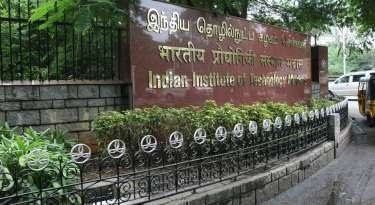
Today, the NIRF issued its list of college ranking in India, ranking IIT Madras with the score of 89.93 as the top college of the nation, followed by IISc Bangalore. This list came after a day QS Ranking released its world university ranking, which in contradiction to NIRF, listed IIT Bombay as top college of India. Though its not in even top 100 colleges, worldwide. MIT (Massachusetts Institute of Technology), has topped the QS world rankings, followed by Stanford and Harvard. 
Differences in NIRF and QS.
QS world University Ranking was first issued in 2004(in partnership with THE) and then in 2010(on its own). It is published from United Kingdom, whereas, on the NIRF part, it was launched in 2015, for the ranking of universities in India. Both the ranking system has different way of deciding the ranks of colleges. 
NIRF ranking is based on the following parameters:-
• Teaching
• Learning and Resources
• Research and Professional Practices
• Graduation Outcomes
• Outreach and Inclusivity
• Perception
Whereas QS ranks on the basis of the following parameters:-
• Academic Reputation- 10%
• Employer Reputation- 40%
• Family/Student Ratio- 20%
• Citations per Faculty – 20%
• International Faculty Ratio- 5%
• International Student Ratio- 5%
Several Asian countries have been criticising the QS ranking, for not listing their colleges on a better position. They say the western method of deciding the ranking won’t represent the South Asia Universities well. Thus this led to other ranking system like the Shanghai Ranking.
Shanghai Ranking was started to represent the Chinese Institutes, on a world level, they focus on research rather than user experience. Thus, India also felt that there’s a dire need to have its own ranking system as the western methodology wasn’t the parameter on which the Indian Institutes could do well, and have a bad representation. 
As NIRF is currently under a developmental phase, it has numerable faults and are not accurate. There is a possibility that institutes can change the data number and tamper its ranking inorder to get Government fundings. But, no such case of data tampering is registered. Though a random change of college ranking is observed in last few years. NIRF still needs to be standardised and optimised, to rely on world ranking systems like THE, QS, and Shanghai ranking.
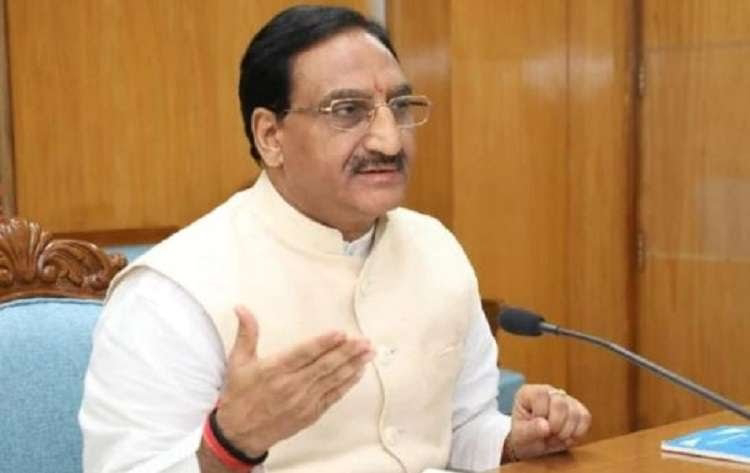
Statement given by Hon’ble HRD minister Ramesh Pokhrial Nishank, on the QS ranking is unacceptable, till NIRF itself is well organised. The minister said, “I don’t agree with QS and THE ranking. Graduates of our institutes are now heading the global leading organisations. They give us low ranking based on perception and I do not agree with it.” 
Though on logical ground, he might be correct but on a statistical one, MHRD needs to research on their part. 
Thus, if you are planning to join any college post lockdown, prefer the world rankings or if NIRF is to be preferred then see last year’s data, stability is the only assurance on our part.
The top Colleges ranked by NIRF are as follows:-
• IIT Madras
• IISc Bangalore
• IIT Delhi
• IIT Bombay
• IIT Kharagpur
• IIT Kanpur
• IIT Guwahati
• Jawaharlal Nehru University
• IIT Roorkee
• Banaras Hindu University
The Top 5 Indian colleges ranked by QS Ranking:-
• IIT Bombay- 172nd Rank
• IISc Bangalore- 185th Rank
• IIT Delhi-193rd Rank
• IIT Madras- 275th Rank
• IIT Kharagpur- 314th Rank

Impact of technology on children

In modern day, children are surrounded by technology since childhood. Now children don’t play with toys but they play games in mobile phone. Parents also leave their children with mobile so that children don’t trouble them and parents can live their life peacefully.

This increasing trend of technology lead to a greater impact on children’s life. Technology also has some positive effects but negative effects are also not less.

Today, children are so busy in playing with phone and computer due to which they don’t spend anytime in playing outdoors with peers. Due to this they don’t exercise also which leads to their poor health. The cases of obesity in children increases a lot in this decade. As they always remain inside on their home and do not go outside so it leads to the lack of vitamin D because they don’t spend time in sunlight which leads to weakening of their bones. As they are busy with mobiles, children don’t able to exposed to activities like cycling and playing other games with their peers which leads to lowering of frequency of children to interact with their peers.

Using mobiles or laptops for the long time causes headache and eye irritation. According to research sleep is also disturb by blue light when children is exposed to screen time in the evening due to the suppression of hormone melatonin which regulates the sleepwake cycle.

If the child see a lot of TV or play game, it leads to a decrease of attention span time if children as they want something new everytime, due to which children are not able to pay attention in classroom, textbooks and any other work. Overuse of technology by children also lead to frustation and self doubt.

We know use of technology has many negative effects but it doesn’t mean that we totally exclude this from the life of thr children. Apart from many negative effects there are some positive effects too but there is a need to make some rules while using technology so that your child can take full benefit of it.

It is necessary to set limit of screen time for children and avoid using mobile and laptop before sleeping. Encourage your child to go outside and play with their friends. If they want to watch TV or play video games, encourage them to play games through which they can learn something meaningful. Always keep a check on what the child is watching. Never let the child to watch program which is more agressive, this leads to frustation and anger in child. Encourage them to watch TV shows related to dance or any other physical activity and ask thr children to perform by seeing the artist. This lead to the good physical activity and child also learn something new. Keep a watch that the distance between the screen and the child’s eye is not too less, it may cause weakening of the child’s eye.

Everything has some positive and some negative aspects, so technology has. So instead of isolating the child from all these in the fear of negative effects,it is necessary to keep a check on what the child is doing, together make rules so that your child get benefit with these technology and not have to bear negative effects.

First American Woman to Walk in Space Reaches Deepest Spot in the Ocean

The geologist and former astronaut Kathy Sullivan, 68, is now also the first woman to reach the deepest spot on earth – challenger deep which is about about seven miles below the ocean’s surface.

She was the first American woman to walk in space and now has set another record to  become the first woman and the 8th person in the history  to reach the deepest known spot in the ocean on Sunday 7th June.

Kathryn Dwyer Sullivan (born October 3, 1951) is an American geologist and a former NASA astronaut. A crew member on three Space Shuttle missions, she was the first American woman to walk in space on October 11, 1984. She was Under Secretary of Commerce for Oceans and Atmosphere and Administrator of the National Oceanic and Atmospheric Administration 

Dr.sullivan always had a longing fascination for oceans and has participated in several oceanographic expeditions that studied the floors of the Atlantic and Pacific oceans.

In 1988, Sullivan joined the U.S. Naval Reserve as an oceanography officer, retiring with the rank of captain in 2006. Sullivan joined NASA in 1978 and was part of the first astronaut groups to include women.

Sullivan served as Payload Commander on STS-45, the first Spacelab mission dedicated to NASA’s Mission to Planet Earth. During this nine-day mission the crew through constant experiments obtained a vast array of detailed measurements of atmospheric chemical and physical properties, which will contribute significantly to improving our understanding of our climate and atmosphere.

After leaving NASA, Sullivan served as chief scientist of the National Oceanic and Atmospheric Administration (NOAA). Sullivan became Acting Under Secretary of Commerce for Oceans and Atmosphere and Acting NOAA Administrator on February 28, 2013, following the resignation of Jane Lubchenco. President Obama nominated Sullivan to serve as the Under Secretary of Commerce for Oceans and Atmosphere and NOAA Administrator on August 1, 2013 and she was confirmed by the Senate on March 6, 2014.

The challenges faced while getting to the challenger deep

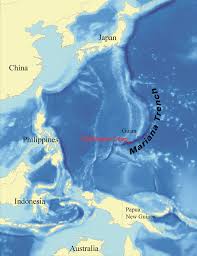
Challenger Deep — the deepest point in the Mariana Trench, which is itself the deepest part of the ocean — is therefore the deepest point on Earth, more than 36,000 feet below the ocean’s surface. For scale, if Mount Everest, the highest point on Earth, were dropped into Challenger Deep, its summit would still not breach the surface

Dr. Sullivan and Victor L. Vescovo, an explorer funding the mission, spent about an hour and a half at their destination, nearly seven miles down in a muddy depression in the Mariana Trench, which is about 200 miles southwest of Guam.

It took four hours to descend to the crushing depth of 35,810 feet (10,941 metres). They spent 1 1/2 hours on the ocean floor, then another four hours ascending. At those depths, the water is perpetually dark and barely above freezing. The pressure is a skull-crushing 8 tons per square inch – about 1,000 times the pressure at sea level.

After capturing images from the Limiting Factor, a specially designed deep-sea research submersible, they began the roughly four-hour ascent. Upon returning to their ship, the pair called a group of astronauts aboard the International Space Station, around 254 miles above earth.

As a hybrid oceanographer and astronaut this was an extraordinary day, a once in a lifetime day, seeing the moonscape of the Challenger Deep and then comparing notes with my colleagues on the ISS about our remarkable reusable inner-space outer-spacecraft

Dr. Sullivan said in a statement released by EYOS Expeditions on Monday.

What interests scientists in deep ocean areas ?

“Ocean exploration, however, is not randomly wandering in hopes of finding something new. It is disciplined and organized and includes rigorous observations and documentation of biological, chemical, physical, geological, and archaeological aspects of the ocean,” the NOAA website says.

Further, finding out more about the deep ocean areas can potentially reveal new sources for medical drugs, food, energy resources and other products. Significantly, information from the deep oceans can also help to predict earthquakes and tsunamis, and help us understand how we are affecting and getting affected by the Earth’s environment.

the Musical Sounds

The sounds that a musical instrument makes  when a professional is playing is always melodious. When a person who is first time touching the instrument would  not be able to play the instrument so as to get a melodious tune. The professional uses techniques so that the sound he produces is soothing. He also  applies some techniques because he knows the physics behind the sounds produced by the musical instrument. Not to forget he/she also plays the instrument with passion and love, which is something to be admired, but for now lets learn the how does a bunch of strings on a guitar  or a tight diaphragm on a tabla produces such tuneful music.

Sound waves

Sound is a longitudinal wave which require material medium to propagate, for many instruments this medium is the air. When we apply a vibrational force in the medium, the pressure increases at that point and it propagates in all the direction, that is the pressure is being transported. What actually produces sound is that  the disturbance we have created in the medium and  forms  standing waves these waves interfere constructively in order to produce sound waves.   Lets see in details how is this disturbance produced in some of the popular musical instruments.

1. Flute

A flute is made up of wood, circular cylindrical shaped and with holes in between. There are columns of air present inside the instrument. When a person blows air through one of the holes, it makes the air column inside vibrate. This disturbance such that it creates high pressure inside, and pushes the air near the hole outside. As this happens the pressure inside decreases which sucks air back inside.  This produces waves and makes the air near the hole go back and forth which produces the sound. Different tunes of sound can be created by shutting different holes and the pitch can be changed by altering the volume of air being pushed inside.

This same principle can be applied for instruments such as  clarinet, saxophone etc.


2. Guitar

This is the most popular instrument, the speciality of guitar is that it is relatively easy to learn. It has rows of strings, which is tightly roped in two edges of the guitar( we can loosen or tighten it as the tune we want to produce). The disturbance in the medium is produced by strumming or strucking these strings. Guitar uses the principle of resonance to amplify the sound. The different strings produces various pitches as the vibrating length of each string is different. The sound produced in various instruments such as sitar, violin and piano has the same principle. 


3. Drums

 This instrument has a stretched  diaphragm, which creates disturbance in the medium while patting on it by hands or using sticks. The disturbances makes the air molecules just above it vibrate and this is transmitted to the audience.  The pitch of the instrument can be changed by changing the tightness of  the diaphragm, but its not easy to change this as we see for the guitar string. The other instruments that functions with the same theory is Tabla, Xylophones  etc.

As one can see, how dynamically different each instrument is. Learning the physics can make one interpret how the instrument works to produce sound. It is always good to learn a musical instrument because It increases your patience level as playing an instrument requires  vey much attention and sincerity. It also provides calmness to the body and  the soul. Playing a musical instrument is as relieving as doing yoga ,it clears your mind with all the tensions and helps solve all the problems. One can also compose music for self, it would be like a treasure, something they enjoy to do without seeking for its benefits. Lets start doing something for ourselves so that we can enjoy every bit of our lives.


Is there a need for Cultural Heritage Law for India?

Introduction

Protection as well as preservation of our cultural property against the threats of damage and destruction is our sole duty to be performed. Cultural heritage along with environment is very essential to the well being and to the enjoyment of one’s own basic rights-even the right to life itself.The protection, preservation and conservation of the cultural heritages have become extremely crucial in order to pull back there lost essence. The entire human race is anxious enough to preserve and protect the world’s cultural along with natural heritage.

Cultural heritage has become a central concept of local and national identity, yet defining this heritage is always subjective. Cultural heritage can be defined as those objects or those intangible specifics that have been inherited from our ancestors, without losing its essence.

 The cultural heritage includes all those main aspects or values of culture transmitted to humans by their ancestors from generation to generation. They are cherished, protected and maintained by them with unbroken continuity and feel proud of it.

 Indian legislature has divided the cultural property into three categories-

  1. Archaeological sites
  2. Ancient monuments
  3. Art treasures and antiquities

The first two are the immovable properties while the last one is movable one.

Cultural heritage again splits into two types: Tangible heritage and Intangible Heritage.

The tangible heritage includes of those objects that have a physical appearance and can be touched. It can be either movable or immovable. For example, sculptures, potteries, ornaments, monuments and much more. The intangible heritage is something that lacks of any sort of physical appearance and can’t be touched. For example, rituals, oral poetries, thoughts, languages and much more.

Cultural Heritage Laws

Several laws have been enacted by the Indian government in order to protect the tangible as well as intangible heritages of India. Few of them are explained as below:

  1. The Ancient Monuments and Archaeological Sites and Remains Act (1958): it aims to provide the preservation of the ancient and historical monuments and archaeological excavations and for the protection of sculptures, carvings and other like objects. Under the provisions of this act, giving a two months prior notice, the Central Government can declare a monument or an archaeological site to be of the national importance. The cat further states that where there is no owner of the site, monument or the material Director General of the Archaeological Survey of India (ASI) becomes the owner.
  • The Antiquities and Art Treasures Act (1972) : it is an act to regulate the export trade in antiquities and art treasures, to provide for the preservation of smuggling of and fraudulent dealings in antiquities and to provide for the compulsory acquisition of antiquities and art treasures for preservation in public places. It is applicable to only those artifacts that are more than 100 years old (in case of paintings) and 75 years as the minimum age in case of any sort of manuscript. The central government has declared paintings including drawings,diagrams,sketches and the like and the objects of plastic art by Rabindranath Tagore,Jamini Roy, Sailoj Mukherjee, Ravi Varma,Abanindranath Tagore,Nadlal Bose, N. Roerich and Amrit Shergill as art treasure for the purpose of this Act. These all are human works of art, not being antiquities and have artistic and aesthetic values.
  • The Ancient Monuments and Archaeological Sites and Remains (Amendment and Validation) Act (2010): it is an act further to amend the Ancient Monuments and Archaeological Sites and Remains Act, 1958 and to make provision for validation of certain actions taken by the Central Government under the said Act. This act was an amendment to the similar Act of 1958 but the only difference is that few major aspects have been added into this new amended Act.

In the records of history, it was found that James Burgess, who succeeded Sir Alexander Cunningham as the Director General of Archaeological Survey of India (ASI) , showed a greater awareness about the legislative measures as tools to protect cultural legacy from ultimate decay by the human race. In the British era, it was found that not only the local people destructed the monuments without having a proper knowledge about the same, but it was the authority in power as well, who also destroyed the historical structures. For example, the Stupas of Sanchi.

After the promulgation of Constitution of India on 26th January 1950, the allocation of the historical and archaeological sites of importance was given to the following:

  1. List I (Union List), item 67 – ancient and historical monuments and records, and archaeological sites and remains declared by or under law by Parliament to be of national importance.
  2. List II (State List), item 12- libraries, museums and other similar institutions controlled or financed by the states; ancient and historical monuments and records other than those declared by or under law made by the Parliament to be of national importance.
  3. List III (Concurrent List), item 40- archaeological sites and remains other than those declared by or under law made by the Parliament to be of national importance.

These are enlisted under the Seventh Schedule of the Constitution.

So these were the major initiatives taken by the Indian government in order to serve for the protection and preservation of the ancient monuments and historical and archaeological sites in India. By these measures, the government is able to protect the cultural heritages of India. In addition to these facts, all the monuments under the supervision of the Archaeological Survey of India (ASI) have been protected under the act of The Ancient Monuments and Archaeological Sites and Remains Act (1958).

bhangarh – BolteRaho
This is how boards are put up by the concerned authorities (here, Archaeological Survey of India) near the site or monument.

Basically it’s the strict laws only that puts the people into a submissive and in a controlled form because without having a proper knowledge about their heritage, people start destructing not only the ancient marvels but also their cultural traditions. Because if the nation does not have a proper cultural heritage law, then the illiterate or unawared public would destroy all the cultural heritages and the consequence would be a complete degradation of the heritages, aftermath.

It is not like only the Cultural Laws that are focusing upon the degrading condition of the cultural heritages, but there a lot of institutions working upon the same. A few can be named as the Archaeological Survey of India (ASI) and Indian National Trust for Art and Cultural Heritage (INTACH). The Archaeological Survey of India (ASI), as an attached office under the Department of Culture, Ministry of Tourism and Culture, is the major organization for the archaeological researches and protection of the cultural heritage of the nation. Maintenance of ancient monuments and archaeological sites and remains of national importance is the prime concern of the ASI. Besides it regulate all archaeological activities in the country as per the provisions of the Ancient Monuments and Archaeological Sites and Remains Act, 1958. It also regulates Antiquities and Art Treasure Act, 1972. (Ministry of Culture).

In a very recent time, the Archaeological Survey of India (ASI) has taken the initiative of gathering and recording the number of people having artefacts are more than 100 years old. This is due to the reason that ASI wants to save, preserve and protect all the individual cultural heritages, so that the intangible heritage along with tangible one gets restored and the coming generations become aware of their culture as well. This is not only of national importance but also of personal cultural importance.

Apart from this, there is an institution named Aga Khan Trust, which took the initiative in the restoration work of the famous mausoleum of the Mughal ruler Humayun renowned as the Humayun’s Tomb. The latest conservation efforts on the site were confronted with the cultural essence of its preservation history. The present project aims at the revitalization of the architectural spirit and original intentions of the builder.

Speaking logically, generally people do not make a concern about their lost cultural heritages. It not only happens with the tangible materials but also with the intangible sources as well. For instance, a lot of people belonging to a specific region are found disrespecting towards their native language or mother tongue as they confess that they don’t know how to speak their mother tongue. So from here, they start losing their cultural identity and are also unable to keep their culture long lasting.

It also needs to be highlighted that the environmental factors also contribute to the sole degradation of the cultural heritage. For instance, the Ajanta cave paintings underwent such a serious fate and this was due to the negative consequences of the environmental factors that affected those paintings adversely.To restore their prominence, the conservators of the Department of Archaeology of the Government of Hyderabad took the step to preserve their essence.

As the concluding part of this topic, it would be rather extracted from all the given acts that it is important to have a proper defined Cultural Law for the preservation and restoration of the historical as well as archaeological sites under the dire supervision of the related authority in power, so that none of the ruthless human activities can make harm to the national cultural heritages, provided that these cultural laws are enacted properly on the very right time. In fact it is too a good idea to conserve and preserve the personal individual cultural property in order to restore culture of an individual household,which is useful in tracing the history of a particular tradition and family, therefore.

“Do Psychological Halt -limit Our Actions” ?

It’s believed since centuries that whatever man things off, becomes the same. Thoughts and actions define the personality of a person and give a true definition of his/ her character. It has been often linked to the fact of psychology and how it has affected our day today life. Whatever man watches around, whatever happens around him do have an impact over his thoughts and definitely reflects in the actions. But why do we humans act according to our surroundings more these days, and instead of analyzing what actually needs to be done. There are various scenarios where even one needs to do a particular act but restricts himself from doing the same. 

There are various psychological theories reflecting such behaviour of humans, but today we will analyze a few of them and how we actually are a part of these. These are really famous research based theories and define han behavior in day to day life. To these are:

  1. The Abilene paradox
  2. The Spotlight Effect

So describing each one of these initially we would try to understand what Abilene paradox and Spotlight Effect are. 

So to make it simple to understand, “The Abilene paradox” is a scenario where everyone performs An activity or agrees with each other on some point of discussion which actually no one wants to. It usually explains agreement of people or number of individual but in reality they have some other opinions and views and in the fear of separation from the group, just agrees with one another. This act of human is generally focused out of individuals:

  1. Fear of separation from the group. 
  2. Thinking of what other will think about the person, that how dumb he/ she is.
  3. Sometimes to limit the scenario of conflict.

These often lead to a result, where no one actually wanted to reach individually but just out of fear of separation from the group, they all agreed to conclude at a general consensus. 

“The Spotlight Effect” has an effect on individual’s way of performing any task. The spotlight effect generally focuses as an effect which people usually visualize that everyone is watching them and noticing them. This effect usually has a greater impact on making any individual nervous whenever they are on stage, which they generally say as their stage fear. But as through the study and research in this field, it was acknowledged that other people usually pay less attention to others and the percentage is quite less, as compared to what the person thinks of it to be. It’s because other people are also under “The Spotlight Effect” and rather focusing on others, they have major focus on themselves being noticed. So whenever any individual feels nervous, he/ she may acknowledge this fact that they are just overthinking about their looks and performance and the other person is hardly concerned about it. 

So these psychological acts do affect our day to day activities and the way we perform, but what really matters is to step up for yourself and your views irrespective of what others may believe for the betterment. We all need to build  up the confidence to face the world without fear, and thus bring out the change we truly desire”. 

Architecture is a Living Tapestry

“And of everything We have created in pairs.”

-The Holy Quran [51:49]

“Glory to Allah, who created in pairs all things that the earth produces, as well as their own(human) kind and (other) things of which they have no knowledge.”

-The Holy Quran [36:36]


No element on the life sustaining earth exists without its complement. For example, the complement of zero is one; solids and voids; light and dark; if one did not exist, the other would lose its meaning.
This refers to both in terms of the one who sustains as well as the energies sustaining them. The balance among the elements of the entire universe is maintained through the various visible as well as invisible energies which in turn exist in pairs.
The energy could be classified as the ones within the human who sustain the energies of the earth and the other being the natural forces of the universe that aids the universal equilibrium which further keeps the physical and psychic activity in balance.
The harmony of the earth is controlled by the physical as well as the metaphysical energy forces of the cosmic energy. The energy takes part in influencing all the occurrences on the earth be it at architecturally large scale element like a city or a small scale architectural structure as a home. Both would be classified into the microcosmic level of the energy.

“Space is nothing, yet we have a kind of vague faith in it.”

-Robert Smithson


The existence of energy occurs in the place of nothingness. Voids hold the highest sources of energy. The architectural design is nothing but a technique of designing voids to show a flow of spaces making a way for the flow of energy among the various spatial arrangements. Most of the people in the Indian Society prefer Vastu Vidya to be incorporated while designing a space. The major reason being the energies that is considered to be flowing through the designed spaces and to create the balance between the concrete mass and the natural elements. Humans occupy the voids yet they fail to understand the meaning of the unseen energy forces that is felt through the experiences they encounter while inhabiting that particular personalized void that is the physical manifestation of the memories and imagination of their own. The metaphysical aspect of architecture lies within the fact that it influences the user experiences of their inhabited voids in the line of time. It connects the past to present and brings about a psychological and emotional connection.

An environology master, David Koh, stated, “When people built the house, the energy inside the house is static. Once the people live in, the energy inside the house is dynamic. People may affect the building, and the building may affect the people. And it’s not positive thinking that the people need, but it’s energy that makes people think positively.”
The energy flowing through the various spaces creates an imbalance due to the dynamism of the humans living in. This in turn, creates a flux within the dialects of energy within the physical, emotional and psychic connectivity of the people.
Architecture is a living tapestry and a constantly changing phenomena. The connection of the energy within the human body and outside, impacts not only buildings but other elements too that together builds the abstract and hypothetical whole.
The spatial fabrication of the concrete masses and the multiplicity of the same in diverse alignments as a whole builds the city fabric. A city is a spatial and temporal dimensions of architecture on a vast scale. The physicality that a city comprises is, districts, landmarks, streets, edges and nodes. The streets become the prominent defining thread of the city, connecting the different entities through its networks. They show a directional shift in motion of spaces with respect to different frames of reference exploring more than what is comprehended by the senses with the metaphysical lens to look behind the abstraction.

To represent the extraordinary within the ordinary, the light is put forth to a street in Kolkata, Topsia, recognized by the number ‘90’, has not yet been identified as one of the most alive streets of the city of joy yet they have the metaphysical fundamentalism. The street is particularly a connectivity to one of the Muslim populated locality of the place. The majority of the population living in the locality belongs to the middle class strata of society. They adapt themselves to the concept of ‘less is more’3 and seek the intangible aspects of the spaces that they use.
Considering the theories relating to the energy sources, streets becomes the most dynamic element that could be considered as the life of the whole city. They deal with more than the vehicular and pedestrian movement. The streets deal with the dialects of dynamics of metaphysical consequences.

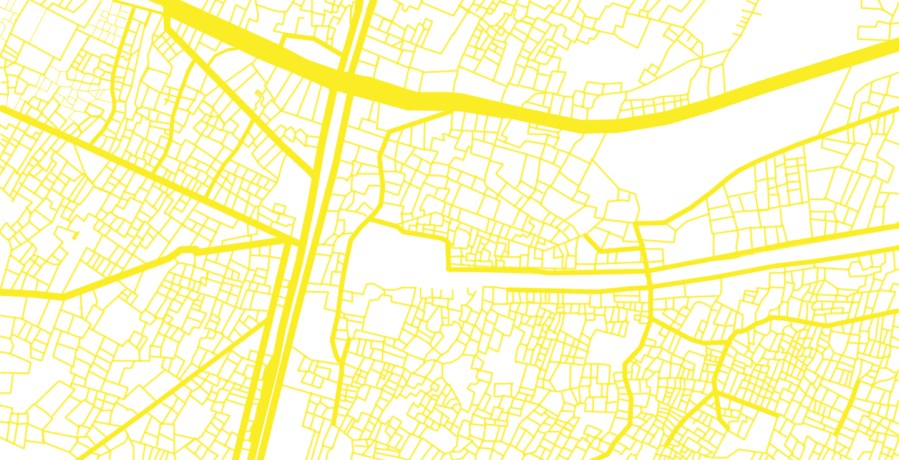
Figure 1: Layout of Streets of Kolkata; source: author.

Within and outside the realms of architecture, streets pave the way at the microcosmic level for the energy distribution network similarly to the way it functions for the crowd and vehicular activity. The metaphysical lens from different frames of reference gives an opportunity to analyze the impact of the metaphysical link and how it is evoked with the crowd in context to the existing surrounding. Different users feel a variety of different emotions in consideration to one particular space.

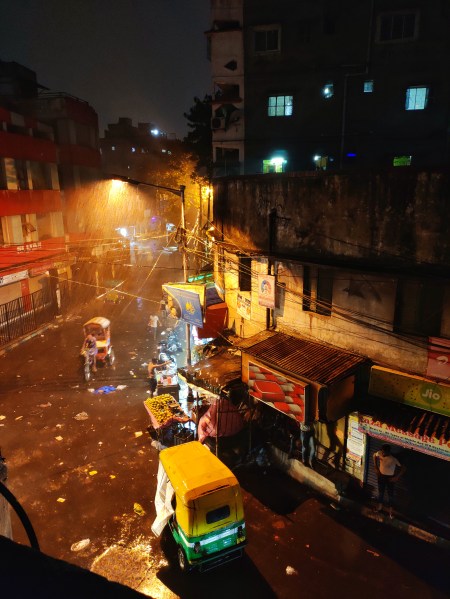
Figure 2: The Street ‘90’ on 12th June, 2019; source: author.


A resident of the place when asked about her experiences with the place said, “We have been staying here for about 15-18 years now. It has an essence of familiarity and home. The existing buildings, the shopkeepers, the vendors, and when I say vendors I really mean it. They are accurate with their location of stalls and wouldn’t trade it with anyone. Ive seen a lot of changes in the place. The building in red and white was built after demolition of an old 3-storey building for commercial purpose yet the upper floors still remain untouched after being built for so many years. The chaos is the essence of this place and without it, this street will lose its essence and identity.”

Considering the quantitative aspect of the street, it is about ten meters in width, with two meters of it occupied by the street vendors. An analysis of the street was done in three different phases of the day. When the morning struck, the silence is disturbed only by the daily activities of parents dropping off their half-dozed children to schools either by private or public convenience, which here is the auto rickshaws, who typically place themselves along the edge of the building as shown in Figure 2. Slowly and gradually as the time transcends the vegetable and fruit vendors take the edge of the street as their potential business spot. The traffic becomes evident by the noon with children coming back from school, having there go at the Sharbet waalas. As soon as the sun goes down, the street has an overwhelming response by the users creating itself in a chaotic mess of disoriented vehicles and people trying to make way to get out. Simultaneously, the sequence of functioning of the streets inflects thrrough its natural course. The female crowd encircles the ‘puchka waale bhaiya’, drooling over the smell of the tamarind water. A few steps towards the east would bring us to a smellscape of a multi-cuisine food corner with a large hot plate with parathas being fried, a traditional clay barbeque for the kebabs being cooked upon the coals, another man assorting the shelves with momos, fried crispy chicken and another struggling with delivering the order to the respective customers superimposing each other tones in a competitive streak to get their order first. The edges of the streets are defined by the utilities of all kind such as a pharmacy, general stores, grocery shops, food kiosks and corners, markets within a radius of a hundred meters, a shopping complex built few years back, occupied only the ground floor of the building structure. A fruit vendor defined the street as, “It is a metaphor of how our life is, always moving and moving in the forward direction. Despite the chaos we love our life so do we love this place.”

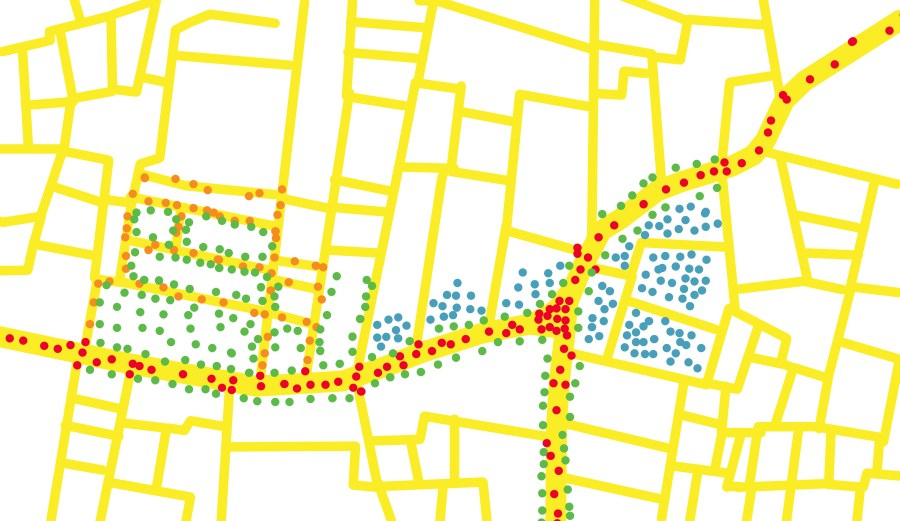
Figure 3: The Feeling Mapping of the Street (red-chaos, green- rejuvenation, orange-action, blue-contentment); source: author

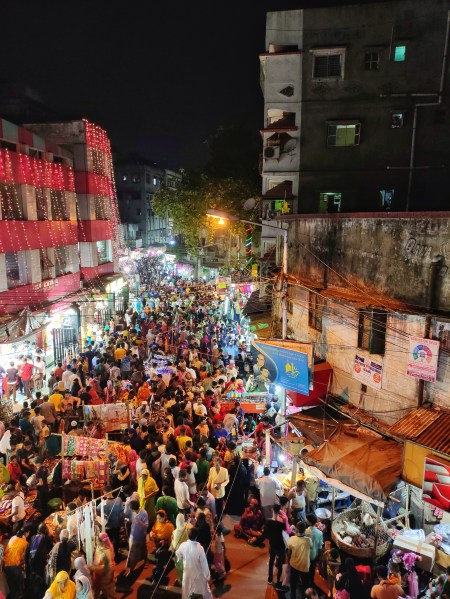
The rhythm of the basic functioning of the street is inflected during the festivities, such as the two Eids and Muharram. The zeal within the crowd becomes evident and the streets stop serving as a vehicular access instead it becomes a hub of utilities as shown in Figure 4.

Figure 4: The Street ‘90’ on 4th June, 2019 (On the Eve of Eid); source: author


In terms of architectural analysis, the flaws couldn’t remain unseen, but what the architects couldn’t see is the intrinsic experiences that the users have with the place. The elegance of the street is a culture of contentment and containment. It depicts the unification of the users belonging to all strata of the society interacting with each other whatever the purpose may be. The dynamics of the streets and the humans represent a whole of the community be it the rich or the poor. In a simple world, the whole of the world can be explored. The local architectural vocabulary of the streets shows motions and emotions of all colours. It depicts joy as well as sorrow. The chaos and the peace, all the comedies and tragedies. The energy drained is rejuvenated with the constant flow of energy on the street. The essence of the chaos in itself shows the intrinsic connection between the built and the unbuilt. The street evokes the intangible aspects of the userrs. The user activity is the result of the concentrated energy source at the micro cosmic level connecting humans with the space at a deeper level. Configuration of the whole of the city is determined by the streets that becomes the highest sources of energy flowing throughout.
The built is to exist what the unbuilt is to life. The boundaries defined by the concrete is a personalized space to exist in harmony, but to co-exist, an undefined yet the key that holds the city together. A street has a potential to turn itself into anything it wants. The street is an induced public space. The street has evolved through the line of time of urbanization inflecting the course of its motion. Due to the increasing number of concrete massing, the spatial contraction of the streets are taking place in localities like Topsia in Kolkata whereas due to the urbanization, the expansion of streets also take place with putting an end to the life of the city creating it in a block of monotony and regularity only used as an access not as a space for creating an interaction between the built and the unbuilt, the known and the unknown. Spatial expansion and contraction taking place to accommodate structures. Street is one part to the whole that encapsulates the built and the user.
People have a tendency to experience voids hence, they hold human sentiments. We are dehumanizing the streets by making it lose its existence by the loss of depiction of culture and tradition. It is a lost element with the thoughts drowned in hues of grey unaware of how to survive in the chaos. The task of an architect is to blend imagination with practicality by balancing ideas and reviving the true nature of the streets in context to human activities.

REFERENCES

1. The Holy Quran

2. Mustofa, 2011. According to Dr. R Tatang Santanu Adikara, the Head of Bioenergy Research Centre in Surabaya, human gets energy from two sources: inside the human body and outside the human body.

3. Metaphysical Approach for Design Functionality in Malay-Islamic Architecture, article in procedia-social and behavioral sciences-aug 2015

4. Mies Van der Rohe

5. Lynch, Kevin. Image of the City.

How to grab internships?

My connections often ask me how to get an internship?What preparations do we need to do to get an internship? How you prepared that you got so much internships? So, i thought of publishing an article that might help you all in getting your answers.

A Guide to Starting Your Career Off Right

Consider Your Qualifications

One of the most common misconceptions that students have about how to get an internship is that they must apply to every position that catches their eye to increase their odds. But this is a sure-fire recipe for radio silence from recruiters and hiring managers. Instead, think about the skills and experience you currently possess, and which positions you might be a good fit for based on that information. A few ways to narrow down which internships are right for you:

Think about your degree

Look up common career fields and job titles for people with your major.Consider your experience: Think about your previous work experience, and which roles it might prepare you for. A student working at a campus newspaper might consider a journalism internship, while a student who tutors for a statistics class may want to look at data science internships.

Identify transferable skills

Skills that help you succeed in school or in the student organisations you participate in — such as organisation, critical thinking and time management — will all be useful in the working world. Some quick research should reveal which jobs require these skills.

Explore your interests

With how much time you spend at work, you want to make sure you enjoy it! Write down a few career fields that interest you, and search internships in those areas.

Start small

Don’t feel pressured to get your dream internships right away, especially if you have no prior work experience. Start by exploring small local organisations, groups affiliated with your school or volunteer work in order to bolster your resume.

Know Where to Look

Once you have a more concrete idea of which internships would be the right fit, it’s time to see what’s out there! Here’s how you can do that.

Visit Job Sites

 Websites like LinkedIn , Internshala have millions of job listings, so you’re bound to find something that’s right for you. You can search for the internship titles you’re interested in, and narrow results down by location, size, industry, company ratings and more.

Leverage Your Network

Getting a personal recommendation can make all the difference in your internship search, so make sure to reach out to friends, family, colleagues, classmates, professors and alumni to see if they know anyone hiring.

Prepare Your Application Materials

No matter what job you apply to, there are a few key materials you’re going to want to have on hand. Here are the most common ones, and how to perfect them before you apply.

Resume

Resumes are brief documents that showcase your skills, education and professional background. Typically, resumes will contain your name and contact info, education, professional summary, work experience, skills and additional experience.

Social Media Profiles

Many recruiters use social medias to recruit— some may even require a link to your social media profiles. So, if you haven’t already, you may want to create a professional social media profile, especially on a networking site like LinkedIn.

A few best practices to follow as you polish your social media presence:

Choose a professional headshot for your profile picture.

Add relevant work experience as applicable.

Keep it appropriate — delete any suggestive references or pictures.

Share and engage with relevant industry content.

Hope, this will help you all in getting your dream internship.

Govt approves lifting ban on export of anti-malarial drug hydroxychloroquine: Sadanand Gowda

Union Minister of Chemicals and Fertilizers D V Sadanand Gowda has said that the Department of Pharmaceuticals has approved the lifting of ban on the export of anti-malarial drug hydroxychloroquine API as well as its formulations.

In a tweet, Mr Gowda said that manufacturers except Special Economic Zone and Export Oriented Units  have to supply 20 per cent production in the domestic market. He said, Directorate General of Foreign Trade- DGFT has been asked to issue a formal notification in this regard.

Mr Gowda also said that he  held a detailed discussion with representatives of pharma companies and  association and stakeholder Ministries alongwith Union Ministers including Piyush Goyal and Hardeep Singh Puri on  entire gamut of challenges faced by the industry as well as strategies to boost pharma export.

Privacy Laws In India

Current laws and license agreements in India which allow for surveillance entail a significant potential for abuse, since the country lacks sufficient privacy safeguards . A privacy law is deemed necessary to ensure that data is not retained indefinitely, that data is not shared and disclosed to unauthorised third parties and that unauthorised parties do not have access to collected and intercepted data. In a democratic regime, surveillance should be targeted and carried out under a judicial warrant and the absence of privacy legislation deprives individuals from necessary safeguards. While the Information Technology Act and its Rules do entail some provisions for data protection and regulate certain types of surveillance, they appear to be inadequate. This is partly due to the fact that there is currently no law in India which establishes the right to privacy and as Security Practices and Procedures and Sensitive Personal Data or Information) Rules, 2011, represent a decisive step in creating a legal regime in India for data protection, but nonetheless appear inadequate in addressing issues relating to the collection of, access to, sharing of, disclosure and retention of data5 . Furthermore, they do not ensure the establishment of an independent body, such as a Privacy Commission, to oversee the handling of personal data and to address potential cases of breach.

Justice AP Shah Privacy Principles
The Planning Commission of the Government of India held meetings of the Group of Experts on Privacy Issues throughout 2012, which was chaired by Justice AP Shah, the former chief justice of the Delhi High Court . The CIS participated in these meetings and helped draft the Report of the Group of Experts on Privacy by the Justice AP Shah committee . This report entails a list of recommended national privacy principles, which should be followed in the creation of a privacy law. According to the report, the national privacy principles of India should be the following:


• Principle of Notice
• Principle of Choice and Consent
• Principle of Collection Limitation
• Principle of Purpose Limitation
• Principle of Access and Correction
• Principle of Security
• Principle of Openness
• Principle of Accountability


The first principle of notice states that the data collector should notify all individuals of its information practices, before any personal information is collected about them. Additionally, this principle also requires data controllers to notify individuals when their personal data has been breached, when such data has been legally accessed by third parties and when the data controller’s privacy policy changes. The second principle of choice and consent states that the data controller should provide individuals the choice to opt-in or opt-out with regards to the provision of their personal data, as well as that individual consent should only be taken by the data controller after providing. The third principle of collection limitation states that the data controller shall only collect personal information from data subjects as is necessary for the purposes identified for such collection, regarding which notice has been provided and consent from the individual taken. The fourth principle of purpose limitation states that personal data collected and processed by data collectors should be adequate and relevant to the purposes for which they are processed. In other words, a data controller should only collect, process, disclose, make available or otherwise use personal data for the purpose as stated in the notice after taking consent from individuals. The fifth principle of access and correction applies to individuals. In particular, this principle states that individuals should have the right to access their personal information which is being held by a data controller and to make corrections or to delete information when it is inaccurate .

The sixth principle of disclosure of information prohibits the data controller from disclosing personal data to third parties, unless informed consent has been provided by the individual for such disclosure. This principle also states that disclosure of information for law enforcement purposes must be in accordance with the laws in force. The seventh principle of security states that data controllers should be responsible for ensuring the security of all personal data that they have collected or which is in their custody.. The eighth principle of openness requires data controllers to take all necessary steps to implement practices, procedures, policies and systems in a manner proportional to the scale, scope and sensitivity to the data they collect, in order to ensure compliance with the privacy principles, information regarding which shall be made in an intelligible form, using clear and plain language, available to all individuals. Finally, the ninth principle of accountability states that the data controller should be accountable for complying with measures which give effect to the privacy principles.


Such measures should include mechanisms to implement privacy policies, including tools, training, education, as well as external and internal audits. In the report, the Group of Experts on Privacy recommended that such national privacy principles are applied to the cases of interception of communications, access to data and audio and video recording. In particular, it is emphasized that, with regards to the interception of communications and access to data in India, the principles of notice, choice and consent, and access and correction should be applied. With regards to audio and video recording in India, the application of the same principles, additionally including the principle of collection limitation, is recommended. Furthermore, the Group of Experts on Privacy also recommended the enactment of a privacy law in India which would include the establishment of Privacy Commissioners, as well as of self-regulating organisation (SROs) and co-regulation, which would supplement the role played by the Privacy Commissioners to ensure the implementation and enforcement of policies for a wide range of sectors and industries. Additionally, the Group of Experts recommended the establishment of a system of complaints which would include Alternative Dispute Resolution Mechanisms (ADRs), as well as the inclusion of offenses, penalties and remedies in the Privacy Act.

Child Labour-The loitering horror

It’s to remind us all of one of the painful horrors which still lurks in the world, it is observed all over the world (12 June) and is celebrated every year by UN is a sanctioned holiday by ILO (International Labour Organization).

Child labour is a horrific crime, many a times it’s forced upon naïve lives and children take up jobs at an early age so that they can also become a bread winner for their family due to financial woes. It’s a vile practice which still exists today in remote areas and many a times goes unnoticed.

Most of the third world countries have the largest number of child labourers’ eg.-South Africa, Afghanistan, Pakistan and Myanmar and also in many parts of India. It’s a phenomenon which most of us are aware about and many a time we try our best to contribute to eradicating this heinous practice from our world.

Economic factors is just one of the reasons which compels children to work, especially due to inflation, children tend to take up jobs at small hotels or shops where informal labour exists, due to this they can easily work around but are also misused by their superiors.

Due to child labour one’s freedom is curtailed along with the banishment of their own carrier and also they are unable to have access to many opportunities which life has to offer. One is unable to focus on self-growth and ones’ goals in life have to be forgotten. The child is put into a whirlpool of reeling pain and is trapped in the wrong sphere at such a young age and also exposes himself to other horrors.

In most of the third world countries family sizes can be huge and just one bread winner’s income won’t suffice the whole family, hence many children are encouraged by their parents to take up jobs in the informal sector and to earn money so that they can satisfy their basic needs. Many factories used to employ children between the age of eleven to thirteen as workers luckily this practice has almost vanished away due to child labour laws.

Many students in developing countries lose interest in studying it could be family problems, financial woes or lack of interest and take up trifling jobs so that they can start earning, this not only ruins their carrier but also can expose them to adverse snarls of the world at a young age.

One of the biggest reasons of child labour is financial problems, most of the children who commit themselves to working as a child labourer are people belonging to BPL (below poverty line), and one of the only ways to work out things in their life is by working and earning at a young age, it could be the nearest tea stall near your house where you see small boys lending their energy or even the newspaper delivery boy who comes on his worn out bicycle. Most of them even end up working as construction labourers, risking their innocent lives.

One of the other reasons for increase in child labour is improper enforcement of laws and irregular checks by the government. As citizens of this country and as humans of the world we can do our bit by educating ourselves on this trivial topics. To contact legislators if we come in contact and come across child labourers in our neighbourhood. Also to not shriek away from giving your domestic workers their fair share of income so that we can break the cycle of child labour. And to buy from local grocery stores and not bargain with small sellers are just a few of the things we can do to improve this disturbing situation.

Abdhi Upadyay

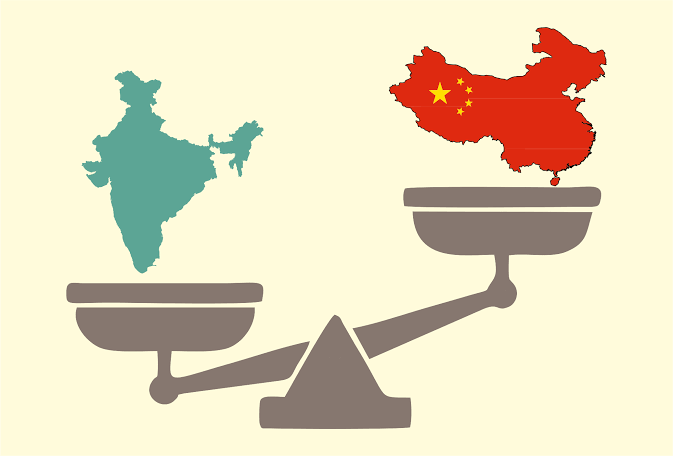
After Reported Thinning of Forces, China Says ‘Agreement’ With India Has Led to ‘Action’

New Delhi: After Chinese troops were observed to have “thinned” out in at least four stand-off points, China on Wednesday said that “actions” were being taken in line with an “agreement” reached with India

This was the first official statement from either country that there had been changes in the ground situation in eastern Ladakh following talks between the two sides. However, the Chinese side did not provide any detail on the “actions” at the border with India.

Military sources had earlier stated that the density of Chinese troops at Galwan and Hot Springs had come down from Monday, which was reciprocated by India. However, there had been no change in status at Pangong Tso, where Chinese troops are on India’s side of the Line of Actual Control (LAC). There had, however, been no official statement from India on these developments.

This was echoed by the Chinese foreign ministry spokesperson at her briefing on Monday. “Both sides agree to implement the important consensus of the two leaders, avoid escalation of differences into disputes, work together to uphold peace and tranquillity in the border area, and create favourable atmosphere for the sound and stable development of bilateral relations,” said Hua.

Several other rounds of talks among the militaries are expected to take place in the coming days at the border.

However, there are no signs that China is willing to retract its troops from the area until Finger 4 in Pangong Tso, which is well within the territory claimed by India. It was at Pangong Tso that Indian and Chinese soldiers had come to blows in early May, which was one of the early markers of the start of the stand-off between the two armies.

India has sought a restoration of the status quo ante before the first detection of Chinese troops at Galwan, with the vacation of soldiers from the finger region in Pangong Tso being a top priority.