Importance of INTERNSHIPS for college students!!!

In the world full of competitors to be successful student/businessman etc. should have a different approach. They need do things which have already less participants. It would be best if none of the competitors are present, it doesn’t mean you have to do very odd thing. Everyone needs a better lifestyle and a proper career so that they can live luxurious life with the family, for that we have to start at early as possible and gain the maximum experience. There are many of the websites nationally and internationally that provide work to college students as in the name of freelancers some of the popular sites are:

1- Internshala

2- LetsINTERN

3- LinkedIN

4- GlassDoor

5- Hello Intern

6- Twenty19

7- AngelList

8- Indian Internships

9- Oyster Connect

10- Interlelo

The above listed Internship site are the popular one yet there are many more to be listed.

  • Internships not only make a student financial independent at college life but it plays a very important role as while on last year of college it boost the CV and the chances of selection in your dream company gets increased by 10 folds.
  • Internship help a student start to build a professional network that can be a resource for the student.
  • Internship also help student to decide a second option of career and also can make it as a part-time works on his professional job.
  • Many companies are in search of students who have already completed an internship related to professional job which will also help student to do the work which is of his choice and already experienced on it.
  • Internships provide a great impact on confidence of the student which will help a lot in the actual job.
  • Students gain knowledge and get aware on how to talk with superior person, how to keep conversation on and most importantly how to influence anybody with the power of the words.
  • Students also get hands on to manage the task assigned. They also get to know to give a separate time table to each task and mange the workflow while studying.
  • They get the professional guidance even if they fail to mange the task as the internship provider cannot force any student and they encourage the student on compilation of task.


download

This are the most benifits of the Internship…Hope it will be helpful.

If you are in college and not having any internship, than go for it…It will prove helpful in the future.


LIVE in online sessions and LEAVE Recorded sessions

How interesting would it be to watch the highlights of a cricket match? Everyone will have a chance to have a choice and definitely will not prefer to watch an uninterested match or the match whose result has been known. In a similar way, people will not respond to recorded session unless it has a good response.” Viewers will hear in recorded sessions and listen in online sessions”.

Live sessions will have a life and makes the dead participants to be alive and make them to participate actively. Participants in live sessions will also have a choice to listen the video in recorded session but they prefer not to because they know the advantage of online sessions. People will not listen in order to listen because there is no way to forward it. The only way to end it is to end it. One can clarify the doubts in the live chat and will save the time rather than searching for the possibility of your doubt to appear in comments. Live sessions will increase the patience level in the participants. There is no need to concentrate on concentrating because you will be busy in concentrating.
Recorded sessions will not break the records. “Participants try to end the session in order to complete the session”.

The major disadvantage of recorded session is having a choice to forward it or to watch it in required speed. Viewers prefer to listen the video in low quality and high speed simultaneously reading the comments which makes them to concentrate more on more other things and make less available for the video. There will be too many things to handle at the same time and makes you to do nothing. Your intention to handle many things at a time doesn’t make you to handle at least one of the thing in because there will be more solution which in turn reduces concentration.

Advantage of live session is mainly due to the disadvantage of recorded session.” Leave the recorded session and Live in live session”. Experiencing the live will expertise your life. Watching recorded videos is like thinking about past. So, leave your past and live in present like experiencing the live sessions. Remember that recorded sessions should also be recorded in live.

Why We Say Sorry? Is it ok to say in any situation?

Saying you’re sorry is called apologizing. When we apologize, we’re telling someone that we’re sorry for the hurt you caused, even if we didn’t do it on purpose. People who are apologizing might also say that they will try to do better. They might promise to fix or replace what was broken or take back a mean thing they said. The apology comes to English from the Greek roots of apo– (“away from, off”) and logia (from logos, meaning “speech”).

The earliest published use of apology we have evidence of comes from the title of a work by Sir Thomas More, the Catholic humanist and social philosopher of Henry VIII’s court. The word appears in his 1533 work Apologye of Syr Thomas More, Knyght. However, the first published use of a word is not necessarily the same thing as the first actual use of it, and there has recently been discovered earlier, hand-written evidence of apology in correspondence between members of the British court; a letter addressed to Cardinal Thomas Wolsey in 1526 contains the line “Here are apologies made for the defense of the French King.

700820218-H

Nowadays, we use sorry more in our conversion while talking with office bosses, parents, relationship partners, and unknown people. However, When you say sorry, it is not because you are weak, you just show that you wont to calm down yourself and display self-ego is stronger than your ego. When we say sorry, it is not just for the mistakes which we have done, it is also for yourself to cultivate a healthier spirit, furthermore, when someone says sorry, it does not direct the mistake, which he/she did, but it may not mean that they have done wrong. You do it because, it is an important skill to learn in life, and you can only do so through deliberate practice.

Here is research regarding apologies, According to a 2015 poll from research firm YouGov, there are approximately 15 British “sorries” for every 10 American ones (for situations like if they sneezed, stood in someone’s way or corrected someone who is wrong). The survey, which polled 1,600 British people and 1,000 Americans, showed a few similarities: 73% of British people would apologize for interrupting someone, compared to the 71% of Americans. And when doing a favor for someone but getting it wrong, 60% of British people said they’d apologize, compared to the 58% of Americans.

Many famous and renowned people always told, Over-apologizing for things you have little control over can make people think less of you. A few examples of things you don’t need to apologize for include sneezing, standing in someone’s way, getting bumped into by someone else, being interrupted, and so on. whenever we say more sorry this thing happened with us lose respect for you, It lessens the impact of future apologies, and It can lower your self-esteem.

sometimes, by saying sorry does not fix everything like, a heartfelt “I’m sorry” fixes everything right away. Other times, it might take a while for someone to feel friendly after you apologize. You might need to give the other person some time. Even after you say you’re sorry, you might still feel bad about what you said or did, but you can feel good about apologizing and about making up your mind to do better.

Sometimes people don’t say sorry because,

  1. When you apologize, you admit that you may be wrong, which is a threat to our ego and our pride.
  2. Some people see an apology as a confirmation of guilt and, as a result, of responsibility for the conflict.
  3. The apology is viewed as a means to draw attention to the mistake.
  4. The person might see an apology as a way of dwelling on the past when they just want to move on.
  5. Some people assume that apologizing is a sign of weakness, but actually, it is a hallmark of strength.

By considering, all points which I narrated above we have to say sorry, whenever we need bet don’t be over-apologized.

thank you to read this post.


SWOT in Business

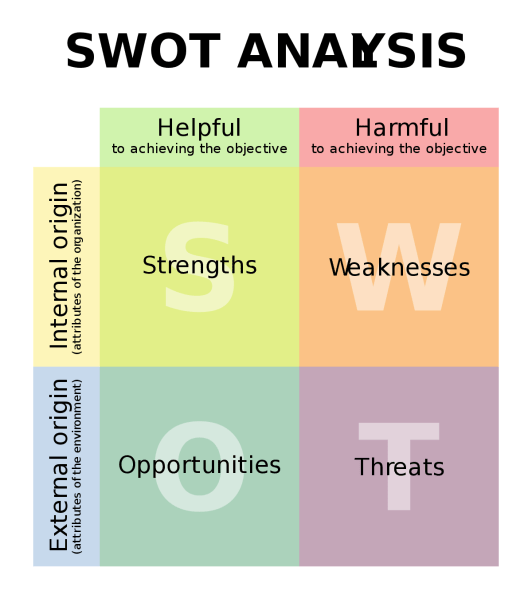
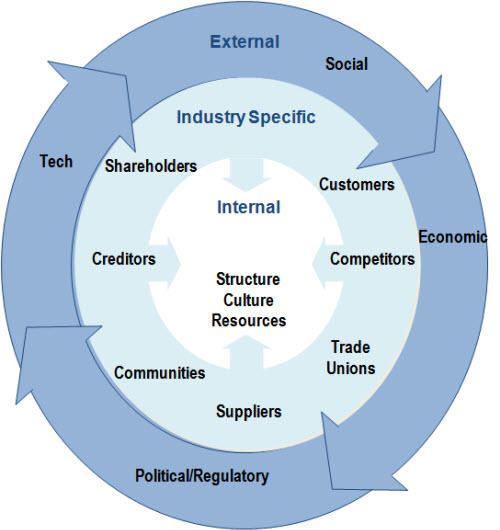
SWOT is an evaluation-process of external and internal factors through the process of communication which can also be termed as empirical Analysis. This analysis is based on observations and experiments which act as strategic management. SWOT in Business stands for:

             S- Strengths

             W- Weaknesses

             O- Opportunities

              T- Threats

Swot analysis is applied in laying down the policies of large organizations. An organization, based on SWOT  analysis, can make a relative/comparative study of its strengths, weakness, opportunities, and threads. On the basis of SWOT analysis, a business organization by exploiting its strengths and opportunities can achieve its multifaced goals, by overcoming its weaknesses and rendering its threads innocuous. SWOT analysis trains us in deriving the maximum benefit from the opportunities and the strengths, it is also identified with the term (WOTS-UP).

In other words, SWOT analysis is a technique that enables a business organization to make the best use of its strengths based on the opportunities and by doing so, an organization can keep the possible threads at bay by overcoming its vulnerable areas.

INTERNAL FACTORS

 1. STRENGTH

  Every individual and every organization possesses some strengths or characteristics or peculiarities. These peculiarities are known as positive points, such as the right pronunciation or right scent in communication, vocabulary, language, command and group discussion, etc., are the positive qualities which fascinate their audience and in course of discussion or debate, satisfying the audience with a clear and valid explanation to their queries, etc., are the major strengths. An effective personality becomes the strength in organizational communication. So strength is a very important factor for anyone.

2. WEAKENESSES

Like strengths and positive assets, there are certain weaknesses in every individual or an organization. Identifying weaknesses and marking them is an important factor. These shortcomings are known as ‘Negative Points” such as faculty and erroneous pronunciation, fast or impatient articulation, inability in drawing others attention and faculty or casual-listening as an audience, non-seriousness, or a casual approach towards communication in a business organization.

– From LEGO SWAT

EXTERNAL FACTORS

3. OPPORTUNITIES

In any business, it is essential to avail of opportunities. In the career of any business organization, professional or individual, there are a plethora of opportunities which can be transformed to destinations or in other words can be described as the gateway to one’s destination, for instance, some professionals by benefiting from e-commerce, have attained a global dimension in their business.

4. THREADS

 Society and the external environment give rise to threats. Every organization, business, profession, or an individual has to go through a rigmarole or a series of difficulties/challenges, on way to success. These threads give way to opportunities, such as the discovery of new means of communication e.g., internet, e-commerce, and e-banking, etc.,

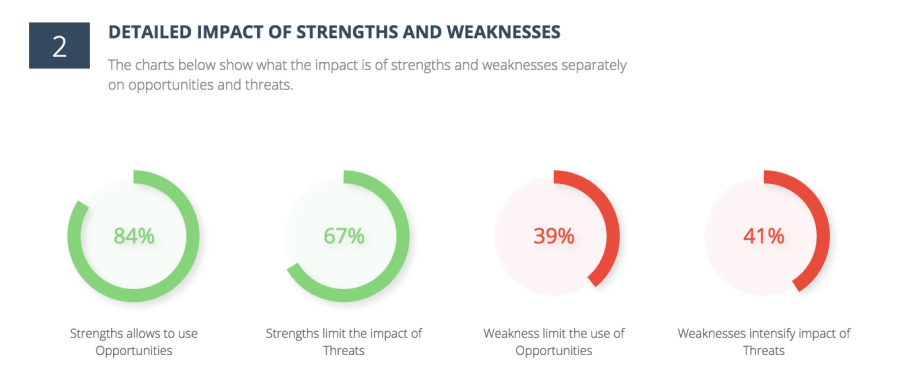
As there are always two sides to a coin, in every business or professional area, the strength and weaknesses march together. Each thread provides opportunities. In this analysis, threats, and opportunities (T-O) and weaknesses and strengths (W-S), through the equation, their interrelated analysis is done, which is also know as TOWS Analysis.

BiEnG a BoOkWoRm

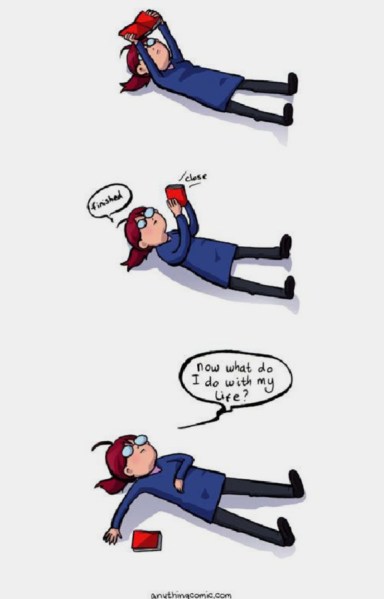
Books- great friends of human-kind. They are the true companions of  man and play the role of awesome surroundings. We all, more or less, love reading. Some of us love seeing it arranged on the shelves of libraries, some of us prefer to buy famous, costly books just to make our collection rich enough. And the third one who are most fantastic, wonderful and above all real book lovers- it would not be wrong to call them book worms.

A bookworm generally reads loads of books and it actually makes them happy and keeps them refreshed. Not all of us appreciate bookworms that much, for they are pretty weird. Not weird, just not like the other people in the world. As they read a lot books, they know about lot things. They know human nature. They love to observe people. If you are a specific genre lover, like, you only love to read sci-fi series or ghost books or detective ones then knowingly or unknowingly you will start believing that you’re those cool fictitious characters and your role models will be those characters.

Now, parents. They are always on the opposite direction from us, aren’t they? Even though you are doing right, they will blindly believe that you are doing it pretty wrong. Well, I’m not against parents nor I’m criticizing them. But what I’m saying is correct and proven in hundreds of psychological theories. It’s very natural to have clashes with parents at the time of teenage. So, let’s not count that.

What I’m trying to say all these time is, being a bookie is not good thing but a VERY good thing! As much book you will read, as much true man you will become. Napoleon said once,

“Show me a family of readers, and I will show you the people who move the world.”

Books will not make you perfect, they will rather make you good. They will not help you to get good grades at exams but they will show you the right way. They will not help you to gain power but they will make you courageous enough to stand for what is right.

Books will help you to “know thyself”. So, let’s all read books. Trust me, this is cooler than social networking sites. It is more interesting to know what twist is coming at the next page than to check notifications on Facebook.

And now, they- who call themselves readers and roam around with some very high-thought books, just to get the surprising looks from friends, I don’t know what to say for them. Again, those people  who love showing attitudes and whenever they talk they love to recite lines of poems and stories from the books they have read, just to get clap and pats on their back, I don’t know what to say for them either. Maybe they should ask themselves, why they read book? For them or for others?

So, my dears, why don’t you grab a book right now and start with it? Why don’t you become Miss Marple, Mr. Holmes, Feluda or Topshe? Those very feelings, I’m asking you, does it ever gets old?

NOTE: Feluda and Topshe are characters from Bengali literature. Of  a detective series named “Feluda” written by Satyajit Ray.

5 Survival Tips for Nursing School

Have you ever wondered if you have what it takes to make it through nursing school? Some nurses will tell you that coursework and clinicals are difficult, which can be discouraging for many potential students. Just like any career, becoming a nurse takes a lot of hard work. Here are a few suggestions to help you rise to the challenge and make the most out of nursing school.
  1. Go to class. This sounds easy enough, right? Some students think it’s acceptable to skip class from time to time, but nursing classes move very quickly and your instructor will cover a lot of important information in each session. If you miss a class, you will quickly fall behind in your studies and you might not be prepared for your exams or clinicals. Plan your vacations and extra-curricular commitments around your course schedule and make sure to prioritize your schoolwork outside the classroom.
  2. Be on time. Each state requires that nursing students complete a certain amount of clinical hours. Sometimes, you might have to commute to your clinical site, which can be a hassle in bad weather or on days when you’re running late. But, if you miss a clinical session, you will have to make up those hours at the end of the semester. Trying to make up several clinical hours at the end of the term can be stressful and overwhelming, especially when you also have to study for final exams. It’s important that you complete all your hours on time and make an effort to attend every session. You can carpool with other students to hold yourself more accountable and cut down on transportation costs.
  3. Form study groups with your classmates. Studying in a group makes it easier to set aside time specifically for academics, even when you don’t have a particular exam coming up. Reviewing your notes regularly will make it easier to retain important information so that you can apply that knowledge to your work outside of the classroom. Your classmates will always be available to help you, and they might even become your friends and support system throughout your college career.
  4. Seek help from your instructors. Sometimes, you may need a refresher on the material before a big test. You should always talk to your instructors if you’re confused or struggling with course material. Your instructors are an invaluable resource—they had to survive nursing school, just like you. Above all, they want you to succeed and graduate, so don’t hesitate to ask them for help!
  5. Seek help from a tutor. All college students are expected to master basic math and writing skills, and these skills are especially important for nursing students. (For example, you have to know algebra in order to administer accurate doses of medication). Your college papers will likely require you to write in APA format. Even if you are confident in your writing, you should still ask that a peer or a tutor proofread your paper and double-check your formatting. Every student can benefit from a proofreader for papers—no one is a perfect writer! Plus, your tutor may be able to give you valuable feedback that will help you improve your writing in the future.
Of course, the best advice is to enjoy nursing school. Your years in school will go by fast, and you will learn a lot about yourself. Every student will have a different experience in school, but following these tips will help you make your experience as positive — and rewarding — as possible!
Interested in a nursing degree? Learn more here. Take our nursing personality quiz to discover the best degree options for you!
Michelle D. Metzger is a Registered Nurse who earned her Master of Science in Nursing Administration (MSN) and a Master of Business Administration (MBA) in 2013.  She has more than 20 years’ experience in healthcare starting as a Certified Nurses’ Assistant. Michelle is currently the Department Chair of Nursing at the Herzing University Kenosha Campus.  Also, she is currently pursuing her Doctorate in Nursing Practice in Education Leadership.  

An insight to Obesity and why is it a growing concern ?


Obesity is a medical condition where people have a BMI above 30. Often people get confused with the terms \’obesity\’ and \’overweight\’. There\’s a slight catch to it. If a person has a BMI between 25 to 30 he would be called overweight and the ones above 30 would be called obese.


Now, what is BMI? BMI is defined as the ratio between the weight of the body and the square of its height. The statistics show that 30% of people worldwide are obese. That\’s a whopping 2 billion people. India has around 5%, obese people. 

Obesity can be caused by a variety of factors. For instance, a normal person might be obese because of an excessive amount of food intake and a lack of physical activity. Though there are a few cases that have pointed out to genetic reasons for the case of obesity. 

Now, let\’s take a deep dive and discuss the various factors in detail. Common causes of obesity include: 

• Binge Eating: Irregular eating habit is a kind of eating disorder which may have an ill effect on the body. Eating disorders include excessive or insufficient intake of food, and in the long run, it can damage a person\’s state of health. The usual forms of eating disorders include Bulimia Nervosa, Anorexia Nervosa, and also binge eating disorder. One may not realize when he/she grew too close to eating hence it\’s important to keep a check on it right from the teens. Eat to fulfill your hunger and not your taste. Hence it\’s important to control yourself right from an early age. 

• Sedentary living style: This lifestyle can be defined as a type of lifestyle where an individual does not receive regular amounts of physical activity. Today, surprisingly most of us live a sedentary lifestyle. The person may not meet the standards as specified by the Center for Disease Control (CDC). A sedentary lifestyle is a major cause of the obesity epidemic. It has been found that living a sedentary lifestyle which includes sitting for longer than four hours per day, greatly increases the risk of cardiovascular disease. It\’s said that it can cause much greater damage than smoking itself. 

• Genetics: It\’s discovered that people whose parents are obese have an increased risk of being obese. However, there have been cases where people with obese parents are fit and healthy and may not show any signs of obesity even later in life. 

• Physiological influences: For some people, emotions influence eating habits. Many people eat not because they are always hungry but in response to social feelings like sadness or stress. There was even a popular show run on the discovery channel on TV by the name –\’ My 600lb Life\’, where they depict the real lives of obese people. But as the show progresses it\’s shown how they recover themselves after a long battle with obesity. But case studies show that almost every overweight guy or gal experience the same psychological disturbances just like any other person. 

• Weight history: A weight-history discussion is a full clinical and physical assessment to identify metabolic, genetic, and hormonal factors as well as medications that may be the reasons for weight gain. 

• Pregnancy: When a woman gives birth to a child, she may gain extra weight post-pregnancy. It\’s important to note that the extra weight gained during pregnancy is the result of feeding not yourself but your baby as well. It takes time for a woman\’s body to return to normal after pregnancy. The fact that it takes nine months for the uterus to expand to accommodate the baby, it\’s not surprising if it takes much time to return to normal. Hence, patience is a virtue, and it\’s quite beneficial for women trying to lose weight. 

• Drugs: Various drugs like steroid hormones and drugs used to treat psychiatric conditions can increase weight. For example drugs like Benadryl, Antidepressants, Beta Blockers, Prednisone, Seizure Drugs, Mood Stabilizers, Insulin & Other Diabetes Drugs.

Now the question comes if obesity can be controlled? Well with the advancements in science and increased awareness it can be controlled. All it takes is small and consistent efforts by your side. It would take a while but one can win. Before heading on to the various habits you can inculcate and various efforts you can put, it\’s important to bust up some myths floating around us. 

There are myths like : 

• People with poor self-control will remain obese throughout their life. 

• Your genes are entirely responsible for your obesity. 

• Lack of access to fresh fruits and vegetables is responsible for the obesity epidemic

• Quick weight losses are likely to be gained back. 

• Joining gym classes right from play an important role in the prevention of childhood obesity. It\’s important to distance yourself from these myths. 

Now the various ways to avoid obesity is : 

• You must say goodbye to your old lifestyle and start living an active lifestyle. Try to do simple chores like going out to buy some vegetables, using a staircase instead of an elevator. 

• You won\’t return to balanced health overnight. But putting up small efforts like these would catalyze the process. 

• Have a balanced eating diet in your schedule. The recommended daily intake of calories is 2000 for a healthy diet. Eat foods that contain fewer fats and more nutrients and avoid having high sugar content. Make sure you follow that religiously. Also, ensure that you eat only when you feel hungry. Filling your tummy unnecessarily will only put your efforts in vain. 

• Drink as much water as you can. This would clean and detoxify your body which is good in the long run. 

• Make sure that you keep junk food out of your house. It would take a while to control your love for junk food but if proper steps are taken you can surely avoid them. 

• It\’s very important to keep track of your progress and for that, you must keep an eye on your weight and get yourself a medical check-up regularly.

• And lastly do not forget to exercise regularly. Your consistent efforts would be the key to attain a healthy body.

Companies Are Turning to Digital Marketing to Survive COVID-19: Here’s Why

As we already know that Covid-19 has become a global pandemic and it is here to stay for quite a while. As this pandemic has caused a sense of chaos among the global companies and made them think and also change the ways on how they used to execute their business strategies.

Coming across the results, majority of the company owners have not succeeded in planning out some new strategy to balance out the chaos created by the pandemic.

It seems that that they are unable to the accept the fact that their previous strategies or the way they used to work may not work now. They will have to adapt to the current situation and make changes accordingly to survive this pandemic.

Some of the organizations which used to work hand in hand have now adopted Digital Marketing as a part of their survival plan.

Some of the company owners have not only embraced the pandemic but are willing to face the temporary economic downfall and then try to recover from it later on as quickly as possible.

Major impacts of Covid-19 on Business companies.

As we know that there’s no such business that’s not been affected by the corona virus but the companies that are suffering the most are the startups which do not have a large capital to keep their company alive and even the companies which highly rely on meeting and face to face interactions like hair salons, gyms, sporting complexes and clothing stores.

Some of the companies which usually had unbelievable amount of growth by the customer referrals are now experiencing such major revenue loss that their reaction to this problem is to cut the marketing costs instead of heading and thinking about the solution.

On the other hand the unusual reactions from the people have caused a lot of harm to the larger B2B companies that serve these smaller businesses.

Digital marketing can help all sorts of business ideas or strategies irrespective of the company’s net worth. The customers are still in need of the products that they used to purchase before the pandemic so the company just has to change the ways in which they reach their audience.

How to take your business online.

If we talk about the time when there was no corona virus, People knew where the best pizza was sold or the best quality beauty products.

But now as there is a complete shutdown and the companies are no where to be seen, People wonder which ones are still in business and where they can spend their money to buy the essentials.

It’s a great opportunity to the businesses which have been highly affected by the deadly virus. With the help of digital marketing they can get in touch with the customers and start boosting their brand on their website or social media platform.

Communicating with the customers.

The first step involves the interaction between the business and the customers. The companies which were never socially or digitally active will now have to change their ways and build strong connections online for the scope of their survival.

  • The companies which are affected by the corona virus should take the initiative and contact their customers via email or sms and explain them how the services have changed and how they can still avail the services.
  • Make an advertisement go viral on a newsletter on how the company have managed to keep up with the crisis and what are the necessary changes made which should be known by the people.
  • The power of social media cannot be neglected here, a simple public post on Facebook or Instagram can be used as a source to reach out the customers.

Charging up the company website.

It is a fine opportunity for the global companies to invest in longer term channels only if the marketing budget allows.

The world has become unstable and the people are not certain on what to do, here alot of external tactics can be used to for internal success as creating a blog for the company or enabling the sales of the materials.

Let’s look up to some of the examples :

Sharing vital information on the web site’s homepage regarding the business queries and letting the audience know that the business is still ongoing.

Updating the service pages with some catchy new photos and descriptions would do the job and if possible add certain discounts which would catch the eye of a lot of audience.

E-commerce system would help the company in taking online orders so it should be a top priority. Some of the platforms which can be uself for such agendas are Shopify or even Paypal.

Building the company’s social media presence.

With isolation and social distancing in hand people are spending most of their time online, this is a great opportunity to take your business on social media and start interacting with more and more people.

There is a huge increase in the time spent by the people of Italy on Facebook and when it comes to Instagram the people of USA are no further left behind they top the chart by 43.1% active users in isolation.

This is a one time opportunity for all the business leads to get on social media and set a goal to build a large set of online following.

Let’s see how the companies can do that –

Updating or sharing various sets of things such as contents or blogs related to the company or related to the social aspects.

Humor is something that is loved by the audience and the posts or videos regarding humor would catch a lot of audience.

Get in touch with an influenceer and start working with him as a lot of influencers are left set open due to the coronavirus outbreak and are available for a reasonable price.

By making these kind of certian and easy changes with less amount of money involved a company could benefit even after the lockdown is over and normalcy is availed.

Depression: Common Myths and Misconceptions

With the growing digital advancements of this virtual age, a sense of nothingness has taken over this generation in a huge way which eventually leads to mental illness in the form of anxiety disorders, personality disorders, psychotic disorders, eating disorders and needless to mention, depression. It is never easy to boil Depression down to a single definition/statement that covers all its aspects and symptoms at the same time. It is one of the major mental disorders that affect people irrespective of gender, age so on and the like.


However, even in this 21st century, many misconceptions seem to be there in the society. Many people seem to have adopted the notion of depression in such a prejudiced way that it automatically links their idea of it to a fragile and futile make-believe concept which is not only harmful for them but it also affects the people around them in the long run. This article aims at representing some of the common internalized misconceptions that seem to be wrongly associated with depression which go a long way towards causing further anxiety issues for people who suffer from depression.


1. It’s all in the head!

It is not. If you are one of those people who throw around this phrase in a casual manner whenever you hear someone talking about their fight with depression or other forms of mental disorders, it is high time you understand the repercussions associated with it. It may have a long lasting influence on that individual without you having a slightest idea about it.
It has been clinically proved to be one of the most damaging mental disorders that have the capability to break an individual inside out.

2. It is a way to seek attention.

People who happen to be clinically depressed for quite some time have a really hard time getting over it. There are various ways that they try to find their happiness in. some of them are vocal about it and many are not. However, stigmatizing, calling them names, terming them as mere attention seekers go on to make their journey way more difficult than it already is.
It takes a lot of courage and inner strength for people to come up and share their sufferings with other people. In no way do they seek attention nor do they want sympathy from anyone. In most cases, all they want is someone to listen, and understand what is going on in their mind when it is really difficult itself for them to understand it in the first place.

3. It’s genetic.


Statistics show that only around 15% of who suffer from depression has relatives who had depression in the past. Each person deals with it in a different way. The way it affects people is different. Even when it is genetic, two individuals may not show similar symptoms and the recovery time varies from one another.
Depression is just sadness!
Feeling sad temporarily and being depressed are two absolutely different things. Depression is a long term illness and is very different than being sad. It can be escalated from sadness, but it affects in a much wider way. Sadness is a temporary feeling which usually goes away on its own unlike depression. Depression comes along with a lot more other negative feelings including anxiety, unnecessary guilt feelings, overthinking, emptiness, nothingness and the like.

4. Only women get depressed.


There is this systematic internalized patriarchal fragile notion of being a Man present within us due to which in most of the cases, men choose to keep shut and do not express their emotions which eventually leads to unbearable pain and sufferings.
Women unlike men, are relatively more vocal about it and do not refrain themselves from talking about how they feel.

5. It’s just a weakness and never a big of a deal.


Due to the systematic stigmatization associated with depression, many people tend to think it is a mere temporary weakness or disability. No one chooses to be depressed and it has nothing to do with how strong they actually are.
Clinical depression is a big deal that needs regular psychological treatment in order for the patient’s recovery. Sometimes it even takes up to 8-10 years.

6. Only medication can treat depression.


Medication is one of the types by which patients are treated sometimes. It is not the only way. There are various other therapy sessions that include meditation/music therapy and other cognitive therapies that have been proved to be equally valid and helpful in treating depression.

7. Depression is always caused by trauma.


In many cases traumatic past incidents play a major role in triggering the sense of depression in people. Even people who have no such traumatizing past history can suffer from depression.

All cases are different and unique at the same time. Hence, any form of generalization or stigmatization can be way more harmful than we can even imagine. These kinds of insensitive judgmental concepts do not help, but they only contribute in making their struggle way harder than it already is. It is high time people understand to what extent these wrong judgmental thoughts and misinterpretations cause trouble for them who already are going through a lot. All we should do is to stop being judgmental and be kinder enough to help each other out in difficult situations that will eventually contribute to the process of making the world a better place, for all of us.

Suvasree Bandyopadhyay.

SC Explains Tests To Be Applied While Sentencing In A Criminal Case

It must be mentioned right at the outset that the Supreme Court most recently on October 22, 2019, in State of Madhya Pradesh vs Udham and others in Criminal Appeal No. 690 of 2014 has briefly explained the three tests to be applied while sentencing in a criminal case. It has laid down in no uncertain terms without mincing any words that, “The aspect of sentencing should not be taken for granted, as this part of Criminal Justice System has determinative impact on the society.” Very rightly so!

                                            To start with, this latest, landmark and extremely laudable judgment authored by Justice NV Ramana for himself, Justice Mohan M Shantanagoudar and Justice Ajay Rastogi sets the dice rolling by first and foremost stating in para 1 that, “The present appeal is directed by the appellant-State against the final order dated 06.11.2012, passed by the High Court of Madhya Pradesh (Gwalior Bench) in Criminal Appeal No. 659 of 2011, whereby the High Court partly allowed the appeal filed by the respondents-accused herein and reduced the sentence awarded by the Trial Court to the period already undergone for the offences under Section 326 of the Indian Penal Code [hereinafter referred to as ‘IPC’] read with Section 34 of IPC, and Section 452 of the IPC.”

                                        While presenting the prosecution version, it is then stated in para 2 that, “The prosecution case is that the complaint lodged a report on 15.04.2008 that at around 9 p.m., while he was sitting inside his house with three other people, the respondents-accused barged in, carrying weapons. More specifically, respondent nos. 1 and 3 were carrying axes, while respondent nos. 2 and 4 were carrying sticks. The respondents-accused asked the complainant why he had not kept his cow tied, and subsequently, on respondent no. 4’s exhortation, the respondents-accused attacked the complainant and the others present at that time resulting in various injuries to them. Respondents-accused then allegedly threatened the complainant that if he did not keep his cow confined, he would be killed.”

                                         To put things in perspective, it is then elaborated upon in para 3 while putting across what the Trial Court ruled upon that, “The Trial Court tried the respondents-accused and ultimately convicted them for the offences under Section 326 read with Section 34 of IPC as well as the offence under Section 452 of IPC. The respondents-accused were sentenced to undergo 3 years rigorous imprisonment and a fine of Rs. 250/- (Rupees Two Hundred and Fifty Only) each for the offence under Section 326 read with Section 34 of IPC. They were further sentenced to undergo rigorous imprisonment for 1 year with a further fine of Rs. 250/- (Rupees Two Hundred and Fifty Only) each for the offence under Section 452 of IPC. In case of default of payment of fine, they were to undergo further rigorous imprisonment for 6 months. All sentences were made to run concurrently by the Trial Court.”

                                 As a corollary, what follows next is illustrated in para 4 that, “Being aggrieved, the respondents-accused filed an appeal before the High Court, challenging only the quantum of sentence imposed on them by the Trial Court. Vide impugned order, the High Court partly allowed the appeal and reduced the sentence to the period of imprisonment already undergone by them, which was a period of 4 days, while enhancing the fine amount imposed upon them by Rs. 1500/- (Rupees One Thousand Five Hundred Only) each. The respondents-accused were directed to deposit the enhanced fine within a period of 30 days, failing which they were to undergo simple imprisonment for a period of 30 days.”

                                             As it turned out, para 5 then states that, “Aggrieved by the impugned order, the State has filed the present appeal challenging the order of the High Court reducing the sentence awarded to the respondents-accused. The learned counsel for the appellant-State submitted that the High Court erred in not considering the gravity of the offence and the facts and circumstances of the case, particularly the fact that the respondents-accused had undergone imprisonment of only 4 days.”

                                 Simply put, para 6 then enumerates that, “On the other hand, the learned counsel for the respondents-accused submitted that the High Court has correctly appreciated the facts and circumstances of the case in passing the impugned order, and therefore, the same does not merit any interference from this Court.”

                                   After hearing the learned counsel for the parties as mentioned in para 7, it is then envisaged in para 8 that, “At the outset, it is pertinent to note that the reasoning of the High Court, for passing the impugned order and partly allowing the appeals of the respondents-accused herein, is limited to one sentence. The High Court states in its order that looking to the nature of the offence, the fact that this is the first offence of the respondents and the period of sentence already undergone by them, it is passing the impugned order.”

                             It would be of immense significance to note what is then stated so eloquently, elegantly and effectively in para 9 that, “At this stage the observations of this Court in Accused ‘X’ v. State of Maharashtra, (2019) 7 SCC 1, in which two of us were part of the Bench, with respect to sentencing in India are relevant here-

49. Sentencing is appropriate allocation of criminal sanctions, which is mostly given by the judicial branch. [Nicola Padfield, Rod Morgan and Mike Maguire, “Out of Court, Out of Sight? Criminal Sanctions and No Judicial Decision-making”, The Oxford Handbook of Criminology (5th Edn.).] This process occurring at the end of a trial still has a large impact on the efficacy of a criminal justice system. It is established that sentencing is a socio-legal process, wherein a Judge finds an appropriate punishment for the accused considering factual circumstances and equities. In light of the fact that the legislature provided for discretion to the Judges to give punishment, it becomes important to exercise the same in a principled manner. We need to appreciate that a strict fixed punishment approach in sentencing cannot be acceptable, as the Judge needs to have sufficient discretion as well.

50. Before analysing this case, we need to address the issue of the impact of reasoning in the sentencing process. The reasoning of the trial court acts as a link between the general level of sentence for the offence committed and to the facts and circumstances. The trial court is obligated to give reasons for the imposition of sentence, as firstly, it is a fundamental principle of natural justice that the adjudicators must provide reasons for reaching the decision and secondly, the reasons assume more importance as the liberty of the accused is subject to the aforesaid reasoning. Further, the appellate court is better enabled to assess the correctness of the quantum of punishment challenged, if the trial court has justified the same with reasons…”

                                                       (emphasis supplied)”   

                                         While pooh-poohing the manner followed by the High Court in sentencing the accused, it is then pointed out in para 10 that, “In the present case, it is clear that there is no detailed analysis of the facts of the case, the nature of the injuries caused, the weapons used, the number of victims, etc. given by the High Court in the impugned order. The High Court while sentencing the accused, has not taken into consideration the second charge proved against the respondents-accused herein, under Section 452 of IPC. Even the fact that the respondents-accused had only undergone sentence of 4 days at the time of passing of the impugned order, brings into question the High Court pointing to the same as a reason for reducing their sentence. As such, the order of the High Court merits interference by this Court.”

                                     While underscoring the invaluable importance of the sentencing policy, para 11 then postulates that, “We are of the opinion that a large number of cases are being filed before this Court, due to insufficient or wrong sentencing undertaken by the Courts below. We have time and again cautioned against the cavalier manner in which sentencing is dealt in certain cases. There is no gainsaying that the aspect of sentencing should not be taken for granted, as this part of Criminal Justice System has determinative impact on the society. In light of the same, we are of the opinion that we need to provide further clarity on the same.”  

                                         While continuing in the same vein, it is then very rightly articulated on sentencing policy in para 12 that, “Sentencing for crimes has to be analyzed on the touch stone of three tests viz., crime test, criminal test and comparative proportionality test. Crime test involves factors like extent of planning, choice of weapon, modus of crime, disposal modus (if any), role of the accused, anti-social or abhorrent character of the crime, state of victim. Criminal test involves assessment of factors such as age of the criminal, gender of the criminal, economic conditions or social background of the criminal, motivation for crime, availability of defense, state of mind, instigation by the deceased or any one from the deceased group, adequately represented in the trial, disagreement by a judge in the appeal process, repentance, possibility of reformation, prior criminal record (not to take pending cases) and any other relevant factor (not an exhaustive list).”

                                  Not stopping here, it is then stipulated in para 13 that, “Additionally, we may note that under the crime test, seriousness needs to be ascertained. The seriousness of the crime may be ascertained by (i) bodily integrity of the victim; (ii) loss of material support or amenity; (iii) extent of humiliation; and (iv) privacy breach.”

                               Of course, it is then rightly elaborated upon in para 14 that, “Coming to the appropriate sentence which is to be imposed on the respondents-accused in this case, the facts of this case need closer scrutiny. The respondents-accused entered the house of the complainant, attacked the others present with axes and with sticks. Four people, including the complainant, were injured. The injuries caused were incised wounds on the hands and backs of the victims, an incised wound next to the ear of one of the victims and bruising, etc. The respondents-accused were convicted for the offence under Section 326 read with Section 34 of IPC, which carries a maximum sentence of life imprisonment, or of imprisonment of a term which may extend to ten years, and fine. They were also convicted under Section 452 of IPC, which carries a maximum sentence of seven years along with fine.”

                               It cannot be lost on us that it is then also rightly pointed out in para 15 that, “The respondents-accused herein were males of age 33 years, 33 years, 28 years and 70 years respectively at the time of the incident. The main allegation as against the respondent nos. 1 and 3 is that they had used an axe to attack the victim. In this scuffle there is no dispute that some of the respondent-accused herein were also injured profusely. Further the motivation seems to be that the cow belonging to the victims had entered the household of the accused and the respondent no. 1 with his co-accused are proved to be the aggressor herein. From the perusal of the record, the injuries on some of the victims are not specifically attributed. The respondent group was numerically matched with that of the victims and there were two respondents-accused within the group carrying lathis. The bodily integrity was compromised as a result of the injury caused, but there was no evidence led to indicate any permanent establishments of any part. The scope of intrusion of privacy due to the assault is also minimal. There was no material destruction involved in the crime.”  

                                 To put it succinctly, it is then observed in para 16 that, “In this context, we need to note that the facts of the case highlighted above, however, need to be balanced with the fact that this was the first offence committed by the respondents-accused and that the motive, which is stated to be trivial. There is a requirement to treat the crime committed herein differently than other objectionable situations such as police atrocities etc. [refer to Yashwant v. State of Maharashtra, AIR 2008 SC 4067]. Having regard to the fact that the occurrence of the crime is of the year 2008 and the respondents-accused have been, in a way, only ordered to undergo four days of jail term with a fine of Rs 1,500/-, we need to enhance the same to commensurate with the guilt of the respondents-accused.”

                            Going ahead, it is then observed in para 17 that, “Comparatively, having perused certain precedents of this Court, we are of the considered opinion and accordingly direct that for the commission of the offence under Section 326 of IPC read with Section 34 of IPC, the respondent nos. 1, 2 and 3 are sentenced to serve rigorous imprisonment for 3 months and to pay a fine of Rs. 75,000/- (Rupees Seventy-Five Thousand Only)  each within a period of 1 month, on default of payment of which they are to suffer simple imprisonment for 3 months. For the offence under Section 452 of IPC, the respondent nos. 1, 2 and 3 are sentenced to serve rigorous imprisonment for 3 months and to pay a fine of Rs. 25,000/- (Rupees Twenty-Five Thousand Only) each within a period of 1 month, on default of payment of which they are to suffer simple imprisonment for 3 months.”

                                      Furthermore, it is then held in para 18 that, “For the offence under Section 326 of IPC read with Section 34 of IPC, the respondent no. 4, who is presently aged around 80 years, is sentenced to serve rigorous imprisonment for 2 months and to pay a fine of Rs. 50,000/- (Rupees Fifty Thousand Only) within a period of 1 month, on default of payment of which he is to suffer simple imprisonment for 1 month. For the offence under Section 452 of IPC, respondent no. 4 is sentenced to serve rigorous imprisonment for 2 months and to pay a fine of Rs. 15,000/- (Rupees Fifteen Thousand Only) within a period of 1 month, on default of payment of which he is to suffer simple imprisonment for 1 month.”

                                       Coming to the last two paras, para 19 holds that, “The above sentences are to run concurrently. Further, the respondents are directed to be taken into custody forthwith, to serve out their remaining sentence, as imposed hereinabove.” Lastly, the last para 20 concludes by holding that, “Accordingly, the appeal is partly allowed and the impugned order of the High Court is modified in the afore-stated terms.”

                                     On a concluding note, it may well be said that it is a very key judgment from the sentencing perspective in criminal cases as it lays down the tests to be applied in such cases which we have already discussed quite elaborately in various paras stated above of this noteworthy judgment! The three-Judge Bench of Apex Court very rightly cautions the High Courts and all the other lower courts that the aspect of sentencing should not be taken for granted, as this part of Criminal Justice System has determinative impact on the society! So the Judges should weigh carefully all the various factors which can tilt the sentencing before arriving at any decision!

Sanjeev Sirohi, Advocate,

s/o Col BPS Sirohi,

A 82, Defence Enclave,

Sardhana Road, Kankerkhera,

Meerut – 250001, Uttar Pradesh.

Rape Case Can’t Be Quashed When ‘Settlement’ Was Made Under Threat & Coercion: SC

In a major and significant development pertaining to rape cases, the Supreme Court of India has most recently on October 25, 2019 in Miss XYZ vs State of Gujarat & Anr in Criminal Appeal No. 1619 of 2019 (Arising out of S.L.P. (Crl.) No. 4294 of 2019 has set aside a Gujarat High Court order which had quashed a rape case by recording ‘settlement’ between the accused and the victim. The victim had lodged an FIR alleging that her manager raped her by threatening to publish her nude picture he had with him. In this latest, landmark and extremely laudable judgment, the Apex Court has very rightly held that rape case can’t be quashed when victim has a case that ‘settlement’ was made under threat and coercion.

                                      To start with, after the leave is granted to appeal against the Gujarat High Court order in para 1, the ball is set rolling in para 2 of this noteworthy judgment authored by Justice R Subhash Reddy for himself, Justice Uday Umesh Lalit and Justice Indu Malhotra of the Apex Court wherein it is observed that, “This appeal is filed by the 2nd respondent in R/Special Criminal Application No. 9897 of 2017 filed before the High Court of Gujarat, at Ahmedabad. By the impugned order, High Court has allowed R/Special Criminal Application by quashing FIR No. CR-1-60-2017 registered on the file of Mahila Police Station, Ahmedabad City, District Ahmedabad.”

                                   While stating the background, it is then disclosed in para 3 that, “The appellant herein, is the informant in crime registered in FIR No. CR-1-60-2017 on the file of Mahila Police Station, Ahmedabad City. On her complaint the aforesaid crime is registered against the 2nd respondent for the alleged offence punishable under Sections 376, 499 and 506(2) of the Indian Penal Code, 1860.”

                                            While dwelling then on the facts of the case in detail, it is then pointed out in para 4 that, “The complaint was filed with the following averments:

She is a permanent resident of Jodhpur, Rajasthan State and had come to Ahmedabad in Gujarat City for employment and she met the 2nd respondent, who is the Managing Director of the G.S.P. Crop Science Pvt. Ltd. After conducting interview she was appointed as his Personal Assistant in the month of November, 2014. When the appellant was not well, the 2nd respondent started visiting her residence and when she was in sleep, the 2nd respondent has taken an inapprorpiate pictures of her. When she was attending the office, the 2nd respondent by showing her pictures, was blackmailing her. When she visited Odhav, Kathwada and Nandesari, Baroda on official work of the company, the 2nd respondent used to take advantage of the situation when the appellant was alone, and was blackmailing to make viral her pictures and to terminate her employment. As the financial condition of the appellant was not stable, she did not disclose this to anyone. In December, 2014 the 2nd respondent took the appellant to Baroda for some work, by threatening to publish her nude pictures, committed rape on her. Even after coming back to Ahmedabad, the 2nd respondent again took her to Baroda on the pretext of some work and committed rape by similar threats in the hotel. The 2nd respondent was also visiting her rented premises at Ahmedabad and used to commit rape on her under the threat of termination of employment and publication of her pictures. The 2nd respondent rented an apartment at Adani Pratham in August, 2015. When the appellant was residing in the said apartment, the 2nd respondent used to come to the said apartment and was demanding sexual favours. As she was fed up with the exploitation by the 2nd respondent, she vacated the rental premises in June, 2016. In view of serious threat by the 2nd respondent to her life, she left for Jodhpur and her marriage was fixed with one Mr. Shoukin Malik who is the resident of Badi Sadri, Rajasthan in the month of December, 2016. The 2nd respondent having come to know about the marriage of the appellant with Shoukin Malik, he contacted Mr. Shoukin Malik on telephone and informed him that the appellant is not of good character, she had physical relationship with him and with other boys. As Mr. Shoukin Malik refused to meet the 2nd respondent, the 2nd respondent sent a cover to the residence of Shoukin Malik containing her nude/inappropriate pictures.”    

                                  As a corollary, what we then see being mentioned in para 5 is this: “In view of such allegations as referred above made in the complaint, a case is registered against the 2nd respondent for the alleged offence under Sections 376, 499 and 506(2) of IPC.”

                                       In response, para 6 then brings out that, “When the complaint is under investigation, the 2nd respondent has filed R/Special Criminal Application No. 9897 of 2017 before the High Court of Gujarat seeking quashing of FIR itself and also further consequential steps taken pursuant to the registration of crime.”

                                     Furthermore, para 7 then points out that, “Primarily, it was the case of the 2nd respondent before the High Court that there was absolutely no truth in the allegation of rape as alleged by the appellant and it was only consensual sex between the parties. It is further alleged that in view of the allegations made by the appellant, a settlement is purported to have been arrived at between them in the month of July, 2016. A written agreement was also entered into and the same is signed by the parties. It is stated in the agreement that the dispute between the parties is settled and the 2nd respondent has allegedly paid a huge amount to the appellant. It is further the case of the 2nd respondent that whatever the electronic and other materials lying with the parties were agreed to be destroyed. Further it was the case of the 2nd respondnet that the alleged telephonic calls made by the 2nd respondent to Mr. Shoukin Malik of Rajasthan was absolutely false and baseless. Pleading that the complaint filed and investigation taken up is a gross abuse of process, the 2nd respondent has sought quashing of the proceedings.”

                                                 As we see, it is then observed in para 8 that, “By referring to the rival contentions of the parties and the materials on record, the High Court has recorded a finding that the case of the 2nd respondent falls under Exceptions 5 and 7 as carved out in the judgment of this Court in State of Haryana vs. Bhajanlal & Ors. AIR 1992 SC 604, and further the allegations and facts as mentioend in the FIR, appear to be improbable and the same is malicious prosecution, quashed the proceedings registered against the 2nd respondent.”

                                   Most importantly, while quashing the proceedings of the Gujarat High Court, the Bench then holds in para 13 that, “Having heard learned counsel for the parties and after perusing the impugned order and other material placed on record, we are of the view that the High Court exceeded the scope of its jurisdiction conferred under Section 482 CrPC, and quashed the proceedings. Even before the investigation is completed by the investigating agency, the High Court entertained the Writ Petition, and by virtue of interim order granted to the High Court, further investigation was stalled. Having regard to the allegations made by the appellant/informant, whether the 2nd respondent by clicking inappropriate pictures of the appellant has blackmailed her or not, and further the 2nd respondent has continued to interfere by calling Shoukin Malik or not are the matters for investigation. In view of the serious allegations made in the complaint, we are of the view that the High Court should not have made a roving inquiry while considering the application filed under Section 482 CrPC. Though the learned counsels have made elaborate submissions on various contentious issues, as we are of the view that any observation or findings by this Court, will affect the investigation and trial, we refrain from recording any findings on such issues. From a perusal of the order of the High Court, it is evident that the High Court has got carried away by the agreement/settlement arrived at, between the parties, and recorded a finding that the physical relationship of the appellant with the 2nd respondent was consensual. When it is the allegation of the appellant that such document itself is obtained under threat and coercion, it is a matter to be investigated. Further, the complaint of the appellant about interference by the 2nd respondent by calling Shoukin Malik and further interference is also a matter for investigation. By looking at the contents of the complaints and the serious allegations made against the 2nd respondent, we are of the view that the High Court has committed error in quashing the proceedings. During the course of hearing, learned counsel for the appellant, brought to our notice provision/Section 114-A of the Indian Evidence Act, 1872. Section 114-A of the Indian Evidence Act, 1872 deals with the presumption as to absence of consent in certain prosecution for rape. A reading of the aforesaid Section makes it clear that, where sexual intercourse by the accused is proved and the question is whether it was without the consent of the woman alleged to have been raped, and such woman states in her evidence before the Court that she did not consent, the court shall presume that she did not consent.”

                                 Needless to say, it is then also clarified in para 14 that, “Though Learned senior counsel Sri Mukul Rohatgi relied on the judgment of this Court dated 21st August, 2019 in Criminal Appeal No. 1165 of 2019, but we are of the view that the said judgment would not render any assistance to support his case. Whether in a given case power under Section 482 is to be exercised or not, depends on the contents of the complaint, and the material placed on record. In that view of the matter, we are of the view that it is a fit case to set aside the order passed by the High Court and allow the investigating agency to proceed with the further  investigation in accordance with law. It is made clear that we have not expressed any opinion on the merits of the complaint, and it is open to the investigating agency and competent court, to proceed in accordance with law.”

                                Lastly, it is then held in the last para 15 that, “For the aforesaid reasons, this criminal appeal is allowed and the impugned order dated 13th December, 2018 passed in R/Special Criminal Application No. 9897 of 2017 by the High Court of Gujarat is set aside. The 2nd respondent shall appear before the concerned Police Station on 18-11-2019 at 11.00 a.m. and co-operate with the investigation. Till then no coercive action shall be taken against him.”

                                    In conclusion, what the Supreme Court has held in this case is certainly indisputable. If a woman victim has a case that settlement in a rape case was made under threat and coercion, it can’t be quashed by a court! The Supreme Court thus in this case has set aside the order passed by the Gujarat High Court and rightly said that the case shall proceed henceforth  and the respondent shall appear before the concerned police station and cooperate with the investigation!   

Sanjeev Sirohi, Advocate,

s/o Col BPS Sirohi,

A 82, Defence Enclave,

Sardhana Road, Kankerkhera,

Meerut – 250001, Uttar Pradesh.

Plea of Privacy Not Tenable to Resist Gender Detection Test

It has to be remarked first and foremost that in an important and a landmark observation, the Madhya Pradesh High Court has just recently on October 4, 2019 in a notable judgment titled Smt. Surbhi Trivedi Vs. Gaurav Trivedi in Misc. Petition No. 4820 of 2018, held that in a matrimonial dispute, if gender of one of the parties is questioned by the other party, the court may direct such a party to undergo medical examination and the plea of violation of privacy shall not be tenable. This extremely important judgment was passed by Justice Subodh Abhyankar in a petition invoking supervisory jurisdiction of the High Court under Article 227 of the Constitution filed by one Surbhi Trivedi (Petitioner), through Advocate Sampoorn Tiwari, against an order of the Family Court whereby the Principal Judge had directed that her gender be verified by a Government lady doctor. Justice Abhyankar while concurring with the respondent’s-husband contentions clearly held that the Family Court had not committed any illegality or jurisdictional error in directing the petitioner to undergo feminity test. It was held that the parties must be given an opportunity to produce any evidence “having a nexus with the lis”.

                                       Regarding the law laid down, it is clearly mentioned in this judgment right at the outset that, “In a matrimonial dispute, if gender of one of the parties is questioned by the other party, it assumes importance and the party raising such issue also has a right to adduce the evidence in this behalf and the other party to rebut the same. This Court is conscious of the fact that one’s sex/gender is one’s own business, but when it comes to marriage, the other partner’s rights are also closely attached with the same, as it assumes importance to maintain a healthy and peaceful married life, and since he or she also has a fundamental right to life under Article 21 of the Constitution of India, the rights of both the parties are evened out. The plea of violation of privacy or any fundamental right is not tenable.”

                                  To start with, the ball is set rolling in para 1 of this landmark judgment wherein it is envisaged that, “This petition has been field by the petitioner/wife under Article 227 of the Constitution of India against the orders dated 16.8.2018 as also order dated 25.9.2018 passed in Case No. 112-A/2017 by the Principal Judge, Family Court, Jabalpur, whereby the learned Judge, by accepting an application filed by the respondent husband under Section 151 of CPC has directed that the gender of the petitioner be verified by a Government lady doctor and vide order dated 25.9.2018, the petitioner is directed to keep herself available for medical examination on 10.10.2018 before the Dean, Netaji Subhash Chandra Bose, Medical College, Jabalpur.”

                          To recapitulate, it is then pointed out in para 2 that, “Brief facts of the case are that the marriage of the petitioner-wife and the respondent husband was solemnized on 22.11.2009 at Jabalpur and after sometime a dispute arose between the parties which led to the present petitioner-wife filing an application under Section 9 of the Hindu Marriage Act, 1955 in the Family Court, Jabalpur. A reply to the aforesaid application has also been filed by the respondent along with an application under Section 151 of CPC with a prayer that as the petitioner lacks womanly attributes and is a transgender hence she be examined medically at Netaji Subhash Chandra Bode Medical College, Jabalpur. A reply to the aforesaid application was also filed by the petitioner opposing the same on the ground that the marriage between the parties was solemnized on 22.11.2009 and since last eight years the husband has never raised this issue before any authority and suddenly he has realized that the petitioner is transgender, which in itself is absurd hence the application is liable to be dismissed. It was further stated that even according to the reply of the respondent they had consummated the marriage, hence the said application being frivolous be dismissed.”    

                        While elaborating upon the decision of the Family Court, it is then stated in para 3 that, “The learned Judge of the Family Court vide the impugned order dated 16.8.2018 has allowed the said application taking note of the medical papers submitted by the respondent in respect of the petitioner’s physical attributes and it is directed that the petitioner shall get herself examine at the Netaji Subhash Chandra Bose Medical College, Jabalpur and its cost shall be born by the respondent only.”

                               Needless to say, after hearing the learned counsel for the parties and perusing the record as mentioned in para 6, it is then pointed out in para 7 that, “The learned Judge of the Family Court vide its impugned order dated 16.8.2018 has allowed the aforesaid application holding that the medical examination of the petitioner is necessary. In the considered opinion of this Court, no illegality or jurisdictional error has been committed by the learned Judge of the Family Court for the reasons assigned as here under.”

                                Most importantly, it is then very rightly held in para 8 without mincing any words that, “This Court is of the considered opinion that if any evidence having a nexus with the lis between the parties, should be allowed to be produced. In a matrimonial dispute, if gender of one of the parties is questioned by the other party, it assumes importance and the party raising such issue also has a right to adduce the evidence in this behalf and the other party, to rebut the same. This Court is conscious of the fact that one’s sex/gender is one’s own business, but when it comes to marriage, the other partner’s rights are also closely attached with the same, as it assumes importance to maintain a healthy and peaceful married life, and since he or she also has a fundamental right to life under Article 21 of the Constitution of India, the rights of both the parties are evened out. In such circumstances, the plea of violation of privacy or any fundamental right is not tenable.”

                                    It cannot be lost on us that it is then further pointed out in para 9 that, “In the judgment rendered by the Coordinate Bench of this Court in the case of Amol Chavhan Vs. Smt. Jyoti Chavhan, reported as 2012 (1) MPLJ 205, wherein, this Court, in a case where an application was filed by the wife for medical examination of the husband to ascertain if the husband is impotent or not, has held that the order passed by the trial Court directing the medical test of the husband to ascertain the impotency is just and proper. The relevant para 10 and 11 of the said judgment reads as under:-

‘10.  The Apex Court has relied on Sharda vs. Dharampal, reported in (2003) 4 SCC 493 to hold that medical examination by experts is permissible to ascertain the truth of the matter. In view of this, question No. 1 deserves to be answered against the petitioner. The Court below took a plausible stand and, therefore, cannot be interfered in this proceeding under Article 227 of the Constitution.

11. So far the issue regarding infringement of petitioner’s personal or fundamental rights flowing from Article 21 is concerned, in the opinion of this Court, there is no such infringement in a proceeding of this nature, where a question raised regarding impotency of petitioner by the wife, the Court has inherent power to direct the petitioner to undergo medical test.’

Reference may also be had to the judgment of the Hon’ble Apex Court in the case of Dipantia Roy Vs. Ronobroto Roy, reported in (2015) 1 SCC 365 wherein the DNA of the son was directed to be taken where the allegation was of infidelity of the wife by the husband.”

                                          What’s more, it is imperative to now mention that it is then made absolutely clear in para 10 that, “Having held in favour of the medical test, this Court is also of the firm opinion that if such rights to defend oneself are used in a manner so as to harass, scandalize or demoralize the other party, the Courts are competent enough to impose heavy cost on the person alleging the same so as to discourage such practice. In view of the aforesaid, in the considered opinion of this Court no case for interference is made out.”

                                               In other words, the Madhya Pradesh High Court while firmly ruling in favour of medical test which according to it does not violate any right to privacy or any other fundamental right also simultanously makes it amply clear that if such rights to defend oneself is itself made an instrument of oppression by using it as a potential weapon to harass, scandalize or demoralise the the othe party then the Court will not refrain from imposing heavy cost on the person alleging the same to send a strong and unmistakable message that if it is misused then those misusing it would have to face the music of law!

                                Lastly, it is then held in the last para 11 that, “As a result, petition being devoid of merit is hereby dismissed. It is also directed that the petitioner shall be examined as directed by the learned Judge of the Family Court and for this purpose she is now directed to appear before the Dean, Netaji Subhash Chandra Bose Medical College, Jabalpur on 14.10.2019 at 11.30 AM. The report so prepared be furnished to the concerned Court in a sealed envelope for its use in the proceedings.”

                                        In conclusion, it may well be said with a fair degree of satisfaction that Justice Subodh Abhyankar of the Madhya Pradesh High Court has very rightly held and very rightly interpreted in this latest, landmark and extremely laudable judgment that plea of privacy not tenable to resist gender detection test by parties in matrimonial disputes. Parties must therefore be always ready to submit themselves for gender detection test whenever and wherever it is considered necessary! What is wrong in it? Nothing wrong!

Sanjeev Sirohi, Advocate,

s/o Col BPS Sirohi,

A 82, Defence Enclave,

Sardhana Road, Kankerkhera,

Meerut – 250001, Uttar Pradesh.  
Inconvenience of Accused to Approach Court Seeking Permission To Travel Abroad

To start with, we ought to know fully well that the Supreme Court just recently on October 21, 2019 in a notable judgment titled Barun Chandra Thakur vs. Ryan Augustine Pinto & Anr. In Criminal Appeal No. 1618 of 2019 (Arising out of SLP (Cri.) No. 9873 of 2019 (@ SLP (Cri.) Diary No. 26654 of 2019) has observed categorically and convincingly that mere inconvenience in the matter of approaching the court seeking permission to travel abroad cannot be a reason to dilute such condition imposed in an anticipatory bail order. The Apex Court Bench comprising of Justice Arun Mishra and Justice Ravindra Bhat had observed thus in an appeal filed by a victim’s father against the order of the Punjab and Haryana High Court that diluted conditions in the anticipatory bail order by allowing an application filed by the accused. Very rightly so!

                                First and foremost, the ball is set rolling in para 1 of this noteworthy judgment wherein it is pointed out that, “Delay condoned. Permission to file SLP is granted. Leave granted. With the consent of counsel of the parties, the appeal was heard finally.”

                             Delving deeper, it is then pointed out in para 2 that, “The respondent had approached the Punjab & Haryana High Court seeking modification of orders made previously, which had granted anticipatory bail to him. By the impugned order, the conditions governing his anticipatory bail were modified. In these circumstances, the father of the victim of the crime has approached this Court, claiming to be aggrieved by the modifications in the impugned order.”

                                   To recapitulate, it is then pointed out in para 3 that, “The facts necessary for the purpose of this order are brief: a First Information Report (FIR No. 250 dated 08.09.2017) was registered for offence punishable under Section 302 of the Indian Penal Code, 1860 (“IPC”) read with Section 25 of the Arms Act, 1959, Section 75 of the Juvenile Justice (Care and Protection of Children) Act, 2005 and Section 12 of Protection of Children from Sexual Offences Act, 2012 (POSCO) at Police Station, Bhondsi. Investigation of the said case was transferred to the Central Bureau of Investigation (for brevity “CBI”). Consequently, the case was again registered on 29.09.2017. The respondent was released on interim bail on 07.10.2017, upon furnishing bail bond to the satisfaction of the investigation agency, subject to statutory terms and conditions.”

                                    While going into the nitty gritty of the case, para 4 then reveals that, “The interim bail was subsequently made absolute on 21.11.2017. One of the conditions stipulated in the order of the final bail was that he would not leave India without prior permission of the Court. This order was appealed by a Special Leave Petition. That petition was dismissed on 11.12.2017. After the grant of interim bail, the respondent sought leave to travel abroad for about three weeks between 19.01.2018 and 09.02.2018. By an order dated 18.01.2018, permission was granted. The respondent approached the High Court thereafter, with an application for modification of order granting bail, in so far as the order imposed the restriction on his travel. That application was permitted to be withdrawn. Yet again, on another application CRM-M No. 55170/2018 was filed. In this application, the respondent argued that the CBI had not gathered any incriminating material against him, and that the charge-sheet was filed on 05.02.2018, did not contain any allegation regarding his involvement and role in that crime, and further investigation was kept open under Section 173(8) of Code of Criminal Procedure, 1973 (for short, “CrPC”).”  

                                 Furthermore, it is then pointed out in para 5 that, “In this second application for modification, it was argued that the respondent frequently travelled abroad and the condition of having to secure prior permission was cumbersome and extremely inconvenient. The respondent, in support of his application placed reliance upon certain judgments, including a judgment of this court. The CBI opposed the application, emphasizing that the conditions imposed were not unreasonable, but in the larger interest of justice. It was also pointed out that the conditions were imposed by virtue of Section 437 of the CrPC.”

                                Most importantly, it is then very rightly held by the Apex Court Bench in para 9 that, “On an overall conspectus of the circumstances, this court is of the opinion that since the charge-sheet had been filed, there was no material alteration in the facts, justifying the High Court to modify the conditions governing the grant of anticipatory bail. Significantly, an identical application for modification of the conditions of bail was made earlier by the respondent, which did not meet with success; he withdrew that application. There could be no gainsaying to that the right to travel abroad is a valuable one and an integral part of the right to personal liberty. Equally, however, the pre-condition of securing prior permission before travelling abroad is a crucial ingredient which undoubtedly was engrafted as a condition for the grant of anticipatory bail in this case. Mere inconvenience in the matter of approaching the court, therefore absent of any significant change of circumstances (i.e. framing of charges or no significant or serious material emerging during the trial, in the course of deposition of key witnesses, as to the role of the respondent), ought not to have led to dilution of the terms of the High Court’s previous consistent orders. At best, the condition for seeking permission before travelling abroad could have been regulated, not deleted altogether.”

                                        Finally, it is then held in para 10 that, “Having regard to the above, this Court is of the opinion that the impugned order cannot be sustained; it is accordingly set aside. The condition originally imposed upon the respondent as a part of the order granting anticipatory bail to secure prior permission before travelling abroad is hereby restored. At the same time, the trial court is enjoined and directed to deal with the application seeking permission, whenever made, as expeditiously as possible and in any case, ensure that orders are made within one week of filing it (i.e., application seeking prior permission). It goes without saying that such orders shall be made after considering the view of the CBI and taking note of relevant factors, and at the same time, ensuring that reasonable period before undertaking the travel is also given.” The last para 11 then winds up the judgment by saying that, “The appeal is allowed in the above terms.”

                              In essence, the long and short of this latest, landmark and extremely laudable judgment is that mere inconvenience of the accused in the matter of approaching the court seeking permission to travel abroad cannot be a reason to dilute such condition imposed in an anticipatory bail order! While pooh-poohing the leniency displayed by the Punjab and Haryana High Court, the Apex Court Bench minced just no words to make it absolutely clear that, “At best, the condition for seeking permission before travelling abroad could have been regulated, not deleted altogether.” Very rightly so! All the High Courts and lower courts must always keep this in mind what the Apex Court Bench comprising of Justice Arun Mishra and Justice Ravindra Bhat have laid down so categorically and convincingly! There can be no denying or disputing it!

Sanjeev Sirohi, Advocate,

s/o Col BPS Sirohi,

A 82, Defence Enclave,

Sardhana Road, Kankerkhera,

Meerut – 250001, Uttar Pradesh.

Justice Sharad Arvind Bobde To Be The New CJI

  It is official now that the seniormost Judge of Supreme Court – Justice Sharad Arvind Bobde to take over from the incumbent Chief Justice of India (CJI) – Justice Ranjan Gogoi on November 18 just a day after Justice Gogoi retires as CJI on November 17! PK Mishra who is the Principal Secretary to the PM Narendra Modi presented the warrant of appointment to the CJI-designate – Justice Sharad Arvind Bobde in New Delhi on October 29, 2019. President Ram Nath Kovind on October 29 appointed Supreme Court Judge – Justice Sharad Arvind Bobde as the next Chief Justice of India from November 18! He was sworn in as Chief Justice of Madhya Pradesh High Court on 16 October, 2012 which he held till 11 April 2013 and was elevated to the Supreme Court on 12 April 2013.

                                    To state the obvious, the notification issued by the Ministry of Law and Justice states that, “In the exercise of the powers conferred by clause (2) of Article 124 of the Constitution of India, the President is pleased to appoint Shri Justice Sharad Arvind Bobde, Judge of the Supreme Court, to be the Chief Justice of India with effect from 18th November, 2019.” Justice Bobde has certainly an impeccable reputation of always being polite, precise and yet powerful in expressing himself in his judgments which he has rendered in last so many years in his official capacity as Judge of the Supreme Court! Justice Bobde will be the 47th CJI and will have a fairly long tenure of almost one-and-a-half-years, with his term set to end on April 23, 2021.

                                           Needless to say, Justice Bobde is the second Judge from Maharashtra’s Nagpur region to be appointed CJI after Justice Mohammad Hidayatullah who was the 11th CJI from 25 February 1968 to 16 December 1970. The legal fraternity in Nagpur is certainly extremely delighted over his appointment into the most prestigious chair of CJI and they have every right to feel delighted because Nagpur town becomes the talking point in each and every corner of the country due to his being appointed as CJI. 

                                            He was born on April 24, 1956 at Nagpur and hails from a family of reputed lawyers. His grandfather was a reputed lawyer. His father – Arvind Shriniwas Bobde was a two time Advocate General of the Maharashtra government in 1980 and 1985. Justice Bobde’s elder brother late Vinod Bobde was also a senior Supreme Court lawyer  and a Constitutional expert.

                                          It must be mentioned here that Justice Sharad Arvind Bobde completed Bachelor of Arts and LLB degrees from Nagpur University. Nagpur High Court Bar Association (HCBA) Secretary – Praful Khubalkar, who once worked as a junior lawyer in Justice Bobde’s chamber was all praise for the CJI-designate over his knowledge and professionalism. Without hiding his true feelings, Khubalkar said frankly that, “It’s a proud moment for the legal fraternity in Nagpur that Justice Bobde, once a member of the bar here, has been appointed to the top post in Indian judiciary. He has worked in the Nagpur Bench for several years and he was designated as a senior advocate from Nagpur. Justice Bobde’s arguments in the court as a lawyer used to be so impressive that people would flock to listen to him. I had the opportunity to be in his chamber. I was his junior and closely watched the way he used to work and argue cases. I had the opportunity to be in his chamber. I was his junior and closely watched the way he used to work and argue cases. We have seen Justice Bobde work as a lawyer, senior advocate and then as a Judge of the Bombay High Court here.”

                                                     Not stopping here, Khubalkar further went on to add that, “He used to encourage junior lawyers. Senior members and lawyers here are very happy and delighted over his appointment. In his honour, we are planning a grand felicitation programme.” Nagpur District Bar Association President Kamal Satuja said that, “It was a matter of great pride that a legal luminary from Nagpur has been appointed as the CJI. He is a role model for all members of the legal fraternity. He will always be a source of inspiration for young lawyers who will be encouraged to strive for excellence. It is not only a dream come true for Justice Bobde, but for the entire legal fraternity.” There can be no denying it!

                                               We must also remember that Justice Bobde was appointed an Additional Judge of the Bombay High Court on 29 March 2000 just two years after he was designated as a senior advocate and remained a Judge of Bombay High Court till 15 October 2012. He had a practice of over 21 years and was involved in several high stake cases, including the Adarsh housing society scam and the PIL against Lavasa Corporation Limited. He had the power to always convince Judge by his strong persuasive power armed with deep knowledge of law while he was lawyer for which he shall be always remembered as the lawyers of Nagpur never tire to point out very rightly!

                                               Frankly speaking, when asked about what were his best moments in his 22 years as a lawyer, he took no time in replying honestly that filing insolvency pleas on behalf of 3.9 lakh Maharashtra farmers to save them from debt recovery officers was a very satisfying case. He candidly disclosed that, “The farmers were perennially debt ridden because their products didn’t even fetch them the money invested to grow crops. There was an agitation by Sharad Joshi to stop debt recovery officers of cooperative banks from entering the village as they were taking away the utensils and other items from the farmers’ homes. I advised them and then filed insolvency pleas on behalf of farmers. The Bombay HC and later SC stayed debt recovery from farmers.”  

                                       While recalling his experiences as a Judge, he pointed out that he dealt with a case of a rape-cum-murder of a young girl. A labourer Arumugam was convicted and sentenced. But the investigating officer committed suicide and left a note confessing that he had framed the labourer by planting false evidence and tutored witnesses. Justice Bobde then pointed out that, “I was of the opinion that not only the man should be acquitted, but there should be prosecution of the witnesses who gave false evidence. This case made me realise why a Judge should not only seem to do justice but also strive to do justice by looking deeply into every aspect of every case.”

                                                    It cannot be lost on us that it was Justice Bobde who while being on the Constitution Bench had first pushed for mediation of the Ayodhya dispute in order to “heal heart and minds”. It also cannot be ignored that it was Justice Bobde who had spoken up repeatedly during the 40-day hearings in court on the need to bring the bitter acrimony between the two communities to an end. During the hearing, he had very rightly observed that, “We cannot undo what has already happened. But we can put an end to the acrimony, heal the relationship between the two communities.” What can be more important than this what Justice Bobde has so very rightly pointed out! Justice Bobde has handled many important cases in his more than six-year tenure as a Supreme Court Judge!

                                                  It must be recalled here that it was Justice Bobde who was part of the three-Judge Bench who passed the historic interim verdict that was passed on May 18, 2018, which set aside the order of Karnataka Governor Vajubhai Vala granting Karnataka Chief Minister BS Yeddyurappa 15 days to prove his party’s majority and instead directed that a floor test be conducted within 24 hours. On the administrative side, Justice Bobde headed the first-of-its-kind three-member in-house Committee, also comprising of Justices Indira Banerjee and Indu Malhotra of Supreme Court which gave a clean chit to CJI – Ranjan Gogoi who was facing serious allegations of sexual harassment leveled by a former Supreme Court staffer as they found no substance in those allegations leveled by the woman staffer on CJI Ranjan Gogoi!

                                      It deserves to be mentioned here that a few of the other important decisions passed by Justice Bobde include the two-Judge order passed in 2017, where the Apex Court rejected a woman’s plea seeking termination of her foetus, after reviewing a medical report that the 26-week-old foetus had a chance of survival; and a 2016 order passed by a three-Judge Bench which had suspended the sales of firecrackers in the National Capital Region, citing the extreme pollution. His notable judgments include his bold opinion upholding privacy as a fundamental right. He wrote that the first and natural home for a right of privacy is in Article 21 at the very heart of ‘personal liberty’ and life itself. He also rightly wrote that, “There are innumerable activities which are virtually incapable of being performed at all and in many cases with dignity unless an individual is left alone or is otherwise empowered to ensure his or her privacy.”

                                                 Happily enough, Justice Bobde was also part of the Apex Court Bench which had rightly insisted that a citizen cannot be deprived of essential services and welfare subsidies of the State for lack of an Aadhaar card. He was also a member of the Apex Court Bench which had rightly suspended the sale of firecrackers in the National Capital Region in 2016 to curb pollution. In 2016, he was part of a Bench led by then CJI TS Thakur which ruled that seeking votes in the name of religion might be a greater evil than whipping up sentiments based on caste or religion. In 2017, he upheld that Karnataka government’s ban on a book on the grounds that it outraged the religious feelings of Lord Basavanna’s followers.  

                                                         It is most heartening to note that Justice Sharad Arvind Bobde is among the seven Judges of the Supreme Court who have disclosed their assets on the Apex Court’s website. When his attention was drawn to the thin presence of women Judges in the Constitutional Courts, he said politely that, “I will strive for an objective and unbiased approach to select more women Judges for the High Courts and the Supreme Court. But, the problem is their availability. They have to be 45 years or more to be eligible for selection as HC Judges. So, we cannot create woman Judges for Constitutional Courts overnight. They have to be in the system.” When asked whether there is a systemic bias against selecting more women Judges, he retorted that, “No, it is because of their non-availability. There could be another reason for this. Whenever the Collegium proposes a name to government for appointment as HC Judge, a steady stream of complaints pour in making all kinds of allegations. May be, the women do not want, and rightly so, to get enmeshed in such unwarranted controversies created by frivolous complaints.”

                                           On the question of age of Judges, Justice Bobde is on the same page as CJI who proposed to the Union Government to increase the retirement age of High Court Chief Justices and Judges of High Court to 65 years from the present 62 years. He struck the right chord when he said that, “It will ease the competition to become a Supreme Court Judge. But more importantly, it is a waste of experience and talent acquired over the years, if a Judge is eased out of the system at the age of 62 years when the person is at the peak of his intellectual ability.”   

                                       On appointments of Judges, he said that, “I agree there should be transparency in appointments but I also believe that protection of a person’s reputation is also important. We don’t complain why someone is not inducted in the Cabinet, as reasons for non inductions are not crucial. Similarly, in the army, do you say that why so and so has not been made a general? I don’t think withholding such things amount to secrecy, it’s primacy.”

                                                       While defending the time taken in the appointments of Judges, he agreed that the process was long drawn but said there was reason for it. He said that a lot of inputs are taken into account while appointing the Judges adding also that the information is processed at the High Court Collegium level, then at the Supreme Court level, and sometimes even independent information is taken into consideration. Many senior lawyers have wished him and hoped that justice will be delivered in time under his leadership! Sanjay Hegde who is a senior advocate in Supreme Court too said that, “I wish him good luck and good health, for the task ahead. Hopefully, he will be a calming influence in what looks like increasing turbulent times. Many high courts are working at half strength due to lack of appointments. His pleasant but firm personality may yet smoothen the path of judicial regeneration.”

                                                   We recently saw how Justice Bobde was heard saying in his courtroom that it was only lately that the Judges had understood the benefits of hearing a case continuously, without a break, as they had heard the Ayodhya dispute. This may be an indication that, in future, important cases may be heard on a day-to-day basis in the top court! What can be more good news than this for the litigants?

                                            In conclusion, it will be the biggest boon for litigants if cases are decided in time and Justice Sharad Arvind Bobde seems fully committed to achieve that! What more can litigants ask? We all must wish him the very best for all the challenges and opportunities that lies in his tenure as CJI!

                                              One is pretty confident that he will certainly rise high to fulfil the huge expectations that litigants and people have from him! His cool, calm yet firm approach while deciding cases will certainly immensely benefit our nation! He rightly says that, “Questioning by itself is healthy, but they should not be mala fide and vicious. Personal attacks on Judges are uncalled for and destructive. It is not only the authority of the judiciary which is under challenge by social media, online articles and opinion heads but every kind of authority worth its name. What is happening in society? There is challenge to authority of parents, schools, the Parliament. This is the age of challenging authority.” Justice Bobde has rightly pointed out and we all must strive to ensure that we behave in a disciplined way and refrain from such conduct which is totally uncalled for! There can certainly be no denying it!    

Sanjeev Sirohi, Advocate,

s/o Col BPS Sirohi,

A 82, Defence Enclave,

Sardhana Road, Kankerkhera,

Meerut – 250001, Uttar Pradesh.

India And Germany Sign Many Pacts To Deepen Ties

It is most heartening to note that India and Germany have just recently on November 1 signed wide-ranging agreements to deepen the strategic cooperation between both the countries and also exchanged notes on ways to boost the bilateral trade between the two. As we all know, just recently on October 31, German Chancellor Angela Merkel accompanied by several Cabinet colleagues and a business delegation arrived in New Delhi on a three-day official visit. PM Narendra Modi while addressing a joint news conference along with the German leader said plainly that, “We’re encouraging our private sectors to give an impetus to our growing bilateral trade and Chancellor Merkel and I will meet some of the top business and industry leaders.”

                                       Truth be told, the bilateral trade between the two countries rose to $24.06 billion in 2018-19 from $22 billion the previous year while German companies have invested nearly $12 billion in India since 2000. There is still considerable scope for further improvement. It must be mentioned here that Eric Schweitzer who is the President of the Association of German Chambers of Commerce and Industry had earlier said that India had enormous potential but there has been uncertainty among companies after an investment protection agreement between the two countries ended in 2016.

                          Needless to say, it must also be mentioned here that the Ministry of External Affairs (MEA) spokesperson Raveesh Kumar had tweeted about the visit of German Chancellor mentioning that, “Enriching the strategic texture of our relationship, German Chancellor Angela Merkel had arrived in Delhi beginning her State visit to India during which she, along with PM @ narendramodi will co-chair the 5th IGC (Inter Governmental Consultations). This would be the 5th meeting between the leaders within a year.”  

                                Before proceeding ahead, it would certainly be worthwhile to discuss briefly the 17 pacts/agreements/memorandum of understandings (MoU) that were signed between the two countries. They are as follows:-

1.    Implementing Arrangement for Exchange of Personnel between Indian Space Research Organisation (ISRO) and German Aerospace Centre.

2.    Joint Declaration of Intent on Cooperation in the Field of Civil Aviation.

3.    Joint Declaration of Intent on Cooperation within the International Smart Cities Network.

4.    Joint Declaration of Intent between on Cooperation in the Field of Skills Development and Vocational Education and Training.

5.    Declaration of Intent on Strengthening Economic Cooperation in the field of Start-ups.

6.    Joint Declaration of Intent on the Establishment of Bilateral Cooperation Project regarding Agricultural Market Development.

7.    Memorandum of Understanding (MoU) in the field of Occupational Diseases, Re-habilitation and vocational training of Insured Persons and workers with disabilities.

8.    Memorandum of Understanding for cooperation in Inland, Coastal and Maritime Technology.

9.    Memorandum of Understanding to promote, establish and expand scientific and technological research cooperation.

10.                   Memorandum of Understanding on establishment of an academic collaboration in ayurveda, yoga and meditation.

11.                   Addendum to the MoU between India and Germany on cooperation in the field of higher education for extension of the period of Indo-German Partnership in Higher Education from July 1, 2020 to June 30, 2024.

12.                   MoU between National Institute of Agricultural Extension Management – MANAGE and the German Agricultural Academy – DEULA in the city of Nienburg in Germany on collaboration in agricultural, technical and professional training.

13.                   Joint Declaration of Intent between Siemens Limited, India and MSDE and German Ministry for Economic Cooperation and Development on Skills for Sustainable Growth.

14.                   MoU on the extension of Indo-German Partnership in Higher Education.

15.                   MoU regarding cooperation between the National Museum, the National Gallery of Modern Art, the Indian Museum Kolkata, the Prussian Cultural Heritage Foundation and the Stiftung Humboldt Forum in Berliner Schloss.

16.                   MoU between All India Football Federation (AIFF) and DeutscherFuBball-Bund e.V (DFB).

17.                   Statement of Intent on the key elements of the Indo-German Migration and Mobility Partnership Agreement.

                                       Apart from these, five joint declarations of intent, including cooperation on strategic projects, partnership for green urban mobility, research and development on artificial intelligence and cooperation prevention of marine litter were also signed. Merkel also identified “artificial intelligence” and “digital transformation” as an area of cooperation. While lauding India, she said that, “India has a huge potential here especially when it comes to digitalization. But the development is very fast as when it comes to 5G and AI. It’s a challenge and if we work together, this would be a wonderful way of cooperation. It’s also about trade, innovation, investment and knowledge.”                                                            

                                           It is most heartening and refreshing to note that in a new and more robust joint statement from the one issued two years ago, both India and Germany were on the same page in describing terrorism as a “global scourge” and called for a “halt to cross border movement of terrorists” and asked all the countries to work towards disrupting terrorist networks and financing channels. It also said that, “The leaders underlined the need for all countries to ensure that their territory is not used to launch terrorist attacks on other countries in any manner.” The joint statement was issued after Prime Minister Narendra Modi met visiting German Chancellor Angela Merkel. The joint statement as said earlier is far more stronger than the one issued in May 2017 when PM Narendra Modi had visited Germany and it needs no rocket science to conclude that it is palpably aimed at Pakistan which is the fountainhead of all terror activity and mother of all terrorists!

                                           It also clearly conveys that Germany has now certainly moved closer to India’s valid position on Afghanistan as they both agreed on the need for “dismantling of terrorist safe havens and sanctuaries”. PM Modi also reiterated that, “We have resolved to intensify bilateral and multilateral cooperation to deal with terrorism and extremism.” But this is still not enough.

                                     It is high time and European countries like Germany must understand that India has tolerated terrorism and proxy war operated directly from Pakistan to shocking level, declaring stupid, shameless and senseless ‘Ramzan ka ceasefire’ repeatedly for terrorists and Pakistan many times unilaterally who use it as an opportunity to re-group, re-arm and re-kill Indians most mercilessly which under no circumstances can ever be justified by any self-respecting nation and still Pakistan is not ready to amend its way in any manner! Yet we are asked repeatedly to extend the “peace hand” towards Pakistan by European countries only to be stabbed repeatedly! It is Pakistan’s proxy war that India has to deploy so much force in Kashmir and curb all type of movement of ordinary people as terrorists are always ready to exploit any opportunity which they get to strike at India!

                                       This is what countries like Germany never appreciates which is most hurting and keep advising India that, “We hope that India and Pakistan will find a peaceful solution together. The situation for the people on the ground as of now is not good for the long-term, this certainly has to change.” What the German Chanellor Merkel perhaps ignore is what is blindingly obvious that clapping cannot be done with one hand alone and Pakistan is not ready to cooperate with India in any manner and its stated policy is to “inflict thousands cuts on India from every side”! But let’s hope that good sense will prevail upon Germany as well as other European countries who have always turned a blind eye to it till now them in the days to come! We need to be more proactive in conveying our strong point on this score!

                                               On a different note, it must be said with some degree of satisfaction that while referring to the need for presenting a united front in the fight against terror, the two leaders – Modi and Merkel called for the finalization and adoption of the Comprehensive Convention on International Terrorism (CCIT) in March 2020. While the CCIT was mentioned in the 2017 statement, this is the first time that a deadline has been specified which has to be applauded and appreciated in no uncertain terms! This is a very key step in the right direction!

                                            While agreeing to continue cooperation within the framework of the Joint Working Group on counter-terrorism, they also spelt out specific areas this time: “information and intelligence sharing on terror networks” and experiences on dealing with the growing phenomenon of “radicalisation”. The two leaders also asked officials on both sides to schedule the next meeting of this working group at the earliest.  

                                                 On defence cooperation, the joint statement said that Germany will work towards facilitating “export of military equipment as well as technology sharing” with India. In another key upgrade, it also sought deeper cooperation between the defence industries of both countries to take advantage of “defence corridors set up in the states of Tamil Nadu and Uttar Pradesh” under the Make in India initiative. The two sides also decided to establish regular dialogue between their defence ministers, alternately in India and in Germany, at least once every two years.

                                            Going forward, the two sides also agreed to “deepen efforts to restart” stalled negotiations between India and European Union (EU) on the Bilateral Trade and Investment Agreement (BTIA). Negotiations have been held up since May 2013 after both sides failed to bridge gaps on crucial issues. But with this we hope that now the deadlock will end and adequate progress will be made in this direction also!

                                               On Afghanistan, India welcomed Germany’s efforts at co-organising an Intra-Afghan Dialogue that includes the government and ensures an Afghan-led and Afghan-owned peace process. The joint statement stated that, “They called for a cessation of violence; breaking of all ties to international terrorism; dismantling of terrorist safe havens and sanctuaries; preservation of the Constitutional order and the respect for the universal human rights of all Afghan citizens as enshrined in the Constitution. Germany appreciated India’s contribution in development cooperation and rebuilding of Afghanistan. The leaders underlined that the Heart of Asia-Istanbul process as well as the International Contact Group for Afghanistan remain important formats for regional and international confidence building and political cooperation.”

                                              Striking the right note, Merkel said that, “While economic relations have increased, they could be intensified even more”, while referring to the fast-track mechanisms. She also underscored that, “We can bring some cases where difficulties have occurred in terms of economic investments. We could really find help here quickly and make India a modern industrialised nation.” There can be no denying it!

                                       To put things in perspective, while underlining that Indo-German relations are progressing well, President Ram Nath Kovind said that they needed to strengthen cooperation in counter-terrorism and coordinate their positions at meetings of the Financial Action Task Force which is an intergovernmental organisation to combat money laundering. He also said that, “Terrorism is a global threat that must be fought jointly by the world community and terrorist safe havens eliminated in every part of the world.” What is most depressing to note is that countries like USA and UK are only keen to eliminate those terror leaders like Osama bin Laden and ISIS chief Abu Bakr al-Baghdadi who are direct threat to their nation but are just not bothered to eliminate all those terror leaders like Hafiz Saeed who is chief of Laskar-e-Taiba, Masood Azhar who is chief of Jaish-e-Mohammad, Syed Salaluddin who is chief of Hizbul Mujahideen along with many others who are openly enjoying official state patronage in Pakistan yet no European country nor US nor UN is doing anything to address it! They feel that they are not directly affected by them so why should they bother? The supreme irony is that Taliban has still not been declared a terror organization which since last more than 30 years has been regularly killing innocents as also American forces, UK forces along with others but wastes no time in declaring a Balochistan organization as a terror organization just because Pakistan wanted them to do so! If this is not “worst hypocrisy” then what else is I just fail to understand!

                                       While welcoming German Chancellor Angela Merkel to India at the Rashtrapati Bhavan, President Kovind said that, “Both countries were rightful claimants to a permanent membership of a reformed United Nations Security Council. In this regard, our cooperation as part of G-4 is important.” The chances of Germany are bright because it has no nation that is deadly opposed to it! But China which is implacably opposed to India and also controls a huge area of Jammu and Kashmir illegally transferred by Pakistan to it is just not prepared to concede for it under any circumstances! This despite the fact that former Indian PM late Jawaharlal Nehru always rooted for China to get permanent seat in the UN Security Council. But China has never reciprocated and instead stabbed us in 1962 by suddenly attacking us and occupying a large part of our territory which is still under their control! But we can hope that Germany will build a strong case for India to get a permanent seat in the UN Security Council!

                                      It is also good to note that on a day public health emergency was declared in the Delhi-NCR region, Angela Merkel said Germany will spend one billion euros (nearly Rs 8000 crore) in the next five years on green urban mobility projects in India over the next five years including 200 million euros to replace diesel buses in Tamil Nadu state which shall control pollution to a great extent. What was striking to note is that Chancellor Angela Merkel and PM Narendra Modi both had ignored the declared public health emergency and did not wear any masks. Both countries have certainly come a long way in deepening the relations but still there is a lot of way to go and one hopes that in coming years we would see the bond getting deeper between both the countries!

Sanjeev Sirohi, Advocate,

s/o Col BPS Sirohi,

A 82, Defence Enclave,

Sardhana Road, Kankerkhera,

Meerut – 250001, Uttar Pradesh.