Travelling and tourism

Karina sharma

Tourism is the act of going for joy and roaming particularly in an unknown destination. Moreover, it is a sorted out adventure amid which a few spots are visited. However, tourism is not just confined to humans traveling to new locations, but the travel industry is one of the significant wellsprings of a national financial system. Tourism isn’t just a business for giving joy to and rest. It has now developed into a major industry. Consistently, a great many non-natives come to India because of which a country wins a ton of remote trade. The travel Industry makes employment increment and contributes towards enhancing the economy. Tourism has caused the development of travel organizations and tourism administrators, the foundation of lodgings and guest houses, hotels and eating houses, the creation of lavish vehicles, and presentation of super-extravagance trains and aviation routes. It has additionally energized the improvement and modernization in a country.

Tourism as an industry has been travelling with the wild pace of technological advancements and aboard are people from different places and cultures interacting with increasing ease….since, the globe had been shrunk into a village.
Unlike our predecessors, we can affordably and in a shorter time travel across the world in large numbers comparatively safe. Tourism being one of the biggest and fastest growing industries globally, its benefits and the challenges, keenly observed by governments affects the economic, socio-cultural, environmental and educational resources of nations.
The positive effects of tourism on a country’s economy include the growth and development of various industries directly linked with a healthy tourism industry, such as transportation, accommodation, wildlife, arts and entertainment. This brings about the creation of new jobs and revenue generated from foreign exchange, investments and payments of goods and services provided. Though improvements in the standard of living of locals in heavily visited tourist destinations is usually little or non-existent, inflation of the prices of basic commodities, due to visiting tourists, is a constant feature of these areas.
The nature of the world economy dictates that it’s mostly people from developed nations who travel as tourist to the developing ones, much more than do people from developing nations visit as tourist the developed ones. This results in a downward stream of cultural influences that in cases have proven to be detrimental, as they were not in cohesion with the environment, economy and culture of these hosts, who cannot in that same capacity exchange influences. For example, it is common knowledge that most tourist destinations are plagued with prostitution; this has had dire consequences for the culture, economy and health of these tourist coveted nations, but is reported to be a major boost for tourism.
The environment can be greatly affected by tourism in cases where the attraction is a vista of nature’s beauty, visits of people in large numbers could mean huge amounts of treading and pollution of materials such as plastic waste, bottles, which in the long run could be disruptive to the habitats of both faunal and floral life. Assessments into the capacity of people an area can safely bear environmentally, security and facility-wise are important in the protection and preservation of these vistas beaming with nature’s beauty. The responsibility falls on hosts, who must make it a point to inform and educate visitors on acceptable behaviours and dangers posed by going against the advised codes of conduct, such as disposing waste haphazardly.
In the quest to provide facilities for tourists the environment has been affected in other ways, large hotels and other facilities for tourists and likes consume large amounts of power in their quest to provide a long list of patrons with all the ‘hip’ electronic comforts.
The tourist themselves face several difficulties in their quest for, journey and stay in these foreign lands, such as the sometimes tiring search for visas and the duration of stay permitted by the host country. Another is security; most places because of frequent tourist visits have become targets for criminal activities such as kidnapping and terrorism.
Nonetheless in true nature of the human spirit tourism continues to be one of the fastest growing industries worldwide……..besides, what would adventure be?

Tourism is very important source of the economy in the country. However it needs investment first in order to make the tourist destinations clean, more attractive, safe, and secure for the tourists safety purpose. If we analyze the level of tourism in the country the question arises that what we do to promote tourism in our country. Do we maintain proper cleanliness and hygiene in all the villages, towns and cities of the country. It needs proper cleanliness, safety and maintenance of the tourists destinations in the country in order to promote the tourism. Only being full of historical monuments, heritages, etc do not attract tourists. Tourists see cleanliness, safety and security of the tourists destinations of any country.

Our country is worldwide famous for having attractive tourist destinations. People from all over the world come every year in a huge crowd to see the various sight-seeings. There are many big cities in India having very attractive world-class skyscrapers. Our country is the home to beautiful Taj Mahal, excellent gateway to the Himalayas, Royal Bengal Tiger, Lotus Temple, Kashi Vishwanath Temple, India Gate, Red Fort of Delhi, Fatehpur Sikri, Agra Fort, Humayun’s Tomb, Qutb Minar, Harmandir Sahib, Amer Fort, Akshardham, Hawa Mahal, City Palace Jaipur, Gateway of India, Mysore Palace, Meenakshi Amman Temple, Golkonda, Jama Masjid Delhi, Lodi Gardens, Siddhivinayak Temple Mumbai, Mahabodhi Temple, Gurudwara Bangla Sahib, Charminar, Lake Palace, Jantar Mantar, City Palace Udaipur, Dal Lake, Falaknuma Palace, Venkateswara Temple Tirumala, and many more.

Other tourist destinations in India are Srinagar, Shimla, Goa, Coorg, Ooty, Darjeeling, Varanasi, Mahabaleshwar, Pune, Gangtok, Imphal, Kajiranga, Kashmir, Kanyakumari, Kerala, Ajanta Ellora, Leh/Ladakh, etc. However, there are lot to be done in order to improve the prospects of tourism in India to attract more tourists to give foreign tourists a memorable experience like never before anywhere else in the world.

People from upper class Indian society generally like to spend holidays in London, New York or other swish countries however people from middle class society always enjoy tourists destinations in their own country. Our country is highly targeted as the tourist place by the people all over the world in spite of many problems that’s why travel and tourism in India needs to be promoted more.
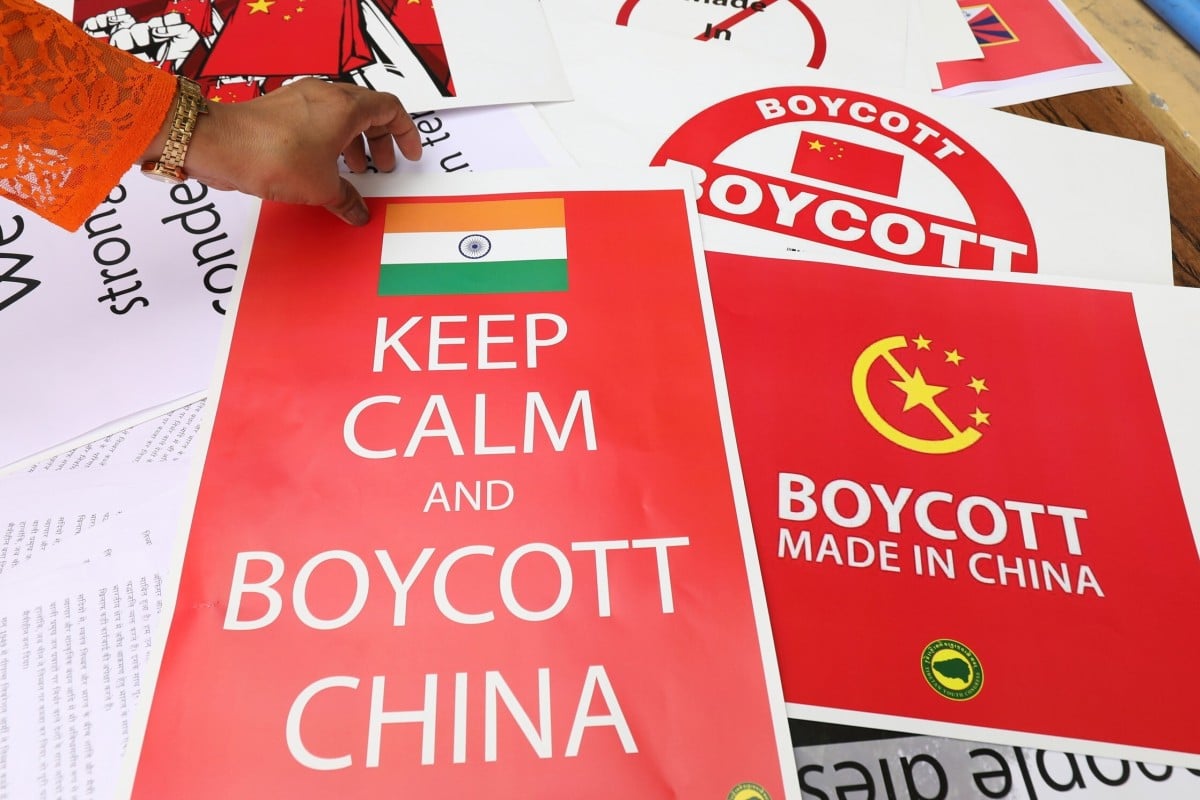

#BoycottChina, A Tough Terrain to India’s Self Dependency

Posters of Boycott China Campaign

What happened at Galwan valley of Indian Ladakh had raised tensions between India and China to all time high. The clash between Indian and Chinese forces led to nationwide outburst against China.

Fuelling this, there had been a sudden disagreement for buying any Chinese product or services. This is to make sure that Chinese economy doesn’t receive a single penny from India and its citizens, making it obvious after China bearing malice towards its neighbours, specifically India. The initiative has greatly boosted with GOI’s (Government of India) decision of banning 59 Chinese applications in India and by increasing the import taxes on Chinese goods or services. The Indian armed forces had already been deployed at disputed regions of border and are ready for any surprise from counter side.

With Governments and Armed forces holding tight on attempts to self-reliant India, the dice of responsibility falls our side too. By us I mean, all the common or less common citizens of India whose decision of just boycotting Chinese products could shatter its trade. Already many huge economies of the world have turned against China, amid Corona virus outbreak and deaths of 600,000 (still rising) innocent people.

Boycotting Chinese items won’t be that easy as it sounds, one has to spend a little more of their money while switching to non-chinese brands, as the only PSP (product selling protocol) of Chinese products is its cheap pricing. This pricing gets balanced with its poor quality and doesn’t last any longer. Yet, Chinese products have kept its dominance in certain sectors of Indian market.

The mobile phone sector

India had imported mobile phones worth $11.3 billion from China in 2016-17, and that was about 68 per cent of all mobile phones (both push-button feature phones and smart devices) imports into the nation that year. In 2017-18, even as the duties were imposed, the value of mobile phone imports from China climbed to $15.6 billion, or 71 per cent of the mobile phones imported. As the tax measure began to hurt and local manufacturing of mobile phones gathered momentum, imports of these devices from China halved to $7.4 billion and about 41 per cent of all mobile phone imports in 2018-19. Imports of phones, by value, from China declined further in 2019-20 but not the share, which remains at 40 per cent. If we just speak of alternatives, we have few options of some Korean, Taiwanese, American and just few Indian tech companies. These options are:

  • LG
  • Samsung
  • Nokia
  • Apple
  • Asus

The drop in electronic imports gradually implemented by the GOI in recent years but this won’t be enough and buyers need to push their expenses to continue supporting the campaign of #boycottchina.

Other imports from China include toys, gift items, fabrics and garments, and thousands of small value items that are popular with consumers. CAIT (Confederation of All India Traders) estimates that there are some 3,000 items that can be easily substituted with India-made products in the first phase of the boycott of Chinese goods campaign. The list of China-made items popular with consumers includes fairy lights with tiny LED bulbs that are used to decorate homes during festivals, idols of deities, home decors, kite strings and even incense sticks (agarbattis). It is estimated that about 80 per cent of the incense sticks sold in India are imported from China.

For all of it to happen, for this campaign to succeed we all should hold our horses and should maintain an adequate transition of market into indigenous domain. This would be the only secure and once for all time solution to problems India facing with the dragon as war could never be a solution. It would just tear up economies at both ends and loss of Brave Indian soldiers shouldn’t happen any further.

Plastic Ban

Waste plastic bags are polluting the land and water immensely. Plastic bags have become a threat to the life of animals living on earth as well as in water. Chemicals released by waste plastic bags enter the soil and make it infertile. … Plastic bags lead to the drainage problem.
Plastic bags are crude oil products .They are derived from petroleum and natural gas .Since ,crude oil is a non renewable source of energy using polhythin bags mens we are washing oil .One of the maindrawbacks of the bag is that the are non-biodegrable . It takes eons to breakdown plastic.Plastic is also responsible for global warming.The burning of plastic bags release carbon monoxide which adversely affects the ozone layer of the earth.The thinning of this layer has been a major cause of global warming . Recycling of plastic bags is very long process and not vaiable option.
many states like Delhi and etc ,have imposed a ban on plastic bags .While we cannot think of totally aliminating its use but we can significiantly reduce using them.We can swith over to recycled paper instead.As plastic bags choke drains and cow stomach .Every one should take resonsible ,in making this world a more beautiful and greener place to live in …..
Poly bags appeared for the first time in the 1970s in this country but soon they became very popular. Today, they seem to have become an integral part of our life. They are very convenient indeed. We go to the market without a care in the world. All our shopping go into our poly-bags-so light and so strong. However, this is high time, we looked to the other aspects of poly bags. They harm our environment greatly. If we throw them on the road, they choke the drains. Worse, a cow or some other animal may eat them. In that case, these poly bags ultimately kill the cattle. They are banned by law in many cities. Yet, the people keep on using them. They should be now banned in the whole country and this ban should be strictly implemented.

Plastic bags have a wide range of usability in our day to day lives. For instance, we use them to carry our foodstuffs from groceries shops, we also use them as gloves to do dirty chores or as knee pads while gardening. We also cover our plants with plastic bags to prevent them from frosting at night.

Basically, plastic bags can be improvised to do so many things and are therefore very handy at home. The reason why plastic bags are so popular is because they are cheaper than eco-friendly bags. Furthermore, plastic bags are waterproof and very convenient during rainy days. Whilst, there are many advantages we can accrue from using plastic bags, the reality of the matter is that they pose serious threats to us and the environment.
One of the reasons why plastic bags are bad for the environment is that they practically take forever to decay. Plastics have a very low rate of degradation that it may take thousands of years for a small piece to disintegrate. It goes without saying therefore that since the first modern plastic bags were designed in 1965 by the Swedish company, Celloplast, virtually all the plastic bags are still in existence today. Manufactured from polyethylene- a high density plastic, these bags can withstand all weather conditions.

Secondly, they contribute to climate change. All the polymers and compounds used in the creation of plastic bags such as polypropylene and polyethylene are derived from petroleum and natural gas. The process of extracting fossil fuel and then processing it to produce plastics releases greenhouse gases into the atmosphere. This has resulted to the degradation of the ozone layer, which has subsequently led to global warming. It is also not economically viable to use nonrenewable resources like petroleum and natural gas to produce a commodity that has a very short lifespan.

Moreover, plastic bags pollute the environment. They pollute our lands making them look ugly and untidy. And since they are very light, they are easily carried by wind and water to various places on earth. They litter our pathways, fences, houses and trees and make them look ugly. They also pollute water bodies. All the plastic bags eventually end up in the oceans and other water bodies. Look at the Great Pacific Garbage Patch, which is located between Hawaii and California.

The place has the world’s largest accumulation of plastic waste on a water body. With so much plastic floating on water, the marine life is put into too much risk. The situation is even worse if the plastic waste finds its way to the bottom of the ocean, where many sea creatures live and lay eggs. Apart from eating the plastic bags, the sea creatures may also get entangled or trapped by them.

Marine animals often mistake plastic pieces and bags for food. For instance, sea turtles cannot differentiate plastic bags from jelly fish and they therefore consume them. Since they are not biologically designed to digest plastics, the consumed plastic gets trapped into their digestive tracts. The marine animals eventually die from suffocation, infections or inability to feed and excrete waste.

Creatures that prey on fish, such as humans, birds, terrestrial animals and other marine animals also get sucked into the equation through the ocean food web when they feed on contaminated fish meat. When humans consume contaminated fish, they are at a higher risk of getting serious health complications. For example, if they were to ingest PAHs (polycyclic aromatic hydrocarbons) and PCBs (polychlorinated biphenyl), then they have a higher chance of getting cancer.

Plastics have no better method of disposal. Even if they were to be burned, then the people within the vicinity will be exposed to harmful plastic fumes. For instance, when polyvinyl chloride (PVC) plastics are burned they produce dioxins. These chemicals are very harmful to humans. Now, imagine the risks that people would be exposed to if a building full of PVCs would go up in flames. Furthermore, a lot of energy is used during their production processes. The amount of energy used to manufacture nine plastic bags is approximated to be the same as energy used to drive a vehicle for at least half a mile.

It is also worth noting that we do not receive them for free at our retail stores, we pay for them one way or another. Their costs are usually hidden in the prices of commodities we buy. Obviously most people are familiar with that. However, the catch is that our taxpayer money ends up being used to clean up plastic bag wastes. Imagine the cost of a plastic bag ranges between 3 to 5 cents, while the cost of cleaning it up is almost 17 cents.

This is a clear case of cheap is expensive. Apart from that, they also affect our infrastructure. Plastic bags penetrate through drainage and sewer systems and clog them. This results to water blockages, burst pipes and water overflow. The situation is dire during rainy seasons, which in most cases results to flooding.

Furthermore, it is not possible to recycle them. The waste is just too much to be contained. And if we decided to recycle them, then people will be encouraged to continue using them. As it stands now, plastic bags are not the only ones that we should be worried about. There are other forms of plastics that have not yet been banned, but still pose the same risks as plastic bags.

The main issue with plastic bags is that they are very light and can fit anywhere, which means that they spread much faster than their heavier counterparts. Even if recycling was an option, there are no facilities on this earth that can keep up with the rate at which these bags are being made.

Plastic ban is a move towards the right direction. Most of the biggest economies on earth, such as China, USA and European nations have banned plastic bags. The nations that have not done it yet should also follow suit. Some of the concerns raised are that people will lose their sources of livelihood and that plastic bags are cheaper to produce. While these notions are far from false, the fact remains that plastic bags will destroy our environment and everything in it if we do not act now. When plastic bags are banned everywhere, innovators will come up with other alternatives. They will create companies and people will get employment as a result.

When we consider production costs, the plastic bag is cheaper and easier to produce than eco-friendly bags. However, plastic bags are not durable and undergo wear and tear very easily. In fact, we quickly discard them into our garbage bins as soon as we reach home. Eco-friendly bags, such as cotton bags are actually very durable and can washed and reused over and over again. They are actually cheaper in the long run, because they do not require government intervention to clear them from the streets. They easily decay and disappear from the face of the earth. It is actually absurd to spend money to produce something that will cost you more than three times its value to try and get rid of it.

Banning is probably the surest way of securing the future for the coming generations. All nations should have one voice and agree unanimously to stop plastic bag production. It is worth noting that plastic bags from one nation are enough to pollute the whole world. So, if the developed nations have banned plastic bags, but developing nations are still producing them, then that changes nothing. Still all the toxic waste will find its way to the oceans and eventually, to the Great Pacific Garbage Patch.

Educating or sensitizing people about the hazards of plastic will not help deal with the problem in developing nations. They will most definitely use them still. And it is not an issue of ignorance or arrogance, because they can see and smell the garbage heaps next to their homesteads. The issue is cost. Most people in developed nations live below poverty line. They cannot afford to spend any more money on environmental friendly bags.

So, the best approach is banning. It should be illegal to own or even carry plastic bags. Heavy penalties should be imposed on anyone found with plastic bags. Even though they will still exist in the black markets, they should be so expensive to the point that people will prefer eco-friendly bags to plastic bags. The governments should also step ahead and offer subsidies and incentives to companies creating eco-friendly bags.

The governments should also fund extensive experimentation and researches on better alternatives to all plastic forms and not just plastic bags to end the manufacture of all plastics completely. There should also be extensive researches on the best method of dealing with the heaps of plastic wastes piled all over the world. We cannot just assume that there is no elephant in the room. The waste has to be dealt with pronto or its toxicity will become airborne. We need to get rid of all plastic wastes forever.

Covid-19 lockdown won’t impact three-month cheque validity, rules Supreme Court…

The Supreme Court on Friday said that Covid-19 lockdown will not impact the three-month period of validity of the cheques.

A three-judge bench, headed by Chief Justice of India (CJI) Sharad Arvind Bobde, was considering request of extension of timelines under various laws.

When the question came on extension of three-month period of validity of cheques, the Reserve Bank of India (RBI) informed the court that the same should not be done as it would impact banking activities.

The bench, also comprising Justices R Subhash Reddy and AS Bopanna, accepted RBI suggestion and kept the three-month validity period of cheque intact.

The RBI has fixed validity period of cheque under Section 35A of the Banking Regulation Act. The court noted that all banking systems across the country follow this prescribed period and there is no need to interfere with the same.

The central government ordered starting economic activities in the country after an over two-month-long lockdown in phases. While the first phase of relaxation, called Unlock 1, began on June 1, the second of the three phases came into force from July 1.

Though considerable relaxations have been given by the government in Unlock 2, there are no concessions for containment zones. The government advisory said that lockdown shall continue to be implemented strictly in the containment zones till July 31. Within the containment zones, strict perimeter control will be maintained and only essential activities are allowed.

What doesn’t kill you makes you stronger!

What is Deliberate Practice?

Deliberate practice refers to a special type of practice that is purposeful and systematic. While regular practice might include mindless repetitions, deliberate practice requires focused attention and is conducted with the specific goal of improving performance.

The greatest challenge of deliberate practice is to remain focused. In the beginning, showing up and putting in your reps is the most important thing. But after a while we begin to carelessly overlook small errors and miss daily opportunities for improvement.

This is because the natural tendency of the human brain is to transform repeated behaviors into automatic habits. For example, when you first learned to tie your shoes you had to think carefully about each step of the process. Today, after many repetitions, your brain can perform this sequence automatically. The more we repeat a task the more mindless it becomes.

Mindless activity is the enemy of deliberate practice. The danger of practicing the same thing again and again is that progress becomes assumed. Too often, we assume we are getting better simply because we are gaining experience. In reality, we are merely reinforcing our current habits—not improving them.

Claiming that improvement requires attention and effort sounds logical enough. But what does deliberate practice actually look like in the real world

Deliberate practice always follows the same pattern: break the overall process down into parts, identify your weaknesses, test new strategies for each section, and then integrate your learning into the overall process.

Consider the following example:

Basketball: Consider the following example from Aubrey Daniels, “Player A shoots 200 practice shots, Player B shoots 50. The Player B retrieves his own shots, dribbles leisurely and takes several breaks to talk to friends. Player A has a colleague who retrieves the ball after each attempt. The colleague keeps a record of shots made. If the shot is missed the colleague records whether the miss was short, long, left or right and the shooter reviews the results after every 10 minutes of practice. To characterize their hour of practice as equal would hardly be accurate. Assuming this is typical of their practice routine and they are equally skilled at the start, which would you predict would be the better shooter after only 100 hours of practice?

The Unsung Hero of Deliberate Practice

Perhaps the greatest difference between deliberate practice and simple repetition is this: feedback. Anyone who has mastered the art of deliberate practice has developed methods for receiving continual feedback on their performance.

The Promise of Deliberate Practice

Humans have a remarkable capacity to improve their performance in nearly any area of life if they train in the correct way. This is easier said than done.

Deliberate practice is not a comfortable activity. It requires sustained effort and concentration. The people who master the art of deliberate practice are committed to being lifelong learners—always exploring and experimenting and refining.

Deliberate practice is not a magic pill, but if you can manage to maintain your focus and commitment, then the promise of deliberate practice is quite alluring: to get the most out of what you’ve got.

 A thing to remember always is that if you don’t climb the cliff you won’t ever be able to see the view from top up there all you can see would be a view from the ground and the key to climb that tree is only through practise, the longer you persist it the more you would grow in terms of success.

How to spot a fake news

In this social media world each and everyone knows what is fake news. some people guess what is fake and what is right but some not just because in today’s scenario The topic of fake news is as old as the news industry itself—misinformation, hoaxes, propaganda, and satire have long been in existence.

Fake News is: information that cannot be verified, without sources, and possibly untrue.

there are so many types of fake news

Deliberate Misinformation
There is fake news written for profit and then shared on social media among targeted groups of people who want to believe that it is true. The intention is for the fake news to spread without readers taking the time to properly verify it. This type of fake news is untrue news.

False Headlines: headlines that catch a reader’s attention to make them click on the fake news. This type of fake news is misleading at best and untrue at worst.

Social Media Sharing
Social media’s ability to show a large number of news items in a short time means that users might not take the time to research and verify each one. These sites often rely on shares, likes, or followers who then turn news items into a popularity contest—and just because something is popular and widely-shared does not mean it’s true. now this is the most popular types in which we are facing in lockdown covid-19.

Evaluate and Verify: Questions to Ask Yourself

just think yourself first that it is correct or fake there are many ways which we can identify

Who is the creator?
The first question in figuring out if a something is fake news is by looking at the individual who created it, or understanding the organization behind it.like PTI or any news agency.

Is there a byline or introduction, and are you aware of the person’s expertise?

What is the name of the organization creating or hosting the content?

  • Search online research databases to see what the author has written/published.
  • Is this a firsthand account, or is this being seen through the eyes of an editor?

What is the message?
The second question in determining if something is fake news is by looking at the message itself and understanding what is being communicated.

  • Is the website this news appears on updated regularly?
  • What is the date of the story?
  • Is the news fact or is it more opinion?

Why was this created?
The third question in determining if something is fake news is by looking at why the message was created.

  • Is this news actually an advertisement?
  • Are the sources being paid?

It is always a good idea to verify information before you share it with others—in person or on social media. we should always check each and everything before uploading any news or any post and by carefully handle the situation of this fake news and the people who are gaining popularity or followers by this read byline and check the data by newspaper, tv or internet So , people please be careful in this situation.

A 7 judge bench to decide on whether remission can be granted to prisoners

A seven-judge bench will decide whether remission could be given to convicts. The problem came to the attention of the court while hearing the plea of a convict Pyare Lal who had been serving a life sentence. Later it was decided that as the person has spent 8 years in jail and he is nearing the age of 75 years he should be released a little early. Under Section 302 IPC- State government of Haryana granted special suspension to prisoners. The convicts who have been sentenced for other punishments and not a life sentence, and males who are 75 years and above and women who are 65 years and above and have finished two thirds of their actual sentence can be released. This would all be excluding parole and the prisoners should have had good conduct. The apex court has guided the state government to react within about fourteen days on whether such a strategy, which the court said seemed opposing Section 433-A of the Code of Criminal Procedure (CrPC), could come under Article 161 of the Constitution.

Article 433A states that if a person is sentenced to imprisonment for life then he/she cannot be released unless he/she has served fourteen years of imprisonment. there have been a few cases in the past where Article 433  has been talked about in similar cases.

Maru Ram v. Union of India the SC took Article 433A into account and stated that 433A could be used when making rules regarding remissions or shorter sentencing. The Court saw that the choice rendered since Maru Ram v. Association of India do show that the perninent material must be put in before the Governor in request to empower him to practice the power under A161 and the failure on that count could lead to suppression of the requests of remission. The Court set the issue before a bigger seat of the Supreme Court. The Registry was coordinated to put the issue before the Hon’ble the Chief Justice for comprising a Bench of fitting solidarity to consider the issues brought up in the current problem.

Another example is that of Swaran Singh vs. State of U.P., under Article 161 the Governor granted remission to a murder convict before he had completed two years of his sentence, this decision was taken with the help of three judges of the Supreme Court. No individual statements or material relating to any of the cases were put before the Governor and that the advantage in every one of the cases was given by the Executive itself regarding the Policy. The Governor, in this way, didn’t have the event to investigate the issues, for example, seriousness of the wrongdoing or the way in which the wrongdoing was carried out or the effect of the wrongdoing on the Society or how the issue was seen and considered by the concerned courts while holding or maintaining that the concerned convicts were seen as liable of the offenses being referred to.

Let’s see what happens, this is one of the most interesting legal developments of recent years.

What is Talent Management?

Talent management practices have evolved over the years to cater to people-specific trends much like all other aspects of work, and have changed in fast strides over the last few years. Strategic talent management is a necessity in today’s hyper-change environment. Global trends in talent and human capital management have led to a renaissance of the work-worker-workplace equation.

What is Talent Management?

Talent management is defined as the methodically organized, strategic process of getting the right talent onboard and helping them grow to their optimal capabilities keeping organizational objectives in mind. 

The process thus involves identifying talent gaps and vacant positions, sourcing for and onboarding the suitable candidates, growing them within the system and developing needed skills, training for expertise with a future-focus and effectively engaging, retaining and motivating them to achieve long-term business goals. The definition brings to light the overarching nature of talent management – how it permeates all aspects pertaining to the human resources at work while ensuring that the organization attains its objectives. It is thus the process of getting the right people onboard and enabling them to enable the business at large.

Under the umbrella of talent management, there are a string of elements and sub-processes that need to work in unison to ensure the success of the organization. For example, analyzing the right talent gaps for the present and the future, identifying the right talent pools and best-fit candidates, getting them to join and then optimizing their existing skills and strengths while helping them grow are touch-points that are all equally important. They support each other and the whole structure would crumble even if one sub-process fell out of sync.

Talent Management Process

While often cyclical rather than a generic linear progression of events, the process of talent management could be considered, to begin with acknowledging the need for talent and leads to filling that gap and ultimately growing and optimizing the skills, traits, and expertise of employees, new and old.

The following image depicts the key points of the talent management process:

Let’s get into these key steps in the process of managing talent effectively:

1. Planning: Like in any process with a set outcome, planning is the first step in the process of talent management. It involves the following identifying where the gaps lie – the human capital requirement, formulating job descriptions for the necessary key roles to help guide sourcing and selection and developing a workforce plan for recruitment initiatives.

2. Attracting: Based on the plan, the natural next step is to decide whether the talent requirements should be filled in from within the organization or from external sources. Either way, the process would involve attracting a healthy flow of applicants. The usual external sources include job portals, social network, and referrals. The talent pools that need to be tapped into must be identified in advance to keep the process as smooth and efficient as possible. This is where the kind of employer brand that the organization has built for itself, comes into play because that decides the quality of applications that come in.

3. Selecting: This involves using a string of tests and checks to find the right match for the job – the ideal person-organization fit. Written tests, interviews, group discussions and psychometric testing along with an in-depth analysis of all available information on the candidate on public access platforms help in gauging an all-rounded picture of the person. Today there are software and AI-enabled solutions that recruiters can use to skim through a vast population of CVs to focus on the most suitable options and to find the ideal match.

4. Developing: Quite a few organizations today operate on the idea of hiring for attitude and training for skills. This makes sense because while you would want a predisposition to certain skill-sets, it is the person that you are hiring and not the CV. Developing employees to help them grow with the organization and training them for the expertise needed to contribute to business success also builds loyalty and improves employee engagement. This begins with an effective onboarding program to help the employee settle into the new role, followed by providing ample opportunities for enhancing the skills, aptitude and proficiency while also enabling growth through counseling, coaching, mentoring and job-rotation schemes.

5Retaining: For any organization to be truly successful, sustainably, talent needs to be retained effectively. Most organizations try to retain their best talent through promotions and increments, offering opportunities for growth, encouraging involvement in special projects and decision-making, training for more evolved roles and rewards and recognition programs.

5Retaining: For any organization to be truly successful, sustainably, talent needs to be retained effectively. Most organizations try to retain their best talent through promotions and increments, offering opportunities for growth, encouraging involvement in special projects and decision-making, training for more evolved roles and rewards and recognition programs.

6. Transitioning: Effective talent management focuses on a collective transformation and evolution of the organization through the growth of individual employees. This involves making each employee feel that they are a part of a bigger whole. Providing retirement benefits, conducting exit interviews and effective succession planning might seem like unrelated career points but they are all transition tools that enable the shared journey

Talent Management Model

Over the years, there have been multiple models made for talent management that have been created b organization who have felt that they have finally cracked the code on the perfect model. The thing with talent management, however, is that it needs to morph to suit the latest talent trends, digital disruptions, and employee expectations.

The following diagram is that of the integrated talent management model which appears to be the most relevant one today.

The primary components of the model are:

  • Acquire – Employer branding, recruitment, onboarding
  • Assess – Talent analytics, succession planning and assessments
  • Develop – Workforce planning, culture at work, engagement and retention practices
  • Deploy – Goal alignment, career-path planning, learning and development, and performance management


This structure of components is cyclical and goes on in a sustained loop while taking onto consideration the internal climate within the organization and the external environment in which it operates.

How can an organization ensure that this model is put to the best use?

The point to be kept in mind here is that no model of something as dynamic as talent management is writ in stone. It needs to be able to adapt to the changing needs of the organization the evolving talent expectations and the pace set by changes within the industry.

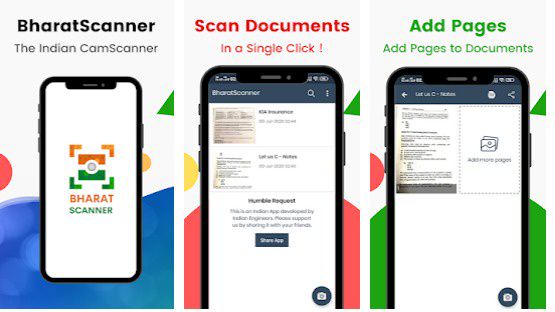
Indian option of CamScanner launched with name BharatScanner.

The BharatScanner mobile app, an Indian alternative to cam scanners, has been launched. In this app, users have got the facility from scanning documents to creating PDFs. The special thing is that this app is completely free and users will not have to pay a separate charge to use any feature.

Rating of 4.4 points found on Google Play Store

Bharat Scanner app is available on Google Play Store for users. This app has downloaded more than 10 thousand users so far and it has got a rating of 4.4 points on the Google Play-Store. At the same time, this app size is 36 MB. .

Features of BharatScanner .

Some current features of BharatScanner are as follows: .

  • Users can scan documents easily.
  • Filters have been supported in this app.
  • Users can keep their documents as PDF.
  • Users have got the facility to share documents in this app on mail and Whatsapp.

Indian government imposes ban on Chinese mobile app .

Under Section 69A of the Information Technology Act, the Government of India decided to block 59 apps as these apps were a threat to India’s sovereignty and integrity, defense of India, security of the state and public order. The government had received many complaints about these apps from various sources, including about the misuse of many mobile apps. These apps were stealing data from both iPhone and Android users.

  • लॉन्च हुआ CamScanner का भारतीय विकल्प Bharat Scanner, जानें इसकी खासियतें

Ban on these Chinese apps

Tiktok, CamScanner, Shareit, Kwai, UC Browser, Baidu Map, Shein, Clash of Kings, DU Battery Saver, Helo, Likee, YouCam makeup, Mi Community, CM Browers, Virus Cleaner, APUS Browser, ROMWE, Club Factory, Newsdog these 59 apps are banned, including BeutryPlus, WeChat, UC News, QQ Mail.

Government concerned over return of large number of Indian students from US due F1 visa issues.

The US order of July 7 stating that F1 visas will not be renewed for students if they are attending only online- lectures in the US is a concerning mater for India since the highest number of foreign students in the US are from India. The US government has announced those F-1 and M-1 (non-academic and vocational students) visa holders attending only online classes will not be allowed to remain in the US.

US Noted India's Concerns Regarding F-1 Visa Issue: Centre

India on Thursday said it has reported its concerns to the US govt about the new rule on F1 visa and urged to keep in mind the role education have played in the developing relationship between the two countries.

The concerns were expressed during the virtual foreign office consultations between Foreign Secretary Harsh Vardhan Shringla and US political affairs secretary David Hale on Tuesday. Ministry of External Affairs’ spokesperson Anurag Srivastava said that the US government has looked into the concern regarding the new rule.

During virtual meeting, Srivastava said that India is concerned about the possibility of the return of a large number of Indian students studying in the US due to new rules in visa.

The Immigration and Customs Enforcement (ICE), an agency of the US Department of Homeland Security (DHS) on Monday said that the foreign students pursuing courses in the US must return to their country if their institutes are conducting only online course due to covid-19 pandemic.

How will 2020 shape 2021 ?

In the year 2020, the whole world is fighting with a virus, which changed the way we live and work at least temporarily. COVID-19 took many lives and made many people jobless. The impact this pandemic created will be there at least for the next few years. No one knows when this pandemic will end, but it is evident that the year 2021 will be different because of the year 2020.

“Sometimes even to live is an act of courage.” Those words are as true today as when they were written two millennia ago by the Roman Stoic philosopher, Seneca. The coronavirus pandemic is affecting millions and it is imperative to understand the unprecedented shockwave it has created – shattering social structures and disrupting economies and markets, with the ripples felt by almost every individual, business and nation.  

The Covid-19 outbreak in India has severely impacted the economy in myriad ways, with the lockdown halting the entire nation. It came at a time when the Indian economy was already slowing due to weaknesses in the financial sector and falling consumer demand for goods. Sectors already suffering, including logistics, aviation, transport, and tourism, are struggling to absorb the impact on the economy of the coronavirus pandemic.  

There are parallels between the emerging economic crisis and the financial crash of 2008. Like then, investment institutions and banks, including the IMF and Goldman Sachs, as well as the global rating’s agencies, such as Moody’s and S&P, have slashed growth projections, with India and other countries forecast to enter a ‘deep recession’. But the scale of the 2020 downturn is likely to be far greater than what followed 2008.

Efforts by the Indian government to flatten the virus curve through stringent lockdown measures will result in a steep economic contraction. In its April 2020 policy review, the Reserve Bank of India, warned: “The macroeconomic and financial landscape has deteriorated, precipitously in some areas.” 

Like other countries around the world, India too is grappling with the conundrum of reopening the economy – protecting and restoring activity this year to help shape a return to growth in 2021 – while containing the spread of the virus, and potentially further lockdowns.

The effect of 2020 on 2021:

  • During COVID-19 pandemic, imports and exports were affected adversely. And it affected many countries. For example, the Automobile industry in India imports components from China. When China was fighting with coronavirus, factories were shut down and as a result, India’s automobile industry had to halt the production. Not just India, but many countries are depending on the imports for many products such as electronics, pharmaceutical ingredients etc. So, in the year 2021, companies will work on diversifying supply chains and countries will work on achieving self-sufficiency. This may lead to protectionist tendencies.
  • COVID-19 came when the world is least expecting it. No country is fully ready to face it. Many developing countries have a shortage of healthcare professionals and medical equipment. Even developed countries have a shortage of medicines. So, in 2021, countries may work to fill this gap.
  • As coronavirus forced people to sit at homes, the demand for telemedicine facilities increased drastically. In 2021, hospitals and governments may work to make telemedicine facilities more accessible.
  • 2021 may bring more work from home jobs, as more and more companies are thinking of it as a win-win situation for them and for the employees.
  • Virtual meetings will become more common. In 2021, people may not travel on flights just to attend official meetings. This will result in less carbon emissions.
  • We have been fighting with climate change for a long time. United Nations member countries started working on the common goal of making affordable and clean energy accessible to all. But coronavirus pandemic affected the world economy badly, and every country is working a lot to uplift the economy. So, the transition to clean energy may take a backseat in 2021.
  • As many people are now scared to eat out and are preferring healthy food to boost immunity, restaurants and food delivery apps may continue to struggle in 2021 as well. There will be more investments in the companies the manufactures hygiene-related products and raw foods.
  • There will be more e-learning opportunities.
  • People may save more money by avoiding unnecessary expenses because COVID-19 pandemic taught people that anything can happen at any time and so savings are important to protect ourselves in tough times.
  • We have witnessed people stuck in other countries or in other states within the country due to lockdown throughout the world. After going through difficult times in 2020, people may want to stay close to their families. If it happens, it will alter the demography of many regions.
  • As people may not be ready to go to theatres at least for the next few months, OTT (Over-the-top media services ) platforms such as Netflix & Amazon Prime may take over the traditional film industry in 2021.
  • With an increase in work from home jobs, 2021 may see an increase in cybersecurity threats.

How will 2020 impact 2021?  

The pandemic is undoubtedly redrawing the landscape, but it is difficult to develop an economic blueprint for the post Covid-19 future because we have never before experienced the measures put in place to stem the spread, such as suspended transport, inoperative plants and stalled projects. Effects will differ to some extent across the Indian states as they follow specific economic strategies. Tourism has been severely hit, and will continue to suffer, no more so than in Goa where tourism is the mainstay of the state’s economic development strategy. The consequences for small firms, labour and for investment in tourist and transport infrastructure will be harsh. 

Even the high-performing districts in India have been badly impacted by the lockdown – 130 districts classified as red zones account for 41% of national economic activity, 38% of industrial output and are the most industrialised regions. Lower economic activity in these areas has spread to suppliers and revenues have slumped. The collective consequence of disruptions to supply chains, operations and travel are reverberating across almost all sectors of the economy, leading to:

Higher unemployment – further reducing demand and impacting production and capacity utilisation, and damaging corporate results 

Shortage of labour – migrant labourers have suffered greatly during the lockdown. The Government of India has increased the money going into the Mahatma Gandhi National Rural Employment Guarantee Scheme, which provides livelihood security in rural areas through 100 days of paid employment for adults who volunteer to do unskilled manual work. Under Covid-19 migrant labour obviously feels safer working closer to home rather than moving across states, but this will reduce the availability of workers for other sectors and regions. 

Severe liquidity crunch – working capital issues/solvency risk for sustained periods could lead to defaults on loans and may increase stranded assets in the banking sector.

Potential losses will vary by sector, but some industries that are suffering, such as airlines, hotels, automotive, construction and real estate, are likely to continue to bear the brunt into 2021. 

Covid-19 is unprecedented, so it is difficult to accurately make projections for economic growth, but it is possible to highlight some of the issues that will have an impact on Indian economy going forward.   

It will take months, possibly years for migrant labours to return to work in other states, so the financial stress on rural households will increase, and will be exacerbated by a weak job market.  

Demand has fallen significantly since the introduction of the lockdown. AIIMS Director Randeep Guleria has said cases of Covid-19 in India will peak in June and July, though others say this may not happen until September. This will impact tourism, aviation, retail and many other economic activities, leading to job losses that will further reduce demand. Given the uncertainties, it is unlikely we will see a return to full-scale operations in many sectors this year. This will impact the financial health of many enterprises and many will reduce Capital investment in 2021.   

Remittances to India are projected to fall due to travel restrictions. The World Bank estimates these could decline by as much as 23%.  

Rising unemployment, falling corporate revenue and profit is bound to impact tax revenues. Already the government has announced a series of support measures. Falling tax income and rising expenditure to support many social and employment schemes will increase the government’s fiscal deficit in 2021.  

There are glimmers of hope, however. The Indian economy may benefit from falling fuel oil prices, potentially halving the import bill if current crude oil prices hold, and many foreign firms are looking at India as alternate manufacturing destinations in many sectors, such as pharmaceuticals, chemicals and electronic component manufacturing. India needs to capitalise on this potential opportunity and provide all necessary policy assistance to attract foreign investment in 2021. 

Covid-19 has adversely impacted the entire global economy and India is not spared. Looking at the current trend India is expected to enter recession. Recovery should focus on creating a more sustainable and resilience economy, pursuing opportunities to build back better and improve the life chances of all Indians.

Conclusion:

Coronavirus pandemic affected everyone and changed our daily lives. The world will create 2021 based on these changes and also with the lessons we learned while fighting with the pandemic.

Different types of cuisine in the world:

With all the amazing food in the world and all the various styles of cooking, people want to explore and know about the tastes and flavors of other nations. Over the last few years, diverse styles of cuisine have taken over the food business, so you can hardly find any familiar delicacy in your local restaurant.Even the local restaurant nearby is that you can find French, Mexican, Italian, Indian and Chinese cuisine. We can host parties with cuisine from all around the world. You just ask for it, and they’ll give you plenty of options to pick from.So, whether you’re an professional searching for some fresh recipes or an amateur seeking a new cuisine Discover the experience of world cuisine in its sweet, healthy and pure nature – because it’s served in their own countries. Here’s a tour of all sorts of cuisine around the world.

Indian Cuisine:

India is a land of variety, and you will find different styles of cuisine in every other region. This is a challenge to summarize Indian cuisine, as the nation has several regional differences, with certain areas of the world becoming exclusively vegetarian.Complex mixtures of spices designed for full flavor are one of the key threads of Indian cuisine. In fact, Indians have a really sweet palate and tasty snacks on any occasion. Sincerely, from hot and spicy to sweet and savory, a person can get a variety of Indian cuisine that will help to build an unforgettable memory for their taste buds.

Italian Cuisine:

IWhen you’re a pizza and pasta lover, then you need to get an indication of where this beautiful, tasty gem comes from. Yeah, it originates from Italy and is one of the most common and appetizing dishes in the world.It’s the one that still lets you drool over the most popular meals, such as fresh pan pizza or cheese. But aside from the two foods, Italian cuisine has a large range of dishes that not only allows a pleasant brunch but also sets a bar high on success in terms of becoming the most delicious food in the country.

Chinese Cuisine:

At any point in your life, you must have had hakka noodles or chinese food. Chinese noodles are just so thick and tasty that you can’t even miss it by consuming it from your pot. A variety of cultures and tastes can be found in real Chinese cuisine.There are eight major cooking types in China, namely Hunan, Shandong, Anhui, Fujian, Cantonese, Zhejiang, Szechuan and Jiangsu. In this style of cuisine, they seek to combine the various textures, colours, smells and tastes in one piece to produce a rich and tasty meal.

• French Cuisine

French cuisine was one of the world’s first foods to fly outside the boundaries of its country of birth. Also now, all of the best chefs prefer to be classically educated in French. French cuisine varies from robust, rustic to good, and Michelin Star quality. The French dinner is made of pasta, wine and cheese.

• Japanese Cuisine

Japan ‘s cuisine is perhaps the most special form of cooking. Some of the products used in recipes are just not present in cooking in many nations. The quality of Japanese cuisine depends on the freshest materials carefully packed. Seasonality is also a central element in Japanese cuisine.

• Korean Cuisine

Much of the world’s Asian cuisine is made up of rice dishes, so Korean cooking is no different. Korean rice is eaten with beef, vegetables and seafood. The most famous food is kimchi, and every meal is served to several households. Kimchi is a cabbage combined with spices or vinegar, placed in pots of clay and permitted to ferment.

• Spanish Cuisine

Spain is one of the European nations where the food is not homogeneous. Cooking in Spain is characterized by the area. Usually, the Spaniards don’t consume a lot of lamb and beef, choosing game meat and a great variety of seafood available along the coast. The most popular Spanish cuisine is possibly tapas, which are deliciously sweet treats with intricate layers of flavours.

• German Cuisine

German cuisine does not have the highest reputation; most people describe it as pure potatoes and sausages; yet there are distinct regional variations. Meat is the core of German cuisine, and the amount of various styles of sausages is enigmatic. The charcuterie is fantastic, and so are the cheeses. Rye breads are growing, along with the potatoes described above, of course.

• South African Cuisine

Unlike most of the citizens of South Africa, food is magnetic, culturally complex, energetic, vibrant and nutritious. The original menu of South Africa has been taken from through community. The passion of their country’s cuisine unites the South Africans. The Boerekos, the fiery Malay dishes and the open-fire Braai meat are all distinctly South African.

• Australian Cuisine

It’s not convenient to describe Australian cuisine, so it’s not known to be one of the greatest food countries in the world, but it’s really fascinating. Australian cuisine is an outstanding blend of both migration to the different country; a combination of British and Eastern European and, in modern times, a powerful Asian impact.

• Scottish Cuisine

In Scotland, food is more nutritious than in other countries, and fresh produce is the main ingredient. Smoked salmon, seafood raspberries and meat are important ingredients. You can’t miss the oatcakes, the porridge, the haggis, the kippers and the shortbread. 

The world of cuisine is so rich and tasty that it is a shame that people are not tempting their palate with fresh culinary experiences.

Mexican Cuisine:

From spicy chili peppers to crispy tortillas, Mexican cuisine is one of the most tasty and common forms of cuisine in the world. This vivid and lively cuisine is not only perfect for its exquisite presentation, but also perfect for the taste bud. 

Thus, the fusion of the various tastes of this style of cuisine makes this cuisine accessible to a wide variety of the population across the globe.

History of Maruti Suzuki in India

Maruti Suzuki India Ltd (formerly Maruti Udyog Ltd) is India’s largest passenger car company with more than 50 percent of the domestic car market. The company offers a full range of vehicles from Maruti Alto entry level to hatchback Ritz A-star Swift Wagon R Estillo with sedans DZire SX4 and Sports Utility car Grand Vitara. The company is sponsored by Suzuki Motor Corporation of Japan. Japan’s largest car company owns 56.21% of cars in Maruti Suzuki as of 31 December 2017. The company has been involved in the business of buying and selling cars and other vehicles (cars).
Other company activities include simplification of pre-owned property management and vehicle financing. It has four of the three plants found in the Palm Gurgaon Road Gurgaon Haryana and the other is in the Manner Industrial Town Gurgaon Haryana. The company has nine subsidiaries of Maruti Insurance Business Agency Ltd Maruti Insurance Distribution Services Ltd Maruti Insurance Agency Solutions Ltd Maruti Insurance Agency Network Ltd Maruti Insurance Agency Services Ltd Maruti Insurance Agency Logistics Ltd True Marue Insurance Broker Ltd and JJ Impex (Delhi) Pvt Ltd. Maruti Suzuki India Ltd was registered on February 24 1981 under the name Maruti Udyog Ltd.
The company was founded as a state-owned company with Suzuki as a small partner to make a car for middle class people in India. Over the years the company list has expanded ownership has changed hands and the customer has turned around. On October 2 1982 the company signed a license and joint venture agreement with Suzuki Motor Corporation Japan. In 1983 the company launched their products and introduced the Maruti 800. In 1984 they introduced the Maruti Omni and the following year they introduced the Maruti Gypsy to the market. In 1987 the company entered the foreign market by exporting the first 500 cars to Hungary. In 1990 the company introduced the first Indian three-box Sedan car. In 1992 Suzuki Motor Corporation Japan increased their number in the company to 50%. In 1993 they introduced Maruti Zen and the following year they introduced Maruti Esteem to the market. In 1995 the company started their second crop. In 1997 they started Maruti Service Master as a model working in India to take care of sales resources. In 1999 a third plant with new paint lines and assembly stores began operating. In 2000 the company introduced Maruti Alto to the market.
In 2002 Suzuki Motor Corporation increased its shareholding in the company to 54.2%. In January 2002 the company introduced 10 financial companies (8 + 2JVs) in Mumbai. They also acquired a new part of the single Maruti True Value business of buying and selling pre-made cars in India. In 2005 the company introduced the world’s first model from Suzuki Motor Corporation ‘the SWIFT’ in India. In 2006 they launched the WaganR Duo with LPG and New Zen Estillo. In 2006-07 the company began work on a new car building and diesel engine facility in Mannesar Haryana. In November 2006 they established a new Driving Training and Research (IDTR) center that was established as a partnership project with the Delhi Government in Sarai Kale Khan in South Delhi. In 2007-08 the company signed an agreement with Adani team to ship 2,00000 themes annually to the port of Mundra in Gujarat.

A Safe Guide to Abortions

“Why is abortion abnormal, but police brutality, hate crime, suicide abetment just the way of life? I choose not to bring a life into this world, that I am not ready to care for. I am protecting my unborn by keeping it away from this patriarchal world.”

Anonymous

What is ABORTION?

Abortion refers to the termination of pregnancy by the removal or expulsion of an embryo or fetus. It is also referred to as termination of pregnancy.

Why is it Important to Have a Safe and Informed Abortion?

Each year 6.4 million fetuses are aborted, 3.4 million of which are unsafely performed using unsanitary methods. Each day, approximately 13 women die as a result and thousands more suffer severe reproductive health issues. 

Unsafe Abortions are the 3rd most leading cause of mortality amongst women. 

Further, a huge chunk of our population are unaware of the legality of abortions and opt for unsanitary alternatives. 

Not every General Practitioner, Gynaecologist, nor Obstetrician is legally allowed to carry out abortions nor prescribe medications.

Safe abortions don’t limit to just the procedure. Abortions have a huge impact on a woman’s body and frequent check-us are vital. Carrying out proper treatment is the only way to avoid other medical conditions. 

Reasons for Abortion:

There are multiple reasons why women might want to abort. A few reasons include:

  • When the parent(s) is financially unprepared
  • Unplanned/Accidental
  • Bad/Abusive Partner
  • Conception by Rape, Incest, or any other sexual assault 
  • Teen/Early Pregnancy
  • Health Issues
  • Dependent and/or Unprepared
  • Addiction
  • No longer want kids
  • Delaying Parenthood
  • Unwilling to be a parent
  • Not ready to have a kid
  • Pregnancy interfering with Education, Work, Promotion.
  • Any other unique reason a woman wants to terminate her pregnancy.

When is a Pregnancy Unsafe?

There are many situations where medical complications harm or might harm the mother and baby. Some situations might end in abortion because of unsafe pregnancies.

It is important to routinely have check-ups, take prenatal vitamins and other prescribed medications, and avoid taking any stress or straining yourself physically.

A few warning signs and complications of unsafe pregnancy: 

(NOTE: these warning signs don’t always lead to abortion, but please contact your doctor immediately)

  • Heavy bleeding and abdominal pain
  • Severe Nausea
    • Nausea is common in pregnancy, many women have morning sickness. 
    • Uncontrollable vomiting and not eating and drinking properly can make you dehydrated and harm you and the baby
  • Significant Decline in Baby’s activity
  • Contractions early in the 3rd trimester
  • When your water breaks early
  • Gestational Diabetes
  • Macrosomia
    • The baby is much larger than normal
    • When the mother’s blood had too much glucose, the pancreas of the fetus converts the extra glucose into fat
  • Flu-Like symptoms
  • Amniotic Fluid Complications
    • Too much or too little amniotic fluid in the sac
    • Difficulty in breathing 
    • Prenatal diabetes
  • Ectopic Pregnancy
    • The development of the fetus outside of the uterus. 
  • Placental Complications
    • Placental Abruption – detached placenta from the uterine wall
    • Placental Previa – the condition in which the placenta is attached too close to the cervix. 
  • Preeclampsia or Eclampsia
    • Pregnancy-induced high blood pressure
    • Can lead to seizures, coma, and death

Who is Allowed to get an Abortion in India?

Medical Termination of Pregnancy (MTP) Act legalized the termination of pregnancy (still not using the word abortion) with several conditions up to 20 weeks (from the first day of the last menstrual period). The conditions are:

  • “When continuation of pregnancy is a risk to the life of a pregnant woman or could cause grave injury to her physical or mental health;
  • When there is substantial risk that the child, if born or dead would be seriously handicapped due to physical or mental abnormalities;
  • When pregnancy is caused due to rape (presumed to cause grave injury to the mental health of the woman);
  • When pregnancy is caused due to failure of contraceptives used by a married woman or her husband (presumed to constitute grave injury to mental health of the woman).”

The Indian Abortion Laws are not liberal and do not permit women to terminate a pregnancy because they are not ready or unprepared. More information on the legal details of abortion in India can be found here.

Who is allowed to Perform an Abortion in India?

The MTP Act also specifies who is legally allowed to terminated a pregnancy, a practitioner who 

  • “has a recognized medical qualification under the Indian Medical Council Act, 
  • whose name is entered in the State Medical Register, and 
  • who has experience or training in gynecology and obstetrics.”

Not every Gynaecologist and/or Obstetrician is legally allowed to perform abortions. Be sure to check their license and get a safe and secure abortion if and when needed.

Consent for Abortion?

In India, an adult woman does not need consent from her husband, father nor the father of her unborn child until 20 weeks of gestation. Minors, however, require a legal adult’s consent. 

Once the pregnancy crosses 20 weeks, a woman needs special permission from the courts and two other people’s consent to be able to terminate her pregnancy.

To get an abortion, there are a legal-forms one needs to fill and sign. It is important to be aware of what documents you are signing and the terms you are agreeing to. 

The Price for abortions is fixed, a first-trimester abortion is approximately, Rs.500-1000 while a second-trimester abortion cost around, Rs.2000-3000. 

It is important to know your rights and pay only the correct rate. If a doctor charges more, you are entitled to report them. 

Many doctors are known to charge Rs,10,000, and more.

Procedural Blueprint:

Courtesy of Vardaan Hospital, Delhi.

There is a procedure that mot doctors follow. You are entitled to find out the procedure before-hand and report anyone for misbehavior.

There are two methods, oral and surgical. 

Oral Method Procedure:

If the pregnancy is less than 6 weeks, a mother can opt for the oral method

  • Ultrasound – to check for the duration of pregnancy or to see if it is a tubal pregnancy
  • Medication is prescribed 
  • Blood tests are done
  • 2 doses are given 48hrs apart.

Surgical Method Procedure:

  • Ultrasounds and Blood tests
  • Depending on the duration of the pregnancy, medication is prescribed to dilute the uterus.

One of the below

  • Vacuum Aspiration.
  • Dilation and Evacuation.
  • Dilation and Curettage.
  • Suction evacuation.

Follow Up:

Courtesy of Vardaan Hospital, Delhi.

Oral Method:

  • Bleeding is common in the 24-48 hours whole taking the dose and lasts for a week
  • Tissue might retain in some cases which leads to incomplete abortion. Suctional evacuation is important.
  • Confirmation of a complete abortion is done by another ultrasound.

Surgical Method:

  • The pain during and after the process varies for each woman.

General:

  • Maintain a proper diet
  • Take proper medications on time
  • Avoid exercising and moving around a lot
  • Counseling is important to recover
  • Avoid tampons during the menstrual cycle
  • No sexual contact for at least a month.

When is Abortion not Safe?

Abortion is unsafe if a woman:

  • Is more than 70 days pregnant (counted from the first day of the last menstrual period)
  • Has bleeding problems or is taking blood-thinning medication
  • Has chronic adrenal failure or is taking certain steroid medications
  • Cannot attend the medical visits necessary to ensure the abortion is completed
  • Does not have access to emergency care
  • Has uncontrolled seizure disorder (for misoprostol)
  • Has acute inflammatory bowel disease (for misoprostol)

Risks of Abortions:

Abortion has serious effects on a woman’s body. The following are a few risks associated with abortion:

  • Heavy bleeding
  • Infections
  • Incomplete abortions
  • Damage to the cervix
  • Scarring of the uterine lining 
  • Perforation of the uterus
  • Damage to internal organs
  • Miscarriages in future pregnancies
  • Death
  • Eating Disorders
  • Suicidal thoughts
  • Guilt
  • Relationship problems
  • Depression
  • Sexual dysfunction
  • Prone to addiction

When to Call your Doctor?

It is normal to contact your doctor after an abortion with any queries. 

These are the signs of complications where calling your doctor is important:

  • Excessive Bleeding
    • Bleeding is normal, but excessive bleeding is not.
  • No bleeding in the first 24 hours.
  • Signs of infection
    • Headache
    • Muscle aches
    • Dizziness
    • Fever
  • Severe abdominal pain
  • Fever that lasts for more than 4 hours
  • Vomiting for more than 4-6hours
  • Sudden belly swelling
  • Rapid heart rate
  • Smelly vaginal discharge
  • Pain, redness, and swelling in the genital area
  • Any other unexplainable symptoms

After a surgical abortion, follow up with one or more of these medical exams:

  • A physical exam of the cervix and uterus
  • A lab test to check your hCG levels
  • Blood test for anemia

Kolkata: Sweet Drops of Heaven

Walking down the street, at every corner, there is either an old, green walled shop or a modern, marble tiled outlet, both adorned with trays of delicious, lip-smacking and beautifully carved out sweets. Be it a festival, or a wedding, none of the events are complete without these little drops of sugar, milk, kheer and sometimes jaggery. Sweets are an integral part of this culture, so much so, even our famous movies such as ‘Gupi Gayen Bagha Bayen’ by Satyajit Ray or ‘Mach Mishti n More’ by Mrinal has a reference to sweets. Sweets define the intricacies of this culture, and there is an incomplete feeling without it.

Kolkata, otherwise known as the ‘City of Joy’ is very well known for its immensely flavoured and mouth-watering sweets. If one decides to take a walk down the streets, especially North Kolkata streets, one is sure to come across the most soulful sweets as one can ever imagine.

So let me hold your hand and greet you with some of the most iconic sweets of our Kolkata.

Rosogolla. Sponge little balls dipped in sugary syrup, invented by Sri Nabin Chandra Das in Baghbazar, will surely melt your heart. Creates such a sugar rush, I can bet none can pass by without having it.

Bengali Sweets - Home | Facebook
Rosogolla

Sandesh. On the contrast, these are dry sweets of various shapes made using milk, khoya, sugar and variety of condiments such as almonds, dates, pistachios, and others. Be it the simple one or the Nolenguler Sandesh, it is usually stuffed and most people crave for it after a heavy lunch or dinner.

Mishti Doi. Sweetened curd, best enjoyed during the summers afternoon and one of the most coveted dessert for the Bengalis. Another variant of this is the Nolengurer Mishti Doi, enjoyed either solo or with everything during the winters.

Ledikeni. Thanks to the wife of Lord Canning, after whom this dessert derived its name, this brown sweet is just soft, melt in your mouth with a crunch outside. All dipped in sugary syrup, it will definitely steal your heart.

Malpoa. It’s a Bengali version of USA’s pancake but ours is usually stuffed with dry fruits and soaked with the sugary syrup. Best part of this desert is it is soft in the middle and crunchy at the sides.

Payesh. Be it simple one or the Nolengurer one, this desert in milk stuffed with dry fruits are meant to be enjoyed with everything and at any time of the day. Payesh is considered to be an auspicious dessert and usually marks the beginning of an event.

Pithe Puli Food Festival | WhatsHot Kolkata
Pithe

Pithe. Winters are just incomplete without this rice rolls stuffed with coconut, kheer and jaggery. Every Bengali household prefers to have this sweet on a winter evening than any other food.

Naru. Little brown balls of kheer, coconut and jaggery, Bengalis use this almost in every festival.

So these are some of the desserts which you should definitely try out in Kolkata. This city is full of sweet shops and the next time you are in Kolkata, do give it a try and let me know if you discover some more it.

Till then, nom nom nommm…….

Source:

https://www.nkrealtors.com/blog/journey-evolution-iconic-bengali-sweets/

http://www.padhaaro.com/blog/kolkata-famous-sweets/