Judiciary as a third organ of government

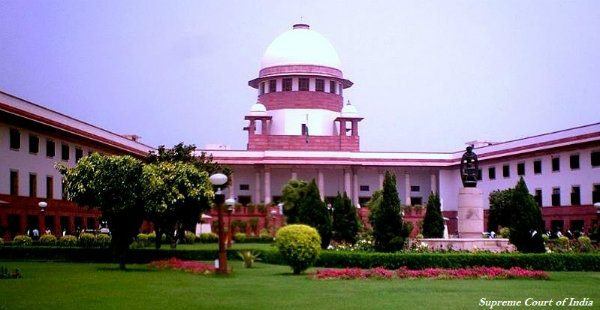
The Supreme Court of India is the highest authority of the judiciary. 

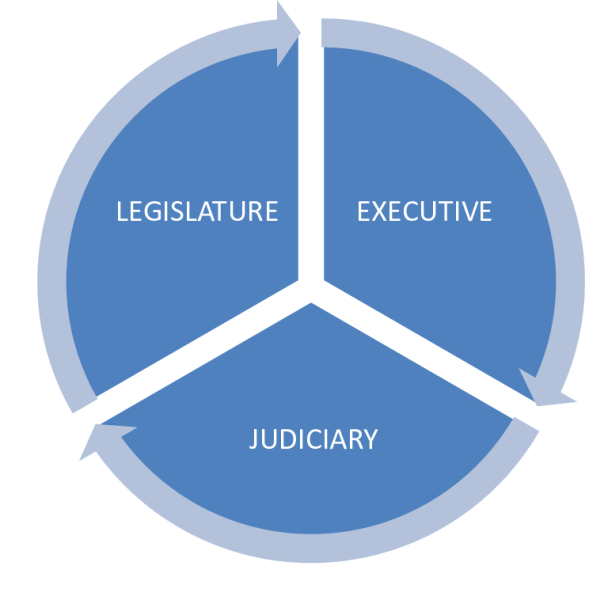
The Judiciary is the third organ of the government. It has the responsibility to apply the laws to specific cases and settle all disputes. The real ‘meaning of law’ is what the judges decide during the course of giving their judgements in various cases. From the citizen’s point of view, Judiciary is the most important organ of the government because it acts as their protector against the possible excesses of legislative and executive organs. Role of Judiciary as the guardian-protector of the constitution and the fundamental rights of the people makes it more respectable than other two organs.

Functions of Judiciary and Its Importance:

1. To Give Justice to the people:

The first and foremost function of the judiciary is to give justice to the people, whenever they may approach it. It awards punishment to those who after trial are found guilty of violating the laws of the state or the rights of the people.

The aggrieved citizens can go to the courts for seeking redress and compensation. They can do so either when they fear any harm to their rights or after they have suffered any loss. The judiciary fixes the quantity and quality of punishment to be given to the criminals. It decides all cases involving grant of compensations to the citizens.

2. Protection of Rights:

The judiciary has the supreme responsibility to safeguard the rights of the people. A citizen has the right to seek the protection of the judiciary in case his rights are violated or threatened to be violated by the government or by private organisations or fellow citizens. In all such cases, it becomes the responsibility of the judiciary to protect his rights of the people.

3. Guardian of the Constitution:

judiciary acts as the guardian of the Constitution. The Constitution is the supreme law of the land and it is the responsibility of the judiciary to interpret and protect it. For this purpose the judiciary can conduct judicial review over any law for determining as to whether or not it is in accordance with the letter and spirit of the constitution. In case any law is found ultra vires (unconstitutional), it is rejected by the judiciary and it becomes invalid for future. This power of the court is called the power of judicial review.

4. Advisory Functions:

Very often the courts are given the responsibility to give advisory opinions to the rulers on any legal matter. For example, the President of India the power to refer to the Supreme Court any question of law or fact which is of public importance.

5. To Conduct Judicial Inquiries:

Judges are very often called upon to head Enquiry Commissions constituted to enquire into some serious incidents resulting from the alleged errors or omissions on the part of government or some public servants. Commissions of enquiry headed by a single judge are also sometimes constituted for investigating important and complicated issues and problems.

Independence of Judiciary led by Supreme Court

The Indian Constitution protects the citizens from any partial judgment. And, this gives the power to the judiciary to make decisions based on the rules of the law, in case of any dispute. Due to such authority, the judiciary of the country is an independent body. The courts of India are not controlled by the government and do not represent any political authority. Such independence allows the judiciary to ensure that there is no misuse of power by any section of the government.

The independence of judiciary calls for ‘separation of powers’. This basically means that both the legislature and the executive branches of the government, cannot interfere with the functions and decisions of the judiciary. So, in order to successfully execute their independent authority, the judges of both high courts and the Supreme Court must be appointed without any influence or interference from other branches of the government. Also, it is very difficult to remove a judge from his/her office, once appointed by the judiciary.

Unlock 3.0

Increase of Corona cases has become routine in India,now government is focusing on unlock 3.0 by giving permissions to movie theaters and gyms

government is planning to shutdown the schools and colleges as usually,only movie theaters with 25% capacity are permitted

Government is planning to conduct entrance exams like jee mains,meet in September inspire increasing of Corona cases

India has crossed 14Million cases

100% Solarization of the Sun Temple and Konark Town

Full Solarization Program

The scheme envisages setting up 10 MW grid-connected solar project and various off-grid solar projects such as solar trees, solar drinking water kiosks, off-grid solar power plants with battery storage etc. The scheme would fulfill all of Konark town’s energy needs with solar power. The scheme receives the funding of about Rs. 25 Crores from the Government of India through the Ministry of New & Renewable Energy (MNRE) from 100 per cent Central Financial Assistance (CFA). Odisha State Agency for the Production of Renewable Energy will introduce the scheme.

Konark Temple

A combination of two words ‘Kona’ and ‘Arka’ is the word Konark. Kona stands for Corner and Arka means Sun. And it is the ‘Sun of the corner’ when combined. Konark Sun Temple is situated on the north-eastern corner of the Puri and was built in the 13th century by King Narasimhadeva I of the Eastern Ganga Dynasty (1238-1264AD), dedicated to god of the sun, Konark.

Architecture of Konark Temple

The massive wheels and horses give the temple a resemblance to the Konark’s chariot of seven horses. The rest of the building is a typical Orissa temple. The outer walls were lavishly decorated with elaborate carvings, but internal carving There was no use of pillars The Shikharas were known as rekha deuls in this school. The mandaps were called Jagamohan. It is also known as the Temple’s Kalinga style Architecture Wheel Various hypotheses have been promoted about the importance of Konark wheel. According to others, twelve pairs of wheels mark the twelve months of the year and the twenty-four wheels mean twenty-four hours a day, and the eight main spokes mean pahars (three-hour period) a day. According to others, the wheels of the chariot have been interpreted as the ‘Wheel of Life’. They portray the cycle of creation, preservation and achievement of realization. Such 12 pairs of wheels may probably also represent the 12 signs of the zodiac.

Seven Horses of the Temple

The image of these seven horses described in different ways The seven horse, which pull the sun temple eastwards towards the dawn, reflects the seven days of the week These seven horses at Konarak are the seven colours visible in a rainbow-VIBGYOR. The seven horses are named after these seven colors: Sahasrara (Violet), Indra-nila (Indigo), Nila (Blue), Haritaha (Green), Pita (Yellow), Kausumbhaha (Orange) and Rakta (Red).

Black Pagoda

Konark temple was named the “Black Pagoda” in European sailor accounts as early as 1676 because its great tower appeared black Second reason, its magnetic force that pulled ships into the shore and triggered shipwrecks. Similarly, the Jagannath Temple in Puri was called the “White Pagoda”. The Konark is the third element of Odisha’s Golden Triangle. The first link is Jagannath Puri and the second link is Bhubaneswar (Capital city of Odisha) Konark temple was initially built on the sea bank but now the sea has receded and the temple is a little away from the beach. Power and New & Renewable Energy Minister R K Singh said, “The Government of India has launched the scheme with the intention of taking forward the dream of Prime Minister (Narendra Modi) to establish the historic sun temple town of Konark in Odisha as ‘Surya Nagri’ to convey a message of synergy between the modern use of solar power and the ancient sun temple and the importance of promoting solar power

250+ apps under the government’s eye; likely to be banned due to security concerns

The Center banned 59 Chinese-linked apps on June 29, including TikTok, Shein, UC Browser and BeautyPlus, saying they were harmful to the country’s sovereignty, integrity and security. After last month ‘s ban on TikTok and 59 other Chinese devices, the government has produced a new list of apps to investigate whether they pose any danger to national security or the privacy of individuals. This time, 275 Chinese phones, including PubG, Zili, Resso, AliExpress, and ULike, have been kept on the radar. Included on the list are apps from other Chinese Internet and Tech majors such as Meitu, LBE Tech, etc. While a subsidiary of South Korean video game company Bluehole created PubG game for smartphones, it is also sponsored by China’s most valuable internet giant Tencent. Zili is owned by Chinese e-commerce company Alibaba, Xiaomi, Resso and ULike are owend by ByteDance and AliExpress.

India is the largest market of PubG

PubG has produced about 17.5 crore installations to date, according to estimates from device intelligence firm Sensor Tower. PubG, is a smartphone game sensation that millions of subscribers alone in India, millions more in the world, mostly teenagers and children. The application is a shooting game based in a battle-royale format.

AliExpress is a China-based online shopping company, operated by the Alibaba Group. Launched in 2010, it consists of small businesses in China and other locations, such as Singapore, that offer products to online buyers from around the world. It contrasted eBay as sellers are independent and use the site to deliver goods to buyers over 300 million unique users in India from Chinese internet companies.

According to the government sources, these apps were red-flagged for security reasons, while others were classified for data sharing violations and privacy concerns. Additionally, the government is examining the alleged flow of data from these apps to China that poses a threat to the sovereignty and integrity of India. Meanwhile, the Ministry of Electronics and Information Technology (MeitY) has sent 77 questions to the 59 Banned-Chinese apps.  The Centre has asked questions like whether they censored content, worked on behalf of foreign governments or lobbied influencers, among others.  The ministry has also given these companies three weeks to respond, i.e, first week of August.

The ban was enforced under Section 69A of the Information Technology Act read with the related provisions of the 2009 Rules of Information Technology (Procedure and Safeguards for Public Blocking of Access to Data), it said. The govt also cited concerns about the transfer of data on Indian users abroad without authorization.

Conjectures of goals

Referring to as goal specificity , one of the most empirically validated sets of things for behavior change and that’s thinking about your goals in a very specific way. Many misconceptions till date have marked that if human stimulus doesn’t respond in a rational and encouraging way about their goals and foreseeing them would also a be a huge fiasco in the coming days. Setting your goals using a couple of techniques that can make your goal achievement a lot easier. The specificities of how we all think when we have goals, like some of you may have goals for some of the stuff we mentioned, but to actually actualize those, you have to consider them as goals. The apparent statistic or researches make it clear to the point where the conjectures of goal setting comes to a conclusion. The quantitative specificity with which you define your goal, it turns out really seems to matter. And it matters in the way that you get specific about the task in the way you’re going to do it, that specificity seems to give you a plan of how to enact it. And so, apparently we can see that across a bunch of different studies. The actual upshot is, for whatever goals you’re thinking about, make those goals incredibly specific. Like the who, what, where, when, all those different parts, write them down, see it quantitatively, and that will help you.

PARAMOUNT : knowing what the goal is. It’s this idea that you’re visualizing your positive future outcomes, everything, how awesome it would be once you get your goal , it just gets better and better when you actually brief it. Know where your true authentic interest is. By contrast, if you only think about the obstacles, you dwell on how hard it is then you’re never going to get around to doing anything. However, if you actually take the time, to again, intentionally and effortfully do both, first indulge in how great it would be and then think about what the obstacles are. It turns out that you now have visualized both things that you need to succeed. And this is what mental contrasting is.

Right to Privacy


Privacy is a fundamental human right, enshrined in numerous international human rights instruments. It is central to the protection of human dignity and forms the basis of any democratic society. It also supports and reinforces other rights, such as freedom of expression, information and association.  Activities that restrict the right to privacy, such as surveillance and censorship, can only be justified when they are prescribed by law, necessary to achieve a legitimate aim, and proportionate to the aim pursued.


As innovations in information technology have enabled previously unimagined forms of collecting, storing and sharing personal data, the right to privacy has evolved to encapsulate State obligations related to the protection of personal data.  A number of international instruments enshrine data protection principles, and many domestic legislatures have incorporated such principles into national law.


Privacy also has implication for the freedom of opinion and expression. The Report of the Special Rapporteur on the promotion and protection of the right to freedom of opinion and expression emphasises that the “right to privacy is often understood as an essential requirement for the realization of the right to freedom of expression. Undue interference with individual’s privacy can both directly and indirectly limit the free development and exchange of ideas.”


The Constitution of India does not specifically guarantee a right to privacy, however through various judgements over the years the Courts of the country have interpreted the other rights in the Constitution to be giving rise to a (limited) right to privacy – primarily through Article 21 – the right to life and liberty. In 2015, this interpretation was challenged and referred to a larger Bench of the Supreme Court (the highest Court in the country) in the writ petition Justice K.S Puttaswamy & Another vs. Union of India and Others, the case is currently pending in the Supreme Court.


The constitutional right to privacy in India is subject to a number of restrictions. These restrictions have been culled out through the interpretation of various provisions and judgements of the Supreme Court of India:


• The right to privacy can be restricted by procedure established by law which procedure would have to be just, fair and reasonable (Maneka Gandhi v. Union of India);

• Reasonable restrictions can be imposed on the right to privacy in the interests of the sovereignty and integrity of India, the security of the State, friendly relations with foreign States, public order, decency or morality, or in relation to contempt of court, defamation or incitement to an offence; (Article 19(2) of the Constitution of India, 1950)

• The right to privacy can be restricted if there is an important countervailing interest which is superior (Gobind v. State of M.P.);

• The right to privacy can be restricted if there is a compelling state interest to be served (Gobind v. State of M.P.);

• The protection available under the right to privacy may not be available to a person who voluntarily thrusts her/himself into controversy (R. Rajagopal v. Union of India).

• Like most fundamental rights in the Indian Constitution, the right to privacy has been mostly interpreted as a vertical right applicable only against the State, as defined under Article 12 of the Constitution, and not against private citizens. (Zoroastrian Cooperative Housing Society v District Registrar)

How Easy or Difficult it is to Start a Business in India?

India has improved drastically in the World Bank’s ‘Ease of Doing Business’ 2020 international ranking by moving up to 63 out of 190 countries in the list. India was at rank 130 in a list of 189 countries in 2016. A sudden jump in rank from 130 to 63 is definitely remarkable and shows true business potentials of new India. Although this sounds good there is a lot more to be done for India to continue rising up. Hrishikesh Datar, Founder and CEO of Vakilsearch, a technology driven company empowering Indians with access to trustworthy legal solutions for entrepreneurs, gives his insights into what more can be done to push India further up the ranking.

The World Bank has said “In the year of 2015, India eliminated the paid-in minimum capital requirement and streamlined the process for starting a business. More reforms are ongoing—in starting a business and other areas measured by Doing Business—though the full effects are yet to be felt”.

Doing business in India – a country which the economic pundits say will be the world’s second-largest economy by 2030 (with China top and the USA pushed into third place). Going back a decade or so this assertion might have seemed nothing more than a fantasy, but everybody now seems to agree that India is finally going places. With a rapidly growing population of 1.3 million which boasts a vibrant middle class and a demographic which is heavily weighted towards youth, the potential of India seems almost limitless.

In the past, many developed economies saw India as a destination for the low-cost outsourcing of back-office or R&D-type functions and, whilst this area of the economy continues to thrive, India needs to be viewed in a very different light these days. India is, quite simply, the world’s largest potential market for goods and services. Where China has already developed much of its infrastructure and service economy, India still has enormous work to do. Look around on the streets of Delhi, Bangalore or Chennai and the need for development is obvious – move into the second or third tier cities and this need becomes even more acute.

What does all of this point to? Opportunities. India is a land of endless possibility where the people are aspirational, energetic, open and eager for progress.

Research

The biggest mistake organisations make when looking at India as a market is that they fail to do adequate research. To say that India is enormous would be a massive understatement. A country with 1.3 billion people, multiple languages, ethnicities, climates and geographies cannot be approached as a homogenous unit. You can’t really have an ‘India strategy’ – you probably need multiple India strategies.

The first question has got to be is: ‘Is India the right market for your products or services at this stage of your development, taking into consideration the current needs of India?’ This is not an easy question to answer. So many factors come into play when addressing this – what is your price point, and how does that sit against the competitive landscape in India? Who are your major competitors and how are they faring? Can you afford to invest in India knowing that the returns might not accrue for a number of years? Which city or region would be a good starting point?

All of these questions need answers, but good quality information is not always easy to come by in India. You will need to engage people on the ground in India who can really get under the skin of the local market and get back to you with honest, trustworthy answers to key strategic questions. Don’t convince yourselves you can do all your research via a laptop back in your office or home– you quite simply can’t.

Finding Manpower

India is full of really great potential employees. On the whole, Indians are well-educated, ambitious, enthusiastic and motivated. Lack of local talent definitely isn’t the issue; finding and retaining good people though can be very difficult.

The Indian employment market is very fast-moving. Indians are always on the lookout for ways of improving their career prospects, job titles and income. How are you going to convince good people that you offer them a bright future? Why should they join your company when there is a myriad of opportunities for the type of people you are looking for?

Culture in India

The underlying factors which drive Indian business culture are deeply rooted in the country’s religious, societal and ethnic past. People are often fooled into thinking that because Indian’s often speak good English and because the country has a western-influenced history, that the cultural challenges they might face will be minimal. Nothing could be further from the truth.

You simply cannot hope to succeed in India unless you gain a very good understanding of the local cultural landscape.

Though with huge efforts of Indian government like launching a start-up India portal, Mudra Loan scheme for MSME (medium small & micro enterprises), there’s a lot to be done in collaborate efforts of Indian citizens and Indian government to get into top economic powers of the world.

Problem of Food Wastage in India

Food is the most fundamental among the essential necessities of life . Food squander is the serious issue in our nation which brings down country head with disgrace because numerous individuals passes on every day because of craving.

FOOD WASTAGE

Food wastage primary rotates around any type of food , crude or cooked utilized or unused disposed of or proposed .At wide level it is additionally enhanced into different classes and suggestions, for example, the sort of food squander, the structure it is delivered/created by and materials and wellspring of waste.

ABOUT THE MAGNITUDE OF FOOD WASTAGE IN INDIA

As per reports by the UN’s Food and Agriculture Organization (FAO), about 40 percent of India’s new products of the soil – worth a yearly $8.3bn or thereabouts – perishes before arriving at buyers. Every year, some 21m metric huge amounts of wheat, particularly grain – a sum practically equivalent to Australia’s all out yearly creation – spoils in India in light of ill-advised capacity in the guardianship of the legislature controlled Food Corporation of India.As indicated by an ongoing report by the Indian Institute of Management in Kolkata, cold storerooms are accessible for only 10 percent of India’s transitory produce – and are for the most part utilized for potatoes – to meet India’s hearty interest for chips. The investigation gauges that India needs stockpiling offices for another 370m metric huge amounts of short-lived produce.

CAUSES

1.Weddings blamed for colossal food squander

The monetary development of India won’t tally if the nation individuals bite the dust for hunger.

For imagining families are simply squandering the nation food by surpassing the food things to show there freshly discovered affluence. 1/5 of food served at weddings and get-together s is disposed of, “It’s a criminal waste,” The huge amounts of food squandered at get-together s the nation over every day stands out pointedly from the food deficiencies, frequently verging on constant starvation, looked by a huge number of poor Indians.

2.Inadequate capacity framework

In spite of a great many Indians heading to sleep on an eager stomach, the nation is letting food worth an incredible Rs 44,000 crore go squander every year because of absence of sufficient stockpiling infrastructure.The Saumitra Chaudhuri Committee, comprised by the Planning Commission in 2012, has assessed the nation’s cool stockpiling prerequisite as 61.3 million ton as against the current limit of around 29 million ton.

  1. Awareness

What to state illetrate individual , educated are doing same thing.People are uninformed of the issue the nation is confronting bcz they have cash and they usuallu would prefer not to mind at all until and except if they face a similar circumstance. Indeed, even adminstration resembles a visually impaired framework simply disregarding the fundamental development of the country.

4.Food Waste-to-Energy Conversion

The problem of waste administration stumbles into geologies and its gravest causal specialist, i.e., urban ism, is a worldwide wonder. In any case, its implications are moderately progressively articulated in creating countries by virtue of improved ways of life and changing utilization designs. The developing populace and expanding customer request are prompting unnecessary utilization of accessible assets and age of gigantic measure of various sort of squanders, which is rising as a chronic issue in urban social orders.

5.Lack of transport offices

We in India need appropriate transportation offices to connect with the market just as chilly stockpiling’s for new produce and food crates.The new produce carried on these long excursions is once in a while cooled or concealed, but instead oppressed – particularly in summers – to the rankling sun, making high paces of waste.

Remedies

  • As an individual,” Food that we BUY, EAT and WASTE is legitimately identified with the Global emergency we are confronting. It may be know to all of you that once in a while we eat everything that we purchase. So how about we make it a highlight BUY WHAT WE NEED and EAT WHAT WE BUY”.
  • At the shopper level, we can diminish our commitment to food and vitality
  • squander by taking basic, fundamental strides at home, in the supermarket and at cafe’s.
  • first of all, plan a food menu before each outing to the supermarket so it’s simpler to monitor when vegetables, products of the soil perishables should be eaten consistently.
  • Careful consideration ought to likewise be given to how food is put away and enclosed by the fridge so it doesn’t ruin as fast, and shoppers ought to make sure to purchase just what they will eat.
  • We ought not squander food in our plate , any place we are bcz the food which is going to squander or squandered is the guardian angel of others life.
  • Modernization in the food flexibly chain and increment foriegn speculation , better gathering machines , advancements , food bundling and so forth steps should received by the organization. Japanhas different laws relating to the various reasons for food wastage, for example, Container and Packaging Recycling Law’, ‘Food Wastes Recycling.

“ARRANGE YOUR BAD HABITS AS WASTE NOT FOOD”

Its an opportunity to wake up and this isn’t the obligation of just organization however every single individual .So before squandering a solitary bit of food consistently recall that we are just answerable for Food emergency.

Dowry- A curse

Dowry originated to give stress to women and made up of sthreedhanam ( Stree means woman and dhan means wealth) consisting of money,property,or gifts given solely to women by her parents in marriage in the form of dowry. But the abuse of this custom started when it became a price tag for groom. The groom demands dowry consisting of a large sum of money,furniture and other luxury things.

The price of Indian groom has increased based on his qualifications,profession and income. It is the ritual that doctors,chartered Accountants and Engineers expect a handsome dowry. Dowry has reduced the status of women in our society. The grooms have also become a saleable commodity available at such a price,earning so many amounts. Even the rate of dowry has been fixed by doctors ,bank officers,govt officers and businessmen.

In case marriage takes place where dowry is less than a new chapter of mental and physical violence takes place against the bride in order to extract more dowry. The violence started from one day taunting by inlaws and then domestic violnce by husbands.The practice of dowry has been still rising in India badly.The most severe case is when bride is burning in regard to less dowry and these incidents are given shape of accidental burns in kitchen or disguised as suicide.In india every 20 woman die as result of harassment over dowry,either murdered by their husbands or compelled to commit suicide.dowry death rose from about 19 per day to 20 per day in 2020. And many reports of dowry death are unreported in police stations. Taking or giving dowry is practice from 1961. And still now it is a significant part of Indian marriage and falling women empowerment.

In some cases,to escape from punishmenet the husband and family not only kill woman directly but harass them mentally and physically too commit suicide.We are in 2020 and still this system is prevailing. The reason for that is our old customs and patriarchal society that values men over women. The stronghold of gender inequality makes them give dowry that is too wrong . The second reason is this practice is so rooted in the Indian culture that it is seen as normal and unchangeable.Even today people get to know that they are taking dowry they use to ignore them and take it as cultural tradition. If a woman’s marriage requires dowry in return for a safe,happy life then this world is unsafe and discriminatory for women. And where women are not treated with equity then that country can’t become developed. This is a ahrsh reality that women sacrifice their life because of this single small stupid thing. Nothing is above than life.

The need of the hour is the social awareness at least among females to stand up against wrong and right. More stringent laws,more awareness ,more education is required to girls for their independence and a social awakening can curb this ever increasing evil.

Factors determining job satisfaction of employee

Job satisfaction is defined as the level of contentment employees feel with their job. This goes beyond their daily duties to cover satisfaction with team members/managers, satisfaction with organizational policies, and the impact of their job on employees’ personal lives.

Satisfaction with:

▪︎Compensation and benefits

▪︎work environment

▪︎team members and managers

▪︎ job impact on personal life

What is job satisfaction ?

Job satisfaction, an unquantifiable metric, is defined as a positive emotional response you experience when doing your job or when you are present at work. Leading organizations are now trying to measure this feeling, with job satisfaction surveys becoming a staple at most workplaces. It’s important to remember that job satisfaction varies from employee to employee. In the same workplace under the same conditions, the factors that help one employee feel good about their job may not apply to another employee. For this reason, it is essential to have a multidimensional approach to employee satisfaction, covering the following areas:

▪︎ The challenging nature of work , pushing employees to new heights

▪︎A level of convenience (short commute, access to the right digital tools and flexible hours)

▪︎competitive pay, which employees maintain a good quality of life

▪︎The promise of career progression in sync with employees’ personal growth targets

▪︎ Regular appreciation by the immediate management and the organisation as a whole

Factors determining job satisfaction of employee:

There’s no one definition of job satisfaction, and factors contributing to it will depend on the nature of your workplace. For example, a satisfied employee in the manufacturing sector looks different from a satisfied software developer. However, there are ten traits that every workplace geared toward employee well-being and satisfaction will have in common.

▪︎Does your company are about its employees ?

Remember, it’s not enough to only care – communicate this care regularly to employees through newsletters, rewards, informal recognition, paid incentives, and other forms of communication. Companies with a high job satisfaction level, such as Google and Starbucks, also feature employee happiness and satisfaction stories as part of their communication strategy.

▪︎Does the workplace have room for employees to engage in their hobbies?

Today, most of us spend a significant part of the week at work, but this doesn’t mean we want to ignore our hobbies or personal interests. A workplace where employees have enough free time to read a book, catch up on the news, have a pleasant meal, for example – and where such behaviors are not considered slacking off – will better enable job satisfaction.

▪︎Do employees feel respected from their peers?

A workplace where employees feel regularly criticized or under some type of scrutiny is ripe for dissatisfaction. You can detect their dissatisfaction via one-on-one conversations with employees, or through anonymized data collected via employee satisfaction surveys and take appropriate measures to improve their experience in this area.

▪︎ Is there a culture of two way feedback?

Employees need regular feedback (both positive and constructive) to know that they are on the right track. Also, they want to share their opinions with managers/HR/senior management to guide the future of the company. This culture of two-way feedback is essential to maintaining employee satisfaction. It is doubly necessary for you to act on the feedback you receive.

▪︎Where do you stand on the issue of work life balance?

Companies must try to build a non-toxic culture of high performance, where productivity isn’t prioritized over well-being. Positive work-life balance is integral to this. As per the 2019 Workplace Happiness Report by udemy, work-life balance adds meaning to the job for 37% of professionals. Mandatory work-from-home days, paid time off, and flexible working benefits are great ways to help employees achieve this.

▪︎Do employees feel secure about their role ?

Job security is now a major concern as technology upends existing processes, and automation threatens legacy models of working. As a future-focused employer, you must clearly explain how an employee’s role will transform over the years and equip them for this change. Apart from basics such as compensation, employee benefits, and workplace amenities, these ten factors go a long way in either improving or negatively impacting employee satisfaction. And here’s why you can’t afford to have dissatisfied employees.

▪︎Does your organisation follow fair and inclusive policies?

Diversity and inclusion in the workplace have a positive impact on the business bottom line, while also improving a company’s culture and work environment. By ensuring fairness toward all your employees, regardless of age, gender, or disability, you can increase the average level of satisfaction across the company. In other words, job satisfaction shouldn’t be limited to a select few – everyone, across the company, should experience the same level of well-being.

▪︎How do employees rate their relationship with their reporting heads?

We have all heard the axiom that employees don’t quit jobs, they quit bosses. And this is confirmed by studies – a poll by Gallup found that 75% of voluntary attrition can be attributed to the behavior of immediate supervisors and not the job itself.

5 reasons why job satisfaction is so important

By actively working on satisfaction in the workplace, you end up with employees who are more engaged, involved, and eager to go the extra mile. This benefits your company in several ways.

1- satisfied employees translate into satisfied customers :

If employees are unhappy at work, the chances are that this will reflect in their interactions with the customer. Contact centers, specifically, cannot afford to have dissatisfied employees – this is sure to show in every word they say and every campaign they work on.

2- Voluntory turnover will come down:

Sometimes, turnover can be good for business, as it brings fresh talent into the organization. But voluntary turnover looks different – you risk losing top talent you have carefully trained over the years. Also, this talent takes with it tribal knowledge once it leaves the company, which could toughen up the competition for your products and service offerings. On the other hand, a satisfied workforce is less likely to quit.

3- You increase the chance of referral:

Employee referrals are the most effective method of recruitment, none. A report by Jobvite found that referrals make up 7% of all applications but an overwhelming 40% of all hires. An employee satisfied with the work conditions and the pay scale is far more likely to recommend their friends than a dissatisfied employee.

4- Satisfaction is directly linked to your productivity:

In a positive work environment, employees are more likely to bring their best to work every day. For example , research by the social market foundation and the university of Warwick’s centre of competitive advantage in the Global Economy (CAGE) found that happy employees are 20% more productive than unhappy employees on average.

There’s also a secondary reason for this – high-satisfaction workplaces prioritize employee wellness. Therefore, they are more likely to look after themselves, and address stress/burnout/health issues, before it impacts work.

5- In the long term, you can dramatically reduce HR costs:

Typically, you need to plan for both fixed and variable costs as part of your HR budget. Low satisfaction could significantly dent the variable aspect of this equation – dissatisfied employees require targeted surveys, specialized learning and development, additional career assistance, and ultimately may lead to rehiring and retraining costs in the case of turnover. All of this needs you to invest more than you had expected.

By making job satisfaction a priority at your company, you can stay ahead of the curve and ensure that there are no unprecedented issues arising due to low satisfaction.

Driven by these benefits, more and more organizations are investing in job satisfaction initiatives. And this has had a marked impact on job satisfaction, as seen in the following statistics.


Poverty and Pollution

“Poverty is the parent of revolution and crime.” – Aristotle

Poverty, as Aristotle defines- may lead to revolution as we have seen innumerably be it civil wars of 1980’s or mass movement of Indian freedom struggle. The second genesis of poverty as per Aristotle’s definition, is significant in present context- “Crime”. Be it crime committed by poor thieves to feed their family or crime of polluting environment, we all commit- both are polluting and consequential.

Poverty and pollution are the two most normal issues keeping the world from achieving its objective of manageable turn of events. By and large we accept that it is fortune which makes all the issues identified with ecological corruption causing contamination, environmental change and so on. In spite of the fact that it is consistent with a specific degree we can’t overlook a more profound interrelationship which exists among neediness and contamination. The poor are progressively inclined to the contamination issues and it is destitution which is somehow identified with contamination.

The interrelationship among destitution and poor can be concentrated through different measurements; first, we’ll take a gander at the practices followed by individuals in helpless networks which lead to contamination. We accept that the majority of the ecological related issues like contamination are brought about by well-to-do segments of the general public due to their ways of life. They are the significant employments of vitality assets, vehicles and record for a significant lump of private utilization consumption which is answerable for ecological corruption. Despite the fact that it is consistent with a specific degree we can’t overlook the commitment of more unfortunate areas the general public in issues identified with condition. Needy individuals for the most part rely upon kindling and dairy animals fertilizer for their cooking rehearses which thus produces a great deal of contamination. Kindling is gathered by felling trees which weakens the dirt condition causing soil contamination. Soil contamination will have negative ramifications on horticultural works on causing a decrease in food assets. Also, there is an absence of mindfulness among helpless networks with respect to natural issues. Inadvertently, their day by day practices, for example, open sanitation, ill-advised waste removal, unhygienic environmental factors and so forth can contribute towards contamination. Another issue relating to air contamination is open agrarian waste consuming. Notwithstanding constant updates from the state governments and even punishment estimates requested by the Supreme Court helpless ranchers are persistently consuming their agrarian squanders in open fields seriously decaying air quality. Absence of some other moderate methods and particularly mindfulness is the underlying driver of this issue.

Pollution as an issue involves genuine worry for the whole world. So as to guarantee practical advancement whole planet has held hands to expel neediness from the world. In any case, some of the time strategies used to expel destitution can likewise prompt ecological issues. We need monetary development and advancement to beat neediness. All the creating nations are moving towards industrialization for accomplishing monetary success. These advancement exercises are expanding the carbon impression on the planet. In the quest for expelling neediness through improvement we are hurting our condition. Structures, ventures, apparatus, foundation ventures and so on all contribute towards contamination. A ton of e-squander from created nations is being dumped into creating nations for removal. For the most part it is the destitute individuals who handle its removal and are probably going to experience the ill effects of its outcomes as they in its nearby region. So as to dispose of one issue we are making another.

The following connection among destitution and contamination is worried about its belongings. Who are generally influenced by contamination? It is the needy individuals who are getting the brunt of contamination. According to a Harvard study directed in the late 90’s future is low in helpless nations when contrasted with wealthier networks and the significant explanation for this is ecological contamination. Destitute individuals don’t have the privilege to appreciate characteristic assets as much the wealthy do. The best model is water. The majority of the individuals living in India despite everything don’t approach perfect and safe drinking water and they are for the most part from helpless foundations. All the modern and electronic waste is dumped into the streams which influence the lives of individuals living in those regions. Air quality is seriously debasing in our nation. Needy individuals who burn through the greater part of their occasions on roads are increasingly inclined to experience the ill effects of its outcomes. Neither they have cash nor the assets to keep themselves from these issues. Medical issues brought about by contamination will have extensive effect on destitute individuals. Absence of sustenance, social insurance and in particular mindfulness will additionally add to their issues.

We need a synergistic way to deal with conquer the twin issues of neediness and contamination. At the same time we need to remember the entomb connection between the two and must be incredibly careful in discovering arrangements as one issue’s answer can turn into the reason for another. The fundamental need is to make mindfulness and spread training among the helpless masses with respect to contamination; its circumstances and end results. Government ought to give cooking ovens and gas associations with the destitute individuals so they don’t need to rely upon kindling and different assets for their cooking prerequisites. Government activity of requesting that individuals surrender their LPG appropriations to give LPG to the poor is excellent. Sufficient measures ought to be received to save woodlands on which numerous neighborhood networks are needy. Works on prompting deforestation ought to be debilitated. Government needs to give elective wellsprings of occupation to such helpless networks. Individuals ought to be debilitated from receiving practices, for example, inappropriate waste removal, open sanitation, consuming of agrarian waste which prompts ecological contamination. Open specialists need to assume a significant job in this. They need to take endeavors to make mindfulness among individuals, screen such destructive practices which can contribute towards contamination, instruct individuals about the unsafe impacts of contamination and attempt vital measures for restorative activity. We need to guarantee that while creating helpless nations we are not trading off our condition. So as to have economical advancement we have to dispose of destitution without making any damage the earth and guaranteeing social equity. No decent can be accomplished by hurting others. Neediness and contamination, both are dire worldwide issues that ought not be dealt with independently as one is well on the way to affect another.

Burdens of online classes

I have just been promoted to the second year of my postgraduate course and our dean was very much proactive in launching the online platform by buying a Zoom subscription, providing access to the online private library and even bought subscriptions to buy e-books. A necessary amount of fees was also reduced although there is no reimbursement of the internet or Wi-Fi charges. Around 2-4 classes of duration 90 minutes are usually scheduled each day, with a couple of days off each week. Faculties usually provide assignments with deadlines and we have to prepare presentations almost every week. Everything which one usually does in a MBA college, we are doing everything and even the faculties are trying to replicate the entire offline model of MBA into an online model. Truth to be spoken, they have been successful in their endeavours, but to what extent?

With each passing day, such online classes are becoming more of a burden. Attending classes every day, for such long hours as well as trying to grasp new topics is becoming increasingly difficult. Even though the faculties are trying to make things easy, there is something about this online platform that makes the entire teaching process a mile less effective. Recent trends suggest that the attention span of a normal 25 years old human being ranges from 10 to 20 minutes. This trend is well observed when we are studying a class environment, usually surrounded by friends who help us getting through the class. But coming to the online mode, what usually happens is our attention span gets drastically reduced and since there is no check with the reality, we often drift away from what exactly is happening in the class. What spikes our frustration is the absence of non-verbal cues during the class activities or during presentation. In classes, we can see our audience and change ourselves accordingly, but in online mode, it seems like a one way communication – we only speak without any response from the opposite end. And to add to that, we always face a fear of losing internet connection in the middle of class. And God forbid, the days when that happens, we have no other options but to succumb to our own senses to try and to understand what we have missed.

But that is not all. Post graduate study is so designed that group work is more of necessity which reduces time and increases effectiveness of our study. Studying solo in our rooms is making things harder, and this is piling up day by day.

But what is more frightening and despairing is that unlike the corporate, schools and colleges does not have any mental wellness programs. Hours of online classes with studying solo in our rooms is creating a mental challenge coupled with anxiety and stress. What actually is happening now is that students are trying to cram everything but what is the effectiveness? Are we really being able to retain anything at the end of the day? There is no doubt that the faculties are trying their best, but somewhere they have failed to consider the mental challenge that we are facing in the meantime.

Online class is perfectly fine for those curriculum which have been designed in that way. It does not work, or at least we are not ready to embrace this form as a substitute of offline mode of classes.

Source – Self

Love

I watched as my sister knelt down beside me
Tears running down her face calm face
I watched as she gently raised me up to her chest and the loud scream coming out from her mouth
People ran past us to hide for their dear lives
Then she detached me from chest and place my head on her lap
Gently rub my face with her hand and tears continue to flows down like a waterfall
My lifeless body on her lap and keep saying words but she seems not to care
And suddenly she start singing calling out my name softly
I could remember the song, our parents sings the song a lot to us
“Oh Dil-ara!! You are bold, you are beautiful,oh my Dil-ara! If the stars were your dream,I will give you my whole sky,oh my little princess”
Just then,her breath caught in her throat and the tears continue to stream down
People keep running to hide
But my sister is here with my lifeless body
A body that knows no wounds nor pain
Seeing with me, I believe that her love is so boundless towards me.

20 Tips for Mastering the Art of Public Speaking

When my class was asked to describe our greatest fear- some said spiders while some said ghosts. But when the fingers were pointed at me and the entire class was staring at me for an answer, I froze. That is exactly when I knew my greatest fear was public speaking. The best way one can get over their fear is by practising it hence I made it my goal to be an ace at it. Today I’m a teacher and I speak in front of my students with ease and charisma.

The Wolf of Wall Street': A howling disappointment

Here are some of the tips that helped me through my process of practising public speaking:

1. Know your audience.

If you are speaking in front of an audience, there is usually a reason. Know who you are speaking to and what they want or need to take away. If it’s friends and family, entertain them. If it’s a corporate event, teach and inspire them. Knowing the demographic of the audience is imperative.

2. Rehearse, rehearse, rehearse.

Nothing becomes muscle memory unless you practice relentlessly. If you have a big speech coming up, make time every day to practice. Prepare your goals and the content well ahead of time. This can be done while driving, exercising, in the car, on a plane…anywhere.

3. Practice with your friends and family.

Once I know the content, I like to add a little bit of distraction to test how well prepared I really am. Turn on the TV or rehearse while pushing your child in the swing. Anything that adds a little more challenge. While taking a shower or even while dinner with your parents.

4. Maintain your own style.

Different events will often require a different approach or style. Sometimes reading a prepared speech is fine. But know it backward are forward so you’re not staring down at the pages the whole time. Some use notes. Others prefer to be 100 percent scripted and memorized. If that’s your style, memorize the content so well that you can go off script if needed — and so you don’t sound like you’re reciting a poem. Use the proper approach for the appropriate event.

5. Know the environment.

Know the venue where you will be speaking. Get there well ahead of time. Walk the room. Walk the stage. Get a feel for the vibe of the environment so you are more comfortable when its “go time.”

6. Test all equipment.

Nothing sucks more that last-minute technical difficulties. Avoid adding even more stress by testing any and all equipment and audio visual functions ahead of time. And have backups.

7. Practice in front of a mirror.

Practicing in front of a mirror is a good way to learn the proper amount of body motion, hand usage and facial expressions.

8. Take every opportunity to speak.

The only way to get better at anything is to do it all the time. Rehearsing is good, but nothing compares to actually getting up in front of an audience and doing it for real.

9. Practice body language and movement.

Remember, communication is much more about tone and body language than the words we say. The words of course matter, but emphasis comes with movement and body language.

10. Slow down.

We have some great sayings in the SEAL teams: “slow is smooth, and smooth is fast, ” and “don’t run to your death.” Nothing shows nerves more than racing through your presentation. If you want to impact the audience in a meaningful way, make sure they actually hear what you are saying. Slow it down.

11. Make eye contact, but avoid heavy body movements.

This one is very important, and it doesn’t matter how big the audience is. Make eye contact with as many people as possible. It makes the audience members feel like you are speaking directly to them. And don’t just stick to people in the first couple rows. Look at the people in the back too.

12. Know your material.

If your goal is to become a thought leader or actually teach the audience something, only a truly authentic understanding of the material will get you there.

13. Take long pauses.

Similar to slowing things down, make a point to take long pauses. And make them longer than you even think is appropriate. It can have a great impact on emphasizing key points and emotionally connecting to the audience.

14. Practice tone and voice modulation.

Don’t just eek your way through a speech using the same tone and volume. Tone and projection add a layer of entertainment and help keep the audience fully engaged from start to finish. These too must be practiced religiously.

15. Use humor and emotion.

It doesn’t matter what you are talking about. There is always a place for emotion or humor, or both. I find self-deprecating humor to work the best. And if you are starting to get emotional, so what? Use it. The audience may not remember everything you said, but they will remember how you made them feel. 

16. Mentally prepare.

Find time during the hour before your speech for some solitude. Get your mind right. Clear your head. If it’s five minutes before, just relax. The time for making sure you know the material perfectly has passed.

17. Exercise before you go on.

It’s almost impossible to feel stress and anxiety after a good workout. If you have the time, exercise. The closer to your speech, the better. It’s also a good time to practice. I like to rehearse while running or swimming.

18. Project confidence.

The more you project confidence, the more confident you are likely to feel. Get out there and own the room. Even if you are terrified. Fake it. Look people in the eye and command their attention.

19. Don’t go over the allotted time.

When in doubt, go under the allotted time. Less is sometimes more. But never, ever, go over. It’s poor speaking etiquette and shows you are not prepared. It’s also disrespectful of the agenda for the event. Again, just practice.

20. Ask for feedback.

Most of us don’t like to ask for feedback, especially when we know the response may include some constructive criticism.

However feedbacks if taken positively can do wonders for your speech improvisation especially from a third-party point of view.

Why Are We Clapping? - A History of Applause

Speaking is a great way to connect with people and a skill we all should master.

It’s a must for leaders and managers. It’s a must for sales. It’s basically a requirement for all entrepreneurs and business leaders.

So go on and practice this skill which will be your life saver!

Village Life

A lot of people think that it is just impossible to live in some under-developed rural areas while modern city life can provide a person with almost everything that one could only imagine. However, such active and bustling way of life is not for everyone. There are a lot of people who do not pursue a crazy success and luxury and just want their life to be simple and plain. A village is a perfect place to live if you are in search of harmony with nature. People have everything for their minimum requirements of life. Villagers are just satisfied with the necessities of their living. They are always provided with fresh fruit, vegetables, fish, water, and clear air. It is the simplicity, natural beauty, and tranquility that make the rural life unique and special. Moreover, living in a concrete jungle can be quite stressful and it can make you more vulnerable to depression.

Villages preserve our national customs and traditions. The village people usually hold various festivals and fairs where they represent the wealth of our culture. Villagers think in the terms of religion and God. The village temple is the divine place where people draw inspiration for their further work and pray for their families and themselves. There is a unique closeness between the elder and younger generations. Young people treat their parents and grandparents with great respect and follow their valuable advice.

In spite of everything good that the village can give us, there are a lot of important things that rural areas lack. Peasants lack the utilities and convenience a more developed area can offer, such as hospitals, stores, police stations, firefighters, public health, mass education, proper cell phone coverage, and internet access. So, there should be some progress in rural areas in order to make such places more pleasant and comfortable to live.
Conclusion
A lot of philosophers and great thinkers admired the rural life because the country people are able to gain a sense of well-being from the purposefulness of a simple country existence. You can easily find a certain spiritual serenity and enjoy the pleasures of meaningful time among the magnificent rural landscapes. There may come a time when you just want to escape from everyday stresses and complexities of city life. At village you can feel the time and make your life move slower.

Farming and agriculture are one of the most difficult jobs. The Indian farmer, in particular, is a hardworking and diligent man. The land and the crops need close attention and efforts day and night for a successful harvest. Life in an Indian village is not a walk in the park by any means.

The farmer will usually start his day before sunup and work throughout the whole day. It involves a lot of manual labor and persistence. They plow the land, sow the seeds, harvest the crops, etc. And a lot of the farmers do not enjoy the luxury of machines or tractors and have to rely on intense manual labor. Rain or shine, they can never take a day off.