3 new symptoms of corona added, trouble for patients, Don’t ignore them.

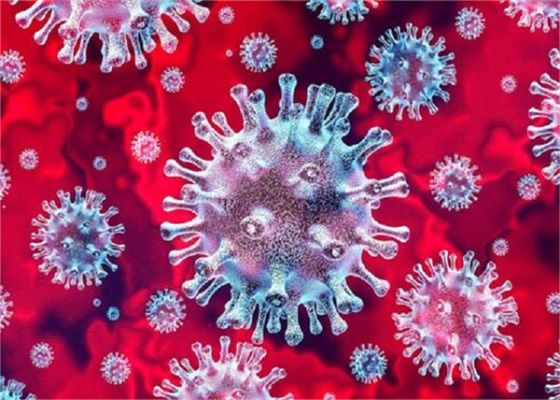
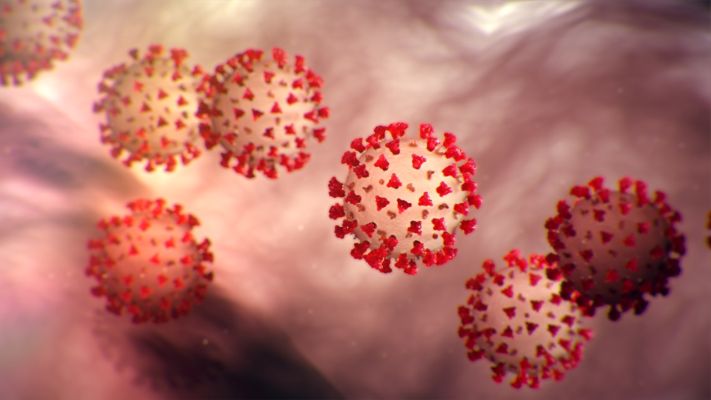
Coronavirus cases are increasing across the country. There is a continuous effort to make a vaccine for this disease. But its changing symptoms have created new problems. According to reports, doctors at Chest and King Koti hospitals in Hyderabad have issued a medical report. In which new symptoms of coronavirus have been reported.

There are many symptoms like headache,fever ,difficulty in breathing etc which can show if you are infected with corona. The officials say that the virus is modifying itself according to change in seasons. The virus is extremely dangerous and is making it almost unpredictable with new researches discoveries in almost every week.

The 3 new symptoms which are added are:

1.Diarrhea

2.Eye drops

3.vomiting or nausea

A person is considered to be corona infected when exposed to common symptoms of coronavirus such as dry cough, fever, and breathlessness. However, now the initial symptoms in corona infected patients are reported to be diarrhea, headache, and vomiting, due to which the treatment of patients is delayed. At the same time, doctors say that if someone is suffering from diarrhea, headache, and vomiting, then they should get their corona test done.

Virus changing its structure according to weather.

Doctors say that the coronavirus is changing its genomics structure according to the seasons. A report quoted a senior doctor as saying that due to the changing weather, the virus is now attacking the gastrointestinal tract rather than the lungs. If a person is in this condition, he may have symptoms such as weakness, low oxygen, low blood pressure, low sugar, and sudden faintness.

The fatal symtoms of corona virus infection are:

– 

 Chills

– Headache

– Don’t smell

– Lack of taste

– Muscle ache

 to have a sore throat

– Shortness of breath 

‘Dhoni not thinking about retirement:’, his manager provides huge updates on former Indian captain’s future.

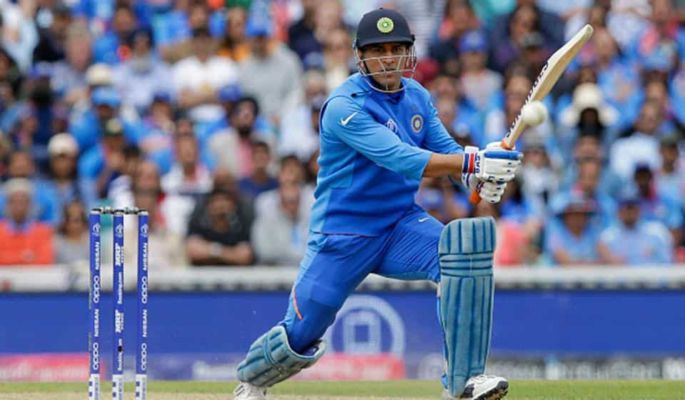
MS Dhoni’s manager Mihir Diwakar has clarified that the wicketkeeper batsman does not seem to be harbouring thoughts of retirement as of now. The former India captain, who has not played any form of cricket since India’s World Cup exit last year, turned 39 on Tuesday.

His manager and childhood friend Mihir Diwakar, while speaking to PTI, gave a peek into the trailblazer’s reclusive life at his home in Ranchi.

“Patriotism is in his blood, be it serving for the country (in defence) or (farming) the land, he’s very passionate about it. He has about 40-50 acres of farm land and he is busy growing organic crops like papaya, banana there,” Diwakar said.

The wicketkeeper-batsman was expected to be back in action at the IPL but that has been postponed indefinitely due to the COVID-19 pandemic.He was recently seen driving a tractor during the lockdown. Diwakar said they are soon going to launch their organic fertiliser under their company’s name Neo Global.

He said the fertiliser is being tested at Dhoni’s farm. Dhoni recently spoke about the harmful impact of pesticides in a video to promote organic farming. “We have a team of experts and scientists and they have developed the fertiliser and it should be launched within two-three months,” Diwakar said.”I spoke to him past midnight. It was a normal business talk. As usual, Dhoni would be at home with his family, with a quiet birthday celebration.”

India's MS Dhoni, second right, carries his bats before batting in the nets during a training session.

Asked whether retirement has crossed Dhoni’s mind, Diwakar said: “Being friends, we don’t talk about his cricket. But looking at him, he’s not all thinking about retirement.”He is very determined to play the IPL. He has worked really hard for this. If you remember he was there in Chennai one month in advance before everything was shut down,” he pointed out.

“He is very determined to play the IPL. He has worked really hard for this. If you remember he was there in Chennai one month in advance before everything was shut down,” he pointed out.

“He has maintained his fitness regimen at his farmhouse and will start practice after the lockdown is lifted. Everything now depends on how fast the situation returns to normalcy,” he concluded.

MS Dhoni

What doesn’t kill you, makes you stronger!

What is Deliberate Practice?

Deliberate practice refers to a special type of practice that is purposeful and systematic. While regular practice might include mindless repetitions, deliberate practice requires focused attention and is conducted with the specific goal of improving performance.

The greatest challenge of deliberate practice is to remain focused. In the beginning, showing up and putting in your reps is the most important thing. But after a while we begin to carelessly overlook small errors and miss daily opportunities for improvement.

This is because the natural tendency of the human brain is to transform repeated behaviors into automatic habits. For example, when you first learned to tie your shoes you had to think carefully about each step of the process. Today, after many repetitions, your brain can perform this sequence automatically. The more we repeat a task the more mindless it becomes.

Mindless activity is the enemy of deliberate practice. The danger of practicing the same thing again and again is that progress becomes assumed. Too often, we assume we are getting better simply because we are gaining experience. In reality, we are merely reinforcing our current habits—not improving them.

Claiming that improvement requires attention and effort sounds logical enough. But what does deliberate practice actually look like in the real world

Deliberate practice always follows the same pattern: break the overall process down into parts, identify your weaknesses, test new strategies for each section, and then integrate your learning into the overall process.

Consider the following example:

Basketball: Consider the following example from Aubrey Daniels, “Player A shoots 200 practice shots, Player B shoots 50. The Player B retrieves his own shots, dribbles leisurely and takes several breaks to talk to friends. Player A has a colleague who retrieves the ball after each attempt. The colleague keeps a record of shots made. If the shot is missed the colleague records whether the miss was short, long, left or right and the shooter reviews the results after every 10 minutes of practice. To characterize their hour of practice as equal would hardly be accurate. Assuming this is typical of their practice routine and they are equally skilled at the start, which would you predict would be the better shooter after only 100 hours of practice?

The Unsung Hero of Deliberate Practice

Perhaps the greatest difference between deliberate practice and simple repetition is this: feedback. Anyone who has mastered the art of deliberate practice has developed methods for receiving continual feedback on their performance.

The Promise of Deliberate Practice

Humans have a remarkable capacity to improve their performance in nearly any area of life if they train in the correct way. This is easier said than done.

Deliberate practice is not a comfortable activity. It requires sustained effort and concentration. The people who master the art of deliberate practice are committed to being lifelong learners—always exploring and experimenting and refining.

Deliberate practice is not a magic pill, but if you can manage to maintain your focus and commitment, then the promise of deliberate practice is quite alluring: to get the most out of what you’ve got.

 A thing to remember always is that if you don’t climb the cliff you won’t ever be able to see the view from top up there all you can see would be a view from the ground and the key to climb that tree is only through practise, the longer you persist it the more you would grow in terms of success.

Instagram reels: good alternative to Tiktok. Check here how to use it.

Instagram’s new feature Reels were in testing for some time now and now as the TikTok took an exit from India, Facebook-owned Instagram has rolled out their new Reels feature which allows user to shoot 15-second videos. The feature now arrives in India. This is good opportunity for reels to attract short video lovers as its demand has grown in the country.

many short video apps such as Roposo, Mitron, Chingari, Sharechat, and others are becoming more popular among users and seeing millions of downloads every day.Facebook is also all set to use this opportunity to attract 200 million TikTok users to Reels.

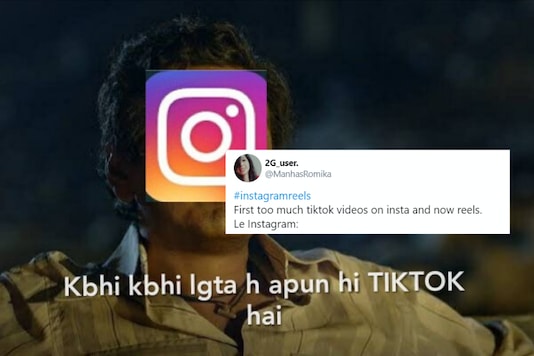
Reels is just a new feature on Instagram and users in India are loving this new feature which is just like TikTok.

Image credits: Twitter.
Memers doing memes on instagram reels against tiktok

How to use Instagram Reels?

Step 1: Update your Instagram on Google Play

Step 2: Open the Instagram Camera

Step 3: Reels option is available next to boomerang, Superzoom, hands-free, and layout.

Step 4: Click on Reels and select audio from the Instagram Music library.

Step 5: Reels also come with an option to record original voice besides lip-syncing.

Step 6: Reels also let users add AR effects and provide options like Timer, Speed to edit videos as required before sharing. Reels also let users re-record a video and even delete it if needed.

Step 7: After creating their Reel, users can choose to share it with either their followers or everyone on Instagram. Reels can be shared to Feed as well as Explore so everyone on Instagram can view it.

Instagram Reels Is Now Available in India, but Can It Replace TikTok?

Reels also feature several AR effects allowing users to add a custom touch to their videos. To put AR effects in their videos, users can open Reels camera and go to effects and then AR effects.

Users will also be able to record multiple 15 seconds Reels – it can also be recorded at once and the different effects can be added to each clip post the shoot. The Reels can also be reviewed, deleted, and re-recorded.

The world’s first author

Authors, in todays world authors are considered as minor celebrities. Most of the best seller authors are usually in fame for a short period of time after which they are lost to obscurity. Yet there are some with writings of such epic proportions that they are still celebrated as influential authors by many. One such author was the world’s first author, and despite such a feat not much is known about her by the general populace. 4,300 years ago, in ancient Sumer, the most powerful person in the city of Ur was banished to wander the vast desert. Her name was Enheduanna, a high priestess and the world’s first author. And by the time of her exile, she had written forty-two hymns and three epic poems— and Sumer hadn’t heard the last of her. Who was this woman, and why was she exiled?

Enheduanna lived 1700 years before Sappho, 1500 years before Homer and about 500 years before the biblical patriarch Abraham. Born in Mesopotamia, her birthplace was one of the first cities and cultures to have emerged in the world. Her father was King Sargon the Great, history’s first empire builder who conquered the independent city states and was often seen as somewhat of a foreign invader by the Sumerian cities of the south. Thus, to bridge the gap between the cultures, Sargon appointed his only daughter, Enheduanna, as high priestess. Female royalty was traditionally given religious roles, and she was educated to read and write in both Sumerian and Akkadian and make mathematical calculations. The worlds first writing started in Sumer as a system of accounting, allowing merchants to communicate over long distances with traders abroad. This pictogram system of record keeping developed into a script about 300 years before Enheduanna’s birth. But until Enheduanna, this writing mostly took the form of record keeping and transcription, rather than original works attributable to individual writers. As high priestess, she oversaw hundreds of temple workers, interpreted their dreams and set about unifying the older Sumerian culture with the new Akkadian civilisation. To accomplish this feat, she wrote 42 religious hymns that combined both mythologies. Since each Mesopotamian city was thought to be ruled by a patron deity, her hymns were dedicated to the ruling of each major city. In her writing she humanized the once aloof gods- now they suffered, fought, loved and responded to human pleading. Enheduanna’s most valuable literary contribution is said to her poetry dedicated to Inanna, the goddess of war and desire. Her odes to Inanna, mark the first time an author used the pronoun “I” and the first-time writing was used to explore deep, private emotions. After the death of king Sargon, a power-hungry general took advantage to the power vacuum to stage a coup. As a powerful member of the ruling family, naturally Enheduanna was targeted, thus the general exiled her from Ur. Her nephew, the legendary Sumerian king Naram- Sin, ultimately crushed the rebellion and restored his aunt as the high priestess. She died after serving as high priestess for 40 years. After her death she was regarded as a minor deity and her poetry was copied, studied and performed throughout the empire. Her poems influenced the Hebrew Old Testament, the epics of Homer and Christian Hymns.

Today, Enheduanna’s legacy still exists on clay tablets that have stood the testaments of time. To end lets celebrate a quote of Enheduanna herself “With your strength, my lady teeth can crush flint”.

The Concept of Crisis and its way of management.

There are innumerable number of definitions for a crisis. Basically the term crises can be defined as a significant threat to operations which further leads to the negative results if not handled properly. Some crisis like products harm and industrial crisis can result in injuries and even loss of lives. The most common cause of a Crisis situation is the financial losses by disrupting the operations of any industry, corporate house or in any organization may it be from the government or private sectors. Crisis creates a loss of market share/purchase intentions or spawning lawsuits . It can be defined as an unpredictable major threat that usually have a negative impact on the organisations, stakeholders or industries. It has three vital features:-

  • A crisis can only be expected and can never be protected (one cannot say exactly when it will occur) .
  • It creates a major threat and has the potential to hamper organisational operations in someway or other.
  • It may happen as a result of product tampering, researchersresearchers have written that a crisis is a disruption that occurs physically . Since a crisis threaten the industry, so it may also happen as a result of an accident and because of the negligence or criminal behavior of an individual or organisation.

The crisis runs the following risks :-

  • Escalating in industry.
  • Falling under close media or government scrutiny.
  • Interfering with the normal dealings of business.
  • Hampers the positive image enjoyed by a company and its officers.
  • Damaging a company’s bottom line.

There are various categories of corporate crisis which includes- Technological Crisis, Natural Disaster, Confrontation Crisis, Rumors, Crisis due to Workplace Violence, Crisis of Malevolence, Crisis of Organisation misdeeds etc. and in order to overcome or manage these all crisis situations, a corporate developmental strategy has been designeddesigned namely termed as Crisis Management Strategy (CMS) which functions in the synthesis of strategic management and primarily aims to prevent crisis for follows up company’s advancement. It includes projection of the future based on ongoing, monitoring of a business internal and external environment, as well as selection and implementation of crisis prevention strategy and operating management. The strategy of crisis management is divided in three prominent stages- Pre crisis, Response and Post crisis situations. Among these three, the last stage is the most vital one i.e. it creates a post-mortem kind of situation to scrap out what exactly went wrong, which helps them to think of the ways better prepare for the next crisis.

Is Social media becoming curse?

Social networking was often used as a symbol of modern growth every now and then. It has come in an attempt to enable our country and our people to rise to great heights..However we humans still fail to understand the effective use of these social media platforms.Where the very technology is meant to connect us , divides us.It’s going down from becoming a social media benevolence to being a bane. And it’s just because of us humans who lead to destroying this tremendous usage of technology by being the devil and bringing birth to a future of darkness.

Lets take example of trending social apps such as Facebook , whatsapp ,  Instagram, twitter etcWhen anyone isn’t identified in either of these sociable sites, much of our human mindset will be to condemn them because they’re not in the social networking realm, and it’s the degree of which we’re now fascinated with it because it’s now too evident to us, even though their pitfalls are often overlooked..These social media sites have over one billion active users per day, filled with millions of post-uploads and stories per hour.Although others are attempting to build artificial intelligence by granting machines the ability to think like humans, here humans themselves are being regulated like machines by impulses to lose interest and caring for the same.

I said earlier that these sites are becoming bane by contributing to make us lazier. So much lazier that now we’re not even trying to remember anyone’s birthdays or many important dates because we’re indirectly getting to know about it from these sites..So that’s what weakens our bonds with others. people don’t even think any social gatherings, they just end such interactions on Facebook, video chat or voice calls, etc., so they’re totally losing the human touch in shared culture..Infact now in visiting some tourist or religious sites have often lost natural harmony and moment of joy and during that period people are so inshowoff these sites in social places that they are still not involved in learning the real past, tradition and speciality of such locations..We have ignored the true value of sharing time with loved ones. This causes us interact with others miles away and forget the person right next to us. Not creating positive interactions.t just making people so addictive just to keep connection with those who doesnt even matter or stay for us for too long.People have been such a seeker of popularity that they can do anything just to receive people’s views, followers and tweets.This triggered a increase in depression by endless similarities that we create in our minds regarding our lives, about the lives of others depending on what they share on their social media. Of course people only post the positive aspects, and perfectly posed/calculated shots, so things appear to be perfect.

People whose business actually runs through social media are being used wisely, while young people whose age is to build a career and learn life lessons are being seen wasting a lot of time on social media.

Humans should know how to allow good and successful usage of these networking media, such as connecting with those people who genuinely lead to creating jobs in our life through being motivation rather than toxic. Simply by being concentrated, diligent, self-conscious and never forgetting to calculate the influence on society rather than just popularity.

The Concept of Crisis and its way of management.

There are innumerable number of definitions for a crisis. Basically the term crises can be defined as a significant threat to operations which further leads to the negative results if not handled properly. Some crisis like products harm and industrial crisis can result in injuries and even loss of lives. The most common cause of a Crisis situation is the financial losses by disrupting the operations of any industry, corporate house or in any organization may it be from the government or private sectors. Crisis creates a loss of market share/purchase intentions or spawning lawsuits . It can be defined as an unpredictable major threat that usually have a negative impact on the organisations, stakeholders or industries. It has three vital features:-

  • A crisis can only be expected and can never be protected (one cannot say exactly when it will occur) .
  • It creates a major threat and has the potential to hamper organisational operations in someway or other.
  • It may happen as a result of product tampering, researchersresearchers have written that a crisis is a disruption that occurs physically . Since a crisis threaten the industry, so it may also happen as a result of an accident and because of the negligence or criminal behavior of an individual or organisation.

The crisis runs the following risks :-

  • Escalating in industry.
  • Falling under close media or government scrutiny.
  • Interfering with the normal dealings of business.
  • Hampers the positive image enjoyed by a company and its officers.
  • Damaging a company’s bottom line.

There are various categories of corporate crisis which includes- Technological Crisis, Natural Disaster, Confrontation Crisis, Rumors, Crisis due to Workplace Violence, Crisis of Malevolence, Crisis of Organisation misdeeds etc. and in order to overcome or manage these all crisis situations, a corporate developmental strategy has been designeddesigned namely termed as Crisis Management Strategy (CMS) which functions in the synthesis of strategic management and primarily aims to prevent crisis for follows up company’s advancement. It includes projection of the future based on ongoing, monitoring of a business internal and external environment, as well as selection and implementation of crisis prevention strategy and operating management. The strategy of crisis management is divided in three prominent stages- Pre crisis, Response and Post crisis situations. Among these three, the last stage is the most vital one i.e. it creates a post-mortem kind of situation to scrap out what exactly went wrong, which helps them to think of the ways better prepare for the next crisis.

Asia cup 2020 officially postponed,ACC hoping to conduct it in coming june 2021.

Asia Cup 2020 officially postponed, ACC hopeful of hosting it in June 2021.The Asian Cricket Council on Thursday announced that the 2020 Asia Cup has been postponed. ACC stated that it is hopeful to conduct and schedule tournament on June 2021.

In the press release, ACC stated that the travel restrictions, different quarantine rules of countries, health risks and social distancing norms have posed as challenges to the conduct of the Asia Cup.The Asian Cricket Council on Thursday announced that the 2020 Asia Cup has been postponed. ACC stated that it will try to secure the window of June 2021 to schedule the tournament.

Right from the beginning the board was to organise the tournament as per the original schedule.However, travel restrictions, country-specific quarantine requirements, fundamental health risks and social distancing norms have posed as substantial challenges to the holding of the Asia Cup. Above all, the risks related to health and safety of participating players, support staff, commercial partners, fans and the cricketing community were deemed to be significant,” ACC quoted in the release.

The ACC is hopeful to schedule the Asia Cup in 2021 are looking for the June window to host the tournament.

Captains posing with the Asia Cup in 2018.

” The Board, after careful consideration of all the above factors, has confirmed that the Asia Cup 2020 be postponed. Conducting the event with all due safety is major responsibility of ACC and the Board is hopeful that the tournament will be held in 2021. The ACC is currently working towards securing June 2021 as a option for the same,” quoted ACC.

ACC also cleared the air on the hosting nation of the next Asia Cup as it said the Pakistan Cricket Board has exchanged hosting rights with Sri Lanka Cricket Board.

“It can be possible that Sri Lanka hosts for the Asia Cup 2020, Pakistan Cricket Board (PCB), has exchanged hosting rights for the tournament with Sri Lanka Cricket (SLC). Through this arrangement, the SLC will now host the rescheduled Asia Cup expected in June 2021 while the PCB will host the Asia Cup 2022,” the ACC press release stated.

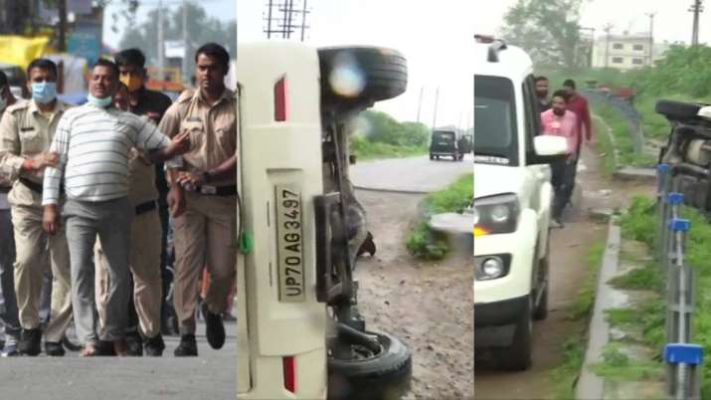
Breaking news Vikas Dubey killed in encounter.Doctors in Kanpur Hallet hospital confirmed death.

Vikas Dubey, dreaded gangster, wanted in killing of 8 policemen, has been killed in an encounter.

Vikas Dubey, dreaded gangster and prime accused in the killing of 8 police personnel in the Kanpur encounter case, has been killed in an encounter after UP STF’s car carrying the criminal overturned when it was returning from Madhya Pradesh’s Ujjain to Kanpur today amid heavy rainfall.

The incident was reported after Uttar Pradesh police entered the state limits with gangster Vikas Dubey. Doctors in the hospital where Vikas Dubey was rushed after he got injured have pronounced him dead. Meanwhile, information on the injured police personnel and other details are still awaited.

He was brought to Kanpur’s Hallet hospital with bullet wounds. Doctors pronounced him dead.
Police say Vikas Dubey tried to escape after the UP STF car carrying him overturned.
Vikas Dubey attempted to flee by snatching pistol of the injured policemen after car overturned.
Police said that they tried to stop him and surrender, But he fired at the policemen. Vikas was injured in retaliatory firing by police. He was later taken to the hospital, SP Kanpur West said.

Why are numbers banned?

Bans, they are measures taken by the government to control whatever they feel is threatening to their rule or to the general populace. They say the pen is mightier than the sword, and authorities have often agreed. From outlawed religious tracts and revolutionary manifestos to censored and burned books, we know the potential power of words to overturn the social order. But as strange as it may seem, some numbers have also been considered dangerous enough to ban. Our distant ancestors long counted objects using simple tally marks. But as they developed agriculture and began living together in larger groups this was no longer enough. As numbers grew more complex, people began not just using them, but thinking about what they are and how they work.

By 600 B.C.E ancient Greece, the study of numbers was well developed. Pythagoras, one of the most famous mathematicians and his school of followers found numerical patterns in shapes, music and stars. For them math held the deepest secrets of the universe. But one Pythagorean named Hippasus discovered something disturbing. Some quantities like the diagonal of a square with sides of length one each couldn’t be expressed by any combination of whole numbers or fractions, no matter how small. These numbers which we call irrational numbers, were seen as a threat to the Pythagorean notion of a perfect universe. They imagined a reality that could be described with rational, numerical patterns. Historians write that Hippasus was exiled for publicizing his findings while legends of the Pythagorean era claim he was drowned by the god themselves as punishment for his blasphemous findings. While irrational numbers upset philosophers, later mathematical inventions would draw attention from political and religious authorities as well. In the middle ages, while Europe was still using roman numerals other cultures had developed positional systems that included a symbol for zero. When Arab merchants brought this system to Italy, its advantages for merchants and traders was clear. However, the authorities were wary as Hindu- Arabic numerals were quite easy to forge or alter, especially since they were less familiar to customers than to merchants. And since the concept of zero opened the path to negative numbers and the recording of debt at a time when money-lending was regarded with suspicion. In 13th century, Florence totally banned the usage of Hindu- Arabic numerals for record keeping. Even though they were immensely useful, controversies regarding zero and negative numbers continued for a long time. Negative numbers were dismissed as absurd and prominent mathematicians like Gerolamo Cardano avoided using zero despite the easier route it provided to solve cubic and quartic equations. Even today it is illegal to use various numbers for a plethora of reasons. Governments usually ban the usage f numbers which have symbolic meanings or connections to opposing political figures and parties. Some numbers are banned because of the sensitive information they carry. These days any image, file, video or executable program can be translated into a string of numbers. So, this means protected materials such as copyrights and state secrets can also be represented as numbers, so possessing or publishing these are considered a criminal offense.

Thus, in a world where calculations and algorithms, shape more and more of our lives, the mathematicians pen grows stronger each passing day.   

Nepotism Is Not Just A Bollywood Problem

You see nepotism in Bollywood is out there on display for everyone to see. But the real nepotism that has caused so much stagnation, corruption and oppression in our country is far less obvious but just as pervasive.

We are currently living in a country where much is made of the fact that our Prime Minister once worked as a tea seller. For better or worse, he is a self-made man. Without a family per se, he’s now managed to assemble, for him, the best team possible. Without a place for nepotism, actual accomplishment and loyalty to his beliefs are prevailing. Whether or not one is aligned with what the PM and his team stand for, it can’t be refuted that his legacy is more along the lines of Ms. Ranaut rather than, say, Rahul Gandhi.

In India politics is not a vocation, but a family business. If daddy is an MP, then his darling son or daughter regard the constituency as their heirloom.

Nepotism is, to a large extent, inevitable in a society where your family name is all-important as an entry into society, to jobs, to favours, to contracts and everything else. In that sense, India is still feudal. Both the corporate world and Bollywood are full of children who are given opportunities because of their parents. This is a country where you rarely hear the word ”self-made” prefixing any famous name. 

Nor do the ”nepotees” feel the slightest embarrassment. Where is their discomfiture at hanging on to daddy’s coat tails? Where is the self-respect that comes from proving yourself the hard way in your own field?

‘Cold and ruthless’, ‘cruel’, ‘an outsider will always feel like an outsider’, ‘shallow industry’ and ‘a hypocritical society.’

No, these aren’t the words we are using for Bollywood, these are the words used by the very members of the film fraternity in the past few days. Nepotism is a curse for our nation,because we have so many people extremely talented,well educated and with skills but they don’t get the chance to enter their particular fields. The only reason being is,some of the biased people are there sitting on the higher authority and they choose one of their relatives for any vacancy. Be it in POLITICS or BOLLYWOOD or anything else like this,this game of nepotism is seen almost everywhere.

Those who oppose against nepotism will be first to support it if given opportunity. Caste system is nepotism where a particular community reserves right for particular profession. Pujari son will be pujari, rajpoot son will be rajpoot, king son will be king and a dhobi son have to be a dhobi. So those who promote caste system have no right to speak against nepotism. 

so nepotism is everywhere not in bollywood but in politics in family etc.

Travelling and tourism

Karina sharma

Tourism is the act of going for joy and roaming particularly in an unknown destination. Moreover, it is a sorted out adventure amid which a few spots are visited. However, tourism is not just confined to humans traveling to new locations, but the travel industry is one of the significant wellsprings of a national financial system. Tourism isn’t just a business for giving joy to and rest. It has now developed into a major industry. Consistently, a great many non-natives come to India because of which a country wins a ton of remote trade. The travel Industry makes employment increment and contributes towards enhancing the economy. Tourism has caused the development of travel organizations and tourism administrators, the foundation of lodgings and guest houses, hotels and eating houses, the creation of lavish vehicles, and presentation of super-extravagance trains and aviation routes. It has additionally energized the improvement and modernization in a country.

Tourism as an industry has been travelling with the wild pace of technological advancements and aboard are people from different places and cultures interacting with increasing ease….since, the globe had been shrunk into a village.
Unlike our predecessors, we can affordably and in a shorter time travel across the world in large numbers comparatively safe. Tourism being one of the biggest and fastest growing industries globally, its benefits and the challenges, keenly observed by governments affects the economic, socio-cultural, environmental and educational resources of nations.
The positive effects of tourism on a country’s economy include the growth and development of various industries directly linked with a healthy tourism industry, such as transportation, accommodation, wildlife, arts and entertainment. This brings about the creation of new jobs and revenue generated from foreign exchange, investments and payments of goods and services provided. Though improvements in the standard of living of locals in heavily visited tourist destinations is usually little or non-existent, inflation of the prices of basic commodities, due to visiting tourists, is a constant feature of these areas.
The nature of the world economy dictates that it’s mostly people from developed nations who travel as tourist to the developing ones, much more than do people from developing nations visit as tourist the developed ones. This results in a downward stream of cultural influences that in cases have proven to be detrimental, as they were not in cohesion with the environment, economy and culture of these hosts, who cannot in that same capacity exchange influences. For example, it is common knowledge that most tourist destinations are plagued with prostitution; this has had dire consequences for the culture, economy and health of these tourist coveted nations, but is reported to be a major boost for tourism.
The environment can be greatly affected by tourism in cases where the attraction is a vista of nature’s beauty, visits of people in large numbers could mean huge amounts of treading and pollution of materials such as plastic waste, bottles, which in the long run could be disruptive to the habitats of both faunal and floral life. Assessments into the capacity of people an area can safely bear environmentally, security and facility-wise are important in the protection and preservation of these vistas beaming with nature’s beauty. The responsibility falls on hosts, who must make it a point to inform and educate visitors on acceptable behaviours and dangers posed by going against the advised codes of conduct, such as disposing waste haphazardly.
In the quest to provide facilities for tourists the environment has been affected in other ways, large hotels and other facilities for tourists and likes consume large amounts of power in their quest to provide a long list of patrons with all the ‘hip’ electronic comforts.
The tourist themselves face several difficulties in their quest for, journey and stay in these foreign lands, such as the sometimes tiring search for visas and the duration of stay permitted by the host country. Another is security; most places because of frequent tourist visits have become targets for criminal activities such as kidnapping and terrorism.
Nonetheless in true nature of the human spirit tourism continues to be one of the fastest growing industries worldwide……..besides, what would adventure be?

Tourism is very important source of the economy in the country. However it needs investment first in order to make the tourist destinations clean, more attractive, safe, and secure for the tourists safety purpose. If we analyze the level of tourism in the country the question arises that what we do to promote tourism in our country. Do we maintain proper cleanliness and hygiene in all the villages, towns and cities of the country. It needs proper cleanliness, safety and maintenance of the tourists destinations in the country in order to promote the tourism. Only being full of historical monuments, heritages, etc do not attract tourists. Tourists see cleanliness, safety and security of the tourists destinations of any country.

Our country is worldwide famous for having attractive tourist destinations. People from all over the world come every year in a huge crowd to see the various sight-seeings. There are many big cities in India having very attractive world-class skyscrapers. Our country is the home to beautiful Taj Mahal, excellent gateway to the Himalayas, Royal Bengal Tiger, Lotus Temple, Kashi Vishwanath Temple, India Gate, Red Fort of Delhi, Fatehpur Sikri, Agra Fort, Humayun’s Tomb, Qutb Minar, Harmandir Sahib, Amer Fort, Akshardham, Hawa Mahal, City Palace Jaipur, Gateway of India, Mysore Palace, Meenakshi Amman Temple, Golkonda, Jama Masjid Delhi, Lodi Gardens, Siddhivinayak Temple Mumbai, Mahabodhi Temple, Gurudwara Bangla Sahib, Charminar, Lake Palace, Jantar Mantar, City Palace Udaipur, Dal Lake, Falaknuma Palace, Venkateswara Temple Tirumala, and many more.

Other tourist destinations in India are Srinagar, Shimla, Goa, Coorg, Ooty, Darjeeling, Varanasi, Mahabaleshwar, Pune, Gangtok, Imphal, Kajiranga, Kashmir, Kanyakumari, Kerala, Ajanta Ellora, Leh/Ladakh, etc. However, there are lot to be done in order to improve the prospects of tourism in India to attract more tourists to give foreign tourists a memorable experience like never before anywhere else in the world.

People from upper class Indian society generally like to spend holidays in London, New York or other swish countries however people from middle class society always enjoy tourists destinations in their own country. Our country is highly targeted as the tourist place by the people all over the world in spite of many problems that’s why travel and tourism in India needs to be promoted more.

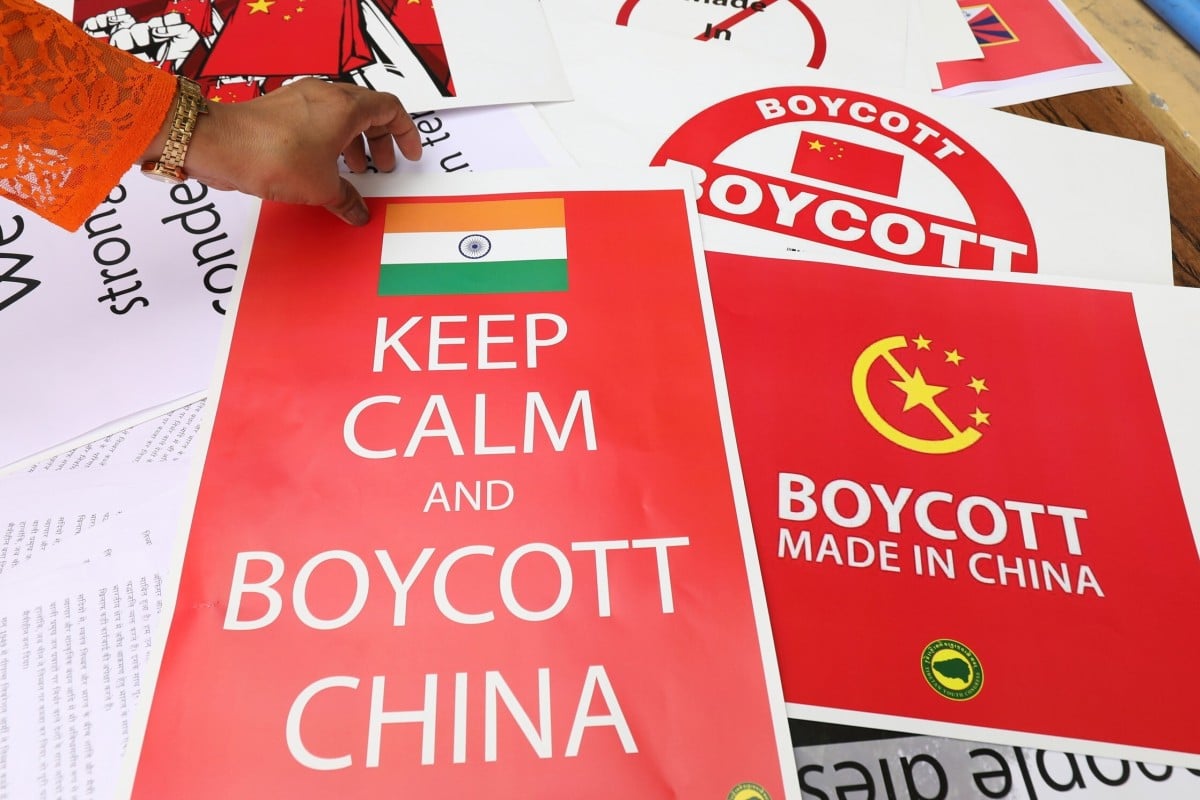
#BoycottChina, A Tough Terrain to India’s Self Dependency

Posters of Boycott China Campaign

What happened at Galwan valley of Indian Ladakh had raised tensions between India and China to all time high. The clash between Indian and Chinese forces led to nationwide outburst against China.

Fuelling this, there had been a sudden disagreement for buying any Chinese product or services. This is to make sure that Chinese economy doesn’t receive a single penny from India and its citizens, making it obvious after China bearing malice towards its neighbours, specifically India. The initiative has greatly boosted with GOI’s (Government of India) decision of banning 59 Chinese applications in India and by increasing the import taxes on Chinese goods or services. The Indian armed forces had already been deployed at disputed regions of border and are ready for any surprise from counter side.

With Governments and Armed forces holding tight on attempts to self-reliant India, the dice of responsibility falls our side too. By us I mean, all the common or less common citizens of India whose decision of just boycotting Chinese products could shatter its trade. Already many huge economies of the world have turned against China, amid Corona virus outbreak and deaths of 600,000 (still rising) innocent people.

Boycotting Chinese items won’t be that easy as it sounds, one has to spend a little more of their money while switching to non-chinese brands, as the only PSP (product selling protocol) of Chinese products is its cheap pricing. This pricing gets balanced with its poor quality and doesn’t last any longer. Yet, Chinese products have kept its dominance in certain sectors of Indian market.

The mobile phone sector

India had imported mobile phones worth $11.3 billion from China in 2016-17, and that was about 68 per cent of all mobile phones (both push-button feature phones and smart devices) imports into the nation that year. In 2017-18, even as the duties were imposed, the value of mobile phone imports from China climbed to $15.6 billion, or 71 per cent of the mobile phones imported. As the tax measure began to hurt and local manufacturing of mobile phones gathered momentum, imports of these devices from China halved to $7.4 billion and about 41 per cent of all mobile phone imports in 2018-19. Imports of phones, by value, from China declined further in 2019-20 but not the share, which remains at 40 per cent. If we just speak of alternatives, we have few options of some Korean, Taiwanese, American and just few Indian tech companies. These options are:

  • LG
  • Samsung
  • Nokia
  • Apple
  • Asus

The drop in electronic imports gradually implemented by the GOI in recent years but this won’t be enough and buyers need to push their expenses to continue supporting the campaign of #boycottchina.

Other imports from China include toys, gift items, fabrics and garments, and thousands of small value items that are popular with consumers. CAIT (Confederation of All India Traders) estimates that there are some 3,000 items that can be easily substituted with India-made products in the first phase of the boycott of Chinese goods campaign. The list of China-made items popular with consumers includes fairy lights with tiny LED bulbs that are used to decorate homes during festivals, idols of deities, home decors, kite strings and even incense sticks (agarbattis). It is estimated that about 80 per cent of the incense sticks sold in India are imported from China.

For all of it to happen, for this campaign to succeed we all should hold our horses and should maintain an adequate transition of market into indigenous domain. This would be the only secure and once for all time solution to problems India facing with the dragon as war could never be a solution. It would just tear up economies at both ends and loss of Brave Indian soldiers shouldn’t happen any further.

Plastic Ban

Waste plastic bags are polluting the land and water immensely. Plastic bags have become a threat to the life of animals living on earth as well as in water. Chemicals released by waste plastic bags enter the soil and make it infertile. … Plastic bags lead to the drainage problem.
Plastic bags are crude oil products .They are derived from petroleum and natural gas .Since ,crude oil is a non renewable source of energy using polhythin bags mens we are washing oil .One of the maindrawbacks of the bag is that the are non-biodegrable . It takes eons to breakdown plastic.Plastic is also responsible for global warming.The burning of plastic bags release carbon monoxide which adversely affects the ozone layer of the earth.The thinning of this layer has been a major cause of global warming . Recycling of plastic bags is very long process and not vaiable option.
many states like Delhi and etc ,have imposed a ban on plastic bags .While we cannot think of totally aliminating its use but we can significiantly reduce using them.We can swith over to recycled paper instead.As plastic bags choke drains and cow stomach .Every one should take resonsible ,in making this world a more beautiful and greener place to live in …..
Poly bags appeared for the first time in the 1970s in this country but soon they became very popular. Today, they seem to have become an integral part of our life. They are very convenient indeed. We go to the market without a care in the world. All our shopping go into our poly-bags-so light and so strong. However, this is high time, we looked to the other aspects of poly bags. They harm our environment greatly. If we throw them on the road, they choke the drains. Worse, a cow or some other animal may eat them. In that case, these poly bags ultimately kill the cattle. They are banned by law in many cities. Yet, the people keep on using them. They should be now banned in the whole country and this ban should be strictly implemented.

Plastic bags have a wide range of usability in our day to day lives. For instance, we use them to carry our foodstuffs from groceries shops, we also use them as gloves to do dirty chores or as knee pads while gardening. We also cover our plants with plastic bags to prevent them from frosting at night.

Basically, plastic bags can be improvised to do so many things and are therefore very handy at home. The reason why plastic bags are so popular is because they are cheaper than eco-friendly bags. Furthermore, plastic bags are waterproof and very convenient during rainy days. Whilst, there are many advantages we can accrue from using plastic bags, the reality of the matter is that they pose serious threats to us and the environment.
One of the reasons why plastic bags are bad for the environment is that they practically take forever to decay. Plastics have a very low rate of degradation that it may take thousands of years for a small piece to disintegrate. It goes without saying therefore that since the first modern plastic bags were designed in 1965 by the Swedish company, Celloplast, virtually all the plastic bags are still in existence today. Manufactured from polyethylene- a high density plastic, these bags can withstand all weather conditions.

Secondly, they contribute to climate change. All the polymers and compounds used in the creation of plastic bags such as polypropylene and polyethylene are derived from petroleum and natural gas. The process of extracting fossil fuel and then processing it to produce plastics releases greenhouse gases into the atmosphere. This has resulted to the degradation of the ozone layer, which has subsequently led to global warming. It is also not economically viable to use nonrenewable resources like petroleum and natural gas to produce a commodity that has a very short lifespan.

Moreover, plastic bags pollute the environment. They pollute our lands making them look ugly and untidy. And since they are very light, they are easily carried by wind and water to various places on earth. They litter our pathways, fences, houses and trees and make them look ugly. They also pollute water bodies. All the plastic bags eventually end up in the oceans and other water bodies. Look at the Great Pacific Garbage Patch, which is located between Hawaii and California.

The place has the world’s largest accumulation of plastic waste on a water body. With so much plastic floating on water, the marine life is put into too much risk. The situation is even worse if the plastic waste finds its way to the bottom of the ocean, where many sea creatures live and lay eggs. Apart from eating the plastic bags, the sea creatures may also get entangled or trapped by them.

Marine animals often mistake plastic pieces and bags for food. For instance, sea turtles cannot differentiate plastic bags from jelly fish and they therefore consume them. Since they are not biologically designed to digest plastics, the consumed plastic gets trapped into their digestive tracts. The marine animals eventually die from suffocation, infections or inability to feed and excrete waste.

Creatures that prey on fish, such as humans, birds, terrestrial animals and other marine animals also get sucked into the equation through the ocean food web when they feed on contaminated fish meat. When humans consume contaminated fish, they are at a higher risk of getting serious health complications. For example, if they were to ingest PAHs (polycyclic aromatic hydrocarbons) and PCBs (polychlorinated biphenyl), then they have a higher chance of getting cancer.

Plastics have no better method of disposal. Even if they were to be burned, then the people within the vicinity will be exposed to harmful plastic fumes. For instance, when polyvinyl chloride (PVC) plastics are burned they produce dioxins. These chemicals are very harmful to humans. Now, imagine the risks that people would be exposed to if a building full of PVCs would go up in flames. Furthermore, a lot of energy is used during their production processes. The amount of energy used to manufacture nine plastic bags is approximated to be the same as energy used to drive a vehicle for at least half a mile.

It is also worth noting that we do not receive them for free at our retail stores, we pay for them one way or another. Their costs are usually hidden in the prices of commodities we buy. Obviously most people are familiar with that. However, the catch is that our taxpayer money ends up being used to clean up plastic bag wastes. Imagine the cost of a plastic bag ranges between 3 to 5 cents, while the cost of cleaning it up is almost 17 cents.

This is a clear case of cheap is expensive. Apart from that, they also affect our infrastructure. Plastic bags penetrate through drainage and sewer systems and clog them. This results to water blockages, burst pipes and water overflow. The situation is dire during rainy seasons, which in most cases results to flooding.

Furthermore, it is not possible to recycle them. The waste is just too much to be contained. And if we decided to recycle them, then people will be encouraged to continue using them. As it stands now, plastic bags are not the only ones that we should be worried about. There are other forms of plastics that have not yet been banned, but still pose the same risks as plastic bags.

The main issue with plastic bags is that they are very light and can fit anywhere, which means that they spread much faster than their heavier counterparts. Even if recycling was an option, there are no facilities on this earth that can keep up with the rate at which these bags are being made.

Plastic ban is a move towards the right direction. Most of the biggest economies on earth, such as China, USA and European nations have banned plastic bags. The nations that have not done it yet should also follow suit. Some of the concerns raised are that people will lose their sources of livelihood and that plastic bags are cheaper to produce. While these notions are far from false, the fact remains that plastic bags will destroy our environment and everything in it if we do not act now. When plastic bags are banned everywhere, innovators will come up with other alternatives. They will create companies and people will get employment as a result.

When we consider production costs, the plastic bag is cheaper and easier to produce than eco-friendly bags. However, plastic bags are not durable and undergo wear and tear very easily. In fact, we quickly discard them into our garbage bins as soon as we reach home. Eco-friendly bags, such as cotton bags are actually very durable and can washed and reused over and over again. They are actually cheaper in the long run, because they do not require government intervention to clear them from the streets. They easily decay and disappear from the face of the earth. It is actually absurd to spend money to produce something that will cost you more than three times its value to try and get rid of it.

Banning is probably the surest way of securing the future for the coming generations. All nations should have one voice and agree unanimously to stop plastic bag production. It is worth noting that plastic bags from one nation are enough to pollute the whole world. So, if the developed nations have banned plastic bags, but developing nations are still producing them, then that changes nothing. Still all the toxic waste will find its way to the oceans and eventually, to the Great Pacific Garbage Patch.

Educating or sensitizing people about the hazards of plastic will not help deal with the problem in developing nations. They will most definitely use them still. And it is not an issue of ignorance or arrogance, because they can see and smell the garbage heaps next to their homesteads. The issue is cost. Most people in developed nations live below poverty line. They cannot afford to spend any more money on environmental friendly bags.

So, the best approach is banning. It should be illegal to own or even carry plastic bags. Heavy penalties should be imposed on anyone found with plastic bags. Even though they will still exist in the black markets, they should be so expensive to the point that people will prefer eco-friendly bags to plastic bags. The governments should also step ahead and offer subsidies and incentives to companies creating eco-friendly bags.

The governments should also fund extensive experimentation and researches on better alternatives to all plastic forms and not just plastic bags to end the manufacture of all plastics completely. There should also be extensive researches on the best method of dealing with the heaps of plastic wastes piled all over the world. We cannot just assume that there is no elephant in the room. The waste has to be dealt with pronto or its toxicity will become airborne. We need to get rid of all plastic wastes forever.