India aims for 100 million tonnes (MT) coal gasification by 2030 with investments worth over Rs. 4 lakh crores, said Shri Pralhad Joshi, Union Minister of Coal and Mines. Addressing a webinar on Coal Gasification and Liquefaction, Shri Joshi said that Coal Gasification and Liquefaction is no more an aspiration, but a requirement. He added that for encouraging use of clean sources of fuel, government has provided for a concession of 20% on revenue share of coal used for gasification. He emphasized that this will boost production of synthetic natural gas, energy fuel, urea for fertilisers and production of other chemicals. The webinar was organised by Ministry of Coal (MoC) in New Delhi for discussing the road map for achieving the target. The webinar was attended by around 700 delegates from Government of India, CIL and the coal sector.
Reiterating on government’s commitments for green initiatives in the coal sector, Shri Joshi said that Coal Gasification and Liquefaction are well in the government’s agenda and various actions have been taken for development of Surface Coal Gasification in India. A Steering Committee has been constituted in this regard under the chairmanship of Dr. V.K. Saraswat, Member, NITI Aayog comprising of members from the Ministry of Coal. CIL has also planned to set up at least 3 gasification plants (besides Dankuni) on BOO basis through global tendering and has signed an MOU with GAIL for marketing synthetic natural gas.
Shri Joshi urged the attendees of the session to explore more about technologies & other aspects in Coal Gasification sector, in line with our country’s SWOT analysis. He added that this will help in harnessing nation’s reserves for maximum utilisation while heading on the path to sustainability, as per global standards.
Dr. V K Saraswat, Member NITI Aayog and Shri Anil Kumar Jain, Secretary, Coal also addressed the webinar. Shri Binay Dayal, DT, CIL; Dr. P K Singh, Director, CIMFR; Shri Ashutosh Prasad, GM, PDIL; Shri Naveen Jindal, Chairman, JSPL; Shri Rajesh Jha, CEO, Mundra Synergy; Dr. V R Sharma, MD, JSPL; Dr. Dev Gavaskar, Partner, True North Ventures; Mr. Bob Carter, Group VP, Air Products also shared their views and valuable information.
The Government of India announces with profound sorrow the death of ShriPranab Mukherjee, former President of India at Army Research & Referral Hospital, New Delhi on 31stAugust, 2020.
As a mark of respect to the departed dignitary, seven days State Mourning will be observed throughout India from 31.08.2020 to 06.09.2020, both days inclusive. During the period of State Mourning the National Flag will fly at halfmaston all buildings throughout India, where it is flown regularly and there will be no official entertainment.
The date, time and venue of the State Funeral will be intimated later.
Union Home Minister, Shri Amit Shah has mourned the passing away of former President of India, Bharat Ratna Shri Pranab Mukherjee. In a tweet, Shri Amit Shah said, “Deeply anguished on the passing away of former President of India, Bharat Ratna Shri Pranab Mukherjee ji.”
The Union Home Minister said, “He was a vastly experienced leader who served the nation with utmost devotion. Pranab da’s distinguished career is a matter of great pride for the entire country.”
Shri Amit Shah said, “Pranab Da’s life will always be cherished for his impeccable service and indelible contribution to our motherland. His demise has left a huge void in Indian polity. My sincerest condolences are with his family and followers on this irreparable loss. Om Shanti Shanti Shanti.”
CSIR-CMERI has developed the World’s Largest Solar Tree, which is installed at CSIR-CMERI Residential Colony, Durgapur. Prof.(Dr.) Harish Hirani, Director, CSIR-CMERI, while elaborating about the technology stated that, “The installed capacity of the Solar Tree is above 11.5 kWp. It has the annual capacity to generate 12,000-14,000 units of Clean and Green Power”.
The Solar Tree has been designed in a manner to ensure maximum exposure of each Solar PV Panel to Sunlight and also creation of the least amount of shadow area beneath. There are a total of 35 Solar PV Panels in each tree with a capacity of 330 wp each. The inclination of the arms holding the Solar PV Panels are flexible and can be adjusted as per requirement, this feature is not available in Roof-Mounted Solar facilities. The energy generation data can be monitored either real-time or on daily basis.
Prof.(Dr.) Harish Hirani explained, “The CSIR-CMERI developed Solar Tree besides being the World’s Largest Solar Tree also has certain customizable features for application at diverse sites. The Solar Trees were designed in a manner to ensure minimum Shadow Area, thus potentially making these Solar Trees available for widespread usage in Agricultural activities such as High Capacity Pumps, e-Tractors and e-Power Tillers.
TheseSolar Trees can be aligned with Agriculture for substituting price-volatile fossil fuels. Each Solar Tree has the potential to save 10-12 tons of CO2 emissions being released into the atmosphere as Greenhouse Gases when compared with fossil fuel fired energy generation.Besides, the surplus generated power can be fed into an Energy Grid.
This Agricultural Model can provide a consistent economic return and help the farmers counter the effects of the uncertain variations in Agriculture related activities, thus, making farming an Economic and Energy Sustainable practice.”
Each Solar Tree will cost Rs 7.5 lakhs and the interested MSMEs can align their Business Model with the Pradhan Mantri Kisan Urja Suraksha evem Utthan Mahabhiyan (PM KUSUM) Scheme for farmers, for developing a Renewable Energy based Energy Grid.
The solar tree has the capability to incorporate IOT based features, i.e. round-the-clock CCTV surveillance in agricultural fields, real-time humidity, wind speed, rainfall prediction and soil analytics sensors. The CSIR-CMERI developed solar powered e-Suvidha Kiosks may also be connected to the Solar Trees for real-time access to the vast majority of agricultural database as well as to the eNAM i.e. National Agricultural MarketPlace for instant and real-time access to an unified online market.This Solar Tree is a Quantum Leap towards making an Energy Reliant and Carbon Negative India.
Union Minister for Information and Broadcasting Shri Prakash Javadekar has mourned the passing away of former President of India Shri Pranab Mukherjee.
In his condolence message the Minister said “India has lost one of its great sons, Bharat Ratna Shri Pranab Mukherjee. Shri Mukherjee was not only an intellectual but a decision maker, a strategist and the backbone of Parliament for many years. He has left his mark on governance and administration. As President of India he has performed with clear understanding and with dignity.”
Shri Javadekar reminisced the time he sought permission from Shri Mukherjee for publishing his speeches, which the former President was kind enough to permit.
The Government of India has announced the Sale (Re-issue) of (i) ‘5.22 percent Government Stock, 2025’ for a notified amount of Rs 12,000 crore (nominal) through price based auction, (ii) ‘6.19 percent Government Stock, 2034’ for a notified amount of Rs 11,000 crore (nominal) through price based auction, and (iii) ‘7.16 per cent Government Stock, 2050’ for a notified amount of Rs 7,000 crore (nominal) through price based auction. GoI will have the option to retain additional subscription up to Rs2,000 crore against each of the above securities. The auctions will be conducted by the Reserve Bank of India, Mumbai Office, Fort, Mumbai on September 04, 2020 (Friday) using multiple price method.
Up to 5% of the notified amount of the sale of the stockswill be allotted to eligible individuals and Institutions as per the Scheme for Non-Competitive Bidding Facility in the Auction of Government Securities.
Both competitive and non-competitive bids for the auction should be submitted in electronic format on the Reserve Bank of India Core Banking Solution (E-Kuber) system on September 04, 2020. The non-competitive bids should be submitted between 10.30 a.m. and 11.00 a.m.and the competitive bids should be submitted between 10.30 a.m. and 11.30 a.m.
The result of the auctions will be announced on September 04, 2020 (Friday) and payment by successful bidders will be on September 07, 2020 (Monday).
The Stocks will be eligible for “When Issued” trading in accordance with the guidelines on ‘When Issued transactions in Central Government Securities’ issued by the Reserve Bank of India vide circular No. RBI/2018-19/25 dated July 24, 2018 as amended from time to time.
Raksha Mantri Shri Rajnath Singh has expressed his deep anguish over the demise of former president of India, Shri Pranab Mukhejee. In a Twitter message Shri Singh said, “He was widely respected by the people across all sections of society. His demise is a personal loss. He had tremendous knowledge of India’s history, diplomacy, public policy and also defence.” Remembering his persona, Shri Singh said “ Pranabda epitomised simplicity, honesty and strength of character. He served our country with diligence and dedication. His contribution to public life was invaluable.”
Raksha Mantri expressed deepest condolences to his bereaved family.
The former President of India Shri Pranab Mukherjee, breathed his last today, the 31st August in New Delhi. He has been senior minister in various central government ministries, including the Ministry of Defence during 2004-06.
Corona virus is a family of viruses that cause illness such as respiratory diseases or gastrointestinal diseases. A novel coronavirus (nCoV) is a new strain that has not been identified in humans previously. On 31 December 2019, a cluster of cases of pneumonia of unknown cause, in the city of Wuhan, Hubei province in China, was reported to the World Health Organisation. This novel coronavirus was named Coronavirus Disease 2019 (COVID-19) by WHO in February 2020. The virus is referred to as SARS-CoV-2 and the associated disease is COVID-19. On 30 January, India reported its first case of COVID-19 in Kerala, which rose to three cases by 3 February; all were students who had returned from Wuhan, China. No significant rise in cases was seen in the rest of February. On 4 March 22 new cases came to light, including those of an Italian tourist group with 14 infected members.
To combat with COVID-19, Indian Government extended the date of lockdown to 3rd May, 2020.Recently an industry survey that is jointly conducted by industry body FICCI and tax consultancy Dhruva advisors and took responses from about 380 companies across the sectors. It is said that businesses are grappling with “tremendous uncertainty” about their future. According to Dun & Bradstreet, COVID-19 no doubt disrupted human lives and global supply chain but the pandemic is a severe demand shock which has offset the green shoots of recovery of the Indian economy that was visible towards the end of 2019 and early 2020. The revised Gross Domestic Product (GDP) estimates for India downwards by 0.2 percentage points for the fiscal year 2020 to 4.8 per cent and by 0.5 per cent for the fiscal year 2021 to 6 per cent. Further, it is stated that the extent of the actual impact will depend upon the severity and duration of the outbreak.
There are three major channels of impact for Indian businesses according to the report namely linkages, supply chain and macroeconomic factors. The data of the Dun & Bradstreet shows that at least 6,606 Indian entities have legal linkages with companies in countries with a large number of confirmed COVID-19 cases. And business activity in the foreign markets is slow which implies a negative impact on the top line of these companies. Sectors that would be much affected include logistics, auto, tourism, metals, drugs, pharmaceuticals, electronic goods, MSMEs and retail among others. KPMG India Chairman and CEO Arun M Kumar said: “Apart from providing robust safety nets for the vulnerable, a focus on ensuring job continuity and job creation will be imperative”. “And there is urgent need to mobilise resources to stimulate the economy for increased demand and employment”. According to the KPMG report “It is expected that the course of economic recovery in India will be smoother and faster than that of many other advanced countries”. Impact on Indian industry:
Chemical Industry: Some chemical plants have been shut down in China. So there will be restrictions on shipments/logistics. It was found that 20% of the production has been impacted due to the disruption in raw material supply. China is a major supplier of Indigo that is required for denim. Business in India is likely to get affected so people securing their supplies. However, it is an opportunity. US and EU will try and diversify their markets. Some of the business can be diverted to India which can also be taken as an advantage.
Shipping Industry: Coronavirus outbreak has impacted the business of cargo movement service providers. As per the sources, per day per vessel has declined by more than 75-80% in dry bulk trade.
Auto Industry: Its impact on Indian companies will vary and depend upon the extent of the business with China. China’s business no doubt is affected. However, current levels of the inventory seem to be sufficient for the Indian industry. If the shutdown in China continues then it is expected to result in an 8-10% contraction of Indian auto manufacturing in 2020.
Pharmaceuticals Industry: Despite being one of the top formulations of drug exporters in the world, the pharma industry of India relies heavily on import as of bulk drugs. Due to the coronavirus outbreak, it will also be impacted.
Textiles Industry: Due to coronavirus outbreak, several garments/textile factories in China have halted operations that in turn affecting the exports of fabric, yarn and other raw materials from India.
Solar Power Sector: Indian developers may face some shortfall of raw materials needed in solar panels/cells and limited stocks from China.
Electronics Industry: The major supplier is China in electronics being a final product or raw material used in the electronic industry. India’s electronic industry may face supply disruptions, production, reduction impact on product prices due to heavy dependence on electronics component supply directly or indirectly and local manufacturing.
IT Industry: The New Year holidays in China has been extended due to coronavirus outbreak that adversely impacted the revenue and growth of Indian IT companies.
Tourism and Aviation: Due to the coronavirus outbreak, the inflow of tourists from China and from other East Asian regions to India will lose that will impact the tourism sector and revenue.
RBI announced further measures for dealing with the COVID-19.
Extension of realisation period of export proceeds Presently value of the goods or software exports made by the exporters is required to be realized fully and repatriated to the country within a period of 9 months from the date of exports. In view of the disruption caused by the COVID-19 pandemic, the time period for realization and repatriation of export proceeds for exports made up to or on July 31, 2020, has been extended to 15 months from the date of export. The measure will enable the exporters to realise their receipts, especially from COVID-19 affected countries within the extended period and also provide greater flexibility to the exporters to negotiate future export contracts with buyers abroad.
Review of Limits of Way and Means Advances of States/UTs Reserve Bank had constituted an Advisory Committee (Chairman: Shri Sudhir Shrivastava) to review the Ways and Means limits for State Governments and Union Territories (UTs). Pending submission of the final recommendations by the Committee, it has been decided to increase WMA limit by 30 percent from the existing limit for all States/UTs to enable the State Governments to tide over the situation arising from the outbreak of the COVID-19 pandemic. The revised limits will come into force with effect from April 1, 2020 and will be valid till September 30, 2020.
Implementation of countercyclical capital buffer The framework on countercyclical capital buffer (CCyB) was put in place by the Reserve Bank in terms of guidelines issues on 5th February 2015. Wherein it was advised that the CCyB would be activated as and when the circumstances warranted, and that the decision would normally be pre-announced. The framework envisages the credit-to-GDP gap as the main indicator, which is used in conjunction with other supplementary indicators. Based on the review and empirical analysis of CCyB indicators, it has been decided that it is not necessary to activate CCyB for a period of one year or earlier, as may be necessary. FDI policies changes due to Covid-19: On 18 April 2020, the government of India passed an order that would protect Indian companies from FDI during the pandemic. All countries sharing a land border with India would now face scrutiny from the Ministry of Commerce and Industry before any FDIs.
• Infrastructure 10% of India’s GDP is based on construction activity. Indian government has invested $1 trillion on infrastructure from 2012–2017. 40% of this $1 trillion had to be funded by private sector. 100% FDI under automatic route is permitted in construction sector for cities and townships. • Automotive FDI in automotive sector was increased by 89% from April 2014 to February 2015. India is 7th largest producer of vehicles in the world with 25.5 million vehicles annually. 100% FDI is permitted in this sector via automatic route. Automobiles shares 7% of the India’s GDP. • Pharmaceuticals Indian pharmaceutical market is 3rd largest in terms of volume and 13th largest in terms of value. Indian pharmacy industry is expected to grow at 20% compound annual growth rate from 2015 to 2020. 74% FDI is permitted in this sector. • Service FDI in service sector was increased to 46% in 2014–15. It is US $1.88 billion in 2017. Service sector includes banking, insurance, outsourcing, research & development, courier and technology testing. FDI limit in insurance sector was raised from 26% to 49% in 2014.[ • Railways 100% FDI is allowed under automatic route in most of areas of railway, other than the operations, like High speed train, railway electrification, passenger terminal, and mass rapid transport systems etc. Mumbai-Ahemdabad high speed corridor project is single largest railway project in India, other being CSTM-Panvel suburban corridor. Foreign investment more than ₹90,000 crore (US$13 billion) is expected in these projects so far. • Chemicals Chemical industry of India earned revenue of $155–160 billion in 2013. 100% FDI is allowed in Chemical sector under automatic route. Except Hydrocyanic acid, Phosgene, Isocyanides and their derivatives, production of all other chemicals is de-licensed in India India’s share in global specialty chemical industry is expected to rise from 2.8% in 2013 to 6–7% in 2023 • Textile Textile is one major contributor to India’s export. Nearly 11% of India’s total export is textile. This sector has attracted about $1647 million from April 2000 to May 2015. 100% FDI is allowed under automatic route. During year 2013–14, FDI in textile sector was increased by 91%. Indian textile industry is expected reach up to $141 billion till 2021.
• Airlines Foreigner investment in a scheduled or regional air transport service or domestic scheduled passenger airline is permitted to 100%.
CII sets up relief pool funds to help MSMEs, society. Apex industry body Confederation of Indian Industries (CII) on Monday said it has set up CII COVID-19 CODE and CII COVID – 19 rehabilitation and relief pool fund to help micro, small and medium enterprises (MSME) and society from the impact of disruptions caused by coronavirus.CII has developed and advocated a COVID-19 CODE to its members to help its workers and society at large from the impact of disruptions caused by COVID-19, said Vikram Kirloskar, President, CII. Uday kotak, the President-Designate of CII, said the COVID Rehabilitation Fund is important for the micro and small industry, which will need special hand holding and help to rehabilitate their business. “The CII COVID Rehabilitation and Relief Fund (CRR) will be an industry led initiative to work with the MSME sector,” Kotak said. Elaborating on some of the major interventions required from RBI, Kotak said that it is important that a rate cut of 50 to 100 basis points is announced immediately. He also called for dollar liquidity swap as India was in a comfortable position as far as its dollar reserves are concerned. CII has called for cash into the bank accounts of all whose earnings are below Rs 5 lakhs. All Indian citizens should be given cash in their accounts through the direct benefit transfer; while those below 25 years can be given a one-time payment of Rs 5000, senior citizens above 65 age can be given Rs 10,000, CII has said. According to CII, there is a need to ensure that all migrant workers continue to stay in the cities where they work and so providing for enablers is crucial. All borrowers should be given a three-month moratorium on all loans and all repayment obligations should be suspended for this period, it said. CII also emphasised that there is an immediate need to facilitate and enable advances for ways and means for industry across sectors and the government could perhaps explore options of a moratorium on interest and principle for the next three months. It also pitched for suspension of Insolvency and Bankruptcy Code (IBC) proceedings while redefining norms for NPAs as several companies will be unable to meet their payment obligations. The CII also recommended for close coordination between regulators like RBI, MCA and SEBI to get effective results and implementation. An outbreak of COVID-19 impacted the whole world and has been felt across industries. The outbreak is declared as a national emergency by the World Health Organisation. In India the three major contributors to GDP namely private consumption, investment and external trade will all get affected. World and Indian economy are attempting to mitigate the health risks of COVID-19 with the economic risks and necessary measures necessary will be taken to improve it. -KUMARI LILI
Back to back bad news for Chennai Super Kings is not a sign of positivity just when 3 weeks are left to kick-start of IPL 2020.
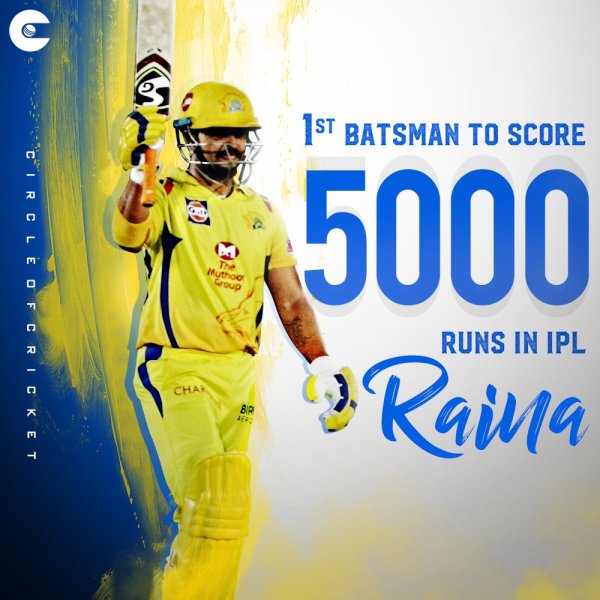
On Friday yellow army got a huge blow when 13 personals from Chennai camp were tested positive for COVID-19. Two of them were the players while others were from staff of Chennai Super kings. Just after 1 day, Mr. IPL- Suresh Raina opted out of IPL 2020. Reports were stating that Raina took this decision due to Personal reasons in which increasing risk of COVID-19 played a role too. Yesterday it was reported that 2 players who were tested positive, one of them is a top order young batsman and another is an Indian seamer.
Firstly, it was said that he takes this step due to security reasons amid COVID-19. Out of other conflicts, few speculations have emerged citing the reasons of Raina missing the IPL2020. One of them is family emergency and other is about Raina being unhappy with his suite in place where CSK is staying for IPL2020 in Dubai. Reports came that veteran was unhappy with management as his room was not having proper balcony. It was rounding that he complained of not getting freshness between the scenario of Bio-secure bubble constructed around the team and management. But nothing is official as no updates been given on the recent activity yet.
Possibility of something unwell in CSK camp took a hype after the recent interview of former BCCI president N Srinivasan by Outlook. CSK owner stated that the sudden step by Raina gave a little shock to team but Ultimately Skipper Dhoni has everything under control.
“Cricketers are like prima donnas … like the temperamental actors of the olden days. Chennai Super Kings have always been like a family and all seniors players have learnt to co-exist,” said Srinivasan.
Srinivasan said the team was quickly trying to get over the Raina episode.
“My thinking is that if you are reluctant or not happy, go back. I don’t force anyone to do anything … sometimes success gets into your head,” Srinivasan said.
‘Dhoni not worried at all’
“I spoke to MS (Dhoni) and he has assured me that even if the numbers go up, there was nothing to worry. He spoke to the players through a zoom call and asked them to remain safe. You really don’t know who a passive carrier is,” Srinivasan said. He also declared it as a golden opportunity for the top order batsman “Rituraj Gaikwad” and he should be back soon after testing negative in some days. “I have got a solid captain. Dhoni is simply unfazed by anything. That is giving everyone in the team a lot of confidence,” Srinivasan said.
Srinivasan believes that Raina will want to come back.
“The season has not begun yet and Raina will certainly realise what he is missing and certainly all the money (a salary of 11 crores per season) he is going to lose,” the CSK boss said.
One of CSK source illustrated that “He is unavailable this season and that is clear from the official statement issued by the CSK. Now there are certain things that have not gone down too well with the top people. It looks highly improbable that someone who has retired and likely won’t play any cricket will come back for CSK. Maybe, he will be back in the auction and someone else might pick him,” the source said while speaking with PTI.
Suresh Raina is only behind the Indian skipper Virat Kohli in terms of Highest run getters in IPL history.32-year-old all-rounder who is also quoted as “chinna thala” by his yellow army fans, retired from international cricket along with his CSK skipper on August 15. Raina is CSK’s highest run-getter with 4527 runs from 164 IPL games. The left-hander has also scored 5368 runs in 193 matches along with 1 century and 25 odd wickets.
Above all the developments unfolding, one thing is pretty clear that it is not good news for CSK and their fans. IPL schedule has not been declared yet and it is not expected to be declared soon recently due to news of players being positive after a week period of Bio-secure bubble. It has also questioned the security and authenticity of Bio secure environment in team hotels at UAE. With a little push in practice sessions for CSK camp, IPL schedule is likely to get affected.
There is still no news on how players will travel and take tests for COVID-19 before each match or how all of this will be arranged in given time span. In UAE 2 teams are staying in Abu Dhabi while some are staying in Dubai only. But the catch here is that protocol for travelling to these cities is not same. Abu Dhabi has strict policy than Dubai of getting at least negative before 48 hours of duration. IPL is still having many things to clear as reports are coming that one of the crew members who was supposed to fly on 30th august has been tested positive. Three crews were about to fly for Broadcasting management handled by Star-sports for setup and quarantine before IPL starts.
BCCI and IPL council has been in dilemma of making a flexible schedule. For all chances like, if one team or bunch of players gets positive, schedule might be designed in a way that gives that team a time of recovery and other teams may play their other games with remaining teams. Although it’s a huge task for management to overcome all such problems and be full proof ready for anything that may fall across in 2 months of IPL season.
Reading can easily become the most favourite recreational activity of children and even adults. One who reads often finds a friend in books. Some of the benefits of reading are- 1)Enriches vocabulary- the habit of reading enriches your vocabulary stock. Reading different books of different genres helps to build up your stock of vocabulary, ultimately helping you write better and become more creative. If you love creative writing, then the habit of reading is a must. 2) Improves concentration – Since reading a book requires a person to be focused on the story to understand it better, the habit of reading, therefore, increases your power of concentrating on one activity for a longer time. It helps in sustaining your focus on the story for a longer time, thus improving your concentration power which would ultimately, help you to remain focused on any work later. 3) A window to experience a new world- reading a variety of books makes you experience a world very different from yours. It thus acts as a window to experience an unseen, unknown world. You get to learn about people, places and events outside your own experience. Reading thus, altogether transports you to another world. Not physically ofcourse! 4) Refreshes mind- reading a good book or a self-help book when you feel low, or depressed helps you to cope up with your situation and instantly puts you in a better mood. Reading a thriller when you are bored would refresh your mind and would also help you escape from your reality for a while. It acts as the best way of escapism. Try it and see it for yourself! 5) Reading develops empathy- the more you read literary fictions, the more you would find yourself in the story. Some characters would seem relatable to you while other characters would make you empathise with them. Reading is a completely enlightening experience at times as you begin to understand the writer’s perspective, feel the emotions of the characters presented in the story and flow with the narrative like the events are actually happening in front of your eyes. Reading thus increases your power to empathise with others and also broadens one’s imagination. Reading is, therefore, a fun activity altogether. People who rarely read books are missing a lot in their life. Next time you feel bored or depressed just get a book and start reading, you’ll find your mood automatically shifting. You won’t regret reading for sure! So what are you waiting for? Grab a book today and start reading it. Make it a habit to read at least one book per week. Have fun!
I have the right to live. Will you please let me?…
I’m not gonna call them VICTIM as it’ll look like sympathy to the weak, but they are not. They faced toughest days of their life, fought for justice and won the battle. When such incidents happen in our country, we see vigorous outrage and anger in the society. We see people protesting, carrying out candle marches and much more. This even gives the justice as per our judiciary system to the one. BUT, what after that? If the person loses battle of life in this, then there’s no question about the society. But if, by God’s grace if the person survives, then the real battle against society begins. The human being has been already tortured now face cruel society. Without even a mistake, everyone will judge her. Everybody will give stern looks for the sins she didn’t even commit. The loop of what to wear, how to sit, how to walk, whom to talk, when to go out begins again, that’s where the person actually needs emotional support but what we do as society?, judge them. Let me ask a question to the boys here, “will you marry a rape survivor?” I’m sure 99%will say NO. Why? Because everyone thinks it was her mistake. We’ve grown up in a male dominant society where women are always given less rights. This attitude from ages even made women in the house think like they lack something, they can’t carry whole family on their shoulders. But this all is a myth. Every human has equal capabilities of doing this, it’s just our perception. If something bad happens in her/his life, then also she has equal right to live her life at fullest. We as a society should come forward to boost their confidence and bring their life back on track. We need to kill the taboo of MAN things and WOMAN things. We need to educate ourselves and our coming generations. We need to work for a better tomorrow and I’m sure we will!…




 Eduindex
You must be logged in to post a comment.