Chocolate Poisoning: Comfort For Us, Catastrophe For Our Pet Friends

Chocolate is one of the favourite foods of human beings. A gift, a comfort food, a truce, you name it, chocolate has everything covered. And it is unanimously favourite in almost all the age groups, but more in the younger ones. All and all, chocolates’ demand isn’t going down anytime in the near future. And speaking of tasty treats, we are taught to share it with friends. But are they good for our furry, pet friends too? Actually they aren’t! 

Animals, especially the commonly domesticated ones, are susceptible to chocolate poisoning. Chocolate contains a compound theobromine (C7H8N4O2), which is an alkaloid found in the cocoa trees. Apart from chocolate, this alkaloid is also found in tea leaves, kola nut, etc.  It has resemblance to the stimulants like caffeine and theophylline, and can be classified as xanthine alkaloid. For now, the median lethal doses for the cats, dogs, rats and mices are commonly known.

Alkaloids are organic compounds with a typically basic chemistry, but they also contain some compounds with neutral, or even slightly acidic properties. They all, uniformly, have a bitter taste. In nature, bitter taste is a danger indicator, and hence, are produced in several plants, like cocoa plant, as a response to the avoid predators. Animals, under the usual circumstances, do not consume the cocoa seeds. Even if some animals consume the cocoa pods, they dispose of the cocoa seed, despite their fat content, most likely due to the high amounts of theobromine.  

But, in chocolate, cocoa’s bitter flavour is partially or fully masked by the added sugar and fats. Hence the animals, especially the ones whose taste buds can detect sweetness, like dogs, have a tendency to consume them. Cats, on the other hand, due to absence of ability to detect sweetness, are not very prone to consuming chocolates accidently. 

Even in human beings, it can cause effects on consumption above a limit. The lethal dosage 50% (LD50), which happens to be the quantity that can kill 50% of the individuals of a particular species, in humans happens to be 1000mg/kg. At a consumption level of 0.8-1.5g/day, symptoms like sweating, headaches and trembling are observed. At 250mg/day, limited effects on the mood is observed. Along with human beings, rats and mices also have a good tolerance to theobromine, with the LD50 levels being 837 mg/kg and 1265 mg/kg respectively.

But, cats and dogs have comparatively lower quantities for LD50. The dogs drop down at the 300mg/kg level, while cats are at 200mg/kg. Hence, even a small amount of cocoa consumption can be harmful for them, especially for the smaller sized individuals. Also, the type of chocolate consumed is an important factor in the theobromine poisoning cases. The dark chocolate items contain a very high amount of theobromine concentration. In comparison to that, milk chocolate contains relatively smaller concentrations (10 times lesser than dark chocolate). Unsweetened cocoa powder is the most concentrated. 

The early symptoms of chocolate poisoning include vomiting, nausea, diarrhea, increased urination and mood swings.Dogs and cats digest theobromine slower than the human beings, and hence, are susceptible to succumbing to chocolate poisoning. Clinical symptoms of poisoning can last upto 72 hours. More severe symptoms include epilrptic seizures, internal bleeding and cardiac arrests. All these can lead to an eventual death.

If identified early, chocolate poisoning is treatable. Veterinarians treat these cases by inducing vomiting within two hours of ingestion, and by administering benzodiazepines for seizures. 

But whatever be the treatment, the ordeal is painful for the animals. And as the old saying goes around, “ Prevention is better than cure”. So, the least we can do for our beloved pets is to keep them safe from accidental consumption of harmful items.

Website Reference:

https://en.wikipedia.org/wiki/Theobromine_poisoning

https://en.wikipedia.org/wiki/Theobromine

Tolerance


 Tolerance is the quality to accept and show proper respect to the opinion, beliefs & customs & habits of others. It’s akin to the motto to “Live & let live.” In a society & in a country where people are speaking in different languages, professing different religions & faiths, and clinging to different political views the necessity of tolerance is very high. They may not take the opinion of others but they should tolerate them. In a world, tolerance is based on proper adjustment, understanding, fellow feeling & cooperation among people of different castes and creeds, faiths, opinions & customs. 

 Tolerance is of utmost importance in all walks of life. Peace and prosperity of a family, of society, and even of a country or nation depends on it. All members of a family or society may be divided in their opinions but they must be sympathetic to the opinions and views of others. If a person cannot respect the opinion of the other & vice versa, then this may result in strain in relations causing it to be an unhealthy one. Again in a family, if the son & daughter don’t respect their parents & vice versa the family may turn into hell. Similarly, if the democracy is shattered to pieces if the members of a political party do not respect & tolerate each other’s views, then this may lead to unnecessary fighting, bloodshed & killing.

  While India is famous for its democracy. The lack of tolerance of the opinions of other political parties leads to the dismemberment of Pakistan in the past. It has lead to the separation of sacred ties between many husbands & wives in Western countries. The system of divorce among husbands & wives is quite a common practice for intolerance. Marriage is a matter of pride of Indian religions, Aryan culture & civilization. But this concept is not appreciated in India. Even though ironically it is much criticized, the count is increasing with time. 

FRANCHISE OR OWN SETUP.

When it comes to expanding a business geographically the first question comes in mind is whether to go with franchise or set up own infrastructure. First thing, do you really need geographical expansion, if you are a digital marketing firm or IT company or a BPO you don’t have to do geographically initially. Geographical expansion is more important in restraunt or cafe business or other like that. If you also want to expand your business make sure you are stable enough and having regular source of income. Sustainability is a must need requirement for scalability. Scaling without sustaining is a complete suicide. First of all be sure that you are ready for expanding and it is the right time now. Once you are confirmed that you are now ready to expand then look out some options you have. Whether your marketing is good enough to attract a franchisee what will be the terms and conditions between you and franchisee. If you don’t high amount of working capital and want have less stress and don’t have hire too many employees you can go with franchise model but if you have enough working capital and you areready to invest it and your organisation is having good leadership then you must go with setting up your own infrastructure.

The significance of Hobbies!

In a world full of chaos you need to find things that call for some ME time. As an individual we find even the 24 hours of the day less to meet our targets and in the race of being on top we tend to forget that it is important to spare some time out of our busy schedule for our own self. Here is when hobbies come in the picture. A hobby can be anything that sets your soul free and makes you happy. Anything that distracts you from a busy life can be turned into a hobby. A lot of people like dancing when free, many love singing , many love painting, few play Casio or guitar or any other musical instrument of their choice.Some love poetry and are great poets. Hobbies can also turn into your careers and that is probably one of the best combination, when you enjoy your work, it always keeps you engaged and never gets you boring.

We have often heard “Khaali dimag, shaitaan ka ghar” so to avoid your khaali dimaag you must engage in a hobby. To be productive,instead of gossiping and bitching around and about people we must adapt habits which are useful. In today’s world where mobile phones have become an addiction it keeps you away from it for atleast a particular time, you forget about it and focus on your self. Mental health is one of the major issues people are facing today and having a hobby can be the purest form of cure for that.

As a person you become more interesting, innovative and creative. You have more ideas to share and more knowledge to gain. Hobbies help you become more patient. In order to develop a new hobby, you have to learn how to do something that is brand new to you. The odds are there will be a learning curve, and you will need to be patient in order to build your skills. It increases your self confidence and boosts your self esteem. It enriches your life and gives you a different perspective on things. No matter what type of hobby you choose, you will definitely be exposed to new ideas. Hobbies help you grow in various ways, including exposing you to new opinions and to new ways to look at life. Your perception about life can change, you can be more optimistic.

In today’s digitally progressive world if you post anything you are skilled at and if for once you get viral, you never know you can be the next “Rasode mei kaun tha ” sensation and in a day you would be a public figure. you post your dance,singing,cooking videos on youtube and earn likes .You have a collection of your hobbies at a particular place and it keeps you moving. you feel accomplished. You feel good. Even eating is a habit people enjoy, it may sound vague but it actually is a hobby. A hobby can be anything unless it is unethical or hurts somebody’s sentiments.

So discover new hobbies and develop existing ones. Create an impact. Get going!

“If you are losing your leisure, look out! — It may be you are losing your soul.”
― Virginia Woolf

Allergies and Our blood

Ever heard someone asking about the things you added into the food which you prepared?  Feel a bit annoyed by that remark? Well, don’t be,cause even a small mistake may result as fatal for them..

What exactly are allergies?

The etymology of Allergy i.e ‘Allergie’ which was actually invented by a doctor who actually combined two Greek words, allow,meaning ‘strange’ and ergon which means ‘activity’.  Which means that an allergy,if roughly explained,is any ‘strange activities in your body is an allergy. 

  • Mechanism

So,your body contains some antibodies. What are antibodies? Well,whenever your body has any foreign organism inside it,your body starts to release something called antigens. These antigens have antibodies present on them which will bind the foreign material in order to destroys it. The difference? 1. Antigens are the substance which ‘induce’ the immune response of the body whereas antibodies are the proteins which actually recognise and bind them to the antigens. 

2. Antigens maybe within the bodies of be added externally and the antibodies are always present in the bodies. Suppose you take a Red Blood Cell(RBCs),every blood cell has an antigen on them. Let’s imagine the blood cell to be of A+ve person and the antigen which is present on the cell be of a triangular shape.

O>. 

How will the antigen be of that cell? The antibody which the body will produce will be exactly opposite,let’s imagine the antibody like a circular or anything which is not triangular intially the antibodies of ‘B’ blood group. Why is it so? So that they don’t fit together! So will the ‘B’ blood group cells make the antibodies of A blood group. What happens if they fit together? The cells die. Which is why people from blood banks are really specific about the ‘blood group’ which the patient belong to. But then..what happens in the case of ‘O’ blood group? The cells  from ‘O’ blood group do not have antigens at  all! So what kind of antibodies will the body produce? The perish  with ‘O’ positive blood produces antibodies of both  ‘A’ and ‘B’ blood group. Wait….this is all  getting very confusing. How am I exactly supposed to know which blood group produces which antibody or whatever it is?!? Well,let’s see below.

Human blood is made of several groups. Not all blood groups are same. What is different  in blood group is usually the antibodies. How are they divided? Let’s see!

  1. A blood group- Has antigens of A blood group-But has antibodies of B blood group
  2. B blood group- Has antigens of B blood group-But has antibodies of A blood group
  3. AB blood group-Has antigens of both A and B blood group-but has no antibodies
  4. O blood group- has no antigens-but has antibodies of both A and B blood groups

Now,you might have many questions regarding the above explanations. Don’t worry,every question will be cleared!

O blood group has both that antigens.Supposing,if  we are to transfuse the  blood to a person with A blood group,why doesn’t the antibody not kill the cell?

The answer can be derived with two possibilities. Firstly,whenever there is a transfusion of blood,it is very rare that antibodies get transfused. So, normally it is quite safe. Secondly,even if the antibody did manage to get inside,the antibody will die soon due to the difference,maybe from the environment of the other factors affecting it.

Photo by Amornthep Srina from Pexels

How is the blood group negative or positive determined? Whether the blood group is positive or negative is determined through something called the Antigen D. The presence of this antigen D means that the blood is positive and if the presence is not seen,then the blood is said to be negative. Hematology (the study of blood) is quite complicated and even today,many mysteries are yet to be disclosed. Why so? Did you think that only 8 blood groups exist?( A+ve,A-ve,B+ve,B-ve,AB+ve,AB-ve,O+ve,O-ve)

Then you are quite wrong,because according to a research,around 400 types of blood groups have been found till today,and the hematologists,are still studying very hard about the various properties of our blood and the various elements it contains.

Now,how does this affect  allergies?

Antibodies,also known as Immunoglobulins are the ones which are sent when there is an foreign material identified by the body. It is very helpful due to its immunological memory which remembers the foreign organism for a long time,and when the same material again comes in contact with the material,the body knows how to kill it. This is extremely smart in the cases of pathogens(disease causing microbes). The problem arises when a micro organism is repaired by,let’s take pollen grain for example. Pollen grains are freely present in the atmosphere. When the pollen is inhaled through respiration,the body thinks the pollen to be a foreign material and produces large amounts of antibodies. This antibodies rush towards,where the pollen is present. Its main motive is to  either destroy or remove the foreign material form the body. So the antibodies bind the pollen,and during this process,many side effects take place for eg. rashes,runny nose, constant sneezing(because the body wants the pollen out of the it’s system) etc. These are just minor allergies,some may develop some major effects which may be drastic enough to make one hospitalized. It may also be the case when an object,which was previously in contact with the body may suddenly be recognised as a foreign body and again,the process repeats. Some allergies may even turn out to be hereditary.

One is always advise to consult a doctor if suffering through any unusual reactions after the contact of anything. If not,one must make a note about what exactly is the factor which is causing the body to react as such,and try to avoid it

The concept which was written over here are usually temporary and soon the body adapts itself. But if you experience constant trouble with any material,try to avoid the contact with it and consult a doctor to prevent any further consequences

The research is still going on about what exactly does our body heal ourself,or why our brain releases certain fluids at certain situations,but these are are speculations and theories and are believed to make and define things in an easier way. There might be a time in future when we crack the code and get to know what exactly happens inside our bodies. Till then,to wonder is all we can do!!

IIT JEE ADVANCED 2020 ADMIT CARD RELEASED

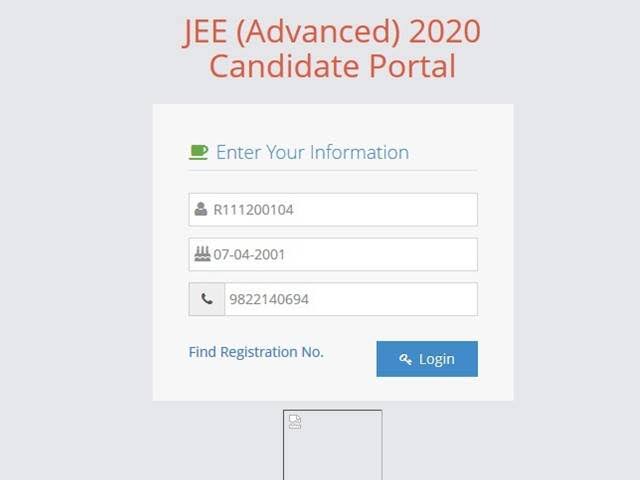
The Indian Institute of Technology (IIT) Delhi on Monday (September 21) released the admit cards for Joint Entrance Examination (Advanced) 2020 – the entrance exam for admission to undergraduate courses across IITs and IISc. The admit cards were released on official website of the board. 

Candidates who have registered for the JEE (Advanced) 2020 will be able to download their admit card online at jeeadv.ac.in. This year, a total of 1,60,864 students have registered to appear for the exam. These are the top-ranking students from the JEE Main. 
AdvertisingnullAdvertising

Around 2.5 lakh students were eligible to apply, however, the number of candidates choosing to appear for IIT entrance test declined massively this year due to the pandemic.

The JEE Advanced 2020 admit cards can be downloaded from Monday (September 21) 10:00 am to September 27 (9:00 pm). Candidates will have to visit jeeadv.ac.in to login and download your JEE Advanced admit card 2020.

The JEE Advanced 2020 admit cards will bear the candidate’s name, Roll Number for JEE Advanced 2020, photograph, signature, date of birth, address for correspondence and category. In addition, it will also bear the name and address of the examination centre allotted to the candidate. 

The JEE Advanced 2020 examination is scheduled to be conducted on September 27, 2020, at various centres spread across the state

JUDICIARY AND TECHNOLOGICAL ADVANCEMENT


The flow of technology is as strong as a flooded river that no court can embark on such a vast flow of technology but still seeks to prevent damage by making proper dams by actively participating in the electronic maintenance of court records, allowing or even requiring electronic filing of pleadings and orders, and building high-tech court.

Good technology in our courts will make it more efficient to proceed. Electronic displays provide for adequate visualization and analysis of the exhibits. Technology can boost procedural control capabilities, identify deadlines and decide on matters quickly. Judges can place more time constraints on attorneys, provided that technology is more ready to present. You can access, analyze and use technology to inquire into previous cases for lawyers. Lawyers can complete openings, closings, direct questions and cross-examinations in less time than is needed to use paperwork with stable additions or diagrams. The technology in court halls helps lawyers clarify and synthesize courtroom information to increase the jury’s curiosity, comprehension and memory retention. online application and consultation can make their court experience smooth, quick and hazel free. It would also create transparency.

E-justice is seen and performed as an e-government agency. The Indian judiciary consisted of 15,000 judges in 2,500 districts. Since 1990, computerisation has taken place. Under the National EGP, the Mission Mode Project (MMP) was established for court computerization, and the introduction of IT and communication technology in three phases over a period of five years..

The MMP’s key goals are to:

1. To help court judicial administration streamline their day-to-day operations.

2. To support the courts in raising number of pending cases.

3. Providing litigants with accuracy of the facts.

4. Providing Judges with access to legal and judicial resources.

The project was launched in December 2004 and an e-committee was created to oversee its implementation. The E-Committee formulated a regional strategy and action plan. 700 courts in metro cities and 900 courts in capital cities with the exception of North East, Ahmedabad and Patna have been protected to this day.

The NIC has been extremely associated to the Indian judge for the past eleven years. Back in 1990, the task of NIC was initiated to support the legal community through IT.

Through NICNET satellite-based electronic communication network, all the High Courts were computerised and interconnected. Curtis project was commissioned to streamline the different court records. NIC took COURTIS on behalf of all legal system stakeholders, including judges, prosecutors, litigants, legal firms, government departments, researchers and the general public. Forensic and cyber tracing Forensic and cyber tracking data has played a major role in judicial investigation and enquiry. These made investigation smoother and allowing police and judiciary to pin down violator easily.

It requires the use of IT infrastructure in the judicial administration sector. It requires the use of satellite technology, video or intranet technology to communicate. Today, many judicial officers use video conferencing every day and it is connected to prisons. The accused can now be present by tele-justice through a video connection installed on ISDN lines between the prison and the trial. Indian states today have already adopted tele-justice, including Maharashtra, Andhra Pradesh, Tamil Nadu, Gujarat, and Bihar. In Maharashtra, for example, by video conferencing, more than 40 prisons in and around Mumbai are linked to district courts.

Over many years now, courts in the United States have been using Information Technology extensively.

Throughout the United Kingdom, computer software production at the subordinate court level was developed extensively. The Local County Court Management System (LOCCS) for example used in England

In Australia, “Cyber Tribunals” have extensively utilized the technology in the legal arena at all phases, thereby significantly reducing delays.

In Singapore, the courts use their time and resources to ensure that cases are handled effectively and effectively. The use of technology goes beyond computer use for Singapore courts. The use of video cameras in prisons and court premises dramatically decreases the chances of moving the accused and witnesses in criminal trials within the country and from outside.

While we have come a long way in advancing technology, we still have scope for improvement. On-line database program with precedents, citations, rules, laws and case statistics. Word processing with standard templates including notification/process creation. Lack of professional support expertise and a non-flexible budget in the modernisation process

There is no question that technology will profoundly affect future courtroom and litigation procedures, but the degree to which change will occur is subject to an unprecedented amount of problem anticipation and convenience due to what is now referred to as disruptive technologies, that is, innovations that are yet to be developed that will reshape our lives and alter our way of living. However, there are a large number of barriers that need to be addressed in order for the judiciary to operate to its full potential by using information and communication technology. If our judiciary is completely efficient in using new technologies, justice for everyone can be achieved easily and efficiently. It should be our primary objective to give justice quickly and correctly.

How To Deal With Resistance In Geriatric Care

The task of caring for the elderly can be daunting, especially when they’re resisting help. In order to make them more receptive to help, we need to delve deeper into the cause behind their hostility. Senior citizens often find it difficult to be vulnerable in front of people, especially when the latter do not seem very empathetic. There is also the additional hurdle of getting used to new people and a new environment. A cautious approach goes a long way in dealing with resistance, one which gives the elderly enough time to adjust to their surroundings, and to a new routine.

In the initial stages of the program, getting family members to participate in some of the activities might help in making the elderly more receptive to care and support, and would also encourage them to socialise with their contemporaries more freely. Making program objectives clear to them from the beginning, by explaining the benefits of the enlisted activities and setting up a concrete timeline, would go a long way in breaking their resistance down, and making them more receptive to change. Differential needs assessment is also crucial as a preliminary step to prevent resistance in later stages, as every senior citizen has different requirements when it comes to specialised care. Their cognitive, behavioural, emotional, and physical capabilities are not equal, and so, every individual would be in need of customisation of the program for it to benefit him or her in the best possible way.

If the individual is persistently resistant to help, a trial run of the actual program could be suggested. The program administrators could propose a short activity, assuring the elderly that their enthusiastic consent is something that they would need to start the program. This is known as the foot-in-the-door technique, which would make it more likely for them to say yes to the requests of the administrator in the future. Resistance is also more likely to be overcome when the message aimed at bringing about a change in the attitude is framed positively. Appeals that contain positive consequences of the program, without highlighting the negative consequences of not participating in it, have a higher chance of persuading the elderly. It would be even more effective ifthe message came from a credible source, like a healthcare professional, or a close friend.

When a senior citizen acts out and is consistently uncooperative, it gets frustrating for the program administrator and other members of the program. In such a situation, it is imperative that we maintain our composure, and try to empathise with them. A significant number of senior citizens are neglected and abused by their family members. They fear that they are losing control over their lives, and this drives them to act in a hostile manner. Reflective listening, which is the reconstruction of what the client is thinking tomake the client understand his or her thoughts better, is a communication strategy that can be deployed to bring the elderly to ease as well as win their cooperation. A compassionate and diligent effort to provide assistance would be sure to succeed in the long run.

Author: Diya Pant (dpant2002@gmail.com)

Veerapandiya Kattabomman-Bravery part-2

For better understanding I recommend you to read the part-1

The Commission of Enquiry that went into the incident fixed the blame on Jackson and relieved him of his post, thinking the Company’s plan to take over the entire country gradually could be marred by Jackson’s fight with Veerapandiya Kattabomman.

The new Collector of Tirunelveli wrote to Kattabomman calling him for a meeting on 16 March, 1799. Kattabomman wrote back citing the extreme drought conditions for the delay in the payment of dues and also demanded that all that was robbed off him at Ramanathapuram be restored to him. The Collector wanted the ruling house of Sethupathis to prevent Kattabomman from aligning himself with the enemies of the Company and decided to attack Kattabomman.

The British also instigated his long time feuding neighbor Ettayapuram Poligar to make provocative wars over Kattabomman on their long pending territorial disputes.

Kattabomman refused to meet the Collector and a fight broke out. Under Major Bannerman, the army stood at all the four entrances of Panchalankurichi’s fort. At the southern end, Lieutenant Collins was on the attack. When the fort’s southern doors opened, Kattabomman and his forces audaciously attacked the corps stationed at the back of his fort, and slew their commander Lt. Collins.

The British after suffering heavy losses, decided to wait for reinforcements and heavy artillery from Palayamkottai. Sensing that his fort could not survive a barrage from heavy cannons, Kattabomman left the fort that night.

A price was set on Kattabomman’s head. Thanapathi Pillai and 16 others were taken prisoners. Thanapathi Pillai was executed and his head perched on a bamboo pole was displayed at Panchalankurichi to demoralise the resisters. Soundra Pandian Nayak, another rebel leader, was brutally done to death by having his brains dashed against a village wall.

Veerapandiya Kattabomman hid in so many places including thirumayam, virachilai and finally stayed at Kolarpatti at Rajagopala Naicker’s house where the forces surrounded the house. Kattabomman and his aides fled from there and took refuge in the Thirukalambur forests close to Pudu-k-kottai. Bannerman ordered the Raja of Pudukkottai to arrest Kattabomman. Accordingly, Kattabomman was captured and on October 16, 1799 the case was taken up (nearly three weeks after his arrest near Pudukkottai).

After a summary trial, Kattabomman was hanged unceremoniously on a Tamarind tree in Kayathar (near Thirunelveli).

Some of the other noteworthy persons who were hanged along with Kattabomman were Veeraghechayan Naicker, Dali Ethalappa Naicker and Palayakarrars of Kaadalkudi, Nagalapuram Puthur, Vripachy, Sivagangai, to death by hanging on charges of treason.

The Fort of Panchalankurichi was razed to the ground and all of Kattabomman’s wealth was looted by the English soldiers. Few years later, after the second Polygar war, the site of the captured fort was ploughed up and sowed with castor oil and salt so that it should never again be inhabited by the orders of the colonial government.

In subsequent years, a good deal of legend and folklore developed around Kattabomman and the Marudu Brothers. Kayatharu, where Kattabomman was executed has remained a place of political pilgrimage.

In his Tinnevelly Gazetteer of 1917, H. R. Pate notes the presence, in Kayatharu, of “a great pile of stones of all sizes, which represents the accumulated offerings by wayfarers of the past hundred years. Folk songs recalling the heroism of the Poligar leaders remain alive in Tamil Nadu to this day…”

The popular Tamil slang for a traitor or committing treason is Ettapa or Ettapan, courtesy the Ettayapuram Polygar whom the British later conferred the title of Raja. But it is disputed that Ettapan committed treason Kattabomman was arrested by King of Pudukottai. The Campa Cola ground in Chennai belongs/belonged to Ettappan family. Lately there is cry that unfair portrayal of Ettappan in the film Kattabomman in which actor Sivaji Ganesan gave a great performance, is the main cause for this. It seems that Ma.Po.Si(Ma.Po.Sivanyanam) who wrote the dialogues for the film had some misunderstanding with the Ettappan family.

Veerapandiya kattabomman-Bravery part-1

Veerapandiya Kattabomman  also known as Katta Bomman was an 18th century Indian Palaiyakkarar chieftain from Panchalankurichi and who was one of the earliest to oppose the British rule. He waged a war with the British six decades before Indian War of Independence which occurred in 1857 in Northern parts of India. After a bloody war with the British he was captured by British and hanged in 1799 CE. His fort was destroyed and his wealth looted by the British army. Today Panchalankurichi is a historically important place in the present day Thoothukudi district of Tamil Nadu state, India.

Veerapandiya Kattabomman was born to Jagaveera Kattabomman and Arumugathammal on January 4, 1760. He had two younger brothers Dalavai Kumarasami and Duraisingam. Veerapandiyan was fondly called ‘Karuthaiah’ (the black prince), and Dalavai Kumarasami, ‘Sevathaiah’ (the white prince). Duraisingam, a good orator, was nicknamed ‘Oomaidurai’ meaning the Mute Prince.

Azhagiya Veerapandiapuram (Otta-pidaram of today) was ruled by Jagaveera Pandiyan. He had a minister Bommu, also a brave warrior, who was known as Getti-bommulu in Telugu, after the god Sastha Ayyappan Swamy to describe his strength and fighting qualities which over a period of time, became Kattabomman in Tamil. Katta-bomman ascended the throne after Jagaveera Pandiyan, who had no issue, as Adi Kattabomman, the first of the clan of Katta-bomman.

Legend has it that during a hunting trip into the forests of Salikulam (close to Azhagiya Pandiyapuram) one of the Kattabommans watched the spectacle of a hare chasing seven hounds. Kattabomman was amazed at this miracle. Believing that the land possessed great powers that could instil courage in people, he built his fort there and named it Panchalankurichi.

On February 2, 1790, Veerapandiyan, 30, became the king of Panchalankurichi as Veera Pandia Kattabomman supposed to be the 47th ruler of the region and the 5th ruler from the Kattabomman clan and a Palya-karrar (or Polygar) of the Madurai Nayak kingdom.

After the collapse of the Vijayanagara Empire in the mid-16th century, their governors of Tamil Nadu, declared independence and established independent kingdoms. The old Pandiya country came to be governed by Naicker rulers in Madurai, who in turn divided their territories into 72 Palayams. These 72 Palayams were franchised to a Palayakarrar (Tamil word) or Polygar or Poligar (a British Term), who had to administer their territories, collect taxes, run the local judiciary, and maintain a battalion of troops for the Naicker rulers. Their function was a mixture of military governance and civil administration.

The regional/local chieftains and rulers who were earlier subordinates to the Madurai Kings became Polygars (or Palaya-karrar).

The Nayak rule in Madurai which controlled the entire West Tamil Nadu after two centuries came to an abrupt end in 1736 when Chanda Sahib of Arcot seized the Madurai throne from the last queen of Madurai in an act of treason. Chanda Sahib was later killed after the Carnatic Wars and the territory came under the Nawab of Arcot. The Palaya-karrars of the old Madurai country refused to recognize the new Muslim rulers driving the Nawab of Arcot to bankruptcy, who also indulged in lavishes like building palaces before sustaining his authority in the region.

Finally the Nawab resorted to borrowing huge sums from the British East India Company, erupting as a scandal in the British Parliament. The Nawab of Arcot finally gave the British the right to collect taxes and levies from the southern region in lieu of the money he had borrowed. The East India Company took advantage of the situation and plundered all the wealth of the people in the name of tax collection. They even leased the country in 1750’s to a savage warrior Muhammed Yusuf Khan (alias Marutha Nayagam), who killed many of the Polygars including and later got himself killed by the Arcot British forces.

Many of the Polygars submitted, only with the exception of Katta-bomman.

Kattabomman refused to pay his dues and for a long time refused to meet Jackson the Collector of the East India Company. Finally, he met Jackson at Ramalinga Vilasam, the palace of Sethupathi of Ramanathapuram. The meeting turned violent and ended in a skirmish in which the Deputy Commandant of the Company’s forces, Clarke was slain. Kattabomman and his men fought their way to freedom and safety, but Thanapathi Pillai, Kattabomman’s secretary was taken prisoner.

You can check out the next part here…..

Poverty is not just a lack of money.

“Poverty is not just a lack of money; it is not having the capability to realize one’s full potential as a human being” — Amartya Sen

Poverty is a state or condition in which a person or community lacks the financial resources and essentials for a minimum standard of living. This is the basic “definition” we have been learning since ages. But, the bigger question here is is Poverty really confined to just financial resources or there is something more to it. If I have to answer this question I would say Poverty is a broad term which has been limited to the understanding of only money and people who can’t earn it . It is also a stereotypical word in the society where they have created an imaginary line of  people Above poverty line (APL) and people Below Poverty line (BPL) .

Poverty is the lack of Education and Health services . Poverty is not having a house to call yours. Poverty is hunger. Poverty is no job security .Poverty is loneliness of a person. Poverty  is fear of the future ,poverty is not able to imagine the days ahead. It is objective ,subjective and psychological.  Poverty is social exclusion or when you can not provide your children with stuff they want. It urges people to find an escape. The way of finding escape is sometimes dangerous. When a farmer is compelled to commit a suicide because he can’t feed his family and can not bear to see them starving that is Poverty. When a person is alone in a room full of people that is poverty. When your husband provides you with all the luxuries but fails to give you love, affection and time that is poverty.  A person who has nobody to talk his heart out to is called poor. Poverty is not only numbers but poverty is emotions, a feeling, a fear, an insecurity , anxiety and depression.

When a daughter is not allowed to stay out late because her father is frightened to even think about the detrimental effects it could have ,poverty exists here. When the society blames a woman for being divorced or a single mother ,their thinking reflects poverty. When a son leaves his parents to a VRIDH ASHRAM because he is too busy in his life to take care of them, that accounts for poverty. When two people  can not have a love marriage because their caste does not allow them, it is poverty. When a person belonging to the LGBTQ category is seen indifferently there comes in poverty. Bullying a friend for any xyz reason and making him lose his confidence  in himself is poverty. Male chauvinism is poverty, a drunk man beating his helpless wife is poverty. We as humans do not  raise voice for the right is Poverty. 

Poverty is a complex societal concept and it needs a lot of attention. It’s high time to realize that there are people who are lacking various comforts of life. The need to provide basic education to a child to build a secure future is important . Just by reaching out to people with various slogans does not help, what we need is Actions that are louder than words. The improvement of Healthcare facilities to reach out to the most vulnerable parts of the country is very important. The urgency to improve the infrastructure of the Healthcare industry has been completely witnessed in the current Pandemic situation where coronavirus has made people realize that few things can not be ignored for long. It is important to make sure that no child or adult goes to sleep starving. The country is experiencing a jobless growth leading to different other consequences and this needs to be addressed as soon as possible. It is important that the women of this country have freedom . A freedom from fear, a freedom from social barriers ,freedom from expectations,freedom from being forced for marriage, freedom to study upto the extent they want to.

“Extreme poverty anywhere is a threat to human security everywhere.

We as Humans have a lot of potential to deal and cope with things and try all possibilities to improve situations in hand. Every problem has a solution but only finding the right ones is important. India and Indians both have a lot of potential to improve their credibility over others . For an economy to make progress it is important to strengthen its roots and its roots lie in the most vulnerable sections of the society . For alleviating  poverty, a freedom to sustain, a freedom to express ,a freedom to actually live freely is the most important. India should succeed in making its citizens feel secure and to live free of poverty – emotionally and physically.

In conclusion, poverty is not the problem of a person but of the whole nation. Also, it should be dealt with on an urgent basis by the implementation of effective measures. In addition, eradication of poverty has become necessary for the sustainable and inclusive growth of people, society, country, and economy.

How Indian culture proves that Old is gold?

“If any individual is judged by his character and morality, society is judged by its culture and tradition” said Dr S. Radhakrishnan.   Culture means the way of life followed by a community that consists of custom, tradition, religious practices and the human values. Every culture has its distinct positive features.  The culture of a community never remains same.  It is evolved over a period and is always in the process of reforming itself.   

Even from very ancient time, the Indian civilization was highly developed.  Many factors have contributed to the cultural formation.  Our scriptures like Vedas and Upanishads are considered as immense treasure of knowledge.  There are various other scriptures like Ithihas, Purana etc.  Bhagawad Gita, Ramayana and Mahabharata have taught us how we should conduct ourselves.   We have developed very good art like Music, dance, paintings, sculpture etc.  While the temples like Ramanathapuram on the southern corner of India are noted for their workmanship, novelty and sculpture, temples like Rishikesh and Badrinath in north are considered as the very abodes of God.  Hinduism is one of the oldest religions of the world and great saints like Adi Sankara, Ramanuja, Sri Ramakrishna Paramahamsa and Swami Vivekananda have enriched our religion by their interpretations.  From the day Swamy Vivekananda addressed the Parliament of Religions at Chicago; many people have turned towards India for spiritual knowledge.  Though Adi Sankara and other saints have set Self-realisation as the ultimate goal, it was Sri Ramana Maharshi who highlighted its importance and showed the way for achieving that goal.    All these developments have contributed to India a rich cultural heritage and tradition.  India has thus inherited a great tradition and a way of life which formed the basis of its culture. 

Though Mughals came and then the British came and ruled over the land, they could not destroy the culture.  The Indian culture has now become universal and it has become a land where different religions and culture survive, co-exist peacefully and flourish.  Now there are different communities and nationals in India pursuing their own beliefs and faiths.  Though India presented a picture of diversity, India has grown as a national that welcomes all ideas, philosophies and doctrines.  It is a land where people of different faith live in peace and harmony, like a family bound in mutual love and affection. 

Indians have adopted and assimilated the foreign culture and yet they have retained what is good for their own culture.   They may be communicating in English, traveling in Mercedes, dressing in western style but they never deviate from their basic tradition and culture. The car symbolizes the modern trend but its name, Maruti, symbolizes the legendary past.  Those who migrate to foreign countries adopt the culture of the country to which they migrated without deviating from their own culture. Like , I f you ever met any family who use to live in USA and still touches feet of elders. Wherever Indians go, whether USA or Dubai, along with their spouses, children and belongings, they make it a point to carry the Indian culture also with them.   This is evident from the various cultural programmes being regularly organized in foreign countries like USA, Dubai or Singapore.  Music Festival is a regular annual feature in Cleveland, USA and leading Indian artists take active part in them.  Indian temples are seen in most of the States in America, the Venkatachalapathi temple at Petersburg being the biggest among them.

Cinemas, the computer, air linkage, information technology have all brought the inhabitants of the world closer.   The world which remained unreachable and wide apart before has become a global village now.  As the geographical boundaries became mere symbols, people to people contact became more frequent.  As people mingled with each other, we find a cultural synthesis taking place in India now. 

Some adverse changes have also come in the Indian family tradition.  Previously, the wife used to be the home maker, attending to house hold duties, managing the children, attending to religious practices etc. Now, according to the modern trend more and more house-wives are going beyond their home-making avocation and take up responsibilities in business undertakings. “Now, for women, there is life even after marriage” commented a friend in a lighter vein.  Women are well educated and became partners with men in bringing about progress and prosperity.  Thanks to the winds of change blowing over and thanks to the free and liberal outlook created by modern era, India now finds itself free from its outmoded customs and practices. Though woman has proved her enormous power as a contributor for nation building, it cannot be denied that she has left a vacuum at the home front.   We need to bring up a system where our culture and tradition should be passed on to our children also.  Woman has a higher responsibility in this sphere.        

It would be pertinent to conclude this essay with the quotation of Swami Ranganathananda, the late President of Ramakrishna Mission, Kolkata:  “Change is the order of the day.  Everyday, we witness changes occurring all around us and even within us.  Society may change in infinite ways in response to historical necessities but that is no reason why cultural values underlying all human endeavors should change.”  Let us all be proud of our culture and cherish it for ever.  

So, we not only say that we are proud of being and Indian but we really are. It is always indian culture which gave us a different definition or identity infront of whole world. Like, only by seeing a Foreigner you can’t say from where he/she belongs from, but, any Foreigner can easily say that he/she belongs from india. Jai hind.

See yaa…

Advantages & Disadvantages of Online Examination System

With an online examination, all these traditional elements continue to persist, however, the mode of test-taking has changed – instead of a physical examination hall, students instead log into an online examination system through which they access the question paper and share their answers. Evaluation and the publication of results also happen within this system.

What are the advantages of an online examination system? 

  • Environmentally Friendly 

Straight out of the gate, an online examination system cuts down the negative impact traditional pen and paper exams have on the environment.

  • Technologically Forward

Another key advantage to using the online examination system is that it integrates well into a technologically rich world. The use of pen and paper in professional situations is reducing. Most work is done using email, text messages, computers for presentations, computer-based design, etc. 

  • Saves on Time Investment 

Creating, administering and evaluating a test are time-intensive tasks for everyone involved from the student to the teachers. Using an online examination system allows some amount of reduction in the time investment required of the examination process as a whole. 

What are the disadvantages of an online examination system? 

  • Open Book Exams 

Due to the nature of the format of an online examination system, exams administered through this platform to some degree become open book exams. Unlike traditional examination settings that did not allow external materials into the physical space the exam was being conducted, nothing stops students from referring to their course materials during an online exam.

  • Onboarding onto New Technology 

The implementation of an online examination system necessitates a period of familiarisation on part of all users. Any change in structure will require some investment in onboarding on behalf of the educational institution in question. 

  • Not suited for Collaborative Evaluations or Group Projects 

The very nature of examinations in the online examination system prevents certain modes of evaluation being implemented at the school. The most obvious one here is that it is not an ideal platform for collaborative evaluations or group projects. This is because the nature of the platform is objective, preventing subjective evaluations where points are handed out to a group for subjective efforts, rather than points awarded on an existing framework. 

The story of a Stethoscope

Doctor and a stethoscope are synonymous with each other. A stethoscope is doctor’s best buddy. Hung around one’s neck, it gives doctor his identity. It is basically an instrument used to listen sounds made by heart, lungs or intestines and blood flow in veins and arteries. Let’s read how a young doctor’s shyness led to its invention which proved to be path breaking in field of medical diagnosis.

Born in 1781, a young French doctor, Rene Laennec got inspired to become a doctor when his mother passed away due to tuberculosis. He was a learnt man who studied medicine under famous physicians Dupuytren and Joan Nicholas Corvisat.

Corvisat strongly believed in diagnosing a patient by listening to heart sounds. In those days (early 1800s), it was common for a doctor to listen one’s heart beat by pressing his head directly on patient’s chest or back.

In 1816, as a part of his training, Laennec was told to examine a young overweight woman who was having heart problem. Laennec felt shy as well as uncomfortable thinking about using the traditional method. At that moment, he thought of a way. He rolled a quire of paper into a cylinder and placed one end on the chest of the patient and other end to his ear. And much to his surprise, he perceived sounds better than the other traditional method.

Successful in his impromptu experiment, Laennec devised a wooden version. It was 25 cm by 2.5 cm and could be carried around. He named it STETHOSCOPE which was derieved from a greek word sthethos( meaning chest) and scopos (meaning examination). Gradually, its use spread across Europe and US. But unfortunately Laennec died in 1826 at the age of 45 due to the same disease, as of his mother, tuberculosis.

Till date, various refinements have been made to original one. The major changes were brought by a Harward Professor, David Littmann in 1960s. He made a lighter version with better acoustics.

Littmann stethoscope are no doubt, the gold standard and used worldwide by doctors. But Laennec’s invention proved to be major milestone in the history of medical sciences.


Many of us must be unaware about this but have a knowledge always pays of.

See yaa

Taj Mahal to reopen after 6 months

The Taj Mahal, India’s “monument to love”, has reopened after a six-month hiatus with special rules introduced – including no touching the white marble walls of the mausoleum built for a Mughal emperor’s favourite wife

Taj Mahal Reopens: 5,000 Visitors A Day, Online Tickets Only, Masks Must

.Only 5,000 visitors are allowed daily – a quarter of usual capacity – and all have their temperature taken by staff wearing face shields, masks and gloves.

Taj Mahal opens with all COVID-19 norms in place - Rediff.com India News

Visitors can whip off their masks for a photo, but security personnel are quick to remind them to put them back on once the shutter has been pressed.

And the famous bench where people usually sit to have their picture taken has been laminated in plastic, to help cleaning between every photo

India, home to 1.3 billion people and some of the world’s most crowded cities, has recorded more than 5.4 million COVID-19 cases, with approximately 100,000 new infections and more than 1,000 deaths recorded daily in the past several weeks. But after a strict lockdown in March that devastated the livelihoods of tens of millions of people, Prime Minister Narendra Modi is reluctant to copy some other nations and reimpose curbs on activity.

Instead, in recent months his government has eased restrictions, including on many train routes, domestic flights, markets, restaurants – and now, visiting the Taj Mahal, a UNESCO World Heritage Site.

The 17th-century white marble mausoleum built by Mughal emperor Shah Jahan in the city of Agra, about 200km from the capital, New Delhi, is India’s most popular tourist site. It usually draws seven million visitors a year but has been closed since March