Triveni Sangam

In Hindu tradition Triveni Sangam is the “confluence” of three rivers (Ganga, Yamuna and Sarasvati). The point of confluence is a sacred place for Hindus, with a bath here said to flush away all of one’s sins and free one from the cycle of rebirth.

Triveni Sangam in Prayagraj (Prayag), has the confluence of three rivers — the Ganges , the Yamuna and the Sarasvati (it is invisible, because according to Hindu mythology it flows underground). The two rivers maintain their visible identity and can be identified by their different colours. The water of the Ganges is clear, while that of the Yamuna is greenish in colour.

A place of religious importance and the site for historic Kumbh Mela held every 12 years, over the years it has also been the site of immersion of ashes of several national leaders, including Mahatma Gandhi in 1948.

The auspiciousness of the confluence of two rivers is referred to in the Rigveda, which says, “Those who bathe at the place where the two rivers flow together, rise up to heaven”.

Ganges River

The Ganges or Ganga, is a trans-boundary river of Asia which flows through India and Bangladesh. The 2,704 km river originates from the Gangotri Glacier of western Himalayas in the Indian state of Uttarakhand, and flows south and east through the Gangetic Plain of India and Bangladesh, eventually emptying into the Bay of Bengal.The Ganges is a lifeline to millions who live along its course. It is a sacred river and worshipped as the goddess Ganga in Hinduism. It has been important historically; many former provincial or imperial capitals (such as Prayagraj, Dhaka, Baharampur, Bikrampur, Kampilya, Kannauj, Kara, Kashi, Kolkata, Murshidabad, Munger, Patliputra, and Sonargaon) have been located on its banks.

The Ganges is threatened by severe pollution. This poses a danger not only to humans but also to animals; the Ganges is home to approximately 140 species of fish and 90 species of amphibians. The river also contains reptiles and mammals, including critically endangered species such as the Gharial and South Asian river dolphin. The levels of fecal coliform bacteria from human waste in the river near Varanasi are more than a hundred times the Indian government’s official limit. The Ganga Action Plan, an environmental initiative to clean up the river, has been considered a failure which is variously attributed to corruption, a lack of will in the government, poor technical expertise, environmental planning and a lack of support from the native religious authorities.

Yamuna River

The Yamuna, is the second-largest tributary river of the Ganga and the longest tributary in India. Originating from the Yamunotri Glacier at a height of 6,387 metres on the southwestern slopes of Banderpooch peaks of the Lower Himalaya in Uttarakhand, it travels a total length of 1,376 kilometres and has a drainage system of 366,223 square kilometres, 40.2% of the entire Ganga Basin. It merges with the Ganga at Triveni Sangam, Prayagraj, which is a site of the Kumbh Mela, a Hindu festival held every 12 years.

It crosses several states: Haryana and Uttar Pradesh, passing by Uttarakhand and later Delhi, and meeting its tributaries on the way, including Tons, Chambal, its longest tributary which has its own large basin, followed by Sindh, the Betwa, and Ken. From Uttarakhand, the river flows into the state of Himachal Pradesh. After passing Paonta Sahib, Yamuna flows along the boundary of Haryana and Uttar Pradesh and after exiting Haryana it continues to flow till it merges with the river Ganga at Sangam or Prayag in Allahbad (Uttar Pradesh). It helps create the highly fertile alluvial Yamuna-Ganga Doab region between itself and the Ganga in the Indo-Gangetic plain. Nearly 57 million people depend on the Yamuna’s waters. With an annual flow of about 10,000 cubic billion metres (cbm; 8.1 billion acre⋅ft) and usage of 4,400 cbm (of which irrigation constitutes 96 percent), the river accounts for more than 70 percent of Delhi’s water supply. Like the Ganga, the Yamuna is highly venerated in Hinduism and worshipped as the goddess Yamuna. In Hindu mythology she is the daughter of the Sun Deva, Surya, and the sister of Yama, the Deva of Death, hence also known as Yami. According to popular legends, bathing in its sacred waters frees one from the torments of death.

Sarasvati River

The Sarasvati River is one of the rivers mentioned in the Rig Veda and later Vedic and post-Vedic texts. It plays an important role in the Vedic religion, appearing in all but the fourth book of the Rigveda. The goddess Sarasvati was originally a personification of this river, but later developed an independent identity. The Sarasvati is also considered by Hindus to exist in a metaphysical form, in which it formed a confluence with the sacred rivers Ganges and Yamuna, at the Triveni Sangam.According to Michael Witzel, superimposed on the Vedic Sarasvati river is the heavenly river Milky Way, which is seen as “a road to immortality and heavenly after-life.” Rigvedic and later Vedic texts have been used to propose identification with present-day rivers, or ancient riverbeds. The Nadistuti hymn in the Rigveda (10.75) mentions the Sarasvati between the Yamuna in the east and the Sutlej in the west. Later Vedic texts like the Tandya and Jaiminiya Brahmanas, as well as the Mahabharata, mention that the Sarasvati dried up in a desert.

Since the late 19th-century, scholars have identified the Vedic Saraswati river as the Ghaggar-Hakra River system, which flows through northwestern India and eastern Pakistan, between the Yamuna and the Sutlej. Satellite images have pointed to the more significant river once following the course of the present day Ghaggar River. Scholars have observed that major Indus Valley Civilization sites at Kalibangan (Rajasthan), Banawali and Rakhigarhi (Haryana), Dholavira and Lothal (Gujarat) also lay along this course. However, identification of the Vedic Sarasvati with the Ghaggar-Hakra system is problematic, since the Sarasvati is not only mentioned separately in the Rig Veda, but is described as having dried up by the time of the composition of the later Vedas and Hindu epics. In the words of Annette Wilke, the Sarasvati had been reduced to a “small, sorry trickle in the desert”, by the time that the Vedic people migrated into north-west India.
Education and Knowledge; Indian youth needs both and also need to know the meaning between the two

Article by – Shishir Tripathi

Intern at Hariyali Foundation
In Collaboration with
Educational News

The basic life skills like speaking and writing are told to a kid by the parents and the school too so that the student should not get into any type of difficulty in Academics in future. Not all but only few kids get it wholly along with a blend of etiquettes, manners and healthy interpersonal skills.


Even at present not only teenagers and youngsters, some middle aged people too don’t really know whether they are really educated or not. Those who are just knowledgeable might be getting confused in these words. Let’s make it more clear and simple.

Knowledge is simply the process of acquiring facts and information through a teacher in a school or a tuition teacher and learning skills along with the information written in books. By Going to a school a kid can become a knowledgeable person in future but he cannot become an educated man.

Oops, getting heavier and blur to understand! Let’s now remove the curtain from what does it mean by education and being educated.

Education is a wider concept; it’s like an enlightening experience in a person’s life. Some children are blessed to have parents and teachers too who educate them by telling them the basic values to be followed in life. The way how to talk an elder person, how to speak in such way that the elder person’s respect must not reduces, how to behave with friends and family socially, what to say to a boy or girl, why to share things, how to help the needy people how to understand someone else’s feelings, how to empathize with people and many more things are covered under this single word ‘education’

A person can be illiterate but he or she can be educated whereas a knowledgeable person, who is a post graduate from a reputed institute, doesn’t mean that he or she is educated in true sense. People from a very long time have been using the words knowledge and education together but there’s a big hidden difference in both of these words.
In these evolving times, human values and etiquettes are actually lost somewhere in between the figures showing growth, GDP, profits, revenue, etc. Children, when they grow up, mistreat their parents and elders and send them to old aged homes. A brother kills the other brother just because of a piece of land or some countable notes. A student misbehaves with a teacher who implants all the knowledge and facts in his brain. A boy speaks ill words to a girl and throws acid on her face to destroy her beauty who simply just not accepted his proposal. A group of young lads troubles the old man who carries his household stuff purchased from his limited pension. A person steals a scooter standing with a key in market. A son who not at all replies to his parent’s questions. A daughter who thinks her mother is so old fashioned to be taken to a party nearby.

Actually, the basic problem is how the child grows up. What is being told him, what is the environment he encounters, when he is appreciated, for what he is appreciated and a lot more incidents and people shape a person into a well developed human being with good etiquettes, habits and hence good demeanor.

Therefore, it is equally important for the parents, schools and people who are around a child.

Getting him learn how to respect others, how to appreciate others, how to talk to people, how to behave in public is all that is needed for a better world with good sensible souls. If parents and people ignore the importance of inculcation of good habits in the children, then not only the children’s’ life get hampered but an individual raised differently will also became for the society and his family too.


That is why it was rightly mentioned on a page named ‘kalam_se_kaleje_tak’ on Instagram that –
“You can be very knowledgeable but that doesn’t mean you are educated in true sense”.

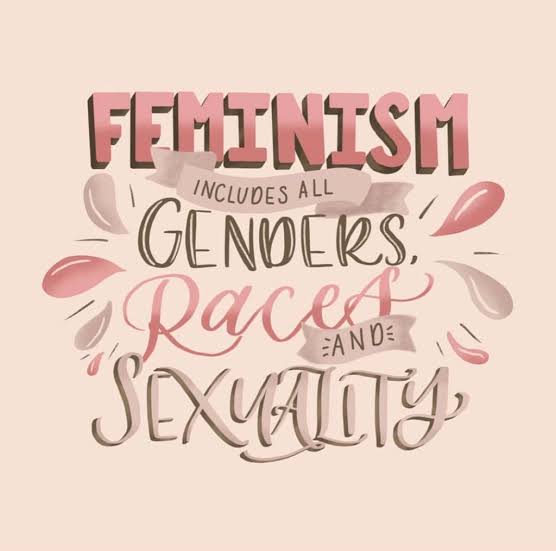
Misandry is not feminism.

Recently, the statement “I am a feminist” has become synonymous to the statement “I hate men.” The mere idea of feminism is being misconstrued as the idea of hating men. It’s become a widely spread belief that feminism represents the idea of switching the power structure so that men are on the bottom and women are on the top; however, this is a common misconception.

The correct word choice for a man-hater is a “misandrist’ and not a feminist. 
The correct word choice for a man-hater is a misandrist. According to the Merriam-Webster dictionary, misandry is the hatred of, contempt for, or prejudice against men or boys. Misandry can manifest itself in numerous ways, including sexual discrimination, denigration of men, violence against men, and sexual objectification of men. The belief in a matriarchal structure like this is the true ideology for those who wish to completely switch the power structure.

According to Merriam-Webster dictionary, feminism is a range of political movements, ideologies, and social movements that share a common goal: to define, establish, and achieve political, economic, personal, and social equality of sexes.

This includes seeking to establish educational and professional opportunities for women that are equal to those for men. This doesn’t mean that feminists wish to switch the power structure, but instead that the ideology behind feminism is to disassemble the patriarchal structure.

The patriarchal structure doesn’t necessarily mean that a man will benefit from all situations. It’s harmful to both men and women. It does refer to the idea that women should have husbands to take care of them, that women are overly emotional, and that women are the primary caretakers of a family, but it also refers to the idea that a man cannot show emotion, cannot be sexually assaulted or abused, and cannot take care of children as well as a woman can.

Many seem to think that feminism is a movement driven by anger and aggression. A true feminist would say that the movement is actually driven by emotion and determination. Hatred is not something a feminist wants; hatred is not included in the definition.

Feminists are branded with a horrible reputation that simply isn’t fair. The term “feminazi” and other ones like it have become increasingly popular, and it’s absolutely astounding that one would compare a group fighting for equality to a group that contributed to the mass murder of millions of people.

In the eyes of an anti-feminist, a “feminazi” represents the entire community; it defines feminists as evil, angry, over-the-top. Is it fair to, first of all, stereotype and misuse the concept of feminism? And second, compare its members to some of the cruelest people in history?

Again, feminists fight for equal opportunities, rights, pay, and expectations for all genders. Feminism was built on the construct of the main gender oppression, which is why it is a majority female space. Men would be just as adamant about gender equality if the roles were reversed.

The ultimate goal of a feminist mandate is to uproot the violent system of patriarchy. In advancement of that goal, feminists have done extensive work and research to investigate social norms and to expose them for how detrimental they are for our societies, including men.

It was through feminism that we started to question the notion of masculinity and how we constructed it in such a rigid fashion that created emotionally stunted men and, in worse case scenario, violence perpetrators that are incapable of resolving conflict in a healthy way.

Feminism has, at the very base of it, advocated that it’s okay for men to cry. Even further, it was feminist activists that fought for men’s right to paternity leaves and for men to be more involved in the lives of their children and their domestic affairs.

It is our duty to understand that just because misandrists tag themselves as feminist doesn’t mean that they are. The false understandings about feminism should be put an end to.

Feminists want equity and equality for women not because we are women but because we are humans.

Importance of Water

Priya Yadav,

Water is a priceless gift of nature. Water is essential for survival. Without food, we can stay hungry for many days, but it is impossible to survive without water. Water is the need of every living being. Not only humans, plants, animals, and birds also cannot survive without water. Without water, the entire vegetation will disappear. What would happen if there was no water? Without water, there would be no crops, no fruits, no vegetables, no weeds, nothing. What happens around? nothing, No creature survives.

Earth does not produce grains, animals do not provide milk without mother-in-law, we do not get milk to drink. Water is of two types – one saline and the other sweet. Drinking water is sweet. The seawater is salty and salty. That water does not work for drinking. The water that keeps flowing gets rotten, it stinks. Many types of insects in that water? The pandemic spreads due to the mosquitoes and mosquitoes. We also should not let water stand around our homes. This will keep our neighborhood clean and we will be healthy.

We should save water. Water should not be wasted. Water should be used sparingly. The water tap should not be allowed to run in vain. Summer requires more water. Do not wash your vehicles with water and clean them with a soaked cloth. Water should not be used casually. Due to the increasing population, water usage has also started increasing. To build houses, to drink. For bathing. dresses. Water is needed to wash dishes, so we should save water.

Water should be boiled and drunk during rainy days. Boiling water and drinking it kills the germs present in it. In this way, stomach diseases can be avoided. Lack of water on the earth. is. The earth is warming day by day. The glaciers are melting, due to which there is a scarcity of water in the rivers as the Ganges originates from the Gangotri glacier. It is melting due to strong sunlight and heat. The day is not far when the river Ganges will dry up. The North and South Pole ice is melting. Due to this, the water of the sea will increase and the cities around it will be burnt in the sea. Water has many benefits.

Water not only quenches our thirst, but electricity is also produced from it. Large dams are being stopped on the rivers to prevent water from which electricity is produced. That water is used for cultivation by canals. The stagnant water behind the dam is being converted into lakes in which fish are reared. If we consume water today only then our future will be safe. By saving water in the present, we can secure our future. We have to save every drop of water for the well being of the country, only then our future will be safe.

Oceans are found on 78% of the earth, which contains salty water but it is not fit to drink. Potable water is called sweet water or sweet water. Out of the total water present on earth, only 2.7 percent of water is potable.

Water is very important for humans. A man can live for 7 days without eating, but without drinking water, he will die in 3 days. We all feel thirsty and use water to quench thirst.
To stay healthy a person should consume at least 2 to 3 liters of water per day. When there is no water when you are thirsty, you feel great discomfort. This shows the importance of water.

Isolation or ‘I Have Solution’

In order to prevent the infection of corona and prevent it to a certain level, all the countrymen are following the lock-down nowadays. Due to this type of lock-down, we are imprisoned in homes. All external activities have stopped in a way. This contrasting situation has affected our psychological aspect the most. If you talk to your neighbours, friends and distant relatives, you will find that they are all going through the same mental state – fear of boredom and survival.

When I say boredom, it simply means that we have nothing new to do. This is because we are not at home of our own free will, we have to stay for a long time without any plan and only when we have nothing new, we call our mood boredom in psychological language. 

Let us understand the psychological reasons behind this. Most of us are accustomed to live life in a certain pattern. For example our daily behaviour, our jobs, our social responsibilities, shopping time and walking etc. In this way, our daily behaviour becomes the product of our fixed life pattern and whenever this pattern changes against our will, it has a direct effect on our behaviour and this is exactly the situation that we are facing right now. The second important thing is the possibility of a crisis in our existence at present. Today this apprehension has made a large population stressed. In this context, I would like to say that it seems that this virus has reached very close to our brain and the most contribution to this is the exaggerated news and analysis that we are seeing or hearing all the days and our mood accordingly is being made. We are forgetting why we are taking stress even when we are taking all precautions and are healthy. This is because we are creating this tension ourselves. 

In this context, I recall a story by the Russian writer ‘Anton Chekhov’ – ‘The Bet’. The story is based on the condition of a lawyer and a banker. As the story opens, a banker misses the opportunity for a bet he made fifteen years ago. At the party they were hosting that day, all the guests got involved in the discussion of capital punishment. The banker saw it as more humane than life imprisonment, while a young lawyer disagreed, stating that he would choose life in prison rather than death. They agreed to a condition. If the lawyer can spend fifteen years in total isolation, the banker will pay him two million rubles. The lawyer has no direct contact with any other person, but he could communicate with the outside world and note down whatever he wishes.

Confined in a guest room on the banker’s property, the lawyer first experiences loneliness and depression but eventually begins to read and study in a wide range of subjects. As he takes advantage of the solitude to be educated and amuses himself in various ways over the years, the banker’s fortunes begin to wane. He realizes that if he loses, paying by stakes will go bankrupt. In the early hours of the day when the fifteen-year period is about to expire, the banker resolves to kill the lawyer, and one night goes to kill him but a note written by the lawyer on the table shows that he has chosen to relinquish the condition, knowing that material things are transitory and have the value of divine salvation more than money. The watchman then reports that the lawyer has gone out from the window and escaped with the property at stake. To prevent the spread of rumours, the banker locked the note in his vault. 

Just today, this story can become an inspiration for us. First of all, for this time period, you need to move away from your fixed life pattern and make new work plans, such as spending personal time with parents and children. This will be a great experience for you. You can engage yourselves creatively by creating new projects for children. Every new task will fill you with a new kind of energy and yes, above all, it is time to make a harmony with nature, because at this time due to lack of human activities, nature is in its purest form, so the open air in the morning of your courtyard Go, see the beauty of the flowers of the garden. There was no time before in your fixed life pattern for this. Then your existence will never put you in crisis, but you will feel connected with your presence.

Stay Home, Stay Safe …..

The need to improve the Rural Economy!

While the Novel coronavirus has caused a lot to the economy , the revival and growth of the Indian economy is the need of the hour. The government is trying it’s ways to revive the economy and get it back to the position it was in or even better than that. The Urban sector has been affected drastically and would take much longer to get back to normal. The Rural India on the other hand has been progressing positively in the recent times and also benefiting by the pandemic. This therefore, contributes to the Indian economy and will help it to move ahead.

While liquidity is today one of the biggest obstacles for the revival of business, we may find that even if credit is available, the problems of labour, high cost, social distancing and unstable demand discourages the business firms to restart their work . But, In Rural India the spread of the virus is least and also the lockdown risk is minimal ,so it is naturally easier to have physical distancing and outdoor work. The Rural India is in its raw form and can be manufactured to become the best possible product. The Urban India is already an existing product that needs improvement and upgradation.

In the lockdown period the demand for dairy products and vegetables was still the same. Even if the restaraunts did not make a demand for vegetables then too the supply of vegetables for the ordinary people continued and it was the most bought thing in the lockdown . Agriculture continued even in the lockdown period. So, while most of the other industries—automotive, textiles, real estate—have shut down, the farm industry has not, despite low support from a policy context. A farmer never will have to face a shortage of demand since the importance of food and food products will never end. Even if people don’t buy clothes they will buy vegetables. The negligence would cost much but if some important steps are taken Rural Economy would prove to be the best ever decision one could take .

MAHATMA GANDHI NATIONAL RURAL EMPLOYMENT GUARANTEE ACT (NREGA) – This scheme should be expanded and liberalised. The farmers must get a security in their jobs and not be completely wage labourers.

Finance farmers directly – It is absolutely critical that the government delivers finance directly to the farmers through the primary agricultural co-operative societies, commercial banks, a special line of credit, and Kisan credit cards. This would accelerate the credit and increase investments through savings from income.

Exports- The Indian Economy has been confined to exports in only secondary and tertiary sector. But, primary sector has been laid back. Although India has gained alot in it’s food supply chain and it must encourage the export of food products thus leading an encouragement in the agricultural sector.

The policy implementation has to be in its best position – Only talking about the policies will be of no help, what is important is it’s implementation that holistically improves the Rural sector . It is important to create credit and gain from it for the benefit of the economy as a whole.

While agriculture is certainly the primary engine of the rural economy, we also need to look at non-farm sectors like handlooms, handicrafts, and rural SMEs to unlock the full potential of employment and income generation.

Therefore, there is a great need for Research and Development. For something to reach heights it is important to strengthen its roots. And India was always an agrarian economy and if you strengthen its roots its branches will be spread widely.

Book Review- A Rainbow in the Night. Author: Dominique Lapierre

Nelson Mandela is no stranger to Indians. India was in the forefront of support to the freedom struggle led by Mandela and the African National Congress (ANC). This struggle and the history of South Africa since the Dutch landed in 1652 has been vividly brought out by renowned author and biographer Dominique Lapierre in his book A Rainbow in the Night. The book is not just a historical account but it is an epic that captures the essence and romance of the birth of a nation and its people comprising whites, blacks and coloured races.

Dominique Lapierre is known to Indians as the author and co-author of two books on India: The City of Joy and & Freedom at Midnight, respectively. Both are highly acclaimed books and need no introduction.  Lapierre’s books on India and his philanthropic work with Mother Teresa in the slums of Calcutta earned him the civilian honour Padma Bhushan in 2008.

‘A Rainbow in the Night’ is Lapierre’s second book about a nation’s freedom struggle (after Freedom at Midnight about India’s freedom movement). He traces South Africa’s history, the first landings by the Dutch and their establishing a white supremacist regime, the liberation struggle and freedom for blacks from their tormentors. While Mandela plays a dominant role in the book, it is not entirely about him. South Africa’s colonial history and hoary past are covered in fairly good measure, which rightly provides the context and perspective to understand the history and modern times of the nation.  The premise, of course, is that to appreciate the present a correct understanding of the past is a must.

The book is structured into four parts or themes: In search of a promised land; The Prime Minister’s bulldozers; Helen and Chris: two lights in the darkness; and “God bless Africa”. The book will resonate well with Indians. The reasons are not far to seek. India’s interest in South Africa dates back to the time of the indentured labour that migrated to its shores. The surge in the freedom movement and its influence on Mahatma Gandhi, then a young and impressionable Mohandas Karamchand Gandhi, was an added impetus to the growing Indian interest in that nation.

The book does not delve in great detail to Gandhi’s travails in racist South Africa. Considering that it also has Indian readers in mind (the book’s publisher, Full Circle, is Indian), the book ought to have dealt with the effects of racism and South Africa’s initial pacifist struggle on young Gandhi’s mind, especially as it had made such an impression on him in later years as he led India’s freedom movement. The book does, however, cover race classification, the process of Indian, Malay and other races – including blacks – being grouped according to the colour of their skin.

The book is a fairly accurate – if not an academic or detailed – account of nearly 350 years of South Africa’s history. For students of politics and international relations, it provides a correct perspective on the tumultuous history, the birth of a new nation, segregation and apartheid. The book is eminently readable, racy and fast-paced.

Role of media in society

Priya Yadav,

In democratic countries, the media is known as the “fourth pillar” to monitor the activities of the legislature, executive, and judiciary. Since the 18th century, the media has played an important role in enabling and sensitizing the public, especially since the time of the American independence movement and the French Revolution. If the media plays a positive role then any person, institution, group, and country can be made economically, socially, culturally, and politically prosperous.

In the present time, the usefulness, importance, and role of media are continuously increasing. No society, government, class, institution, group person can move forward by ignoring the media. Media has become an unavoidable necessity in today’s life. If we look at what the society calls, then the fact comes out that we cannot call a crowd of people or unaffiliated people. Society means the fabrication of relationships, in which communities with intelligent and thoughtful humans exist.

Media is a comprehensive system that includes information like printing press, journalists, electronic mediums, radio, cinema, internet, etc. If we talk about the role of media in society, it means that what the media is, directly and indirectly, contributing to the society and what positive and negative impact it is having on society during the discharge of its responsibilities.

After considering the effect, it is clear that the increase in power, importance, and usability of the media in society has increased its positive effects considerably but at the same time, its negative effects have also emerged.

While the media has contributed to making the public fearlessly aware, exposing corruption, logical control overpowers and the promotion of public interest works, greed, fear, malice, competition, maliciousness, and tainted their role by being trapped in the trap of political intrigue Has also done. Adopting Yellow Journalism for personal or institutional vested interests, exploiting others by blackmail, sabotaging gossip news and twisting news, publishing news that provokes riots, making events and statements redundant, fear Or greedily flattering the ruling party, unnecessarily praising and glorifying someone and criticizing another is being done by the media nowadays. Exaggerating accident and sensitive issues, ignoring news related to ‘honesty, morality, dedication, and courage’ has become a common feature of media nowadays. This behavior of media creates a state of chaos and imbalance in society.

Print Media and TV And through cinema, western culture is coming and spreading, due to which there has been an increase in incidents like unnecessary fashion, obscenity, theft, hooliganism in society. Due to this collapse, the younger generation is also getting entangled in the pit of collapse.

Antisocial activities are reaching the youth through the Internet, due to which there is a continuous lack of morality, culture, and civilization. In view of all this, it has become necessary to discuss the role of media today.

The role of the media should be as a true information delivery agency. The society gets information about the events happening all over the world through the media. Therefore, there should be an effort of the media that this information should be realistic. There should not be any attempt to present information by distorting or corrupting it. For the benefit and information of the society, the information should be presented to the public in a just and pure form. The presentation of media should be such that it can guide society. Presentation of news and events in such a way that the public can be guided. Good articles, editorials, knowledgeable information, best entertainment, etc. should be included in the news, only then the right direction can be provided to the society.

Media provides leadership to society in many ways. This affects the ideology of society. Media should also be present in the role of motivator so that society and governments can get inspiration and guidance. Media is also the protector of the interests of different sections of society. He also plays the role of society’s policy, traditions, beliefs, and as a guardian of civilization and culture. Information about various events happening all over the world is available to different sections of society through media. Therefore, he should present the information objectively in the right perspective.

The media also plays a big role in the imbalance and balance of society through its news. Media can develop a sense of peace, harmony, harmony, and courtesy in society through its role. Media should act in a very restrained manner in times of social tension, conflict, differences, war, and riots. Media also plays an important role in instilling a sense of devotion and unity towards the nation. The media should actively participate in the broadcast of inspiring and encouraging news in honor of the martyrs. Media can also play the role of mobilizer through various social functions. At the time of the earthquake, flood or other natural or man-made disasters, public assistance can provide a great service to humanity. The media should also come forward to promote goodwill.

System Analyst

A Systems Analyst analyses, designs and implements the information gathered previously to a system, the final product which is a report of yearly sales, profits, etc. The first thing a Systems Analyst does is to interview the company which wants the report, (called the user) to find out what kind of report they want, format, etc. They must find whether the report is feasible or not, and to find out, they do an analysis of the project. To analyze the project, they must find out where are they going to get the information, how, when is the project going to be done, etc. They then design the system, which is to make a ‘skeleton’ of the project.

They write specifications, of what is to be in the final report. They do flowcharting, specifications for the programmers of the report, and development control. Development control is where the Systems Analyst works with the programmers along a critical path. A critical path is like a due date, if the report is to be done in thirty days, the Systems Analyst makes sure the report is done in thirty days. The Systems Analyst also follows the first analysis of when the project will be finished. The critical path also calculates how many man hours it will take to finish, etc. A critical path flowchart also helps the programmers along. After the development is finished and a prototype of the report is finished, the Systems Analyst helps the programmers in testing the program for bugs. This is similar to quality control. The Systems Analyst helps to makes sure the work is done until the final report is achieved. Once the final report is finished and free of bugs, it is sent to the user. The Systems Analyst has a big job to do, he/she is responsible for the design, the development, and implementation of the report, ie: what purpose will it serve, presentation, etc.

After the initiation and analysis phase, the system analyst will built a prototype requirement according to the design specifications. If everything goes well, the project will move to the development phase.A system analyst is required to have an intimate knowledge of the SDLC process. Since it will be the standard practice in project management field, this requirement comes with ability to perform the following functions, but not limited to writing reports, procedures and manuals. Most of the employers are looking for someone who has four years of college education and along with a couple years of working experience. This will ensure that the money being invested is not wasted for an unsatisfactory result. After the development phase, the implementation phase is very simple. It is like putting together a desktop computer you bought at a local Fry’s Electronics. The system analyst has to check for an operating system, appropriate drivers and internet connectivity. The goal of implementation phase is to make sure the subsystems are working properly. In the maintenance phase, the system analyst job is to provide user supports. This is often call help desk in the information system community.

Before needs to analyze and design a system, it is vital for a systems analyst to possess sufficient understanding of the various domains of knowledge is dependent mostly on the obligations and level of development of the system. Predicated on Vitalari (1985), there are six key concepts of the data bottom have emerge, specifically, core system evaluation domain name knowledge, high-rated domain name knowledge, application website knowledge, functional domains knowledge, organization specific knowledge and understanding of methods and techniques.

Vitari (1985) said that primary system analysis domains knowledge is vital components of system analyst’s knowledge to accomplish satisfactory degrees of performance. It is very important to meet the needs of an individual to guarantee the output of the system development will produce high satisfaction to the users. Important to realize that, systems analysts need to really know what commitments are expected from an individual and the user also knows what’s expected of the systems analyst. In addition, insurance firms this knowledge it help the system analyst to avoid committing blunders and delaying the project to be completed. Whereas high rated site knowledge is referred to the knowledge that distinguishes high graded experts from low ranked analysts. Application domain name knowledge is a knowledge related to many information system applications such as expert system, decision support system, deal control system and person computing.

Following is the main skills and competencies for a system analyst ——

Analytical skills

According to Misic and Graf (2002) in their article entitled “System analyst and skills in the millennium”, analytical skills were considered the main skills in the system development. Analytical skills can be explained as the capability to take a look at things critically and/or minutely, to separate the clear picture into its individual components (Misic and Graf, 2002). As indicated by Misic and Graf (2002), these skills provide the most important basis for a person to adapt to changes in technology and by focusing on the development of their current employees and / or recruiting new employees that strong analytical skills of focusing mainly on a technical track record, management information system will form a team development to be successful today and also when confronted with the next wave of unavoidable change and stress in their technical procedures. In addition they indicated that, this skill is applied in defining and analyzing requirements and insuring the fit within the organizations information system environment. In other hands, analytical skills were mixed up in examination process where it is the task to understand the whole of something by breaking it down into important components. By understanding its components and how they fit along in a larger whole, it leads to understand the complete better.

Interpersonal skills and communication skills

Interpersonal and communication skills are other skills that required by every system analyst. Such skills are essential at various periods of the development process for interacting with the users and try to identify their requirements to be able to find out possible answers to that one problem. Social skills are related to individual skills had a need to interact with people that associated with an IS job. In other words, interpersonal skills can also be known as a behavior and behaviour of individual, social communication and group behaviour in the IS framework (Lerouge, Newton and Blanton, 2005). According to Lerouge, Newton and Blanton, (2005) in their research, IS professionals have viewed these skills as the most important place skills for a system analyst in impacting on IS success, whereas, for CIOs and end users indicated that technical skills were the most essential skills in successful of system development. Several creators indicated that behavioural, interpersonal, communication and soft skills are occasionally referred to social skills as its attribute represents the average person behaviours such as articulating and speaking skills to connect to the users, capacity to work in a team such as developers, analysts and other system professionals, personal inspiration and working separately, good listener, ability to write and many more.

Technical skills

There is no doubt that complex skills are areas commonly considered major to the computer related career including system analyst. According to Misic and Graf (2004) technical skills are the ability to use techniques like the development of systems of efficient decomposition, data flow diagrams, process specifications, object-oriented examination, data modeling, education, hardware and software knowledge and other tools that are proven to help in the introduction of something. Similar with Lerouge, Newton and Blanton (2005) technological skills referred to hardware, software and encoding aspects of information systems.

System analyst is a good position for those with interest in computer science, information technology, and management. However, the career often consists of long hours and high-stress situations. You work closely with a team to efficiently solve problems with the computer systems of large organizations.

FEMINISM CAUSING MORE HARM THAN GOOD

Feminism has accomplished some great goals in its history. First and second wave feminism had a purpose and a really important goal to accomplish and it was effective in doing so. First wave feminism is responsible for women being considered people as opposed to objects that can be owned by a man which is very important and I’m thankful for the brave women who fought for that right. Second wave feminism is known for equality of women to each other for example, black women having equal rights to white women and females being granted the right to vote. There is a lot for feminists to be proud of. But contemporary feminism is a different thing altogether.

Normally, once a goal is accomplished a movement would dissolve and they would be content with their victory, but nope not feminism.

Now I have to concede that most feminists are normal people who are actually trying to help an issue that they see as important. But while most feminists aren’t crazy, some very prominent voices are. In general, American third wave feminism is stuck in an anachronistic belief that women continue to be an oppressed class. To feel worthy and pass their flaws off onto society they find problems–however petty and insignificant–and then offered themselves as the solution. A never-ending cycle that ensures the survival of a form of activism that has outlived its usefulness.


The first reason I oppose contemporary feminism is because it preaches equality yet the result it strives to deliver is actually quite sexist and therefore hypocritical. For example, feminists often generalize “men” into gross mischaracterization and stereotype. A viral Twitter thread asked women what they would do if men had 9pm curfew. One Tumblr user wrote: “night time would be so beautiful if all men [my emphasis] had a curfew, my mind runs wild thinking of all the things I’d do if there were no men [my emphasis] out after 9, I’d wear a pretty dress and walk.” Personally I feel bad for this girl because I’m sure she genuinely believes that she is unsafe and feels threatened by every man. Everyone knows, however, that one need not ban all men to create a safe environment. Yet when average men responded to statements like this via social media with #notallmen, feminists were outraged. While they may later argue that they only referring to “guilty men,” statements like these plainly paint a broad stereotype. Feminists don’t want to be generalized into what a stereotypical feminist is and yet they go out and create this exact problem for men; this is inherently hypocritical.

Take the example of rape culture: a hot-button issue in the eyes of feminists. Of course, rape is a terrible thing, but then feminists can be seen on social media encouraging false or exaggerated sexual assault claims. One current example of a way women do this is the movement. Females see all these other girls and famous women using this hashtag explaining some horrible situation. They decide to jump on the bandwagon and contribute their “unique” story of the time they were “victimized,” describing comparatively insignificant events like getting groped at a party. I feel like that should be somewhat expected and women should be able to assert themselves in the situation not just cry about it afterwards. Secondly, because it’s being shared online, I suspect it’s hard to resist embellishing the story to keep up with competing news and get the attention you think you deserve. Feminists claim to hate rape culture but by sharing all minor incidents of sexual assault they are contributing to rape culture and making actual cases of rape less significant.

Another thing that contributes to the sexism of feminism is how easily offended they get but how offensive they are to men. Examples of their thin-skin include how some feminists respond to “acts of chivalry” such as men holding the door for them. In a conversation with a man who works at my school, he told me about a time when he was in university and got reemed out for holding the door for a female student. If you think men wouldn’t actually have feminists flip out on them for this, think again, as you probably know someone who this has happened to as well.

In 2014, Girl Scouts made a petition to ban the word bossy, claiming that “When a little boy asserts himself, he’s called a ‘leader.’ Yet when a little girl does the same, she risks being branded ‘bossy.’” Girl Scouts wants ban this word because they are scared that is discourages middle school age girls from being leaders. Even though they have no way of doing this other than a pledge you can sign on their website, it further proves how sensitive and easily triggered feminists are.

Other extreme cases include air conditioning being complained about. An article in the Telegraph cites a study that showed “air conditioning units are designed for the body temperature and metabolism of men and leave most women shivering.” It’s the same women that complain about how AC units are designed for men that also complain about other insignificant “sexist” non-issues. The worst the same feminist that make these ridiculous claims such as being attacked by the word “too” are considered by themselves and others as “strong.” To me, someone who gets offended by little things is not strong; they are very weak.

Everyone has seen girls’ clothing that somehow displays the message of powerful women, such as “girls rock” or “girl power” or something along those lines–which, to begin with, is ridiculous. Why should anyone be proud of their gender–something they did nothing to earn. But it is doubly ridiculous considering that if a boy were wearing a shirt talking about how great his gender is, it would be considered “contributing to toxic masculinity.” This double standard held by feminists where it’s praised for a little girl to be proud of her gender but “problematic” for a little boy to be, should be considered sexist everyday of the week.

In addition to this ironic sexism of feminism, I also object to the way it encourages women to use “inequality” as an excuse for their own shortcomings. In job interviews, if a female candidate is against a male candidate and she does not earn the position, feminism allows her to believe that it is because she’s disadvantaged or she has not been treated fairly rather than allowing herself to take the loss and improve for next time. I find this mindset to be toxic and not an ideal that should be preached.

Thirdly, feminism does not empower women, but it can make them believe they are a victim. Growing up as a girl, the only time I’ve been told that I am a victim or will have a harder time because of my gender is by feminists. I would have never considered the idea that men are superior otherwise. Feminists will preach to young girls that they are “going to have to work harder for the same results as a man.” However, going into adulthood with a preconceived notion that society sees you as less deserving can never help you achieve your goals because it gives you a victim complex and overall sets you up to believe you’re going to fail which will result in real failure or the lack of will to even try.

We can all agree that men and women should be equal–and they are! When I was speaking to a friend who is a proud feminist about this article, the first argument she brought up supporting the need for feminism was catcalling. If a major complaint third wave feminists have to complain about is something as minor as unwanted compliments, then I think, for the most part, society has done a good job treating men and women equally. While life will never be entirely equal, it’s important to accept that there are slight advantages and disadvantages to each gender. Feminists need to stop crying about who got the slightly bigger slice of pie like 5-year-olds.

In another world, I could see myself as a feminist. If feminists prioritized women in other countries, for example, Pakistan, where women aren’t allowed to be educated, leave the house after dark or drive, then I would be a proud feminist. If identifying as a feminist meant being against subjecting women to Sharia law, then I would be proud to call myself a feminist. The fact is that American feminists are for the most part not helping these issues. In fact, when a movement whose purpose it is to stand up for the rights of women fights for non-issues such as not being catcalled it takes away focus from real pressing issues elsewhere. Feminism is ultimately harming more than it is helping. Unfortunately, third wave feminism has completely tarnished the reputation of a movement that used to stand for equal rights but now exists as a sexist, hypocritical outlet for insecure women to find a target to blame their problems on.

Ladies and gentlemen, feminism has outlived its usefulness, now it’s just litter, strewn over our discourse like so much trash on the streets

HIDING DATA OR FAILURES ?

This is the first time data thrown up by an official statistical survey has been entirely suppressed, with all the funds spent on the consumer expenditure survey going down the drain.

Narendra Modi

The National Statistical Office (NSO) has decided not to release the quinquennial survey data on consumer expenditure for 2017-18. This is because these data, leaked by The Business Standard,  show a drop of 3.7% in real per capita consumer expenditure between 2011-12 and 2017-18, from Rs 1,501 per month to Rs 1,446 per month (at 2009-10 prices). 

An actual drop in per capita consumer expenditure is an extremely serious matter. Such a drop has occurred for the first time in over four decades; the previous occasion when a drop had occurred was in 1972-73, when a poor harvest had combined with the first oil shock by Organisation of Petroleum Exporting Countries (OPEC) to push up inflation and to squeeze drastically the real purchasing power in the hands of the people. 

Those, however, had been erratic disturbances: either external factors (OPEC price-hike) or episodic factors (poor harvest) for which the government could not be held responsible, though it could, of course, be faulted for the way it handled these disturbances. 

In 2017-18, there are no such erratic disturbances outside of the government’s control. The only disturbances that had shaken the economy during the 2017-18 survey period, were the demonetisation of currency notes and the rolling out of the Goods and Services Tax (GST), for both of which the Narendra Modi government was solely responsible. 

To be sure, these disastrous decisions alone cannot explain the fall in per capita consumer expenditure. 

The incidence of the fall has been particularly sharp in rural India where per capita expenditure has declined by 8.8% between 2011-12 and 2017-18, compared with a rise, though by a mere 2%, in urban India between these dates. And in rural India, signs of distress had been visible for quite some time, quite apart from demonetisation and GST. The latter, in short, acted on an already distressing situation to make it more distressing; but it is not as if the situation was tolerable otherwise.

The clearest proof of the distressing situation comes from production data. The government is claiming that production data run contrary to the data on consumer expenditure, but this is a false claim. If we take the current price net value added in “agriculture and allied activities”, which is the source of all incomes derived within this sector, and divide it by the agriculture-dependent population (estimated by assuming that its ratio in total population did change over a short period), then we find that, deflated by the consumer price index for rural India, the per capita real income of the agriculture-dependent population declined slightly between 2013-14 and 2017-18.

Since the agriculture-dependent population also includes landlords and agricultural capitalists, who have a large share despite being few in number and whose incomes could be safely assumed not to have fallen over this period, the decline for the bulk of the rural population, the working people of rural India, must have been sharper (And even if the ratio of the agriculture-dependent population in total population is assumed to have fallen over this period, the fall could not have been large enough to negate this conclusion).

The same conclusion holds if we change the terminal date from 2017-18 to 2016-17, i.e., before demonetisation could have had any impact. It follows that whatever impact demonetisation (and the GST) had, was superimposed upon an agrarian economy already in distress because of the neo-liberal policies being pursued by successive governments, and pursued with particularly ruthless single-mindedness by the Modi government.

The decline in food expenditure has been especially sharp, by as much as 10% in per capita terms between 2011-12 and 2017-18 in rural India. This must have increased the magnitude of poverty quite significantly. 

Contrary to official claims, the magnitude of poverty, which is defined with respect to a calorie norm in India, had been rising both in urban and in rural areas over the period of neo-liberal policies. This is evident if we compare the figures for 1993-94 and 2011-12 (both quinquennial survey years). This magnitude must have got a further sharp upward push in 2017-18.

It is typical of the Modi government to suppress these data on consumer expenditure, which it finds uncomfortable. It had done the same with employment data before the Lok Sabha elections in May this year, which had shown an unemployment rate higher than ever before in the last 45 years; but these data at least were officially released afterwards. 

With regard to the consumer expenditure data, however, the government has decided not to release these at all. It will wait till 2021-22 for the next quinquenninal survey, by which time it would have suitably modified the method of data collection to ensure that it gets a prettier picture, before it comes out with any figures on consumer expenditure.

The argument it has advanced for suppressing the consumer expenditure data are quite absurd: the “data quality” according to it, is “poor”. But this is a matter that could have been left to the researchers and the public at large, instead of being decided by a set of bureaucrats and hand-picked “experts”. The government could have just released the data and taken the stand that not much should be read into them because of poor “data quality”. 

In fact, when the quinquennial survey on consumer expenditure in 2009-10 showed a substantial increase in poverty compared with 2004-05, the government of that time ordered a fresh large sample survey in 2011-12. The argument advanced was that the 2009-10 survey could not be taken seriously because it had been carried out during a drought year; but that did not prevent the government of the time from releasing the data for 2009-10. And indeed, 2011-12, which was a good crop year, showed a substantial increase in per capita consumer expenditure compared with 2009-10, though it did not negate the conclusion about a rising trend of poverty (in terms of calorie deprivation) in the neo-liberal period.

In fact, this is the first time that the data thrown up by an official statistical survey have been entirely suppressed, with all the expenditure undertaken for the survey going down the drain. For a government to waste so much of the nation’s resources, by commissioning a survey whose results are then suppressed, just because it does not want its hype about acchhe din destroyed, shows a level of megalomania that is unimaginable.

What is even more worrying is that the Centre’s megalomania would destroy the statistical system that the country had built up so painstakingly under the leadership of Professor P C Mahalanobis, when Jawaharlal Nehru was Prime Minister. 

The National Sample Survey that Mahalanobis had set up was the largest sample survey in the world, a source of information unparalleled anywhere in the Third World, a matter of pride for the country, and an immensely valuable input for research. To muck about with it, to destroy this valuable source just so that the hollowness of the government’s claims about its “achievements” is not exposed, constitutes an instance of criminal callousness.

The government argues that the consumer expenditure data are not in keeping with other official indicators, and that this is the basis of its argument that the “data quality” is poor. But these data are completely in conformity with what one gleans from all other sources. They are in conformity with the unemployment data mentioned above. They are in conformity with the agricultural income figures mentioned above. They are in conformity with the massive downturn that the economy is experiencing at present, when not a day passes without some fresh news appearing about its miserable performance. The fact that the sales of even simple consumer items, such as biscuits, have been falling of late is in conformity with the absolute decline in per capita consumer expenditure. 

When the nation is in the grip of a severe economic crisis, instead of using every bit of available information to understand the crisis, the Modi government is suppressing valuable information. This is the measure of its seriousness in overcoming the crisis.

Prime Minister of India Shri Narendra Modi to virtually address the 22nd Convocation IIT Guwahati tomorrow

Prime Minister Shri Narendra Modi will be addressing the convocation of IIT, Guwahati through video-conferencing at 12 Noon, on Tuesday 22nd September 2020.Union Education Minister, Shri Ramesh PokhriyalNishank ,Chief Minister of Assam Shri Sarbananda Sonowal,  Minister of State for Education Shri Sanjay Dhotre and other dignitaries will participate in the event. Dr. Rajiv I. Modi, Chairman, Board of Governors, IIT Guwahati, and Prof. T.G. Sitharam, Director, IIT Guwahati, will be present during the event.

1803 students including 687 B.Tech and 637 M.Tech students will be receiving degrees tomorrow.

For the Convocation, to celebrate the graduate’s accomplishments online through virtual mode, the Institute has created a virtual reality-based award distribution where one can experience an avatar of the recipient of the award collecting a medal from Director’s own avatar surrogating him, from the comfort of their home. The Institute has also created a photo-booth, with an option of different backgrounds, for students to take pictures at some selected locations on the campus. IIT Guwahati’s faculty and students have developed a telepresence module for a virtual visit to the Institute.

Ocean Services, Modelling, Applications, Resources and Technology (O-SMART) SCHEME of the Ministry of Earth Sciences

The objectives of O-SMART (Ocean Services, Modelling, Applications, Resources and Technology) scheme of Ministry of Earth Sciences (MoES), Govt. of India are

(1) To generate and regularly update information on Marine Living Resources and their relationship with the physical environment in the Indian Exclusive Economic Zone (EEZ),

(2) To periodically monitor levels of sea water pollutants for health assessment of coastal waters of India, to develop shoreline change maps for assessment of coastal erosion due to natural and anthropogenic activities,

(3) To develop a wide range of state-of-the art ocean observation systems for acquisition of real-time data from the seas around India,

(4) To generate and disseminate a suite of user-oriented ocean information, advisories, warnings, data and data products for the benefit of society,

(5) To develop high resolution models for ocean forecast and reanalysis system,

(6) To develop algorithms for validation of satellite data for coastal research and to monitor changes in the coastal research,

(7) Acquisition of 2 Coastal Research Vessels (CRVs) as replacement of 2 old CRVs for coastal pollution monitoring, testing of various underwater components and technology demonstration,

(8) To develop technologies to tap the marine bio resources,

(9) To develop technologies generating freshwater and energy from ocean,

(10) To develop underwater vehicles and technologies,

(11) Establishment of Ballast water treatment facility,

(12) To support operation and maintenance of 5 Research vessels for ocean survey/monitoring/technology demonstration programmes,

(13) Establishment of state of the art sea front facility to cater to the testing and sea trial activities of ocean technology,

(14) To carryout exploration of Polymetallic Nodules (MPN) from water depth of 5500 m in site of 75000 sq.km allotted to India by United Nations in Central Indian Ocean Basin, to carryout investigations of gas hydrates,

(15) Exploration of polymetallic sulphides near Rodrigues Triple junction in 10000 sq. km of area allotted to India in International waters by International Seabed Authority/UN and,

(16) Submission of India’s claim over continental shelf extending beyond the Exclusive Economic Zone supported by scientific data, and Topographic survey of EEZ of India.

The Indian Tsunami Early Warning Centre (ITEWC) was established at Indian National Centre for Ocean Information Services (INCOIS), Hyderabad, an autonomous body under Ministry of Earth Sciences which continues to provide timely tsunami advisories to stake holders and has functioned flawlessly since its establishment in October 2007. The ITEWC is also providing tsunami services to 25 Indian Ocean Countries as part of the Intergovernmental Oceanographic Commission (IOC) of UNESCO framework. INCOIS has introduced several innovative concepts in tsunami modeling, mapping of coastal inundation, Decision Support System, SOPs to meet the emerging challenges and provide accurate and timely tsunami early warnings. INCOIS has established a Global Navigation Satellite System (GNSS) & Strong Motion Accelerometers in Andaman and Nicobar Islands for quick and reliable estimation of source parameters for near source earthquakes. In addition, INCOIS has carried out Multi-hazard Vulnerability Mapping (MHVM) along the mainland of Indian coastland MHVM atlas has been prepared. The ITEWC, INCOIS regularly conducts workshops, training sessions and tsunami mock exercises to create awareness and preparedness about the tsunamis. In addition to workshops and trainings for disaster managers, ITEWC is also coordinating with coastal States/UTs to implement Tsunami Ready Programme, a concept introduced by UNESCO, at community level. Odisha has implemented the programme in two villages (Venkatraipur and Noliasahi) and based on the national board recommendation, IOC (UNESCO) recognized these villages as Tsunami ready communities.

We have better Tsunami prediction models at ITEWC and INCOIS is continuously working towards improving its accuracy.

This information was given by the Union Minister of Science and Technology, Earth Sciences and Health and Family Welfare, Dr Harsh Vardhanin a written reply in Rajya Sabha on September 20, 2020.

Schemes of the Ministry of Science & Technology to provide attractive avenues and opportunities to Indian researchers residing in foreign countries to work in Indian Institutes and Universities

The Ministry of Science & Technology has formulated following schemes to provide attractive avenues and opportunities to Indian researchers who are residing in foreign countries to work in Indian Institutes and Universities.

  1. Visiting Advanced Joint Research (VAJRA) Faculty Scheme:    This Scheme is to bring overseas scientists and academicians including Non-resident Indians (NRI) and Overseas Citizen of India (OCI) to India to work in public funded Institutions and Universities for a specific period of time. The scheme offers adjunct / visiting faculty assignments to overseas scientists including Indian researchers to undertake high quality collaborative research in cutting edge areas of science and technology with one or more Indian collaborators.
  1. Ramanujan Fellowship: This Fellowship provides attractive avenues and opportunities to Indian researchers of high calibre, who are residing abroad, to work in Indian Institutes/Universities in all areas of Science, Engineering and Medicine. It is directed to scientists and engineers below the age of 40 years, who want to return to India from abroad.
  1. Ramalingaswami Re-entry Fellowship: The programme is to encourage scientists (Indian Nationals) working outside the country, who would like to return to the home country to pursue their research interests in Life Sciences, Modern Biology, Biotechnology, and other related areas.
  1. Biomedical Research Career Programme (BRCP): This program provides opportunity to early, intermediate and senior level researchers to establish their research & academic career in Basic biomedical or Clinical & Public Health in India. These fellowships are open to all eligible researchers who wish to relocate or continue to work in India.
  1. Scientists/ Technologists of Indian Origin (STIO) in Indian research Laboratory: There is a provision to appoint Scientists/ Technologists of Indian Origin (STIO) on a contractual basis at Council of Scientific and Industrial Research (CSIR) laboratories to nurture a research field in their area of expertise.
  1. Senior Research Associateship (SRA) (Scientist’s Pool Scheme): This scheme is primarily meant to provide temporary placement to highly qualified Indian scientists, engineers, technologists, and medical personnel returning from abroad, who are not holding any employment in India. The Senior Research Associateship is not a regular appointment, but is a temporary facility to enable the Associate to do research/teaching in India while looking for a regular position.

Ministry of Science and technology does not keep track or estimates the number of Indian scientists, who leave India to work in other countries. However, to avoid brain drain Ministry of Science and Technology is promoting global level of research through implementation of various competitive schemes / programmes such as Core Research Grant, Research fellowships such as JC Bose and Swarnajayanti fellowship etc. There are some special schemes for young scientists e.g. Start-up Research Grant, National Postdoctoral Fellowship etc. for making them independent and motivate them to remain in the country. Towards gaining global competitiveness Ministry of Science is also connecting Indian Research with Global research through International bilateral and multilateral S & T cooperation with about 80 countries and various multilateral organizations/agencies.

Indian Tsunami Early Warning Centre is providing Tsunami Services to 25 Indian Ocean Countries: Dr. Harsh Vardhan

The objectives of O-SMART (Ocean Services, Modelling, Applications, Resources and Technology) scheme of Ministry of Earth Sciences (MoES), Govt. of India are

(1) To generate and regularly update information on Marine Living Resources and their relationship with the physical environment in the Indian Exclusive Economic Zone (EEZ),

(2) To periodically monitor levels of sea water pollutants for health assessment of coastal waters of India, to develop shoreline change maps for assessment of coastal erosion due to natural and anthropogenic activities,

(3) To develop a wide range of state-of-the art ocean observation systems for acquisition of real-time data from the seas around India,

(4) To generate and disseminate a suite of user-oriented ocean information, advisories, warnings, data and data products for the benefit of society,

(5) To develop high resolution models for ocean forecast and reanalysis system,

(6) To develop algorithms for validation of satellite data for coastal research and to monitor changes in the coastal research,

(7) Acquisition of 2 Coastal Research Vessels (CRVs) as replacement of 2 old CRVs for coastal pollution monitoring, testing of various underwater components and technology demonstration,

(8) To develop technologies to tap the marine bio resources,

(9) To develop technologies generating freshwater and energy from ocean,

(10) To develop underwater vehicles and technologies,

(11) Establishment of Ballast water treatment facility,

(12) To support operation and maintenance of 5 Research vessels for ocean survey/monitoring/technology demonstration programmes,

(13) Establishment of state of the art sea front facility to cater to the testing and sea trial activities of ocean technology,

(14) To carryout exploration of Polymetallic Nodules (MPN) from water depth of 5500 m in site of 75000 sq.km allotted to India by United Nations in Central Indian Ocean Basin, to carryout investigations of gas hydrates,

(15) Exploration of polymetallic sulphides near Rodrigues Triple junction in 10000 sq. km of area allotted to India in International waters by International Seabed Authority/UN and,

(16) Submission of India’s claim over continental shelf extending beyond the Exclusive Economic Zone supported by scientific data, and Topographic survey ofEEZ ofIndia.

The Indian Tsunami Early Warning Centre (ITEWC) was established at Indian National Centre for Ocean Information Services (INCOIS), Hyderabad, an autonomous body under Ministry of Earth Sciences which continues to provide timely tsunami advisories to stake holders. The ITEWC is also providing tsunami services to 25 Indian Ocean Countries as part of the Intergovernmental Oceanographic Commission (IOC) of UNESCO framework. INCOIS has introduced several innovative concepts in tsunami modeling, mapping of coastal inundation, Decision Support System, SOPs to meet the emerging challenges and provide accurate and timely tsunami early warnings. INCOIS has established a Global Navigation Satellite System (GNSS) & Strong Motion Accelerometers in Andaman and Nicobar Islands for quick and reliable estimation of source parameters for near source earthquakes. In addition, INCOIS has carried out Multi-hazard Vulnerability Mapping (MHVM) along the mainland of Indian coastland MHVM atlas has been prepared. The ITEWC, INCOIS regularly conducts workshops, training sessions and tsunami mock exercises to create awareness and preparedness about the tsunamis. In addition to workshops and trainings for disaster managers, ITEWC is also coordinating with coastal States/UTs to implement Tsunami Ready Programme, a concept introduced by UNESCO, at community level. Odisha has implemented the programme in two villages (Venkatraipur and Noliasahi) and based on the national board recommendation, IOC (UNESCO) recognized these villages as Tsunami ready communities.

We have better Tsunami prediction models at ITEWC and INCOIS is continuously working towards improving its accuracy.

This information was given by the Union Minister of Science and Technology, Earth Sciences and Health and Family Welfare, Dr Harsh Vardhanin a written reply in Rajya Sabha on September 20, 2020.