SPORTS IN INDIA- Development, Issues & Reform measures

Sports are one of the foremost admired activities in India. Almost nearly everyone makes themselves indulge in some sort of sports starting from hockey, cricket, football, badminton, court game to golf, swimming and athletics. The India of these days plays with a competitive frame of mind. The society has been modified with time and opportunities out there. Today, parents encourage their children to indulge themselves in various sports or games and earn name and fame for themselves. With the growing demand for all the sports, the requirement to possess an athletic body has additionally gained great importance.”

“To take Indian Sports to new heights, the task of governing and promoting them in India have fallen on a variety of Indian sports associations. Sports organisations just like the Indian Olympic Association and Sports Authority of India are approaching with numerous other ways towards raising the quality of Indian sports through numerous talent promotion programmes and many others. A number of sports academies and institutes are actively concerned in the grooming of Indian sportsmen. Moreover, there are numerous corporate houses standing to the rescue of sponsors-starved games. India has started an annual award for corporations that promote sports within the nation of over a billion.

National Sports Talent Contest, the Special area Games, etc. are some of the schemes and programmes thus developed by the Sports Authority Of  India solely for the promotion as well as the betterment of sports in the country. Through the National Sports Talent Contest, SAI tries to extract the talent in youngsters of the Asian country, aged between eight and fourteen years. While choosing a college for these youngsters, SAI rigorously analyses the sports facilities and residential infrastructure on the market within the schools. The army Boys Sports Company (ABSC), in association with the Indian Army authorities, is maintained by SAI, whereby boys aged between eight and fourteen years are chosen and trained. The chosen candidates are supplied with correct facilities and infrastructure to hone their skills in their adopted disciplines. SAI provides sports equipment for the trainees, kit, stipend as well as coaches. SAI has conjointly established SAI coaching Centres (STC) to catch them young and train them to become athletes.

‘GoSports’ is a venture that originated in 2006. It consists of the folks from various backgrounds WHO have moved forward to supply the proper ingredients to develop the sports business. It works as a Sport Management Consultancy to assist excellent sportsmen to get what they’re capable of. They’re making themselves readily available to aid the gifted players in their career management such that they will think about their game and leave the remaining to others. Go Sports conjointly lend a hand in formulating policies to push sports in schools and government bodies.

After being scoffed at for years, Indian sports persons have gotten due recognition within the world arena. Recent achievements of Indian players in numerous games and tournaments have earned them the respect they are to be provided with and also the media coverage which will facilitate them propagate their individual games. Abhinav Bindra awarded with gold in Olympics to Vijender Kumar and Sushil Kumar’s prize at beijing is worth mentioning. the arrogance of the Indian boxers has never been thus convincing. Saina Nehwal has earned been ranked as second position within the court game world that most of the people believe isn’t a surprise taking Saina’s labor into consideration. Somdev and Yuki Bhamri are ready to boost Indian lawn tennis to a different level. Squash too is obtaining its due within the country. Sunil Chettri’s stint with Kansas city could be a positive indicator of accelerating recognition of soccer in India.

The Union Sports Minister Rajyavardhan Singh Rathore recently mooted his point of view in a series of tweets seeking to remove the word ‘Authority’ from the Sports Authority of India (SAI) as the phrase lost meaning in the current sporting situation. In addition, the minister expressed concern about the desperate condition of sporting icons struggling to meet fundamental needs. The Minister’s statement on the current sports situation has contributed to a discussion on how to develop the country’s sports environment. Against this context, it is important to understand the factors that adversely affect sports in India and the government’s steps to correct the situation.

In September 2017, for the period of 2017-18 to 2019-20, the Union cabinet approved the revised Khelo India programme at a price of Rs.1,756 crore. The programme ‘s main goal is to incorporate sport as an instrument for individual growth, community development , economic development and national development. The updated Khelo India programme will have an effect on the entire sports system as well as on infrastructure, community sports, talent recognition, competition structure and the sports economy.

In March 2017, 12 globally recognised Indian players were nominated by the government in which, for the very first time, as National Observers, solely for the purpose of the positive growth of assorted sports within the region. They analyse the prevailing sports infrastructure / equipment, scientific support and standard of medical facilities at the venues of the national coaching camps, among various responsibilities, and report the critical gaps. • Monetary assistance to promote the visibility, exercise and participation of girls / women at national / international level has been given to the recognised National Sports Federations (NSFs) under the “Assistance to National Sports Federations” project.

Despite the aforementioned measures taken by the govt., the sports ecosystem is of poor quality within the country. For a nation of over 1.25 billion, the prevailing sports infrastructure isn’t satisfactory. The shortage of best infrastructure and therefore the inadequate support of the govt. are sort of well displayed in poor performance of Indian athletes in major international events just like the Olympics. Small countries like Cuba, European nation and Lithuania performed well in the 2016 athletics compared to India. It’s time, the public and private sector are required to join together to elevate the Indian sports sector from the current deplorable scenario. Extension of Justice Lodha Committee recommendations on BCCI to all or any alternative sports bodies is a right step in this direction. However, this cannot simply be the end and therefore the work needs to be carried off to push sports in each and every field of discipline. They have to push sports, not only as a decent career but also as a decent business proposition too. We’d like the media to clear its stand to the fore-front and facilitate re-vitalise the sports that have gone down the recognition charts. The channels got to show live coverage of assorted games and not simply cricket.

The Most Venomous Animal is…….a Jellyfish?

Nature never fails to surprise us with its mesmerizing beauty. But the sad part is,we barely even know any of it. Nature can give us extreme bliss with its delicious and luscious fruits,at the same time many plants which we think are pretty may turn out to be horrendous. But the fact that it manages to fascinate us everytime is a wonder.For instance, did you know that snakes had infra-red vision,through which they are able to find their prey?

Photo by Pia

Before getting to know this jellyfish which is said to be the most venomous animal ever known,let’s get to know the characteristics and features of a jellyfish.

  • Jellyfish

What comes to your mind when you think of this animal? Well,a jelly. Partially, that’s exactly what it is. Jellyfishes are invertebrates, actually the term jellyfish is often used to describe any animal which is a made of ‘gelatinious’ material. They are mainly made up of water and protein. These organisms literally exist more than 200 types of these jellyfish,and more of them are yet to be explored.The counting,as to know what exactly is the population of the jellyfish is still unknown,because the larvae of jellyfish are usually found in deep sea-beds. Jellyfish are classified into two types:

  1. Medusae (these are the jellyfish which stings you if you go too close to them. Some of them are also venomous)
  2. Ctenophores( also known as comb jellies,these types of jellies do not sting you, fortunately)

Photo by Buğra Doğan 

Jellyfish use their sting,either if you go too close to them or it the jellyfish is really hungry and is hunting for its prey.

Jellyfish existed even before the Jurassic period. That is,they existed even before the first dinosaur came into being. What are their body parts,you may ask. Well,they don’t specifically have any brains(no offence) but they do have a specific structure which enables them to see. Very much like eyes. If we look in the language of English,a group of jellies are actually named as ‘smack’. When jellyfish go around in a large group,maybe with their friends, scientists give it a new name,probably to make our lives harder, as ‘bloom’.And trust me,by large I mean millions and millions of jellies,swimming together. Jellies are usually found in oceans,although,the possibility of them surviving in fresh water is not particularly known. Jellyfish are deep sea creatures,or that’s what known to us. Opaque would not be a word you would describe them with. Transparent? Nah,translucent would be more correct in their case,I guess. The blooms make it very difficult for fishermen and tourists. But I would not blame them,really. 

  • Lifespan

Jellyfishes don’t live really long. Some survive about less than a ear,whereas some species only for a few days. It totally depends on their species, really. The type of species,their habitat,the food they eat,and their ability to survive play a major role on their lifespan. Jellies have a particular stageat each point of their life. The most known stage is medusa, also known as the adult stage,where all the jellyfish does is swim around and also develops it’s tentacles. The larvae of the jellyfish is called a planulae,which grows by breeding on phytoplanktons(microbe which can photosynthesise),small 

fishes etc. 

Photo by Valdemaras D.

What do they sting? These animals actually have stinging cells inside their body which are called nematocysts. What these tentacles do is that they can actually enter literally inside our skin,maybe through our pores.

  • Are they any good?

Hey! Don’t make them the bad Gillian here! They are some delicacies in some countries,these jellies also provide sort of a living habitat to young and  small fishes in places where there is not much space to hide from predators. They use their tentacles to protect small fishes from their nasty predators. Also,some young crabs,which still can’t swim,prefer a good ride on the jellies’s back rather than all that painful work!

  • The Box Jellyfish

Phew! Now that you know what are jellyfish (I really hope so!)let’s get to know the animal which is probably the most venomous in the world.

From the name,you might’ve guessed that these jellyfish have a box like structure. It is actually !ore of a box -like -bell, I would say. From these bells,in the corners hang four hang four long and hollow tentacles.The body structure of this animal is pretty interesting,all around. We will not go into a lot of details,solely because at some point of time, you might sort of get…….bored? 

Anyways,these jellyfish have a better,and we’ll developed nervous system than the other animals,and they are also the jellies which have true eyes,i.e with retinas,lenses etc.The eyes are located in the outer surfaces of their bell and they are ridiculously fast in swimming.

These species are declared to be called the most venomous but according to a research,only some species actually kill you. These type of Jellyfish have around about 20 species with the exploration of mor species still going on.

The venom in them,if in contact with our skin make our cells so porous( holes in our cell membrane) which makes it easier for potassium to leak. Now, potassium is an element which is needed by our body but in huge doses can also stop your heart. Potassium ,at inappropriate doses can result to be very harmful for humans. And don’t think that you would have time to call someone to your help. Nope. This process literally takes just about 2 to 5 minutes and slowly,may lead to death. And I am not kidding here. In children,this process could be even faster,as their body is smaller. The deaths seem to be more common in the parts of Australia.Most Jellyfish venom make your body almost turn into liquid. Spooky? Oh,you’ve got a long way to cross,buddy..!

All in all,unless you don’t disturb them,they don’t disturb younas well! Initially,we start the write,then…..why do we think they are the one who are ruthless…??

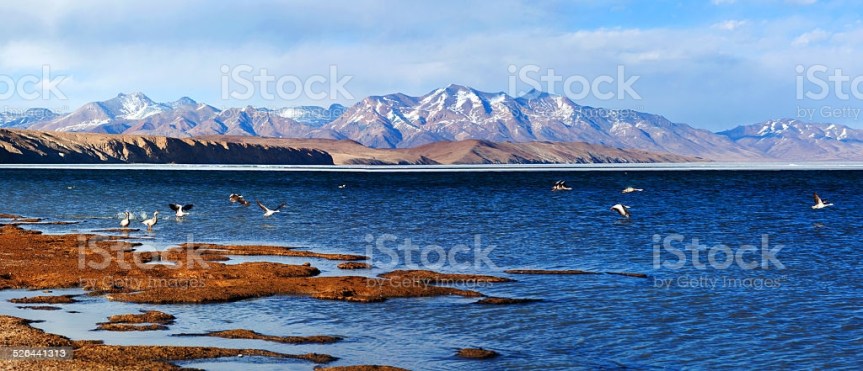
Manasarovar Lake: The Mythological Mystica

Some places have special values. Sometimes personal, and at other times, cultural and/or traditional. India, being the epicentre of Hinduism since times memorial, has a lot of such places, spread across the country and neighbourhood. One such place is Lake Manasarovar or Manas Sarovar, a freshwater lake, situated near Mount Kailash. A scene of serenity, this lake is a treat to watch in the nights, when the cosmos seemingly descends to the watery depths of the pristine blue loch

Facts and Figures

Regarded as the holiest lake in Tibet, Manasarovar is situated in the Ngari Prefecture, which lies to the far western side of Tibet. Also known as the Swan rimbonche and Mapham Yum Tso (English: Invincible Turquoise Lake), this spot is located at an elevation of 4590m (15060 ft) from the sea level, and holds the record of being the highest freshwater lake in the world. 

With a depth of 90m (300ft), this almost circular lake is situated at a distance of almost 32 kilometres from the illustrious Mt. Kailash, the waters of Manasarovar finds its sourcing and sustenance from the Kailash glacier. Situated in the vicinity of origin sources of some important rivers of the Indian subcontinent, like Sutlej, Brahmaputra, Ganga and Indus River, Manasarovar overflows into the nearby Lake Rakshastal via the Ganga Chhu channel (approx 10 km. long). 

Cultural Clout

Lake Manasarovar and Mount Kailash both hold an important place in various religions, like Hinduism, Buddhism, Jainism and Bon (indigeous religion of Tibet). According to the Hindu beliefs, Manasarovar was first created in the mind of Brahma, one of the trinity of Hinduism, and later, manifested on the face of earth. Hence the name Manasarovar, which can be broken down into Manas, meaning ming and Sarovaram, meaning lake. Such was the beauty of this lake, that Lord Shiva, another deity of the Trinity, made his abode, Mt. Kailash beside this lake. Manasarovar finds mention in the Srimad Bhagavata Purana. It is said that one who takes a dip and consumes the holy water of this lake, is freed from all his/her sins and will go to Mt. Kailash, abode of Lord Shiva after the completion of their human life. 

In Buddhism, Manasarovar is equated with the legendary lake Anavatapta, where Gautam Budhdha is said to have been conceived. It also appears at several other instances in the Budhdhism scriptures, and Lord Budhdha is said to have stayed, meditated and teached near this lake. At present, several monasteries can be seen dotting the circumference of Lake Manasarovar. Its importance in Jainism is due to the connection with the first Tirthankara, Rishabha, who is said to have achieved Nirvana in the Ashtapad Mountain (equated with Mt. Kailash). Similarly, in the Bon religion, this lake is associated with the sacred deity, Zhang Zhung Meri.

Being a part of that many religions, Manasarovar and Mt. Kailash has acquired the reputation of being a holy pilgrimage site. Hence, pilgrimage tours are organized from quite a few parts of the Indian subcontinent. In India, the most famous tour is the annual ‘Kailash Manasarovar Yatra’. The starting of the trek point is Darchen (in Tibet), a short road trip leads to the shores of Manasarovar. From there starts the actual trek or Yatra, which includes the circumambulation of Mt. Kailash. 

With all its grandeur, Manasarovar was, is and will always be an evergreen sight to visit!

Website Reference

https://en.wikipedia.org/wiki/Lake_Manasarovar

https://www.tibettravel.org/kailash-tour/kailash-mansarovar-yatra.html

https://zeenews.india.com/spirituality/kailash-mansarovar-3-mysterious-miracles_1863270.html#:~:text=People%20who%20halt%20a%20night,are%20also%20always%20in%20movement.

Image Credit: Getty Images/iStockphoto

TO A SKYLARK

“To a Skylark” by Percy Bysshe Shelley is an ode to the “blithe” nature of a singing skylark and how human beings are unable to ever attain that same bliss. In the poem, Shelley addresses a skylark that flies up at a magnificent height and sings so melodiously that the world is entranced and charmed by its sweetness .The skylark is Shelley’s most exceptional natural metaphor for true poetic emotion, the “harmonious madness” of classic influence. It signifies high poetic imagination, virtue, and messenger of peace and progress. The skylark’s song concerns a position of purified existence; its song is driven by the pleasure of that uncomplicated simplicity of life, and is unmixed with any sign of despair or of the bittersweet, as human happiness very usually is.

The skylark’s unrestrained melody pours down upon the world, transcending every other grace making the speaker assume that the bird is not mortal at all, but a “Spirit.” It stands for idealism free from crime, exploitation, and slavery. In the poem, it’s rarely noticed but its deep mellow song helps to evoke the people of the mystical visions of Nature. The bird signifies the sheer, unrestrained happiness that Shelley is frantically seeking. This desperation comes through in the next stanzas. He sees the bird as a “high-born maiden” that serenades her lover below her and spring, or “vernal showers” that rain on the flowers below. The skylark is like “rainbow clouds” and the type of all “Joyous” things. 

Structurally and linguistically, this poem is almost unique among Shelley’s works; its strange form of a stanza, with four compact lines and one very long line, and its lilting, songlike diction (“profuse strains of unpremeditated art”) work to create the effect of spontaneous poetic expression flowing musically and naturally from the poet’s mind. The skylark is happy because it apprehends what makes it happy. It has a chosen advantage over human beings, who know
both what gives them happiness and what causes them unhappiness. They worry about the end because they are unaware of things that lie beyond mortality, among other reasons. The skylark knows what lies beyond death, and feels no concern about it. It is no so shocking that it is exceptionally happy the line “We” pine for things that we do not have, and even our “sweetest songs” are full of the “saddest thought[s].” clearly states it.

The poem ends with the writer soliciting with the bird to “Teach [him] half the gladness / That thy brain must know.” Even that little amount of happiness would give Shelley the capability to produce “harmonious madness” that would force the world to listen to him must as raptly as he is listening to the skylark now. Some critics say that P.B Shelley was not a practical man. He was far away from realism. So his Skylark continuously soared higher and did not come to the earth, like the Skylark of Wordsworth. On the whole, this poem is Shelley’s one of the most excellent works.

88% Covid positive pregnant women asymptomatic

Asymptomatic women with Covid-19 are at risk of infecting their newborns and also pose a risk to healthcare providers and other patients.

coronavirus, coronavirus pregnancy, pregnancy birth coronavirus, coronavirus mother to baby, covid-19 pregnancy, coronavirus news, pregnancy coronavirus guidelines, coronavirus latest news, coronavirus india, coronavirus india news, coronavirus india live news, coronavirus in india, coronavirus in india latest news, coronavirus latest news in india, coronavirus cases, coronavirus cases in india, coronavirus lockdown, coronavirus india update, coronavirus india state wise,

A new study, conducted among over 1,140 pregnant women in the state, has found that 88 per cent Covid positive pregnant women were asymptomatic and has strongly recommended the strategy of universal testing.

The study — ‘Universal screening identifies asymptomatic carriers of SARS-CoV-2 among pregnant women in India’ — has been accepted for publication in the European Journal of Obstetrics, Gynaecology and Reproductive Biology. It was conducted by the State Medical Education and Drugs Department, government of Maharashtra, and ICMR – National Institute for Research in Reproductive Health, along with other hospitals.

Asymptomatic women with covid19 are at risk of infecting their newborns and also pose a risk to healthcare providers and other patients. Considering this, the Indian Council of Medical Research has recommended universal testing for SARS-CoV-2 in pregnant women. “Our joint collaborative study has estimated presence of one symptomatic to every nine asymptomatic pregnant women with Covid-19,” said Dr Smita Mahale, director of ICMR- National Institute of Research in Reproductive Health (NIRRH).

In all, 141 of 1,140 pregnant women tested positive for SARS-CoV-2, resulting in a prevalence of 12.3 per cent in Maharashtra. For estimation of numbers of symptomatic and asymptomatic pregnant women, the data of 141 women was pooled with data from Topiwala National Medical College and BYL Nair Hospital, which exclusively caters to Covid-19 patients. Of the 321 SARS-CoV-2 positive women, only 37 women were symptomatic. The prevalence of symptomatic pregnant women is 11.5 per cent while that of asymptomatic pregnant women is 88.5 per cent.

SP Balasubrahmanyam is no more: Film industry, leaders pay tributes

Legendary playback singer S.P. Balasubrahmanyam passed away at a private hospital in Chennai on Friday after testing positive for the coronavirus disease (Covid-19) in August. He was 74.Popularly known as SPB, Balasubrahmanyam made his singing debut in 1966 with Telugu movie Sri Sri Sri Maryada Ramanna. He has sung over 40,000 songs in as many as 16 languages including Telugu, Tamil, Malayalam, Kannada, and Hindi.

SP Balasubrahmanyam Tests Negative For Coronavirus, SP Charan Says 'My  father is Fine And Stable' | India.com

The passing away of the legendary singer SP Balasubrahmanyam has left his fans saddened. Many celebrities are paying their tribute to him on social media. From Prime Minister, President and Chief Ministers to business tycoons, actors and commoners, people from all walks of life in the country are grieving the death of Balasubrahmanyam and many have poured their condolences on social media.

Prime Minister Narendra Modi condoled the death of legendary singer SP Balasubrahmanyam and said his was a household name across India, his melodious voice and music enthralled audiences for decades.

Prime Minister Narendra Modi on Friday condoled the death of SP Balasubramanyamm, saying with the passing away of the legendary singer, the cultural world has become a lot poorer.

“With the unfortunate demise of Shri SP Balasubrahmanyam , our cultural world is a lot poorer. A household name across India, his melodious voice and music enthralled audiences for decades. In this hour of grief, my thoughts are with his family and admirers. Om Shanti,” PM Modi said in a tweet.

In the passing of music legend SP Balasubrahmanyam Indian music has lost one of its most melodious voices. Called ‘Paadum Nila’ or ‘Singing Moon’ by his countless fans, he was honoured with Padma Bhushan and many National Awards. Condolences to his family, friends and admirers,” President Kovind wrote on Twitter.

Union home minister Amit Shah also took to Twitter to condole Balasubrahmanyam’s death and said he would forever remain in people’s memories through his melodious voice and unparalleled music compositions.

“Deeply saddened by the passing away of legendary musician and playback singer Padma Bhushan, SP Balasubrahmanyam ji. He will forever remain in our memories through his melodious voice & unparalleled music compositions. My condolences are with his family & followers. Om Shanti,” Shah tweeted.

Lata Mangeshkar, A.R. Rahman, Salman Khan mourn SPB’s demise

Prominent names from Indian film industry such as veteran singer Lata Mangeshkar, music composer AR Rahman, actors Salman Khan, and Ramaya Krishnan, paid tributes to th legendary singer.Hailing Balasubrahmanyam as a “brilliant singer” and a “kind human being”, Mangeshkar reminiscenced working with him.

“I’m very disturbed by the demise of SP Balasubrahmanyam. We have recorded many song together and did a lot shows. My condolences to his family,” the veteran singer wrote.

Rahman shared his photo with Balasubrahmanyam and simply posted, “#ripspb …Devastated”.

Khan, who on Thursday wished the legendary singer a speedy recovery, said he was heartbroken by the news of his demise.

“Heartbroken to hear about #SPBalasubrahmanyam sir… you will forever live on in your undisputed legacy of music! condolence to the family #RIP,” he tweeted.

Kapoor remembered the musician as a “great human being” and “an incredible singer” and said that he will be “missed truly“.

“Baahubali” star Krishnan tweeted, “Someone so special can never be forgotten, may his soul rest in peace my deepest condolences to the family….#ripspb sir”

Filmmakers Madhur Bhandarkar, Bejoy Nambiar and Sujoy Ghosh also offered their condolences.

Shah Rukh Khan’s posted on Twitter, “Condolences to SP Balasubrahmanyam sir’s family and friends on the loss. May the legendary singer’s soul Rest In Peace… Will miss his soothing voice.”

NATIONAL MUSEUM OF INDIAN CINEMA TOUR

I was fortunate enough to have a chance to visit the National Museum of Indian cinema in Mumbai. The museum is housed in two buildings – the 5 storey new museum building and the 19th-century Victorian gothic bungalow Gulshan Mahal. We arrived there at 1:40 p.m. The museum is housed in two buildings – the 5 storey New museum building and the 19th-century Victorian gothic bungalow Gulshan Mahal. It is a house of quaint artifacts of India’s pre-cinema history, it also showcases over a hundred years of Indian cinema through nine sections raining from the origins of Indian cinema to the studio era of new wave. Gulshan Mahal discovers nine aspects that are Origin of India, cinema comes to India, Indian silent film, the advent of sound, the studio era, the impact of world war 2, creative resonance, new wave and beyond & regional cinema. Besides artifacts, posters, film clipping, etc. Adjacent to the historic building is a classy building.

The swanky building house has mobile exhibitions, 3-D compatible theatres with 4 K projectors and 7.1 surround with specific themes Gandhi and Cinema, Children Film Studio, Technology, Creativity, and Indian Cinema & Cinema across India. Gandhi & Cinema: it not only depicts the movies made on the life of Mahatma Gandhi but also showcases the deep impact his life had on cinema. Children’s Film Studio gives visitors, particularly children, an opportunity to explore the science, technology, and art behind filmmaking. It offers hands-on experience on various facets associated with making a cinema-like camera, light, shooting, the experience of acting, etc. – presented in an interactive format. The exhibits displayed include chrome studio, immersive experience zone, stop-motion animation studio, virtual makeover studio, etc. Technology, creativity & Indian cinema: it showcases the creative use of technology by Indian filmmakers over the years to produce a cinematographic impact on the silver screen. Cinema across India: it showcases the charismatic kaleidoscopic presence of the vibrant cinematographic culture across India.

The trip aimed to gain knowledge on Indian Cinema and to understand Its importance. We get to know that Cinema has been one of the greatest influences in our modern life, and it’s also a form of art, the seventh art along with photography, architecture, literature, play, painting, and music. It’s the combination of technology, business, entertainment, and aesthetics, each and everything of these four has an important role in the present-day world. The first Bollywood movie was Raja Harishchandra (1913), however, it was a silent movie. In 1931, Alam- ara came which was India’s first sound film. Then in 1937 came Kisan Kanya which was India’s first color film. We were free to explore the museum on our own.

The visit to Gulshan Mahal was fascinating. The old artifacts gave us a brief idea about how films were made in the 20th century. There were instruments like Praxinoscope, Thaumatrope, Phenakistoscope, mutoscope Modern animation from plates of The Horse in Motion by Eadweard Muybridge, etc. that were used for making films. We also saw old film posters; cameras were used during that time. Then we visited the glass building which had all 21st-century movie posters and film equipment. Something which caught my interest the most was the Bioscope Show. There were different types of camera lenses used for shooting, we could also watch our favorite movie scenes and could listen to songs which made it fun.

Then my second favorite place was Children Film Studio. We had a lot of fun; we got experience or opportunity to become an actor, director, cameraman, animator, etc. We also tried using the green screen and got a virtual makeover. Amidst the fun, we realized how much we got to know about cinema. We then went to explore Gandhi & Cinema.   Gandhi, British-Indian historical film, was released in 1982, which tells the story of Mahatma Gandhi and his struggle to win independence for India through nonviolent civil disobedience. The movie won eight Academy Awards, including that for best picture, and five Golden Globe Awards, We even had got to spin the Charkha. The charkha, or spinning wheel, was the physical embodiment and symbol of  Gandhi’s constructive program. It represents Swadeshi, self-sufficiency, and at the same time interdependence, because the wheel is at the center of a network of cotton growers, carders, weavers, distributors, and users. It was an enjoyable and informative trip.   

To be angry is your foolishness…

If we try to search the root of anger, then it is revealed that the reason for this is external activities. There are some of them who are acting against us in some form or the manner. But don’t you agree that when external circumstances are against us, then we should become more supportive of ourselves. But normal human beings do just the opposite. 
When conditions are not favourable, we become more aggressive. We become angrier. Whereas we do so internally. Internally it bothers us more. Things become completely hostile to us. You suffer more than what you were angry about,  the person who is going against himself. 

Can you call him a sensible person? Certainly, he would be considered a mindless person. If this is a pleasant experience for you, then you should be angry day and night. You should always be angry. Nobody will have any problem. If you are enjoying it.

So keep doing this, nobody has a problem. But if it becomes annoying for you, then tell me who has chosen this trouble for yourself? If there are many people around you, then you will try to hold someone else responsible for this problem. These people do what they want to do. But are you also doing what you want?

This is the most important question. Have you prepared your mind for what you want to do? How do you live if you trouble yourself due to internal conditions, then you tell me how wise it is.

Now you tell me by being angry, your aggression is an identity of wisdom or your senselessness? When you understand this senselessness, then only you will have a truly happy experience. When you realize that your anger is a sign of your mindlessness, then your anger will suddenly disappear in a few days.

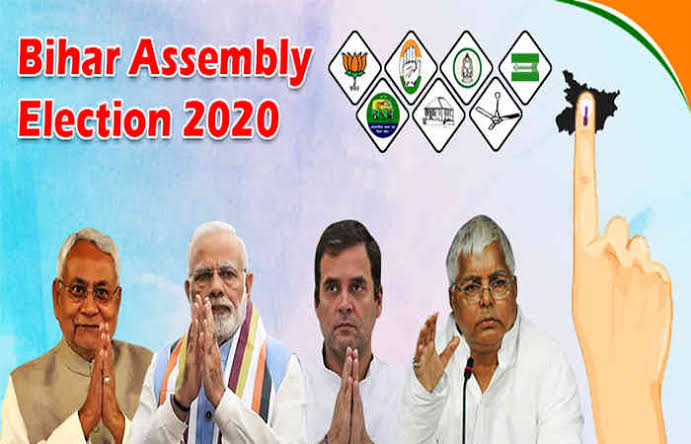
BIHAR ELECTIONS TO START FROM 28TH OCT, RESULT ON 10TH NOV


The Election Commission of India (ECI) on Friday announced the schedule for Bihar Assembly polls 2020. Voting for Bihar assembly elections will be held in three phases — first on October 28, second on November 3 and the third on November 7 — while counting of all votes will take place on November 10, the Election Commission announced on Friday.

Announcing the three-phase election, Chief Election Commissioner Sunil Arora called it a “leap of faith”, pointing out that medical and engineering exams JEE and NEET took place recently and a large number of students sat for them. “COVID doesn’t show any sign of going down. Some way had to be found to choose representatives and protect the health of people. Life has to go on,” he told reporters.

“The world has changed significantly since the last elections, which were held for the Delhi assembly. The COVID-19 pandemic has forced a new normal in every aspect of our life,” Mr Arora said.


As soon as the dates are announced, the Model Code of Conduct will be enforced in the state. Bihar has to elect a new 243-member assembly by November 29. The Election Commission has decided not to hold 65 pending by-elections to fill vacancies in various assemblies and one in Lok Sabha simultaneously with the Bihar elections. The bypolls were already deferred due to excessive rains and the pandemic.

Amid the pandemic, several measures have been taken for campaigning and polling to ensure safety of leaders and voters. Polling has been extended by one hour from 7 am to 6 pm. The last hour will be reserved for those with Covid-19 and who are quarantined.

Several countries have held elections amid the pandemic. However, CEC Arora said the Bihar polls are likely to be the largest elections conducted during the pandemic given there are with 72.9 million electors in the state.

MAHENDRA SINGH DHONI- THE COOLEST CAPTAIN.

Mahendra Singh Dhoni, born on July 7,1981 in the town of Ranchi. He is a perfect example of perseverance and determination. Dhoni has captained India in 332 international matches – 200 ODIs, 60 Tests and 72 T20Is – which is a world record. It was because of our captain cool that India won the 2011 World cup and it was the proudest moment for all the Indians. The amount of excitement and trust his fans have on his is tremendous. They know that even after things are not going right during the match they still have Dhoni and his helicopter shots to save the Indian team. Dhoni hai na , Dhoni sambhaal lega is what everybody has on their lips. He is the ray of hope for every cricket fan out there. His hardwork has paid him off. From being a ticket collector to attaining what he aimed for he has come a long way. Everybody has witnessed his life story in his biopic MS DHONI:THE UNTOLD STORY. And we have seen under what circumstances he rose to shine like brightest star of the country.

Dhoni has proved that staying on the field and not getting overwhelmed or staying calm always helps. You need to maintain your anxiety level and play sincerely. Dhoni is an indirect guide for alot of people out there who aim to be like him. He has immense leadership qualities and even his team mates appreciate him for “THE MAN” he is . Dhoni was felicitated by Padma Bhushan – India’s third-highest civilian award in 2018 and Padma Shri –  India’s fourth-highest civilian award in 2009 . Both of these are National Honours and really a proud moment for him as well as the country. Other than this he has won a lot of awards like : 2007−08:Rajiv Gandhi Khel Ratna award India’s highest honor given for achievement in sports.ICC ODI PLAYER OF THE YEAR 2008-2009 , ICC WORLD ODI XI, CASTROL INDIAN CRICKETER OF THE YEAR etc

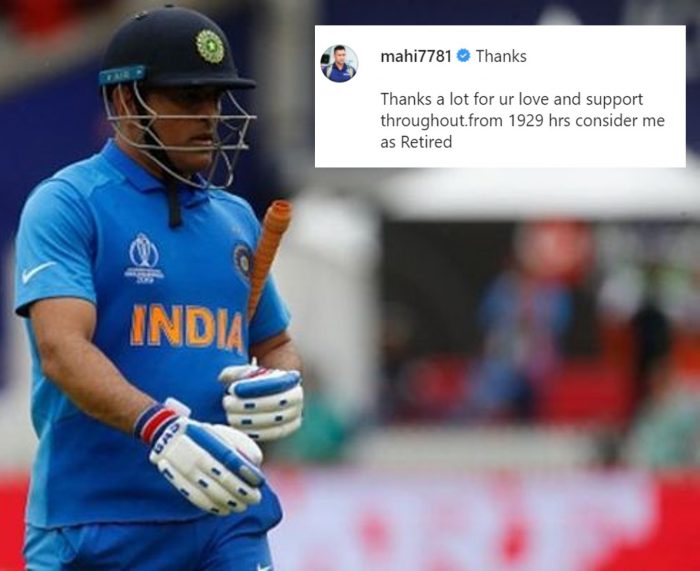
15th August 2020, at 19:29 all the Indians and the Cricket fraternity was stunned at the decision of our Ex captain. The decision of his retirement. Everybody knew it will happen but experiencing and digesting it was tough. No more Dhoni sambhaal lega on the fields. No more the wicket keeping would be the same. No more ending the match with a 6 and no more Helicopter shots to be witnessed. It was an end of a Dhoni Era altogether. As soon as the announcement was made everybody expressed their thoughts on various social media platforms. From celebrities to common men everybody was stunned. Along with him Suresh Raina also decided to retire and both the friends were together on the field and are now together off the field.

Dhoni is an inspiration for all those who come from a small town and aspire big dreams. He is an example of everything can be won with correct determination and hardwork in the right direction. Practice makes a man perfect is what he has proved. Dhoni will remain the only DHONI in the world of cricket and hence stands irreplacable. Millions of his fans have glued their on Chennai Super Kings, this IPL to witness their Mahi play on the ground.

Don’t judge a book by it’s cover

The English idiom “don’t judge a book by its cover” is a figurative phrase which means “you shouldn’t judge significance of something by its outward appearance only”.

It is easier and faster to look at the instantaneous outer features of an object or a person. Many cannot deal with the troubling feeling of doubt (fear) when conversing with a stranger so to make it less challenging for themselves, they put a label on their new associate and act accordingly.

For example, you see a good-looking person and a bad-looking person. You know nothing about them except their skin colour, their physical traits and fashion. Then what? You make all sorts of thoughts and make a massive data in a minute just taking a look of their outward appearance. You may get attracted to the good-looking one but that could be a disaster for your life. He/she may not possess any real ability or talent. He/she can even turn out to be corrupt too. Outward appearance can be greatly misleading. There are utterly valueless things that look so good and taking them on their face value is foolishness.

Many people feel that you can tell a lot about a person by observing what they wear and what they eat. This is not the case. Choice of clothing and eating habits, in no way, allow you to pass judgment on a person. Judging people based on these factors is extremely shallow. What one wears and eats in no way depicts character, behavior, or even intelligence. One simply cannot know a person by looking at them and observing what they eat. Such a thought is ridiculous.Instead of looking at clothing and what one is eating, character should be the basis for opinion. Judging a book by the cover only leads to surprises, and in this case, judging a human by dress can lead to surprises as well.

This quote means a lot to me because when I had cancer and my physical appearance changes people judged my looks and thought horrible things about me. For example many who see a rough looking, skinny woman on the streets, who is really boney, may think she’s on drugs. There could be so many reasons why she looks like that.

You can not judge a book from the cover, but you can judge the website from its design. Before going into features and ease of use, people tend to evaluate and judge products and web sites early on the basis of appearance. The following design trend is necessary to make the product fresh and attractive. But is the design trend a panacea? Our designers know that the next design trend is an important part of our work, but we should not blindly use them. Not all situations are useful, useful, or applicable in all situations. Even a good trend may get worse and you may hurt the user experience. This is the reason we have to carefully use them, filter them and adjust them when necessary.We all know that you can not judge a book through its cover, but a good cover certainly will not hurt you. Like a wonderful hardcover book, we will give you a beautiful cover image to set the atmosphere of your photo gallery in your gallery. This cover image will add shine to the top of your gallery and welcome your visitors showing a full range of shine. The cover image fits seamlessly over the galleries, titles, descriptions, buttons (for purchase, slide, download), and all the navigation links displayed at the top of the photo. Since we do not want the cover image to cover all the stunning gallery pictures, we are very big so your gallery gets an amazing introduction they deserve without hiding the pictures under them Designed.I can not judge a book through the front cover, or I can not judge a book through the front cover. That is, you should not judge someone or something according to the appearance or the original appearance. If he loves her, I will be happy to them. You can not judge a book through the cover page. We may say that we do not believe in judging books through the cover, but according to the survey we have done it over and over again.

There is an old idiomatic phrase “Please do not judge a book on the cover.” This is a figurative phrase, “Do not prejudice something’s value or value by just looking.” Determining a book is probably one of the most exploited idioms, but it is certainly not the most commonly used. We do not deliberately dig down the surface, we live in a very superficial society where it is easy to see the surface. It is very troublesome to change this. In order to deeply consider one person, one thing, or one idea, people must maintain strict self-justification and ignore many prejudices.In many cases, our perception of others is greatly influenced by the appearance. Do not judge books on the front page – this is a sentence that everyone should have heard at least once in life. As people who are constantly judged and judged, we need to remember that everything is in a state of change. Therefore, assumptions and judgments increase the complexity of life. It is always a good idea to remove the colour lens.They said, “Do not judge a book on the cover.” Unfortunately, that did not happen. Until you get better you can judge each book with thumbnails and thumbnails of each video. In addition to throwing out part of the video thumbnails, viewers tend to judge the quality of the video through it. You should always avoid confusion and excessive text on thumbnails.

Instead of looking at clothing and what one is eating, character should be the basis for opinion. Judging a book by the cover only leads to surprises, and in this case, judging a human by dress can lead to surprises as well. Just because a man or woman may not dress as nicely, they’re not necessarily bad or even poor. The particular individual may not care what anyone thinks. They may dress a certain way just so people will pass judgment on them, some may just want the attention. This is often the case. One’s appearance can lead to many false judgments. By saying someone is a bum because of what they eat or wear shows total ignorance. If a person did nothing to better their situation, they can be considered bums.

The blacks had no say whatsoever in any of the events that held place in Maycomb, the main town mentioned in the book. In this book, one of the main characters, Atticus Finch, a noble gentleman, teaches his children, Scout and Jem the importance of not being prejudice, and that there should not be any differences between the whites and blacks. He teaches his children to be understanding, and to look at things from different people’s point of view, and to put themselves into other’s shoes. Despite his sister, Alexandra, being one of the most prejudice ladies in Maycomb, he ignores what everyone says of him, and sticks to his views believing that all whites and blacks should be equal. As a lawyer, he faces a stage where he has to defend Tom Robinson, a black man being accused of raping a white. Despite other’s views that he should not take this case seriously, he puts in all his effort into defending Tom Robinson, although he is aware that the chances of winning was zero.

The 1991 Indian Economic Crisis

The 1991 Indian economic crisis was an economic crisis in India that resulted from poor economic policies and the resulting trade deficits. India’s economic problems started worsening in 1985 as the imports swelled, leaving the country in a twin deficit: the Indian trade balance was in deficit at a time when the government was running on a large fiscal deficit. By the end of 1990, in the run-up to the Gulf War, the dire situation meant that the Indian foreign exchange reserves could have barely financed three weeks’ worth of imports. Meanwhile, the government came close to defaulting on its own financial obligations. By July that year, the low reserves had led to a sharp depreciation of the rupee, which in turn exacerbated the twin deficit problem. The Chandrasekhar sir’s government could not pass the budget in February 1991 after Moody downgraded India’s bond ratings. The ratings further deteriorated due to the unsuccessful passage of the fiscal budget. This made it impossible for the country to seek short term loans and exacerbated the existing economic crisis. The World Bank and IMF also stopped their assistance, leaving the government with no option except to mortgage the country’s gold to avoid defaulting on payments.

In an attempt to seek an economic bailout from the IMF, the Indian government airlifted its national gold reserves.

The crisis, in turn, paved the way for the liberalisation of the Indian economy, since one of the conditions stipulated in the World Bank loan (structural reform), required India to open itself up to participation from foreign entities in its industries, including its state owned enterprises.

Causes of the Crisis :

The crisis was caused by currency overvaluation; the current account deficit, and investor confidence played significant role in the sharp exchange rate depreciation.

The economic crisis was primarily due to the large and growing fiscal imbalances over the 1980s. During the mid-eighties, India started having the balance of payments problems. Precipitated by the Gulf War, India’s oil import bill swelled, exports slumped, credit dried up, and investors took their money out. Large fiscal deficits, over time, had a spillover effect on the trade deficit culminating in an external payments crisis. By the end of the 1980s, India was in serious economic trouble.

The gross fiscal deficit of the government rose from 9.0 percent of Gross Domestic Product (GDP) in 1980-81 to 10.4 percent in 1985-86 and to 12.7 percent in 1990-91. For the centre alone, the gross fiscal deficit rose from 6.1 percent of GDP in 1980-81 to 8.3 percent in 1985-86 and to 8.4 percent in 1990-91. Since these deficits had to be met by borrowings, the internal debt of the government accumulated rapidly, rising from 35 percent of GDP at the end of 1980-81 to 53 percent of GDP at the end of 1990-91. The foreign exchange reserves had dried up to the point that India could barely finance three weeks worth of imports.

In mid-1991, India’s exchange rate was subjected to a severe adjustment. This event began with a slide in the value of the Indian rupee leading up to mid-1991. The authorities at the Reserve Bank of India took partial action, defending the currency by expanding international reserves and slowing the decline in value. However, in mid-1991, with foreign reserves nearly depleted, the Indian government permitted a sharp devaluation that took place in two steps within three days (1 July and 3 July 1991) against major currencies.

Recovery :

With India’s foreign exchange reserves at $1.2 billion in January 1991 and depleted by half by June, barely enough to last for roughly 3 weeks of essential imports, India was only weeks away from defaulting on its external balance of payment obligations.

Government of India’s immediate response was to secure an emergency loan of $2.2 billion from the International Monetary Fund by pledging 67 tons of India’s gold reserves as collateral security. The Reserve Bank of India had to airlift 47 tons of gold to the Bank of England and 20 tons of gold to the Union Bank of Switzerland to raise $600 million.  The van transporting the gold to the airport broke down en route due to tyre burst and panic followed . The airlift was done with secrecy as it was done in the midst of the 1991 Indian General elections. National sentiments were outraged and there was public outcry when it was learned that the government had pledged the country’s entire gold reserves against the loan. A chartered plane ferried the precious cargo to London between 21 May and 31 May 1991, jolting the country out of an economic slumber.The Chandra Shekhar government had collapsed a few months after having authorised the airlift. The move helped tide over the balance of payment crisis and kick-started P.V. Narasimha Rao’s economic reform process.

Under Narsimha Rao Sir’s Government :

P. V. Narasimha Rao took over as Prime Minister in June, and roped in Manmohan Singh as Finance Minister. The Narasimha Rao government ushered in several reforms that are collectively termed as liberalisation in the Indian media.

The reforms formally began on 1 July 1991 when RBI devaluated Indian Rupee by 9% and by a further 11% on 3 July. It was done in two doses to test the reaction of the market first by making a smaller depreciation of 9%. There was significant opposition to such reforms, suggesting they were an “interference with India’s autonomy”. Then Prime Minister Rao’s speech a week after he took office highlighted the necessity for reforms, as New York Times reported, “Mr. Rao, who was sworn in as Prime Minister last week, has already sent a signal to the nation—as well as the I.M.F.—that India faced no “soft options” and must open the door to foreign investment, reduce red tape that often cripples initiative, and streamline industrial policy. Mr. Rao made his comments in a speech to the nation Saturday night.” The foreign reserves started picking up with the onset of the liberalisation policies and reached an all-time high US$426.1 billion as on 13 April 2018

Mahatma Gandhi and Martin Luther King Jr

The starkest commonality between Gandhi and King is undoubtedly their pursuit of a non-violent culture of peace. Non-violence for them, wasn’t a strategy of inaction but rather one of action. Their nonviolent methodology and idea of freedom brought about change not just in external laws and systems of governance, but also affected the minds of fellow humankind at large. So much so that their death wasn’t the end of the legacy but rather their ideas drew strength from it.

In a war-torn century, they stood as firm preachers of the non-violent ideology. This ideology served for their goals as a means to an end, which in the case of the two leaders was varying but the ideology also served as a means itself. While for Gandhi it was for the cause primarily India’s independence from colonial rule. He also focused on the structural violence within the community such as caste system. On the other hand, as for King Jr was concerned with the cause of civil rights movements and used non-violent measures as a form of mobilization for legal purposes. The two leaders developed theories that linked to a system that surpassed governmental laws. Logical reasoning attempted to help justify their approaches towards unjust laws. Gandhi focused a lot of his analysis on defining the true meaning of ‘civilization’ whereas King concerned himself with ceasing injustice. Both Gandhi and King discussed reasons regarding the use of non-violent actions to fight for their rights.

But even as their aims, so to say, were a bit different their legacy often tends to meet at a point. The credit for this goes not just to their non-violent strategy but at the same time, to how they chose to approach this. Gandhi attempted to include egalitarian traditions in Hindu religious thought in his fight against the caste system. Similarly, King summoned traditions of resistance in the African-American Protestant Church, with the idea of freedom at the core of it. Both these iconic leaders had come to recognize that the inner and outer divide, the religious realm, the political, are also related which proved crucial in their understanding of the existence of a fundamental link between personal and social transformations.

Mahatma Gandhi and Martin Luther King Jr, have been criticised by many for their lackluster understanding of the society as a whole, more specifically for having near blind faith in their ideologies. However, credit is indeed given where it’s due. There is a moderate consensus that the relevance of the two has carried forward the ages. A reason we can attribute to this is their basic thinking and vision were universal in nature. Perhaps that is the reason why in parts of the world we are able to still witness non-violence amidst of violence, attempt to seek equality amidst ever rising inequalities.

Born 59 years apart, yet united by ideology. The two great leaders, born, brought up, into different local contexts, may have meant different ways to seek problems, it may have meant difference in the analysis of their successes or failures but it did not mean disassociation between the two. The belief that nonviolent resistance is one of the most formidable weapons available to the oppressed sections were commonly shared by the two. The very fact that their ideologies managed to become synonymous with the idea of ‘people’s movements’ seen in many countries is testimony to the fact that their relevance is by no means over yet. It has stood its ground in the face of adversities. Its success or failure is always open to scrutiny and interpretation. Whether or not it survives the passages of time remains to be seen but it can be said that the bond that holds the legacies of the two stalwarts, lives on amongst us even today.

Evolution

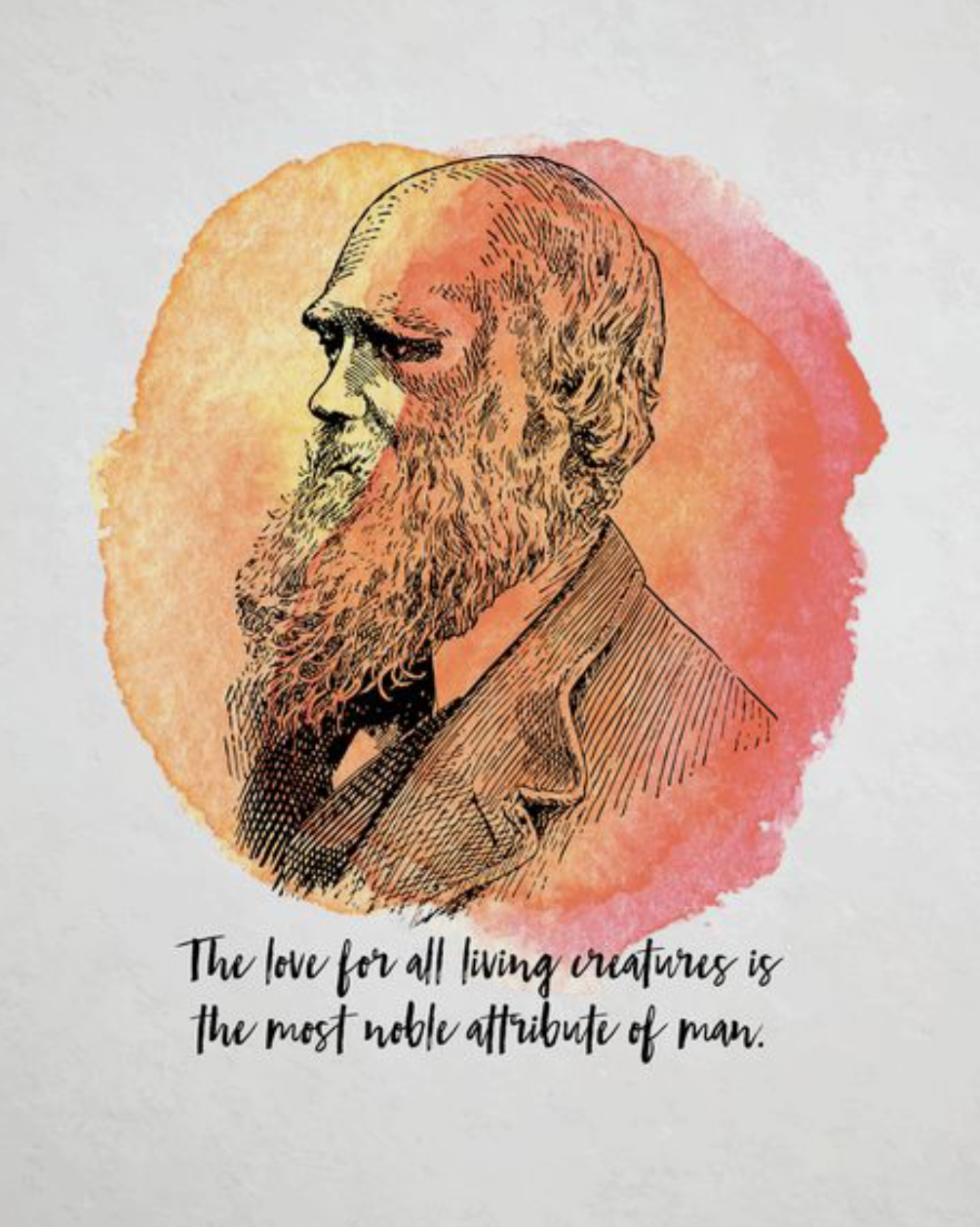
When you think of evolution the first name that comes to one’s mind is that of Charles Darwin. However, the fact is that he was not the first person to put forward the idea of evolution. Lamarck had suggested it earlier but the concept was not popular. In fact zoology professor Robert Grant lost his job because he supported Lamarck theory! An anonymous work titled, ‘The Vestiges of creation’ was ridiculed. It was Charles Darwin who first made the theory acceptable and he was able to do so because he supported it with a huge amount of evidence. Darwin, an English naturalist put forward his theory in a book titled ‘On the origin of the species’. He established that all species descended from common ancestors and that the different species evolved through a process he called natural selection. Darwin’s theory gained acceptance because it was able to explain the diversity of life.


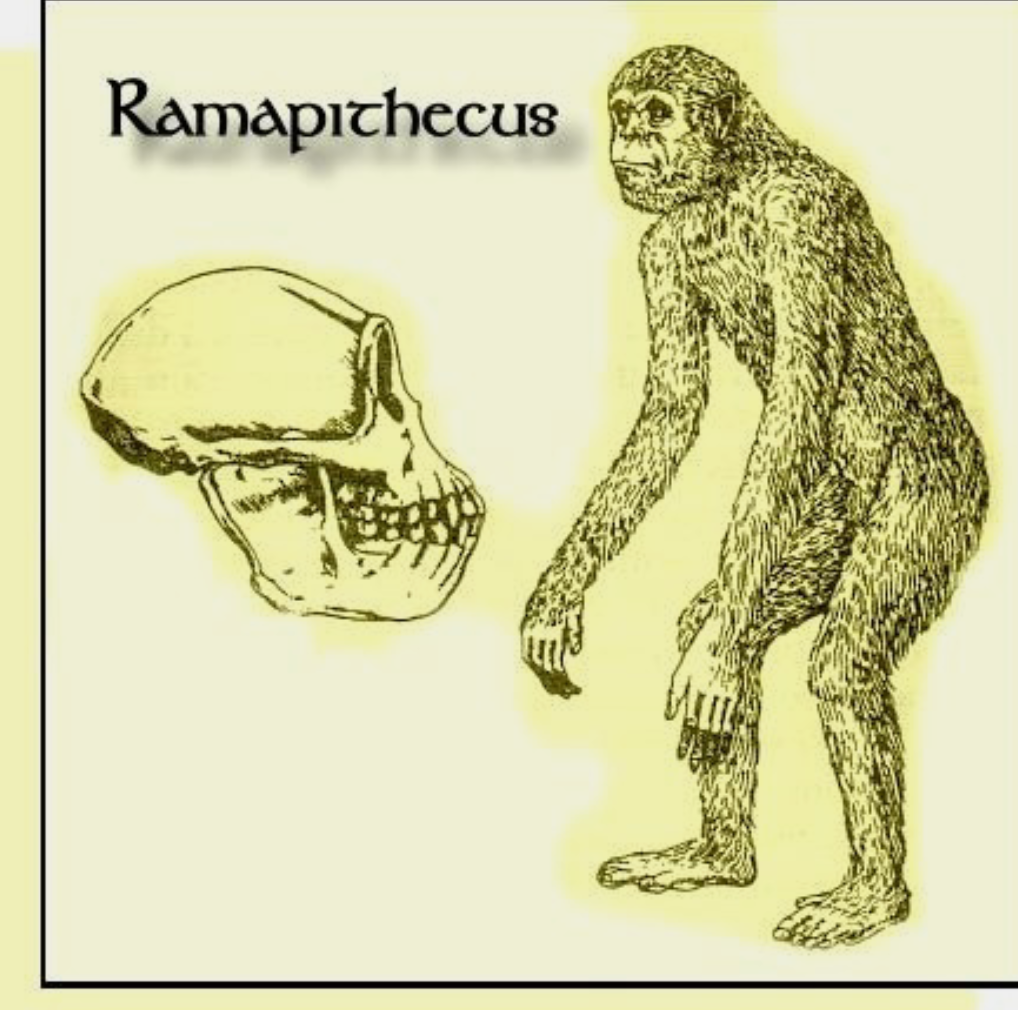
Ramapithecus belongs to an extent group of primates that lived from about 12 to 14 million years ago. Fossils of Ramapithecus were discovered in India and Africa beginning in 1932. Fossil evidence suggested that it had a short face, heavy jaws and enamelled teeth like hominids. Its importance lies in the fact that it was regarded as a possible ancestor of Australopithecus and therefore of modern humans. Later for sale finds indicated that Ramapithecus was more closely related to the orangutan and Ramapithecus is now regarded by many as a member of a group known as Sivapithecus.


It has been long known that humans share a common ancestor with apes but it was only in the last 30 years that techniques for develop to provide strong evidence in support of the theory that humans are more closely related to chimpanzees than they are to gorillas orangutans or Gibbons. The DNA of a chimpanzee is 98% identical to that of a human being. However our bodies adapted for walking on 2 legs. This is possible because the lower portion of the human body evolved to facilitate load bearing and balancing while walking upright. Chimpanzees not only share most of our genes they seem to be able to handle tools and they are able to grasp language pretty well too. Now researchers have found that we share a similar brain pattern when communicating. But in spite of these similarities there are clear differences in body structure intellect and behaviour.


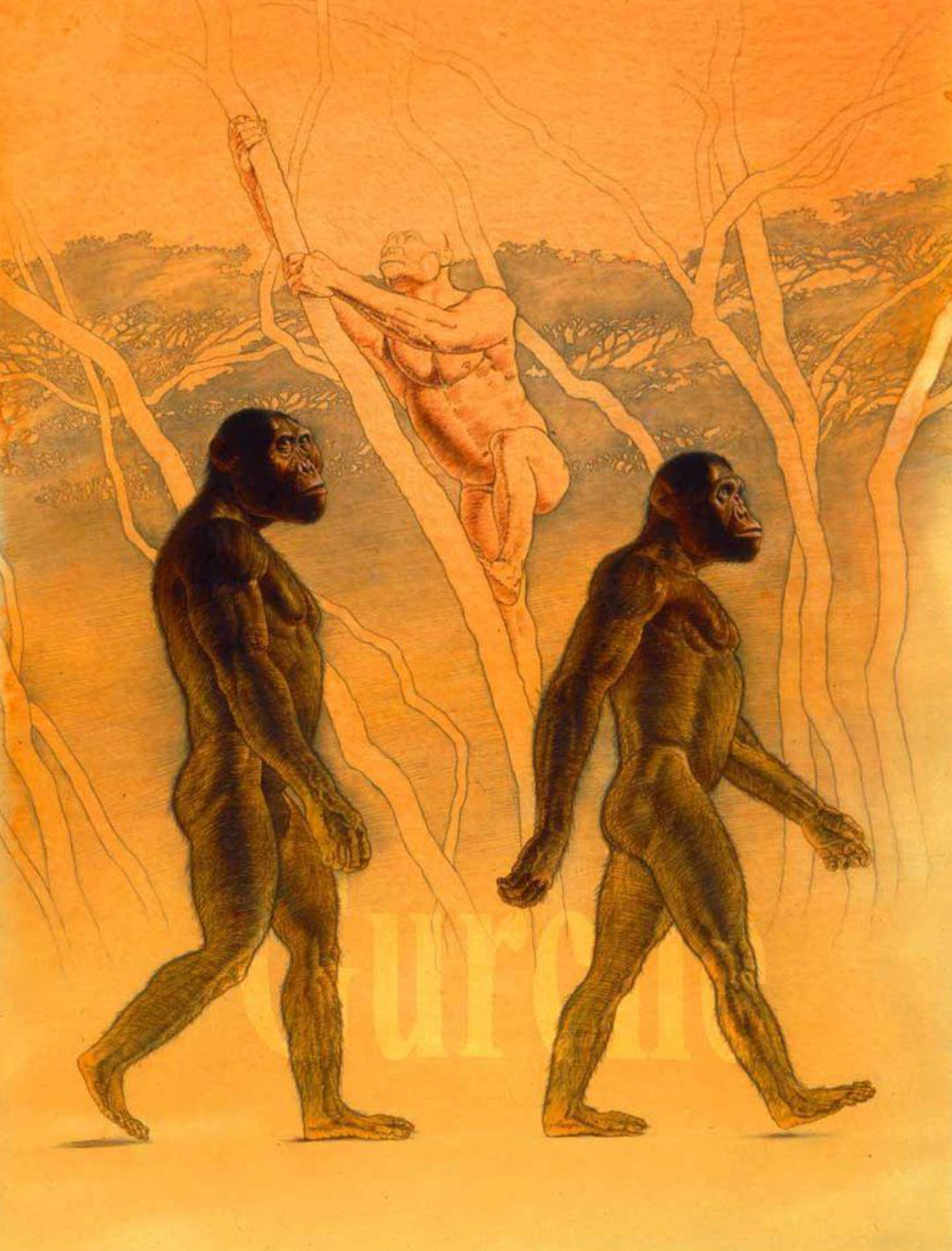
Australopithecus was an early hominid which is now extinct. Fossil evidence suggests that these individuals lived from approximately 4- 2 million years ago after evolving on the continent of Africa. Sense the fossils were recovered from south Africa they were called south African man apes or australopithecines. Australopithecines are believed to have been around 1 to 1.5 metre tall and probably fed on leaves fruits and the remaining of dead animals. Their brains were larger than those of apes but smaller than human brains while their teeth would like human teeth it is believed that Australopithecus eventually evolved into modern humans.


Neanderthal man first appeared in Africa about 200,000 years ago and migrated to the rest of the world around 100,000 years ago. The name Neanderthal comes from Neander valley where an early skull was found. Neanderthals would different from other species of early man. They were much taller and very strong for stop the brains were actually larger than ours are today. They were marvellous hunters. They often used caves as their homes. They were adept at fire making and probably cooked their food routinely. Neanderthals buried their dead. The Neanderthals died out by around 30,000 BC.
Cro-Magnon man lived some 40,000 -10,000 years ago. Their remains were first found in France in 1868 and then throughout other parts of Europe.

Cro-Magnon man was anatomically identical to modern humans and deferred significantly from Neanderthal man who disappeared in the fossil record shortly after Cro-Magnons appearance. Cromagnon man was tall and had an erect posture. He had a prominent chin a surprising forehead and skull shaped like hours. These man was killed hunters toolmakers and artists. Cro-Magnon man was a true human and looked just like us. He is represented by the remains of 5 individuals found in March 18683 adult males one adult female and one child.


•First family.
In 1975 Donald Johansson discovered the remains of at least 13 individuals of all ages at her there in Ethiopia. The sizes of the specimens varied greatly and Johansson believed that they all belong to a single species Australopithecus afarensis in which men were much larger than the females.

Thank you for reading. Have a nice day!🌼

Dreams and Deeds Foundation

D&D it is a type of organisation which works for every single social cause of society.

As we know in this covid-19 whole world is suffering from financial problems . Migrants don’t have a job to run their life. As time passes, their troubles are increasing.

The government is also doing its best, but can we defeat this epidemic only by trying the government? No !

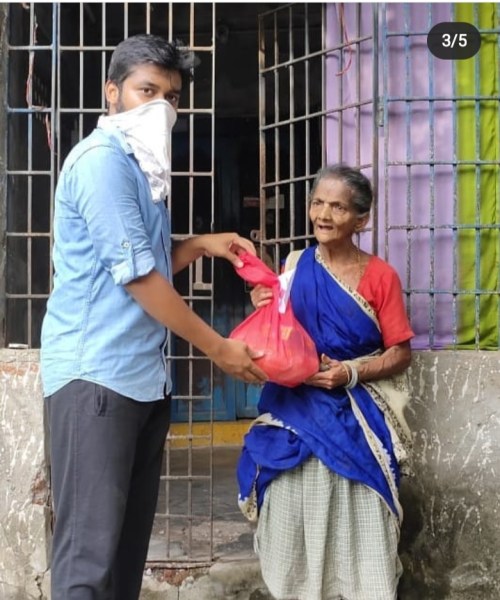
Many people need help. In the time of this epidemic, the Dreams and Deeds Foundation has emerged. And came forward to help those really need. the foundation take initiative to providing food sanitary pads and all the groceries to the migrants. As well as Foundation started feeding the animals this is one of the biggest and greatest step which is taken by dreams and deeds Foundation .

Providing groceries
Packets of the foundation for distribution
Initiate for feed animals
Plantation to protect the nature
Providing sanitary pads to women

So these are some main social cause on which Foundation is working like plantation to save the nature, feeding animals to protect them, providing sanitary pads to women for their safety in mensuration , providing groceries as well as concentrating on child education.

In this pandemic we really need a hand who can help us . A great work doing by the foundation and we all should appreciate it they celebrate every single day with lots of happiness and love. So let’s help them and do something new towards society.

For more query you can go on the Instagram page of the Dreams and deeds Foundation .

.