
OPTIMISM.

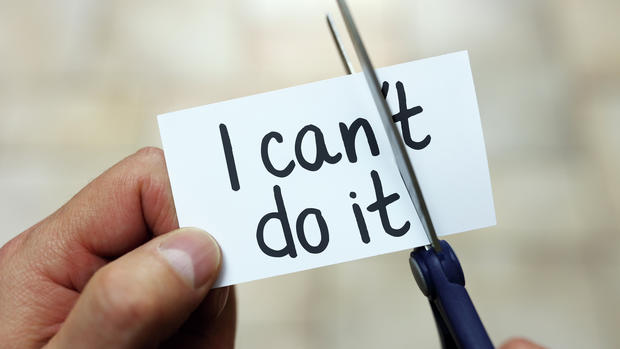
Umeed pe Duniya kayam hai is what we often here . If you want to carry one thing in life. Let it be HOPE. Hope that better things are always ahead. Man ka ho toh acha and Man ka na ho toh aur bhi accha is actually true because than God is planning something great for you. If you do not succeed today does not mean you will not succeed tomorrow Maybe you need a little more efforts. Take the past as your learning. The attitude of I cant do it should always be replaced by I Can do it. Because nothing is impossible in this world,even the word impossible says I M POSSIBLE.

Life is all about ups and downs .You can’t always go up and not fall down. There comes a point where you fail to achieve your goals but don’t get dis-heartened. Collect your efforts back and then pour them into the next activity you undertake. In this world of competition, we have started being too hard on ourselves . We tend to forget that we have a body and a mind that needs rest and positivity. When you on the path of optimism you being stronger and decide not to give up whatever the situation is. Optimism helps you to reduce stress or rather gives you the power to deal with it. You stay healthy and happier.

There are some famous personalities that have won laurels in their field because out of all the qualities they have the one accounts for Optimism . Mahendra Singh Dhoni, our ex captain cool is one of the finest examples of optimism. The amount of positivity and patience he has is unmatchable and appealing. Dhoni is an idol for the youth of this country and time and again he proves himself. He is the most calm personality one could see or meet. Another example is of the New Zealand captain KANE WILLIAMSON .Even after losing the World cup after so much of hard work and almost winning the trophy the smile he had that got viral on the social media and the words he spoke were so positive. He defined exactly why he was chosen to be the captain of India. If we see spiritually, Gautam Buddha is also a perfect example. His priciples were all about positivity in life and he always encouraged his disciples to follow the path of wellness and positivity .Even an ant teaches you optimism. It climbs and falls but still climbs the wall until it reaches its goal.

Your vibe attracts your tribe. So always stay with people who gives you positivity and who are positive themselves. With people who encourage you to be good and stay good. Who appreciate you in your highs and who encourage you in your lows. The kind of company you are in really matters a lot. You grow with them and if you are with people who are pessimistic your scope of growth disappears, because they will only tell you why you should not for something or why you should not try something again which is not at all good. Trying is the thing in life and if you stop trying you stop learning and you become unproductive. Not losing hope is important. You can not allow yourself to break. Gather the pieces and come back stronger. Stay positive. Positivity has a lot of power. If you think positive everything happens positive around you . Spread smiles. Don’t let anybody dull your spark. You are a star and therefore born to shine. Believe in yourself !!!
What is the right time to start, to decide?

Article by – Shishir Tripathi

Intern at Hariyali Foundation
In collaboration with
Educational News

Many people at present (and in past too) have very big dreams for their life. Dream of getting their desired profession, getting their dream car, having their beloved as their life partner, following the time table they made and what not. Desires and dreams are actually endless, but the time required to fulfill those desires and acquire those goals is limited.

People know how to proceed in the process of acquiring their goals and their dreams but 7 out of 10 people are always confused thinking about, ‘When to start’? People basically assume that yes they’ve decided what they always dreamt of but they never could decide when to give it a start.

It is a general tendency that people start from tomorrow. Tomorrow, being a new fresh day looks like the perfect day to start something good. People make plans and strategies which they will be following in the process of achieving their goals and turning their dreams into reality. Whereas some people think that starting of a month, or a week or a year is the perfect time to start something special and something good.

People think that before getting indulged into the race of acquiring their goals and their desires, they must take rest. People think that they must gather strength and the power. People spend hours and days and months just gathering the so called strength and the power. They waste a lot of time thinking that they are resting.

People before taking any important decision, they think that we must give rest to their brain before deciding something. People think that they are making their mind for that particular decision. To some extent it is important that, people must ponder upon the situation and outcomes of the decision but it must not happen that people spend excess time just thinking, thinking and making their mind. Some bizarre people, with a habit of shouting out their decisions to the world waste hours telling about their decision and end up giving up the thought of making a bold move and wise decision.

It has been told since very long that one must respect and value time in order to get their goals and the desires fulfilled. Time goes on like moving water in rivers and falling sand. Each passing moment, each second becomes the part of the past. When one more moment and one more again turns into days, weeks and months, nobody could actually notice it. But it is important for each and every individual to realize the worth of the time.

As time passes by, situations and circumstances also change. It might happen that an individual is in the best state to start something new and take a decision now. Nobody has seen the future; It might happen that circumstances in future are not so good for giving something a new start or making a bold move. Obviously, nobody knows that what will be happening in future.

Therefore, an individual must realize that the present is absolutely into their control. They are the ones’ who can shape their present for a much better future. There’s not all a particular right time to start. An individual after thinking about all the aspects of his decision and the after effects in future can take the best decision. An individual can start anything at anytime, at any moment. The right time is now. Start thinking about it and get into achieving your dreams and your goals as soon as possible.

Meanwhile, one must also realize that missions started and decisions taken in hurry could result in adverse results. Hence, after all the proper planning and mind making, an individual must not waste even a single minute and get onto his work for a better future, a better life.

Corona virus

Priya Yadav,

The World Health Organization (WHO) has declared the coronavirus an epidemic. The coronavirus is a very subtle but effective virus. The coronavirus is 900 times smaller than human hair, but corona infection is spreading rapidly around the world.

What is the Corona virus?

Corona virus belongs to a family of viruses whose infection can range from a cold to a problem with breathing. This virus has never been seen before. The virus infection started in December in Wuhan, China. According to WHO, fever, cough, shortness of breath is symptoms. So far no vaccine has been made to stop the virus from spreading.

As a result of this infection, problems like fever, cold, shortness of breath, runny nose, and sore throat arise. This virus spreads from one person to another. Therefore, great care is being taken about this. The virus was first caught in China in December. It is expected to reach other countries.
Viruses that resemble the corona are spread through droplets falling from coughs and sneezes. The corona virus is no longer spreading in China at the same speed as it is spreading in other countries of the world. The virus named COVID 19 has so far spread to more than 70 countries. Due to the increased risk of corona infection, caution is needed to prevent it from spreading.

What are the symptoms of this disease?

Covid-19 / corona virus has the first fever. This is followed by a dry cough and then after a week, there is trouble breathing.
These symptoms do not always mean that you have a corona virus infection. In severe cases of corona virus, pneumonia, excessive breathing difficulties, kidney failure, and even death can occur. The risk may be severe in the case of the elderly or people who already have asthma, diabetes, or heart disease. Similar symptoms are also found in colds and flu viruses.

When the corona virus infection occurs?

. Currently, there is no cure for the corona virus but medicines can be given to reduce symptoms of the disease.

. Stay separate from others until you recover.

. Work is underway to develop a vaccine to treat the corona virus.

. It will be tested on humans by the end of this year.

. Some hospitals are also testing antiviral medication.

What are the preventive measures?

. The Ministry of Health has issued guidelines to prevent the corona virus.

. According to these, hands should be washed with soap.

. Alcohol-based hand rub can also be used.

. Keep the nose and mouth covered with handkerchiefs or tissue paper while coughing and peeling.

. Stay away from people who have cold and flu symptoms.

. Avoid the consumption of eggs and meat.

. Avoid exposure to wild animals.

Who and how to wear masks?

. If you are healthy, you do not need a mask.

. If you are caring for a person infected with the corona virus, you must wear a mask.

. People who have a fever, phlegm, or breathlessness should wear a mask and immediately go to the doctor.

Method of wearing a mask: –

. Masks should not be front-handed.

. If you feel hands, then hands should be washed immediately.

. Masks should be worn in such a way that your nose, mouth, and part of the beard are covered.

. While removing the mask, one must remove the mask or the lace of the mask, do not touch the mask.

. Masks should be changed every day.

. How to reduce the risk of the corona, read the remedy

. Viruses that resemble the corona are spread through droplets falling from coughs and sneezes.

. Wash your hands well

. Cover your mouth while coughing or sneezing.

. If the hands are not clean then avoid touching the eyes, nose, and mouth.

How to prevent corona infection from spreading?

. Do not travel by public vehicles such as bus, train, auto, or taxi.
. Do not invite guests to the house.
. Ask for someone else’s household item.
. Do not go to the office, school, or public places.
. If you are living with more people, be more cautious.
. Stay in separate rooms and clean the shared kitchen and bathroom continuously.
. Do this for 14 days so that the risk of infection is reduced.
. If you have come from an infected area or have been in contact with an infected person, then you may be advised to stay alone. So stay home.

A similar threat was posed by the SARS virus about 18 years ago. In 2002-03, over 700 people died due to SARS. Thousands of people across the world were infected by it. It also had an impact on economic activities. No such evidence has yet been found about the coronavirus that the coronavirus is spread through parcels, baits, or food. Viruses such as the coronavirus cannot survive outside the body for much longer.

There has been a different uneasiness among the people regarding the coronavirus. There is a shortage of masks and sanitizers in medical stores, as people are increasingly rushing to buy them.

Based on information received from the World Health Organization, Public Health England, and the National Health Service (NHS), we are giving you ways to prevent the corona virus. Be its screening of passengers at the airport or screening of people in the lab, the government has made several preparations to deal with the corona virus. Apart from this, to avoid any kind of rumors, some instructions have been issued to protect themselves so that the corona virus can be dealt with.

Van Gogh : Suicide or Murder?

Van Gogh was born in Groot-Zundert in Holland on March 30th 1853 to a pastor father and was brought up in a highly religious and cultured environment.


Whilst he showed an aptitude for drawing from an early age, the young man didn’t choose to become an artist until his late twenties instead beginning his career working for an art dealer travelling between The Hague, London and Paris.

In 1886, Van Gogh moved to Paris where his younger brother Theo, with whom he was close, lived. Theo, an art dealer, supported his brother financially and introduced him to a number of artists, including Paul Gauguin, Camille Pisarro and Georges Seurat. Influenced by these and other painters, Van Gogh’s own artistic style lightened up and he began using more color.

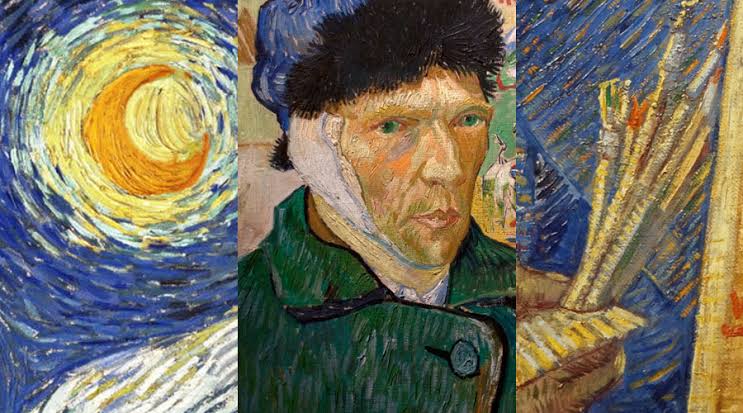
In 1888, Van Gogh rented a house in Arles in the south of France, where he hoped to found an artists’ colony and be less of a burden to his brother. However, tensions developed and on December 23, in a fit of dementia, Van Gogh threatened his friend with a knife before turning it on himself and chopping his ear lobe off.

Afterward, he allegedly wrapped up the ear and gave it to a prostitute at a nearby brothel. Following that incident, Van Gogh was hospitalized in Arles and then checked himself into a mental institution in Saint-Remy for a year. During his stay in Saint-Remy, he fluctuated between periods of madness and intense creativity, in which he produced some of his best and most well-known works, including Starry Night and Irises.

By 1890 his condition had improved and he moved to Auvers-sur-Oise under the supervision of his consultant Dr Gauchet. Here the open air and vistas of wheat fields inspired van Gogh to produce his greatest works; though even at this point of better health he was still incapacitated by his fits of madness which stopped him working for long periods. Two months later he had committed suicide by shooting himself in the fields where he painted and died in his bed from his gun-shot wound.

This was the accepted truth until writers Naifeh and Smith produced a biography in 2011 citing that there is evidence to suggest that van Gogh was shot accidentally by a teenager whom he did not wish to take the blame.

Rene Secretan at the time was a young man of about 18 who dressed as a cowboy and loved guns.

Their logic calls forth the trajectory of the bullet which was at an angle and not straight as a self inflicted wound would be.
Van Gogh had mentioned in previous correspondence with others of his distaste for suicide labeling it immoral and a sin.

So why would van Gogh protect this youngster who according to locals had been tormenting the artist? Perhaps he felt that he had been done a favour – having not the ethics to have committed suicide himself, he may have welcomed the accident as an end to his suffering.

Experts have said that it would have been impossible for van Gogh to have walked the mile or so from the field where he said the shooting took place back to his lodgings and so the incident must have taken place closer; could he have used this as a rouse to protect his killer?

Van Gogh experts all over the world have different opinions many accepting that his death was by suicide citing his history of mental health. Medical experts today have put his conditions down to a brain lesion he was born with which caused him to have epileptic fits; this coupled with his excessive consumption of absinthe (a kind of liquor) would have made the condition worse.

Periods of extreme dedication to his religion and later in producing artwork followed by deep states of depression and melancholy would today be diagnosed as a bi-polar disorder.

FUTURE OF MARKETING

There is a famous proverb that change is the rule of nature and it applies to marketing as well. Marketing is something which keeps on changing after short durations. The advertisements and banners whether digital or physical are to be posted where eyeballs are maximum in number . but showing your ads or banners to wrong eyeballs are not going to give you good returns on the money you invested for marketing. Now the reason why the equations of marketing keeps on changing is the changing of eyeballs. Previously it use to be on newspapers but now it is on social media. In social media also previously Facebook was very popular but now the audience is shifting more towards instagram. But if your target audience is of students then telegram can also be useful to you if you are marketing for educational organisation.

Few years back the newspapers, radios and television were the only place for marketing. Other than that tellecalling and door to door sales were used. Broadly we can say that it was an era of outbound marketing where you reach customers and offer your services or tell about your goods. But now inbound marketing is getting more prominent and customers themselves come to the business. Inbound marketing includes SEO, Social media marketing, PPC, Digital sales E commerce.

Aatmanirbhar Bharat – Can We Make It?

Our beloved prime minister announced a mission called Aatmanirbhar Bharat a few days back. A thick package was also announced to achieve this goal. First of all, I honestly feel very happy and proud of this decision. It made me feel like India is taking a step towards the nation which Dr. Abdul Kalam wanted to create.
It looks too great on paper. Everything made in India, no foreign support. But is it really practical? Just funding a huge amount to our industrial sector will help? Just take this money and manufacture every single component at the workplace. Is it that easy? Obviously, it is not.
We live in a nation and society where education is only about scoring good marks and finally making it to the job of a thick package. The primary level student has the most curious brain. They keep on thinking out of the box. But do they get support? No, they don’t. Even they try to approach their parents or teachers with innovative thoughts and questions, they get ignored. Teachers ask them to focus only on studies calling their ideas foolish. It is the point where we kill an innovation, knowingly or unknowingly. These ignited minds struggle every point in their life. Everybody laughs at them for their ideas, right from school to college to office. They always feel their talent getting spoiled. Now, these people after taking a huge frustration, move abroad to earn and join a firm. These pure super brains go in foreign countries, work hard in the companies, innovative things they always wanted and make that nation’s economy grow. At last, we are only left with a newspaper heading stating ” an Indian origin” person innovated something.
We need to begin from the root level before focusing on the manufacturing sector. If we prepare good students, encourage their ideas, make them grow then these students are the only innovators of tomorrow. Innovation should be included in the syllabus of our education system. I don’t mean final year projects here. We all know how students do that and how innovative it is. I’m talking about pure innovation in every standard of the education system. Only putting innovation in the syllabus won’t help. The teachers need to encourage student’s ideas and help them to innovate out of it. Right from the ancient time, our nation has been blessed with many super brains that ever existed. But it happened many times that their talent got spoiled or stolen by the foreigners. So to really make India aatmanirbhar, we first need to improve these little things. Little by little, this mentality will change for sure. One day we all will say with pride looking at things around ” Made In India “. It will be the win for Aatmanirbhar Bharat.

Service to humanity and nation has been the tradition of our value system: President Kovind

Service to humanity and nation has been the tradition of our value system. It has its roots in our tradition where it has been stated that it is difficult to understand and gauge the implications of service motive, President Ram Nath Kovind said in his address on the occasion of conferring National Service Scheme awards at New Delhi today (24th September, 2020).

Citing the example of Mahatma Gandhi, President Kovind said that service should not be just towards humans but also towards the nature. Reiterating that the National Service Scheme was launched in 1969 on the 100th birth anniversary of Mahatma Gandhi, he said that the Scheme continues to be of immense relevance even today. He appreciated the presentation of awards even in testing times of COVID pandemic and applauded the efforts of the Ministry of Youth Affairs and Sports.

Talking about the NSS, President Kovind observed that it encourages youth to volunteer for community service through various measures true to its motto of “Not me, but you”. The fact that 40 lakh students of various educational institutions are associated with this noble scheme was an encouraging development and also assures that the future of our country is in safe hands, he said.

Emphasizing on the activities conducted by the youth volunteers, the President said that the volunteers were instrumental in creating awareness about social distancing and the proper usage of masks in times of COVID 19. These volunteers were also helpful in providing the quarantined and isolated patients with food and other useful products required during these times. Besides, these volunteers have always whole heartedly helped in providing relief and rehabilitation to floods and earthquake victims, he added.

President Kovind also appreciated that 14 girls in the 42 awardees was reassuring and encouraging. The women of our country are abiding to the tradition of Savitribai Phule, Kasturba Gandhi and Mother Teresa in rendering service to the nation.

A National Webinar in Alternative Models of Education under ShikshaParv

The National Webinar to discuss the implications of the National Education Policy for developing Alternative Models of Education in the country was held on 22 September 2020. The webinar was hosted by the National Institute of Open Schooling. Eminent educationists Prof. N K Ambasht, Former Chairman, NIOS and Prof. GirishwarMisra, Former VC, Mahatma Gandhi Hindi AntarrashtriyaVishwavidyalaya, Wardha were the panelists of the webinar. The webinar was moderated by NIOS, Chairman,Prof.ShridharSrivastavaand Director (Academic), NIOSDr Rajiv Kumar Singh.

Prof. Srivastava expressed concern on the issue of school drop outs as children and youth are being deprived of the fundamental right to education due to issues of access, poor quality and high cost of education. The formal system of schooling is not apt to provide suitable responses to these challenges, while through its inherent flexibility, open schooling caters to a range of learner needs. While the country has struggled to build schools and train teachers, both of which are necessary to achieve universal primary education, the limited primary infrastructures and inadequate economic resources and lack of quality teaching learning mechanisms to provide a quality secondary schooling are serious challenges that are being faced by policy makers. Therefore, there is a basic necessity of serious thinking and strategic planning to develop a mechanism for appropriate, economic and effective alternative systems of education to face the challenge of education at school level.

Prof. Srivastava outlined that the objectives of the webinar were to-

  • discuss the provisions for alternative models of education in the NEP;
  •  explore alternative schooling models in India;
  • suggest alternative pathways to formal education system;
  • promote awareness and acceptance of alternative schooling models; and to
  • mobilize existing resources in an effective manner.

Prof. Srivastava also mentioned that NIOS has taken the lead in empowering out-of-school children (OOSC) across the country, assisting millions of learners in completing their education in its three decades of its existence. He mentioned that some alumni of NIOS would also share their experiences of studying in NIOS.

Prof. Ambasht elaborated on the need for outcome based education today as he spoke of his experience of working with street children in Delhi earlier. He emphasized that children need ample opportunity to study at their own pace and could have better outcomes with experiential learning. Prof. Ambashtmentioned the need to understand the difference between curriculum and syllabus and that learning is long lasting when it is child centric and local centric. He also shared his concern for developing a system of evaluation that is diagnostic rather than declarative of pass or fail. Out of this was born the On-demand exam system of NIOS. He further discussed the role of teacher- as a Facilitator allowing construction of knowledge; He also discussed peer group study; online discussion forums. He emphasized the use of ICTs- Open educational resources and MOOCs. He also deliberated the requirement of reforms in assessment and evaluation- student autonomy in taking exams when ready; on-demand exams; online exams; assessment of values and aptitudes.

Prof. Misra emphasized that the process of evaluation should be a part of the teaching learning process rather than the end towards which the education process is aimed. Prof. Misra reiterated that the open schooling system should not be viewed as the only alternative to formal schooling- there are other systems such asgurukuls, pathshalas, madrassas, and homeschooling and open schooling should initiate a dialogue with them and interact with them to see how the process of certification can be linked with these systems.  The open schooling system should not be just a supplement to formal schools which many has limitations. The mandate of open schooling should be broadened to nurture talent in different areas such as music, dance, sports; NIOS needs to initiate research to understand the changes taking place. Prof. Misra talked of multiple intelligence and the various ways in which people can be talented and achieve great heights- NIOS needs to become more efficacious to nurture this talent. He also mentioned the vocational education programme of NIOS and said that this is the need of the hour. 

Dr Rajiv Kumar Singh emphasized the urgency to bring two crore out of school children back into the mainstream. Speaking of the provisions in the NEP 2020, he said that it calls for restructuring of school education emphasising on the need to provide equitable and quality school education for all children upto 18 years. It also allows for alternative models of education such as gurukuls, pathshalas, madrassas, and homeschooling to operate through multiple pathways including non-formal and open schooling by national or state institutes of open schooling. He further reiterated that the alternative models of education through it’s multiple pathways especially Open and distance learning system could ensure reaching education to the last unreached in the country.

Prof. R Jagannathan, former vice chancellor Middle East University, United Arab Emirateshared his joy at discovering that NIOS permitted him to study Biology at 65 years of age so that he could then go on to study medicine; Ms. Niranjana, a Chennai based ventriloquist and a child prodigy shared how open schooling afforded her an opportunity to continue with her studies along with her professional life; Ms. Sarita Singh shared how she set up her own training center for sewing in a rural area after doing a vocational course at NIOS; and Ms. Seema Pathak informed the audience that she had become a Yoga instructor after undergoing the NIOS Yoga Teacher’s Training course and is financially independent now.

President of India Shri Ram Nath Kovind virtually conferred the National Service Scheme (NSS) Awards for the year 2018-19 today

The President of India Shri Ram Nath Kovindvirtually conferred the National Service Scheme (NSS) Awards for the year 2018-19 on 24th September, 2020 from Rashtrapati Bhawan, New Delhi today. UnionMinister of Youth Affairs and SportsShri Kiren Rijijuattended the ceremony from Vigyan Bhavan, New Delhi. The National Service Scheme (NSS) Award for the year 2018-19 was given to 42 awardees in 3 different categories like University/ +2 Council, NSS Units and their Programme Officers and NSS Volunteers. Secretary of Department of Youth Affairs Ms. Usha Sharma and other dignitaries were also present on this occasion.

Speaking on the occasion the President of India Shri Ram Nath Kovind said that service to humanity and nation has been the tradition of our value system. President added that it has its roots in our tradition where it has been stated that it is difficult to understand and gauge the implications of service motive.

iting the example of Mahatma Gandhi, President Kovind said that service should not be just towards humans but also towards the nature. Reiterating that the National Service Scheme was launched in 1969 on the 100th birth anniversary of Mahatma Gandhi, he said that the Scheme continues to be of immense relevance even today. He appreciated the presentation of awards even in testing times of COVID pandemic and applauded the efforts of the Ministry of Youth Affairs and Sports.

Emphasizing on the activities conducted by the youth volunteers, the President said that the volunteers were instrumental in creating awareness about social distancing and the proper usage of masks in times of COVID 19. These volunteers were also helpful in providing the quarantined and isolated patients with food and other useful products required during these times. Besides, these volunteers have always whole heartedly helped in providing relief and rehabilitation to floods and earthquake victims, he added.

President Kovind also appreciated that 14 girls in the 42 awardees was reassuring and encouraging. The women of our country are abiding to the tradition of Savitribai Phule, Kasturba Gandhi and Mother Teresa in rendering service to the nation.

Foundation Stone of ‘Centre for Disability Sports at Gwalior’to be Laid on 26 September, 2020

The foundation stone of ‘Centre for Disability Sports at Gwalior,Madhya Pradesh’ will be laid at a function organized by DEPwD, Ministry of Social Justice and Empowerment through video conferencing  on 26 September, 2020. Shri Shivraj Singh Chauhan, Chief Minister of Madhya Pradesh will be the Chief Guest and Shri ThaawarchandGehlot, Union Minister for Social Justice and Empowerment will preside over the function, Shri Narendra Singh Tomar, Union Minister for Agriculture, Rural Development, Panchayati Raj and Food Processing Industries will be the Special Guest of Honour. Live Link of Video Conference:-http://webcast.gov.in/msje.

Setting up of a Centre for Disability Sports at Gwalior, Madhya Pradesh was approved by the Cabinet on 28 February, 2019. Total estimated cost to set up the Centre is Rs.170.99 crore. The Centre will be registered under the Societies Registration Act, 1860. For overall superintendence and supervision of the Centre, Governing Body under the Chairpersonship of Secretary, DEPwD has been constituted.For monitoring the implementation of the project, a Project Monitoring Committee under the Chairpersonship of Secretary, DEPwD has been formed.

At present no training facilities are available in the country for sports person with disabilities. The proposed Centre will make available the specialized training facilities for Persons with Disabilities. The setting up of this Centre will develop a sense of belonging in Divangjan to facilitate their integration in the society.

The Centre will provide facilities of international standards to sportspersons with disabilities to compete at international level and bring laurels for the country. It will have an Outdoor Athletic Stadium, Indoor Sports Complex, Basement Parking Facility; Aquatic Centre having 2 Swimming Pools, one covered Pool and an Outdoor Pool; High Performance Centre with classrooms; medical facilities; Sports Science Centre; hostel facilities for athletes, support facilities including accessible lockers, dining, recreational amenities and Administrative Block.

The Centre will have provision for training, selection, sports academics and research, medical support, spectator galleries and suitable for holding national/international events.Sports identified for training are Badminton, Basketball, Table Tennis, Volleyball, Judo, Taekwondo, Fencing and Rugby Boccia, Goalball, Football 5 a side, Para Dance Sport and Para Power Lifting, Athletics, Archery, Football 7 a side and Tennis and Swimming.

AYUSH Ministry supports a novel e-marathon as part of the “Ayush for Immunity” Campaign

The Ministry of AYUSH has joined hands with Rajagiri College of Social Sciences and Rajagiri Business School, Kochi to organise a novel e-marathon, as a part of the Ministry’s three-month campaign called “Ayush for Immunity”, focussing on desirable health-promotive and disease preventive steps. Combining technology, physical run, charity and wellness programs, this e-event is expected to add positivity and good health to the lives of the participants.

This e-marathon is being conducted for the cause of supporting the education of COVID affected children and to enhance the well-being of the participants during the current pandemic crisis. The theme of the e-marathon is “Recharge Mental Health: During and beyond the Covid-19 Pandemic”.

The Rajagiri e-marathon is designed to promote physical and mental well-being of the people of all age-groups, across geographies. The participants of e-marathon can take part in the event in timings of their choice and at safer places. They also have a long duration of 10 days at their disposal to complete the running challenges. A wellness app will integrate the individual running reading of the participants to a central server (computer) so that all participants will be connected via the centralised software application.

Participants are required to register their name through emarathon.rajagiri.eduwebsite and they will be directed through e-mails on how to go forward. Though the participants need not buy any fitness app for this event, they will need to carry a smartphone or to wear a fitness band while participating in the race.

The event will be open from 28th September 2020 to 10th October 2020 (15 days). The conclusion of the event will coincide with the “Vihara” focus of the “Ayush for Immunity” campaign, which will be spread over the month of October, 2020.

This event aims to enhance the social nearness of people while observing physical distance.  The event incorporates an entire wellness campaign with yoga, meditation, webinars and entertainment.

The organisers have announced that the entire registration fees will be donated to 50 children in Mumbai, who lost their parents to Covid-19. Childline India Foundation will facilitate this charity to procure learning devices. Around 8000 participants from India and abroad are expected to join this novel event.

India urges Nations to put Nature at the heart of recovery plan post COVID19

Minister for Environment, Forest and Climate Change, Shri Prakash Javadekar urged nations to join hands at the start of the “UN Decade of Action and Delivery for Sustainable Development” to put nature at the heart of our recovery plan and realize the vision of “living in harmony with nature”. Shri Javadekar represented India at the virtual Ministerial Roundtable Dialogue on Biodiversity Beyond 2020: Building a Shared Future for All Life on Earth.

The ministerial was hosted by China, one week ahead of the upcoming United Nation Summit on Biodiversity, to exchange views on biodiversity conservation and sustainable development.   Around 15 ministerial representatives from countries with adequate regional representation, as well as the heads from relevant international organizations participatedin the event.

Addressing on the occasion, Shri Prakash Javadekar stated that COVID-19 pandemic has emphasized the fact that un-regulated exploitation of natural resources coupled with un-sustainable food habits and consumption patterns lead to destruction of systems that support human life.

Foundation day of Deen Dayal Upadhyaya Grameen Kaushalya Yojana (DDU-GKY) being celebrated tomorrow on the occasion of Antyodaya Diwas – “Kaushal Se Kal Badlenge ”

25th September, 2014 was declared the ‘Antyodaya Diwas’ in honour of Pandit Deen Dayal Upadhyaya’s 98th Birth Anniversary. It was the same day when the Ministry of Rural Development (MoRD) revamped it’s existing skill development program called Aajeevika Skills as Deen Dayal Upadhyaya Grameen Kaushalya Yojana (DDU-GKY) which emphasized on greater access, coverage and quality. In doing so, MoRD has used its knowledge gained over 15 years in implementing skill training programs. DDU-GKY is now a demand driven placement-linked skilling initiative which seeks to enable rural poor youth to benefit from national and international employment opportunities.

The spirit of Antyodaya Mission lies in ‘reaching out to the last person’. Ministry of Rural Development is also working towards this motto through reaching to all eligible rural youths of India. Over the period of time, DDU GKY has proven to be an effective rural development initiative for rural youths by providing both market linked skilling and sustainable wage employment opportunities.

Therefore working towards this motto and to commemorate Antyodaya Diwas 2020, MoRD is celebrating this day for Deen Dayal Upadhyaya Grameen Kaushalya Yojana (DDU-GKY) with their skilled and enthusiastic beneficiaries and other stakeholders spread across the country. During this pandemic time, MoRD is virtually celebrating this auspicious day with all States/UTs, Project Implementing Agencies, Employers and rural youths from all over the country.

Union Minister of Rural Development & Panchayati Raj and Agriculture & Farmers Welfare Shri Narendra Singh Tomar and Minister of State of Rural Development, Sadhvi Niranjan Jyoti will grace the occasion along with the senior officers of the State governments, State Mission Directors of SRLM and Skill Missions. All are requested to join this celebration of the wonderful journey of DDU GKY.

Webinar with Israel on Defence Industry Global Outreach for Collaborative Partnership: Webinar and Expo held on 24 Sep 2020

A webinar between India and Israel was held on 24/09/2020. The Theme of webinar was “Indian Defence Industry Global Outreach for Collaborative Partnership: Webinar and Expo”.  It was organized under the aegis of Department of Defence Production, Ministry of Defence through SIDM.

This webinar is the first in the series of webinars which will be organized with friendly foreign countries in order to boost defence exports and achieve defence export target of $5 billion in the next five years.

Defence Secretaries and other senior MoD officials from both the countries participated in the webinar and spoke about enhancing the defence cooperation between both the nations.

Creation of Sub Working Group (SWG) on Defence Industrial Cooperation between India and Israel was announced in the webinar. The main objective of the SWG will be Transfer of Technology, Co-development & Co-production, Artificial Intelligence, Innovation and Joint Export to friendly foreign countries.

A MoU was also signed between Kalyani Group and Rafael Advanced Defence Systems during the webinar.

A Knowledge paper by SIDM-KPMG was released by Dr Ajay Kumar, Defence Secretary on the occasion.

The webinar was attended by more than 300 delegates and 90 virtual exhibition stalls have been set up for the Expo.

670 new electric buses and 241 charging stations sanctioned under FAME scheme

The Department of Heavy Industries (DHI) under Ministry of Heavy Industries and Public Enterprises, is administering the Faster Adoption and Manufacturing of (Hybrid &) Electric Vehicles in India (FAME India) Scheme since April, 2015 to promote adoption of electric/ hybrid vehicles (xEVs) in India . In the First Phase of the Scheme upto 31st March 2019, about 2,80,987 hybrid and electric vehicles were supported by way of demand incentive, amounting to about Rs 359 crore.  Further, DHI sanctioned 425 electric and hybrid buses to various cities in the country with total cost of about Rs. 280 Crores.  The Department of Heavy Industry had also sanctioned 520 Charging Stations for Rs. 43 Crore (approx.) in cities like Bangalore, Chandigarh, Jaipur and NCR of Delhi under Phase-I of FAME-India Scheme.  At present, Phase-II of FAME India Scheme is being implemented for a period of 3 years w.e.f. 01st April, 2019 with a total budgetary support of Rs. 10,000 crore. This phase focuses on supporting electrification of public & shared transportation and aims to support, through subsidies, approximately 7000 e-Buses, 5 lakh e-3 Wheelers, 55000 e-4 Wheeler Passenger Cars and 10 lakh e-2 Wheelers.  In addition, creation of charging infrastructure is also supported to address the anxiety among users of electric vehicles.