Key Elements of successful Contingency planning for Business

Contingency planning is not just about major natural calamities and natural crisis but it can also mean the problems such as loss of data, staffs and customers related to the company or any other business relationships. So it is very much important to conduct contingency planning a routine part in your business.

In this article, we together will explore the key elements of contingency planning in business so that there is a backup option, which your things turn out wrong. So without any further roll, let’s begin.

You must conduct a risk assessment

Contingency planning is one who response to high risk. But in some cases it may be safer and even cost-effective to tackle.

Conduct a risk assessment to avoid any kind of risk. Prepare a risk probability chart to analyse the impact of each risk. These are best way to determine the impact.

What does a contingency plan cover?

A well and good contingency plan prevent your business from ‘going under’ when any unexpected things occur. So it is must to prepare a good contingency plan.

Below are some of the key elements of contingency plans. Scroll it down to read.

  1. Scenarios: You should always refer to your risk assessment chart and select the most damaging scenario and you plan accordingly to recover from it. Always aim to include a broad range of scenarios like- structural problems of your business premises, absence of staffs for a long time and many more.
  2. Triggers: Try to figure out the exact cause you will put your contingency plan into action. One or each incident can also have multiple triggers which will initiates a different part or angle of your plans.
  3. Who to inform: You have to identify the people whom you need to about what is happening. These may include employees, suppliers, customers and mass media public, as it appropriate. You must be aware of your legal obligations and it must reported to the proper authority whenever needed.
  4. Identity your main responsibilities: You must be responsible for defining who is most responsible for each element of the contingent plan and who will in-charge at each stage and step and what you expect them to accomplish.
  5. Timeline: Create a your own timeline- what things you need to do first within the first hour of day, week. You must implement the plan in a proper manner. Also mention details of when you would expect regular and normal business and what will signify that your organization is prepare for it.

Developing your contingency plan for your business

Whenever you create or develop your contingency plan for your business, you must remember that your main and first objective is to maintain or restore critical business operations. So you have to keep a deep look at how these situations may affect by each scenario. Be aware of know on effects and crisis.

Keep it a simple fluid language

When you prepare your contingency plans, you must use simple and fluid language. You do not know who will read and implement it, so it is better to keep the plans for your business in a plain and lucid language. This will help to keep your plans relevant without forming any changes in personnel.

How to maintain your contingency plans for your business

The simplest and easiest way to maintain your contingency plans for your business is to review and update regularly, if you want to remain useful and credible. Keep a back- up plan, so if there any occur of problems you can check the back-ups in your convenient time.

How entrepreneurs can launch Charitable Partnerships

This pandemic COVID-19 has shed light on the importance of business and its supporting communities. Observing the success of corporate social responsibility from the beginning of lockdown session, there are many business leaders, are now trying to consider that their company should support charitable for the very first time.

Here are certain tips how entrepreneurs can launch charitable partnership which will support their company values, ethics and resonate with customers, employees, stakeholders and the media.

Read down this article to find the tips. So without further delay lets dive into the main content.

  1. You have to consider and communicate about your business’ ethics and values: CSR is very much increasing now-a-days and it has a deep-rooted connection of the customers’ emotions with the particular brand. There are many entrepreneurs who set up their business with a good ‘purpose’ and effectively has a good CSR policy, which helps a lot in gaining customers. These CSR campaigns can actually help you to get in touch or communicate your business’ ethics and values to mass customers and it provides you the opportunity to gain customers loyalty towards a brand. But make sure that these initiatives coincide with the corporate social values and norms and goal of your company. It increases company engagement and staff retention in a particular company.
  2. You cannot be one dimensional in business: To create a proper culture of giving from recruitment time to the retirement time, it is very important to keep in mind that you must involve your employees from the get-go or the very first of job. This will enable you to retain a good bonding or partnership with your staff and it will also the help the employees to connect with and they will be exited to get support throughout their job life and career. Community Grants Programme is a program which encourages housing and charity projects which actually provide support for local communities. Motivate your staffs so that there is job satisfaction among the staffs. This helps to create and maintain the future relationship with the staffs or employees.
  3. Know and create your business strategy: When you much focusing on the potential partnership, you must consider the importance of charities which will complement your business’ goals and outlook. If you have your business on a very large scale, you might approach your local community foundation for guidance and for your concern. It will guide you with links of different charity services. It will help to create and secure your funds and how to make use of that fund effectively.

So now you know that these are the certain steps that you must follow to launch charitable partnership. These certain small tips are really helpful to create excitement among the employees and stakeholders and your customers. Just launch an exciting CSR strategy. To avoid being side-lined, all you need to do is make the jump at the right time.

Hope you all enjoyed reading this article. Do not forget to stay connected with us for more recent updates. Till then goodbye. Have a nice day.

Blogging in 2020 : Points to know before getting started

A blog (a shortened version of “weblog”) is an online journal or informational website displaying information in the reverse chronological order, with the latest posts appearing first, at the top. It is a platform where a writer or a group of writers share their views on an individual subject. The more frequent and better your blog posts are, the higher the chances for your website to get discovered and visited by your target audience. This means that a blog is an effective lead generation tool. Add a great call to action (CTA) to your content, and it will convert your website traffic into high-quality leads. A blog also allows you to showcase your niche authority and build a brand.

As a business, you rely on consumers to keep buying your products and services. As a new business, you rely on blogging to help you get to potential consumers and grab their attention. Without blogging, your website would remain invisible, whereas running a blog makes you searchable and competitive.

If you want to create a blog, you don’t need a revolutionary idea. But your blog should be focused on something specific.

Remember that no idea, no matter how good, is truly unique.

But you have unique experiences. You have a distinct voice. And, you probably have a vibrant personality that will attract others like your family and friends.

When it comes to choosing your blog’s niche, there are 2 key questions to ask yourself.

The appearance of blogs has changed over time, and these days blogs include a wide variety of items and widgets. However, most blogs still include some standard features and structure.

Here are common features that a typical blog will include:

  • Header with the menu or navigation bar.
  • Main content area with highlighted or latest blog posts.
  • Sidebar with social profiles, favorite content, or call-to-action.
  • Footer with relevant links like a disclaimer, privacy policy, contact page, etc.

To set up your blog on a personal website, there are a few things you’ll need to sign up for as you set up your blog, so it’s good to see how they all connect before we get too deep.

  • First, there’s the domain. This is the URL of the website. Think of it as the address for your business. You’ll need to buy your domain from a domain registrar. This is the company that you’ll use to buy your domain and hold it for you. They don’t host your site or anything — they just store your domain and point web traffic to your site which will be on your web host. Use Domain.com (they are my favorite) and get 25% off with coupon code “QUICKSPROUT”.
  • Second, the web host. This is the company that hosts your site. Your site will be on its servers. Here is my updated list of the best web hosting companies overall and I also dive into specific WordPress focused hosting companies in more detail below. The quick answer though is for most bloggers the best choice is BlueHost
  • Third, the tool to build your site. Very few sites are built by hand using raw HTML and CSS these days. Almost all of them are built using a tool. The tool handles a lot of heavy lifting and makes building a site substantially easier, especially if you have no idea how to code. This is how you’ll configure your site and publish your blog posts. For blogging, these tools are called content management systems (CMS) and the only real option is WordPress. Once you’ve installed WordPress on your host, you’ll be able to start building your site.

To recap, you’ll buy a domain using a domain registrar, install WordPress on your host, then start building your site. I’ll walk you through how to do each of these things step by step.

Dignity Of Labour

As it is truly said, ” Work is Worship.” Manual work is indeed a good physical exercise thus keeping them in shape & fit. It makes us more self-supporting & self-reliant. Also what needs to be learned is that all honest work is dignified and worthy of respect.

All great men of the labour of the world have admitted the importance of labour. By dignity of labour, one is implying for the dignity of manual labour. The society we live in cannot exist without labours. Whether intellectual or manual, it is the basis of life. So as it is rightly said, ‘An idle brain is a devil’s workshop’. When a person works with his hands his brain is also simultaneously concentrating at the work. No work can be accomplished unless both are under synchronization.

https://in.pinterest.com/

So for example, when a Mason builds a house, his intelligence rules & regulates his physical activity. Whilst if the farmer gives up tiling the land, vendors give up carrying commodities to market, sweepers refrain from sweeping, then the whole world will be at stake & human life will go on a standstill. 

Another greatest example of slavery to quote can be by mentioning the slavery of ancient Egypt. There used to be three classes of labours i.e. chattel slavery, bonded labor, and forced labor. Now, firstly the Chattel slaves were mostly captives of war and were brought over to different cities and countries to be sold as slaves. Secondly, category, being bonded labour is the form of slavery in which people sold themselves including their children sometimes. And thirdly the forced labour. Now there used to be certain slaves contracted for the purpose to serve in like military expeditions, mining and quarrying, and construction projects. And then they were paid a wage, depending on their skill level and social status for their work. So both men & women represented the Egyptian labour culture & it was difficult to mention social status based on it. By far the most prominent example, in history. 

Throughout human existence, the lower social class has involved a spectrum of variants, from slavery to caste or caste-like systems, to subtler forms of inequality. Comparably the working classes in Eu­rope and America have pushed themselves up to a position of power, influence, and comparative comfort. Manual labour is recognized today, at least in theory, as being worthy of free citizens, and no stigma attaches to a man because he works with his hands rather than his head.      

5 Personality traits to be adopted,if you are an emotionally weak person

Are you emotionally weak? Do you often give up at the face of adversity and fear challenges? Well, emotionally weak individuals often has such tendencies to escape from problems instead of seeing it as an opportunity to grow. Anyway, don’t worry about your emotional weaknesses as you can overcome your weakness by adopting this 5 personality traits found in emotionally strong people.
1) They are not attention seekers- emotionally strong people do not seek outside validation. They have learned to accept themselves the way they are and don’t beg for attention.They are confident people and are comfortable in their skin.
2) They don’t allow anybody bring them down- emotionally strong individuals do not let others bring them down or hurt them through their words. They stay away from naysayers and keep only positive people in their lives.
3) They do not run away from challenges- emotionally strong people are open to accept any challenge that life throws at them. They fight every battle, learn from the experience and use the lessons learnt to grow and better their life.
4) They seek happiness within- emotionally strong people understands the fact that happiness starts from oneself. They also understand that happiness is a choice so they make a choice to stay happy by following their passion and engaging themselves in activities that makes them happy. They live a productive life filled with contentment.
5) They don’t over react- Emotionally strong people do not over react or even respond to things that they know are not worthy of their attention. They know what matters to them and what doesn’t, so they do not waste their energy and time on over reacting on things that matters the least to them.
   So, if you are an emotionally weak person then you should try to adopt the traits of an emotionally strong person. The above mentioned points might help you to figure out the category you belong to. If you could relate to the traits of an emotionally strong person then you should feel proud of yourself for being so strong, if not don’t worry you can become emotionally strong too, all you need is a positive mindset and a will to change your life for the better! Follow your heart and never stop believing in yourself!

Organs to DNAs: Zooming Into the Human Beings

For many people, terms like gene, DNA and chromosome are hard to be interlinked. Which thing makes up what? A very common confusion indeed. So, why don’t we try to ‘zoom in’ into the human body and see what makes us what we are!

Upto the Cellular Level

Human body is a complex system of organs working in tandem, producing necessary hormones, energy and other requirements that are needed to keep the body healthy and active.. This whole organ system is made up of different constituent organs, which have one or several particular functions. Damage or decrease in function of even one organ may through the whole body in a serious condition. These organs, in turn, are systematic aggregates of different kinds of tissues. Tissues are structures of related cells, which function together to perform a specific function. Connective tissues are present in almost every organ, and their main purpose is to provide support and elasticity to the related organs. It forms a large part of the skin, blood vessels, muscles etc. Now, tissues, if broken down, would result into constituent cells. Cells, which are also known as the building blocks of life. Organisms can either be unicellular, or can multiply in a systematic way to finally form a multicellular organism. Cells are of different kinds, performing a variety of functions by themselves, or by clustering together to develop into subsequent structures. 

Zooming Past The Cellular Stage

The cell itself has a range of organelles that ensure the proper development, and when the time comes, reproduction and finally, the destruction of the cell. The edge of the cells is demarcated by the plasma membrane, which allows a semi-osmotic connection with the surrounding. Cytoplasm is the solution which fills up the space inside the cell, the organelles being situated over it. These organelles include mitochondria, Golgi bodies, endoplasmic reticulum, ribosome, amongst the others. The nucleus is a very important component of the cell, as for they contain the key to transmission to the future, the chromosomes. The nucleus has its own set of organelles, separated from the cytoplasm and other organelles by the nuclear membrane. Those are: nucleolus, nucleoplasm and the chromosomes. The somatic or the non reproductive cells in the human body are diploid, that is, all the chromosomes are  paired to a  similar sized chromosome.  But in the reproductive cells (gamates) in humans, such as the sperm and ova, only one chromosome of each type is present. These cells are also known as the haploid cells. In other words, n is the number of chromosomes in a haploid cell and 2n is the number of chromosomes in the diploid cell. In human beings, n=23. During the fertilization, the merging of cells will result in the restoration of two sets of each type of chromosome, thus forming a diploid cell, also known as the zygote. 

The chromatins (one arm of a single chromosome) actually consists of tightly bound nucleosomes, which in turn are made up of densely coiled DNA strands over a protein called histone. The DNA molecule, which is also known as the genes of an individual, is responsible for the continuation of traits from parents to offspring. Also, the function of each cell in making a specific protein is also determined by the DNA, or more specifically, by a particular code in the DNA. These codes are responsible for dictating what enzymes will be released to drive specific chemical reactions related to various processes in the human body. These codes, and hence, in turn, the biochemical processes determine the appearance and some other innate characteristics in an individual. 

The Most Basic Structure

The information is coded in the DNA using four chemical bases: adenine (A), guanine (G), thymine (T) and cytosine (C). The pattern or sequence of these bases gives the information for the development and maintenance of an organism. It can be equated with how letters are used to form words. These base pairs can only pair with their complementary bases; adenine with thymine and guanine with cytosine. Along with these base pairs, a sugar and a phosphate molecule attach up, collectively known as nucleotide. The nucleotides are the basic building blocks of the DNA. When these are arranged in two long strands, which wound up and form a spiral structure, then it is called a double helix, which constitutes a DNA molecule.

Website Reference:

https://ghr.nlm.nih.gov/primer/basics/dna

https://www.yourgenome.org/facts/what-is-a-chromosome

Image Credit: Genome Research Limited

Serotonin and Sunlight: The Refreshing Combination

A dull day looks gloomy, feels gloomy and is gloomy. And that gut feeling is actually scientific and very much real!! 

Rise and Shine with the Sun

Serotonin (5-hydroxytryptamine or 5-HT) is a multi functional molecule, which fulfills the role of a  neurotransmitter as well as of a hormone. Brain derived serotonin (BDS) works a neurotransmitter, whereas, gut derived serotonin (GDS) functions as a hormone.these two can never mix up and are separated by a special membrane, the blood-brain barriers Also, the synthesizing process of serotonin is a multistep process and due to the presence of two different kind of genes in an enzyme involved in producing serotonin, BDS and GDS are considered to be two distinct molecules. Serotonin, in the hormonal form, has established linkage with mood, perceiving abilities and memory. Also, relation between low levels of serotonin and depression/anxiety has also been traced. Other functions of the serotonin include regulation of sleep, digestion, blood clotting and also has a part in the regulation of the bone density. 

Now, sunlight has an important role in the health of an individual. Now you may ask, how? Well, it is because sunlight is believed to trigger an increase in the release of serotonin in the body. Serotonin, apart from being a mood booster, is also said to help with focus and feeling calm. No wonder, it is called the ‘feel-good’ chemical of our body. Hence, during season change, especially to winter, people have a significant chance of experiencing season based pattern depression, which was formerly known as  Seasonal Affective Disorder (SAD), which is linked to the noticeable decrease to sun exposure. Also, serotonin, when acetylated and methylated, results in melatonin. Melatonin is the primary hormone related to the sleep cycle. Apart from that, melatonin is also involved in blood pressure regulation. So, it is an obvious fact that disturbance in levels of serotonin will ultimately affect the production of melatonin in the body, which in turn, will affect the sleep related processes in an individual. So if you are looking for a change from the night owl habits, how about soaking up some sunlight? P.S. Normal blood pressure and a healthy circulatory system are complementary! 

Limits for a reason…

GDS, surprisingly, isn’t too friendly with the bones. Higher than normal serotonin levels have been linked with osteoporosis (bones being porous and hence, fragile). With the laboratory experiments, it has been observed that serotonin prevents the replication and development of the osteoblasts. This leads to production of a significantly lesser number of cells by the osteoblasts in comparison to the cells destroyed by the osteoclasts. This, in return, leads to a lesser amount of bone material and the bone becomes porous. Sounds bad right?

But as they say, where there is a will, there is a way. The researchers have found a way to lower the serotonin levels, if and when required in the body, by a dietary regulation. This regulation involves the reduction in intake of tryptophan, which happens to be a requirement in the synthesis of serotonin. Talk about curbing a problem from the bud, huh?

So, all and all, serotonin is a pretty amazing hormone, but only at the normal levels. 

Website Reference:

https://www.tricitymed.org/2018/08/5-ways-the-sun-impacts-your-mental-and-physical-health/#:~:text=That%20serotonin%20you%20soak%20up,also%20helps%20your%20body%20produce.

https://www.sciencedirect.com/topics/medicine-and-dentistry/serotonin

Bipin Chandra Pal

The Indian nationalist, journalist, orator, social reformer and movement activist Bipin Chandra Pal. The Lal Bal Pal triumvirate was one third. Pal, along with Sri Aurobindo, was one of the key Swadeshi architects. He resisted the British colonial government’s division of Bengal.

Bipin Chandra Pal was born into a Hindu Bengali Kayastha family in Poil, Habiganj, District of Sylhet, the Bengal President of British India. His dad Sylheti was a Persian scholar and tiny landowner, Ramchandra Pal. He studied and taught at the University of Calcutta Church Mission Society College. His son Niranjan Pal, one of Bombay Talkies’ creators, was his son. ICS cop, S., his son-in – law was. K. Dey, then a minister of union. His other lawyer, Ullaskar Dutta, was a freedom fighter and, after many circumstances, married Lila Dutta at her last age, he loved interest.

Pal was as innovative in politics as he was in his privacy. He married a widow and entered Brahmo Samaj after the death of his first wife.

Pal was one of India’s freedom fighters, known by the name of Revolutionary Thinking Father. Pal became the Indian National Congress’ big leader. Bipin Chandra Pal made a powerful appeal to abrogate the Weapons Act, which was discriminatoric in nature, at the Madras session of the Indian National Congress in 1887. He was a member of the “Lal, Bal, and Pal trio” that was affiliated with revolutionary activities along with Lala Lajpat Rai and Bal Gangadhar Tilak.

The chief exponents of a new nation-style movement revolving around the principles of Purna Svaraj, Swadeshi boycott and national training are Sri Aurobindo Ghosh and Pal. His curriculum included Swadeshi, boycott and education. The use of Swadeshis and the boycott of international products to eliminate poverty and unemployment was preached and promoted. He wished to eliminate social evils from the type and, by national critique, invoke feelings of nationalism. In the context of no collaboration with British colonialists, he had no confidence in mild protests. On that matter, Mahatma Gandhi was uncommon for the assertive nationalist leader. He split his business with the Congress and lived a secluded life over the last six years of his life. Sri Aurobindo named him one of nationalism’s most influential prophets. Bipin Chandra Pal did his utmost to prevent economic and social disasters. He criticised the caste system and defended the remarriage of widows. He called for a 48-hour work week and for a workers’ pay increase. He revealed his contempt for the ways in which Gandhi had become embedded in “magic,” rather than “logic” in his critique.

Pal worked for Bengal’s popular opinion, the Tribune and New India, as a journalist, spreading his nationalist name. He has written numerous papers informing India of developments in China and other geopolitical circumstances. Pal wrote the title “Our real hazard” in one of his writings explaining from what is going to be the future danger for India.

In 1919 Pal had, although originally considered moderate within the National Indian Congress, been moving closer to Bal Gangadhar Tilak, one of the leading nationalist politicians, with more radical policies. Later on, Pal joined with fellow Bengalists, resenting the personality cult of the most famous nationalist leader, Mahatma Gandhi. Pal’s overarching concern in his 1912-1920 writings was that the various regions and communities within India must be brought together. He remained a distant from domestic politics after 1920, but continued to contribute to Bengali reviews.

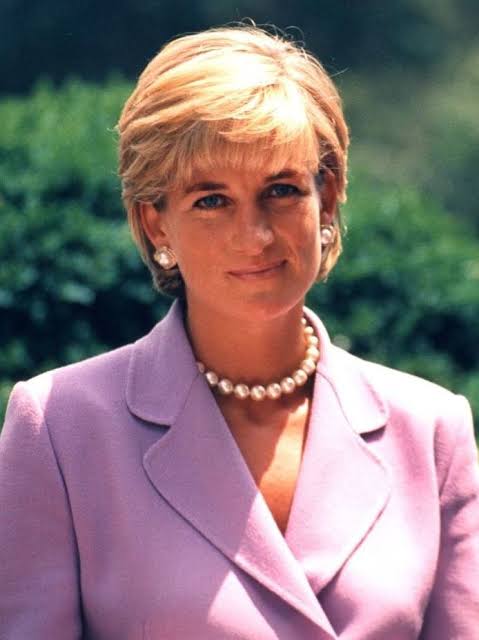
Diana: A Case Study

Diana (July 1, 1961, to August 31, 1997) was born to aristocratic parents who divorced when she was six. With her mother gone and her father deep in depression, she had a lonely childhood. “I’d have 20 stuffed animals… that was my family.”, remarked Diana about her childhood. She grew up to be introverted and had multiple insecurities. She was physically active and learned ballet and tap dancing. At nineteen, she was engaged to Prince Charles and that marked the beginning of her long-drawn battle with Bulimia Nervosa (Binge-eating/Purging Type). “The bulimia started the week we got engaged. My husband put a hand on my waistline and said, ‘Oh, a bit chubby, here aren’t we?’”, said Diana. Her eating disorder was inflamed by the intense media scrutiny she received, which was not always positive.

She had scar tissue and trauma from her childhood, and the onslaught of media attention magnified her insecurities, making her feel like an outsider. Her pregnancies were surrounded by speculations which plagued the lives of her children. She suffered from Postpartum Depression, which she revealed after her separation. At the peak of her popularity, cable TV news emerged. This socio-cultural development stoked the media frenzy, and many of her trusted friends and acquaintances sold information about her to the press, which led to distress and paranoia. She was attracted to suffering which motivated her to support charities for HIV, addiction and the homelessness. As a public figure, she outshone the members of the royal family, rebranding and popularising a dynasty whose approval ratings were getting dangerously low.

Her family life was fraught with difficulties. While she enjoyed a close relationship with her sons, her husband was in love with another woman. “The worst day of my life was realising that Charles had gone back to Camilla.”, said Diana. In the search for love and support, she had affairs with the likes of Barry Mannakee, James Hewitt and James Gilbey. Post the announcement of her separation, she slowly became obsessed about being viewed favourably by the public. She lived her life in the public eye, and her popularity eclipsed that of Prince Charles. Every move of hers was watched closely, and emulated by admirers from around the world.

Her death, which was caused by a car accident while she was being chased by the paparazzi, was mourned by the world on an unprecedented scale. Millions watched her funeral online, and the grieving public confronted the newly emerging tabloid culture that intruded on Diana’s life, forcing her to take extreme measures to find privacy. Her life and death serve as an admonishment to those media houses that are willing to overlook the ethics of journalism as long as their stories sell. More than twenty years after her death, when we witness the steady rise of tabloid journalism, we need to ask ourselves if we could afford to have another death weigh on our collective conscience. 

“A girl given the name of the ancient goddess of hunting was in the end, the most hunted person in the modern world.”- Charles Spencer, Diana’s brother.

ONLINE LEARNING IN THE PANDEMIC: GOOD OR BAD?

Source: Google images

Covid-19 struck us without a warning and left all educational institutions scrambling to respond to its urgencies. It has also created a need to creatively deal with such unforeseen and once-in-a-century catastrophic event that is being called the ‘new normal’.
When the lockdown was announced in the last week of March after which the country came to a sudden halt. Everything was announced to be stopped for 21days, only essentials were allowed to be sold. Under this circumstance all educational institutions had to close their campuses, students living in the hostels were sent back home if possible. Nobody had imagined that it will eventually take more than 6 months (and still counting) for the situation to normalize.
Now the education system is lagging behind its schedule, but to make the situation sufferable online classes have been started by institutions. Which can result in keeping up with the schedule of the education system, but with every new change comes both, good and bad. Today we will discuss the about the impact of these online classes extensively.

The negative impact

Source: Google images


With the online classes, neither the teacher nor the student feel the same kind of energy as in face to face learning, so it may result in less enthusiasm from both the sides which will hamper the student-teacher relation.
Students who live in villages or places where the internet connection is not good or with great speed are unable to attend the online classes. This proves to be disadvantageous because the online classes are for students which if they wont be able to attend then what’s the point in conducting them?
Many institutions have decided to take online examinations too, now what will happen to the students who have poor internet connection during the exam time. They will fail because they will not be able to connect or reconnect due to bad internet connection.
Most of India’s population belongs to lower-middle class family, they don’t earn enough money to buy their children smartphones and gadgets, as a result many of the students do not have devices, smartphones and laptops or money to keep the internet connection while also paying the school fees.
Some teachers also struggle to get to know the technology. They are expected to make PowerPoint Presentations (PPTs), record the video lectures, and take online classes through different apps and online platforms, which not all of them are able to do properly. This is more common among the teachers because most of them didn’t had to that their whole life, and to learn something that is this vast, takes plenty of time.
A major problem has emerged for the teachers who often complain about some Students doing mischievous activities for entertainment. They share links of online classes that are sent to them by their teachers. They also tend to create Zoom IDs in random, unidentifiable names and troll teachers. Some switch off their camera and call teachers by their names from these IDs, some use them to send memes to teachers.
Teachers also have to face common issues like, Bullying by students, argumentative parents who often peep into classes, and distracted children and a story that I personally heard was about a student’s relative used the link to log into the class and “see what the teacher looks like, what she teaches and how she speaks”, and I am sure many others also must have experienced something like this.

The positive impact

Source: Google images

There is an abundance of benefits that students and teachers will get from online learning as well few of them could be:
Online learning can be done from the comfort of one’s home, especially during COVID-19 outbreak, which definitely does not mean that you can lay down on your bed and attend your classes, what it means is that it is easier for you to stay at home safely and attend classes.

Different student has different level of understanding some can learn something new easier than the other whereas some may take some time, with the online learning you can learn the lesson on your pace, you just have to record the lectures, the PowerPoint presentations are uploaded for you by the teachers.

Unlike the classroom learning, here the lessons can be constantly updated and uploaded so that students can continue on if they have finished the previous lessons.

Many students in traditional classroom environments don’t feel comfortable speaking in front of everyone but In an online environment, it can be much easier to share thoughts with others. According to the National Institute of Mental Health, 74% of people suffer from speech anxiety, online classes will help them to improve and build their confidence.

Even if the exams are conducted online there is no harm in it on the plus side you will get your results instantly without having to wait for a long period of time.

Most importantly this swift shift to online mode of learning has resulted in less use of paper throughout the world as teachers and students both use technology to write notes or create presentations, thus protecting our environment.

Conclusion

As we saw above, that online learning has it’s good and bad aspects, so at least for now in this case of emergency, the online mode somewhat works for the students but still the government needs to come out with alternatives for the students with no gadgets or no internet connection or both.
For the future, that is after the pandemic is over online learning and the face to face traditional learning has to co-exist, because we can’t be fully dependent upon the virtual learning. Yes it does make the learning process easier but it still has to improve alot and also has to inculcate the values that the students learn while in the traditional learning system, and also has to eliminate the barriers in online learning so that no one is disadvantaged from this system.

PAPER BOOKS VS E-BOOKS.

“I have always imagined that Paradise will be a kind of library.”
― Jorge Luis Borges

Books are our best friends is what we have heard since childhood. And probably experience it. A book lover enjoys his coffee while reading a book and that is his definition of “Peace”. The smell of a new book or the excitement of starting to read a book is something different . Books prove to be the best guide for us or may be a source to feel better. Having a collection of books is a matter of pride for certain people. Some love going to the library and reading books and some create their own library.

Reading is one of the best habits one can have. When you read you go in a different zone altogether. You feel good you feel lively. One of the best ways to increase your fluency in English or even for improving your vocab is reading . Traditionally, there was only paper books available. You spend on them and then you get to read. In today’s era things have changed. Now you google the book you want to read and download it on your PC/Mobiles and read it whenever and wherever you want to. E -books have become a trend and grown over years. A lot of people have adapted this new way of reading. There are a lot of apps that offer you to read books online. Kindle is one of the most famous way of online reading.

However, the demise of printed books as a result of e-books has not materialized, but instead, the two formats have existed simultaneously. Both have their pros and cons and choosing one would be unjust.

Paper Books : You have an advantage of turning pages or underlining something you learnt or maybe folding a page to re read again. They do not affect your eyesight rather it keeps you away from technology for a span of time. You can enjoy reading the book while in a balcony at your favorite spot . You can exchange good books with your friends to read and exchange thoughts. They help you sleep better, since while going to sleep you can comfortably read your book without and eye constraint. You possibly can have a mini library that will be your mantra for peace.

Drawbacks : Physical books can be difficult to handle. You can not read paper books anywhere. If you are travelling and want to take your book along it can be difficult if it is a heavy book. The paper books are not eco-friendly since a lot of paper is involved thus increasing the cutting down of trees. Even the cost of publishing books are really high and also publishers take a lot of chance while publishing an author’s book since they do not know whether it will work or not. Buying books can at times be expensive or even out of stock thus leading you to wait for a couple of days or maybe months.

E-books : E-books have an advantage of anywhere and anytime reading .You can use your mobile phones while sitting in a cafeteria or may be in a boring house party and read your book. E books are easier to carry while travelling and also downloading an E-book is free of cost leading to less expense. The cost of publishing is low while online. Technology saves the use of paper thus eco friendly. You can share the content at any online platform in just one click. E- Books have been designed with text to speech or read aloud features. This allows people to listen to the eBooks if they are too busy to read it, for example, while driving, or while doing some chores.

Drawbacks: E-books cause strain to eyes and you feel uncomfortable while reading it before sleeping. You can flip the pages or fold or underline if you want to. You can not gift a friend an E-book on their birthday or may be a special ocassion. E-books include the cost of graphic designing. There are many people who are not tech savvy and they can not enjoy the benefits of reading an E-book. You are distracted at times since there are certain notifications that keep coming while you are on your phones and that leads to distractions.

Although both Books and E-books have their pros and cons both provide you knowledge and enhance your skills. At the end what matters is to read whether online or offline. Happy reading !

Things You Need To Know about Civil Services Examination

Being a civil servant is no simple dream. It requires constant effort and hard work. Making sure to put the right effort matters in making to the top of the list. Here in the below are the various things you need to know before you write Civil Services.

Eligibility

The Age limit is from 21 years to 32 years (General category) and 35 for OBC and no age limit for SC/ST

Education qualification – Graduation from any stream.

Examination

The Exam is divided into three stages

  • Preliminary Round
  • Mains
  • Interview

These are the three stages of a civil service examination. Stage two and three are combined together to rank the candidates.

PRELIMINARY EXAMINATION

There are two papers in this round. Each paper of 200 marks. Both are compulsory and it is objective type.  2 hours are given for each paper. And a negative marking of 1/3rd of the total of the particular question.

  • General Studies
  • CSAT

General Studies Paper Syllabus

  • Current events of national and international importance.
  • History of India and Indian National Movement.
  • Indian and World Geography-Physical, Social, Economic Geography of India and the World.
  • Indian Polity and Governance – Constitution, Political System, Panchayati Raj, Public Policy, Rights Issues, etc.
  • Economic and Social Development – Sustainable Development, Poverty, Inclusion, Demographics, Social Sector initiatives, etc.
  • General issues on Environmental Ecology, Biodiversity, and Climate Change – that do not require subject specialization.
  • General Science

CSAT Syllabus

  • Comprehension
  • Interpersonal skills including communication skills
  • Logical reasoning and analytical ability
  • Decision-making and problem solving
  • General mental ability
  • Basic numeracy (numbers and their relations, orders of magnitude, etc.) (Class X level), Data interpretation (charts, graphs, tables, data sufficiency, etc. – Class X level)

It is mandatory for the candidate to appear for both the exams and the minimum qualifying mark is 33%.

MAINS EXAMINATION

This examination consists of the following papers :

Qualifying paper

( Candidate have to qualify these two papers, only then rest of the papers will be evaluated)

Paper A : One of the language in the Eighth Schedule of the Constitution. Candidate can chose any one from the list

Paper B : English

Structure of the language papers:

The types of questions asked are –

  1. Essay – 100 marks
  2. Reading comprehension – 60 marks
  3. Precis Writing – 60 marks
  4. Translation:
    1. English to compulsory language (e.g. Hindi) – 20 marks
    2. Compulsory language to English – 20 marks
  5. Grammar and basic language usage – 40 marks

Both the papers carry 300 marks each and in order to qualify, you need to score at least 25% in each. This marks wont be evaluated for the merit list.

Papers to be counted for merit

Paper I : Essay

Candidate will be asked to write essay on various topis to analyze the writing pattern ,behavior and thinking pattern too.

Paper II :  General Studies – I

Indian Heritage and culture, History and Geography of the world and society

Paper III :  General Studies – II

Governance, Constitution, Policy, Social Justice and International Relations

Paper IV : General Studies – III

Technology, Economic Development, Bio- Diversities, Environment, security and disaster management.

Paper V : General Studies – IV  

Ethics, Integrity and Aptitude

Paper VI : Optional Subject – Paper 1

Paper VII : Optional Subject – Paper 2

These are the optional Papers

(i)Agriculture

(ii) Animal Husbandry and Veterinary Science

(iii) Anthropology

(iv) Botany

(v) Chemistry

(vi) Civil Engineering

(vii) Commerce and Accountancy

(viii) Economics

(ix) Electrical Engineering

(x) Geography

(xi) Geology

(xii) History

(xiii) Law

(xiv) Management

(xv) Mathematics

(xvi) Mechanical Engineering

(xvii) Medical Science

(xviii) Philosophy

(xix) Physics

(xx) Political Science and International Relations

(xxi) Psychology

(xxii) Public Administration

(xxiii) Sociology

(xxiv) Statistics

(xxv) Zoology

(xxvi) Literature of any one of the following languages: Assamese, Bengali, Bodo, Dogri, Gujarati, Hindi, Kannada, Kashmiri, Konkani, Maithili, Malayalam, Manipuri, Marathi, Nepali, Odia, Punjabi, Sanskrit, Santhali, Sindhi, Tamil, Telugu, Urdu and English.

Each paper carries 250 marks each and can be written in any language under the eighth schedule of the Indian Constitution.

INTERVIEW

The Final round is the Interview round. The interview round is created to test the all round personality of the character. It exposes them to emotional intelligence and see how they deal with certain situations and conversations.The Interview test will be of 275 marks and the total marks for written examination is 1750. This sums up to a Grand Total of 2025 Marks, based on which the final merit list will be prepared

World’s longest high-altitude tunnel fully ready to open in Himachal Pradesh

Atal Tunnel': PM Modi To Open World's Longest Motorable Highway In  September - Global Tribune

Rohtang Tunnel Project: The world’s longest highway tunnel above 10,000 feet, Atal Tunnel, connecting Manali to Leh, is likely to open soon! It is being said that the ambitious infrastructure project will be inaugurated by Prime Minister  in the last week of September.

The strategically important infrastructure project, the Rohtang Tunnel has been named after former PM Atal Bihari Vajpayee. It has been built at a cost of around Rs 3,200 crore. According to KP Purushothaman, Chief Engineer of the project, the estimated period for completion of the Atal Tunnel was less than six years but it was completed in 10 years, ANI reported.

The 8.8 km long, Atal Tunnel will be one of the longest road tunnels in India. Under Rohtang Pass, the strategic road tunnel project is being built at an elevation of 10,171 feet. Once the ambitious tunnel project is thrown open to the public, there will be a reduction of nearly 45 km between Manali and Lahaul- Spiti’s administrative centre Keylong.

No official confirmation has been received so far, we may get it within a couple of days, he said, adding it is also not yet clear if it would be a virtual opening due to the corona crisis or a physical one. The Atal Tunnel built at a cost of about Rs 3,500 crore is extremely significant from the defence point of view.

Apart from the strategically important Atal Tunnel, another infrastructure project is being developed as well, which is a steel super structure bridge of 100 meter length, across the river Chandra on the North Portal of the Rohtang Tunnel.

India Happiness Report 2020 😊

According to the India Happiness Report prepared by Rajesh K. Pillania, a professor of strategy at the Management Development Institute in Gurugram, Mizoram has been declared the happiest state in India. A survey was conducted during the coronavirus pandemic from March to July among the 16,950 people to find out which are the happiest states and union territories across the country. Among the other factors, the report also focused on the impact of COVID-19 on happiness. Participants were asked to rate their current standing on the impact of COVID-19 on their happiness from the worst possible to the best possible from 1 to 5.The study is based on a nationwide survey covering 16,950 people between March and July 2020 .

In overall happiness ranking of states and union territories:

  1. Mizoram
  2. Punjab
  3. Andaman and Nicobar Islands
Mizoram, Punjab happiest states; Andaman Nicobar happiest UT: Report

Among the big states:

  1. Punjab
  2. Gujarat
  3. Telangana

Among smaller states:

  1. Mizoram
  2. Sikkim
  3. Arunachal Pradesh

Among union territories:

  1. Andaman and Nicobar Islands
  2. Puducherry
  3. Lakshadweep

The worst possible impact of COVID-19 on happiness:

Maharashtra, Delhi, and Haryana have shown the worst possible impact of COVID-19 on happiness, whereas Puducherry and Jammu and Kashmir are neutral and Manipur, Andaman and Nicobar Islands, and Lakshadweep have shown the best possible impact of COVID-19 on happiness.

Are Tomatoes harmful?

Did you know that tomatoes actually come from the most poisonous family? Does that mean tomatoes…are poisonous? Oh my god! Do I have to change my diet again!?!?( that was weird)

  • History

Tomatoes were first introduced somewhere around the 16th century in the lands of Europe. Sadly,how exactly did they get there is not known. For many years tomatoes were believed to be poisonous due to that flaming red skin and also that the tomato leaves were considered poisonous. It was also believed that witches used these plants to make hallucinogenic pastes( hallucinogenic is basically something which makes you experience hallucinations.Have a great time pronouncing it!!).  But later,they were proved to be harmless,more like beneficial,at least to humans that is…

Photo by Markus Spiske 

  • The Nightshade family

Now,if you’re not confused by what exactly am I trying to say,Congrats! You have a lot more brain cells than I do. Anyways,tomatoes were feared to be poisonous because they come from the Nightshade family. Now what is so bad about the Nightshade family? It’s because the family ( the term ‘family’ means that the plant is classified into the particular group) consists of a plant which can potentially kill someone. A natural poison,the  Atropa belladonna. Belladonna is the most poisonous plant known in the world. You might have heard of this plant in some of the drama series. What makes this family toxic is due to the presence of a drug called atropine in them. Atropine is a drug,which is also used for medications,but it does have some side effects, including the potential to kill you. But… Nightshade also includes plants like brinjals (or eggplants like the cool ones call it), potatoes etc. But fortunately,these plants do not have atropine in them. At least not the quantity which would be needed to kill you. But..what if it develops over time and then kills me? No. Our digestive system is so strong that it can dissolve an iron nail! Because our stomach has the stomach acid which basically is Hydrochloric acid(HCl) and just so you know,some metals dissolve in the hydrochloric acid. So,no there should not be a possibility for that to happen.

The problem is,these plants produce something which is a toxin named solanine. They produce it to work as their defence system which is an alkaloid(alkaloid is basically a ‘nitrogenous organic compound’ which may or may not have some physical changes on humans. The solanine concentration is the most in the stems and the least or almost non-existent in the roots. Does that mean that the the fruit(tomato) has solanine in them?Yes. But according to a research,it would actually take about 1 pound of tomatoes to be gobbled up to actually have any changes in your human body. This is because,even the fruit has a lot less concentration of solanine in them making them almost harmless. Almost.

Photo by Karolina Grabowska from Pexels

  •  Does that make tomatoes poisonous?

Tomatoes are really healthy if included into your diet,due to their high concentrations in lycopene,which may be beneficial for your body,because it is an antioxidant which helps to reduce one’s hands of cancer and some cardiovascular diseases.

Tomatoes, coming from the Nightshade family were therefore always raised an eyebrow if used in foods. But the plant actually produces a different alkaloid which is tomatine. Tomatine is a lot less toxic than the other alkaloids,so we’re good. However,they may result in some gastrointestinal issues, liver damages etc. If taken in large doses.

But people usually advise that those who are affected by auto -immune diseases should avoid the intake of tomatoes. Again,it depends on the disease and so is strongly advised to be as per  the consultation of your doctor.  Tomato leaves? Yes may be poisonous,but not really. Confusing? Very much so.

Tomatine can be harmful to your pet dog though,but it may be al right unless you feed your pet tomatoes regularly. Pets are not to be given many things,including chocolates and anything which contains any natural drug,it may not be good for domestic animals. Again,it solely depends whether the consumption is regular or not. So are tomatoes harmful? Well,unless you eat 3 pounds of tomatoes everyday, you’re good!

The conclusion? Well,have you ever seen any recipes which include tomato leaves? Nah. Not really. But ya,it would not really kill you, according to a source that is. All natural drugs are harmful only when consumed in large quantities. If you start making assumptions that all drugs are harmful,then be ready to stop eating almost every dish and drink.Including coffee and tea because even they contain caffeine which is again a drug.

The concept of drugs are often misunderstood by people.  Not all drugs are harmful. In fact, drugs actually have two subdivisions to them. One being 1. Legal and 2. Illegal ( don’t you find the word a bit weird with 3 letters literally looking the same but are different…No? ) Anyways, legal drugs are literally present everywhere in our surroundings. Drugs are also used in medications,maybe in the form of  sedatives or actually the main product. One of the most harmful things can actually be useful to us. Which is what makes them even more fascinating. They become harmful when you start obsessing over it due to many reasons,and once started,illegal drugs are not easy to give up on. Yes, everybody has their own reasons,but often what we think to be rational decisions turn out to be irrational. Which is why decisions should always be made with a calm mind!

Fact- Many people are allergic to tomatoes and tomato sauce.(think that’s weird? It’s not) But..what are allergies? Well,that may be a topic for another day, I guess.