Nuclear Energy

Energy indisputably a resource on which humanity has been dependent. Without energy, we cannot find or administer medicine to cure disease, prepare food, purify water, drive our cars etc. the current energy need is 15TW and this number is projected to increase.in now a days we are more reliable on fossil fuel. Fossil fuels are also a large source pollution and also a non-renewable source of energy.

Nuclear power means the use of nuclear reactions that release nuclear power to generate heat, the most commonly used for the production of electricity in a nuclear power plant by steam turbines. Nuclear fission, nuclear decay and nuclear fusion reactions can provide nuclear energy. Currently, nuclear fission of uranium and plutonium is the source of the overwhelming majority of nuclear power. In niche applications such as radioisotope Thermoelectric Generators, nuclear decay processes are used. International research continues to focus on the generation of electricity from fusion power. This article focuses mainly on nuclear power fission for generation of electricity.

Civil power supplied 2,563 terawatt hours (TWh) in 2018 with electricity, corresponding to approximately 10% of world power generation, and was the second largest low-carbon hydropower source. As of December 2019, there are 443 civilian fission reactors in the world, with a combined electrical capacity of 395 gigawatt (GW). 56 nuclear reactors and 109 reactors are also under construction with a total capacity of 60 GW and 120 GW respectively. The United States is the largest nuclear reactor fleet with an annual average capacity factor of more than 800 TWh of zero emissions.

Compare to other energy sources, nuclear power has one of the lowest mortality levels per unit of generated energy. Coal, oil, gas and hydropower have caused fatalities in each unit of energy, each of which is caused by air pollution and accidents. Nuclear energy has prevented approximately 1,84 million deaths from air pollution and an output of approximately 64 billion tonnes of carbon dioxide equal that would otherwise have arisen from combustion of fossil fuels since its commercializations in the 1970s.

After coal , gas, hydroelectricity and wind power, nuclear power is India’s fifth largest power source. India operates 22 nuclear reactors in 7 nuclear power stations as of March 2018. The total installed capacity of this reactor is 6,780 MW. A total of 35 TWh of nuclear power was produced, and 3.22 percent of Indian power was supplied by 2017. 7 additional reactors with a combined power output of 4 300 MW are under construction.

India developed a nuclear energy capacity plan of 63 GW in 2032 in October 2010. However, numerous anti-nuclear protests have occurred at the proposed nuclear power plants since the 2011 Fukushima nuclear disaster. Mass protests were carried out against the Maharashtra Jaitapur Nuclear Power Project and the Kudankulam Nuclear Power Plant in Tamil Nadu, and the West Bengal Government refused permission for the proposed major nuclear plant near Haripur. The Supreme Court has also brought a Public Interest Litigation ( PIL) against the government’s nuclear programme.

There have been generally low capacity factors associated with nuclear power in India. As of 2017, India ‘s fleet has 63,5 percent weighted lifetime energy availability factor. In recent years, however, capabilities have improved. The Indian reactor availability factor in 2015-2017 was 69.4%. The lack of nuclear fuel is one of the main reasons for the low capacity.

In India progresses with regard to thorium-based fuels, a prototype for a nuclear reactor with the use of thorium and low-enriched uranium, a major part of India’s nuclear three-stage programme, is being designed and developed. In addition to supporting work undertaken by the ITER initiative in the area of fusion power, the country recently reinitiated its involvement in LENR research.
Side Effects of Green Tea on Women

Retrieved from healthline.com

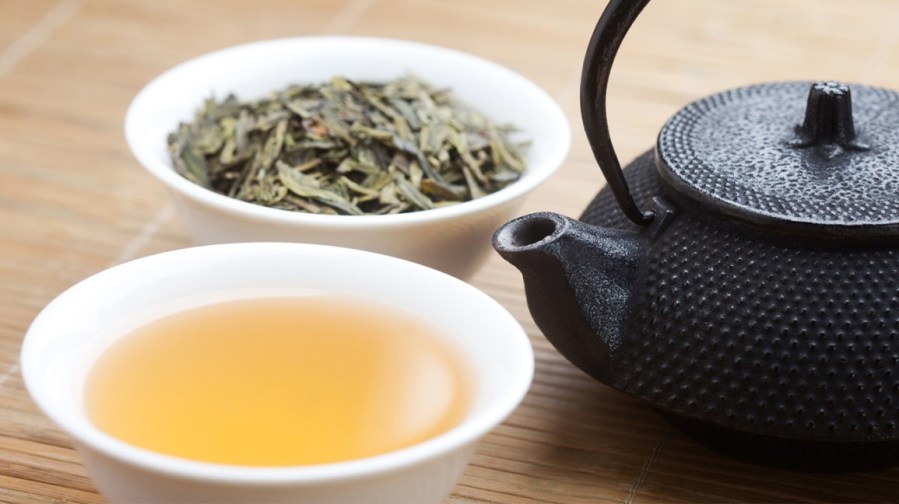
The favorite drink of today and best touted as ‘weight- loss aid,’ green tea is a choice of many but when it is a high source of antioxidants and helps us in many ways, it can have some adverse effect on women’s health according to some studies. It is always suggested that green tea helps women during menstrual days by alleviating cramps and giving relaxation. But some studies have presented the harmful effect on it if drunk in excess. I will try to throw some light on those aspects:

The first side-effect is that drinking green tea in excess may increase premenstrual syndrome commonly known as PMS during periods, due to which she may suffer from headache, mood swings, irritation in body, abdominal pain etc.

The second one is that it increases anxiety as during the menstrual period, a woman goes through hormonal changes and excess caffeine content of green tea restricts blood vessels which triggers tension in the body and the by-product comes in the form of anxiety.

It also causes breast tenderness in women if green tea is drunk in excess as the fluid gets filled inside the breast and forms lumps. It leads to more production of urine and hence leads to dehydration.

The fourth side effect which is really grave is that excess green tea leads to iron deficiency in women as it does not allow body to absorb iron completely which results in anemia and as the women need more blood and iron content in their body during these days it leads them to have more painful journey rather than alleviating the pain and negatively affecting menstrual cycle.

Drinking one or two tea cups of green tea is helpful but drinking more than that can lead to problems. When we hear that something is good for us, we tend to overdo it. And that excessive habit changes the positive effect to negative effect. If anyone is seeing such changes in them, they should definitely go to a health care expert and take advice. 

What does it take for a boy to come in lime light??

I personally think hashtags were made for a boy and by a boy.. I mean, ComeOn if you are a girl, and your account is not private.. instagram will automatically put it on a explore section..

But, for a boy to get to explore section, he needs six pack, or a very good content and lots of effective hashtags

I don’t know about girls, but pretty sure on Instagram there’s no periods for them to come into  lime light.
No offense. But being a boy it looks cliche to see someone using same body to get followers and also pointing fingers on others in real world for that same body..
I mean, wtf man!!

If the world is male dominant, then social world is all about women.

One thing I would like to answer, I know girls have got so many problems in real life that a man can’t even understand, or women don’t want them to understand. And if there two gender, then how can you think that only one gender has got problems. Man have also got many problems, and we are dealing it not transferring it on other gender.
If a  girl is not getting freedom as a boy get, then how come It’s only a problem of a girl who is not getting any freedom, it’s simple, like if you got a work to do, you will get a responsibility to and tension or pressure regarding that responsibility which you can’t even discuss because you are a man, and man don’t discuss it in front of other men and also with Women because somewhere she will be  like, I got a man who is complaining. Huh!!

I don’t know if you are actually getting it or not but there’s some reality which men are not looking and women are keeping there face on different side.

Tell me what you think about it and don’t be offended.

See yaa.

School Reopening Guidelines: Schools to open from 9th to 12th from 21st September, Ministry of Health released SOP

Priya Yadav

Schools that have been closed for more than 5 months are now going to open in a phased manner. For this, the Ministry of Health and Family Welfare has issued Standard Operating Procedure (SOP). Regarding this, Health Minister Harsh Vardhan said that the schools will be opened in a phased manner. All those coming to school will have to constantly monitor health. Spitting everywhere will be prohibited. The guidelines clearly state that along with the state helpline number in the school, the phone numbers of local health officials will also be displayed.

Such a seating arrangement of students from the laboratory to classrooms will have to be maintained at least 6 feet distance between them. Gathering of students i.e. assembly and sports-related activities will be prohibited as it will risk spreading the infection.

Teachers or staff residing in Containment Zones are not allowed to attend school. Schools that were used as quarantine centers have been instructed to sanitize well before being partially opened. All schools were instructed to sanitize with a hypochlorite solution.

The Union Ministry of Health and Family Welfare has issued the Standard Operating Procedure (SOP) of Corona Prevention for the operation of schools, skill centers, and higher education institutions offering PG and doctoral courses. The Ministry of Home Affairs has given permission to open schools and above grade higher educational institutions from 21 September. The SOP states that before opening schools, colleges, skill institutes, they have to be thoroughly sanitized. However, it will be voluntary i.e. it will be up to the students whether they want to go to school or not.

Schools or institutions in which quarantine centers were built must be completely transitionless. Chairs in classrooms will be placed at a distance of six feet. It will be mandatory for teachers and students to wear masks. Arrangements for thermal screening and hand sanitizing will also have to be done at the entrance gate.

The SOP on behalf of the Union Health Ministry states that permission for online / distance learning will continue. Schools can invite up to 50 percent of their teachers and non-teacher staff for online teaching / Tele counseling and other related activities. Students from ninth to 12th will be allowed if they want to go to school to seek guidance from their teachers. However, they will have to seek written consent from their parents or guardians. Students will also have the option to study online. Precautionary measures in schools will include teachers, staff, and students, including ensuring a physical distance of at least six feet, covering the face, frequent hand washing, adherence to respiratory etiquette, health monitoring, and place- Spitting place not included. People have been asked specifically about this. Online or distance learning should continue to allow and encourage and allow students of classes 9 to 12 to visit the school on a voluntary basis to seek guidance from their teachers.
Students will have the freedom to come to school voluntarily. No student will be forced to come to school. Children will come to school only with the written permission of their parents. The Ministry has also said that distance education and online learning will have to be continued. For this, 50 percent of teachers can be called to the school. The swimming pool at the school will be kept closed. The air conditioner temperature has to be kept between 24-30 degrees Celsius. Humidity will have to be kept between 40-70 percent. Arrangements will have to be made for cross ventilation and clean air.

If you like it, wear it.

Fashion styles

Artsy

Colourful and vibrant kind of style. Creative.


Bohemian

Personal favourite. Also known as Hippie fashion. With a modern touch to it looks fabulous on anyone.


Casual

The I-don’t-care-I-feel-comfortable type of style. The simplest of clothes in your wardrobe.


Chic

The girls night out or a date night look where you actually put some effort in choosing the dress and makeup.


#5 Preppy

Basically classic but with bold and clean colours with a structured silhouette.


#6 Rocker

Mostly a leather jacket amd pants. Ripped jeans. Don’t-mess-with-me kind of look.


#7 Sophisticated/classic

Classic.


#8 Sexy

Especially for parties. Outgoing type.


#9 Tomboy

Mostly loose clothes. Boyish, carefree. Billie Eilish’s iconic style.


#10 Vintage

Looks cute. Never goes out of style. Comfortable.

Thank you for reading. Have a nice day!

Attendance Manager- plan your day

Every student will be very strict, punctual to classes until he becomes to a Under Graduate or equivalent degree course. Once a student enters a UG/degree course, the student may change. He may look at watch once in every ten minutes not to attend class on time but waiting to the end time of the class. The students might had spent 8-12 hours in college, school in intermediate, 10th standard respectively. So, once they join a UG/degree, their mind will be running away. But there is a firewall called ATTENDANCE. There are many rules regarding this attendance- every student should have at least 75% overall attendance to qualify for semester examinations, the student should have minimum 75% attendance in each subject in order to not to get detained in that particular subject. If a student is detained then he/she has to study the same subject in the coming semester also. For hostelers, in some institutions, the leaves are granted based on the attendance. keeping aside all these, we all want to BUNK CLASSES. Every student will like this and excited at this. But we should maintain our attendance to avoid academic problems.

So, what can we do? There is a way, that is you should keep the record of your attendance or simply you should track your attendance. how do you do that? Do you take a pen ad paper and keep a tick mark for all classes? No, that would be a boring process. Don’t worry we have a very smart option, mobile applications.

Do you believe that an app can maintain your regular attendance, gives your attendance percentage of each subject, also tells you the chances to bunk classes? Now, I’m going to provide you a list of three apps that helps maintaining your attendance.

  1. Attendance Manager

This app provides the subject wise status of attendance, provides us an option to set attendance goal and has good user interface. This app is also available in Dark Theme. We can track history of our attendance and also provides us timeline view. This app is available in Google Playstore.

   2.Attendance Register

This app provides percentage of attendance maintained, the   number of absent classes in a month and also the number of absents of each subject, also provides subject wise attendance. We have an option to set app lock within the app i.e. PIN & Fingerprint protection, available in dark theme. We have an option to add notes for any day i.e. we can give reason for our absence of particular class. This app is available in Google Playstore.

  3.Kodalog- Attendance Manager

     this app has an option to set timetable of our course, provides us the option to set attendance goal. The best part of this app is Predictor, which predicts the classes you can miss and cannot miss in order to maintain your attendance. this app’s background will be in light red color. This app is available in Google Playstore.

These are some apps that provide all the facilities that a student wishes, with good user interface. There are many apps like these which helps you to track your attendance and plan your activities, make your day stress free. Hope you like this.

Book Review : Mastaan 

The Fallen Patriot Of Delhi

Vineet Bajpai

Vineet Bajpai has done it again… after the immensely successful and thrilling Harappa tri-series, he is back with a bang, and how! This time, with a book on the First War of Independence. This book actually surpasses the first 3 with ease; for reasons as to why it is so special, read on! Suffice it to state for the opening paragraph here, that this is a must read for all Indians. Kudos, Vineet – and thanks for a really special landmark book!

I have called it a special, landmark book : the reason for that is that is presents a look at 1857 that is very different from the commonly understood view, that of a spontaneous uprising in anger against the British. The reality, as I have highlighted on my blog through a few articles based on history books including one period book from 1885 – is very different. 1857 was not a revolt neither was it spontaneous. There is evidence to prove it was planned, and had wide support. There is also evidence to support the people’s anger.
However, we must remember this is not a history lesson, and this book is not a history book. It is historical fiction; thus, there has been some deviation. More of that later. More critically, this is a book that helps to popularize the reality of 1857, and takes it much closer to the people. Common people don’t normally read history books, or watch historical videos. But a fiction thriller – it generates conversation, gets consumed, and becomes popular. Thus, if the book helps to propagate the reality and assists in the dissemination of a more correct impression in the public, so much the better.

SBI launches VRS scheme for its bank employees.

India’s largest bank, State Bank of India (SBI) has launched a voluntary retirement scheme (VRS) under which about 30,100 employees are eligible. According to sources, a draft scheme for VRS has been prepared and board approval is awaited. The proposed scheme is aimed at optimising human resources and costs of the bank. The scheme will open on 1st December and will remain open till the end of February 2021.

Eligibility and benifits:

It will provide a respectable exit route to who have reached a level of saturation in their career or want to leave because of their personal issues.

It will be open to all permanent staaf who have put in 25 years of service or completed 55 years of age on the cut-off date.

As per the proposed eligibility criteria, a total of 11,565 officers and 18,625 staff members will be eligible for the scheme.

Except these, other benefits like gratuity, pension, provident and medical benefits will be given to employees seeking VRS.

Punjabi gangs’ claim to shame in organised crime.

Oscar-nominated Canadian filmmaker Deepa Mehta’s flick Beeba Boys, the only movie to have brought the spotlight on Punjabi gangsters in North America, may have got acclaim, but it doesn’t strike a chord with the Canadian police. Violence perpetrated by Punjabi gangs remains a hard reality in Vancouver, Surrey and Brampton today. Bringing professions like trucking and transportation, largely run by Punjabis, under the radar of law enforcement agencies.The annual report of the Canadian police ranks Indo-Canadian gangs at No. 3, in terms of strength in British Columbia, only behind the notorious biker gangs and Asian criminal organisations such as the Triads and Vietnamese drug clans. Punjabi mafia groups include the Dosanjhs, Johals, Adiwals, Buttars, Dhaks, Duhres, Grewals and many more. Some have become dormant over time, while others have been active since the 90s. Gangs like Red Scorpions, Hells’ Angels, Independent Soldiers and United Nations, have members from all ethnic groups; but the immigrants, of whom Indo-Canadians form a major chunk, comprise a sizeable part of these.

School Re-opening: From no sports or canteen to outdoor classes, check complete SOPs for school reopening

After over 5 months, schools are set to re-open in India after September 21, 2020. Ministry of Health & Family Welfare yesterday night released the SOPs or Standard Operating Procedures for school reopening in India. The five page document lists basic measures and specific guidelines to be followed for conducting classes for students of 9 to 12. Among others, the SOPs have forbidden sports periods, assemblies or opening of canteen on school premises.


As per Unlock 4.0 Guidelines released by the MHA, the schools would be allowed to open for 50 per cent capacity for teaching and non-teaching staff. Also, students of classes 9 to 12 would be permitted to go to school – strictly on voluntary basis. The ministry has further stated that schools must ensure that online classes and virtual sessions continue through the period and are encouraged. 


Furthermore, the SOPs also mandate that the students of Classes 9 to 12 would only be permitted under parental consent for seeking guidance from teachers only. The student interaction, thus organized, must also be done in a staggered manner. 

General Guidelines 

Only schools outside the containment zones allowed to open after September 21. Students/ teachers and staff from containment zones will not be allowed to attend the schools. Students and teachers to be advised not visit containment zones while attending school.

Schools that were used as quarantine centres during the lockdown have to be properly sanitized and deep cleaned as per the SOPs released by MoHFW.

Generic Preventive Measures like physical distancing, mandatory use of face covers/ masks, frequent hand washing and self-monitoring of health, reporting of any illness to be followed.

Respiratory etiquettes to be strictly followed. This involves strict practice of covering one’s mouth and nose while coughing/sneezing with a tissue/handkerchief/flexed elbow and disposing off used tissues properly – Spitting to be strictly prohibited.

Installation & use of Aarogya Setu app may be advised and encouraged wherever feasible

The Guidelines also suggest conducting classes in open spaces within the school campuses – weather permitting.

For air-conditioning/ventilation, the guidelines of CPWD shall be followed which emphasizes that the temperature setting of all air conditioning devices should be in the range of 24-30o C, relative humidity should be in the range of 40-70%, intake of fresh air should be as much as possible and cross ventilation should be adequate.

Prior to resumption of activities, all work areas intended for teaching/demonstrations etc., including laboratories, other common utility areas shall be sanitized with 1% sodium hypochlorite solution, with particular attention to frequently touched surfaces.

Mandatory hand hygiene (sanitizer dispenser) and thermal screening provisions to be made at the entrance. Schools also advised to provide multiple gates/separate gates for entry and exit – if feasible. Strict regulation of visitors to the school has to be maintained and followed.

Symptomatic persons – teachers/ staff/ students would not be allowed inside the schools and would be referred to the nearest health centre.

Human Security and Development

The concept of human security has given rise to a range of responses and attracted a lot of attention. It has connected the idea of security with that of human development. The very notion of human security has become a part of a broader political discourse. Typically speaking, the concept represents a departure from traditional security studies, which focus on the security of the state. The subjects of the human security approach are individuals, and its end goal is the protection of people from traditional (i.e. military) and non-traditional threats such as poverty and disease.

The advocates of human security have generally been less focused on meta-theoretical debates about the nature of security and have instead focused on influencing policy to take into account the security of individuals in a more practical sense. The concept of Human Security is often believed to have its basis in the realm of policy and the 1994 UNDP Report is believed to be the key official statement of the concept. The report sought to shift the focus from inter-state conflict to that of issues related to development.

Beyond territorial and military concerns, the Report argued that human security is fundamentally concerned with human life and dignity. For analytical purposes, UNDP classified its four main characteristics as: 1) it is universal, 2) its components are interdependent, 3) it is best ensured through prevention, 4) and it is people-centred.

For UNDP, human security meant safety from chronic threats such as hunger, disease, and repression, and it meant protection from sudden and hurtful disruptions in the patterns of daily life. Understood in these terms, it has also been embodied in the policy axiom of “freedom from fear” and “freedom from want”. While acknowledging the varying intensity of possible threats to human welfare, UNDP grouped these threats in seven non-exhaustive and nonexclusive security categories: –

1) community- protection of traditional culture of ethnic groups

2) economic- freedom from poverty

3) environmental- protection from factors such as pollution and degradation

4) food security- i.e. access to food

5) health- access to healthcare

6) personal- physical safety from the use of violence

7) and political- protection of civil liberties and freedom of political expression

One of the key debates in regarding the definition of Human Security. Primarily these are narrow human security and broad human security. The narrow definition emphasizes on ‘freedom from fear’ i.e. essentially conflict prevention and resolution. On the other hand, the broad definition emphasizes on ‘freedom from fear’ and ‘freedom from want’ i.e. conflict prevention and resolution as well as broader social issues such as health and education.

For many scholars operating within the ambit of critical security studies, the emerging practices associated with human security and development are a source of both critical opportunity and concern. Some say that what usually happens is that the policies and practices, in the name of human security, often fail to fulfill its progressive potential. Thus, Human Security is one of the most challenging contemporary ideas that critical approaches to Security are trying to come to terms with. The concept of Human Security provides a continuing source of debate.

Out of sight out of mind

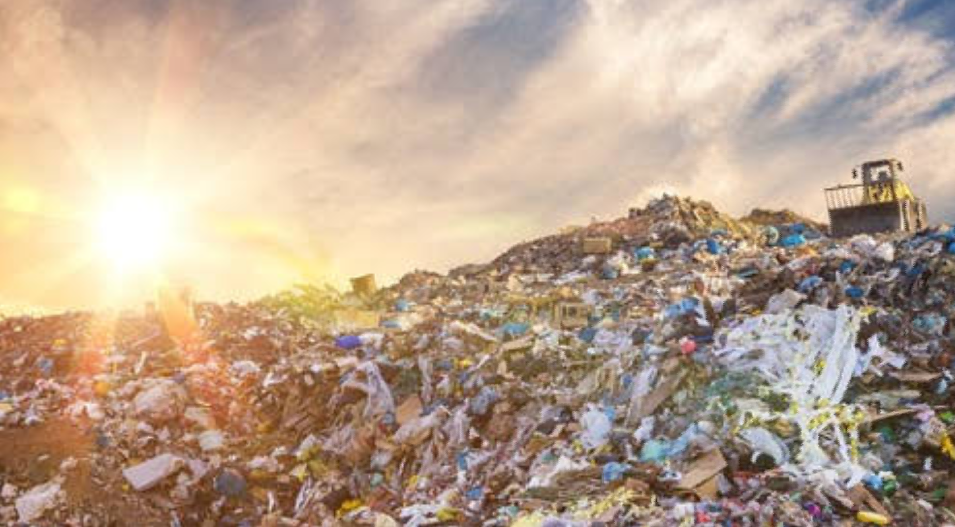
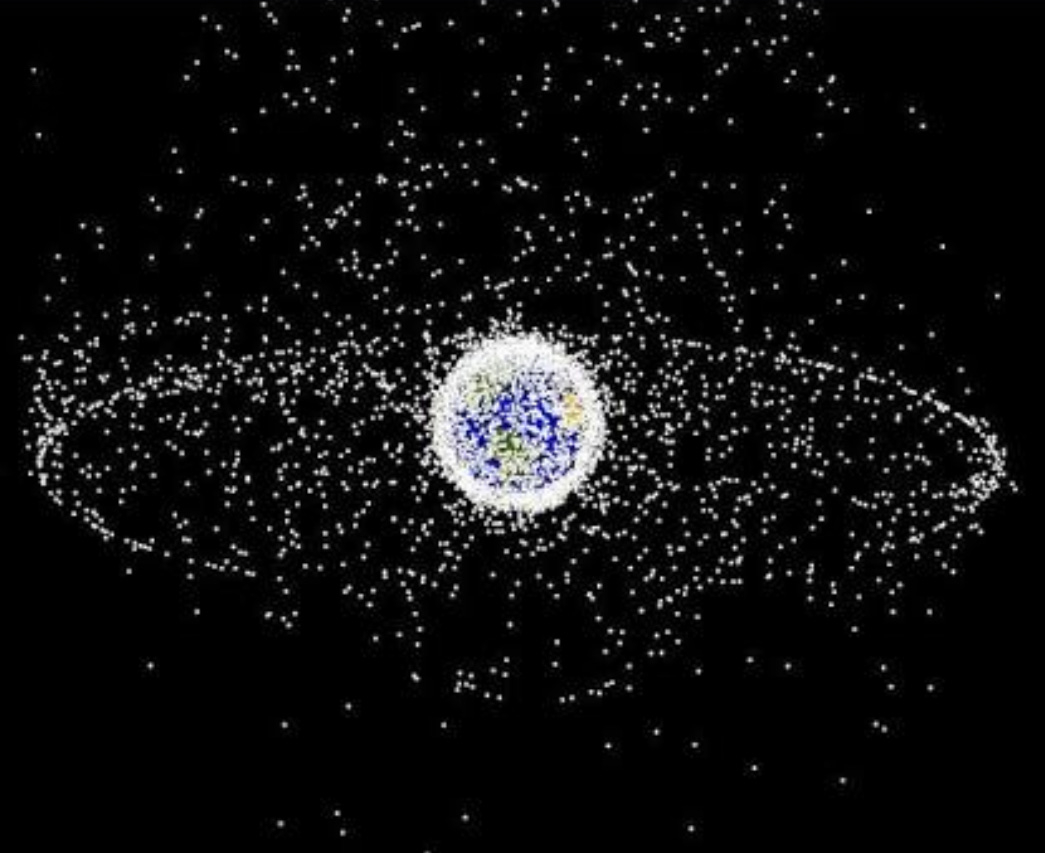
The world has so much problem with the waste production and dumping and landfills. We need more space. Why not send it to outer space? You know take some amount of trash at a time and send it to space and let it go. Sounds easy but turns out it isn’t that easy.

First of all it costs a LOT to send a spaceship into the space. We would need a large number of rocket launches to actually get rid of the insane amount of garbage the world produces(1.2 trillion kg). That way, the rise in air pollution… unimaginable. Also, complex infrastructure requirements! We need a lot more launch pads.

Suppose we do find a way to manage the costs and send a rocket filled with trash to be thrown out in the space. Imagine if some technical issue occurs and it blasts. It would rain burning plastic. Not good for the environment.

Even if we throw it out, the accumulation would make our atmosphere so dense that it would be a toxic world to live in. Also we couldn’t use satellites plus space travel would be tough. What if it comes floating back. Gross sight.

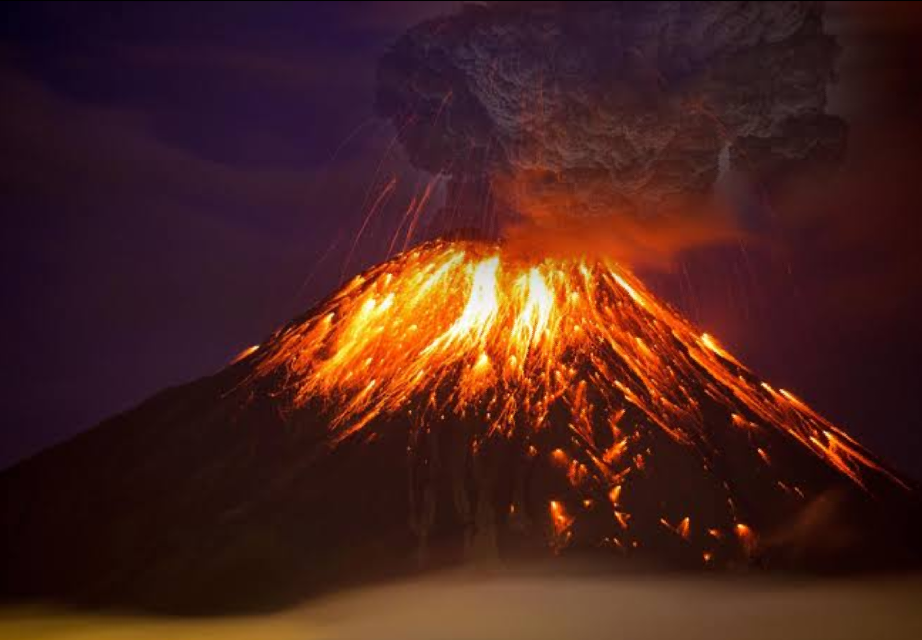
There’s another thing we could do. Burn the trash in the volcanoes. Trash incinerators have filters to filter out poisonous gases. In case of volcanoes filtering is not possible so again toxic world. Besides throwing something in the lava, disturbing the surface, would instantly trigger a chain reaction leading to an explosion. So not an option.

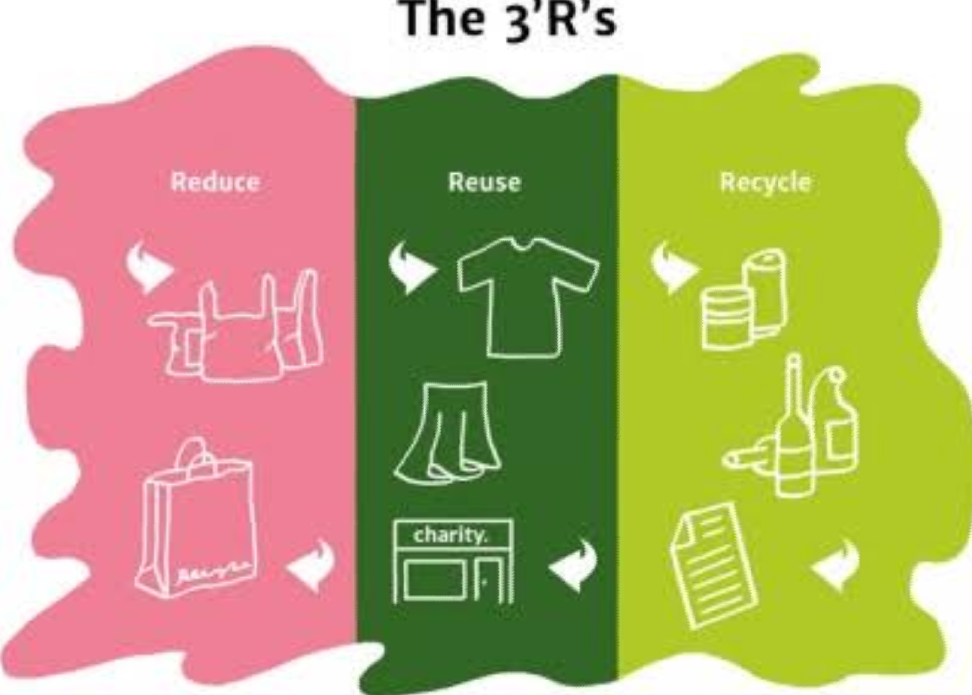
Guess we have to find other sources to convert the trash into some kind of energy. Maybe some day. Till then we need to manage our trash and follow the three R’s. (Reuse, Recycle, Reduce)

Thank you for reading. Have a nice day!

Securitization

The notion of Securitization is among the most significant conceptual innovations to have emerged out of the debate on the nature of Security. It is associated with the Copenhagen School of security studies which is linked to the likes of Barry Buzan and Ole Wæver. However, overtime, the concept has also been taken up and adapted by those outside the realm of Copenhagen School.

What is securitization? The work of Copenhagen School and their initial development of the concept of securitization as the basis for a new framework of analysis can be understood as a fusion of two works. First being Buzan’s notion of different sectors of security and second, Wæver’s concept of securitization. Later authors have asked the question of how to define security in the context of the ever-broadening agenda. The all important question was- what is a security issue and what is not one? They argue that we need a principle to help answer this. Otherwise, it would become way too broad a concept and effectively.

To answer the question of what is a security issue and what is not a security issue, they say that security as a concept is fundamentally about survival. Therefore, an issue is a security issue when it is represented as possessing an existential threat to the survival of a referent object. This is the same basic principle that is found in the conventional notion of national security and defence. One of the ways to identify an existential threat is to see the response it generates because when an issue is presented as an existential threat, it legitimizes the use of exceptional political measures. For example: A State’s right to self-defence when under attack, it can legitimately use extraordinary measures that go beyond normal day-to-day politics. It can declare emergency and suspend or change its functions during it. An appropriate understanding of Securitization would thus be: shifting an issue from the realm of normal politics to that of emergency politics by presenting it as an existential threat.

One of the most striking implications of the Securitization Theory is that it believes that security need not always be a good thing. It states that more securitization need not always be better as securitization of an issue brings with it emergency politics where space and time for deliberation and participation is constricted and also results in a militarized mode of thinking. Thus, thinkers like Wæver argued that in most cases we should aim for Desecuritization. It refers to shifting an issue out of the realm of emergency politics back to the that of normal political or technical debate. He also suggests that the condition of Asecurity is optimal. It refers to a condition where occurrence of securitization is minimal or absent and issues, unless necessary, are not conceptualized in terms of security.

Securitization Theory has had significant impact on the way security is studied as it offers a clearly identifiable research agenda. It studies societal security as an alternative to focusing solely on the state. It offers an analytical framework and also a site of critical opportunity for thinking through the important questions of the nature of contemporary security politics.

7 METHODS FOR SALES PROMOTION

Each and every activity performed in a business organisation is performed only to achieve a single goal that is sales. Sales makes the topline of a balance sheet

There are various ways to do sales promotion it depends on business to business that which method will give you best results may be all 10 methods will give you the results or only few so first understand the methods and then analyse them accordingly

  1. DISCOUNT- It is the most common way whiciis used by various business organisations to attract more customers and broaden their customer base.But using this method will effect your gross margin keep it as a backup method use it if nothing works.
  2. REFUNDS- This method is only suitable for premium market or for rental business like if you run a car rental business or own a coworking complex so to attract more customers you can start a scheme of refunds this method is not for Chinese goods or non recurring business.
  3. PRODUCT COMBINATION- A good product combination made with adequate research of consumer behaviour can give new heights to your sales like for example Johnsons baby kit or a cricket kit and many more. Observe the needs and requirements of your target audience.
  4. QUANTITY GIFTS- This method is also known as freebie sales. It is giving a low price commodity free on the purchase of high price quantity like free mouse with laptop.
  5. FULL FINANCE@0%- IT is the most trending method of sales promotion you must have heard of bajaj finserv they give full finance at 0% interest if you have qualified credit score you can also use this method if you deal in high price commodities.
  6. LUCKY DRAW- It is an evergreen method of sales promotion a lucky draw can change the buying decision of a customer but play safe be calculative while announcing the price.
  7. CONTEST – This method is used by various corporates you can either sponsor a contest or can conduct of your own and grow up your sales

Earphones and Headphones….are harmful?

In our lives, we use earphones/headphones at many occasion.For ex. An virtual meeting, music, while talking to someone etc. But do we know the detrimental effects of this careless habit. Not really…. But awareness can make one more alert and watchful .So let’s  understand, what makes the earphones so harmful!

  • How is it harmful ?

If you visualise, just think about an object, which is rarely cleaned or disinfected. What is likely to happen? Well, obviously it will start to grow microbe if it is in contact with what the microbe needs to breed. Now, we don’t know if the microbe growing is a pathogen or not. There may be a chance that they are harmless but the possibility is so less, that it can be counted as non-existent. Similarly, earphones/headphones are in contact with our body for most of the time. If it is in contact with our body, surely micro organisms are prone to grow. Eventually leading to uncomfortable problems like rashes, ear pains etc. Micro organisms are no creatures to play with. What makes it even more harmful is, we don’t even know what type of microbe it is. We can’t even assume because there are so many pathogens that could be residing  in your ear itself. And we have a really bad habit of sharing earphones. Even if it’s your loved ones,diseases do not see that. By sharing earphones, You’re practically transmitting the disease yourself and that would not be good.

Photo by Burst

Earphones/headphones, if used for long durations of time may result in induced or permanent hearing loss. Now the problem is, the  microphone has a direct contact to your ear. Your ear is a very sensitive part of your body and it’s a vital organ. It consists of 3 parts, namely – 1. The outer ear 2. The middle ear 3. The inner ear.  You might have noticed  some hairs in your ears. It is called the cochlea.  It is present in the part of the inner ear. Now, cochlea is a very important structure. Basically, the cochlea sends  signals from the outside environment to the brain  by vibrating, due to which we hear and make sense of what we hear. Sort of connects the outer world to our brain in the medium of sound. Prolonged duration of using earphones (when I am writing only earphones, do note to add headphones as well!) makes the cochlea to vibrate exorbitantly and the cochlea can seriously lose the sensitivity to vibrations. Unlike other parts of your body, your ear doesn’t have the ability to regenerate itself. Which makes curing it even harder.  Listening, with high volume makes the condition worse. Your ears don’t have a choice but to respond to that noise, even if it makes the cochlea die and never recover. This is why one often experiences ear pains after prolonged periods of using earphones.

 Photo by Andrea Piacquadio from Pexels

  • What is More harmful?

Alright, the usage of earphones and headphones is harmful. But which is more harmful?… earphones are. In the case of headphones, you still have some space between your device and your ear,but in earphones or an earpiece,which makes a direct contact by being plugged inside your ears,has a greater Impact. Probably intensifies the sound by 6 to 7 decibels ( a unit through which the intensity of sound is measured). It cannot be said that headphones don’t have any ham, though. As headphones have a greater area, the amount of microbe breeding also, could be greater..

Photo by Andrea Piacquadio

  • Result

Okay, it is harmful to use  earphones carelessly. But…what possible problems can even occur by this? Nothing serious……right? According to ColumbiaAsia Hospitals, there is a probability that following problems can happen-

  1. NHL- Noise induced hearing (NHL) is when one experiences a temporary loss of hearing, due to  extended time periods of using earphones.
  2. Tinnitus- When the cochlea(hair cells) is damaged, one can experience some buzzing or ringing noise in their ears. This condition is called Tinnitus.
  3.  Hyperacusis- A condition where one tends to be sensitive to the noise produced by the environment.
  4. Dizziness- Increase of pressure in the ear canal leads to dizziness.

These are a few of them. Ears are counted in one of the sensory organs. With that being said, the ears are extremely sensitive. An ear is not made of bones but  cartilage. Otherwise, you wouldn’t be able to twist your ears as you please. Cartilage can be described as a gel-like  substance acting like a connective tissue.

Photo by Christina Morillo 

Take a while to remember to clean the outer ears properly and regularly. Ear wax (cerumen) is present in your skin to moisturize the dry skin. So not try to deliberately remove it, especially using a  cotton swab. It only makes the earwax to go nearer towards the inner ear.

Avoid extended periods of using earphones/headphones. One can use the trick to not use the volume beyond 60 decibels. And let the time period to use an earphone be 60 minutes. Prefer using the speaker rather than microphone(let the others be annoyed😉). And regularly sanitize or disinfect the earphones and headphones. Yes, it will be a pain. But it ‘ll  be worth it!

And do not worry. There is always a cure if the right moderation a are used. If you experience any of the above symptoms for a constant period of time. Immediate consultancy to the doctor is advisable.

References

https://www.healthyhearing.com/report/52503-Headphones-when-hearing-danger-is-closer-than-you-think

https://www.columbiaindiahospitals.com/health-articles/harmful-effects-listening-music-earphones-headphones

https://kidshealth.org/en/teens/earbuds.html