What are type of emotions?

Till today, I myself was confused as to what is a motivational subsystem and what is an emotional subsystem and if my blog posts conflated the two and created confusions, I apologize. I have now come to believe that emotions are the reading by our mind of how our body is doing. This needs some unpacking.

The somatic marker theory of Damasio, and others, is inline with this formulation that there are brain areas that keep track of how the body is doing and if the body is say geared to flee a predator- then a corresponding feeling of fear may be felt by the mind. Feelings are conscious emotions and the subject of this post. The eight basic emotions to recap are Interest, Fear, Lust/ Wonder, Disgust, Love, Anger , Joy and Sadness. The emotions may even be conceptualizes as indicators of bodily needs: eg. Disgust signifying the need of the body to close off / get away from source of disgust.

Motivations, or the basic fundamental drives, on the other hand are drives that help us cope with problems in living: These are to SURVIVE , REPRODUCE, TAKE-CARE-OF-YOUNG-ONES and to THRIVE. All the steps are essential to pass on our genes to the next generation- if say we don’t take care of our young ones then our genes do not live on. So evolution has built in these four basic drives in us. These drives are action-focused: they are intentional and *about* the world; they are mechanisms via which we get our needs met. They are primed action tendencies that tilt us to act one way or the other, out in the world.

Most of us when we think about motivation think of Maslow’s needs. They are conceptualizes at a higher level- the level I am taking about is the most fundamental, the most basic. Panksepp has talked about that level, but he wrongly called such neuroscientist as affective subsystems, while they should be called drives/ motivational systems to reduce confusion.

Lets unpack this a bit. SURVIVE system in an ideal world should be about finding food and nutrition to grow and maintain ones’ bodily composition. Of course we don’t live in an ideal world, so predators loom large and survival also becomes about avoiding them. However the underlying drive/ need is the same to preserve, maintain and grow ones body. Some people have focused on maintaining bodily integrity or avoiding dangers/ predators as having primary significance and thus focused more on FEAR ; I however think that’s mistake. The drive is primarily about finding nutrients for self and because in the search for food, you are likely to come across predators, secondarily about avoiding them once you encounter them.

Thus the primary neurocircuit for SURVIVAL is the SEEKING system: it is primary in the sense that it is the default program of the self when it comes to survival. It primarily enabled foraging behavior, but since then has been coopted for finding knowledge (learning) etc too and is marked by curiosity, exploration, learning, pattern finding, meaning making etc.

While searching for food (either hunting or gathering) you are likely to come in contact with a predator; at that time only the FEAR/predator avoidance system kicks in and focuses actions and body for that specific task. At least that is the purpose for which this system evolved.

The primary neurocircuit for REPRODUCTION is LUST/Seducing system. When one is in the grip of this circuit/drive one flirts, seduces, and tries to mate with conspecific.

While trying to copulate with as many con-specifics as possible, a danger of getting infected with STD looms large. My hunch is that DISGUST evolved as a means to avoid STD’s/ be picky and selective while choosing.

The primary neurocircuit for TAKE-CARE-OF-LOVED-ONES is CARE. It evolved so that parents can take care of their children, but sine then has been coopted for taking care of all vulnerable entities.

The secondary neurocircuit comes into play because of cuckolding. While one wants to take care of ones genuine offsprings, one doesn’t want to be cuckolded and displays aggression towards the weakling which in not of self. This is the RAGE circuit.

The primary neurociruit for THRIVING is PLAY. It evolved so that we can form social bonds/ rise up the hierarchy by building coalitions and alliances.

While playing and rising up the social ladder, there is a risk of aggression by the alpha male or the risk of losing existing ties and suffering losses. This manifests as the PANIC/ separation distress system.

How do the (eight basic) emotions and the (eight basic) motivations interact? It might be tempting to assume that each motivational circuit is associated with one emotion/ feeling; however that would be a mistake. We first need to understand that emotions come in pairs (interest-fear, wonder-disgust, love-anger and joy-sadness) ; we also need to appreciate that the motivational circuits form opponent processes such that if FEAR is activated, SEEKING is suppressed etc. with that background lets forge ahead.

Feelings modulate motivations/drives. They either initiate and sustain the corresponding motivational circuit or suppress and stop it. Thus they are either inhibitory or excitatory in their effect.

Take SEEKING. If your body is feeling interest (is in a state of interest) it is more likely to explore or activate the SEEKING system. On the other hand if the body is feeling fear, it will suppress the SEEKING system. And how does the body gets into a state of interest/ fear? In the most general case its by cognitive appraisal of outside events/ stimulus. Lets take novelty, say a rat placed in a novel environment. The rat can either see that novel environment as interesting and thus get curious and explore; or it can see the novelty as frightening, get fearful and stop exploring. Thus the cognitive appraisal we make induce emotions that either inhibit or excite the motivational circuits.

Lest take another example: Take PLAY. Feelings of joy will increase likelihood of playing; while being in a sad mood will decrease playful behavior. Or take PANIC: feelings of sadness will tilt the probability of panicking , while being in a joyful mood will buffer against panic.

Or take CARE . Appraising a vulnerable dependent/weakling as in group leads to feelings of love and compassion leading to activation of CARE; appraising the same person as outgroup leads to feelings of anger over why I need to support him/her and lead to suppression of CARE.

Or take LUST. Thinking someone as attractive leads to feelings of wonder about what the person is like and activate flirting/seducing behavior aka LUST. However, thinking of the person as unattractive/ugly leads to feelings of disgust and deactivation of LUST system.

I think by now, it should be clear how the emotions and motivations are connected. In the next post I will be extending this emotions/ motivations linkage forward to personality traits and psychological disorders.

See yaa..

Graphic design

Graphic design is the process of visual communication and problem solving through the use of type, space and image. The field is considered a subset of visual communication and communication design but sometimes the term ‘graphic design’ is used interchangeably with these due to overlapping skills involved. Graphic designers use various methods to create and combine words, symbols and images to create a visual arts and page layout techniques to produce a final result. Graphic design often refers to both the process (designing) by which the communication is created and the products (design) which are generated. Common uses of graphic design include identity, publications, print advertisements, posters, billboards, website graphics and elements, signs and product packaging. For example a product package might include a logo for other artwork organised text and pure design elements sketches images shapes and colour which unified the piece. Composition is one of the most important features of graphic design specially when using pre existing materials or diverse elements.

•Skills

A graphic design project me in work to stylisation and presentation of existing text and either pre existing imagery or images developed by the graphic designer. Artistic pieces can be incorporated in both traditional and digital forms which involves the use of visual arts typography and page layout techniques for publications and marketing for example a newspaper story begins with the journalist and photo journalist and then becomes the graphic designer job to organise the page into a reasonable layout and determine if any other graphic element should be required. In a magazine article or advertisement often the graphic designer or art director will commission photographers or illustrators to create original pieces just to be incorporated into the design layout or the designer may utilise stock imagery or photography. Contemporary design practice has been extended to the modern computer. Nearly all popular and ‘industry standard’ software programs used for graphic design since the early 1990’s are products of Adobe systems incorporated. They are Adobe Photoshop (a raster based program for photo editing), Adobe illustrator (a vector based program for drawing), Adobe InDesign ( a page layout program) and Adobe Dreamweaver (for webpage design).

Another major page layout tool is QuarkXPress (a product of Quark Inc. a separate company from Adobe). Both QuarkXPress and Adobe InDesign are often used in the final stage of the electronic design process. Raster images maybe edited in Adobe Photoshop, logos and illustrations in Adobe illustrator and the final product may be assembled in one of the major page layout programs. Most graphic designers entering the field since 1990 are expected to be proficient in at least one or two of these programs.

•Occupation

Graphic design career paths cover all ends of the creative spectrum and often overlap. Employment within graphic design in walls workers performing specialised tasks such as design services publishing advertising and public relations. The main job responsibility of a graphic designer is the arrangement of visual elements in some type of media. The main job titles within the industry can vary and are often country specific. They can include graphic designer, are director, creative director former animator and the entry level production artist. Depending on the industry served commerce responsibilities may have different titles such as DTP associate and graphic artist But despite changes in the title graphic design principles remain consistent who start the responsibilities may come from early to specialised skills such as illustrations photography animation or interactive design. Today’s graduate in graphic design students are normally exposed to all these areas of graphic design and I guided to become familiar with all of them as well in order to be competitive. Graphic designers will face strong competition when applying for positions for organizations look for candidates with convincing talents and college level education post of field requirements consist of having strong portfolio and bachelors degree first of graphic designers can work in a variety of environments while many will work in companies devoted specifically to the industry such as design consultancies or branding agencies, others may work in publishing, marketing for other communication companies. Increasingly, special sense the introduction of personal computers to the industry commerce many graphic designers have found themselves working in non design oriented organizations as in house designers. Graphic designers may also work as freelance designers, working on their own terms, prices, ideas etc. A graphic designer reports to the art director, creative director or senior media creative. As a designer becomes more senior, he/she may spend less time designing media and more time leading and directing other designers on broader creative activities such as brand development and corporate identity development. Senior designers are often expected to interact more directly with clients, for example taking and interpreting briefs.

SAHULIYAT KASHMIR TOOK INITIATIVE IN JAMMU FOR FREE MASK DISTRIBUTION

Jammu: 18th October, 2020Sahuliyat Kashmir organised a free mask distribution camp in various areas of Jammu city including  Mubarak Mandi, Kacci Chawni ( Red Cross Society ) , Sabzi Mandi, Purani Mandi etc. The main motive of the NGO was to aware people regarding Coronavirus and to teach them, the correct way to wear and dispose a mask. The event took under the support of an author of book ” Poems by Sahaj Sabharwal ” from Jammu city. The event was organised the first time in Jammu and was successful.  People appreciated the initiative and were in support of it. Under this event, people were taught how to wear the mask in the correct way in which it makes a sense and is risk free.The poor and uneducated families including some vendors, who can’t afford a mask and don’t have knowledge of how to use mask and its benifits and precautions to protect themselves,  benefited alot under this camp.It was observed that people of Jammu were so much lenient in using masks so there was a great need to aware and teach them regarding it.A great thanks to Sahaj Sabharwal – Writer for helping to make to make the event successful in Jammu. To support and donate the NGO , people can visit the website www.sahuliyatkashmir.com for a cause. The work by Sahuliyat Kashmir is totally transparent and everyone can see clearly that the money donated by people is utilised with effect in the best way for social awareness. 

Ashford University

Ashford University Mission

The mission of Ashford University is to provide high-quality, accessible, affordable, innovative, educational programs that meet the diverse needs of individuals pursuing advancement in their lives, professions, and communities.

Ashford University History

Ashford University has transformed from a small midwestern, residential college to a national online institution that prepares adult students to realize their life and career aspirations.

Learn our History

University Values

Equity. Inclusion and mutual respect. We learn from one another and commit to the advancement of an inclusive culture in which every individual is treated with dignity and fairness.

Empowerment. Inspiring and enabling. We give individuals the tools they need to achieve their goals.

Quality. Unsurpassed and high caliber. We are consistently striving for the highest quality in our programs.

Ingenuity. Inventive and proactive. We thrive on positive disruption and strive to continuously improve.

Guidance. Encouraging and supportive. We provide a nurturing environment for faculty, staff, and students to learn and grow.

Student CharacteristicsNot Your Typical School

One of Ashford University’s strengths is that we aren’t what many people would consider a “typical university.” At Ashford, you won’t find any ivy-covered halls filled with students who’ve just graduated from high school. Instead, Ashford’s convenient online format, flexible class schedules, and relevant degree programs have made higher education accessible to a wide range of students who don’t fit the mold of a “typical college student.” On this page, you’ll find detailed information about student demographics, retention and graduation rates and learning outcomes produced by the Office of Institutional Effectiveness, Institutional Research and Academic Assessment. Get to know Ashford’s students.

MORE DETAIL

Commit to the future you always wanted.
School is everywhere you are when you earn your degree online

Purpose Statements

To offer online and campus-based educational programs that meet the needs of diverse learners and support student success and completion.
To integrate current technology that cultivates student-centered learning experiences led by dedicated and qualified faculty wherein students gain knowledge and build skills that support personal and professional development.
To provide learning opportunities that help students synthesize theory and practice, enabling them to respond ethically to contemporary issues and complex problems.
To foster a rich student learning environment focused on diverse social, ethnic, economic, and educational experiences and thereby prepare and empower graduates to be collaborative and inclusive within their communities.
To work closely with employers and workforce development experts to identify the workplace skills and competencies that will enhance our graduates\’ abilities to contribute to their organizations, achieve greater professional and personal success, and strengthen their organizations.
To place priority on innovation, continuous assessment, and improvement of student learning, curriculum development, access to learning resources, and responsive students services.
To maintain operational, financial, and strategic strength that ensures the future of Ashford University.

Accreditations and AssociationsMeeting the standards that all students deserve.

Ashford University is accredited by WASC Senior College and University Commission (WSCUC), 985 Atlantic Avenue, Suite 100, Alameda, CA 94501, 510.748.9001

READ MORE

TitleExplore More About Ashford
Image

Leadership
Image

Board of Trustees
Image

Student Consumer Information
Image

Institutional Review Board

Art Institutes

At The Art Institutes, financial aid is available to those who qualify. We\’re here to help you understand everything you need to know to help fund your creative education. We\’re always working to make your education more affordable. The Art Institutes system of schools is offering full and partial scholarships to new and current students. In fact, The Art Grant gives you the chance to earn a tuition grant of up to $17,340 for bachelor’s degree programs (an average of up to 18%) and up to $5,845, (up to 13%), for associate’s degree programs.

The hardest thing you’ll ever love.

Because it’s tough out there, it’s tough in here. But whatever direction your talents take you, your hard work and our support can take you from passionately creative to creative professional. Select an Area of Study below to learn more about our College Degree Programs.


ArtCenter College

Like many ideas emerging from ArtCenter throughout the decades, the very concept for such a school was visionary.

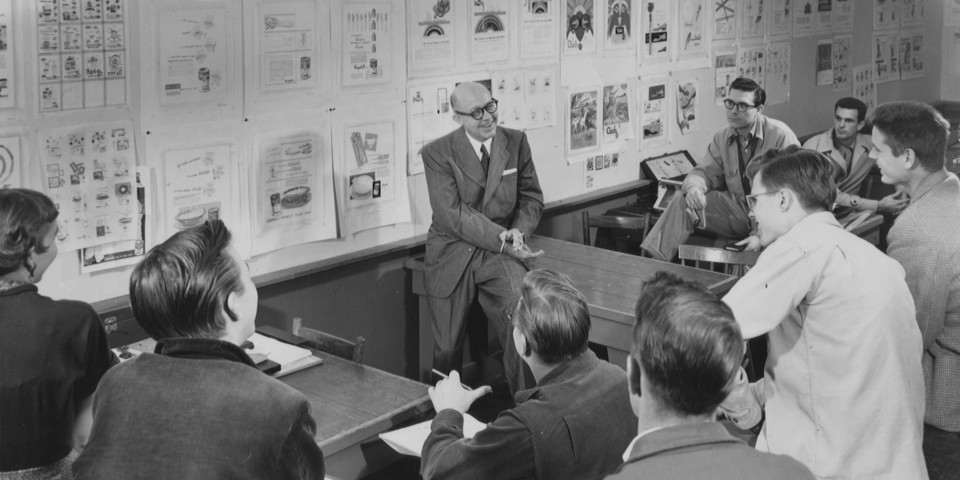
Edward A. “Tink” Adams was an advertising man with a radical idea in education: to teach real-world skills to artists and designers and prepare them for leadership roles in advertising, publishing and industrial design. To achieve that, he would create a faculty of working professionals from those fields. ArtCenter opened in 1930 with Adams serving as its director.

The viability of the idea he and a small group of colleagues launched was quickly proven. Even in the midst of the Great Depression, ArtCenter graduates quickly found employment.

In the years since, the caliber of our faculty and visiting artists has been extraordinary: Ansel Adams taught photography here; on a visit to campus, Keith Haring painted a mural; science fiction author Bruce Sterling was the College\’s first \”Visionary in Residence.\” Our alumni include many of the world’s leading car designers, contemporary filmmakers (Man of Steel, Transformers, The Vow), ad makers (“Thatsa one spicy meatball,” “Got Milk?”), concept illustrators, (The Avengers, Star Wars), artists (The Blue Dog), product designers (Apple monitor, Oakley Zeros, Kikoman soy sauce dispenser) and others who have shaped culture with their talents and vision.

Related Links
Mission and VisionArtCenter at a GlanceArtCenter ArchivesMaster PlanDiscover ArtCenter

Our original campus was in a courtyard of buildings on West Seventh Street in Los Angeles, a site sufficient for ArtCenter’s then 12 teachers and eight students. From the beginning, a simple filled-in circle—what has endured as the orange dot—was chosen as a graphic element to add to ArtCenter’s printed materials. By 1940, enrollment had grown to nearly 500 students representing 37 states and several foreign countries.

After the war, returning veterans pushed enrollment numbers even higher, prompting a move in 1946 to a larger building on Third Street, as well as a commitment to a year-round schedule. In 1948, our renowned Automotive Design Department—now Transportation Design—was founded.

A year later, ArtCenter became an accredited four-year college, and offered its first bachelor’s degrees in Industrial Design, Photography, Illustration and Advertising. We played a seminal role in the founding of the first advanced-concept design studio for the automotive industry in the 1950s.

Adams was the first to encourage ArtCenter’s international relationships. One of the turning points came in 1956, when the Japanese External Trade Recovery Organization began sending students to ArtCenter. Adams and faculty members George Jergenson and John Coleman visited Japan and wrote a report, “The Future of Japanese Industrial Design.”

Adams oversaw ArtCenter for nearly 40 years. When he stepped down, leadership transferred to an alumnus, Don Kubly, who would lead the College for nearly 20 years, including our move to Pasadena.

Throughout our existence, we continued to grow with, and often anticipate, the many cultural and technological landmarks of the 20th century while refining our educational tools and methodologies to remain on the forefront of art and design education. In 1965, we became ArtCenter College of Design.

Reflecting the College’s forward-looking momentum, new undergraduate departments would be added each decade: Fine Art in 1967, Film in 1973, Graphic Design in 1984, Product Design in 1991, Environmental Design in 1992, Entertainment Design in 2008, and Interaction Design in 2012. Graduate degree programs were launched in Film in 1975, Art in 1986, Media Design Practices in 2000, Industrial Design in 2004, both Environmental Design and Transportation Design in 2012, and Graphic Design in 2016. Additionally, the College partnered with Claremont University’s Drucker School of Management to offer a dual MS/MBA degree in Innovation Systems Design in 2014. 

Tink Adams was a terrific guy, and he knew exactly what the profession needed in preparing young people to run the world—it needed a school that could address that. We wanted to be leaders in the field, so it wasn’t a matter of training, but a matter of truly understanding. A school like ours was unusual back in those days.Don KublyArtCenter President


We moved to the Hillside Campus in Pasadena in 1976, into an iconic building designed by the modernist architectural firm Craig Ellwood Associates. In the 1980s, we were the first design school to install computer labs, spearheading the revolution in digital design. More recently, ArtCenter has focused on design’s potential to generate positive social change and improve people’s lives through our groundbreaking Designmatters educational program. In 2003, we became the first design school to receive Non-Governmental Organization (NGO) status by the United Nations Department of Public Information.

We have long taken a global view of the importance of design and art, and from 1986 to 1996, had a second campus in Vevey, Switzerland. Today, we continue to leverage opportunities as they arise in the world, sending our students to work on projects across Europe, Asia and Central and South America, in order to address particular design challenges.

Closer to home, our Public Programs reflect our philosophy of design being integral to all aspects of life and being accessible to the surrounding community. The Public Programs administrative team is based at our South Campus—a former aviation wind tunnel—opened in 2004. South Campus is also home to our Graduate Art and Media Design Practices programs.

In 2014, ArtCenter expanded South Campus by renovating a neighboring former post office building, effectively doubling the size of our downtown Pasadena location. The new facility provides dedicated space for our Fine Art and Illustration students, with a professional Printmaking Studio, added classrooms, individual studio spaces, shared exhibition spaces and a sculpture yard.

The most recent acquisition at South Campus, now spanning seven urban acres, is a six-story office building at 1111 S. Arroyo Parkway. The addition of the office building completes an eclectic trio of structures that have found vibrant new life as classroom, studio, exhibition and administrative spaces serving the needs of a growing student body.

We remain focused on our core educational mission of developing creative leaders and innovators in art and design. We’re leading the way with cross-disciplinary programs and studios that prepare students within and outside their chosen fields.

Our story is one that continues to unfold—and to be told.

Mission
Learn to create. Influence change.

This is our mission statement—and our answer to how art and design impact our global society. Part call-to-action. Part promise. All opportunity.

Vision
A new model for art and design education in the 21st century.

ArtCenter’s visionary approach to art and design education is based on the College’s conservatory-like approach to teaching and learning; a desire for rich, intercultural and transdisciplinary dialogue; and a mandate to provide students innovative learning and making spaces.

Strategic Plan
Create Change 2.0

Create Change 2.0 is the product of the ArtCenter community evolving and updating initiatives of Create Change 1.0, the plan that guided the institution from 2011 to 2016. We undertook our planning for Create Change 2.0 with a keen eye on the opportunities created by the bold initiatives we launched in the last five years. We have new programs in place, extraordinary new facilities and the strength and willingness to assess our progress honestly and to ask some tough and critically important questions about our future. The overarching driver of this plan is the question of value—how we create value for our students in the process of realizing our mission. In doing so, Create Change 2.0 organizes our thinking around issues of student success, educational innovation and strategic infrastructure.

1. Student Success

As our programs continue to expand at both the undergraduate and graduate levels, student demographics are shifting and new needs are emerging. Within this context, ArtCenter is dedicated to supporting students and helping them thrive in the classroom and beyond. Key aspects of this initiative include diversity, a “whole student” approach and post-graduation support.
2. Educational Innovation

ArtCenter values our history of rigor, mentorship and professionalism that has made us a standard bearer in the field of art and design. As we face ongoing challenges in higher education, we strive to continue to lead by expanding our pedagogical perspectives, cultivating our faculty, increasing access to our community and innovating art and design curricula that remain adaptive to the needs 
of our students first.

3. Strategic Infrastructure

ArtCenter’s vibrant community, pedagogy and dual-campus system demands a state-of-the-art infrastructure of accessible facilities (actual and virtual), processes and staff. In tandem with our significant campus expansion, we must identify and build crucial infrastructural competencies and capabilities. These will ensure that the College functions efficiently, supports nimble innovation and invests wisely.

Smile, because??


No matter what life you are living, where you are living, how you are living..
Try to keep that smile on you, not because it make you look good and neither because everybody ask for it..
But, try it as a trick which works on every situation.. Note, that when some one leave you, it’s obvious that you are gonna cry, maybe not infront of them but you will.. at that Moment try this trick or at this moment smile because there are many more about to come or already arrived, who will leave you.

So smile man! Because it is just a trick. That’s it. No more Hopes from smile because it is just a trick. And that’s it.

P.S:- You know a moment where you are throwing your hands and legs at your desired place to get some.. yeah! There’s two possibility of it, either you are gonna get that or your legs are going to feel some pain or probably getting hit by something. And at that particular moment, just smile because it’s a trick and nothing else. The pain is still there, eyes are still wet, invisible tears are still Rolling out, and yet you smile.. what a beautiful scene it will be or it is..
So, remember people, smile Because ___________._______. yeah! You got it.

See yaa..

Antioch University

 Antioch University’s roots began as Antioch College. It first opened its doors in 1852 in Yellow Springs, Ohio. Antioch’s first president, Horace Mann, was a lawyer and Congressman from Massachusetts, a well-known abolitionist and social reformer. He is considered the founder of public education in the United States, believing that a well-educated populace was essential to a strong democracy. In his first graduation speech, Horace Mann implored the Antioch graduates to “be ashamed to die until you have won some victory for humanity.” Those words remain throughout our history a guiding light of our values and an underlying commitment to an Antioch education.

Nonsectarian and co-educational from the outset, Antioch was a leader of progressive thought and innovation. Antioch was the first college in the country to have a woman faculty member as equal to her male counterparts. Antioch’s curriculum was the same for men and women and we admitted black and white students to learn together over a century before civil rights laws would require the same result. In the early 1860s, Antioch adopted a policy that no applicant could be rejected due to his or her race. Sadly, this was quite revolutionary for its time.

The modern Antioch began to take shape in the 1920s under the leadership of President Arthur E. Morgan. As an engineer and former Chair of the Tennessee Valley Authority, he was interested in progressive education. He reorganized the Antioch curriculum to include co-op, a structured method of combining classroom-based education and practical work experience. Antioch was the first liberal arts college in the United States to establish a co-op program. This important innovation in experiential learning has been widely reproduced throughout higher education today.

Always positioned at the forefront of social activism, the period during and after World War II proved even more groundbreaking for Antioch. During the war, Antioch participated in a program that allowed Japanese citizens incarcerated in internment camps to enroll at Antioch and move to Yellow Springs, Ohio.

Also in the 1940s and beyond, Antioch set out to diversify the campus by offering more scholarships to people of color. A number of famous African Americans graduated from the College, including Coretta Scott King, author, activist, civil rights leader, and the wife of Dr. Martin Luther King, Jr.; Eleanor Holmes Norton, Congressional Delegate for Wash. D.C., and A. Leon Higginbotham, Jr., civil rights advocate, author, and Chief Justice of the U.S. Court of Appeals for the 3rd Circuit.

Other notable Antioch alumni include two Nobel laureates, Mario Capecchi (B.S. 1961), co-recipient of the 2007 Nobel Prize in Physiology or Medicine, and José Manuel Ramos-Horta (M.A., Peace Studies, 1984), co-recipient of the 1996 Nobel Peace Prize, and later President of East Timor (2007-2012).

One University

The current Antioch University began to take shape in the 1960s. As Antioch College’s reputation for academic excellence, social relevance, activism and experiential learning continued to grow, so did its campuses. As part of the ‘university without walls’ movement of the 1960s and 70s, Antioch expanded to sites across the country. The strong values-based nature of developing these campuses is important to recognize. The vision inspiring the expansion in the mid- to late 1960s and early 1970s was to serve adult learners and especially women and minorities, an approach to ‘taking the ivory tower’ out to the people. This was a very distinctive call for higher education at the time.

The first of the adult campuses, today’s Antioch University New England, was established in 1964, and the last, Antioch University Santa Barbara, was established in 1974. During this era, over 35 Antioch “satellite” campuses were founded across the country, including locations in inner cities from coast to coast, on native-American reservations, and in international locations. Antioch also founded an innovative law school in 1972 in Washington D.C. which operated on an experiential legal clinic teaching model. All students of the Antioch School of Law participated in the clinic which provided legal services to poor and underserved communities in D.C. The law school now operates as The University of the District of Columbia David A. Clarke School of Law and is no longer part of Antioch University.

Due to its expansion of programs, graduate degrees, and campuses, Antioch’s name was changed in 1978 from Antioch College to Antioch University. Nonetheless, it is the same institution that was originally incorporated in Ohio in 1852. It has been in continuous existence since then, and has been continuously accredited by the Higher Learning Commission since 1926.

We are proud that Antioch University has had significant influence on higher education; in fact, the precursor to the national Council of Adult and Experiential Learning (CAEL), was founded by Morris Keeton when he was Antioch’s Vice President of Academic Affairs. CAEL’s influence was instrumental in facilitating other colleges and universities recruiting and supporting adult learners, especially as the demographics of traditional 18 to 22 year old students was decreasing in the 1980s.

We are also proud of the many innovations in academic programming offered by the campuses in promoting undergraduate degree completion and graduate degrees responsive to the needs of adult learners. As examples, our New England campus offered Antioch’s first APA accredited doctoral program in Clinical Psychology (PsyD) followed by a PhD in Environmental Studies, one of the first in the nation. In 2001, Antioch University established a highly innovative low residency PhD Program in Leadership and Change. It has expanded to become Antioch’s Graduate School of Leadership & Change, which is a distinctive, outcomes-based, doctoral program focused on the study, research, and practice of leading positive change in workplaces and communities worldwide.

In 2008, Antioch University closed its residential College campus in Yellow Springs, Ohio due to significant enrollment and financial challenges. The College campus and other assets were then transferred in 2009 to a new Ohio non-profit corporation known as Antioch College Continuation Corporation, formed by a group of Antioch alumni. In that transaction, the University agreed to license to them the name “Antioch College”. The College was subsequently reopened in 2011 as a legally separate institution, but with a shared heritage with Antioch University. Those shared roots and an abiding commitment to social, economic and environmental justice remain at our core.

Today’s Antioch University is composed of Antioch University New England, Antioch University Midwest, Antioch University Los Angeles, Antioch University Santa Barbara, Antioch University Seattle, Antioch University Online, and the University’s Graduate School of Leadership & Change. Collectively, they make up one Antioch University with progressive values and a mission to educate the next generation of those determined to win victories for humanity.

Our Mission

Antioch University provides learner-centered education to empower students with the knowledge and skills to lead meaningful lives and to advance social, economic, and environmental justice.

Our Vision

Antioch aspires to be a leading university offering learners and communities transformative education in a global context that fosters innovation and inspires social action.

Our Core Values

Excellence in Teaching and Learning

The University offers quality academic programs relevant to the needs of today’s learners and embraces experiential learning by bridging academic outcomes with the real-world experience of all members of its learning community.

Nurturing Student Achievement

The University educates the whole person by cultivating personal growth, pragmatic idealism, and the achievement of professional goals.

Supporting Scholarship and Service

The University supports the active engagement of students and faculty in both scholarship and service. Antioch values the creative and deliberative application of teaching and learning to ‘further social, economic and environmental justice.’

A Commitment to Social Engagement

The University maintains a historic commitment to promoting social justice and the common good. Students graduate from Antioch University with a heightened sense of their power and purpose as scholars, practitioners, and global citizens.

Building and Serving Inclusive Communities

The University nurtures inclusive communities of learners, inspiring diversity of thought and action. Antioch University engages and supports the educational, cultural, and environmental vitality of the diverse regional, national, and international communities that it serves.

Argosy University


Introduction

Argosy University entered into federal receivership on January 18, 2019 and its schools closed on March 9, 2019. This page is designed as a guide to support the needs of former students.

Transcripts

Transcripts may be ordered through Parchment. Visit:  https://www.parchment.com/u/registration/30244283/account  for more information and to order. We have filled more than 45,000 transcript requests to date. With our apologies, if you requested a transcript previously and your request was not fulfilled, your request was not received and you must re-order through Parchment.

Completing Your Education/ Transfer Opportunities 

If you are interested in completing your education and earning your degree, please visit www.dcedh.org for a list of partner institutions willing and able to assist students. 

Diplomas

If you are in need/would like a print of your diploma, please visit https://www.parchment.com/u/registration/30244283/account. Parchment is is the only place that diplomas can be requested moving forward. If you have not received your diploma as of yet (even if you previously requested it) you will need to order it here.