SLEEP DEPRIVATION CAUSED BY THE UNHEALTHY USE OF GADGETS

It is said that “Sleep deprivation will kill you more quickly than food deprivation.” A good night’s sleep is one of the basic necessities of the human body for its active metabolism and better productivity. An average adult human requires 8 hours of continuous sleep each day. Any interference in the natural regular sleeping patterns can have a tremendous impact on one’s health: mentally as well as physically. Nowadays, people tend to sleep less than they did in the past and their quality of sleep has also faced a downturn.

We live in the middle of a world full of technologies and are surrounded by screens of smartphones, laptops, tablets, e.t.c. Though these gadgets make our lives easy and fast, we are least bothered about its negative effects on our lives. The overuse of technology causes eye strain, musculoskeletal health issues, sleep deprivation, etc. not only in adults but also in teens and kids. According to the American Optometric Association (AOA), prolonged use of computers, tablets, and cellphones can lead to digital eye strain which results in blurred vision, dry eyes, headaches, due to screen glare, bad lighting, and improper viewing distance. The unnatural way of holding the smartphones induces a lot of stress on the neck, shoulder and spine. Initially, these physical strains might seem negligible but can cause severe health impacts in the long run. 

Technology in the bedroom can interfere with sleep in a number of ways. Studies have found that 90% of US citizens use screening devices in the hour before going to bed, which can cause immense psychological and physiological impacts, capable enough to disrupt one’s sleep. Scientifically speaking, the blue light emitted from the gadgets suppress the sleep-inducing hormones like melatonin disturbing the biological clock. Lack of sleep causes stress, increased blood pressure, memory issues, weakened immunity, increased risk of heart diseases etc, thus dramatically decreasing our quality of life. Studies reveal that the increasing number of depression and anxiety among people, especially youth, has a correlation with the overuse of gadgets and social networks. Kids who are exposed to television, video games, mobile phones, and tech toys beyond the recommended time limit is seen to have retarded brain growth than other kids. They too experience sleep problems in addition to behavioural and social problems. 

From buying groceries to attending online classes, from consulting a distant doctor virtually to paying bills and dues, technology and gadgets plays an intangible role in making our lives smooth and less hectic. The technologies which we depend on for our comforts should never be the reason for our own distress. For that, we should always make sure to keep a balance between technology and healthy lifestyle.

Celebrating Indian Women Scientists on International Women Scientist’s Day

The United Nations celebrates International Women’s Scientific Day on 11 February every year. The aim is to encourage women and girls to take up the field of STEM i.e. Science, Technology, Engineering and Mathematics.

This time the theme is laid out by leading lady scientist in the struggle against Covid-19.

According to the Ministry of Science and Technology, approximately 20% percent of women in 2019-20 are directly involved in research and development (R&D) in the country.

Females in technology education

According to the United Nations, 43% of students in STEM are studying in India. India ranks first on the list of 17 countries in this case. Russia ranks second in this list, while America is ninth with 34%. Among 2.80 lakh scientists, engineers and technologists working in India only 14% of them are women.

Women had significant involvement in the fight against Corona. From treatment and testing, women were ahead in drug discovery and patient care. Dr. Soumya Swaminathan of the country is working as a Chief Scientist in the World Health Organization to carry out the fight against the epidemic.

According to UNESCO, there are only 33% of women researchers worldwide. The percentage of women taking admission to Bachelors or Masters under STEM is 45 and 55 percent. Approximately 70% of women are in the field of health and social work but they are given 11 percent less salary than men. Hopefully as we advance into the future we will see more women achieving greater heights in Science and Technology.

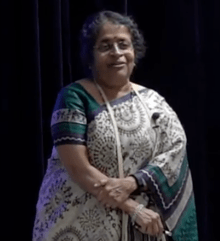
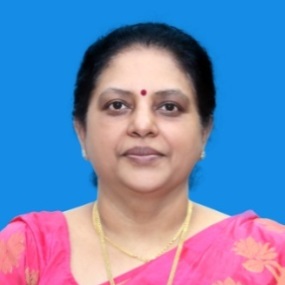
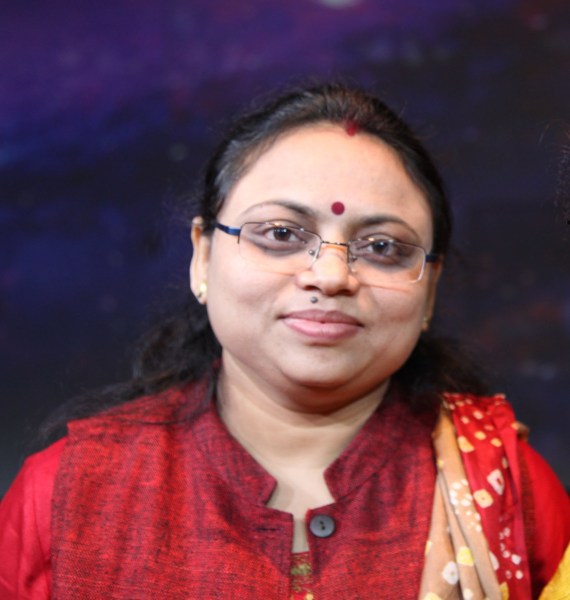
Here are some of the female scientists of India who inspire us with their achievements in the field of STEM-

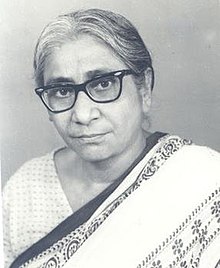
  • Asima Chatterjee

First Indian women to earn a doctorate in science, her research concentrated on natural products chemistry and resulted in anti-convulsive, anti-malarial, and chemotherapy drugs. She also discovered anti-epileptic activity which led to the development of an epilepsy drug called Ayush-56 and several anti-malarial drugs.

She won the C.V Ramen award, P.C Ray Award, and the S.S Bhatnagar award.

  • Janaki Ammal

an Indian botanist who worked on plant breeding, cytogenetics and phytogeography. Her most notable work involved studies on sugarcane and the eggplant and co-authored the Chromosome Atlas of Cultivated Plants (1945) with C.D. Darlington. She was awarded a Padma Shri by the Indian government in 1977. The University of Michigan conferred an honorary LL.D. on her in 1956 in recognition of her contributions to botany and cytogenetics.

  • Rohini Godbole

Prof. Godbole is part of the International Detector Advisory Group (IDAG) for the International Linear Collider in the European research lab, CERN. She is the Chair of the Panel for Women in Science initiative of the Indian Academy of Sciences.

She received Padma Shri for her contributions in science and technology (2019).

  • Tessy Thomas

Tessy Thomas joined DRDO in 1988, where she worked on the design and development of the new generation ballistic missile, Agni. She was appointed by Dr. APJ Abdul Kalam for the Agni Project. In addition, Tessy was the associate project director of the 3,000 km range Agni-III missile project. She was the project director for mission Agni IV which was successfully tested in 2011. Later, Tessy was appointed as the project director of the 5,000 km range Agni-V in 2009, which was successfully tested on 19 April 2012.

In 2018, she became the Director-General, Aeronautical Systems of DRDO

Thomas received the Lal Bahadur Shastri National Award for her contribution for making India self-reliant in the field of missile technology.

  • Ritu Karidhal

Dr. Ritu Karidhal Srivastava is an aerospace engineer, working with the Indian Space Research Organisation (ISRO). She was a Deputy Operations Director to India’s Mars orbital mission, Mangalyaan. She has been referred to as a “Rocket Woman” of India.

Karidhal received the ISRO Young Scientist Award in 2007 from A. P. J. Abdul Kalam, then president of India

  • Anna Mani

The only woman scientist to work with C.V. Raman, is well known for her work in atmospheric physics and instrumentation. She contributed to the study of radiation, ozone and atmospheric electricity, both on the surface and in the upper air using special sounding techniques. Joining the India Meteorological Department in 1948 she rose to become the Deputy Director General of Observatories in Delhi.

  • Soumya Swaminathan

Soumya Swaminathan is an Indian pediatrician and clinical scientist known for her research on tuberculosis and HIV Since March 2019, Swaminathan has served as the Chief Scientist at the WHO. Previously, from October 2017 to March 2019, she was the Deputy Director General of Programmes (DDP) at the WHO. In March 2019, Swaminathan became Chief Scientist of the World Health Organization, where she participated in regular bi-weekly press briefings on the COVID-19 Pandemic.

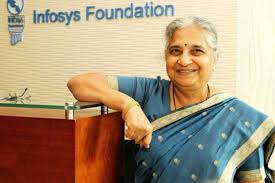
  • Sudha Murty

Sudha Murthy became the first female engineer hired at India’s largest auto manufacturer TATA Engineering and Locomotive Company (TELCO). She joined the company as a Development Engineer in Pune.

In 1996, she started Infosys Foundation & till date has been the Trustee of Infosys Foundation and a Visiting Professor at the PG Center of Bangalore University. She has written and published many books.

She won India’s fourth highest civilian award Padma Shri.

Food Waste – The Social , Economical and Environmental Issue

Do you know that more than 40% of food produced in India is wasted ?

Inspite of adequate food production , India’s ranking is 103 in global hunger index. According to UN approximately 190 million Indians remain undernourished. Estimated value of food wastage in India is ₹ 92,000 crore per annum.

Why the data seems so much scarious ? Do you know how much you contribute to this wastage of food ?

Well , next time if you go to a wedding , or a party , or function , just observe everyone around you , you yourself”ll get the answers of these questions. Just observe people in restaurants or observe everyone in your house.

And if you want to see the dark side of India , then just move out of your house , & observe people around the bins. There’re a lot who just eat food from the dustbins. Can you just imagine about them ?

For some it’s waste , for some a day’s Meal

There’s a lot of leftover but edible food which can be provided to those who need this. Many NGOs work in this direction. They collect the leftover edible food from restaurants , households , weddings & from other sources & provide them to the needy.

It’s not always like that , one can also leave some food in their plates when it’s simply not edible or when she/he isn’t feeling good.

And this leftover food from your plates then go to dustbins & then it decompose in landfills. This leads to the emission of green house gases like CO2 & CH4 .

The impacts of food waste on the global scale are huge. According to the World Resources Institute, if food waste was a country, it would be the world’s third largest carbon emitter after the USA and China.

Food waste rotting in landfills produce millions of tonnes of methane in CO2 equivalents , a measure that directly compares the global warming potential of pollutants.

But do you know that wasted food can be used effectively ?

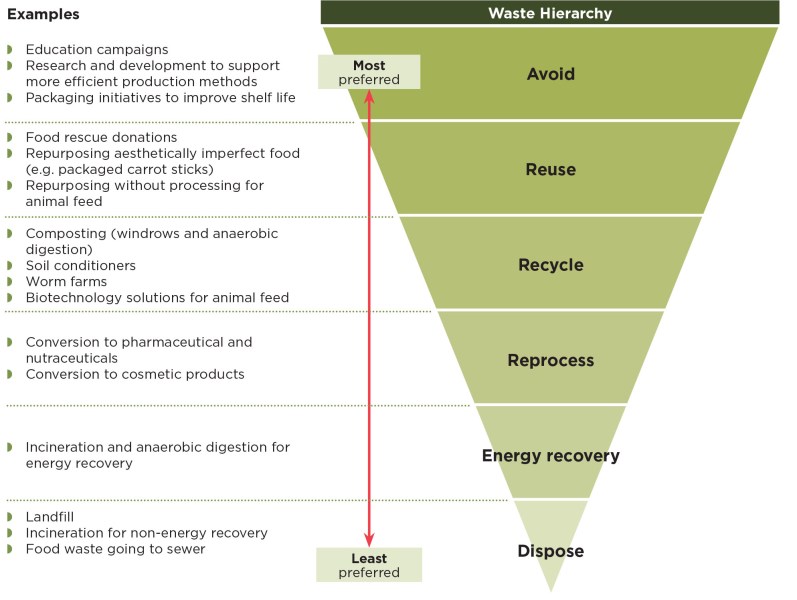
Yes , food waste can be transformed into valuable resources. It can be used as fertilizer , can be transformed into energy , & can be transformed into a bunch of innovative products , from pharmaceuticals to building materials.

Food waste can be recycled to produce nutrient rich fertilisers. Household composting recycles food waste in an environment where lot of oxygen is available. Fungi and bacteria break down the proteins, fats and carbohydrates in the waste into compost and CO2. The CO2 released from the breakdown of organic materials returns to the atmosphere , which is then captured by the plants. So it’s a carbon-neutral process.

Food waste can generate sustainable energy through waste-to-energy processes , where organic waste is used to generate electricity or heat. It is categorised as renewable energy. Various technologies are available to generate such energy ,although they do produce greenhouse gases like CO2, methane and nitrous oxide, so measures should be taken to reduce these emissions.

Extractions from the food waste can be used in production of biofuels like biodiesel & bioethanol.

Fruits and vegetables have the highest wastage rates of any food products. The Food and Agriculture Organization of the United Nations  estimates that globally, 45 per cent of fruits and vegetables are wasted along the supply chain. But these scrapped by-products can be reprocessed into functional and valuable products.

There are researches investigating how mango seeds could be used to make surfboard wax & fibres in root vegetables could be used in super strong concrete. Rice husks have variety of applications , such as cement, insulators, adsorbents and various construction material.They can also be ground with glass to create lightweight bricks that are resistant to fire and termites.

Discarded parts of fruits & vegetables are often rich in bioactive phytochemicals. These extracts can be used in pharmaceuticals , dietary supplements & food preservatives. Extracts & oils derived from food waste also be used in cosmetics.

The essential chemicals needed to create bioplastics include various carbs, fats and cellulose fibre that can be extracted from food waste using methods like freeze drying and hydrodynamic shockwave technology. Bioplastics ,are plastics produced from renewable sources and can be used for packaging, coatings and adhesives.Turning food waste into bioplastics can reduce food and plastic waste. It could also minimize the emissions associated with plastic production.

There’s need to reliase that this waste is not only causing social & economical problem but is also a cause of green house gases emissions, & thus is a harm for the environment.

Obviously , we should think of alternate ways to transform the waste into resource but our first priority should be to minimize the waste.

Avoid wastage of food. Provide the leftover edible food to those who need this instead of throwing this out. Use the leftover food as fertilizer


Love & Food are meant for sharing not for wasting
🙂 Don’t waste Food 🙂

Ice Volcanoes ~ Nature never fails to amaze us

Recently a 45 feets tall ice volcano was seen in the Almaty region of Kazakhstan . Yes , you read it right , it’s a ice volcano.

This volcano is formed over an underground hot spring , which is in Almaty region of the country , between the villages Kegan & Shrganak.

The volcano is a cone- shaped frozen structure which was formed by the spouting water of spring. As the hot water spouts out from the spring it freezes almost instantly due to the extreme cold weather.The volcano also sprays water from the top vent.

Last year also , a small ice volcano was observed here. But the recent one is more organised. Ice volcanoes were also witnessed at the Oval Beach in Saugatuck, Michigan in February 2020. 

An ice volcano is a conical mound of ice formed over a terrestrial lake via the eruption of water and slush through an ice shelf. The formation process is wave-driven , & the wind is energy provider for the waves to cut through ice & form the volcanoes.It may take hours or days for the formation. Their formation is temporary , frequently destroyed by the storms & warm weather. It requires precise conditions for the formation of these volcanoes.

Such ice volcanoes are often observed along the southern coast of Lake Erie and Lake Ontario in North America during specific conditions.

Twitter will have to obey the Indian government's law, Government encourages people to switch to Koo

Clash between Twitter and the central government is increasing due to the order to close 1178 accounts related to Khalistan-Pakistan . The central government has clearly told the American company that it has to follow Indian law. Also, many politicians and others are switching to Koo app against Twitter.

In a virtual meeting with Twitter Vice President Monique Meshe and Jim Baker, the secretary of Ministry of Electronics and Information Technology said,”despite government instructions, fake accounts related to the peasant movement were not closed. This is very unfortunate”. Earlier, Twitter replied it cannot fully oblige to the center’s order citing violation of the right to freedom of expression and said the Indian government’s demand was not in line with the country’s laws. Twitter believes in protecting the Freedom of Expression of its users and hence it did not take an action against the accounts of media companies, journalists, social workers and politicians.

25+ lakhs downloads of the KOO app in last 48 hours-

Amidst the trending #ban_twitter and #Koo_app on twitter in India, many politicians and spokespersons are switching to Koo to express their anger and requesting their followers to do the same. Koo app
was launched only last year under self-sufficient India. About 3 million people downloaded it in 48 hours.

Twitter will have to obey the Indian government's law, Government encourages people to switch to Koo

Clash between Twitter and the central government is increasing due to the order to close 1178 accounts related to Khalistan-Pakistan . The central government has clearly told the American company that it has to follow Indian law. Also, many politicians and others are switching to Koo app against Twitter.

In a virtual meeting with Twitter Vice President Monique Meshe and Jim Baker, the secretary of Ministry of Electronics and Information Technology said,”despite government instructions, fake accounts related to the peasant movement were not closed. This is very unfortunate”. Earlier, Twitter replied it cannot fully oblige to the center’s order citing violation of the right to freedom of expression and said the Indian government’s demand was not in line with the country’s laws. Twitter believes in protecting the Freedom of Expression of its users and hence it did not take an action against the accounts of media companies, journalists, social workers and politicians.

25+ lakhs downloads of the KOO app in last 48 hours-

Amidst the trending #ban_twitter and #Koo_app on twitter in India, many politicians and spokespersons are switching to Koo to express their anger and requesting their followers to do the same. Koo app
was launched only last year under self-sufficient India. About 3 million people downloaded it in 48 hours.