
Youth demands employment

12670 applicants gave the interview for the post of Chaprasi(Peon). These includes engineers, graduates & post graduates

What are your reactions after seeing the above picture ? Well , whatever your reaction is, just think over that.

Youth, the age group which decides the progress of a country. And we Indians are lucky to have a large no. of youths. Every 5th( 20%) out of the total youth population in the world resides in India.India, at present, is home to the largest population of youth in the world. 

By having such a large population of youth, we could easily be the largest economy of the world. We could easily achieve all the sustainable development goals.

But where are we ? Just see India’s rankings in the fields of poverty, hunger,equality, corruption, unemployment. Out of 189 countries ,India’s ranking was 131 on Human Development Index 2020.

And why are we at such position ? Well , there’s no need to define , the first picture of this blog is self explanatory. Just imagine how would you feel if you’re post graduate but are applying for the exam whose demand is just 8th class. Just think.

We are turning our ‘would be asset’ into a liability.

No. of educated youth is higher than the uneducated ones. Aren’t we indicating that ,”if you want employment , don’t study ?”At the one hand we talk about literacy rate , and on the other hand there’s no job for the literate ones.

And yes, the angry Indian youth is opposing the Indian government. Just see the image below –

Angry Indian Youth tweeted more than 50Million tweets in just an hour on february 25th in demand of employment.

Why is Indian youth not getting proper employment ? Why is there so much anger among the youth ?

Lack of skill training is what everyone calls , the cause of unemployment. But now,let’s not discuss over that.

Let’s discuss the other reason lack of jobs in Indian job market. The no. of jobs is not increasing at the rate the population is increasing in India. If the government invests in creating new jobs and the government policies are well implemented then we could have jobs for our every citizen.

Of course a lot of jobs could be created,which fit well to the need of time. And yes , that skill training portion is also the need of time.There’s a huge share of engineering people in jobless market. And the main reason behind this is lack of skills. The curriculum of Indian universities is still a decade old. There’s no focus on the need of market.

The dream of seeing , our love, our India, leading the world could be fulfilled if and only if we get succeed in turning our youth into asset rather than liability.

Let the peace prevail…🙂🙃🙂

Happy Reading..🙂
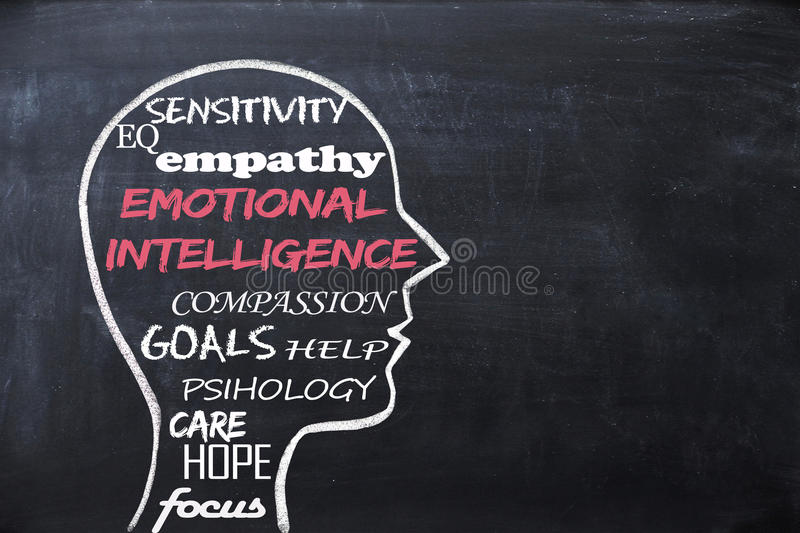
Real key to success- High IQ or High EQ?

Most of the people believe that high IQ is really important to be successful in life and we also had evidence to prove the fact. Just look at some of the most famous people in the history like Shakespeare, Leonardo Da Vinci, Albert Einstein, Isaac Newton, Stephen Hawkins or Marie Curie; they all something in common and that is high IQ.

And it is only recently that scientists have started realizing the importance of emotional intelligence and its contribution in our journey to be successful.

Emotional intelligence is a form of intelligence that is required to function effectively in a workplace. A good IQ is not enough to be successful in life. You may find many people who are academically talented, but are unsuccessful in their own life. They experience problems in family, workplace and interpersonal relationships.

Emotional intelligence is defined as “the ability to monitor one’s own and other’s emotions, to discriminate among them, and to use the information to guide one’s thinking and actions”. Emotional Quotient (EQ) is used to express emotional intelligence in the same way as IQ is used to express intelligence. A person with high EQ is able to express empathy and is able to cooperate and work effectively with colleagues.

Emotional intelligence is receiving increasing attention by schools and employers. Many programmes are being made for improving emotional intelligence as they encourage cooperative behavior, develop better teamwork and are very useful in preparing students to face the challenges of life outside the classroom.

It helps to manage your emotions in stressful situations and encourages positive thinking. It helps us in handling criticism better and instead of getting offended, work on self improvement.

Archaeologists Discover An Ancient Ceremonial Carriage Near Pompeii

An ancient-Roman ceremonial carriage has been unveiled near the Roman city of Pompeii. The four-wheeled chariot made of iron, bronze and tin with mineralized wooden remains, almost in an excellent state of preservation, was found near the stables of an ancient villa at Civita Giuliana, north of the walls of the ancient city in Italy.

The new find is the first ceremonial carriage unearthed while other chariots, used for transport and other purposes, have been previously found at Pompeii,said officials. Moreover, preserved remains of two men and horses who were victims of Vesuvius eruption were discovered last year.

According to the Park officials, the aim of the excavation around Civita Giuliana was to investigate the illegal activity in the area.

Massimo Osanna, the outgoing director of Pompeii archaeological site called the chariot, “An extraordinary discovery that advances our understanding of the ancient world.” The Culture Minister Dario Fransceschini stated that Pompeii always surprise us with its discoveries and it will continue to do so for many years, with 20 hectares still to be dug up.

The eruption of Mount Vesuvius in 79 A.D. buried the once thriving and sophisticated Roman city of Pompeii under meters of ash and pumice. Pompeii is an archaeological site located in the Compania region of Italy, near the coast of Naples. Architect Domenico Fontana first discovered the ruins at Pompeii in the late 16th century and the excavations began in about 1750. spreading over 66 hectares of land, the archaeological site of Pompeii is a snapshot of Greco-Roman life and a UNESCO world heritage site.

World Zero Discrimination Day

 Zero Discrimination Day is an annual day celebrated by the United Nations (UN) and other international organizations. The day aims to promote equality before the law and in practice throughout all of the member countries of the UN. The day was first celebrated on March 1, 2014, and was launched by UNAIDS Executive Director Michel Sidibé on 27 February of that year with a major event in Beijing.

The day is particularly noted by organisations like UNAIDS that combat discrimination against people living with HIV/AIDS. “HIV related stigma and discrimination is pervasive and exists in almost every part of the world including our Liberia”, according to Dr. Ivan F. Camanor, Chairman of the National AIDS Commission of Liberia. The UN Development Programme also paid tribute in 2017 to LGBTI people with HIV/AIDS who face discrimination.

Campaigners in India have used this day to speak out against laws making discrimination against the LGBTI community more likely, especially during the previous campaign to repeal the law that used to criminalise homosexuality, before that law was overturned by the Indian Supreme Court in September 2018.

On zero discrimination day this year, UNAIDS is highlighting the need to bring an end to income, sex, age, occupation, disability, sexuality, gender, race, class, ethnicity and religious inequality. Inequality is growing for more than 70% of the global population, exacerbating the risk of division and hampering socioeconomic development.

As a consequence, COVID-19 is hitting vulnerable people the hardest – poor and socially marginalised communities throughout the world will be the last to receive vaccines for the coronavirus. Many have equated this to vaccine apartheid.

Discrimination and inequalities are closely intertwined. Intersecting forms of discrimination, be it structural or social, against individuals and groups can lead to a wide range of inequalities—for example, in income, educational outcomes, health and employment. However, inequalities themselves can also lead to stigma and discrimination. It is critical, therefore, when looking to reduce inequalities to address discrimination. Members of key populations are often discriminated against, stigmatized and, in many cases, criminalized and targeted by law enforcement. Research has shown that this social and structural discrimination results in significant inequalities in access to justice and in health outcomes.

On this day, everyone should stand up for those who are at the receiving end of societal and institutional discrimination to create a better and safer world that teaches its children love before hate.