PM Modi’s interaction Programme ‘Pariksha Pe Charcha’ to be held this month virtually

The fourth edition of Prime Minister’s interaction Programme Pariksha Pe Charcha will be held this month.

The programme will be held virtually.

Through this programme, Prime Minister Narendra Modi will hold a brain storming session with school students, teachers and parents in connection with the upcoming examinations.

The registration process for the programme is underway on MyGov platform and it will remain open till Sunday.

The questions related to dealing with examination stress from school students of Class 9 to 12 are being invited through MyGov platform and selected questions will feature in the programme.

About two thousand school students, teachers and parents from all across the country are to be selected winner and there will be attractive prize for the winners.

The selected participants will be taking part in the programme online from their respective State and UT headquarters and will be presented with a special Pariksha Pe Charcha kit.

Both Houses of Parliament pass legislations amid ruckus

Both the Houses of the Parliament passed legislation today amid ruckus created by opposition parties over the issue of farm laws.
The opposition parties hard pressed on their demand of holding a discussion under Rule 267 over the farm laws.

In the Lok Sabha, when the House met post lunch after repeated adjournments, the opposition party members trooped into the well and raised slogans against the government.

When the Lower House initiated its proceedings today, Congress leader Adhir Ranjan Chowdhury raised the issue of farmers’ protest at Delhi borders and said that many of them have lost their lives in the course of the agitation.

He said, the House must take cognizance of the issue and a discussion may be allowed. Lok Sabha Speaker Om Birla expressed unhappiness over the ruckus in the House.

He said, the House is for discussion over the issues related to people and sloganeering is against the sanctity of the House.

He repeatedly urged the agitating members to get back to their seats and allow the House to function.

In the Rajya Sabha also, when the House met after the repeated adjournments, opposition parties trooped into the well and started sloganeering against the three farm laws.

Amidst the noisy scene, the House took up the Arbitration and Conciliation (Amendment) Bill, 2021. After passing the bill, the House was adjourned for the day.

Today, when the proceedings of the House started, Leader of Opposition in Rajya Sabha, Mallikarjun Kharge said that the opposition parties have given adjournment notices to discuss the farm laws.

Rajya Sabha Chairman M. Venkaiah Naidu said the matter has already been discussed during the first leg of the Budget Session.

He however said, the issues can be discussed during the deliberations on other legislative business.

Amidst uproar, Mr. Naidu tried to run the House and appealed to the agitating members to maintain decorum.

Proceedings of both the Houses will resume on Monday morning at 11 AM.

Tirath Singh Rawat takes oath as Uttarakhand CM

Tirath Singh Rawat took oath as the Chief Minister of Uttarakhand in Dehradun today.
 
He was administered the oath of office by Uttarakhand Governor Baby Rani Maurya.
 
Earlier, accompanied by BJP MLAs and MPs, Mr Rawat met the Governor at Raj Bhawan to stake his claim to form the government.
 
Tirath Singh Rawat was the state BJP president from 2013 to 2015 and is currently the party’s national secretary.
 
Trivendra Singh Rawat stepped down as Uttarakhand’s chief minister on Tuesday.

“Academic stress – too much to handle”

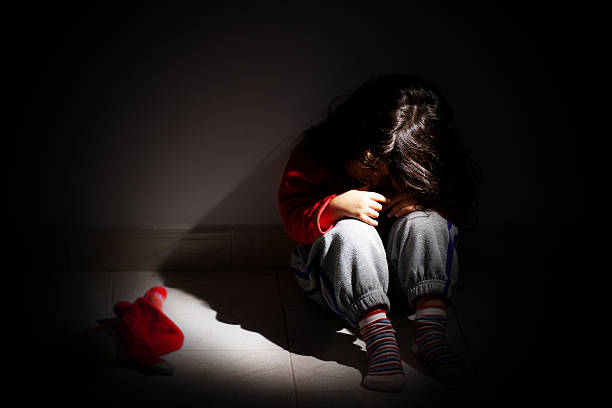
According to a recent report 95% of the GEN-Z is stressed out as compared to the global average of 86% of the same age group. To put to scale, that is 95 of every 100 Indians between the age group 18-25. The numbers are so staggeringly high that, without even realizing, you and I could also be one among those 95 people. What is the reason ? Well the answer to this is : pressure of performing good at academics.

Whether pressure from parents or from peers it becomes too much to handle after some time and pulls the student down. The impact of academic stress is also far-reaching: high levels of academic stress have led to poor outcomes in the areas of exercise, nutrition, substance use, and self-care. I would like to put it this way: the self-worth of students in the Indian society is mostly determined by good academic performance, and not by vocational and/or other individual qualities. Indian parents report removing their TV cable connections and vastly cutting down on their own social lives in order to monitor their children’s academics, this not only pressurizes the student to perform better but also instills fear of failure. Fear of school failure is reinforced by both the teachers and the parents, causing children to lose interest in studies. Because of academic stress and fear of failure in examination, every day 6 Indian students commit suicide.

As it is said that one learns the hard way , we as students ourselves have to come up with our plans and find support to cope with the academic stress until we as country and a society don’t recognize the problem and act accordingly.

Due to lack of evidence, every day four children of sexual abuse are being denied justice

Rising cases of sexual abuse in young children shows that even though there are strict laws, but they are not being implemented with the same strictness. The figures which have come out reveal that childhood is still unsafe. On average, four of the sexually abused children are not getting justice every day, as the police close the case due to lack of evidence.

This fact came to light after studying the cases filed under the POCSO (Protection of Children from Sexual Offences) Act 2012 by the Kailash Satyarthi Children’s Foundation and how they were disposed. The data were collected on the basis of a study of cases filed between 2017 and 2019 at the National Crime Records Bureau. Meanwhile, the number of cases closed has increased. The police closed the cases citing lack of evidence after investigation and did not file charge sheets.
51% of cases of five states including UP, Haryana, Delhi. About 51% of the cases were reported in Madhya Pradesh, Maharashtra, Uttar Pradesh, Haryana and Delhi. The punishment percentage ranges from 30% to 64%. Most of the victims come from weaker sections. In this case, cases are closed.
3000 cases do not reach court: Around 3000 cases registered under POCSO
do not reach court after investigation and four victims children are not able to get justice every day and their cases are closed. Nearly 43% of cases were closed in 2019 as compared to 2017 and 2018.
Reason for closure of the case: Despite the registration of the case, the case does not reach the court for trial due to lack of evidence and evidence. In closed cases the police have considered the lack of evidence as the reason.
The matters required to form a monitoring unit should be monitored by a DSP level officer. It has been recommended to set up separate units to monitor child sexual abuse cases in all districts.

France launches first military exercises in space

France launched its first military exercise in space this week to evaluate its ability to defend its satellites and other defense equipment from an attack. Michel Friedling, the head of France’s newly created Space Command said the exercises are a “stress-test of their systems. He said that they were a first for the French army and even a first in Europe. The exercise, codenamed “AsterX” in memory of the first French satellite from 1965, will be based on 18 simulated events in an operations room.

During the drill, the French military will monitor a potentially dangerous space object as well as a threat to its own satellite from another foreign power possessing a considerable space force. The new US Space Force and German space agencies are taking part in the French exercises which began on Monday and will last until Friday. The French Space Forces Command, Commandement de l’Espace (CdE) was created in 2019 and is set to have 500 personnel by 2025.

India’s GDP to expand by 12.6 percent says Organisation for Economic Co-operation and Development

The Organization for Economic Co-operation and Development (OECD) has raised the projection for India’s economic growth rate by 4.7 percentage points at 12.6 per cent for 2021-22. That would enable India to retain its earlier tag of the fastest growing large economy in the world. In its interim report on economic outlook, OECD said, activity moved above pre-pandemic levels in India, helped by strong fiscal and quasi-fiscal measures and a recovery in manufacturing and construction.

It, however, pegged economic growth rate to come down to 5.4 per cent in 2022-23, which would be higher by 0.6 percentage points than its earlier estimates. That year, India would share its fastest-growing large economy tag with Indonesia, according to the OECD. The Indian economy was projected to decline by 8 per cent in the current fiscal year. However, OECD believes that contraction would be less steep at 7.4 per cent. In the report, titled Strengthening the recovery: The need for speed, OECD said fiscal measures announced in India and a few other countries would help growth in 2021-22 as well.

Additional discretionary fiscal measures announced in several countries during the past three months will add to the overall support, including in the US, Japan, Germany, Canada, and India, the report said. The OECD also unveiled major upgrades to its global outlook, saying that economic prospects have improved markedly in recent months thanks to the deployment of coronavirus vaccines and additional stimulus announcements.

PM Modi speaks with Japanese counterpart Mr. Suga Yoshihide; Exchange views on regional and global issues of mutual interest

Prime Minister Narendra Modi had a fruitful conversation with his Japanese counterpart Mr. Suga Yoshihide on the progress of India-Japan Special Strategic and Global Partnership, yesterday. The two leaders expressed satisfaction at the positive momentum in India-Japan Special Strategic & Global Partnership in the last few years, guided by mutual trust and shared values.

They appreciated that bilateral exchanges were maintained over the last year despite the COVID-19 pandemic. They also welcomed the recent signing of the Memorandum of Cooperation on Specified Skilled Workers (SSW) and looked forward to its early implementation. Prime Minister Modi noted the Mumbai Ahmedabad High Speed Rail (MAHSR) project as a shining example of India-Japan bilateral strategic partnership and expressed his commitment to its successful implementation.

The two leaders further exchanged views on regional and global issues of mutual interest and concurred that the partnership between the two countries could play a pivotal role in addressing common challenges. In this regard, they emphasized that their engagement with like-minded countries such as Australia and the U.S. in the form of QUAD consultations holds value and agreed that these useful discussions must continue.

The leaders agreed to celebrate in a befitting manner, the 70th anniversary of establishment of diplomatic relations between the two countries that falls in 2022. Prime Minister Modi invited his Japanese Counterpart to visit India at the earliest for the Annual Bilateral Summit.

President Ram Nath Kovind to attend annual convocation of Thiruvalluvar University in Vellore today

President Ramnath Kovind is on a three day visit to Tamilnadu. He will leave for Vellore by helicopter and attend the 16th annual convocation at Thiruvalluvar University. State Governor Banwarilal Purohit will preside over the function. Earlier, he arrived at Chennai yesterday and was received by Tamilnadu Governor Banwarilal Purohit, Chief Secretary Rajeev Ranjan and other top officials.

President Kovind will confer doctorate degrees to 217 students.in the function.  Thirty five students will be given their  graduate and 31 students will get their post graduate degrees in the convocation. A total of more than 80 thousand students will be getting their graduate and post graduate and M.Phil degrees from the University this year.

The President will visit the Golden temple at Sripuram Vellore in the afternoon after which he will return to Chennai. Tomorrow the President will attend the 41st Annual Convocation at the Anna University after which he will depart to Delhi by Indian Airforce Flight.

Election Commission orders removal of West Bengal Director-General of Police

Election Commission ordered the removal of West Bengal Director-General of Police, Virendra yesterday. It has appointed P Nirajnayan as  DG and IGP in his place with immediate effect. EC said the decision has been taken after reviewing the poll preparedness in the state.

The Election Commission of India has transferred the Director General of Police Sh Virendra in poll bound West Bengal. After a review meeting on the poll preparedness yesterday evening, the ECI has ordered the Chief Secretary of the state to transfer Virendra, 1985 batch IPS OFFICER and appoint Nirajnayan Pandey , 1987 Batch IPS OFFICER as the DGP of the state. The ECI also ordered not to give any posting to Virendra which is directly or indirectly related to conduct of elections.

Election Commission orders removal of West Bengal Director-General of Police

Election Commission ordered the removal of West Bengal Director-General of Police, Virendra yesterday. It has appointed P Nirajnayan as  DG and IGP in his place with immediate effect. EC said the decision has been taken after reviewing the poll preparedness in the state.

The Election Commission of India has transferred the Director General of Police Sh Virendra in poll bound West Bengal. After a review meeting on the poll preparedness yesterday evening, the ECI has ordered the Chief Secretary of the state to transfer Virendra, 1985 batch IPS OFFICER and appoint Nirajnayan Pandey , 1987 Batch IPS OFFICER as the DGP of the state. The ECI also ordered not to give any posting to Virendra which is directly or indirectly related to conduct of elections.

BJP legislative party to meet today in Dehradun to elect new leader; Uttarakhand Governor accepts Trivendra Singh Rawat’s resignation

Chief Minister Shri Trivendra Singh Rawat submitted his resignation to Governor Smt. Baby Rani Maurya yesterday. The Governor accepted his resignation and asked him to remain the acting Chief Minister till the appointment of a new Chief Minister in the State.

Our correspondent reports that the meeting of BJP  legislative party will be held today in Dehradun to elect a new leader of   legislative party in the presence of  Central observers.

According to sources the names of Union Minister and former Chief Minister of the state  Dr. Ramesh Pokhariyal Nishank, Rajya Sabha member Anil Baluni and Minister of state Independent charge Dr. Dhan Singh Rawat are considered for the post of new chief Minister.

Legal Status of same-sex marriage in India

All same-sex relationships were criminalized until the Supreme Court verdict of 2018 that decriminalized them. This was recognized as an important step towards social equality and to help the LGBTQ community achieve justice. However, it was only the beginning, and there are still areas wherein same-sex couples struggle to find legal recognition where heterosexual couples easily do.

The most important one of these areas is marriage and all the privileges that come with it. Despite that landmark judgment, same sex couples’ relationships have no legal status—making it difficult to transfer property rights, make medical decisions for each other in case one is incapacitated or, in short, enjoy rights heterosexual married couples in India take for granted.

 Lack of legal recognition made many of the aspects of normalizing same-sex relationships increasingly difficult in bureaucracy-laden India. From refusals by banks to let them open a joint account to having a hard time establishing permanent addresses together. 

There have been petitions in the Supreme Court to legally recognize same-sex marriage so gay and lesbian couples can get what is due to them. However, the current central NDA government has opposed them in court stating that the Indian ‘family unit’ involves a man and a woman, a traditional order that cannot be violated. 

Many activists, and rightly so, have called the central government out for their homophobia, because archaic notions of what a traditional family is cannot be used to justify any social inequality, let alone homophobia. Today, we should stand in solidarity with LGBTQ activists and spread awareness about their community’s issues to contribute to achieving to social equality.

Multiple Nuclei Theory

 Multiple nuclei model of 1945 by C.D. Harris and Edward L. Ullman is based on the argument that the cities have multiple growth points or “nuclei” around which growth take place. This model was given in an article by them “The Nature of Cities”. This model is based on the structure of Chicago just like the Burgess model or Concentric zone model of 1925. It can be considered as an attempt to explain the structure of the city taking into account the complexity and growth over time. Harris and Ullman argued that a city might start with a single central business district (CBD), but over the time the activities scatter and gets modified. The scattered activities attract people from surrounding areas and act as smaller nuclei in itself. These small nuclei gain importance and grow in size and start influencing the growth of activities around them. The basic assumption of this theory is that “cities are not homocentric” but they rather have many mini centres which play a significant role in the development of a city. These mini centres originally developed independently with the specialized advantages that they offered or similar activities clustering in these areas. 

The need for this model was to provide a more realistic explanation of the cities. The influence of cars on personal travel and greater movement of goods offered opportunity in different places instead of concentrating all economic activities in one place. People started optimizing their business for maximum profit by locating at a different place and bringing down their rent with a slight increase in transportation cost. Whereas some activities like industrial areas create pollution and are thus preferred to be located away from residential areas. This model is considered to be more suitable for cities which are large and expanding.

Assumptions for Multiple Nuclei Model 

  • The land is not flat – This provides a more practical application of the multiple nuclei model and is an improvement over the Burgess model. It is difficult to find flat land for big cities, and the terrain features affects the activities, development and direction of growth of an urban area. 
  • Even distribution of resources – Resources are evenly distributed within the city, no one enjoys privileges or have exclusive access to resources. 
  • Even distribution of people in residential areas – People are distributed homogeneously and not concentrated in a particular area or pocket. This is essential as an unevenly distributed population has a direct impact on markets. 
  • Even transportation cost – Transportation cost is even in the city and not influenced by location. 
  • Profit maximization – A particular activity will locate itself where maximum profit can be earned. For this, a different combination of rent, transportation costs, labor cost, proximity to market may be tried, and the combination which yields the best result gives the final location for the activity. This location also takes into account the restrictions over the activity and the need to be separated from other non compatible activities such as locating residential areas away from industrial, locating large industries with more accessibility to reduce transportation cost and to ease the movement of goods.

                                                                 Multiple nuclei model 

Multiple nuclei theory is further divided into nine major areas. 

1) Central Business District 

2) Wholesale or light manufacturing 

3) Low income residential 

4) Medium income residential 

5) High income residential 

6) Heavy industry 

7) Outlying business district 

8) Residential suburb (Suburb – an outlying part of a city or town) 

9) Industrial suburb 

Limitations and criticism of the Multiple Nuclei Model

Multiple nuclei model was considered much better than the previous simple models which attempted to explain the structure of urban areas. However, this model also had its limitations and could not be applied to many cities and did not entirely explain the structure of urban areas. Formation of well-defined zones or “nuclei” required the considerable size of the city as the small or new towns do not have a very well defined location because of which they are usually scattered. Another drawback is the limited activities which are considered in the model along with the very rigid and specific boundaries of the activities. Some other disadvantages include: 

  • Negligence of the height of buildings. 
  • Non-existence of abrupt divisions between zones. 
  • Each zone displays a significant degree of internal heterogeneity and not homogeneity. 
  • Unawareness of inertia forces. 
  • No consideration of the influence of physical relief and government policy. 
  • The concepts may not apply to Asian cities with different cultural, economic and political backgrounds.