Why is Early Childhood Education Important?

Typically, early childhood education encompasses any education a child receives up until the age of eight, or around third grade. During these initial years of life, children’s brains are growing and learning at a rapid rate, and learning typically comes very easy to them. The purpose of education at this stage is to build a solid foundation for children to build upon for the rest of their lives.

When looking at pre-school, one of the earliest educational opportunities,“7–8 of every 10 preschool children did better than the average child in a control or comparison group”. This makes sense, given that education in those early years sets children up for success.

 the students who were given a high-quality education performed better than the other students in many areas, both academically and socially. These students:

  • Scored higher on standardized testing
  • Had higher attendance rates
  • Had fewer discipline referrals
  • Were rated higher by their teachers in terms of behaviors, social interactions, and emotional maturity.

The list of studies showing the importance of early childhood education goes on virtually forever. Early education also teaches kids how to be students. 

What is the main difference between formal education and informal education?

Sometimes as educators, we have a clear idea of what we’d like to see achieved; at others, we do not and should not. In the case of the former, we might be working to a curriculum, have a session or lesson plan with clear objectives, and have a high degree of control over the learning environment. This is what we often mean by ‘formal education’. When we are working with a community group, the setting is theirs and, as educators, we are present as guests. This is an example of informal education.

First, the group may well be clear on what it wants to achieve. They know learning is involved – it is something necessary to achieve what they want – but it is not the main focus. 

Second, this learning activity works largely through conversation – and conversation takes unpredictable turns. 

In both forms, educators set out to create environments and relationships where people can explore their, and other’s, experiences of situations, ideas and feelings.

Education – cultivating hopeful environments and relationships for learning

It is often said that we are learning all the time and that we may not be conscious of it happening. Learning is both a process and an outcome. As a process, it is part of being and living in the world. We are social animals. As a result, educators need to focus on creating environments and relationships for learning rather than trying to drill knowledge into themselves and others. Teachers are losing the education war because our adolescents are distracted by the social world. Naturally, the students don’t see it that way. They desperately want to learn, but what they want to learn about is their social world. You should pay some attention to the kind of material you are working with, and it may have some influence on what you try to do. 

Education is deliberate. We act with a purpose – to build understanding and judgement and enable action. We may do this for ourselves. This process is sometimes called self-education or teaching yourself. 

Strategies to improve your life this year

Photo by Alex Green on Pexels.com

Whatever your definition of “the good life” may be, it’s vital that you enjoy & get meaning from the day-to-day while on your journey. This is something we all have in common, regardless of the particular path we’re on. Your daily experiences (your tasks, your schedule, the places you spend your energy & time) are what make up your life.  And in my book, that’s all we’ve really got.  Life.

“Attention is a tangible measure of love.  Whatever receives our time and attention becomes the center of gravity, the focus of your life.  This is what we do with what we love: We allow it to become our center.  What is at the center of your life?” –Wayne Muller

Are you ready for some inspiring & practical ways to rev up your capacity for joy, fulfillment & meaning? Ready for some tactics to improve the quality of your day-to-day life? I think I hear you shouting “Hell yes!”

8 STRATEGIES TO IMPROVE YOUR QUALITY OF LIFE

  1. Cultivate Optimism. Being positive can often be seen as naivety or “Pollyanna” behavior.  In actuality, optimism increases job performance, creativity, ability to weather stress & self esteem.  Optimism can be used in how you talk to yourself in the face of adversity, explain past events & think about the future.  In the quest for the good life, positive expectations can be self-fulfilling.  Cultivating your ability to be optimistic is beneficial to your health & your success.  How cool is that?
  2. Be Present. Take a deep breath.  This is the here and now.  Stop ruminating over the past or worrying about the future for a moment.  Tell the voices in your head (“your committee”) to be silent. Enjoy your ability to create your experience this very second.  If you’re washing the dishes, wash the dishes.  If you’re writing a blog post, write the blog post. If you’re playing with your kids, play with your kids.  It’s harder than is sounds, but worth practicing every day.
  3. Clarify. When you are clear on what is important to you, there comes an incredible sense of freedom.  You no longer live in a world of social comparison.  You are running your own race.  Goals, big decisions & small habits are surmountable & invigorating because you have a clear picture of what you want your life to stand for.   Clarity does not come easily.  It also evolves throughout your life, which requires gracious flexibility.  But it is worth it.  Spend some quality time getting clear.
  4. Give Out. Mentor, contribute, practice random acts of kindness, express gratitude. Make a loan, give your time, be fully present for your family, change the world. There are a million ways to give of yourself. Do it big, do it small, just do it.  It’s one of the most positive equations in the world: You give of your time or resources, which improves someone’s quality of life, which makes you feel needed & valuable, which in turn improves your quality of life. We’re all better off.  Magic.
  5. Connect. We are social beings.  We crave connections to others individually, to our communities, to our world.  Pay special attention to your family, your lover, your adored friends, your colleagues & your neighbors.  Explore & strengthen your connection to a Higher Power.  And be open enough to enjoy the spontaneous connections that come from making a new friend on vacation or sharing a witty remark with your seatmate on the bus.  Genuine curiosity & kindness are an amazing way to foster connections, new & old.
  6. Find Flow. Flow is being in the groove, totally engaged in your present activity, challenged but succeeding with clear goals & feedback.  It’s a glorious state to be in.  For some it’s gardening, writing, cooking dinner with your partner, intense conversation, or crunching numbers. Though it requires more energy than passive ways to spend time (reality tv, idle gossip, video games) seek out the activities that challenge, engage & satisfy.  Find your flow.
  7. Celebrate. We need play & whimsy in our lives.  A healthy dose of joi de vivre fuels your creativity & feeds your spirit.  Celebrating is a wonderful way to share love with others & incorporate more play in our lives.  Who in your life has done something big lately?  Did you celebrate?  What about something small, but personally important?  Did you celebrate?  Celebrate with traditions, with heartfelt compliments, with notes in lunchboxes, with surprises, with big evenings out, or with cozy evenings in.
  8. Love Yourself. Your body is the vehicle that carries you through your life.  Love yourself by treating your body with respect & care.  Fuel it well with fresh fruits, vegetables, whole grains & lean protein.  Move it daily.  Don’t smoke, don’t abuse alcohol.  Meditate.  Help yourself age well by staying flexible, protecting your skin from sun & exercising your mind.  Sleep well.  Beware the ease in which you critique yourself & indulge in praise instead.

I want to make sure you know that these strategies are useful even when you already feel perfectly content. If you’re “happy”– wonderful.  That’s a great space to be in. Try increasing the quality or quantity of one of the strategies you already enjoy or tackle one that’s a bit less familiar. Think of them as ways to “stay happy”.

I hope you like these tips.

Thank you.

Rules of Good studying

  1. Use recall:

After you read a page, look away and recall the main ideas. Highlight very little, and
never highlight anything you haven’t put in your mind first by recalling. Try recalling main ideas
when you are walking to class or in a different room from where you originally learned it. An ability
to recall—to generate the ideas from inside yourself—is one of the key indicators of good learning.

2. Test yourself:

Every time test your self.

3. Chunking:

Chunking is understanding and practicing with a problem solution so that it
can all come to mind in a flash. After you solve a problem, rehearse it.

4. Space your repetition:

Spread out your learning in any subject a little every day, just like an athlete.

5. Alternate different problem‐solving techniques during your practice:

Never practice too long at any one session using only one problem‐solving technique. Mix it up and work on different types of problems. This teaches you both how and when to use a technique.

6. Take breaks:

A little study every day is much better than a lot of studying all at once.

7. Focus:

Just focus for some time and try to work as diligently as you can.

8. Make a mental contrast:

Imagine where you’ve come from and contrast that with the dream of
where your studies will take you.

Schools security needs to be improved.

1. Define the Problem

First, understand the school’s internal and external environment regarding security and safety. A school may have many different potential threats to consider, including issues with violence, but the unique characteristics of its region, country, and demographics may also have an impact on how the school functions and how campus community members interact.

Prior to developing a security and safety program, school administrators should gather data to determine which specific issues to address and where protection and prevention efforts are necessary.

2. Identify Potential Threats and Protective Factors

Once school administrators have assessed the types of threats present in their schools and communities, the data collected can be analyzed from a risk-based perspective to identify common factors that influence the operational approach, protective measures, and weaknesses in security.

Identify incident trends to understand vulnerabilities, then start thinking about protective factors already in place, such as walkthroughs by local police officers, security procedures, technology, and training programs.

3. Develop and Test Prevention Strategies

Use the information gathered in the first two steps to create informed security strategies. Shaping security and safety plans based on a school’s specific problems, risks, and protective factors allows for a more targeted, effective approach to incident prevention, detection, and response.

Implement the new strategy—but don’t stop there. It may not work as well as expected. To make a long-term positive impact, continuously measure performance, test the strategy, and build on it based on newly-identified risks and improvement opportunities. Take corrective action when necessary.

4. Advocate Widespread Adoption

For security strategies to be effective, it is vital for everyone to be involved. Work within the leadership, the school, and the community at large to communicate goals, encourage adoption of security programs, and promote reporting methods. This will involve training staff, removing roadblocks for universal adoption, and distributing plans and protocols to stakeholders.

Too often, people take security and safety for granted. Remind everyone that effective programs exist and find creative ways to reward those who participate—because the only way to ensure better school security and safety is successful ongoing adoption of these programs.

5. Continue to Measure and Adapt

Building a safe school is a continuous process. As with any program or initiative, if a security program isn’t measured against baseline statistics, it’s impossible to know for sure if it’s an effective use of school resources.

Collecting and analyzing data can help school administrators discover underlying causes of violence, highlight areas for improvement, and determine the most effective prevention methods. Ultimately, using research to form, test, measure, and adjust school security and safety efforts is the best approach to building a safe school community.

Educational costs should be lowered.

Parents and students constantly struggle to pay for college tuition. Lots of students drop out because they just can’t afford it. Loans may help in the moment but then you are in debt and many times you are trying to pay off your loans for the rest of your life. Financial aid definitely helps but the only addresses part of the problem. It’s simply not enough.

Reducing tuition would eliminate the possibility of student debt for most attendees. It would also open up more opportunities for people who could not afford college to attend. Eliminating student debt would allow attendees to focus more on their school work and everyday life, Better preparing them for the future.

Education Helps in Creation of a better society.

Education helps in creating more employment opportunities. Finding a job is not easy. You often need to compete with hundreds of other candidates for a vacant position. With the right qualifications and educational background, you will increase your chances of landing a fulfilling job. 

People with higher education and varied experience are more likely to get high-paying, expert jobs. Study hard and you will be able to fulfill your goals. Once you graduate, you can start searching for jobs that will give you the opportunity to practice what you have learned and, at the same time, secure sufficient pay for your needs. 

One of the benefits of education is that the educational system teaches us how to obtain and develop critical and logical thinking.

People with good academic and educational backgrounds tend to get well-paid jobs. The higher their education and accomplishments, the better employment options they get. 

Education has always secured respect from society. Education brings equal opportunity for both men and women and educated people will be able to create a better society. Without a good education, a better society can’t be formed.

Schools should take students abroad.

Reasons

  • Search for new adventures
  • Possibility to learn to be independent
  • Quick mastering of a new language
  •  Getting acquainted with another culture
  • Meeting people from all over the world
  • Improving the quality of education
  • Acquiring new skills
  • More opportunities for traveling
  • The opportunity to know yourself.
  • Learning abroad to return

Leadership skills must be taught from young.

Leaders take responsibility for themselves and anyone in their charge. Leaders communicate openly, honestly, and kindly with the people around them. They are respectful of others’ opinions and are comfortable disagreeing when necessary. Leaders are creative and have a vision for a better future. They are also able to enlist people to that vision and inspire them to work towards a greater good. Leaders are willing to roll up their sleeves to do the work and also know when to delegate a task to someone else. They make decisions when necessary and are willing to be held accountable for those decisions. They are confident in their abilities and instill confidence in those around them. They maintain a positive attitude and motivate those around them to adopt the same.

Whether actually leading a team or just running their own lives, a true leader is much more than a manager… they are an inspiration to others.

Print books are better for learning than e-books.

The feel of paper: For some people, this is a very important factor. For avid readers, holding a book in hand, the smell of the paper, nice binding and flipping through pages is a beautiful feeling which lacks in a digital device. Also, it feels great to always have a book nearby, no matter if you read it or not.

Sharing the books: You can share a printed book with any friend or colleague whereas paid e-books (from online stores like kindle store) can be used with one account only. That means you cannot share purchased e-books with a friend without sharing your account credentials. This is one very important factor in the debate of e-books vs printed books.

Illustrations and images: Printed books are great when it comes to displaying images and illustrations. where as e-book readers are not so good at this. Along with this, e-book readers support the black and white display, not colored.  So the genres of photography, cooking etc. are more successful as print books.

Flexibility in Annotating: Annotating a printed book is very whereas It is very limited in an e-book. In a printed book you can use pencils and pens of different colors to highlight, use symbols, drawings etc. But this feature is very limited in an e-book where you can only highlight lines, bookmark pages and add some notes.

Ability to skim quickly: It is easier to skim a real book than an e-book. Going back and forth in a printed book is much faster as compared to that an e-book reader.

No need for electric power: You don’t need to charge printed books. Since it needs no electric power. You can carry them anywhere without the worry of charging.

Cheaper than e-book reader: A printed book is much cheaper than the e-book reader.  If you don’t read much, a print book will be more economical. But if you read a lot of books, the overall cost is reduced with an e-book reader.

Students have the right to protest.

School students have led the way on climate protests in recent weeks and months, challenging the complacency of established politicians standing silently by while we move towards the point where it will be too late to reverse climate change.  

These students, who should be applauded for the courage and dedication to the biggest political challenge they are likely to face in their lifetime, instead face schools that have resorted to threats and punishment. In a number of cases, students have been threatened with or given after-school detention for taking part in local strikes, were marked as truant or even suspended.

Under-18s have the same right to free expression as anybody else, a right to seek, receive and impart information and ideas of all kinds. They also have the right to freedom of association and to freedom of peaceful assembly. These rights unquestionably include the right of young students to speak out and protest about climate change, the burden of which will fall most heavily on those who are the youngest among us today.

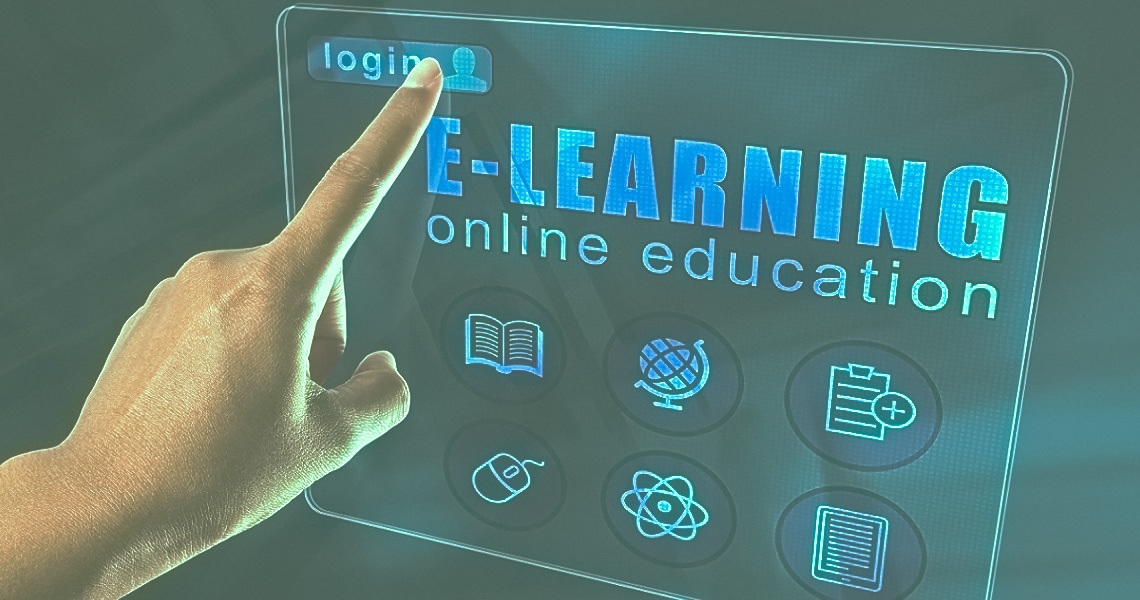
Online Education

Online Education

Online Learning is one of the trends now a days due to this situation. This mode of learning is done through the internet. With advanced and upgraded technologies, this mode of learning has been made simpler. It is also perferred in high education institution.

In this E-Learning Students study from home or any other place as they are comfortable and convenient for them. They can get learning Materials online like PDF’S, PPT, Articles… and so on. However this method has benefits and various drawbacks too. Usually we can see that this is suitable for ones who are not able to visit the traditional method approach.

Online education’s potential advantages involve increased educational access; it provides a high quality learning opportunity, improve, student outcomes and skills, and expands educational choice options. Therefore location , time and quality are no longer considered factors in seeking degree courses or higher education because of online eduaction.

Traditional Education

Traditional Education

Traditional Education model of classroom is one of the finest model for Education purpose. Because it is headed by the Class teacher. Students can easily understand the topics as they are taught and if they have doubt they can ask directly to the teacher and can solve their doubts.

Many factors play role in choosing a school because by that home-works related to that day tasks is also completed. One to one interaction is also important for students. So, that proper guidance can lead them proper path and they can also excel in Exam.

So we can say that Traditional Education is more beneficial than Online Mode Education.

Online Examination: Advantages and Disadvantages

Advantages

  • Saves paper.
  • Saves time.
  • Saves Money.
  • More Secure.

Disadvantages

  • You have to keep in mind that your students will take the exam on their own device in their own time with nobody to Check up on them, so you have to alter your questions to provide for this situation. You have to ask questions which are not easily to be retrieved from books or the internet. Or you can add timer to each question so their is no time to search for the answer.
  • Open text questions are possible, but they don’t auto-grade, so you have to check them yourself.
  • An online exam system is a little bit more susceptible for fraud. So you have to keep that in mind if you setup your exam. Do you want to share the results immediately after the result? In that case you can setup a question bank to solve the issue of fraud. Handing out all questions & Answers of a question bank to students is ok. Because they have to learn all the questions & answers by heart. And when they’re done they master the material. Read more about proctored exams.