Common grammatical errors in written English

Language has had a solid establishment in our society and been advancing with time. Grammar shapes the basic language structure and helps in maintaining structural composition and readability. Having a language means to have a medium to associate with others in a way to exchange feelings and thoughts in an understandable manner.

Over time, English has ended up becoming one of the most popular languages for communication in the world. Despite that, English is frequently seen as a complex and precarious dialect to a great extent due to its erratic spellings and a parcel of exemptions to its rules of language structure. This tricky to learn grammar makes one prone to grammatical errors more often in written English.

Common Errors in English

>Spelling errors

The most obvious and common mistake in written English is of spellings. It mostly occurs due to: (a) too many rules and exceptions for writing certain words- for e.g. Use of ‘I’ before ‘E’ in case of ‘V’ and vice-versa for ‘C’ is instructed. However, the word ‘SCIENCE’ contradicts the rule (b) homophones- for e.g. rain, reign and rein the pronunciation is the same but written differently.

>Missing or misplaced apostrophe

Apostrophes are used to indicate possession and also used in contracted form of words. If misplaced or missing, it changes the sense of a sentence. For e.g. their (possession) and they’re (contracted form of they are)

>Absence or incorrect use of commas

Commas are the simplest tool to separate the fragment of a sentence. If made in use inappropriately or not used at all, commas can influence clarity of a sentence causing disarray in it.

>Subject verb agreement

It is one of the few errors which occur in written as well as spoken English. To maintain grammatical accuracy it is important to satisfy the verb with respect to subject i.e. if the subject is singular, the verb needs to be plural in form and vice versa. For e.g. birds chirp (plural subject, singular verb) and sun shines (singular subject, plural verb)

>Inappropriate use of tense

We often tend to ignore tense while writing. A sentence has to be accurate with the use of tense to maintain the same sense throughout the sentence.

>Overuse of adverbs

Unnecessary adverbs need to be avoided. Instead of searching for more adverb, one should lookout for a more effective verb or adjective to add more colour to the content.

>Inappropriate use of degree of comparison

Herein, mostly errors are observed in comparative and superlative degree. Use of ‘more’ before the comparative degree of adjective and omitting the use of ‘the’ in superlative degree of adjective while comparison are common mistakes. For e.g.- I am more taller than him.


Indian Colourism: Origins and its residual effects


While some people might not be familiar with the concept or term colourism, rest assured for everyone has indulged in it. The oxford dictionary defines colourism as “prejudice or discrimination against individuals with a dark skin tone, typically among people of the same ethnic or racial group.” Perpetuated by both the oppressed and the oppressor alike, it is deeply entrenched in the average person’s psyche. Discussions of such topics are often littered with defensive stances and refusal to believe in one’s own fallacy. People tend to gloss over the microaggressions they partake in every day unbeknownst to themselves.


If we try to look at the roots of the issue and where its origins lie, if there are any, one will find being ruled by fairer-skinned Aryans, Mughals, and Europeans a recurring theme. However, was there no discrimination on the basis of skin in ancient India? The ancient texts portrayed dark-complexioned princes and princesses, gods and heroes in the same light as their fairer counterparts. They were allowed to be heroic and dark and beautiful not in spite of their skin tone but because of it. Lord Krishna’s—whose name means black itself—statues could be dark while Radha’s were made from marble. Times seem to have changed with idols carved in lighter stones selling exponentially more. India’s fanatic obsession hasn’t exempted even gods.


The Britishers moulded the pliable atmosphere after the end of the Mughal rule to their benefit. They were modernized and scientific here to save the uncivilized natives from our erroneous ways. They were symbols of power, class, and status. Who wouldn’t want to be like them? If dogs and Indians were not allowed inside exclusive clubs, who wouldn’t want to shed a part of them for a better life? Thus, colourism unfurled its tendrils. If you weren’t white, be the next best thing. Being white adjacent would land you better opportunities. With the English came the Eurocentric beauty standards. Other places have loosened these to let in talents from diversified backgrounds, but India is still stuck with the remnants of British rule.  


  Manufacturers seized the perfect opportunity by preying on the insecurities of the general public who desperately longed for upward mobility to escape from their circumstances. In 2019, the Indian skin lightening industry was reportedly worth nearly Rs 3000 crore. Bollywood jumped on the bandwagon and ingrained in all our minds that only fair can be attributed to lovely. With whitewashing actors in commercials and casting only fair actresses as love interests, the message was clear: there is no space for dark-skinned actors to be leads in a country of dark-skinned people.


We have internalized the messaging and bigoted ideals. So much to find fair attached to qualities in every matrimonial. To use skin bleaching and lightening products even after knowing their harmful effects. We have attached our self-worth and ability to be seen as desirable and worthy of respect and love to the shade of our skin. We have broken the hearts of millions of innocent kids who would grow to doubt themselves because what they see in the mirror will always resemble the dirt beneath their feet more than it ever does their favourite actor. Change is long overdue.  


War (युद्ध )

 युद्ध शब्द का अर्थ है राज्य संगठनों या देशों के बीच संघर्ष या लड़ाई की स्थिति।  देशों के बीच युद्ध को विश्व युद्ध के रूप में भी जाना जाता है जो बहुत बड़े पैमाने पर होता है और इसमें बड़ा विनाश होता है और देश के बुनियादी ढांचे और विकास और युद्ध हारने वाले देश के लोगों को भी भारी नुकसान होता है।  युद्ध न केवल युद्ध हारने वाले देश को बल्कि युद्ध जीतने वाले देश को भी नुकसान पहुंचाता है क्योंकि युद्ध के दौरान बहुत विनाश होता है।एक कहावत है कि युद्ध कभी अच्छा नहीं होता, शांति कभी बुरी नहीं होती।  लेकिन अगर हम मानव जाति के इतिहास में पीछे मुड़कर देखें, तो यह स्पष्ट हो जाएगा कि प्रागैतिहासिक काल से युद्ध होते रहे हैं।  हालांकि इसे खत्म करने के प्रयास किए गए हैं, लेकिन अब तक सफलता नहीं मिली है।  इस प्रकार, शाश्वत शांति हमारी पहुंच से परे प्रतीत होती है।  ऐसे लोग हैं जो युद्धों को सही ठहराते हैं और कहते हैं कि यह आवश्यक है क्योंकि यह प्रकृति का नियम है।

 वे चार्ल्स डार्विन को अपने सामने रखकर अपनी बात को उजागर करते हैं।  उन्होंने ही योग्यतम की उत्तरजीविता के सिद्धांत की स्थापना की।  उन्होंने बताया कि चेतन और निर्जीव दोनों प्रकृति में जीवित रहने के लिए निरंतर संघर्ष है।  इस संघर्ष में वही सफल होंगे जो योग्यतम होंगे।  इस प्रकार, युद्ध को आवश्यक माना जाता है जिसके बिना मानवता का कोई विकास नहीं होगा।लेकिन ऐसे लोग भूल जाते हैं कि युद्ध हमेशा बड़े पैमाने पर विनाश लाता है।  वे महात्मा गांधी की अहिंसा की शिक्षा को भूल जाते हैं, जिसके बाद उन्होंने अपनी मातृभूमि को गुलामी की बेड़ियों से मुक्त कराया।  वे भूल जाते हैं कि यदि गांधी अहिंसा के बल पर शक्तिशाली अंग्रेजों को बाहर कर सकते थे, तो अन्य लोग उसी पदचिन्ह पर क्यों नहीं चलते। 
युद्ध शब्द की उत्पत्ति जर्मन भाषा के पुराने शब्द ‘वेरन’ से हुई है जिसका अर्थ है भ्रमित करना या बनाना और निष्कर्ष निकालना।  यह पाया गया कि युद्ध आज से लगभग  14000 साल पहले से हुआ है, मेसोलिथिक कब्रिस्तान स्थल में लगभग 45% कंकाल युद्ध के कारण हिंसक मौत के संकेत प्रदर्शित करते हुए पाए गए थे।  पुराने जमाने में इस्तेमाल होने वाले हथियार आज उपलब्ध हथियारों की तरह नहीं थे, वे ज्यादातर धनुष और तीर का इस्तेमाल करते थे, और वे एक दूसरे से लड़ने के लिए भाले का भी इस्तेमाल करते थे और खुद को बचाने के लिए भी वे युद्ध के दौरान ढाल का इस्तेमाल करते थे।  लेकिन आजकल हथियार बहुत आधुनिक हो गए हैं और उनके पास नई तकनीक भी है जो एक बड़ी आपदा पैदा कर सकती है।
युद्ध के विभिन्न कारण हैं;  यह न केवल एक कारण कर्तव्य लेता है, बल्कि इसके कई कारण हैं।  युद्ध का मुख्य कारण एक श्रेष्ठ देश बनना है जिसके कारण वे विरोधी देश पर हावी हो जाते हैं।  विरोधी देश पर प्रभुत्व विभिन्न तरीकों से किया जाता है जैसे कि क्षेत्र बढ़ाने के लिए लड़ना या दूसरे देश से आर्थिक विकास हासिल करना और देशों को अच्छी तरह से और देश के संसाधनों पर नियंत्रण करना।  राष्ट्रवाद युद्ध का एक अन्य प्रमुख कारण है जिसमें देश अपने देश को विश्व से श्रेष्ठ बनाकर अपना राष्ट्रवाद सिद्ध करना चाहता है।  लेकिन कभी-कभी युद्ध इसलिए किया जाता है क्योंकि वे पहले किए गए थे जिनमें वे हार चुके हैं, और वे बदला लेने के लिए फिर से युद्ध करना चाहते हैं।
युद्ध के प्रभाव:

दोनों देशों या राज्य पर युद्ध के विभिन्न हानिकारक प्रभाव पड़ता हैं क्योंकि युद्ध के दौरान बहुत सारे संसाधन का प्रयोग किया जाते हैं विशेष रूप से मानव संसाधन जिसमें युद्ध के दौरान नुकसान के कारण कई मनुष्यों की मृत्यु हो जाती है।  युद्ध के दौरान हुए नुकसान से उबरने में काफी समय लगता है और कई बार इससे उबरना नामुमकिन हो जाता है।युद्ध आवश्यक बुराइयाँ हैं और उनकी भयावहता इतनी अधिक है कि उन्हें शब्दों में वर्णित नहीं किया जा सकता है।  हमें दो विश्व युद्धों की भयावहता को नहीं भूलना चाहिए।  वहां के युद्धों में, ये सामूहिक हत्याएं और संपत्ति का विनाश था।  हजारों को विधवा और अनाथ बना दिया गया।  युद्ध नफरत लाता है और झूठ फैलाता है।  लोग स्वार्थी और क्रूर हो जाते हैं।  इसका खामियाजा मानवता और नैतिकता को भुगतना पड़ता है। युद्ध पूरी मानवता और मानव सभ्यता का दुश्मन है।  इससे कुछ भी अच्छा हासिल नहीं किया जा सकता है।  अत: इसकी किसी भी रूप में महिमा नहीं की जा सकती।  यह न केवल राष्ट्र के विकास में बाधा डालता है बल्कि सामाजिक एकता को भी नष्ट करता है।  यह मानव जाति की प्रगति की गति को धीमा कर देता है। युद्ध समस्याओं का समाधान नहीं हैं।  इसके बजाय वे समस्याएं पैदा करते हैं और राष्ट्रों के बीच नफरत पैदा करते हैं।  युद्ध एक मुद्दे को तय कर सकता है लेकिन कई को जन्म देता है  हिरोशिमा और नागासाकी युद्धों के परिणाम के सबसे भयानक चेहरे हैं। 80साल बाद भी लोग युद्ध के दुखों से जूझ रहे हैं।  युद्ध का कारण जो भी हो, इसका परिणाम हमेशा बड़े पैमाने पर जीवन और संपत्ति का विनाश होता है.

Hope – The essence of our soul

https://tse1.mm.bing.net/th?id=OIP.z5zfExYtgomYCLt-GK059gHaDy&pid=Api&P=0&w=303&h=156

“ Hope is being able to see that there is light despite all the darkness. It whispers, You will overcome this hardship. It reassures us, soothing our minds by reminding, life will improve.”                                                                           – Desmond Tutu

As I was reading a newspaper, a thought came to my mind that made me conscious of the fact that almost every other page in the newspaper nowadays has headline surrounded by depressing and terrifying words. Every day we come across such articles that leave us thoughtful and make our mind accustomed to these negativities that we are surrounded by in the present times. The news of rising cases, increasing death rates and lack of infrastructure facilities makes our feelings frightening and dejected. Everyday we question ourselves when will this be over and when can we get back to our normal lives.

As lord Krishna has rightly said “Change is the law of universe. What you think of as death, is indeed life. In one instance you can be a millionaire, and in the other instance you can be steeped in poverty”. Times have shown that humanity has always adapted itself to extraordinary circumstances. The present ongoing pandemic situation has proved that no matter what the situation becomes our lives will always be governed by hope and affirmation.

Hope is a feeling of expectation and desire for a certain thing to happen. Hope is a symbol of positivity, expectations and joy. It is closely linked to our health, well-being, mental state and situations that surround us. It is like a flower blossoming with the thorns. Hope is linked to trust. When you are hopeful you are believing that something positive will happen, when you are hopeful about future you trust your own choices and decisions, when you trust someone you have a hope that they will never betray your trust. Every action of ours signifies hope, the trust that when you go to bed you will wake up with cheerful mind is itself a hope.

Hope makes us believe that things will get better, that every situation in life is temporary and every dark day is accompanied by positivity and happiness. It changes our perspective and allows for healing and wholeness for ourselves and for others.

According to Charles R Snyder, a psychologist, hope includes three elements: a goal, a path and freedom of choice. A person who is hopeful believes that he/she will succeed. The person has a specific destination and knows the route that he has to take to reach the desired outcome. Hope is a mindset, determination and will to believe that you can overcome your difficulties.

Hope acts as a remedy for all sorts of hardships and misfortunes. It enables us to cope with stressful events, like demise of our near and dear ones. It motivates us to carry on our activities with zeal and enthusiasm. It assists the sick person in getting well, encouraging them to do what it takes to recover. It makes our mind believe that everything will get better with time.

The more you look for hope the more you find it. We can find hope and joy in many things .

Mind is a powerful weapon, it is with us to control it. The type of thoughts and emotions that we want our mind to get used to requires practice. The more we look for positive things in every aspect of life the more we get our minds acquainted to it.

By recalling past instances where you have been hopeful and this hopefulness has led you to accomplish something good can rejuvenate this hope again.

Hope comes with expectations, if you expect good about something you will be hopeful. Hope comes in feeling grateful for things that you have. It comes in closely associating yourself with nature, having an emotional connect with it and feeling embraced.

We should be grateful for the life that we have, we must be happy that at least we have a roof under our heads to keep us safe in these destressing times, that we are not surrounded by miseries faced by those in the hospital yearning for an empty bed, those who don’t have a job or a shelter, or those who are still struggling for meal once a day and are living their life only because they have hope of betterment.


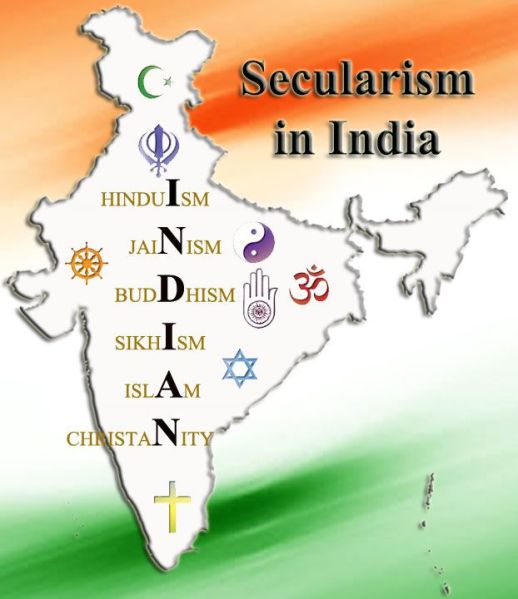
The Secular Concept in India

In India, the concept of secularism was originally born in response to the challenge to the theory of two nations. Indian nationalism proclaimed that India is a secular country and that there is no scope of differentiating between Hindus and Muslims.

Secularism in India is a positive, revolutionary and comprehensive concept which takes within its sweep all the communities in India following several religions. It is not negative in nature, it is not anti-God Or anti-religion; Indian secularism recognises the importance of religion in human life. It believes that no religion has the monopoly of philosophical wisdom. It allows all religions to discharge their function within their legitimate bonds. If citizens wants to worship their God, Indian secularism recognises the need and right for such prayer and worship. It does not prescribe the practice of any religion. Complete freedom of religion is assured in constitution.

secularism can also be non-religious, anti-religion and sceptical. Indian secularism, from this point of view is just non-religious. So long religious functions are held within its legitimate domain, Indian secularism is strictly neutral.

It is remarkable that though the words ‘secular’ and ‘secularism’ are not mentioned in our constitution, it guarantees equality of all religions before law. In that respect Indian Constitution is strictly and essentially founded on secular concept. Indian Constitution guarantees fundamental rights of religious freedom. Secular concept in India has become fully mature in the eyes of the world.

Health Ministry suggests deferment of Vaccination by three months after recovery from Corona virus infection

The Union Health Ministry has accepted the recommendations of National Expert Group on Vaccine Administration for COVID-19 or NEGVAC regarding deferment of vaccination by three months after recovery from COVID-19.

The Ministry said, the individuals having lab test proven COVID-19 illness should defer COVID-19 vaccination by three months after recovery.

Besides, the COVID-19 patients who have been given anti-SARS-2 monoclonal antibodies or convalescent plasma in that case the COVID-19 vaccination should be deferred by three months from the date of discharge from the hospital.

It was also recommended that if an individual is infected with COVID after the 1st dose then the 2nd dose should also be deferred by three months after clinical recovery from the illness.

Over 5.86 crore doses of COVID vaccines being provided free of cost by Centre to States from 1st May to 15th of June

Union Health Ministry has been providing advance information on availability of COVID vaccine doses to be supplied to the States and UTs.

It has written to the States and UTs on allocation of COVID vaccine doses during May and during first fortnight of June from the Government channel which is available free of cost.

It also provided information about availability of vaccine doses that can be procured directly by States and Private Hospitals during May and June.

This advance visibility will enable better and more effective planning by the States.

A total of 5 crore 86 lakh and 29 thousand doses is being provided free of cost by Centre to States from 1st of May to 15th of June.

In addition, a total of 4 crore, 87 lakh and 55 thousand doses will also be available till end of June for direct procurement by States and UTs.

The States and UTs have been advised to prepare a district-wise, COVID Vaccination Centre (CVC)-wise plan for administration of vaccines.

Both States Governments and Private CVCs must publish their vaccination calendar on CoWIN digital platform in advance.

They should desist from publishing single day vaccination calendar. It must be ensured that there is no overcrowding at the CVCs and process of booking appointments on CoWIN is hassle-free.

Centre hikes fertilizer subsidy by 140% to mitigate impact of rising international price rise

Union Government on Wednesday decided to hike the DAP subsidy by 140 per cent to provide the fertilizer to farmers at old rate despite international price rise.
 
The subsidy has been increased from Rs. 500 per bag to Rs. 1,200 per bag.
 
Now, despite the rise in international market prices, it will continue to available at the older price of Rs. 1,200 per bag.
 
A decision in this regard was taken during a high-level meeting chaired by Prime Minister Narendra Modi on the issue of fertilizer prices.
 
Mr Modi stressed that farmers should get fertilizers at old rates despite the international rise in prices.
 
He remarked that his government is committed to the welfare of farmers and will take all efforts to ensure that farmers do not have to face the brunt of price-rise.
 
AIR correspondent reports, recently, the international prices of phosphoric acid, ammonia and others used in DAP have gone up by 60 to 70 per cent.
 
So, the actual price of a DAP bag is currently Rs. 2,400 which could be sold by Fertilizer companies at Rs. 1,900 after considering  earlier subsidy of Rs. 500.
 
With today’s decision, the farmers will continue to get a DAP bag for Rs.  1,200.
 
The Central Government spends about Rs. 80 thousand crore on subsidies for chemical fertilizers every year.
 
With the increase in subsidy in DAP, Government of India will spend an additional Rs. 14,775 crore as subsidy in Kharif season.
 
This is the second major decision in the farmers’ interest in a week, after directly transferring Rs. 20, 667 crore in Farmers’ account under PM-KISAN.

PM Modi announces Rs. 1,000 crore relief package for cyclone-hit Gujarat

Prime Minister Narendra Modi has announced a Rs. 1000 crore relief package for the cyclone hit areas of Gujarat.

According to sources, this package has been given for the rehabilitation work in the areas devastated by the extremely severe cyclonic storm.

According to sources, the Centre will also send inter-Ministerial team to assess the loss due to cyclonic storm.

Prime Minister Modi also announced ex-gratia cash compensation of Rs. 2 lakh each to the next of the kin of those who lost their lives due to Cyclone Tauktae in all the affected States.

In a tweet message, Mr. Modi said that Rs. 50,000 would be given to injured persons affected by cyclonic storm.

Mr. Modi said, the Central government is in full solidarity with those affected due to the natural calamity and will provide them all possible support.

Mr. Modi also reviewed the situation caused by Cyclone Tauktae during a meeting in Ahmedabad.

He also took stock of the evacuation efforts and the ongoing relief work for those affected.

He said that the Centre will help in rebuilding damaged infrastructure. He said that the Central Government is working closely with all the States affected by the cyclone.

JOIN US AND PUBLISH FREE

An open access publishing platform supporting data deposition and sharing.

Publish all your findings including null results, data notes and more.
Engage with your reviewers openly and transparently.
Accelerate the impact of your research

Why you should publish with us

Benefits for Researchers

  • Enables authors, not editors, to decide what they wish to publish.
  • Authors suggest peer reviewers and control the process.
  • All types of research can be published rapidly: traditional articles, data sets, null results, protocols, case reports, incremental findings and more.

Benefits for Research

  • Aims to shift the way research and researchers are evaluated.
  • Moves away from journal-based measures towards direct assessment of individual outputs.
  • Supports research assessment based on the intrinsic value of the research, not the venue of publication.

Benefits for Society

  • Reduces the barrier to collaborative research through data sharing, transparency and attribution.
  • Reduces research waste and helps to remove the bias in our understanding of research.
  • Enables others to build upon new ideas right away, wherever and whoever they are.

An innovative open access publishing platform offering rapid publication and open peer review, whilst supporting data deposition and sharing.

How to Submit Papers

Send papers for review to ijr@ijrjournal.com