

The outbreak of the COVID-19 pandemic in 2020 brought many dramatic changes in our social as well as personal lives. Our routines are changed, our habits and majorly our system of education.
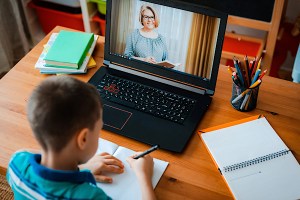
Though the work from home culture is in its second year, the schools and universities are still trying to adapt themselves to the online mode of education. The introduction to digital classes was first seen as a major setback for the aged teachers who are not gadget-friendly or prefers an interactive physical class as the sole place for good teaching.
Over the course of time, these teachers have become quite familiar with the online teachings, yet, that special gap that will always tend to loom and show the differences of physical classes over the virtual ones.
Yes, it is quite true and agreeable that digital classrooms pave the way for the education of the future when most of the world has turned online in every sphere. But, how truly does it help students, especially the pre-primary or the primary ones? They are the ones who are most dependent on the ‘touches’ of the teachers, or be in a classroom- their first step to the world beyond home, socializing with others.
Major drawbacks online education brings:
Not affordable for all families in India:
Money stands a major factor here, in India. It is not a hidden fact to us that India is home to people of different social strata and financial standing. A handful of people across the nation cannot afford schools for their children. The Hindu in 2019 reported that 30 out of 100 children complete their school. The reasons may vary but we can’t deny the reality. The monetary conditions of families can be counted as a major reason. Well, this is the calculation done before the pandemic happened. As we see many children cannot afford proper schooling, we can predict how tough would it be for them to do classes “online”.
Online education could not serve to educate a major part of India because the poor folks cannot afford a smartphone in many parts of the country- leave alone a laptop or personal computer.
Network Accessibility:
India is a country of diversities, even geographically. Thus some groups of the population tend to live in extremely remote places like forests, or foothills of the Himalayas, or deltas of the Sundarbans. Such remote villages lack basic amenities to survive like proper water supply or electricity. To make a phone call one has to travel miles. So, this leaves us with the question, how can the children attend online classes?
This makes us think, is education moving from a basic right to a privilege?
Less personal interaction:
The virtual classes, how much fun it seemed at the beginning, could not hide its one of the major drawback for long. The lack of personal touch makes us the students detached from the school/ university vibe.
Yes, we hated the monotony of attending regular classes, but can’t deny the fact the monotony, the disciplined life, the constant monitoring of our mentors helped us in our studies. Secondly, school/university isn’t only about what we learn from books, we met real people, made friends and learn to live. But, beginning a session with online classes has made this quite impossible, we are making friends, but a part of the puzzle is missing.
Practicals:
Some of the subjects of the curriculum cannot be done with the help of online classes. In schools, physics, chemistry, biology practicals, or when we move up to the higher education subjects which require the teaching of gadget handlings like cinematography, engineering, or medical field is quite difficult on the students’ part.
The strain on eyes:
Since childhood, we came across our parents warning us not to watch too much television or going close to it, as it would harm our eyes. So, 2020 brought us to the days where most of our time is being spent staring at our mobile or laptop screens, not just adults but nursery children as well. This extended screen-time is causing eye strains, headaches and sometimes migraines to many.

Though throughout our school and college lives, we used to brood, What if we can attend our classes staying at home and not miss the attendance( tbh after passing school, it’s the attendance we mostly care about). But now, the one year of being in a virtual class, a part of us do miss the hustle and bustle of college life. We crave being back in those classrooms, feel those benches, or plan mass bunking our classes. Yes, though being a necessity now, online classes seem to take away a major part of our student life.

 Eduindex
You must be logged in to post a comment.