MARITAL RAPE

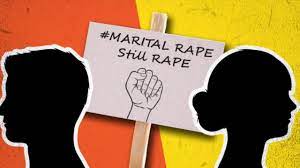
Marital rape is defined as any unwelcome sexual act conducted by a spouse without consent or consent obtained by force or threat of force, intimidation, or any other threat. Intercourse, anal or oral sex, forced sexual behaviour with other individuals, and other sexual practises deemed painful and unwelcome by the victim are examples of these sexual actions. It should be mentioned that in marriage, if a woman consents to sexual intercourse owing to any of the threats, this is still counted as NO.

According to Section 375 of the Indian Penal Code, marital rape is not legally forbidden if the lady is over the age of 15. It is only illegal when the lady is required by law to live apart from her spouse. Marital rape is not illegal in India because it is founded on historical myths that the spouse has full rights even if his wife does not consent. In truth, investigations and research have shown that marital rape has an identical long-term effect on the mentality of women, as well as physical effects.

Short-term mental impacts may include anxiety, shock, acute terror, depression, and post-traumatic stress disorder. Long-term consequences frequently include inappropriate eating, sleep issues, depression, and increasing negative thoughts about oneself. While the bodily symptoms may include private organ injury, discomfort, ripped muscles, and vomiting. Women who have been raped may suffer from fractured bones, black eyes, bloody noses, and knife wounds as a result of the sexual violence.

Marital rape is something that has to be criminalised under the IPC, but it has not yet been criminalised. According to statistics acquired in 2015-16, approximately 5.4 percent of women reported to have suffered marital rape, which is less than the 9 percent in 2005-06, but it must be criminalised. These figures are far from accurate because this is something that not every woman can express. Furthermore, this may occur numerous times with the same lady.

It’s not like people didn’t raise their voices in opposition to the Section 375 exception. It has been observed that for many years, activists, civil society, and people in general have been calling for marital rape to be criminalised, but it doesn’t appear that it will happen soon, because the Indian Government believes that the Indian population is uneducated to understand this law, so it will not be implemented. According to a 2014[1] survey performed by the International Centre for Research on Women (ICRW) and the United Nations Population Fund (UNFPA) in 8 Indian states, one-third of men acknowledged to forcing a sexual act on their wives or partners. In fact, the bulk of sexual abuse reported by women occurs within the confines of the marriage.
Various communities, NGO’s, the RIT FOUNDATION, and others have raised their voices over the years. In 2011, a marital rape case was reported to the Delhi High Court, and the Centre advised the Delhi High Court that criminalising marital rape would destabilise the institution of marriage and make it an easy tool for harassing husbands, resulting in the denial of the appeal in the Delhi High Court. According to the center’s affidavit, criminalising marital rape may lead to its misuse, similar to section 498 A of the IPC, which deals with cruelty to a wife by her husband or his relatives.

In a society where a woman is constantly restricted from going out, staying out, and engaging in other activities, it is not a bad thing to state that not criminalising marital rape is a curse for India. We are attempting to restrict women’s rights in order to protect men’s rights. Women are a part of society, and they play an important role in our economy; therefore, they must have the right to speak out against any such acts (for which her approval is required) conducted by their spouse or anyone else. Women are doing their best in every sector, yet males continue to dominate them, thus there should be a forum where women may talk without fear of being judged.

DEPRESSION

“Depression is living in a body that fights to survive, with a mind that tries to die.”

Depression (major depressive disorder) is a common and serious medical illness that negatively affects how you feel, the way you think and how you act. Fortunately, it is also treatable. Depression causes feelings of sadness and/or a loss of interest in activities you once enjoyed.

There are many possible causes of depression, including faulty mood regulation by the brain, genetic vulnerability, stressful life events, medications, and medical problems.

Depression can affect a person psychologically, it also has the potential to affect physical structures in the brain. These physical changes range from inflammation and oxygen restriction, to actual shrinking. In short, depression can impact the central control center of your nervous system

Research has found that stress caused by sleep deprivation increases signs of aging, such as fine lines, reduced elasticity, and uneven pigmentation. The loss of skin elasticity may also contribute to the formation of bags under your eyes

Depression doesn’t just get in the way of being happy. It can also interrupt your ability to think. It hampers your attention, memory and decision-making abilities. You may find that your executive functions are limited, so you begin having trouble seeing your way through issues.

                          “The sun is a daily reminder that we too can rise again from the darkness, that we too can shine our own light.” 

Central Bureau of Investigation (CBI)

Central Bureau of Investigation

• Origin as Special Police Establishment (SPE) – set up in 1941.

• Purpose: Investigate bribery and corruption in
transactions with the War & Supply Department of India during World War II.

Delhi Special Police Establishment (DPSE) Act,1946

• Transferred the superintendence of the SPE to the Home Department.

• Jurisdiction of the DPSE:
 Extended to all the Union Territories.
 Could be extended to the States with the
consent of the State Government.

• 1963 Home Ministry resolution: SPE became the
Central Bureau of Investigation (CBI)

• Purpose: To investigate
 Serious crimes related to Defence of India, corruption in high places, serious fraud etc.
 Hoarding, black marketing and profiteering in essential commodities.

• At present, employees of public sector undertakings come under CBI purview.

• 1969 nationalisation of the banks: employees of Public Sector Banks come under the ambit of the CBI.
• Superintendence of CBI:
 Central Vigilance Commission (CVC) – for
investigation of offences under the Prevention
of Corruption Act, 1988.
 Department of Personnel & Training (DOPT) in the Ministry of Personnel, Pension & Grievance -for all other matters.

Three divisions of CBI:

Anti-Corruption Division
 Investigates cases under the Prevention of Corruption Act, 1988.
 Against public officials and the employees of Central Govt, PSUs, Bodies controlled by the GoI etc.

• Economic Offences Division
 Investigates major financial scams and serious economic frauds.
 Crimes related to Fake Indian Currency Notes, Bank Frauds and Cyber Crime.

Special Crimes Division
 Investigates serious, sensational and organized crime under the IPC and other laws.
 Based on the requests of State Govts or on the orders of the SC and High Courts.
• CBI needs the prior consent of State to exercise of powers and jurisdiction in the State.
 SC and HCs can order investigation without the consent of the state.

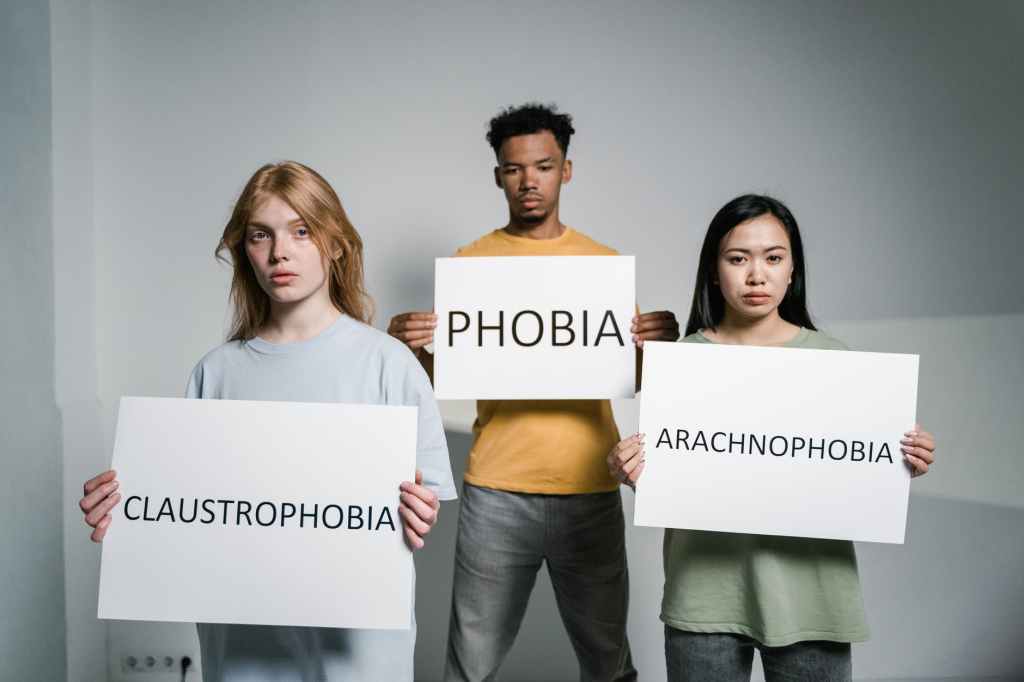
PHOBIA


                     “Nothing in life is to be feared. It is only to be understood.’
                    
                                         –Marie Curie

A phobia is a persistent, excessive, unrealistic fear of an object, person, animal, activity or situation. It is a type of anxiety disorder. A person with a phobia either tries to avoid the thing that triggers the fear, or endures it with great anxiety and distress. Some phobias are very specific and limited

There are three types of phobia: social phobia, agoraphobia, and specific phobia. Symptoms, or phobic reactions, may be psychological, such as an intense feeling of unease or foreboding; physical, such as crying or gastrointestinal distress; or behavioral, which includes a wide variety of avoidance tactics

Some of humanity’s most common fears are well known, like fear of heights or the dark. Others, however, are less talked-about, like the fear of speaking to strangers due to thoughts of what they might think of you. To free yourself of these fears, it’s not enough to change the channel or end the conversation.

Fear is a natural emotion that protects people from harm when they face real and imminent danger. A phobia is an excessive fear or anxiety related to specific objects or situations that are out of proportion to the actual danger they present.

                                  “The brave man is not he who does not feel afraid, but he who conquers that fear.”

                                –Nelson Mandela

Political Obligation and the Five Grounds for Political Obligation by D. D. Raphael

Political Obligation: Political obligation is a duty of citizens to obey the laws of the state for their own benefit and common welfare. It is also a moral requirement from the citizens to the obey the law of their nation.

These are the five grounds for political obligation by D D Raphael: 

State rests on social contract.

The State rests on consent.

The State represents the general will.

The state secures justice.

The state pursues the general interest or common good.   

The Theory of Social Contract: It tries to justify political obligation being based on implicit promise, like the obligation to obey the rules of a voluntary association. There are three kinds that imply promise: contract of citizenship, contract of community and contract of government. Citizenship has been compared to getting membership of a voluntary association. It is formed on the basis that state provides benefits to citizens and citizens therefore have to fulfill their obligations. Contract of community means man egoistic by nature tends to cause harm. In order to prevent this, he makes an agreement with community. This was done for the mutual benefit of all. Contract of government means men contract with the state and society. In the first contract, he agrees to form a society and in the following contract he agrees to obey laws.

The Theory of Consent: This means the authority of the state is based on the consent. That notion is a basis of political obligation is a principle of John Locke. The state is bound to ensure welfare, protection and fulfillment of promises of people. In return, people are to fulfill the obligations of the state. According to this theory, consent has to be understood and accepted. It is based on a mutual promise. This means that a form of consent is essential for the authority of a particular law.

The Theory of General Will: It is based on the belief that a collectively held will aims at the common good or common interest and collective welfare. It was criticized for being vague and obscure. This theory states that the state represents the collective will of all the citizens. Hence, citizens are expected to oblige. Collective interest of the society is given priority over individual interest. It is based on an assumption that general will is always right. Rousseau was of the opinion that the solution was direct democratic self legislation in which each citizen, as a member of the sovereign, makes laws that apply equally to all. His general will was confined to the limits of the state. It aims to show that state is a voluntary association.

The Theory of Justice: It is based on the belief that it is the duty of the state to ensure people’s obligation to the state. In principle, therefore, the theory of justice and general interest take the same sort of form. People are given both certain natural rights and duties. The state undertakes  the function of granting and protecting our natural rights and hence we are obliged to fulfill our duties. This is a ground of political obligation. It is based on morality and justice. It depends on our moral obligation to pursue justice

The Theory of General Interest or Common Good: It is of the view that it depends on our utility for promoting the general happiness or interest. The state is a necessary means to a moral end. The state forms rules that the citizens are bound to follow. This requires people to lead a crime free life by following the laws. The government, it it causes harm instead of promoting welfare, loses its right to obedience. Here, it is similar to the theory of justice. This helps the state to focus on the greater good rather than concentrating on individual interest. This theory of General Interest is held by Utilitarians. 

FATF

Financial Action Task Force (FATF)

• Global money laundering and terrorist financing
watchdog.

• Established by the 1989 G-7 Summit held in Paris.

• An inter-governmental body- sets international
standards to prevent illegal activities and the harm they cause.

• Works to generate the necessary political will- for
national legislative and regulatory reforms.

• Commitment by more than 200 countries and jurisdictions- to implement FATFRecommendations/FATF Standards.

• Also works to stop funding for weapons of mass destruction.
• Monitors countries to ensure they implement the
Standards effectively.

• Membership: 37 member jurisdictions and 2 regional organisations- including India. Jurisdictions under increased monitoring .

• Work with FATF to counter money laundering, terrorist financing, and proliferation financing.

• Committed to resolve the identified strategic deficiencies within agreed timeframes.

• Referred to as the “grey list”.

• Those failing to address these issues after a specific time- listed under ‘black list’.

 Greylisted countries- Pakistan, Mauritius, Myanmar, Syria etc.
 Blacklisted countries- North Korea and Iran.
Implications of being greylisted/black listed:
 Squeeze the country’s economy- harder to meet its foreign financing needs.
 Future borrowings from international organisations (IMF)- would be difficult.
 Downgrade the country’s debt ratings- difficult to tap into the international bond
markets
 Discourage foreign investors and companies to
do business in the country.

Animals rights awareness week

Animal Rights Awareness is observed this June 14 – June 20. Animal Rights Awareness Week(ARAW) is created to honour the animals who have been exploited and killed by humans around the world. It is our duty to spread the awareness among humans as animals can be our friends, companions, protectors, benefactors and comforters. Research studies indicate that people has own pets and have close bond with them and have higher self esteem. They are also generally happier and healthier.

The aim of this week is to create an opportunity to direct the public’s attention to the needs and wants of animals.

History of Animal Rights Awareness Week

In 1991 Animal Rights awareness week founded to promote education about animals welfare and bring further protection to animals.

Several ways to participate in spreading awareness concerning the human treatment of animals are:

  1. Adopt shelter for pets.
  2. Do programs in your area and spread the importance of animals.
  3. Buy cruelty-free products.
  4. Know where your products come from and determine whether they are obtained humanely.
  5. Consider adopting pets from shelter.
  6. If you do decide to buy from a breeder make sure to do your research and find reputed one.

Many zoos function as an extension to conservation and preservation efforts, others do not. The conditions in puppy mills, for example, do not provide proper shelter or care. Most of the dogs are used solely for breeding purposes and rarely leave their kennels or receive proper veterinary care.

Education and Inequality

Introduction

Educational inequality is the unequal distribution of academic resources, including but not limited to; school funding, qualified and experienced teachers, books, and technologies to socially excluded communities. These communities tend to be historically disadvantaged and oppressed. Individuals belonging to these marginalized groups are often denied access to schools with adequate resources. Inequality leads to major differences in the educational success or efficiency of these individuals and ultimately suppresses social and economic mobility.

There are some key areas where structural inequalities in educational outcomes can be expected. An example is the process of socialization. How girls and boys are socialized differently from one another can impact upon their educational outcomes in terms of their confidence, performance, and interests. There are many factors that can impact on how well a child does in school and whether he or she pursues post-secondary education. Many of these different factors—but certainly not all.

Many characteristics people have that can impact on the opportunities they have in life (or their life chances) can be divided into ascribed and achieved characteristics. Ascribed characteristics are those features of individuals with which they are born, such as race, sex, and the social class of one’s family. Achieved characteristics, in contrast, are earned or chosen through individual effort, like personal skills and occupational designations. Most life chances are influenced by a combination of ascribed and achieved characteristics. For example, earning a doctorate requires a lot of effort on the part of the individual, but people from middle- and upper-class families are more likely to pursue post-graduate degrees. In this chapter, however, the focus is on ascribed characteristics.

Gender

Gender is a major contributing factor to socialization. The outperformance of boys by girls on recent standardized reading tests was also discussed, which suggests that gender is no longer a barrier to educational achievement for girls—although debates have arisen as to whether the school environment has become feminized to match the learning styles of girls, leaving boys at a disadvantage.

Male disadvantage

In 51 countries, girls are enrolled at higher rates than boys. Particularly in Latin America, the difference is attributed to the prominence of gangs and violence attracting male youth. The gangs pull the males in, distracting them from school and causing them to drop out.In some countries, female high school and graduation rates are higher than for males. In the United States for example, 33% more bachelor’s degrees were conferred on females than males in 2010–2011.This gap is projected to increase to 37% by 2021–2022 and is over 50% for masters and associate degrees. Dropout rates for males have also increased over the years in all racial groups, especially in African Americans. They have exceeded the number of high schools and college dropout rates than any other racial ethnicity for the past 30 years. A majority of the research found that males were primarily the most “left behind” in education because of higher graduation dropout rates, lower test scores, and failing grades. They found that as males get older, primarily from ages 9 to 17, they are less likely to be labeled “proficient” in reading and mathematics than girls were.In general, males arrive in kindergarten much less ready and prepared for schooling than females. This creates a gap that continually increases over time into middle and high school.

In Asia, males are expected to be the main financial contributor of the family. So many of them go to work right after they become adults physically, which means at the age of around 15 to 17. This is the age they should obtain a high school education.Males get worse grades than females do regardless of year or country examined in most subjects.

It has also been suggested that teacher bias in grading may account for up to 21% of the male deficit in grades.One study found that male disadvantage in education is independent of inequality in social and economic participation.

Female disadvantage

Obstacles preventing females’ ability to receive a quality education include traditional attitudes towards gender roles, poverty, geographical isolation, gender-based violence, and early marriage and pregnancy.Throughout the world, there is an estimated 7 million more girls than boys out of school. This “girls gap” is concentrated in several countries including Somalia, Afghanistan, Togo, the Central African Republic and Democratic Republic of the Congo. In the Democratic Republic of the Congo, girls are outnumbered two to one.

Early marriage affects females’ ability to receive an education.”The gap separating men and women in the job market remains wide in many countries, whether in the North or the South. With marginal variables between most countries, women have a lower employment rate, are unemployed longer, are paid less, and have less secure jobs.Young women, particularly suffer double discrimination. First for being young, in the difficult phase of transition between training and working life, in an age group that has, on an average, twice the jobless rate or older workers and are at the mercy of employers who exploit them under the pretext of enabling them to acquire professional experience. Secondly, they are discriminated against for being women and are more likely to be offered low paying or low-status jobs.Discrimination is still very much in evidence and education and training policies especially targeting young women are needed to restore a balance. Although young women are increasingly choosing typically ‘male’ professions, they remain over-represented in traditionally female jobs, such as secretaries, nurses, and underrepresented in jobs with responsibility and the professions.

Remedies

There are a variety of efforts by countries to assist in increasing the availability of quality education for all children.

Education for All Act

The Education For All act or EFA is a global commitment to provide quality basic education for all children, youth, and adults. In 2000, 164 governments pledged to achieve education for all at the World Education Forum. There are six decided-upon goals designed to reach the goal of Education for All by 2015. The entities working together to achieve these goals include governments, multilateral and development agencies, civil society, and the private sector. UNESCO is responsible for coordinating the partnerships. Although progress has been made, some countries are providing more support than others. Also, there is a need to strengthen overall political commitment as well as strengthening the needed resources.

Massive online classes

There is a growing shift away from traditional higher education institutions to massive open online courses (MOOC). These classes are run through content sharing, videos, online forums, and exams. The MOOCs are free which allows for many more students to take part in the classes, however, the programs are created by global north countries, therefore inhibiting individuals in the global south from creating their own innovations

International Day against Drug Abuse and Illicit Trafficking 2021

In this modern world , many people including youths are taking many drugs to get relief from stress. They are saying that , it gives pleasure to them and relives physical and mental stress. But taking drugs may cause social, physical, mental and other job related problems.

International Day against Drug Abuse and illicit Trafficking is observed on June 26 every year in order to create and spread awareness among the people throughout the globe about the problems , to eliminate drug misuse and the issues related to the drugs. Many people are working on it to prevent drug abuse and to save the victims from this evil. It’s main aim is to create an international society free from drug abuse. The problem of drug abuse was recognized by the people throughout the world during the 20th century.

The United Nations Office on Drugs and Crime (UNODC) said that, ” Together, we can tackle the world drug problem!” . UN arm fights against the drug abuse and the international crime related trafficking.

International Day against Drug Abuse and Illicit Trafficking : History

In order to achieve the goal of international society free from drug abuse , the United Nations General Assembly on December 7 1987,declared  June 26 as International Day against Drug Abuse and Illicit Trafficking every year. This day is also known for ‘Lin Zexu’s’ who was trying to destroy the opium business, before the initiation of first opium war started in Humane, Guangdong in China.

International Day against Drug Abuse and Illicit Trafficking 2021: Theme

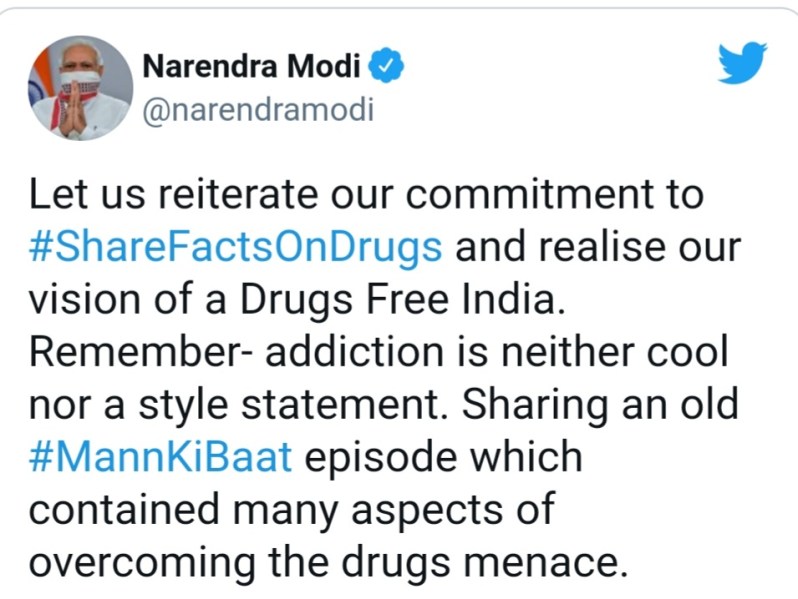
The theme of International day against drug abuse and illicit trafficking is “share facts on drugs , save lives ” . The main focus of this year is to control the misinformation about the usage of drugs by sharing factual data about drugs. Spreading the health issues by taking drugs and solutions to tackle the problem will help us to make a society free of drug abuse.

The UNODC website says that ” Do your part and combat misinformation by sharing the real facts on drugs — from health risks and solutions to tackle the world drug problem, to evidence-based prevention, treatment, and care” .

International Day against Drug Abuse and Illicit Trafficking : Significance

This day helps to share and created awareness among people through social medias and others . It provides the data about the drug abuse and provides solution to how to overcome from it. On this day the United Nations organises many activities to create awareness among the people and it also shows the unity among the activists, doctors ,governments and others.

Every year, there will be a report released by The United Nations Office on Drugs and Crime (UNODC) which provides facts and datas about drug abuse round the world and it gives solutions to tackle these problems.

Taking this opportunity, our honorable Prime minister, Narendra Modi took social media platform to encourage the achievements and steps taken by the activists and doctors to achieve their goal of drug free India. He also says that ‘ Drug bring with it darkness, destruction and devastation’.

“Stay away from drugs and live a happy life”

DIGITAL INDIAN CAMPAIGN


Digital India is an umbrella programme that covers multiple Government Ministries and Departments. It weaves together a large number of ideas and thoughts into a single, comprehensive vision so that each of them can be implemented as part of a larger goal.
Each individual element stands on its own, but is also part of the larger picture. Digital India is to be implemented by the entire Government with overall coordination being done by the Department of Electronics and Information Technology (DeitY).


Digital India aims to provide the much needed thrust to the nine pillars of growth areas, namely Broadband Highways, Universal Access to Mobile Connectivity, Public Internet Access Programme, e-Governance: Reforming Government through Technology, e-Kranti – Electronic Delivery of Services, Information for All, Electronics Manufacturing, IT for Jobs and Early Harvest Programmes. Each of these areas is a complex programme in itself and cuts across multiple Ministries and Departments.


The Digital India programme aims at pulling together many existing schemes. These schemes will be restructured, revamped and re-focused and will be implemented in a synchronized manner. Many elements are only process improvements with minimal cost implications. The common branding of programmes as Digital India highlights their transformative impact. While implementing this programme, there would be wider consultations across government, industry, civil society, and citizens to discuss various issues to arrive at innovative solutions for achieving the desired outcomes of Digital India.

Why Do We Dream?

Dreams are hallucinations that occur during certain stages of sleep. They’re strongest during paradoxical sleep, or the rapid eye movement stage, once you could also be less likely to recall your dream. Much is understood about the role of sleep in regulating our metabolism, vital sign, brain function, and other aspects of health. But it’s been harder for researchers to elucidate the role of dreams.

When you’re awake, your thoughts have a particular logic to them. once you sleep, your brain remains active, but your thoughts or dreams often make little or no sense. this might be because the emotional centers of the brain trigger dreams, instead of the logical regions.

Though there’s no definitive proof, dreams are usually autobiographical thoughts that supported your recent activities, conversations, or other issues in your life. However, there are some popular theories on the role of dreams.

The role of dreams – Researchers still don’t entirely agree on the aim of dreams. There are, however, some widely held beliefs and theories.

Dreams as therapists – Your dreams could also be ways of confronting emotional dramas in your life. and since your brain is working at a way more emotional level than when you’re awake, your brain may make connections regarding your feelings that your conscious self wouldn’t make.

Dreams as fight-or-flight training – One of the areas of the brain that’s most active during dreaming is that the amygdala. The amygdala is that a part of the brain related to the survival instinct and therefore the fight-or-flight response.

One theory suggests that because the amygdala is more active during sleep than in your waking life, it’s going to be the brain’s way of getting you able to affect a threat.

Fortunately, the brainstem sends out nerve signals during paradoxical sleep that relax your muscles. That way you don’t attempt to run or clock in your sleep.

Dreams as your muse – One theory for why we dream is that it helps facilitate our creative tendencies. Artists of all types credit dreams with inspiring a number of their most creative works. you’ll have awakened sometimes in your life with an excellent idea for a movie or a song, too.

Without the logic filter, you would possibly normally use in your waking life which will restrict your creative flow, your thoughts and concepts haven’t any restrictions when you’re sleeping.

Dreams as memory aides – One widely held theory about the aim of dreams is that they assist you to store important memories and things you’ve learned, get obviate unimportant memories and type through complicated thoughts and feelings.

Research showsTrusted Source that sleep helps store memories. If you learn new information and sleep thereon, you’ll be ready to remember it better than if asked to recollect that information without the advantage of sleep.

How dreams affect memory storage and recall isn’t clearly understood yet. But dreams may help the brain more efficiently store important information while blocking out stimuli that would interfere with memory and learning.

Why can we have nightmares?

Dreams that assist you deal productively with emotions, memories, and other information could seem very helpful. The occasional nightmare is taken into account by a dream that’s simply more frightening or upsetting. Nightmares tend to be caused by stress, anxiety, or sometimes as a reaction to certain medications.

However, if you’ve got nightmares frequently, you’ll have a sleeping disorder. Regularly occurring scary dreams are often labeled a sleeping disorder if the nightmares:

  • cause you to worry about getting to sleep
  • lead to frequent disruptions of your sleep
  • bring about other sleeping or psychological problems
  • Many people experience occasional nightmares throughout their lives. However, the American Sleep Association estimates only about 5 percent of the population experiences persistent nightmares as a sleeping disorder.

What influences dreams?

Some factors that affect us when we’re awake also can influence our dreams.

Health conditions – One of the most important influences on dreams is what proportion or how little you’re sleeping. Being sleep-deprived for an evening or two (or more) can make parts of your brain far more active once you finally do slip into paradoxical sleep. You’re likely to possess more vivid dreams if you’ve had some restless nights. You’re also more likely to recall those dreams, too.

Being pregnant is additionally a catalyst for vivid dreaming. Increased hormone production affects the way your brain processes thoughts and emotions. This often results in some intense dreams.

Mental health disorders like depression and anxiety, also as manic depression and other mood-related conditions, can trigger intense and sometimes disturbing or negative dreams and nightmares. The medications for these conditions, including antidepressants and antipsychotics, also are related to a better risk of nightmares.

Foods – There isn’t indisputable evidence that certain foods cause wilder or better dreams. But it’s clear that some foods may set the stage for you to recollect your dreams better.

High-carb foods, for instance, can offer you quick energy. But after a short time, they will leave you feeling down. Anything that affects your waking mood is probably going to affect your unconscious mood, too. So, if a sugar crash has you moping around during the day, those feelings could carry over into your sleep.

Also, food that causes you to awaken throughout the night may end in you awakening more frequently within the REM stage. When that happens, you’ll probably remember more of your dreams.

Daily activities – Just as little or interrupted sleep often leads to more vivid dreaming, an honest night’s sleep will hamper the extreme dreams you’ll recall.

A small study trusted Source found that one great way to sleep more soundly is to exercise within the morning. an honest run or other cardio workouts before noon helps set your clock in order that you’re more inclined to nod off faster and spend longer in deep sleep than if you didn’t exercise or if you exercised late in the dark.

Runners and other serious fitness enthusiasts tend to spend less time in dreamy paradoxical sleep, which is one among the lightest stages of sleep. Also, the more effectively you’ll de-stress during the day, the less likely you’ll be to bring stress and anxiety to bed. Which ought to help hamper nightmares and interrupted sleep each night.

How to remember your dreams – One of the explanations dreams are often difficult to recollect is that the brain chemical related to memory — norepinephrine — and therefore the brain’s electrical activity that helps with recall are at their lowest levels when you’re dreaming. In fact, if you’ve got a dream but don’t awaken during the dream, you won’t be ready to commit it to memory. The dreams you remember are those that are ongoing once you awaken.

Two ways to assist recall your dreams is to inform yourself as you’re falling asleep that you simply want to recollect your dream. If that’s your last thought, you’ll be more likely to awaken with a dream still somewhat fresh in your memory.

Since dream recall is often easily interrupted by even the slightest distraction, you ought to attempt to remember the maximum amount of your dream as soon as you awaken. Don’t get out of bed or believe anything. attempt to grasp whatever images or memories you’ve got of your dream and write them down on a pad next to your bed or on your smartphone.

Top 14 Worst Natural Disasters of India

The Disastrous natural forces include volcano disasters, floods, Tsunami, and Earthquakes, which are a major explanation for casualties within the history of India. Other than Horrible Temple Stampedes like the Amarnath Yatra tragedy, Mander Devi temple stampede and Sabrimala Kerala temple stampede and major train accidents like Karanjadi train crash and Vaibhavwadi train crash, there are many worst Natural Disasters had happened, latest is most disastrous Uttarakhand Flash Floods and recently happened Cyclone Phailin in Orissa coast.

List of Worst Natural Disasters within the History of India

1770 Great Bengal Famine – The Great Bengal Famine was an outsized famine in Bengal during British rule out the amount of 1769-1773. Bengal famine was caused the deaths of 10 million people in Bengal, Bihar, and a few parts of Odisha.

1839 Coringa Cyclone – The Coringa Cyclone was one of the ten big disasters that shook India, struck at a small village of Godavari district in Andhra Pradesh. the good Coringa Cyclone killed around 20,000 people within the ancient city of Coringa.

1894 Third Plague Pandemic – The major plague pandemic came to British India in 1896, killing quite 12 million people in India and China alone. Third Plague Pandemic was initially seen in port cities like Bombay and Kolkata then spread to small towns and rural areas of the many regions of India.

1979 Lahaul Valley Avalanche – Lahaul Spiti valley receives heavy snowfall during the winter season, which causes Avalanches. The Lahaul Valley disaster in March of 1979 buried 200 people under 20 feet of snow, the sole avalanche within the Himalayas and one among the ten deadliest Avalanches in the History of the world.

1998 Malpa Landslide – Heavy rainfall caused, Malpa landslides was one among the worst landslides in India, at village Malpa in Pithoragarh of Uttarkhand. Around 380 people were killed when massive landslides washed the whole village alongside Hindu pilgrims of Kailash Mansarovar yatra.

1999 Odisha Cyclone – The 1999 Odisha cyclone also referred to as super cyclone 05B was the foremost deadliest tropical cyclone within the Indian Ocean and most destructive Indian storm since 1971. It caused almost the deaths of 15,000 people and made heavy to extreme damage.

2001 Gujarat Earthquake – The massive earthquake occurred on India’s 51st Republic Day on January 26, 2001, at Bhachau Taluka of Kutch District of Gujarat. Gujarat earthquake had a magnitude of between 7.6 and 7.7 and killed around 20,000 people.

2002 Indian wave – India’s wave in 2002 in the south region killed quite 1000 people, Most of the deaths occurred in the state of Andhra Pradesh. the warmth was so intense that birds fell from the sky, ponds and rivers dried up.

2004 Indian Ocean Tsunami – The Indian Ocean earthquake and Tsunami occurred in 2004 on the West Coast of Sumatra, killing over 230,000 people in fourteen countries. Indian Ocean Tsunami was one of the deadliest natural disasters in the history of India.

2007 Bihar Flood – The 2007- 2008 Bihar floods are listed because the worst-hit arrives the living memory of Bihar in the last 30 years. Bihar is India’s most flood-prone State, a recurring disaster appears annual basis and destroys thousands of human lives aside from livestock and assets worth millions.

2005 Mumbai Catastrophes – The 2005 Maharashtra floods occurred only one month after the June 2005 Gujarat floods, Mumbai the capital city was most badly affected and witnessed one among its worst catastrophes within the history of India, killing a minimum of 5,000 people.

2010 Eastern Indian Storm – The Eastern Indian storm was a severe storm that struck parts of eastern Indian states, spanning for 30–40 minutes. a minimum of 91 people died in Indian states and Over 91,000 dwellings were destroyed and partially damaged.

2013 Maharashtra Drought – Maharashtra state was suffering from the region’s worst drought in 40 years,worst-hit areas are Jalna, Jalgaon and Dhule also are suffering from famine. many people in Maharashtra are at serious risk of hunger after two years of low rainfall within the region.

2013 Uttarakhand Flash Floods – In June 2013 Uttarakhand received heavy rainfall, massive Landslides thanks to the massive flash floods, it suffered maximum damage to homes and structures, killing quite 1000 people, sources claimed the price might be get up to 5000. Uttarakhand Flash Floods are that the most disastrous floods within the history of India.

10 Most Spoken Languages in India by Number of Speakers

After searching on Google about the ugliest language in India, the search result displays Kannada which may be a language spoken by around 40 million people in South India. First, it had been seen on debtconsolidationsquad.com. India is home to varied major languages. allow us to examine the search and 10 most spoken languages in India.

If you search on Google about the “ugliest language in India” the search result displays is shocking and therefore the answer displayed is Kannada which is one among the oldest languages within the world. it had been first seen on debtconsolidationsquad.com. due to this, there’s an outrage on social media. People are demanding that Google should apologize and take strict action against it. An IT company named Thincnext in Bangalore has started a petition on charge.org to get rid of the search result from Google.

To know more about it read what’s the ‘Ugliest Language in India’ Controversy?

The most pivotal feature of human existence is that the language that helps humans to speak with one another and develop relations between them.

We know that India is that the world’s seventh-largest country by area also because the world’s second-most populous country. The country features a population of quite 1.3 billion people. There are several religions practiced within the country. It consists of diverse languages and cultures and other people speaking different languages are scattered in several parts of the country.

Do you know that 121 languages are spoken by 10,000 or more people in India, which features a population of quite 121 crores, consistent with a census analysis? quite 19,500 languages or dialects are spoken in India as maternal language, consistent with the analysis of a census. allow us to determine the foremost spoken languages and speakers within the country as per the 2011 Census.

  1. Hindi – 52.83 crore speakers

Hindi is that the most speech in India. it’s one of the official languages of the country. consistent with the 2011 census, the amount of individuals who speak Hindi as a maternal language has increased in 2011 as compared to the 2001 census. In 2001, 41.03% of the people speak Hindi as a maternal language, while in 2011 it’s increased to 43.63%. After Mandarin, Spanish and English, Hindi is additionally the fourth most speech within the world. at the present, there are 52, 83, 47,193 Hindi speakers in India. it’s spoken in most the states of the country including Uttar Pradesh, Bihar, Uttarakhand, Rajasthan, Madhya Pradesh, Chhattisgarh, Himachal Pradesh, and Delhi.

Hindi may be a descendant of the Sanskrit language and is influenced by Dravidian, Arabic, Portuguese, English, Persian, and Turkey languages. Languages spoken in Hindi include Awadi, Braj, and khadi bhasha. Did you recognize that the Hindi word is split into five categories, like Tatsama Ardhatasama, Tadbhav, Deshaj, and Videshi?

  1. Bengali – 9.72 crore speakers

India’s second most speech in Bengali, which is spoken by 9.72 crore citizens i.e. 8.03 percent of the entire population. Bengali is an Indian-Aryan language spoken mostly in South Asia. it’s the foremost prominent language in most of the states, including the Andaman and Nicobar Islands within the northeast of India. Bengali was a secular language of old Indo-Aryans within the beginning and was influenced by Persian and Arabic. This language varies in several states, especially in usage, pronunciation, words, and phonetic form. In India, Bengali is usually spoken within the eastern states of West Bengal, Jharkhand, Assam, and Tripura. This language is additionally spoken within the Middle East, America, Australia, Japan, UK, and Canada. Bengali is additionally a neighborhood of the programs offered by Karachi University.

Do you know that the anthem of India was written within the Bengali language?

  1. Marathi – 8.30 crore speakers

A total of 8.30 crore people speaks Marathi within the country, which is 6.86 percent of the entire population. Marathi is an Indo-Aryan language that’s spoken because of the official language of the states within the western part of the country, including Goa and Maharashtra. There are about 42 different dialects spoken in Marathi. does one know that there are three genders in Marathi grammar?

Top 10 Countries with the longest Coastline within the World

  1. Telugu – 8.11 crore speakers

Telugu may be a Dravidian that’s widely spoken in India in many nations of the country. This language is especially spoken in Andhra Pradesh, Telangana, and Yanam states. Among the opposite dialects in its speech include the Beraad, Wadaga, Domara, Salavari, Nellore, Comtao, and Kamathi. This language is additionally spoken in many countries including the US, UK, New Zealand, Australia, United Arab Emirates, and South Africa.

  1. Tamil – 6.90 crore speakers

The roots of the Tamil language are related to the Dravidian. Although, it’s the official language of both Singapore and Sri Lanka and is additionally a wide speech in India. 6.90 crore people speak Tamil within the country. does one know that Tamil is remarkably referred to as one of the oldest surviving languages of the world? Its literary tradition has been for quite 2,000 years. Most of the Tamil language is spoken in southern India near the coast of Sri Lanka.

  1. Gujarati – 5.54 crore speakers

Gujarati is an Indo-Aryan language spoken by 5.54 crore people in India. this is often the official language of Gujarat, which may be a state located in northwest India. allow us to tell you that the Gujarati language has evolved from Sanskrit.

  1. Urdu – 5.07 crore speakers

There are about 5.07 crore Urdu speakers in India. Urdu is additionally one of the official languages of the country. it’s listed as a politician language within the states of West Bengal, Bihar, Uttar Pradesh, Jammu and Kashmir, Telangana, and Jharkhand. allow us to tell you that Urdu is additionally the official language of Pakistan.

  1. Kannada – 4.37 crore speakers

Like Tamil, Kannada is additionally a Dravidian. it’s spoken by 4.37 crore people in India. does one know that Kannada is one of the oldest surviving languages within the world? This language is additionally spoken outside of India, in places like Australia, the US, and Canada. Many of those speakers also are members of the Indian Diaspora. it’s estimated that there are about 20 different dialects in Kannada.

  1. Odia – 3.75 crore speakers

Odia is that the official language of India and most of the speakers are centered in Odisha state. This language is spoken by 3.75 crore speakers across the country.

  1. Malayalam – 3.48 crore speakers

Approximately, 3.48 crore speakers in India speak Malayalam, which is spoken within the states of Kerala, Puducherry, and Lakshadweep. The roots of this language also are from the Dravidian.

English language – 2,59,678 speakers

With Hindi, the English language is additionally one among the official languages of India’s federal. In some states of India like Nagaland and Arunachal Pradesh, English is a political language. From the times of the Malay Archipelago Company within the 1800s, English was taught in schools in India.

HISTORY OF THE OLYMPICS

The games which originated in ancient Greece 3000 years ago. From the 8th century B.C. to the 4th century A.D., the games were conducted every 4 years in Olympia, which was to honor the god Zeus. The first Olympics took place in the year 1896 in Athens. Since the year 1994, the summer and winter Olympics have been held separately and are alternated every two years. The first records of the Olympics states that a cool named Coroebus back in the day of 776 B.C. won the only event held then and was made to be the first Olympics champion. Legend says that Hercules, son of Zeus and the mortal woman Alcmene, found the the games, which by the end of the 6th century B.C. The name of the games come from the location Olympia, which is a very sacred site located near to the western coast of the Peloponnese peninsular region. Eventually over time there were more events and races added into the event.

The pentathlon was introduced 708 B.C. The participation of the Olympics was first only for the male members of society and there were no women events held. Even more specifically, married women were prohibited from participating. The first modern games were hosted at Athens, Greece in 1896. There were about 280 participants and all were males. There were multiple new additions in the sporting events such as Swimming, Cycling, Wrestling, Cycling and so much more. The official symbol of the the modern games which is the five interlocking colored rings =, show the continents which unite to play the games. The continents being North and South America, Asia, Africa, Europe and Australia. The flag features the symbol and flew first at Antwerp,1920. After a few years the winter Olympics starred their debut by introducing a variety of winter sports such as figure skating, ice hockey, bobsledding. After a few years, women were introduced to a few sports and eventually to every sport and now women are leading various sporting categories in the Olympics.

Banking ombudsman


APPOINTMENT & TENURE

(1) The Reserve Bank may appoint one or more of its officers in the rank of Chief General Manager or General Manager to be known as Banking Ombudsmen to carry out the functions entrusted to them by or under the Scheme.

(2) The appointment of Banking Ombudsman under the above Clause may be made for a period not exceeding three years at a time.

5. LOCATION OF OFFICE AND TEMPORARY HEADQUARTERS

(1) The office of the Banking Ombudsman shall be located at such places as may be specified by the Reserve Bank.

(2) In order to expedite disposal of complaints, the Banking Ombudsman may hold sittings at such places within his area of jurisdiction as may be considered necessary and proper by him in respect of a complaint or reference before him.

POWERS AND JURISDICTION

(1) The Reserve Bank shall specify the territorial limits to which the authority of each Banking Ombudsman appointed under Clause 4 of the Scheme shall extend.

1(2) The Banking Ombudsman shall receive and consider complaints relating to the deficiencies in banking or other services filed on the grounds mentioned in clause 8 irrespective of the pecuniary value of the deficiency in service complained and facilitate their satisfaction or settlement by agreement or through conciliation and mediation between the bank concerned and the aggrieved parties or by passing an Award as per the provisions of the Scheme.

(3) The Banking Ombudsman shall exercise general powers of superintendence and control over his Office and shall be responsible for the conduct of business thereat.

(4) The Office of the Banking Ombudsman shall draw up an annual budget for itself in consultation with Reserve Bank and shall exercise the powers of expenditure within the approved budget on the lines of Reserve Bank of India Expenditure Rules, 2005.

(5) The Banking Ombudsman shall send to the Governor, Reserve Bank, a report, as on 30th June every year, containing a general review of the activities of

his Office during the preceding financial year and shall furnish such other information as the Reserve Bank may direct and the Reserve Bank may, if it considers necessary in the public interest so to do, publish the report and the information received from the Banking Ombudsman in such consolidated form or otherwise as it deems fit.

PROCEDURE FOR REDRESSAL OF GRIEVANCE 

GROUNDSOFCOMPLAINT

(1) Any person may file a complaint with the Banking Ombudsman having jurisdiction on any one of the following grounds alleging deficiency in banking including internet banking or other services.

(a). non-payment or inordinate delay in the payment or collection of cheques, drafts, bills etc.;

(b). non-acceptance, without sufficient cause, of small denomination notes tendered for any purpose, and for charging of commission in respect thereof;

(c). non-acceptance, without sufficient cause, of coins tendered and for charging of commission in respect thereof;

(d). non-payment or delay in payment of inward remittances;

(e). failure to issue or delay in issue of drafts, pay orders or bankers’ cheques

(f). non-adherence to prescribed working hours;

(g). failure to provide or delay in providing a banking facility (other than loans

and advances) promised in writing by a bank or its direct selling agents;

(h). delays, non-credit of proceeds to parties’ accounts, non-payment of deposit or non-observance of the Reserve Bank directives, if any, applicable to rate of interest on deposits in any savings, current or other account maintained

with a bank;

(i). complaints from Non-Resident Indians having accounts in India in relation to

their remittances from abroad, deposits and other bank- related matters;

(j). refusal to open deposit accounts without any valid reason for refusal;

(k). levying of charges without adequate prior notice to the customer;

(l). non-adherence to the instructions of Reserve Bank on ATM /Debit Card and Prepaid Card operations in India by the bank or its subsidiaries on any of the following:

i. Account debited but cash not dispensed by ATMs

ii. Account debited more than once for one withdrawal in ATMs or

for POS transaction

iii. Less/Excess amount of cash dispensed by ATMs

iv. Debit in account without use of the card or details of the card

v. Use of stolen/cloned cards

vi. Others

(m). non-adherence by the bank or its subsidiaries to the instructions of Reserve Bank on credit card operations on any of the following:

i. Unsolicited calls for Add-on Cards, insurance for cards etc.

ii. Charging of Annual Fees on Cards issued free for life

iii. Wrong Billing/Wrong Debits

iv. Threatening calls/ inappropriate approach of recovery by

recovery agents including non-observance of Reserve Bank

guidelines on engagement of recovery agents

v. Wrong reporting of credit information to Credit Information

Bureau

vi. Delay or failure to review and correct the credit status on

account of wrongly reported credit information to Credit

Information Bureau.

vii. Others

(n). non-adherence to the instructions of Reserve Bank with regard to Mobile Banking / Electronic Banking service in India by the bank on any of the following:

i. delay or failure to effect online payment / Fund Transfer,

ii. unauthorized electronic payment / Fund Transfer,

(o). non-disbursement or delay in disbursement of pension (to the extent the grievance can be attributed to the action on the part of the bank concerned, but not with regard to its employees);

(p). refusal to accept or delay in accepting payment towards taxes, as required by Reserve Bank/Government;

(q). refusal to issue or delay in issuing, or failure to service or delay in servicing

or redemption of Government securities;

(r). forced closure of deposit accounts without due notice or without sufficient reason;

(s). refusal to close or delay in closing the accounts;

(t). non-adherence to the fair practices code as adopted by the bank;

(u). non-adherence to the provisions of the Code of Bank’s Commitments to Customers issued by Banking Codes and Standards Board of India and as adopted by the bank ;

(v). non-observance of Reserve Bank guidelines on engagement of recovery agents by banks;

(w). non-adherence to Reserve Bank guidelines on para-banking activities like sale of insurance /mutual fund /other third party investment products by banks with regard to following:

i. improper, unsuitable sale of third party financial products

ii. non-transparency /lack of adequate transparency in sale

iii. non-disclosure of grievance redressal mechanism available

iv. delay or refusal to facilitate after sales service by banks

(x). any other matter relating to the violation of the directives issued by the

Reserve Bank in relation to banking or other services.

(2) A complaint on any one of the following grounds alleging deficiency in banking service in respect of loans and advances may be filed with the Banking Ombudsman having jurisdiction:

(a) non-observance of Reserve Bank Directives on interest rates;

(b) delays in sanction, disbursement or non-observance of prescribed time schedule for disposal of loan applications;

(c) non-acceptance of application for loans without furnishing valid reasons to the applicant; and

(d) non-adherence to the provisions of the fair practices code for lenders as adopted by the bank or Code of Bank’s Commitment to Customers, as the case may be;

(e) non-observance of Reserve Bank guidelines on engagement of recovery agents by banks; and

(f) non-observance of any other direction or instruction of the Reserve Bank as may be specified by the Reserve Bank for this purpose from time to time.

(3) The Banking Ombudsman may also deal with such other matter as may be specified by the Reserve Bank from time to time in this behalf.