Content marketing

When it comes to knowing about a particular word it is better to break it and understand the half-half syntax to get the whole picture. So content marketing which seems a complex term to get, turns out to be a simple one. Content is any written form of piece and marketing is selling of a particular commodity therefore when we talk about content marketing we refer to writing valuable and relevant content for a good which depicts its value and give entire information about it.

It is not as straightforward as it seems as writing content that attracts the reader is very important. Simple tips to write a good content for a product and for making content marketing successful:

Answer your audience questions and write according to giving every answer possible. providing them something of value keeping them wanting more.

Do audience segmentation to divide different goals people considering their interests and write accordingly.

Content writing goals are of four categories- entertain, inspire, educate, convence

Think for which media are you writing for, types of media- owned, earned, and paid. Write the necessary information required for the three.

Optimize list content- The featured snippets for listicles show a bulleted or numbered list on the results page. They are great for “best” and “how-to” searches. With a list, searchers get a quick and easy-to-understand answer.

Read value-added materials like books, magazines, newspapers to enhance your vocabulary and to come across new styles of writing.

There are many more things you can do just reseach, get aware, take your thoughts and pen and get started.

It seems difficult and vast until the beginning so doesn’t worry if you like writing and can think of innovative lines this field is for you, you can do wonders!

Why java is important?

Java is one in all the foremost standard programming languages wont to produce internet applications and platforms. it absolutely was designed for flexibility, permitting developers to write down code that may run on any machine, in spite of design or platform.
Java may be a artificial language, designed to be coinciding, class-based and object-oriented, similarly as a computing platform 1st discharged by Sun Microsystems in 1995. a colossal quantity of applications and websites won’t work unless you’ve got Java put in, and additional ar created daily. Denying yourself Java is equivalent to denying yourself access to a technological infrastructure. Java is publicised, and honored for its quick performance, security, and dependability.

About
Career Hub
Diploma Program
Education Partners
Log in
Contact
What is Java and why is it important?

What is Java
Photo Credit epSos.de

What is Java and why is it important?
Java, not not like several of the technologies that influence our everyday lives to the present terribly day, originated in Golden State, below the reach of Sun Microsystems, a corporation supported in 1982 by Andreas Bechtolsheim, Vinod Khosla, and Scott McNeally. thereupon aforesaid, tech-savvy varieties tend to seem additional to the longer term than the past, thus if you discover yourself additional interested by the trendy world of cryptography, or end up questioning simply however cogent Java has been to the planet of technology, you don’t notably need a lesson. You’re presumably searching for the trendy relevance and influence of a technology that has continuing to evolve systematically so as to stay up with the days.

Java may be a artificial language, designed to be coinciding, class-based and object-oriented, similarly as a computing platform 1st discharged by Sun Microsystems in 1995. a colossal quantity of applications and websites won’t work unless you’ve got Java put in, and additional ar created daily. Denying yourself Java is equivalent to denying yourself access to a technological infrastructure. Java is publicised, and honored for its quick performance, security, and dependability.

From laptops to datacenters, game consoles to scientific supercomputers, cell phones to the web, Java is omnipresent.
‘Java may be a artificial language expressly designed to be used within the distributed setting of the web. it absolutely was designed to possess the “look and feel” of the C++ artificial language, however it’s less complicated to use than C++ associate degreed enforces an object-oriented programming model.’

‘Java will be wont to produce complete applications which will run on one laptop or be distributed among servers and purchasers in a very network. It may also be wont to build alittle application module or application program (a merely designed, little application) to be used as a part of an online page. Applets build it potential for an online page user to move with the page.’
Tech Target- The necessities of Java.

Why is Java such a preferred alternative among modern software package developers?
The answer lies primarily with the complete testing, change and consistency of delivery that Java has traditionally provided. Java has been tested, refined, extended, and well-tried by an infatuated community of Java developers, architects and enthusiasts. Despite origins chemical analysis back virtually twenty years, Java has systematically evolved over the years.
Java is meant to alter development of moveable, superior applications for the widest vary of computing platforms potential, therefore sanctioning the elemental tenets of overarching accessibility similarly as cross-platform interaction. By creating applications on the market across heterogeneous environments, businesses will offer additional services and boost end-user productivity, communication, and collaboration—and dramatically scale back the value of possession of each enterprise and client applications

Mediterranean Sea,Red sea ,and Aegean Sea

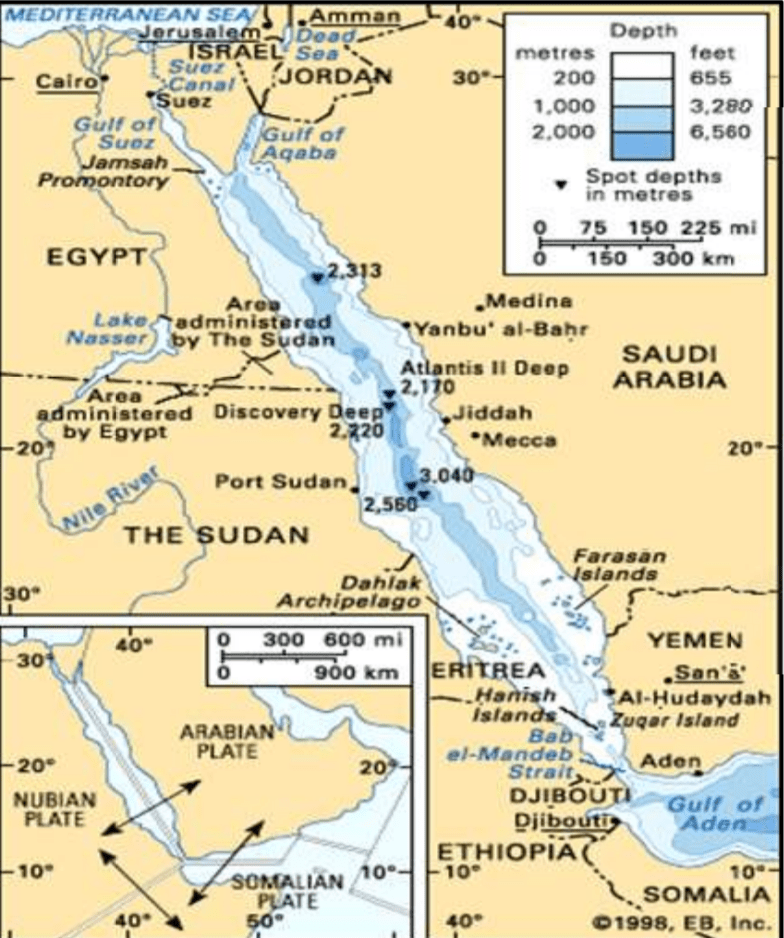
Red Sea

• Extending southeastward from Suez to the Bab el-Mandeb Strait.

• Northern end splits into- the Gulf of Suez to the NW and the Gulf of Aqaba to the NE.

• Separates the coasts of Egypt, Sudan, and Eritrea to the west from those of Saudi
Arabia and Yemen to the east.

• Connected to Mediterranean Sea via the Suez Canal.
 one of the most heavily traveled waterways
in the world.

• Derives its name from the colour changes observed in its waters.
 occasionally populated by the algae Trichodesmium erythraeum.

Mediterranean Sea

• An intercontinental sea .

• Often called the incubator of Western civilization.

• Extends from the Strait of Gibraltar to the Gulf of Iskenderun.

• West- connected with Atlantic Ocean by the
Strait of Gibraltar.

• Northeast- connected with the Black Sea through the strait of Dardanelles, the Sea of Marmara, and the strait of the Bosporus.

• Southeast- connected with the Red Sea by the Suez Canal.

Aegean Sea

• An arm of the Mediterranean Sea- between
the Greek peninsula and Asia Minor.

• Connected through the straits of the Dardanelles, the Sea of Marmara, and the
Bosporus to the Black Sea.

Why Polar Bears are on The Verge of Extinction

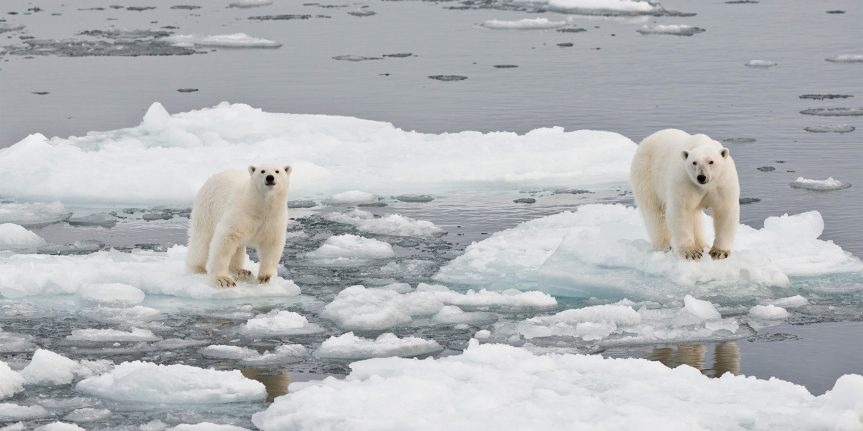
The loss sea ice habitat from climate change is the biggest threat to the survival pf polar bears. Other reasons include human-polar bear conflict, toxic pollution, oil spills and potential hunting of some subpopulations.

Polar Bear-Human Conflicts

As the sea ice of the Arctic thins and disperses, increasing number of polar bears spend longer periods in along the Arctic coastlines. Here their powerful sense of smell attracts them to human communities. Scent leading to garbage, stored food, dog teams, and animal carcasses bring them into greater conflict with people residing in the Arctic.

As apex predators, polar bears pose a significant threat to human life and property. In recent years the attacks on humans, who come within the polar bear’s range, continue to rise.

Effects of Climate Change

Due to climate change the Arctic is heating up twice as fast as anywhere in the world, melting the sea ice cover by 14% per decade. Comparing the data recorded between 1981-2010, we have lost about 770,000 square miles.

Polar bears rely on sea ice as their hunting ground and to rest, breed, and store energy for the summer and sutumn, when food can be scarce. The bears health decline as they go longer periods without food. Bears that come ashore, after the ice breaks up, are roughly 22 pounds lighter and in poorer condition. They also must travel long distances to stay with the rapidly receding ice.

Polar bears suffering from malnutrition can face extreme starvation -especially females with cubs. Scientists have found the main cause of death for cubs to be either lack of food or lack of fat on nursing mothers.

Industrial Impacts

As summer ice retreats, a new ocean is emerging, which allows more opportunities for industrial development at sea, and on large parcels of land. Offshore petroleum installations and operations in the Arctic are expected to increase in number. This results in destruction of habitat, poisoning of the bears when they ingest oil and contaminated prey which causes disturbance in the food web. As traffic by oil tankers and cargo ships in Arctic waters increases, so do the oil spills and human disturbance to their habitat.

SAVITRIBAI PHULE

Before India’s freedom ladies in our Nation need to deal with numerous issues like absence of legitimate training, early marriages, not given equivalent rights as men and so forth.

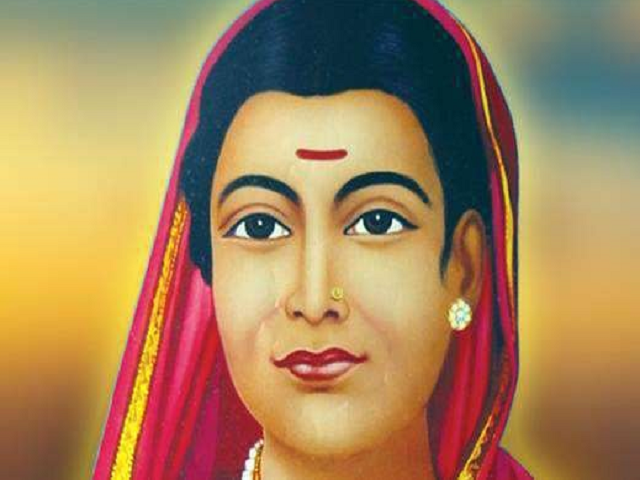
There were numerous social reformers who worked in improvement of our general public. One of them was Savitribai Phule. Alongside being a social reformer, she was likewise a poet, educationist and philanthropist.

She was the initial one to open a young ladies school in Pune. She additionally attempted to cancel segregation and out of line treatment of individual on based on rank and sexual Orientation.

EARLY LIFE AND EDUCATION

Savitribai Phule was born on 3January 1831 in the village of Naigaon in Satara District.  She was oldest little girl of her folks. She got hitched to Jyotirao Phule who himself was a social dissident. At the hour of her marriage, she was only 9 years of age furthermore uneducated as around then, there were no ladies rights to contemplate.

After marriage, with her better half’s support, she figured out how to peruse and compose and the two of them in the long run proceeded to track down India’s first school for young ladies called Bhidewade in Pune in 1848.

OTHER WORKS

Her books of sonnet’’Kavya Phule’’ and ‘’Bavan Kashi Subodh Ratanakar’’ were distributed in 1934and 1982.

She unequivocally accepted that training was one of the focal boards through which ladies and the discouraged classes could get enabled and desire to remain on an equivalent balance with rest of the general public. She is a motivation to every one of the ladies, without her work it would have been hard for ladies to battle for their privileges around then.

Reference Links

https://en.wikipedia.org/wiki/Savitribai_Phule

https://indianexpress.com/article/opinion/columns/savitribai-phule-education-feminism-women-empowerment-7131478/


Leadership: Vision and Responsibility

Definition

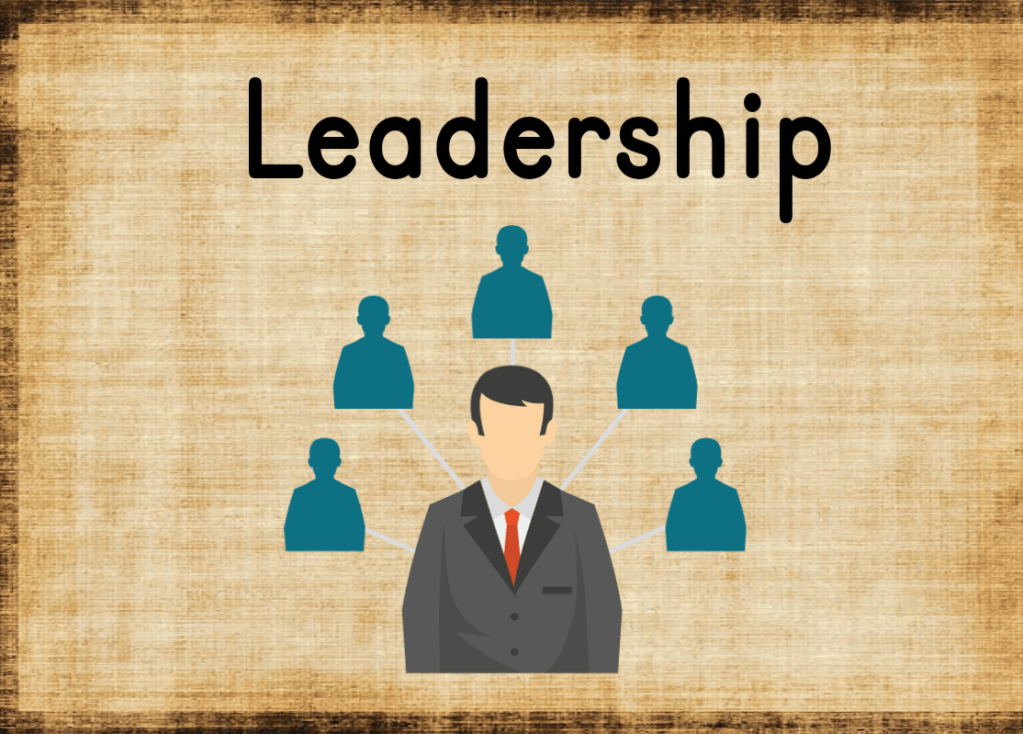
Leadership is the ability to motivate a group to focus on a particular goal to achieve it. In an organisation, managers have a right to do managerial task and not all managers have ability to lead effectively. Leader is an important person he can manage tasks as well as influence or motivate other members to achieve the goal.

Importance of Leadership

  1. Commencement of work: Leader initiates or starts the work by explaining plans and regulations to subordinates who all are working together in a team.
  2. Counselling: It is the duty of leader not to only supervise his subordinates but also counsel and guide them about their work, so that they can perform their work effectively and efficiently.
  3. Motivation: Leader also plays a role of motivator. He motivates his subordinates by giving then opportunities and rewards based on their performance.
  4. Developing confidence: It is important for every employee to be confident about their work, and leader is the person who can boost their confidence by encouraging them.
  5. Coordination: For achieving any organisational goal, coordination is very important amongst employees and leader can maintain synchronisation through effective coordination.
  6. Establish work environment: In every organisation it is important to maintain effective work environment. Employees are human resource for any organisation, it is necessary that leader should have personal contact with every subordinate and listen their concerns.

Qualities of leaders

A leader has special or unique trait which distinguish them from others. There are various qualities in a leader which enhances his work ability and which effectively motivates other to work hard.

  1. Neutral: Leader should be neutral towards every individual. He should not be bias on any basis towards his subordinates, rather be logical and make fair decision.
  2. Physical Characteristics: Physical appearance is important for every leader. Physique and health are necessary for leader so that subordinates can focus on what he wants to convey.
  3. Communication ability: Good leader must have this quality because communication is the way to explain what he wants from his subordinates. With good communication skills leader can explain the policies and procedure to subordinates easily.
  4. Responsible: Leader must be responsible towards his authority then only he can maximize his skills and capabilities in performing his role. Before motivating others he should himself feel motivated and give his best in performing each task.
  5. Intelligence: Leader must be intelligent along with responsible then only he can find out solution for every problem faced by a team and he can analyze the advantages and disadvantages of a situation arise in an organization.

 Leadership Styles

Leadership style is a way or attribute in which leader works in a group with other group member or perform in a team. There are various leadership styles which prevail in an organization:

  1. Authoritarian Leadership

In this type of leadership, autocratic leader have full authority and responsibility of the work. He gives instructions and explains duties to his subordinates without consulting with them. He holds the power and has authority of decision making. This style of leadership has negative effect as leader himself takes all decisions, and doesn’t concern for his subordinates opinion. In autocratic leadership, less time is consumed in taking action because here leader is the one person who decides, give orders and employees do work accordingly. But somewhere, it have a negative impact on employees because may be they feel that their opinions and suggestions are of no use. Basically, in this type of leadership there is no delegation of authority by leader.

Autocratic Leadership

2. Democratic Leadership

In this type of leadership, leader includes every individual in decision making process or any policy formulation. He consults with his subordinate before taking any decision and let them influence his decision sometimes as per the requirements of management. He decentralise his authority by doing so. Leader himself forces his subordinates to give their input or ideas which will be beneficial for the management. It also helps in boosting morale or motivating employees, they feel that their participation is also important in decision-making process.

Democratic Leadership

3. Free-rein Leadership

This style of leadership is different from above two style of leadership in many ways. Here, leader delegate his responsibility to subordinates for decision making and he himself doesn’t intervene. He gives no order or direction to his subordinates and permits the group to work as per their opinion or ideas. He wants that each individual gives his best and take all efforts to achieve the set goals.

Free-rein Leadership

References:

https://www.managementstudyguide.com/qualities_of_a_leader.htm

https://www.yourarticlelibrary.com/business-management/4-different-types-of-leadership-styles/2550

The wise always choose the pen, not the war!

Photo by Pixabay on Pexels.com

“Pen isn’t mightier than the sword.

Pens don’t win battles, and swords don’t Write Poetry.

Mighty is the Hand that knows when to pick the pen and

When to pick the sword!”

Thousands of stories, incidents, events are flourished beautifully with some splashes of ink. Indeed, a pen holds up a power which humans will never have. Everyone wants to be powerful in some way or the other. It can be physically, financially, politically, etc but we all need power because we are convicted to the clichéd topic of  “When a man is in power, he is the strongest of all”.  It’s our fault that we have created a world where a lion is considered to be the king of the jungle. We have made the world believe that power plays a major role. But have we ever thought that power can lie in the hands of humans?

 Power is in our hands!

 The strongest are those vintage philosophers and poets, who have a pen with them. Yes, a pen is all we need to be powerful. But how can a tiny pen be so powerful in this whole universe? Ever pondered about those passionate writers of the 18th century, of Victorian-era who still captivate us by telling the class condition and women suppression in that time.

Ever thought about how those writers like Sadat Hasan Manto, Khushwant shah, Ismat Chugtai taught us the value of freedom and sufferings. What made Shakespeare mend to write about the most legend love story of Romeo and Juliet, when he knew it was a time of class distinction. All these eminent writings, poetry which we read now is the power of a pen which amazed the readers of all time.

Pen is a medium

Ink has always been the best media to convey the real scenario of society. The writers have effortlessly portrayed to us how a pen is always mightier than a sword. A pen will always show us the mirage of the real society, where we live. We as a reader forecast many experiences when we read the truth. The authority is with all of us but only some chose a way to remove the disputes and that is through writing. A spot of ink has the power to removes the gap of social norms and customs from our society.

It unites!

Wars, disputes, riots always bridge a gap among humans, but a pen always unites people and their thoughts and believes. Society is filled with humans who are more affected by the glimpse of writing. As people believe in the power of words. Those who know to play with words always win. We have created a society where we have made certain beliefs’ which are not accepted by all and we have been following an age-old system where power is everything. So, it’s time to break those barriers of conventions and realize the reality of words.

Pen and readers are bonded of each other!

The power of the pen is so powerful that it can convey to the audience easily. The pen and the readers are 2 parts of a coin. The audience gets related because of the commendable expression which makes a reader and a pen get bound to each other. Immensely a pen and a reader are bounded emotional with those flickering words which string to their minds.

REINCARNATION-A MYSTERY

When someone dies, they can reincarnate in the same family—sometimes only a few months or years after death. The signs that a child is a loved one reborn are often apparent in the young child’s personality, quirky mannerisms, or shocking statements he or she makes about their previous life as a family member. The statements can include details of the death the family never talks about. In Return From Heaven, I describe a number of these amazing, not uncommon, cases that show the different ways parents recognize their child as a relative who had died before the child was born, someone they knew well and loved.

Now, here is a case that just came to me from a participant in one of my recent workshops. Her name is Tricia. It’s an example of how just knowing that souls can reincarnate in the same family can change a person’s perceptions about life, death, and the meaning of reincarnation.

Origin of Reincarnation

Hinduism is the origin of concept . Later reinforced by rise of Buddhism and Jainism. This put a lot of emphasis on getting out of cycle of Rebirth and attaining Moksha. Hinduism also emphasizes a lot on Worshiping and Rituals. Jainism and Buddhism focuses more on Actions by which person can improve his Karma.

HINDU MYTHOLOGY

Sati is also known as Daksyani is the Hindu goddess of marital felicity. She was the first wife of lord Shiva, other being Parvati who was her reincarnation after her death. Daksha-Prajapati refused to invite Shiva  to his yagna, sati flow into such a rage that she burnt herself in protest and disrupted the entire ceremony.

Daksha-Prajapati and his guest saw the fury and power of Shiva. After the death of Sati, she was reborn as goddess Parvati successfully. In Hindu legend both sati and Parvati successfully play the role of beginning Shiva away from ascetic isolation into creatively participation with the World. The act of Sati, in which a Hindu widow self immolates  on her husband pyre as a final and consummate act of loyalty and devotion is patterned after the dead committed by this goddess to uphold the honor of her husband.

Reincarnation is the religious or philosophical belief that the soul or spirit, after biological death, begins a new life in a new body that may be human, animal or spiritual depending on the moral quality of the previous life’s actions. The phenomenon of reincarnation is very complex. The idea was to tell and inform the major concept and circle of it.

PRADHAN MANTRI UJJWALA YOJANA

In India, around 10 crore households out of more than 24 crore households lack LPG connections and so use coal, firewood, cow dung cakes and other such fuels as primary fuels for cooking. The emission from these are extremely harmful for the human body. To save the women and children from the health risk the PMUY scheme was released.

Pradhan Mantri Ujjwala Yojana was launched on 1st May 2016, by honorable Prime Minister Narendra Modi, in Ballia, Uttar Pradesh. The scheme aims at providing safe cooking fuel- LPG. 5 crore LPG connections will be provided to the families belonging to Below Poverty Line (BPL) with a financial support which is an interest free loan for each connection, for the purchase of gas stove and refill to be provided in next 3 years. The government would bare a cost of 1600 per connection for the purchase of other support items for LPG connection such as a cylinder, regulator, safety hose, booklet, etc.

According to report of WHO, smoke generation from the burning of unclean fuel for cooking such as wood, coal, cow dung cakes, and other such unclean fuel is equally toxic to burning 400 cigarettes in an hour. Inhalation of such unclean fuel smoke affects the health adversely. WHO estimates 5 lakh deaths in India take place because of inhalation of such toxic smoke from household pollution causing several pulmonary, heart and lung diseases to the women and children.

The Pradhan Mantri Ujjwala Yojana was formulated keeping in mind the health of the women and children and to keep them away from the toil of collection firewood from unsafe areas. This scheme also took to the empowerment of women, especially the women in rural areas, by providing LPG connections in the name of the women of the household. An amount of Rs 8000 crore was allocated for this scheme, for The BPL families identified on the basis of the Socio-Economic Caste Census Data.

The Pradhan Mantri Ujjwala Yojana not only empowers the women of the rural areas and safeguard the health of women and children, but also provides business opportunity of at least Rs 10000 by providing employment to around 1 lakh people. It provided a boost in the ‘Make in India’ project as all the gas stoves, LPG cylinders, gas hose and regulators are manufactured domestically for the implementation and fulfilment of this scheme.

Impact

714 districts have been covered under this scheme an 7,19,06,812 PMUY connections have been released, as per the records of ‘pmuy.gov.in’, the official website of government of India for Pradhan Mantri Ujjwala Yojana. Against the target of 15 million for the first year of launch, 22 million connections were provided. 30 million connections were provided by 23rd October 2017. 44% of these connections were provided to the Scheduled Castes and Scheduled Tribes families. In 2018 included 80 million poor households to provide them with LPG connections. An increase of 56% in 2019 was achieved as compared to 2014. This scheme provided the women for prevention against respiratory diseases because of unclean cooking fuel and also provided for the upliftment of social status of women by making it mandatory to take LPG connection on the name of the women of the family.

CONVERSATIONS ABOUT AIDS

News


● HIV infection and few facts of policy targets – suggestions to tackle the spread of HIV
infections.

HIV – Human Immunodeficiency Virus.

• attacks the body’s immune system
• currently no effective cure – once people get HIV, they have to live with it for life .

• HIV can be controlled – with proper medical care.

• If HIV is not treated – it can lead to AIDS.

• HIV infection unnoticed – due to COVID-19
outbreak India’s Achievements .

• took every possible step to fight against HIV/AIDS .

• in 1990s – information and education campaigns – helped to check the transmission
of HIV infection.

• enforce strict ante-natal protocols – Upgradation of Blood banks with superior
testing facilities.

• excellent awareness programmes and intensive
follow-up action plans .

• led to significant decline in incidence of HIV – till 2013

Facts

• careless approach of the government -resulted in poor implementation of AIDS
control programmes countrywide.

• aim of the World Health Organization – ensure antiretroviral therapy to 90% of the people living with HIV/AIDS – by 2020
 India – pushed the target year by at least five years .

• National Health Policy 2017 and the UN Sustainable Development Goals – aim to end AIDS by 2030.
 This goal – may take longer to achieve.
• HIV infection diagnosis rate dropped from 60% in 2010 to 23% in 2019.
 2010-2019 – mortality rate doubled and new cases spiked five times more .

• National AIDS Control Organization – annual
HIV Estimates report of 2019 – 58,000 AIDS-related deaths and over 69,000 new
HIV infections were added
 Reason – the campaign to educate and empower the vulnerable communities was
losing steam.

Suggestions

• Strong political leadership, financial support, public support and activism essential in the successful handling
 Keep debating the HIV issue – need for multi-sectoral and multi-pronged strategy .

• Trust the formula that supports science- driven responses – good quality data, research findings and consolidating guidelines .

• Repurpose the road map for reducing new HIV infections by 2030
• Strong surveillance system
 The nationalised AIDS treatment plan is a perfect example – early detection,
diagnosis and treatment saved many lives
 use of Integrated Counselling and Testing
Centres in early detection of infections.

• Government – re-energise Integrated Counselling and Testing Centres – to uphold
the right to treatment and the dignity of individuals affected.

CLOUD COMPUTING

Cloud computing is the on-demand availability of computer system resources, especially data storage and computing power, without direct active management by the user. The term is generally used to describe data centers available to many users over the Internet.

Cloud computing is the delivery of computing services , including servers, storage, databases, networking, software, analytics, and intelligence over the Internet (“the cloud”) to offer faster innovation, flexible resources, and economies of scale.

There are three main types:

• Infrastructure as a service (IaaS)
• Platform as a service (PaaS)
• Software as a service (SaaS)

Examples of Cloud Computing —

The main types of cloud computing include software as a service, platform as a service, and infrastructure as a service. Serverless computing, also known as function as a service (FaaS), is also a popular method of cloud computing for businesses. SaaS or Software as a Service.

Benefits of cloud computing —

• Reduced IT costs. Moving to cloud computing may reduce the cost of managing and maintaining your IT systems.

• Scalability.

• Business continuity.

• Collaboration efficiency.

• Flexibility of work practices.

• Access to automatic updates

The  most obvious uses of cloud computing is the mobility that it brings, both to the recreational user, as well as to the corporate and business user. Many of us are already familiar with some cloud computing services, like Google Docs, or even email services.

Five characteristics of cloud computing
On-demand self-service.

• Cloud computing resources can be provisioned without human interaction from the service provider.

• Broad network access.

• Multi-tenancy and resource pooling.

• Rapid elasticity and scalability. 

• Measured service.

Google Drive is a cloud-based storage solution that allows you to save files online and access them anywhere from any smartphone, tablet, or computer. … Drive also makes it easy for others to edit and collaborate on files.

Disadvantages of cloud computing

• Data loss or theft.

• Data leakage.

• Account or service hijacking.

• Insecure interfaces and APIs.

• Denial of service attacks.

• Technology vulnerabilities, especially on shared environments.


360 WANDER WRITER

WELCOME TO TECHIE WORLD

CODING


if(brain!=empty)

{

keep coding();

}

else

{

order Coffee();

}


Coding is nothing but the computer language through which we can develop apps and any other software required for this technological world.

Most of them think it to be a difficult task . Actually it is not!. You have to be patient enough to learn and take effort to learn it with persistence. Do you know that all Indians have the capacity to be a good coder! Yes, Most Indians are good at mathematics. This logical thinking helps in problem-solving. Hence having a greater chance to be a good coder.

Computer coding is an important skill in the current job market. It serves as a valuable skill in several fields and job opportunities across the oceans. Knowing how to code is a valuable skill for anyone looking for a job in the technology or computer science fields.

Coding Languages

  • C Programming
  • HTML
  • CSS
  • JAVASCRIPT
  • C++
  • PYTHON
  • PHP
  • SQL …and many more

Careers to coders

  • Database Administrator 
  • Web Developer 
  • Information Security Analyst
  • Applications Developer
  • Instructional Designer
  • Digital Marketing Manager

sharpen the coding skills

Reading Books

Reading books to acquire knowledge is a primary way. The technology might have changed but the importance of books and its impact on human minds on gaining knowledge remains the same. Here are some books listed for reference:

Something new each day…

You should take some time out each day and challenge yourself with something new. Of course, it doesn’t have to be complicated.

Play a coding game 

Here are some :

Platforms to practice:

  • geek for geeks
  • Leetcode
  • Hackerrank
  • Codechef
  • Topcoder

Media Bias: the shoddy practice

Media Bias is a term used to describe biases and personal prejudices of a journalist in the selection of events that will be reported and the manner in which they’ll be reported.

In earlier times, every media organisation had a political backing, that is, funded by any political party or group. It was only with late 19th century and early 20th century, journalists began to feel the need for a truth and unbiased reporting.

Types of Media Bias:

A) Bias by Omission

This is one of the methods in which journalists wipe out one side of the story or series of facts over a period of time.

B) Bias by Selection of Sources:

In this method, journalists usually approach those sources who will favour their own prejudices. Both sides of a story aren’t given any importance.

C) Bias by Story Selection.

This mostly happens when a media organisation is funded by a political party. In this, journalists only highlight those issues and stories that pertain to one political party. For example, only talking of achievements of a political party and ignoring its failures.

D) Bias by Placement.

This means where an editor places the story and how much they consider the story is important. For example, if a news organisation is supporting a certain political party and there’s a humanitarian crisis in any city because of that political party, in this case, news editor would place the story at the end so that it gets less importance.

E) Bias by Spin.

In this, reporters and journalists give their own “subjective comments” to a factual story and make it appear before the public their own way. These interpretations can be harmful as they divert the minds of public from actual facts.

Some examples of Media Bias:

A) Ethnic Bias:

This is the form of bias which includes racism, nationalism or xenophobia. For example, western media’s portrayal of India as a poverty stricken country with no toilets. Yes, India suffers with poverty but the western media made it look like it’s the only thing India is all about.

B) Corporate Bias:

Media is also extremely biased at times when reporting about corporate misconduct. This is because some media channels are funded by big industrialists and business people.

C) Class Bias

Media houses are extremely bias when it comes to class. Higher class cases are handled with dignity whereas oppressed classes are treated with lack of respect and humanity.

D) Religious Bias

Certain media houses favour one religion according to their own religious ideologies and thus even start supporting or give a biased reporting when their religious community is doing something wrong.

E) Political Bias

Probably the most famous form of bias in which a media house supports a political party right from the beginning of covering their political campaigns to trying to hide their political mismanagements.

Journalists must separate fact from opinions and do an unbiased reporting for a better transportation of news information to the public. This way it would also be able to hold the system responsible.

A Survey Of Pens Across The Globe!

“A Pen Is The Tongue Of The Mind.”

  • Horace

Today’s article is a work of fiction as it conducts a survey with all the ‘Pens’ across the globe. As you very well know, Pens are associated deeply with the writing process because they pose as a medium to disseminate our thoughts onto that sheet of paper before us. Yes, I totally agree that one has to whack their brains for this as well, but pens make your thinking process worth it!

I conducted a survey with all the Pens across the globe and received certain responses regarding the writing process.

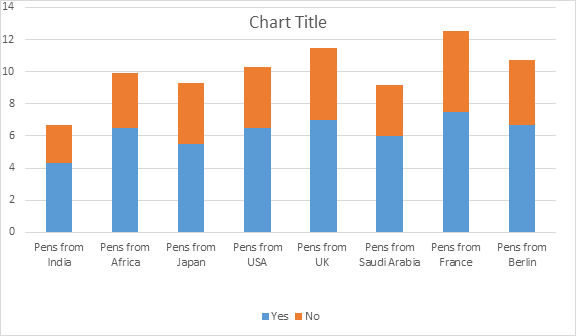
The questions were, “What are your thoughts regarding the Writing Process?” and a Yes or No question being “Do you think Writing is Boring?”

The Responses Were As Follows:

A Pen From The United States Of America, Indiana

I find the writing process fun and love it when people begin working on it while using me as a medium. I am glad that I have some worth and value in this world. But the sad part is that pens are only looked upon when it comes to writing, while other times, we lose our worth.”

Yes Or No Question:

No, writing is not a boring task. Instead it is an interesting job that helps awaken your imagination.

A Pen From The United Kingdom, Wales

“Writing is a subjective process and totally depends on the perspective of the person involved. If the person admires the process and remains keen in imagining and coming up with creativity then it is fun, otherwise it isn’t. I, as a pen can only wait for the right person to initiate writing, who wholeheartedly surrenders himself to the process without any sort of disturbance.”

Yes Or No Question:

As I just said, this is a subjective process, so it could be either Yes or No, depending upon the person involved.

A Pen From Berlin, Brandenburg

“Writing is an art that can’t be learned. It is a god gifted talent that not every person possesses. It is because creativity is something that needs to be within. The urge to think and come up with something unique needs to sprout from within. These things can’t actually be learned. We pens, do not form the intellect of the writer, but prove to be important when it comes to initiate the process. For me, every writer is important because they make us productive and increase our worth.”

Yes Or No Question:

Yes, writing is a boring task for a person who isn’t interested but is just into it, for the sake of livelihood. This art requires love because when you love writing, not only that particular write up but also the pen loves you back! 😉

A Pen From France, Brittany

“I, as a Pen can only say that write ups require sheer practice, dedication, love, patience, devotion and focus. The writer needs to be acquainted with holding me 24/7 in order to enrich the process. We pens need to be held frequently because it is easy to receive thoughts on the upper floor of the human body, but to jotting those umpteen thoughts down is a complex task. A writer can’t possibly occupy an entire day for writing. Thus, practice with us (pens) is important, very important!

Yes Or No Question:

Writing is boring for a person who finds it a pesky job to maintain the word count. Thus, practice is essential. After all, Practice Makes Perfect, doesn’t it?

A Pen From Saudi Arabia, Mecca

“Write when a stable mind is ensured. Writing isn’t all about jotting down anything one pleases. It is also about writing the sensible thing with utmost creativity. However, it depends on the genre whether you are expected to use creativity or reality more.”

Yes Or No Question:

No, writing is not a boring task because it comes with convenient branches comprising of various genres. One has complete freedom to choose any genre to work on. Also, you are free to choose your own set of topics. What more does one need?

Interesting responses aren’t they? These are some of the pens that responded while others just voted with a Yes or No.

These are the Pens from countries that actually responded. As visible, the responses are mostly No, stating that writing is not a boring task. We thank all the Pens who participated in the survey and helped it become a success! So, what are you waiting for? Writing isn’t a boring task after all. Begin writing now!

Happy Writing!

Thank You For Reading!

Happiness and Virtue!

t is believed that if we do something hoping for the sake of its own good will, then it will be in a realm of ultimate good. People shouldn’t be doing something good because they want something out of it, but for the sake of the good will only they should do it. When people do attain the ultimate good, its usually ends there with the end as its highlight. Aristotle has remarked that politics is what governs everything in life, we can’t find an activity around us that does not involve politics. All the sciences have politics in them and so the end of such sciences is the end of politics too.

Aristotle thinks that happiness can only be chosen in itself and not any other principles. It can only be attained directly, and there is no short cut or other way around it. We do something for various pleasures and wants in life but we want happiness for its own sake. Man, always want to be the best in everything they can achieve, this is with their soul’s conformity. It is always aligned with their certain principles and man always sets standards he wants to achieve. If he achieves these certain elements with the full passion he had put in to for its result, then he has attained his virtue. 

Happiness is an action that is to be lived well and achieved justly. It shouldn’t be deceived or cheated because only if you put the most efficient of work and passion, it can be achieved. Then only it becomes a virtue. It should be lived well to the virtue of the conformity. People aren’t born happy, but they find happiness on their journey of life. It is an activity throughout a person’s life achieved over time. Happiness is something that we gather across our life, through our experiences. It is not something that can be bought with. It is the result of certain actions attached with virtue.

Virtue is of two types o Intellectualo Moral 

Intellectual focuses on the intelligence, theoretical and wisdom of the virtue while the moral part focuses on kindness and generosity. No man should be less of one of the virtues. Both the virtues are important to lead a life. No man should be void of practical wisdom nor intelligence. Intellectual virtue is acquired though learning and training. You acquire it through your experiences and you learn new things on your way. While Moral virtues are attained out of habit(ethos).

Practical wisdom comes under the intellectual virtue, it is about the wisdom that one gains over a course of time in life. It is not something that you can learn while attending a class nor a seminar but it is something that you attain while learning life and adjusting to different circumstances in life. At each stage of our life, we come across different circumstances where we learn and become the better versions of ourselves. 

Political Wisdom and Practical Wisdom: Even though they are similar in some ways their core aspect is quite different. Political wisdom completely deals with the politics and legislation and it is quite different from Practical wisdom because it revolves around one’s thoughts. Political wisdom is different from the other one since we cannot have one’s views on making laws for the citizens. 

Political wisdom and Deliberation: Deliberation in action is quite a slow process, it is about investigating the whole picture and finding the end result through the right means. It requires calculation and proper understanding unlike guessing which goes quite quickly.

Practical wisdom is important in one’s life to make fair and good choices, to act in accordance with the goodwill of all and oneself. It is to achieve virtue in its highest form with a rational beginning for the end. 

Unlike any other we attain virtue only by practice, just like how an artist’s paints or a writer writes, we can only achieve virtue by putting it into practice. This is where the role of a lawgiver comes in, he is said to inculcate the good habits into its citizens. This is the duty of a good lawgiver. Accordingly, Aristotle believes more in the moral aspects which are to be attained over habits in one’s course of life. 

Virtue is highly associated with pleasure and pain in one’s life. A man must go through both pain and pleasure from the start of their childhood, then and then only they will be able to achieve true virtue. The right amount of pleasure and pain in certain circumstances lead to whether it was morally right or wrong. Pleasure should be attained at the right time and not the wrong one so as to develop. If pain is attained at a wrong time then it will only led to deterioration of the character and will not achieve virtue.