SUBSTANCE ABUSE

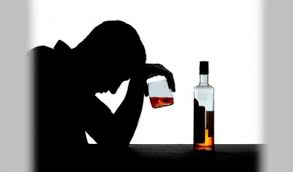
Substance abuse or addiction refers to the habitual use or dependency on dangerous substances such as liquor/alcoholic beverages, tobacco, bidis/cigarettes, and medications (for purposes other than prescribed medical treatment). As the variety of addictive substances grows, more and more people, particularly those in their twenties, get addicted. There are numerous elements that contribute to young people and adults falling into the trap of substance misuse. Peer pressure, an unfavourable familial environment, and stress are among these variables.

Substance abuse is a medical and psychological condition that requires treatment. Parents must be considerate to their children, especially during the transition from infancy to adolescence and maturity, when significant physical changes occur. Adolescents are naturally inquisitive; they are constantly discovering new worlds, ideas, behaviours, and relationships. Some people get exposed to medicines as a result of the practise. They are likely to be trapped unless their environment, relatives, schools, and friends teach them about the negative impacts of drug use. The most prevalent and dangerous addictive behaviours are drinking and smoking.

Drinking or consuming liquor/alcohol is a severe social concern. The simplest hobby is to drink and temporarily forget about troubles and tensions. Its addiction has major ramifications. Even with meagre incomes, drunkards purchase liquor while putting the necessities of their families at risk. If they cannot afford the more expensive standard variety, they opt for the less expensive variant. They drink even deadly drinks at times. They lose their wits after drinking. It can result in death or severe disability. Most of the time, after drinking, they abuse their wives and children, resulting in domestic violence.

Smoking is a behaviour that is far more detrimental to one’s health than drinking. It not only harms the smokers, but also the people around them who are affected by the smoke in the air. If we respect the rights of others, we should refrain from smoking in public venues such as buses, trains, marketplaces, and offices. Smoking is a major source of pollution and contributes to the development of dangerous diseases such as cancer, heart disease, and breathing problems, among others. Tobacco use, particularly smoking, is the leading cause of death worldwide, according to the World Health Organization. Smoking in public places has been prohibited by the Union Cabinet. It has prohibited the selling of tobacco products near schools and universities. Manufacturers of these products are required to provide a warning to consumers about the negative consequences of their products in the form of a caption on the product itself.

PREVENTION– Drug and alcohol abuse prevention might begin at home. Parents can communicate to their children about the dangers of drug and alcohol abuse. Talking to children when they are young, in particular, can lay a solid foundation for drug awareness. This allows parents to favourably impact their children while also teaching them about boundaries. When it comes to teaching boundaries, parents assist their children understand when to say no to something that could injure them while also controlling the dynamic of an inappropriate request. Prevention discussions also foster stronger ties and guidance between children and parents. Parents can build consistency in communication as well as long-term advice for their children. Preventative talks can help an adolescent build trust with their parent and make good judgments about their habits, friends, interests, and influences. There are governmental agencies, community leaders, and school personnel that attempt to teach children about living a drug-free life. Much of this is to prevent teen drug abuse before they reach adulthood or go into the real world. As a result of these educational tools, teen drug abuse has significantly decreased from previous decades.

MANAGE REFUGEE INFLUX

ISSUES

According to data collected by the United Nations High Commission for Refugees (UNHCR), India has close
to 2 lakh refugees living within its territory with the number constantly rising. However, unofficial reports
place the figure at above 4.5 lakh.Currently, the only law specifically governing refugees in India is through
judicial decisions regulating specific situations. There are also ad hoc administrative advisories by the
Ministry of Home Affairs, regulating specific situations concerning refugees, such as the Advisory on preventing and combating human
trafficking in India, dated 1 May 2012

In the absence of specific legislation pertaining to refugees, the general law applicable to foreigners, the
Foreigners Act, 1946, applies to refugees as well. The status of refugees is determined by UNHCR,
but it has limited reach and resources.These ad hoc, case-specific measures lead to a two-fold problem.

First, India’s national security interest
are hamere by the absence of a content legal structure to ensure that all non-citizens resident in India are properly documented and have a legitimate reason for their presence in India. Second, the lack of a law
providing certain basic rights to refugees violates India’s obligations under customary international law,which it is subject to, notwithstanding
its non-ratification of the 1951 Refugee Convention.

SOLUTION

The foremost requirement in the Indian legal framework is a definition of the term ‘refugee’. This is essential for
any legislation making any provision for refugees, since the term is not easily defined. Second, the single most important principle relating to refugees in international law needs to be recognised in Indian law – that of non-refoulement, or non-return to country of origin. The Foreigners Act penalises those who enter the country
without valid identity documents, or may prohibit entry of such persons
into India. This implies that refugee-seekers are liable to be returned to the country they are fleeing from. A legal
solution needs to be worked out to prevent this.

As a consequence of accepting refugee-seekers at the border, a structured system must be put in
place for refugee status-determination.Moreover, a procedure with such
critical security implications should be controlled and carried out entirely by the government. As a result of this procedure, once a person is admitted into the country as a refugee, he needs to be issued a permit, either in
form of a long-term visa or a refugee permit. This will serve as an identity document, and assist the government in maintaining records.

IMPLEMENTATION AND IMPACT

The following amendments are required in the Foreigners Act, 1946,to implement the above:
1.The term ‘refugee’ needs to be defined as a person who, owing to well-founded fear of persecution based on race, religion, nationality,
membership of a particular social group or political opinion, is outside his country of nationality, or if having no nationality, is outside his country of habitual residence and i unable or, owing to such fear, unwilling to avail
himself of that country’s protection.
2. Exceptions must be carved out for refugees, codifying the principle of non-refoulement, wherever the Act prohibits or imposes penalties for being present in India without valid
documents.
3. A new section should be inserted in the Act, requiring status determination of refugees at the border, along with providing an identification document;
provision for rules outlining criteria for status determination as well as
officials responsible for the same.

CONCLUSION

These changes in the Foreigners Act will be the first key steps towards legal
recognition of refugees in India.

Is there really a new variant of COVID-19 out there?

From the past couple of days, reports have been surfacing that a new variant of corona virus i.e. a delta variant can be found in a few patients. So how is this variant different and what we need to do to be cautious?

Just when we thought we were going back to normal now, Indian scientists detected a new delta plus variant in 22 samples from all over the country. First found in Jammu and Kashmir, this variant is now also seen in patients of Maharashtra, Madhya Pradesh and Kerala. 6 of those 22 sample are from Maharashtra and the remaining are divided between Kerala and Madhya Pradesh. 2 patients of this variant were reported in Ujjain district of Madhya Pradesh and death on one of them, a woman was reported on wednesday.

We are still not very clear about how and in what ways is this variant different from the others and does the vaccine we are provided with is effective on this virus. But yes this variant is yet not classifed as ‘variant of concern’ but we need to be concerned and take all the necessary precautions.

According to Dr. Mike Ryan who is the executive director of WHO, delta variant has a possibility “to be more fatal because it’s more efficient in the way it transmits between humans”. This variant is likely to affect the vulnerable people i.e. people with less immunity according to World Health Organization officials.

So, it is not over yet. Even if we are fully vaccinated let’s not be reckless and wear a mask and maintaing social distancing whenever we are out. Things will get better.

Ecommerce in India!

So let’s have a look that what does ecommerce mean~ E-commerce is the activity of electronically buying or selling of products on online services or over the Internet.

And if we talk about “Ecommerce in India” then, India has an Internet user base of about 696.77million as of May 2020, about 40% of the population. In 2017, the largest e-commerce companies in India were Flipkart, Snapdeal and Amazon. In 2018, Amazon beat Flipkart and was recorded the biggest ecommerce in India in terms of revenue. And it’s rapidly growing up day by day.

In India, cash on delivery is the most preferred payment method, accumulating 75% of the e-retail activities. Demand for international consumer products (including long-tail items) is growing faster than in-country supply from authorised distributors and e-commerce offerings. Long tail business strategy allows companies to realize significant profits by selling low volumes of hard-to-find items to many customers, instead of only selling large volumes of a reduced number of popular items. The term was first coined in 2004 by Chris Anderson.

In 2017, the largest e-commerce companies in India were Flipkart, Snapdeal and Amazon. In 2018, Amazon beat Flipkart and was recorded the biggest ecommerce in India in terms of revenue.

And some of the ecommerce sites are:

1. Amazon.in

2. Flipkart

3. Snapdeal

4. ebay India

5. IndiaMART

6. Shopclue

And so on…

But one should properly check the product and should take a clear look in the mind that this product is the only one which I want to purchase and they’ve can go on but inspection of the product must be the first priority of the customer.

Why Do So Many Students in India End Their Lives Over Exams?

Prerna, 14, took her own life after she failed two subjects in her Class VIII half-yearly exams. She is one of thousands of Indian students who take their own lives in India every year..

According to a 2014 report from the Indian government, exam-related pressure was the largest cause of suicide in India’s youth. On this podcast you’ll hear from people who work with suicide support groups, doctors, as well as the last words of several students from their suicide notes.

India’s student suicide crisis is no new development. India has consistently reported high suicide rates. A large number of suicides were reported in the 15-29 age group.

Twenty-two students took their own lives in a week in Telangana in April 2019, because they had failed their school’s intermediate exams.

What kind of psychological pressure leads students in school, like 14-year-old Prerna, to take their own lives?

But failure to live up to expectations isn’t the only cause for student suicides. A 17-year-old from Ghaziabad took her own life after she cracked the IIT-JEE entrance examination in 2016.

In her five-page suicide note, she wrote about how she never wanted to study science or be an engineer.

Seventeen-year-old Kriti Tripathi wrote the suicide note before jumping to her death from a five-storey building in Kota on 28 April 2016.

She had scored 144 marks in the JEE Mains 2016 results declared a day before, on 27 April. But she writes….she never wanted to be an engineer. The pressure to succeed eventually leads to everything else in a student’s life being side-lined, like extra-curricular activities and other things that could lead to a more well-rounded, healthy sense of self.

reference-the quint site

On Warren Hastings and His Reforms

The  East India company, in 1765, acquired the diwani rights of three provinces by signing an agreement with the Emperor. These provinces were Bengal, Bihar and Orissa. These provinces were wealthy provinces. Warren Hastings was appointed as the governor general of Bengal. The dual system of government was a failure and Hastings was asked to consolidate the Company’s rule in Bengal. He was also given the task of judicial reformation. 

Warren Hastings and Judicial Reforms

Warren Hastings was an English statesman and the the first Governor of the

Presidency of Fort William (Bengal). He was the head of the  Supreme Council of

Bengal and also the first de facto Governor-General of Bengal. He exercised this position from 1772 to 1785. Hastings is seen as an important reformer who, during his tenure, brought many reforms. He first came to the country in 1772. 

One of his observations was that the though the Company enjoyed the right of Diwani(Since 1765) of the wealthy provinces(Bengal,Bihar and Orissa), it had hit the rock bottom to become financially bankrupt. He also noticed that the Dual Government had failed to succeed. Influenced by these observations, he wanted to correct the administrative system. He is praised and known for laying the foundation of the English administration in India. The Council replaced certain measures introduced by Warren Hastings. This was established by the Regulating Act. Two years post this incident, he was in a position to assert himself and introduce his plans freely. 

 After the acquisition, the concept of Mofussils was beginning to be used. The concept of Mofussils was used to denote the territories surrounding the Presidency towns. There was already a properly established and well established judicial establishment in the Presidential towns like Calcutta, Bombay, and Madras under the appearance of Mayor’s court and court of Governor-in-council. It was clear that a similar set up was urgently needed in these areas called Mofussils(Areas adjoining Presidential towns).These reforms were seen as beneficial. For this reason, it is widely opined that  “Hastings attempted to establish a just judiciary administration in India.” 

During this time, a Supreme Court was also established at the town of Calcutta. This was established after the enactment of the Regulating Act of 1774 by the British Parliament. The jurisdiction of this court and relations with the Sadar Nizamat Adalat and the Sadar Diwani Adalat, however, remained unclear and undefined. The laws followed by this court also remained unclear. As an expected result, this had an adverse impact on the judicial administration in Bengal. These impacts were clearly visible for a period of time. 

 The reforms were to be aimed at correcting the defective system. This was to be advantageous to the Company and save the ryots from oppression in the hands of Zamindaars and other tyrants. Hastings proceeded to reform the administration of justice.  His reforms can be seen as a division of four stages. 

 Hastings understood the relationship between revenue and the administration of justice. The administration of revenue in  these was seen as an important activity and function for the rulers. This was because of the fact that the activity generated a lot money and was a significant contributor to total revenue. As it was necessary to have lands and private property and these could be made prosperous only when there was proper maintenance of peace. Social order was a significant factor for prosperity as it affected the occupational work of people and the quality of the work. Peaceful society was a must to prevent unnecessary distractions affecting economical activities of the people. As the society was mostly agrarian, the need for order became even more important. It was obvious that life security and security of property was essential to bring order in the society. Ensuring peace would act as a boost for economical activities which in turn would generate sufficient revenue. This will enable the people to pay taxes properly. All these scenarios and requirements demanded an effective judicial system which was exactly what the society then lacked. 

Warren Hastings also understood that there was the lack of central authority that exercised power, dispensed justice, and controlled other authorities. The Mughal empire was dissolved at this point of time and the Nawabs were also significantly weakened in the concerned areas. The then existing judicial system was also improper and broken down. This made the system inefficient and ineffective. The appointed candidates were inefficient and lacked in required skills. They started to abuse their power and there was no system in place to check the corrupt activities of the officials. Another prevalent scenario that necessitated judicial reformation was the corruption prevalent in the centres of justice. 

According to the reforms, many courts were introduced. The other type of courts that were introduced was the Mofussil court or district court. These courts were also called as Mofussil Diwani Adalats. Each district got one of these courts. The jurisdiction of these courts extended over the the civil and revenue case. This court also dealt with cases relating to marriages,contracts, property inheritance, disputed accounts, private properties, inheritance, partnership and rent related issues. The pecuniary limit of these courts were capped at five hundred rupees. Composition of this court included Governor as the President and minimum two members of the council who were assisted by Diwan Treasury and Chief Kanungo. The judgements given in this court was the final one in cases of value upto five hundred rupees. This court was presided over by the Collector of the district. The collector worked with the native judicial officers called Kazis and Pundits. The collector or the judge of these courts required the assistance of native law officers as the collector was not versed with the personal laws of the Hindus and the Muslims based on which certain cases were to be handled. The native law officers helped the collector with their knowledge of the personal laws of native communities. 

The other type of courts were known as Mofussil Nizamat Adalat. The other name for these courts was Fauzdari Adalats. Every district got a Fauzdari Adalat. These courts, unlike other courts discussed above, dealt with  criminal cases alone. This court did not have the jurisdiction to try cases that were about capital punishment and issues related to forfeiture of property. These cases were required to be submitted to Sadar Diwani Adalat for judgements. One unique thing to these courts were that these courts were presided over by Muslim law officers alone. The Moulvi was involved involved in the process of expounding the law. Fatwa was given by the Kazi and the Mufti. These officers gave the judgements accordingly. The officers of law and the collectors of the district were allocated with important roles. These officers and the collectors were required to supervise the courts. The supervision job included the checking of witnesses involved in the case and hearing of all witnesses. The other function of this role was to try cases properly and regularly, and to impart justice impartially. 

The other type of courts was called Sadar or Provincial courts. This case acted as the central and apex court for civil cases in the area of the province. This case was empowered with both the appellate and orginal jurisdiction. It exercised this jurisdiction by hearing appeals from Mofussil Diwani Adalat. This court also tried cases that were related to or involved disputes of rupees five hundred. This court had the practice of charging up to five percent as a commission. This commission was charged on the amount involved in the dispute. This commission was charged on each petition or appeal. This court was presided over by the governor and the council. This court was located in the town of Calcutta. The first sitting of this court was held on 17th March of 1773. The next type of court was called as Sadar Nizamat Adalat. Sadar Nizamat Adalat was also the central and apex court for criminal cases within the provincial area. It is similar to Sadar Diwani Adalat in certain ways. This court had the jurisdiction and was empowered to decide issues related to capital punishment and forfeiture of property. In capital punishment cases, this court had the task of preparing death warrant. This warrant had to be signed by the Nawab (the head of the Nizamat). 

 Governor in Council acted as the supervisor and had the functions to supervise the functions of the court. This was similar to Mofussil Nizamat Adalat. The location of the court was moved Murshidabad (the residence of the Nawab). This location shift was due to the fact that his signature was required for all capital punishment cases. The office of Naib Nazim was developed later. Mohammed Reza Khan was appointed to assist instead of the Nawab. 

Several provisions were introduced, as a part of the judicial plan, to promote fair and impartial justice in the area. Open observation was made possible by conducting the judicial process and trials in the open court. This was done to gain the trust of people and ensure transparency. Adalats at district and village level were asked to maintain a register of all the cases. These records had to be sent to the Sadar Adalats. This was a move towards curbing power abuse and checked the activities of the court regularly. As a part of the reforms, already existing and rough civil procedures for civil cases was used. 

According to this procedure, the defendant had to reply after the filing of petition by the petitioner. After the hearing of the defendant, the Adalat and heard the concerned parties and examined the evidence presented. After completing all the these procedures, the court passed the decree. A time period rule was introduced, according to which a case had to be filed within 12 years of the dispute. All the cases exceeding this time limit were considered time barred. Another important feature was the introduction of arbitration for providing assistance to the civil court. When it came to laws and procedures related to crimes, the attention was given to laws and procedures to curb the activities like dacoity and remove mutilation as a method of punishment. 

 Warren Hastings did not believe in mutilation as an effective punishment and the convicted would become a dependent person and increase the burden on the society. However, mutilation as a punishment was not removed the codes of law and was its usage was refrained in practice. This was done lest resistance by the Muslim law officers who were not open to change and adhered to the texts. 

Making certain corrections to the earlier reforms,  collectors were asked to resign and other appropriate people were being searched. The new plan came into effect in January, 1774. The suitable personnel were found in Amils or Diwans. Amils were appointed in each district. Amil was given the role of revenue collector and he had the role of judge of Mofussil Diwani Adalat. The Presidencies of Bengal, Bihar, and Orissa were divided into six and headquarters were set up at Calcutta, Murshidabad, Dinajpur, Dacca, and Patna. Each division had several districts under the authority of the headquarters. Provincial councils were set up in each headquarters. Five Covenanted servants were appointed for each council. The function of the provincial councils were supervision of revenue collection. Amils were given the duty of tax and revenue collection. These courts were allotted the function of hearing appeals from Mofussil Diwani Adalat. The appeals of pecuniary value above thousand rupees would go to Sadar Diwani Adalat. These courts became an amalgamation of Mofussil Diwani Adalat and Sadar Diwani Adalat. Now cases of all value and appeals could be heard in the Provincial Council. This became a court of first instance. It was empowered with original jurisdiction. The court heard the cases from the division or headquarters. These cases could be heard directly at these courts. 

If Social Media Makes You Feel Bad, Quit Using It

YOU ARE YOUR BOSS!

Just admit it, you’ve thought about it before. Social media is great and all. But you and I both know that it also sucks.

Does this scenario sound familiar?

  • It’s late at night, you’re in bed, you dread waking up early tomorrow because you have to go to work, so you grab your smartphone, you open up Instagram (or whatever app you’re addicted to).
  • And you start browsing, you go from one picture to the next, you watch some videos, you start feeling bad about your life, because all the other people have fun, and you have to go to work in the morning.

Alright, we’re at a very bad place right now in that scenario. Because now the existentialism creeps in slowly. And finally, you think:

“My life is shitty compared to these other people. They look amazing, have money, travel the world, and they are important too. Who am I? I’m nothing. What have I done? Nothing! FML.”

And what do you do besides feeling like shit? Nothing. You just go on with your life and repeat that whole process the next day. And some days you counter the posts from other people by ‘crafting’ your own cool posts.

Just admit it, this whole thing is not cool. Of course, I’m exaggerating, and social media is not the source of all our problems. Don’t expect that your life will be awesome when you get rid of social media. I don’t believe in fairy tales.

But you get my point. Social media has a negative impact on many of us. Some people love it. If that’s you, there’s no need to read this article. But if you ever thought about quitting social media, keep reading.

Actually, just stop reading, and go on and delete the apps that make you unhappy.

Just follow the example of Louis C.K. When asked about why he quit Twitter in an interview, he said:

“It didn’t make me feel good. It made me feel bad instead. So I stopped doing it.”

That makes it very simple. If something makes you feel bad, stop using it.

It’s the opposite of the scientific approach to quitting social media that Cal Newport took. He makes some good points about why social media is bad for you.

But to me, that’s way too rational. And we’re not rational beings. We’re emotional. That’s why I like the approach of Louis C.K.

Here’s why I got rid of my social media.

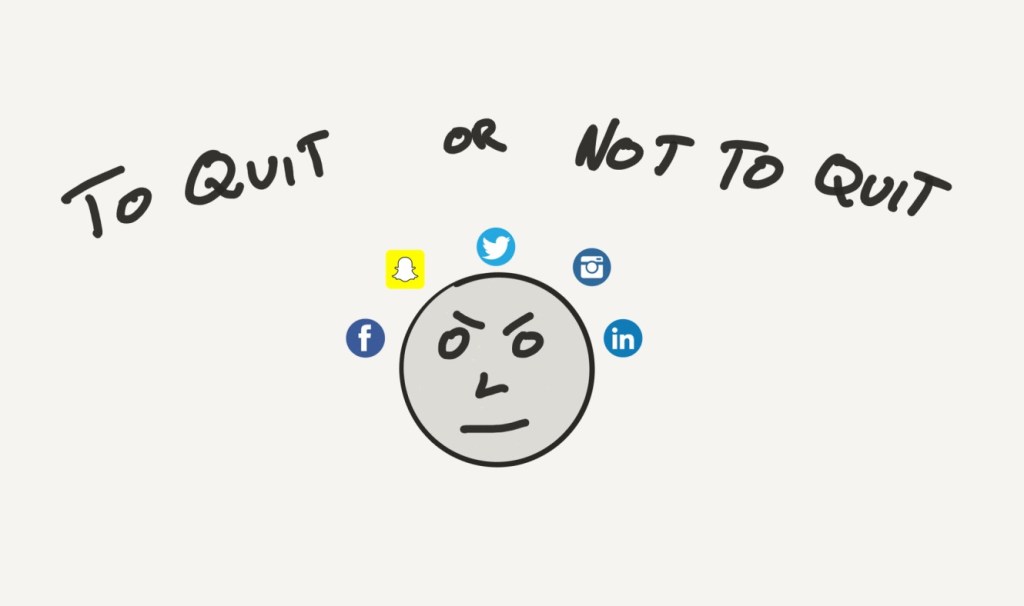
I only used it for self-promotion. And I don’t like that. I don’t think that’s fair to people who follow you. So I got rid of my Instagram, Facebook, and Snapchat. I only have Twitter and LinkedIn (for now). But if I don’t use them, I’ll get rid of them too.

This article is not about convincing you to do the same. Or about getting rid of all your social media profiles. All I’m saying is this: If you ever thought about quitting social media, just do it already.

You’re limiting yourself by not pulling the trigger. Now, you might say: “It’s just social media. Who cares?”

But you’re not getting off that easily. If you want to live a happy and stress-free life, you have to be decisive. When things linger in your head, it’s all dead weight. And you don’t want that.

What’s it going to be? Do you use social media or not? Does it make you happy? Does it improve your life or business?

I know what you’re thinking. “What if I ever need it?”

You don’t need anything for business or your career.

People who have stakes in social media will never tell you to stop using it. Why? Because their career depends on it.

But what did you think people did before social media? It’s all a matter of perspective. Many successful entrepreneurs I know have never used social media.

Is that why they’re doing well? There’s no way to tell. One thing is sure: You can do well in life with and without social media.

It’s up to you to decide. And it comes down to self-awareness. It’s also about simplifying life. Because it’s already complicated enough. Get rid of shit that doesn’t contribute anything to your life.

So what’s your perspective? Have you ever thought about quitting social media? Why did you never pull the trigger? Let me know in the comments.

Kickstarting your career in a startup

“A big business starts small.” – Richard Branson.

Once you have finished college, there might be immense pressure on you from your family, friends, and acquaintances. Some of your classmates/ friends would have been placed on a prominent Multinational company. Deep down your heart needs a job that would let you go with the flow and explore your skills. If you are such a person then kickstarting your career in a startup is the right choice. This choice of yours may leave your family unsatisfied. Let them understand the reasons why you have made this choice.

“Providing Internships changes the whole equation” – Eduardo. J. Pardon

Several startups are open to providing internships for college students and fresh graduates. They trust in the thrust of young minds. The way of approaching the startups is to contact them through emails / by a direct visit with an updated resume in hand. Before approaching them for an opportunity make sure you have a clear idea of what the startup is all about and why you wanted to be in their team. 

The interviews in startups are mostly interactive and informal. So make yourself comfortable which would help in obtaining a mutual understanding. Pay attention to the roles assigned to you after you are selected and ask all the queries regarding the same. Then get to know the internship period, work timings, stipend, and the opportunities offered in the company post completion of the internship. Only when you both have satisfaction at the end of the meeting proceed with accepting the offer. 

Working in a startup you will always be filled up with mixed emotions. The initial phase would be quite difficult to handle. You might be one of the initial team members of the startup and will be in a circumstance to start from scratch. There will be no expertise to guide and assist you in the process. But that’s the starting point where you could identify your strengths, enrich your knowledge, develop the never-give-up attitude. However, the delight of achieving the output you wanted by starting from scratch will remain an unmatched moment in your life. 

Post the intern period begins the phase where you will start to grow with the startup. This might lead you to do multitasking. Some may be able to cope up with multi-tasking and some may feel it as pressure. In case if you are not able to handle the pressure for more than a month then inform the startup regarding the same. Multitasking might seem fascinating, but if it’s not handled properly it might end up as 

“Jack of All Trades. King of None” – Spanish Proverb.

You are doing good and you will end up at your destination. All the best for your future endeavors. 

BATTLE AGAINST PLASTIC

“It’s just one straw, it’s just one plastic cup, it’s just one plastic bag”

7.8 billion people

Do you ever wonder where “away” is when you throw stuff “away”?

There is no waste that does not degrade in nature. Humans, on the other hand, invented plastic, which, due to its qualities, will always be considered “unnatural” in the ecosystem. Plastic production is low-cost, and the material’s possibilities are limitless. Because of its widespread use, plastic virtually always finds up in the environment, resulting in more plastic pollution. Every day, you come into contact with many sorts of plastic, such as a lunch box or, more commonly, a plastic bag. Plastic pollution has reached every corner of the world. It’s made its way to the depths of our oceans, isolated forest routes, Arctic ice, and island beaches where turtles lay their eggs. And the amount of plastic waste in the oceans is so large that it is referred to as the “7th continent”. By next decade, there will be more plastic in the oceans than fish, if current trends continue. We don’t know how long these plastic will take to degrade (or if it will ever degrade), but we do know that once it’s in our soil, rivers, and oceans, it’s impossible to remove. Away from the seas, plastic waste is a major issue, overflowing landfills, clogging rivers, and polluting the environment through open burning or cremation. Some plastics also contain and absorb harmful substances, putting wildlife and humans at risk.

Now, the first thing which comes to our mind when we think of a solution to this problem is recycling. But truth is only minimal percent of plastic is recycled on a global scale. Even in advanced nations, household plastic recycling rates are frequently less than 50%, with very little of it being transformed back into packaging. The majority of “recycled” packaging waste gets down cycled into lower-value or non-recyclable products, only delaying the plastic’s final trip to the landfill.

What are our options now? Short-term objectives could include reducing needless packaging that is difficult or impossible to recycle and increasing the use of reusable and refillable methods for carrying and storing goods. We’ll need to adjust our consuming habits in the long run.

The most effective strategy to combat this problem is to alter our mindsets and habits with these challenging but really useful methods:

The classroom is an excellent place to begin discussing this problem and possible solutions. Kids may improve their science knowledge and leadership skills while also learning how to make the world a better place. Educators have the power to encourage students to make a difference in the world.

By volunteering or protesting: Citizen Activists are cleaning up riverbanks, parks, and beaches in their communities, and using these events to identify the polluting firms.

There are inventive methods to prevent single-use plastics whether you’re arranging a dinner, a picnic, or even a large-scale community event.

Plastic can pollute the environment if it is not properly managed, yet it also has several benefits, such as resistance. As a result, many plastic things can be reused or adapted to new uses. It is critical to explore how plastic things can be repurposed before discarding them. And support restaurants, food chains, shops that choose to reuse.

The battle against plastic is long and hard but it’s our battle to fight, so that the generations ahead don’t have to bear the consequences of our mistake.

International Widows’ Day 2021 : Theme and it’s Significance

It is necessary for every one to have a life partner in certain stages of their life. Fortunately many are luckly got their partners life long but unfortunately few have married and lost their partners due to some uncertainty situations and cause of their fate. Few young aged people are getting married after their partner is no more but many remains as same as their partner is no more. There are some privileges that are given to them by the government. Losing a partner is a great loss which makes them to feel low.

International Widows day is observed on June 23 every year . This day is to create awareness among the people about the Widows ,the problems faced by them in this society and to galvanize the support they need. It is very difficult for them to live this life. There are few widows and single parent children are suffering without the basic needs and pack of money.

According to United Nations website, there are over 258 million Widows round the world. In that , one people out of ten are living in extreme poverty. A report says that, in the eastern democratic Republic of Congo, 50 % of women are widows

History of International Widows Day

This day was initiated by The Loomba Foundation to create awareness about the struggles faced by Widows. They decided to mark this day as International Widows Day cause on this day in 1954 Shrimati Pushpa Wati Loomba who was the mother of Lord Loomba became a Widow.

So , Lord Loomba and Cherie Blair, the foundation’s president decided to launch this day on June 23. The first international Widow day was took place in 2005. Only after the sixth international Widow day , other countries started observe this day and events were held in some countries like India, SriLanka, United States, UK , Nepal, Bangladesh, Syria and Kenya.

Then this day was adopted as International Widows Day by United Nations on 21st December 2010.

Theme of this year

The theme of this year is ‘invisible women , invisible problems’. This theme highlights the problems face by the women , after the death of her husband. They are facing many problems and are ignored by their own family members who doesn’t give any importance to them .

Significance of this day

This day plays an important role in amplifying the voices of widows. It’s main aim is to create awareness about the hardships and struggles faced by the Widows and to implement many legislations to ensure their rights . Every year , this day is observed to honor these Widows.

It also insists to provide their inheritance, pension, lands and other basic needs. It also requests to provide social protection , good job with good salary to them. Widowed women should fight for their rights which is both physically and emotionally.

According to United Nations, it states that, Many years Widows have been left unseen, unsupported and unmeasured. Many people losts their partners due to this covid-19 pandemic. Widows are considered as bad omens and forbidding their presence in some happy occasions. Even in this modern century, these practices are still continuing in some countries. United Nations says that, member countries should give all the equalities, rights and pension to the Widows.

Covid-19 Vaccines and Immunization


A COVID 19 vaccine is a vaccine intended to supply or improve immunity against severe acute respiratory syndrome corona virus 2 (SARS CoV 2), the virus that causes corona virus disease 2019 (COVID 19).

India began to vaccinate from 16 January 2021 . As of twenty-two June 2021, India has vaccinated 294,639,511 doses overall, including first and second doses of the currently-approved vaccines.

Vaccine, manufactured by the Bharat Biotech, may be a Whole-virion inactivated Corona virus Vaccine which is additionally manufactured by this institution and has reduced the productions of vaccines like Influenza, Rabies and Hepatitis- A.

EFFECT OF VACCINE:

Currently, a complete of seven COVID-19 vaccines are available across the world but only three vaccines are circulated in India. However, some people questions about the efficacy of those vaccines, especially the emergence of latest strains of the virus. Vaccines must be effective at that time which significantly reduces the spread of the virus for them to achieve success .

Research has demonstrated that the fashionable and therefore the mRNA-based Pfizer vaccines are 94-95% effective, and therefore the figures have proven true even in trials, studying those at high risk and the elderly.

It is a standard misconception that this suggests 95% who get the vaccine are shielded from the disease, leaving 5% unprotected. If this were true, during a population of 100,000 were vaccinated this is able to cause 5,000 people contracting the virus and developing the disease over three months. This rate is analogous to the present UK COVID-19 case rate.

The 95% effectiveness actually means people with the vaccine have a 95% lower risk of COVID-19 in comparison to an impact group. Without the vaccine, we might expect roughly 1% of the population to urge the disease, and with the vaccine, this reduces to 0.05%. At such low rates, the vaccines will allow society to urge back to ‘normal’ and for restrictions to be permanently eased.

ADVANTAGES OF VACCINES:

The best means of staying healthy is to avoid infection by the SARS-CoV-2 virus. If, however, you are doing become infected, vaccination appears to limit the danger of developing severe or maybe fatal symptoms. this is often because the currently available vaccine primes your immunological system for producing antibodies without causing you to urge sick. If you are doing become infected, your body is ready to fight the disease. Vaccination typically leads to fewer or milder symptoms when you’re ill

By getting the COVID-19 vaccine, you furthermore may lessen the prospect of spreading the COVID-19 pathogen to relations , friends, or people with whom you’ve got contact.

All FDA-approved medications are clinically tested before release to the general public . The Pfizer-BioNTech vaccine has been shown to be 94-95 percent effective within fortnight of full inoculation. In other words, the vaccines will safeguard 19 out of each 20 persons inoculated from becoming seriously ill with COVID-19.

As with any vaccination, some side effects are recorded. These include soreness at the injection site, headaches, chills, fever, and fatigue. within the great majority of cases, these post-inoculation symptoms will disappear quickly. they’re also far less severe than the foremost serious COVID-19 symptoms.


The virus has spread across the planet , and therefore the inflection point has yet to be reached, indicating that transmission will still occur unless the virus is firmly controlled. Thus, developing a COVID-19 vaccine which will be used globally may be a major priority.

The way to self-improvement

Everybody likes money, it is an essential aspect of our daily lives that controls society. We use it for exchanging goods and services as well as a benchmark for our success. Knowledge and health follow the same principle, we deem people who are smarter or more fit than us just as better, wanting to become better is in the mindset of all of us. It matters whether we put in the effort or not. Money making, boosting health and attaining knowledge which consists of two parts and it’s very simple structure aspect that is ‘Investment’. This is essentially investing and setting aside time money or any other resources to reach your goal, this might seem like common sense but most people say that they are going to do something but end up not doing it due to laziness or not having enough time.

If you truly care about something you will make time and think of a way to achieve that goal. Let’s take the concept of investing resources and apply it to stock market or money making concept. The younger you start investing , the less money you have to invest per day, per month or even per year to become a millionaire by age of 65. If you want to invest more, go ahead and make the million come to you faster. By investing money and time, you get to enjoy your life more slowly improving your wealth over time. We can invest our money into any company, may that be Google, Amazon, Walmart, Tesla, etc. The sooner you start investing your money, the less effort is required to reach a million and this strategy can be applied to any goal that you create. Knowledge and health follow the same principle, invest money and time and you will be greatly rewarded throughout your journey. Buy books or courses for improving your overall health or your knowledge or buy a personal trainer that can help you to change your dream body. Overall it all boils down to whether you are able to achieve your willing goal, you should actually take a leap towards your goal.

The hardest part of your journey will be aspect number two- ‘Motivation’. Motivation differs from person to person, some people want to become rich to have a great life for themselves while others to give money to organizations that make the world a better place, some people want to have an aesthetic body for showing off and others for their fitness, it differs. Motivation is the burning sensation inside of you that either one wants to continue ferociously or wants to give up because you aren’t seeing the results or it seems too risky. We have to realize that by investing into a better view, it doesn’t matter whether you might have pitfalls in your journey, whereas phrase goes “keep your eyes on the prize”. Fundamentally it does not matter what your goal is, find ways to never lose hope and motivation to succeed and you will achieve your goal much faster than you planned.

Improvement can be achieved in two parts- invest time, money or any other resources that you need and the other one is to have the pure persistence or find ways to never lose hope and motivation to succeed. This adds upto a better version of you.

BOOK REVIEW-An emboldening genre

A Good Takeaway is something essential for all human beings.

 There are only a few genres that create an inevitable impact in the hearts of readers and Autobiographies are considered to be one of the genres that stand out as an influencing factor in the lives of many people. Similarly, Most of us prefer less drama and Assertive pieces of work quite interesting, which makes nonfiction stories likeable. What could be more interesting when two most riveting genres combine! Yes, i will be writing about one of my favourite books, which is an ‘Autobiographical Nonfiction’- “Being Reshma” an impeccable life story of an acid attack survivor or to be more accurate, a warrior, who ought to overcome a traumatic experience of her life and has also succeeded, This book was written by Tania Singh and co-authored by Reshma Qureshi herself. 

This book, an inspiration, is about Reshma (the protagonist) , a girl who faced a tragic incident and was thrown acid by her own sister’s former husband as an act of revenge. Her entire face, skin and bones were damaged then she was taken to a hospital. Reshma was shunned by The hospital and the police authorities responses, which was very harsh. Despite facing many hurdles, Reshma didn’t shatter and succumb to her condition, but shone bright by becoming the first acid attack survivor to walk the runway at Newyork fashion week in 2016 which is just two years post such a terrific incident. She made global headlines by proving herself.

Besides, Reshma participated in many such events and campaigns. In one such campaign called #endacidsale which was held in 2015, Reshma asserted a strong statement which was also mentioned in her book, that is, “You will find red lipstick easily in the market, just like concentrated acid. This is how, every day, a girl becomes a victim of an acid attack.”(Qureshi 138) Which is a very bold statement that made many people think twice and is emotional, also one of my personal favourite lines said by her. Reshma never stopped campaigning against acid Attacks. Reshma also asserts that she wouldn’t stop raising awareness and narrate the ordeal of her life until the discriminatory and diverse mentality of people against acid Attack survivors come to an end. 

We all know acid attacks are not uncommon in India which is truly heartbreaking. Such inspiring autobiographies create powerful impressions and stimulate each of us to achieve big things in life regardless of insurmountable obstacles our life offers, which is nothing compared to life histories of many great personalities like Reshma Qureshi who proved herself and sets a great example for many more youngsters like me.              

In the midst of people who are very much concerned about physical Appearance, there are also people who embrace themselves with open heart and acceptance, which makes them succeed in life in unimaginable ways. 

Hence, if at all people lack confidence in overcoming insecurities I would highly suggest this must-read Autobiographical nonfiction story, “Being Reshma” A Phenomenon. 

Cuban Link Chain: Symbol Of Luxury

The mind may wither. The body may deteriorate. But the love of art and fashion is what keeps us young. The one constant thing in the world is our eternal love for jewellery.

Since ancient times, we have adorned ourselves with whatever we could find, such as animal bones, teeth of predators, bird feathers and shells and carapaces from the ocean. For years, pharaohs, sultans and emperors wore jewellery as a way of displaying wealth and power. Since then, we have come a long way, but the times have not evolved much.

Even though the reasons for wearing jewellery has not changed, the type of jewellery we wear certainly has. The Cuban link chain is one such type that will never go out of fashion in the world of fine jewellery. Yet, it could never compete with the renowned gold-coloured chains.

Cuban link chains, also known as Miami Cuban links, has a unique interlocked pattern and a thick texture to give prominence to the round or oval links. The links intersecting to form a rope-like design ensures durability and high quality. It explains why they can be crafted into large and heavy pieces while looking versatile and stylish at the same time.

Despite the many claims, the exact origin of the Cuban links is unknown. But they are likely to be the product of a hip-hop jewellery movement in the late 1970s that originated in Miami. There are a plethora of types of jewellery in the market that tend to disappear into the wind and come back in vogue a few years later. But, the Cuban link has managed to stay relevant and never went out of style till today. It has found its way to the wish list of many in recent times. The one thing we can say for sure is that it is here to stay.

The Cuban link is not for the faint-hearted. It doesn’t necessarily cost an arm and a leg, but it does cost sky-high, which is why we can see many rappers favouring and flaunting it for all the world to see. After all, solid gold and chock full of diamonds make up the Cuban links. A single chain can cost nearly $27,000. But a more valuable one could cost ten times more than that. It is a representation of all the success and hard work they have endured.

The Cuban links are generally handmade and the diamonds set by hand since they require extreme and impeccable craftsmanship. Designing a single chain calls for the skill of more than five experienced jewellers. It can take over twelve hours to create high-quality pieces that are worthy of the spotlight.

The most attractive feature is that you can style the Cuban link the way you want, like a long chain or a choker. Go for a basic yet stylish look or wear it extravagantly with other pendants. Else, you could wear it as a choker, just as Rihanna did in one of her outfits. Ultimately, the choice dwells with you.

With the legacy of the Cuban links evolving every day, it comes real close to being the best friend for both men and women. There is no reason why you should be modest about its allure. If you got it, why not flaunt it!

Education for Development

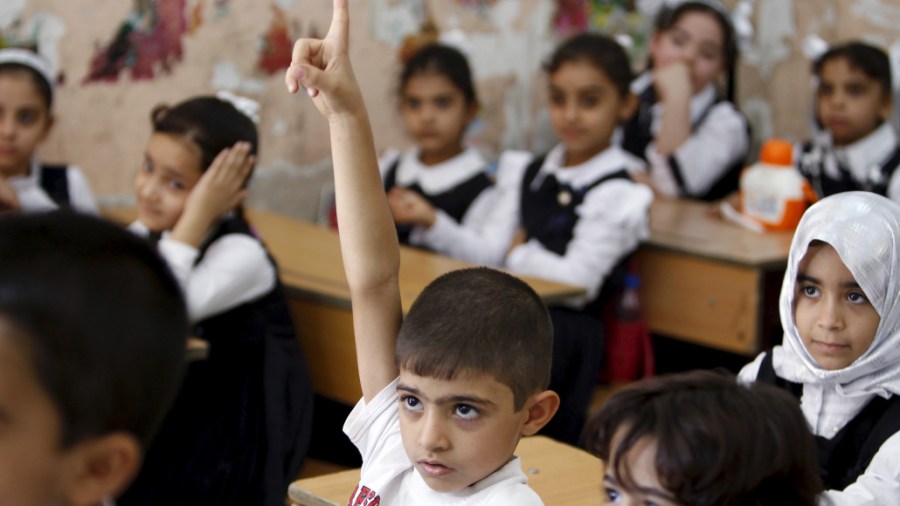
It’s not possible to predict all future educational issues, or know every detail of the sector’s current situation, but in the process of applying for teacher training some research will go a long way in demonstrating your enthusiasm and impressing potential employers.Recruiters are looking to see how much you’re engaging with current issues and are aware of the challenges that these place on a school. Your answers can reveal if you are genuinely interested in education, schools and the world of teaching.Today, education remains an inaccessible right for millions of children around the world. More than 72 million children of primary education age are not in school and 759 million adults are illiterate and do not have the awareness necessary to improve both their living conditions and those of their children.

You may have a question around recent education trends, current issues or new methodologies in education. In your interview you may be asked to create a presentation on current issues in education or asked a question around current issues in schools and in the media. Relate your answers back to the classroom – start with, ‘when I was in the classroom, I noticed…’ or ‘in the staffroom, I heard teachers talk about…’. Take a look at what other teaching interview questions you may be asked.

For many children who still do not have access to education, it is notable because of persisting inequality and marginalization.

In developing and developed countries alike, children do not have access to basic education because of inequalities that originate in sex, health and cultural identity (ethnic origin, language, religion). These children find themselves on the margins of the education system and do not benefit from learning that is vital to their intellectual and social developmentFactors linked to poverty such as unemployment, illness and the illiteracy of parents, multiply the risk of non-schooling and the drop-out rate of a child by 2.

Undeniably, many children from disadvantaged backgrounds are forced to abandon their education due to health problems related to malnutrition or in order to work and provide support for the family..

Universal primary education is a major issue and a sizeable problem for many states.Many emerging countries do not appropriate the financial resources necessary to create schools, provide schooling materials, nor recruit and train teachers. Funds pledged by the international community are generally not sufficient enough to allow countries to establish an education system for all children.

Equally, a lack of financial resources has an effect on the quality of teaching. Teachers do not benefit from basic teacher training and schools, of which there are not enough, have oversized classes.

This overflow leads to classes where many different educational levels are forced together which does not allow each individual child to benefit from an education adapted to their needs and abilities. As a result, the drop-out rate and education failure remain high.