Dreams: The world of delusions

When we sleep we enter into a world unknowingly which is full of delusions, fantasies, and imaginations. The series of images, ideas, emotions, and sensations that usually occur in our subconscious mind involuntarily during certain stages of sleep is known as Dream.

Dreams occur in the rapid- eye movement (R.E.M.) stage of sleep when the brain activity is high. If a person is awakened during this stage of sleep then they generally remember the dream which is seen by them during this stage. R.E.M. sleep is understood by the continuous movements of the eyes. The eye movement can be caused due to the changing of scenes in a dream. Dreams can appear in an average of three to seven times during a one night sleep. It can last for a few seconds to 20-30 minutes.

During sleep, the mind and the body relaxes from the long day activities. People experience a lot during the day and there is actually a little time to process each thing while being awake. So it is during sleep when all the things experienced during or throughout the day are processed. This shows that the mind is more active during a dream than when someone is awake.

Dreams take place in the subconscious mind. During sleep, the conscious mind sleeps but the subconscious mind never really sleeps. The subconscious mind becomes busy processing the thoughts and the concerns during sleep. This process thus generates dreams. Thus it is believed that dreams are what what we see or experience throughout the day. It is the summation of all the events and the physical and emotional exercises that we undergo during the day appears to us in the form of dreams in a more creative way .

In dreams we can see only the familiar faces. Subconscious mind cannot invent new faces as it only contains the memory that it has stored when the conscious mind was awake. It is very interesting to know that dreams do not show reading. Meaning a person can’t dream about reading a book during their sleep. It is because the dreams take place in the subconscious mind and it cannot make any words or letters as it is the job of the conscious mind.

Men and women dream differently. It is observed that the dreams of men usually contains aggression, physical activities, and also the quantity of people in a man’s dream is usually less. But a woman’s dream is totally opposite. The dream of women usually contains emotional situations and their dreams generally have more number of people unlike that of a man’s dream.

If a person is undergoing through underlying stress and anxiety then the negative dreams can appear which consists of anger, fear, insecurity, and sadness. Unpleasant dreams give a sign that the mental health of the person is disturbed and it needs to be taken care of immediately.

Sometimes the dreams give the feeling of “déjà vu”. After waking we feel that the thing that appeared in the dream is taking place in reality. The researches suggest that dreams recharge creativity. While sleep, the subconscious mind is dealing with and working out the problems and thus provides solutions by reliving the events. For example James Watson envisioned the DNA double helix.

There are different kinds of dreams:

• Daydreams: It is referred to as the dreaming while we are awake.

• Recurring dreams: These are the dreams which occurs repeatedly for more than once.

• False awakening: Sometimes while dreaming we find ourselves woken up from sleep but later it is understood that we are not actually awake it was just a part of the dream.

• Healing dreams: These dreams are generally the comfort giving and good vibes giving dreams.

• Nightmares: These are the dreams which are full of negativity. People having nightmares see dreams having the theme of dying or any other type of violence. Also, sometimes if anyone sees a scary dream it is also referred to as a nightmare. Some nightmares can be so dangerous that people just wake up from sleep and starts to scream.

• Lucid dreams: These dreams generally take place in the R.E.M. stage of sleep. Lucid dreams are the ones when someone know that they are dreaming and thus they can control their dreams too at that stage of sleep.

People experience a lot everyday so it is very much normal to have dreams everyday as it is the processing of the memories stored in the subconscious mind. So even if people dream everyday 3-7 dreams, not all dreams can be remembered.
What is Python programming language?

Python is one of the most popular and fastest-growing programming language. Inherently, it is interpreted, high-level, general-purpose, and object-oriented scripting language, which means the following:

•Interpreted

An interpreter processes the source file at runtime, it reads the lines of code, one by one and performs what is said. Similarly to Perl and PHP, Python does not require that you compile your program before executing it. So, you do not have to invoke a compiler. Instead of running the compiler that helps turn source files into compiled class files, you simply run a .py file. Python byte code compilation is automatic and entirely implicit.

•High-level

Python relies on easy-to-read structures that are later translated into a low-level language, the original code that is run on a computer’s central processing unit (CPU). A high-level language is intended to be used by a programmer and the written code is further interpreted into a low-level language. Like C++ or Java, before running, Python has to be processed. This enables Python’s portability — it can run on different kinds of computers with nearly no modifications.

•General-purpose

Python can be used for nearly everything. It is applicable to almost every field for a variety of tasks. Be it the execution of such short-term tasks as software testing or long-term product development that involves roadmap planning, Python works well for them all, it is applicable all over the map. Its roles are unlimited. It is popular not only among software engineers, but also among specialists in other fields: mathematics, data analysis, science, accounting, and network engineering. Likewise, Python cliques with young people because it’s a very beginner-friendly scripting language.

•Object-oriented

This programming paradigm gives an overall orientation towards scripting and powerful code structuring. This object-oriented approach allows thinking of problems in terms of classes and objects. Then, objects are composed in such a way to make up complex computer programs. Beside the object-oriented programming, Python also supports a procedural paradigm. With OOP being only one of the options, you can make Python programming more advanced by going for an object-oriented programming approach. Developers can create reusable patterns of code thus curtailing redundancy in development projects.

Aloe-e cell

Aloe Ecell Pvt Ltd, is a startup company based in India, who won national startup award 2020 by startup India for their invention of 100% natural, eco-friendly battery Out of aloe-vera. This amazing invention is done by two engineering graduates Nimisha Verma and Naveen Suman. The headquarters of the company is in Rajiv Nagar, Lucknow.
Batteries are used everywhere as a primary source of energy for electronic devices. These conventional small, disposable batteries that we use in our remotes, clocks, toys are alkaline batteries. They are made of many harmful chemical substances like sulfuric acid, sodium bicarbonate etc. And the reusable batteries which can be recharged and used multiple times are lithium-ion batteries and lead acid batteries. Lithium-ion batteries are used in laptops and smartphones. Lead acid batteries are used in cars. These batteries also contain lead, nickel, cadmium, mercury etc. which are very hazardous. If these were not handled carefully, end up leaching into the environment and the ultimate result is pollution. The polluted water and soil will confirm accumulation of these compounds in plants and animals. And also, these batteries are used only up to their 70-80% efficiency and landfilling of these waste batteries may cause explosion. They also cause liver cirrhosis and pulmonary heart disease. As reported by India today Our country contributes for 82% of E-waste. In addition, All the raw materials for the preparation of these batteries are almost imported from different countries. This import applies a high pressure of $148 billion on the Indian economy.
Till this invention Aloe-vera is only known for its medicinal property and as a natural moisturizer. But the scenario has changed now. A new belief on manufacturing of eco-friendly batteries is built. As Nimisha Verma says she always has been an environment friendly person and when she saw Ghaziabad landfill which had huge amount of waste filled made her to think about contributing towards the waste management.
As consequence aloe-ecell created aloe-vera batteries. These can be used to power remotes, clocks, torches and cameras. and it is of 1.5V power liquid battery at a cost of 9-10 rupees per battery which is 10% less than existing ones. These batteries can easily be recycled or refilled. It is safe during use and also after disposal. They will never cause any kind of pollution. The internal structure of the battery is like that it will help in better ion transport. It is leakproof. And no special segregation and disposal processes are needed. An increased use of these batteries will decrease the pressure on the economy by up to 78% saving approximately $109 billion. It will increase the market demand of aloe-vera and benefits the farmer as 2-3 crops of aloe-vera can be easily grown on a small land. A profit of 8400 USD can happen on growing aloe-vera on 2 acres of land per harvest. This will also decrease pollution by 71.6% and disease caused by dry cell batteries by 97%. Zinc usage will also decrease by 89%. Nimisha also hopes to produce mobile batteries as well.
Like aloe-ecell there are many startups which can make India’s Athmanirbhar dream come true if executed with a vision and will help India grow bwtter.

Mutual Funds 1O1- Types (Part II)

In this article, we will take forward the conversation we started in “Mutual Funds 1O1- Types (Part I)”. If you haven’t given the previous article a read at- https://eduindexnews.com/2021/06/22/mutual-funds-1o1-types-part-i/ ,I would recommend doing that for better understanding.

Now, that we are all caught up let’s start from where we left:

3. Debt Funds Debt funds aim to provide safety and regular income to investors through investing in the fixed income instruments like Government bonds, corporate debentures etc. The periodic interest received on these bonds is used to provide regular income to unit holders in the form of dividend. These funds are considered less risky in comparison to equity funds. However the NAV of these funds is influenced by the market interest rate movements. If the interest rates in the market moves up, NAV of these funds declines and vice-versa. If an investor plans to exit at the maturity of the scheme then he is not affected by such movements. There are several types of debt funds like: 

3.1 Diversified Debt Funds: Diversified debt funds invest the corpus of the scheme in the debt securities of various sectors and in the government as well as corporate debt instruments. Because of inherent safety of debt and added diversification, these schemes are considered to offer moderate to low risk and return to its investors. 

3.2 High Yield Debt Funds: High yield debt funds are the mutual fund schemes which invest in the below investment grade bonds with a rating of BB or lower than that. Because these bonds are quite risky therefore in order to attract the investors they offer high yield. Thus in spite of debt investments these schemes offer high risk-high return to its investors. The NAV of these schemes is quite volatile and the scheme’s portfolio has high default risk and in turn high return. 

3.3 Fixed Maturity Plan (FMP): FMPs are Close ended schemes, issued by Mutual funds, and mature at fixed maturity date. It could be 15 days, 30, 90, 141, 180 or even 365 days. Some even have a three or five-year time frame. At the end of this period, the scheme matures, just like a fixed deposit. FMPs invest in fixed income instruments, like bonds, government securities, money market instruments (very short-term fixed return investments) etc. The objectives of FMPs are to generate steady returns over a fixed maturity period and protect the investors against market fluctuations. FMPs are typically passively managed fixed income schemes with the fund manager locking in to investments with maturities corresponding with the maturity of the plan. 

3.4 Floating Rate Debt Funds: These funds invest in floating rate debt securities. Example: rate of 10 year G-Sec +1%. Their NAV fluctuates less than debt funds investing in fixed rate instruments because their coupon rate moves in line with the market interest rate. 

3.5 Gilt Funds: Gilt funds as the name implies are the schemes which invest in the safest debt instruments. These schemes invest in the long term government bonds which do not have any risk of default. However these long-term bond prices are affected by the general interest rate movements and follow an inverse relationship. Thus NAV of the gilt fund goes down when interest rates in the market go up and vice-versa. A short term investor has to be careful about these movements 

3.6 Money Market or Liquid Fund: Money market mutual funds are often used by short term retail investors or corporates to park their short-term surplus funds. These funds offer the highest safety of principal and liquidity of funds to its investors. These funds invest the investor’s money in safe and liquid debt instruments like certificate of deposits, commercial papers, call and notice money market etc. These instruments are quite safe and have negligible default risk. At the same time they have very short maturities and therefore are not much influenced by interest rate movement because in such a short span of time there is very low probability of adverse interest rate movements. Thus money market mutual funds are considered as least risky among all the mutual funds 

4. Hybrid Funds: Hybrid funds are the funds which allocate the funds in the equity as well as debt securities. There are various types of such funds like: 

4.1 Balanced Fund: Balance funds also known as hybrid funds aim to provide the investor the capital appreciation of equity as well as regular income and safety of debt investment. They invest the pool of funds received from the investors under the scheme in the judicious mix of equity and debt instruments. The perfectly balanced fund will invest 50% of corpus in debt and 50% in equity. An equity oriented balanced fund will invest more than 65% of corpus in equity while a debt oriented balanced fund will allocate less than 65% of its corpus in equity. Thus they offer moderate risk and return to investors. 

4.2 Monthly Income Plan (MIP): The investment objective of the Monthly Income Plan is to distribute dividends among its unit holders, every month. It therefore invests largely in debt securities (75 to 80% of their corpus) so that periodic interest received from such debt investments can be used to declare regular dividends. However, a small percentage is invested in equity instruments to improve the scheme’s yield. 

4.3 Capital Protection Funds: Capital protection fund is a fund whereby the AMC (asset management company) safeguards the capital invested, irrespective of the fund’s performance. These schemes ensure the capital protection for the investors by investing in the government securities with no risk of default. A calculated portion of corpus is invested in fixed income instruments to ensure the capital protection and balance in equity for some capital appreciation in the portfolio. This calculated portion is decided by applying the time value of money concepts to the returns received in the fixed income instruments. For example, Let us assume in a capital guaranteed scheme, a person invests Rs.10000 and the scheme is a close ended scheme for 3 years. After 3 years, he has to be given back at least Rs.10000.Fund will invest Rs.7938 in Debt fund generating a return of 8% which will provide Rs.10000 after 3 years. Rs.2062 will be invested in the derivative market and will generate returns or at the most it may remain Rs.2062. If it remains Rs.2062, the investor will get back Rs.10000+2062= Rs.12062 a return of 6.45%. 

5. Fund of Funds: A mutual fund which invests the pool of funds collected from the investors under the schemes, in the other mutual fund schemes is called Fund of Funds. Just as a mutual fund invests the funds in different securities like equity, debt etc., a fund of funds holds units of many different mutual fund schemes and cash/ Money market securities / Short term deposits. A fund of funds permits investors to achieve the appropriate diversification and suitable asset allocation with investments in various fund categories that are all packaged in the form of one fund. However, if the fund of funds carries an operating expense, investors are essentially paying double for an expense that is already included in the expense figures of the underlying funds. 

While the liquid funds are perceived as least risky and therefore offering lowest returns, the sector funds give highest returns though at the cost of huge risk. Other schemes have varying risk-return profiles which may be categorized as high, moderate & low risk-return combinations etc. as shown in the figure. 

Important dates of year

Important dates of year

Important dates that remembers tha value of that day’s special  on that dates there where happens many..

Some Dates are remember to proude to be that day and few days are treated important if they have a significant history behind them, such as an event or something of high importance that brought a revolutionary change to people and all mankind at large had occurred on that day

And some dates are important for Exams

Let we know that dates are :

Important Days in January

S.No.Important datesImportant DaysObjective
1.January 04World Braille DayTo recognize efforts of Luis Braille who invented the Braille language which helps blind people to read and write.
2.January 09Pravasi Bhartiya Divas (NRI Day)The day commemorates the return of Mahatma Gandhi from South Africa in Bombay on 9 January 1915.
3.January 10World Hindi DayTo promote the use of Hindi language abroad and to mark the anniversary of first World Hindi Conference which was held in 1975.
4.January 12National Youth DayTo commemorate the birthday of great spiritual leader, Swami Vivekananda.
5.January 15Indian Army DayIn recognition of Lieutenant General K. M. Cariappa becoming the first Indian Commander-in-Chief in 1948.
6.January 23Desh Prem DivasTo celebrate the birth anniversary of Netaji Subhash Chandra Bose.
7.January 24National Girl Child DayTo create awareness among people about the inequalities faced by the girl child in the society.
8.January 25National Voters DayTo increase participation of citizens of the country in the political process.
National Tourism DayTo raise awareness about the importance of tourism for the Indian economy.
9.January 26International Customs DayTo commemorate the very first official conference of the Customs Co-operation Council i.e. World Customs Organization.
India’s Republic DayOn this day, the Constitution of India came into force and replaced the existing Government of India Act,1935.
10.January 30World Leprosy Eradication Day (Last Sunday of January)To increase awareness among people regarding Leprosy or Hansen’s Disease.
Martyr’s Day/ Mahatma Gandhi Death AnniversaryTo honour those who lost their lives defending the sovereignty of the nation.
    

Important Days in February

S.No.Important datesImportant DaysObjective
1.February 02World Wetland dayTo mark the date of the signing of the Convention on Wetlands, on 2 February 1971, in the Iranian city of Ramsar on the shores of the Caspian Sea.
2.February 04World Cancer DayTo raise awareness of cancer and to encourage its prevention, detection and treatment.
3.February 06International Day of zero Tolerance to Female Genital MutilationTo raise awareness about the female genital mutilation and to promote its eradication.
4.February 11International Day Women and Girls in ScienceTo highlight the achievement of female, equal participation and access in the science field.
5.February 13World Radio DayTo celebrate radio as a medium to promote and access information.
6.February 20World day of Social JusticeTo promote efforts to tackle issues such as poverty, exclusion, and unemployment.
7.February 21International Mother Language DayTo promote awareness of linguistic and cultural diversity and multilingualism.
8.February 24Central Excise DayTo encourage the employees of excise department to carry out the central excised duty all over India in a better way to prevent corruption.
9.February 28National Science DayTo mark the discovery of Raman Effect by C V Raman on 28th February 1928.

Important Days in March

S.No.Important datesImportant DaysObjective
1.March 02Red Cross America DayThis day is a motivational and awareness day, calling all children and youth in every community across the United States to celebrate reading.
2.March 03World Wildlife dayTo raise awareness of world’s wild fauna and flora.
3.March 04National Security DayTo praise the work of security forces who plays a major role in the security of people of the nation.
4.March 08International Women’s DayTo celebrate social, economic, cultural and political achievements of women.
5.March 15World Consumer Rights DayTo promote the basic rights of all consumers and to demand that those rights are protected.
6.March 18World Sleep DayTo celebrate the benefits of good and healthy sleep.
7.March 19Earth HourTo create awareness for global warming with a simple message to switch off non -essential lights for one hour.
8.March 20International Day of HappinessTo recognize the importance of happiness in the lives of people around the world.
World Sparrow DayTo create awareness of house sparrows and other birds to the rapidly changing environment and, of threats to their population.
9.March 21International day for the Elimination of Racial DiscriminationIt aims to remind people the negative consequences of racial discrimination.
World Poetry DayTo promote reading, writing, publishing and teaching poetry throughout the world.
International Day of ForestsTo raise awareness of the forests and trees across the world.
10.March 22World Water DayTo create awareness about the importance of water and conservation of water for future generation.
11.March 23World Meteorological DayTo commemorate the establishment of the World Meteorological Organization to keep the constant watch on the weather and climate for better life and future.
Martyrs DayOn this day, Indians pay homage to three martyrs who sacrificed their lives for the country-Bhagat Singh, Sukhdev Thapar, and Shivaram Rajguru.
12.March 24World Tuberculosis DayTo create awareness about Tuberculosis and efforts to eliminate the disease.
13.March 25International Day of Remembrance of the Victims of Slavery and the Transatlantic Slave TradeTo honour and remember those who suffered and died at the hands of the brutal slavery system.
14.March 27World Theatre DayThe day allows people to celebrate performing arts.

Important Days in April

S.No.Important datesImportant DaysObjective
1.April 02World Autism Awareness DayTo raise awareness about children with autism throughout the world.
2.April 04International Day of Mine AwarenessTo raise awareness about landmines and work towards their eradication.
3.April 05National Maritime DayTo commemorate the maiden voyage of the first Indian vessel S S Loyalty of the Scindia Steam Navigation Company from Mumbai to the UK.
4.April 06International Day of Sport for Development and PeaceTo commemorates the inauguration of the first Olympic games of the modern era, in Athens (Greece) in 1896 and recognize the power of sport in promoting peace and erasing cultural barriers worldwide.
5.April 07World Health DayTo mark World Health Organization’s founding and to draw the mass people attention towards the importance of global health.
6.April 17World Haemophilia DayTo create awareness for Haemophilia and other bleeding disorders and to raise funds and attract volunteers for the World Federation of Haemophilia.
7.April 18World Heritage DayTo raise awareness about the diversities and vulnerability of world’s built monuments and heritage sites and the efforts required to protect and conserve them.
8.April 21Civil Service DayIt is observed by all civil services people to re-dedicate and re-commit themselves to the cause of the people.
9.April 22World Earth DayTo increase the awareness among people about environment safety as well as to demonstrate the environmental protection measures.
10.April 23World Book and Copyright Day (World Books DayTo pay a worldwide tribute to books and authors and to encourage people to discover the pleasure of reading.
English Language DayTo mark the birth and death anniversary of William Shakespeare and inform people about the history, culture and achievements associated with the language.
11.April 24World Animal DayTo mark the birth anniversary of National Anti-Vivisection Society (NAVS) president Hugh Dowding and raise awareness about the cruel animal tests.
National Panchayati Raj DiwasTo mark the passing of the Constitution (73rd Amendment) Act, 1992 that came into force with effect from 24 April 1993.
12.April 25World Malaria DayTo promote or learn about the efforts made to prevent and reduce Malaria around the world.
13.April 26World Intellectual Property DayTo raise awareness of how patents, copyright, trademarks and designs impact on daily life and the contribution made by creators and innovators to the development of societies across the globe.
14.April 28World Day for Safety and Health at WorkTo focus on the critical need for countries to improve their capacity to collect and utilize reliable occupational safety and health (OSH) data.
15.April 29International Dance DayTo attract the attention of the wider public to the art of dance.

Important Days in May

S.No.Important datesImportant DaysObjective
1.May 01International Labour dayTo celebrate achievements of workers in achieving economic and social rights all over the world.
2.May 03(First Tuesday in May)World Press Freedom DayTo inform the international community that freedom of the press and freedom of expression are fundamental human rights
World Asthma DayTo improve Asthma awareness and care around the world.
3.Second Sunday in MayMother’s DayTo show appreciation towards mothers and mother figures worldwide.
4.May 04Coal Miners DayTo commemorate the spirit of our founding residents and to highlight all the great amenities our community has to offer.
5.May 08World Red Cross DayTo commemorate the birth anniversary of the founder of the Red Cross, Mr. Jean Henry Dunant.
6.May 11National Technology DayTo commemorate the history of India’s technological innovations and excellence.
7.May 12World Hypertension DayTo promote public awareness of hypertension and to encourage citizens of all countries to prevent and control this silent killer.
International Nurses DayTo mark contributions nurses make to society and the birth anniversary of Florence Nightingale.
8.May 15International Day of the FamilyTo celebrate the importance of families, people, society and culture around the world.
9.May 17World Telecommunication DayTo raise awareness of the possibilities that the use of the Internet and other information and communication technologies (ICT) can bring to societies and economies.
10.May 21Anti-terrorism DayTo commemorate the death anniversary of former Prime Minister of India- Shri. Rajiv Gandhi.
11.May 22International Day of Biological DiversityTo increase understanding and awareness of biodiversity issues.
12.May 31World No Tobacco DayThe objective of the day is to urge tobacco users worldwide to abstain from using tobacco products for 24 hours and to aware the people about harmful effects of tobacco consumption.

Important Days in June

S.No.Important datesImportant DaysObjective
1.June 04International Day of innocent childrenTo acknowledge the pain suffered by children throughout the world who are the victims of physical, mental and emotional abuse.
2.June 05World Environment DayFor encouraging worldwide awareness and action for the protection of our environment.
3.June 07World Level Crossing Awareness DayAimed at making the road users and pedestrians aware of the dangers at and around the level crossings
4.June 08World Oceans DayTo remind peoples the role of oceans in our life and educate the public of the impact of human actions on the ocean.
5.June 12World Day against Child LabourTo highlight the global extent of child labour and raise awareness on the situation of millions of children, girls and boys, working across the globe.
6.June 14World Blood Donor DayTo raise awareness of the need for safe blood and blood products, and to thank blood donors for their voluntary, life-saving gifts of blood.
7.June 15World Elder Abuse Awareness DayTo focus global attention on the problem of physical, emotional, and financial abuse of elders.
8.June 17World Day to Combat Desertification and DroughtTo highlight ways to prevent desertification and recover from the drought.
9.June 20World Refugee DayTo honour millions of refugees worldwide, who have been forced to flee their homes due to war, conflict and persecution.
10.June 21International Yoga DayTo encourage the practice of Yoga & Meditation, creating awareness about Yoga and its benefits in daily life.
World Music DayTo promote music and to celebrate the spirit of music in all its forms.
11.June 23International Olympics DayTo promote participation of people in sports all across the world, irrespective of athletic, gender or age ability.
United Nations Public Service DayTo celebrate the value and virtue of public service to the community, and to recognize the work of public servants, and encourage young people to pursue careers in the public sector.
International Widow’s DayTo address the poverty and injustice faced by millions of widows and their dependents in many countries.
12.June 26International day against Drug Abuse and Illicit TraffickingTo raise awareness of the major problem that illicit drugs represent to society and to the need for action and cooperation in order to achieve a drug-free world.
13.June 29National Statistics DayTo mark the birth anniversary of eminent statistician P C Mahalanobis and to create public awareness among people about the importance of statistics in daily life.

Important Days in July

S.No.Important datesImportant DaysObjective
1.July 01National Doctor’s DayTo honour the legendary physician and the second Chief Minister of West Bengal, Dr. B C Roy and to lay emphasis on the value of doctors in our lives.
2.July 06World Zoonoses DayTo emphasize and bring awareness amongst people, and teach them to take the right action against the disease.
3.July 11World Population DayTo raise awareness of people on various population issues such as the importance of family planning, gender equality, poverty, maternal health and human rights.
4.July 12Malala DayTo raise awareness and to help girls to get their right to education. Malala Yousafzai is a global symbol of every girl’s right to education.
5.July 15World Youth Skills DayTo raise awareness on the role of youth to improve the world through the power of skills.
6.July 18Nelson Mandela International DayTo remember Mandela’s achievements in working towards conflict resolution, democracy, human rights, peace, and reconciliation.
7.July 26Kargil Vijay DivasTo honour Kargil war heroes, who laid down their lives fighting infiltrators from Pakistan who had occupied Indian positions on the Line of Control (LOC) in Kargil and Dras sectors, Ladakh.
8.July 28World Hepatitis DayTo raise global awareness of hepatitis and encourage prevention, diagnosis and treatment.
World Nature Conservation DayTo increase the awareness about the resources and to protect the natural resources of the earth.
9.July 29International Tiger DayTo promote a global system for protecting the natural habitats of tigers and to raise public awareness and support for tiger conservation issues.

Important Days in August

S.No.Important datesImportant DaysObjective
1.First Sunday in AugustInternational Friendship DayTo promote the role that friendship plays in promoting peace in many cultures.
2.August 06Hiroshima DayTo console the victims of the atomic bombs dropped on the city of Hiroshima and to pray for the realization of lasting world peace.
3.August 07National Handloom DayTo highlight the contribution of handloom to the socioeconomic development of the country and promote handlooms to increase the income of weavers and also enhance their pride.
4.August 08World Senior Citizen’s DayTo recognize the contributions of older persons and to raise awareness about the issues that affect their lives such as senescence and elder abuse.
5.August 09Quit India MovementTo mark the anniversary of Quit India Movement which was initiated by Mahatma Gandhi in 1942.
Nagasaki DayTo celebrate the spirit of survivors and those who have dedicated themselves to ensuring that such events are never repeated and that nuclear weapons are never used again.
International Day of World’s Indigenous peopleTo promote and protect the rights of the world’s indigenous population.
6.August 10World Bio- fuel DayTo commemorate the anniversary of the successful working of a diesel engine, run on peanut oil, by German innovator Rudolf Diesel in 1893 and to create awareness about non- fossil fuels (Green Fuels).
7.August 11National Daughter’s DayTo celebrate love and affection towards the girl child and women’s contribution to the family.
8.August 12International Youth DayTo draw public awareness to problems surrounding youth, their issues and promote ways to engage them in becoming more actively involved in positive contributions to the globe.
9.August 13Organ Donation DayTo motivate normal human beings to pledge to donate organs after death and to spread awareness about the importance of organ donation.
10.August 14Pakistan’s Independence DayTo celebrate independence from British rule in 1947 and to promote patriotism and national unity.
11.August 15Indian Independence DayTo commemorate the nation’s independence from British Empire on 15th August 1947 and to promote patriotism.
12.August 19World Photography DayTo celebrate the passion for photography and to inspire photographers across the planet to share a single photo with a simple purpose: to share their world with the world.
World Humanitarian DayTo honour all humanitarians who have worked in the promotion of the humanitarian cause, and those who have lost their lives in the cause of duty.
13.August 23International Day for the Remembrance of Slave trade & its AbolitionTo remind people of the tragedy of the transatlantic slave trade and to pay tribute to all those who fought for freedom.
14.August 29National Sports DayTo mark the birth anniversary of the hockey player, Dhyan Chand, who won gold medals in Olympics for India in the years 1928,1932 and 1936.

Important Days in September

S.No.Important datesImportant DaysObjective
1.September 05National Teacher’s DayTo commemorate the birth anniversary of Dr. Sarvepalli Radhakrishnan and to give tribute to the contributions made by the teachers to the society.
International day of charityTo mark the death anniversary of Mother Teresa and to promote charitable efforts made to alleviate poverty across the world.
2.September 08International Day of LiteracyTo highlight the importance of literacy to individuals, communities and societies.
3.September 14World First Aid DayTo raise public awareness of how first aid can save lives in everyday crisis situations.
Hindi DiwasTo uphold the importance of Hindi as the national language of India which was adopted as the official language of Constituent Assembly on 14th September 1949.
4.September 15Engineer’s DayTo commemorate the birthday of the legendary engineer Sir Mokshagundam Visvesvaraya.
5.September 16World Ozone dayTo mark the day of the signing of Montreal Protocol and to spread awareness of the depletion of the Ozone Layer and search for solutions to preserve it.
6.September 21World Alzheimer’s DayTo raise awareness about the Alzheimer’s and dementia disease and identify the challenges and hardships of the disease.
World Peace DayTo strengthen the ideals of peace, both within and among all nations and peoples and to recognize the efforts of those who have worked hard to end the conflict.
7.September 25World Rivers DayTo highlight the many values of rivers and to increase public awareness and hopefully encourage the improved stewardship of rivers around the world.
World Pharmacists DayTo organize activities that promote and advocate for the role of the pharmacist in improving health in every corner of the world.
8.September 26World Environment Health DayTo increase knowledge about environmental health among people and create health supportive environment.
International day for the Total Elimination of Nuclear WeaponsTo highlight the need of total elimination of nuclear weapons.
9.September 27World Tourism DayTo raise awareness among the international community of the importance of tourism and its social, cultural, political and economic value.
10.September 29World Heart DayTo inform people around the world and spread awareness about heart disease and stroke prevention.
World Maritime DayTo focus on the importance of shipping safety, maritime security and the marine environment.
11.September 30International Translation DayTo show the solidarity of the worldwide translation community in an effort to promote the translation profession in different countries.

Important Days in October

S.No.Important datesImportant DaysObjective
1.October 01International day of the Older PersonsTo highlight the important contributions that older people make to society and raise awareness of the issues and challenges of ageing in today’s world.
2.October 02International day of Non-violenceTo mark the birth anniversary of Mahatma Gandhi and to disseminate the message of non-violence, including through education and public awareness.
3.October 03World Habitat DayTo raise awareness about the need for well -designed and managed public spaces and streets.
4.October 04World Animal Welfare DayTo raise the status of animals in order to improve welfare standards around the globe and make the world a better place for all animals.
5.October 05World Teacher’s DayTo mobilize support for teachers and to ensure that the needs of future generations will continue to be met by teachers.
6.October 08Indian Air Force DayTo increase awareness about Indian Airforce, to secure Indian airspace and to conduct aerial warfare during a conflict.
7.October 09World Post Office DayTo mark the anniversary of the establishment of Universal Postal Union in 1874 in Bern, Switzerland.
8.October 10World day against the Death PenaltyTo raise awareness around the application of the death penalty for terrorism-related offenses and to reduce its use.
9.October 11International Day of the Girl ChildTo raise public awareness about gender inequality and support more opportunity for girls.
10.October 12World Arthritis DayTo raise awareness about the early diagnosis of rheumatic and musculoskeletal diseases.
11.October 13World Sight DayTo focus global attention and raise public awareness about blindness and vision impairment.
International day for Disaster ReductionTo promote a global culture of risk awareness and disaster reduction.
12.October 14World Standards DayTo raise awareness among regulators, industry and consumers as to the importance of standardization to the global economy.
13.October 15International Day of Rural WomenTo recognize rural women’s importance in enhancing agricultural and rural development worldwide.
14.October 16World Food DayTo spread awareness and encourage all nations to fight against hunger, malnutrition and poverty and to draw attention to agricultural development.
15.October 17International Day for the Eradication of PovertyTo promote awareness for the need to eradicate poverty and destitution in all countries particularly in developing countries.
16.October 20World Statistics DayTo recognize the achievements of global statistics system both at national and international level.
World Osteoporosis DayTo raise global awareness of the prevention, diagnosis and treatment of osteoporosis and metabolic bone disease.
17.October 21Global Iodine Deficiency Disorders Prevention DayTo generate awareness about the adequate use of iodine and to highlight the consequences of iodine deficiency.
18.October 24World Development Information DayTo draw the attention of worldwide public opinion towards development problems and the need to strengthen international cooperation to solve them.
United Nations DayTo mark the anniversary of Charter of United Nations and to create awareness among people about the aims and achievements of the United Nations Organization.
World Polio DayTo commemorate the birthday of Jonas Silk, the man who developed the first vaccine for the disease and to raise awareness about the infectious disease and its eradication.
19.October 28International Animation DayTo commemorate the first public performance of Charles-Emile Reynaud’s Theatre Optique and to celebrate the art of animation.
20.October 29International Internet DayTo remember the event of the sending of the first electronic message which was transferred from one computer to another in 1969.
21.October 31National Unity DayTo commemorate the birth anniversary of Independent India’s first Deputy Prime Minister Sardar Vallabhai Patel.
World Thrift DayThe day marks the importance of savings, for the unexpected events when we use this protected net to come out of the tough times. To promote the benefits of savings among people at large.

Important Days in November

S.No.Important datesImportant DaysObjective
1.November 05World Tsunami DayTo spread the awareness in matters related to the dangers of the tsunami and share innovative approaches to risk reduction.
World Radiography DayTo mark the anniversary of the discovery of x-radiation by Wilhelm Roentgen in 1895.
2.November 06International Day for Preventing the Exploitation of the Environment in War and Armed ConflictTo educate people about the damaging effects of war and armed conflicts.
3.November 08International day of RadiologyTo mark the importance of radiology in detection and diagnosis of severe diseases like cancer.
4.November 09Legal Services DayTo offer the free of charge, proficient and legal services to the people of weaker sections of society may be women, children, SC/ST, disabled persons.
5.November 10World Science Day for Peace and DevelopmentTo mark the importance of science for the benefit of the society and to draw attention to the challenges faced by science and raising support for the scientific endeavour.
6.November 12World Pneumonia DayTo raise awareness of pneumonia, promote prevention and treatment, and generate action to fight the illness.
Public Service Broadcasting DayTo commemorate the Mahatma Gandhi’s maiden visit to All India Radio (AIR) station in Delhi for the first and last time.
7.November 13World Kindness DayTo encourage individuals to overlook boundaries, race and religion and encourage people to be kind to each other and spread happiness, joy and peace through kindness.
8.November 14Children’s DayTo mark the birth anniversary of India’s first Prime Minister Pandit Jawaharlal Nehru and to encourage the welfare of children all over the country.
World Diabetes DayTo raise awareness about diabetes and its prevention.
9.November 16International Day for ToleranceTo raise awareness about the dangers of intolerance and to educate people about the need of tolerance.
National Press DayTo mark the day on which the Press Council of India started functioning.
10.November 17National Epilepsy DayTo increase public awareness of epilepsy as a universal and treatable brain disorder.
National Journalism DayTo celebrate the freedom of speech, thoughts and virtues as well as the role of media in shaping our society.
World Philosophy DayTo encourage people around the world to share their philosophical heritage and to open their minds to new ideas.
11.November 19National Integration DayTo mark the birth anniversary of India’s first woman Prime Minister Indira Gandhi and to enhance love and unity among people all across the country.
12.November 20Africa Industrialization DayTo examine ways to stimulate Africa’s Industrialization process and to draw attention to the problems and challenges of industrialization in Africa.
13.November 21(Third Sunday in November)World Television DayTo recognize the major role of television in presenting different issues that affect people.
World Day of Remembrance of Road Traffic VictimsTo remember those who died or were injured from road crashes.
14.November 25International Day for the Elimination of Violation Against WomenTo raise awareness of the fact that women around the world are subject to rape, domestic violence and other forms of violence.
15.November 26Constitution Day (Samvidhan Diwas)To commemorate the adoption of Constitution and to spread thoughts and ideas of Dr. B.R. Ambedkar.
16.November 29International Day of Solidarity with the Palestinian PeopleTo mark the day of adoption of resolution 181 on the partition of Palestine by the General Assembly.

Important Days in December

S.No.Important datesImportant DaysObjective
1.December 01World AIDS DayTo raise awareness about AIDS spread by HIV infection and to commemorate people who have died.
2.December 02World Computer Literacy DayTo increase awareness about the information technology and also bridge the effects of the digital divide.
International Day for the Abolition of SlaveryTo eradicate contemporary forms of slavery, such as trafficking in persons, sexual exploitation, forced marriage, and the forced recruitment of children for use in armed conflict.
3.December 03International Day for the Person with DisabilitiesTo enable government and organizations to implement measures to improve the life of disabled persons all over the world.
4.December 04Indian Navy DayTo celebrate the magnificence, achievements and role of the naval force to the country.
5.December 05International Volunteer Day for Economic and Social DevelopmentTo show volunteer contributions at the international, national and local levels in order to get the Millennium Development Goals.
World Soil DayTo raise awareness about the dangers of soil loss and importance of soil as a critical component of the natural system.
6.December 07Indian Armed Forces Flag DayTo collect funds from people of India for the welfare of the Indian Armed Forces personnel.
International Civil Aviation DayTo generate and reinforce global awareness of the importance of international civil aviation in the social and economic development.
7.December 09International Anti-Corruption DayTo engage the general public to effectively fight against corruption and fraud in communities.
8.December 10Human Rights DayTo improve physical, socio, cultural and spiritual well-being and welfare of the vulnerable group of people globally.
9.December 14World Energy Conservation DayTo highlight the importance of energy consumption and its use in our day-to-day life.
10.December 16Vijay DiwasTo mark the anniversary of the win of Indian Army in the Indo-Pak war on 16th December 1971.
11.December 18International Migrants DayTo recognize the efforts, contributions, and rights of migrants worldwide.
Minorities Rights DayTo protect the rights of minorities communities as well as bringing better understanding among religious communities in India.
12.December 22National Mathematics DayTo mark the birth anniversary of great Indian Mathematician Srinivas Ramanujan.
13.December 23Farmer’s DayTo promote awareness to help and reward farmers for their contribution to society.
14.December 25Good Governance DayTo mark the birth anniversary of former Prime Minister Atal Bihari Vajpayee and to foster among the Indian people the accountability in government.
Christmas DayTo mark the birth anniversary of Jesus Christ.
Importent dates of year

paavai institution.

Paavai Engineering faculty (PEC) was established in 2001 at Namakkal, Tamilnadu, India. it’s attached to Pakistani monetary unit University and a part of the Paavai establishments in conjunction with Paavai faculty of Engineering, Paavai faculty of Technology.

The chairman of paavai establishment is CA Sagebrush State Natarajan and also the principal is Dr.M.Premkumar.

There area unit 10 collegian departments, granting BE in technology, Computers Science Engineering, physics & Communication Engineering, Electrical & physics Engineering, technology, info Technology, Mechatronics Engineering, Agriculture Engineering, physical science Engineering, Chemical engineering.

Postgraduate courses, granting ME area unit instructed in engineering science, Engineering style, Power physics & Drivers and VLSI style.[2] PEC additionally grants degrees for Master Of pc Application and Master Of Business Administration.

These departments area unit conducting national level technical conference each year , specifically Techfinix .

2008-Dr. C. Subramaniam, vice-chancellor, was the chief guest.,

2009- fourth graduation day ceremony was command in March. VIT UniversityChancellor G. Viswanathan was chief guest.

2010-M.Thangaraju, Periyar University Vice-Chancellor, was the chief guest.

2011-SRM institute of science and technology Chancellor and founding father of Indiya Jananayaka Katchi (IJK) T.R. Pachamuthu was the chief guest.

Paavai Engineering faculty is that the “Champion of Champions” at The Pakistani monetary unit University Sports Board competitions http://paavai.edu.in/campus-life/sports-games/

Paavai establishments within which firms together with MPhasis, Hurix Systems, HCL, SPI Technologies and KGISL.

PAAVAI ENGINEERING faculty ACHIEVED “BEST office RECORD : ALL INDIA”

PAAVAI ENGINEERING faculty ACHIEVED “BEST office RECORD : ALL INDIA”

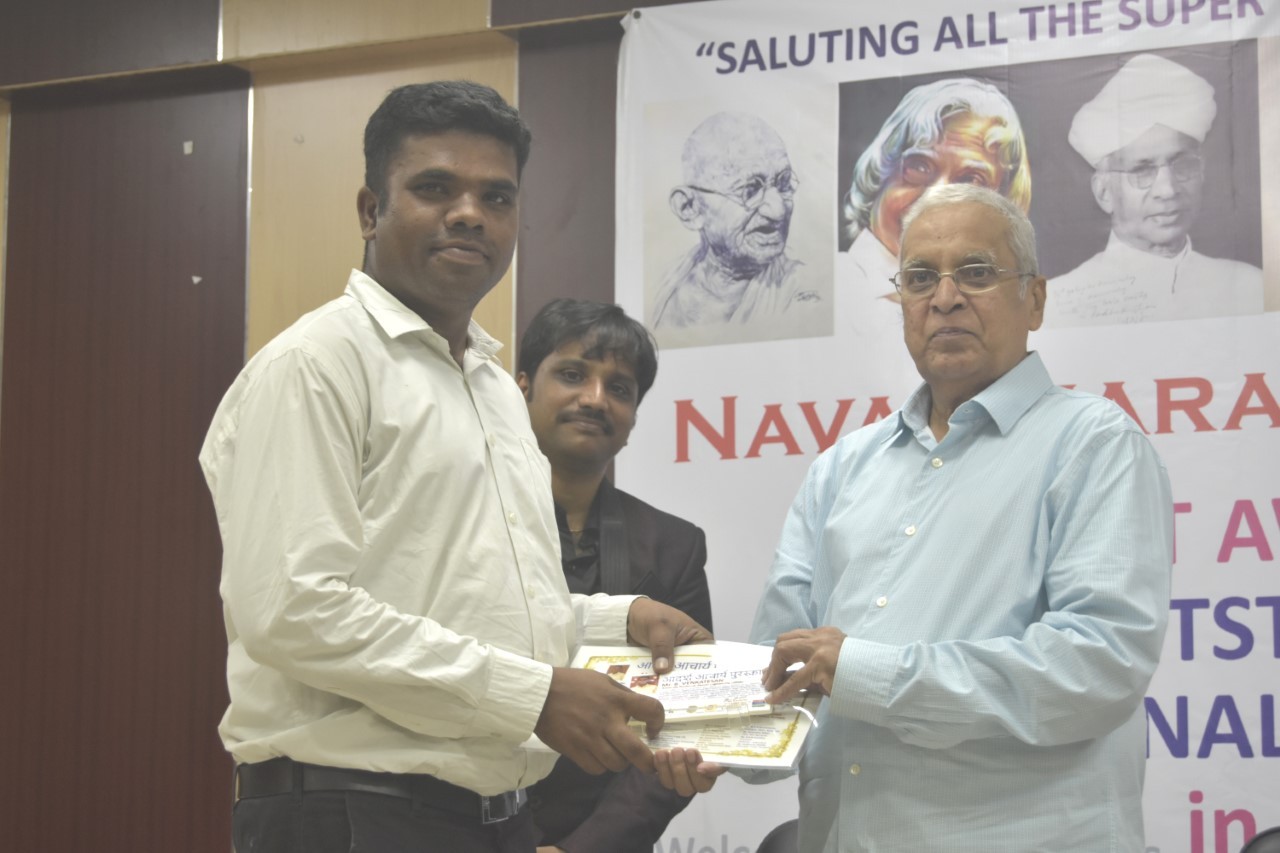
B VENKATESAN HOD/IT HAS BEEN presented WITH “TOP fifty administrators OR COORDINATORS OF IQAC ACROSS INDIA”

B Venkatesan, HoD/IT appreciated from AICTE Chairman for serving to Paavai Engineering faculty secure associate degree All Bharat Rank 1out of 2830 schools collaborating in office Day 2019.

EST NSS PROGRAMME OFFICER AWARDS (2018-19) AT Pakistani monetary unit UNIVERSITY LEVEL :
National Service theme (NSS) Pakistani monetary unit University, urban center appreciates all the attached engineering schools in state for his or her NSS activities and offers the award per annum. The NSS award perform for the year 2018-19 was conducted .

*Paavai ladies polytechnic institute
*Paavai polytechnic institute faculty
*Paavai Engineering faculty
*Paavai faculty of Engineering
*Pavai faculty of Technology
*Pavai Varam polytechnic institute faculty
*Pavai Arts & Science faculty for girls
*Paavai Teacher coaching Institute
*Paavai Vidhyashram CBSE international college
*Paavai admission Higher school

LinkedInprofile:

https://www.linkedin.com/company/paavai-institutions

Contact us:

Paavai establishments,Paavai Nagar,NH-44, Pachal,
Namakkal – 637018.

Official Mail : info@paavai.edu.in
Admission’s Mail : admissions@paavai.edu.in
HRM Mail : careers@paavai.edu.in

HRM web site : careers.paavai.edu.in

Phone : +91 4286 243038 / +91 4286 243058

Why should you learn to code in 2021?

We all are aware of the fact of how we are dependent on technology. Being technological illiterate is just something you do not want to be in this era. And the current trend for being literate about technology is to start “coding”. So why “coding” is so important in today’s world? Read on to find out why.

Top 5 reasons why everyone should learn coding

Gets a basics understanding of how technology works around us

The foremost and most important reason to learn to code is that it presents us with an aspect of how technology works. In today’s digital-oriented world, it is quite intriguing to find out how technology works. Besides, you will also be fluent in technology. You will become more aware of the technology.

Coding improves math and problem-solving skills

Mathematics is the building block of coding. So, when you learn to code it will be like an exercise for your brain. Coding involves computational thinking meaning breaking down complex things into simpler ones. Coding also sharpens your problem-solving skills.

Sharper future

Learning things never go in vain. Coding can open up the world with variable opportunities. Having technical knowledge can help you start your dream start-up. Coding may also lead you to a software development job at top mnc’s including Google, Facebook, Apple.

Whether you want to uncover the secrets of the universe, or you just want to pursue a career in the 21st century, basic computer programming is an essential skill to learn

Stephen Hawking

Higher pay grade

An average software developer earns more than around 100,000$ per year in the USA. That is a hefty amount of money you could make in software development. You can also work as a freelancer without the bondage of working under someone. Coding is one of the most valued skills currently in the market

Anyone can do it

Coding can be learnt even from the comfort of your home. It is something that does not require much study material to start. There are thousands of websites that provide to teach you for free. It can be learnt flexibly at your pace.

Race and class in Harper Lee’s ‘To Kill a Mockingbird’

‘To Kill a Mockingbird’ is a Southern gothic bestseller written by Harper Lee. The novel is narrated by Scout Finch, a six-year-old white girl who learns about life, people and the injustices prevalent in her society. Through her, Lee cleverly portrays issues such as gender, race and class discrimination in the fictional setting of Maycomb county, Alabama. Readers have speculated that the character of Scout was based on Lee’s own childhood experiences, wherein she combines the nostalgic elements with the political situation that she witnessed around her in America. Scout’s innocence and her defiance against the social hierarchies in Maycomb cuts a deeper meaning into the futility of these societal constructs.

Race is one of the issues that is evidently portrayed in the novel. Scout’s father Atticus Finch is a lawyer who defends the less privileged. He strives hard to stand by his moral compass and wishes to set an example for his children through his actions. One of the major events in the novel takes place when Atticus chooses to defend Tom Robinson, a black man accused of raping a white woman. The racist residents of Maycomb, as well as his family members are horrified and attempt hard to dissuade him. So much so, that even Scout and her brother Jem are subjected to verbal abuse by other children for his actions. During the trial, Atticus provides clear evidence to prove Tom’s innocence. Despite the impressive evidences, the extremely racist jury sentences him to jail where he later attempts to escape, but is shot and killed. We see that even the law is corrupted when it comes to rendering justice to innocent African Americans. Tom Robinson’s trial scene is monumental in proving the racial discrimination in America.

Calpurnia, the Finch family’s black maid plays a significant role in Scout’s life. Unlike most southern black characters, she is well- educated and is highly respected within the Finch family. Having lost her mother at a young age, Scout regards Calpurnia as a mother-like figure. One of the important moments in the novel is when Calpurnia takes Jem and Scout to the Black Church. Here, the children witness a different side of characteristics in Calpurnia as she interacts with the rest of her community. W. E. B. Du Bois refers to this as “double consciousness”; a phenomenon wherein a person exhibits two different personalities with the blacks and the whites. This can be seen as a defence mechanism to gain acceptance in a white supremist society due to their own internalised racism. Furthermore, despite being a novel that is concerned with issues like racism, it only portrays a subjective version of it. The black community are not given a voice of their own against this prejudice, which marginalises them within the text. If they are given a voice, it is usually to show gratitude to the good white people instead of raising their anger and frustration against the racial injustices in Maycomb.  

Social class prejudice is an important element highlighted in ‘To Kill a Mockingbird’. This can be understood clearly when Jem imagines ‘folks’ as being divided into four different kinds. “Our kind of folks don’t like the Cunninghams, the Cunninghams don’t like the Ewells, and the Ewells hate and despise the coloured folks.” (Lee, 249) Through Jem, Lee clearly explains the class hierarchical structure of Maycomb. It is a prejudice engrained in Maycomb which even dictates the relationship between children at school. But the novel also explains that the class system can eventually be dismantled. Initially, when Scout treats Walter Cunningham Jr differently, Calpurnia teaches her otherwise and makes her realise that a person’s financial background has nothing to do with their personality. When Cunningham Sr. arrives with a mob to lynch Tom Robinson, Scout’s innocence humbles him, saving Tom’s life briefly. Scout thus is able to achieve a small proportion of justice by disregarding the class system. Her reply “I think there’s just one kind of folks. Folks.” (Lee, 250) is an innocent yet powerful statement against the prevailing class structure in the society.

“You never really understand a person until you consider things from their point of view…”

Harper Lee

Aside from race and class, the novel also deals with other important issues like gender, disability, and sexuality. As Scout belongs to a middle-class white family, the primary concern that she personally deals with is sexism. She is portrayed as a tomboy, who is forced to confirm to the conventional idea of a girl. Over the years, readers have come up with multiple theories from the book pertaining to current social issues which proves that even after sixty years, it is still contemporary. Atticus’s advice that “You never really understand a person until you consider things from his point of view . . .” is a principle that could serve as a solution for all types of prejudices. And as mentioned by John Green, the “combination of nostalgia and criticism makes Mockingbird both endearing and enduring.” To Kill a Mockingbird is revolutionary in the fact that it brilliantly portrays multiple serious themes through the eyes of an innocent child.

Reference Links:

World that lives inside : In consideration to Mental Health .

“There is hope, even when your brain tells you there isn’t.”

John Green

A great quote by a great person , yeah I also believe it but do you ? .

Who am I ? Am I gaining weight , what if people doesn’t like me ?

What will happen when I tell her I am depressed ?

How do I know I’m unwell ?

How do I react if my relatives finds out ? .


These are some questions that we asked ourselves in our daily life . 5Ws and 1H (Why , who , how , what , when, where ) . Aristotle used them as an element in order to distinguish vocabulary. And what we are doing. is we are using them to explain one’s personality ,distinguish them and then despise them .


That’s how it starts , THE MIND GAMEPLAY . We differentiate , we compare , we make fun of others , we got jealous , we take harsh decisions, we judge others and we ask ourselves that where I was wrong .

Then , we start to get depressed , cry , nervous – breakdown , anxiety and so on……. This cycle is more complicated than Ojo – mojo friendship . Just kidding …

Let’s get in the topic .

Yes , we are talking about mental health . Which most of us ignore more than advertisements on TV’s . Like I said doesn’t matter . But what matters the most is the ignorance of your own health .

In present scenario , mental health takes a major role world wide and our mother land India is not far behind .


As , the pandemic takes a harsh troll on people of all over the world . Others died due to the confined places , loneliness , family members death and anxiety attacks caused by lack of oxygen and also one of the important aspect of mental illness.

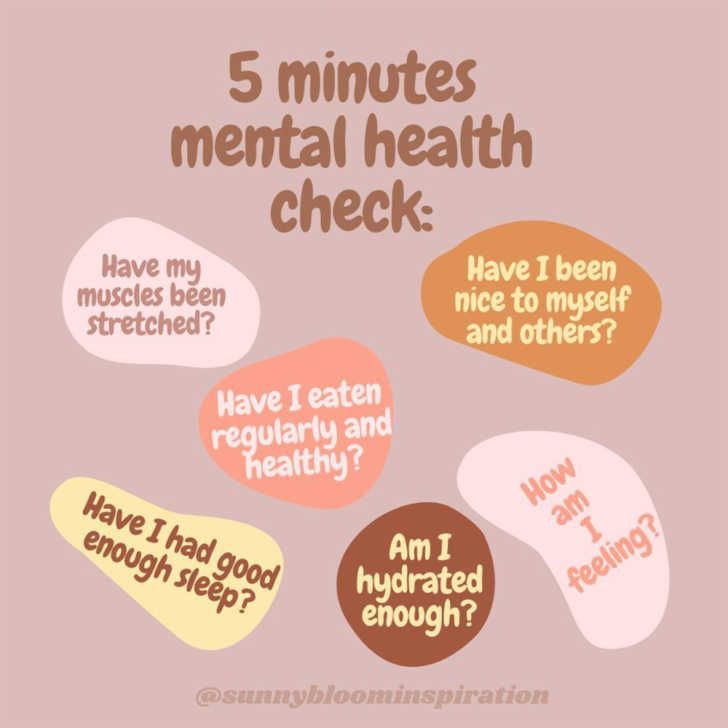
How we can check our metal health ? Are we mentally fit or not . Now , if you ask me I do have solution . And u want to know about one secret . It will only take 5 min. so now you don’t have to waste more time on search .


5 min. Mental Health Check :-

1. Have my muscles been streched ? 2. Have I been nice to myself and others?
3. Have I eaten regularly and healthy ?
4. Have I had good enough sleep ?
5. Am I hydrated enough ?
6. How am I feeling ?
And yes last but not the least be truthful to yourself .
And like this you get to know that you are mentally healthy or not .


Conclusion

Like physical health , mental health is equally important .
Small things can cause a lot of problems . So before things get out of your hands , grip it with a tight leash .

“You don’t have to control your thoughts. You just have to stop letting them control you.”

Dan Millman

Video Games an entertainer or life waster

Powerful Personal Computer Gamer Rig with First-Person Shooter Game on Screen. Monitor Stands on the Table at Home. Cozy Room with Modern Design is Lit with Pink Neon Light.

Games consist of three types I would say : Indoor games, Outdoor games and the third one which is Virtual games. The outdoor one is my favourite which consists of physical movements. These games consist of Cricket, Football, Badminton, Volleyball and various games. In these games one has to do movements like running, jumping etc. These games make one healthy and helps to keep the body fit and fine. Indoor games consist of chess, carrom, darts, board games which makes the mind relax and refresh from daily hectic routine. These are the games played with family ones. Virtual games consist of playing games on mobile devices, pc’s, laptop, virtual box, play stations and emulators. These are the latest games and devices which are invented. As day by day technology is developing these games are also being developed. First computer games were introduced then slowly slowly mobile games, play stations, virtual box etc.

As early as 1950, computer scientists were using electronic machines to construct relatively simple game systems, such as Bertie the Brain in 1950 to play tic tac toe, or Nimrod in 1951 for playing Nim. These systems used either electronic light displays and mainly as demonstration systems at large exhibitions to showcase the power of computers at the time. Spacewar! is considered one of the first recognized video games. Developed in 1961 for the PDP-1 mainframe computer at Massachusetts Institute of Technology (MIT) by a group of students there, it allowed two players to simulate a space combat fight on the PDP-1’s relatively simplistic monitor. The game’s source code was shared with other institutions with a PDP-1 across the country as the MIT students themselves moved about, allowing the game to gain popularity.

Video game replacing Outdoor games

Earlier years children playing outdoors were in large numbers. They all were in fit and fine conditions. As the years passed children gradually got addicted to video games rather than outdoor games. They find playing these games sitting in one place for hours interesting. Back in the year parents used to scold children to play less outdoors and stay indoors but as the time changed the words were also changed now parents scold children to go and play outside. I admit the fact that playing video games is also entertaining but still a certain amount of limit. These all limits are crossed now by these younger generations. No doubt this generation of children are smarter than older ones in technology, but they are not strong enough to face the real world physically. For them doing online work is easy but not physical work like helping their mother by doing daily chores. 

Problems of video games

As said earlier everything changes as the technology is advanced. Children nowadays may face many health and mental related problems due to video games. To play video one has to look at the screen continuously which might damage their eyes. Nowadays there are headphones available which are also gaming accessories. Children put on headphones and play games at full volume which may cause eardrum damage and can cause to deaf.

Once the game is started it is hard to make yourself away from it so one sits for longer hours a day in one position which might damage the spinal cord and body starts aching. The headache is also one of the problems caused by continuous staring at the screen of devices.

One of the popular types of video games is action games that consist of shooting and fighting. These games are popular from small children to teenagers. Continuous playing of these action games affects  mentally. The mindset of children has changed from calm to violence. They don’t even listen to their parents and will talk to them rudely. This is the situation in today’s generation.

Online gaming

Playing online is one of today’s trends. Many people play online games with friends and relatives. Children of smaller ages are too addicted to these games. These online games have business strategies to make money. They would firstly make you play the game for free but they will show new features or guns or characters which are paid which make the children think about buying it. This addiction of playing paid games is so strong that the children are ready to fight their parents if they won’t allow them to buy it.  One of the recent case studies is that the gaming addict boy from Punjab who secretly spent Rs 16 lakh of his parents’ money on the battle royale mobile game PlayerUnknown’s Battleground or PUBG is being made to work at a scooter repair shop.While gamers have been known to go to great lengths to prove their love for PUBG, the teen gaming addict from Punjab’s Kharar took the craze for the mobile game to another level after he spent Rs 16 lakhs from his father’s account to buy virtual ammunition in the game. The 17-year-old would take his father’s mobile phone on the pretext of online classes, but would access his father’s bank accounts to make in-app purchases for him and his friends.

At last I would say that “everything has its own limit so please do everything in limit and not to do anything wrong that would hurt others”. 

Is Telemedicine The Future Of Health Care ?

The novel corona virus pandemic has stretched health care system to the brink. Covid 19 might getting all the headlines but patient are getting sick from other health disease and that’s left doctors looking for other way to treat them while minimizing contact.

Telemedicine allows health care professionals to evaluate, diagnose and treat patients at a distance using telecommunications technology. Telemedicine is the use of electronic communications and software to monitor and treat patient in lieu of any in patient visit.

According to IBIS world, the industry revenue has grown 34.7% from 2014 to 2021. Despite the increase in revenue. Americans have been slow to adopt the practice according to 2017 report. Like all of American life, that changed with novel corona virus. The number of medicare patient using telehealth has increased.

Shares of zoom video communication are up more than 150% since the start of 2020.

Telehealth visits are booming as doctors and patient embrace distancing amid coronavirus crisis. Telemedicine is the primary means of care during the corona virus pandemic.

Benefits.

1. It allows a patient to schedule visits at their convenience.

2. The benefits of telemedicine are easy to see. Physicians can now reach patients who are halfway across the city or state. All you need is a strong internet signal and a smartphone, tablet or computer to connect with a medical professional.

3. You can wrap up a visit in 15 or 20 minutes, which is convenient for many patients. Often, you’ll spend the same amount of time driving to and from an in-person visit.

4. There is also a decrease in wait times.

Challenges.

1. The main limitation is the lack of a physical exam. Inability to do a surgical procedure.

2. A lot of time goes into adjusting to the technology and understanding how it works and most importantly managing the wifi network at times.

3. The biggest challenge is to convince the patient that the quality of care via this consult is no less than being done in person.

Telemedicine will be the permanent new normal. It has been obvious for years. It will continue to move healthcare delivery from the hospital or clinic into the home. A fair amount of consultations, approximately 80%, can be done through telemedicine. Today, there are plenty of instruments that allow a person to do an ultrasound and allow people to check their kidney, abdominal cavity or even the heart echo without physically being at the hospital. 

Types of inventory

Raw materials are inventory items that are used in the manufacturer’s conversion process to produce components, subassemblies, or finished products. These inventory items may be commodities or extracted materials that the firm or its subsidiary has produced or extracted.

Work-in-process (WIP) is made up of all the materials, parts (components), assemblies, and subassemblies that are being processed or are waiting to be processed within the system.

A finished good is a completed part that is ready for a customer order. Therefore, finished goods inventory is the stock of completed products. These goods have been inspected and have passed final inspection requirements so that they can be transferred out of work-in-process and into finished goods inventory.

Transit inventories result from the need to transport items or material from one location to another, and from the fact that there is some transportation time involved in getting from one location to another. Sometimes this is referred to as pipeline inventory.

 Buffer inventory used to protect against the uncertainties of supply and demand, as well as unpredictable events such as poor delivery reliability or poor quality of a supplier’s products. These inventory cushions are often referred to as safety stock. Safety stock or buffer inventory is any amount held on hand that is over and above that currently needed to meet demand.

Anticipation inventory is when , firms will purchase and hold inventory that is in excess of their current need in anticipation of a possible future event. Such events may include a price increase, a seasonal increase in demand, or even an impending labor strike.

Our first prime minister

Pandit Jawaharlal Nehru was the first Prime Minister of India. He was quite popular among children and they called him Chacha Nehru. He was born on 14th November 1889 in Allahabad. He was the son of Swarup Ran (mother), and Motilal Nehru (father). Both his parents were attached and involved with freedom movements. He studied theosophy in his childhood and got into the Theosophical Society at age thirteen. Nehru’s theosophical interests led him to the study of the Buddhist and Hindu scriptures which later culminated in his book “ The Discovery of India”. 1912, Nehru enrolled himself as an advocate of the Allahabad High Court and tried to settle down as a barrister but he was not interested in law.
In 1912, Nehru attended an annual session of the Indian National Congress in Patna and joined Indian politics. He took an active part in movements like Home Rule Movement, Non-Cooperation Movement, and many more. In 1919, while he was traveling, he heard General Dyer talking about the Jallianwala Bagh Massacre. Dyer mentioned how satisfied he was after that incident. That’s when Nehru decided to get freedom from the Britishers.
He was sent to jail almost 9 times and there he wrote many books like his autobiography, “Towards Freedom”, “Letters from a father to his daughter”, “ Discovery of India”, “Glimpses of World History” and more. He was the right hand of Mahatma Gandhi in Indian Independence. They were an active part of the Civil Disobedience Movement, Salt Satyagraha, Quit India Movement. Nehru became the first Prime Minister of Independent India. Later he worked with Sardar Patel to unify India. In 1950 India became Republic. In 1955, he received the Bharat Ratna for his efforts on Indian industrialization. His attire- the jacket with a rose in the pocket and a Nehru cap is his style statement.

All about Rabindranath Tagore

Rabindranath Tagore is India’s first noble laureate who has bestowed all the fellow Indians and the people in the world, the art of literature. “Jana Gana Mana” the song written by Tagore is the national song of our country. He was a poet, writer, composer, philosopher, and painter. He was born on 7th May 1861 in Calcutta. His father was Debendranath Tagore and his mother Sharada Debi. Tagore was quite keen on music and literature from an early age. He never attended any physical school as his father believed in the theory of “Free flow of education”.

At the age of 11, Tagore started living in Shantiniketan with his father where he started his journey of writing. In 1873, he wrote six poems on Sikhism and completed several written works by 1877. In 1878 he was sent to England to study law but he preferred reading Shakespearean plays and dramas. He was quite intrigued by art and literature. From 1880, he started writing dramas, short stories, novels, poetry, and songs. Gurudev was also an acclaimed musician since his childhood. He composed so many beautiful songs that he has his separate genre, “Rabindrasangeet”. In 1910, he wrote “Gitanjali” for which he received the Noble Prize in literature in 1913. Tagore was the first Indian to receive a noble prize.

Despite the fact that Tagore was a patriot, he actually enjoyed and was inspired by the style of education that the Britishers provided. Therefore with the noble prize money, he built up the famous “Visva Bharati University” in Shantiniketan where he focused more on practical and artistic education. In 1915, Mahatma Gandhi met him in Shantiniketan. Gandhiji gave Tagore the title of “Gurudev”. During the Independence movement, Tagore used his tool, his pen, and wrote several patriotic poems for his fellow Indians. Not only did he write the national anthem of India but also of Bangladesh and Sri Lanka. Gurudev Rabindranath Tagore devoted all his life to the upliftment of education.

Lady warrior

Rani Laxmi Bai was named Manikarnika Tambe and was nicknamed as Manu.She is also known as Jhansi Ki Rani, the queen who was fought against the British without any fear. She was born on 19th November 1828, in the town of Varanasi. Her father was Moropant Tambe and her mother Bhagirathi Sapre. Her father was the commander to the King of Peshwa, Bajirao of Bitoor district. The Peshwa called her “Chhabili” for her playful nature. She was educated at home and learned sports with her friends Nana Sahib and Tatya Tope like martial arts, horse riding, sword fighting, and more. She always preferred traveling on the horseback to using a palanquin. Her horses included Sarangi, Pavan, and Baadal.

She was married to the King of Jhansi and that’s when she became Rani Laxmi Bai from Manikarnika. Later she adopted a boy and named him Damodar Rao. After the death of the King, the British Raj officers applied the Doctrine of Lapse, a policy according to which if any Indian ruler dies without leaving a natural male heir, his kingdom would automatically pass over to the British. As a result, the Britishers wanted to claim Jhansi to which Rani Laxmi Bai cried out “Main apni Jhansi Nahi doongi”. That is when the fight against the Britishers started. She would tie her kid around her chest and fight on horseback.

There are novels, articles, and movies made in honor of her bravery. Even Netaji named the women regiment of the Indian army as Rani Jhansi regiment. The famous statue of Rani Laxmi Bai. She is an inspiration for all her countrymen.