

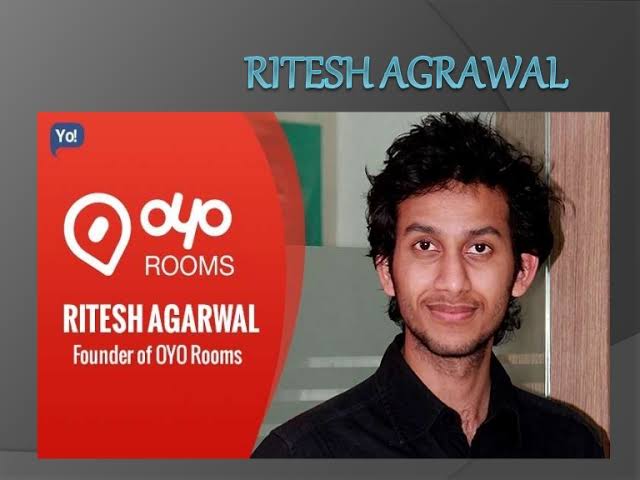
So we all know about OYO Rooms, also known as OYO Hotels and Homes, which is an Indian multinational chain of hospitality leased and franchised hotels, homes, and living spaces. But what many of us don’t know about OYO is; the man behind the idea- Ritesh Agarwal.
Ritesh Agarwal was born in Bisham Cuttak, Rayagada(district), Odisha. Ritesh Agarwal is the Founder and CEO of OYO Rooms. In 2020, he is known as the 2nd youngest billionaire in the world. Also, he received awards such as the Business World Young Entrepreneur award and Thiel Fellowship.
From where did he got this idea?
For the answer let us look into his past life.
Ritesh always has a keen interest in software. He started coding when he was just 8yrs old. After 10th grade, in 2009, he decided to go to Kota for IIT. In no time he figured out that Kota was anything but a place where one could learn coding. So he puts his dream of coding in the backseat and started attending classes at Bansal tutorials. In his free time, he used to chill and travel around a lot.
Ritesh also has written a book called India. Engineering Colleges: A Complete Encyclopedia of Top 100 Engineering Colleges. That book was a great success on Flipkart and sold out in a while.
At the age of 16, he was selected to be a part of the Asian Science Camp held at the Tata Institute of Fundamental Research (TIFR) in Mumbai.
During that time; Ritesh used to travel a lot and stayed in budget hotels and PG. He also used to travel to Dehli so often to attend events and conferences to meet entrepreneurs because at that time he couldn’t afford the registration cost.
In 2011, he moved to Delhi to start up something of his own and also to prepare for SAT for further studies in the U.S.
Sat never happened. And that time, he used to meet and read about entrepreneurs, start-ups, business ideas, and especially AirBnB.
When he used to travel, he had seen that the budget hotels in India didn’t meet the basics of budget travelers. So in 2012, he started his first venture- Oravel Stays. It was an aggregator of beds and breakfast stays all over India. He secured his funding of 30 lakhs from VentureNursey.
He also presented his idea at Thiel Fellowship. He was listed among the top ten winners who received a sum of $100,000 and as well as guidance and other resources.
Unfortunately, due to hard luck, the company was not able to pick the pace in the market.
This is when Ritesh thought that the biggest problem of traveling is to find good, affordable, and most importantly available rooms. This idea motivated him to create an online platform where one can find all the information available about good, and budget places.
In 2013, after tweaking his business model, he relaunched Oravel Stays as OYO Rooms. In which OYO stands for On Your Own.
At present OYO has over 13,000 franchised and leased hotels, and over 450,000 rooms, adding 64,000 rooms every month, globally.
OYO App has been downloaded over 50 million-plus times and rated amongst the best-rated apps on the Google play store.
In 2020, the market valuation of OYO was 8 billion dollars.
Month: June 2021
India’s Geographical Blessings
Introduction
The Current World powers have always had some sort of geographical shields protecting them. India is no exception and is blessed by many natural geographical factors which has effectively shielded the country from various external forces. The Himalayas, Indian Ocean and the Thar desert are some of the of regions which act as a shield for India.
The Himlayas

The Himalayas are largest and tallest mountain ranges in the world. Many of the world’s tallest peaks like Mt.Everest, K2, Kanchenjunga, Nanda Devi are situated in this majestic range. The Himalayas stretch from the edges of the Hindu Kush mountains of northeastern Afghanistan, through the Indian states of Jammu & Kashmir, Ladakh, Himachal Pradesh, Uttarakhand, Sikkim and Arunachal Pradesh and countries like China(Tibet), Nepal, Bhutan and Northern Myanmar. The Himalayas have historically acted as a buffer between India and China and was even considered as a factor which prevented Genghis Khan’s ferocious Mongol Armies from invading India. During the 1971 Bangladesh Liberation war, India chose to declare war on Pakistan in winter as it was almost impossible for China to mobilize their armies during the brutal Himalayan winter. India has fought many wars with it’s neighbor Pakistan in the region to maintain the status quo as both understand how vital control over this region is.
The Thar Desert
The Thar desert in Rajasthan acts as a natural border between India and Pakistan. The scorching desert and sand means it’ll be difficult for Pakistan to maintain supply lines and logistics incase of an invasion of India. This applies for India as well but it would be far easier to defend than to attack through this frontier.
The Seas
India is a peninsula, as it is surrounded by water on three sides. The Arabian sea to the west, Indian ocean to the south and the Bay of Bengal to it’s east. All these water bodies ensure India will be well protected by a natural barrier as it would require an external navy to invade, ensure naval supremacy so a land invasion is possible which is an almost impossible task given India’s naval strengths.
MAHATMA GANDHI (1869)
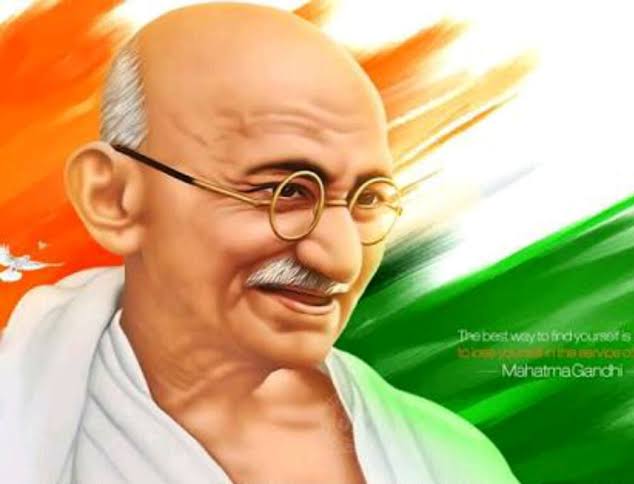
Mohandas Karamchand Gandhi (2 October 1869- 30th January 1948), Popularly known as MAHATMa Gandhi or Bapu (Father of Nation ),he was the pre-eminent leader of Indian nationalism in British -ruled India . Employing non-violent Civil disobedience, Gandhi led India to independence and inspired movements of non-violence ,civil rights and freedom across the world.
He is known in India as the Father of Nation ;his birthday, 2 October, is celebrated as Gandhi Jayanthi, a National holiday and world -wide as the international Day of Non-violence .world-wide Gandhi’s philosophy was not theoretical but of pragmatism. Asked to give messages to the people, he responded, “My life is my messages “.
Civil rights movements in South Africa (1893-1914)
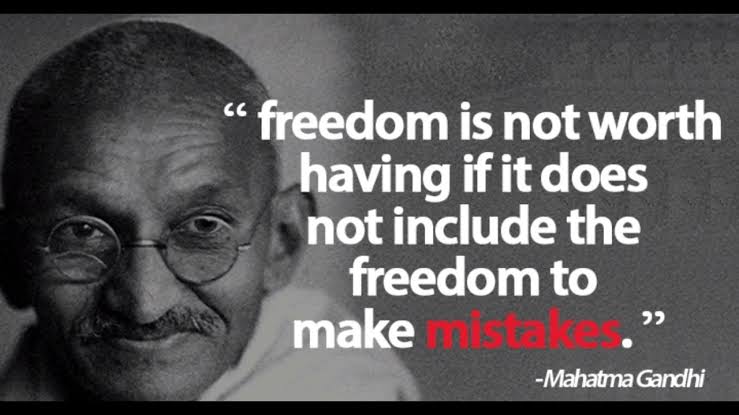
Gandhi was 24 when he arrived in South Africa to work as a legal representative for the Muslim Indian Traders based in the city of Pretoria.He spent 21 years in south Africa, where he developed his political view,ethics and political leadership skills.
In South Africa, Gandhi faced the discrimination directed at all coloured people. Heels thrown off a train at Pietermaritzburg after refusing to move from the first -class though he had a first-class ticket.
Struggle for Indian Independence (1915-47)🇮🇳🍚

In 1915,Gandhi returned to India permanently . He attained an international reputation as leafing Indian nationalist ,theorist and organizer . He joined the Indian National congress and was introduced to Indian issues, politics and the Indian people primarily by Gopala Krishna Gokhale. Gokhale was a key leader of the Congress Party best known for his restraint and moderation,and his insistence on working inside the system .Gandhi took Gokhale’s liberal approach based on British Whiggish tradition and transformed it to make it look wholly Indian.
Champaran and kheda

Gandhi’s first major achievements came in 1918 with the Champaran and Kheda agitations of Bihar and Gujarat. The Champaran agitation pitted the local peasantry against their largely British landlords who were backed by the local administration. The peasantry was forced to grow Indigo, a cash crop whose demand had been declining over two decades, and were forced to sell their crops to the planters at a fixed price
Khilafat movements
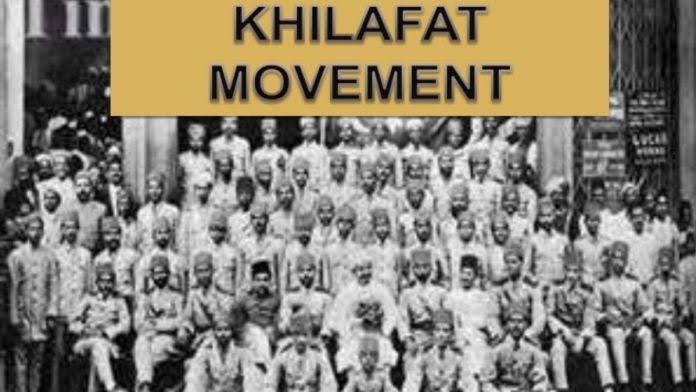
In 1919 Gandhi ,with his weak position in congress, decided to broaden his base by increasing his appeal to Muslims. The opportunity came from the khilafat movement, a worldwide protest by Muslims against the collapsing status of the caliph,the leader of their religion. His success made him India’s first national leader with a multicultural base and facilitated his rise to power within congress,which had previously been unable to reach many Muslims. In 1920 Gandhi became a major leader in congress.
Gandhi always fought against “communalism “,which pitted Muslims against Hindus in politics, but he could not reverse the rapid growth of communication after 1922.
Salt Satyagraha(Salt March)🍚🧂
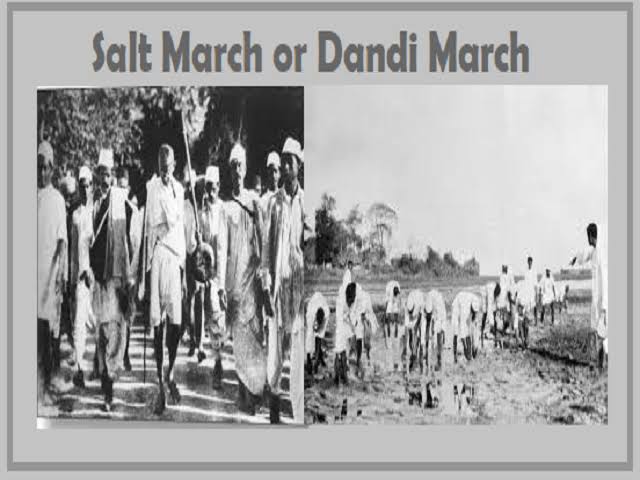
Gandhi stayed out of active politics and,as such,the limelight for most of the 1920s. He focused instead on resolving the wedge between the swaraj party and the Indian National Congress, and expanding initiatives against untouchability , alcoholism,ignorance and poverty. He returned to the fore in 1928.In the preceding year, the British government had appointed a new constitutional reform commission under sir John Simon, which did not include any Indian as its member.
Gandhi then launched a new Satyagraha against the tax on slat in March 1930.This was highlighted by famous Salt March to Dandi.
Quit India Movement🏳⚪
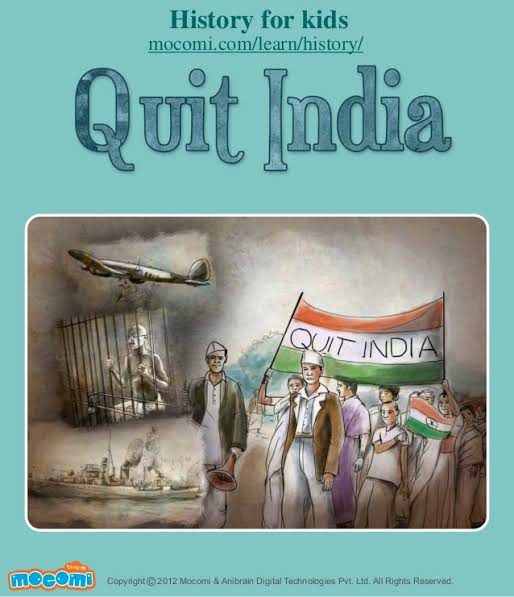
Quit India became the most forceful movement in the history of struggle,with mass arrests and violence on an unprecedented scale.
In 1942 although stillb committed in hid efforts to “launch a non-violent movement “,Gandhi clarified that the movement would not be stopped by individual act of violence, saying that the ” ordered anarchy ” of “the present system of administration ” was “worse than real anarchy “.He called on all congressmen and Indians to maintain discipline via ahimsa,and Karo ya maro (“Do or die”) in the cause of ultimate freedom
Non-violence🙅♀️

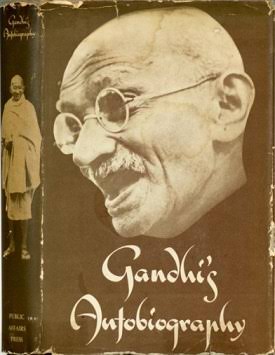
Gandhi explains his philosophy and way of life in his autobiography “The story of My Experiments with Truth “.
Literary works📝✍📖

Gandhi was a prolific writer. One of Gandhi’s earliest publications, Hind Swaraj,Published language; Indian Opinion while in South America and, Young India, in English, and Navajivan ,a Gujarati monthly, on his returns to India. Later,Nakajima was also published in hindi. In addition, he wrote letters almost every day to individuals and newspapers.
Gandhi also wrote several books including his autobiography, “The Story of My Experiments with Truth “.
Rabindranath Tagore is said to have accorded the title ” Mahatma” to Gandhi.
World Farm Animals Day🐐🐓

Gandhi’s birthday is chosen as a commemoration for the billions of non-human animals that are slaughtered by the human farming industry each year. The practice started in 1983.
Assassination👨🏭


On 30 January 1948,just five months of coyntry’s Independence, the Mahatma was on his way to his usual prayer meeting in the Birla Mandir in the capital city. His smiling face revealed only a divine serenity. Suddenly a middle-aged man named Nathuran Godse entered his path and directly facing him fired three shots point and blank at the 79 year old disarmed leader. Dignitaries Jawaharlal Nehru declared: “The lights has gone out of our lives”.
It is nearly six decades that Gandhiji departed from us,but Gandism is still very much alive and kicking in the national psyche of India.
Current impact within Indiai🇮🇳
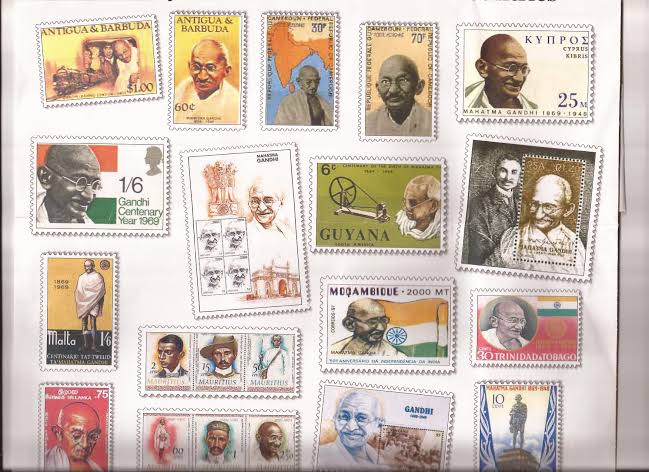
Gandhi’s birthday, 2 October, is National holiday in India, Gandhi’s date of death death,30 January, is commemorated as a Martyrs’ Day in India.
There are two temples in India dedicated to Gandhi,One is located sambalpur in orissa and the other at Nidaghatta village nera kadur in chikmangalur district of Karnataka. The Gandhi Memorial in Kanyakumari resembles central Indian Hindu temples and the Tamukkan or Summer palace in Madurai now houses the Mahatma Gandhi Museum.


Euthanasia: Should it be legalized?
Life is the most valuable and opulent gift that God has ever bestowed onto the inhabitants of our world. And we have qualities that no other creature or species possesses. Some people, on the other hand, are not so fortunate to exist and endure because of serious and fatal diseases, unbearable torment, endless miseries and pain that they cannot tolerate, and so they choose to terminate their lives. Euthanasia is the outcome of this wish.
Euthanasia is the practise of ending one’s life and choosing death in order to alleviate oneself of pain and suffering. Voluntary euthanasia is lawful in some countries, such as the United States and several Canadian provinces, but non-voluntary euthanasia is always deemed murder and is thus prohibited elsewhere. The question is whether or not it is justified and feasible to consider Euthanasia to be legal or unlawful.
Depending on the situation and surrounding conditions, this could have both advantages.
It is legal and so permissible as follows:
1. Death with dignity: Those who are in excruciating pain look forward to death because they prefer to die with dignity rather than in agony. Nobody knows how much suffering they are in, thus it is understandable if they seek death to be free of it.
2. Government regulation: It is possible that if Euthanasia becomes legal, it could be exploited in harmful and disruptive ways by many people, but I believe that if stringent regulations governing its application are enacted, it will be managed and administered securely for those who need it.
3. Patient’s choice: It may also be considered a patient’s will if he or she begs to die, believing that there is nothing more to live for but to die and be at peace for the rest of one’s life.
The words and classifications associated with euthanasia
A. Physician Assisted Suicide (PAS) is a type of assisted suicide in which a doctor deliberately provides medical help to a patient who is suffering from unbearable pain and suffering. The doctor conducts a thorough examination of the patient’s medical state and selects the most painless and effective manner of death.
B. Voluntary Euthanasia occurs when a person decides to end their life with the assistance of another person. It necessitates complete understanding of the topic and procedure.
C. Non-Voluntary Euthanasia is when someone else, such as a family member or a partner, makes the decision to end a person’s life. When a person is in a persistent condition of unconsciousness and is unable to be treated, this occurs.
D. The term “active euthanasia” refers to a situation in which a doctor can immediately end a person’s life. This procedure is also known as ‘Positive Euthanasia’ or ‘Aggressive Euthanasia.’ The doctor may intervene directly and suggest a painless manner of ending a person’s life.
E. Passive Euthanasia, also known as “Negative Euthanasia” or “Non-Aggressive Euthanasia,” is the deliberate killing of a person by withholding necessary and vital care, food, or drink. It’s a deliberate stoppage that also entails the removal of artificial life support systems. It is a more pleasant procedure than the active method and is called a slow killer.d a person’s life. This procedure is also known as ‘Positive Euthanasia’ or ‘Aggressive Euthanasia.’
Conclusion
Today, there is a debate going on all over the world over its legal status, as well as ethical and moral difficulties. Those in favour of Euthanasia show some zeal in defending their ideas after seeing that the law isn’t ill-equipped to re-evaluate earlier unbending attitudes regarding the sanctity of life . Euthanasia opponents argue that there are good, ethical, and moral commitments that cannot be ignored. They argue that no one, including the individual, has the authority to end a person’s life.
Euthanasia may be beneficial for someone who is in excruciating pain, but it may also be dangerous if used improperly, thus it is critical that it be carried out under strict supervision and in accordance with the rules. In any case, the ramifications of the euthanasia connotation should be re-examined at regular periods, based on societal growth in terms of providing medical treatment to the handicapped and those who cannot be treated and will inevitably die.
E – Waste : the Digital Dark Side

We live in a technology-driven world, and technology is rapidly evolving. Mobile phones have been replaced by smart phones, televisions have been replaced by LEDs and LCDs, and desktop computers have been replaced by laptops and tablets. When a new model of a product is introduced to the market, the previous one quickly becomes obsolete, and outmoded items are often discarded as waste. These unwanted, broken, or obsolete electrical goods have reached the end of their useful life. Those who have reached the end of this are known as e-waste, in which some electronic products are included for quitting, such as computers, mobile phones, TVs, washing machines, refrigerators, and so on.
Millions of tonnes of e-waste are produced annually in rich countries; worse, e-waste from illegal countries such as Japan, Malaysia, Ghana, Nigeria, Pakistan, and India, as well as developed countries such as the United States and Japan, should be dumped in developing countries. It used to be like way. In developed countries, the expense of treating e-waste is significant. This is due to the relatively low cost of shipbuilding, which encourages garbage shipment to underdeveloped countries..
Local residents, industry owners, and labourers are allowed to collect valuable goods from this garbage according to their needs in underdeveloped countries, where waste is put into the underground, consuming and ill-equipped recycling facilities. The majority of them amass important information in order to leave the others behind. Acid baths and electrical burns are employed to recover valuable components. These tactics, in turn, cause major health issues and may harm individuals who participate in them.
Hazardous metals such as lead, mercury, arsenic, copper, cadmium, nickel, zinc, gold, silver, and beryllium are likely utilised in monitors such as circuit boards, electric parts, mono boards, and cables.
These metals are known to emit toxic poisons into the environment through soil, causing health problems in both animals and humans. Chemicals can likely be generated on land, resulting in pollution of both land and water. Important components of e-waste, polychlorinated biphenyl and polybrominated defanel ether have a hazardous side effect.
They are the primary contributors to ozone depletion. Food chains and food traps also store these chemicals, posing a major hazard to all animals on the earth.
In fact, the growing environmental footprint of e-waste is a source of concern. Consumers and producers are jointly responsible for managing the growing amount of e-waste. The majority of electronic materials include reusable components. Metals such as copper, aluminium, lead, and iron are found in this reusable component. To properly remove this substance from trash materials, an unique eco-friendly process should be created.
Recycling models must be promoted by both manufacturers and approved recyclers. Producers can join the recycling chain by offering a collection service and, in comparison to the unorganised sector, can increase their buyback offer. Consumers have a natural tendency to derive economic value from rubbish, and this is where financial incentives to participate in the formal recycling system can be provided. They should be urged to get rid of all of their electronics and electronic items. Many corporations, including as Dell, Apple, and HP, have launched recycling programmes. When it comes to trash management, the 3R concept, which entails reuse and recycling, can be quite useful.
In the Indian context, E-Parisissa is a fantastic effort for e-waste management. Bangalore generates 8000 tonnes of computer garbage each year, which is subsequently sold to scrap merchants. E-Parisia, an environmentally friendly recycling facility on the city’s outskirts, is India’s first e-waste recycling facility. Its goal is to reduce pollution and landfill waste by recycling valuable metals, plastic, and glass in an environmentally acceptable way.
Digital Life
Education is the important part of our life to be an independent person education is the first key to achieve the success. But ever wonder how due to Covid19 so many dreams got destroyed whole world is moving Digital. The villages where government schools were established for the poor children their RIGHT TO EDUCATION how they will continue their education in this present situation. They don’t have smart phones, tablets, PC how they will get the privilege opportunities. We people are lucky to live a life where in the lockdown scenarios also we are able to continue our education. Indeed digital world is strong many lives became easy now due to technology platforms like zooms, google meet playing an important roles for education , students from kindergarten started their education online. It’s affecting the life of the children from the poor family due to lack of opportunities they have to discontinue their education . People from the middle class, poor class families became unemployed lost their jobs due to Covid19, Only one thing they have question now “ how to run their family ?” . Mostly people working from home and earning money chilling Netflix .But in this situation also many people started working hard risking their life , so that their family can eat one time meal and even the children also started working to support their family . Whole world is about privilege opportunities , fighting competitions to achieve dreams so that everyone can live peaceful , searching for perfect life where world rotating with scars, only one dream they started watching the poor parents dreaming their children going to school carrying books and living their dreams but due to the situation they lost the opportunities .
Digital education is fine for privilege families but think about the poor families, don’t you think some steps should be taken immediately for their betterment for the poor kids who also want to set in the digital world , many places in India don’t have electricity , no internet connection then how they will survive in the digital world. Government mid day meal also organized for the poor kids even they lost their one chance. We all ordering food from Zomato and Swiggy living our best life . Think about the small kids they lost their faith to live their dreams and even their health situation is weak to survive in this way . Many people got positive in Covid19 due to their state because they can’t afford the life living in lockdown and lack of medical facilities in their villages. In the city life mostly people treated in hospitals and also in home online appointment and medicines facilities are available too .
This is how digital life background in the environment but for some people they can’t get close to it .
Written by : Rasmita Dey
History of Unix
Origins of Unix
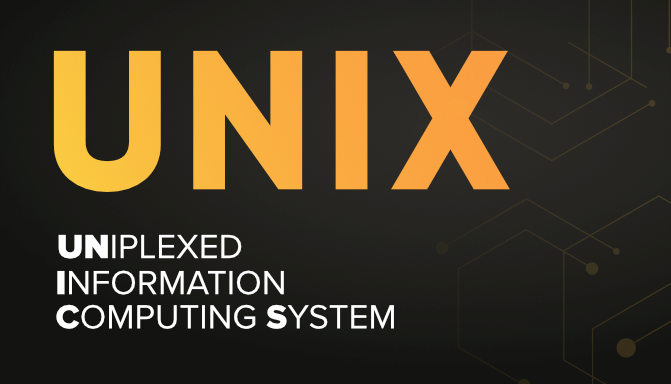
UNIX development was started in 1969 at Bell Laboratories in New Jersey. Bell Laboratories was (1964–1968) involved on the development of a multi-user, time-sharing operating system called Multics (Multiplexed Information and Computing System). Multics was a failure. In early 1969, Bell Labs withdrew from the Multics project.
Bell Labs researchers who had worked on Multics (Ken Thompson, Dennis Ritchie, Douglas McIlroy, Joseph Ossanna, and others) still wanted to develop an operating system for their own and Bell Labs’ programming, job control, and resource usage needs. When Multics was withdrawn Ken Thompson and Dennis Ritchie needed to rewrite an operating system in order to play space travel on another smaller machine (a DEC PDP7 [Programmed Data Processor 4K memory for user programs). The result was a system called UNICS (UNiplexed Information and Computing Service) which was an
’emasculated Multics’.
Unix Development
The first version of Unix was written in the low-level PDP-7 assembler language. Later, a language called TMG was developed for the PDP-7 by R. M. McClure. Using TMG to develop a FORTRAN compiler, Ken Thompson instead ended up developing a compiler for a new high-level language he called B, based on the earlier BCPL language developed by Martin Richard. When the PDP-11 computer arrived at Bell Labs, Dennis Ritchie built on B to create a new language called C. Unix components were later rewritten in C, and finally with the kernel itself in 1973.
Since it began to escape from AT&T’s Bell Laboratories in the early 1970’s, the success of the UNIX operating system has led to many different versions: recipients of the (at that time free) UNIX system code all began developing their own different versions in their own, different, ways for use and sale. Universities, research institutes, government bodies
and computer companies all began using the powerful UNIX system to develop many of the technologies which today are part of a UNIX system. By the late 1970’s, a ripple effect had come into play.
Key Factors
1969 The Beginning
The history of UNIX starts back in 1969, when Ken Thompson, Dennis Ritchie and others started working on the “little-used PDP-7 in a corner” at Bell Labs and what was to become UNIX.
1980 Xenix
Microsoft introduces Xenix. 32V and 4BSD introduced.
1983 System V
Computer Research Group (CRG), UNIX System Group (USG) and a third group merge to become UNIX System Development Lab.
AT&T announces UNIX System V, the first supported release. Installed base 45,000.
1991
UNIX System Laboratories (USL) becomes a company – majority owned by AT&T. Linus Torvalds commences Linux development.
Solaris 1.0 debuts.
1998 UNIX 98
The Open Group introduces the UNIX 98 family of brands, including Base, Workstation and Server. First UNIX 98 registered products shipped by Sun, IBM and NCR. The Open Source movement starts to take off with announcements from Netscape and IBM. UnixWare 7 and IRIX 6.5 ship.
2007
Apple Mac OS X certified to UNIX 03.
Sotorasib, the new fighter for lung cancer:
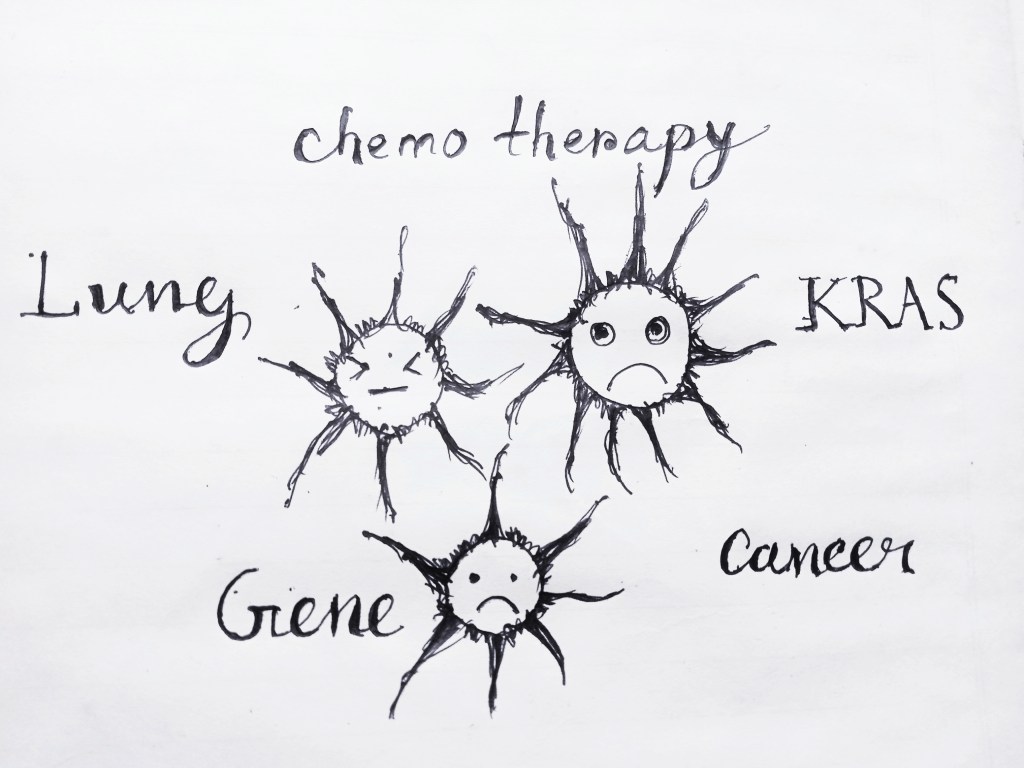
Lung cancer, which is considered as the deadliest cancer, takes lakhs of lives every year.
Sotorasib, the new Amgen drug has bring a new ray of hope in this field.
U.S. food and administration has approved this drug for small cell lung cancer, which will be sold under the brand name Lumakras. Patients having small cell lung cancers with the KRAS mutation, non-small lung cancer with KRASG12C mutation, and some colorectal and other type of cancers will be benefitted via this; because chemotherapy and other medicines didn’t show expected results in treating these.
The company officials assured that the drug can have U.S. list price of $17,900 per month
.
|Ways of acquiring Mate|
How does one gets married? Normally people get married by publishing matrimonial ads in newspapers, online sites, or with the help of relatives who acts as mediators. This was about the modern industrial society, but the tribal society is unique, so their ways of getting married are also unique. Tribes have nine different ways of acquiring a mate.
In this article, I will show the different ways of acquiring a mate prevalent in tribal society.
Marriage by capture– When a man snatches away a woman from her village and marries her, it is called marriage by capture. This form of marriage is most popular among the Naga who invade villages and capture girls.
Marriage by exchange- Under this marriage, two households exchange women with each other and thus avoid paying the bride price. Bride price is the payment made by the groom’s side to the bride’s side to marry her. This form of marriage is found all over India and is also found among the non-tribals.
Marriage by purchase- In this form of marriage bride price is the central theme. Among the Munda, Ho, Santhal it is the most prevalent. The high bride price has the worst consequences as is seen in the case of the Ho tribe of Chotanagpur where to escape the bride price many youth resorts to marriage by capture or remain unmarried.
Marriage by elopement- It is a peculiar feature of tribal India. Anthropologists believe this kind of marriage has emerged as a result of boys and girls shedding their traditional submissiveness. If the parents’ consent is not forthcoming, they resort to elopement and get married.
Marriage by service- In this form of marriage the groom serves in the house of the bride as suitor-servant and marries her after a lapse of few years. they have to work in the bride’s household for three years and have to fulfill all the responsibilities of a son. This form of marriage is a way to avoid payment of bride price completely or minimizing it through service rendered by the prospective groom at the bride’s residence. For example, marriage by service is found among the Gond Baiga, Birhor.
Marriage by intrusion- Here a girl desirous of marrying an unwilling young man thrust herself on the groom and his parents. She tries to serve her prospective in-laws and can be tortured in return. If she persists in her intentions and her endurance lasts for a considerable period she is finally accepted as a daughter-in-law.
Marriage by trial- In this form of marriage, the prospective groom has to prove his prowess before he can claim the desired girl. Thus he is required to undergo a trial.It is most popular among Bhils. During Holi festival, young men and women perform a folk dance known as ‘gol gadhedo’ around a pole or a tree to the top of which there is a coconut and jaggery tied. The girls make a ring around the tree and the boy to marry the girl has to break the ring and eat the coconut and jaggery after climbing the tree. In all this, he is beaten up, and inspite of all this if he succeeds he gets the right to demand any girl from the group as his wife.
Marriage by mutual consent- In this formalities of marriage are arranged by parties concerned through the process of mutual consent and consultation. This practice is result of tribal contacts with Hindus, Christians, etc.
Marriage by probation- Under this the prospective husband and wife are expected to live together for some time for marriage in the bride’s house. If they like each other and willing to marry, elders arrange their marriage.Otherwise, the man has to pay compensation to the girl’s parents. This form of marriage can be called a primitive version of the modern practice of courtship. It is prevalent among Kuki tribes of Andhra Pradesh.
Hence this was the nine different ways of acquiring mate found among the tribals. These kind of marriages is in contrast to the marriages in mainstream society. These interesting ways of getting married make the tribes even more unique.
MAHATMA GANDHI – Mohandas Karamchand Gandhi
MAHATMA GANDHI (1869)Mohandas Karamchand Gandhi (2 October 1869- 30th January 1948), Popularly known as MAHATMa Gandhi or Bapu (Father of Nation ),he was the pre-eminent leader of Indian nationalism in British -ruled India . Employing non-violent Civil disobedience, Gandhi led India to independence and inspired movements of non-violence ,civil rights and freedom across the world. He is known in India as the Father of Nation ;his birthday, 2 October, is celebrated as Gandhi Jayanthi, a National holiday and world -wide as the international Day of Non-violence .world-wide Gandhi’s philosophy was not theoretical but of pragmatism. Asked to give messages to the people, he responded, “My life is my messages “.Civil rights movements in South Africa (1893-1914)Gandhi was 24 when he arrived in South Africa to work as a legal representative for the Muslim Indian Traders based in the city of Pretoria.He spent 21 years in south Africa, where he developed his political view,ethics and political leadership skills. In South Africa, Gandhi faced the discrimination directed at all coloured people. Heels thrown off a train at Pietermaritzburg after refusing to move from the first -class though he had a first-class ticket.Struggle for Indian Independence (1915-47)In 1915,Gandhi returned to India permanently . He attained an international reputation as leafing Indian nationalist ,theorist and organizer . He joined the Indian National congress and was introduced to Indian issues, politics and the Indian people primarily by Gopala Krishna Gokhale. Gokhale was a key leader of the Congress Party best known for his restraint and moderation,and his insistence on working inside the system .Gandhi took Gokhale’s liberal approach based on British Whiggish tradition and transformed it to make it look wholly Indian.Champaran and khedaGandhi’s first major achievements came in 1918 with the Champaran and Kheda agitations of Bihar and Gujarat. The Champaran agitation pitted the local peasantry against their largely British landlords who were backed by the local administration. The peasantry was forced to grow Indigo, a cash crop whose demand had been declining over two decades, and were forced to sell their crops to the planters at a fixed priceKhilafat movementsIn 1919 Gandhi ,with his weak position in congress, decided to broaden his base by increasing his appeal to Muslims. The opportunity came from the khilafat movement, a worldwide protest by Muslims against the collapsing status of the caliph,the leader of their religion. His success made him India’s first national leader with a multicultural base and facilitated his rise to power within congress,which had previously been unable to reach many Muslims. In 1920 Gandhi became a major leader in congress. Gandhi always fought against “communalism “,which pitted Muslims against Hindus in politics, but he could not reverse the rapid growth of communication after 1922.Salt Satyagraha(Salt March)Gandhi stayed out of active politics and,as such,the limelight for most of the 1920s. He focused instead on resolving the wedge between the swaraj party and the Indian National Congress, and expanding initiatives against untouchability , alcoholism,ignorance and poverty. He returned to the fore in 1928.In the preceding year, the British government had appointed a new constitutional reform commission under sir John Simon, which did not include any Indian as its member. Gandhi then launched a new Satyagraha against the tax on slat in March 1930.This was highlighted by famous Salt March to Dandi.Quit Undia MovementQuit India became the most forceful movement in the history of struggle,with mass arrests and violence on an unprecedented scale. In 1942 although stillb committed in hid efforts to “launch a non-violent movement “,Gandhi clarified that the movement would not be stopped by individual act of violence, saying that the ” ordered anarchy ” of “the present system of administration ” was “worse than real anarchy “.He called on all congressmen and Indians to maintain discipline via ahimsa,and Karo ya maro (“Do or die”) in the cause of ultimate freedomNon-violenceGandhi explains his philosophy and way of life in his autobiography “The story of My Experiments with Truth “.Literary worksGandhi was a prolific writer. One of Gandhi’s earliest publications, Hind Swaraj,Published language; Indian Opinion while in South America and, Young India, in English, and Navajivan ,a Gujarati monthly, on his returns to India. Later,Nakajima was also published in hindi. In addition, he wrote letters almost every day to individuals and newspapers. Gandhi also wrote several books including his autobiography, “The Story of My Experiments with Truth “.Rabindranath Tagore is said to have accorded the title ” Mahatma” to Gandhi.World Farm Animals DayGandhi’s birthday is chosen as a commemoration for the billions of non-human animals that are slaughtered by the human farming industry each year. The practice started in 1983.AssassinationOn 30 January 1948,just five months of coyntry’s Independence, the Mahatma was on his way to his usual prayer meeting in the Birla Mandir in the capital city. His smiling face revealed only a divine serenity. Suddenly a middle-aged man named Nathuran Godse entered his path and directly facing him fired three shots point and blank at the 79 year old disarmed leader. Dignitaries Jawaharlal Nehru declared: “The lights has gone out of our lives”. It is nearly six decades that Gandhiji departed from us,but Gandism is still very much alive and kicking in the national psyche of India.Current impact within IndiaGandhi’s birthday, 2 October, is National holiday in India, Gandhi’s date of death death,30 January, is commemorated as a Martyrs’ Day in India. There are two temples in India dedicated to Gandhi,One is located sambalpur in orissa and the other at Nidaghatta village nera kadur in chikmangalur district of Karnataka. The Gandhi Memorial in Kanyakumari resembles central Indian Hindu temples and the Tamukkan or Summer palace in Madurai now houses the Mahatma Gandhi Museum.MAHATMA GANDHI (1869)Mohandas Karamchand Gandhi (2 October 1869- 30th January 1948), Popularly known as MAHATMa Gandhi or Bapu (Father of Nation ),he was the pre-eminent leader of Indian nationalism in British -ruled India . Employing non-violent Civil disobedience, Gandhi led India to independence and inspired movements of non-violence ,civil rights and freedom across the world. He is known in India as the Father of Nation ;his birthday, 2 October, is celebrated as Gandhi Jayanthi, a National holiday and world -wide as the international Day of Non-violence .world-wide Gandhi’s philosophy was not theoretical but of pragmatism. Asked to give messages to the people, he responded, “My life is my messages “.Civil rights movements in South Africa (1893-1914)Gandhi was 24 when he arrived in South Africa to work as a legal representative for the Muslim Indian Traders based in the city of Pretoria.He spent 21 years in south Africa, where he developed his political view,ethics and political leadership skills. In South Africa, Gandhi faced the discrimination directed at all coloured people. Heels thrown off a train at Pietermaritzburg after refusing to move from the first -class though he had a first-class ticket.Struggle for Indian Independence (1915-47)In 1915,Gandhi returned to India permanently . He attained an international reputation as leafing Indian nationalist ,theorist and organizer . He joined the Indian National congress and was introduced to Indian issues, politics and the Indian people primarily by Gopala Krishna Gokhale. Gokhale was a key leader of the Congress Party best known for his restraint and moderation,and his insistence on working inside the system .Gandhi took Gokhale’s liberal approach based on British Whiggish tradition and transformed it to make it look wholly Indian.Champaran and khedaGandhi’s first major achievements came in 1918 with the Champaran and Kheda agitations of Bihar and Gujarat. The Champaran agitation pitted the local peasantry against their largely British landlords who were backed by the local administration. The peasantry was forced to grow Indigo, a cash crop whose demand had been declining over two decades, and were forced to sell their crops to the planters at a fixed priceKhilafat movementsIn 1919 Gandhi ,with his weak position in congress, decided to broaden his base by increasing his appeal to Muslims. The opportunity came from the khilafat movement, a worldwide protest by Muslims against the collapsing status of the caliph,the leader of their religion. His success made him India’s first national leader with a multicultural base and facilitated his rise to power within congress,which had previously been unable to reach many Muslims. In 1920 Gandhi became a major leader in congress. Gandhi always fought against “communalism “,which pitted Muslims against Hindus in politics, but he could not reverse the rapid growth of communication after 1922.Salt Satyagraha(Salt March)Gandhi stayed out of active politics and,as such,the limelight for most of the 1920s. He focused instead on resolving the wedge between the swaraj party and the Indian National Congress, and expanding initiatives against untouchability , alcoholism,ignorance and poverty. He returned to the fore in 1928.In the preceding year, the British government had appointed a new constitutional reform commission under sir John Simon, which did not include any Indian as its member. Gandhi then launched a new Satyagraha against the tax on slat in March 1930.This was highlighted by famous Salt March to Dandi.Quit Undia MovementQuit India became the most forceful movement in the history of struggle,with mass arrests and violence on an unprecedented scale. In 1942 although stillb committed in hid efforts to “launch a non-violent movement “,Gandhi clarified that the movement would not be stopped by individual act of violence, saying that the ” ordered anarchy ” of “the present system of administration ” was “worse than real anarchy “.He called on all congressmen and Indians to maintain discipline via ahimsa,and Karo ya maro (“Do or die”) in the cause of ultimate freedomNon-violenceGandhi explains his philosophy and way of life in his autobiography “The story of My Experiments with Truth “.Literary worksGandhi was a prolific writer. One of Gandhi’s earliest publications, Hind Swaraj,Published language; Indian Opinion while in South America and, Young India, in English, and Navajivan ,a Gujarati monthly, on his returns to India. Later,Nakajima was also published in hindi. In addition, he wrote letters almost every day to individuals and newspapers. Gandhi also wrote several books including his autobiography, “The Story of My Experiments with Truth “.Rabindranath Tagore is said to have accorded the title ” Mahatma” to Gandhi.World Farm Animals DayGandhi’s birthday is chosen as a commemoration for the billions of non-human animals that are slaughtered by the human farming industry each year. The practice started in 1983.AssassinationOn 30 January 1948,just five months of coyntry’s Independence, the Mahatma was on his way to his usual prayer meeting in the Birla Mandir in the capital city. His smiling face revealed only a divine serenity. Suddenly a middle-aged man named Nathuran Godse entered his path and directly facing him fired three shots point and blank at the 79 year old disarmed leader. Dignitaries Jawaharlal Nehru declared: “The lights has gone out of our lives”. It is nearly six decades that Gandhiji departed from us,but Gandism is still very much alive and kicking in the national psyche of India.Current impact within IndiaGandhi’s birthday, 2 October, is National holiday in India, Gandhi’s date of death death,30 January, is commemorated as a Martyrs’ Day in India. There are two temples in India dedicated to Gandhi,One is located sambalpur in orissa and the other at Nidaghatta village nera kadur in chikmangalur district of Karnataka. The Gandhi Memorial in Kanyakumari resembles central Indian Hindu temples and the Tamukkan or Summer palace in Madurai now houses the Mahatma Gandhi Museum.

A better way
Are you dealing with many health problems and one such is weight gain, digestion and more, due to this lockdown when you are stuck inside the house with your family and eating much more than required? Or… are you the one as me who was on the overweight site even before this lockdown could hit you. Yeah, I too am a same kind of person who always had a bloated overweight body like my Body mass index showed I am healthier but I didn’t looked fit or I looked like someone has aired some amount into me to look so bulky like a Potato.
I have lost much amount of weight previously but then also I was looking bulky and fatty but now when I at a same measured weight as I was before but looked not like a potato or fatty. Then what would had happened to me. Is it some sort of o magic well…? Yes, I worked on that magic Like changed my mindset as a resulted I started thinking as if.
- Everything is fine, and you look good as you.
- Even how much you tried at a point you will get the body or health you wanted.
- Constantly work on it you will get results at a point.

Now let us move forward:
Why cannot you lose weight?
You have been health conscious since an early age, but you have been trying all sort of stuff, but you could not lose weight one reason might be this you might had your mindset on losing weight not getting healthier to yourself.
What is the time?
You have been constantly working on yourself but could not help it. You should know that a way a healthy step works, or functions is slow, but you must be steady or consistent in doing so or following that healthier approach which you have started. Then at a movement a time will come when you look healthier neither obese nor undernutrition.
Working on it
Well changing yourself or something about you is little harder or tougher because everything takes time you have to continuously work on it to achieve what you wanted.
For example
There was a girl name Nancy who was always chubby bulky and was not of a good taller height, but she was also of 16 years old. She tried doing many sort of activities like she dance but was not looking good doing it, she would walk for miles but could not continue because she had something happen to her body whenever she walks more which resulted in her just sitting and rested for the thing to recover, she gave up everything she tried. Than once when she was scrolling through YouTube she reached some one who inspired her to dance not because to loose weight but wanted to improve in dancing which made her fell in love with dancing too again, they made her love herself in any given condition. She was happier after she got to know them she got happier enjoyed everything in her life. After much physical activities and eating good with a healthier lifestyle she somehow gains few inches of height and now looks pretty good, beautiful, and loves herself.

Freedom of Press
The freedom of the press signifies that media has the capability of communicating and elucidating information through several modes of communication. It is the absence of any statutory body controlling the propagation of information, knowledge, ideas and thoughts. According to the constitution of India it guarantees freedom of speech and expression to all its citizens under Article 19 which states that “All citizens shall have the right to freedom of speech and expression.” The Indian news press has the right to exercise and enjoy their freedom to engage in the business of disseminating news to the citizens of the country under the right to carry out any profession, trade, occupation, industry or business which is guaranteed under article 19(1) of the constitution.
Democracy in India is powerful and has its own terms and advantages but is not fully efficient in working without the presence of the media, specifically the free press. The media plays a crucial role in becoming the bridge between the people and the government. The press is considered to be the voice of the voiceless in the country, it is responsible in forming opinions and influence decision making for the people. Proper functioning of democracy requires citizens to be informed about the happenings in the country and even abroad, only they will be able to form rational opinions. It is the means through which people receive free flow of information which is essential to intelligent self-governance, that is, democracy. The press is held responsible to cater news which is relevant and accurate and serves the interest of the people. In today’s world freedom of press has become the heart of political and social intercourse. The fundamental principle which was included in freedom of press was the “right to know” therefore the freedom of press is essential and is important for the proper functioning of democratic processes in the country.
With great power comes greater responsibilities in terms of press, they are expected to cover the news and events in a responsible and respected manner. They should always ensure that they do not abuse the power it carries. If they convey false news and information it can lead to harming the reputation of a person or a section of the society, the damage that will be caused would be irreparable. Hence, they should take care and of it and always investigate any news item before reporting and publishing it. There have been times when the country has witnessed that the media is presenting distorted or twisted news that may have an element of truth but also an element of untruth, they should avoid yellow journalism and sensationalism. There should be freedom of press but with limitations.
Media is considered to be the watchdog of a democratic country. But in the recent years, there has been a visible drastic change as the press is now taking money, favours from the government, big corporate houses and is thus displaying all that news which are favourable to them. It is said that the media is losing its credibility but this can be prevented by practicing self-regulation which is a combination of standards which are set by one particular body without any views of external bodies. It is way a through which they can preserve their protection and government interference. The press is required to be held accountable for authentic news, as it is considered to be the fourth pillar of democracy.
Poverty- Cause of all Problems

Overview
Poverty is a state where a person is not able to access his daily needs of life, such as, food, shelter, and clothing, etc.,. due to lack of financial resources. In this case the income from employment is so low that even basic needs can’t be met. It is not from today, it has been from earlier times and our country is not able to get out from it. Each nation may have its own threshold that determines how many of its people are living in poverty. Poverty-stricken people and families might go without proper housing, clean water, healthy food, and medical attention. Now, it is very important to know that who comes under poverty and who does not. Every nation has it’s own way to measure poverty. The poverty ratio in India has been measured from an exogenously determined poverty line quantified in terms of per capita consumption expenditure over a month and the class distribution of persons obtained from the large sample survey of consumer expenditure data of the National Sample Survey Office (NSSO).
Understanding Poverty in India
The incidence of poverty in India is a matter of concern for the policy analysts and academic researchers both because of it’s scope and intensity. National poverty line estimates indicated a poverty incidence of 27.5% in 2004-2005, implying that over one quarter of the population in India lives below the poverty line. Also, in absolute numbers, India still has 301.7 million poor persons with a significant percentage of them being substantially or severely poor in terms of the norms identified as being necessary for survival. At present, 60 per cent of India’s population, or an estimated 812 million people, live below that poverty line. The significance of India in the context of world poverty is apparent given the fact that around half of the world’s poor live in South Asia and of the 534 million people in South Asia who lived on less than $1 per day in 2003, over 300 million lived in India. While economic growth is a powerful tool for poverty reduction, the impact of higher growth on poverty reduction depends significantly on the pattern of growth and levels of inequality. Owing to rapid growth in recent years, the Indian economy has also undergone significant structural changes. Inclusive growth has therefore become a major policy priority and is defined as a process whereby the benefits of growth are shared by a vast proportion of the population.

Causes of Poverty
- Increase in Population- Population has been rising in India at a rapid speed. This rise is mainly due to fall in death rate and more birth rate. Due to which the number of people to attain the resources are more than the actual resources and this is why poverty exists.
- Unemployment and Under employment- Due to continuous rise in population, there is chronic unemployment and under employment in India. There is educated unemployment and disguised unemployment. Poverty is just the reflection of unemployment.
- Capital Deficiency- To decrease poverty even if people want to start a small industry and work capital is needed. And, people who are in poverty it will be a challenge to arrange for capital, and hence arises the problem of capital deficiency.
- Under-developed economy– The Indian economy is under developed due to low rate of growth. It is the main cause of poverty.
- Increase in prices- The steep rise in prices has affected the poor badly. They have become poorer.
- Rural Economy– Indian economy is rural economy. Indian agriculture is backward. It has great pressure of population. Income in agriculture is low and disguised unemployment is more in agriculture.
- Lack of Skilled Labour– In India, unskilled labour is in abundant supply but skilled labour is less due to insufficient industrial education and training.
- Low rate of growth– The growth rate of the economy has been 3.7% and growth rate of population has been 1.8%. So compared to population, per capita growth rate of economy has been very low. It is the main cause of poverty.
Poverty reduction would be possible in India through higher economic growth, increasing stress on universal free elementary education, declining population growth, increasing empowerment of the women and the economically weaker sections of society.
Is capital punishment is justified?
The death penalty is a sentence to death for murder and other serious offences (serious crimes, especially murder, which are punishable by death). For murder and other deadly offences, any state legislature may impose the death sentence, also known as capital punishment. Murder, rape, false prophecy, blasphemy, armed robbery, repeated drug use, apostasy, adultery, witchcraft, and sorcery are among the crimes that can result in the death penalty, which can be carried out by beheading with a sword, firing squad, or stoning.
Almost all countries have utilised the death penalty since the beginning of the twentieth century, however it is no longer applied in some. The benefits and drawbacks of the death penalty lead to the question of whether it is necessary or not. It’s quite difficult to defend. By 2006, 86 countries had abolished the death sentence, and another 25 had not employed it in more than ten years. The United States, China, Pakistan, Rwanda, and Sudan were among the ten countries that voted against the resolution. Most countries in Asia, Africa, and the United States had kept the law. Except for the United States of America and Japan, most democratic countries are poor and undemocratic.
Finally, the death penalty treats the rest of society with dignity. The death sentence permanently imprisons criminals, the majority of whom are hardened and repeat offenders, and so safeguards society from these unwanted individuals. Finally, allowing individuals to roam the streets without fear for their lives and safety is one of the most effective methods to respect their safety and liberty. Aside from the obvious incapacity of those who have been sentenced to death, the death penalty has a significant deterrent effect. The death penalty contributes to the safety of the streets and innocent people.
Retribution
“Bad individuals ought to be rebuked.” This can be a crude statement, however it expresses the guts of a wide control belief: persons WHO do responsible wrongs should have their lives worsened as a results of their actions. What causes you to suppose they {are} deserving? Maybe as a result of it is not truthful for wrongdoers’ lives to be smart whereas the lives of the innocent are unhealthy – penalization evens the taking part in field. Regardless of the case could also be, “Retributivists” — people who believe retribution – claim that criminal penalization is in and of itself valuable; that’s, it’s helpful in and of itself, instead of being valuable due to its positive outcomes (for example, preventing future crime).
Deterrence
“Criminals should be punished in order for them and others to be less likely to perpetrate crime in the future, so making everyone safer.” Many people argue that retributivism is nothing more than a fruitless desire for barbarous vengeance.
To be morally permissible, inflicting suffering on human beings must have a forward-looking goal: saving the innocent from harm. If this makes sense to you, you presumably feel that the goal of punishment is deterrent rather than retribution.
Reform
“Punishment sends a message to offenders that what they did was wrong, and it allows them to apologise and reform.” There are other variations of this viewpoint: instructional, communicative, and rehabilitative – each with significant differences. However, the essential concept is that punishment should make the perpetrator realise what he or she has done wrong and encourage repentance and transformation.
India still has the provision of death penalty in its statutes. But, it also restricts it with the proviso that it should be imposed in only the rarest of the rare cases after proper investigation of the criminal’s offence, and many layers of judicial appeals culminating with mercy petition to the President.
Tips on Buying or Selling houses
How many houses have you been outbid on? And if you’re an owner who can’t even get a nibble out of buyers – if some barely even bother stepping inside – are you starting to feel like screaming?Yes, times are tricky for both buyers and sellers.”Rising demand among millennials, full employment, and the strong economy have bumped against limited inventory,” the Washington Post reported, “which fuels price increases.”What to do? Read on for some of the best insider tips.* January and February are the best months to buy. Forget the “experts” who warn you shouldn’t try to time the market. A recent study from NerdWallet shows houses typically cost 8.45 percent less during those two months than in June and August.True, the pickings might be slimmer, given that most sellers list a house in the peak spring or summer seasons. However, not only are you less likely to be up against buyers with wads of cash – they’re probably wintering in the likes of St. Barts – but you’ll also stand to profit from a time-tested truth. “If their home is (still) on the market in fall or winter,” notes the home improvement website BobVila.com, “chances are they’ll be eager to close.”With the median price of homes currently listed in the U.S. at $275,000, that 8.45 percent “discount” translates into a very un-chump change savings of more than $23,000 – and a lot more in pricier cities like San Francisco.Sellers, on the other hand, do best in the first half of May, according to Zillow.com.* Generation Z is quick to buy. We hear so much about Millennials these days, but those born after 1995 caught Zillow’s attention for a very good reason: When they buy, they buy “quickly.”More than two-thirds of those Gen Z buyers spent less than three months on their search, compared to 54 percent of Millennials and less than half of both Gen Xers (born between 1965 and 1976) and Baby Boomers.One of the best ways to pique their interest? Smart home features that allow just about anything to be remotely controlled on their phones.* A new roof is a sure-fire way to boost a home’s resale value. A perennial fixture on Remodeling magazine’s annual Cost vs. Value Report, roofs are often the first thing prospective buyers notice even before exiting their cars. And if yours pales in comparison to others up for sale in the area – or worse, looks like something out of “Twister” – that could explain the lack of nibbles.Patsy O’Neill, a sales associate with Sotheby’s in Montclair, New Jersey, has witnessed this effect first-hand.”If your current roof is an eyesore,” she says emphatically, “buyers will be predisposed to find other things they hate about your place. It’s just the way people’s minds work.”Your roof no longer cutting it? You might want to check out the popular Timberline roofing shingle line from GAF (gaf.com), North America’s largest roofing manufacturer, given their look of luxury at affordable prices. An even more upscale choice: the Designer Shingle line from the same company.* Play the online odds. “Studies show that homes with more than six listing photos online are twice as likely to be viewed by buyers,” Trulia.com reports.Of course, that only applies if the house you’re trying to sell is photo-worthy. (See “New Roof” above.) And if it isn’t … well, let’s just say you might want to skip this tip.
 Eduindex
You must be logged in to post a comment.