

The pandemic has shown that India’s healthcare system is lacking on multiple ares and calls for a rework by all stakeholders. Government expenditure on health, demand-supply mismatch, and chronic shortages are just some of the problems.
In 2020-21, India spent 1.8% of its gross domestic product (GDP) on healthcare. With ‘health and well-being’ one of the six pillars of the Union Budget 2021-22, the government has committed approximately 2.5-3% of GDP now. Data shows that India has 1.4 beds per 1,000 people, 1 doctor per 1,445 people, and 1.7 nurses per 1,000 people. According to the World Health Organization (WHO), India ranks 184 out of 191 countries in health spending. The US spends over 16% of its total GDP on healthcare, while Japan, Canada, Germany etc. spend over 10% of their GDP on healthcare.
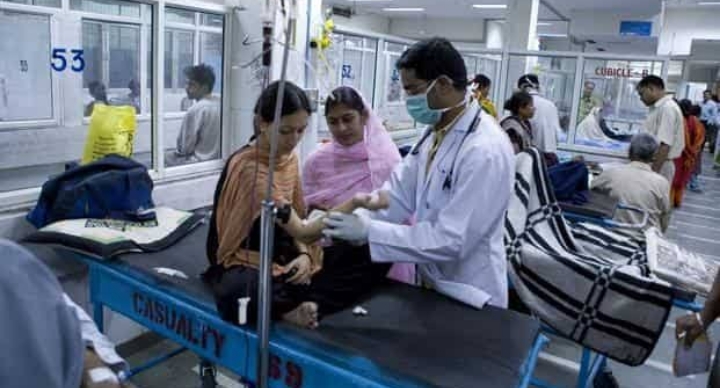
How have facilities coped with the pandemic?
Badly. The capacity of the healthcare system has been stretched to its limits with critical shortages of hospital beds, oxygen concentrators, life-saving drugs, medical supplies, disease surveillance etc. With urban India struggling to counter the onslaught of the second wave of covid-19, rural India’s threadbare healthcare system stands even more stressed.
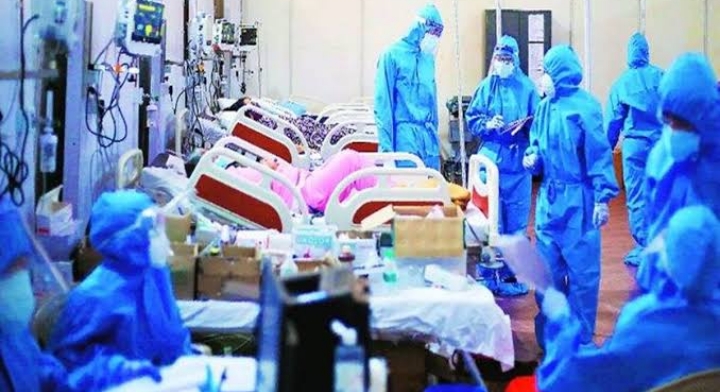
On April 9, Harsh Vardhan said the country had “substantially ramped up” hospital infrastructure, with 75,867 ICU beds and 255,168 oxygen beds. But going by the crisis across states, these numbers seem inadequate. Public health experts say the Centre and the states must now work together to quickly add more beds, ICUs and ventilators and also open temporary Covid facilities. They must ensure uninterrupted supply of medical oxygen. Several states have launched online tracking of hospital beds, but these often fail to display real-time data, leading to harassment of patients. For milder cases, the district administrations can open home care facilities with regular tele-monitoring so that the load on hospitals can be reduced.
Does poor healthcare impact the economy?
At a micro level, increased expenditure adversely impacts savings and consumption levels. Reduced consumption leads to reduced demand, disincentivising producers to invest more in capital formation. In case of firms, poor health conditions impact physical and mental ability, worker turnover, and attendance, leading to lower productivity. At a macro level, lower economic efficiency results in lower production relative to inputs employed, leading to lower economic growth and reduced income generation.
What is needed to improve healthcare?
India is in desperate need of an all-encompassing public healthcare system. The need of the hour is to have a regulator who can work with states and ensure that the focus shifts to affordable health-care, availability of more health-care professionals, well-equipped facilities, and disease prevention instead of disease management. Inequity among states in terms of facilities needs to be minimized. The Centre needs to aim for 100% health insurance coverage.
Government Initiatives
Some of the major initiatives taken by the Government of India to promote Indian healthcare industry are as follows:
- In March 2021, various states and UTs started implementation of the ‘Intensified Mission Indradhanush 3.0’—a campaign aimed to reach those children and pregnant women who were missed out or have been left out of the routine immunisation programme due to the COVID-19 pandemic. This is aimed to accelerate the full immunisation of children and pregnant women through a mission mode intervention.
- In March 2021, the Parliament passed the National Commission for Allied, Healthcare Professions Bill 2021, which aims to create a body that will regulate and maintain educational and service standards for healthcare professionals.
- In the Union Budget 2021, investment in health infrastructure expanded 2.37x, or 137% YoY; the total health sector allocation for FY22 stood at Rs. 223,846 crore (US$ 30.70 billion).
- The government announced Rs. 64,180 crore (US$ 8.80 billion) outlay for the healthcare sector over six years in the Union Budget 2021-22 to strengthen the existing ‘National Health Mission’ by developing capacities of primary, secondary and tertiary care, healthcare systems and institutions for detection and cure of new & emerging diseases.
- In Union Budget 2021-22, the government announced its plans to launch ‘Mission Poshan 2.0’ to merge ‘Supplementary Nutrition Programme’ with ‘Poshan Abhiyan’ (Nutrition Mission) in order to improve nutritional outcomes across 112 aspirational districts.
- The Government of India approved continuation of ‘National Health Mission’ with a budget of Rs. 37,130 crore (US$ 5.10 billion) under the Union Budget 2021-22.
- In the Union Budget 2021, the Ministry of AYUSH was allocated Rs. 2,970 crore (US$ 407.84 million), up from Rs. 2,122 crore (US$ 291.39 million).

 Eduindex
You must be logged in to post a comment.