Viruses and Malicious software

A computer virus is a piece of software that can “infect” other programs by modifying them; The modification includes injecting the original program with a routine to make copies of the virus program, which can then go on to infect other programs. A virus can do anything that other programs do. The difference is that a virus attaches itself to another program and executes secretly when the host program is run.

The terminology in this area presents problems because of a lack of universal agreement on all of the terms and because some of the categories overlap. Malicious software can be divided into two categories: those that need a host program, and those that are independent.

  • Need a host program : The former, referred to as parasitic, are essentially fragments of programs that cannot exist independently of some actual application program, utility, or system program.  Examples: Viruses, logic bombs, and backdoors
  • Independent malware is a self-contained program that can be scheduled and run by the operating system.  Examples : Worms and bot programs

Backdoor or Trapdoor

A backdoor, also known as a trapdoor, is a secret entry point into a program that allows someone who is aware of the
backdoor to gain access without going through the usual security access procedures. Programmers have used backdoors legitimately for many years to debug and test programs; such a backdoor is called a maintenance hook. It Has been commonly used by developers. A threat when left in production programs allowing exploited by attackers. It is very hard to block in O/S. It requires good s/w development & update.

Logic Bomb

It is one of oldest types of malicious software. The code is embedded in legitimate program. It is activated when specified conditions met
 Eg presence/absence of some file
 Particular date/time
 Particular user
When it is triggered it typically damages system, Modify/delete files/disks, halt machine, etc.

Trojan Horse

A Trojan horse is a useful, or apparently useful, program or command procedure containing hidden code that, when invoked, performs some unwanted or harmful function. Trojan horse programs can be used to accomplish functions
indirectly that an unauthorized user could not accomplish directly, Which is usually superficially attractive. Eg game, s/w upgrade etc. When it runs performs some additional tasks. Allows attacker to indirectly gain access they do not have directly. Often used to propagate a virus/worm or install a backdoor. Another common motivation for the Trojan horse is data destruction. The program appears to be performing a useful function (e.g., a calculator program), but it may also be quietly deleting the user’s files.

Zombie

Program which secretly takes over another networked computer is called zombie. Then uses it to indirectly launch attacks. Often used to launch distributed denial of service (DDoS) attacks. Exploits known flaws in network systems.

Is India a safe environment for animals?


Cows, tigers, lions, elephants, horses, bulls, snakes, and monkeys are all revered in Hindu mythology. The Vedas, Hinduism’s early writings (written in the second millennium BCE), preach ahimsa, or nonviolence, to all living things. In Hinduism, killing an animal is considered a violation of ahimsa and results in negative karma. However, while people display their devotion to deities and the animals associated with them in temples, animals are also subjected to cruelty in places such as circuses.
The Indian Constitution contains several laws for the safety, protection, and punishment of animals, including the Indian Penal Code (IPC), the Prevention of Cruelty to Animals (Slaughterhouse) Rules, 2001, the Wildlife Protection Act, 1972, and the Prevention of Cruelty to Animals Act, 1960 (PCA Act), to name a few. Among other Regulations and Acts of the Indian Constitution, Article 48A, Article 51A(g), Sections 428 and 429 of the IPC establish rules against animal cruelty. Animal sacrifice is prohibited in all parts of the country, according to Rule 3 of the Slaughterhouse Rules, 2001. In addition, the Central Bureau of Investigation investigates specific wildlife offences (CBI).
Following the Covid 19 incident, numerous incidents have surfaced exposing the brutality of the human mind, the most recent of which being A suo motu case initiated by the Kerala High Court on animal cruelty will now take the name of Bruno, a Labrador dog reportedly slain by three teenagers in the State. In Gujarat, a stray dog was mercilessly thrashed and carried 500 metres by a two-wheeler.


A dog raped with a screwdriver in Goa, a langur hung and tortured to death in Telangana, and a street dog assaulted, tied to a motorbike, and then thrown over the second floor of a building in Ludhiana are just a few of the heinous crimes against animals that have been documented. How about the pregnant elephant who died in Kerala when suspected firecrackers disguised in fruit detonated in her mouth? On March 28, 2021, a man was seen on CCTV assaulting a stray dog in Naya Nagar, Goregaon West, Mumbai; however, no police case was filed.


Molesting a stray dog in Goregaon West, Mumbai; however, no police case was filed.
The Supreme Court of India recognised the Right to Life as enshrined in Article 21 of the Constitution of India to include animals in a case titled Animal Welfare Board of India v. Nagraja&Ors. In 2014. The Supreme Court of Nepal banned the unlawful transport of cattle to Nepal for the Gadhimai festival in 2014, which helped to reduce the number of animals killed that year. In the case of Karnail Singh and others against State of Haryana, the High Court of Punjab and Haryana recognised all creatures in the animal world, including avian and aquatic species, as legal beings on May 31st, 2019.

All inhabitants of Haryana have been designated as persons in loco parentis (in the place of a parent), allowing them to act as guardians for all nonhuman animals in the state.
The only way to bring these activities back to normal is to enact stronger rules and provide legal protection for animals. This is the first step toward achieving a mindset shift in order to build a society in which animals are treated equally to humans.

Mob lynching in India


According to an IndiaSpend research, the number of incidences of mob lynching is on the rise every year. The term “vigilance” is described by the Cambridge dictionary as “law enforcement conducted by a self-appointed group of persons without any legal authority.” People who want to enforce legal power without any legal grounds are involved in lynching instances.
A lynching occurs when a group of people kills a person, accusing him of committing an offence that is frequently motivated by religious prejudice or amusement. When one community’s beliefs about an issue disagree with the views of the other community, an unlawful act of mob-lynching occurs as a result of the conflict. In India, states like Uttar Pradesh, Haryana, Delhi, Gujarat, Karnataka, Rajasthan, and Madhya Pradesh have the largest number of cow-related mob attacks.


The country’s impact on mob lynching
In particular, there has been an upsurge in the frequency of lynching cases. Since the BJP administration came to office in 2014, there has been a rise in the frequency of such attacks. This act of people taking the law into their own hands due to a lack of understanding of the justice system poses a severe danger to the Rule of Law and Natural Justice concepts. Such activities have also posed a major threat to the country’s minority populations, and adequate measures must be made to prevent and deter such crimes.

The Supreme Court has ruled on lynchings by mobs.
In the case of Tehseen S. Ponawalla v. Union of India & others, the Hon’ble Chief Justice of India, Dipak Mishra, and the three-judge bench denounced recent occurrences of mob lynching and mob attacks on Dalits and members of other communities. On July 17, 2018, he asked the parliament to draught and enact laws that would make mob lynching a separate crime and set punishments that would serve as a deterrent to future lynchings.

Furthermore, the bench argued that no one or group of individuals can take the law of the land into their own hands and impose punishment that they are not obligated to impose. Furthermore, the Chief Justice of India underlined the necessity of issuing orders for punitive, rehabilitative, and preventative measures.


Lynching punishments
In our country, there is no explicit legislation or legal provision dealing with lynchings or mob violence. However, the following statutes, which are currently part of the Indian Penal Code, provide for the penalty of mob lynching.

Section 302 of Indian penal code.
Section 304 of Indian penal code.
Section 325 of Indian penal code.
Section 34 of Indian penal code.
Section 120B of Indian Penal Code .


Conclusion
Mob lynching can occur for a variety of causes. Witch-hunting was one of the causes of mob violence, with 2000 mentally ill women being murdered because of rumours accusing them of kidnapping and murdering children. In India, religious conflagrations such as the 1984 Sikh riots, Anti-Muslim riots in Gujarat, or the lynching of Ghulam Muhammad by Hindu Yuva Mahaini over his relationship with a Hindu girl in the neighbourhood have had a negative impact on the country.

Adultery


Adultery is a French word that came from the Latin verb “adulterium,” which means “to corrupt”. Adultery is described as a consensual extramarital sexual connection that is considered impolite on social, religious, and moral grounds, as well as earlier on legal ones.

Even if adultery is no longer a criminal offence, it is still considered a delinquent behaviour since it breaches societal norms that an individual is expected to follow.

Religion views adultery as a sin.
India is famed for its variety while remaining together. Our country is a secular one, in which all religious views are honoured equally. Every religion has its own set of beliefs and goals. In the case of adultery, however, almost every religion is harshly critical. Adultery is seen differently by many religions, but the underlying view stays the same. Adultery is considered a sin in every faith. Religions, on the other hand, may have different punishments. It is considered a delinquent behaviour since it offends the sacred sentiments of all religions.

Adultery in the eyes of the law
Adultery is defined in India under Section 497 of the Indian Penal Code (IPC) 1860 as:
Whoever has sexual intercourse with a person who is and whom he knows or has reason to believe is the wife of another man without that man’s consent or connivance, such sexual intercourse not amounting to the offence of rape, is guilty of adultery and shall be punished with imprisonment of either description for a term that may extend to five years, or with fine or with b The wife shall not be held liable as an abettor in such a case.”

Will infidelity have an impact on alimony?
An unfaithful wife is not entitled to maintenance from her husband under section 125 of the CrPC. Initially, whether the husband is maintaining a concubine in the same house or living apart with a concubine, the wife has the right to live separately and sue her husband for support.

Conclusion: The necessity to alter India’s adultery statute has not arisen in the last few years; rather, jurists and attorneys have been clamouring for change for decades. The courts have ruled that a part cannot be struck down just because it is desirable to remove it. However, the study suggests that the section be amended rather than deleted. As a result, the Legislature should make a modification to the law of adultery as soon as possible to eliminate the legislation’s gender prejudice.

10 Tips On How To Be An Excellent Event Planner


There are many tips that you can use to become an event planner and become one of the best, however, you need to know that to become an excellent event planner you need to pay attention to the fine details and offer the best to your clients. This can take a lot of time from your day-to-day activities. To become an event planner you need to put forth a lot of energy and time.

  1. The first tip and the most important one is that you need to get in contact with some of the best supplies. You need to have a business contract and connection with many suppliers so that you can offer the best to your clients. Remember when you have the best suppliers; your reputation will be excellent.
  2. Also, always give your clients options. Have a least a dozen venders that you work with on a regular basis so that your clients can choose from a few options. When you give your clients options they will feel more evolved in the planning process.
  3. You need to think about what kind of events that you will plan. They can be small dinners to huge weddings so you need to come up with creative ways to bring life to a party. There are going to be a lot of signatures styles, but if you continuously research then you can keep up on trends and event activities.
  4. When you are doing a wedding that is multicultural, you need to learn about both of the cultures that they want present in the wedding. This will give you a better understanding of the traditions that they want to honor.
  5. You also need to think about your location of business. Is your office somewhere respectable or in the ghetto? You need to make sure that your clients are going to feel comfortable in your office. This way you can have more cliental.
  6. As an event planner you need to learn how to communicate effectively. You need to know what is acceptable and what is not by reviewing all your details with the clients. The party isn’t about you, but the clients. You need to keep that in mind. Even if you think sometime is wrongfully place, listen to your clients needs and wants.
  7. Another way for you to enhance your reputation is to keep ties with the clients who were very pleased with your performance. Use them as references, but always ask before giving out any information. This way you can give future clients and idea of your quality.
  8. You may also want to ask your clients if you can take general pictures of the event so that future clients will be able to see what exactly you are capable of doing. This is will make a lot of people hire you on the spot.
  9. Talk to the client and set a budget before contacting any of your suppliers. This way you can communicate effectively with your suppliers and clients. You can offer the best possible solutions and ideas within a budget. If you can pull off an extraordinary event within a budget, then you will be recommended to everyone. There are only two things that matter and that is the design and cost of an event.
  10. Finally, you need to have a personality that allows you to interact with others and really hear what others want. You need to have the strength to handle everything with a collective attitude, as well as, make the planning process fun for your clients. Your personality and the way you handle things makes a huge difference in being a successful event coordinator or an okay planner.

A quick guide to impact investing


Investing is a type of investment that aims to provide tangible social or environmental benefits in addition to monetary gains. Impact investment can take the form of a variety of different resource classes and can produce a variety of different outcomes. This type of investing focuses on using cash and venture capital to achieve positive social results. Impact investing is a rising business that gives funding to address the world’s most important problems. Affordable and accessible sustainable agriculture, renewable energy, conservation, microfinance, and essential services, such as housing, health care, and education, are all examples of these fields.


What are the benefits of impact investing?
Impact investing contradicts the long-held belief that social and environmental problems can only be remedied through charitable giving and that market investing should only be concerned with maximising profits. The impact investing sector offers investors a wide range of viable options for promoting social and environmental solutions while also generating financial gains. Many different types of investors are entering the burgeoning impact investing market. The following are some of the most typical investor motivations.
Individuals and institutions interested in general or specific social or environmental reasons might find investment options through banks, pension funds, financial advisors, and wealth management agencies.
While maintaining or increasing overall donations, institutions and family foundations can use much more assets to accomplish their principal social and/or environmental aims.
Government investors and development financial institutions can demonstrate financial viability to private sector investors while pursuing specific social and environmental objectives.
Is it true that impact investing is effective?
Most impact investors aim for returns that are comparable to market interest rates, with some impact funds even outperforming the market. In general, the rate of return for impact investments is slightly lower than the market average. The average internal rate of return for medium-impact funds was 6.4 percent in a research by the University of California, compared to 7.4 percent for search funds with no impact.

What’s the difference between environmental, social, and corporate governance (ESG) investing and impact investing? Environmental, social, and governance practises are business actions that can have an impact on a company’s performance. Companies that use child labour or discriminate against employees, for example, may find themselves at a competitive disadvantage, particularly when selling to socially sensitive customers. Impact investing, on the other hand, is a type of investment that focuses on achieving objectives other than financial rewards. Clean energy, education, and microfinance are examples of possible investments.

Conclusion
Impact investment is one of a growing number of social responsibility initiatives aimed at mitigating the negative consequences of typical business operations. Impact investment generates social and environmental benefits while producing money by backing businesses and sectors that support important causes. The rising impact investment sector has made tremendous progress in the last few years. To be sure, a large portion of the problems can be attributed to the new sector’s growing pains. Impact investing will grow, histories will be created, and decisions about financial execution will be made.

Argentina knocks out Ecuador

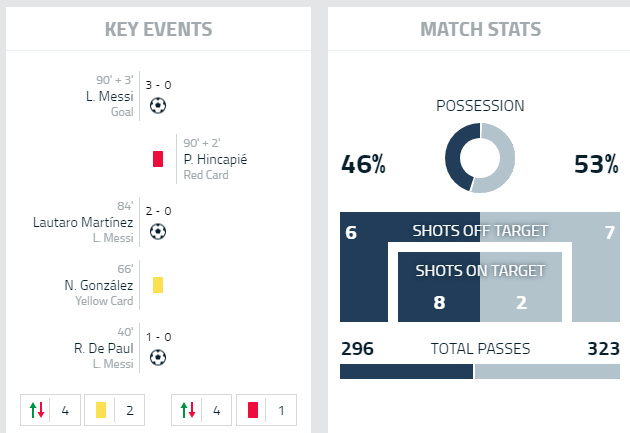
Argentina advance to the semi-finals of the Copa America after being Ecuador 3-0 in their clash at the Olímpico Pedro Ludovico. Rodrigo de Paul opened the scoring in the first half with his first international goal. The Albiceleste had to be patient in the second half, but late efforts from Lautaro Martinez and Lionel Messi secured the win to send them into the last four. Ecuador battled hard, but lacked the quality before defender Piero Hincapie ended his tournament on a low note by receiving a red card.

‘He gives us confidence and joy’ – Messi dazzles with Copa America quarter-final free kick against Ecuador

(Dan Bernstein)

Lionel Messi scored a free kick to cap his excellent performance in a 3-0 victory over Ecuador on Saturday in the Copa America quarter-finals, drawing effusive praise from his team-mates.

The forward also assisted twice – once without looking at his target as he made the pass – in a Man of the Match effort that prompted Nico Gonzalez to say the entire squad draws “confidence and joy” from his play.

Argentina will play Colombia in the final four on Tuesday.

Getting a Job in Google.

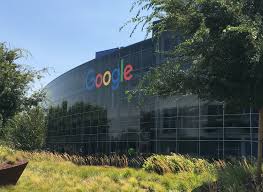
Year after year, Google has been ranked as one of the top companies to work for, so it’s no surprise that the tech giant receives roughly three million applications per year. With an acceptance rate of 0.2%, you’d have a better chance of getting into Harvard.

It is difficult to get a job at Google because of their quality standards and the high number of applications they receive per year. For example, INC reported that Google receives 2 million job applications per year, which means it’s more competitive to get into than Harvard University.

Google is an employer of choice for the world’s top talent, typically receiving hundreds of resumes for every opening, which allows them to be extremely selective in their hiring.The hardest part is getting an interview. If you attend a university, go through campus recruiting.

According to the Pascale, The lowest paid Google employees are Entry Levels at $51,000.Google says there is no degree or prior experience required. In fact, 61% of learners enrolled do not hold a four-year degree. This certificate could be a perfect launchpad to a career in IT.

So if you have a keen interest in working at Google California or at any other branches of Google work hard my friend. More than studies work on yourselves, on your IQ level the interviewees are not going to ask you a question from your syllabus.

JOURNEY TO SANITY – SUNSHINE 🌤️

Sun is something we have seen almost everyday of our lives, yet many of us aren’t aware of it’s health benefits except for the fact that it provides Vitamin D to the body.
We all know that Earth revolves around the Sun, but little do we know that so does our mood. A healthy amount of sunlight is considered to promote the production of a hormone called serotonin in the kidney and liver that helps to boost one’s mood, providing more peace and focus. A healthy dose of serotonin helps to balance the amount of a hormone called melatonin that promotes sleep at night and helps one in maintaining a balanced routine. It also helps to promote the metabolism process and even prevent weight gain.

Scientifically speaking, a 15-30mins of sun exposure between 7 a.m. – 9 a.m. few times a week helps to promote enough melatonin to boost one’s mood and reduce the effects of Depression and Anxiety. This form of exercise is called light therapy or phototherapy in clinical terms.
The UV-B rays in the Sunlight are responsible for the production of Vitamin D in a human body. Vitamin D is beneficial for a healthy eye sight and promoting strong bone health. It is Scientifically proven that Sun Radiations helps in fighting certain Cancer cells and cures various skin diseases like eczema, acne, etc. However, the effects might differ from body to body so it’s advisable to consult with a dermatologist.
Just like the universe, our body work on the law of balance. Excess of anything might do more harm than good. Similarly, excess of sun exposure might have harmful eyes on the eyes, skin and even lead to cancer at times.

Do not forget to read more from the series :

JOURNEY TO SANITY – ACCEPTANCE

JOURNEY TO SANITY – MINDFULNESS

JOURNEY TO SANITY -JOURNALING

4000 year old settlement found due to excavation in odisha

News

• Archaeological wing,Odisha discovered a 4,000-year-old settlement and ancient
artifacts in Balasore.
 Traces of three cultural phases:
 Chalcolithic period (2000 to 1000 BC.)
 Iron Age (1000 to 400 BC)
 Early Historic Period (400 to 200 BC).

Human colonization in India

• Two broad periods – prehistoric and historic.
 Prehistoric – divided into stone, bronze and iron ages.
 Stone age: divided into palaeolithic, mesolithic
and neolithic periods.

• Neolithic period: a settled, food-producing way of life.

• Introduction of Copper – the chalcolithic period.

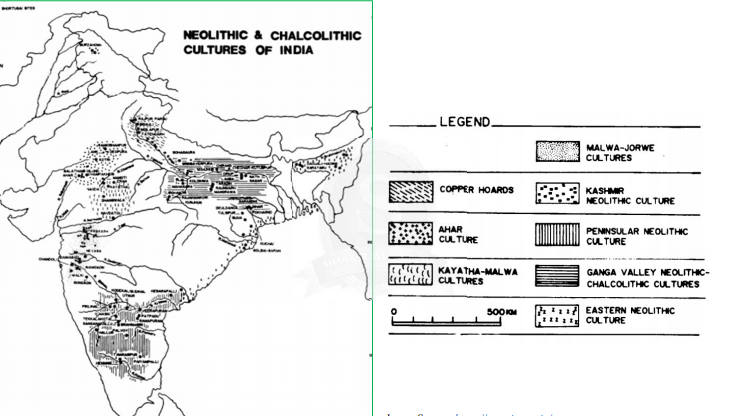
Image Source: https://www.ias.ac.in/

Neolithic and Chalcolithic period

• India – Neolithic period and Chalcolithic period flourished simultaneously – 4th to 2nd millennia B.C.
 Represents farming based, settled village way of life.

• Neolithic culture – restricted distribution.
 Kashmir valley, northern Vindhyas, middle Ganga
valley, and eastern, north-eastern and south India.

• Chalcolithic cultures – wider distribution.
 Entire Ganga valley, eastern RJ, Malwa or western MP, some parts of GJ, western MH, and the northern Vindhyas.

Differences

• Mainly regarding distribution pattern,
technology, architecture and ceramics.
 Marked increase in the number of settlements.
 Introduction of copper-bronze – tools, weapons and ornaments etc.
 Improvement in architecture.
 Introduction of wheel-made pottery.
 Diversification of wares.
 Decoration of vessels by painted and incised designs.

India’s Important chalcolithic cultures

  1. Ochre-coloured pottery (OCP) culture:
     Indo-Gangetic Divide and upper Ganga-Yamuna
    Doab.
     Named after a ceramic type – extremely rolled
    and fragile – wash of red ochre which is easily
    washed off.
     First recognised by B.B. Lal in 1951 in a small
    excavation at Bisauli and Rajpur Parsu (U.P).
  2. Ahar culture or Banas culture:
     Mewar region of Rajasthan.
     Among the earliest Chalcolithic cultures of India.
     Type site – Ahar, in District Udaipur, Rajasthan – excavated in1961-62.
  3. Kayatha and Malwa cultures:
     Malwa region of western MP.  Kayatha site in Ujjain dist., MP.  Malwa culture – most predominant
    chalcolithic culture of central India.
  4. Malwa and Jorwe cultures – western
    Maharashtra.
     Jorwe – important and characteristic
    chalcolithic culture of Maharashtra –
    extend all over except the coastal
    strip on the west and Vidarbha.
     Jorwe site in Ahmadnagar district,
    Gujrat – discovered in 1950.
  5. Narhan culture and variants – northern
    Vindhyas and the middle and lower Ganga
    valley.
     Narhan village situated at the left bank
    of Ghaghara river – Gorakhpur, Uttar
    Pradesh.
     Pre-iron Phase Chalcolithic culture with
    the principal ceramic assemblages of
    white painted Black-and-Red Ware.

CARNATIC MUSIC

Does Art Have a Caste? A Debate on Carnatic Music | Economic and Political  Weekly

Carnatic Music is one of the Oldest Music that originated from India. The Music was popularly practiced in the states of : Tamil Nadu, Telangana, Andhra Pradesh, Kerala and Karnataka. Carnatic Music is one of the subgenres of Classical Music of India. Saraswati : Hindu God of music .

Carnatic Music | RajRAS


The 4 basic elements that make the Carnatic Music are:

  • The mode of Music (Raga)
  • The Musical Pitch (Sruthi)
  • The Musical Sound of a Note (Swara)
  • The Rhythmic Cycles (Tala)

Raga is Melodic system/Musical personality .“That which colors the mind.”. No Western equivalent Definition . A collection of notes, a scale, intonation, ornaments, resting tones. It has particular musical characteristics and phrases that give it a distinct recognizable identity. Connected with human emotions . 9 traditional rasa – “flavors” Love, anger, sadness, fear, disgust, wonder, heroism, laughter, religious devotion (peacefulness) . Can be very powerful- magical properties Causing rain, auspiciousness, charm snakes . Can be associated with deities, seasons, time of day

Tala is Organization of time in music . regularly recurring metric cycle . Spectrum of time in Indian thought . Fraction of a second . Yugahs – goelogical time period . Theoretically there are hundreds of tala . Four dominate today . Most tala can be performed at a fast, medium or slow tempo .

Generally Carnatic Music is sung as Compositions. The Compositions are called Kirti (Kirtanam). This is done for making learning and teaching of Carnatic Music easier. Carnatic Music is basically meant to be sung. The main singer of Carnatic Music is called a vocalist.  Carnatic Music can be played in musical instruments. The music while played on musical instruments should follow the singing style. While singing Carnatic Music, it can be accompanied by many musical instruments mainly violin and also Tambura, Mirudangam, Ghatam, Kanjira, Veena and many more.

Unlike Modern music or Western Music, Carnatic Music is known for the melodious feeling it gives to the audience. Carnatic musical can be performed either just musical or also musical dramatic. Carnatic Music is the major part of the Indian Cultural Dances. Most of the Indian Classical Dances can be performed with the help of Carnatic Music only.

Carnatic Music is filled with rasas and the porridge of Godhead narratives with rich values, every vocal is beautiful in its ain manner. With diverse substitutions and combinations each raga therefore formed and disposed wordss blended, sprouts out significances. Vedas say that carnatic music is a tract to the Godhead. 

Carnatic Music is considered as one of the symbols of our culture and tradition. People respect musicians who are well versed in Carnatic. Carnatic Music is still performed in cultural festivals and big events of our country and “Music Season” (Largest Cultural Event in the world) is conducted in this place. Chennai (located in Tamil Nadu) is known as the Locus for Carnatic Music. The artists who perform Carnatic Music should be well experienced and qualified since Carnatic Music cannot be sung so easily and perfectly by normal people.