A NECESSARY REVOLUTION.

An incapable, corrupted Government has always been considered a major reason for shortcomings in growth of our country. Innumerable debates are regularly put forward by citizens, officials, media and opposition against the decisions and steps taken by existing government. Despite the presence of years of mistrust and distress between Indian Government and it’s citizens, the Commencement of governance of Narendra Modi enlightened a ray of hope within the residents. Ever since, Mr. Narendra Modi came into power he has constantly been into the limelight , be it for his appreciable deeds or sometimes the trolled one. But one fact about his rule within all this time has remained common. That is., CHANGE which not just included some petite conclusions of his’s but a big bowl of immensely astonishing and striking shocks for whole of the Country. And here came yet another tremendous move by BJP ( Bhartiya janta party) officials. A wholesome Cabinet Reshuffle and expansion of PM Narendra Modi led government took place a few days back.

Image source

Descriptions In Detail

On 7th July, 2021. A total of 43 ministers in the Union Cabinet expansion took an oath at the Rashtrapati Bhavan. The President Of India Mr. Ramnath Govind welcomed a great number of new ministers as well as rearranged positionings of various existing Council of ministers. Along with that, a major buzz was created at the news of resignation by Ministers of Four one of the most important departments including Health Minister Harsh Vardhan, Chemicals and Fertilizers Minister D V Sadananda Gowda, Labour Minister Santosh Gangwar and Education Minister Dr Ramesh Pokhriyal Nishank. The reports state that PM modi now has 77 nee ministers and almost around half of them i.e. 36 ministers are new to the ministry. BJP has now set a record of having highest number of members from Other backward classes, by inculcating about 27 members from Other backward classes out of which 12 belong to SC/ST castes. Each of these members belong to different origins and category of classes. According to a reliable source, the council will now have a sum of 11 females too.Out of all these members, 68 ministers are graduates and Professionals comprising of 13 lawyers, 6 doctors, 5 engineers, 7 Civil Servants, 7 Phd holders and 3 MBAs. Another fact is that under this list the minimum age of a minister has decreased upto 38-40 years old.

Here’s the complete List of all the reshuffled ministers with the positions assigned to them;

Cabinet Ministers

1. Narayan Rane

2. Sarbananda Sonowal : Ports and Shipping, AYUSH Ministry.

3. Dr Virendra Kumar

4. Jyotiraditya Scindia : Civil Aviation.

5. Ramchandra Prasad Singh : Steel Ministry.

6. Ashwini Vaishnav : Railways, Communication & Electronics and Information Technology.

7. Pashu Pati Kumar Paras: Minister of Food Processing Industries.

8. Kiren Rijiju : Law and Justice Ministry.

9. Raj Kumar Singh : Power and Ministry of New and Renewable Energy.

10. Hardeep Singh Puri : Petroleum, Housing and Urban Development.

11. Mansukh Mandaviya : Chemicals and Fertilizers, Health Ministry.

12. Bhupender Yadav

13. Parshottam Rupala

14. G Kishen Reddy

15. Anurag Thakur : Information & Broadcasting and Sports.

Ministers of States

16. Pankaj Choudhary (Minister of State in the Ministry of Finance) .

17. Anupriya Singh Patel (Minister of State in the Ministry of Commerce and Industry).

18. Satya Pal Singh Baghel (Minister of State in the Ministry of Law and Justice).

19. Rajeev Chandrasekhar (Entrepreneurship; and Minister of State in the Ministry of Electronics and Information Technology).

20. Shobha Karandlaje (Minister of State in the Ministry of Agriculture and Farmers Welfare).

21. Bhanu Pratap Singh Verma (Minister of State in the Ministry of Micro, Small and Medium Enterprises).

22. Darshana Vikram Jardosh (Minister of State in the Ministry of Textiles; and
Minister of State in the Ministry of Railways).

23. Meenakshi Lekhi (Minister of State in the Ministry of External Affairs; and
Minister of State in the Ministry of Culture).

24. Annpurna Devi (Minister of State in the Ministry of Education).

25. A Narayanaswamy (Minister of State in the Ministry of Social Justice and Empowerment).

26. Kaushal Kishore (Minister of State in the Ministry of Housing and Urban Affairs).

27. Ajay Bhatt (Minister of State in the Ministry of Defence; and Minister of State in the Ministry of Tourism).

28. BL VermaMinister of State in the (Ministry of Development of North Eastern Region; and Minister of State in the Ministry of Cooperation).

29. Ajay Kumar (Minister of State in the Ministry of Home Affairs).

30. Chauhan Devusinh (Minister of State in the Ministry of Communications).

31. Bhagwanth Khuba (Minister of State in the Ministry of New and Renewable Energy; and Minister of State in the Ministry of Chemicals and Fertilizers).

32. Kapil Moreshwar Patil (Minister of State in the Ministry of Panchayati Raj).

33. Pratima Bhoumik (Minister of State in the Ministry of Social Justice and Empowerment).

34. Subhas Sarkar (Minister of State in the Ministry of Education).

35. Bhagwat Kishanrao Karad (Minister of State in the Ministry of Finance).

36. Rajkumar Ranjan Singh (Minister of State in the Ministry of External Affairs; and Minister of State in the Ministry of Education).

37. Bharati Pravin Pawar (Minister of State in the Ministry of Health and Family Welfare).

38. Bishweswar Tudu (Minister of State in the Ministry of Tribal Affairs; and
Minister of State in the Ministry of Jal Shakti).

39. Shantanu Thakur (Minister of State in the Ministry of Ports, Shipping and Waterways).

40. Dr Munjapara Mahendrabhai (Minister of State in the Ministry of Women and Child Development; and Minister of State in the Ministry of AYUSH).

41. John Barla (Minister of State in the Ministry of Minority Affairs).

42. Dr L Murugan (Minister of State in the Ministry of Fisheries, Animal Husbandry and Dairying; and Minister of State in the Ministry of Information and Broadcasting).

43. Nishith Pramanik (Minister of State in the Ministry of Home Affairs; and Minister of State in the Ministry of Youth Affairs and Sports).

Everything Have it’s Pros and Cons

According to a reliable source, A new report formed by the Association of for Democratic reforms (ADR) poll rights group says, that out of these new team of ministers 42% that is., 33 ministers have had Criminal cases against them. Out of these 24 have declared serious cases against them inclusive of murder, attempt to murder and robbery. Moreover, 90% of them are into Millionaires they hahavtotal assets amounting to 1 crore and above. While this huge step and the positive points about even distribution of authorities within ministers gave hopes for better growth opportunities, the ADR reports yet again drag down the expectations. However, Future is unpredictable and so is the Government. Thus, all left with common man to do is await and pray for decisions to work in their favour.


Is FDI Good for Indian Economy?

Foreign direct investment (FDI) is an investment made by a firm or an individual into business interests located in another country. Generally, FDI takes place when an investor establishes foreign business operations or acquires foreign business assets, including establishing ownership or controlling interest in a foreign company. It frequently involves more than just capital investment. It may include provisions of management or technology as well. The key feature of FDI is that it establishes either effective control of, or at least substantial influence over, the decision-making of a foreign business. 

FDI Categorization
FDI is commonly categorized into horizontal, vertical or conglomerate. A Horizontal FDI is when the investor establishes the same type of business operation in a foreign country. A Vertical FDI is when different but related business activities from the investor’s main business are established or acquired in a foreign country. A Conglomerate FDI is when a company or individual makes a foreign investment in a business that is unrelated to its existing business in the home country. It is mostly in the form of a joint venture.

Rising Trend of FDI in India
India is a developing nation, trying to make its way up the ladder in the world economy. To achieve its goal, it requires influx of investment, both national and international. Foreign nations often keep an eye on fast-growing economies and are keen to invest in markets where they expect great interests in the future. India allows FDI through two routes- Automatic and Government. Where in automatic route, no prior approval is required, the government route cannot be accessed without approval from Government of India.

The Government of India amended FDI policy in 2014 to increase the inflow of FDI. FDI in 25 sectors was increased to up to 100% along with up to 49% in insurance sector. Following this, India became the top destination for FDI overtaking China and USA. The sectors that cannot avail FDI include lottery business, chit funds, casinos, Nidhi companies, real estate, railways and a few others.

According to 2018 data, the main investor in India is Singapore, comprising 38.3% of the total FDI followed by Mauritius at 18.2%, Netherlands at 8.8% and USA at 7.1%. Other investors include Japan, UK, Germany, France, UAE and Cyprus. The main sectors availing these investments are chemical sector, accounting for 23.5% of the FDI, followed by services sector at 22.7% and computer software and hardware at 18.6%.

FDI helping to Boost Economy

  • Revenue Generation

Sometimes, when a giant venture is to be started, capital is hard to come by. At such times, FDI comes in handy as a saviour and provides with necessary revenue to meet the initial infrastructural demands required for a project. For example, in May 2018, Walmart acquired a 77 per cent stake in Flipkart for a consideration of USD 16 billion while in February 2018, Ikea announced its plans to invest up to Rs 4,000 crore (USD 612 million) in the state of Maharashtra to set up multi-format stores and experience centres.

  • Employment Generation

India is teeming with a wide work force but not enough jobs. When multi national businesses are established, it leads to job creation which the indigenous industries are not able to provide on such a wide scale. According to a report in the Business Today magazine, between 2000 and 2016, British FDI created 371,000 jobs. 10 per cent of all jobs created by FDI. The total number of people employed by British companies in India currently stands at 788,000-representing 5.3 per cent, or one in twenty, of private sector jobs.

  • Getting Latest Technology

Though India is developing, it still does not have access to cutting edge technology which comes in handy when working in collaboration with foreign businesses as they tend to bring in latest technology to maintain the quality of the products and services provided by them. It helps to get the products with latest technology. Moreover, it also opens up doorways to research opportunities in the concerned field on the domestic front. FDI in manufacturing sector often helps with the setup as well as better quality of product manufactured.

  • Cultural Exchange

Working shoulder-to-shoulder with people from different cultural backgrounds helps everyone evolve and develop a sense of comfort in any atmosphere if they have to live in it. Multinational businesses offer an opportunity of a multilevel cultural exchange which cannot be seen otherwise. It leads to a certain level of acceptability for the different cultures all over the world.

  • Infrastructure Development

With International brands pouring in to the domestic country, there is scope for better infrastructure, be it in the field of education, health care, information technology, constitutional bodies, construction of rail, road, vehicles among others. FDI also helps to make the Indian infrastructure at par with the facilities available in foreign countries.

In June 2018, Idea’s appeal for 100 per cent FDI was approved by Department of Telecommunication (DoT) followed by its Indian merger with Vodafone. This merger made Vodafone Idea the largest telecom operator in India resulting in better overall reach of the company.

  • Price Reduction

Better technology may further lead to a reduction in prices of the produced goods which in turn benefits the consumers. Moreover, when a new product is brought into the market, new research and development in the field will definitely lead to better price ranges for consumers in the future. Thus, FDI benefits consumers by reducing prices of goods and services in the long run.

  • Healthy Competition

With addition of a foreign player in the market, each company strives to do its best, thus increasing the healthy competition in market and in turn benefitting the customer. This benefit may come in form of a variety of products, reduced prices or introduction of a product that was not available in the domestic market before.

Harmful Impact of FDI

FDI Hinders Economic Growth so we should not over rely on FDI. Here are some of the logical arguments:

  • Foreign Investors are Volatile

Investors run after profit. If they see a better opportunity elsewhere, they may shift their interests as well as their investment to the better prospect in a heartbeat without any lieu of the consequences on the economy of the host country unless prior contracts have already been signed. This brings in the uncertainty factor when looking for FDI. This cancellation of contracts may in turn lead to devaluation of Rupee and a financial crisis at hand.

  • FDI Creates Imbalance

FDI is often concentrated either in the richer states of India or in the high skill sectors. This imbalance leads to a probable increase in the economic gap between the rich and the poor. FDI projects are often concentrated to already well-developed states like Delhi, Gujarat, Maharashtra while less developed states like Bihar and Jharkhand are left behind once again thus, increasing the regional economic gap further. Apart from this, in the current scenario, FDI focuses on service sector where skilled labour is required, but the brunt of our problems lie in the majority of unskilled and semi-skilled labour. FDI in sectors like construction, manufacturing and textiles should be further encouraged in order to create more jobs for them.

  • Tax Evasion

Profit-shifting behaviour among MNCs is induced by the huge tax arbitrage between jurisdictions. While the average effective corporate tax rate in China, Brazil and India ranges from around 17% to 32%, it is much lower in the tax havens of the world like Bermuda, Luxembourg and Netherlands. Corporate tax evasion is an issue that is even faced by the developed nations like US and UK and is thus something that India should take into consideration.

India has committed to the implementation of the Base Erosion and Profit Shifting (BEPS), according to a recent update by Ernst and Young. India has adopted the “country-by-country” reporting norms, which means that large MNCs will be mandated to disclose information about the entire group’s operations across the world to check if the company is shifting its profits to a low-tax jurisdiction to evade taxes

  • FDI Causes Money Laundering

Sometimes, proceeds of criminal activities may be used in FDI as a front to cover it up and set up legitimate businesses. The recent case of Air Asia is indicative of how lobbying can be a major factor that can hinder a business in the long run.

  • FDI harms Domestic Companies

When foreign companies open their businesses in the domestic market, they often have lower prices for products than the indigenous product prices which harms the local businesses to a certain extent. Sometimes, it may even make it hard to survive for the local businesses among the bounty of cheap products due to well-established infrastructures. FDI in retail also harms the local merchants.

  • Possibility of Inflation

There is also a possibility of inflation with prolonged increase in FDI which in turn causes better incomes, more expenditure by consumers. If this expenditure is balanced in form of an increased supply of goods required according to the demand, the inflation caused will be indicative of a progressing economy where as if the incomes increase without any change in availability of products for consumers, the inflation will be detrimental to the economy. For example, if the foreign borrowings were in the form of armaments, which are of no use to the common man, the economy may suffer.

  • Increase in Dependency

When FDI is availed, the host country often works on the foreign timeline and is dependent on the investing country for almost all of its operations from initial capital to laying of infrastructure to the way the business is to be carried forward. This increases dependency on foreign players and is often detrimental to the host country’s economy. For example, looking at the Mumbai-Ahmedabad Bullet Train Project, major funding is to be provided by Japan International Cooperation Agency (JICA). JICA till now had released only Rs 125 crore for the project out of the Rs 80,000 crore to be provided by JICA for the project. The project would cost roughly 1 lakh crore. This delay in funding is one of the causes for the delay of the project.

  • Political Involvement

Political parties often try to direct the inflow of FDI for personal benefits which leads to obstacles in the nation’s development and create controversies that if not resolved hamper the rate of economic progression. The most recent case of such a controversy is the Rafale Deal with France’s Dassault Aviations. The opposing party claimed that the ruling party (NDA) has made the deal at triple the price. Although the Supreme Court gave a ruling in favour of NDA, the deal is still a matter of immense controversy.

Banks Merger in India: Is it good for Indian Economy?

The Banks’ merger dated April 1, 2020 has resulted in the creation of seven large PSBs with scale and national reach, with each amalgamated entity having business of over Rs 8 lakh crore and it has helped to create banks with scale comparable to global banks and capable of competing effectively in India and globally.

As per the mega consolidation plan, Oriental Bank of Commerce and United Bank of India have merged into Punjab National Bank (PNB); Syndicate Bank into Canara Bank; Andhra Bank and Corporation Bank into Union Bank of India; and Allahabad Bank into Indian Bank.

The exercise assumes significance as it has taken place at a time when the entire country is under the grip of COVID-19 outbreak. It has triggered 21-day lockdown to contain the spread of the deadly virus. Experts are of the opinion that merger at this point of time may not be remain a very smooth and seamless transition. However, heads of the anchor banks have exuded confidence and do not find any problem as the process has gone as per the plan with certain modification in implementation.

The four anchor banks — PNB, Canara Bank, Union Bank and Indian Bank — have postponed some part of the implementation and processes due to the lockdown for example like loan process which were proposed to be followed earlier.

In addition, consolidation would also provide impetus to merged entities by increasing their ability to support larger ticket-size lending and have competitive operations by virtue of greater financial capacity.

Advantages of Bank Mergers

  • Larger Bank is capable of facing global competition
  • The merger will reduce the cost of banking operation
  • Merger will result in better NPA and Risk management
  • Merger will help in improving the professional standards  
  • Decisions on High Lending requirements can be taken promptly
  • For the bank, retaining and enhancing its identity as a larger bank becomes easier. After the merger, benefits of merger are enormous and the biggest is generation of a brand new customer base, empowering of business, increased hold in the market share, opportunity of technology upgrade. Thus overall it proves to be beneficial to the overall Economy 
  • Provides better efficiency ratio for business operations as well as banking operations which is beneficial for the economy
  • Minimization of overall risk is there due to mergers and acquisitions which is always good from the business point of view
  • Leads to increase in profitability and helps in raising the standard of living which is absolutely crucial for a growing economy like India
  • Chances of survival of underperforming banks increases hence customer trust remains intact which is vital for the Economy. The weaker bank gets merged into stronger one and gets the benefit of large scale operations
  • The objectives of financial inclusion and broadening the geographical reach of banking can be achieved better with the merger of large public sector banks and leveraging on their expertise.
  • With the large scale expertise available in every sphere of banking operation, the scale of inefficiency which is more in case of small banks, will be minimized
  • The merger will help the geographically concentrated regionally present banks to expand their coverage
  • Larger size of the Bank will help the merged banks to offer more products and services and help in integrated growth of the Banking sector
  • A larger bank can manage its short and long term liquidity better. There will not be any need for overnight borrowings in call money market and from RBI under Liquidity Adjustment Facility (LAF) and Marginal Standing Facility (MSF)
  • In the global market, the Indian banks will gain greater recognition and higher rating
  • With a larger capital base and higher liquidity, the burden on the central government to recapitalize the public sector banks again and again will come down substantially
  • Multiple posts of CMD, ED, GM and Zonal Managers will be abolished, resulting in substantial financial savings
  • Bank staff will be under single umbrella in regard to their service conditions and wages instead of facing disparities.

Problems Arising due to Mergers & Acquisitions in Indian Banking
Most of the problems arising due to mergers and acquisitions are more emotional and social in nature than technical or managerial. The major problems which arise are:-

  • Compliance needed in every decision which might not be favorable as thinking perspectives and risk taking abilities of different organizations are different. It leads to friction and rift which, if not managed well may lead to the downfall of the organization as a whole.
  • Banks are merged only on papers. Their people and culture are difficult to change. It is a recipe for disaster as it leads to poor culture fit not ideal for the organization or the economy.
  • Risk of failure increases if the executives are not committed enough in bringing the merger platforms together for the merging and taking over bank. Such failure may prove brutal for the Economy.
  • Impact of customers on banking merger or acquisition is often quite emotional. If customer perception is not managed with frequent and careful communication it may lead to loss of business which is never good for the Economy.
  • Managing Director of Federal Bank, V.A. Joseph is of the view that Co-existence of the big, medium and regional banks would be preferable in the present scenario. According to him most acquisitions in India were borne out of compulsions and over 90 per cent of past acquisitions had failed to achieve the objectives.
  • Many banks focus on regional banking requirements. With the merger the very purpose of establishing the bank to cater to regional needs is lost.
  • Large bank size may create more problems also. Large global banks had collapsed during the global financial crisis while smaller ones had survived the crisis due to their strengths and focus on micro aspects.
  • With the merger, the weaknesses of the small banks are also transferred to the bigger bank.
  • So far small scale losses and recapitalization could revive the capital base of small banks. Now if the giant shaped bank books huge loss or incurs high NPAs as it had been incurring, it will be difficult for the entire banking system to sustain.

2021- The Best Time For Branding

There are a lot of reasons why 2021 is the best time for branding. We all know how dull has 2020 been for each sector, and also, we have realized from 2020 that nothing is certain.

The various reasons why 2021 is the best time for branding are that there are many people who are looking for work, there are many businesses which have shut down, so that gives us less competition, then a lot of established businesses are eager to partner with us. The market needs innovation. Also, another reason includes the fact that we have a lot of time in hand and that we can strategize on marketing and sales slowly, when everything gets back to normal, one can bring in innovative ways to make their products sell to the customers.

As a lot of businesses and shops have shut down operations or shut down their business itself, there is very less competition from others. So, if we can make innovative products and services which customers will appreciate, we will be able to capture the market very easily. No matter whichever age group or demographics we target our brand and pruducts with, it will be a win-win for us.

Another reason to say why 2021 is a great time for branding is that it has made more fresh talents being made. So, hiring process and hiring fresh talents will be a smoothening process. It will bring about high caliber people and bring in different areas of expertise.

2021 is a great time for branding as we can target our customers and offerings into separate demographics, interests, demands and trends. It is a great year for market penetration provided customer behaviour is studied well and can help in growth and diversification of products, services and the demographics in future when the business starts working smoothly.

There might be another reason of sustainability being a factor why 2021 is the best time for branding. Brands will think about their strategies or let’s say motives or purposes and will start to link it with environmental, social and governance commitments. There will be more interests built towards sustainable development goals and will ensure that they map the brand purpose with best fit goals. Also, there will be simlicity and decisions will be taken based on data. Every few years, businesses think about innovation and marketing, and research into this will be essential to adapt to the changing marketing conditions and the market conditions. Brands and companies will be more reliable on insights in-order to implement any new strategy and more insights will be needed to understand customers and simplify their strategies in-order to grow.

So these are some of the reasons why 2021 will be a great year for branding provided their strategies are apt and focussed. It will ensure more certainty and awareness about what changes happen in the market and what needs to be strategized in-order to excell even in uncertain times. It will make 2021 be a good success despite hard conditions.

https://www.thedrum.com/profile/siegelandgale/news/2021-predictions-on-the-future-of-branding

5 TRILLION DOLLAR ECONOMY

On 15th August 2019, delivering his 6th Independence Day Speech, Prime Minister Narender Modi expressed confidence that India would be a $5-trillion economy in 2024. More recently, speaking at a function to mark 100 years of ASSOCHAM in New Delhi on 20.12.2019, Prime Minister Modi said that BJP-led government has given the country a solid foundation so that it can achieve its target to be US $5 trillion economy by 2024. “The country has made itself so strong in the last five years that we can set such targets and achieve them too,” he said.

Earlier, in July 2019, the Economic Survey laid out a blueprint for $5 Trillion India economy. The Economic Survey 2019 presented by Chief Economic Adviser (CEA) Krishnamurthy Subramanian focusses on moving to a “virtuous cycle” of savings, investments and exports to transform India into a $5 trillion economy in the next five years. 

What is a $5-Trillion economy?

Before we move forward, lets understand the term clearly.

  • Simply put, the $5-trillion economy is the size of a national economy as measured by the annual Gross Domestic Product (GDP).
  • What is GDP? The GDP of an economy is the total monetary (rupee) value of all goods and services produced in an economy within a year. GDP is a way among countries (economies) to decide who is the largest and so on.
  • In 2014, India’s GDP was $1.85 trillion. In 2018, it is $2.7 Trillion, and India is the sixth-largest economy in the world.

Initiatives undertaken for achieving $5 Trillion Economy target

  1. Economic survey outlined a plan to make India $5 trillion economy with emphasis on driving up investment. On the consumption side, the government has taken steps to help the NBFCs and HFCs.
  2. The govt provided support to NBFCs/HFCs under the partial credit guarantee scheme. The govt sanctioned support for Rs 4.47 lakh crore to NBFCs & HFCs which includes Rs 1.29 lakh crore for pool buyout of assets.
  3. Within two days of cabinet approval, 17 proposals worth more than Rs 7,000 crore approved. Proposals worth Rs 20,000 crore will be approved over next two weeks under the partial credit guarantee scheme.
  4. On investment side, the government has taken steps to boost investment, support real estate, credit expansion, corporate tax and bank recapitalisation.
  5. To boost liquidity in the market, the government has cleared dues worth more than 60% of 32 CPSEs in the last two months.
  6. Under the new external benchmarking scheme announced by the RBI, more than 8 lakh or Rs 72,201 crore worth of loans sanctioned under the new regime till Nov 27.
  7. 66% of Budgeted capex expenditure of Rs 3.38 lakh crore has been taken so far. Higher government capital expenditure allows crowding in of private investment. April-Nov capex of 32 CPSEs is at Rs 98,000 crore. Railway and road ministries will have undertaken capex of Rs 2.46 lakh crore by December 31, he said.
  8. Rs 60,314 crore of capital has been infused into PSU banks. Lenders have disbursed Rs 2.2 lakh crore to corporates and Rs 72,985 crore to MSMEs.
  9. FDI inflows of $35-billion in first half of FY20 vs $31 billion in the same period last year has been achieved.
  10. Rs 1.57 lakh cr tax refunded this yr vs Rs 1.23 lakh cr last yr: Revenue Secretary. The step will boost consumption in economy. Income tax refund up 27% so far in FY20.
  11. Realty fund of Rs 25,000 crore has been created for last mile funding for stalled projects. Necessary changes in IBC made to allow projects facing insolvency to avail funds under scheme.
  12. Unified regulator for international financial services enable capital flow without any hurdles.
  13. Important changes in IBC: Ringfencing successful bidders of stressed assets from prosecution.

How to achieve 5 trillion dollar target

1. Increase Ease of Business and Ease of Living to promote private investments
Over the last four years, the government has scrapped over 1,300 antiquated law! It has done away with a lot of archaic procedures, rules and regulations.

Through a series of reforms, India has jumped up 65 positions in The World Bank Ease of Doing Business. No other large country has been able to do this. India has jumped up 65 positions, but our challenge is that in the next two years India must reach the top 50 and in the next five years reach the top 25.

2. Urbanization – a big driver of growth
Cities account for less than 5% of the earth land mass, but they account for over 75 % of the global GDP! So, Urbanization in cities is important as they are centers of economic growth.

While the process of urbanization has ended across America and Europe, and matured in China, it has just begun in India. In the next 5 decades, India should see more Urbanization than what we’ve done in the last 500 years. While there will be many challenges, India needs more Urbanization to grow rapidly.

3. Globalization for growth
India exists in a globalized and interdependent world. Like in Japan, Korea and China, Globalization has helped large sections of population to be lifted above the poverty line. India’s share in global export is less than 2%. So, India must learn the art of size and scale, of manufacturing to size of scale and to penetrating.

4. Women Participation is key
India cannot grow at high rates over a 3-decade period without gender parity. In India, only 26% of the women work; the worldwide average is 48%. If such a major chunk of the population is not working and we consciously don’t put women into positions of power, it will be very difficult for India to grow.

5. Agriculture Reforms in vital
It’s not possible to grow over long periods of time without some very major structural reforms in the agriculture sector because that’s where close to 60% of India lives. You can’t keep growing on subsidies, you can’t keep going on just giving assistance to farmers without ensuring better markets, without putting technology, without contract farming and so on. Agriculture sector reforms are critical.

The Amazon

The forest is a peculiar organism of unlimited kindness and benevolence that makes no demands for its sustenance and extends generously the products of its life activity; it affords protection to all beings, offering shade even to the axe-man who destroys it.

– Gautama Buddha

Today , let’s feel the presence of fresh air , waterfall , trees , flora and fauna . Being a citizen of a country , which is well known for its resources , different species, mixed economy and different cultures. It is important for us to see the world of flora and fauna.

Well you get to know by the heading , today we are gonna talk about THE AMAZON’S which is well known for its vast species .

Introduction .


The Amazon jungle or Amazonia, is a moist broadleaf tropical rainforest in the Amazon biome that covers most of the Amazon basin of South America. This basin encompasses 7,000,000 km2 (2,700,000 sq mi), of which 5,500,000 km2 (2,100,000 sq mi) are covered by the rainforest. This region includes territory belonging to nine nations and 3,344 formally acknowledged indigenous territories.

The majority of the forest is contained within Brazil, with 60% of the rainforest, followed by Peru with 13%, Colombia with 10%, and with minor amounts in Bolivia, Ecuador, French Guiana, Guyana, Suriname, and Venezuela. Four nations have “Amazonas” as the name of one of their first-level administrative regions, and France uses the name “Guiana Amazonian Park” for its rainforest protected area. The Amazon represents over half of the planet’s remaining rainforests, and comprises the largest and most biodiverse tract of tropical rainforest in the world, with an estimated 390 billion individual trees divided into 16,000 species.

The name Amazon is said to arise from a war Francisco de Orellana fought with the Tapuyas and other tribes. The women of the tribe fought alongside the men, as was their custom. Orellana derived the name Amazonas from the Amazons of Greek mythology, described by Herodotus and Diodorus.

Flora and Fauna.

Wet tropical forests are the most species-rich biome, and tropical forests in the Americas are consistently more species rich than the wet forests in Africa and Asia.

This constitutes the largest collection of living plants and animal species in the world.

The region is home to about 2.5 million insect species, tens of thousands of plants, and some 2,000 birds and mammals. To date, at least 40,000 plant species, 2,200 fishes, 1,294 birds, 427 mammals, 428 amphibians, and 378 reptiles have been scientifically classified in the region.

The biodiversity of plant species is the highest on Earth with one 2001 study finding a quarter square kilometer (62 acres) of Ecuadorian rainforest supports more than 1,100 tree species.

Human impact on Amazon jungle.

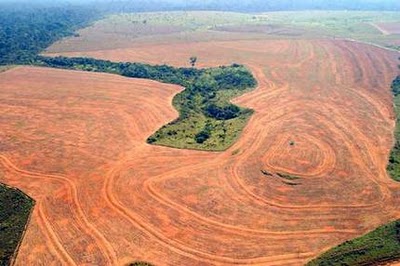
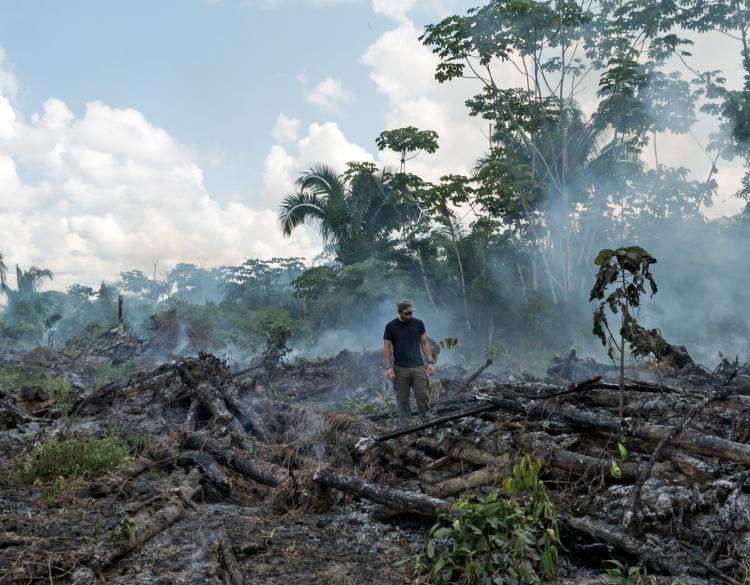
The human impact on the Amazon rainforest has been grossly underestimated according to an international team of researchers. … They found that selective logging and surface wildfires can result in an annual loss of 54 billion tonnes of carbon from the Brazilian Amazon, increasing greenhouse gas emissions.

Lead researcher Dr Erika Berenguer from Lancaster University said: “The impacts of fire and logging in tropical forests have always been largely overlooked by both the scientific community and policy makers who are primarily concerned with deforestation. Yet our results show how these disturbances can severely degrade the forest, with huge amounts of carbon being transferred from plant matter straight into the atmosphere.”

The second author, Dr Joice Ferreira from Embrapa in Brazil, said: “Our findings also draw attention to the necessity for Brazil to implement more effective policies for reducing the use of fire in agriculture, as fires can both devastate private property, and escape into surrounding forests causing widespread degradation. Bringing fire and illegal logging under control is key to reaching our national commitment to reducing carbon emissions.”

The forest is not a resource for us, it is life itself. It is the only place for us to live.

-Evaristo Nugkuag Ikanan

Link

Digital Marketing

Digital marketing is the use of the Internet, mobile devices, social media, search engines, and other channels to reach consumers. Some marketing experts consider digital marketing to be an entirely new endeavor that requires a new way of approaching customers and new ways of understanding how customers behave compared to traditional marketing.

Understanding Digital Marketing

Digital marketing targets a specific segment of the customer base and is interactive. Digital marketing is on the rise and includes search result ads, email ads, and promoted tweets – anything that incorporates marketing with customer feedback or a two-way interaction between the company and customer.

In the parlance of digital marketing, advertisers are commonly referred to as sources, while members of the targeted ads are commonly called receivers. Sources frequently target highly specific, well-defined receivers.

Digital Marketing Channels

  • Website Marketing

A website is the centerpiece of all digital marketing activities. Alone, it is a very powerful channel, but it’s also the medium needed to execute a variety of online marketing campaigns. A website should represent a brand, product, and service in a clear and memorable way. It should be fast, mobile-friendly, and easy to use.

  • Pay-Per-Click (PPC) Advertising

PPC advertising enables marketers to reach Internet users on a number of digital platforms through paid ads. Marketers can set up PPC campaigns on Google, Bing, LinkedIn, Twitter, Pinterest, or Facebook and show their ads to people searching for terms related to the products or services. PPC campaigns can segment users based on their demographic characteristics (such as by age or gender), or even target their particular interests or location. The most popular PPC platforms are Google Ads and Facebook Ads.

  • Content Marketing

The goal of content marketing is to reach potential customers through the use of content. Content is usually published on a website and then promoted through social media, email marketing, SEO, or even PPC campaigns. The tools of content marketing include blogs, ebooks, online courses, infographics, podcasts, and webinars.

  • Email Marketing

Email marketing is still one of the most effective digital marketing channels. Many people confuse email marketing with spam email messages, but that’s not what email marketing is all about. Email marketing is the medium to get in touch with your potential customers or the people interested in your brand. Many digital marketers use all other digital marketing channels to add leads to their email lists and then, through email marketing, they create customer acquisition funnels to turn those leads into customers.

  • Social Media Marketing

The primary goal of a social media marketing campaign is brand awareness and establishing social trust. As you go deeper into social media marketing, you can use it to get leads or even as a direct sales channel.

  • Affiliate Marketing

Affiliate marketing is one of the oldest forms of marketing, and the Internet has brought new life to this old standby. With affiliate marketing, influencers promote other people’s products and get a commission every time a sale is made or a lead is introduced. Many well-known companies like Amazon have affiliate programs that pay out millions of dollars per month to websites that sell their products.

  • Video Marketing

YouTube has become the second most popular search engine and a lot of users are turning to YouTube before they make a buying decision, to learn something, read a review, or just to relax. There are several video marketing platforms, including Facebook Videos, Instagram, or even TikTok to use to run a video marketing campaign. Companies find the most success with video by integrating it with SEO, content marketing, and broader social media marketing campaigns.

  • SMS Messaging

Companies and nonprofit organizations also use SMS or text messages to send information about their latest promotions or giving opportunities to willing customers. Political candidates running for office also use SMS message campaigns to spread positive information about their own platforms. As technology has advanced, many text-to-give campaigns also allow customers to directly pay or give via a simple text message.

Digital marketing challenges

1. Not getting lost in the volume

The digital world is booming, and almost every business out there has taken its products/services online to reach out to the masses. According to a report by Experian, most marketers are now facing the challenge of making their brand stand out in the volumes available on the internet. This eventually leads to the difficulty of running a brand awareness campaign or acquiring new customers.

What can you do?

While it is a fact that at least some of your products/services might be similar to what another business has to offer, there is a minor aspect that is unique to you. Discover the USP of your product/service and find ways to convey the same. Conduct surveys on your existing customers and your target audience to better understand what they are looking for and identify which needs your brand can fulfill.

2. Driving relevant traffic to the website

Continuing on the point above, marketers today are consistently facing a challenge in spreading brand awareness in the right target market. This also makes it harder for them to drive the ideal traffic to their business websites. Therefore, understanding which channel to tap into and driving the relevant audience to your website to turn them into customers is becoming an ongoing challenge for marketers.

What can you do?

Conduct an audit of your online activity. Identify what tactics you are opting to reach out to your audience. Consider the content you’re producing, the channels you’re presenting it on, your social presence, and the paid/unpaid campaigns you are running. Use robust analytics to know which of them work the best for you and optimize your efforts simultaneously. But it is essential to measure your analytics at modest intervals of time to give each of your efforts enough span to work over.

3. Targeting the right audience effectively

The first and foremost thing that an effective marketer would do is identify their target audience in the market. With the number of internet users increasing by the day and their needs changing almost every second, targeting the right audience has become one of the biggest challenges for marketers.

Keeping in mind what your business has to offer and what kind of problems it would solve when put to use, create your value proposition. This will help you identify who or what demographics would resonate with it the most when targeted.

What can you do?

Look at the general demographics of the market that you want to reach out to. Identify their needs and create customer personas taking into consideration their online behavior and possible future needs. In this case, companies like Wigzo equip you with machine learning and predictive analytics tools to enable better persona creation.

4. Lead generation using social media

When it comes to the various social channels, most businesses and marketers don’t know how to remain consistent. Most of them feel that it is all about the paid campaigns they are supposed to run for brand awareness and lead generation. Although, both of them is a constant challenge with the ever-increasing market competition.

Even though considerable marketing budgets are set aside by businesses, most marketers cannot run their engagement into revenue. But you mustn’t just build your social following – you need to get conversions that add up to the overall business goal.

What can you do?

The most effective way to leverage social media is to integrate your marketing and sales efforts. Sharing behavioral data and interaction levels with leads on social media can help the sales team define a custom, personalized customer journey for them – which they are more likely to convert on.

5. Optimizing marketing budgets and ROI

With the increase of digital channels and advanced analytics tools, marketers are now expected to optimize the marketing budgets and the ROI to best suit the business’s needs. He is expected to measure each effort and its value to achieve the end goal – the number of leads generated or the revenue raised.

What can you do?

Tap into the power of machine learning and robust analytics regularly. An effective marketer can gauge the value of every single lead generated from a marketing effort. Understand the impact of each digital campaign on lead generation, test different variants and approaches of reaching out to your target audience to optimize your campaigns for much better results.

While you measure the digital inbound results, ensure that you consider the outbound efforts being made by your business and what kind of results it is yielding.

6. Keeping up with the changing trends

The digital market and marketing techniques have changed drastically over the last few years. And it continues to change even today to cater to the modern-day addressable market needs. Hence, marketers need to stay up-to-date with all these changes.

Be it the launch of a new social media platform or a technology that would make a marketing effort more robust, marketers need to remain on top of things to ensure their business does not lose out on possible conversions.

What can you do?

Consistently engage with your target audience on platforms that they are most active on. The most effective way of doing so is to leverage social listening using tools like Hootsuite. They help you understand what people are saying about you and your product/service, what they expect – allowing you to become a part of their conversation.

7. A Check on Increased Security Risks

We have come across cases wherein online security has been compromised.  The news and media keep it afresh. Since more information is shared online, hackers get more incentives to find ways to get through security. Shopping, bill payment, application submission, order copies, certificates, and other essential documents, and so much more are stored online for easy access – making these spaces a treasure trove for hackers and thieves. Venturing into digital marketing sure comes with its cost of security getting compromised as most of the work remains online. Security comes as a challenge.

What can you do?

You may already have a good firewall, HTTPS encryption, and maybe a good antivirus program. But that’s not enough. You will need more. Sit out and work with an authentic security team and identify your website’s weak spots and apps to create measures to reduce risk.

8. Lesser Focus on Keywords

Keywords were the bread and butter of SEO sometime in the immediate past. You just needed to find the right keywords and use them right, and your site could shoot up to the top in the search results—helping you with more exposure and traffic.

Now Google has changed algorithms making the keywords less critical. However, they are still to be used but are not the focus. Instead, it has become a topical approach rather than seeking and finding one, meaning that Google first gets an overall scope of your website.

What can you do?

First, you need to use search phrases instead of keywords and build content around topics rather than coming up with content for each keyword you want to target. Make your website a resource for the phase or question you need to target and see the changes.

Current trends of serverless computing.

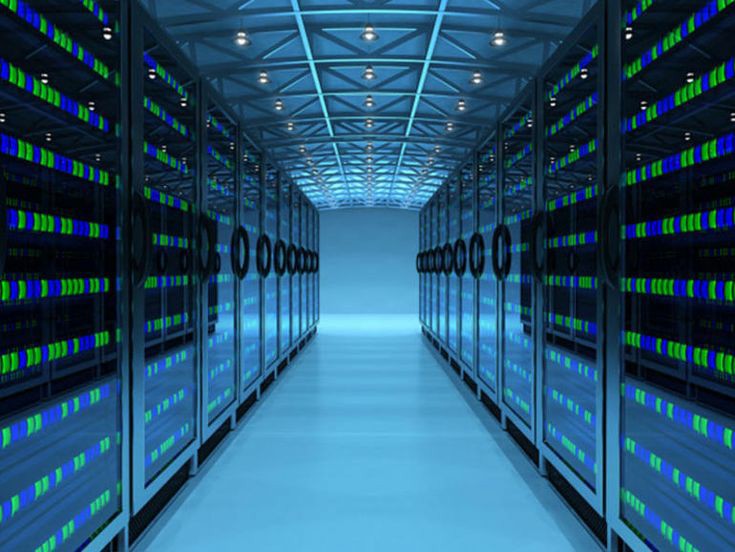
Developers spend countless hours solving business problems with code. Then comes a never ending part where ops team’s turn to spend countless hours figuring out how to get the code that developers write up and running on whatever computers are available and making sure those computers operate smoothly. Serverless computing represents an enhancement of cloud programe models, abstraction, and platforms, and is a command to the attainment and wide acceptance of cloud technologies.

What is serverless computing?

Serverless computing is a cloud computing implementation model in which the cloud provider deals with machine resources on demand, taking care of the servers on behalf of their customers. It does not hold resources in volatile memory; computing is rather done in short bursts with the results persisted to storage. When an app is not in use, there are no computing resources allocated to the app. It is an execution model for the cloud in which Some of the Common languages supported by serverless runtimes are Java, Python and PHP. Amazon’s AWS Lambda was the first serverless platform and it defined several key dimensions including cost, programming model, deployment, resource limits,security, and monitoring. Supported languages include Node.js, Java, Python, and C programming. Initial versions had limited composability but this has been addressed recently.

Current trend

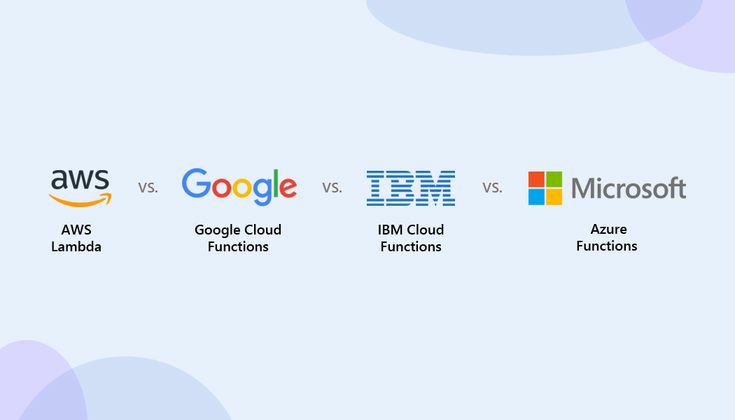
1.Google Cloud Functions : It provides basic FaaS functionality to run serverless functions written in Node. The functionality is currently limited but expected to grow in future versions.

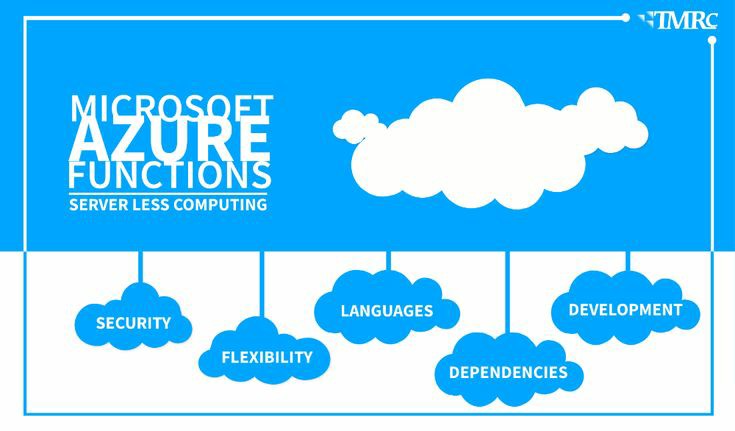
2.Microsoft Azure Functions : It provides HTTP webhooks and integration with Azure services to run user provided functions. The platform supports C , Node.js, Python, PHP, bash, or any executable. The runtime code is open-source and available on GitHub under an MIT License. To ease debugging, the Azure Func-tions CLI provides a local development experience for creating, developing, testing,running, and debugging Azure Functions.

3.IBM OpenWhisk provides event-based serverless programming with the ability to chain serverless functions to create composite functions. It supportsNode.js, Java, Swift, Python, as well as arbitrary binaries embedded in a Docker Container. OpenWhisk is available on GitHub under an Apache open source license.Besides There are several serverless projects ranging from open source projects to vendors that find serverless a natural fit for their business. OpenLambda is an open source serverless computing platform. The source code is available in GitHub Lunder an Apache License. It’s paper outlines a number of challenges around performance such as supporting faster function startup time for heterogeneous language runtimes and across a load balanced pool of servers, deployment of large amounts of code, supporting stateful interactions (such as HTTP sessions), etc

4.AWS Lambda: It is a serverless compute service that lets you run code without provisioning or managing servers, creating workload-aware cluster scaling logic, maintaining event integrations, or managing runtimes. With Lambda, you can run code for virtually any type of application or backend service – all with zero administration. Just upload your code as a ZIP file or container image, and Lambda automatically and precisely allocates compute execution power and runs your code based on the incoming request or event, for any scale of traffic. You can set up your code to automatically trigger from over 200 AWS services and SaaS applications or call it directly from any web or mobile app. You can write Lambda functions in your favorite language (Node.js, Python, Go, Java, and more) and use both serverless and container tools, such as AWS SAM or Docker CLI, to build, test, and deploy your functions.

Advantages

1.No infrastructure to maintain :Serverless computer services, which are small snippets of code meant to execute a single function are executed on pre-existing servers that run functions for countless other customers as well. Since you’re literally using someone else’s computer to execute your serverless functions, there’s no infrastructure to maintain it.

2.No costs : when functions aren’t running As Hacker Noon points out, the costs associated with serverless computing are minimal compared to other cloud services. Access authorization, presence detection, security, image processing, and other costs associated with operating a server, whether physical or virtual, are eliminated under a serverless model. In short, serverless functions can be dirt cheap, and if they aren’t being spun up for use, you aren’t paying anything.

3.Infinitely scalable : Automatic scaling capability of any serverless platform worth investing in is designed to scale based on need. That’s another advantage to serverless computing as there’s never a need to partition a new cloud server or purchase additional computing power for an existing instance. All of that is handled by the serverless computing platform, leaving you with no complication outside of a slightly larger bill for additional computing time.

4.Reduced latency : Cloud flare points out that using serverless functions can greatly reduce the latency experienced by end users. Serverless functions don’t operate from an origin server, so there’s no single location that an end user’s traffic has to be directed to.

5.Reduced software complexity : Serverless computing functions don’t need to take any of that into account–the code just has to be supported by the cloud platform being used. On top of being easier to build, serverless functions require a lot less coding knowledge to build, which opens up development to those at lower skill levels. As cloud native systems inherently scale down as well as up, these systems are known as elastic rather than scalable. Small teams of developers are able to run code themselves without the dependence upon teams of infrastructure and support engineers; more developers are becoming DevOps skilled and distinctions between being a software developer or hardware engineers are blurring.

Disadvantages

1.Security issues : server that runs serverless functions runs them for myriad customers, which opens up a lot of security concerns.

2.Vendor lock-in : Building serverless functions on one platform can mean that migrating to another is difficult. Code might need to be re-written, APIs that exist on one platform may not exist. you’re going to invest in a serverless platform, be sure the vendor you’re considering has everything you need because becoming unhappy with your serverless computing provider a few months or years into your service can be a major problem.

3.Debugging is more difficult : Every time a serverless instance spins up it creates a new version of itself, and that means it’s difficult to collect data necessary to debug and fix a serverless function. Debugging serverless functions is possible, but it’s not a simple task, and it can eat up lots of time and resources.

Conclusion

Evolution of the trend towards higher levels of abstractions in cloud programming models, and currently exemplified by the Function as a Service (FaaS) model where developers write small stateless code snippets and allow the platform to man-age the complexities of scalably executing the function in a fault tolerant manner.This seemingly restrictive model nevertheless lends itself well to a number of common distributed application patterns, including compute intensive event processing pipelines. Most of the large cloud computing vendors have released their own serverless platforms.

for more information go to the link below 👇

https://youtu.be/Fx3ZGy-mbV4

https://youtu.be/i_U_S5Eboy0

Career options after 12th class

One time will come we have choose our career. The decision is very important because whole life we will in that career only. So, we have to think carefully and take decision. In this blog, I am going to tell you the career option available after 12th class.

CAREER OPTIONS AFTER 12TH CLASS

Bachelor of Commerce(B.com)

 If a student is interested in commerce, then he should take b.com. Commerce is a popular course in India, many students take commerce in their high school only. There are many opportunities in commerce. The duration of this course is 3 years. The b.com degree is divided into 6 semesters including economics, corporate tax, company law, auditing, business management, etc. The average salary of a b.com graduate is 4 lakhs per annum.

Eligibility criteria

  1. Student should have passed class 12 with any stream.
  2. Student must secure at least 50 percent of the marks in 12 class.

               Top colleges for b.com

  1. Chandigarh University
  2. Loyola college
  3. Shri Ram college of commerce

Bachelor of Technology( B.tech )

If a student is interested in engineering, then he should go with b.tech. B.tech is also a popular course in India. The duration of this course is 4 years. The average salary of a b.tech graduate depends on your branch. There are many streams in b.tech like

  1. Computer science engineering.
  2. Electrical and Electronics engineering.
  3. Aeronautical engineering.
  4. Mechanical engineering.
  5. Civil engineering
  6. Electrical and communication engineering and many more.

        Eligibility criteria

  1. Students must have passed class 12 with physics, chemistry and mathematics(PCM) only.
  2. Student must have secured at least 60 percent of the marks in 12 class.

        Top colleges for b.tech

  1. Indian Institute of Technology, Bombay.
  2. Indian Institute of Technology, Delhi.
  3. National Institute of technology, Trichy.
  4. Indian Institute of Technology Madras
  5. Birla Institute of Technology, Pilani.

National Defense Academy(NDA)

Students who are interested in Defense and army side, should go with NDA. NDA imparts training to young cadets, who choose the Armed Forces as their career. The training equips the cadets with mental, moral and physical attributes required to cope with the challenges of the future battlefield. To join NDA student must write NDA entrance exam.

       Eligibility criteria for NDA entrance exam

  1. For Army wing, student should have passed or appearing in 12th class from a recognized board.
  2. For Navy or Airforce wing student should have passed or appearing class 12th with physics, chemistry, and mathematics.
  3. Only unmarried male candidates are eligible.
  4. Students appearing in class 11 are not eligible.
  5. Candidate’s nationality should be Indian.

Chartered Accountant (CA)

If you are interested in accounting and financial audits then you should go with CA. A Chartered Accountant is a professional practice of accounting, auditing, taxation, financial assessment for organization. The duration of the course is 5 years. The average salary of a charted accountant is 7 lakhs per annum. To join CA, you have to write a entrance exam called Common Proficiency Test (CPT). The exam is conducted twice in a year.

Eligibility criteria for CPT

  1. Students must have passed class 12 with a recognized board

Top colleges for CA

  1. Arihant Institute of Commerce and Management.
  2. Indian Institute of Finance and Management.
  3. Indian Institute of Cost Accountants of India

That’s all from my side. Hope you like it.

“First Khan” of Bollywood

Dilip Kumar (born Mohammed Yusuf Khan; 11 December 1922 – 7 July 2021) was an Indian actor and film producer who worked in Hindi films. Referred to as the “Tragedy King” for his portrayal of serious roles and contemporarily as “The First Khan” of Bollywood, he has been described as one of the most successful film stars in the industry and is credited with bringing a distinct form of method acting to cinema. Kumar holds the record for most wins for the Filmfare Award for Best Actor (which was later equalled by Shah Rukh Khan), and was also the inaugural recipient of the award.

In a career spanning over five decades, Kumar worked in over 65 films. He debuted as an actor in the film Jwar Bhata (1944), produced by Bombay Talkies. Following a series of unsuccessful ventures, he had his first box office hit in Jugnu (1947). Kumar found further success with the romantic Andaz (1949), the swashbuckling Aan (1952), the social drama Daag (1952), the dramatic Devdas (1955), the comical Azaad (1955), the epic historical Mughal-e-Azam (1960), the social dacoit crime drama Gunga Jamuna (1961), and the comedy Ram Aur Shyam (1967). Both Andaz and Aan briefly became the highest-grossing Indian film upto that point, a feat later achieved by Mughal-e-Azam, which sustained the record for 11 years. As of 2021, the latter remains the highest-grossing film in India when adjusted for inflation.

In 1976, Kumar took a five-year break from film performances and returned with a character role in the film Kranti (1981) and continued his career playing leading roles in films such as Shakti (1982), Mashaal (1984), Karma (1986) and Saudagar (1991). His last on-screen appearance was in Qila (1998), which saw him in a dual role.

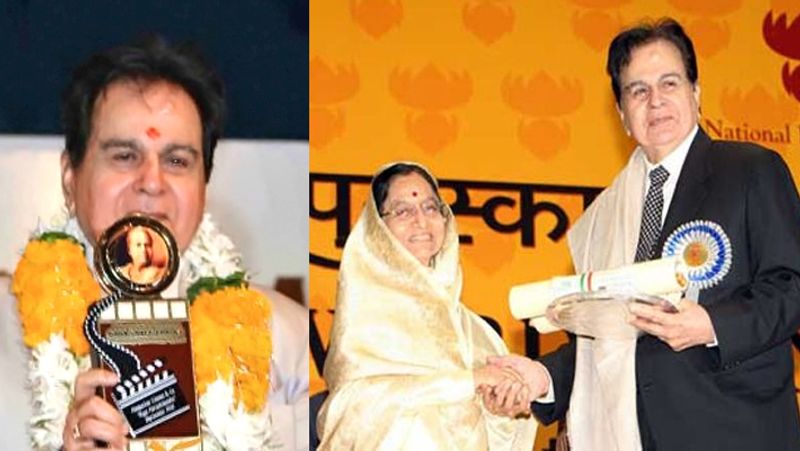
Kumar’s personal life was the subject of much media attention. He was in a long-term relationship with actress and frequent co-star Madhubala that ended after the Naya Daur court case in 1957. He married actress Saira Banu in 1966 and resided in Bandra, a suburb of Mumbai, until his death in 2021. For his contributions to film, the Government of India awarded him with the Padma Bhushan in 1991 and the Padma Vibhushan in 2015, the country’s third and second-highest civilian awards respectively. He was also awarded India’s highest accolade in the field of cinema, the Dadasaheb Phalke Award in 1994. In 1998, the Government of Pakistan conferred Kumar with Nishan-e-Imtiaz, the highest civilian decoration, making him the only Indian to receive the honor.

AWARDS WON BY DILIP KUMAR

Over his career, Kumar received eight Filmfare Awards for Best Actor (with 19 total nominations), the most of any actor (and was also it’s inaugural recipent), and a Filmfare Lifetime Achievement Award (1993). He also received a Special Recognition Filmfare Award at the 50th Filmfare Awards for being one of the first recipients of Filmfare Awards along with Lata Mangeshkar and Naushad Ali.

Kumar was appointed Sheriff of Mumbai (an honorary position) for 1980. The Government of India honoured Kumar with the Padma Bhushan in 1991, the Dadasaheb Phalke Award in 1994 and the Padma Vibhushan in 2015. The Government of Andhra Pradesh honoured Kumar with NTR National Award in 1997. The Government of Pakistan conferred Kumar with the Nishan-e-Imtiaz, the highest civilian award in Pakistan, in 1998. The ruling political party of Shiv Sena in Maharashtra had objected to this award and questioned Kumar’s patriotism. However, in 1999, in consultation with the then-Prime Minister of India Atal Bihari Vajpayee, Kumar retained the award. He was honoured with CNN-IBN’s Lifetime Achievement Award in 2009.

From the independence of India in 1947 to the late 2010s, Kumar held the record of performing in the highest number of highest-grossing box office grossing films (9 films) until his record was broken by Salman Khan by performing in 10 films. However, when adjusted for inflation, the record remains with Kumar, with his historical movie Mughal-E-Azam remaining the highest-grossing film in India.

Kumar died at Hinduja Hospital, Mumbai, on 7 July 2021 at 7:30 am, aged 98. He had been suffering from prostate cancer. The Government of Maharashtra approved his burial with state honours at Juhu Cemetery on 7 July 2021. The Prime Minister of Pakistan Imran Khan condoled his death and remembered his efforts in raising funds for the Shaukat Khanum Memorial Cancer Hospital in a tweet.

If you allow fame to get the better of you, you become nuisance, a public nuisance, a nuisance as a friend, as a member of the family, a nuisance to yourself.

Dilip Kumar

I think personality correction is necessary for successful men, like prime ministers, businessmen, politicians… it’s essential that one should keep an eye on one’s own personality. You must have seen people in politics who become chief ministers and then pass into oblivion – how egotistical they became and how pathetic they look.

Dilip Kumar

Farm Bills 2020

Theme:

  • On 20th September 2020, Parliament passed three farm bills, which created protests in the country.
  • The three bills are –
    • ‘Farmers’ Produce Trade and Commerce (Promotion and Facilitation) Bill‘, 2020 – ‘One Nation-one market’ concept was introduced to allow farmers to sell the produce anywhere in the country.
    • ‘Farmers (Empowerment and Protection) Agreement of Price Assurance and Farm Services Bill‘, 2020 – Contract farming empowers farmers to engage with wholesalers, exporters etc. so that they will get the price assurance before sowing the crop.
    • ‘Essential Commodities (Amendment) Bill‘, 2020 – This bill removed pulses, oilseeds, onions and some other products from the essential commodities list, and thereby the restrictions on the storage of these items will be removed.

Pros:

  • One nation – one market can end the monopoly of ‘Agricultural Produce Market Committees‘ (APMCs). APMCs criminalises setting up of other competing markets. Some states made it mandatory for farmers to trade with only APMC-licensed traders. With Farmers’ Produce Trade and Commerce bill, farmers can sell the produce as per their choice. So the problem of middlemen, which is one of the main loopholes of APMCs will be eliminated.
  • In some states, there is a surplus of some vegetables and fruits, whereas in some other states there is less supply and more demand for them. Through one nation-one market, corporate companies can bridge this gap benefiting the consumers.
  • It will attract private investments in the agricultural industry. Private investments can improve the infrastructure of the agricultural sector, which can lead to its modernization. The competition to buy the produce can fetch better prices for farmers. They may even come to the farmers to take the produce, saving the transport costs for farmers.
  • Contract farming is helpful for farmers because they will get price assurance beforehand. Some companies provide seeds, fertilisers and other requirements too, which will reduce the burden of input costs for farmers.
  • Essential commodities bill, 2020 can help in stabilising the prices. For example, if the onion supply is more than the demand, they can store them to prevent the price fall. This will also improve the cold storage facilities in the country.

Cons:

  • The process of passing the bills is not democratic. Agriculture and trade are state subjects, but the states are not consulted before passing the bills. The main people for whom the bills are made – farmers were also not given the opportunity to voice their concerns. Even in the parliament, clear voting was not conducted. They passed the bills on a mere voice voting.
  • APMCs are very helpful for small farmers not just to sell the produce but also to know the prices & production choices. Many states have amended the APMC acts to make it more liberal. The passing of farm bills 2020 may weaken the APMC system and hence can become a disadvantage to small farmers.
  • There is no guarantee that the farmers’ income will be increased by these bills. If we take the example of Bihar, when the state abolished APMCs in 2006, farmers got lower prices for their produce than the Minimum Support Price (MSP). So, agricultural economists are suggesting that it is important to strengthen the APMCs, instead of transferring the responsibility to private entities.
  • One nation – one market may not be much useful to small farmers, because transporting the produce requires more expenditure than selling them at the nearest APMC.
  • Contract farming may turn farmers into slaves.
  • Removing the restrictions on the storage of some foodgrains may lead to more imports at cheaper prices affecting the domestic farmers. And big businesses may store the foodgrains to increase the prices artificially.
  • Unless the prices are regulated by the government, the market will go into the hands of big businesses putting both the farmers and the consumers at the risk of exploitation.

Challenges:

  • There is a mistrust in farmers on the government for passing the bills without debate. Implementing the laws in these circumstances will be a challenge
  • As the restrictions on storing some products are removed, imports of those products may increase. So, protecting domestic farmers from such imports will also be a challenge.

Database Management System: DBMS- InShort

What is a DBMS (Database Management System)?

Database Management System (DBMS) is a software for storing and retrieving users’ data while considering appropriate security measures.In large systems, a DBMS helps users and other third-party software to store and retrieve data. DBMS allows users to create their own databases as per their requirement.The DBMS manages incoming data, organizes it, and provides ways for the data to be modified or extracted by users or other programs.

DBMS Softwares

  • MySQL
  • PostgreSQL
  • Microsoft Access
  • SQL Server
  • FileMaker
  • Oracle
  • RDBMS
  • dBASE
  • Clipper
  • FoxPro.

Types of Database Models

  1. Hierarchical Database Model

Hierarchical database model resembles a tree structure, similar to a folder architecture in your computer system. The relationships between records are pre-defined in a one to one manner, between ‘parent and child’ nodes. They require the user to pass a hierarchy in order to access needed data. Due to limitations, such databases may be confined to specific uses.

2. Network Database Model

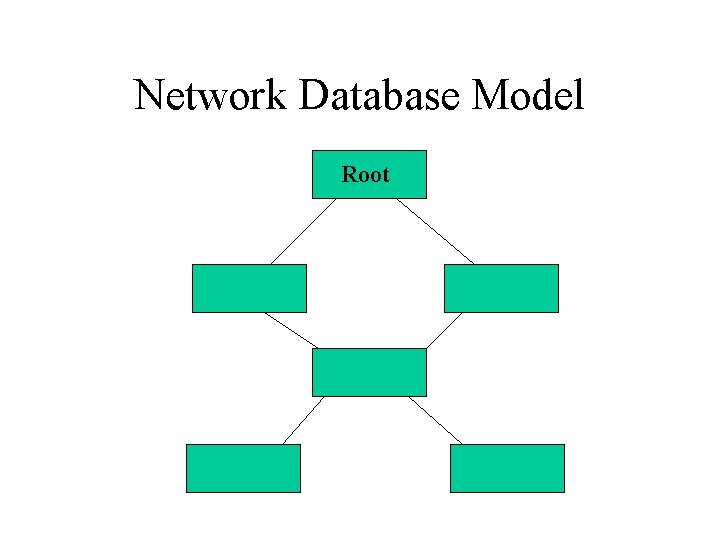
Network database models also have a hierarchical structure. However, instead of using a single-parent tree hierarchy, this model supports many to many relationships, as child tables can have more than one parent. 

3. Relational Database Model

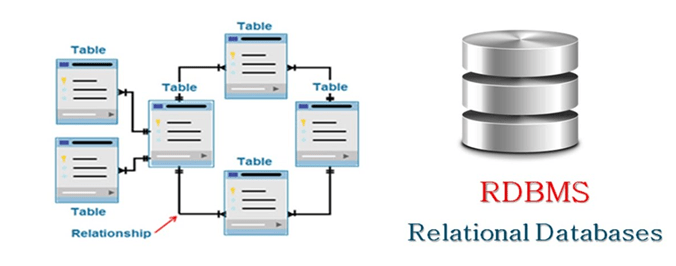
A relational database is a digital database based on the relational model of data, as proposed by E. F. Codd in 1970. A software system used to maintain relational databases is a relational database management system (RDBMS). Many relational database systems have an option of using the SQL (Structured Query Language) for querying and maintaining the database.

4. Object Oriented Database Model

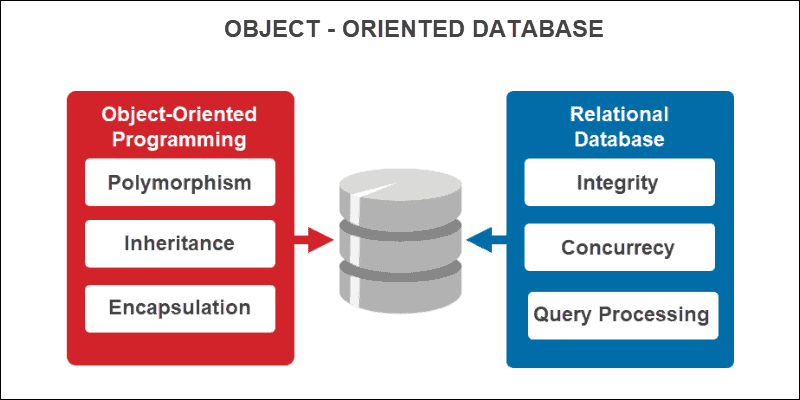
Object-oriented databases, the information is represented as objects, with different types of relationships possible between two or more objects. Such databases use an object-oriented programming language for development.

Functions of DBMS

The DBMS performs several important functions that guarantee the integrity and consistency of data in the database. The current generation DBMS supports many functions, such as the following:

  • Stores the definitions of data and their relationships (metadata) in a data dictionary, any changes made are automatically recorded in the data dictionary.
  • Creates the complex structures required for data storage.
  • Transforms entered data to confirm to the data structures.
  • Creates a security system and enforces security within that system.
  • Allow multiple user access to the data within the computer network environment.
  • Performs backup and data recovery procedures to ensure data safety.
  • Promotes and enforces integrity rules to maintain data consistency.
  • Provides access to the data via utility programs and from programming languages interfaces.

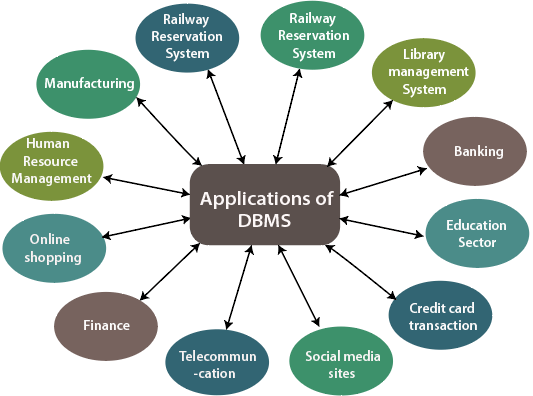
Applications of DBMS

  • Railway Reservation System
  • Library Management System
  • Banking
  • Universities and colleges
  • Credit card transactions
  • Social Media Sites
  • Telecommunications
  • Finance

Conclusion

Database implementation plan is essential for any organization that once to boost is sales or increase their customers experience, a good database implementation plan I supposed to have, all the factors and the significance value towards the organization, not forgetting the requirements that are needed. In my opinion, I could have recommended using a computerized, database management system. This is because it is faster to implement and also it requires less amount of time and finance to set up, the future of database lies on the power of the organization .and the funds that they can be able to set aside to implement new database management system.

National Recruitment Agency – Pros & Challenges

Theme:

  • In August 2020, Union cabinet approved the proposal of the ‘National Recruitment Agency‘ (NRA). This ‘One Nation – One Exam‘ concept was proposed in the budget speech in February 2020.
  • NRA will conduct the Common Entrance Test to select candidates for non-gazetted government jobs. The recruiting agencies such as SSC, RRB will conduct the next levels to finalize the candidates.
  • The test will be conducted twice per year.
  • At present, NRA will conduct CET for SSC, RRB & IBPS. In the coming days, it will be the common entrance test for all the 20 recruiting institutions of the central government.

Pros:

  • This will reduce the burden on students. It saves time & effort. And it also saves money, as there will no need to pay a fee for multiple exams, and travel expenses.
  • Single test in place of many individual tests will save time, money and human resources for the country.
  • As this will be an online test, the result will be displayed immediately. This will eliminate the need for waiting to apply for the second stage of the exam or for other jobs.
  • This test will reduce the burden to study different syllabuses for different exams. The single syllabus can save a lot of precious time for the government job aspirants.
  • The score cars will be valid for 3 years. And job aspirants can take the exam, again and again, to improve their score till they attain the maximum age limit.
  • There will be approximately 1000 centres in every district for the exam. Till now, applicants had to travel to cities to write these entrance tests. Some people couldn’t take the exam for this reason. Now, the increase in access will help many applicants in attending the exam.
  • Till now, central government exams are conducted in only English & Hindi languages. Applicants who are not comfortable with both of these languages were at a disadvantage. Now, with NRA the common entrance test will be conducted in 12 languages, and later it will be conducted in all the 22 languages that are mentioned in the 8th schedule of Indian constitution. This will be very beneficial to those who want to take an exam in their mother tongue.
  • It was mentioned that there will be a special focus on 117 Aspirational Districts that are in states with low social development indices. This will help in increasing their representation in central government jobs.
  • The score will also be available for private companies to help them with recruitments.
  • This Common entrance test will increase transparency in recruitments.

Challenges:

  • Due to pandemic, the unemployment rate is increasing and hence several youngsters are in the hope that through the NRA, the government will fill many vacancies. But at present, the number of government jobs is shrinking. And as private participation in some government sectors is increasing, the number of government jobs will be further reduced. Creating more government jobs is a challenge for the centre.

ATMANIRBHAR BHARAT

  • In May 2020, Indian Prime Minister Narendra Modi announced 20 lakh crore rupees economic stimulus package named ‘Atmanirbhar Bharat Abhiyan‘, with the slogan ‘Vocal for Local‘.
  • It was announced with the aim to make India self-reliant and also to provide a stimulus for the economy that was hit badly by COVID-19. This package is estimated to be 10% of GDP.
  • While announcing this package, Prime Minister said that this package focuses on land, labour, liquidity & laws. He also mentioned that this will benefit labourers, farmers, honest taxpayers, MSMEs & cottage industry.

Benefits:

  • Atmanirbhar Bharat Abhiyan package aimed to make local products global and thereby helps Indian companies in competing in the global supply chains.
  • This package allowed collateral-free loans to Medium, Small, Micro Enterprises (MSME) with a turnover of up to 100 crore rupees. In general, banks do not prefer giving loans to MSMEs due to fear of non-repayment. COVID-19 pandemic affected this sector badly. So, this package will help MSMEs very much. They can pay wages, buy raw goods with the money and so can run their businesses. Around 45 lakh companies will be benefited by these loans. Approximately 11 crore people are employed through MSMEs in India. So, their jobs can be saved.
  • Structural reforms and marketing reforms in agriculture are promised. 30,000 crore rupees to small farmers through Kisan credit cards, 20,000 crore rupees to the welfare of fishermen, 13,000 crore rupees for vaccination to livestock, 1 lakh crore rupees for Agriculture co-operative societies & Farmer producer organisations, funding to post-harvest management is also mentioned – agriculture and allied sectors will be benefited.
  • Space exploration to be opened for the private sector. This will benefit the Indian space industry.
  • Rs. 30,000 crores special liquidity facility is announced for stressed Non-banking Finance Companies (NBFCs).
  • Rs. 90,000 crores liquidity plan is announced to provide loans for power discoms.
  • Migrants workers are the worst hit during COVID-19 lockdown in India. So, free food supply to migrants is promised. ‘One Nation – One Card‘ was launched, which allows people to take ration from anywhere in India.
  • Shelter will be provided to migrants by the government.
  • 5000 crore rupees credit facility is provided for street vendors.
  • Additional 40,000 crore rupees were allotted for MGNREGA to provide employment to the returned migrants.
  • More health institutions & labs will be established.

Criticism:

  • The main criticism for Atmanirbhar Bharat Abhiyan package is – it is very similar to ‘Make in India’. Critics argue that a different name is given to the same scheme.
  • Most of these fundings are allotted just like a normal budget. So, including them in a special package has attracted criticism.
  • Many sectors are opened to private players.
  • There is no mention of research & development, which is very important to take important steps in revival of the economy.
  • Companies of other countries may perceive this as a protectionist policy.  They may feel apprehensive to invest in India.
  • This package may not be sufficient in reviving the economy.
  • Urban employment is ignored.

360 Wander Writer

Welcome to Book review

Books are if great friends to Human Kind. Reading Books is a healthier habit. There are different types of genres.

Divergent is the debut novel of American novelist Veronica Roth, published by Harper Collins Children’s Book in 2011.The book is trilogy . It consists of the parts Divergent, Insurgent and Allegiant. It was a debut novel of Veronica Roth. It can be best described as a young adult dystopian novel . Tris the main character of the book explores herself within a society of factions.

The world is divided into factions where the people ought to choose any one of the factions . The five factions include Candor, Abnegation, Dauntless,  Erudite, Amity. The people who does not belong to any category become faction less more or less the same as the untouchables. There comes a turn when Tris find herself as Divergent and opts for the Dauntless faction where her rest of the life belongs to. There comes the romantic chapter of her life with Four , her instructor.

Likewise her brother Caleb choose Erudite . Both choosing different factions broke their parents, out of which their father was a important person on the leadership of Abnegation. Though at first she struggles to fit in there , she strives through it through her perseverance . She also faces threat from her own co-fellows out of fear of her success. As the things move forward the Dauntless were subjected to serum made out of Erudite .The Erudite was under the leadership of Jeanine.

There comes the plot of Erudites attacking Abnegation with the soldier power of Dauntless . Being Dauntless For and Tris manages to avoid the compulsion from the serum and works out to find out what’s wrong out there. In the course field Tris looses her parents and she was also forced to shoot her own friend Will. On entering the Abnegation she comes to know about the truth behind the attack. They head back again to the Dauntless where they stop the attack of mind controlling on the Dauntless. The again move in search of rest of the survivors to Amity.