The squad for India tour of Sri Lanka is announced a month ago and players flew to Sri Lanka, were in quarantine and now they are practicing for the games. The schedule that was first released was changed due to Covid-19 spread for some Sri Lanka players who came from England. Previously Sri Lanka toured England for T20Is and ODIs and completed the tour without any pandemic spread for the team and crew members. But after the completion of the tour, some players and coaches were reported that they have Covid-19. Then they were quarantined and now the situation is fine. Due to this, now the schedule is changed. Previously the first ODI match was planned to happen on July 17 (Saturday) but now it is rescheduled to July 18 (Sunday).
The tour was planned to have 3 ODIs and 3 T20Is. Indian management have sent a bulk team with more than 15 players for the tour. A pack of experienced players and youngsters were sent. Now they are playing practice matches and pumping themselves up for the game. They are also getting themselves adapted to the weather of Sri Lanka. It is too hot there. Players are using wet towels and ice to cool themselves after every session of practice. The squad is same for T20s and ODIs.
Players who impressed the selectors by their IPL performance and Syed Mushtak Ali trophy performance were selected. It is a pride for the nation to play two international series at the same time with 2 different teams. It is hard for any nation to do so.
As the head coach Ravi Shastri and other coaches are busy with the test team that was sent to England, new coaches were appointed for the Sri Lanka tour. Rahul Dravid was appointed as the head coach. He worked as the Director of National Cricket Academy previously. He also has an immense experience with the youngsters who are in the new team as they all played under his coaching during their Under-19 World cup stages. He also has a good relationship with them and also the captain Shikhar Dhawan. They both assured that they would provide a few options for the selection committee to choose for the upcoming World T20 cup in November.
The selection of openers will definitely be a tough task for the coach and the captain. Four impressive batsmen are there to open the innings. Dhawan being the captain will definitely play every game. For the next one spot in opening, 3 youngsters are competing. Prithvi Shaw, Ruturaj Gaikwad and Devdutt Padikal are those. Prithvi Shaw has a good experience in International cricket compared to other two. Padikkal and Gaikwad showed promise by their performance in last two IPL editions. Gaikwad also had played many India-A matches previously. Let’s wait and watch the series.
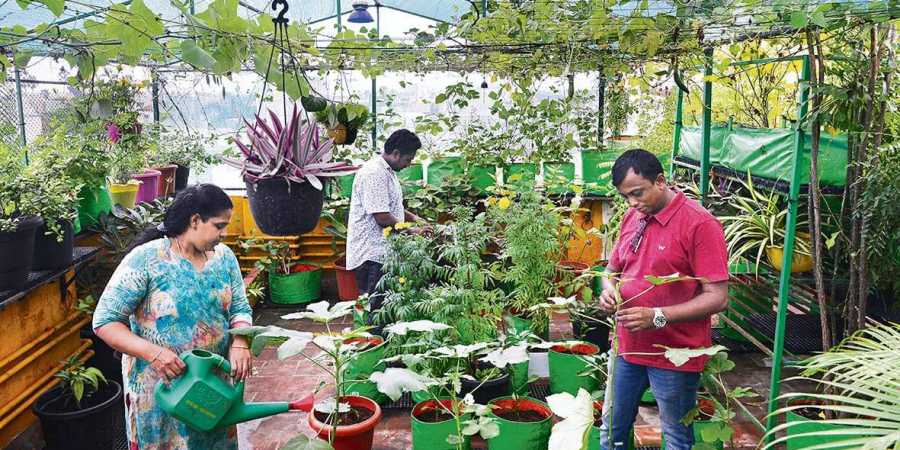
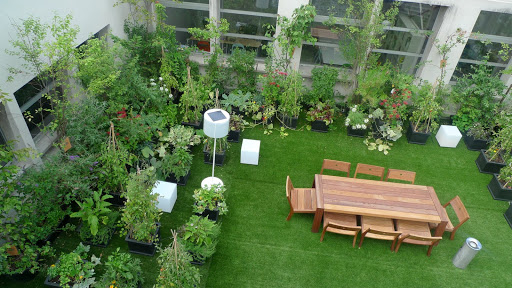
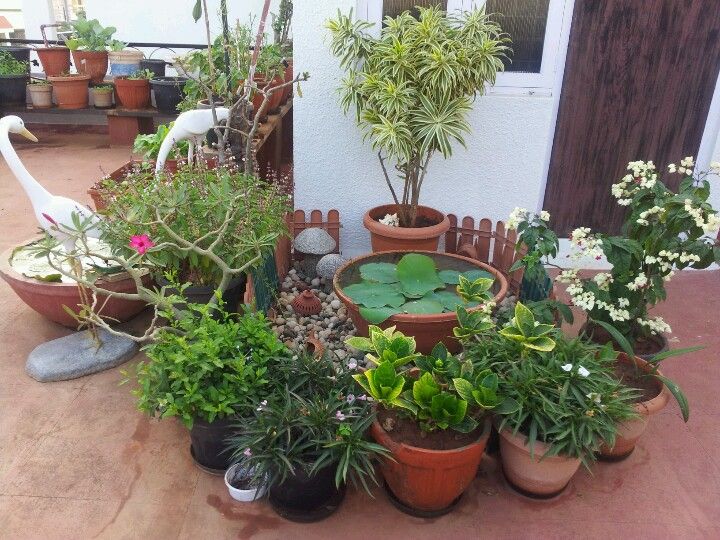
Even though the modern lifestyle hardly leaves us with any time, we all love to have soothing hobbies for those rare times. For some it’s reading and for others it’s gardening. Unlike some other hobbies, gardening requires a lot of time, effort and a lot of empty space. While most of us would love to have a huge garden filled with greenery, not all of us can. One of the drawbacks of living in metropolitan cities is that you can’t ever have enough space, especially for your dream garden. This is where terrace farming comes in handy. Whether it’s plants, herbs or vegetables, you can literally grow anything on your terrace itself. Here are some terrace gardening tips that will be useful for people living in small urban spaces. You can even try these home terrace farming techniques in your balconies!
1. Construct Shade
The terrace mostly receives a good amount of sunlight. However, depending on the plants that you want to grow, you will need to monitor the sunlight. On an average, your terrace should get at least 4 hours of direct sunlight. If you receive more than 6 hours of direct sunlight, make sure you arrange for some shade. Too much sun isn’t good for the plants either.
2. Selecting suitable pots and planters
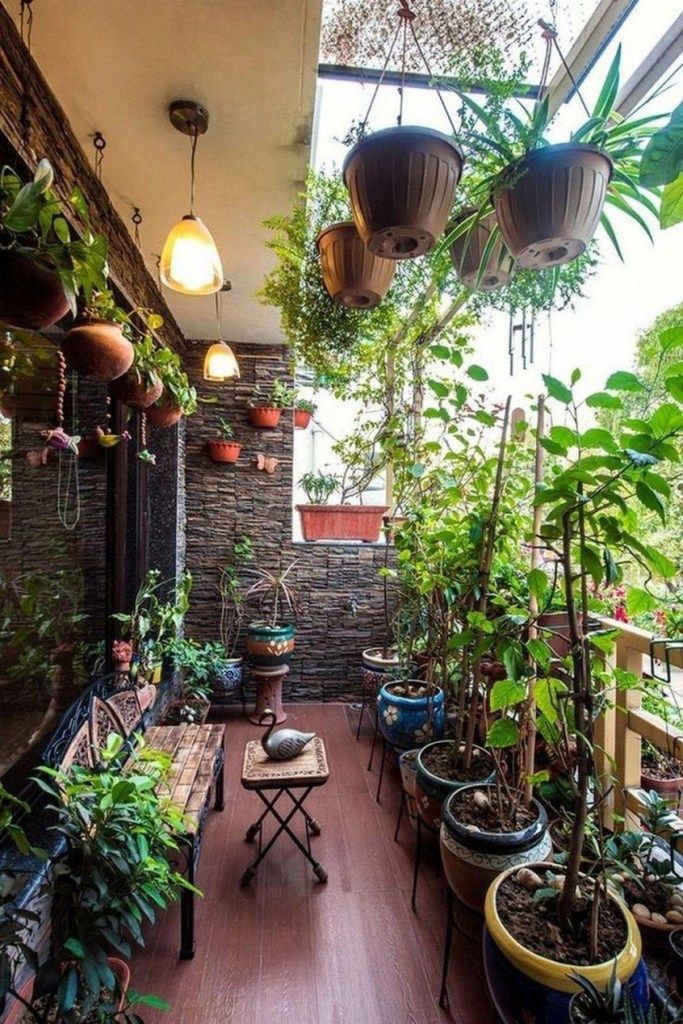
They make your garden bigger: Growing plants in containers is a great way to expand your garden space. Pots can go anywhere: on pavement, a window sill, a deck, up a flight of steps. Allows you to control the soil your plants grow in. Your garden soil may not be the greatest but when you plant in a pot, you control the soil and can provide excellent growing conditions that the soil in your garden may not have.
3. Add Home Decor Elements
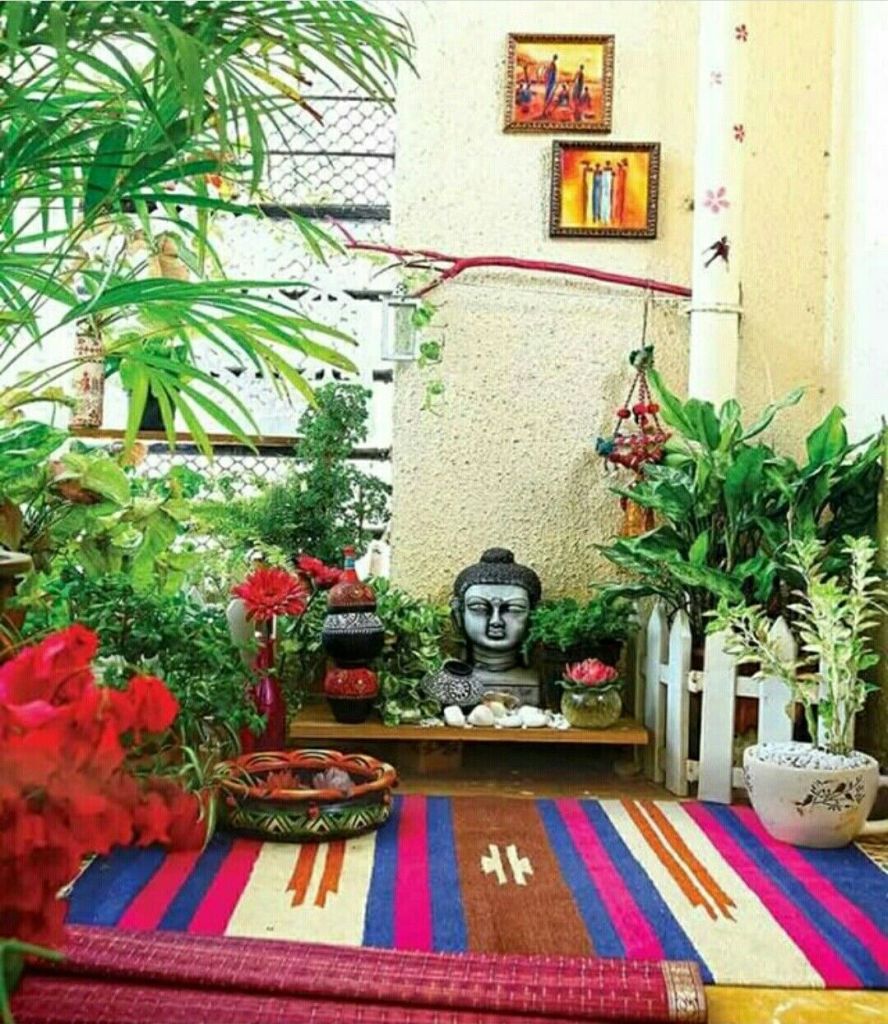
Gardening is sort of an extension of home decor. It adds to the beauty of the home and terrace too. This is why our next home gardening tip is to add aesthetic lighting and some garden furniture. If you are thinking about growing a beautiful terrace garden, you should be able to spend time there. Trust us, it will become the most popular spot of your home for hosting or otherwise.
4. Don’t Keep Plants Too Close
This terrace gardening tip stands true for most types of farming and gardening. You don’t want to plant the seeds too close. They will compete for sunlight, water and other nutrients and thus, might not mature at an even rate. Also, for home terrace farming, you should opt for creepers since they are huge in volume and grow fast without much effort.
5. Choose Air Purifying Plants
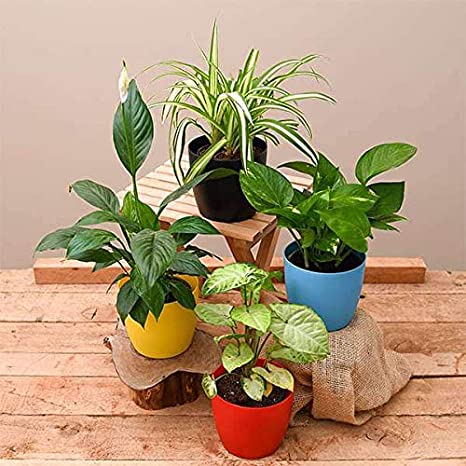
This terrace gardening tip is a very useful one for people living in urban spaces. The air is filled with pollutants that affect our health in ways we don’t even know. While you’re at it, why not plant some air purifying plants. Generally, these plants are great for indoors but if you keep them away from harsh, direct sunlight, they will prosper even on your terrace. Most of them also release oxygen at night, which is an added bonus!
6. Let Sunshine be Your Guide
Each plant thrives in different amounts of sunlight. While some prefer shade, others grow well in prolonged exposure to bright sunlight. In a terrace garden, you have to make sure your plants get both, especially shade. One tip to keep rotating the plant frequently so that all the branches will have buds growing on them.
7. Prune The Infections Away
Prune (trim) the flowering plants regularly with a rust-free scissor/cutter to ensure bushy growth with lots of flowers. Also, cover the pruned tip of the stem with some soil to protect it from infections. Add some compost to the soil immediately after pruning to boost the growth of the plant.
8. Strength in Unity
Plants must be grouped together, instead of isolating them from one another. In a terrace garden, it is easier how you want to group your plants as we use pots and planters. It is important to strategically cluster houseplants together, just as they do naturally in the wild, according to their growth requirements.
9. Unity in Diversity
A healthy garden must have a variety of plants. Biodiversity attracts essential pollinators. “For example, plant a few flowering plants in your vegetable garden to attract pollinators (insects that move pollen from the male anther of a flower to the female stigma of a flower).”
10. Patience is The Key
Gardening needs patience. Do not rush your gardening activities. Patience is a virtue in many aspects of life, but particularly so in gardening. Plants take their own sweet time to bloom, to produce fruit, to become mature. So gardeners must be patient.
Conclusion
Patience is a virtue in many aspects of life, but particularly so in gardening. Plants take their own sweet time to bloom, to produce fruit, to become mature. So gardeners must be patient.
YOUR MIND CAN DO FOR YOU MORE THAN YOU CAN EVEN THINK OF. IT CAN HELP YOU SAIL YOUR BOAT THROUGH THE MOST DISASTEROUS SITUATIONS AND IT CAN DROWN YOUR BOAT IN THE OCEAN .
IT ACTS LIKE A GINNIE. IF YOU SAY ” I AM SICK ” OR ” I HAVE LOST EVERYTHING ” , IT WILL SAY “YOUR WISH , MY COMMAND”. THIS IS WHAT IS GOING TO GET MANIFESTED. YOU SHALL GET IN A SITUATION WHEREIN, YOU WILL FACE ISSUES.
ON THE OTHER HAND IF YOU SAY, ” I HAVE EVERYTHING ” OR ” I AM HEALTHY”. NO MATTER IN WHAT SITUATION YOU ARE, YOU SHALL SURELY BE ABLE TO OVERCOME IT AND BE IN A STATE OF COMFORT.
YOUR MIND AND UNIVERSE ACT LIKE A MAGNET. THEY ATTRACT EACH OTHER.
‘It is easy to add but difficult to maintain’ Population is a dynamic phenomenon where the number, distribution and composition are constantly changing. Human population increases as babies are born and decreases as people die. For most of human history, births have only slightly exceeded deaths every year. As a result, human population grew slowly. About the time of Industrial Revolution, it began to increase rapidly.
Natural increase
Natural increase of population is the difference between the birth rate and death rate. In fact population is always increasing but only in very rare cases it may decrease through natural or man-made disasters such as famine, landslides, earthquakes, tsunami, epidemics, extreme weather conditions and war.
Population change
Population change refers to an increase or decrease in the population of an area influenced by the number of births, deaths and migration. The population of the world doubled from 500 million in 1650 to 1000 million in 1850. The projected population for 2025 and 2050 is about 8 billion and 9 billion respectively.
Population growth
Population growth refers to an increase in the number of people who reside in a particular area during a particular period.
Population increases when there are more births and immigration. It decreases when there are more deaths and emigration.
Distribution of Population
Population distribution refers to the way in which people are spread out across the earth’s surface.
The world population is not uniformly distributed, owing to the following factors.
Physical Factors
Physical factors include temperature, rainfall, soil, relief, water, natural vegetation, distribution of minerals and availability of energy resources.
Historical Factors
Regions with historical importance (river valley civilization), war and Constant invasions fall under historical factors responsible for population distribution.
Economic Factors
Educational institutions, employment opportunities, manufacturing industries, luxurious amenities, trade and commerce and other facilities encourage dense population in an area.
Density of Population
Density of population refers to the number of people living per square kilometre. An area is said to be sparsely populated when it has a large area with less number of people. Similarly, smaller the area with a large number of people, is said to be densely populated.
Population Density = Total Population/Total land area
The world’s population density is divided into three main groups.
Areas of high density (above 50 people per sq.km)
East Asia, South Asia, North West Europe and Eastern North America.
Areas of moderate density (10 to 50 people per sq.km)
The sub tropical regions like Angola, Congo, Nigeria and Zambia in Africa.
Areas of low density (less than 10 people per sq.km)
Central Africa, Western Australia, Northern Russia, Canada, etc…
Infosys Limited is an Indian multinational information technology company that provides business consulting, information technology, and outsourcing services. The company was founded in Pune and is headquartered in Bangalore. The company changed its name to Infosys Technologies Private Limited in April 1992 and to Infosys Technologies Limited when it became a public limited company in June 1992. Infosys has been an early adopter of corporate social responsibility (CSR) initiatives. Corporate social responsibility (CSR) has become an integral part of the standard business models for many companies, serving as a platform for businesses to give back to society and create social value, especially within the industry and community in which they function in. Infosys foundation was established in 1996 with a vision for boosting CSR initiatives.
It is a non-profit organization with Sudha Murthy as the chairman of Infosys foundation in India. It also partners with various non-government organizations (NGOs) to make a difference along with local communities. The company has always aimed at contributing to the sustainable development of society and the environment for the betterment of planet earth. The CSR committee comprises two independent directors and the COO and Whole-time Director. The members of the CSR committee are – Kiran Mazumdar-Shaw, Chairperson; U.B. Pravin Rao and Dr. Punita Kumar-Sinha.
Infosys foundation supports programs in areas of Education, Rural Development, Healthcare, Arts & Culture, and Destitute care. It has implemented many programs across various states of India. During the last financial year 2019-2020, it supported COVID-19 PAN India by contributing to the PM CARES fund. This helped hospitals, the destitute, daily wage workers, and underprivileged sections of the society. Also, it took part in the Construction of a Dharamshala at AIIMS, Jhajjar, and providing training to teachers in Andhra Pradesh and Odisha.
The foundation provides access to primary healthcare, awareness of basic hygiene, and treatment for underprivileged patients. It organizes health camps in rural India and also has donated medicines and medical equipment to hospitals. It partners with schools in rural India to enhance and education and library facilities, and promote primary education among underprivileged children. It promotes traditional art, crafts, and dance. They offer financial assistance to underprivileged artists and authors to promote their art. It supports programs of NGOs in the rural areas across India. It also provides vocational training to help the destitute to live with dignity and earn a livelihood. It undertakes programs to improve the welfare of people in rural India. It conducts livelihood projects awareness campaigns on hygiene, sanitation, vocational training, and entrepreneurship.
Recently, Infosys foundation donated 4,000 PPE kits to Mysuru City Corporation. Due to a shortage of PPE kits, the MCC had appealed to Infosys Foundation to donate the kits under its CSR. Infosys Mysuru Manager Anant Bondade handed over the kits to MCC Health Officer Dr. M.S. Jayanth at the MCC Office. Through CSR, the company promotes change and progress throughout the world.
There are myriad reasons why Infosys foundation inspires others. It adds to the prosperity of society. They provide an opportunity to the people who require it and thus subsequently making a positive effect on them and society, in general. Moreover, it inspires people in their surroundings to do the same.
“Life offers up these moments of joy despite everything,”
Sally Rooney, Normal People.
About the book:
Author: Sally Rooney
Published on: 28th August 2018
Publisher: Faber and Faber
Genre: Literary fiction.
My rating: 3.5/5
The Plot:
The story follows the lives of two teenagers, each unique in their own way and personality. We have Marianne, who is very private, lonely, proud and studious and always looking for a good conversation, you can sometimes also call her pretentious and then there’s Connell, the popular football star who is well-liked by everyone. Their lives are intertwined in many ways, with them attending the school and Connell’s mother working at her house, they see each other every day and the only conversation they have are pleasantries. However, something shifts and a connection forms, one that both are determined to keep secret. After school, Marianne and Connell are studying at Trinity College in Dublin. Marianne has a whole new social circle to explore, while Connell has gone into his shell. However, as their college life begins they come together and together on a path of self-destruction each acting as a black hole, taking each other with them. With new opportunities coming their way, each having to choose an option.
Review:
This book received too much hype among the GenZ and Millennial groups, a lot of people were either recommending it or posting stories on various social media about it. Nowadays a lot of us, rely a lot on social media, and the things that we’ve seen too many times, we regard the same as the gold standard. So I went into this book, with so much enthusiasm and expectation, however, after reading it, the book did not live up to the amount of hype for me. However, this book paints a very realistic depiction of what teenagers are and how we think and that the only thing we cared about is how society perceives us, and judges us for who or what we are doing and how awkward and flawed we are! The book also addresses issues about the anxiety of moving to a new place, and the idea of not fitting in makes us feel. The thing about Sally Rooney’s writing is that she does not use quotation marks, which takes a while to get accustomed to. The thing about Sally Rooney’s this novel, makes me feel like all the fan-fiction I have read, however, that doesn’t mean I didn’t like this book, I honestly did and but would I re-read it again? Maybe.
Trigger Warning: sexual assault; domestic abuse; drug use; casual racism (called out); depression; anxiety; suicide and suicidal ideation.
“Life is the thing you bring with you inside your own head.”
Sally Rooney, Normal People.
About the author:
Sally Rooney is an Irish author and screenwriter, with her debut novel, ‘Conversations with Friends‘ which was published in 2017. It was nominated for various prizes like Folio Prize, International Dylan Thomas Prize and many others. Her debut novel won the 2017 Sunday Times/Peters Fraser & Dunlop Young Writer of the Year Award. ‘Normal People‘ was also nominated for various prizes and an adaptation of the same novel was premiered in the year 2020. Her upcoming work,’ Beautiful World, Where Are You‘, is set to be published in September of this year (2021).
Teacher‘s are a blessing for us. They help us in a myriad of ways throughout our life, & help us in achieving different milestone of success. In their honour, we have the teachers day on 5th September, every year. Teacher’s Day is celebrated in many countries around the world. including India. It falls on different days in different countries. In China it is celebrated on 28 September, which is the birthday of the great thinker, Confucius; in India it is celebrated on 5th September, the birthday of Dr Sarvapalli Radhakrishnan, a highly respected teacher who became the President of India.
The story behind it’s origin in India:
The story goes that when Dr Radhakrishnan became the country’s President in 1962, some of his students and friends went to him and requested him to allow them to celebrate his birthday. Dr Radhakrishnan replied, Instead of celebrating my birthday separately, it would be my proud privilege if 5th September is celebrated as Teachers’ Day.’ In our school, we start preparing for Teachers’ Day about a week before 5th September. Since we put up a variety entertainment for our teachers on that day, we first get together to decide what exactly we will do.
This day is celebrated with great Rejoicment throughout the world. We put up a variety entertainment for our teachers on that day. Every year there were songs, dances, skits, mimicry, and recitation. year It is the duty of the School Captain to prepare a speech in praise of our teachers. This year’s Captain used a quote that has stuck in my memory: ‘to teach is to touch lives forever.’ Then there is the important matter of choosing Teachers’ Day greeting cards. I check the words in my cards very carefully, to make sure they are suited to the teachers for whom they are meant. There is no point in giving a very funny card to a very serious teacher, is there? We pool our money to buy our class teacher a very special present. For our ‘subject teachers’ we buy smaller presents.
On Teachers’ Day, we go to school early to decorate our classrooms, and the best artist in the class writes Happy Teachers’ Day’ on the blackboard in big, bold letters. When the class teacher arrives, the monitor puts a ceremonial scarf around the teacher’s neck, while another pupil presents the gift or gifts. The teacher thanks us and takes his place in the last row among the students. Some bright student, who is dressed up as a teacher for the occasion, conducts a mini-class on a subject that he has chosen. Then the bell rings, and the whole school goes into the hall for the entertainment programme. This lasts for two hours, and by the time it ends, it feels wonderful for a teacher to be a teacher, and a student to be a student!
DO YOU WAIT FOR EVERYBODY TO LIKE YOUR POST. DESPERATELY WAIT FOR COMMENTS OR SHARES. IF YES, DONT DO THAT. SOMEBODYS LIKE WONT MAKE A DIFFERENCE IN YOUR LIFE. IT WONT LOWER YOUR STANDARDS, IT JUST WONT.
STOP JUDGING YOURSELF THE WAY PEOPLE DO . YOU ARE THE ONE WHO HAS EMBEDDED YOUR EFFORTS TO GET THE BEST IN YOU. WHY WAIT FOR SOMEBODY’S CONSENT??
HAVE FAITH IN YOURSELF. IF WE KEEP ON WAITING FOR OTHERS TO GIVE US CONSENT, WE MIGHT START HATING OURSELVES.
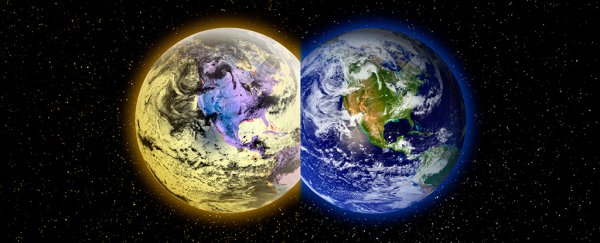
As far as we currently know, there is a single expanding blob of spacetime speckled with trillions of galaxies – that’s our Universe. If there are others, we have no compelling evidence for their existence.
That said, theories of cosmology, quantum physics, and the very philosophy of science have a few problems that could be solved if our blob of ‘everything’ wasn’t, well, everything.
That doesn’t mean other universes must exist. But what if they do?
What is a universe?
It should be a simple question to answer. But different areas of science will have subtly different takes on what a universe even is.
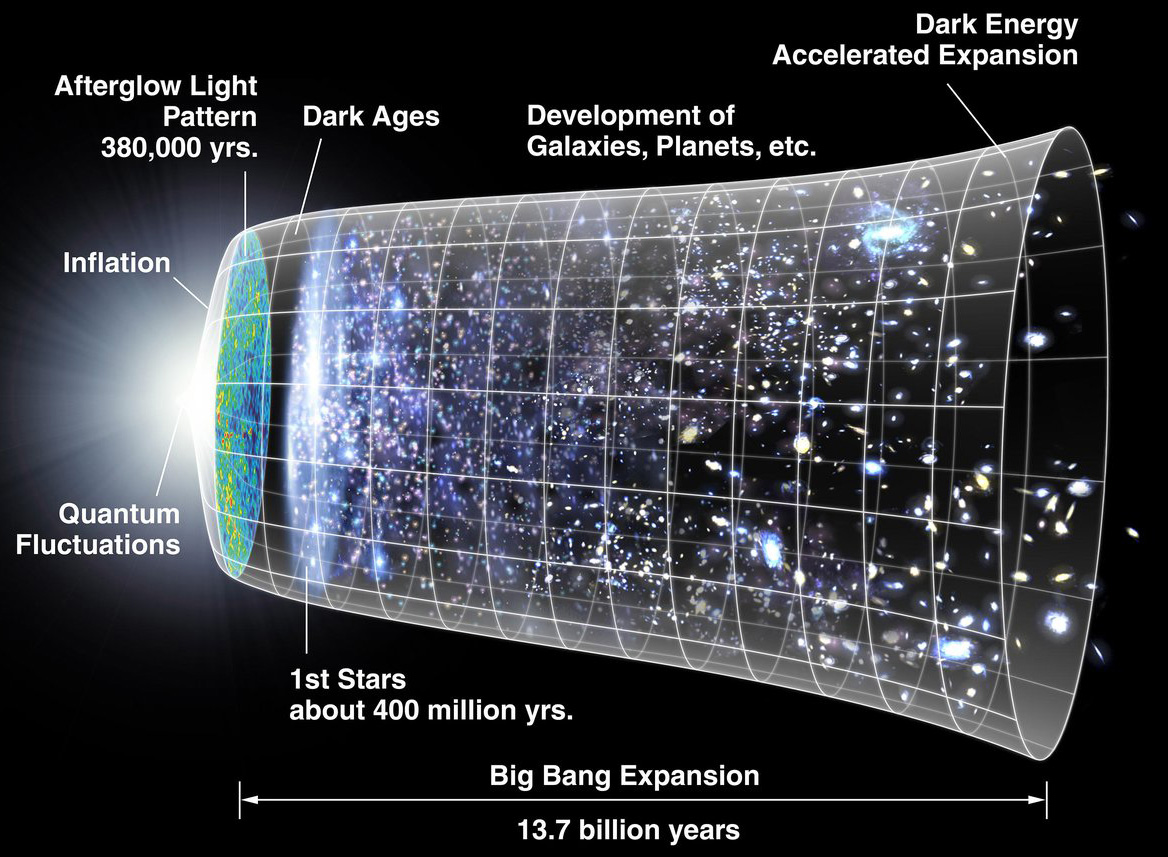
Cosmologists might say it describes the total mass of stuff (and the space in between) that has been slowly expanding from a highly concentrated volume over the past 13.77 billion years, becoming increasingly disordered with age.
It now stretches 93 billion light years from edge to edge, at least based on all of the visible (and invisible) stuff we can detect in some way. Beyond that limit, there are either things we can’t see, an infinite expanse of nothingness, or – in the unlikely scenario that all of space bends back around on itself – a round-trip back to the start across a hyperspherical universe.
If we’re talking quantum physics, though, a universe might refer to all fields and their particles, and their combined influences over one another. As a general rule, a universe (like ours, at least) is a closed system, meaning it can’t suddenly lose or gain a significant sum of energy.
Philosophically speaking, a universe might be a discrete set of fundamental laws that governs the behavior of everything we observe. A universe would be defined by its own rules that set its unique speed for light, tell particles how to push or pull, or space how it should expand.
What is a multiverse in cosmology?
A century of astronomical observations has told us a lot about the age, size, and evolution of galaxies, stars, matter and the four dimensions we sum up as spacetime.
We can theoretically squeeze all of the matter of the Universe down to a point where the concentration of energy reduces atoms to a soup of simpler particles and forces combine until we can’t tell them apart. Any smaller than that? Big shrugs.
If we go with what’s known as a cyclic model of cosmology, the parent universe preceded ours in some way. It might even be a lot like this one, only running in reverse compared with ours, shrinking over time into a concentrated point only to bounce back out for some reason. Played out for eternity, we might imagine the respective universes bounce back and forth in an endless yo-yo effect of growing and collapsing.
Or, if we go with what’s known as a conformal cyclic model, universes expand over trillions upon trillions of years until their cold, point-like particles are so spread out, for all mathematical purposes everything looks and acts like a brand new universe.
If you don’t like those, there’s a chance our Universe is a white hole – the hypothetical back end of a black hole from another universe. Which, logically, just might mean the black holes in our Universe could all be parents, pinching off new universes like cosmic amoebae.
What is a multiverse in quantum physics?
Early last century, physicists found theories that described matter as tiny objects only told half of the story. The other half was that matter behaved as if it also had characteristics of a wave.
Exactly what this dual nature of reality means is still a matter of debate, but from a mathematical perspective, that wave describes the rise and fall of a game of chance. Probability, you see, is built into the very machinery that makes up the gears of a universe like ours.
Of course, this isn’t our daily experience as vast collections of atoms. When we send a bucket of molecules called a rocket to the Moon as it zooms past 300,000 kilometres away, we’re not rolling dice. Classical old physics is as reliable as tomorrow’s sunrise.
But the closer we zoom in on a region of space or time, the more we need to take into account the possible range of measurements we might find.
This randomness isn’t the result of things we don’t know – it’s because the Universe itself is yet to make up its mind. There’s nothing in quantum mechanics explaining this transition either, leaving us to imagine what it all means. https://www.youtube.com/embed/dzKWfw68M5U?ab_channel=PBSSpaceTime
In his 1957 doctoral dissertation, American physicist Hugh Everett suggested the range of possibilities are all as real as one another, representing actual realities – separate universes, if you like – just like the one we’re all familiar with.
What makes any one universe in this many worlds interpretation distinct is how each wave correlates with a specific measurement taken of other waves, a phenomenon we call entanglement.
What ‘we’ means, and why ‘we’ experience one entangled set over waves over another, isn’t clear, and in some ways presents an even bigger problem to solve.
What is a multiverse in philosophy?
One of science’s most fundamental starting assumptions is that in spite of what your mother tells you, you’re not special. Nor is any other human, or our planet, or – by extension – our Universe.
While rare events occur from time to time, we don’t answer The Big Questions with ‘it just happened that way’.
So why does our Universe seem to have just the right tug-of-war of forces that allow not just particles to appear, but to congeal for long enough periods into atoms that can undergo complex chemistry to produce thinking minds like ours?
Philosophically speaking, the anthropic principle (or principles, since there are many different ways to spin the idea) suggests we might have it backwards. Without these conditions, no minds would have arisen to consider the amazing turn of events.
If just a single universe ‘just happened that way’ early one spring morning, it’d be one big coincidence. Too big really.
But if there were infinite universes, with infinite combinations of forces pushing and pulling, some would inevitably give rise to minds that just might ask ‘are we part of a multiverse?’
Will we ever discover other universes?
Given the very definition of a universe relies on some kind of physical fence keeping influencing factors apart, it’s hard to imagine ways we might ever observe the existence of a sibling for our universe. If we did, we might as well see it as an extension of our own Universe anyway.
That said, there could be some cheats that could give us a glimpse.
Any experiment to find one would have to rely on that ‘fence’ having some holes in it that allow particles or energy to leak across, either into ours, or away from it. Or, in the case of universes existing in our past, monumental events that left enough of a scar that not even a rebirth could erase.
For now, we still have no good reason to think our blob of everything is anything but unique. Given we’re still learning how our own Universe works, the current gaps in physics could yet be plugged without any need to imagine a reality other than ours.
In countless other versions of this article scattered throughout the multiverse, however, the question of whether we are alone just might have a different answer.
Soft skills… Every one of us has heard this phrase. Also, you might have heard from employees, grad students, millennials, school students, or young people complaining that they lack certain soft skills.
There is a wide range of skills that falls under the term “Soft Skills”. These skills are also known as “transferable skills”.
A definition of Soft Skills:-
Soft skills are certain sets of traits and interpersonal skills that don’t depend on the acquired knowledge. Soft skills include common sense, the ability to deal with people, a positive flexible attitude, or how you approach life and work.
The good news is one can learn and enhance their soft skills over some time. Though it is often hard to do so. Like Hard skills, one can work on their Soft skills and can make themselves capable of using them. One can’t measure Soft skills by any exam, the only way to measure the development of one’s Soft skills is by knowing how one manages relationships around them.
What are the most important Soft Skills?
Well, there are a lot of Soft skills. But, mentioned below are five skills that you need to learn/enhance:-
★ Communication Skills
The most essential skills include Communication skills. People with good communication skills can maintain/build good relationships around them. Also, they are likely to avoid misunderstandings and can make any workplace better.
★ Decision Making
Being able to make decisions is a crucial part of life. Everyone one of us has to make decisions in our day-to-day life from what we want to eat to what we should wear. But sometimes the actual decision doesn’t seem to matter; what matters is that you have made one and moved on.
★ Time management
Time management can help you finish any work within the deadline. Time management is sometimes described as having a ‘good work ethic’. Also, it is very useful for organizing family or team.
★ Leadership skills
These skills are needed to take the lead when necessary. These skills include the ability to manage and motivate others, and to commissioner work. One can learn leadership skills by enrolling in many leadership training courses.
★ Creativity and problem-solving skills
These skills are as highly valued as leadership skills because they are hard to develop. Although it is being believed that creative thinkers are born not made. But like any other skill, these skills can also be developed.
The skills mentioned above along with other Soft skills are required in every field whether you are a student, an employee/employer, a business owner, etc. You can reach to various programs to develop and enhance your soft skills.
Intergovernmental organisations (IGOs) have always played a very important role in the global economy . These groups are generally created through the enactment of a treaty and are composed of a group with member states . The goal of individual IGOs depends on their genre of function and membership . Some of the most common and widely known IGOs include the United Nations , the World Bank and International Monetary Fund ( IMF)
International Monetary Fund () IMF also called The Fund , based in Washington ,D.C. is an international monetary institution established by 44 nations under the Bretton Woods Agreement of July 1994.
The IMF was established to promote economic and financial cooperation among its members in order to facilitate the expansion and balanced growth of world trade . It started functioning from March 1,1947 , the Fund has currently 189 member countries each of which has representation on the IMF ‘s executive board in proportion to its financial importance .
IMF is an international organisation that promotes global economic growth and financial stability, encourages international trade and reduces poverty Quotas of member countries .
IMF ‘s mission is
“To foster global Monetary cooperation ,secure financial stability , facilitate international trade , promote high employment and sustainable economic growth and reduce poverty around the world.”
Origin :-
IMF was originally created in 1945 ,as part of the Bretton Woods Agreement, which attempted to encourage international which attempted to encourage international financial cooperation .
The principal aim was to avoid the economic mistakes of the 1920s and 1930s . The attempts of many countries to return to the old gold system after the First World War failed miserably.
The World Depression of the thirties forced every country to abandon the gold standard .This led to adoption of nationalist policies which marked decline in world trade and extension of depression.
44 nations assembled at the United Nations Monetary and Financial Conference at Bretton Woods, New Hampshire from July 1 to July 22,1944 and established The International Monetary Fund .
The Article of Agreement of the IMF provided the basis of the international monetary system .
Structure of The Fund
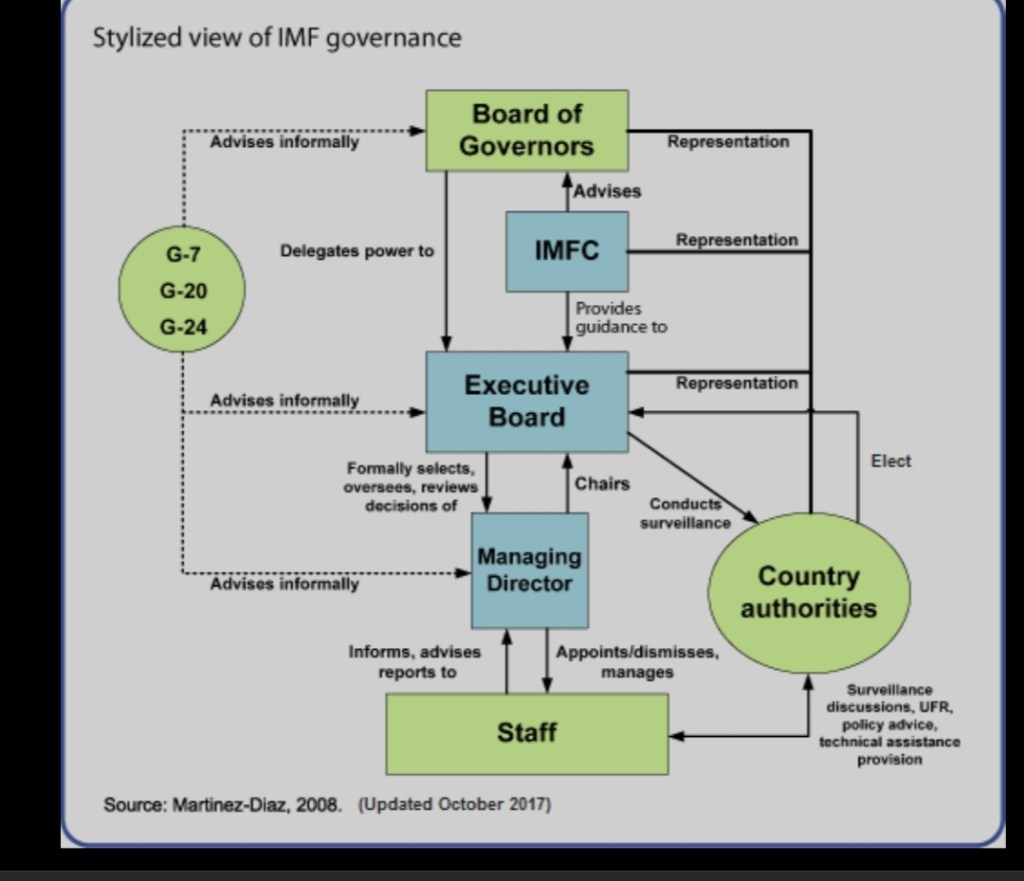
The structure of The Fund consists of a Board of Governors , an Executive Board , A Managing Director, a Council and a staff with its headquarters in Washington DC, USA.
The Board of Governors is the top in the structure of The Fund . They are decision making organs of the Fund..They exercise power and make decisions that are binding on members and the Fund .
The board of the Governors, which now has 24 members ,meets annually in which details of the Fund activities for the previous year are presented.
Other members include :-
The Executive Board , which has 21 members at present . Five Executive Directors are appointed by the five members ( USA , UK , Germany., France and Japan ) having longest quotas .
The Managing Director is elected by the Executive Directors .He is usually political or any other international official.
The Interim Committee (now IMFC ) , is established to advise the Board of Governors on supervising the management and adoption of international monetary policy .
The Development Committee advises and reports to the Board of Governors on all aspects of the transfer of real resources to developing countries .
Objectives :-
The fundamental purposes and objectives of the Fund had been laid down in Article 1 of the original Articles of Agreement . The major six objectives of IMF are :-
1: To promote international monetary cooperation through a permanent Institution which provides the machinery for consumption and collaboration in international monetary problems.
2: To facilitate the expansion and balanced growth of international trade, and to contribute thereby to the promotion and maintenance of high levels of employment and real income and to the development of the productive resources of all members as primary objective of economic policy.
3: To promote exchange stability, to maintain orderly exchange arrangements among members, and to avoid competitive exchange depreciation.
4: To assist in the establishment of a multilateral system of payments in respect of current transactions between members and in the elimination of foreign exchange restrictions which hamper the growth of world trade.
5: To give confidence to members by making the general resources of the Fund temporarily available to them under adequate safeguards, thus providing them with the opportunity to correct maladjustments in their balance of payments, without resorting to measure destruction of national or international prosperity.
6: In accordance with the above, to shorten the duration and lessen the degree of dis – equilibrium in the international balance of payments of members. ___________________________________________
Functions of IMF
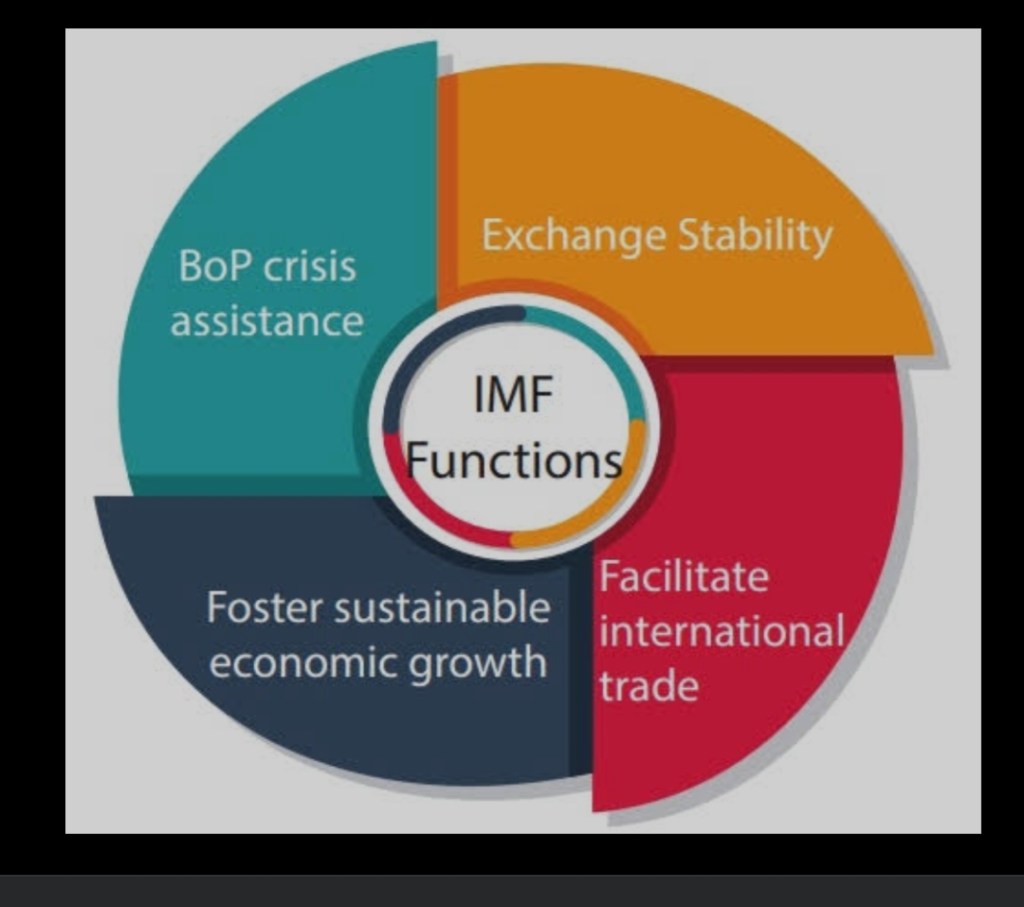
The principal function of the IMF is to supervise the international monetary system. Several other functions performed by the IMF . Three major functions of IMF are :-
Surveillance over Members Economic Policies :-
The IMF closely monitors each member’s country’s economic and financial development . The IMF holds a conference with member countries on a regular basis Usually once each year to assess its economic conditions with a view to providing policy recommendations .
Financial Assistance :-
IMF functions as an agency of providing resources to meet short term and medium term . It lends to its member countries facing BOP disequilibrium .
IMF loan is usually provided under an “arrangement ” requiring a borrowing country to undertake the specific policies and measures to resolve it’s balance of payments problem as specified in a “Letter of Intent ” . Most IMF loans are primarily financed by its member countries through payment of quotas .
Consultative Function:
It functions as a centre for international cooperation and a source of counsel and technical assistance to its members.IMF provides technical assistance to help member countries strengthen their capacity to design and implement effective policies in four areas :- monetary and Financial policy ; fiscal policy; statistics ; and economic and financial legislation.
Other functions :-
• Stabilizing Economics • Maintaining Balance between demand and supply of member countries. • Maintenance of Liquidity . • Reducing tariffs. • General watch . ___________________________________________
Financial Resources of The Fund :-
The bulk of financial assistance performed by the IMF has its financial resources from two sources .
(i) Subscription or quota of the member nations :-
Each member country is required to subscribe to an amount equivalent to its quota. It is the quota on which payment obligations, credit facilities, and voting right of members are determined. As soon as a country joins the Fund, it is assigned a quota which is expressed in Special Drawing Rights (SDRs).
(ii) Borrowings :-
The Fund is authorised to borrow in special circumstances if its own resources prove to be insufficient. It sells gold to member countries to replenish currency holdings. It is entitled to borrow even from the international capital market. Though the Articles of Agreement permits the Fund to borrow from the private capital market.
The IMF has two accounts of operation—the General Account and the Special Drawing Account. The Fund burrows under the General Arrangements to Borrow in order to forestall or cope with an impairment of the international monetary system. __________________________________________
Credit Tranches :-
To meet the severe BOP disequilibrium , the Fund has been gradually raising the limit of borrowing by its members under the credit tranche. Since the 1960s , the Fund has created several credit facilities for its members.
Some borrowing facility provided by the Fund are :-
(i) Stand-by Arrangements: The term “stand-by” here means that, subject to conditionality, a member has a right to draw the money made available, if needed. This method of borrowing has become the most normal form of assistance by the Fund. Under this form of borrowing, a member state obtains the assurance of the Fund that, usually over 12-18 months, requests for drawings of foreign exchange (i.e., to meet short- term BOP problems) up to a certain amount will be allowed if the country concerned wishes. However, the stand-by arrangements can be extended up to 3 years while repayments are required to be made within 3-5 years of each drawing.
(ii) Extended Fund Facility (EFF): Stand-by arrangements to stabilise a member’s BOP run usually for a period of 12-18 months. Developing countries suffer from chronic BOP problems which could not be remedied in the short run. EFF provides credit upto a period of 10 years and loan upto 300 percent of a member’s Quotas are allowed.
(iii) Compensatory Financing Facility (CFF): Apart from the ordinary drawing rights, there are some ‘special finances’ windows to assist the developing countries to tide over BOP difficulties. CFF, introduced in 1963, is one such special drawing provision. It can now draw up to 45 p.c. Since the mid- 1990s, this has been the least-used facility.
(iv) Structural Adjustment Facility (SAF) and the Enhanced SAF (ESAF): In 1986 a new facility—the SAF—was introduced for the benefit of low income countries. Under it, credit facilities for economic reform programmes are available at a low interest rate of 0.5 p. c compared to 6 p.c. for most Fund facilities. Loans are for 10 years with a grace period of five and a half years. SAF provides to undertake medium-term structural adjustment programmes to foster economic growth and improve BOP conditions The ESAF has been replaced by a new facility, called Poverty Reduction and Growth Facility in 1999.
(v) Poverty Reduction and Growth Facility (PRGF): The PRGF that replaced the ESAF in November 1999 provides concessional lending to help the poorest member countries with the aim of making poverty reduction and economic growth —the central objectives of policy programmes.
(vi) Supplemental Reserve Facility (SRF): This instrument provides additional short-term financing to member countries facing exceptional BOP difficulties because of a sudden and disruptive loss of market confidence reflected in capital outflows of countries concerned. Consequent upon the After the eruption of the East Asian financial crisis, the SRF was introduced in 1997.
___________________________________________
India And The IMF
India is one of the founder members of the IMF . It signed the Fund Agreement on 27 December , 1945 . Till 1970 India ‘s Quotas in the Fund was the fifth and it had the power to appoint permanent Executive Directors.
With increase in the Fund Quotas of other countries like Canada , Italy , Japan etc . India ceased to hold a permanent position as Executive Directors . With the Eleventh Review of Quotas , India’s quota in the IMF declined from 2.09 per cent . As a result , India’s position in the Fund quota came down to 13th .
The current IMF data shows India’s position at seventh .
India has been benefited in certain ways by the IMF by receiving loans to meet the deficit in its balance payment in several years .India has been getting advisory help from the Fund under the Fund surveillance conditionality . Hence , as a member India has gained much help from the IMF to have an economically stable system.
The trio of 3 idiots or the trio of Yeh Zindagi Na Milege Dobara we know but there is a trio of 3 brave boys who on their own took a big step to contribute to the movement of independence of India.
The trio of three brave hearts who took matters in their hand against the British, in the Writer’s building in Kolkata, the administrative center of the city during the British rule. It was a usual day of works going on when a sudden sound of shots made eco through ages on the hearts of the British people.
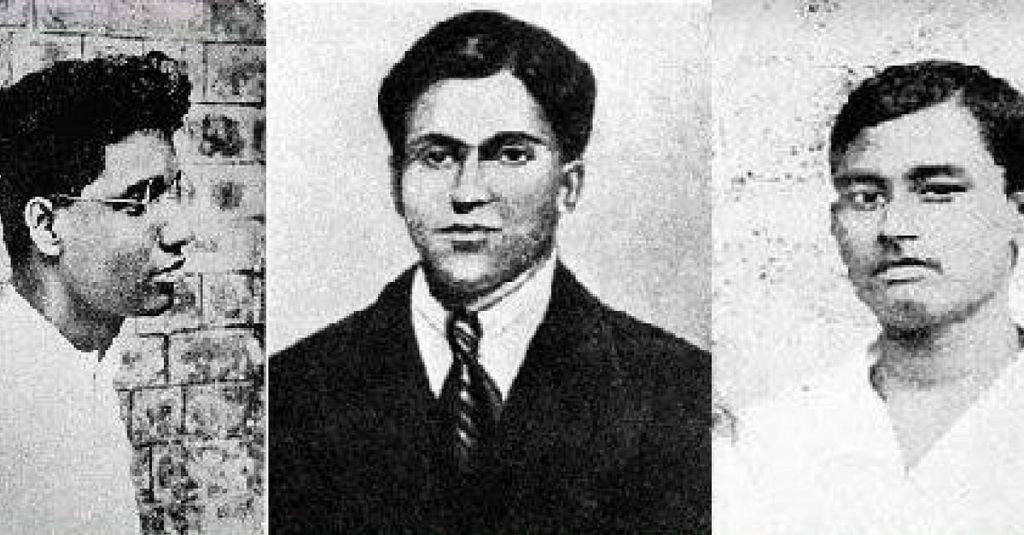
the comrades were Benoy Krishan Basu, Dinesh Gupta, and Sudhir Gupta.
Benoy Krishan Basu, born in Rohitbhog, Bangladesh on 11 September 1908, completed his matriculation in Dhaka , got enrolled into Mitford medical School(Sir Salimullah Medical college), but he couldn’t able to complete his medical studies as he joined in “Mukti sangha’ a secret society under the influence of a revolutionary of Dhaka Hemchandra Ghosh.
Dinesh Chandra Gupta, born in Josholong, Bangladesh on 6 December 1911. He joined a group organized by Subhas Chandra bosh ‘Bengal volunteers while he was studying in Dhaka college, while that the Bengal volunteers transformed to a more active revolutionary association, planned of killing British police officers, for short time Dinesh Gupta was training local revolutionaries in use of firearms in Midnapore, who was responsible for the assassination of three District Magistrates in succession.
Badal Gupta, his real name was Sudhir Gupta, was born in Puba Shimulia, in the region of Dhaka, now in Mushiganj District, Bangladesh, as he inspired by a teacher of the Banaripara School of Bikrampur ‘Nikunja Sem’, joined the Bengal Volunteers, he was also influenced by his two paternal uncles ‘Dharaninath Gupta and Nagendranath Gupta who were the revolutionary activities who had a major role in the Alipore Bomb Case.
The motto of their Bravery act was of killing N S Simpson, the late Colonel of the Indian Imperial Police and the Inspector General of Police(Prisons), the person behind the worst atrocities on the inmates of prisons and other Britishers. The three men dressed in European attire came from the shadows and opened fire from their revolvers shot Simpson shot in 7 bullets on him, three on the head. Soon the British police surrounded them and there was a brief gun battle between the trio and the cops, some of the lead officers lead to severe injuries but somehow the British police overpowered them but the three men refused to surrender, immediately on the spot Badal Gupta ingested Potassium Cyanide died on spot, while Benoy and Dinesh shot themselves point-blank by their firearms. Dinesh and Benoy were taken to hospital but took their last breath on 13 December 1930 as he used to keep on injuring on the spot where the bullet was hit, Dinesh Gupta was the only one to survive, later he was martyred by hanging on 7th July 1931 at the Alipore Jail, at the age of 19 for anti-government activities and murder.
On the 8th of December, the three young men one of 19 and two of them merely 22 achieved immortality and strike terror in the hearts of British officers by their unimaginable act.
Modern art refers to the artistic work produced during the period of 1860s to the 1970s and represents the styles and philosophies of the art produced during that era. The term is usually pertains to the art in which the traditions of the past have been thrown aside in a spirit of experimentation. In India, the modern art movement began in the early 1900s. During 1900-1925, Bengal School dominated the Indian art. Bengal school of painting represented the first art movement in the country. Artists like Abindranath Tagore, Nandal Bose, Raja Ravi Verma, Jamini Roy were some of the pioneers of Bengal school. It was the rebirth of Indian art. Bengal school witnessed the departure of traditional painting methods like tempera. Chinese cloth painting and Japanese wash technique were used. The Japanese water colour technique called wash became the hallmark of Bengal school. This technique diluted the impact of the colours used giving the paintings a mystic sense of space and atmosphere. The these of the paintings included religious, social and historical events. Paintings of landscapes, birds and animals were also done. After 1925, artists refused to imitate the mannerisms of the art of the past. They argued that such imitation bounds the imagination and creativity of the artists. The contemporary artists stressed on liberating the imagination from the shackles of past. The art after 1925, was therefore very different from the previous Indian arts. There was variety in the techniques used and artworks were different from each other having more or less similarity. Technique like cubism was used by the artist Gaganendranath. Cubism is a European style of art which aims to show all of the possible viewpoints of a person or an object all at once. Cubistic artworks look like they are made out of cubes and other geometrical shapes. Chiaroscuro, which is a characteristic of the European Renaissance was used in his famous painting ‘Magician’. Chiaroscuro is the use of strong contrasts between light and dark, usually bold contrasts affecting a whole composition. The soft wash technique was discarded and oil painting started getting more recognition. These paintings had bold and contrasting colour scheme in comparison to the light wash technique of the Bengal school. The credit for popularising oil painting in India goes to Amrita Sher Gil. Graphic Prints stated getting popular as well. Artist Krishna Reddy used techniques like intaglio and kaleidoscopic effects in his graphic prints. Intaglio is a printmaking technique in which the image is incised into a surface and the incised line or sunken area holds the ink. It is a process of print on engraved design. In his painting ‘Whirlpool’ which is a intaglio on paper, Krishna Reddy has also used the method of viscosity printing. Viscosity printing is a multi-colour printmaking technique which is uses the viscosity of the paint or ink. Etching and aquatint was also used in contemporary print making. Etching is an intaglio printmaking process in which lines or areas are incised using acid into a metal plate in order to hold the ink. Aquatint is also an intaglio printmaking technique, a variant of etching that produces areas of tone rather than lines. Both of these techniques were used together to create contemporary prints. ‘The Children’ by Somnath Hore, ‘TheDevi’ by Jyoti Bhatt and ‘ Man, Women and Tree’ by K. Laxman Goud are some of the famous prints which have been made using these techniques.
Chartered Accountants were the first Accountants to form a professional accounting body initially established in Scotland in 1854.
An Accountant is a person who specialises in the field of accounting. Chartered Accountants are Accountants for hire. They work in various sectors of the economy,managing the finance of an entity, providing financial advice and helping out with money management.
Chartered Accountancy has been one of the most popular career choices in India. There is no fixed time to complete chartered Accountancy. In this career your hard work decides your destination. There is no colleges for Chartered Accountancy. CA aspirants can approach any Institutes and work as per the instruction given by the Institutes.
Exam structure:
The Institute of Chartered Accountancy of India divided CA courses into four levels: CA foundation/CPT, CA intermediate/IPCC, 3 years of Article ship training and CA final. Each level tests students on different paper pattern based on their level and maturity.
Eligibility:
The one who passed class 12 can appeal for CPT(Common Proficiency Test) /foundation level in CA.
The degree holder can directly appeal for IPCC(Integrated Professional Competence Course) /intermediate level.
Roles of chartered Accountant:
Cost Accountant:
Collecting cost information and maintaining an expenses database. Constructing data accumulating systems
Financial controller:
Financial controller is a company’s lead Accountant. They oversee accounting activities and ensure that ledger accurately reflect money coming on and out of the company.
Auditor:
An Auditor is an authorized person who reviews and verifies the accuracy of financial records and ensures that companies comply with tax norms.
Accounts Clerk:
The responsibility of accounts clerk is to keep financial records updated, preparing reports and reconciliation statement.
Chief Financial Officer:
Chief Financial Officer is the senior executive responsible for managing the financial actions of a company. The CFO’s duties include tracking cash flow and financial planning as well as analysing the company’s financial strengths and weaknesses.
Fortunately, you can make a gorgeous, fresh-flower crown for just about the same price as a fake one — and, it’s actually really easy!
Let’s make!
<gather the goods>
#1 Flowers –Two or three types of flowers #2 Floral tape – Floral tape is best for wrapping fresh flowers together. #3 Scissors – Keep a sharp pair of scissors handy to cut your flowers #4 Craft wire –You will use this to tie flowers to your crown. #5 Wire –This is used as a comfy base for your crown.
Directions
Step 1 – Shape the wire to your desired size. Step 2 – Wrap greenery around the base of the crown. Step 3 – Create mini-flower bunches Step 4 – Attach your flower bunches to crown.
Tip :Flower crowns look best when freshly made and after 48 hours can start to look droopy. Spray with a little water and store in the fridge to keep the flowers perky for as long as possible.

























 (
(









 Eduindex
You must be logged in to post a comment.